



ASOR is turning 125—and we want you to be part of the celebration!
Our special anniversary dinner will take place during this year’s Annual Meeting in Boston, and we hope you’ll join us for this unforgettable evening of community, celebration, and reflection on ASOR’s history.
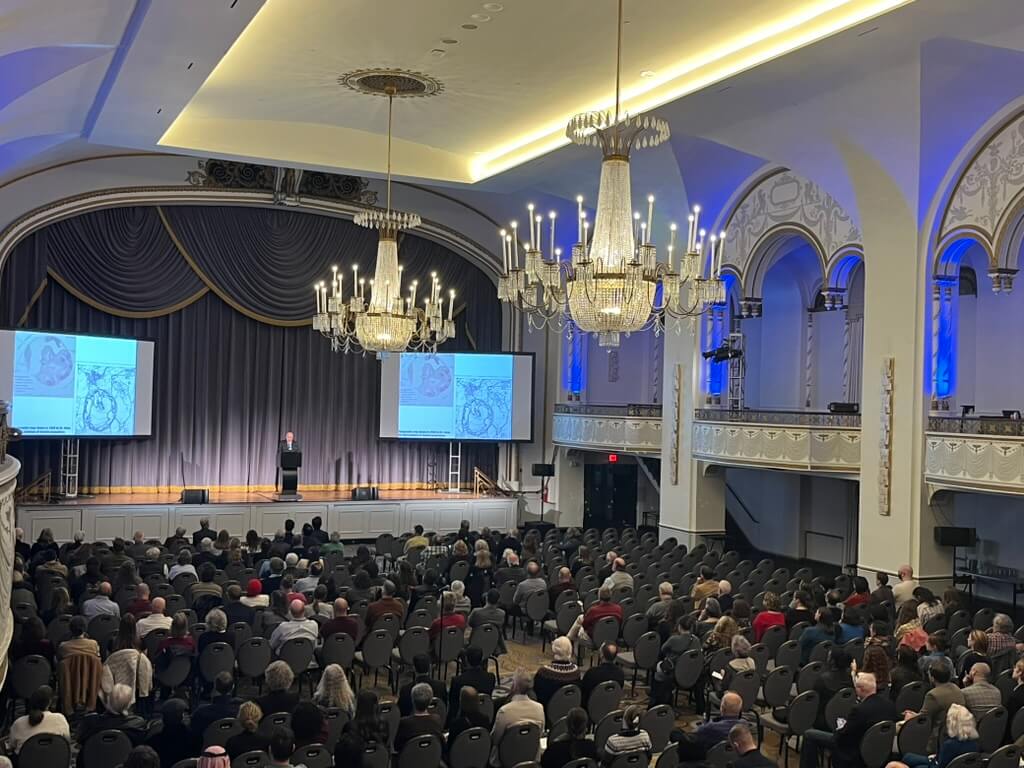
⏰ We’ll be kicking off the festive occasion at 6:45 p.m. on Saturday, November 22, 2025, at the Hilton Boston Park Plaza. Enjoy an evening of exceptional dining, entertainment, and ASOR-themed activities, featuring speakers who have been integral to ASOR’s mission. Your presence will help make this milestone truly meaningful.

🎟 Tickets are $100 (ASOR’s cost), but we’re committed to making the event accessible for all. If you need financial assistance to attend, use code SAVE50 for $50 tickets, or SAVE75 for $25 tickets. Sponsorship tickets are also available—and dinner tickets above $100 may be tax-deductible. If you are able, please consider a sponsorship so that you can support the discounted tickets described above.
When purchasing your ticket, please specify your dinner entree choice: beef, chicken, fish, or vegetarian.
👗 Dress code: Cocktail attire/festive, black-tie optional.
If you haven’t done so already, click here to register for the Annual Meeting and join our celebration in November.
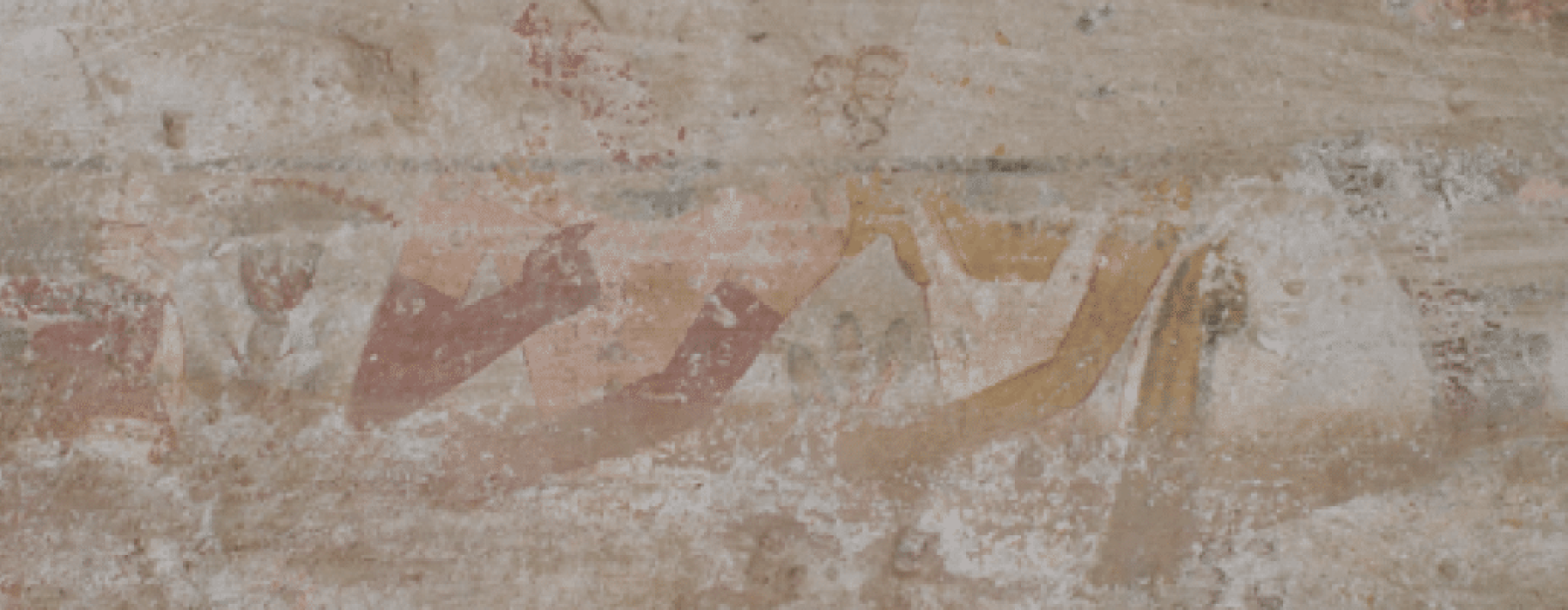
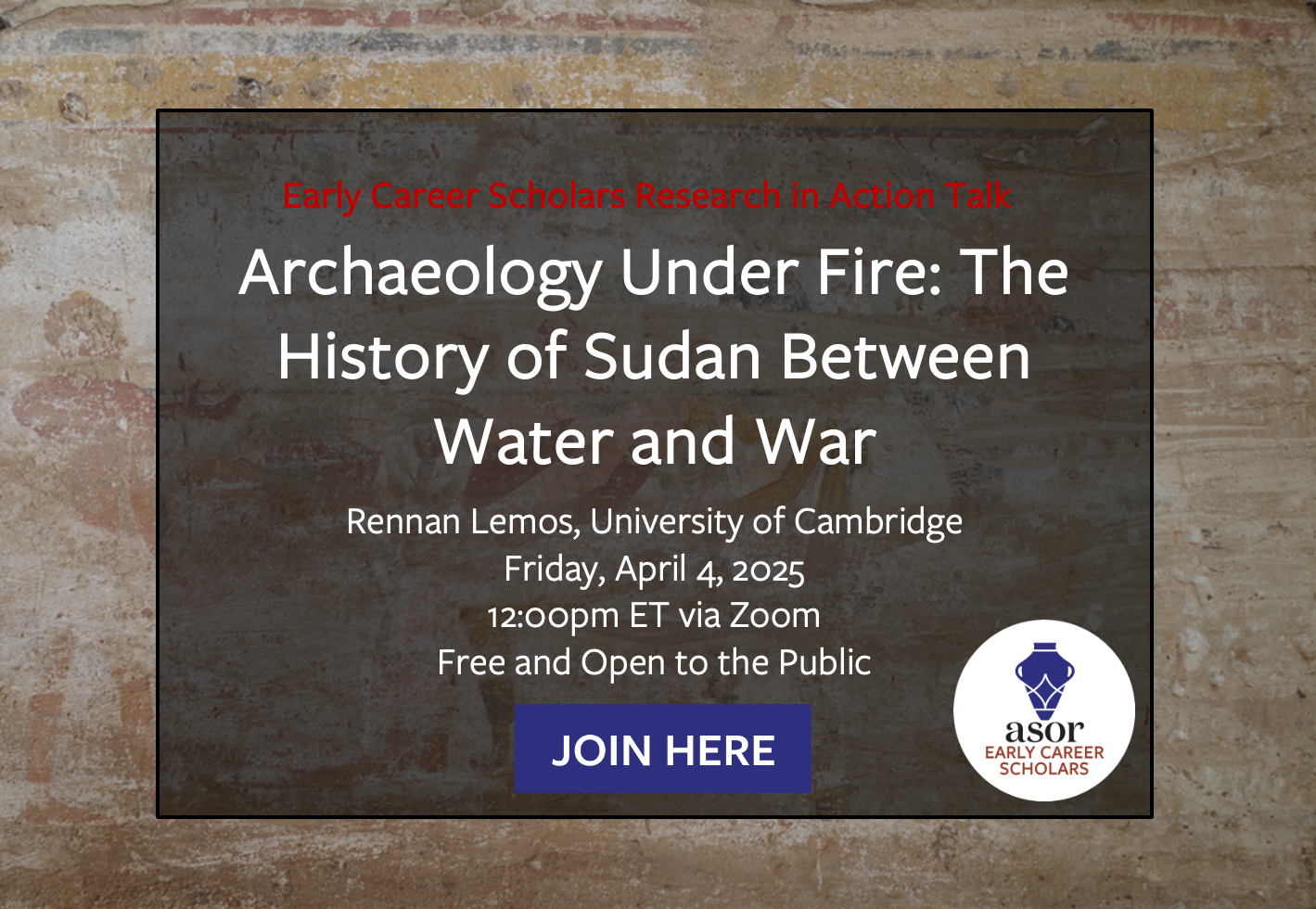
Abstract: The history of archaeology in northern Sudan is, to a large extent, a history of salvage excavations. Successive dam projects in Lower Nubia have posed a tremendous threat to the region’s archaeology, resulting in significant losses but also producing one of the most comprehensive records of archaeological heritage in a single area. Drawing on archival materials and recent fieldwork, this talk will explore how Sudan’s archaeological heritage has been endangered—first by the flooding of Lower Nubia and now by war—and how a history of major threats has shaped the region’s heritage.
Presenter: Rennan Lemos teaches Egyptian and Sudanese archaeology at the University of Cambridge. He co-directs the Djehutyhotep Project and is assistant director of the Sanam Temple Project in Sudan. In 2024, he was a recipient of the Annual Prize “à la mémoire de Jean Leclant”, awarded by the Michela Schiff Giorgini Foundation.
The event, a part of our “Research in Action” series, is FREE for the ASOR community, but registration is required.

[vc_row fullwidth=”true” css=”.vc_custom_1486761987223{padding-top: 0px !important;padding-right: 0px !important;padding-bottom: 0px !important;padding-left: 0px !important;}”][vc_column][vc_single_image image=”76464″ img_size=”full”][/vc_column][/vc_row][vc_row fullwidth=”true” css=”.vc_custom_1567018214583{margin-top: 20px !important;padding-top: 0px !important;padding-right: 0px !important;padding-bottom: 0px !important;padding-left: 0px !important;}”][vc_column width=”1/12″ css=”.vc_custom_1493002455400{margin-right: 10px !important;}” offset=”vc_hidden-md vc_hidden-sm vc_hidden-xs”][vc_column_text]
SHARE
[/vc_column_text][mk_image src=”http://www.asortest.org/wp-content/uploads/2017/01/social-fb-icon4.jpg” image_width=”42″ image_height=”42″ hover=”false” custom_url=”https://www.facebook.com/ASOResearch/” margin_bottom=”0″][mk_image src=”http://www.asortest.org/wp-content/uploads/2017/01/social-tw-icon4.jpg” image_width=”42″ image_height=”42″ hover=”false” custom_url=”https://twitter.com/ASOResearch?ref_src=twsrc%5Egoogle%7Ctwcamp%5Eserp%7Ctwgr%5Eauthor” margin_bottom=”0″][mk_image src=”http://www.asortest.org/wp-content/uploads/2017/01/social-in-icon4.jpg” image_width=”42″ image_height=”42″ hover=”false” custom_url=”https://www.linkedin.com/company/american-schools-of-oriental-research” margin_bottom=”0″][mk_image src=”http://www.asortest.org/wp-content/uploads/2017/01/social-ml-icon_7.jpg” image_width=”42″ image_height=”42″ hover=”false” custom_url=”mailto:asor@bu.edu” margin_bottom=”0″][mk_image src=”http://www.asortest.org/wp-content/uploads/2017/01/blog-icon3.jpg” image_width=”42″ image_height=”42″ hover=”false” custom_url=”http://asorblog.org/” margin_bottom=”0″][/vc_column][vc_column border_color=”rgba(255,255,255,0.01)” width=”1/6″ css=”.vc_custom_1493004112151{margin-right: 20px !important;border-left-width: 2px !important;padding-right: 20px !important;padding-left: 20px !important;border-left-color: #99422f !important;}”][mk_divider divider_color=”rgba(255,255,255,0.01)” thickness=”1″ margin_top=”3″ margin_bottom=”3″][vc_widget_sidebar sidebar_id=”ca-sidebar-76466″][/vc_column][vc_column border_color=”rgba(170,170,170,0.01)” width=”8/12″ css=”.vc_custom_1487276122024{margin-right: 10px !important;margin-bottom: 30px !important;border-right-width: 2px !important;border-bottom-width: 2px !important;padding-top: 30px !important;padding-right: 30px !important;padding-left: 20px !important;background-color: #ffffff !important;border-right-color: rgba(227,228,228,0.75) !important;border-bottom-color: rgba(227,228,228,0.75) !important;}”][vc_row_inner][vc_column_inner][vc_column_text responsive_align=”left”]
[/vc_column_text][/vc_column_inner][/vc_row_inner][mk_divider thickness=”1″ margin_top=”0″][vc_row_inner][vc_column_inner][vc_widget_sidebar sidebar_id=”ca-sidebar-76439″][mk_padding_divider size=”20″][/vc_column_inner][/vc_row_inner][mk_divider thickness=”1″ margin_top=”0″][vc_row_inner][vc_column_inner][vc_wp_text]The Levantine Ceramics Project (LCP) is a collaborative venture of archaeologists working on Levantine ceramics of all eras—from the Neolithic period (c. 5500 B.C.E.) through Ottoman times (c. 1920). Regular workshops are an integral component of the project. At workshops contributors present new discoveries and add information to the LCP’s ever-growing data set. We share ideas, discuss issues of terminology and definition, and better our overall understanding of the field.
Since 2012 the LCP has facilitated workshops in Greece, Israel, Turkey, Poland, Belgium, France, and the United States.
If you are interested in hosting or participating in an LCP workshop, please contact the LCP editor (aberlin@bu.edu) for more information.[/vc_wp_text][mk_divider thickness=”1″ margin_top=”0″][/vc_column_inner][/vc_row_inner][vc_wp_text]
[/vc_wp_text][mk_padding_divider size=”20″][mk_image src=”https://www.asor.org/wp-content/uploads/2025/03/South-harbor-looking-southeast-1-scale-scaled.jpg” image_width=”1900″ image_height=”633″ crop=”false” hover=”false” target=”_blank”][vc_row_inner][vc_column_inner width=”1/2″ css=”.vc_custom_1742309265501{padding-top: 20px !important;padding-right: 10px !important;padding-bottom: 10px !important;}”][mk_image src=”https://www.asor.org/wp-content/uploads/2025/03/Bouleuterion-1_800x600.jpg” image_width=”800″ image_height=”600″ crop=”false” hover=”false” target=”_blank”][/vc_column_inner][vc_column_inner width=”1/2″ css=”.vc_custom_1742309352565{padding-top: 20px !important;padding-right: 10px !important;padding-bottom: 10px !important;}”][mk_image src=”https://www.asor.org/wp-content/uploads/2025/03/Agora-looking-south-2_800x600.jpg” image_width=”800″ image_height=”600″ crop=”false” hover=”false” target=”_blank”][/vc_column_inner][/vc_row_inner][vc_row_inner][vc_column_inner css=”.vc_custom_1566332422149{padding-right: 10px !important;}”][mk_padding_divider size=”5″][vc_column_text]
This July, the Levantine Ceramics Project (LCP) and Ankara University Professor Musa Kadioğlu, director of the Teos Excavations, will host a workshop devoted to the pottery of Late Classical and Hellenistic Asia Minor, to be held at the site’s beautiful excavation compound. For over 1000 years, across the Archaic, Classical, Hellenistic, and Roman eras, Teos was an impressive port city which boasted two large harbors as well as being a busy production center for pottery, especially fine wares and transport amphoras. The workshop has two goals: the first is to bring together scholars and students who work on Hellenistic pottery from Asia Minor and the adjacent Aegan islands, for open, collaborative discussion and learning. The second is to add material to the LCP, so that this learning can be shared with others, now and in the future.
Please see the invitation for more information and instructions for participation.
If you are interested in participating, please contact:[/vc_column_text][/vc_column_inner][/vc_row_inner][mk_padding_divider size=”5″][vc_row_inner][vc_column_inner width=”1/2″][vc_column_text]Prof. Dr. Musa Kadıoğlu, Ankara Üniversitesi
Director, Teos Excavations/http://teos.ankara.edu.tr
musakadioglu@ankara.edu.tr[/vc_column_text][/vc_column_inner][vc_column_inner width=”1/2″][vc_column_text]Prof. Dr. Andrea M. Berlin, Boston University
Founder & editor, The Levantine Ceramics Project
aberlin@bu.edu[/vc_column_text][/vc_column_inner][/vc_row_inner][mk_padding_divider size=”20″][mk_divider thickness=”1″ margin_top=”0″][vc_row_inner][vc_column_inner][vc_wp_text]
[/vc_wp_text][vc_video link=”https://www.youtube.com/watch?v=kFk_7f4B1vY&t=1s”][mk_padding_divider size=”20″][vc_wp_text]LCP Development is made possible by:

 [/vc_wp_text][/vc_column_inner][/vc_row_inner][/vc_column][/vc_row]
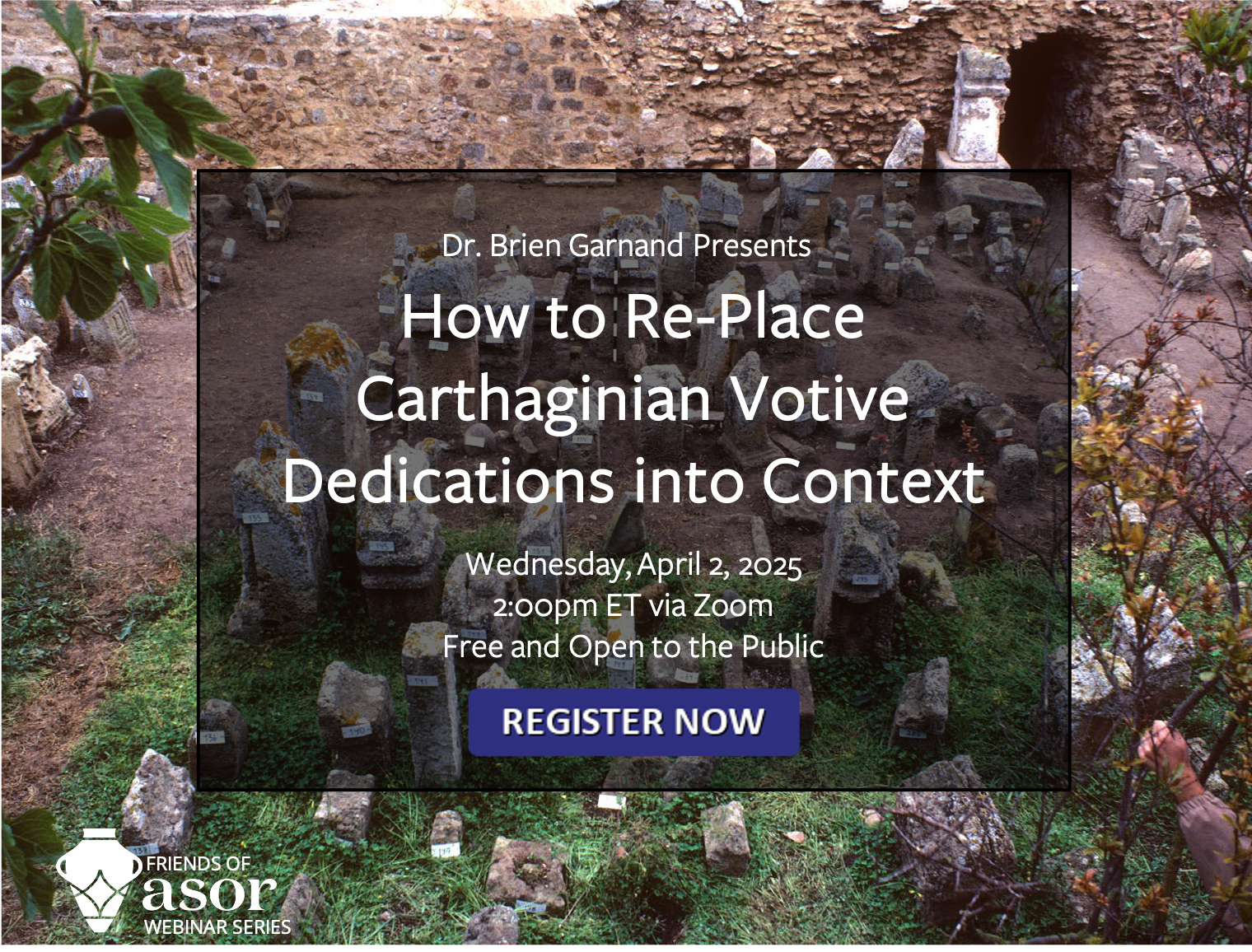
 Upcoming anniversaries of American excavations offer an opportunity to reassess the importance of Carthage, famous for its contacts and conflicts with Greeks and Romans across the Mediterranean and infamous for its alleged ritual infanticide. Two American teams conducted excavations at the city’s liminal open-air votive precinct, where one finds cremated infant remains buried in urns beneath stone memorials bearing dedications to the Mistress, Tinnit Visage-of-Ba‘l, and to the Lord, Ba‘l Hammon.
 The centennial and golden anniversaries of American excavations fast approach—one hundred years ago, F. W. Kelsey of the University of Michigan led a campaign under the auspices of the AIA (1925); fifty years ago, L. E. Stager of University of Chicago led another under the auspices of ASOR (1976-1979). Both teams excavated in the same propriété Regulus-Salammbô, with Stager’s Punic Project excavations picking up where Kelsey had left off. Even before the American campaigns, many stelae had already been extracted through clandestine or amateur excavation, including hasty extractions made just before Kelsey arrived on site, depriving us of their context. Nevertheless, our archival research at the University of Michigan has uncovered excavation records that, in combination with the Punic Project records, allow us to locate stela in plan and section. We have made practice scans of stelae, in the Netherlands and Denmark, in anticipation of scanning individual stela now held in Tunisian museum store rooms. This talk will demonstrate how 3D models of individual stelae can be replaced into their original positions by using archival site plans and annotated photographs and in reference to the positions of those stelae still in situ, and it will demonstrate how we can create a precise scale model of the Regulus-Salammbô sector.
 Brien Garnand is a research associate of the Harvard Museum of the Ancient Near East (HMANE) and a visiting researcher at the Netherlands Institute for the Near East (NINO), currently a member of a research group at the Israel Institute for Advanced Studies (IIAS). He has contributed to the final excavation report from the ASOR Punic Project Carthage excavations since 1993, recently co-editing a preview of that report in a thematic volume of the Journal of Ancient History (Infants as Votive Offerings 2023). Besides cataloging artifacts in the basement of the HMANE and in the store rooms of the Musée national de Carthage, he has scoured the archives of the F. W. Kelsey Museum of Archaeology at the University of Michigan and the J. B. Chabot archives at the Université catholique de Louvain in preparation for an exhibition timed to correspond with the issue of the Punic Project final report on the the 50th/100th anniversaries of American excavations. He once served as assistant director of the Stanford University Excavations at Mt. Polizzo in Sicily, and he has extensive experience in North Africa, both in field survey (Project Jerba—University of Pennsylvania/AAR/INP) and in excavation (Carthage Bir Messaouda—University of Amsterdam/INP). His current research focuses on votive stelae, both putting the formulaic-poetic language of Phoenician inscriptions into the context of Ancient Near Eastern literature and putting the sanctuary of Tinnit and Ba‘l in Carthage into the context of votive precincts across the Mediterranean. A mobility grant from NINO (2022) allowed him to test 3D scanning methods, and a recent ASOR Dar Ben Gacem fellowship (2023) supported a research visit to the Carthage precinct where he prepared a preliminary 3D site model.
Why do I need the Online Library?
 The Online Library gives you access to thousands of presentations on topics from prehistory to the modern era in the Near East and greater Mediterranean world.
Missed a paper from the Annual Meeting that everyone is talking about? Here’s your chance to view the recording of that paper. Found a webinar from last year that you really wish you had attended? The Online Library will catch you up and make you feel like you haven’t missed a thing. Fascinated by the ancient world? These recordings will provide you with a detailed view into people’s lives in the past and introduce you to ancient cities and cultures.
The Online Library is also a great way to catch up with your colleagues and see their research or check out what’s new from a site that interests you.
How do I get access?
The easiest way to gain access is by registering for the 2026 Annual Meeting. This means you’ll have access to all of the current recordings, plus everything from the 2026 meeting, through June 30, 2027. Not interested in registering for the Annual Meeting? You can also purchase the Online Library on its own.
How do I use the Online Library?
 You can view the Online Library at your own pace and schedule—the recordings are always available to you whenever you want to delve deeper into a particular topic or explore something brand new.
Simply log into the Online Portal, and hover over the tab that says “Resources” in the top navigation bar. You’ll find Online Library as one of the drop-down options.

Once you click on Online Library, it will bring you to the Annual Meeting recordings and Friends of ASOR webinars, listed by year and season, respectively.

For the Annual Meeting presentations, click on the year of the meeting you wish to view from. The following video has further instructions on accessing presentations and content from the Annual Meeting.
Accessing the FOA Webinars
To access the Friends of ASOR webinars, navigate to the season you wish to search from and the list of available recorded sessions will appear. Note that the 2025-26 season is still ongoing, so not all sessions are yet available.

Click on the desired session and enjoy the recording!

Recordings are available until June 30, 2027 for AM26 attendees.
Reminder about 2026 Annual Meeting Registration: you will gain free access to the Online Library platform with your 2026 Annual Meeting registration—and you’ll have access to the Online Library content (through June 30, 2027).
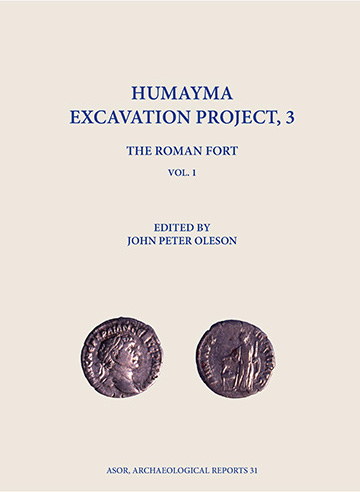
ed. by John Peter Oleson
Authors: John Peter Oleson, Erik De Bruijn, M. Barbara Reeves, Andrew N. Sherwood, Craig A. Harvey, Yvonne Gerber, and Milorad Nikolic with contributions from Gregory S. Baker, Emily Deeb, Lindsay Holman, Janet Jones, Derek Klapecki, Kelsey Koon, Jennifer Ramsay, Tiffany Rawlings, and David S. Reese.
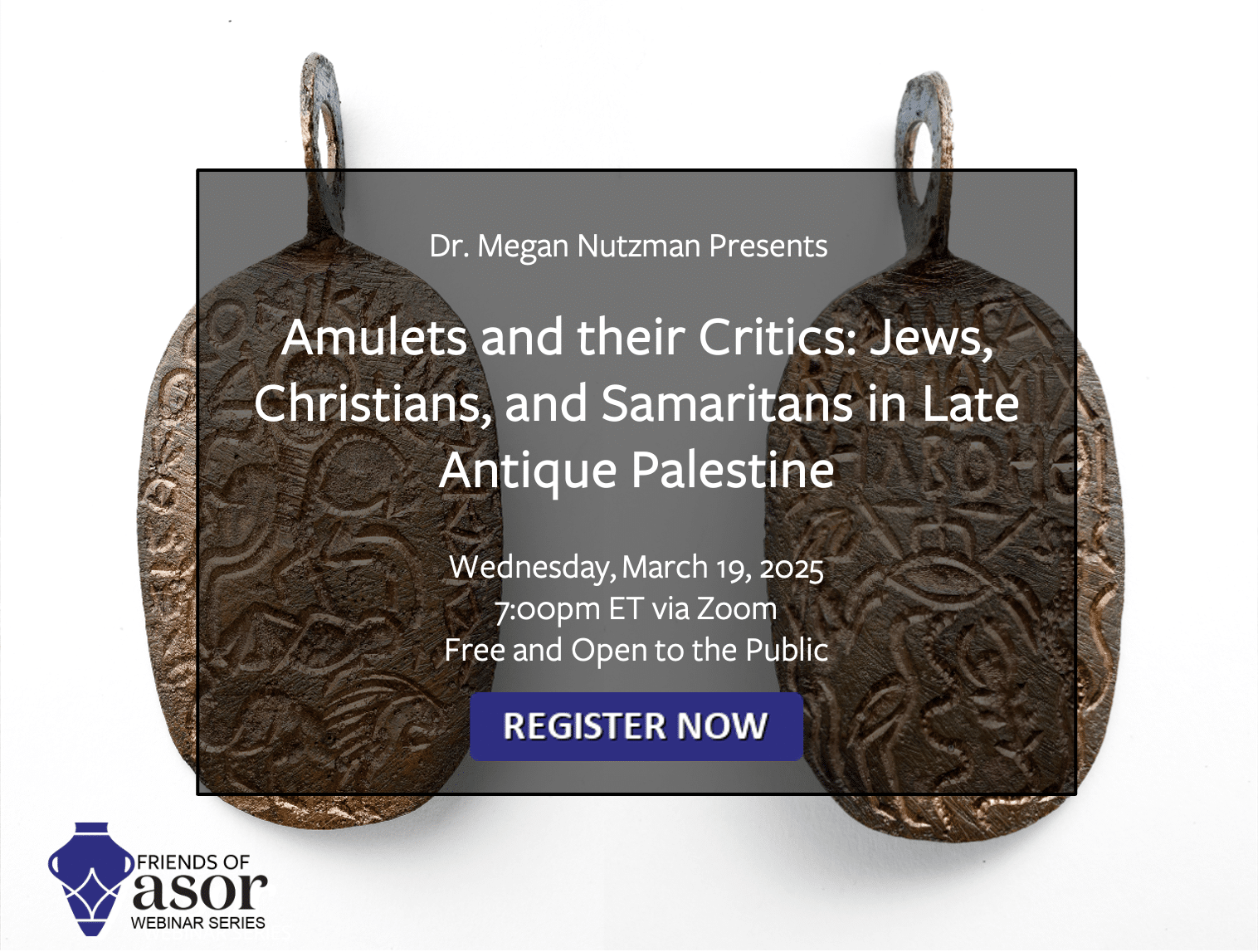
 Medical treatments in the ancient Mediterranean world were rudimentary and often unsuccessful, and so individuals routinely looked for divine aid to cure their afflictions. This lecture considers one of the most common forms of ritual healing employed in Roman and late antique Palestine: amulets. A variety of amulets will be considered in this talk. For example, some amulets contained longer texts written on thin metal sheets or pieces of papyrus, which were then rolled and placed in a case that could be attached to a person’s body. Other amulets took the form of rings, bracelets, pendants, and gemstones, which typically had shorter texts, often accompanied by vivid illustrations.
 With circumstances of close cultural contacts—such as prevailed in Palestine—the setting was ripe for Jews, Samaritans, and Christians to borrow forms of ritual healing that were perceived to be efficacious and to alter them to fit their own religious framework. This is particularly true for amulets, which employed similar techniques including the quotation of biblical passages and the use of magical symbols and names. As a result of these overlapping amulet traditions, it can be difficult in some cases even to be certain about the religious community to which the person who created the amulet or the person who wore the amulet belonged. The cultural and religious interactions revealed by amulets demonstrate the porousness of the boundaries that separated these communities, and made them the subject of polemical discourse among elite authors trying to police collective borders.
 Megan Nutzman is Associate Professor of History at Old Dominion University. She received her PhD in Classics from the University of Chicago and holds an M.T.S. and a Th.M. from Holy Cross Greek Orthodox School of Theology. Her research focuses on the history and material culture of Greek and Roman cults, Jews, and Christians in the eastern Mediterranean, and especially on interactions among them. Her 2022 book, Contested Cures: Identity and Ritual Healing in Roman and Late Antique Palestine, received the Frank Moore Cross book award in 2023. It examines the various methods that people used to seek divine healing and the rhetoric of elite authors who used the acceptance or avoidance of certain healing rituals as markers of group identity. Some of her other publications have considered Jewish epitaphs from Rome, hot springs as sites of ritual healing, the relationship between amulets and tefillin, and the portrayal of Mary in the Protevangelium of James. She has received funding for her research from the Albright Institute for Archaeological Research in Jerusalem, from the Frankel Institute for Advanced Judaic Studies at the University of Michigan, from the American Council of Learned Societies, and from the National Endowment for the Humanities. At ODU, she teaches courses on ancient Greece and Rome and on early Christianity.
[vc_row fullwidth=”true” css=”.vc_custom_1490224714943{padding-top: 0px !important;padding-right: 0px !important;padding-bottom: 0px !important;padding-left: 0px !important;}”][vc_column][vc_single_image image=”100373″ img_size=”full” alignment=”center”][/vc_column][/vc_row][vc_row][vc_column][vc_column_text][/vc_column_text][/vc_column][/vc_row][vc_row fullwidth=”true” css=”.vc_custom_1490225468623{padding-top: 0px !important;padding-right: 0px !important;padding-bottom: 0px !important;padding-left: 0px !important;}”][vc_column width=”1/12″ css=”.vc_custom_1490225195470{margin-right: 10px !important;}” offset=”vc_hidden-sm vc_hidden-xs”][vc_column_text]
SHARE
[/vc_column_text][mk_image src=”http://www.asortest.org/wp-content/uploads/2017/01/social-fb-icon4.jpg” image_width=”42″ image_height=”42″ hover=”false” custom_url=”https://www.facebook.com/ASOResearch/” margin_bottom=”0″][mk_image src=”http://www.asortest.org/wp-content/uploads/2017/01/social-tw-icon4.jpg” image_width=”42″ image_height=”42″ hover=”false” custom_url=”https://twitter.com/ASOResearch?ref_src=twsrc%5Egoogle%7Ctwcamp%5Eserp%7Ctwgr%5Eauthor” margin_bottom=”0″][mk_image src=”http://www.asortest.org/wp-content/uploads/2017/01/social-in-icon4.jpg” image_width=”42″ image_height=”42″ hover=”false” custom_url=”https://www.linkedin.com/company/american-schools-of-oriental-research” margin_bottom=”0″][mk_image src=”http://www.asortest.org/wp-content/uploads/2017/01/social-ml-icon_7.jpg” image_width=”42″ image_height=”42″ hover=”false” custom_url=”mailto:info@asor.org” margin_bottom=”0″][mk_image src=”http://www.asortest.org/wp-content/uploads/2017/01/blog-icon3.jpg” image_width=”42″ image_height=”42″ hover=”false” custom_url=”http://asor.org/blog” margin_bottom=”0″][/vc_column][vc_column border_color=”rgba(255,255,255,0.01)” width=”1/6″ css=”.vc_custom_1490365673198{margin-right: 20px !important;border-left-width: 2px !important;padding-right: 20px !important;padding-left: 20px !important;border-left-color: #99422f !important;}” el_class=”sticky-sidenav”][mk_divider divider_color=”rgba(255,255,255,0.01)” thickness=”1″ margin_top=”3″ margin_bottom=”3″][vc_widget_sidebar sidebar_id=”ca-sidebar-38526″][/vc_column][vc_column border_color=”rgba(170,170,170,0.01)” width=”1/2″ css=”.vc_custom_1490225606852{margin-right: 10px !important;margin-bottom: 30px !important;border-right-width: 2px !important;border-bottom-width: 2px !important;padding-top: 30px !important;padding-right: 30px !important;padding-left: 20px !important;background-color: #ffffff !important;border-right-color: rgba(227,228,228,0.75) !important;border-bottom-color: rgba(227,228,228,0.75) !important;}”][vc_column_text responsive_align=”left”]
Hilton Boston Park Plaza
50 Park Plaza
Boston, MA 02116
UPDATE: ASOR’s discounted block of rooms at the Hilton Boston Park Plaza is nearly full and the last day to make a reservation is October 29. If the block is sold out or you miss the deadline, please contact Arlene Press to inquire about a waiting list. IMPORTANT: If you have a reservation in the ASOR block that you plan to cancel, please contact us so that we can reallocate the room to someone on the ASOR waiting list.
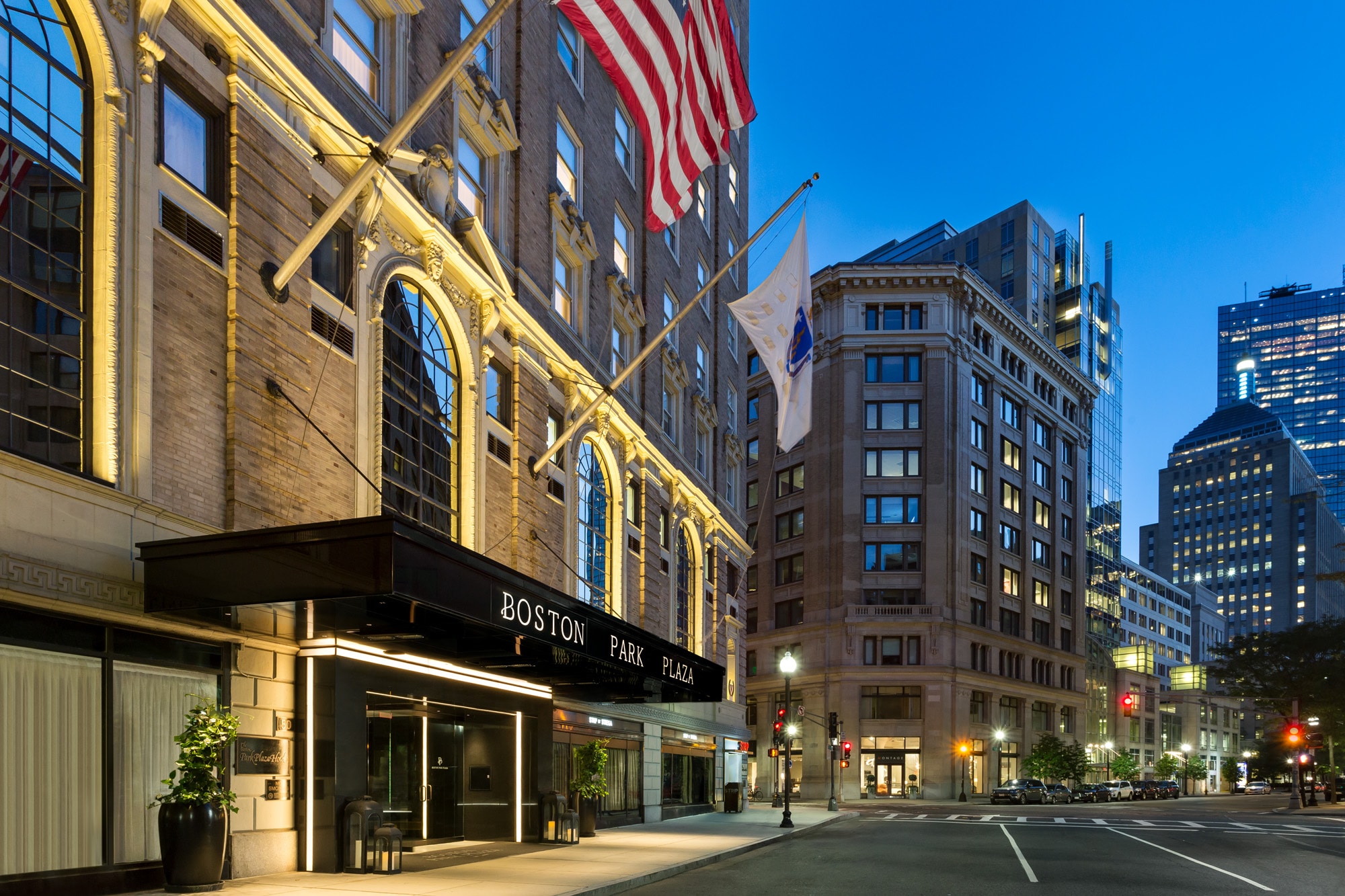
ASOR’s 2025 Annual Meeting will take place at the Hilton Boston Park Plaza located at 50 Park Plaza in downtown Boston. Steps away from the Public Garden, Theater District, and many of the city’s best shopping, restaurants, and historical sites, the Hilton Boston Park Plaza is an ideal location to enjoy ASOR sessions during the day and explore the city during the evening.
Reservations: ASOR has negotiated the discounted rates of $189 single/double, $209 triple, and $229 quad for reservations in ASOR’s block at the Hilton Boston Park Plaza. You are encouraged to make your reservation early as ASOR’s block of rooms often sells out before the meeting. In the past, Boston has been our most popular location, and rooms have sold out over the summer. Cancellations may be made until 3:00pm EST, 72 hours prior to arrival.
Make your reservation online in ASOR’s group block or call 617-457-2290 and reference group code 903 to make your reservation over the phone for the ASOR Annual Meeting.
*Note: The hotel destination fee is waived for ASOR attendees. The auto-generated hotel confirmation may show a destination fee, but this fee will not show up on your bill.
Parking: Valet parking is available for $65 per night. Self parking is available at the Motor Mart Garage, which is across the street from the hotel (entrance at 201 Stuart Street).
Public Transportation: The closest T stops are the Arlington Street (Green Line) and Back Bay (Orange Line) Stations.
Dining: Enjoy the Starbucks within the hotel, or some of the local and sustainable lunch and dinner options at the Boston Park Plaza’s signature restaurant, Off The Common, located in the hotel lobby. Strega Italiano Back Bay is a modern steakhouse just off of the hotel lobby and M.J. O’Conner’s offers classic Irish pub food right next door.
Travel Information: As part of ASOR’s commitment toward carbon neutrality, we encourage all attendees who can to consider traveling to Boston by train or bus. Visit our travel page (coming soon) for more information and savings on travel to and around Boston.
Boston Highlights: Did you know that the Boston Common, which dates to 1634, is the oldest public park in the country, or that the first subway in the US was built in Boston? We will be updating this page regularly with fun facts about Boston and links to some of the city’s best attractions.[/vc_column_text][/vc_column][vc_column border_color=”rgba(170,170,170,0.01)” width=”1/6″ css=”.vc_custom_1490571214409{margin-right: 10px !important;margin-bottom: 30px !important;border-right-width: 2px !important;border-bottom-width: 2px !important;padding-top: 30px !important;padding-right: 20px !important;padding-left: 20px !important;background-color: #ffffff !important;border-right-color: rgba(227,228,228,0.75) !important;border-bottom-color: rgba(227,228,228,0.75) !important;}”][vc_wp_posts title=”BROWSE THE NEWS ARCHIVE” number=”4″][/vc_column][vc_column border_color=”rgba(170,170,170,0.01)” width=”1/6″ css=”.vc_custom_1490225688999{margin-right: 10px !important;margin-bottom: 30px !important;border-right-width: 2px !important;border-bottom-width: 2px !important;padding-top: 30px !important;padding-right: 30px !important;padding-left: 20px !important;background-color: #ffffff !important;border-right-color: rgba(227,228,228,0.75) !important;border-bottom-color: rgba(227,228,228,0.75) !important;}”][vc_widget_sidebar sidebar_id=”ca-sidebar-99363″][/vc_column][/vc_row][vc_row][vc_column][vc_column_text]
[/vc_column_text][/vc_column][/vc_row]
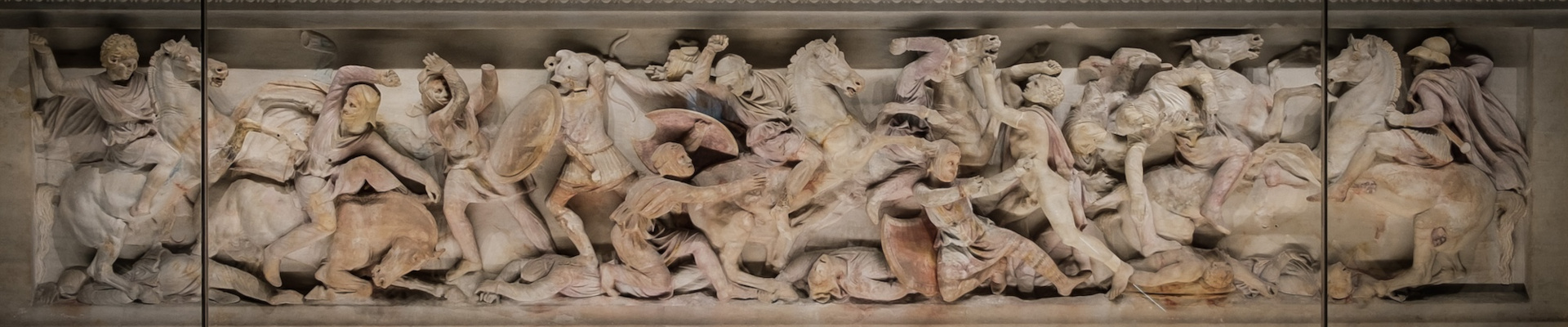
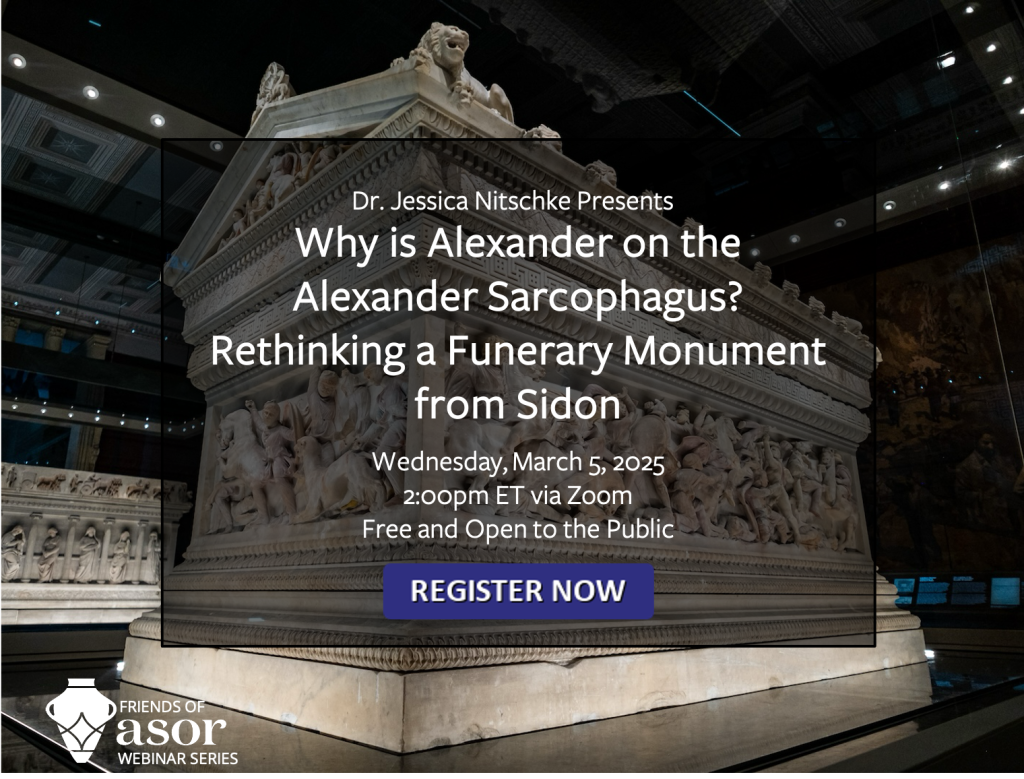

The Alexander Sarcophagus. © Jessica Nitschke
With its dazzling sculpted decoration, the so-called Alexander Sarcophagus from Sidon is one of the most celebrated works of art from antiquity. Created not long after Alexander’s death at the end of the 4th century BCE and buried in a deep underground tomb, the monument carries a relief of the conqueror battling Persians while wearing a lion-skin headdress. This divine attribute was closely associated with Herakles, whom both Greeks and Phoenicians identified with the Tyrian hero-god Melqart.
This talk will explore the sarcophagus and its relief decoration to better understand Alexander’s depiction, taking into consideration the monument’s archaeological context, contemporary historical events, and Phoenician funerary beliefs. Especially, it will examine the sarcophagus in light of the seven-month siege of Tyre — a conflict provoked by Alexander’s claims of kinship to Herakles/Melqart — and attempt to explain why the patron might have wanted to depict Alexander on his tomb in such a way that draws attention to this devastating event.
 Jessica Nitschke is a Research Fellow and contract Lecturer in the Department of Ancient Studies at Stellenbosch University in South Africa; she is also the editor of ASOR’s outreach publication The Ancient Near East Today. Her research concerns the history and archaeology of the eastern Mediterranean in the first millennium BCE, especially interconnections between the Phoenicians, the Greek world, and Egypt. She co-edited Postcolonialism, Heritage, and the Built Environment: New Approaches to Architecture in Archaeology, published by Springer in 2020, and is currently working on a monograph on the Alexander Sarcophagus. She has carried out archaeological fieldwork at Tel Dor (Israel) and Tell Timai (Egypt), and currently excavates at el-Hibeh as part of the UC Berkeley project. She received her Ph.D. in Ancient History and Mediterranean Archaeology from the University of California, Berkeley, and her BA in Near Eastern Languages and Civilizations from the University of Chicago.