We Did It! ASOR Exceeds Goal of 100 New Donors

[vc_row fullwidth=”true” attached=”true” css=”.vc_custom_1496247803139{padding-top: 0px !important;padding-right: 0px !important;padding-bottom: 0px !important;padding-left: 0px !important;}”][vc_column][mk_image src=”http://www.asor.org/wp-content/uploads/2017/07/Libya.Kabaw_.jpg” image_width=”1920″ image_height=”400″ hover=”false” margin_bottom=”0″][/vc_column][/vc_row][vc_row fullwidth=”true” css=”.vc_custom_1496682730308{padding-top: 10px !important;padding-right: 0px !important;padding-bottom: 0px !important;padding-left: 0px !important;}”][vc_column width=”1/12″ css=”.vc_custom_1496683820796{margin-right: 10px !important;}” offset=”vc_hidden-md vc_hidden-sm vc_hidden-xs”][vc_column_text]

 SHARE

[/vc_column_text][mk_image src=”http://www.asortest.org/wp-content/uploads/2017/01/social-fb-icon4.jpg” image_width=”42″ image_height=”42″ hover=”false” custom_url=”https://www.facebook.com/ASOResearch/” margin_bottom=”0″][mk_image src=”http://www.asortest.org/wp-content/uploads/2017/01/social-tw-icon4.jpg” image_width=”42″ image_height=”42″ hover=”false” custom_url=”https://twitter.com/ASOResearch?ref_src=twsrc%5Egoogle%7Ctwcamp%5Eserp%7Ctwgr%5Eauthor” margin_bottom=”0″][mk_image src=”http://www.asortest.org/wp-content/uploads/2017/01/social-in-icon4.jpg” image_width=”42″ image_height=”42″ hover=”false” custom_url=”https://www.linkedin.com/company/american-schools-of-oriental-research” margin_bottom=”0″][mk_image src=”http://www.asortest.org/wp-content/uploads/2017/01/social-ml-icon_7.jpg” image_width=”42″ image_height=”42″ hover=”false” custom_url=”mailto:asor@bu.edu” margin_bottom=”0″][mk_image src=”http://www.asortest.org/wp-content/uploads/2017/01/blog-icon3.jpg” image_width=”42″ image_height=”42″ hover=”false” custom_url=”http://asorblog.org/” margin_bottom=”0″][/vc_column][vc_column border_color=”rgba(255,255,255,0.01)” width=”1/6″ css=”.vc_custom_1496683923840{margin-right: 20px !important;border-left-width: 2px !important;padding-right: 20px !important;padding-left: 20px !important;border-left-color: #99422f !important;}”][mk_divider divider_color=”rgba(255,255,255,0.01)” thickness=”1″ margin_top=”3″ margin_bottom=”3″][vc_column_text]

ASOR BLOG

NEWS@ASOR

ANCIENT NEAR EAST TODAY

PAST ASOR NEWS, MONTH BY MONTH

FY16 HONOR ROLL OF DONORS

ASOR ANNUAL MEETING

[/vc_column_text][/vc_column][vc_column border_color=”rgba(170,170,170,0.01)” width=”1/2″ css=”.vc_custom_1487276122024{margin-right: 10px !important;margin-bottom: 30px !important;border-right-width: 2px !important;border-bottom-width: 2px !important;padding-top: 30px !important;padding-right: 30px !important;padding-left: 20px !important;background-color: #ffffff !important;border-right-color: rgba(227,228,228,0.75) !important;border-bottom-color: rgba(227,228,228,0.75) !important;}”][vc_column_text responsive_align=”left”]

125 NEW DONORS HELP ASOR EXCEED GOAL FOR A $33,000 CHALLENGE GIFT

Update (July 5, 2017)

Thanks to the generosity of 125 new donors, ASOR exceeded our goal of gaining support from 100 new donors and qualified for a $33,000 challenge gift! Thank you to everyone who made a financial contribution to ASOR during our last fiscal year, which ended on June 30.

In early May, ASOR Development Chair Ed Wright announced in a letter to ASOR members that the ASOR Board had made a $33,000 challenge gift. Board members collectively pledged to contribute $33,000 to the ASOR Annual Fund if we could recruit 100 new donors who had not yet made a gift this fiscal year (July 1, 2016 – June 30, 2017). Not only did we meet that challenge, but we surpassed it by 25 people.

All of these donors showed that not only do modest gifts add up to create significant support, they helped ASOR qualify for $33,000 that was crucial to (once again) having a balance budget.

If you are one of the 395 people who made a gift to ASOR in Fiscal Year 2017, thank you so much for your support. You not only helped us meet this challenge, but you helped ASOR have one of the highest donor participation rates (if not the highest rate) of any learned society.

We will be publishing our Honor Roll of Donors in the next News@ASOR (July 21st), and we look forward to thanking each of you by name.

If you would like to get a head start on joining the list of donors to ASOR for Fiscal Year 2018 (ends June 30, 2018), please click on the “Donate Now” button below.


Other ways you can donate:

Donate by Phone

Call ASOR at 857-277-1174

Donate by Mail

Send a check to:

ASOR
P. O. Box 15729
Boston, MA 02215

Make a Pledge (Donate Later)

Send an e-mail to ASOR[/vc_column_text][/vc_column][vc_column border_color=”rgba(170,170,170,0.01)” width=”1/6″ css=”.vc_custom_1496684098866{margin-right: 5px !important;margin-bottom: 20px !important;border-right-width: 2px !important;border-bottom-width: 2px !important;padding-top: 30px !important;padding-right: 10px !important;padding-left: 10px !important;background-color: #ffffff !important;border-right-color: rgba(227,228,228,0.75) !important;border-bottom-color: rgba(227,228,228,0.75) !important;}”][vc_wp_posts title=”BROWSE THE NEWS ARCHIVE” number=”4″][/vc_column][vc_column border_color=”rgba(170,170,170,0.01)” width=”1/6″ css=”.vc_custom_1496684008271{margin-right: 10px !important;margin-bottom: 30px !important;border-right-width: 2px !important;border-bottom-width: 2px !important;padding-top: 30px !important;padding-right: 20px !important;padding-left: 20px !important;background-color: #ffffff !important;border-right-color: rgba(227,228,228,0.75) !important;border-bottom-color: rgba(227,228,228,0.75) !important;}”][vc_column_text] [/vc_column_text][/vc_column][/vc_row]

Table of Contents for JCS 69 (2017)

[vc_row fullwidth=”true” attached=”true” css=”.vc_custom_1496247803139{padding-top: 0px !important;padding-right: 0px !important;padding-bottom: 0px !important;padding-left: 0px !important;}”][vc_column][mk_image src=”http://www.asor.org/wp-content/uploads/2017/07/AshurnasirpalI-1920×600.jpg” image_width=”1920″ image_height=”400″ hover=”false” margin_bottom=”0″][/vc_column][/vc_row][vc_row fullwidth=”true” css=”.vc_custom_1496682730308{padding-top: 10px !important;padding-right: 0px !important;padding-bottom: 0px !important;padding-left: 0px !important;}”][vc_column width=”1/12″ css=”.vc_custom_1496683820796{margin-right: 10px !important;}” offset=”vc_hidden-md vc_hidden-sm vc_hidden-xs”][vc_column_text]

 SHARE

[/vc_column_text][mk_image src=”http://www.asortest.org/wp-content/uploads/2017/01/social-fb-icon4.jpg” image_width=”42″ image_height=”42″ hover=”false” custom_url=”https://www.facebook.com/ASOResearch/” margin_bottom=”0″][mk_image src=”http://www.asortest.org/wp-content/uploads/2017/01/social-tw-icon4.jpg” image_width=”42″ image_height=”42″ hover=”false” custom_url=”https://twitter.com/ASOResearch?ref_src=twsrc%5Egoogle%7Ctwcamp%5Eserp%7Ctwgr%5Eauthor” margin_bottom=”0″][mk_image src=”http://www.asortest.org/wp-content/uploads/2017/01/social-in-icon4.jpg” image_width=”42″ image_height=”42″ hover=”false” custom_url=”https://www.linkedin.com/company/american-schools-of-oriental-research” margin_bottom=”0″][mk_image src=”http://www.asortest.org/wp-content/uploads/2017/01/social-ml-icon_7.jpg” image_width=”42″ image_height=”42″ hover=”false” custom_url=”mailto:asor@bu.edu” margin_bottom=”0″][mk_image src=”http://www.asortest.org/wp-content/uploads/2017/01/blog-icon3.jpg” image_width=”42″ image_height=”42″ hover=”false” custom_url=”http://asorblog.org/” margin_bottom=”0″][/vc_column][vc_column border_color=”rgba(255,255,255,0.01)” width=”1/6″ css=”.vc_custom_1496683923840{margin-right: 20px !important;border-left-width: 2px !important;padding-right: 20px !important;padding-left: 20px !important;border-left-color: #99422f !important;}”][mk_divider divider_color=”rgba(255,255,255,0.01)” thickness=”1″ margin_top=”3″ margin_bottom=”3″][vc_column_text]

ASOR BLOG

NEWS@ASOR

ANCIENT NEAR EAST TODAY

PAST ASOR NEWS, MONTH BY MONTH

FY16 HONOR ROLL OF DONORS

ASOR ANNUAL MEETING

[/vc_column_text][/vc_column][vc_column border_color=”rgba(170,170,170,0.01)” width=”1/2″ css=”.vc_custom_1487276122024{margin-right: 10px !important;margin-bottom: 30px !important;border-right-width: 2px !important;border-bottom-width: 2px !important;padding-top: 30px !important;padding-right: 30px !important;padding-left: 20px !important;background-color: #ffffff !important;border-right-color: rgba(227,228,228,0.75) !important;border-bottom-color: rgba(227,228,228,0.75) !important;}”][vc_column_text responsive_align=”left”]

JCS 69 (2017) TABLE OF CONTENTS

You can receive JCS (and other ASOR publications) through an ASOR Membership. Please email the Membership office if you have any questions.

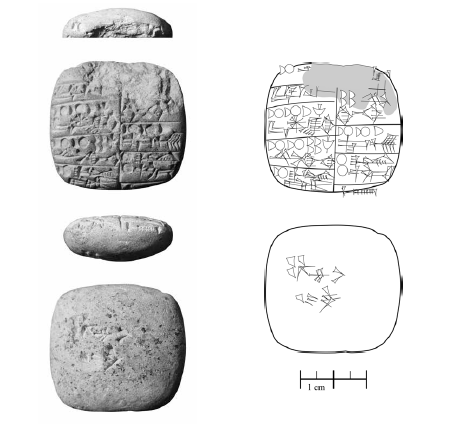
Pp. 3-31: “Nonadministrative Documents from Archaic Ur and from Early Dynastic I–II Mesopotamia: A New Textual and Archaeological Analysis,” by Camille Lecompte and Giacomo Benati

The present paper addresses a subgroup of cuneiform documents from the so-called Archaic Texts from Ur in Mesopotamia. The documents in this subgroup can be isolated within the bulk of the Archaic Texts due to their nonadministrative content. A fresh textual analysis of this dataset is combined with a discussion of the archaeological context of their provenance to highlight patterns in early Ur scribal training methods. The results of this integrated analysis are used to frame more precisely the significance of “Archaic Ur” scribal traditions, dating to the first part of the Early Dynastic period, within the cultural transition from the Late Uruk to the Early Dynastic III (“Fāra”) period in Mesopotamia.

Click here to access the above article on JSTOR (ASOR membership with online access and/or subscription to JSTOR Current Content required).

Pp. 33-47: “Three Administrative Texts from the Time of Me’annedu,” by Armando Bramanti

This article presents two land texts (allotments of field) and one grain text (barley loan) originating from Early Dynastic Zabala. The high year numbers allow for the attribution of these texts to the ensiship of Me’annedu. The edition is followed by a prosopographical study which, supported by paleographical considerations, provides some guidelines for the identification of more documents belonging to the same archive.

Click here to access the above article on JSTOR (ASOR membership with online access and/or subscription to JSTOR Current Content required).

Pp. 49-66: “The Sumerian Discourse Markers u4-ba and u4-bi-a,” by C. Jay Crisostomo

In Old Babylonian Sumerian literature, the temporal phrases u4-ba and u4-bi-a typically occur in complementary distribution. Previous analyses have focused on morphological disparity to differentiate the two. The present paper considers pragmatic functions within a larger discourse structure, analyzing them as discourse markers, specifically temporal connectives. In this study based on a corpus analysis of Old Babylonian literary compositions, I argue that in Sumerian discourse, u4-ba primarily marks perspectival shifts and refocusing, and u4-bi-a indexes sequential and consequential action.

Click here to access the above article on JSTOR (ASOR membership with online access and/or subscription to JSTOR Current Content required).

Pp. 67-108: “Goodbye, Princess: Iltani and the DUMU.MUNUS LUGAL,” by Seth Richardson

The Babylonian princess Iltani has been known to us since the 1899 copies of T. G. Pinches. Within fifty years, following a proliferation of published texts featuring the princess, it became probable there were at least two such persons by this name and title; by now, it can be shown there were at least three. But the problem hardly ends there: a close inspection of the disparate epistolary, administrative, and commercial evidence for these Iltani’s does little to clarify their activities or status, nor even their relation to the king. An analysis of that evidence leads me to propose a redefinition of the title DUMU.MUNUS LUGAL and a reinterpretation of the position and purpose of women bearing the name Iltani.

Click here to access the above article on JSTOR (ASOR membership with online access and/or subscription to JSTOR Current Content required).

Pp. 109-116: “Cultural Transformations from Mesopotamia to Hatti? The Case of the GALA,” by Ilan Peled

This article surveys the textual attestations of the cultic performer designated by the logogram GALA in Hittite texts. This logogram, which originated in Mesopotamia, was apparently used for the Hittite word šaḥtarili, but the nature of the activities performed by the Mesopotamian and Hittite cultic practitioners designated in this manner was not identical. This should be assessed against the background of the nature of Mesopotamian-Hittite connections and cultural transmissions and the multifaceted cultural influences that shaped Hittite cult.

Click here to access the above article on JSTOR (ASOR membership with online access and/or subscription to JSTOR Current Content required).

Pp. 117-124: “The Sumerogram KUR: Logogram or Determinative?,” by Maksim Kudrinski

The article deals with the problem of finding spoken correlates for combinations of the Sumerogram KUR and toponyms in Hittite texts. The discussion adds to our understanding of the relation between written and spoken language in the case of using foreign written templates by the Hittites.

Click here to access the above article on JSTOR (ASOR membership with online access and/or subscription to JSTOR Current Content required).

Pp. 125-150: “Teratomancy at Tigunānum: Structure, Hermeneutics, and Weltanschauung of a Northern Mesopotamian Omen Corpus,” by Nicla De Zorzi

This article examines the inner structure, building principles, and hermeneutic code of a group of late Middle Bronze age teratomantic tablets from Tigunānum in northern Mesopotamia. While in the final evaluation, the Tigunānum teratomantic corpus is of southern Babylonian inspiration, it represents a very specific local reworking of this tradition. This article posits as its distinctive feature the use of a strongly gendered imagery and language that reflect the worldview of an extremely androcentric and militarized society. It also demonstrates a connection between the cultural conceptions underlying the Tigunānum omen corpus and the Old Hittite sphere, the mid-second-millennium world of northern Mesopotamia, and later Assyria.

Click here to access the above article on JSTOR (ASOR membership with online access and/or subscription to JSTOR Current Content required).

Pp. 151-191: “The Nonintercalated Lunar Calendar of the Middle Assyrian Period,” by Joshua Jeffers

Scholars generally assume that Assyria employed a luni-solar calendrical system during the Middle Assyrian period—akin to the one used in Babylonia—that kept the months of its year synchronized with the seasons of the solar year through periodic intercalation. With this understanding, the regnal dates assigned to the Middle Assyrian kings have traditionally been expressed in terms of solar years. The present article, however, argues that the Assyrians did not use this type of system. The author draws upon a variety of administrative tablets—primarily from the reigns of Shalmaneser I, Tukultī-Ninurta I, and Tiglath-pileser I—to demonstrate that the months of the Assyrian year were in fact not permanently affixed to particular seasons of the solar year, revealing that its year was not intercalated and was thus perpetually rotating slowly through the solar year. This article also explores how such a calendrical system impacts the Middle Assyrian kings’ regnal dates, which would need to be lowered given that the unadjusted Assyrian lunar year was slightly shorter than its solar counterpart.

Click here to access the above article on JSTOR (ASOR membership with online access and/or subscription to JSTOR Current Content required).

Pp. 193-202: “The Case Marking of Sumerograms in Hittite,” Mojca Cajnko

The paper begins with a brief introduction to case and case marking and a description of the Hittite corpus and the corpus of the research. The main part is devoted to the case marking of Sumerograms, an as yet unresearched and undescribed topic in Hittitology. The paper examines different possibilities for the case marking of Sumerograms on the level of the sentence and the functional value of phonetic complements. It also attempts to discern whether competition between formally case-marked and case-unmarked Sumerograms in the grammatical roles of subject and direct object was driven by grammatical factors, economy of writing or by other reasons.

Click here to access the above article on JSTOR (ASOR membership with online access and/or subscription to JSTOR Current Content required).

Pp. 203-212: “Esarhaddon’s Prayer in the Inscription AsBbA as Related to the mīs pî Ritual,” by Amitai Baruchi-Unna

The prayer of Esarhaddon, incorporated in the inscription AsBbA, is the first prayer in an Assyrian royal inscription that is presented as a verbatim citation. The aim of this paper is to delineate the historiographical background for this innovation in a genre usually described as routine and formalistic. By examining descriptions of prayers said to have been recited by the king in Assyrian royal inscriptions, I analyze Esarhaddon’s prayer from the aspects of its content, context, and possible linkage to prayers external to the royal inscriptions. Specifically, I examine the possible relation between the prayer in this inscription and the mīs pî ritual performed during the last phases of the process of making a divine image. This comprehensive analysis suggests that the king’s prayer had been part of an early stage of such a ritual and was available to the authors of the Esarhaddon inscription.

Click here to access the above article on JSTOR (ASOR membership with online access and/or subscription to JSTOR Current Content required).

Pp. 213-220: “Comment Presentifier l’Invisible? Reflexions autour des termes ṣalmu, tamšīlu et uṣurtu,” by Jean-Jacques Glassner

Les Mésopotamiens créèrent des objets, des images et des signes qui avaient une fonction précise. À la suite d’une cristallisation de concepts produite par l’archéologie, on a pris l’habitude de parler à leur propos de « représentations ». Il est préférable d’y voir davantage des « présentification ». Tel fut le sens de šlm dans la Genèse, à propos du premier homme qui fut « à l’image de Dieu », entendons qu’il fut la manifestation de la puissance divine.

Click here to access the above article on JSTOR (ASOR membership with online access and/or subscription to JSTOR Current Content required).

Pp. 221-246: “From Text to Reading in Enūma Eliš,” by Johannes Haubold

This article makes two main points. First, the transmitted text of Enūma eliš can be more reliably construed than has hitherto been assumed, provided we take seriously the spelling of the manuscripts and the rules of Akkadian grammar. If we do this, and that is my second point, we can also make progress at the level of interpretation. To illustrate these claims, I look at two passages that have caused difficulties to modern readers. In Enūma eliš I.1–10 we encounter some forms that seem prima facie to defy the normal rules of Akkadian grammar. Through careful analysis of spelling, syntax, and poetic context I show that the text as it stands can in fact be securely construed. I then turn to a passage that the poet himself introduces as a masterpiece of verbal craft. In Enūma eliš II.61–70 the god Ea soothes the excited Anšar by reassuring him that he has the situation under control. I argue that existing translations misconstrue the personal pronoun šâši and consequently misinterpret the climactic final couplet of the speech. Clarifying the grammar of the passage enables us to establish not only what the text says, but also to appreciate it better.

Click here to access the above article on JSTOR (ASOR membership with online access and/or subscription to JSTOR Current Content required).

Pp. 247-260: “Additional MUL.APIN Fragments in the British Museum,” by Jeanette C. Fincke

The edition of the series MUL.APIN by Hermann Hunger and David Pingree (1989) granted modern scholars access to the rather objective descriptions of the stars, the intercalation scheme and the lengths of days and nights compiled by Mesopotamian astronomers in the first millennium BCE. This article provides the publication of three more Neo-Assyrian exemplars from Nineveh, and joins made by Enrique Jiménez, Irving Finkel, and me to two Late Babylonian fragments that have already been used in the edition.

Click here to access the above article on JSTOR (ASOR membership with online access and/or subscription to JSTOR Current Content required).

[/vc_column_text][mk_divider][vc_column_text]To view the entire article on JSTOR, click here.[/vc_column_text][/vc_column][vc_column border_color=”rgba(170,170,170,0.01)” width=”1/6″ css=”.vc_custom_1496684098866{margin-right: 5px !important;margin-bottom: 20px !important;border-right-width: 2px !important;border-bottom-width: 2px !important;padding-top: 30px !important;padding-right: 10px !important;padding-left: 10px !important;background-color: #ffffff !important;border-right-color: rgba(227,228,228,0.75) !important;border-bottom-color: rgba(227,228,228,0.75) !important;}”][vc_wp_posts title=”BROWSE THE NEWS ARCHIVE” number=”4″][/vc_column][vc_column border_color=”rgba(170,170,170,0.01)” width=”1/6″ css=”.vc_custom_1496684008271{margin-right: 10px !important;margin-bottom: 30px !important;border-right-width: 2px !important;border-bottom-width: 2px !important;padding-top: 30px !important;padding-right: 20px !important;padding-left: 20px !important;background-color: #ffffff !important;border-right-color: rgba(227,228,228,0.75) !important;border-bottom-color: rgba(227,228,228,0.75) !important;}”][vc_column_text] [/vc_column_text][/vc_column][/vc_row]

FINANCIAL DOCUMENTS

[vc_row fullwidth=”true” css=”.vc_custom_1490224714943{padding-top: 0px !important;padding-right: 0px !important;padding-bottom: 0px !important;padding-left: 0px !important;}”][vc_column][mk_edge_slider slides=”30145″ full_height=”false” height=”400″ parallax=”true”][/vc_column][/vc_row][vc_row css=”.vc_custom_1490367178671{margin-bottom: 20px !important;padding-top: 0px !important;padding-right: 0px !important;padding-bottom: 0px !important;padding-left: 0px !important;}”][vc_column][vc_column_text][/vc_column_text][/vc_column][/vc_row][vc_row fullwidth=”true” css=”.vc_custom_1490225468623{padding-top: 0px !important;padding-right: 0px !important;padding-bottom: 0px !important;padding-left: 0px !important;}”][vc_column width=”1/12″ css=”.vc_custom_1490225195470{margin-right: 10px !important;}” offset=”vc_hidden-sm vc_hidden-xs”][vc_column_text]

  SHARE

[/vc_column_text][mk_image src=”http://www.asortest.org/wp-content/uploads/2017/01/social-fb-icon4.jpg” image_width=”42″ image_height=”42″ hover=”false” custom_url=”https://www.facebook.com/ASOResearch/” margin_bottom=”0″][mk_image src=”http://www.asortest.org/wp-content/uploads/2017/01/social-tw-icon4.jpg” image_width=”42″ image_height=”42″ hover=”false” custom_url=”https://twitter.com/ASOResearch?ref_src=twsrc%5Egoogle%7Ctwcamp%5Eserp%7Ctwgr%5Eauthor” margin_bottom=”0″][mk_image src=”http://www.asortest.org/wp-content/uploads/2017/01/social-in-icon4.jpg” image_width=”42″ image_height=”42″ hover=”false” custom_url=”https://www.linkedin.com/company/american-schools-of-oriental-research” margin_bottom=”0″][mk_image src=”http://www.asortest.org/wp-content/uploads/2017/01/social-ml-icon_7.jpg” image_width=”42″ image_height=”42″ hover=”false” custom_url=”mailto:asor@bu.edu” margin_bottom=”0″][mk_image src=”http://www.asortest.org/wp-content/uploads/2017/01/blog-icon3.jpg” image_width=”42″ image_height=”42″ hover=”false” custom_url=”http://asorblog.org/” margin_bottom=”0″][/vc_column][vc_column border_color=”rgba(255,255,255,0.01)” width=”1/6″ css=”.vc_custom_1490365673198{margin-right: 20px !important;border-left-width: 2px !important;padding-right: 20px !important;padding-left: 20px !important;border-left-color: #99422f !important;}” el_class=”sticky-sidenav”][mk_divider divider_color=”rgba(255,255,255,0.01)” thickness=”1″ margin_top=”3″ margin_bottom=”3″][vc_column_text]

IRS Determination Letter (confirming 501(c)(3) status)

[/vc_column_text][mk_header menu_location=”second-menu” show_logo=”false” show_search=”false” show_cart=”false”][/vc_column][vc_column border_color=”rgba(170,170,170,0.01)” width=”1/2″ css=”.vc_custom_1490225606852{margin-right: 10px !important;margin-bottom: 30px !important;border-right-width: 2px !important;border-bottom-width: 2px !important;padding-top: 30px !important;padding-right: 30px !important;padding-left: 20px !important;background-color: #ffffff !important;border-right-color: rgba(227,228,228,0.75) !important;border-bottom-color: rgba(227,228,228,0.75) !important;}”][vc_column_text responsive_align=”left”]

FINANCIAL DOCUMENTS

On this page, you will find ASOR’s audited financial statements and our IRS Form 990 from the last eight years.

Audited Financial Statements

  • Fiscal Year 2009 Audit (pdf)
  • Fiscal Year 2010 Audit (pdf)
  • Fiscal Year 2011 Audit (pdf)
  • Fiscal Year 2012 Audit (pdf)
  • Fiscal Year 2013 Audit (pdf)
  • Fiscal Year 2014 Audit (pdf)
  • Fiscal Year 2015 Audit (pdf)
  • Fiscal Year 2016 Audit (pdf)

Form 990

  • Fiscal Year 2009 Form 990 (pdf)
  • Fiscal Year 2010 Form 990 (pdf)
  • Fiscal Year 2011 Form 990 (pdf)
  • Fiscal Year 2012 Form 990 (pdf)
  • Fiscal Year 2013 Form 990 (pdf)
  • Fiscal Year 2014 Form 990 (pdf)
  • Fiscal Year 2015 Form 990 (pdf)
  • Fiscal Year 2016 Form 990 (pdf)
[/vc_column_text][/vc_column][vc_column border_color=”rgba(170,170,170,0.01)” width=”1/6″ css=”.vc_custom_1490571679059{margin-right: 10px !important;margin-bottom: 30px !important;border-right-width: 2px !important;border-bottom-width: 2px !important;padding-top: 30px !important;padding-right: 20px !important;padding-left: 20px !important;background-color: #ffffff !important;border-right-color: rgba(227,228,228,0.75) !important;border-bottom-color: rgba(227,228,228,0.75) !important;}”][vc_wp_posts title=”BROWSE THE NEWS ARCHIVE” number=”4″][/vc_column][vc_column border_color=”rgba(170,170,170,0.01)” width=”1/6″ css=”.vc_custom_1490225688999{margin-right: 10px !important;margin-bottom: 30px !important;border-right-width: 2px !important;border-bottom-width: 2px !important;padding-top: 30px !important;padding-right: 30px !important;padding-left: 20px !important;background-color: #ffffff !important;border-right-color: rgba(227,228,228,0.75) !important;border-bottom-color: rgba(227,228,228,0.75) !important;}”][vc_column_text] [/vc_column_text][/vc_column][/vc_row][vc_row][vc_column][vc_column_text] [/vc_column_text][/vc_column][/vc_row]
Table of Contents for NEA 80:2 (June 2017)

[vc_row fullwidth=”true” attached=”true” css=”.vc_custom_1496247803139{padding-top: 0px !important;padding-right: 0px !important;padding-bottom: 0px !important;padding-left: 0px !important;}”][vc_column][mk_image src=”http://www.asor.org/wp-content/uploads/2017/07/nea-banner-80-2.jpg” image_width=”1920″ image_height=”600″ crop=”false” hover=”false” margin_bottom=”0″][/vc_column][/vc_row][vc_row fullwidth=”true” css=”.vc_custom_1496682730308{padding-top: 10px !important;padding-right: 0px !important;padding-bottom: 0px !important;padding-left: 0px !important;}”][vc_column width=”1/12″ css=”.vc_custom_1496683820796{margin-right: 10px !important;}” offset=”vc_hidden-md vc_hidden-sm vc_hidden-xs”][vc_column_text]

 SHARE

[/vc_column_text][mk_image src=”http://www.asortest.org/wp-content/uploads/2017/01/social-fb-icon4.jpg” image_width=”42″ image_height=”42″ hover=”false” custom_url=”https://www.facebook.com/ASOResearch/” margin_bottom=”0″][mk_image src=”http://www.asortest.org/wp-content/uploads/2017/01/social-tw-icon4.jpg” image_width=”42″ image_height=”42″ hover=”false” custom_url=”https://twitter.com/ASOResearch?ref_src=twsrc%5Egoogle%7Ctwcamp%5Eserp%7Ctwgr%5Eauthor” margin_bottom=”0″][mk_image src=”http://www.asortest.org/wp-content/uploads/2017/01/social-in-icon4.jpg” image_width=”42″ image_height=”42″ hover=”false” custom_url=”https://www.linkedin.com/company/american-schools-of-oriental-research” margin_bottom=”0″][mk_image src=”http://www.asortest.org/wp-content/uploads/2017/01/social-ml-icon_7.jpg” image_width=”42″ image_height=”42″ hover=”false” custom_url=”mailto:asor@bu.edu” margin_bottom=”0″][mk_image src=”http://www.asortest.org/wp-content/uploads/2017/01/blog-icon3.jpg” image_width=”42″ image_height=”42″ hover=”false” custom_url=”http://asorblog.org/” margin_bottom=”0″][/vc_column][vc_column border_color=”rgba(255,255,255,0.01)” width=”1/6″ css=”.vc_custom_1496683923840{margin-right: 20px !important;border-left-width: 2px !important;padding-right: 20px !important;padding-left: 20px !important;border-left-color: #99422f !important;}”][mk_divider divider_color=”rgba(255,255,255,0.01)” thickness=”1″ margin_top=”3″ margin_bottom=”3″][vc_column_text]

ASOR BLOG

NEWS@ASOR E-NEWSLETTER

ANCIENT NEAR EAST TODAY E-NEWSLETTER

PAST ASOR NEWS, MONTH BY MONTH

FY16 HONOR ROLL OF DONORS

ASOR ANNUAL MEETING

[/vc_column_text][/vc_column][vc_column border_color=”rgba(170,170,170,0.01)” width=”1/2″ css=”.vc_custom_1487276122024{margin-right: 10px !important;margin-bottom: 30px !important;border-right-width: 2px !important;border-bottom-width: 2px !important;padding-top: 30px !important;padding-right: 30px !important;padding-left: 20px !important;background-color: #ffffff !important;border-right-color: rgba(227,228,228,0.75) !important;border-bottom-color: rgba(227,228,228,0.75) !important;}”][vc_column_text responsive_align=”left”]

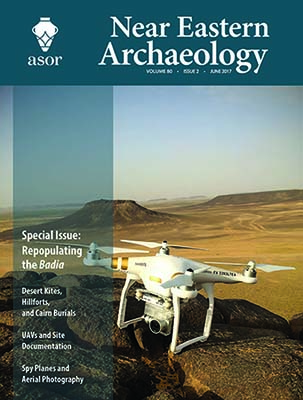
Table of Contents for Near Eastern Archaeology 80:2 (June 2017)

Subscription Options
You can receive NEA (and other ASOR publications) through an ASOR Membership or through an Individual Subscription. Single issues (subject to availability) are available for purchase, with ASOR members receiving a discount. Please email us if you have any questions.

Pp. 48–72: “Exploring the Badia,” by Alison Betts

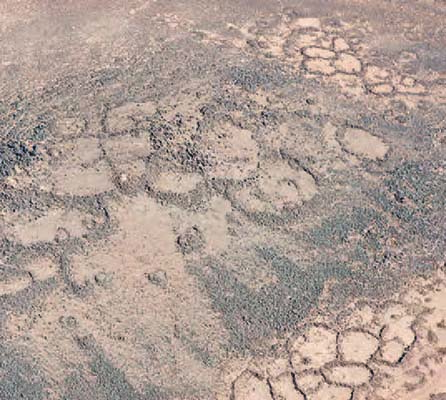
The east Jordan badia is a fascinating but difficult landscape, an attribute that has protected the record of its historic and prehistoric past to an extraordinary degree. It is rich in rock art, graves, hunting traps, seasonal settlements and fortified sites that have remained almost undisturbed for thousands of years. Archaeological exploration of this region has also been slow, primarily due to the challenges of work in this rocky, semiarid region. However, the past few decades have seen a surge in new research that continues to uncover unexpected and remarkable aspects of the history of the badia. This article outlines the history of exploration and research in the badia and its historical significance.

Click here to access the above article on JSTOR (ASOR membership with online access and/or subscription to JSTOR Current Content required).

Pp. 74–83: “Historical Imagery of Desert Kites in Eastern Jordan,” by Emily Hammer and Anthony Lauricella

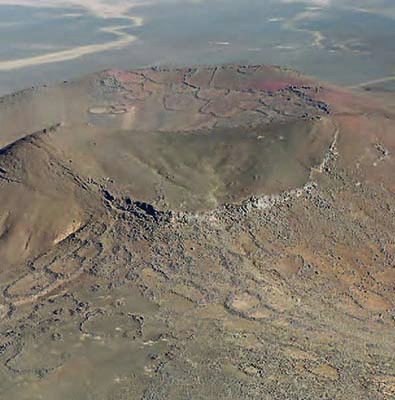
Large mass-kill hunting traps known as desert kites are the badia’s most visually striking and long-studied archaeological features. Kites are best understood from a vertical perspective with help from aerial and satellite imagery, most commonly modern Google Earth imagery. The declassification of historical U2 spy-plane imagery from 1958–1960 provides a new dataset with which to reexamine kites and their spatial distribution. The distribution of desert kites as it appeared over fifty years ago has been mapped, allowing us to draw conclusions about the long-term preservation of kites and the relationship of kites to each other and to their environment.

Click here to access the above article on JSTOR (ASOR membership with online access and/or subscription to JSTOR Current Content required).

Pp. 84–93: “The Badia from Above: Successes, Limitations, and Potential,” by Robert Bewley and Rebecca Repper

Aerial photography and reconnaissance for archaeology was pioneered in the Middle East a century ago. This article highlights the work of the Aerial Archaeology Project in the northern and eastern badia of Jordan since 1997—the only aerial archaeology project outside Europe. The achievements of aerial reconnaissance in understanding the complex and concentrated archaeology of the badia as well as the importance of collaboration with other archaeologists are emphasized.

Click here to access the above article on JSTOR (ASOR membership with online access and/or subscription to JSTOR Current Content required).

Pp. 94–101: “The Late Epipalaeolithic and Early Neolithic in the Jordanian Badia: Recent Fieldwork around the Qa’ Shubayqa,” by Tobias Richter

Until recently the late Epipalaeolithic and early Neolithic occupation of Jordan’s eastern badia was poorly understood and developments in this region were considered as secondary to those in the Jordan Valley or elsewhere. Recent fieldwork in the Qa’ Shubayqa are has led to the discovery of a dense cluster of late Epipalaeolithic and Pre-Pottery Neolithic A (PPNA) sites, which shed a different light on this phase of human settlement in eastern Jordan. This evidence demonstrates that the eastern badia was not a peripheral region during the late Pleistocene and early Holocene, but an intensively settled region.

Click here to access the above article on JSTOR (ASOR membership with online access and/or subscription to JSTOR Current Content required).

Pp. 102–113: “The Late Neolithic Presence in the Black Desert,” by Yorke M. Rowan, Gary Rollefson, Alexander Wasse, Austin “Chad” Hill, and Morag M. Kersel

Major cultural transformations took place in the southern Levant during the late prehistoric periods (ca. mid-seventh through fourth millenna b.c.e.). General syntheses rarely include more than cursory mention of the more arid regions of the southern Levant (Negev, eastern and southern Jordan). The Eastern Badia Archaeological Project [EBAP] study area comprises a west–east transect across the southern part of the eastern badia, selected to include a variety of ecological zones. To date, this field research project has focused on two primary study areas in the Black Desert in Jordan’s panhandle: Wisad Pools and Wadi al-Qattafi. In both areas, excavation combined with pedestrian and aerial survey record an apparent florescence of building and intensive exploitation of the landscape that contradicts previous assumptions that the region was used only intermittently by late prehistoric people. The many substantial well-constructed Late Neolithic buildings, evidence for trees and marshy plants, and extensive systems of kites seem to suggest that, rather than a virtually empty region, the Black Desert was once rich in animals, plants and people.

Click here to access the above article on JSTOR (ASOR membership with online access and/or subscription to JSTOR Current Content required).

Pp. 114–123: “Droning on in the Badia: UAVs and Site Documentation at Wadi al-Qattafi,” by Austin “Chad” Hill and Yorke Rowan

Drones, or Unpiloted Aerial Vehicles (UAVs), are quickly changing approaches to archaeological mapping. They are effective tools for documenting smaller ancient features that might be missed by the resolution limitations of satellite imagery. As part of the Eastern Badia Archaeological Project, this article presents the preliminary results of a large-scale aerial survey of Wadi al-Qattafi, Jordan undertaken to map the kites and smaller features concentrated around and on top of the basalt mesas in the area. A combination of fixed and rotary wing aircraft was used to record approximately 20,000 images across 32 square kilometers of the survey area. The resulting orthophotographs and digital elevation models (DEMs) provide a high-resolution recording of the landscape. Ultimately this allows for mapping and identification of even the smallest anthropogenic features, as well as an analysis of how larger features were constructed to utilize local topography.
Click here to access this article on JSTOR (ASOR membership or subscription to JSTOR Current Content required).

Click here to access the above article on JSTOR (ASOR membership with online access and/or subscription to JSTOR Current Content required).

Pp. 124–131: “The Chalcolithic/Early Bronze Age Hillfort Phenomenon in the Northern Badia,” by Bernd Müller-Neuhof

The basalt and limestone desert of the Jawa hinterland in NE Jordan has been the focus of intensive archaeological research for the past six years. Surveys revealed abundant evidence for Chalcolithic or Early Bronze Age activities in this region. The preliminary results of these investigations have already led to a change in the earlier perception of this region and especially the basalt desert. Among the major discoveries are the identification of several hillfort sites in the basalt desert, which suggest a permanent occupation in this arid region. In addition, evidence for artificial irrigation with rainwater harvesting in the vicinity of these settlements underscores the potential for agriculture in this region. Soundings and excavations recovered several 14C dates from these sites, which prove a Late Chalcolithic/Early Bronze Age I occupation.

Click here to access the above article on JSTOR (ASOR membership with online access and/or subscription to JSTOR Current Content required).

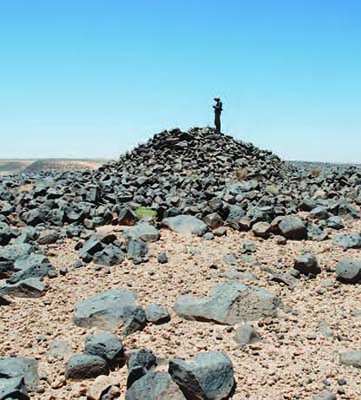
Pp. 132–139: “Nothing but Cold Ashes? The Cairn Burials of Jebel Qurma, Northeastern Jordan,” by Peter M.M.G. Akkermans and Merel L. Brüning

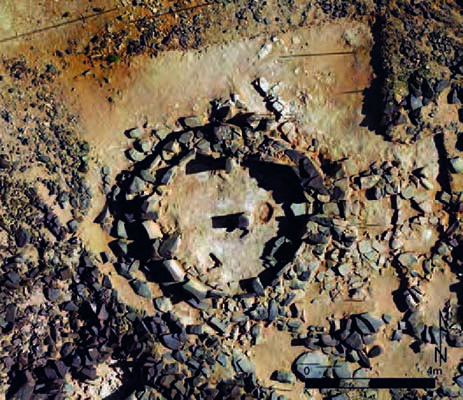
Throughout the basaltic uplands of northeastern Jordan, there are countless large and small mounds of stone (cairns), which are the burial places of people who roamed the desert many hundreds or thousands of years ago. These numerous graves have never been systematically investigated, and little is known about their construction, date, and variability, let alone about their deceased occupants. This picture is now changing owing to an ongoing program of survey and excavation in the Jebel Qurma region, close to the border of Jordan and Saudi Arabia. These investigations point towards complex and entangled arrangements of cairn use and mortuary practices over time, when Early Bronze Age cemeteries are replaced by singular, impressive tower tombs and conical ring cairns in the Hellenistic to Byzantine period. The reuse of these tombs is a recurrent feature, emphasizing the focal and enduring role of these monuments to both the dead and the living.

Click here to access the above article on JSTOR (ASOR membership with online access and/or subscription to JSTOR Current Content required).

[/vc_column_text][/vc_column][vc_column border_color=”rgba(170,170,170,0.01)” width=”1/6″ css=”.vc_custom_1496684098866{margin-right: 5px !important;margin-bottom: 20px !important;border-right-width: 2px !important;border-bottom-width: 2px !important;padding-top: 30px !important;padding-right: 10px !important;padding-left: 10px !important;background-color: #ffffff !important;border-right-color: rgba(227,228,228,0.75) !important;border-bottom-color: rgba(227,228,228,0.75) !important;}”][vc_wp_posts title=”BROWSE THE NEWS ARCHIVE” number=”4″][/vc_column][vc_column border_color=”rgba(170,170,170,0.01)” width=”1/6″ css=”.vc_custom_1496684008271{margin-right: 10px !important;margin-bottom: 30px !important;border-right-width: 2px !important;border-bottom-width: 2px !important;padding-top: 30px !important;padding-right: 20px !important;padding-left: 20px !important;background-color: #ffffff !important;border-right-color: rgba(227,228,228,0.75) !important;border-bottom-color: rgba(227,228,228,0.75) !important;}”][vc_column_text] [/vc_column_text][/vc_column][/vc_row]

Friends of ASOR Fellowship Recipient: Cecelia Chisdock

[vc_row fullwidth=”true” attached=”true” css=”.vc_custom_1496247803139{padding-top: 0px !important;padding-right: 0px !important;padding-bottom: 0px !important;padding-left: 0px !important;}”][vc_column][mk_image src=”http://www.asortest.org/wp-content/uploads/2017/06/103InteriorStadium2ndcCEPerge.JPG.jpg” image_width=”1920″ image_height=”600″ crop=”false” hover=”false” margin_bottom=”0″][/vc_column][/vc_row][vc_row fullwidth=”true” css=”.vc_custom_1496682730308{padding-top: 10px !important;padding-right: 0px !important;padding-bottom: 0px !important;padding-left: 0px !important;}”][vc_column width=”1/12″ css=”.vc_custom_1496683820796{margin-right: 10px !important;}” offset=”vc_hidden-md vc_hidden-sm vc_hidden-xs”][vc_column_text]

 SHARE

[/vc_column_text][mk_image src=”http://www.asortest.org/wp-content/uploads/2017/01/social-fb-icon4.jpg” image_width=”42″ image_height=”42″ hover=”false” custom_url=”https://www.facebook.com/ASOResearch/” margin_bottom=”0″][mk_image src=”http://www.asortest.org/wp-content/uploads/2017/01/social-tw-icon4.jpg” image_width=”42″ image_height=”42″ hover=”false” custom_url=”https://twitter.com/ASOResearch?ref_src=twsrc%5Egoogle%7Ctwcamp%5Eserp%7Ctwgr%5Eauthor” margin_bottom=”0″][mk_image src=”http://www.asortest.org/wp-content/uploads/2017/01/social-in-icon4.jpg” image_width=”42″ image_height=”42″ hover=”false” custom_url=”https://www.linkedin.com/company/american-schools-of-oriental-research” margin_bottom=”0″][mk_image src=”http://www.asortest.org/wp-content/uploads/2017/01/social-ml-icon_7.jpg” image_width=”42″ image_height=”42″ hover=”false” custom_url=”mailto:asor@bu.edu” margin_bottom=”0″][mk_image src=”http://www.asortest.org/wp-content/uploads/2017/01/blog-icon3.jpg” image_width=”42″ image_height=”42″ hover=”false” custom_url=”http://asorblog.org/” margin_bottom=”0″][/vc_column][vc_column border_color=”rgba(255,255,255,0.01)” width=”1/6″ css=”.vc_custom_1496683923840{margin-right: 20px !important;border-left-width: 2px !important;padding-right: 20px !important;padding-left: 20px !important;border-left-color: #99422f !important;}”][mk_divider divider_color=”rgba(255,255,255,0.01)” thickness=”1″ margin_top=”3″ margin_bottom=”3″][vc_column_text]

ASOR BLOG

NEWS@ASOR E-NEWSLETTER

ANCIENT NEAR EAST TODAY E-NEWSLETTER

PAST ASOR NEWS, MONTH BY MONTH

FY16 HONOR ROLL OF DONORS

ASOR ANNUAL MEETING

[/vc_column_text][/vc_column][vc_column border_color=”rgba(170,170,170,0.01)” width=”1/2″ css=”.vc_custom_1487276122024{margin-right: 10px !important;margin-bottom: 30px !important;border-right-width: 2px !important;border-bottom-width: 2px !important;padding-top: 30px !important;padding-right: 30px !important;padding-left: 20px !important;background-color: #ffffff !important;border-right-color: rgba(227,228,228,0.75) !important;border-bottom-color: rgba(227,228,228,0.75) !important;}”][vc_column_text responsive_align=”left”]

FRIENDS OF ASOR FELLOWSHIP RECIPIENT: CECELIA CHISDOCK

Cecelia Chisdock is the very first recipient of the new Friends of ASOR Fellowship, a fellowship funded exclusively by gifts from our Friends of ASOR. Throughout the summer, Cecelia will update us on how her first dig is going.

“This summer with the help of the Friends of ASOR Fellowship, I will be going on my first dig. I’ll be headed to the site of Tel Kabri in Israel, a Canaanite palace which has not only Aegean-style floor paintings but is also home to the oldest palatial wine cellar in the Near East. This season is focused on continuing the excavation of the wine cellar and uncovering more storage rooms in the palace. I’m mostly looking forward to being able to apply and see firsthand everything I’ve learned in my studies. Aside from gaining this invaluable experience, I am excited to be able to explore not only the site but other historical areas of Israel in my free time. I’ll be using the funds I received from the generous Friends of ASOR Fellowship to help finance both my attendance to the field school and my plane fare. For this amazing opportunity to learn and experience archaeology I would like to thank all the Friends of ASOR for helping me to participate in this fantastic chance to further my education and, hopefully, my career!”[/vc_column_text][/vc_column][vc_column border_color=”rgba(170,170,170,0.01)” width=”1/6″ css=”.vc_custom_1496684098866{margin-right: 5px !important;margin-bottom: 20px !important;border-right-width: 2px !important;border-bottom-width: 2px !important;padding-top: 30px !important;padding-right: 10px !important;padding-left: 10px !important;background-color: #ffffff !important;border-right-color: rgba(227,228,228,0.75) !important;border-bottom-color: rgba(227,228,228,0.75) !important;}”][vc_wp_posts title=”BROWSE THE NEWS ARCHIVE” number=”4″][/vc_column][vc_column border_color=”rgba(170,170,170,0.01)” width=”1/6″ css=”.vc_custom_1496684008271{margin-right: 10px !important;margin-bottom: 30px !important;border-right-width: 2px !important;border-bottom-width: 2px !important;padding-top: 30px !important;padding-right: 20px !important;padding-left: 20px !important;background-color: #ffffff !important;border-right-color: rgba(227,228,228,0.75) !important;border-bottom-color: rgba(227,228,228,0.75) !important;}”][vc_column_text] [/vc_column_text][/vc_column][/vc_row]

Update (June 22): 5 More Donors Needed To Qualify For a $33,000 Challenge Gift

[vc_row fullwidth=”true” attached=”true” css=”.vc_custom_1496247803139{padding-top: 0px !important;padding-right: 0px !important;padding-bottom: 0px !important;padding-left: 0px !important;}”][vc_column][mk_image src=”http://www.asortest.org/wp-content/uploads/2017/06/103InteriorStadium2ndcCEPerge.JPG.jpg” image_width=”1920″ image_height=”600″ crop=”false” hover=”false” margin_bottom=”0″][/vc_column][/vc_row][vc_row fullwidth=”true” css=”.vc_custom_1496682730308{padding-top: 10px !important;padding-right: 0px !important;padding-bottom: 0px !important;padding-left: 0px !important;}”][vc_column width=”1/12″ css=”.vc_custom_1496683820796{margin-right: 10px !important;}” offset=”vc_hidden-md vc_hidden-sm vc_hidden-xs”][vc_column_text]

 SHARE

[/vc_column_text][mk_image src=”http://www.asortest.org/wp-content/uploads/2017/01/social-fb-icon4.jpg” image_width=”42″ image_height=”42″ hover=”false” custom_url=”https://www.facebook.com/ASOResearch/” margin_bottom=”0″][mk_image src=”http://www.asortest.org/wp-content/uploads/2017/01/social-tw-icon4.jpg” image_width=”42″ image_height=”42″ hover=”false” custom_url=”https://twitter.com/ASOResearch?ref_src=twsrc%5Egoogle%7Ctwcamp%5Eserp%7Ctwgr%5Eauthor” margin_bottom=”0″][mk_image src=”http://www.asortest.org/wp-content/uploads/2017/01/social-in-icon4.jpg” image_width=”42″ image_height=”42″ hover=”false” custom_url=”https://www.linkedin.com/company/american-schools-of-oriental-research” margin_bottom=”0″][mk_image src=”http://www.asortest.org/wp-content/uploads/2017/01/social-ml-icon_7.jpg” image_width=”42″ image_height=”42″ hover=”false” custom_url=”mailto:asor@bu.edu” margin_bottom=”0″][mk_image src=”http://www.asortest.org/wp-content/uploads/2017/01/blog-icon3.jpg” image_width=”42″ image_height=”42″ hover=”false” custom_url=”http://asorblog.org/” margin_bottom=”0″][/vc_column][vc_column border_color=”rgba(255,255,255,0.01)” width=”1/6″ css=”.vc_custom_1496683923840{margin-right: 20px !important;border-left-width: 2px !important;padding-right: 20px !important;padding-left: 20px !important;border-left-color: #99422f !important;}”][mk_divider divider_color=”rgba(255,255,255,0.01)” thickness=”1″ margin_top=”3″ margin_bottom=”3″][vc_column_text]

ASOR BLOG

NEWS@ASOR E-NEWSLETTER

ANCIENT NEAR EAST TODAY E-NEWSLETTER

PAST ASOR NEWS, MONTH BY MONTH

FY16 HONOR ROLL OF DONORS

ASOR ANNUAL MEETING

[/vc_column_text][/vc_column][vc_column border_color=”rgba(170,170,170,0.01)” width=”1/2″ css=”.vc_custom_1487276122024{margin-right: 10px !important;margin-bottom: 30px !important;border-right-width: 2px !important;border-bottom-width: 2px !important;padding-top: 30px !important;padding-right: 30px !important;padding-left: 20px !important;background-color: #ffffff !important;border-right-color: rgba(227,228,228,0.75) !important;border-bottom-color: rgba(227,228,228,0.75) !important;}”][vc_column_text responsive_align=”left”]

5 MORE DONORS NEEDED TO QUALIFY FOR A $33,000 CHALLENGE GIFT

Update (June 22)

Thanks to 95 new donors, ASOR is almost 90%  of the way to qualifying for $33,000!

In early May, ASOR Development Chair Ed Wright announced in a letter to ASOR members that the ASOR Board had made a $33,000 Challenge Gift. Board members collectively pledged to contribute $33,000 to the ASOR Annual Fund if we could recruit 100 new donors who had not yet made a gift this fiscal year (July 1, 2016 – June 30, 2017). We are getting close, but we still need 5 more people to make a gift of $10 or more by June 30th.

Not only do modest gifts add up to create significant support, now they can help ASOR qualify for $33,000 and help us have a balanced budget for the fiscal year. Do you prefer to contribute to something other than the Annual Fund? No problem! Contributions for this challenge campaign need not be limited to the Annual Fund—they may be designated for student support, fellowships, cultural heritage, endowment, publications, or any other area of ASOR’s work.

If you are one of the 365 people who has already made a gift to ASOR this fiscal year, thank you so much for your support. If you have not year made a gift between July 1st and June 30, please consider joining the ranks for ASOR donors. We have almost one more month to reach our goal, so please make a gift today!


Other ways you can donate:

Donate by Phone

Call ASOR (number temporarily unavailable until June 29th)

Donate by Mail

Send a check to:

ASOR
P. O. Box 15729
Boston, MA 02215

Make a Pledge (Donate Later)

Send an e-mail to ASOR[/vc_column_text][/vc_column][vc_column border_color=”rgba(170,170,170,0.01)” width=”1/6″ css=”.vc_custom_1496684098866{margin-right: 5px !important;margin-bottom: 20px !important;border-right-width: 2px !important;border-bottom-width: 2px !important;padding-top: 30px !important;padding-right: 10px !important;padding-left: 10px !important;background-color: #ffffff !important;border-right-color: rgba(227,228,228,0.75) !important;border-bottom-color: rgba(227,228,228,0.75) !important;}”][vc_wp_posts title=”BROWSE THE NEWS ARCHIVE” number=”4″][/vc_column][vc_column border_color=”rgba(170,170,170,0.01)” width=”1/6″ css=”.vc_custom_1496684008271{margin-right: 10px !important;margin-bottom: 30px !important;border-right-width: 2px !important;border-bottom-width: 2px !important;padding-top: 30px !important;padding-right: 20px !important;padding-left: 20px !important;background-color: #ffffff !important;border-right-color: rgba(227,228,228,0.75) !important;border-bottom-color: rgba(227,228,228,0.75) !important;}”][vc_column_text] [/vc_column_text][/vc_column][/vc_row]
Report from the April Executive Committee & Board of Trustees Meetings

[vc_row fullwidth=”true” attached=”true” css=”.vc_custom_1496247803139{padding-top: 0px !important;padding-right: 0px !important;padding-bottom: 0px !important;padding-left: 0px !important;}”][vc_column][mk_image src=”http://www.asortest.org/wp-content/uploads/2017/06/103InteriorStadium2ndcCEPerge.JPG.jpg” image_width=”1920″ image_height=”600″ crop=”false” hover=”false” margin_bottom=”0″][/vc_column][/vc_row][vc_row fullwidth=”true” css=”.vc_custom_1496682730308{padding-top: 10px !important;padding-right: 0px !important;padding-bottom: 0px !important;padding-left: 0px !important;}”][vc_column width=”1/12″ css=”.vc_custom_1496683820796{margin-right: 10px !important;}” offset=”vc_hidden-md vc_hidden-sm vc_hidden-xs”][vc_column_text]

 SHARE

[/vc_column_text][mk_image src=”http://www.asortest.org/wp-content/uploads/2017/01/social-fb-icon4.jpg” image_width=”42″ image_height=”42″ hover=”false” custom_url=”https://www.facebook.com/ASOResearch/” margin_bottom=”0″][mk_image src=”http://www.asortest.org/wp-content/uploads/2017/01/social-tw-icon4.jpg” image_width=”42″ image_height=”42″ hover=”false” custom_url=”https://twitter.com/ASOResearch?ref_src=twsrc%5Egoogle%7Ctwcamp%5Eserp%7Ctwgr%5Eauthor” margin_bottom=”0″][mk_image src=”http://www.asortest.org/wp-content/uploads/2017/01/social-in-icon4.jpg” image_width=”42″ image_height=”42″ hover=”false” custom_url=”https://www.linkedin.com/company/american-schools-of-oriental-research” margin_bottom=”0″][mk_image src=”http://www.asortest.org/wp-content/uploads/2017/01/social-ml-icon_7.jpg” image_width=”42″ image_height=”42″ hover=”false” custom_url=”mailto:asor@bu.edu” margin_bottom=”0″][mk_image src=”http://www.asortest.org/wp-content/uploads/2017/01/blog-icon3.jpg” image_width=”42″ image_height=”42″ hover=”false” custom_url=”http://asorblog.org/” margin_bottom=”0″][/vc_column][vc_column border_color=”rgba(255,255,255,0.01)” width=”1/6″ css=”.vc_custom_1496683923840{margin-right: 20px !important;border-left-width: 2px !important;padding-right: 20px !important;padding-left: 20px !important;border-left-color: #99422f !important;}”][mk_divider divider_color=”rgba(255,255,255,0.01)” thickness=”1″ margin_top=”3″ margin_bottom=”3″][vc_column_text]

ASOR BLOG

NEWS@ASOR E-NEWSLETTER

ANCIENT NEAR EAST TODAY E-NEWSLETTER

PAST ASOR NEWS, MONTH BY MONTH

FY16 HONOR ROLL OF DONORS

ASOR ANNUAL MEETING

[/vc_column_text][/vc_column][vc_column border_color=”rgba(170,170,170,0.01)” width=”1/2″ css=”.vc_custom_1487276122024{margin-right: 10px !important;margin-bottom: 30px !important;border-right-width: 2px !important;border-bottom-width: 2px !important;padding-top: 30px !important;padding-right: 30px !important;padding-left: 20px !important;background-color: #ffffff !important;border-right-color: rgba(227,228,228,0.75) !important;border-bottom-color: rgba(227,228,228,0.75) !important;}”][vc_column_text responsive_align=”left”]

REPORT FROM THE APRIL EXECUTIVE COMMITTEE & BOARD OF TRUSTEES MEETINGS

Susan Ackerman, ASOR President

The ASOR Budget

The major item on the agenda for the ASOR Board’s spring meetings is always the budget, both a review of the budget for the current fiscal year (FY 17), which will come to an end on June 30, and approving the budget for the upcoming fiscal year (FY 18), which starts on July 1. The FY 17 budget is balanced – indeed, almost perfectly so, as we imagine ending the year with just a small surplus of $239.34! For FY 18, the Board approved a balanced budget of just over $2,220,000.

As I remarked in my report after the April 2015 and April 2016 Board meetings, this is a rather astonishing figure for ASOR, given that as recently as FY 12, ASOR’s annual budget was $965,000. The reason for this dramatic increase is the funding we have received for ASOR’s Cultural Heritage Initiatives (CHI). This funding includes monies that comes via our cooperative agreement with the United States Department of State and also from the J. M. Kaplan Fund and the Whiting Foundation, with in-kind support from the Getty Conservation Institute, The World Monuments Fund, and Arnold and Porter, LLC.

More specifically, we were very pleased to receive a letter, about three weeks before the Board meeting, indicating that the Department of State intended to award us $900,000 to continue for a third year our collaborative “Safeguarding the Heritage of the Near East Initiative.” This new Department of State funding runs from March 31, 2017, through March 31, 2018.

As we noted in the press release that we sent to all of our members regarding this funding—we are particularly pleased that this new agreement allows us not only to continue our efforts preserve and protect the cultural heritage of Syria and Iraq, but also to extend the scope of work to include the preservation and protection of the cultural heritage of Libya. We are also very pleased that this new cooperative agreement includes increased support for in-country projects that connect local communities to historic places and heritage. For more, see as always, the ASOR CHI website.

In addition, I was pleased and proud to be able to announce to the Board at its April meeting that ASOR had been awarded a one-year, $244,000 grant from the Whiting Foundation, to fund an emergency assessment and digital preservation initiative for textual collections and repositories in Mosul. The texts to be assessed include Islamic manuscripts (folia, quires, codices, scrolls) from the rich holdings of the Mosul Central Library System, the Mosul University Library System, the Library of the Mosul Museum, and other, smaller textual repositories within Mosul, as well as cuneiform tablets, architectural and monumental inscriptions, and inscribed objects.

The grant, moreover, will pay to train local heritage professionals to conduct the assessment and preservation program. These Whiting monies thus provides not only for the preserving and protecting of Mosul’s intellectual and cultural legacy, but also for the empowerment and for the enhanced financial well-being of ASOR’s Iraqi members, colleagues, and friends.

The ASOR Office

ASOR learned in January 2016 that Boston University proposed to sell a block of nine buildings that it then owned in Kenmore Square, including 656 Beacon Street, where ASOR (and also the Archaeological Institute of America) had office space. These buildings subsequently were sold in August 2016, to a major real estate developer.

In neither case, was this information communicated to us by Boston University; rather, we learned it by reading BU’s daily e-newsletter. This means we received no concrete information from BU about what this sale would mean for us, although we heard through the grapevine that things would probably move slowly and that we would have until March 2018 to find new space.

But this is not what happened. As I wrote to the Board on March 16, 2017, we heard that afternoon from Ann Cudd, Dean of the College of Arts and Sciences at Boston University, that ASOR would have to vacate its offices at 656 Beacon Street by May 31, 2017. We did quickly decide that it was to our benefit to remain in the Boston area (and, ideally, within the BU geographical orbit) for the immediate future for several reasons, the most important being that this location serves our staff well, and the idea of moving somewhere inaccessible to our staff – and so facing the prospect of losing both our office space and our employees at the end of May – was unimaginable.

At the Board meeting on April 29th, I was able to report to the Board that we had identified two separate spaces very near our current offices in Kenmore Square to lease, one at 650 Beacon Street to house core ASOR staff and be the base for core ASOR functions; the other, .2 miles away, at 665 Beacon Street, to house the staff member who services the American Center for Oriental Research (ACOR) and the Cyprus American Archaeological Research Institute (CAARI) and to store documents and related materials that belong to ACOR and CAARI. This space could also house the Journal Exchange Program that ASOR runs on behalf of ACOR, CAARI, and AIAR. It could in addition be used by ASOR for storage and for some of its cultural heritage work.

Over the next month, we did secure leases for these two spaces – although it went down to the wire (we finally received a lease for 650 Beacon Street on May 26th, the Friday afternoon of Memorial Day weekend, for a move scheduled for Tuesday, May 30)! That lease also came with an unexpected and very unwelcome surprise: a lease period extending only to December 31, 2017, instead of December 31, 2018, as we had anticipated. It is in addition important to note that we have to pay rent for these two spaces, as opposed to the complimentary office space that Boston University has provided us for the last twenty years.

These are big changes for ASOR, of course—and, obviously, since we have a lease for 650 Beacon Street that runs only through December 31, 2017, there are more changes that are soon to come. We do have a “New Office Committee” in place, made up of six members of our Board and chaired by our Board Chair, Richard Coffman. This committee has been working diligently since last November, and continues to work, on the issue of ASOR’s next home.

But we all can help. Right now, we need suggestions, ideas, proposals, from all our members. Do you know of office space (we need about 2500-3000 square feet) available near or on a college, university, or seminary campus that ASOR might be able to rent at a reasonable cost (or, even better, space that is free)? Do you know philanthropists in your community who might like to support ASOR’s work by providing free or reduced-rent office space? Or maybe you want to give us a building. (Hey, it never hurts to ask!)

Some Happier News

The Board’s discussion of the ASOR office situation was, obviously, a difficult one, but we were able to follow it up with a preview of the new ASOR website, which is due to launch any day now. Everyone of the Board spoke enthusiastically of the design, and we hope all our members will enjoy it as well.

The Board also was pleased to hear very good news about the 2017 ASOR Annual Meeting, from the Programs Committee, which reported that it had received nearly 700 abstract submissions for the 2017 Annual Meeting program. This is as opposed to 540 abstract submissions for 2016. Because one must be a member to present at the Annual Meeting, the significant increase in abstracts submitted for 2017 has helped drive an increase in the number of ASOR members, currently about 1800 individuals (at about this time last year, the number was 1700).

In addition, the Board welcomed three new colleagues: Debra Foran, Heather Dana Davis Parker, and Elizabeth Macaulay-Lewis. We’re very happy to have these new colleagues on our Board!

Overall, the Board and Executive Committee had a busy set of meetings—but also a productive one. Even though I am worried about ASOR’s home going forward, I left the Boston meetings thankful, as I always am, for all that ASOR’s Board members do to ensure that ASOR continues to thrive.

[/vc_column_text][/vc_column][vc_column border_color=”rgba(170,170,170,0.01)” width=”1/6″ css=”.vc_custom_1496684098866{margin-right: 5px !important;margin-bottom: 20px !important;border-right-width: 2px !important;border-bottom-width: 2px !important;padding-top: 30px !important;padding-right: 10px !important;padding-left: 10px !important;background-color: #ffffff !important;border-right-color: rgba(227,228,228,0.75) !important;border-bottom-color: rgba(227,228,228,0.75) !important;}”][vc_wp_posts title=”BROWSE THE NEWS ARCHIVE” number=”4″][/vc_column][vc_column border_color=”rgba(170,170,170,0.01)” width=”1/6″ css=”.vc_custom_1496684008271{margin-right: 10px !important;margin-bottom: 30px !important;border-right-width: 2px !important;border-bottom-width: 2px !important;padding-top: 30px !important;padding-right: 20px !important;padding-left: 20px !important;background-color: #ffffff !important;border-right-color: rgba(227,228,228,0.75) !important;border-bottom-color: rgba(227,228,228,0.75) !important;}”][vc_column_text] [/vc_column_text][/vc_column][/vc_row]
CASOR OFFICERS

[vc_row fullwidth=”true” css=”.vc_custom_1490224714943{padding-top: 0px !important;padding-right: 0px !important;padding-bottom: 0px !important;padding-left: 0px !important;}”][vc_column][vc_single_image image=”28675″ img_size=”full” alignment=”center”][/vc_column][/vc_row][vc_row][vc_column][vc_column_text][/vc_column_text][/vc_column][/vc_row][vc_row fullwidth=”true” css=”.vc_custom_1490225468623{padding-top: 0px !important;padding-right: 0px !important;padding-bottom: 0px !important;padding-left: 0px !important;}”][vc_column width=”1/12″ css=”.vc_custom_1490225195470{margin-right: 10px !important;}” offset=”vc_hidden-sm vc_hidden-xs”][vc_column_text]

  SHARE

[/vc_column_text][mk_image src=”http://www.asortest.org/wp-content/uploads/2017/01/social-fb-icon4.jpg” image_width=”42″ image_height=”42″ hover=”false” custom_url=”https://www.facebook.com/ASOResearch/” margin_bottom=”0″][mk_image src=”http://www.asortest.org/wp-content/uploads/2017/01/social-tw-icon4.jpg” image_width=”42″ image_height=”42″ hover=”false” custom_url=”https://twitter.com/ASOResearch?ref_src=twsrc%5Egoogle%7Ctwcamp%5Eserp%7Ctwgr%5Eauthor” margin_bottom=”0″][mk_image src=”http://www.asortest.org/wp-content/uploads/2017/01/social-in-icon4.jpg” image_width=”42″ image_height=”42″ hover=”false” custom_url=”https://www.linkedin.com/company/american-schools-of-oriental-research” margin_bottom=”0″][mk_image src=”http://www.asortest.org/wp-content/uploads/2017/01/social-ml-icon_7.jpg” image_width=”42″ image_height=”42″ hover=”false” custom_url=”mailto:asor@bu.edu” margin_bottom=”0″][mk_image src=”http://www.asortest.org/wp-content/uploads/2017/01/blog-icon3.jpg” image_width=”42″ image_height=”42″ hover=”false” custom_url=”http://asorblog.org/” margin_bottom=”0″][/vc_column][vc_column border_color=”rgba(255,255,255,0.01)” width=”1/6″ css=”.vc_custom_1490365673198{margin-right: 20px !important;border-left-width: 2px !important;padding-right: 20px !important;padding-left: 20px !important;border-left-color: #99422f !important;}” el_class=”sticky-sidenav”][mk_divider divider_color=”rgba(255,255,255,0.01)” thickness=”1″ margin_top=”3″ margin_bottom=”3″][vc_widget_sidebar sidebar_id=”ca-sidebar-37318″ el_class=”.widget { overflow: hidden; margin-bottom: 0; }”][/vc_column][vc_column border_color=”rgba(170,170,170,0.01)” width=”1/2″ css=”.vc_custom_1490225606852{margin-right: 10px !important;margin-bottom: 30px !important;border-right-width: 2px !important;border-bottom-width: 2px !important;padding-top: 30px !important;padding-right: 30px !important;padding-left: 20px !important;background-color: #ffffff !important;border-right-color: rgba(227,228,228,0.75) !important;border-bottom-color: rgba(227,228,228,0.75) !important;}”][vc_column_text responsive_align=”left”]

CASOR OFFICERS

Les officiers de CASOR

Lynn Welton (President)
Stanley Klassen (Vice President)
Craig Harvey (Treasurer)
Marica Cassis (Secretary)[/vc_column_text][mk_divider divider_color=”#ffffff” margin_bottom=”40″][/vc_column][vc_column border_color=”rgba(170,170,170,0.01)” width=”1/6″ css=”.vc_custom_1490571214409{margin-right: 10px !important;margin-bottom: 30px !important;border-right-width: 2px !important;border-bottom-width: 2px !important;padding-top: 30px !important;padding-right: 20px !important;padding-left: 20px !important;background-color: #ffffff !important;border-right-color: rgba(227,228,228,0.75) !important;border-bottom-color: rgba(227,228,228,0.75) !important;}”][vc_wp_posts title=”BROWSE THE NEWS ARCHIVE” number=”4″][/vc_column][vc_column border_color=”rgba(170,170,170,0.01)” width=”1/6″ css=”.vc_custom_1490225688999{margin-right: 10px !important;margin-bottom: 30px !important;border-right-width: 2px !important;border-bottom-width: 2px !important;padding-top: 30px !important;padding-right: 30px !important;padding-left: 20px !important;background-color: #ffffff !important;border-right-color: rgba(227,228,228,0.75) !important;border-bottom-color: rgba(227,228,228,0.75) !important;}”][vc_widget_sidebar sidebar_id=”ca-sidebar-99363″][/vc_column][/vc_row][vc_row][vc_column][vc_column_text]

[/vc_column_text][/vc_column][/vc_row]

CASOR BY-LAWS

[vc_row fullwidth=”true” css=”.vc_custom_1490224714943{padding-top: 0px !important;padding-right: 0px !important;padding-bottom: 0px !important;padding-left: 0px !important;}”][vc_column][vc_single_image image=”28675″ img_size=”full” alignment=”center”][/vc_column][/vc_row][vc_row][vc_column][vc_column_text][/vc_column_text][/vc_column][/vc_row][vc_row fullwidth=”true” css=”.vc_custom_1490225468623{padding-top: 0px !important;padding-right: 0px !important;padding-bottom: 0px !important;padding-left: 0px !important;}”][vc_column width=”1/12″ css=”.vc_custom_1490225195470{margin-right: 10px !important;}” offset=”vc_hidden-sm vc_hidden-xs”][vc_column_text]

  SHARE

[/vc_column_text][mk_image src=”http://www.asortest.org/wp-content/uploads/2017/01/social-fb-icon4.jpg” image_width=”42″ image_height=”42″ hover=”false” custom_url=”https://www.facebook.com/ASOResearch/” margin_bottom=”0″][mk_image src=”http://www.asortest.org/wp-content/uploads/2017/01/social-tw-icon4.jpg” image_width=”42″ image_height=”42″ hover=”false” custom_url=”https://twitter.com/ASOResearch?ref_src=twsrc%5Egoogle%7Ctwcamp%5Eserp%7Ctwgr%5Eauthor” margin_bottom=”0″][mk_image src=”http://www.asortest.org/wp-content/uploads/2017/01/social-in-icon4.jpg” image_width=”42″ image_height=”42″ hover=”false” custom_url=”https://www.linkedin.com/company/american-schools-of-oriental-research” margin_bottom=”0″][mk_image src=”http://www.asortest.org/wp-content/uploads/2017/01/social-ml-icon_7.jpg” image_width=”42″ image_height=”42″ hover=”false” custom_url=”mailto:asor@bu.edu” margin_bottom=”0″][mk_image src=”http://www.asortest.org/wp-content/uploads/2017/01/blog-icon3.jpg” image_width=”42″ image_height=”42″ hover=”false” custom_url=”http://asorblog.org/” margin_bottom=”0″][/vc_column][vc_column border_color=”rgba(255,255,255,0.01)” width=”1/6″ css=”.vc_custom_1490365673198{margin-right: 20px !important;border-left-width: 2px !important;padding-right: 20px !important;padding-left: 20px !important;border-left-color: #99422f !important;}” el_class=”sticky-sidenav”][mk_divider divider_color=”rgba(255,255,255,0.01)” thickness=”1″ margin_top=”3″ margin_bottom=”3″][vc_widget_sidebar sidebar_id=”ca-sidebar-37318″ el_class=”.widget { overflow: hidden; margin-bottom: 0; }”][/vc_column][vc_column border_color=”rgba(170,170,170,0.01)” width=”1/2″ css=”.vc_custom_1490225606852{margin-right: 10px !important;margin-bottom: 30px !important;border-right-width: 2px !important;border-bottom-width: 2px !important;padding-top: 30px !important;padding-right: 30px !important;padding-left: 20px !important;background-color: #ffffff !important;border-right-color: rgba(227,228,228,0.75) !important;border-bottom-color: rgba(227,228,228,0.75) !important;}”][vc_column_text responsive_align=”left”]

BY‑LAW NO. 1 OF THE BY‑LAWS OF
AMERICAN SCHOOLS OF ORIENTAL RESEARCH IN CANADA ‑
LES ÉCOLES AMÉRICAINES DE RECHERCHE ORIENTALE AU CANADA

Final draft October 3, 1990

INDEX

1.00 ‑ CORPORATE SEAL
2.00 ‑ CONDITIONS OF MEMBERSHIP
3.00 ‑ HEAD OFFICE
4.00 ‑ BOARD OF DIRECTORS
5.00 ‑ INDEMNITIES TO DIRECTORS AND OTHERS
6.00 ‑ EXECUTIVE COMMITTEE
7.00 ‑ POWERS OF DIRECTORS
8.00 ‑ DUTIES OF OFFICERS
9.00 ‑ EXECUTION OF DOCUMENTS
10.00 ‑ MEETINGS
11.00 ‑ MINUTES OF BOARD OF DIRECTORS AND EXECUTIVE COMMITTEES
12.00 ‑ VOTING OF MEMBERS
13.00 ‑ FINANCIAL YEAR END
14.00 ‑ COMMITTEES OF THE BOARD
15.00 ‑ AMENDMENT OF BY‑LAWS
16.00 ‑ AUDITORS
17.00 ‑ BOOKS AND RECORDS
18.00 ‑ DEPOSIT OF SECURITIES FOR SAFEKEEPING
19.00 ‑ RULES AND REGULATIONS
20.00 ‑ RELATIONS WITH AMERICAN SCHOOLS OF ORIENTAL RESEARCH (U.S.)
21.00 ‑ INTERPRETATION

1.00 ‑CORPORATE SEAL

1.01     The seal, an impression whereof is stamped in the margin hereof, shall be the seal of the Corporation.

2.00 ‑ CONDITIONS OF MEMBERSHIP

2.01     Membership in the Corporation shall be limited to persons interested in furthering the objects of the Corporation and shall consist of anyone whose application for admission as a member has received the approval of the board of directors of the Corporation or who shall otherwise qualify for membership according to requirements established from time to time by the board of directors.

2.02     There shall be three classes of members of the Corporation:

(a)        individual members, being those persons who have paid annual dues as established from time to time by the board of directors; (b)        life members, being those individuals who have made a single payment in accordance with a schedule of dues to be fixed by the board of directors from time to time and who shall be entitled to be members during their lifetimes without payment of further dues; and (c)        institutional members, being educational or other institutions which have paid annual fees as established from time to time by the board of directors.

The membership of annual members and institutional members shall be subject to annual renewal.  Annual members, life members and institutional members shall each have the right to one vote at all meetings of the members of the corporation.

2.03     Membership in the Corporation is non‑transferable and shall lapse and cease to exist on the death or resignation of the member.  The membership of any member who is in arrears for more than three months in payment of membership fees may be cancelled by the board of directors if such arrears are not paid within one month after the posting of a notice to such member by ordinary mail at his or her address on the Corporation’s records.

2.04     There shall be no membership fees or dues unless otherwise directed by the board of directors.

2.05     Any member may withdraw from the Corporation by delivering to the Corporation a written resignation and lodging a copy of the same with the secretary of the Corporation.

2.06     Any member may be required to resign by a vote of 3/4 of the members at an annual meeting; provided that no motion of the members to require a member to resign may be initiated without prior approval by a resolution of the board of directors; and provided that any such member shall be granted an opportunity to be heard at such meeting.

3.00 ‑ HEAD OFFICE

3.01     Until changed in accordance with the Act, the Head Office of the Corporation shall be in the Municipality of Metropolitan Toronto in the Province of Ontario.

4.00 ‑ BOARD OF DIRECTORS

4.01     The property and business of the Corporation shall be managed by a board of a minimum of three and a maximum of eleven directors of whom a majority of the number of members of the board from time to time shall constitute a quorum.  Directors must be individuals, 18 years of age, with power under law to contract.  Directors need not be members.

4.02     The applicants for incorporation shall become the first directors of the Corporation whose term of office on the board of directors shall continue until their successors are elected.

4.03     At the first meeting of members, the board of directors then elected shall replace the provisional directors named in the Letters Patent of the Corporation.

4.04     Directors shall be elected by the members at an annual meeting of members and shall retire in rotation.  At the first annual meeting:

(a)        the members shall elect that number of directors which is equal to the whole number nearest 1/3 of the number of directors to be elected, to hold office for a term of three years from the date of such meeting or until the third annual meeting after such date, whichever shall first occur; (b)        the members shall elect that number of directors which is equal to 1/2 of the number of directors to be elected or, if the number of directors is an odd number, the lowest whole number greater than 1/2 of the number of directors to be elected, to hold office for a term of two years from the date of such meeting or until the second annual meeting after such date, whichever shall first occur. (c)        the members shall elect the remaining number of directors for a term of one year from the date of such meeting or until the first annual meeting after such date, whichever shall first occur.

At the second and each subsequent annual meeting of the members a number of directors equal to the number of directors retiring in such year shall be elected for a term of three years or until the third annual meeting after their election, whichever shall first occur.

Notwithstanding the generality of the foregoing, if required by an agreement made pursuant to Section 20.02 hereof, one member of the board of directors shall at all times be appointed by ASOR (U.S.).

4.05     The office of director shall be automatically vacated:

(a)        if a director shall resign his or her office by delivering a written resignation to the secretary of the Corporation;(b)        if he or she is found by a court to be of unsound mind;(c)        if he or she become bankrupt or suspends payment or compounds with his or her creditors;(d)        if at a special or general meeting of members a resolution is passed by 2/3 of the members present at the meeting that he or she can be removed from office;(e)        on death;

provided that if any vacancy shall occur for any reason in this paragraph contained, the board of directors by majority vote, may, by appointment, fill the vacancy with a member of the Corporation.

4.06     Meetings of the board of directors may be held at any time and place to be determined by the directors.  The President or any two directors may call a meeting.  All meetings shall be held at the municipality in which the head office of the Corporation is located, unless otherwise determined by the board.  48 hours written notice of such meeting shall be given, other than by mail, to each director.  Notice by mail shall be sent at least 14 days prior to the meeting.  There shall be at least one meeting per year of the board of directors.  No error in inadvertent omission in giving notice of any meeting of the board of directors or any adjourned meeting of the board of directors of the Corporation shall invalidate such meeting or make void any proceedings taken thereat and any director may at any time waive notice of any such meeting and may ratify, approve and confirm any or all proceedings taken or had thereat.  Each director is authorized to exercise one vote.  The person chairing the meeting shall have the right to vote in the first instance, but shall not have the right to cast a second or casting vote at meeting of the board.

4.07     If all the directors of the Corporation consent thereto generally or in respect of a particular meeting, a director may participate in a meeting of the board or of a committee of the board by means of such conference telephone or other communications facilities as permit all persons participating in the meeting to hear each other, and a director participating in such a meeting by such means is deemed to be present at the meeting.

4.08     A resolution in writing, signed by all the directors entitled to vote on that resolution at a meeting of directors or committee of directors, is as valid as if it had been passed at a meeting of directors or committee of directors.

4.09     Provided a quorum of directors is present, each newly-elected board may without notice hold its first meeting immediately following the meeting of members at which such board is elected.

4.10     The board may appoint a day or days in any month or months for regular meetings at a place and hour to be named.  A copy of any resolution of the board fixing the place and time of regular meetings of the board shall be sent to each director forthwith after being passed, but no other notice shall be required for any such regular meeting.

4.11     The directors shall serve as such without remuneration and no director shall directly or indirectly receive any profit from his or her position as such; provided that a director may be paid reasonable expenses incurred by him or her in the performance of his or her duties.  Nothing herein contained shall be construed to preclude any director from servicing the Corporation as an officer or in any other capacity and receiving compensation therefor.

4.12     A retiring director shall remain in office until the dissolution or adjournment of the meeting at which his or her retirement is accepted and his or her successor is elected.

4.15     The board of directors may appoint such agents and engage such employees as it shall deem necessary from time to time and such persons shall have such authority and shall perform such duties as shall be prescribed by the board of directors at the time of such appointment.

4.16     A reasonable remuneration for all officers, agents and employees and committee members shall be fixed by the board of directors by resolution.  Such resolution shall have force and effect only until the next meeting of members, when such resolution shall be confirmed by resolution of the members, then the remuneration to such officers, agents or employees and committee members shall cease to be payable from the date of such meeting of members.

4.17     No director shall be disqualified by his or her office from contracting with the Corporation, nor shall any contract or arrangement entered into by or on behalf of the Corporation, with any director or in which any director is in any way interested, be liable to be avoided nor, subject to the provisions of the Canada Corporations Act, shall any director so contracting or being so interested be liable to the Corporation or any of its members for any profit realized by any such contract or arrangement by reason of such director holding that office or the fiduciary relationship thereby established.

4.18     It shall be the duty of every director of the Corporation who is in any way, whether directly or indirectly, interested in a contract or arrangement or proposed contract or proposed arrangement with the Corporation, to declare such interest to the extent, in the manner and at the time required by the Canada Corporations Act and to refrain from voting in respect of the contract or arrangement or proposed contract or proposed arrangement if and when prohibited by the said Act.

5.00 ‑ INDEMNITIES TO DIRECTORS AND OTHERS

5.01     Every director or officer of the Corporation or other person who has undertaken or is about to undertake any liability on behalf of the Corporation or any company controlled by it and their heirs, executors and administrators, and estate and effects, respectively, shall have from time to time and at all times, be indemnified and saved harmless out of the funds of the Corporation, from and against:

(a)        all costs, charges and expenses which such director, officer or other person sustains or incurs in or about any action, suit or proceedings which is brought, commenced or prosecuted against him or her, or in respect of any act, deed, matter or thing whatsoever, made, done or permitted by him or her, in or about the execution of the duties of his or her office or in respect of any such liability;(b)        all other costs, charges and expenses which he or she sustains or incurs in or about or in relation to the affairs thereof, except such costs, charges or expenses as are occasioned by his or her own wilful neglect or default.

6.00 ‑ EXECUTIVE COMMITTEE

6.01     There shall be an executive committee composed of three directors who shall be appointed by the board of directors.  The executive committee shall exercise such powers as are authorized by the board of directors.  Any executive committee member may be removed by a majority vote of the board of directors.  Executive committee members shall receive no remuneration for serving as such, but are entitled to reasonable expenses incurred in the exercise of their duty.

6.02     Meetings of the executive committee shall be held at any time and place to be determined by the members of such committee.  Any two members may call a meeting.  All meetings shall be held at the municipality in which the head office of the Corporation is located, unless otherwise determined by the committee.  48 hours written notice of such meeting shall be given, other than by mail, to each member.  Notice by mail shall be sent at least 14 days prior to the meeting.  Two members of such committee shall constitute a quorum.  No error or inadvertent omission in giving notice of any meeting of the executive committee or any adjourned meeting of the executive committee of the Corporation shall invalidate such meeting or make void any proceedings take thereat such meeting and may ratify, approve and confirm any or all proceedings taken or had thereat.

7.00 ‑ POWERS OF DIRECTORS

7.01     The directors of the Corporation may administer the affairs of the Corporation in all things and make or cause to be made for the Corporation, in its name, any kind of contract which the Corporation may lawfully enter into and, save as hereinafter provided, generally, may exercise all such other powers and do all such other acts and things as the Corporation is by its charter or otherwise authorized to exercise and do.

7.02     The directors shall have power to authorize expenditures on behalf of the Corporation from time to time and may delegate by resolution to an officer or officers of the Corporation the right to employ and pay salaries to employees.  The directors shall have the power to enter into a trust arrangement with a trust company for the purpose of creating a trust fund in which the capital and interest may be made available for the benefit of promoting the interest of the Corporation in accordance with such terms as the board of directors may prescribe.

7.03     The board of directors shall take such steps as they may deem requisite to enable the Corporation to acquire, accept, solicit or receive legacies, gifts, grants, settlements, bequests, endowments and donations of any kind whatsoever for the purpose of furthering the objects of the Corporation.

7.04     The officers of the Corporation shall be a president, vice-president, secretary and treasurer and any such other officers as the board of directors may by by-law determine.  Any two offices may be held by the same person.  The President shall be a director.  Other officers need not be directors, nor members.

7.05     The president shall be elected at an annual meeting of the members.  Any vacancy in the office of president occurring prior to an annual meeting shall be filled by appointment by the board of directors, such appointee to hold office until the next annual meeting or until his or her successor is duly appointed.  Officers other than the president of the Corporation shall be appointed by resolution of the board of directors at the first meeting of the board of directors following the annual meeting of members in which the directors are elected.

7.06     The officers of the Corporation shall hold office for three years from the date of their appointment or election or until their successors are elected or appointed in their stead.  Officers shall be subject to removal by resolution of the board of directors at any time.

8.00 ‑ DUTIES OF OFFICERS

8.01     The president shall be the chief executive officer of the Corporation.  He or she shall preside at all meetings of the Corporation and of the board of directors.  He or she shall have the general and active management of the affairs of the Corporation.  He or she shall see that all orders and resolutions of the board of directors are carried into effect.

8.02     The vice-president shall, in the absence or disability of the president, perform the duties and exercise the powers of the president and shall perform such other duties as shall from time to time be imposed upon him or her by the board of directors.

8.03     The treasurer shall have the custody of the funds and securities of the Corporation and shall keep full and accurate accounts of all assets, liabilities, receipts and disbursements of the Corporation in the books belonging to the Corporation and shall deposit all monies, securities and other valuable effects in the name and to the credit of the Corporation in such chartered bank or trust company, or, in the case of securities, in such registered dealer in securities as may be designated by the board of directors from time to time.  He or she shall disburse the funds of the Corporation as may be directed by proper authority taking proper vouchers for such disbursements, and shall render to the president and directors at the regular meeting of the board of directors, or whenever they may require it, an accounting of all the transactions and a statement of the financial position, of the Corporation.  He or she shall also perform such other duties as may from time to time be directed by the board of directors.

8.04   The secretary may be empowered by the board of directors, upon resolution of the board of directors, to carry on the affairs of the Corporation generally under the supervision of the officers thereof and shall attend all meetings and act as a clerk thereof and record all votes and minutes of all proceedings in the books to be kept for that purpose.  He or she shall give or cause to be given notice of all meetings of the members and of the board of directors, and shall perform such other duties as may be prescribed by the board of directors or president, under whose supervision he or she shall be.  He or she shall be custodian of the seal of the Corporation, which he or she shall deliver only when authorized by a resolution of the board of directors to do so and to such person or persons as may be named in the resolution.

8.05   The duties of all other officers of the Corporation shall be such as the terms of their engagement call for or the board of directors requires of them.

9.00 ‑ EXECUTION OF DOCUMENTS

9.01     Contracts, documents or any instruments in writing requiring the signature of the Corporation, shall be signed by any two officers and all contracts, documents and instruments in writing so signed shall be binding upon the Corporation without any further authorization or formality.  The directors shall have power from time to time by resolution to appoint an officer or officers on behalf of the Corporation to sign specific contracts, give the Corporation’s power of attorney to any registered dealer in securities for the purposes of the transferring of and dealing with any stocks, bonds, and other securities of the Corporation.  The seal of the Corporation when required may be affixed to contracts, documents and instruments in writing signed as aforesaid or by any officers appointed by resolution of the board of directors.

10.00 ‑ MEETINGS

10.01   The annual or any other general meeting of the members shall be held at the municipality of the head office of the Corporation or at any place in Canada as the board of directors may determine and on such day as the said directors shall appoint.  The members may resolve that a particular meeting of the members be held outside Canada.

10.02   At every annual meeting, in addition to any other business that may be transacted, the report of the directors, the financial statement and the report of the auditors shall be presented and auditors appointed for the ensuing year.  The members may consider and transact any business either special or general at any meeting of the members.  The board of directors or the president or vice-president shall have power to call, at any time, a general meeting of the members of the Corporation.  The board of directors shall call a special general meeting of members on written requisition of members carrying not less than 5% of the voting rights.  The greater of two members or % of the total number of members present in person or by proxy at a meeting will constitute a quorum.

10.03   Fourteen days’ written notice shall be given to each voting member of any annual or special general meeting of members.  Notice of any meeting where special business will be transacted should contain sufficient information to permit the member to form a reasoned judgement on the member that he or she has the right to vote by proxy.  Each voting member present at a meeting shall have the right to exercise one vote.  A member may, by means of a written proxy, appoint a proxyholder to attend and act at a specific meeting of the members, in the manner and to the extent authorized by the proxy.  A proxyholder must be a member of the Corporation.  The person chairing the meeting shall have the right to vote in the first instance, but shall not have the right to cast a second or casting vote at meetings of the members.

10.04   No error or omission in giving notice of annual or general meeting or any adjourned meeting, whether annual or general, of the members of the Corporation shall invalidate such meeting or make void any proceedings taken thereat and any member may at any time waive notice of any such meeting and ratify, approve and confirm any or all proceedings taken or had thereat.  Notice to any member, director or officer for any meeting or otherwise, shall be sufficiently given if sent to the last address of the member, director or officer recorded on the books of the Corporation by delivery, or by prepaid ordinary mail, or by means of transmitted or recorded communication.  A notice so mailed shall be deemed to have been given when deposited in a post office or public letter box; and a notice sent by any means of transmitted or recorded communication shall be deemed to have been given when it is transmitted by the Corporation directly or when it is delivered to the appropriate communication company or agency or its representative for dispatch.

11.00 ‑ MINUTES OF BOARD OF DIRECTORS AND EXECUTIVE COMMITTEES


11.01   The minutes of the board of directors or the minutes of the executive committee shall not be available to the general membership of the Corporation but shall be available to the board of directors, each of whom shall receive a copy of such minutes.

12.00 ‑ VOTING OF MEMBERS


12.01   At all such meetings of members of the Corporation every question shall be determined by a majority of votes unless otherwise specifically provided by statute or by these by-laws.

13.00 ‑ FINANCIAL YEAR END

13.01   Unless otherwise ordered by the board of directors the fiscal year of the Corporation shall end on June 30 in each year.

14.00 ‑ COMMITTEES OF THE BOARD

14.01   The board of directors may appoint committees whose members will hold their offices at the will of the board of directors.

15.00 ‑ AMENDMENT OF BY‑LAWS


15.01   The by-laws of the Corporation not embodied in the letters patent may be repealed or amended by by-law enacted by a majority of the directors at a meeting of the board of directors and sanctioned by an affirmative vote of at least 2/3 of the members at a meeting duly called for the purpose of considering the said by-law, provided that the repeal of amendment of such by-laws shall not be enforced or acted upon until the approval of the Minister of Consumer and Corporate Affairs has been obtained.

16.00 ‑ AUDITORS


16.01   The members shall at each annual meeting appoint an auditor to audit the accounts of the Corporation for report to the members at the next annual meeting.  The auditor shall hold office until the next annual meeting provided that the directors may fill any casual vacancy in the office of the auditor.  The remuneration of the auditor shall be fixed by the board of directors.  The auditor shall be entitled to receive all notices and other communication relating to meetings of members that any member is entitled to receive and to attend, but not vote, at all such meetings.

17.00 ‑ BOOKS AND RECORDS

17.01   The directors shall see that all necessary books and records of the Corporation required by the by-laws of the Corporation or by any applicable statute or law are regularly and properly kept.

18.00 ‑ DEPOSIT OF SECURITIES FOR SAFEKEEPING

18.01   The securities of the Corporation shall be deposited for safekeeping with one or more bankers, trust companies or other financial institutions to be selected by the board of directors.  Any and all securities so deposited may be withdrawn, from time to time, only upon the written order of the Corporation signed by such officer or officers, agent or agents of the Corporation, and in such manner, as shall from time to time be determined by resolution of the board of directors and such authority may be general or confined to specific instances.  The institutions which may be so selected as custodians of the board of directors shall be fully protected in acting in accordance with the directions of the board of directors and shall in no event be liable for the due application of the securities so withdrawn from deposit or the proceeds thereof.

19.00 ‑ RULES AND REGULATIONS


19.01   The board of directors may prescribe such rules and regulations not inconsistent with these by-laws relating to the management and operation of the Corporation as they deem expedient, provided that such rules and regulations shall have force and effect only until the next annual meeting of the members of the Corporation when they shall be confirmed and, failing such confirmation at such annual meeting of members, shall at and from time to time cease to have any force and effect.

20.00 ‑ RELATIONS WITH AMERICAN SCHOOLS OF ORIENTAL RESEARCH (U.S.)

20.01   The Corporation shall be affiliated with American Schools of Oriental Research of the United States (“ASOR (U.S.)”).  It is acknowledged that the name of the Corporation is used with permission of ASOR (U.S.) and the Corporation shall be required to change its name if such permission is, in the future, revoked.

20.02   Subject to the by-laws of the Corporation, the board of directors is hereby authorized to enter into, amend and keep in force from time to time, an agreement between the Corporation and ASOR (U.S.) to provide for some or all of the following matters:

(a)        establishment of the dues to be charged to members of the Corporation;(b)        to provide that, apart from any special arrangements, all persons who reside in Canada and apply for membership in either of ASOR (U.S.) or the Corporation shall be members of the Corporation and their fees and dues shall be transmitted to the Corporation; and, conversely, that all persons who reside outside Canada and who apply for membership in the Corporation shall be members of ASOR (U.S.) and their fees and dues shall be transmitted to ASOR (U.S.); provided, further, that a person ordinarily resident in Canada who resides outside of Canada on a temporary basis, as determined between the Corporation and ASOR (U.S.), shall continue to be a member of the Corporation and vice versa;(c)        to provide for members of the Corporation to receive such publications of ASOR (U.S.) as they shall elect to receive, upon payment of the subscription fee therefore;(d)        to provide for the election of representatives of the Corporation to the board of directors or trustees from time to time of ASOR (U.S.);(e)        to provide for the election of representatives of ASOR (U.S.) from time to time to the board of directors of the Corporation, subject to the provisions of this by-law;(f)         to provide for full participation by members of the Corporation in all activities and through all facilities of ASOR (U.S.) on the same basis as persons who are members of ASOR (U.S.);(g)        to provide for annual reports to be delivered by the Corporation to ASOR (U.S.) and for the holding of a meeting of the board of directors of the Corporation in conjunction with the annual meeting of ASOR (U.S.); and(h)        to deal with such other matters not inconsistent with the terms of this section or the by-laws of the Corporation as may from time to time be deemed necessary by the board of directors for the purpose of maintaining and regulating the relationship between the Corporation and ASOR (U.S.).

21.00 ‑ INTERPRETATION

21.01   In these by-laws and in all other by-laws of the Corporation hereafter passed, unless the context of the Corporation otherwise requires, words importing the singular number or the masculine gender shall include the plural number or the feminine gender, as the case may be, and vice versa, and references to persons shall include firms and corporations.[/vc_column_text][/vc_column][vc_column border_color=”rgba(170,170,170,0.01)” width=”1/6″ css=”.vc_custom_1490571214409{margin-right: 10px !important;margin-bottom: 30px !important;border-right-width: 2px !important;border-bottom-width: 2px !important;padding-top: 30px !important;padding-right: 20px !important;padding-left: 20px !important;background-color: #ffffff !important;border-right-color: rgba(227,228,228,0.75) !important;border-bottom-color: rgba(227,228,228,0.75) !important;}”][vc_wp_posts title=”BROWSE THE NEWS ARCHIVE” number=”4″][/vc_column][vc_column border_color=”rgba(170,170,170,0.01)” width=”1/6″ css=”.vc_custom_1490225688999{margin-right: 10px !important;margin-bottom: 30px !important;border-right-width: 2px !important;border-bottom-width: 2px !important;padding-top: 30px !important;padding-right: 30px !important;padding-left: 20px !important;background-color: #ffffff !important;border-right-color: rgba(227,228,228,0.75) !important;border-bottom-color: rgba(227,228,228,0.75) !important;}”][vc_column_text] [/vc_column_text][/vc_column][/vc_row][vc_row][vc_column][vc_column_text]

[/vc_column_text][/vc_column][/vc_row]