Returning to Armenia: Excavations and Survey in Vayots Dzor
Aurora Camaño, G. E. Wright/Shirlee Meyers Fellowship Recipient
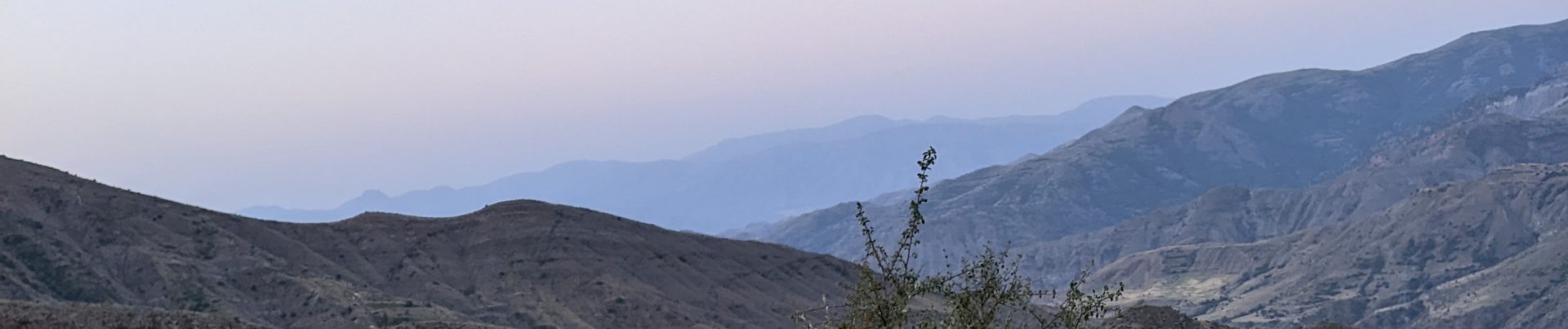
In 2010, while an archaeology undergraduate student, I participated in an archaeological field school in Vayots Dzor, Armenia at the well-known chalcolithic cave, Areni-1. That experience was my first taste of international travel and I fell in love with both Armenia and archaeology. However, it was not the chalcolithic history of the region that caught my attention, but the medieval churches and fortifications that still speckle the mountainous landscapes of Armenia. It was that trip that made me want to specialize in the medieval Near East and South Caucasus and set in motion the career path that I have since carved out for myself.
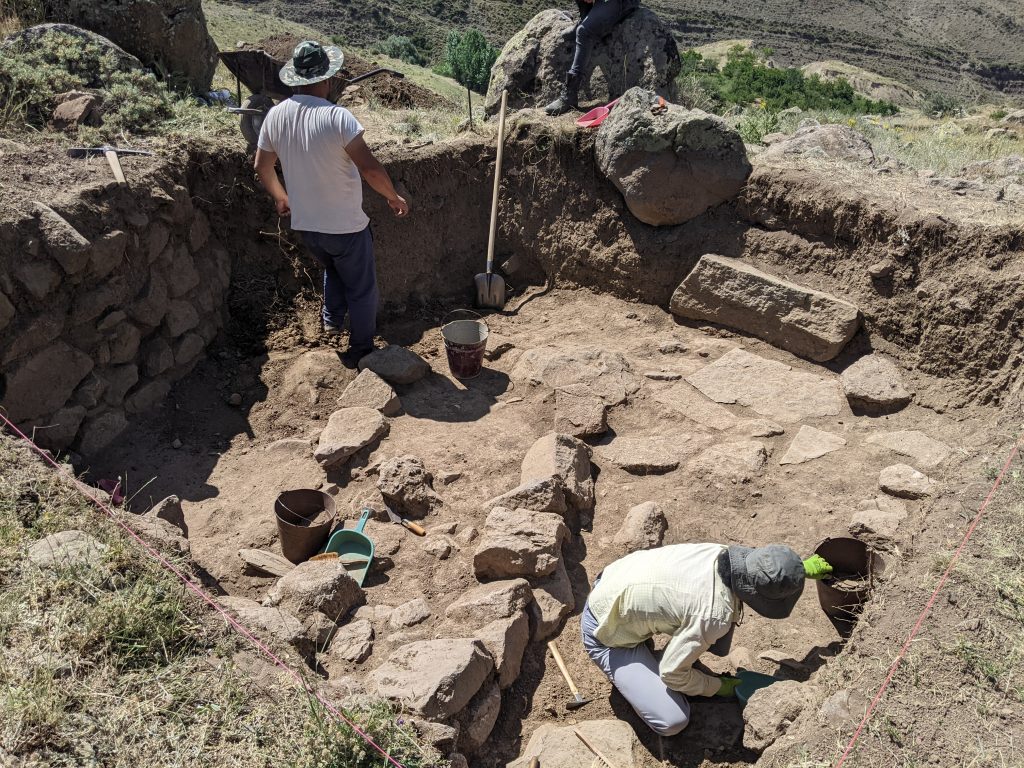
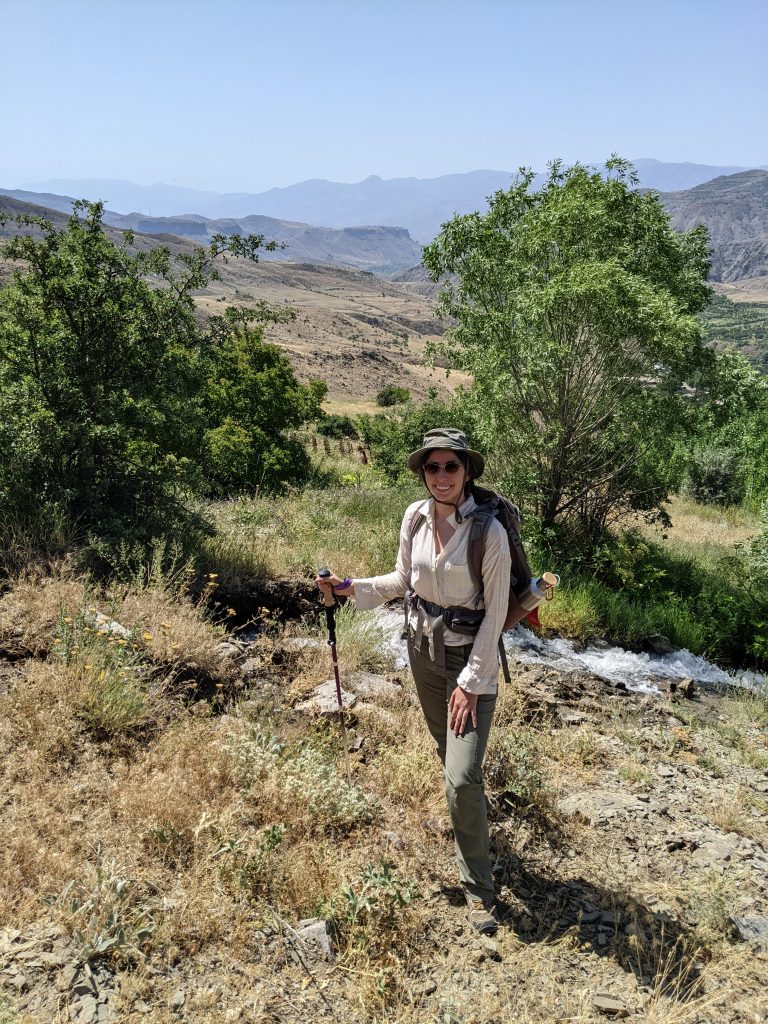
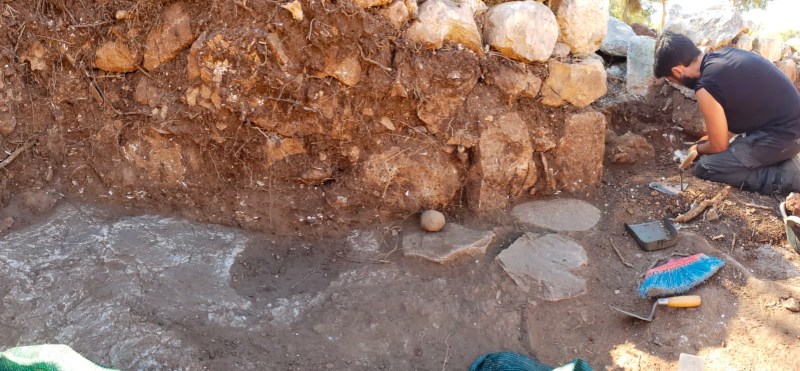
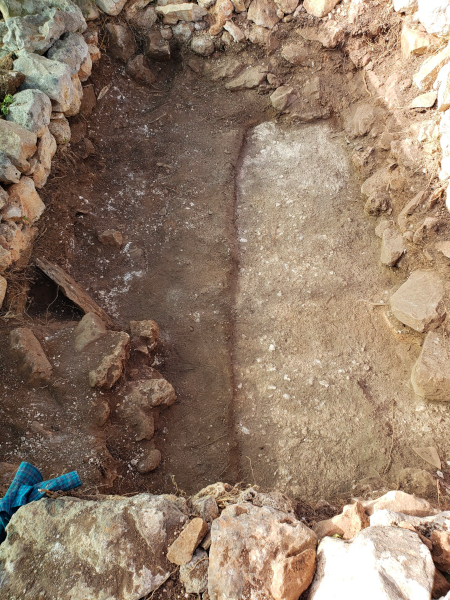
I have been fortunate to have worked in the field on a number of projects in the Near East and Mediterranean since that initial trip to Armenia in 2010, but it has always been a dream of mine to return. In 2020, I got in contact with Dr. Tiffany Earley-Spadoni regarding the Vayotz Dzor Fortress Landscape project, and we made plans for me to join the team. Shortly afterwards, the world shut down from Covid – but two years later, in the summer of 2022 we were able to make it happen. In July I flew from Canada to Armenia and returned for a summer of excavation and survey in the same small village that I worked in twelve years previous.
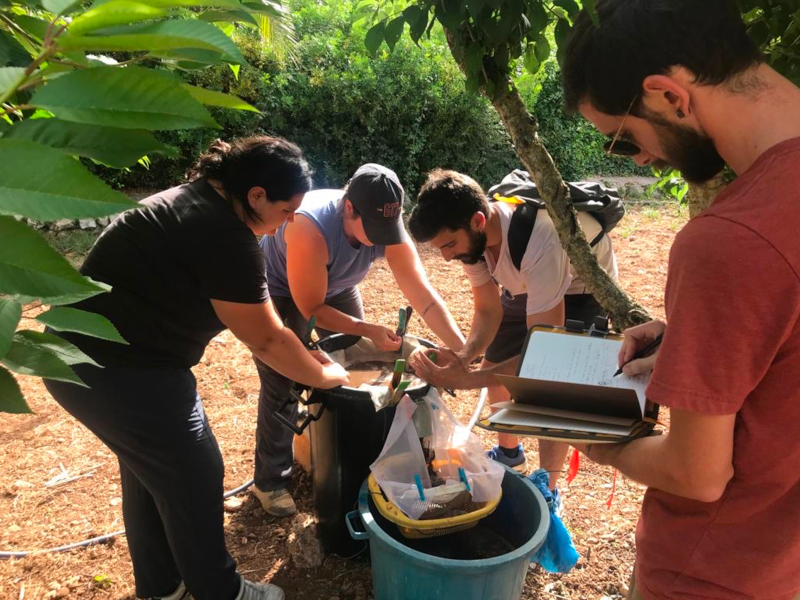
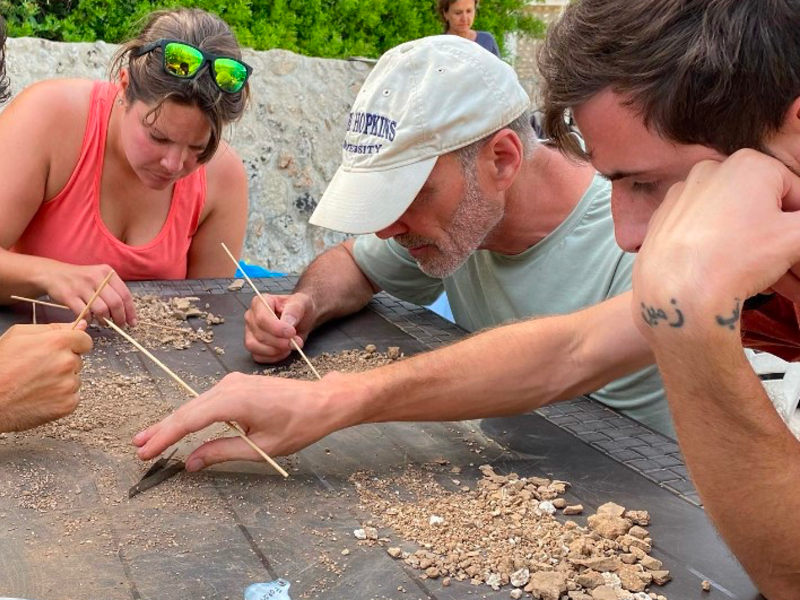
In the evenings, after coffee and sweets, the team had shared lab hours. I was assigned to help organize and record the pottery backlog from previous seasons, recording the details of all the diagnostic pottery finds from the site. Through this process we were able to better understand regional ceramic production, the different vessel and fabric types that frequented the site, as well as the local geology.
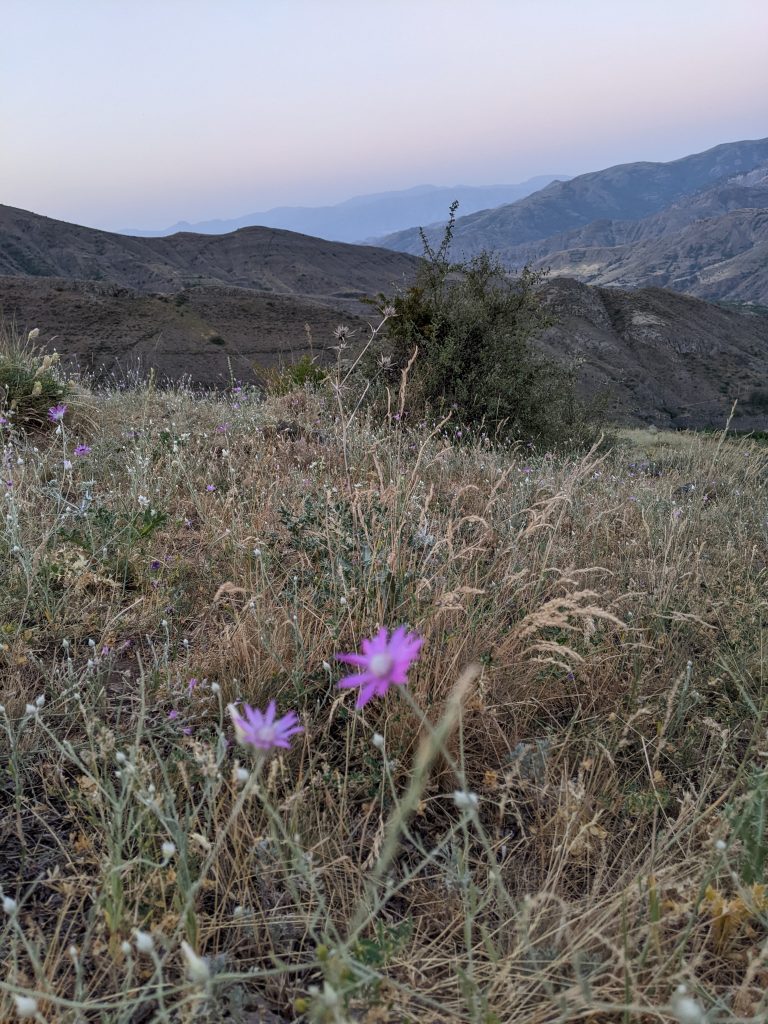
I was overjoyed to be able to return to Armenia, and deeply enjoyed my time in Vayotz Dzor working with the VDFLP team. Beyond the interesting archaeological work we conducted in Karaglukh, I enjoyed the many interesting conversations were had over delicious meals and homemade lavash in the village of Areni, strolls through neighbouring apricot orchards, and visits to the local 13th century church.
Aurora Camaño is a PhD Candidate in Archaeology at Simon Fraser University. She is a landscape archaeologist who specializes in built landscapes in the medieval Near East and South Caucasus. Her current dissertation studies landscapes of relocation in medieval Armenian Cilicia. She can be found on Twitter @AuroraCamano.
Want to help more students and early career archaeologists get into the field? Donate to the cause today by selecting “Student Support” as your gift purpose!
Safia S. Boutaleb, 2022 Eric & Carol Meyers Scholarship for Fieldwork Participation
I’d like to preface my report by saying that this trip was possible thanks to Dr. Eric and Dr. Carol Meyers, whose generous scholarship allows graduate students, like myself, to visit Cyprus and not only gain experience excavating but also form new, valuable connections. Thank you!
Tent on the roof of the old Peltenburg Archaeological Centre in Lemba
This report briefly describes my time in the 2022 field school led by Dr. Lindy Crewe at Kissonerga-Skalia (KS), a Bronze Age site in the Paphos region of Cyprus, dating from at least the Philia Phase (~2400 BCE) to the early Late Cypriot period (~1600 BCE). My experience in the field school was overwhelmingly positive and truly one of a kind. It complimented my previous field school experience in 2019 at Kalavasos-Ayios Dhimitrios, which sparked my love of Cypriot archaeology and the Bronze Age. I was admittedly anxious at first about my participation at Skalia due to some sudden and unexpected accommodation changes for the field school participants.
The new accommodations involved camping out in a tent on the roof of the old Peltenburg Archaeological Centre in Lemba for the month. However, after about one week in Lemba, I had adapted to my (very humid) surroundings and realized that the house in Lemba afforded us more independence and the opportunity to become better acquainted with Paul Croft, who resides at and cares for the Lemba centre. The house was beautiful and a place where generations of archaeologists have worked and stayed, making me feel like I had participated in some kind of tradition or initiation into the world of Cypriot archaeology. Moreover, the village of Lemba is an old, picturesque place in the hills overlooking the Mediterranean Sea and boasting thousands of years of human occupation (i.e., not a bad place to call home).
View of sea from Lemba
I was also grateful for the experience of excavating with Crewe and her team at Skalia. Crewe has assembled an eclectic group of supportive and intelligent archaeologists from all kinds of different backgrounds. Some of the supervisors and participants work in academia, others in commercial archaeology and some of them earn a living in entirely different fields. Regardless of their backgrounds, their expertise and experience at the site was invaluable and I greatly appreciated the diversity of their career paths, which can be rare in academic circles.
My own research and responsibilities at the site focused on the faunal remains at Skalia, an experience which I found to be both challenging and rewarding. My own familiarity with animal (and human) anatomy was unpractised, so I benefitted intensely from Croft’s sample collection of bones, which he allowed me to handle whenever necessary. Recognizing gaps in my anatomical knowledge, I did my best to support my team by cleaning and recording the bones, rather than making futile attempts to identify them myself. When errors were made in our records, I took initiative to stay behind and correct the mistake, a process which took two and a half days of work.
Lemba Sunset
View of sea from Lemba
Safia excavating in the field
My honest pride and joy for the season was my work on the floor of Area P/B. I genuinely love field work and I was overjoyed to have found the floor, as I recognize its significance in understanding the basic layout and stratigraphic occupation of a space. Thanks to my cautious work, Muti assigned me responsibility over the floor for about two weeks. A number of my peers came and joined me but none seemed to enjoy it as much as I did. It seems trivial to take such pride in excavating a floor but I remembered how challenging it was to find at Kalavasos-Ayios Dhimitrios and the experience of being able to differentiate tamped earth from mud plaster floor provided me with a skill that I had not anticipated I’d acquire this season. I also felt supported and recognized for my efforts, as the team awarded me the “golden trowel”, one of the many superlative awards given at the end of the field season.
Safia's last day in field!
I would relish the opportunity to return to Kissonerga-Skalia and I am grateful for the experience of meeting and excavating with such an incredible team of professional archaeologists, who taught me not only how to excavate but also showed me that there is more than one path to becoming an archaeologist and that, when in doubt, it is possible to pave your own.
Safia Boutaleb (she/her) is a graduate student completing her Masters of Classical Archaeology at The University of British Columbia in Vancouver, Canada. Her thesis focuses on women’s economic participation in Cyprus during the Late Bronze Age and the many ways their activities in daily life remain overlooked in scholarship of ancient economy. Kissonerga-Skalia 2022 was her second field school in Cyprus she has hopes to return to the island each year to research and participate in field work.
Want to help more students and early career archaeologists get into the field? Donate to the cause today by selecting “Student Support” as your gift purpose!
2022 Study of Collections Fellowship Report: Imprints of the Past: Preserving the Largest Known and Uncatalogued Collection of Semitic Artifacts in Europe
James D. Moore, Humboldt Universität zu Berlin
For many years, I have collaborated with the French Institute’s, Cabinet du Corpus Inscriptionum Semiticarum (Cabinet-CIS) within the Académie des Inscriptions et Belles Lettres, and in 2022 an ASOR Study of Collection Fellowship provided me startup funding to seed an ambitious attempt to build the Cabinet-CIS a digital inventory database and begin the process of cataloguing and digitally preserving one of Europe’s most important collections of Semitic artifacts. At the invitation of Christian Robin and Maria Gorea, I was able to complete the build for the collection’s database during two week-long trips to the Cabinet-CIS. This database is now used by scholars and students working on the collection.
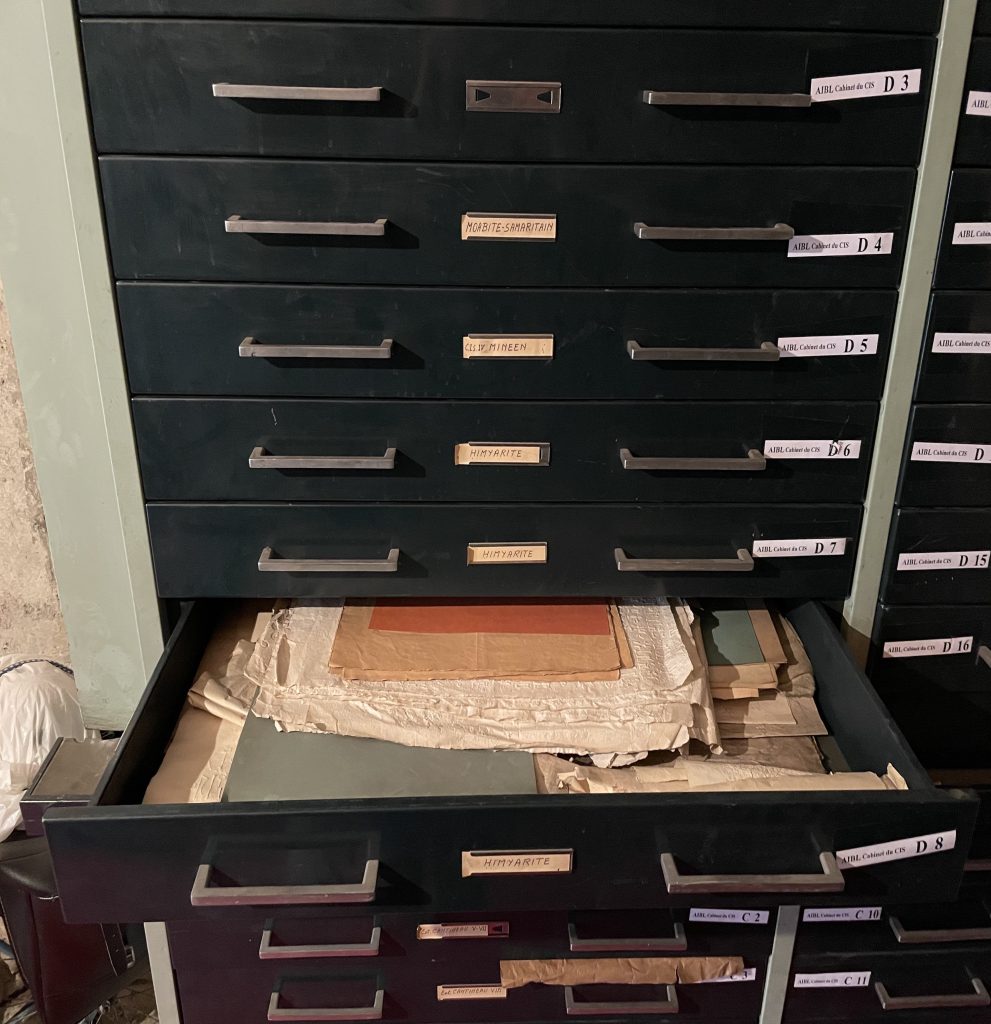
The Cabinet-CIS is known for publishing two monumental series through the late nineteenth and mid-twentieth centuries, the Corpus Inscriptionum Semiticarum and the Répertoire d’épigraphie sémitique. Those compiling these works were sent paper mâché squeezes of the inscriptions in those volumes and in some cases photographs along with detailed descriptions. The collection holds an estimated 10,000+ paper mâché squeezes of Semitic inscriptions from the Near East, North Africa, and the Mediterranean. In some cases these squeezes are of inscriptions which are now lost or inaccessible (due to their location in politically contested regions). Additionally, the collection holds hundreds of original objects and dozens of dossiers of many of the field’s most important figures, such as that of Charles Clermont-Ganneau. Unfortunately, the collection is only loosely organized into boxes and cupboards, for which a short inventory had been compiled.
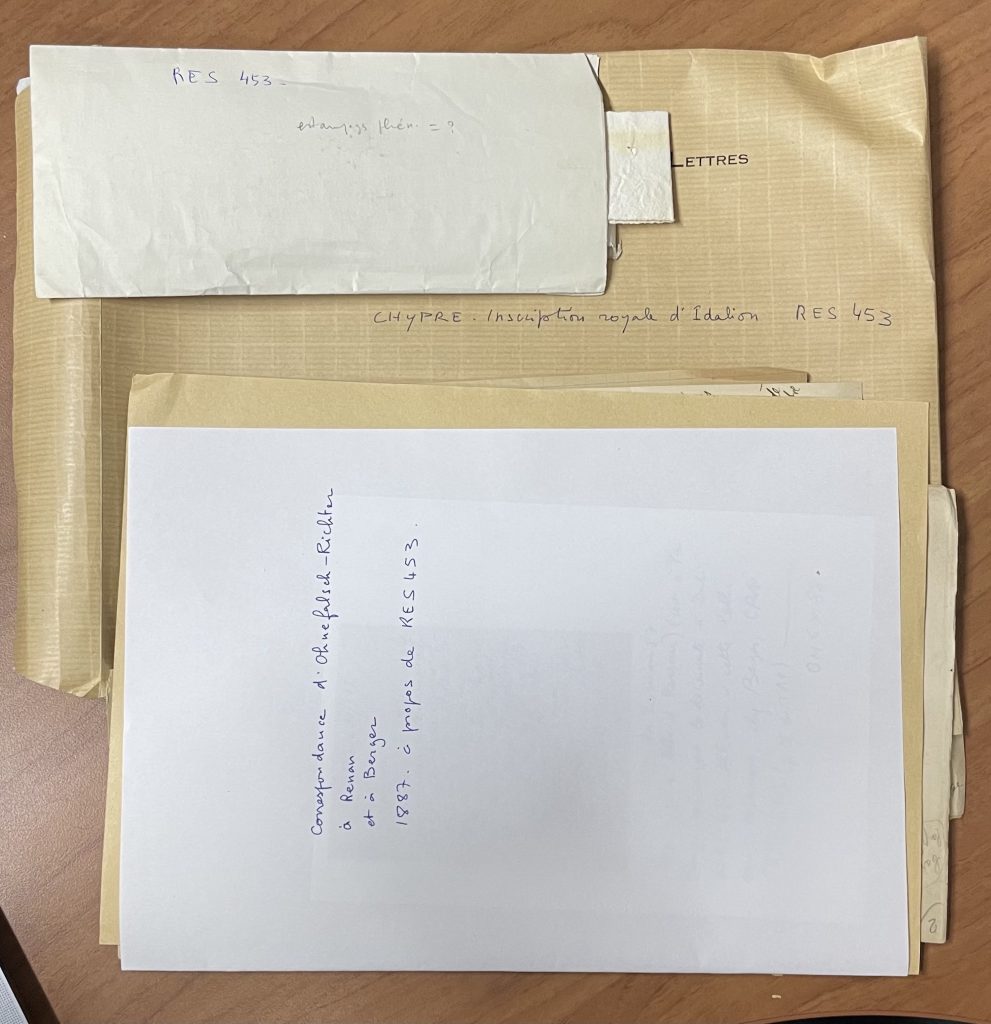
Example of archival materials with squeeze in AIBL-CIS Dossier 12, Chypre 1.
Credit: James D. Moore and Maria Gorea
Example of flat-file storage of Semitic squeezes.
Credit: James D. Moore and Maria Gorea
Although the work was hindered by continued difficulties traveling, due to residual effects of the COVID-19 pandemic, a mid-year trip to the Cabinet-CIS allowed me to assess the needs of the collection and survey its holdings. During that week I built a prototype SQL (PostgreSQL) database and local application which was tested by those working on the collection, specifically Maria Gorea’s students Noémie Carpentier and Narmin Sadykhova. Over the course of many months, I fine-tuned the prototypal database, and at the end of the year, during a second trip to the Cabinet-CIS, I rebuilt the database on the Huma-Num servers using the Heurist database management system, an Open Source information system builder and website publisher developed specifically for Humanities research data. The result is an easy to use inventory database for the Cabinet-CIS’s internal use (though the intention is to make the data accessible through a future website should continued funding be acquired). Here I must thank the Heurist team, in particular Ian Johnson and Michael Falk, for their support and advice along the way.
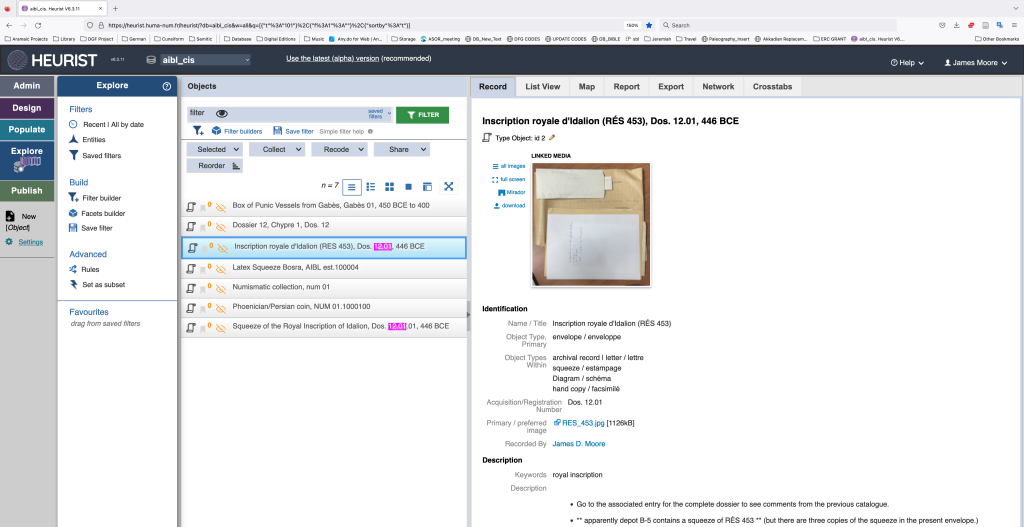
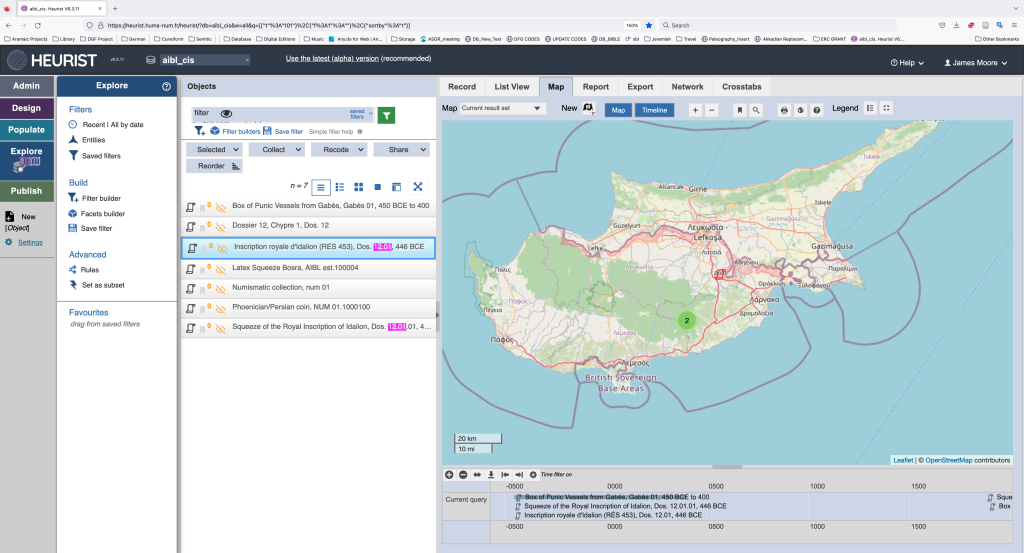
The database includes record entries where all necessary information about an object in the collection can be stored, including metadata, text, and translation. Each entry includes mapping a timeline features for the object along with additional media storage that can be linked to the object.
Example of a database entry’s “Record” for AIBL-CIS Dos. 12.01.
Example of entry’s “Map” (and timeline) for AIBL-CIS Dos. 12.01
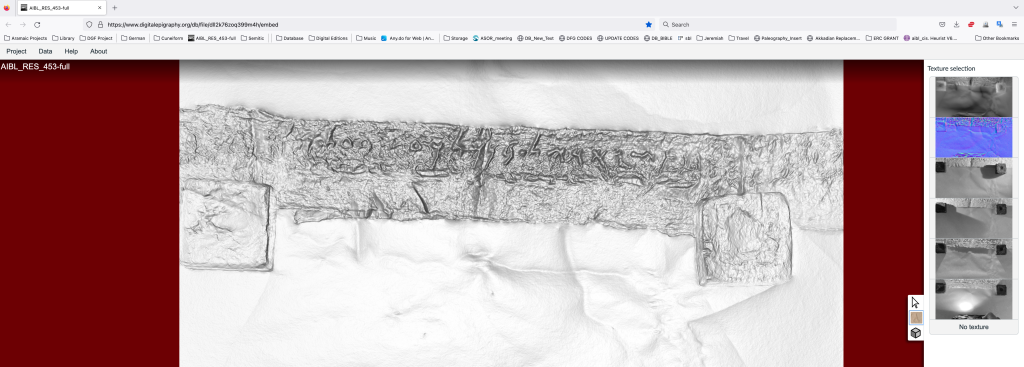
Linked media to the 3D rendering of squeeze AIBL-CIS Dos. 12.01 in the Digital Epigraphy User Interface (see below)
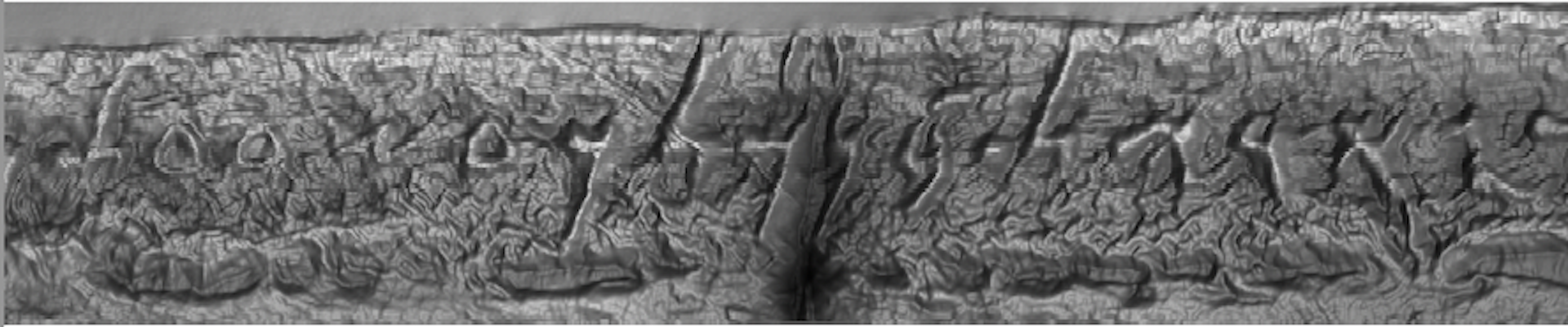
The ultimate objective was to initiate the process of digital preservation of the squeezes and other artifacts. To achieve this, I solicited the support of Angelos Barmpoutis of the Digital Worlds Institute and Eleni Bozia of the Classics Department at the University of Florida, whose Open Source Digital Epigraphy software proved to be an ideal application for our needs. By using scans from a flatbed scanner or raking light photographs one can easily render 3D scans of the squeezes. An example of AIBL-CIS Dos. 12.01.01 “Inscription royale d’Idalion” (446 BCE = RÉS 453; squeeze made in 1887) can be found here.
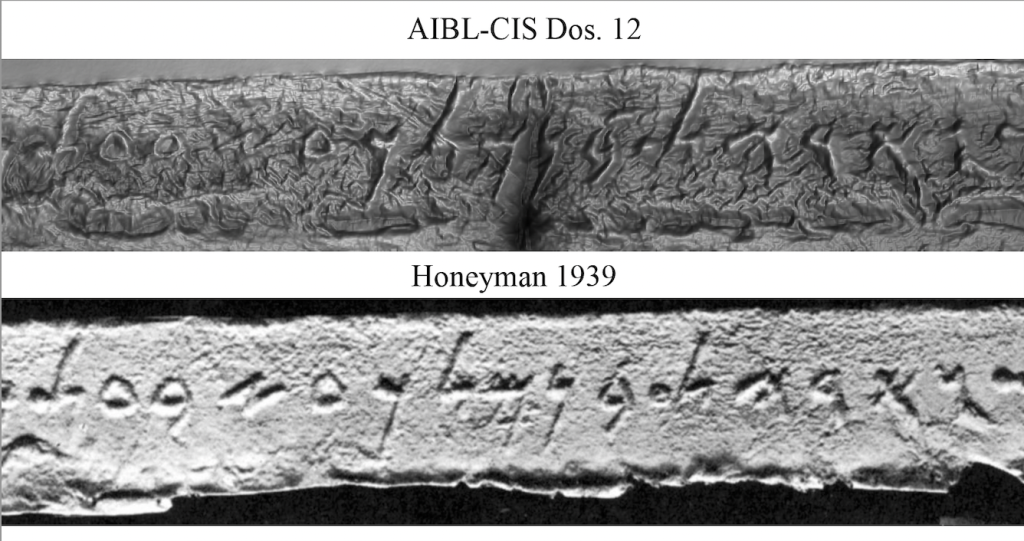
Manipulating the photograph using the Digital Epigraphy’s user interface produces the best known available photograph of the inscription. Compare the previously published photograph to that made during our cataloguing efforts.
Upper photograph of squeeze AIBL-CIS Dos. 12.01.01 made in 1887 depicts the contures of the inscription verses the lower photograph of a sqeeze made and published in 1939 by A. M. Honeyman, “The Phoenician Inscriptions of the Cyprus Museum,” Iraq 6: 104–8.
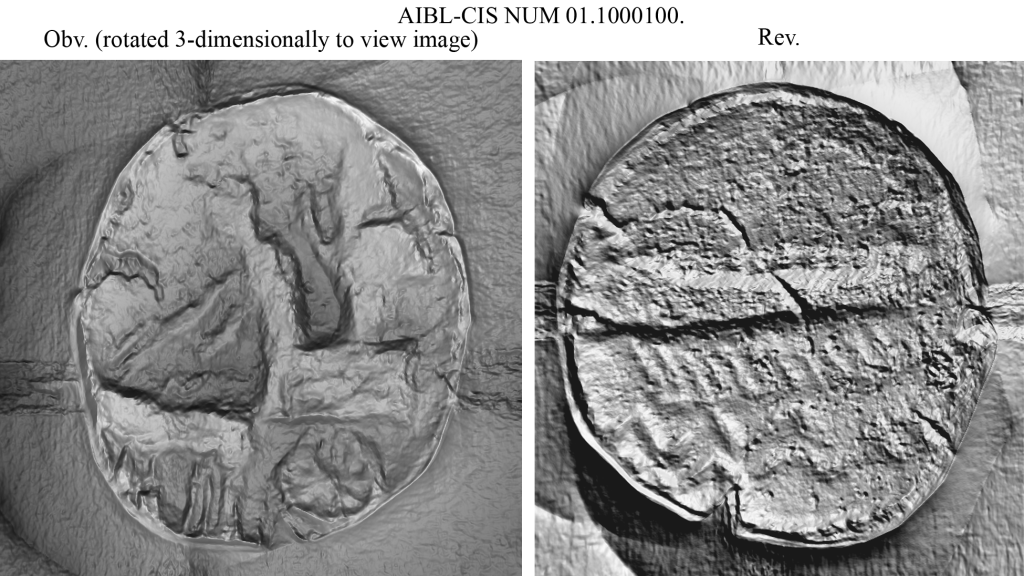
The Cabinet-CIS’s Heurist database and Digital Epigraphy software has far reaching applications for the collection. While one of Maria Gorea’s students, Noémie Carpentier, was working on the Cabinet-CIS’s numismatic collection, I trained her in how to use the software to produce 3D renderings of coins. We scanned the following example of a worn Phoenician (Tyrian) coin minted during the reign of Artaxerxes III (AIBL-CIS NUM 01.1000100), and the 3D rendering makes visible the coin’s features, which are invisible to the eye. You can view the coin using the Digital Epigraphy user interface here:
Credit: Original photographs by James D. Moore, Maria Gorea, Noémie Carpentier, and Narmin Sadykhova. Rendered and displayed using the Digital Epigraphy software.
The consorted efforts of all those mentioned above and the support from ASOR allowed us to achieve our objective of building a digital infrastructure for the Cabinet-CIS with which the digital preservation of its invaluable collection can begin.
Additional Notes The long days spent at the Cabinet-CIS also afforded me opportunities to further my own research. Maria Gorea and I have long teamed up to publish important manuscripts in the Cabinet-CIS, and we used time to finalize manuscripts for a number of publications on two new Phoenician papyri accounts which radiocarbon date to the Persian period, fragments of Aramaic papyri from Elephantine, and a new Aramaic religious text from Egypt radiocarbon dated between the 2nd and early 4th centuries CE.
“AIBL-CIS de Ricci no. 2: A New Jewish and Aramaic Religious Text from Egypt Dating between the 2nd and Early 4th Centuries CE” Dead Sea Discoveries, forthcoming
“New Persian Period Phoenician Papyri Accounts from Egypt in the Académie des Inscriptions et Belles-Lettres, Cabinet du Corpus Inscriptionum Semiticarum,” in Advances in Elephantine and Persian Period Research, eds. J. Moore and P. Schmidtkunz, Studies on Elephantine (forthcoming).
“Radiocarbon Dating an Aramaic Papyrus from Elephantine and a New Aramaic Fragment from the Académie des Inscriptions et Belles-Lettres, Cabinet du Corpus Inscriptionum Semiticarum,” in Advances in Elephantine and Persian Period Research, eds. J. Moore and P. Schmidtkunz, Studies on Elephantine (forthcoming).
“Papyri semitiques du Cabinet du CIS,” Comptes rendus des séances de l’Académie des Inscriptions et Belles-Lettres, Communication of the AIBL 16 April 2021.
J.D. Moore, New Aramaic Papyri from Elephantine in Berlin, Studies on Elephantine 1 (Leiden: Brill), 2022; Open Access: https://brill.com/view/title/61396. (pp. 16–17)
Andalusian Agriculture: A View from Medieval Menorca
Kathleen Forste, 2022 P.E. MacAllister Scholarship for Fieldwork Participation
Thanks to the ASOR Scholarship for Fieldwork Participation, I was able to join the Menorca Archaeology Project (MAP) in Spain to excavate a portion of the medieval settlement at the site of Torre d’en Galmés. This rural 13th century Islamic village, or alqueria, is built atop and abutting (and certainly borrowing from) the ruins of a large post-Talayotic (Iron Age) settlement, and by studying it we can better understanding what life was like during this period and how medieval lifeways have influenced later periods of life on Menorca.
I am the archaeobotanist on the team, meaning I study plant remains like wood charcoal, seeds, and plant parts. The analysis of these remains can help us answer questions about diet and foodways, the crops that people grew and the wild plants they collected, and the types of plant materials they used to build their houses and fuel their fires.
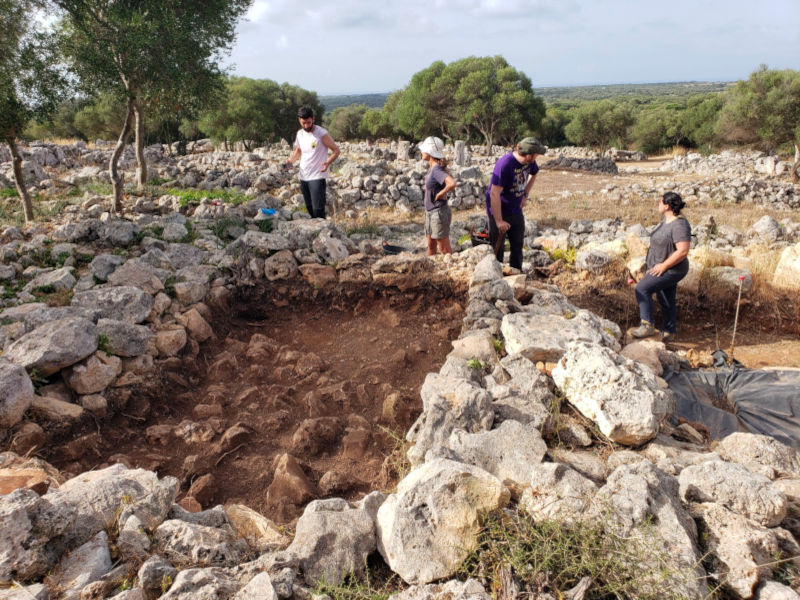
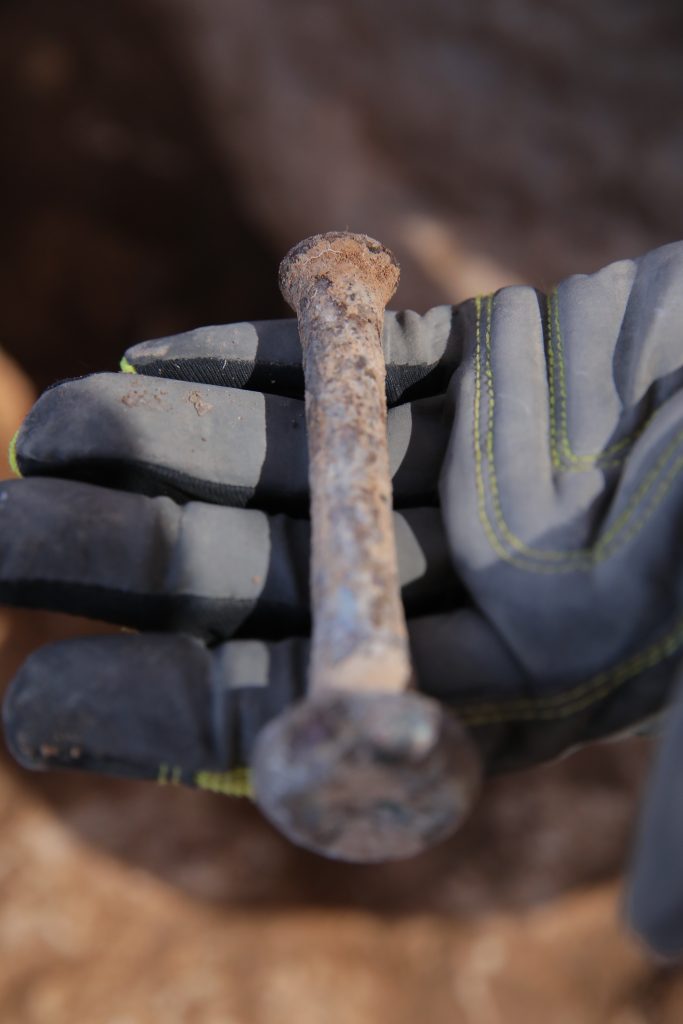
This season, our excavation focused on two houses, one of which was so well-preserved that the plaster on the interior walls and floor were still intact. These houses were built in the typical form of Muslim houses – multiple rooms formed an L that bordered 2 sides of a patio, which was enclosed by 2 other walls to create a private area for the family to relax and perform everyday tasks such as cooking and carding wool to make yarn. The room that was excavated we are interpreting to be a kitchen, based on the presence of hearths, grinding stones, cooking vessels, as well as parallels in construction to other excavated houses of this era. We also found bronze nails just inside the threshold, hinting at the wooden door that would have graced this entryway.
Beginning our excavation of a medieval Islamic house, surrounded by ruins of other medieval houses and post-Talayotic buildings.
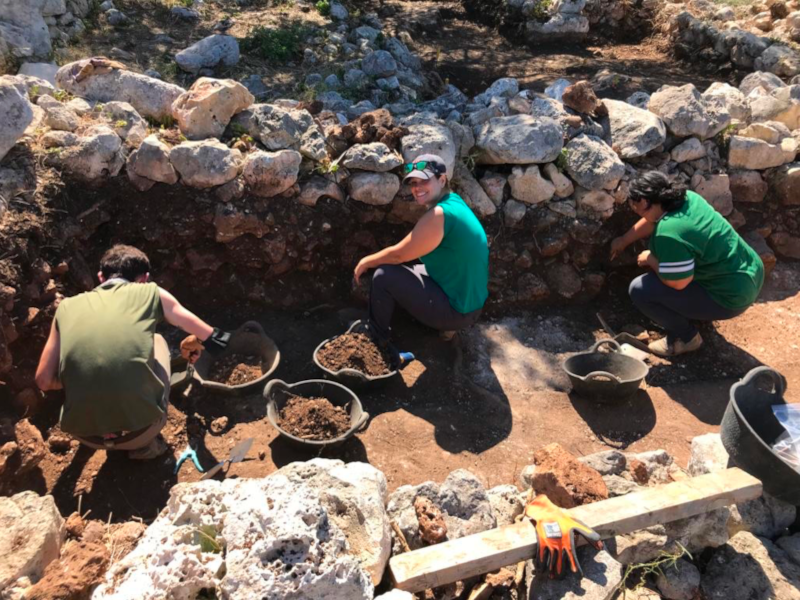
Excavating the east wall of the kitchen. Note the white plaster to the right of the author (middle), and the partially-excavated patio in the background.
The kitchen looking east. Moving left to right you can see the plaster floor, inlaid grinding stone and hand-held grinder in situ, and the doorway (undergoing excavation) that led out to patio.
We recovered carbonized plant remains through flotation, a method of using water to separate carbonized plant remains and microartifacts from their surrounding soil matrix. I built a new flotation tank for the project, and trained team members in this method. I will begin analyzing the plant remains from this season during the academic year, and based on findings from the previous season, I expect to find barley (which is a hardy crop that grows well in hot rocky areas and requires a moderate amount of water) and pulses like lentils and chickpeas (which grow best in cooler temperatures and require moderate amounts of water). Based on the growing requirements of these crops, we can begin to hypothesize which types of habitats Menorcan farmers selected for their fields.
The kitchen looking north. The plaster floor is exposed in the eastern portion (R-hand side) beneath the compacted occupation debris and collapse (intact in the western portion, L-hand side).
Teaching MAP team members how to recover plant remains and microartifacts through flotation.
MAP team members sorting the heavy fraction to recover microartifacts like fish bones and small plaster fragments.
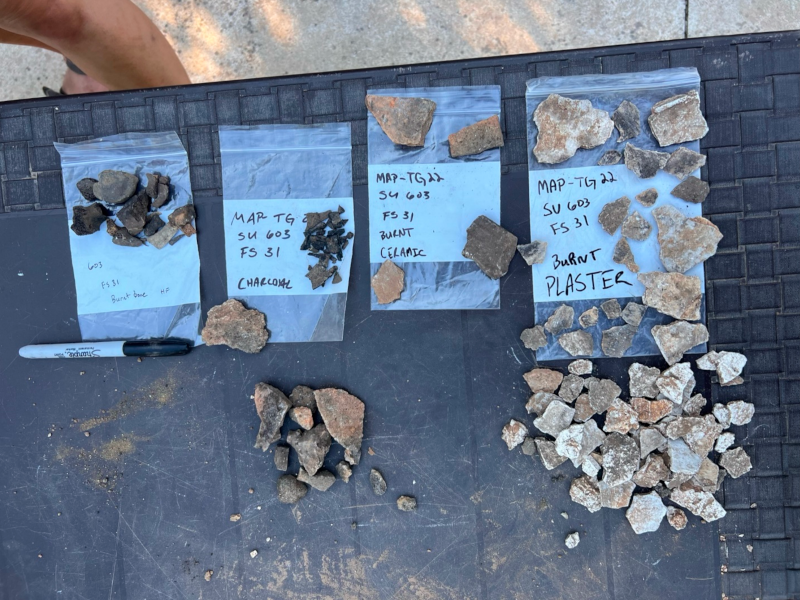
Artifacts recovered from flotation, including lots of wood charcoal (second bag from the left).
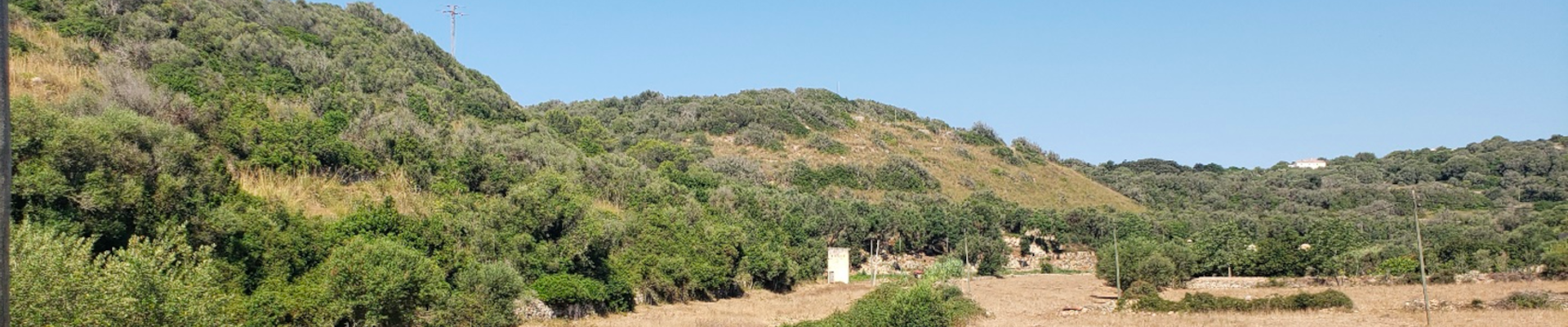
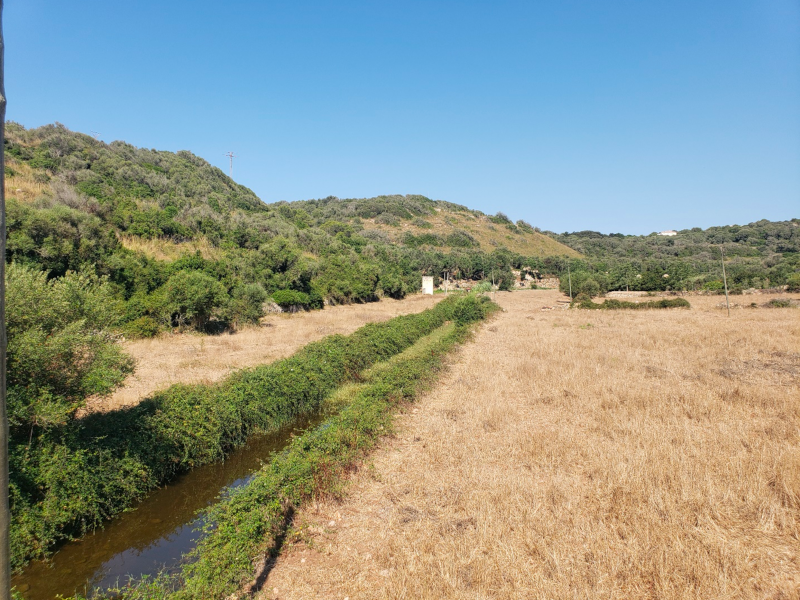
Some of the agricultural engineering of the medieval era is still functional today, like this irrigation canal in a barranco(valley) that waters orchards and fields, creating a direct line between ancient and modern land-use practices.
Flotation was one of the methods employed to understand the way in which the medieval inhabitants managed their surroundings, along with mapping and 3D modeling structures and open spaces linking them. Through this multidisciplinary research we will be able to reconstruct the rhythm of life of medieval Menorca, and the ways in which people cultivated and built their landscapes.
Check out more about our project on Instagram: @MAProject360
Kathleen Forste is an anthropological archaeologist who studies agricultural systems through the analysis of archaeological plant remains, historical sources, and environmental data. Her research focuses on how societies adapt their agricultural systems to various environmental and socioeconomic conditions during the Islamic period (7th through 13th centuries) in the Levant and Iberia. She earned her PhD in 2021 from Boston University, where she is currently a Lecturer of Archaeology.
Want to help more students and early career archaeologists get into the field? Donate to the cause today by selecting “Student Support” as your gift purpose!
March Meeting Madness is back! This year, we are raising funds to allow even more people to attend the Annual Meeting in Chicago in November. You can helps us raise $10,000—$5,000 for registration scholarships and $5,000 for Annual Meeting Travel Scholarships. These Annual Meeting travel scholarship awardees will be checking in other attendees at the registration desks and helping in the meeting rooms with the new Zoom integration for our very first hybrid meeting. The purpose of these scholarships is to allow those who could not afford the hotel and travel expenses of the Annual Meeting to attend in Chicago and experience all the meeting has to offer. Attending the ASOR Annual Meeting is an invaluable experience for students thinking about graduate school, for those who are on the academic job market, for those who are planning fieldwork, and for everyone who wants to connect, network, and share their research. The Annual Meetings is also great for those who are not in the field but passionate about learning more about recent research. With the transition to hybrid this year, the ASOR staff will be very grateful of the extra help in making the 2023 meeting a great experience for all.
You can help send more people to the Annual Meeting through ASOR’s Meeting Madness this March!
March Meeting Madness Progress: $4,750 raised of $10,000 goal
The first season of the Girdi Matrab Archaeological Project was generously funded by the ASOR Charles Harris Project Grant. Girdi Matrab (“the earthen mound” in Kurdish) is a multi-mound site located in the plain of Erbil, in the autonomous region of the Iraqi Kurdistan and was first surveyed by the Erbil Plain Archaeological Survey (EPAS), directed by Jason Ur in 2012.
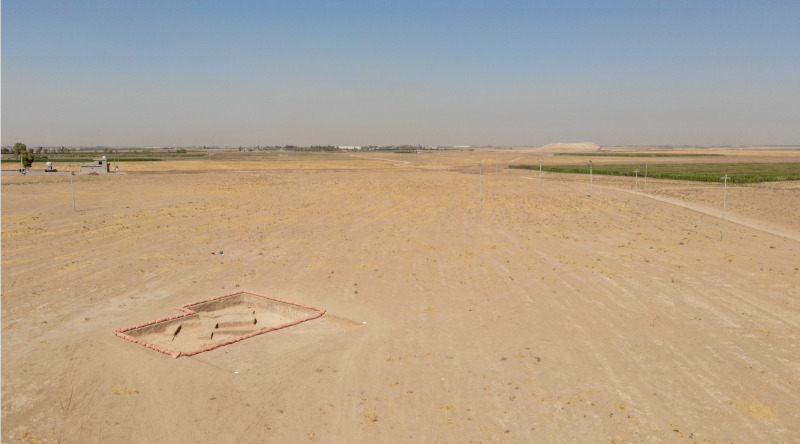
View of the excavation area at the end of the 2022 field season.
Surface reconnaissance yielded an impressive amount of pottery sherds, that confirmed the habitation phase and the history of the settlement. Girdi Matrab was settled from the Late Chalcolithic period (5th millennium BCE) until the Uruk phase (4th millennium BCE). No indication of Bronze and Iron Age occupation has been detected at the site. On the contrary, the settlement expanded rapidly at the end of the 1st millennium BCE, reaching a quasi-urban size in the Hellenistic and Parthian-Roman period before being abandoned and never re-occupied again.
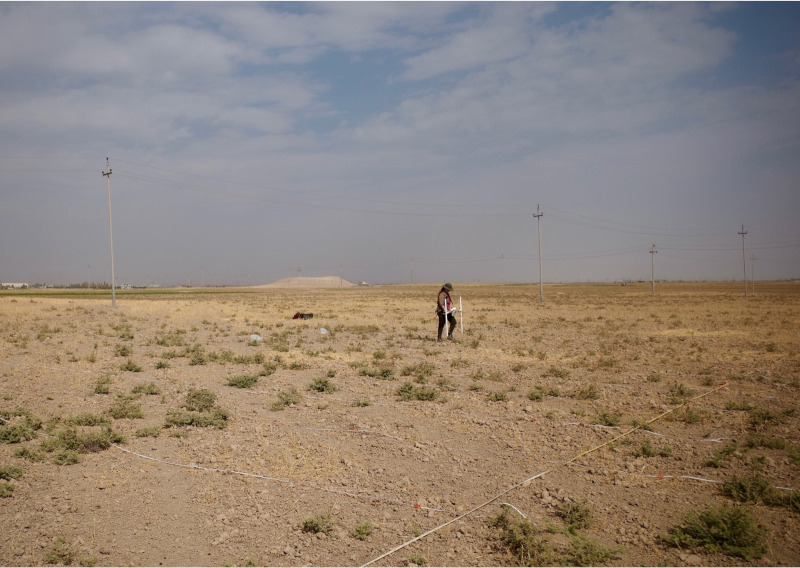
In view of the first proper excavation season, the site was also intensively surveyed in 2020 – thanks to the active participation of the EPAS Kurdish team members. In 2021, in collaboration with Petra Creamer (Emory University, USA) geophysical investigations were carried out at the site using a Bartington 601-2 Gradiometer, owned by the SPARC Lab at Dartmouth College, USA, highlighting, just below Mound 2, the remains of a large (40 x 40 m) building, with multiple rooms, internal courtyards, and hallways (Building A).
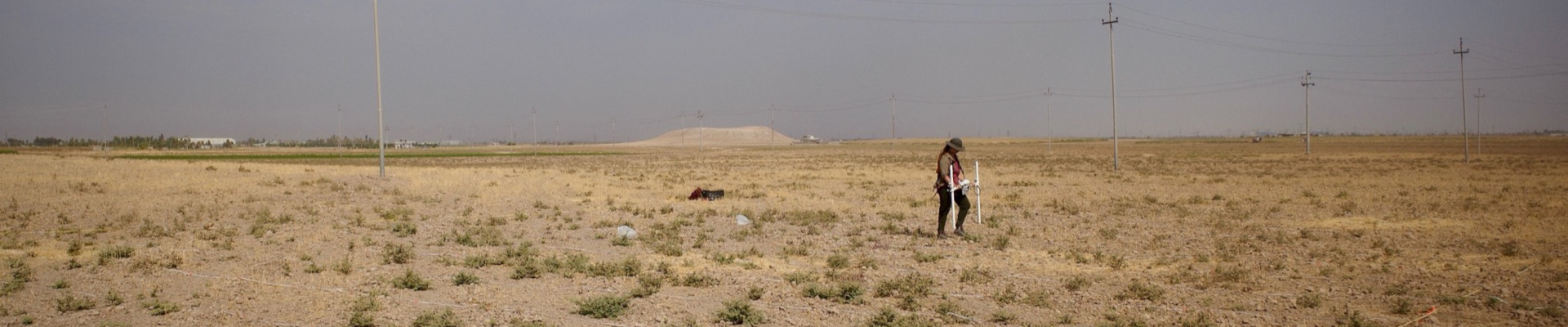
Petra Creamer (Emory) performing geophysics at Girdi Matrab (2021).
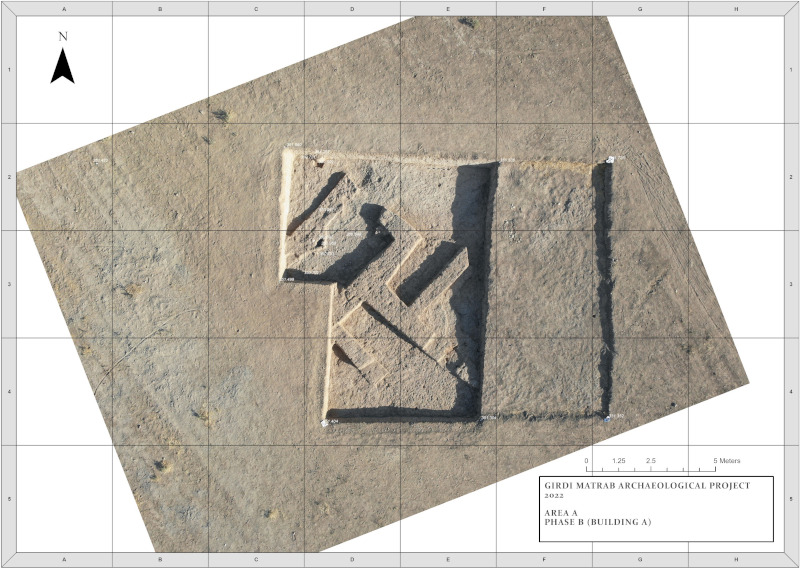
Plan of Phase B of Building A at the end of the 2022 field season.
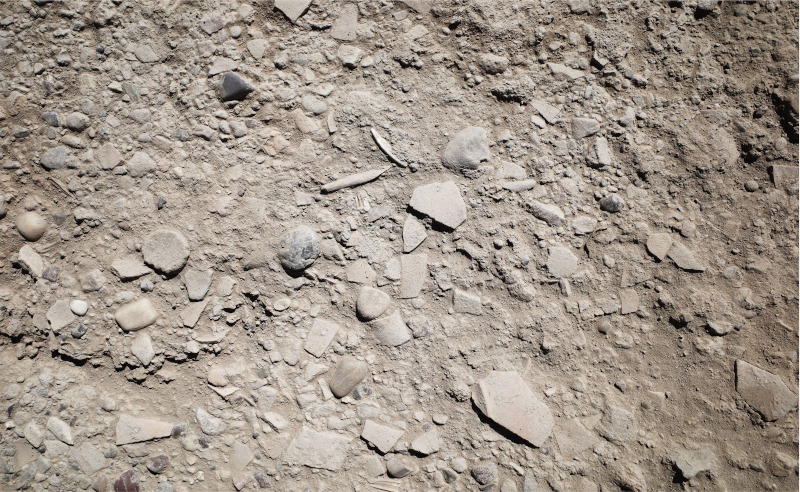
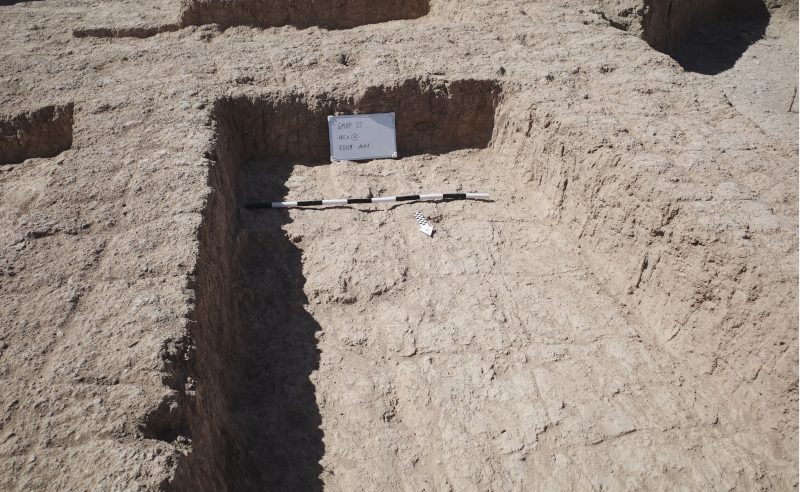
With the objective of investigating part of this sub-surface evidence, a 20 x 25 m trench was placed above the south-eastern corner of the building, on Mound 2. After 5 weeks of excavation, we unearthed four rooms, all built with mudbrick walls over stones and pebbles foundations. Two of these rooms opened towards an internal courtyard, where a complete tannur (open-air oven) was also recovered. One of these two rooms yielded a completely intact floor composed by pebbles, pottery sherds and animal bones. The close proximity to the open-air oven, and the presence of a mudbrick platform, and a small internal fireplace in the room, made us think that the space was used for cooking activities.
The adjacent room, smaller and with an unusual mudbrick floor, has been interpreted as a storage space, certainly connected to the cooking activities that were taking place in the bigger room to the West. The remaining two other room open towards the Southern part of the building, possibly connected to the unexcavated part of the complex through an elongated open-air hallway, whose extent has been partly identified during the 2022 season.
The analysis carried out on the ceramic repertoire excavated this year at Girdi Matrab has confirmed several hypotheses that were originally formulated prior to the campaign. The assemblage is mostly composed by commonware, with little or no inclusion of western-inspired, commonly known types such as the ubiquitous echinus bowls and/or Hellenistic period fish plates. Interestingly however we have identified a discrete number of specimens whose morphological tradition lies in the Iron Age and late Iron Age pottery horizon of the region.
On the base of the analysis of the ceramic material, we can securely date this phase of Building A to the period that covers a span of time between the late 4th and very early 3rd c. BCE.
Close-up of the composite floor of the kitchen area of Building A (detail).
View of the storeroom excavated right next to the kitchen. Note the well-preserved mudbrick floor.
The GMAP team focuses on the investigation of the domestic economy of a rural site in between the imperial transformation from the Iron Age to the early centuries of the 1st millennium CE. To better understand the socio-economic change of the Hellenistic and Parthian period Mesopotamia we rely on the analysis of the faunal remains excavated at the site. Nathalie Brusgaard (University of Groningen, the Netherlands), associate director of the GMAP, oversees the study of the zoo-archaeological evidence.
The presence of a large amount of commonware, the identification of young animals such as pigs and sheep, which could have been raised on site, as well as adult bovines – which might as well be oxen trained and used draft animals – seem preliminarily to indicate that Building A at Girdi Matrab could be a farm or farm-like estate.
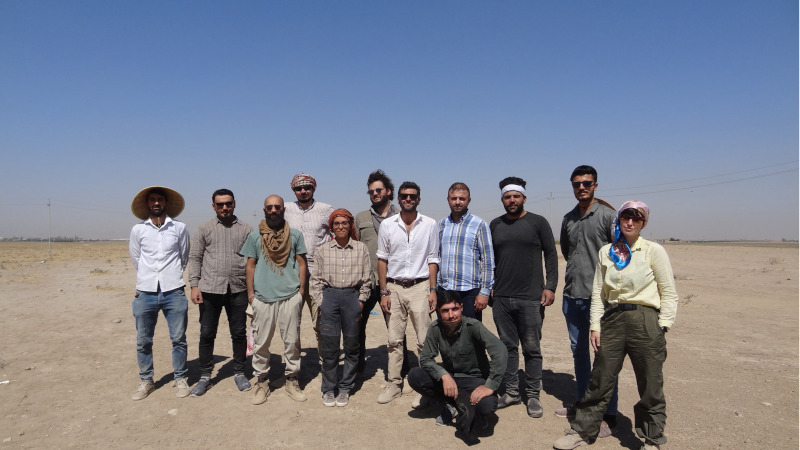
The KMAP team at the end of the season
We plan to continue investigating the rural economic landscape of the plain of Erbil in the future seasons, and we thank ASOR for supporting our research into this part of South-West Asia under the Seleucids, the Parthians, and the Romans, a critical but often overlooked period and one of central relevance for the understanding of the history of North Mesopotamia, and the Kurdistan Region of Iraq, in particular.
-Rocco Palermo, University of Pisa (Italy) and Bryn Mawr College (USA)
With the collaboration of
Nathalie Brusgaard (University of Groningen, Netherlands), Aila Santi (SOAS, London, UK), Valentina Grasso (Catholic University of America, USA), Jordan Brown (University of California at Berkeley, USA), Gabriele Viola (University of Pisa, Italy), Lara Pucci Daniele (University of Pisa, Italy), Michele Salvatore La Porta (University of Pisa, Italy), Parsa Kheirandish (University of Pisa, Italy), Ali Banishary (Directorate of the Antiquities, Erbil)
Learn more about the Girdi Matrab Archaeological Project at their website or their Instagram!
Interested in applying for a 2023 Charles Harris Project Grant? Learn more about applying here.
Currently, 115 projects are affiliated with ASOR. This includes 86 field projects and 29 publication projects. Fourteen projects (13 new projects and 1 project renewal) have received ASOR affiliation since last summer. Read more about these new ASOR-affiliated projects below!
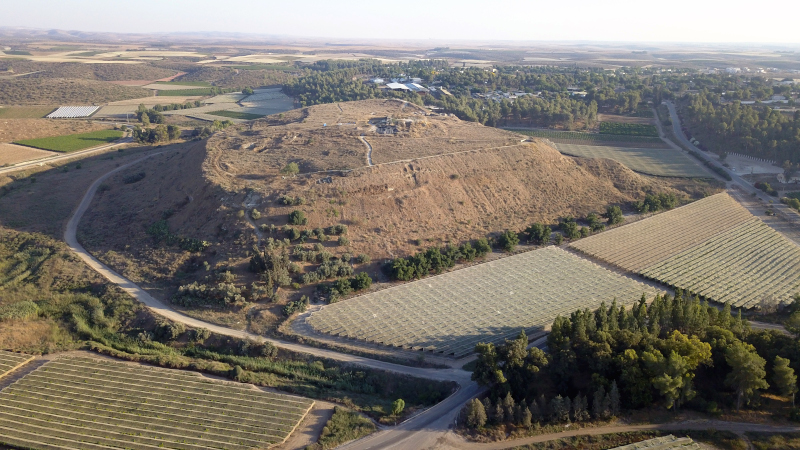
Aerial view of Tel Lachish looking southwest. (c) Jared Dye ÖAI-ÖAW.
The Austrian Expedition to Lachish focuses on the Middle and Late Bronze Age remains at the site. Since 2017, excavations have been conducted in Area S on the western edge of the site, uncovering several settlement phases of the early Late Bronze Age (15th and 14th century BC), and in Area P north of the Judean palace-fort, where additional parts of the Middle Bronze Age (17th and 16th century BC) palace were excavated.
Caesarea Coastal Archaeological Project (C-CAP), Caesarea Maritima, Israel (Asa Eger, Beverly Goodman, and Andrea de Giorgi)
The transition in the eastern Mediterranean from the Christian Late Roman Byzantine to Islamic rule beginning in the 7th century CE is a time full of uncertainty, migrations, conflict, and reconfiguring of people, economies, communities and cultures. While these changes are known in broad strokes due to historical records, archaeological information allows us to better understand the more direct meaning of these changes for those who lived at the time, as recognizable within the material record. In May-June 2022, the CCAP field school project invites students and volunteers to unravel the mysteries of Caesarea Maritima’s medieval and Islamic years, including both on land and underwater archaeological and geoarchaeological hands-on experience. Participants will immerse themselves in the world of the post-Roman Empire Islamic eastern Mediterranean, experience and reveal first-hand physical evidence of ancient natural disasters, and learn how to hear the stories from the objects that were left behind.
Kalavasos-Laroumena and Arkhangelos Archaeological Research Project, Cyprus (Mara T. Horowitz)
The Kalavasos-Laroumena and Arkhangelos Archaeological Research Project (K-LAARP) investigates social change in the Middle Cypriot Bronze Age on the south coast of Cyprus.
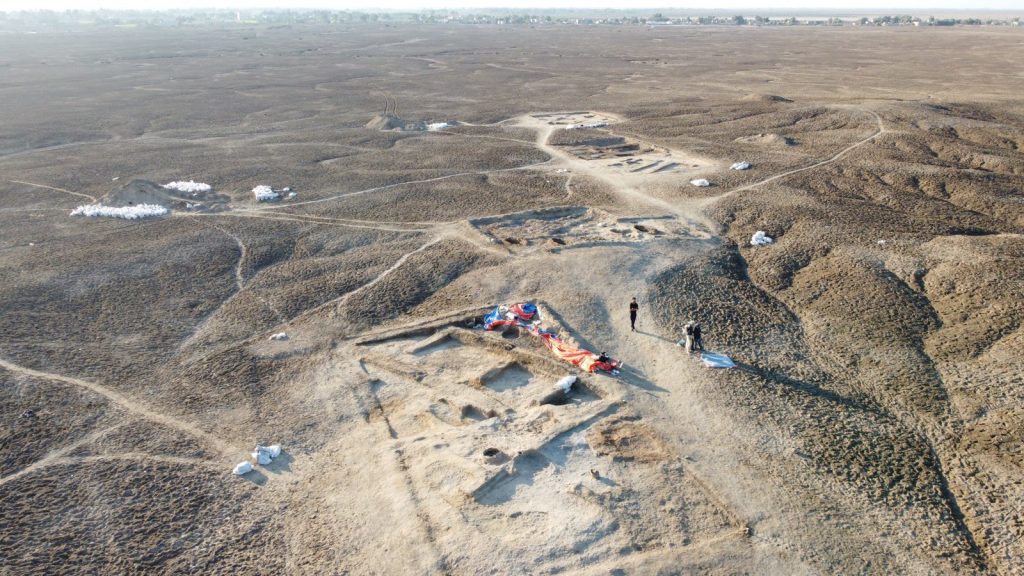
Kurd Qaburstan is an urban-sized Bronze Age site in northern Mesopotamia, southwest of Erbil in the Kurdistan Region of Iraq. Perhaps to be identified with ancient Qabra, the 118-hectare site consists of an 11-hectare central mound 17 meters high surrounded by a 107-hectare walled lower town. The project was initiated in 2013 by Dr. Glenn Schwartz, and is currently directed by Dr. Tiffany Earley-Spadoni.
Excavations at ancient Lagash focus on understanding the urban organization during the Early Dynastic period. Remote sensing together with targeted excavation seeks to reveal craft production areas, domestic housing, and institutional installations.
Oblique view of Lagash.
Drone photo of the trenches opened in Fall 2022.
Mudawwara Ottoman Fort, Jordan (Andrew Petersen)
Mudawwara fort is a ruinous Ottoman fort located on the Hajj route in southern Jordan. Although the fort was only built in the eighteenth century the site is mentioned in pilgrimage itineraries from at least the ninth century CE. The fort is currently in a very vulnerable state and the aim is to record the architectural remains and carry out excavations at the site in advance of conservation and restoration work.
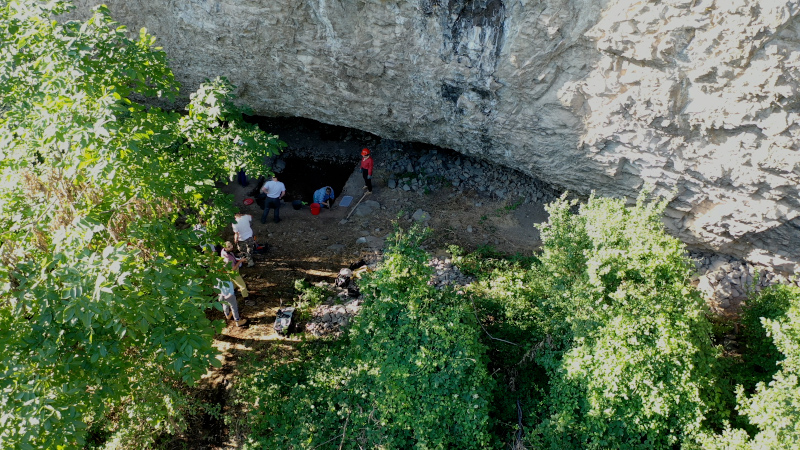
The Neanderthal Crossroads Project is the first Middle Paleolithic field school in the Balkan region. Students will get the opportunity to learn surface survey and trench excavation techniques at a Middle Paleolithic archaeological site, Uzun Mera, as well as exploratory investigations at additional caves including Peshka Cave. The Middle Paleolithic history of the central Balkans is still not well-known, despite it being the clear crossroads for hominins into and out of Europe. North Macedonia is a gorgeous, NATO-member country in the central Balkans that is safe and relatively inexpensive. Please reach out with questions about our schedule, travel logistics, or CoVID protocols; we would love to have you join us this summer! We have a short video of last summer’s excavation here.
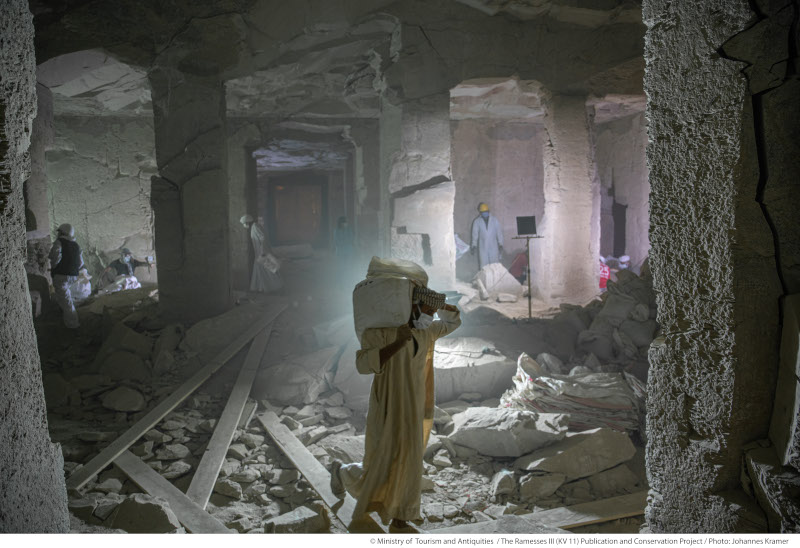
The Project is dedicated to the excavation, conservation, and publication of the tomb of pharaoh Ramesses III (ca. 1221 – 1156 BC) in the UNESCO World Heritage Site of the Valley of the Kings. Between 1885 and 1914, the tomb was flooded several times, causing severe damage in its rear compartments, and making it inaccessible to visitors. Since 2017, The Ramesses III (KV 11) Publication and Conservation Project has worked continuously on the preservation and publishing of the site. The mud and rubble which had accumulated in the rear parts are gradually being cleared, in the course of which valuable information on the tomb’s decoration and even fragments of its former furnishings have come to light. Its unique architecture and decoration program make KV 11 an important source for Ramesside beliefs concerning the afterlife. The final aim is to prepare the tomb for reopening and making it fully accessible to the public at large. To document and protect the tomb from further decay, specialists from different countries work together in the fields of archaeology, conservation, geoarchaeology, microbiology, osteology, philology, photography, and Egyptological research. The project is hosted by Humboldt-Universität zu Berlin and led by Dr. Anke Weber.
(c)The Ministry
of Tourism and Antiquities, The Ramesses III (KV 11) Publication and
Conservation Project, photos: Johannes Kramer
Rural Landscapes of Iron Age Imperial Mesopotamia (RLIIM) is a combination excavation-remote sensing project conducted on the Erbil Plain of Iraqi Kurdistan, just 15km south of Erbil near the modern village of Tirpa Spiyan. Excavations focus on a small, rural agricultural settlement of the Assyrian Empire, Qach Rresh. The project uses drone imagery and magnetometry to map the subsurface and landscape features of the village and its surrounding landscape to understand how the occupants of these small villages interacted within the broader imperial framework. Additionally, post-Assyrian material at the site allows us to investigate questions related to the collapse of the Assyrian empire as seen from the countryside, as opposed to a large urban center. We conducted our first season in Fall 2022, and our permit issued by the KRG Department of Antiquities allows for another four years of investigation before renewal. The project’s team is a combination of Kurdish and foreign members, directed by Prof. Petra Creamer (Emory University). We prioritize the training of our team members in various archaeological techniques, emphasizing technology and remote sensing along with more traditional methods.
Ulqin Archaeological Project: Landscape Survey and Geography, Southern Montenegro (Daniel Plekhov, Elic Weitzel, and Erina Baci)
The Ulqin Archaeological Project is a large-scale, diachronic regional survey of the Ulqin Municipality in southern Montenegro. Human occupation of this region dates to the earliest periods of human presence in Europe, with many subsequent cultures, states, and empires leaving their marks on the landscape through time. Our survey aims to document and study these traces. Through doing so, we will investigate how dynamics of human settlement and land-use in this region have changed through time and consider what effect they continue to have on the social and environmental characteristics of the region’s people and landscapes today. To that end, our project is focused as much on the archaeological remains of past periods as it is on the ongoing practices of local communities in the present. By combining archaeological methods with those from the fields of geography, ecology, and cultural anthropology, we will provide historical context for the development of modern-day settlement and agropastoral practices, and explore how communities today continue to inherit, adapt to, and transform the legacies of the past. Beyond studying the archaeological record of this region to understand its history and development, our project is also oriented towards the documentation and preservation of its rapidly disappearing heritage landscapes.
Tell Timai is the Nile Delta city of Thmouis, a site famous for perfume production, its role in the Great Rebellion discussed on the Rosetta Stone, and its prominence in the rise of Christianity in Egypt. Excavations in the coming years will focus on a series of religious structures from the Late Period to the Coptic Periods. Information on 2023-2023 fieldwork can be found here.
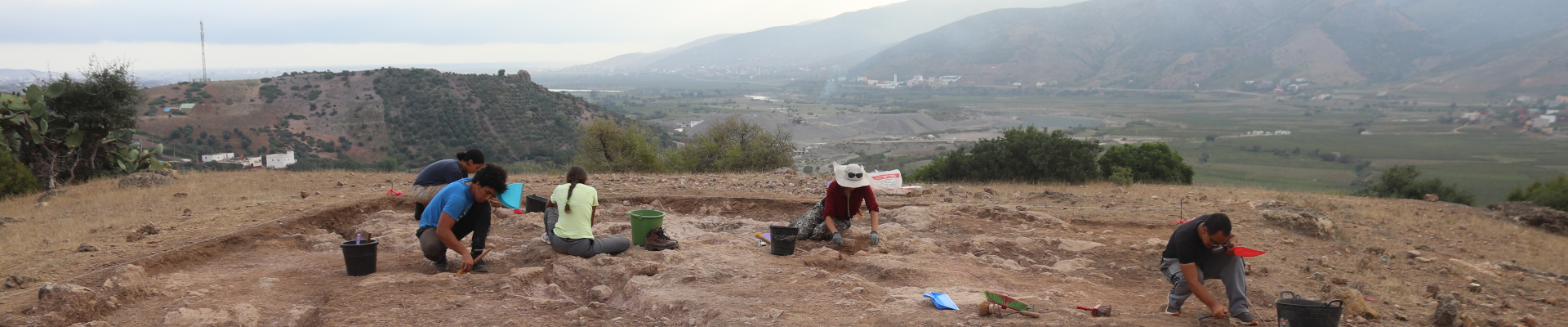
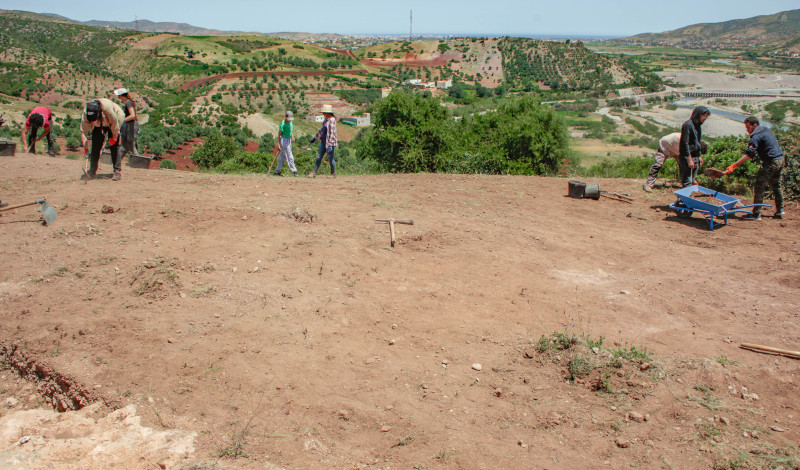
The Western Mediterranean has been characterized by complex social and economic dynamics, with the movements of Late Bronze Age communities settling the African shores yet to be fully deciphered. The site of Kach Kouch (Oued Laou, Morocco), a settlement with no parallels in north-west Africa, offers a unique chance to understand these dynamics and their place within debates about the hyperconnectivity of the Mediterranean in the late 2nd and early 1st millennium BC. The strategic location of Kach Kouch, controlling the access from the estuary of the Oued Laou river to the inland valleys of the Western Rif mountains, makes it ideally placed within a wider exchange network connecting local communities with the rest of the Mediterranean. To date, the archaeology of this region has been written overwhelmingly from a colonial perspective, even though evidence points to early connectivity of this area since the 6th millennium BC. This project focuses on the study of Kach Kouch and its territory, including the bassins of Oued Laou and Stehat, from a long durée perspective and with an emphasis on the role of local communities in the historical process. This project serves as a field school for young graduates and undergraduates in archaeology of the National Institute of Archaeology and Heritage of Morocco (INSAP).
Hilltop settlement of Kach Kouch, the Oued Laou Valley and the Mediterranean.
Fieldwork at Kach Kouch.
Vasagard, Denmark (Finn Ole Nielsen, M. Nicolas Caretta, Michael Thorsen, Ditte Kofod, and Roxana Youkhana)
The site of Vasagård is located on the southern side of the island of Bornholm, Denmark. Vasagård is separated by the 100m Læså valley from two nearly identical Neolithic sites and consists of a tomb system where a dolmen and a passage grave can be found close to the settlement. The grave system and causewayed enclosures are dated from c. 3500 BC, and constitute the most north-eastern occurrence of this complex type in Europe. During the excavations of 2013-2017, almost three hundred broken and completely flat, engraved stones were uncovered, marked with patterns of radiating straight lines. Named “sunstones” or “solar stones”, archaeologists from the Bornholm Museum have postulated that these artifacts were likely part of the rituals carried out by Neolithic sun-worshipping practitioners about 5,000 years ago. New excavations will help to increase and improve the information about the site and the Neolithic Period in the Baltic region.
ASOR-Affiliated Project Renewals
Carthage, The Precinct of Tanit (tophet) and Ba’al: The ASOR Punic Project: The Stager Excavations (1975-1979), Tunisia (J. A. Greene, B. K. Garnand, and L. E. Stager†)
This publication will present the results of the archaeological excavations at the so-called tophet or “Precinct of Tanit” in Carthage, Tunisia. These excavations were undertaken as part of the ASOR Punic Project (1975–1979) with funding from the Smithsonian Institution, the University of Chicago and Harvard University under auspices the UNESCO Campagne de Sauvegarde Carthage. The first volume will present a complete descriptive catalogue of artifacts, the second volume a detailed interpretation of stratigraphy, osteology and typology (urns, amulets, cippi/stelae), alongside interpretations of classical and biblical literary sources and epigraphic evidence, in order to present for the first time a holistic interpretation of Phoenician/Punic votive dedication of infants. This singular site has provided the vast majority of the Phoenician/Punic iconographic and epigraphic repertoire known from ca. 800–146 BCE.
ASOR is excited to announce that the 2023 ASOR Annual Meeting is going hybrid!
Instead of holding a separate virtual component in October, ASOR will hold a hybrid meeting with both virtual and in-person participation, November 15–18, at the Hilton Chicago. Feedback from members on the survey circulated by the ad hoc Committee on Climate Impact (Ad Hoc Climate Impact Committee Report) and discussion with many members at the Boston meeting led us to make this change for 2023.
What this means is that all sessions (and workshops, when feasible) will be able to include both in-person presentations in Chicago and virtual presentations online via Zoom. Virtual attendees will have the ability to view and listen to in-person and virtual speakers in real time. Virtual presenters will speak in real time when presenting; if they have a PowerPoint presentation, that will be projected by the session room’s ASOR facilitator to appear on the screen in the meeting room and online via Zoom (virtual presenters will be able to advance their own slides). All presenters (in-person and virtual) will be asked to send in their PowerPoint file (only slides, not a pre-recorded presentation) by Sunday, November 12. Sessions will be recorded and available online for a limited time after the meeting.
The meeting rooms in Chicago will not be set for a fully two-way hybrid experience, meaning that there will not be a view of the room/audience or synchronous discussion between virtual and in-person attendees. Virtual attendees will need to submit their post-presentation questions via the Zoom chat feature and the ASOR facilitator will read them to the presenter.
Program participants and meeting attendees have told us that scheduling time for ASOR two months in a row is difficult, but also that it is important to continue offering an option for virtual participation for those who can’t attend the meeting in person. We hope that offering a hybrid format will be an inclusive and welcomed option for all. If you have questions or concerns about the format, Arlene Press (meetings@asor.org) and Jared Koller (jaredkoller@asor.org) are here to help. You can also reach out to the Program Committee Co-Chairs, Allison Thomason and Kiersten Neumann (pc.chairs@asor.org), if you have questions pertaining to the academic program
With great excitement, all of us at ASOR look forward to seeing you in November online and/or in Chicago.
2022 William G. Dever Fellowship Report: Krysta Fauria
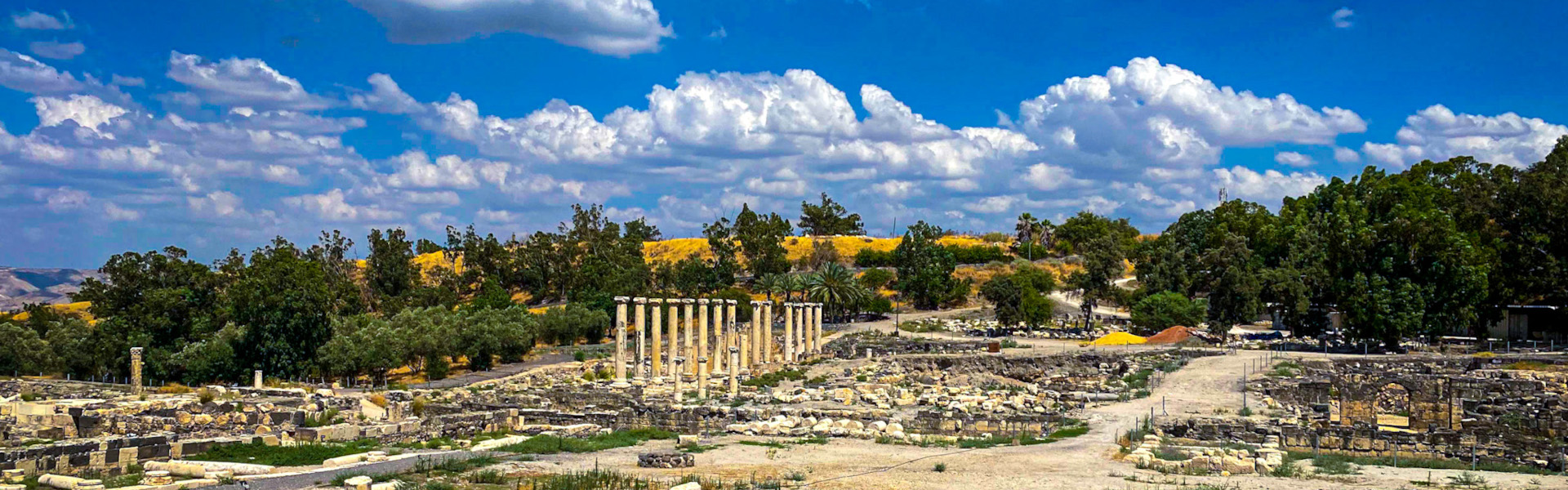
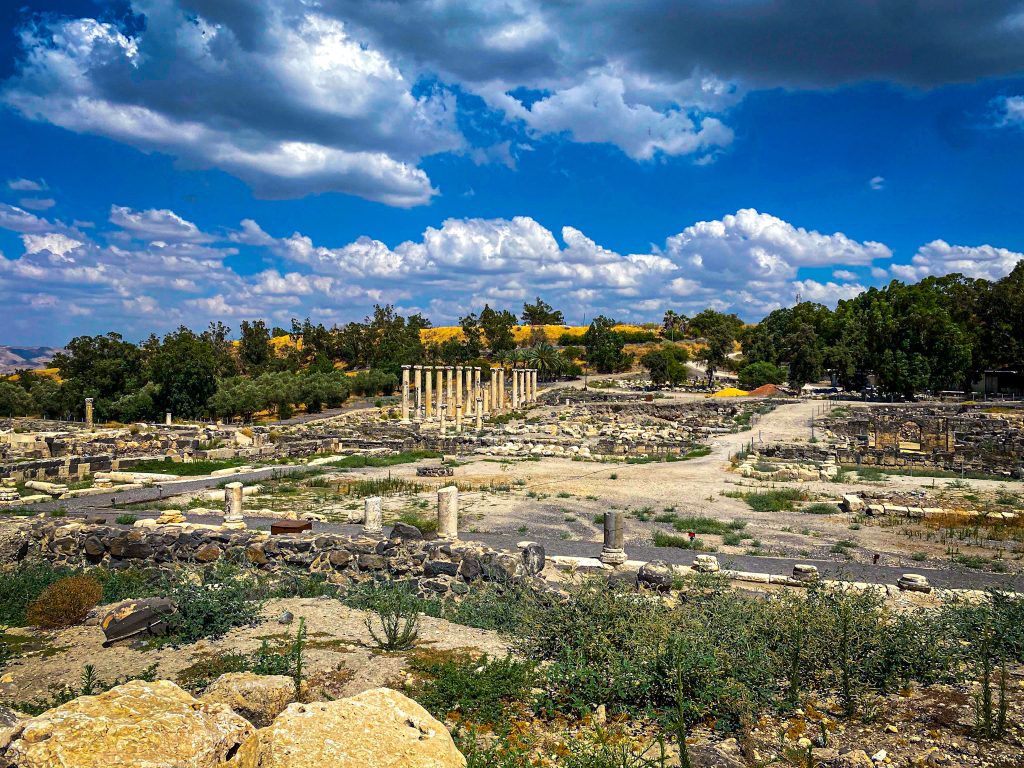
My first summer as a PhD student proved to be one of the most enriching summers I have had. I traveled to Israel for my first archaeological dig in May, and then spent a month at the W.F. Albright Institute of Archaeological Research in Jerusalem. These experiences were made possible through my funding from ASOR’s Dever Fellowship, which is designed for biblical scholars seeking to gain experience in archaeology. I did fully not comprehend the importance of studying material culture until I began my doctoral program in religion at the University of Southern California last year. As I began to recognize the need for scholars of Early Christianity to understand and, when possible, participate in archaeology, I sought ways to find funding to gain this experience. I discovered that Mark Letteney, a postdoctoral fellow at USC at the time, was on staff at the Jezreel Valley Regional Project. JVRP was leading an excavation in May through their Legio Project, which sought to uncover an amphitheater at the military base once occupied by the Roman VIth Ferrata Legion.
Beit She'an
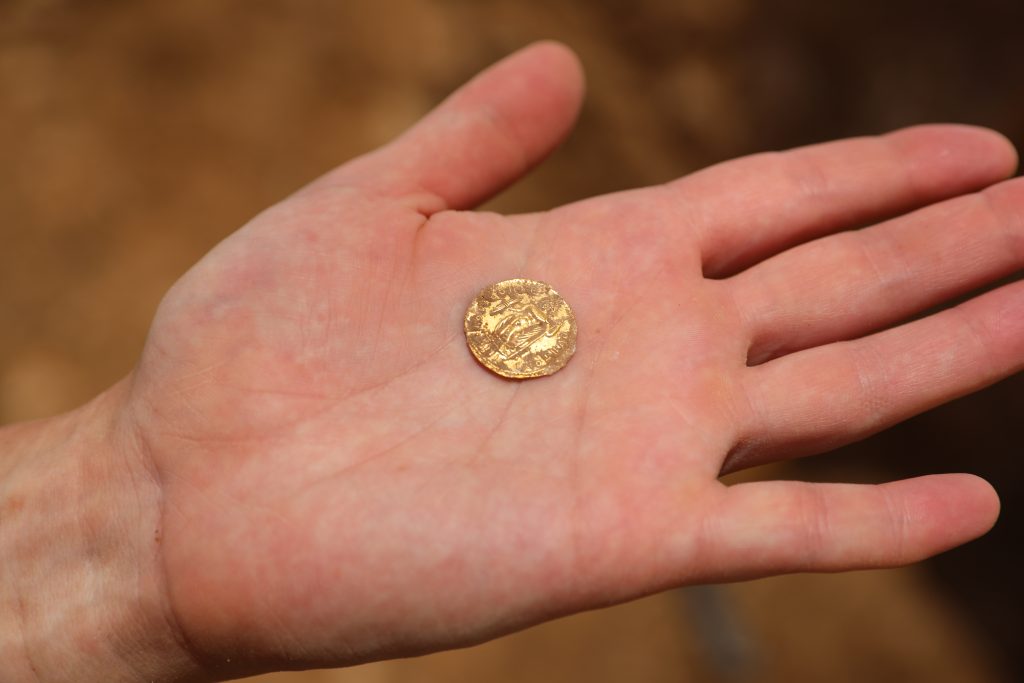
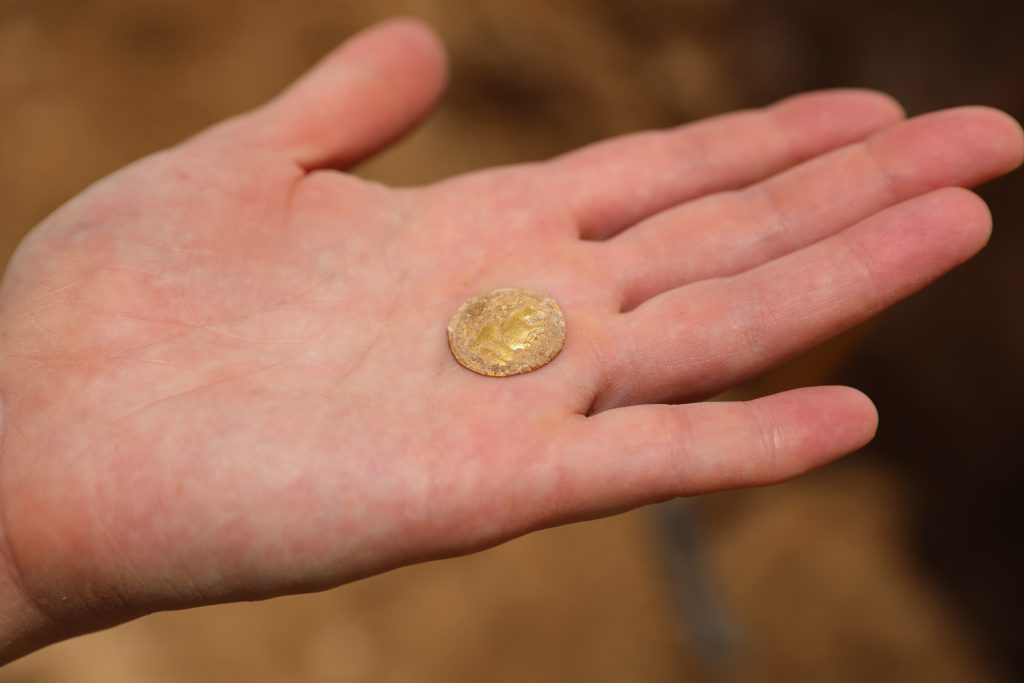
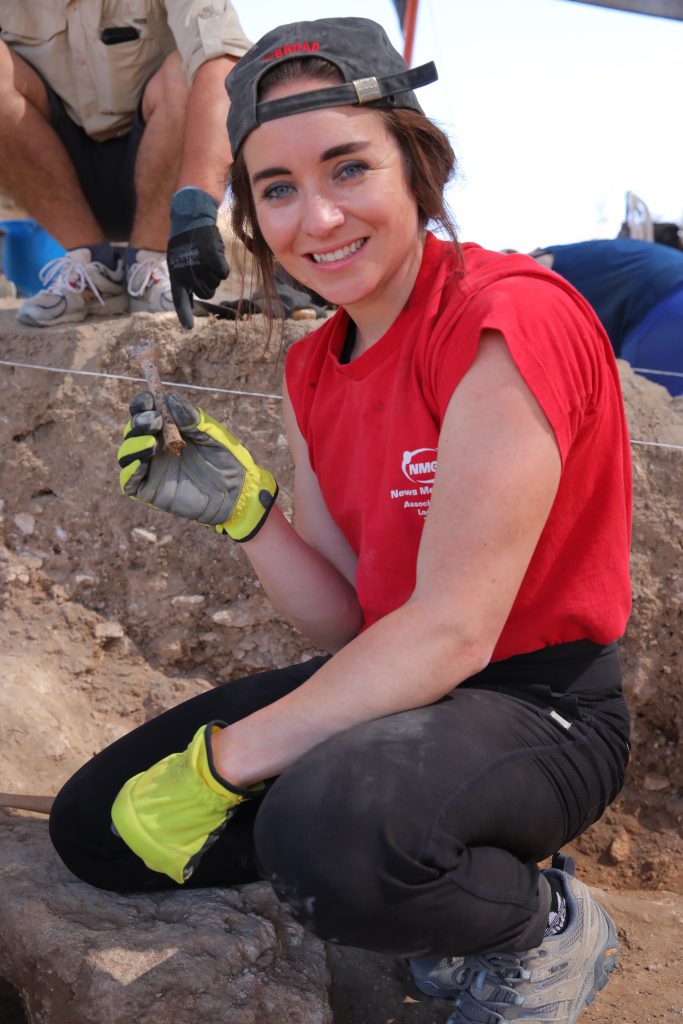
The dig was even more enriching than I anticipated. I gained a robust understanding of the methodology and tools used, as well as the post-excavation processing of artefacts. Moreover, I assisted the area directors with some of the more technical aspects of the excavation, including conducting photogrammetry and operating the total station. These experiences helped me gain a more thorough understanding of archaeological modeling and analysis. I personally uncovered a handful of significant finds, including an intact perfume vessel made from Roman glass, as well as a gold coin in near-perfect condition. The coin was minted under Diocletian in 295 CE and was the first dated item we found on the dig.
Coin found from 295 mentioned in the report (side 1)
Coin found from 295 mentioned in the report (side 2)
Krysta Fauria holding a Roman perfume vessel
Close up of the Roman perfume vessel
I also spent a significant amount of time visiting additional archaeological sites across the country and Palestine. Some of the sites that stood out as being particularly informative for my research were Megiddo, Beit She’an, Qumran, Herodion, and Caesarea, as well as the remains of the Second Temple and the City of David in Jerusalem.
It is difficult to overstate the ways in which my scholarship will benefit from this trip. For example, one way that studying the material remains informed my current understanding of the Second Temple and Roman Period is that it illustrated the ways in which the Judeans of this time were deeply entrenched in so-called Greco-Roman culture. While recent scholarship has had no shortage of critiques on conceptions of Hellenistic Judaism, I was able to comprehend this critique in new ways after seeing how Jewish people in antiquity co-existed with other Mediterranean inhabitants.
Herodion
This experience gave me an appreciation for the diverse areas of expertise needed to make an excavation possible. In a time when scholarship is seeking to become more collaborative and interdisciplinary, it seems prudent to look to the field of archaeology, which has long relied on scholars from a variety of disciplines and specializations. I hope to return to Israel and to hopefully go on another dig soon.
Beit She'an
Krysta Fauria is a second-year PhD student at the University of Southern California studying early Christianity and the Synoptic Gospels. Prior to beginning her program at USC, Krysta was a journalist covering politics and breaking news for The Associated Press in Washington, DC and Los Angeles.
Dig Cyprus: A Story of Cherishment, Craziness, and Cats
Noah Barton, Undergraduate University Student[/vc_column_text][mk_divider][vc_wp_text]
This summer I had the pleasure of attending an archaeological field school in Cyprus with North Carolina State University. The program – Cyprus Archaeological Field School – is directed by two of my past professors and has been occurring yearly since 2017. I arrived in Cyprus on May 20, 2022. The island is beautiful; every turn has a clear blue ocean, incredible mountains and hillsides, or luscious forests. A pleasant surprise was that Cyprus is loaded with wild cats – there are more cats on the island than humans, in fact – and most of them are friendly. The only downside is that it was very humid, but that’s to be expected for an island near the Middle-East in June.
The archaeological site I helped excavate is called Makounta-Voules, which appears to have been the home of a copper-mining group between 5000 and 7000 years ago. They used stone tools and had a large interest in picrolite – a bright green stone – which they sculpted into figurines and pendants. In addition to picrolite, our team also searched for evidence of stone tools and pieces of pottery (also known as sherds), bone (human and non-human), and shells that were used to create jewelry.[/vc_wp_text][vc_row_inner][vc_column_inner][vc_single_image image=”96093″ img_size=”full” add_caption=”yes” alignment=”center” onclick=”img_link_large” img_link_target=”_blank” css=”.vc_custom_1711651992536{padding-right: 10px !important;}”][/vc_column_inner][/vc_row_inner][mk_padding_divider][vc_wp_text]
Every morning, I woke up at 4:20 am and got on a bus with all the other students. We went straight to the site and started working right away. The entire team was divided into groups of four, with three students and one supervisor. The archaeological method of digging is very systematic; each group dug a hole that was square-shaped and 4 meters wide, known as a trench. We usually dug five centimeters down at a time across the entire surface of the trench before digging any farther. In each group, the students worked together to break up the compact dirt with a pickaxe, shovel up all the newly-made piles of loose dirt, and sift through that dirt to find artifacts. We also straightened out the walls of the trench, known as balk walls. After the team got back to the hotel and ate lunch, we spent an hour or two washing the artifacts that we dug up. This was done by scrubbing them with a toothbrush and soaking them in water. About three nights per week, we also had a lecture that was given by one of the supervisors. The topics ranged from the entire history of Cyprus to different processes and ethics in archaeology.
Every Friday we took a break from digging and went on field trips. During each trip, we visited at least one excavated archaeological site, one museum, and one local beach (except Nicosia). In Nea Paphos, we visited Kissonerga and Lemba, the Paphos museum, and Vardas beach. In Palaepaphos, we visited Prastio and Souskiou, Aphrodite’s temple, and Petra Tou Romeou beach, which is the legendary birthplace of Aphrodite. In Kourion we visited Kolossi, the Kourion museum, and Kourion beach. While in Nicosia we visited the Cyprus Museum, which was the most expansive museum of all.
Every Saturday was a free day for the students to do whatever they wanted. On the first free day, my friends and I went on a cruise, where we saw incredible views on the ocean and swam in the clear blue Mediterranean sea. On another free day, my friends and I hiked up Aphrodite’s trail, revealing the best views of the entire trip. I didn’t make any excursions on my fourth free day. Our fifth free day was spent in Nicosia, the country’s capital. My friends and I explored the city and later celebrated one friend’s birthday at bars and clubs.
On the final day, most students took a final exam; I did not as I didn’t need credit for an Anthropology major, and instead wrote two research essays to get credit for my History major. I left Cyprus on June 25, 2022, ending a wonderful five weeks of excavation and adventure.
Noah Barton is a senior at North Carolina State University, double-majoring in International Studies and History and minoring in Latin. He lives in Raleigh, North Carolina and enjoys history, music, and traveling.
[/vc_wp_text][mk_divider][vc_wp_text]Want to help more students and early career archaeologists get into the field? Donate to the cause today by selecting “Excavation Scholarships” as your gift purpose!