2022 ASOR Honors & Awards

2022 ASOR HONORS & AWARDS


Each year at the Annual Meeting, ASOR recognizes individuals who have performed outstanding service for the organization, those who have published exceptional academic work, and those who made significant contributions to our field. The following award recipients were honored at the 2022 Annual Meeting in Boston. Awards were presented by Lynn Welton, Chair of ASOR’s Honors and Awards Committee.

The W. F. Albright Award. This award honors an individual who has shown special support or made outstanding service contributions to one of the overseas centers, ACOR, AIAR, CAARI, or to one of the overseas committees – the Baghdad Committee and the Damascus Committee. This award is given when such an individual is identified.

ACOR: Awarded to John P. Oleson, Distinguished Professor Emeritus at University of Victoria; Member of ACOR’s Board of Trustees.

The Charles U. Harris Service Award. This award is given in recognition of long term and/or special service as an ASOR officer or Trustee (one award is given annually).

Awarded to Richard L. Coffman, Managing Director at the Coffman Law Firm; outgoing Chair of ASOR’s Board of Trustees.

The P. E. MacAllister Field Archaeology Award. This award honors an archaeologist who, during his/her career, has made outstanding contributions to ancient Near Eastern and eastern Mediterranean archaeology (one award is given annually).

Awarded to Glenn Schwartz, Whiting Professor of Archaeology at Johns Hopkins University.

ASOR Membership Service Award. This award recognizes individuals who have made special contributions on behalf of the ASOR membership, through committee, editorial, or office services.

Awarded to Helen Dixon, Assistant Professor of History, East Carolina University; outgoing Co-Chair of the ASOR Program Committee.


Awarded to Ann-Marie Knoblauch, Associate Professor of Art History and Associate Director of the School of Visual Arts, Virginia Tech University; Secretary, ASOR’s Board of Trustees and Executive Committee.

ASOR Community Outreach and Public Engagement. This award recognizes individuals, teams, and organizations who have initiated outstanding educational, informational, or practical projects (including but not limited to classes, programs, exhibits, resources, events, platforms) with the goal of making subjects and information about the ancient world accessible to wider (particularly non-academic) audiences.

Awarded to Melissa Cradic and Samuel Pfister, for their virtual exhibit, Unsilencing the Archives: Laborers of the Tell en-Nasbeh Excavations (1926-1935).

To view the virtual exhibit, click here.

The G. Ernest Wright Award. This award is given to the editor/author of the most substantial volume(s) dealing with archaeological material, excavation reports and material culture from the ancient Near East and eastern Mediterranean. This work must be the result of original research published within the past two years (one award is given annually).

Awarded to Andrea De Giorgi, Associate Professor, Florida State University; and Asa Eger, Associate Professor, University of North Carolina at Greensboro; for Antioch: A History.

The Frank Moore Cross Award. This award is presented to the author/editor of the most substantial volume(s) related to the history and/or religion of the ancient Near East and Eastern Mediterranean. Primary consideration will be given to historical, epigraphic, textual, and comparative literary studies; or to works that advance and/or evaluate new methodological approaches to the literary record(s). This work must be the result of original research published during the past two years (one award is given annually).

Awarded to Carolina López Ruíz, Professor, University of Chicago Divinity School and Department of Classics, for Phoenicians and the Making of the Mediterranean. 

The Nancy Lapp Popular Book Award. This award is presented to the author/editor of a book published in the last two years that offers a new synthesis of archaeological or textual evidence intended to reach an audience of scholars as well as students and the broader public (one award is given annually).
Awarded to Paul Collins, Keeper of the Middle East at the British Museum, for The Sumerians. 

The Joy Ungerleider Poster Award. This award is conferred upon the author(s) of the poster presenting the results of a study about ancient Near Eastern societies in a clear, legible fashion using original graphic content. Subject matter may be based in archaeological sciences, history, anthropology, epigraphy, ethnography, heritage or other scholarly approaches to understanding ancient people in the areas covered by ASOR (one award is given annually).

Awarded to Brady Liss, Matthew Howland, Anthony Tamberino, Mohammad Najjar, and Thomas E. Levy, University of California San Diego, for the poster: “Digitally Cleaning the Section: Using Archived Photographs to Reconstruct Stratigraphic Sections in Faynan, Jordan.”

Student Paper Award. This award is conferred upon the author(s) of a paper presented during the Annual Meeting that conveys the results of a study about ancient Near Eastern and wider Mediterranean societies in a clear, understandable and convincing fashion. The first author and presenter of the paper must be a registered student at the time of presentation in order to be eligible for consideration for this award.

Awarded to Alia Fares, University of Cologne, Germany and Landward Research, Ireland, for the paper “Archaeology at Your Doorstep-Building Heritage Awareness on the Lebanon Mountain Trail and for Beirut’s Traumatized Youth.”

Click here to watch the pre-recorded paper presentation. 

Fieldwork Report: Margarita Apffel

If Rocks Could Talk

Margarita Apffel, 2022 Strange/Midkiff Families Scholarship Recipient

Karak, Jordan is the home of the Iron I and II Moabite site of Khirbat al-Balu’a, an ASOR affiliated archaeological project that I joined through La Sierra University in Riverside, CA. At the Balu’a Regional Archaeological Program (BRAP) I was appointed as square supervisor, my first archaeological supervisory role due in part to my previous excavation experience and for my being a full season student. This was made possible thanks to the generosity of the 2022 Strange/Midkiff Families scholarship.

The Qasr wall directly above this season’s square

The first week at any excavation site is always the hardest, which I say with complete confidence since this is not my first time attending an archaeological field school or a regular excavation project. Leaving family and the comfort of one’s home behind for the pursuit of education in another country is not for the faint of heart, one must quickly acclimate to a whole new landscape, work schedule, language, culture, time zone, and cuisine. This can be physically challenging and emotionally taxing, but a very rewarding experience, nonetheless.

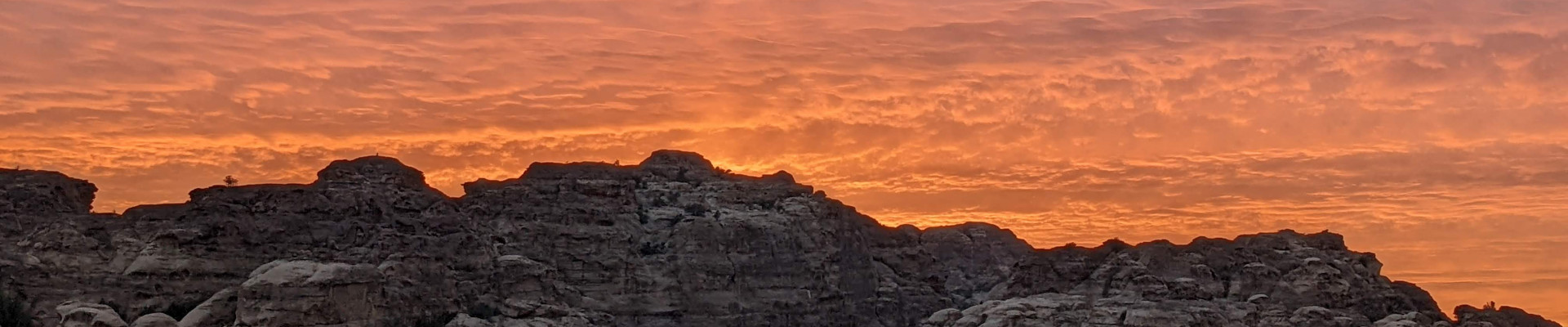
During the first and hardest week of the season, we received our assigned area of excavation, the Qasr (Castle), and got to meet our team members and team leaders. We had to prepare the area before excavations could begin, we first set up the soil sifts and made sure they were facing the Wadi Mujib and its fantastic sunrises to make the weeks to come more pleasant. Then came the arduous task of clearing the area of inter-seasonal debris and piles upon piles of rocks and tumble. We were lucky enough to have a constant breeze blowing from the west; the Jordanian desert was kind to the team. Once we cleared most of the rocks from our area, set up balk lines, and assigned individual tasks, we were ready to begin excavations.

The Qasr view from the west

The team clarified walls, cobbled surfaces, and doorways and found pottery sherds, stone artifacts, and faunal remains by the buckets. Any artifacts found in situ were immediately recoded using Global Positioning System (GPS), then collected for processing and laboratory analysis, though some of the stone artifacts excavated were too big to carry and were left in the field. The teams washed and sorted the excavated pottery sherds in preparation for the pottery readings, we took notes on pottery types and periods then sent the diagnostic pot sherds for publishing and the nondiagnostic sherds back to the field. We also completed daily and weekly reports in which we reviewed the strategy, implementation, and outcome of each project. And did I mention we moved more rocks?

On weekends, we had the opportunity to go on field trips to learn about castles such as Karak and Ajlun as well as other archaeological sites like Jerash and Tall al-Umayri. The highlight of the season was a weekend spent in Petra, a Nabatean city in the Wadi Musa. In Petra, we visited features such as the Treasury, the Highest Sacrificial Place, and the Monastery. We also had the opportunity to have sweet tea with many Bedouin women and men, haggled for prices at the various shops in the city, and rode a camel and a mule. This was a bit precarious for someone who is not accustomed to riding beasts of burden.

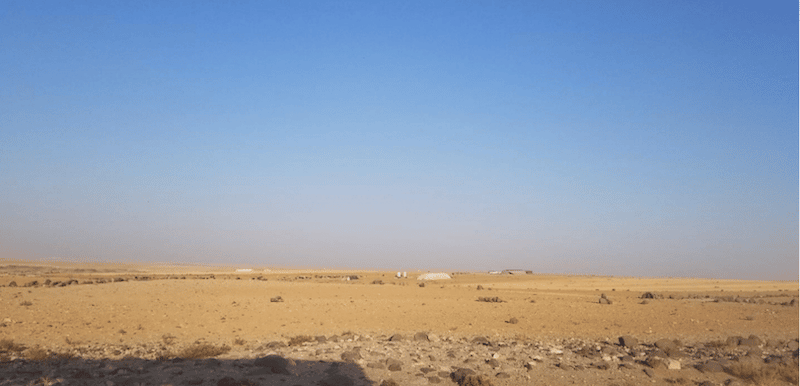
Bedouin tents in the distance

Our days in Jordan were never dull, at the site we were visited daily by large herds of sheep, goats, donkeys, and camels all being led by our worker’s friends or family who’d stop by from time to time to say hello. The Bedouin were very friendly and hospitable, they often shared Arabic sweet tea and sang songs for us, which made us feel very welcomed. The diversity of our team, their knowledge and sense of humor were the best part of the season. I said that the first week is always the hardest, but so is the last week when we have to say goodbye to the people with whom we discovered commonalities, developed friendships, and shared inside jokes for the past four to seven weeks. These relationships are the rewards we get to treasure when we leave our comfort zone in pursuit of knowledge and adventure in faraway places.

Margarita Apffel was born in Culiacan Sinaloa, Mexico but moved to California to study English and became the first in her family to go to college. She is a master’s student of Near Eastern Archaeology in the H. M. S. Richards Divinity School at La Sierra University in Riverside, California, and received a B.A. in Cultural Anthropology from California State University, San Bernardino. She has participated in various excavations projects in Menorca, Spain; Riverside, California; Karak, Jordan, and completed Museum Studies in Rome, Italy. Her goals are to further her education in the field of archaeology and museum studies and to continue to travel the world for as long as she can.
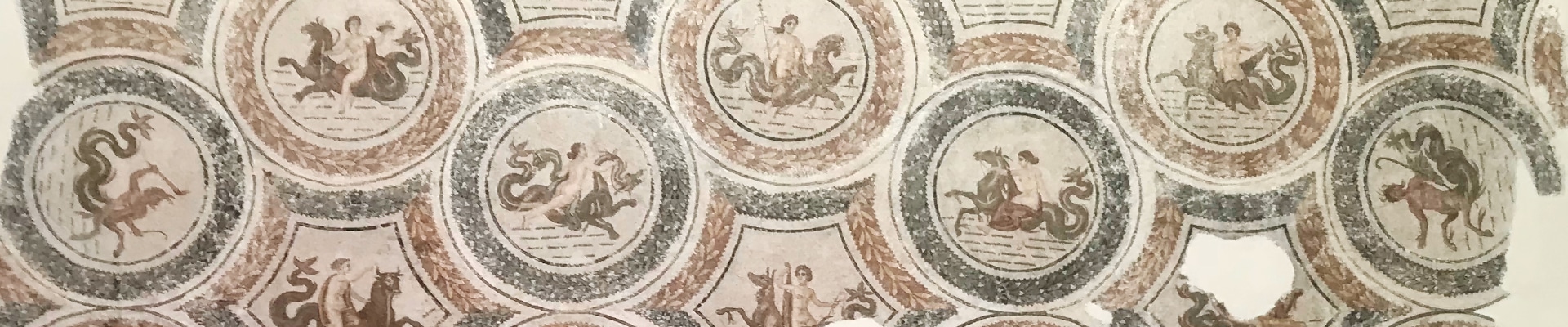
Read more about the Balu’a Regional Archaeological Project (BRAP).

Want to help more students and early career archaeologists get into the field? Donate to the cause today by selecting “Student Support” as your gift purpose!

2022 Nominees for ASOR Board Elections

2022 Nominees for ASOR Board Elections

The ASOR Trustee Nominations Committee has selected five highly qualified members to stand for election for four open positions on the Board of Trustees. The Board sets the direction for ASOR and provides oversight for our organization. Among other responsibilities, members of the Board agree to attend two meetings each year, to participate thoughtfully in the governance process, and to contribute financially to ASOR.
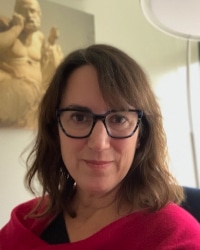
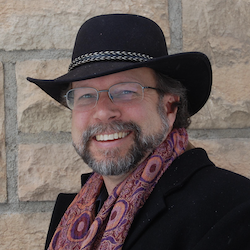
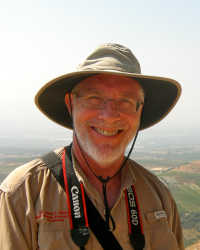
There are three candidates running for two openings as Member-elected Trustees for 3-year terms (Sarah Kielt Costello, Paul Flesher, and Robert Mullins). There are two candidates for two openings as Institutionally-elected Trustees for 3-year terms (Kathryn Grossman and Michael Hasel).  All ASOR members are eligible to vote in the Member-elected Trustee Election, while only Institutional Representatives of the 60 ASOR-member schools may vote in the Institutionally-elected Trustee Election.

ASOR will conduct the elections by online ballot, and all members and Institutional Representatives will receive the appropriate ballot(s) via email on or around October 11, 2022. We will send out two reminders, and all ballots must be completed by 12:00 PM Eastern Time on Friday, November 11. If you have difficulties completing the online ballot (once they are distributed), please contact Marta Ostovich at programs@asor.org.

Nominees for Membership-elected Trustees
(two to be elected)

Sarah Kielt Costello

Sarah Kielt Costello (MA Classical and Near Eastern Archaeology, Bryn Mawr College; Ph.D. Anthropology, Binghamton University) is Associate Professor of Art History at the University of Houston – Clear Lake, a Hispanic-serving regional university dedicated to educating a broad community of scholars, including first-generation, working-class and incarcerated students. She has won two University-wide teaching awards. At UHCL, she recently completed four years on Faculty Senate, including a leadership position in which she oversaw the creation of a new, equitable workload policy for faculty. She has been active in archaeological fieldwork since 1995, working in Israel, Turkey, Greece and Cyprus. In her research, Costello specializes in seals and related artifacts; ethics and museum practices; Neolithic imagery; and archaeological theory. Her recent publications include Object Biographies, Selections from the Art of the Ancient World in the Menil Collection (Menil/Yale 2021), a volume that takes on the ethical challenges of unprovenienced museum collections. She is in the final stages of co-editing a volume on Ethics for the ASOR Annual (AASOR).

Mission Statement: In the approximately 25 years that I’ve been involved with ASOR, I’ve seen its membership grow significantly and its members develop far-ranging research agendas. In recent years, ASOR members have forged research pathways into areas such as ancient dress, sensorial archaeology, climate, bioarchaeology and cultural heritage, and have been on the forefront of developing cutting edge digital and technological approaches to archaeology. Geographically, ASOR has had the opportunity to expand beyond its traditional emphasis on the archaeology of the Bible Lands as its members have engaged in projects in Central Asia, Kurdistan, Egypt, and the Gulf states. It is vital that ASOR continue to embrace new areas of research, and at the same time, confront the ethical challenges of our time by setting agendas and policies that move us forward and establish models of best practices. As a Trustee, I would support the work the organization is doing on ethical issues from equity to climate change. I would also help develop and support outreach efforts that further connect ASOR with students from a range of backgrounds, interests and means.

Paul Flesher

Paul Flesher is a Professor of Religious Studies at the University of Wyoming and presently directs the American Heritage Center, a large archive whose holdings extend from American history and literature to the Ancient Near East. Trained as a historian of ancient Judaism, with expertise ranging from the Second Temple to the early Byzantine periods, he has excavated on the staff of Tel Miqne-Ekron, Huqoq and Legio as a computer technician and an area supervisor. In 2016, he held the Seymour Gitin Distinguished Professorship at the Albright and began his current research reconstructing the acoustics of ancient Galilean synagogues.

Mission Statement: The heart of ASOR is archaeological excavation. Indeed, fieldwork provides the fastest growing body of knowledge about the ancient Near East. For more than a century, ASOR has provided support structures and a strong disciplinary environment that have advanced American archaeological work in the region.

With excavation at its core, ASOR’s primary activities feature dissemination and preservation. With regard to the former, ASOR’s strategic plan lays out a multi-pronged strategy that focuses on publication, outreach and education. This plan continues to build on activities the Society has pursued for more than a century, now expanding into digital publication and social media.

With regard to preservation, new technology provides challenges the field is only beginning to address. GIS, GPR, and Lidar provide a wealth of new information about architectural sites, but how is this born-digital data preserved as part of the coherent excavation record for future researchers? Even the photogrammetric recording of daily top plans brings on preservation challenges not faced by their hand-drawn predecessors. ASOR needs to provide leadership in addressing these matters.

As the head of national archive, I have begun to tackle these issues by providing the ASOR archive with a permanent home and by offering a place to other archaeological records from excavations, organizations and other sources. If reelected as a membership trustee, I will continue to work within ASOR to meet these preservation challenges so that the results of the field’s advanced site analyses are not lost to future generations.

Robert Mullins

Robert Mullins is a professor of Biblical Studies and Archaeology at Azusa Pacific University in Los Angeles where he is also Chair of the Department of Biblical and Religious Studies. He received his Ph.D. in Archaeology from the Hebrew University of Jerusalem where he supervised areas at Tel Beth Shean and Tel Rehov under the direction of Prof. Amihai Mazar with whom he also worked as a research assistant. Outside of Israel, he worked for two projects in southeastern Turkey at Tell Atchana (Alalakh) and Zinçirli Höyük (Samal) under the auspices of the University of Chicago. Bob currently co-directs the excavations at Abel Beth Maacah in northern Israel with two long-time friends and colleagues from the Hebrew University of Jerusalem. His interests encompass Egyptian-Canaanite interaction during the Late Bronze Age, the Late Bronze/Iron Age I transition, and cross-cultural interaction in the Levant and Eastern Mediterranean. In addition to publications related to the Abel Beth Maacah, Tel Beth-Shean, and Tel Rehov projects, Bob also wrote “The Late Bronze Age” with Eli Yannai in Volume 3 of The Pottery of Ancient Israel and Its Neighbors, and the Atlas of the Biblical World with Mark Vitalis Hoffman.

Mission Statement: I have been a member of ASOR since 1996 and would like to renew my service on the Board of Trustees. Over the years, I have witnessed ASOR’s growth into a creative, vibrant, and diverse organization that better serves its members and instills a greater appreciation of our profession to the public. I remain committed to our mission regarding the history, people, and cultures of the Near East. I will continue to support policies that foster growth, sustainability, diversity, and inclusiveness. I will continue to advocate for a culture of inquiry, scholarship, and collegiality that engages students and encourages international involvement, especially among students and professionals from underrepresented regions. This includes ASOR’s cultural heritage initiatives in North Africa, Syria, and other regions where we regard heritage documentation and preservation as a professional responsibility. As the co-director of an archaeological project that has benefited from student access to ASOR-funded excavation scholarships, I want to ensure that our membership does not lessen its financial and professional commitment to our younger scholars. ASOR has much to gain from a vision that articulates a clear purpose, demonstrates a high level of integrity, maintains fiscal stability, and promotes organizational structures and processes that effectively fulfill its purposes.

Nominees for Institutionally-elected Trustees
(two to be elected):

Kathryn Grossman

Kathryn Grossman is Assistant Professor of Anthropology in the Department of Sociology and Anthropology at North Carolina State University. She is an archaeologist with expertise in the Chalcolithic and Bronze Age cultures of Cyprus and Mesopotamia and a methodological specialty in zooarchaeology. She is Director of the ASOR-affiliated Makounta-Voules Archaeological Project, as well as zooarchaeologist for the Kani Shaie Archaeological Project (Iraqi Kurdistan), the Wadi el-Hudi Expedition (Egypt), the Petra North Ridge Project (Jordan), and the Temple of the Winged Lions Cultural Resource Management Project (Jordan). She is currently co-editing, with Jesse Casana and Eric Jensen, the final report on the excavations at Tell Qarqur, Syria.

Mission Statement: I have been involved with ASOR for fourteen years. I began attending and presenting at the annual meeting as a graduate student, and my engagement has deepened over time. I served on the Committee on Archaeological Policy for two terms, and during that time I also chaired the CAP Fellowships Subcommittee. In 2018, I presented the work of the Fellowships Subcommittee at that year’s Legacy Dinner, and last year I received an ASOR Service award for my work on the CAP Fellowships Subcommittee. I am currently co-chairing, with Caroline Sauvage, the Archaeology of Syria sessions at the Annual Meeting, and I serve as the institutional representative for ASOR at North Carolina State University. In my time as an ASOR member, I have watched the organization grow dramatically in its geographic scope and evolve to meet the demands of 21st-century scholarship. In serving as an Institutionally-elected member on the ASOR Board of Trustees, I look forward to helping ASOR move forward with the issues that loom before us, including addressing our climate impact, increasing our outreach to diverse audiences, and promoting the preservation of tangible and intangible cultural heritage.

Michael G. Hasel

Michael G. Hasel is Director of the Institute of Archaeology and Lynn H. Wood Archaeological Museum at Southern Adventist University, where he also serves as Professor of Near Eastern Studies and Archaeology since 1998.

Hasel has participated and served in administrative capacities on eleven different excavations in the Middle East, including Gezer, Ashkelon, Dor, Miqne-Ekron, Masada, and Hazor, in Israel; Idalion, Cyprus; and Jalul in Jordan. He has directed excavations and surveys at Khirbet Qeiyafa and Socoh and currently is co-director of The Fourth Expedition to Lachish. As curator of the Lynn H. Wood Archaeological Museum, Hasel was responsible for planning and displaying art and objects from the ancient Near East in a state-of-the-art exhibit entitled “Vessels in Time: A Journey into the Biblical World” and several temporary exhibits including “Peace and War: The Assyrian Conquest of Lachish” (2023-2025).

Hasel, an ASOR member since 1989, has chaired several ASOR sessions and served on the Agenda Committee. He held the Samuel H. Kress Fellowship at the W. F. Albright Institute for Archaeological Research (AIAR) in 1995-96 and a Fulbright at the Cyprus American Archaeological Research Institute (CAARI) in 2005. He is also a fellow of the Institute for Biblical Research.

Hasel joined the ASOR Board in January 2014.

Mission Statement:Over the past 33 years of my involvement with ASOR, I have watched ASOR grow into a strong society representing a wide variety of interests and research foci in the ancient Near Eastern and Mediterranean worlds. During that same period, I have been actively involved in excavations in Israel, Jordan, and Cyprus while also engaged in Egyptological research. As an excavator I am interested in encouraging the archaeological interplay between text and material culture. This integration has been one of the historic strengths of of ASOR and I believe it remains vital as ASOR continues to position itself as an important and relevant voice to a large segment of North America. As a museum director part of my vision is to make our field relevant for future generations through popularizing archaeological discoveries and making it accessible to a larger segment of society. This would include encouraging young scholars who are searching for direction and belonging to get involved in ASOR while fostering connections in the regions it serves. To accomplish these goals, I would welcome the opportunity to continue to support and serve as a member of the Board of Trustees for another term.

Fieldwork Report: Rebekah Ross

Illuminating the Invisible

Rebekah Ross, 2022 Member-Supported Scholarship Recipient

This summer, I had the privilege of spending my seventh excavation season in Cyprus with the Kourion Urban Space Project under the direction of Drs. Tom Davis and Laura Swantek. Our goal for the season was to reach floor level and better define the relationship between the 5×5 meter trenches of Building 4, a building we began excavating in 2013. Our first week of work consisted of pulling weeds and cleaning the site. We had 4-6 years of brush growth to clear away. During our second week of work, we removed the baulks between the trenches, which was very enlightening. We discovered that “rooms” were not rooms, and walls bound spaces we thought were open. We also found that one area of the building was entirely paved by mosaic and marble floors and featured vine and floral painted plaster motifs. We also had an exciting discovery of a marble statue of a boy with a duck.

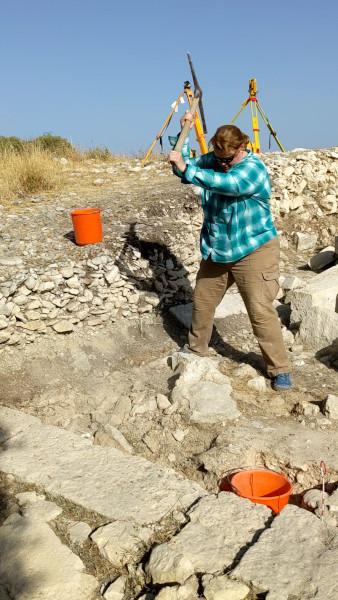
Rebekah hard at work in the field.
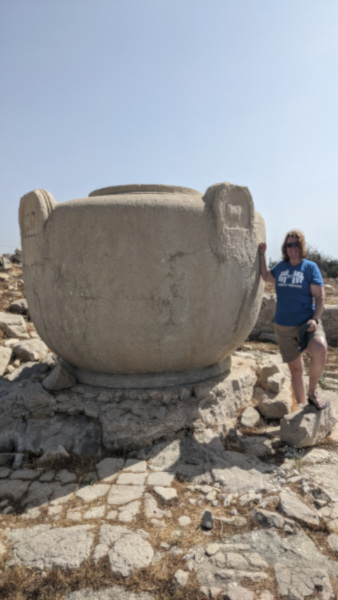
In front of the stone vase at Amathus, Cyprus.

I had a few personal research goals that I wanted to persue while I was in Cyprus. My dissertation focuses on using exterior lights in the ancient world, and I’m using Kourion as a test subject. While it will be possible to test light and distance with a mathematical formula and computer model, there is something to be said about seeing is believing. So I attempted a little experimental archaeology; with my scholarship money, I was able to purchase equipment and supplies to experiment with light, distance, moonlight, and visibility.   


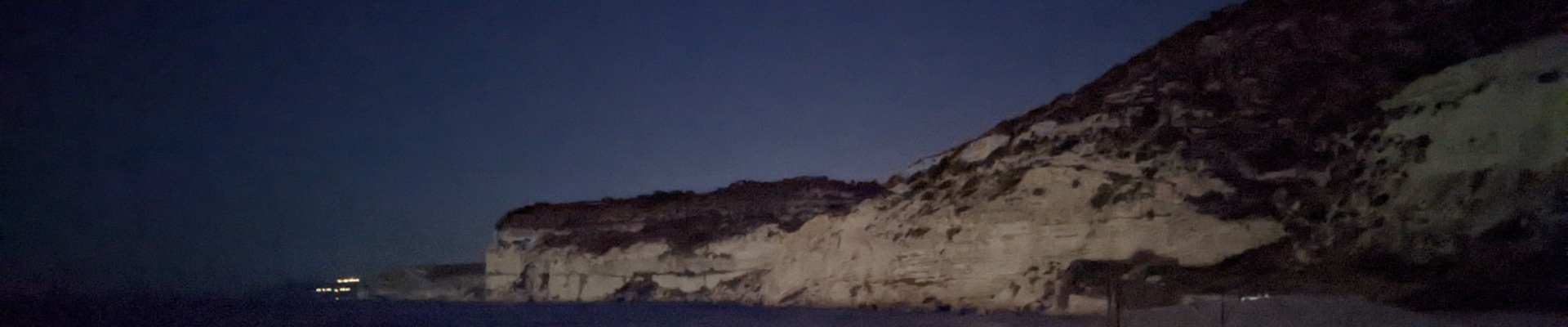
The first experiment on the beach.

My initial theory was that I would be able to see and measure the amount of light visible from the cliff to the beach. I had project members stand on the cliff, don’t worry, they were on a paved overlook, and a partner and I went down to the beach. Unfortunately, the first time we tried it, the wind was blowing too hard and blew out the candles. And we started too early in the evening before it was suitably dark. On our second attempt a few days later, we went to the cliff and beach after dark; there was less wind this time. I could see the candlelight from the beach; however, my light meter was too far away to pick up a reading. I made one final attempt at the end of the season late at night, around midnight to 1 A.M.  It was just past a full moon, so I had plenty of natural light. This time I decided to see the base brightness level and how dim the light declined as I moved further away from my light source. I set up my candles and my tape measure, and I took a reading of one burning candle every 10 cm.


The final, and successful, attempt.

On my final attempt, I got a scaled measurement of a burning candle in bright moonlight! My first two attempts were failures, but as Thomas Edison said, “the light bulb was an invention with 1000 steps.” I’ll be able to plug this information into a formula and calculate how much light Kourion’s ancient inhabitants would require to be visible from the sea. My next experimental archaeology step will be to create torches and measure how much light they provide. 

So why is this important? Light is easy for us. We flip a switch, turn on our phones, clap, light a match, or wave a hand. We are constantly in artificial light, so we do not think about the work that goes into illuminating a space. But there are drawbacks to working with light. For example, ancient light sources existed to be destroyed. Oil reservoirs burn out; wicks turn to ash; torches are made of wood and do not survive. So in some respects, I am chasing the invisible, but life did not stop for ancient people when the sun went down, and everybody went home and went to bed. There is too much evidence that this is untrue. But were people illuminating their cities? I think they were. People use light to establish their presence: Eifel Tower, city skylines, Las Vegas, or Jesus’ reference in Matthew of “a city on a hill” (Matthew 5:14). People use light to see and to be seen; they had to illuminate their city with artificial light. It was a statement of power, wealth, and a marker of civic identity. And for Kourion, I think this is key for understanding why they built on the acropolis where there was no natural water source.

Rebekah Ross is a senior Ph.D. student at Lipscomb University. She has been working with the Kourion Urban Space Project since its inception in 2012. Her research interests include light, illumination, lamps, and ancient glass.

Press release for the 2022 Kourion Urban Space Project Field Season. 

Want to help more students and early career archaeologists get into the field? Donate to the cause today by selecting “Student Support” as your gift purpose!

Collections Fellowship Report: Michael Press

2022 Study of Collections Fellowship Report: The Antiquities Market in Late Ottoman Palestine

Michael Press, University of Agder

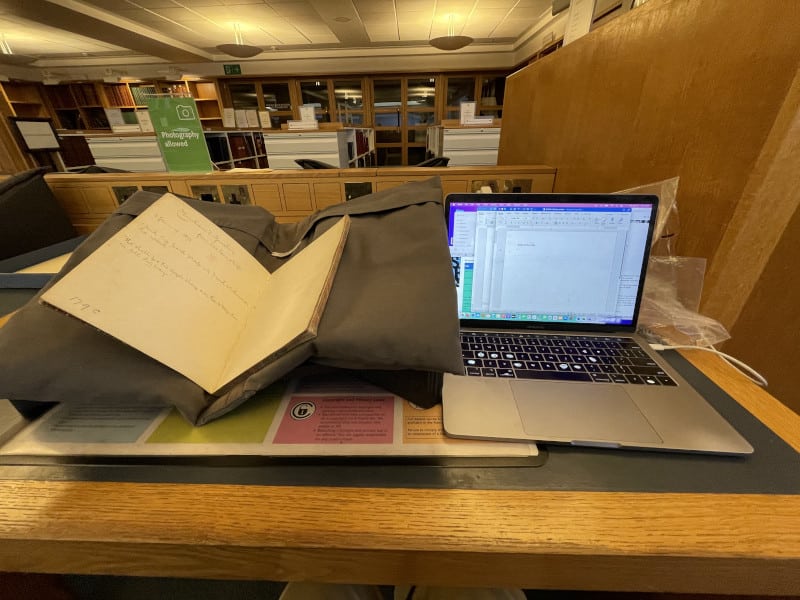
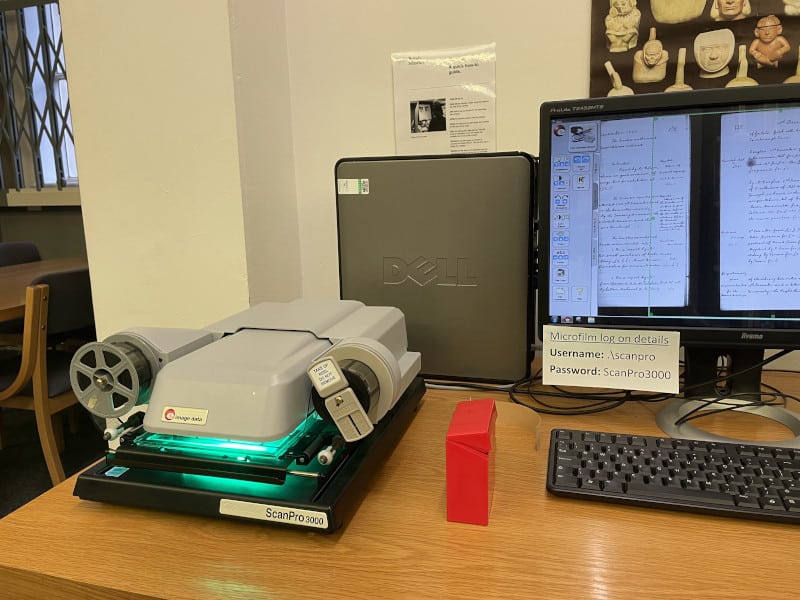
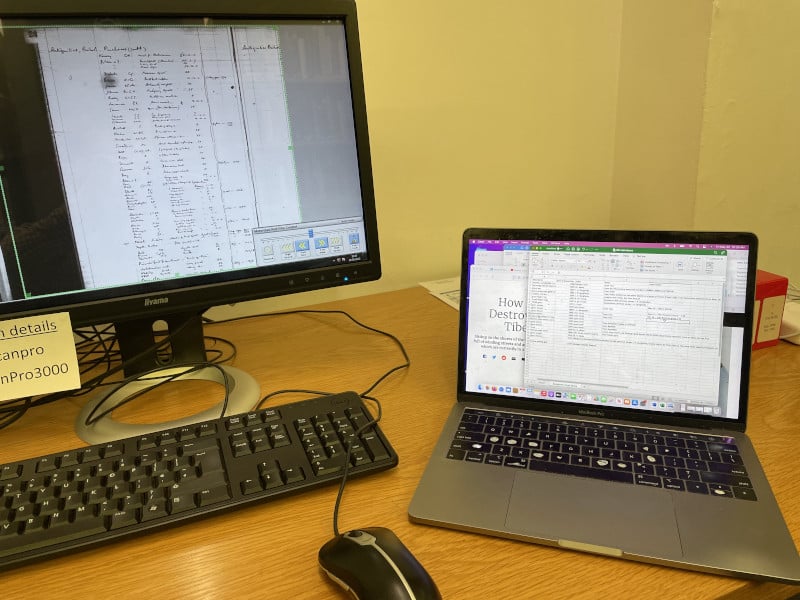
How did people buy and sell antiquities in Palestine in the 19th century? This is the question I’ve been trying to answer since the fall of 2020. Because of COVID, I was confined for a year and a half to online and library research. This wasn’t a problem initially: there is a huge amount of relevant material online, especially because things published in the 19th century are in the public domain. I have been lucky to be able to access so many travelers’ accounts, newspaper and journal articles, business directories, travel guides, and even some archival material online. But many relevant letters or reports or inventories or meeting minutes – not to mention the objects themselves! – lay beyond my reach.

Finally, thanks to the ASOR Study of Collections Fellowship, I was able to make my first research trip for this project, to England in May 2022. Visiting several collections, I could piece together bits of evidence into a larger picture of the trade.

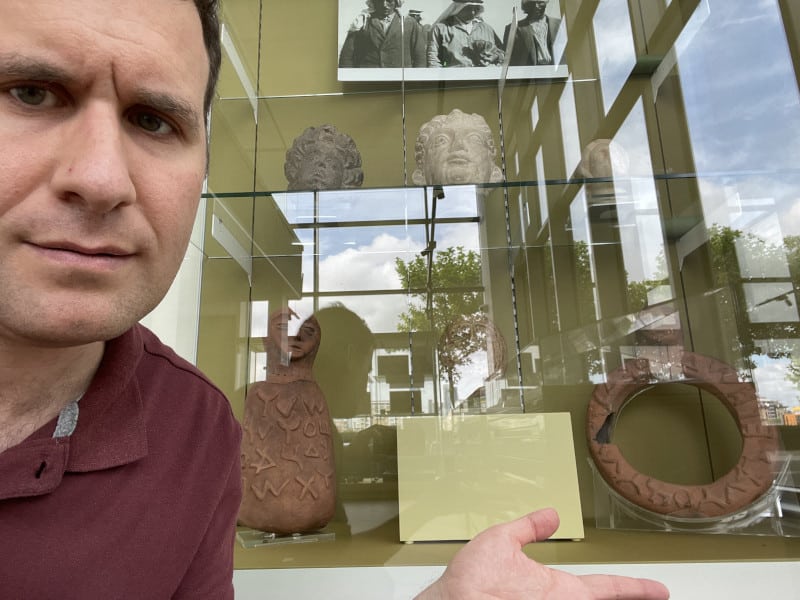
Take for example the notorious bookseller and antiquarian Moses Shapira. In the 1870s, Shapira sold the infamous Moabite pottery, consisting of thousands of fake clay vessels and figurines, and tried to sell an even more infamous Deuteronomy manuscript denounced as a fake in 1883. At the British Library, I was able to read letters written by Shapira himself, as well as journal entries and newspaper articles giving people’s impressions of him at the time. At the British Museum’s central archive, I was able to see the amounts the museum paid for authentic medieval and early modern manuscripts offered by Shapira in the 1870s and 1880s.

Research at the British Library.
My research setup at the British Museum.

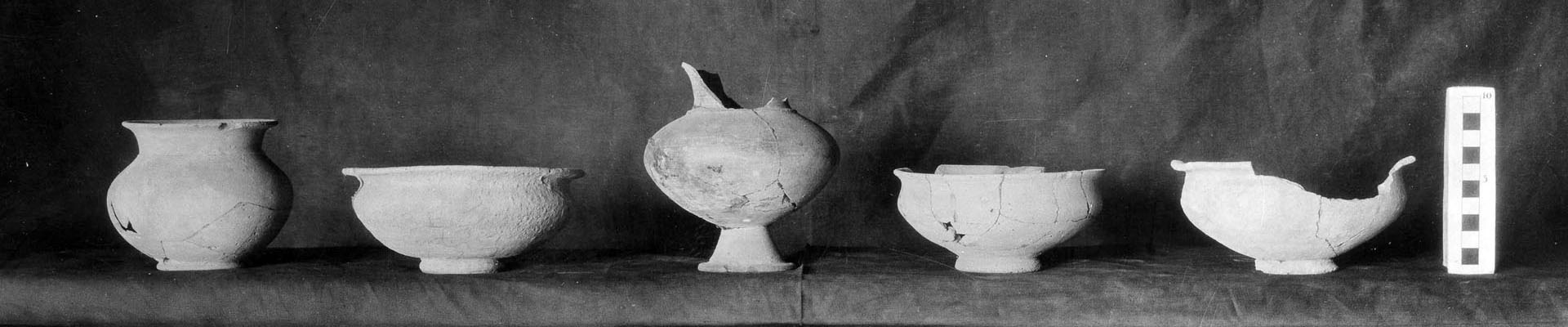
But most of my time was spent at the Palestine Exploration Fund. Their officers, who were mapping and excavating in Palestine at just the time that Shapira was most active, wrote back detailed letters and reports to London. One of the Fund’s officers, Herbert Kitchener – long before he became famous as Lord Kitchener – purchased two of the Moabite pots in Jerusalem and brought them back to the PEF in London. I was fortunate enough to see these, as well as other forgeries probably offered for sale by Shapira.

My time in London was so productive that I am still processing all the information I collected!

With the PEF’s “Moabite Pottery”.

Vivan Bull Remembrances

IN MEMORIAM:
VIVIAN BULL‎ (1934 – 2022)

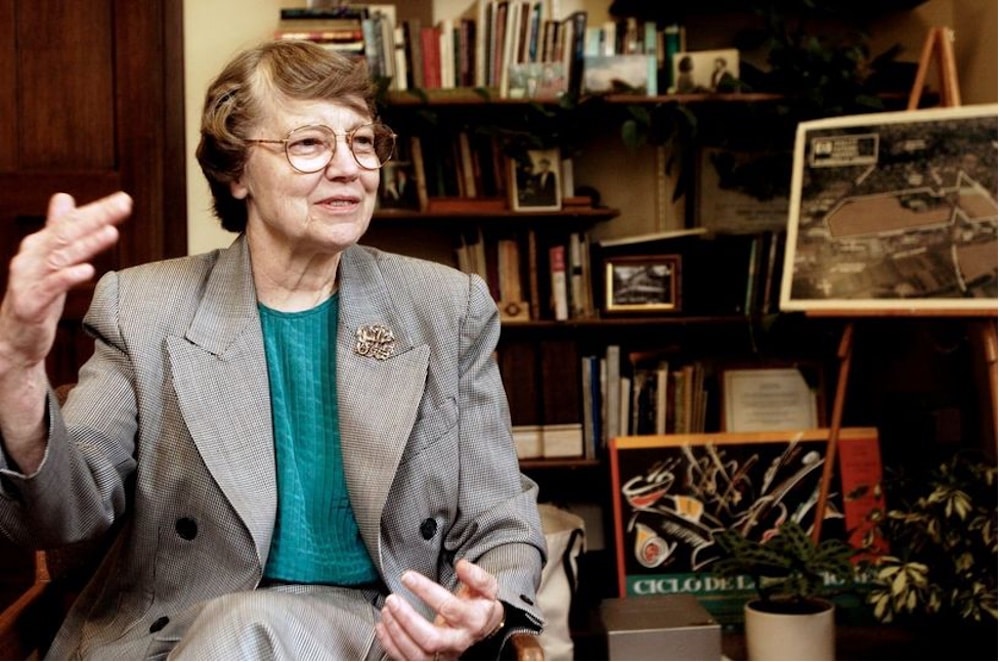
Vivian Bull before her retirement as president of Linfield University in 2005. (Oregonian file photo by Roger Jensen)

ASOR mourns the passing of long-time member, former Albright & ASOR Trustee, Vivian Ann Bull (1934-2022), who passed away on August 12, 2022 at age 87. We share our condolences with Vivian’s sons (Robert “Camper” Bull and W. Carlson Bull).

While we will miss Vivian dearly, we remember and celebrate her life and many accomplishments. We have included detailed remembrances by Jane DeRose Evans and by J. Edward Wright, a personal memorial letter to Vivian by Carolyn Midkiff Strange, and additional tributes and brief remembrances by ASOR officers and others in the ASOR family who were close to Vivian. Please e-mail ASOR if you would like to add a tribute to this webpage.

Please click here for the official obituary and memorial service information (October 8, 2022).

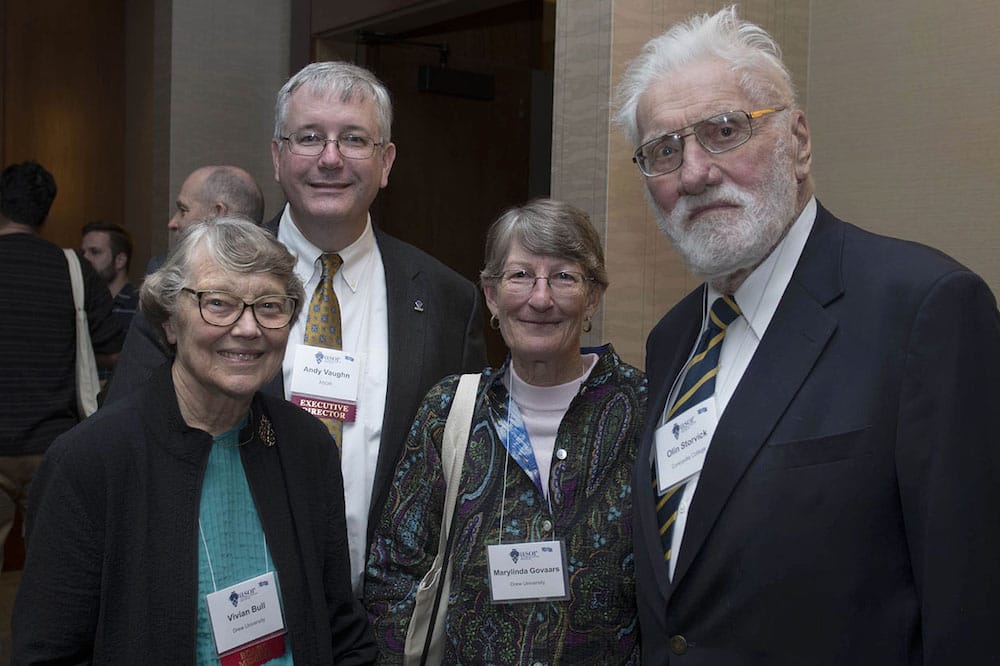
Vivian Bull, Andy Vaughn, Marylinda Govaars, and Olin Storvick at the 2017 ASOR meeting.

In Remembrance: Vivian Ann Bull (1934 – 2022)

Jane DeRose Evans, Professor of Roman Art and Archaeology and Chair of Art History, Temple University

Vivian, a long-time and staunch supporter of the Albright Institute and ASOR, was a trailblazer throughout her life. She was the first student from Albion College (where she earned her undergraduate degree in economics) to receive a Fulbright. Heading to the London School of Economics, she also completed graduate work in Norway and the Netherlands. After graduation, she was one of the few women working in the field of banking and finance – and had to appeal directly to her company’s vice president when she got her notice, which she convinced him was only due to her gender. Her curiosity about international economics brought her to Jerusalem, where she met Robert J. Bull, who was working at Tell er Ras (Shechem). Vivian went with Bob in 1955 to Madison NJ when he was offered the position of instructor of church history in 1955. Five years later, she became a part-time instructor of accounting, and only took on a fulltime position on the condition that she be allowed to complete the work for a PhD in Economics, which she did through NYU (her first choice, Princeton, was not accepting women). Vivian taught at Drew for thirty years, while also serving as Associate Dean of the College of Liberal Arts for much of that time. But summers were spent as registrar on the excavations that Bob directed – her meticulous organization of the records is still apparent from the field notes of those excavations.

In 1992, Vivian left Drew as Emeritus Professor to serve a 13-year term as president of Linfield College (OR). It was her background in international education, business, and academic leadership that attracted the attention of the search committee. She became known as a builder, doubling the size of the College’s campus and advocate for diversity and inclusion. When she retired from that position, she awarded the title of President Emeritus and is still remembered on that campus by the dedication of the Vivian A. Bull Music Center.

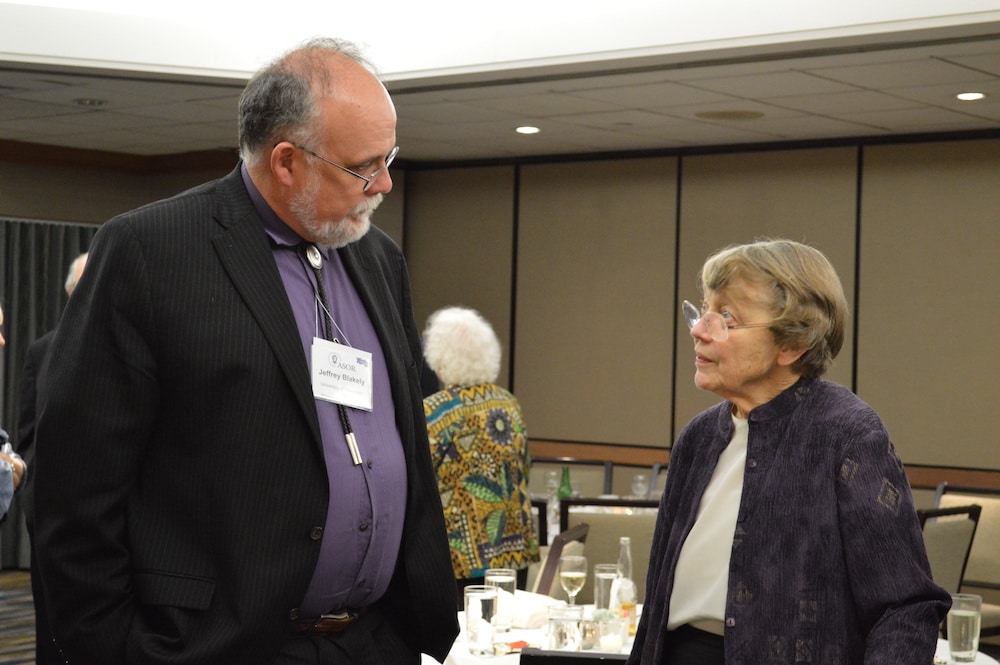
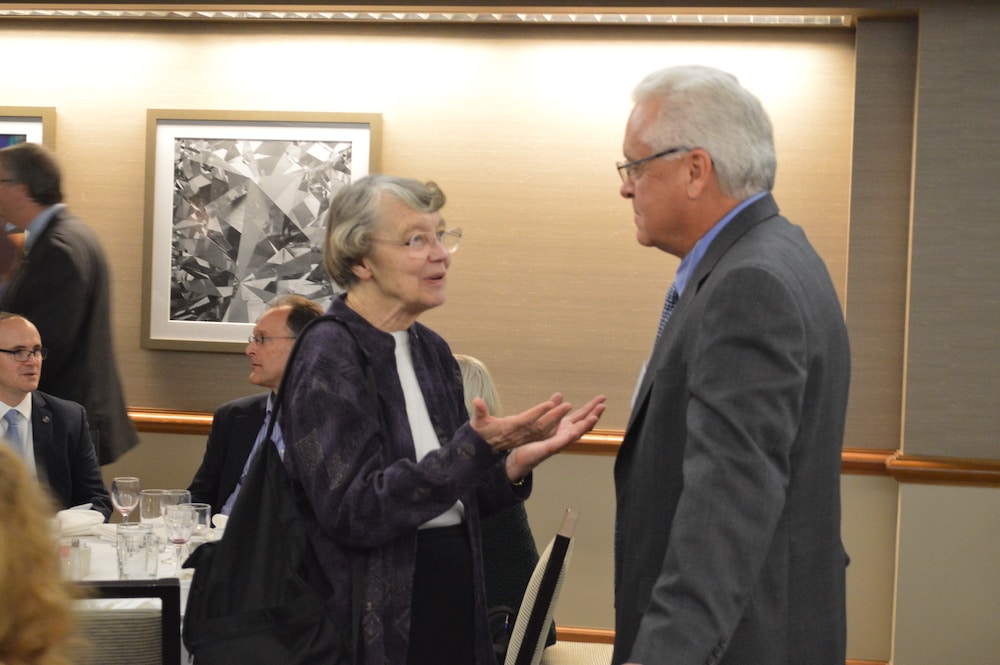
Vivian and Jeff Blakley converse at the 2014 Legacy Dinner.

In 2012, she came out of retirement at the request of the Drew trustees to serve as an interim president of the University. Upon her retirement in 2014, she was named President Emeritus and can be remembered on that campus by the dedication of the Vivian A. Bull Academic Commons in the University Library.

Through her archaeological work, Vivian became an advocate for the Albright Institute, where she became a Trustee of the Albright, first serving as Treasurer and then, in 2006, becoming the Chair of the Board. In 2012 she became a Honorary Trustee, a lifetime appointment. At the same time, she supported the work of ASOR, becoming a member of the Board and a vital voice on the Finance Committee and the Development Committee. In 2016, she received the Charles U. Harris Service Award from ASOR in acknowledgement of her work for the organization. Up until her death, she was deeply involved in the efforts to publish the results of Bob’s excavations in Caesarea and Tell er Ras.

Vivian’s strong faith was evident from an early age and remained an important part of her life’s work and philosophy. Although she would have liked to have been a Methodist minister, the denomination was not accepting women when she was making decisions about graduate school. She remained devoted to Methodist causes, working with committees to foster the growth of educational services in Africa and singing in the choir of her local church as one of the few tenors for many years.

Vivian is survived by two sons, Robert “Camper” Bull and W. Carlson Bull, both of whom grew up on the Caesarea excavations and remain supporters of ASOR.

A Life Well Lived: Vivian Ann Bull (1934 – 2022)

J. Edward Wright, Professor of Hebrew Bible and Early Judaism & Director of the Arizona Center for Judaic Studies, The University of Arizona

It was with deep sadness that we received the news of the passing of our esteemed colleague and longtime ASOR member Dr. Vivian Bull on 12 August 2022. Among her many admirable attributes were her wisdom, administrative acumen, compassionate spirit, piety, patience, humility, and commitment to service and doing what is right.

After graduating from Albion College, Vivian received a Fulbright Scholarship to study at the London School of Economics. She received a PhD from New York University and undertook additional studies in Norway, Great Britain, and the Netherlands. Her dissertation and subsequent work focused on the economic conditions and prospects in the West Bank. Her work was influential not only among scholars but also among policy experts in the United States’ government. She met archaeologist and prominent ASOR leader Robert J. Bull (1920-2013) in Jerusalem in 1955. Vivian and Bob married in 1959 and had two fine sons, Camper and Carlson, who now carry on their parents admirable legacy.

Vivian spent decades in the field alongside Bob, mostly serving as a camp administrator at several excavations, including Shechem, Pella, Tel er-Ras, Caesarea Maritima. After Bob’s death, Vivian continued to work on the Caesarea Maritima excavations and its publication series until her death. It is clearly due to her extensive overseas experience that Vivian was always a vocal advocate for the liberal arts.

Vivian served Drew University a private, liberal arts university located in Madison, New Jersey for forty-four years, moving through the academic and administrative ranks while serving as professor of economics (1960-1992) and associate dean of the College of Liberal Arts (1978-86). After two decades away from Drew, Vivian returned when she was named president in 2012, the first woman to lead Drew University as president. She retired once again in 2014. Obviously, Vivian really was not very good at “retiring.” In recognition of her many years of service and her outstanding leadership of the university, in 2014 the university bestowed on her the honor of president emerita and named the Academic Commons in the main library in her honor.

Vivian conversing with Ed Wright at the 2014 Legacy Dinner.

Vivian served as the 18th president of Linfield University, a private liberal arts university located in McMinnville, Oregon from 1992 to 2005. During her tenure, the university was consistently listed among the best liberal arts colleges in the western region. Vivian was the first woman to serve as Linfield’s president, and under her leadership the university experienced a period of growth in terms of its enrollments and academic standing. Scott Chambers, a Linfield faculty member and one of Vivian’s trusted advisors and a dear friend recently said, “Vivian was a transformational president. She led Linfield from a small college to a sizable university. She doubled Linfield’s acreage and had an impact on every aspect of the school—technology, curriculum, buildings, endowment, athletics, and international and professional programs. From the beginning Vivian was deeply engaged with students, faculty, staff, and the local community.” Marvin Henberg, former academic vice president at Linfield and president emeritus of The College of Idaho noted that “Vivian was the best boss, the one everyone deserves to have at least once in a lifetime.” In recognition of all her accomplishments, in 2006 the university named its new, state-of-the-art music center in her honor—The Vivian A. Bull Music Center. Upon her retirement, the university honored her with president-emerita status. Vivian also received honorary doctorates from the University of Portland, Drew University, and Albion College.

Vivian served on many boards during her long and distinguished career, and due to her decades of work in the field with Bob, it was only natural that she would be a leader in ASOR. She was a board member from 1982 to 1990 and again from 2014 to 2019. She was also named an honorary trustee. ASOR benefited from her professional expertise and wise leadership. She served on the Development, Finance, Officers Nominations, and Strategic Planning committees. In recognition of her decades of distinguished service, ASOR honored her with The Charles U. Harris Service Award in 2016. Former ASOR president Prof. Susan Ackerman admired Vivian and once told me that Vivian was a model to her as a scholar, administrator, and mentor.

I treasure the six-years (2006-2012) I served alongside Vivian on the W. F. Albright Institute’s Board of Trustees, Vivian as board chair and I as president. I learned so much from her during those years. Whenever the Board had to deal with a difficult issue, at some point in the back-and-forth discussions Vivian would say, firmly but respectfully, “Hope is not a business plan.” That challenge quickly led to more substantive planning. To this day I remain in awe of Vivian’s wisdom, patience, compassion, humility, and grace. We are all better people for having had Vivian as a colleague, mentor, and friend.

Vivian had an amazing life, and she had a deep impact on the lives of countless people—family, friends, faculty, staff, students, volunteers, and the people of her local community in both McMinnville and Madison. Vivian deserves all the accolades that have been bestowed on her during her life and now in her memory. I think we can best honor her life and memory by following her deep personal commitment to excellence, honor, diversity, justice, and service. Vivian set a high bar in all these areas.

Drew University will hold a memorial service honoring Vivian on October 8, 2022 in Madison, New Jersey. Linfield University will hold its memorial service for her on November 12, 2022 in McMinnville, Oregon.

May the memory of Vivian A. Bull forever be a blessing.

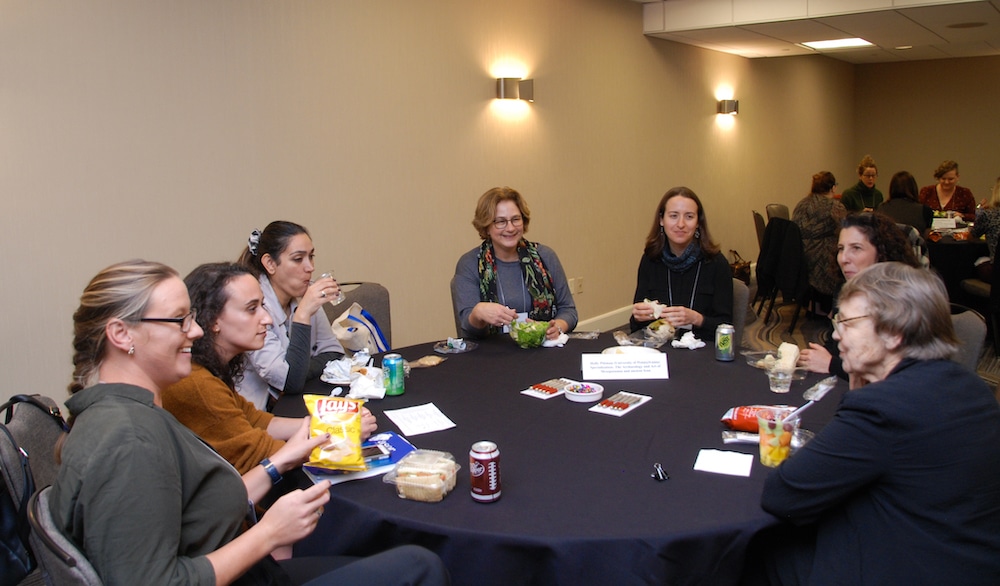
Vivian Bull hosting a table at the Initiative on the Status of Women: Mentoring Lunch at the 2018 Annual Meeting in Denver.

In Memoriam: Vivian Ann Bull (1934 – 2022)

Carolyn Midkiff Strange, Tampa, Florida

Dear Vivian,

In August of 1970, the Stranges, Jim, Carolyn, Mary Elizabeth, and James Riley, began a year filled more than we could have ever imagined. It first started with meeting you, Bob, and Camper in his OshKosh B’gosh and having his b’anna. You, the “First Lady of the Albright” that year, gave us months of memories which we will never forget.

As I look back on that time, I am amazed at all we did. You took us to a place where we watched knitters, and I was able to get sweaters for the children. James even remembers the one I bought for him. Another outing took us to a place where ceramics were being made. The gentleman there gave James and Elizabeth clay so they could fashion their own creations. We took their work back to be fired. I have those objects to this day. There were the cooking classes at the YWCA, during the time the men were galavanting around Turkey. You took me to Miss Halaby’s basement which was full of very fine cross stitch embroidered by Palestine women. I still have some of the pieces from there. If I remember correctly, her sister, an artist, served us a refreshing drink made of green grapes from her own vines. There was coffee in the morning with Omar in the kitchen and tea in the afternoon in the garden. At Christmas, a tree from the Jerusalem forest, which we decorated with ornaments called ‘God’s eyes.’ We had turkey dinner prepared by Omar; however, no cranberries were available, but you found lingonberries as a very nice substitute. You introduced us to the observance of Advent, not at all familiar to us Baptists. In the spring, there were birthday parties. One weekend with James and Elizabeth safely at the Albright, Jim and I were given the VW tender so we could go to Masada, the Roman ramp side. It is hard to believe we actually walked up that incline. The walk to Jericho is especially memorable. Then we all celebrated the birth of Carlson.

All of this and more orchestrated by you.

And yet, it did not end there. Back in Florham Park and Madison we continued to cherish our long friendship, even after I moved to Florida, mainly keeping in touch at breakfasts, lunches, or dinners during ASOR conferences. I always liked hearing about the grandchildren, especially Carlson’s one son and four daughters.

You were a tour guide, teacher, and friend through it all. It seems that we have come to the end of an era.

Thank you for many memorable experiences.

I must not forget to recognize you for your important contributions to the Albright over the years. It has become a place of great significance to all of my children and grandchildren.

I will miss you at our ASOR gatherings.

Carolyn

Comments in Remembrance of Vivian Bull

“I first met Vivian Bull, as so many of us did, at the Albright in the 1970s, where she wrangled two rambunctious kids, the Albright staff, fellows, and quarter mastered complex excavation projects with calm efficiency and good humor, all the while pursuing a career in high-powered economics. When Vivian was around, things got done. She was on the both the Albright and ASOR Boards in the years I was president and vice-president. She always had wise words for us and could calm fractious tempers with a few wise quiet words and a glance. Above all, she was kind. We will miss her.” – Sharon Herbert

“Vivian Bull was an incredible mentor to me when I became ASOR President, as she, with extraordinary patience and kindness, used the knowledge she had gained as President Emerita at both Linfield and Drew Universities to nurture in me at least some small measure of her formidable leadership skills.” – Susan Ackerman

“While working in field KK at Caesarea, Vivian would bring me a flower each morning. A discarded bottle became a vase, placed on my worktable. Before leaving the field, I’d place the flower on the ground. Such a fine way to greet and bid farewell to each day. Ave atque vale, Sophissima Magistra.” – Kate Sheeler

“Since I began my work as ASOR Executive Director in 2007, it was invaluable to have a college dean and university president who had strong ASOR ties going back to the 1950s serve as counselor—and just as importantly, Vivian was an encouraging friend. Her love and loyalty to Bob and to her family was inspiring. She and Bob were an amazing team. My condolences to Camper, Carson, and the entire Bull family.” – Andy Vaughn

“Vivian embodied wisdom and discernment, and she provided invaluable guidance to ASOR and the Albright over a lifetime, and in a generation when there were very few women in leadership in our field. I will always remember her quiet assurance and encouragement during the difficult early days of my presidency, when there was considerable doubt about the new leadership and ASOR’s viability as an organization. Vivian was a steady and trusted counsel over the ensuing years, and a source of much wisdom. May she rest in peace.” – Timothy Harrison

“Like the Stranges, my family first met Vivian Bull in 1970 when we arrived for our Fulbright year at the Albright. We learned that she and Bob Bull met around the corner at a noted Palestinian restaurant which is now the Adventist Study Center—just down the street from Orient House! The Bulls were superb hosts to the Albright appointees that year. Since we had a son, Brent, the same age as Camper, we bonded over our boys as well as archaeology. May she rest in peace!” – Lawrence Geraty

“Vivian Bull joined our 1970 dig at Khirbet Shema, for Bob Bull served as senior advisor that year. Going from years based at Nablus to our base camp at Meiron, an orthodox Jewish moshav, was a huge change of settings and cultures for both of them. The kashrut, the closing of the village on Shabbat, and the fact that the locals spoke Hebrew and Yiddish were all challenging, to say the least. Vivian found ways to work around all of that, as only she could, and helped enormously, especially in registry. Carol and I and our daughter, Julie, especially enjoyed our trips back to Jerusalem with them, in the Albright’s 404 Peugeot wagon, for weekends. RIP.” – Eric Meyers

“Vivian and Bob Bull had different personalities and individual different strengths, but over the fifty years I knew them they always seemed the perfect couple. At those times I headed committees for ASOR. I always wanted Vivian to be appointed to the committee because I knew our committee would receive thoughtful and insightful advice. My family will miss Vivian.” – Jeffrey Blakely

“A stalwart, serving as camp manager for the 1962 season at Shechem was where I first met Vivian Bull. Tough, but congenial and in all ways impressive she was our “Mama Bull” (though of course not to her face). Down the years she remained a warm and vitally supportive ally in the work of ASOR and the Albright Institute. And with all a special family friend. RIP Dear Vivian!” – Joe Seger

“I will always remember with a smile one of the most eyebrow-raising moments of a meeting of the W. F. Albright Institute’s Board of Trustees. Our beloved Vivian Bull—seemingly buttoned-up and quiet in appearance—proudly told the board with enthusiasm that one of her children was conceived at the Albright in Jerusalem. I loved her from that moment on. She was Chair of the Board (2006-2012) while I was Albright Vice-President and Chair of Fellowships. Today, as Chair of the Board myself, I realize how much I learned from her wisdom, guidance, and leadership during those years” – Joan Branham

“Vivian Bull was a quiet but powerful presence at the Albright Institute for as long as I can remember. As board chair, she was responsible for regularizing the Albright’s finances and safeguarding our endowment, services for which we continue to reap the benefit. I will cherish the memory of her loyalty to the Albright as well as her sense of humor.” – Sidnie White Crawford

“Vivian Bull will long be remembered for her dedication and loyalty to ASOR/Albright. What impressed me most about Vivian was her consistent and realistic approach to the development of the two institutions reflected in her often-heard response to Trustee proposals, ‘Hope is not a plan’. She will also be remembered for her unfailing support of Bob’s archaeological excavations represented by this photo [see below] of their working together on the Caesarea pottery at the Albright. May her memory be for a blessing.” – Sy Gitin

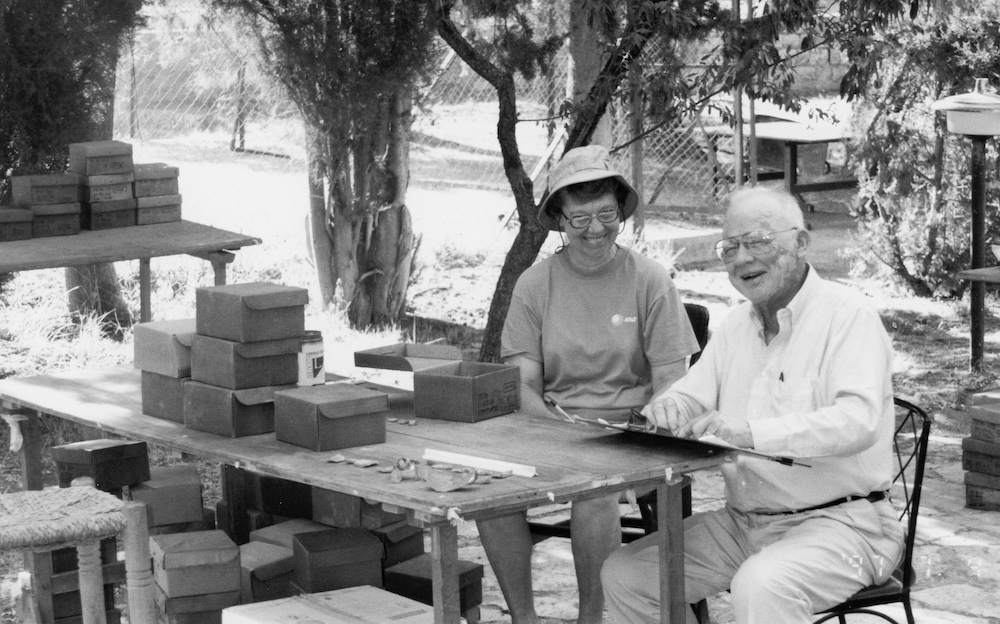
Vivian and Bob Bull working together on the Caesarea pottery at the Albright Institute in Jerusalem. (Photo credit: Sy Gitin)

Fieldwork Report: Bruno Barros

Bringing Azekah’s Walls into the Light

Bruno Barros, 2022 G.E. Wright/Shirlee Meyers Fellowship Recipient


Sunrise in Area N1.

Yalla, Yalla! That was the call to jump on the bus around 4:50 in the morning. Half awake and half asleep, we prepared ourselves for another day of excavating at Tel Azekah in Israel. The days that any volunteer or staff member spends on a dig are far from ordinary as there is always something to keep you occupied! After arriving at the site while it was still a bit dark, we would carry the tools all the way up to our area and get started on the day’s activities. Among all the areas of the site, I was selected to work in area N1, an extensive area where you can find Middle/Late Bronze walls and floors in some squares and Iron Age/Persian structures in others. In previous seasons, an olive oil press dating to Iron Age IIC was found in area N1. This olive oil press is the best preserved in Israel from this period. After 701 B.C.E. and Sennacherib’s invasion of the Shephelah region of ancient Judah—which comprises the Judean mountains and the coastal plain—more local installations for the production of olive oil are found. There are around three different periods of olive oil production in the Shephelah affected by the Assyrian Empire. In the period before the 701 invasion, production was private, and the olive oil went to the city of Lachish, which was the center for collecting olive oil and paying taxes. After 701, the production center was moved to Ekron, and after the Assyrians left, Judah returned to the Shephelah and redeveloped the Judean olive oil production centers. Our task in area N1 was to open a new square adjacent to the Iron Age IIC olive oil press so we could search for the continuation of the Iron Age walls and possibly also a new press.

The new square, opened this field season, after three weeks of work.

Dr. Lipschits supervising the volunteers.

Joining an archaeological dig is more than just “doing science”; it is also therapy. It is therapy because you do not have any option other than being patient about what will come out of your square, especially when you open a new one. During the first few days the big pickaxes dominated the scene without much result. Our group was a bit disappointed at first, but the rewards started to come during the second week. Big pickaxes began to be replaced by smaller ones, and the volunteers began excavating around the rocks in order to find possible contexts. Were those rocks part of the wall or part of its collapse? It took three weeks to expose most of the walls along with a few rooms that belonged respectively to the Iron Age IIC and Persian periods, not to mention a strange structure. We are still not sure of this structure’s exact function, but according to the directors it is most likely a silo from the Persian Period, though its construction and shape are unusual. The upcoming seasons hopefully will bring more answers for this particular square in N1

My primary goal this summer was to join the Lautenschläger Azekah Expedition and look for answers for my Ph.D. research in the Neo-Assyrian expansion in the Southern Levant. I am grateful for many of the questions answered during the season and for being part of the 2022 team. I would like to express my gratitude to ASOR and the scholarship’s donors. They made this exciting experience possible and have significantly contributed to my research. I also thank the Azekah administration and Prof. Oded Lipschits for having hosted me and clarifying many of my questions.

Bruno Barros is a Ph.D. candidate in the department of Assyriology and Hebrew Studies at Eötvös Loránd University, Budapest. His research interests include Neo-Assyrian Art History and Levantine Archaeology particularly in the Iron Age.

Want to help more students and early career archaeologists get into the field? Donate to the cause today by selecting “Student Support” as your gift purpose!

Fieldwork Report: Rosemary Hanson

The Colors of the Badia

Rosemary Hanson, 2022 Platt Fieldwork Scholarship Recipient

From the sky, the kites of the Jordanian Steppe are easy to spot. The low walls of piled basalt stone stand out against the tan landscape in vivid, dark lines that continue off into the distance. The theory goes that these are the remains of ancient animal traps, guiding prey along the straight lines of the two arms and into the danger of an enclosed area.

As we walked up to site each morning, I couldn’t help feeling a little bit like one of these ancient ruminants. Like unlucky gazelles, the members of the ‘Kites in Context’ project followed these arms across the basalt fields toward the excavation site. When I had been shown the landscape from above, I had assumed that this route would make for an easy journey – we were following a wall, after all. Yet to my surprise, the unmistakable lines of black on beige that I had seen in the aerial photographs were, on the ground, far less distinct. From ground level, the wall was an uneven gray line in a gray sea of stone. Looking up at the hill, it was only barely possible to pick up the darker shades of a low wall running along it – and even then, only once I was pointed in the right direction – but the closer we got, the more it seemed to vanish into the landscape around it. How on earth was I supposed to follow this every day?

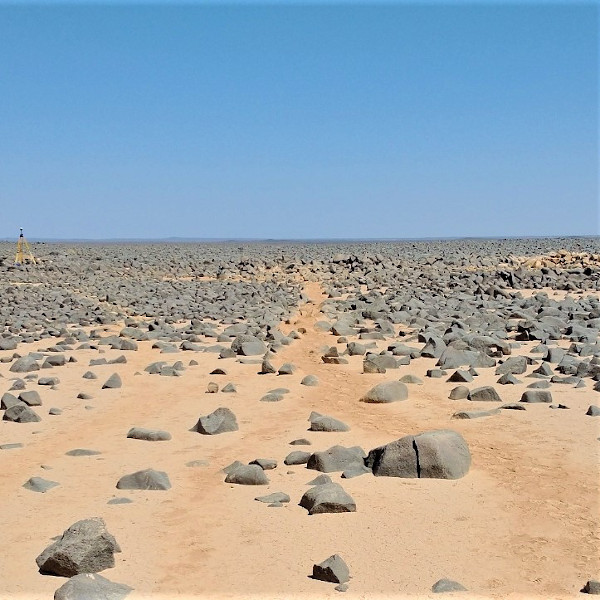
Dusty trails across the basalt.
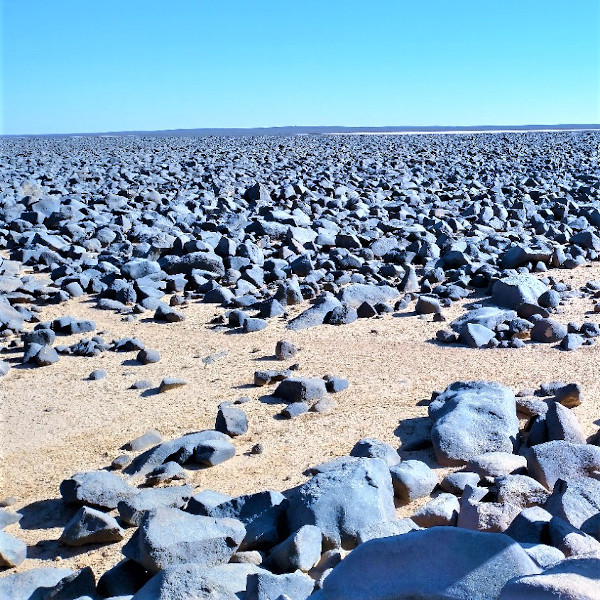
As your eyes adjust, gray stones suddenly look blue.

Truth be told, I never did get the hang of following walls, but in the end, I did not need to. As we walked the same paths every day, our shoes disturbed the fawn-colored dirt and tracked it across the pewter-colored stones, leaving a little ribbon of sepia across the landscape. Before long, these ephemeral lines of powdery dust criss-crossed the camp, the hills, and the kite enclosure where we were working. Paths between excavation sections, paths over walls to the sieve, paths off into the desert to the bathroom, straight, efficient paths to the tea tent for our afternoon break. Everywhere we went, we trailed dust behind us and this is how I came to know my way around, following the slippery footpaths like an ant follows a scent trail. Had it rained, I would have been totally lost.


Down in the section getting dustier and dustier. Photo credit Quinn Comprosky.

Indeed, it seemed like everything we touched was turning that same dusty-brown hue. When we arrived, everything was colorful. The truck pulled up full of reds and blues and yellows and greens. But in the onslaught of sun and sand and sweat, everything took on a decidedly desert patina. Our clothes were beige, our tents were beige, our notebooks, gear, and pens were beige. No matter how often we washed, our hair and skin were beige. When we sneezed, it was beige. In photos, we all look like the survivors of an explosion in a powder foundation factory.

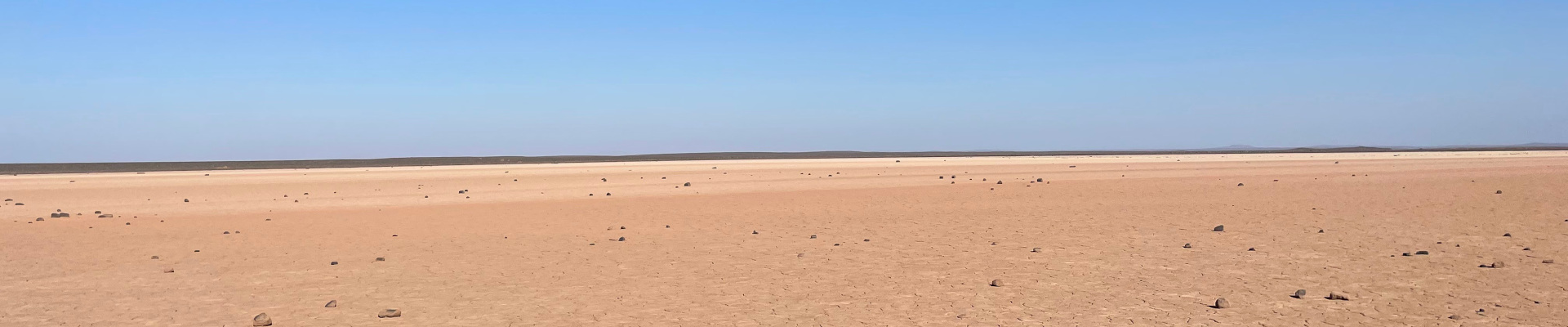
But the more monochrome we became, the more I started to notice new shades in the world around me. My early sketches of the desert are all the same: blue streak, gray streak, tan streak. Above is a wide, expansive blue sky, below is the dusty tan of the local soil, and dividing the two is a line of basalt gray. It’s the same in the high-quality photographs taken by Chad:  the world is black and tan and blue as far as the eye can see. But as my eyes adjusted to this new tritone palette, I began to see new colors in the landscape – shades that I had never imagined could be there. Against the warm tones of the everpresent dirt, the harsh tones of the basalt took on cooler notes.  As we stamped across ancient lava fields, shimmering and shifting in the heat, the oppressive grays began to bloom into a spectrum of muddy blues and dusty purples. In the section, the buried stones seemed to emerge like dusty shards of hazy blue sky. Hot and filthy and tired, I saw the desert differently than when I had arrived, cool and clean and full of energy.

A landscape of blue on grey on tan. Photo credit Jennifer Feng.

For all the horrible heat and the terrible dirt and the wind that blows away anything not nailed down, I like being out in the desert. I like the way that this harsh place makes me see things differently – to see color where I had once seen sepia and trails where I had once seen empty plains of stone. It lets me see with the objective eye of a tape measure and a camera lens, but also with the fallible human eye of someone too hot, too tired, and too frustrated to spot the wall they’re standing on. Of course, it also helps me see the benefit of cold water and air conditioning, but that’s a useful lesson, too, I think.

Rosemary Hanson is a freelance archeological illustrator working out of Sweden. In her normal life, she does not like being hot, dirty, or outside, which is why it is so odd that she absolutely loves working in the Jordanian Desert. There’s just no helping some people.

Want to help more students and early career archaeologists get into the field? Donate to the cause today by selecting “Student Support” as your gift purpose!

Call for Trustee Nominations

CALL FOR TRUSTEE NOMINATIONS 2022

The Trustee Nominations Committee announces an open call for (self) nominations for the ASOR Board of Trustees (Class of 2025). There are three primary responsibilities of the members of the Board of Trustees:

  • Governance: Being aware of issues brought forward to the Board, attending two meetings per year (at your own expense), and bringing issues of concern to the Board.
  • Fundraising and financial management: Leading in development by thinking of new opportunities, leading in giving, and providing oversight on the audited financial statements. We ask that individual trustees aspire to contribute $500 or more annually.
  • Strategic planning and policy development: Leading especially in measures that accord with ASOR’s mission.

We anticipate two openings for Membership-Elected Trustees. Any full ASOR member may be considered for nomination as an Membership-Elected Trustee. If there is someone that you would like the committee to consider—including yourself—please send the person’s name and email address to Marta Ostovich in the ASOR office. Please check with the nominee as to whether they are interested in serving on the ASOR Board of Trustees before sending in their name. If you have any questions about the responsibilities and satisfactions of being a board member, please email Jane DeRose Evans (Chair of the Nominations Committee).

The ASOR office, or a representative from the Nominations Committee, will contact all nominees to describe the responsibilities in greater detail, and to make sure that the nominee is willing to have his or her name discussed by the Trustee Nominations Committee. Please note that nominees will need to submit a brief biography and a mission (or vision) statement for what they would like to accomplish as a trustee to be considered by the Nominations Committee. A sample of these statements can be found in last year’s “Meet Your Board Nominees” webpage. Brief biographies and mission statements should be ca. 200 words each and submitted via e-mail to Marta Ostovich by noon EDT on September 19, 2022.

After the Committee selects individuals for nomination, the election will take place by electronic ballot during October. ASOR is once again conducting online voting to ensure that more of our members are able to participate in this important process. The ASOR office will work with any person who is not able to complete an electronic ballot to ensure that everyone is included.

In order to receive full consideration by the committee, nominations (including supporting documents) should be submitted to programs@asor.org by noon EDT on September 19, 2022.

ANE Today Editor Job Opening

[vc_row fullwidth=”true” attached=”true” css=”.vc_custom_1496247803139{padding-top: 0px !important;padding-right: 0px !important;padding-bottom: 0px !important;padding-left: 0px !important;}”][vc_column][vc_single_image image=”33901″ img_size=”full” alignment=”center”][/vc_column][/vc_row][vc_row fullwidth=”true” css=”.vc_custom_1496682730308{padding-top: 10px !important;padding-right: 0px !important;padding-bottom: 0px !important;padding-left: 0px !important;}”][vc_column width=”1/12″ css=”.vc_custom_1496683820796{margin-right: 10px !important;}” offset=”vc_hidden-md vc_hidden-sm vc_hidden-xs”][vc_column_text]

 SHARE

[/vc_column_text][mk_image src=”http://www.asortest.org/wp-content/uploads/2017/01/social-fb-icon4.jpg” image_width=”42″ image_height=”42″ hover=”false” custom_url=”https://www.facebook.com/ASOResearch/” margin_bottom=”0″][mk_image src=”http://www.asortest.org/wp-content/uploads/2017/01/social-tw-icon4.jpg” image_width=”42″ image_height=”42″ hover=”false” custom_url=”https://twitter.com/ASOResearch?ref_src=twsrc%5Egoogle%7Ctwcamp%5Eserp%7Ctwgr%5Eauthor” margin_bottom=”0″][mk_image src=”http://www.asortest.org/wp-content/uploads/2017/01/social-in-icon4.jpg” image_width=”42″ image_height=”42″ hover=”false” custom_url=”https://www.linkedin.com/company/american-schools-of-oriental-research” margin_bottom=”0″][mk_image src=”http://www.asortest.org/wp-content/uploads/2017/01/social-ml-icon_7.jpg” image_width=”42″ image_height=”42″ hover=”false” custom_url=”mailto:info@asor.org” margin_bottom=”0″][mk_image src=”http://www.asortest.org/wp-content/uploads/2017/01/blog-icon3.jpg” image_width=”42″ image_height=”42″ hover=”false” custom_url=”http://asor.org/blog” margin_bottom=”0″][/vc_column][vc_column border_color=”rgba(255,255,255,0.01)” width=”1/6″ css=”.vc_custom_1496683923840{margin-right: 20px !important;border-left-width: 2px !important;padding-right: 20px !important;padding-left: 20px !important;border-left-color: #99422f !important;}”][mk_divider divider_color=”rgba(255,255,255,0.01)” thickness=”1″ margin_top=”3″ margin_bottom=”3″][vc_widget_sidebar sidebar_id=”ca-sidebar-39801″][/vc_column][vc_column border_color=”rgba(170,170,170,0.01)” width=”1/2″ css=”.vc_custom_1487276122024{margin-right: 10px !important;margin-bottom: 30px !important;border-right-width: 2px !important;border-bottom-width: 2px !important;padding-top: 30px !important;padding-right: 30px !important;padding-left: 20px !important;background-color: #ffffff !important;border-right-color: rgba(227,228,228,0.75) !important;border-bottom-color: rgba(227,228,228,0.75) !important;}”][vc_column_text responsive_align=”left”]

JOB OPENING – ANE TODAY EDITOR

[/vc_column_text][mk_divider][vc_column_text responsive_align=”left”]Thank you to everyone who has applied for the ANE Today Editor position thus far. Review of applications began in March and is still ongoing. We welcome new applications which will receive full consideration.[/vc_column_text][mk_divider][vc_wp_text]ASOR seeks an editor for The Ancient Near East Today, a weekly e-platform for shorter to medium-length, non-technical pieces aimed at the general public, of interest to students, faculty, and other professionals in related fields. The platform was created in 2012, began publication in 2013, and has since published more than 500 short pieces with a geographic range from the Atlantic to Afghanistan, and a chronological range from the Paleolithic to the 20th century. ANE Today appears 52 times a year. This is a compensated position.

The editor should be capable of identifying and evaluating potential contributors and topics, soliciting and then evaluating items, and generally working with writers to produce pieces that are accurate, engaging, concise, and visually appealing. Items range from 800-1500 words; they appear first on the website and are then pushed out with the help of ASOR staff to over 42,000 readers via email and social media. ANE Today emails also include a variety of links to archaeological news, new books and reviews, exhibitions, and resources.

The ideal candidate should have a wide perspective on scholars and scholarship in ancient Near Eastern (and allied) studies from prehistory to the modern period in order to access the broadest possible range of potential writers. These writers may range from senior scholars to graduate students, and may include individuals outside of academia. Candidates are also expected to become familiar with ANE Today’s publications to date in order to develop both new and old topics and writers, avoid duplication, and to expand and reexamine themes and issues.

The editor solicits writers, edits contributions, organizes the imagery and layout, supervises the production, posting and distribution of items, works with technical and other ASOR staff members regarding the design and operation of the platform, and on marketing, strategy and reporting. The editor reports to a committee that oversees the platform and is also a voting member of the Committee on Publications. Editors are approved by ASOR’s Executive Committee and Board of Trustees. They may serve two three-year terms.

The candidate should also have excellent writing skills, preferably across a range of topics and genres inside and outside of academia, along with some editorial experience. Work experience as a journalist is beneficial but not required. Familiarity with social media and new media is similarly useful. Those interested should send a CV and letter of interest to Marta Ostovich at programs@asor.org. Review of applications began on March 14 and will continue until the position is filled.[/vc_wp_text][/vc_column][vc_column border_color=”rgba(170,170,170,0.01)” width=”1/6″ css=”.vc_custom_1496684098866{margin-right: 5px !important;margin-bottom: 20px !important;border-right-width: 2px !important;border-bottom-width: 2px !important;padding-top: 30px !important;padding-right: 10px !important;padding-left: 10px !important;background-color: #ffffff !important;border-right-color: rgba(227,228,228,0.75) !important;border-bottom-color: rgba(227,228,228,0.75) !important;}”][vc_wp_posts title=”BROWSE THE NEWS ARCHIVE” number=”4″][/vc_column][vc_column border_color=”rgba(170,170,170,0.01)” width=”1/6″ css=”.vc_custom_1496684008271{margin-right: 10px !important;margin-bottom: 30px !important;border-right-width: 2px !important;border-bottom-width: 2px !important;padding-top: 30px !important;padding-right: 20px !important;padding-left: 20px !important;background-color: #ffffff !important;border-right-color: rgba(227,228,228,0.75) !important;border-bottom-color: rgba(227,228,228,0.75) !important;}”][vc_column_text] [/vc_column_text][/vc_column][/vc_row]