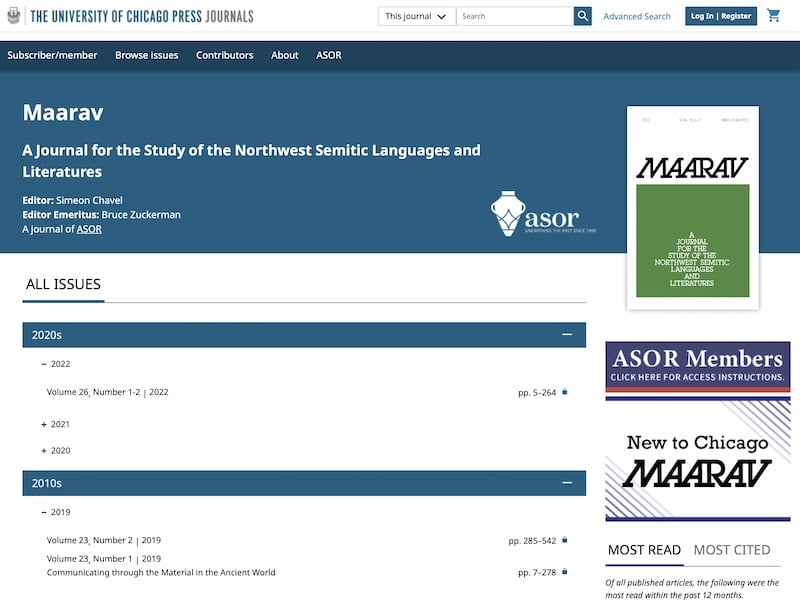
ASOR ANNOUNCES THE ADDITION OF THE JOURNAL, MAARAV
ASOR is pleased to announce that Maarav is now part of the ASOR journal family and is available to ASOR members with online access to all of our journals (NEA, BASOR, and JCS) through the University of Chicago Press platform. Maarav is a journal for the Study of the Northwest Semitic Languages and Literatures with an emphasis on linguistics, philology, and literary studies. This journal is devoted to the texts and verbal objects of the ancient Levant featuring Aramaic, Hebrew, Phoenician, and related languages. In addition to research on their verbal features, Maarav welcomes inquiry into their material, visual, and social aspects, their cultural horizons and relationships, and contemporary interests like the technological developments in decipherment, storage, representation, and analysis and the history and current practices of acquiring and interpreting ancient objects.
Please read the letter from the editor, Simeon Chavel (University of Chicago), below.
Dear Members,
It is an honor to follow Bruce Zuckerman (founder, 1978–2002) and Christopher Rollston (2002–2022) and serve as the third Editor of Maarav. The journal will continue to center on the inscriptions found in the Levant (Syro-Palestine) of the Late Bronze Age, the Iron Age, and the Persian period written in the languages characteristic of the region. At its core will be study of the inscriptions’ material, linguistic, and literary aspects. Around the core will be studies comparing earlier and later inscriptions and literature; comparing literature in Mesopotamia, Anatolia, and the Mediterranean; and reconstructing Levantine societies, culture, and history. Anchored in distinct objects (verbal ones) defined by period and place rather than in tradition (biblical), Maarav sees itself as representing a crucial node and nexus of several overlapping fields of study of the ancient world, and it aims to serve robustly in that capacity.
Select topics illustrating the range are:
the origins and spread of the alphabetic writing system and its comparison with other systems
the varied uses of writing
the genres of writing in general and of literature in particular
the relationship of writing to art and to place, in immediate, broader, static, and dynamic contexts
the wealth of religious, mythical, and other speculative lore
the place of magic in society and in thought
the significant role of writers (“scribes”)
regimes of administration and power
the reach of concepts and practices across many regions and down through time.
Wide-ranging developments make this a promising time for Maarav to thrive—developments in the technologies of deciphering images and of presenting them; in approaches to the material and social worlds of verbal objects; in the analysis of gender and of humanness; in the reconstruction of Levantine societies and ethnicity in their imperial contexts; in the understanding of cultural interaction from Mesopotamia across the Mediterranean; and in the ethics—the politics and the economics—of imperially enabled scholarship today.
Maarav looks to fit in wonderfully at ASOR alongside BASOR, JCS, and NEA, and and is excited to be available to you, their inquisitive and learned readers. It plans to be published semiannually. The board of editors draws on three pools of colleagues: continuing editors, faculty at the University of Chicago, and additional scholars who represent desired areas of expertise and emerging trends. You can see the board, keep up with new issues, and access back-issues here.
Yours,
Simeon Chavel
This journal is only available to active members including Regular with online only access, Regular with both online and print delivery, Retired with online only access, Retired with both online access and print delivery, Sustaining, Early Career, Graduate, and Undergraduate levels. Associate and Contributing members do not have access to Maarav.
ASOR 2025—Strengthening Our Foundation | Expanding Horizons—A Call to Action
In 2025, ASOR will be hitting its 125 year mark. Yes, fellow ASOR members and friends, our quasquicentennial is nearly upon us, and we have cause to celebrate!
A first cause for celebration is that ASOR members continue to be engines of research, education, publication, and engagement about the history and cultures of the Near East and the wider Mediterranean world.
This work has never been more needed. So, amid celebration, we confront challenges. Worldwide threats to cultural heritage are a great concern, because we know that targeting people’s cultural heritage is a first step toward violence and extremism. Also, such losses cannot be undone. The humanities bring this into focus, yet dollars to fund these departments and this research are being siphoned off elsewhere. Some professional organizations focused on past human experience are shrinking. Not so for ASOR!
This is a second cause for celebration. Our membership is expanding. ASOR is in solid financial shape. You have created a foundation for positive change and action.
To continue this momentum, ASOR has embarked on a grand challenge, a $5 million dollar—$5,000,000—fundraising initiative. Our third cause for celebration is that generous ASOR members already have pledged or given $2.7 million dollars, with more coming.
This is a call to action, asking you to help shape the future through the discovery, documenting, and protecting of cultural heritage in innovative ways. I ask you to think how you can join in this effort to equip ASOR to meet the challenges of this moment.
Your gift of support to ASOR makes a real difference. With your participation, ASOR can:
Increase membership support: You can strengthen and widen ASOR’s geographic impact throughout the Middle East and North Africa with scholarships, research fellowships and excavation project grants including citizens from countries that lack resources. 2. Widen and expand ASOR’s publications: You can ensure that ASOR continues to disseminate knowledge and educate the public in an economic climate where support for scholarship is shrinking. 3. Make ASOR more accessible to everyone: You can address financial need for access in North America, North Africa, the Middle East, and around the world. With you, ASOR can set an example with diversity, equity and inclusion initiatives that span language and cultural divides. 4. Grow Cultural Heritage Initiatives: You can support cultural heritage stabilization, documentation, and mitigation efforts. You can guarantee that ASOR continues to be seen as a world leader in protecting heritage and ensure the continuation of education and stewardship programs that combat violent extremism and misuse of heritage by authoritarian rulers. 5. Develop Greater Online Access: You can fund innovations in the rapidly growing field of online and virtual resources to make research accessible to everyone with a computer, tablet, or phone. 6. Expand the Friends of ASOR Programs: You can help underwrite education and outreach programs that will broaden ASOR’s membership and bring non-academic supporters with an interest in the ancient world to our organization. 7. Strengthen the Foundation of ASOR’s Operations: You can safeguard ASOR’s work to 2050 and beyond through the Annual Fund, or with endowment gifts to sustain operational staffing and capital needs at the James F. Strange Center, or through efforts to make ASOR more sustainable.
These are but a few ideas. Studies of the human past have never faced greater obstacles, but ASOR has the financial stability and talent to find innovative solutions. Each of us is a critical part of this effort. If you and I do not respond to this call to action to shape the future of our profession and document and protect cultural heritage in innovative ways, who will? YOU CAN BE PART OF THIS HISTORIC MOMENT, CREATING CHANGE & MAKING A LEGACY. ORGANIZATIONS THRIVE BECAUSE OF PEOPLE LIKE YOU. Please join in celebrating our 125th year with “ASOR 2025— Strengthening Our Foundation | Expanding Horizons—A Call to Action.”
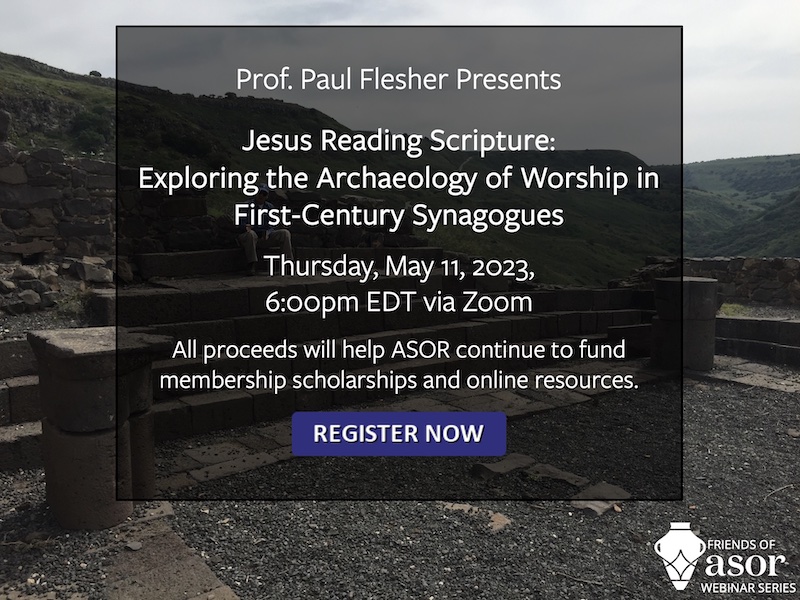
Jesus Reading Scripture: Exploring the Archaeology of Worship in First-Century Synagogues
Friends of ASOR present the next webinar in our monthly series on May 11, 2023, at 6:00 pm EDT, featuring Dr. Paul V. M. Flesher and moderated by Dr. Matthew Grey. The New Testament gospels frequently place Jesus in or near the religious buildings of first-century Galilee, the synagogues. Unfortunately, they never describe these buildings, and apart from Luke 4, they give few details about the rituals that take place inside them. That absence hinders the study of Jesus in the religious context that shaped his life. Even the chapter-long story of Luke 4—where Jesus was given the honor of reading Scripture and then was thrown out of the synagogue—fails to provide sufficient information for us to readily understand it. Why did the congregation as a whole get so angry that they wanted to kill him?
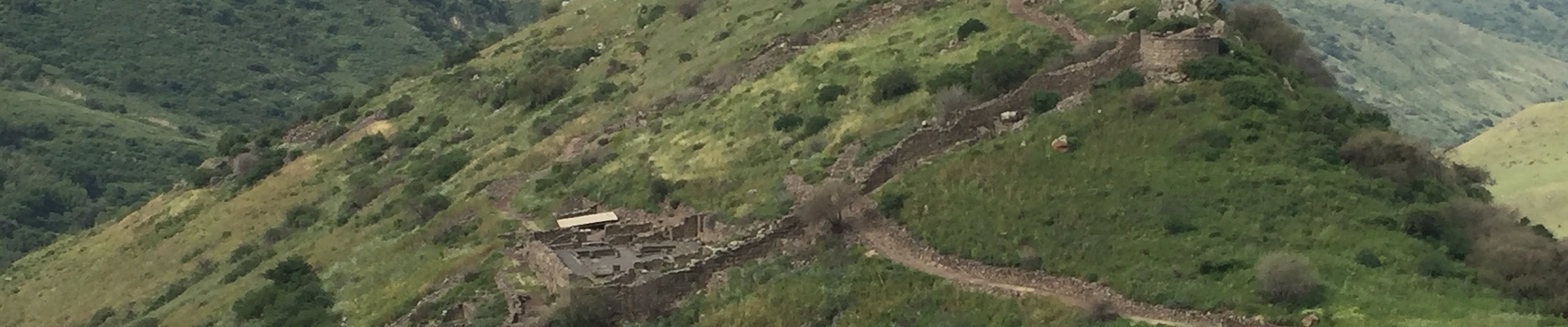
As a historian and an archaeologist, Paul Flesher brings our earliest knowledge of synagogue rituals into conjunction with excavated first-century synagogues to answer that question. By focusing on Luke 4 and the Gamla synagogue—as a representative of first-century synagogues in general—Flesher explores how the synagogues’ architectural layout shaped the spatial and social dynamics of the people inside it to reveal two important points. First, the synagogue reinforced the tight bond between Scripture and the synagogue congregation through the positioning of the congregation and the ritual space of the Scripture reading. Second, the congregation’s mood changed so quickly from honor to rejection because the synagogue’s layout enhanced the communication not just between Jesus and the congregation but also among the members of the congregation themselves. Their ability to act as a coordinated group came from the synagogue’s internal, architectural structure.
Join Dr. Paul Flesher as he discusses Luke 4 and the Gamla synagogue to reveal how the internal architecture of synagogues can influence the spatial and social dynamics of the people inside it. A live Q&A session will be moderated by Dr. Matthew Grey (Brigham Young University).
Dr. Paul V. M. Flesher is a Professor of Religious Studies, at the University of Wyoming, and director of the American Heritage Center. Since the 1980s, Paul Flesher has focused on the dynamics of religious change that Judaism underwent during the Hellenistic and Roman periods, beginning with his masters work under Geza Vermes at Oxford University and his doctoral work under Jacob Neusner at Brown University. A specialist in Rabbinic Judaism and an expert in the history and texts of the Aramaic Targums, Flesher helped found the International Organization of Targumic Study in the early 1990s, serving on its board for two decades and as its president for six years. At the same time, he began researching the early history of synagogues, publishing several articles and an edited volume that brought together new research by American and Israeli scholars. A teacher at heart, Flesher founded the Religious Studies program, and later the department, at the University of Wyoming. Flesher’s excavation career began at Tel Miqne in 1995, but seriously got underway in 2012 when he joined the staff of the Huqoq Excavation Project, then later the Legio excavations conducted by the Jezreel Valley Regional Project. His current research is in archaeo-acoustics, working to reconstruct the sound dynamics of ancient synagogues. In 2019, Flesher took a change of course and became the director of the American Heritage Center at the University of Wyoming, one of the largest, non-governmental archives in the USA.
This webinar will be recorded and all paid registrants will be sent a link to view the recording.
To receive your ASOR member discount, log into the online store. If you are new to ASOR, please click on the “New Visitor Registration” link to register your e-mail address and choose a password for our online store. Once logged in, navigate to “Meeting and Event Registration” to register for the webinar and pay the fee. Each paid registrant will receive a confirmation e-mail when you pay for the webinar. If you do not receive this e-mail, then you are not registered. Please e-mail membership@asor.org with any questions or issues with registering.
You will be e-mailed the Zoom Webinar link in the week prior to the lecture on May 11, 2023. If you do not receive the link by the close of business two days before the webinar, please e-mail membership@asor.org immediately. This webinar will be recorded and all paid registrants will be sent a link to view the recording.
All proceeds from this webinar are used to fund scholarships for members as well as increasing ASOR’s online resources, which are free to the public.
READY FOR A WEBINAR SEASON PASS?
Buy a season pass for all the webinars* of the 2022-2023 FOA Webinar Season! 1) You will automatically receive the Zoom link for each webinar so no need to register each time. 2) You will also receive the recording of each webinar automatically after the event.
If you have missed webinars earlier in the season and still want to buy the pass, you will receive the links to the recordings of the webinars you missed in your automatic confirmation email after you buy the pass.
*Special symposiums may be excluded from the season pass price.
No more registering for a year if you buy your pass today!
Pricing:
Members: $75.00 Non-Members: $150.00 ASOR Sustaining Members: $0 (automatic registration for each webinar) Not a member yet? Click here to join as a member and receive the 50% off a season pass!
Log into our online store to purchase the season pass for 2022-2023. If you are new to ASOR and do not have a record in our store yet, click here to register. After you login, navigate to the left to “Meeting and Event Registration.” Please e-mail membership@asor.org if you have any questions or issues.
WHY SPONSOR A WEBINAR?
Several levels of support from $50-$1,000 are available. Proceeds go towards membership scholarships and towards increasing ASOR’s virtual resources. Each sponsorship is tax-deductible and you can give your friends free registrations to a webinar!
Bronze Level ($50): up to 2 guest registrations Silver Level ($100): up to 5 guest registrations Gold Level ($500): up to 20 guest registrations Platinum Level ($1,000): up to 50 guest registrations
After you sign up for a sponsorship online or over the phone, email the names and email addresses of your guests to Felice Herman at membership@asor.org, who will send your guests a confirmation and the Zoom link before the webinar.
WANT TO SAVE $6.00 ON THE NEXT WEBINAR?
Join ASOR as a member! Click here for more details about discounts for events and other benefits of membership. Memberships start at $40 for the year as an Associate Member.
You can now purchase the link to the recording of any webinar. You can also purchase the bundle packages of all webinars from the 2020-2022 seasons. Please e-mail membership@asor.org for purchase details.
To see a printable pdf of the webinar titles from the 2020-2021 season, please click here. To see a printable pdf of the webinar titles from the 2021-2022 season, please click here.
Where Are They Now?: A Preview of 2022 ASOR-Affiliated Fieldwork Projects Michael Given (University of Glasgow), Xenia-Paula Kyriakou (Florida Gulf Coast University), Stephen Batiuk (University of Toronto), Monique Roddy (Walla Walla University), Kent Bramlett (La Sierra University), Friedbert Ninow (La Sierra University), and Michael Hoff (University of Nebraska-Lincoln) | March 8, 2022
Tel Rehov: A Major Bronze and Iron Age City in the Jordan Valley Amihai Mazar (Hebrew University of Jerusalem), Nava Panitz-Cohen ( Hebrew University of Jerusalem), Nota Kourou (Athens University), Naama Yahalom-Mack (Hebrew University of Jerusalem), Robert Mullins (Azusa Pacific University) | February 10, 2022
Archaeogaming: Why Video Games Deserve Their Own Archaeology Tine Rassalle (University of North Carolina at Chapel Hill), Shannon Martino (Morton College), Matthew Winter (University of Arizona), Michael Zimmerman (Rhode Island) | April 18, 2021
Recordings of ASOR Annual Meeting paper presentations from the 2020-2022 virtual Annual Meetings are part of the ASOR Online Library. The recordings will remain available to all members who register for the current year’s Annual Meeting for as long as ASOR has the capacity to keep the presentations available online. If you do not want your paper presentation to remain online, please fill out the ASOR Presentation Recording Form to request:
To remove the recording immediately (as soon as we are able);
To replace your paper recording with a new, updated video file that you will provide;
To edit the recording to remove a particular slide(s). This option is contingent on ASOR having staff capacity to edit the video and we will make every effort to accommodate your request.
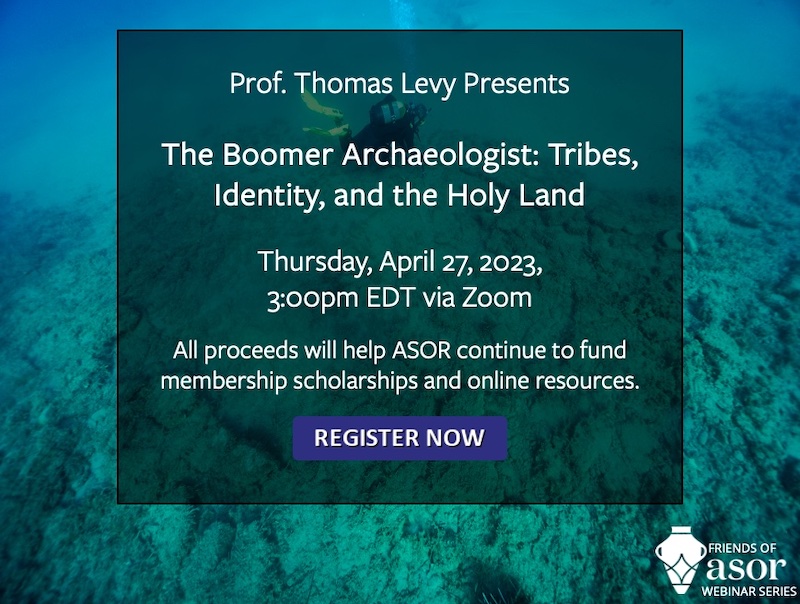
Friends of ASOR present the next webinar in our monthly series on April 27, 2023, at 3:00 pm EDT, featuring Prof. Thomas Levy and moderated by Dr. Ian Jones. For many archaeologists, their lives can best be described as “a life in ruins.” As seen in Tom Levy’s forthcoming book, The Boomer Archaeologist – A Graphic Memoir of Tribes, Identity, and the Holy Land, this is indeed the case. Except for some brief periods working as a cowboy, Levy has worked only as an archaeologist – from early beginnings in the American Southwest in the late 1960s, to professional research in Israel, Greece, and Jordan. Reflecting on more than 50 years as a Levantine field archaeologist, Tom discusses some of the motivations for becoming an archaeologist working in the Holy Land, his role in the application of new methods and theories in the changing field of anthropological archaeology in the eastern Mediterranean, his transition from desert to underwater archaeology, and some of the challenges facing US universities that will affect the future of American research in the field of Levantine archaeology.
Based on his forthcoming graphic memoir, The Boomer Archaeologist, the lecture will include ligne claire drawings by the memoir’s graphic artist Lily Almeida and photographs from several of Prof. Levy’s projects that tell the story of changes in method and theory in Levantine archaeology over the past 50 years. These projects span the metallurgical revolution during the Chalcolithic period, the rise of the Edomite kingdom known from the Hebrew Bible, and ancient environmental and social change observed through underwater archaeology in the eastern Mediterranean.
Join Prof. Levy as he discusses his new graphic memoir in telling the story of a lifetime professional working in and off the coast of the Holy Land. The webinar will conclude with a Q&A session moderated by Dr. Ian Jones (University of California, San Diego).
Prof. Thomas Levy is the Distinguished Professor, and inaugural holder of the Norma Kershaw Chair in the Archaeology of Ancient Israel and Neighboring Lands at the University of California, San Diego. He is the founder and co-director of the Center for Cyber-Archaeology and Sustainability at the Qualcomm Institute at UC San Diego. Elected to the American Academy of Arts and Sciences and holder of an honorary doctorate from Charles University (Czech Republic), Levy is a widely published Levantine field archaeologist with interests in the role of technology, especially early mining and metallurgy, and on the evolution of societies, especially in eastern Mediterranean. Tom has published 15 archaeology books and over 250 scholarly articles. Levy’s recent focuses are on marine archaeology and paleoenvironmental change during the Neolithic to Classical periods off the Carmel coast of Israel with the University of Haifa, where he is a research associate.
This webinar will be recorded and all paid registrants will be sent a link to view the recording.
To receive your ASOR member discount, log into the online store. If you are new to ASOR, please click on the “New Visitor Registration” link to register your e-mail address and choose a password for our online store. Once logged in, navigate to “Meeting and Event Registration” to register for the webinar and pay the fee. Each paid registrant will receive a confirmation e-mail when you pay for the webinar. If you do not receive this e-mail, then you are not registered. Please e-mail membership@asor.org with any questions or issues with registering.
You will be e-mailed the Zoom Webinar link in the week prior to the lecture on April 27, 2023. If you do not receive the link by the close of business two days before the webinar, please e-mail membership@asor.org immediately. This webinar will be recorded and all paid registrants will be sent a link to view the recording.
All proceeds from this webinar are used to fund scholarships for members as well as increasing ASOR’s online resources, which are free to the public.
READY FOR A WEBINAR SEASON PASS?
Buy a season pass for all the webinars* of the 2022-2023 FOA Webinar Season! 1) You will automatically receive the Zoom link for each webinar so no need to register each time. 2) You will also receive the recording of each webinar automatically after the event.
If you have missed webinars earlier in the season and still want to buy the pass, you will receive the links to the recordings of the webinars you missed in your automatic confirmation email after you buy the pass.
*Special symposiums may be excluded from the season pass price.
No more registering for a year if you buy your pass today!
Pricing:
Members: $75.00 Non-Members: $150.00 ASOR Sustaining Members: $0 (automatic registration for each webinar) Not a member yet? Click here to join as a member and receive the 50% off a season pass!
Log into our online store to purchase the season pass for 2022-2023. If you are new to ASOR and do not have a record in our store yet, click here to register. After you login, navigate to the left to “Meeting and Event Registration.” Please e-mail membership@asor.org if you have any questions or issues.
WHY SPONSOR A WEBINAR?
Several levels of support from $50-$1,000 are available. Proceeds go towards membership scholarships and towards increasing ASOR’s virtual resources. Each sponsorship is tax-deductible and you can give your friends free registrations to a webinar!
Bronze Level ($50): up to 2 guest registrations Silver Level ($100): up to 5 guest registrations Gold Level ($500): up to 20 guest registrations Platinum Level ($1,000): up to 50 guest registrations
After you sign up for a sponsorship online or over the phone, email the names and email addresses of your guests to Felice Herman at membership@asor.org, who will send your guests a confirmation and the Zoom link before the webinar.
WANT TO SAVE $6.00 ON THE NEXT WEBINAR?
Join ASOR as a member! Click here for more details about discounts for events and other benefits of membership. Memberships start at $40 for the year as an Associate Member.
You can now purchase the link to the recording of any webinar. You can also purchase the bundle packages of all webinars from the 2020-2022 seasons. Please e-mail membership@asor.org for purchase details.
To see a printable pdf of the webinar titles from the 2020-2021 season, please click here. To see a printable pdf of the webinar titles from the 2021-2022 season, please click here.
Where Are They Now?: A Preview of 2022 ASOR-Affiliated Fieldwork Projects Michael Given (University of Glasgow), Xenia-Paula Kyriakou (Florida Gulf Coast University), Stephen Batiuk (University of Toronto), Monique Roddy (Walla Walla University), Kent Bramlett (La Sierra University), Friedbert Ninow (La Sierra University), and Michael Hoff (University of Nebraska-Lincoln) | March 8, 2022
Tel Rehov: A Major Bronze and Iron Age City in the Jordan Valley Amihai Mazar (Hebrew University of Jerusalem), Nava Panitz-Cohen ( Hebrew University of Jerusalem), Nota Kourou (Athens University), Naama Yahalom-Mack (Hebrew University of Jerusalem), Robert Mullins (Azusa Pacific University) | February 10, 2022
Archaeogaming: Why Video Games Deserve Their Own Archaeology Tine Rassalle (University of North Carolina at Chapel Hill), Shannon Martino (Morton College), Matthew Winter (University of Arizona), Michael Zimmerman (Rhode Island) | April 18, 2021
David Brown, 2022 Steinmetz Scholarship for Active/Reserve Military or Veterans[/vc_column_text][mk_divider][vc_wp_text]
As one of three major settlements in the Huleh Valley, Tel Dan occupies a prominent place not only in its well-known biblical association with the settling of the tribe of Dan in Judges 18, but also in the larger regional history. Its geographic location and boast of abundant natural springs have made it an attractive place to occupy from the Early Bronze Age II to the late Roman period. The late Avraham Biran oversaw excavations there from 1966-1999, with David Ilan of Hebrew Union College leading new excavations since 2005. Over this span of time, excavators have revealed some impressive features at the site including a Middle Bronze gate, an Iron II fortification system, a cultic high place, and of course the Tel Dan Stele. The site remains a major tourist attraction for history and archaeology enthusiasts to partake in exploring the vast treasures Israel has to offer
[/vc_wp_text][vc_row_inner][vc_column_inner][vc_single_image image=”96288″ img_size=”full” add_caption=”yes” alignment=”center” onclick=”img_link_large” img_link_target=”_blank” css=”.vc_custom_1712081676195{padding-right: 10px !important;}”][/vc_column_inner][/vc_row_inner][mk_padding_divider][vc_wp_text]The 2022 season marked the final excavation for Area B—a series of rooms situated directly north of the Iron II fortification system on the southern flank. This area also juxtaposes the interior of the Bronze Age ramparts. A team of students, under the direction of Aaron Burke of the University of California Los Angeles, were assigned three squares in this area. The objectives of this season were to articulate the Iron I strata and reach the terminal Late Bronze phase. Along with students from Hebrew Union College working in Area L, a group totaling forty individuals from around the globe participated in this year’s fieldwork for four weeks covering June-July.
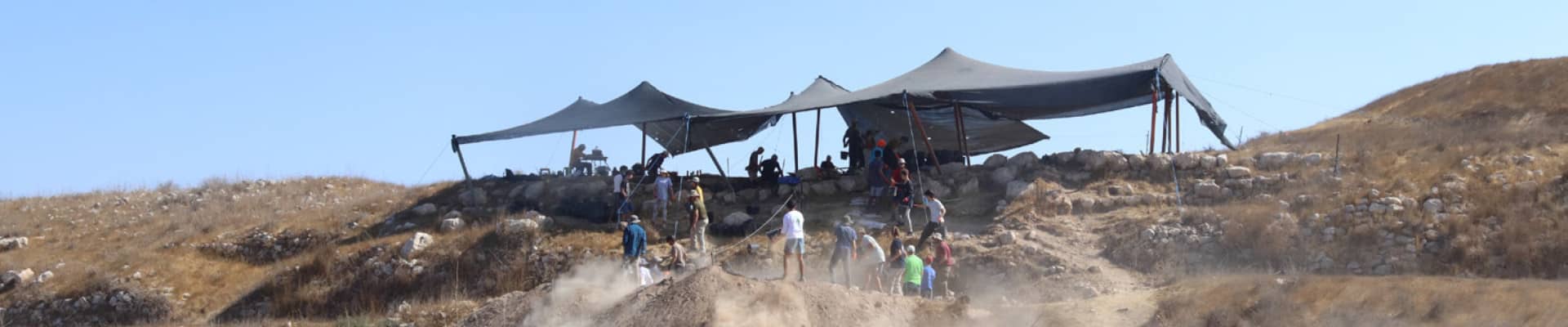
For my part in the excavation, I served as one of three square supervisors in Area B. My Ph.D. research centers on forced migration during the Late Bronze transition to the Iron Age where I seek to identify refugees resettling throughout the southern Levant. As such, this year’s objectives at Tel Dan were fortuitous for my research. We spent our first week removing quite a bit of wash from the area, because no work had been done at the site since 2018. Our second and third weeks were more productive in uncovering various indicators of conflagration including wall collapse, ash, and thick layers of destruction debris. We also analyzed wall interfaces and foundation trenches to better understand the sequencing of phases built up over time. By the fourth week, our area gifted us with a generous reward—pits. We identified them as refuse pits.
Many people consider it strange that archaeologists could be so interested in the garbage of past people, but it is in the trash and the refuse that we can find some of the most valuable information in our reconstruction of ancestral behavior and events. From seeds and botanical analysis to bones and an understanding of diet, from crushed jars to which strata these holes were cut into, I have developed a strong appreciation for the importance of pits and what they contain. Particularly for my research with refugees, who exhibit basic subsistence and storage practices, pits are vital to identifying where refugees settled and what they produced. Needless to say, our efforts this season satisfied a serendipitous end to the Area B excavations.
I look forward to incorporating the data we unearthed at Tel Dan this season into my research and contributing to a better understanding of forced migration, the factors that pushed and pulled people to new regions, and how they reestablished themselves and began to rebuild and rediscover their social identities. I am also grateful to ASOR and to Mr. Charles Steinmetz, the donor for this fellowship, for financially supporting me in my research this season.
David Brown is a Ph.D. candidate in the Department of Near Eastern Languages and Cultures at the University of California Los Angeles. His research is centered on forced migration in the Early Iron Age southern Levant, analyzing how to identify refugees in the material culture according to their push and pull factors as well as how they reconstituted themselves into new social identities after regional changes at the end of the Late Bronze Age transformation.
[/vc_wp_text][mk_divider][vc_wp_text]Want to help more students and early career archaeologists get into the field? Donate to the cause today by selecting “Excavation Scholarships” as your gift purpose!
Zachary Griffith, Eric and Carol Meyers Fellowship recipient
This summer I was able to attend the Huqoq Field School in Israel. I am grateful to ASOR for this scholarship, allowing me to attend this excavation. This was my first excavation outside of the United States, and by far the largest excavation that I have been a part of. During the excavation season I learned a great deal from the staff and supervisors, including Dr. Jodi Magness of the University of North Carolina at Chapel Hill and my Classics Professor at the college I attend, Austin College, the architecture specialist Dr. Martin Wells. Once again, I am thankful for the support of ASOR in making this experience possible.
I am grateful to have been a part of such an important excavation. The main focus of our excavation at Huqoq was the Late Roman synagogue and the Medieval synagogue building. The Huqoq excavation has gained much notoriety for the beautiful, well-preserved, and unique mosaics that were discovered in the Late Roman synagogue. Apart from the emphasis placed on the mosaics, there was much emphasis placed by the staff and supervisors of the significance of the material that can give a date for the Late Roman synagogue. This was especially evident when we visited various other synagogues in Northern Israel, such as those at Capernaum and Sepphoris. At lectures and hearing discussions between various professors at several of these sites, the magnitude of importance for the dating material for our excavation of the Late Roman synagogue at Huqoq was revealed. This dating material is so important to archaeology in this region due to conflicting theories over how the Christianized Roman Empire effected synagogue building and prosperity of the Jewish people under the Roman Empire, as such discussions have led scholars to give dates to synagogues that can differ by a degree of hundreds of years. It was great to be a part of an excavation that by itself is very significant, but that also could also have wide reaching implications for an entire region during the Roman Period.
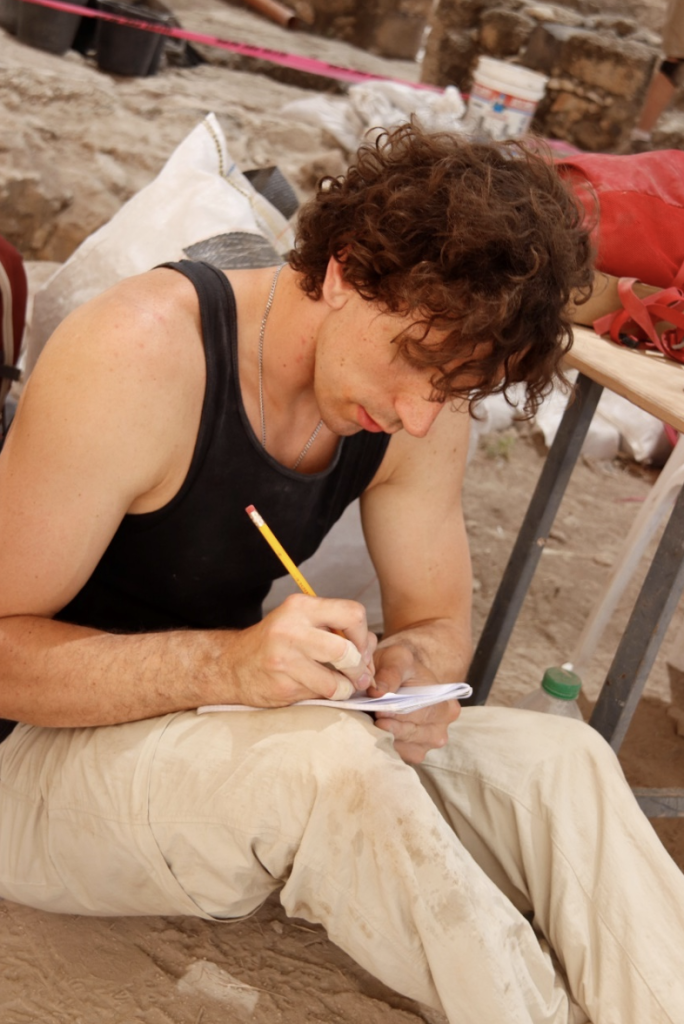
Zach taking notes at the site after a day of excavation.
As a part of the Huqoq excavation I was assigned to the area 3000 North, which was supervised by Dr. Rangar Cline of Oklahoma State University. This was the area that consisted mostly of the Northwestern sections of what was once the Late Roman synagogue and the Medieval synagogue. 3000 North was also where previously unexcavated mosaics were uncovered during this season. In 3000 North I learned a great deal about excavation techniques. Also, due to our proximity to the Late Roman mosaics, and the emphasis placed on finding material to date parts of the site, I frequently sifted the material we excavated. Sifting could be very exhilarating, such as when we would find artifacts that could possibly be used as dating evidence, but also heartbreaking, such as when tesserae was discovered, showing that sections of the Late Roman synagogue’s mosaic would not be preserved.
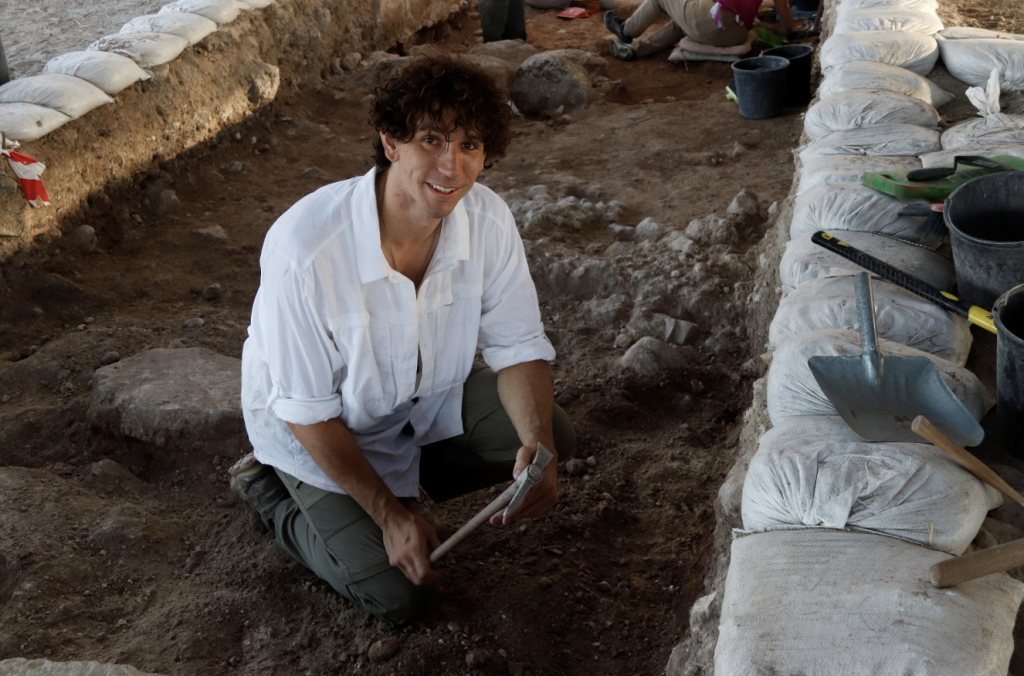
Zach excavating in 3000 North.
I greatly value the work I did under the direction of architecture specialist. Dr. Martin Wells. I assisted Dr. Wells by moving, washing, and recording various architectural fragments of significance to the excavation. Handling these pieces and gaining first-hand experience from Dr. Wells, I was able to learn a great deal more about the architecture and construction techniques in all phases of the site that we excavated. What is most memorable to me about Huqoq was how rewarding the process of reconstructing the Late Roman and Medieval synagogues could be’ even though it was a very difficult process. This can be highlighted by the way in which the builders of the Medieval synagogue reused material from the Late Roman synagogue, and it is from this reused material that we can gain more evidence of what the Late Roman synagogue may have looked like. In addition to all of the fieldwork, spending time with all of the individuals with the same passion for archaeology was amazing. I will have future colleagues and friends for life.
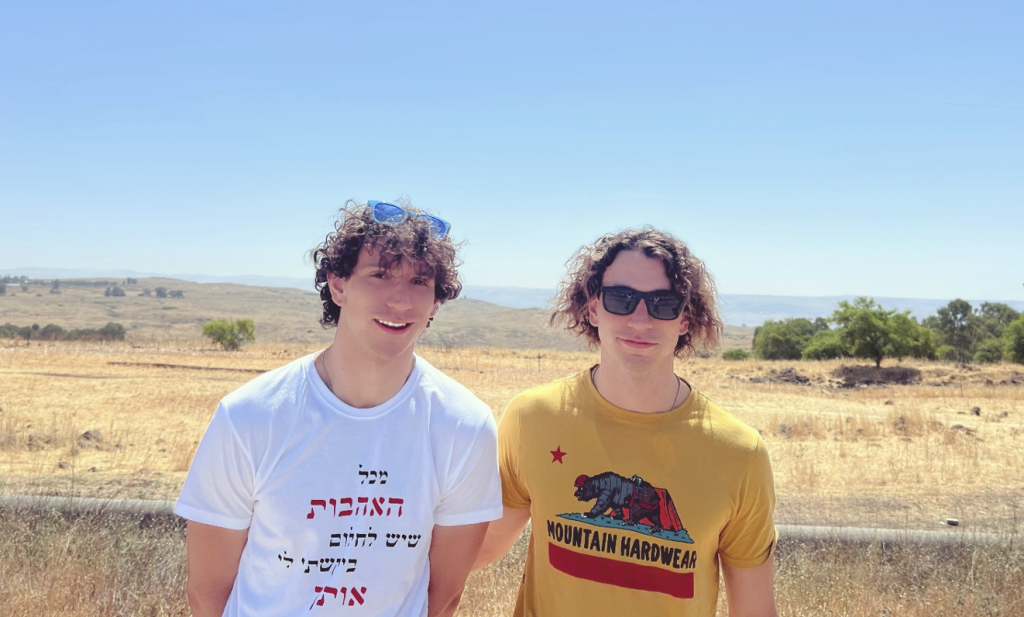
Zach (left) and his brother, Cayden (right), at the kibbutz.
Zachary Griffith is a Senior at Austin College, where he is majoring in Anthropology, Classics, and History. He also plays goalie for the water polo team at Austin College.
Want to help more students and early career archaeologists get into the field? Donate to the cause today by selecting “Excavation Scholarships” as your gift purpose!
Paul Richards, 2022 ASOR BIPOC Scholarship for Fieldwork Participation[/vc_column_text][mk_divider][vc_wp_text]Near East Archeology was a subject that, by title, I had not heard of until I started looking for a graduate degree covering ancient Israelite history. I knew archeologists went into the Middle East to do work, but I had not delved into more for the career field. After graduating from college with a BA in History I taught History in Cairo for 3 years at an American language high school. Then I taught ESL for 2 ½ years. While in Cairo I visited active dig sites. Visiting the sites sparked my interest in archeology.
When I started my Near East Archeology program at La Sierra University, I was excited for the upcoming dig. Because of the pandemic the normally scheduled dig season was canceled. I was determined to go the next season. By the time the next dig season came around the next year my finances were depleted. I applied for scholarships, and it is only due to being awarded the 2022 ASOR BIPOC Scholarship for Fieldwork Participation, that I was able to join the BRAP excavation trip.
The experience was great. I had been to Jordan on a 30-hour layover before where I took the opportunity and toured around the immediate Amman area. For the excavation I signed up for the full BRAP dig season for six weeks. Being in the archeology classroom learning about archeology and working in the lab was much different than being in the field. While in the field I remembered terminology I had learned in class. It was a continual task matching the term I had learned in class with the meaning or action in the field. The work was hard but every day we dug up something significant to me as a first timer. Finding pottery was exciting. I quickly found out the dig veterans were very used to seeing pottery finds. The schedule was taxing but the finds everyday made it worth it.
In the middle of the season, we went to Petra. I had heard of Petra for a few years and the reports from those who had visited made it sound like the ultimate travel destination for all Near East enthusiasts. Usually people exaggerate, this time the reports were accurate. It was better than going to Disneyland.[/vc_wp_text][vc_row_inner][vc_column_inner][vc_single_image image=”96209″ img_size=”full” add_caption=”yes” alignment=”center” onclick=”img_link_large” img_link_target=”_blank” css=”.vc_custom_1712002492498{padding-right: 10px !important;}”][/vc_column_inner][/vc_row_inner][mk_padding_divider][vc_wp_text]Archeology Becomes Personal
I grew up in and still am active in a distinct faith tradition. Previously my interest in ancient Israelite history had tilted my dig interest towards only going to Israel. I knew there was a lot to learn about ancient Israelite history from its ancient neighbors. Growing up myself in a culture and community where the stories of ancient Israel are accepted on a faith basis, it seemed almost automatic to gravitate towards Jerusalem. In a faith-based environment, especially for laypersons, activities of other ancient people groups are pushed aside and overlooked. It is a task of historians to help laypersons understand the study of Israel’s neighbors, and with proper archeology, enhance our academic understanding of faith-based stories.
The name Moab made a frequent appearance throughout the Old Testament of the Bible. A brief search rendered at least 18 times. The name originated, according to faith traditions, from one of the sons of Lot; Lot was Abraham’s nephew. The birth of Moab occurs in Genesis 19 along with his brother Ammon. The story includes some humiliating and salacious content. This son became the progenitor of the Moabites. The Moabites would become one of Israel’s major antagonists. King David in 2 Samuel 8:2 subjects the Moabites to servitude. Here again, a horrific scene takes place in the scripture tradition. In 2 Kings 3 Mesha King of Moab is mentioned as paying a heavy tribute to the Northern Kingdom. Mesha rebelled after the death of Ahab. The Mesha Stella, a significant find in Near East Archeology, describes a revolt against Israel.
Many inscriptions describing victory may have the veracity of the victory legitimately questioned. This is due to the well-known desire of kings and nations to embellish the greatness of themselves and their people. In the case of Mesha it does appear the inscription holds weight. The Mesha Stella was found at Tell-Dibon, a site our team was able to visit.[/vc_wp_text][vc_single_image image=”96210″ img_size=”full” add_caption=”yes” alignment=”center” onclick=”img_link_large” img_link_target=”_blank” css=”.vc_custom_1712002888768{padding-right: 10px !important;}”][mk_padding_divider][vc_wp_text]Cultural Memory And The Story of Moab
Cultural memory is a topic I have delved into since the beginning of my graduate program. The reality of stories becoming exaggerated results in the need for teachers and writers to execute proper exegesis when dealing with historical topics. Exegesis is a term primarily heard of in theology. But the principal for the term is crucial for every research field.
Preconceived ideas need to be erased before proceeding in the research. During the research process the evidence must speak for itself. In a textual context, a word can be assumed to have one meaning, then with further investigation the researcher realizes the original speaker or writer had a different meaning in mind. This also applies to archeology. As taxing as the physical aspect of archeology is, it is crucial to dispel private ideas and interpretations that can result from classroom and reading work only.
The public figures inside well-known faith traditions have become known for mobilizing their base with shallow motivation. This motivation is often very loosely based on ancient text references. Many public figures use the texts blatantly out of context for private purposes. There is a dual danger in the faith community. One is those who carelessly use history to further an agenda. The other are those who are born into these agendas unawares. Both continue to propagate a false narrative. The latter falls victim to its own cultural memory.
In certain faith-based texts Ruth is the progenitor of King David, Ruth 4:22. Ruth was the daughter in-law of Naomi who became a widow and decided to follow Naomi back to her homeland. There is a parallel story line outside the traditional faith-based text, which teaches Naomi’s other daughter in-law Orpah, a Moabite went back to her people and gave birth to Goliath a Philistine. Goliath has become the stuff of legend. His bio has been stretched to create a superhuman villain that would match today’s comic books.[/vc_wp_text][vc_single_image image=”96211″ img_size=”full” add_caption=”yes” alignment=”center” onclick=”img_link_large” img_link_target=”_blank” css=”.vc_custom_1712003623857{padding-right: 10px !important;}”][mk_divider][vc_wp_text]And Finally
My time in the field has increased my interest in ancient languages. It has increased my interest in the facts of faith-based stories. While in the square my square mates and I had lively discussions over the topics presented above. By the end we were far from exhausting the matter. There will be more to debate and learn on the next excavation.[/vc_wp_text][mk_divider][vc_wp_text]Paul Richards holds a BA in History and a Minor in Communication Art from Oakwood University in Huntsville, AL. He lives in Southern California and is finishing his thesis at La Sierra University in Riverside, CA. Balu’a Regional Archaeological Project (BRAP) – Centers & Museum – La Sierra University. BRAP Jordan (@brapjordan) • Instagram photos and videos. Balu’a Regional Archaeology Project | Facebook.[/vc_wp_text][mk_divider][vc_wp_text]Want to help more students and early career archaeologists get into the field? Donate to the cause today by selecting “Excavation Scholarships” as your gift purpose!
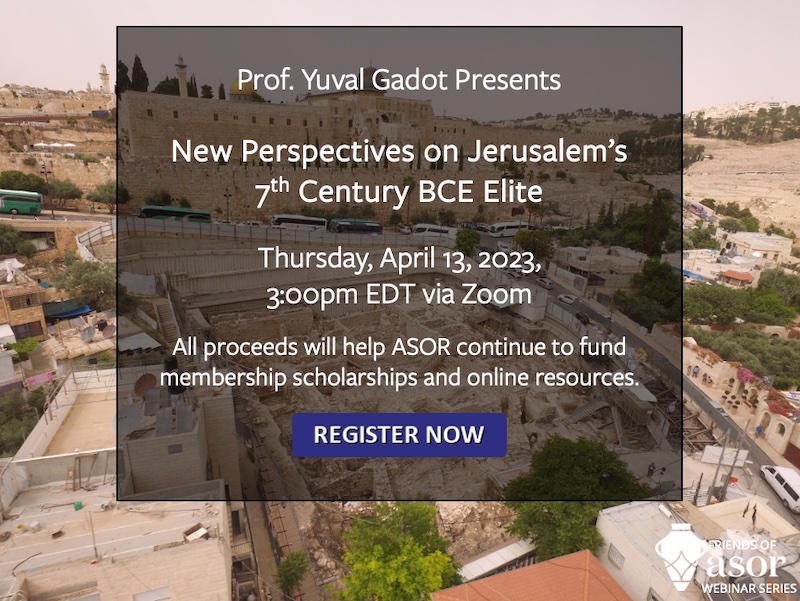
New Perspectives on Jerusalem’s 7th Century BCE Elite
Photo credit: Assaf Perets
Friends of ASOR present the next webinar in our monthly series on April 13, 2023, at 3:00 pm EDT, featuring Prof. Yuval Gadot and moderated by Prof. Thomas Levy. Jerusalem is one of the most excavated places in the world and yet, some very basic questions regarding the city’s size and location are still being debated. Recent finds from the western slope of the southeastern ridge (known also as “the City of David”) shed new and tantalizing light on the city’s development during the 11th-9th centuries BCE, on the wealth of Jerusalem’s elite during the 7th century BCE, and on the city’s destruction and revival during the 6th and 5th centuries BCE.
Photo Credit: Sasha Flit
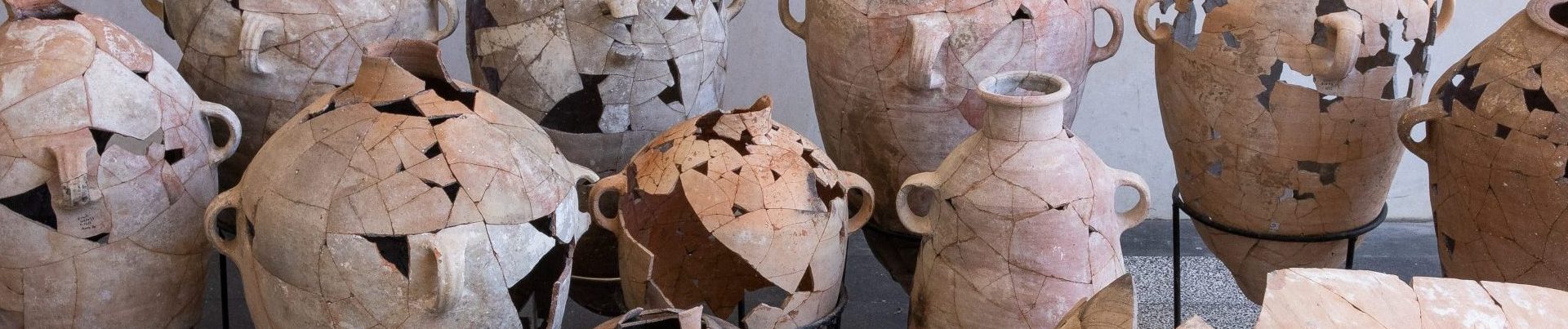
The lecture will focus on 7th century BCE as it will present the results of recent excavations of an elite associated building (Building 100) that was destroyed by the Babylonians in 586 BCE. The analysis of the plethora of artifacts found inside the building, such as ivory panels, wooden artifacts, and storage jars used for holding flavored wine, exposes the intimate details of the lives of Jerusalem’s elite—their habits and their worldview as they operated within an empyreal network.
Join Prof. Gadot as he discusses his new research in telling the story of one of the world’s most fascinating cities. The webinar will conclude with a Q&A session moderated by Prof. Thomas Levy (University of California, San Diego).
Photo Credit: Sasha Flit
Prof. Yuval Gadot heads the Sonia & Marco Nadler Institute of Archaeology at Tel-Aviv University. He is also lead archaeologist at the “City of David” excavations project in Jerusalem where he co-directs the “Givati Parking Lot” excavations and leads an environmental study of the rural landscape surrounding the city. He obtained his PhD in 2004 from Tel-Aviv University. Between 2004 and 2008, Gadot was a research fellow at the Nelson Glick School of Bible and Archeology at Hebrew Union College (Jerusalem). Between 2005 and 2010, Yuval served as a Field Director for the Institute’s excavations at the Ramat Rachel site (led by Prof. Oded Lipschits and Prof. Manfred Oming). These excavations were published in a large number of publications and final reports. At the same time, he partnered with Prof. Israel Finkelstein and Prof. Steve Weiner in the project “Ancient Israel through the lens of natural and exact sciences,” where he was exposed to the many possibilities that exist in combining science and archaeology.
Since 2018, Gadot has served as the Head of the Department of Archaeology and Ancient Near Eastern Cultures at Tel-Aviv University. He has authored seven archaeological books and over one hundred scientific articles.
This webinar will be recorded and all paid registrants will be sent a link to view the recording.
To receive your ASOR member discount, log into the online store. If you are new to ASOR, please click on the “New Visitor Registration” link to register your e-mail address and choose a password for our online store. Once logged in, navigate to “Meeting and Event Registration” to register for the webinar and pay the fee. Each paid registrant will receive a confirmation e-mail when you pay for the webinar. If you do not receive this e-mail, then you are not registered. Please e-mail membership@asor.org with any questions or issues with registering.
You will be e-mailed the Zoom Webinar link in the week prior to the lecture on April 13, 2023. If you do not receive the link by the close of business two days before the webinar, please e-mail membership@asor.org immediately. This webinar will be recorded and all paid registrants will be sent a link to view the recording.
All proceeds from this webinar are used to fund scholarships for members as well as increasing ASOR’s online resources, which are free to the public.
READY FOR A WEBINAR SEASON PASS?
Buy a season pass for all the webinars* of the 2022-2023 FOA Webinar Season! 1) You will automatically receive the Zoom link for each webinar so no need to register each time. 2) You will also receive the recording of each webinar automatically after the event.
If you have missed webinars earlier in the season and still want to buy the pass, you will receive the links to the recordings of the webinars you missed in your automatic confirmation email after you buy the pass.
*Special symposiums may be excluded from the season pass price.
No more registering for a year if you buy your pass today!
Pricing:
Members: $75.00 Non-Members: $150.00 ASOR Sustaining Members: $0 (automatic registration for each webinar) Not a member yet? Click here to join as a member and receive the 50% off a season pass!
Log into our online store to purchase the season pass for 2022-2023. If you are new to ASOR and do not have a record in our store yet, click here to register. After you login, navigate to the left to “Meeting and Event Registration.” Please e-mail membership@asor.org if you have any questions or issues.
WHY SPONSOR A WEBINAR?
Several levels of support from $50-$1,000 are available. Proceeds go towards membership scholarships and towards increasing ASOR’s virtual resources. Each sponsorship is tax-deductible and you can give your friends free registrations to a webinar!
Bronze Level ($50): up to 2 guest registrations Silver Level ($100): up to 5 guest registrations Gold Level ($500): up to 20 guest registrations Platinum Level ($1,000): up to 50 guest registrations
After you sign up for a sponsorship online or over the phone, email the names and email addresses of your guests to Felice Herman at membership@asor.org, who will send your guests a confirmation and the Zoom link before the webinar.
WANT TO SAVE $6.00 ON THE NEXT WEBINAR?
Join ASOR as a member! Click here for more details about discounts for events and other benefits of membership. Memberships start at $40 for the year as an Associate Member.
You can now purchase the link to the recording of any webinar. You can also purchase the bundle packages of all webinars from the 2020-2022 seasons. Please e-mail membership@asor.org for purchase details.
To see a printable pdf of the webinar titles from the 2020-2021 season, please click here. To see a printable pdf of the webinar titles from the 2021-2022 season, please click here.
Where Are They Now?: A Preview of 2022 ASOR-Affiliated Fieldwork Projects Michael Given (University of Glasgow), Xenia-Paula Kyriakou (Florida Gulf Coast University), Stephen Batiuk (University of Toronto), Monique Roddy (Walla Walla University), Kent Bramlett (La Sierra University), Friedbert Ninow (La Sierra University), and Michael Hoff (University of Nebraska-Lincoln) | March 8, 2022
Tel Rehov: A Major Bronze and Iron Age City in the Jordan Valley Amihai Mazar (Hebrew University of Jerusalem), Nava Panitz-Cohen ( Hebrew University of Jerusalem), Nota Kourou (Athens University), Naama Yahalom-Mack (Hebrew University of Jerusalem), Robert Mullins (Azusa Pacific University) | February 10, 2022
Archaeogaming: Why Video Games Deserve Their Own Archaeology Tine Rassalle (University of North Carolina at Chapel Hill), Shannon Martino (Morton College), Matthew Winter (University of Arizona), Michael Zimmerman (Rhode Island) | April 18, 2021
Please e-mail the Membership office if you have any questions.
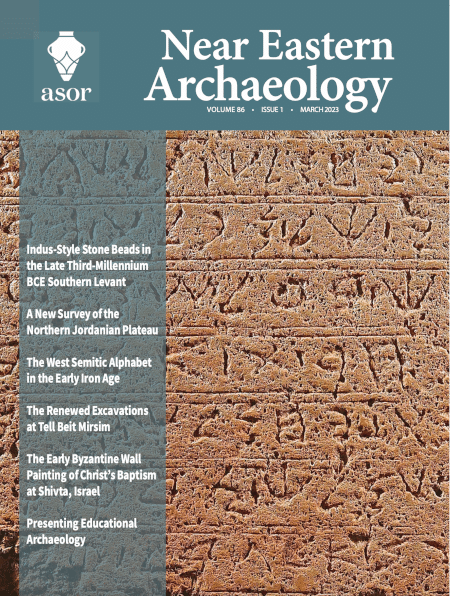
Pp. 4-15: “Indus-Style Stone Beads in the Late Third-Millennium BCE Southern Levant: The Role of Trade and Curation in the Distribution of High-Value Ornaments,” by Geoffrey E. Ludvik
This article discusses how identification of stylistic, morphometric, mineralogical, and technological characteristics of carnelian stone beads can provide major insights into EB IV/MB I interregional networks and social differentiation. Based on unique drilling techniques, stylistic shapes, morphometric proportions, and mineralogical characteristics, fifty-four carnelian beads found in Israel/Palestine have been identified as crafted in a manner ultimately diagnostic of the Indus tradition of modern Pakistan and western India. Fifty Indus-style beads in the EB IV/MB I probably reflect increased socio-cultural links to the northern Levant and Mesopotamia during this period, while four beads from later contexts represent long-term curation of valuable ornaments.
ASOR Members with online access: log into ASOR’s Online Portal here. Once logged in, click the JOURNALS tab in the top navigation bar. From here you may select which journal you would like to read. If you have online access, you will see your selected journal’s current issue Table of Contents. Click on the “Current Issue” button and you will then be redirected to the University of Chicago Press’s (UCP) platform to immediately start reading any issue of your choice. Tutorials for how to log in to the Online Portal as well as how to navigate to the Portal Journals page can be found here.
Pp. 16-27: “Tell It Like It Is: Discoveries from a New Survey of the Northern Jordanian Plateau,” by Marta Lorenzon, Antti Lahelma, Maher Tarboush, Elisabeth Holmqvist, Dries Daems, Saimi Kautonen, Joanna Töyräänvuori, Stefan L. Smith, Benjamín Cutillas-Victoria, Maija Holappa, Hussein Al-Sababha, and Ahmed Al-Shorman
This article presents the results of a joint Finnish-Jordanian survey project that focuses on investigating the interrelations of the imperial heartlands and the Levantine region in the Late Bronze and Iron Ages. We used historical satellite images to identify potential sites on the northern Jordanian plateau, after which they were systematically investigated by archaeological survey. Of the sites discovered, the fortified site of Tell al-Assara stands out owing to its prominent location, as indicated by a visibility analysis, and its massive enceinte wall made of ashlars. One of the pottery sherds found at the site bears an inscription in Aramaic. Although Tell al-Assara is remarkably well preserved, many of the sites discovered were already badly damaged by looting and urban development. These alarming developments can only be countered by closely involving local communities in fieldwork projects working in the region.
ASOR Members with online access: log into ASOR’s Online Portal here. Once logged in, click the JOURNALS tab in the top navigation bar. From here you may select which journal you would like to read. If you have online access, you will see your selected journal’s current issue Table of Contents. Click on the “Current Issue” button and you will then be redirected to the University of Chicago Press’s (UCP) platform to immediately start reading any issue of your choice. Tutorials for how to log in to the Online Portal as well as how to navigate to the Portal Journals page can be found here.
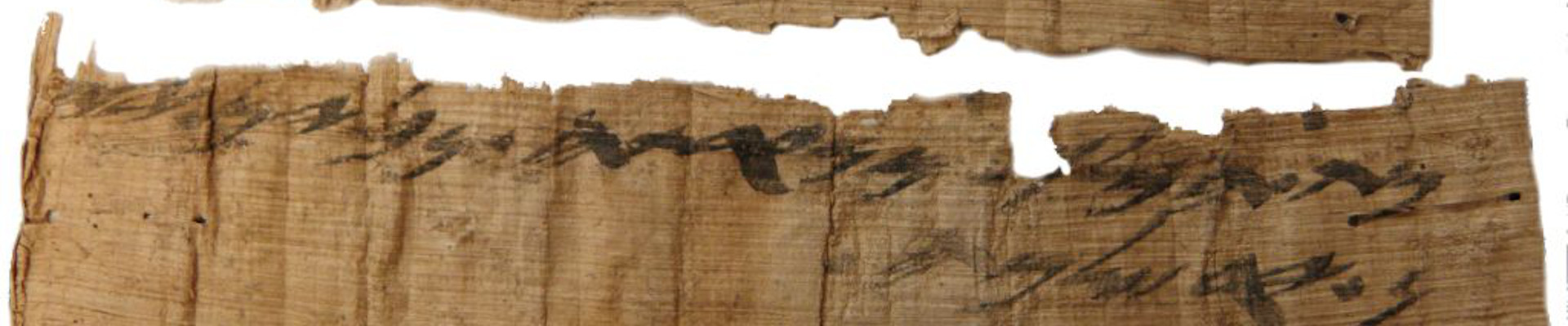
Pp. 28-45: “The West Semitic Alphabet in the Early Iron Age: A New Hypothesis,” by Benjamin Sass and Israel Finkelstein
In the hypothesis presented by the authors, stratified, nonmonumental inscriptions and their radiometric datings take center stage for the first time. It is in the living script of these texts rather than in the artificial alphabet of monuments that the evolution of the alphabet in Iron IIA can be studied properly. A key take-home lesson of the work is the significant ninth-century transformations of the alphabet from precursive Proto-Canaanite to supraregional cursive, thence to the well-known regional variants. Under the Omrides, the alphabet in Israel is attested minimally. No Omride texts were recognized at Samaria, nor Baashide texts at Tirzah. The newly founded West Semitic kingdoms since ca. 900 BCE will have constituted the cradle of the cursive, while papyrus or parchment and ink were the cursive’s likeliest vehicle. Alphabetic inscriptions on monuments, including Byblos, all cursive-inspired, will only have emerged in the last third of the ninth century.
ASOR Members with online access: log into ASOR’s Online Portal here. Once logged in, click the JOURNALS tab in the top navigation bar. From here you may select which journal you would like to read. If you have online access, you will see your selected journal’s current issue Table of Contents. Click on the “Current Issue” button and you will then be redirected to the University of Chicago Press’s (UCP) platform to immediately start reading any issue of your choice. Tutorials for how to log in to the Online Portal as well as how to navigate to the Portal Journals page can be found here.
Pp. 46-57: “In the Footsteps of Albright: The Renewed Excavations at Tell Beit Mirsim,” by Igor Kreimerman, Itamar Weissbein, Pnina Torn Broers, and Ofer Naveh
Tell Beit Mirsim in the Judean Shephelah was excavated by William F. Albright and Melvin G. Kyle in the 1920s and 1930s. These excavations established the relative chronology for the entire southern Levant because of good preservation conditions, facilitated by the multiple destruction layers at the site, and thanks to Albright’s familiarity with pottery. Ninety years later, the excavations have been renewed with the aim of investigating the economy and social structure of the kingdom of Judah. The first season of renewed excavations by the Institute of Archaeology at the Hebrew University of Jerusalem has unearthed the remains of Iron Age IIB domestic structures, one of which belongs to the four-room-house type, and an olive oil press. The excellent preservation of the remains enables the reconstruction of activity areas and suggests that Tell Beit Mirsim could be the perfect lab for exploring the economy of the kingdom of Judah.
ASOR Members with online access: log into ASOR’s Online Portal here. Once logged in, click the JOURNALS tab in the top navigation bar. From here you may select which journal you would like to read. If you have online access, you will see your selected journal’s current issue Table of Contents. Click on the “Current Issue” button and you will then be redirected to the University of Chicago Press’s (UCP) platform to immediately start reading any issue of your choice. Tutorials for how to log in to the Online Portal as well as how to navigate to the Portal Journals page can be found here.
Pp. 58-63: “In Situ Implementation of Imaging Techniques Reveals Key Motifs in the Early Byzantine Wall Painting of Christ’s Baptism at Shivta, Israel,” by Ravit Linn, Emma Maayan-Fanar, and Yotam Tepper
Following the rediscovery of the Early Byzantine wall painting of Christ’s baptism in the northern church of Shivta in southern Israel, the painting was investigated with different imaging techniques in order to clarify the scene and to find additional painted motifs and hidden colors and patterns. Besides high-quality photography from close distance on a scaffolding at 3.5 m height, thus at the level of the painting, Near IR photography (NIR), UV wavelengths microscopy, and Visible Induced Luminescence (VIL) imaging were all conducted in order to collect new information on the painting. The combination of several imaging techniques provided new and surprising details on elements of the painting, especially revealing blue color around the head and shoulders of Christ, most probably reminiscent of the River Jordan where the baptism took place.
ASOR Members with online access: log into ASOR’s Online Portal here. Once logged in, click the JOURNALS tab in the top navigation bar. From here you may select which journal you would like to read. If you have online access, you will see your selected journal’s current issue Table of Contents. Click on the “Current Issue” button and you will then be redirected to the University of Chicago Press’s (UCP) platform to immediately start reading any issue of your choice. Tutorials for how to log in to the Online Portal as well as how to navigate to the Portal Journals page can be found here.
Pp. 64-73: “The Finder, Not the Find: Presenting Educational Archaeology,” by Achia Kohn-Tavor
Educational excavation projects focus primarily on the pedagogic values embedded in the archaeological work, while archaeology per se is their secondary goal; therefore, they differ from community archaeology, which mostly incorporates education and community into archaeological projects and objectives. This article articulates this difference and then presents educational archaeology in detail, explaining how it is implemented. To illuminate educational archaeology further, two projects headed by the author are presented, encompassing school students, and domestic and international tourism. Educational archaeology encompasses a variety of benefits that are rather efficiently delivered: social and personal development of the individual, building community and a sense of belonging, and widening one’s scope of knowledge. The call to make archaeology accessible to the broad public is greatly facilitated here, and therefore educational archaeology projects should occupy a larger space among place-based, value-oriented projects.
ASOR Members with online access: log into ASOR’s Online Portal here. Once logged in, click the JOURNALS tab in the top navigation bar. From here you may select which journal you would like to read. If you have online access, you will see your selected journal’s current issue Table of Contents. Click on the “Current Issue” button and you will then be redirected to the University of Chicago Press’s (UCP) platform to immediately start reading any issue of your choice. Tutorials for how to log in to the Online Portal as well as how to navigate to the Portal Journals page can be found here.


 Friends of ASOR
 As a historian and an archaeologist, Paul Flesher brings our earliest knowledge of synagogue rituals into conjunction with excavated first-century synagogues to answer that question. By focusing on Luke 4 and the Gamla synagogue—as a representative of first-century synagogues in general—Flesher explores how the synagogues’ architectural layout shaped the spatial and social dynamics of the people inside it to reveal two important points. First, the synagogue reinforced the tight bond between Scripture and the synagogue congregation through the positioning of the congregation and the ritual space of the Scripture reading. Second, the congregation’s mood changed so quickly from honor to rejection because the synagogue’s layout enhanced the communication not just between Jesus and the congregation but also among the members of the congregation themselves. Their ability to act as a coordinated group came from the synagogue’s internal, architectural structure.