Archaeology of Iran at ASOR

[vc_row fullwidth=”true” attached=”true” css=”.vc_custom_1496247803139{padding-top: 0px !important;padding-right: 0px !important;padding-bottom: 0px !important;padding-left: 0px !important;}”][vc_column][vc_single_image image=”40474″ img_size=”full” alignment=”center”][/vc_column][/vc_row][vc_row fullwidth=”true” css=”.vc_custom_1496682730308{padding-top: 10px !important;padding-right: 0px !important;padding-bottom: 0px !important;padding-left: 0px !important;}”][vc_column width=”1/12″ css=”.vc_custom_1496683820796{margin-right: 10px !important;}” offset=”vc_hidden-md vc_hidden-sm vc_hidden-xs”][vc_column_text]

 SHARE

[/vc_column_text][mk_image src=”http://www.asortest.org/wp-content/uploads/2017/01/social-fb-icon4.jpg” image_width=”42″ image_height=”42″ hover=”false” custom_url=”https://www.facebook.com/ASOResearch/” margin_bottom=”0″][mk_image src=”http://www.asortest.org/wp-content/uploads/2017/01/social-tw-icon4.jpg” image_width=”42″ image_height=”42″ hover=”false” custom_url=”https://twitter.com/ASOResearch?ref_src=twsrc%5Egoogle%7Ctwcamp%5Eserp%7Ctwgr%5Eauthor” margin_bottom=”0″][mk_image src=”http://www.asortest.org/wp-content/uploads/2017/01/social-in-icon4.jpg” image_width=”42″ image_height=”42″ hover=”false” custom_url=”https://www.linkedin.com/company/american-schools-of-oriental-research” margin_bottom=”0″][mk_image src=”http://www.asortest.org/wp-content/uploads/2017/01/social-ml-icon_7.jpg” image_width=”42″ image_height=”42″ hover=”false” custom_url=”mailto:asor@bu.edu” margin_bottom=”0″][mk_image src=”http://www.asortest.org/wp-content/uploads/2017/01/blog-icon3.jpg” image_width=”42″ image_height=”42″ hover=”false” custom_url=”http://asorblog.org/” margin_bottom=”0″][/vc_column][vc_column border_color=”rgba(255,255,255,0.01)” width=”1/6″ css=”.vc_custom_1496683923840{margin-right: 20px !important;border-left-width: 2px !important;padding-right: 20px !important;padding-left: 20px !important;border-left-color: #99422f !important;}”][mk_divider divider_color=”rgba(255,255,255,0.01)” thickness=”1″ margin_top=”3″ margin_bottom=”3″][vc_column_text]

NEWS@ASOR E-NEWSLETTER

ANCIENT NEAR EAST TODAY E-NEWSLETTER

PAST ASOR NEWS, MONTH BY MONTH

FY18 HONOR ROLL OF DONORS

ASOR ANNUAL MEETING

[/vc_column_text][/vc_column][vc_column border_color=”rgba(170,170,170,0.01)” width=”1/2″ css=”.vc_custom_1487276122024{margin-right: 10px !important;margin-bottom: 30px !important;border-right-width: 2px !important;border-bottom-width: 2px !important;padding-top: 30px !important;padding-right: 30px !important;padding-left: 20px !important;background-color: #ffffff !important;border-right-color: rgba(227,228,228,0.75) !important;border-bottom-color: rgba(227,228,228,0.75) !important;}”][vc_column_text responsive_align=”left”]

ARCHAEOLOGY OF IRAN AT ASOR

[/vc_column_text][vc_column_text]

Written by ASOR session co-chairs: Holly Pittman (University of Pennsylvania) and Mehrnoush Soroush (Harvard University)

Over the past several years, ASOR has received the generous support of the American Institute of Iranian Studies (AIIrS) to sponsor the visas of Iranian scholars and to underwrite their participation in the ASOR Annual Meeting. The Archaeology of Iran session is one of ASOR’s permanent standing sessions. It is an important venue for facilitating scholarly exchange and building collaboration between Iranian and American archaeologists.

The ancient heritage of Iran is well known and has been investigated since the middle of the eighteenth century. For many decades in the twentieth century, Iran was the locus of some of the most exciting archaeological engagement for American scholars. Following the revolution in 1979, archaeological work by non-Iranian scholars was greatly reduced in the country, beginning again, with ebb and flow, around 2000. The re-opening of the country to foreign, especially western scholars, was part of a broader change in the Iranian Cultural Heritage Organization, to train a new generation of Iranian archaeologists and to use these talents in new institutional structures devoted to research and preservation of cultural heritage. Since then many young Iranian archaeologists have completed their graduate degrees, especially at the University of Tehran, as well as in Europe and in the United States, and are actively undertaking systematic archeological research in universities or in the wide spread cultural heritage network supported by the central government.

The Archaeology of Iran papers cover all aspects of the science from Paleolithic through the Islamic period. The session usually consists of ten to twelve papers allocated over two sections. Ideally, the sessions are built around a core of Iranian nationals who are actively engaged in field research in the country. In addition, American and European nationals also contribute, some reporting on field work, others focusing on the study of heritage collections, or on the reanalysis of published material.

Securing visas for Iranian scholars is a difficult and prolonged undertaking for the scholars as well as for ASOR and AIIrS. Support from AIIrS includes reimbursement for visa applications, travel and lodging expenses, as well as a contribution to cover ASOR participation fees. The outcome of this process is affected by political environment and is more favorable in some years than others. The program was most successful in 2015, when the five Iranian applicants received visas and attended the meeting.

This year, we are again grateful to AIIrS, and especially to the unflagging support of Dr. Erica Ehrenberg, the Executive Director of the organization, for facilitating the application of five Iranian scholars who submitted papers selected by the organizing chairs. Two scholars, Dr. Mostafa Dehpahlavan and Mr. Hossein Moradi, will present their research in Denver. With permission from ASOR’s Program Committee, the other three scholars will give prerecorded or read presentations. These colleagues are all active field archaeologists and educators or cultural heritage specialists. We look forward to hearing about their ongoing research, addressing a variety of topics including:

Mostafa Dehpahlavan (University of Tehran), Mehrdad Malekzadeh (Iranian Center for Archaeological Research), and Zabih Allah Chaharrahi (Independent Researcher), “Archaeological Survey of Part of the Great Khorasan Road, the So-Called Pataq Defile or the Median Gate”

Hossein Moradi (Independent Researcher), “Site-Size Hierarchy in the Bampur Valley during the Chalcolithic Period: A New Approach for Understanding Complexity in Iranian Baluchistan”

Nasir Eskandari (University of Jiroft), “The Jiroft Archaeological Project 2017: Excavation at the Site of Varamin, Jiroft Plain, Southeastern Iran”

Hamed Vahdati Nasab (Tarbiat Modares University) and Abbas Moghaddam (Iranian Center for Archaeological Research), “Death and Violence During the Fifth-Fourth Millennia B.C., Khuzestan Plain, Southwestern Iran: Tol-e Chega Sofla Cemetery”

Mohammad Esmaeil Esmaeili Jelodar (University of Tehran) and Mohammad Mortezaei (Iranian Center for Archaeological Research), “Certain Evidence of Glazed Ceramic Manufacturing in Jorjan: An Overview of the Results from the Seventh Season”[/vc_column_text][/vc_column][vc_column border_color=”rgba(170,170,170,0.01)” width=”1/6″ css=”.vc_custom_1496684098866{margin-right: 5px !important;margin-bottom: 20px !important;border-right-width: 2px !important;border-bottom-width: 2px !important;padding-top: 30px !important;padding-right: 10px !important;padding-left: 10px !important;background-color: #ffffff !important;border-right-color: rgba(227,228,228,0.75) !important;border-bottom-color: rgba(227,228,228,0.75) !important;}”][vc_wp_posts title=”BROWSE THE NEWS ARCHIVE” number=”4″][/vc_column][vc_column border_color=”rgba(170,170,170,0.01)” width=”1/6″ css=”.vc_custom_1496684008271{margin-right: 10px !important;margin-bottom: 30px !important;border-right-width: 2px !important;border-bottom-width: 2px !important;padding-top: 30px !important;padding-right: 20px !important;padding-left: 20px !important;background-color: #ffffff !important;border-right-color: rgba(227,228,228,0.75) !important;border-bottom-color: rgba(227,228,228,0.75) !important;}”][vc_column_text] [/vc_column_text][/vc_column][/vc_row]
Table of Contents for NEA 81.3 (September 2018)

[vc_row fullwidth=”true” attached=”true” css=”.vc_custom_1496247803139{padding-top: 0px !important;padding-right: 0px !important;padding-bottom: 0px !important;padding-left: 0px !important;}”][vc_column][mk_image src=”http://www.asor.org/wp-content/uploads/2018/10/Unknown.jpeg” image_width=”1920″ image_height=”600″ hover=”false” margin_bottom=”0″][/vc_column][/vc_row][vc_row fullwidth=”true” css=”.vc_custom_1496682730308{padding-top: 10px !important;padding-right: 0px !important;padding-bottom: 0px !important;padding-left: 0px !important;}”][vc_column width=”1/12″ css=”.vc_custom_1496683820796{margin-right: 10px !important;}” offset=”vc_hidden-md vc_hidden-sm vc_hidden-xs”][vc_column_text]

 SHARE

[/vc_column_text][mk_image src=”http://www.asortest.org/wp-content/uploads/2017/01/social-fb-icon4.jpg” image_width=”42″ image_height=”42″ hover=”false” custom_url=”https://www.facebook.com/ASOResearch/” margin_bottom=”0″][mk_image src=”http://www.asortest.org/wp-content/uploads/2017/01/social-tw-icon4.jpg” image_width=”42″ image_height=”42″ hover=”false” custom_url=”https://twitter.com/ASOResearch?ref_src=twsrc%5Egoogle%7Ctwcamp%5Eserp%7Ctwgr%5Eauthor” margin_bottom=”0″][mk_image src=”http://www.asortest.org/wp-content/uploads/2017/01/social-in-icon4.jpg” image_width=”42″ image_height=”42″ hover=”false” custom_url=”https://www.linkedin.com/company/american-schools-of-oriental-research” margin_bottom=”0″][mk_image src=”http://www.asortest.org/wp-content/uploads/2017/01/social-ml-icon_7.jpg” image_width=”42″ image_height=”42″ hover=”false” custom_url=”mailto:asor@bu.edu” margin_bottom=”0″][mk_image src=”http://www.asortest.org/wp-content/uploads/2017/01/blog-icon3.jpg” image_width=”42″ image_height=”42″ hover=”false” custom_url=”http://asorblog.org/” margin_bottom=”0″][/vc_column][vc_column border_color=”rgba(255,255,255,0.01)” width=”1/6″ css=”.vc_custom_1496683923840{margin-right: 20px !important;border-left-width: 2px !important;padding-right: 20px !important;padding-left: 20px !important;border-left-color: #99422f !important;}”][mk_divider divider_color=”rgba(255,255,255,0.01)” thickness=”1″ margin_top=”3″ margin_bottom=”3″][vc_column_text]

ASOR BLOG

NEWS@ASOR

ANCIENT NEAR EAST TODAY

PAST ASOR NEWS, MONTH BY MONTH

FY18 HONOR ROLL OF DONORS

ASOR ANNUAL MEETING

[/vc_column_text][/vc_column][vc_column border_color=”rgba(170,170,170,0.01)” width=”1/2″ css=”.vc_custom_1487276122024{margin-right: 10px !important;margin-bottom: 30px !important;border-right-width: 2px !important;border-bottom-width: 2px !important;padding-top: 30px !important;padding-right: 30px !important;padding-left: 20px !important;background-color: #ffffff !important;border-right-color: rgba(227,228,228,0.75) !important;border-bottom-color: rgba(227,228,228,0.75) !important;}”][vc_column_text responsive_align=”left”]

Table of Contents for Near Eastern Archaeology 81.3 (September 2018)

Subscription Options
You can receive NEA (and other ASOR publications) through an ASOR Membership or through an Individual Subscription. Single issues (subject to availability) are available for purchase, with ASOR members receiving a discount. Please e-mail us if you have any questions.

Pp. 164-173: “Sanctifying the House: Child Burial in Prehistoric Anatolia,” by Burcu Yıldırım, Laurel D. Hackley, and Sharon R. Steadman

Intramural burials are common on the Anatolian plateau, beginning in early prehistory. Neolithic examples indicate that the incorporation of human remains into domestic architecture was a regular part of the rhythm of family life. By the Late Chalcolithic, adult burials have largely moved into extramural cemeteries, although there are some exceptions. Infants and small children, however, continue to be buried within the house and these interments are a common feature on the Anatolian plateau. At the site of Çadır Höyük in central Anatolia, well over one dozen Chalcolithic infant burials were placed in corners of existing rooms, in areas of possible ritual function, and incorporated in walls at the time of construction. This study investigates the relationship between the spatial context of these burials and their function in the domestic context, and considers the possibility that some infant burials served as foundation deposits in the architecture at Chalcolithic Çadır.
Click here to access the above article on JSTOR (ASOR membership with online access and/or subscription to JSTOR Current Content required).

Pp. 174-181: “Infant Burial Practices as Domestic Funerary Ritual at Early Bronze Age Titriş Höyük,” by Timothy Matney

The Early Bronze Age tradition of intramural tombs at settlements in the Middle Euphrates region is well established, with examples from many excavations. Often these intramural tombs comprise stone-built cist chambers with adult or juvenile occupants and a range of funerary offerings. They are located within domestic residences and interpreted as family crypts. Less well explored are contemporary infant burials, which, in addition to poor preservation, are often located beneath the living floors of domestic houses but not within the cist tombs. This study reviews the evidence for the intramural burial of infants at mid-to late Early Bronze Age Titriş Höyük in southeastern Turkey in the context of broader funerary traditions at the site and in the region. The author suggests that the division between adult/juvenile and infant burial treatments might be more pragmatic than dogmatic; the implications of this observation for domestic funerary rituals and household cults are explored.
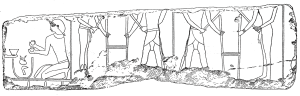
Click here to access the above article on JSTOR (ASOR membership with online access and/or subscription to JSTOR Current Content required).

Pp. 182-190: “Foundation Deposits and Strategies of Place-Making at Tell el-Dab’a/Avaris,” by Miriam Müller

Foundation ceremonies are well known from the Egyptian royal and sacred spheres: They mark the beginning of construction work and ensure the effectiveness and longevity of the building to which they belong. One important component of these ceremonies is the foundation deposit, which is often placed under the corners of a temple or tomb and contain various items. Although foundation deposits are also attested in connection with profane architecture, such as storage buildings belonging to the royal household, they are uncommon in the nonelite sphere. The author discusses the evidence for this practice from a neighborhood of the ancient city of Avaris (Tell el-Dab’a) in the eastern Nile Delta. These finds are evaluated in light of comparative evidence from other parts of Egypt and the Near East. The author concludes that domestic foundation rituals are essentially poorer versions of royal ones, serving to sanctify, protect, commemorate, and elaborate. The evidence for this practice at Tell el-Dab’a furthermore hints at a mixture of Near Eastern and Egyptian elements at the site, opening up a new area of research in Egyptian domestic architecture.
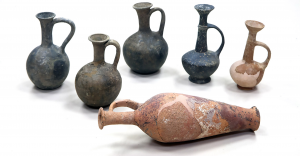
Click here to access the above article on JSTOR (ASOR membership with online access and/or subscription to JSTOR Current Content required).

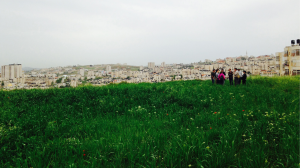
Pp. 191-201: “Residential Burial and Social Memory in the Middle Bronze Age Levant,” by Melissa S. Cradic

Disposal of the dead within occupied buildings of the Middle Bronze Age Levant, or intramural burial, offered inhabitants a way of closely interacting with the physical remains of the deceased. Residential burials provided permanent spatial connections between the living and the dead and served as loci of social memory for the intergenerational household. Drawing on archaeological evidence from Tel Megiddo, this article presents a model for residential burial and social memory focusing on the diversity of body disposal methods. Burials inside the settlement varied significantly in terms of type and architecture, body disposal methods, and grave goods. In several cases, burials were reopened periodically to reposition corpses while others were never disturbed. The author argues that the high degree of diversity within this mortuary corpus relates to differential social roles of the deceased after burial, and that mourners’ close encounters with deceased bodies transformed the status of the dead in a complex and protracted sequence of funerary rituals.
Click here to access the above article on JSTOR (ASOR membership with online access and/or subscription to JSTOR Current Content required).

Pp. 202-211: “Household Rituals and Sacrificial Donkeys: Why Are There So Many Domestic Donkeys Buried in an Early Bronze Age Neighborhood at Tell eṣ-Ṣâfi/Gath?,” by Haskel J. Greenfield, Tina L. Greenfield, Itzhaq Shai, Shira Albaz and Aren M. Maeir

A few years ago, a domestic donkey (Equus asinus), or ass, was discovered at Tell eṣ-Ṣafi/Gath in modern Israel and determined to have been sacrificed and buried as a foundation deposit beneath the floor of an Early Bronze III house. Since then, three additional complete domestic donkey burials have been revealed beneath the floors of another house in the same Early Bronze neighborhood. These animals were buried within a nonelite domestic neighborhood at the edge of the city. The authors suggest that this urban space may have been the location of the homes and work spaces of merchants who relied upon donkeys as “beasts of burden” to transport their goods regionally and interregionally.
Click here to access the above article on JSTOR (ASOR membership with online access and/or subscription to JSTOR Current Content required).

Pp. 212-221: “Materiality of Religion in Judean Households: A Contextual Analysis of Ritual Objects from Iron II Tell en-Naṣbeh,” by Aaron Brody

The author highlights household religion through a direct, contextual presentation of ritual artifacts from one Judean household compound at Tell en-Naṣbeh in their original contexts. The compound is made of five conjoined pillared houses that constitute the living space of one extended family. The author takes a gendered approach to the artifacts, which include female pillar figurines, animal figurines, horse-and-rider figurines, incense stands, and zoomorphic vessels. Ritualized utilitarian objects are also taken into account. This approach to ritual at the site adds to our understanding of the religious culture of women, men, children, families, and households at Naṣbeh. Most notably the author proposes that the concentration of ritual objects near the two kitchen spaces in the compound suggests that the female head of household who provided sustenance for the extended family and its dependents also presided over the religious health of the household.
Click here to access the above article on JSTOR (ASOR membership with online access and/or subscription to JSTOR Current Content required).

[/vc_column_text][mk_divider][vc_column_text]To view the entire issue on JSTOR, click here.[/vc_column_text][/vc_column][vc_column border_color=”rgba(170,170,170,0.01)” width=”1/6″ css=”.vc_custom_1496684098866{margin-right: 5px !important;margin-bottom: 20px !important;border-right-width: 2px !important;border-bottom-width: 2px !important;padding-top: 30px !important;padding-right: 10px !important;padding-left: 10px !important;background-color: #ffffff !important;border-right-color: rgba(227,228,228,0.75) !important;border-bottom-color: rgba(227,228,228,0.75) !important;}”][vc_wp_posts title=”BROWSE THE NEWS ARCHIVE” number=”4″][/vc_column][vc_column border_color=”rgba(170,170,170,0.01)” width=”1/6″ css=”.vc_custom_1496684008271{margin-right: 10px !important;margin-bottom: 30px !important;border-right-width: 2px !important;border-bottom-width: 2px !important;padding-top: 30px !important;padding-right: 20px !important;padding-left: 20px !important;background-color: #ffffff !important;border-right-color: rgba(227,228,228,0.75) !important;border-bottom-color: rgba(227,228,228,0.75) !important;}”][vc_column_text] [/vc_column_text][/vc_column][/vc_row]

Fellowship Report: Paula Waiman-Barak & Sveta Matskevich

IN SEARCH OF A MIDDLE BRONZE AGE HARBOR:
EXCAVATION AT TEL MEVORAKH

Paula Waiman-Barak & Sveta Matskevich, 2017 Shirlee Meyers/G. Ernest Wright Excavation Fellowship Recipients

Tel Mevorakh, first excavation season


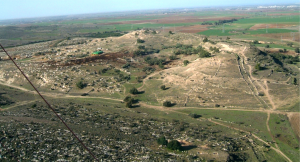
Aerial photo of Tel Mevorakh, Mt. Carmel, the Carmel Coast and the Mediterranean.

Tel Mevorakh is a small mound on the southern bank of Nahal Taninim, 2 km inland from the river’s opening into the Mediterranean Sea along the ancient maritime route between Egypt and the Levantine coastal sites. In antiquity, this area was an estuary where salt marshes—influenced by tidal currents, brackish water from local springs and sweet water from the river—formed a wetland interface between the coast and its hinterland. We believe that during the Middle Bronze Age (MBA) Tel Mevorakh served as an inland port of trade for seafaring Canaanite merchants on the crossroad between maritime and land routes.

The tell was previously excavated by Ephraim Stern of the Hebrew University of Jerusalem. Over four seasons (1973–1976), two excavation areas and one trench revealed a site occupation sequence spanning from the Neolithic to the Byzantine period. Later remains, mostly Crusader and Muslim burials dug into the latest occupation layers, were found in small-scale salvage excavations conducted by the Israel Antiquities Authority (IAA) in 1997 and 2005–2006. Other exposed areas included the presumed “lower town,” located in the lower part of the slope of the tell, unearthed architectural remains dated to the Late Iron Age and the Persian Period.

Since the earliest architectural remains at Mevorakh belong to the Middle Bronze Age, we decided to focus our investigation on this period. During the previous excavation on the tell, MBA remains were found in the lower strata (XIII-XV) in the main areas, as well near the surface in the eastern test trenches. In the main area, a large MBA structure with thickened walls was unearthed (Stratum XIII). Because of the thickened walls of the main building, Stern interpreted it as a garrison. However, adjacent to this structure, Stern described sediments that might be interpreted as characteristic of wetlands. To our minds, this raised the possibility that this structure was built in close proximity to water and therefore required thick walls to withstand the elements of. In the fall of 2017 we opened a small excavation in an attempted to address the question of the ancient environment of the site during the MBA.

On site, it was evident that a new excavation at “Stern’s Garrison” was impossible for safety reasons. We decided instead to reopen the excavation areas on the eastern slope (the easternmost squares of the main area and the “East Cut”), to record the architectural remains and to collect sediments and ceramics for analysis. In addition, for control, we excavated new squares on both sides of this “East Cut.”

The material culture of the site from all periods suggested that there was substantial maritime traffic, and that the economic prosperity of the residents of Tel Mevorakh depended on the interconnections with neighboring communities. However, there were two main interpretations regarding Tel Mevorakh and its place in the settlement history of the area. Stern’s excavations focused on the site and its presumed connections to a terrestrial road network along the Carmel Coast, while Avner Raban, in his 1985 paper on Canaanite harbors suggested that Mevorakh was an inland port on the banks of the Nahal Taninim in an ancient semi-closed marine lagoon.


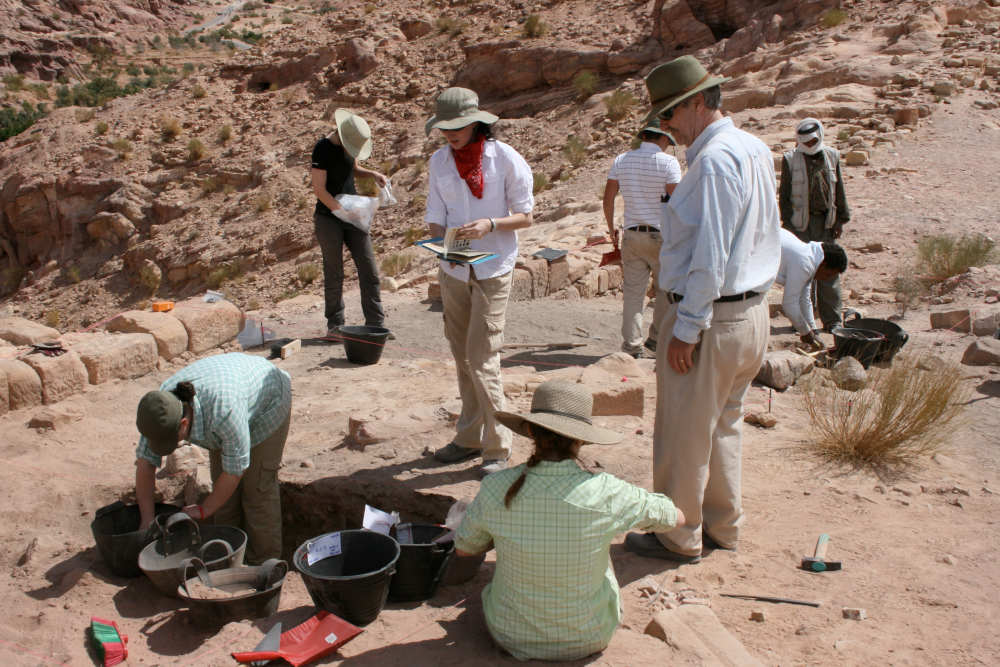
Excavations on the east slope, Fall 2017.

The paleoenvironment of the broader area nearby was researched extensively by geologists via coring. However, those studies were concerned with environments predating the Bronze Age. Therefore, we decided to approach the problem with a different method: to gather sediments from excavated archaeological contexts, and to analyze them using geological techniques with the aim to derive environmental information. The mineralogical and faunal content of associated sediments can provide a reflection of the environment in which they were deposited. Thus, using sediments from mudbricks with a solid archaeological context can potentially provide a well-dated reconstruction of the paleoenvironment.

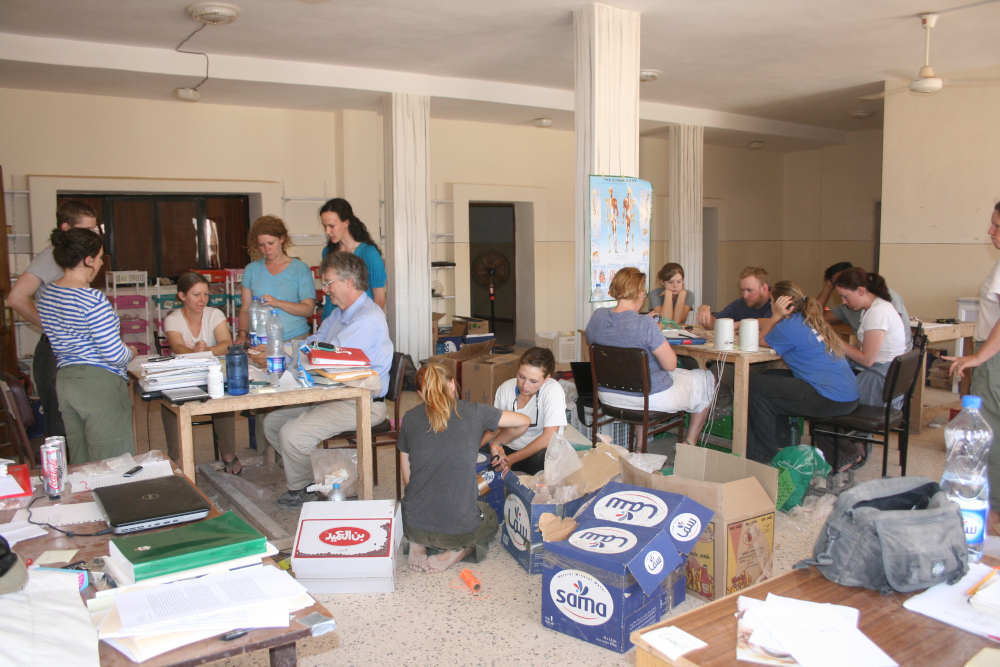
During the inaugural 2017 season at Tel Mevorakh we focused the work on the MBA settlement. For this purpose, we reopened one of the old excavation areas on the eastern slope and started several new squares immediately next to it. According to the 1970’s excavation report on the eastern slope, MBA stratum were the uppermost archaeological layer, and these contained a brick wall and MBA ceramics. In our excavation, we re-exposed the MBA brick wall and found it mostly burnt and collapsed on several MBA Canaanite jars (now on our restoration table). One of the jar fragments had shells of Glycymeris (a saltwater marine bivalve mollusk) attached to it. Glycymeris, as well as other marine shells (e.g., Murex, Egyptian Chambardia) were very common in the excavation. This is consistent with the malacological analyses published in the 1970’s excavation report and suggests a marine connection. Although Glycymeris species no longer exist along the Israeli coast, they were common in the Bronze and Iron Ages and were collected by humans for different usages.

Sediment analysis

We collected several sediment samples from the collapsed brick wall based on the assumption that the materials used for making the mudbricks were harvested near the site. A preliminary analysis of the sediment was done in collaboration with Beverly Goodman-Tchernov. In the mudbricks of the MBA wall we found sediments typical of the coastal area with abundant fauna characteristic of marine and brackish wetlands: marine shell fragments, spines of sea urchins and foraminifera of species highly tolerant to both marine and brackish waters. Additional coring in the immediate surrounding of the site is planned. 

Ceramic analysis


Volunteers from Kibbutz Ma’agan-Michael Field School and Sveta Matskevich.

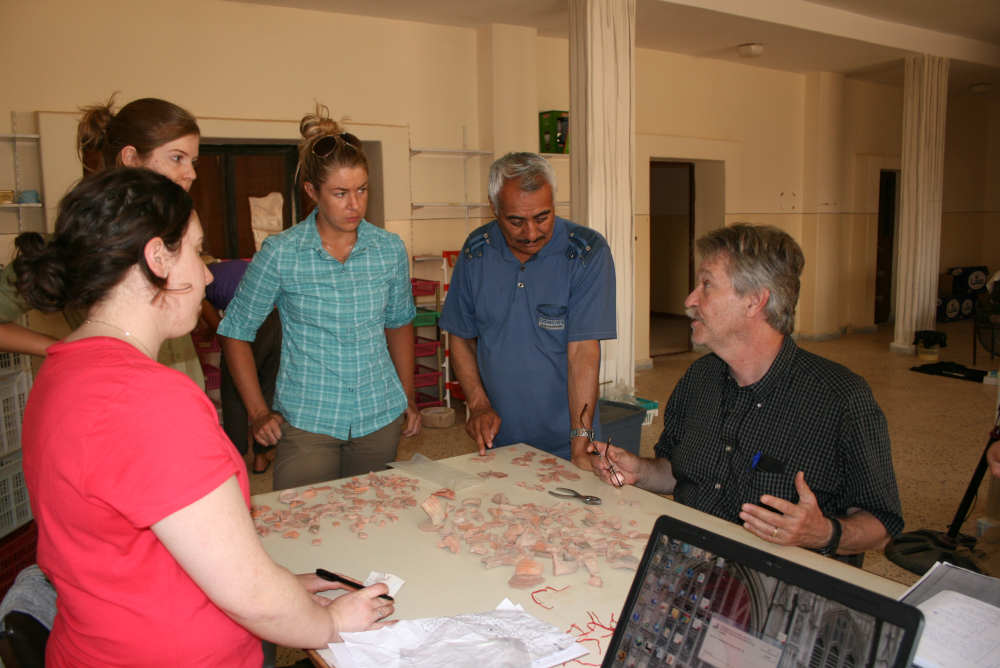
While the study of the sediments in mudbricks is progressing, we apply ceramic petrography to the assemblages of pottery found at our excavation and from the MBA “garrison” published by Stern. Usually, ceramic petrography is used to determine provenance of the artifacts in order to trace commercial interactions. Indeed, we found an abundance of imported pottery from various production centers up and down the Levantine coast, as well as from Egypt and Cyprus. The same method allows us to characterize the clays available in the vicinity o the site, which will give us additional information about the environment of the site during the MBA.

Prior to our excavation, we conducted petrographic examination of the ceramic assemblages from the MBA “garrison” published by Stern. We found an abundance of imported pottery from various production centers up and down the Levantine coast, as well as from Egypt and Cyprus. The ceramic petrography of the local pottery shows a similar sedimentological fingerprint as in the mudbricks, although the mudbricks exhibit a higher ratio of clay minerals and are not fired. The fabric of the ceramics also contains minerals formed in saltwater environments, such as gypsum and glauconite, so far unidentified in the mudbricks.

The ceramics of the 2017 excavation are currently being drawn using the 3D camera scanner and associated computerized morphological analysis at the Computerized Archaeology Laboratory at the Hebrew University of Jerusalem.

A community venture


Ceramic petrography on ceramics from the 1970’s excavation: a jar imported from the Syrian Coast.

The question of the local ecosystem before human activities and before human intervention is very relevant for modern conservation and development plans of the area. The communities in nearby Kibbutz Ma’agan-Michael and Moshav Beit-Hanania embraced this expedition and joined as volunteers. We opened the excavation to families during the Sukkot holiday and the children of the area participated in all activities. This proved to be a very valuable learning experience for all who participated.

Summary and future investigation

The ancient environment at Tel Mevorakh has long been the subject of academic interest. In applying methods from different fields, we are exploring questions regarding the site’s function at the crossroad of land and sea trade routes. This will contribute to the understanding of the role of Tel Mevorakh along land and sea systems, and its connection to the immediate hinterland.

The analysis of the paleoenvironment based on well-dated archaeological remains, both on sediments, architecture and ceramics is a new, innovative approach. Hopefully this research leads to the formation of specific methodological tools and criteria to help in the identification of marine, wetland and riverine harbors in the Bronze Age―an identification so far elusive in the archaeological record.

Facebook Page

Presentation at ASOR 2017

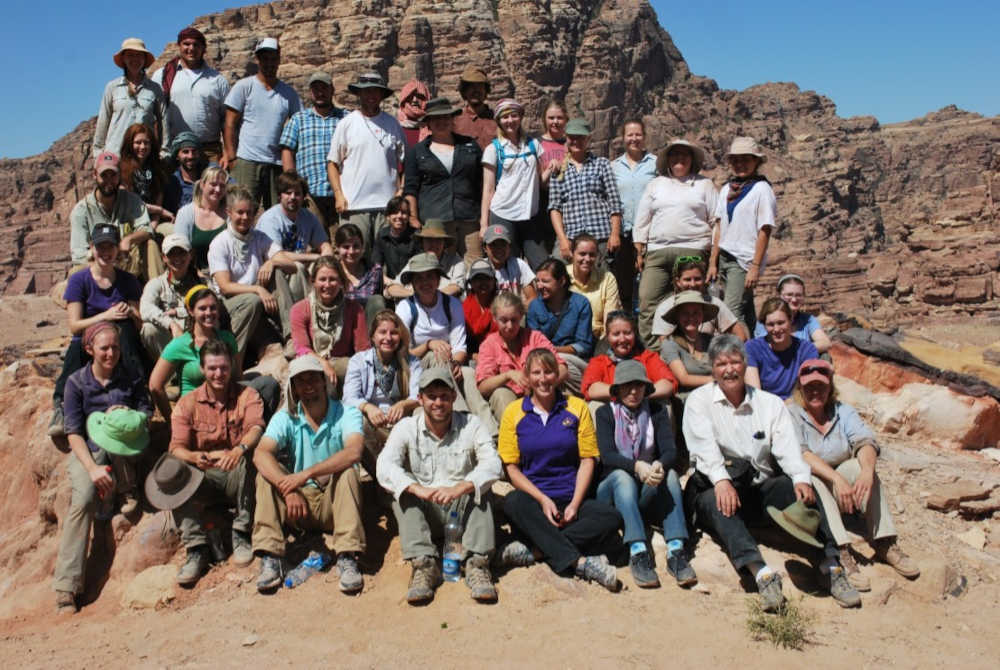
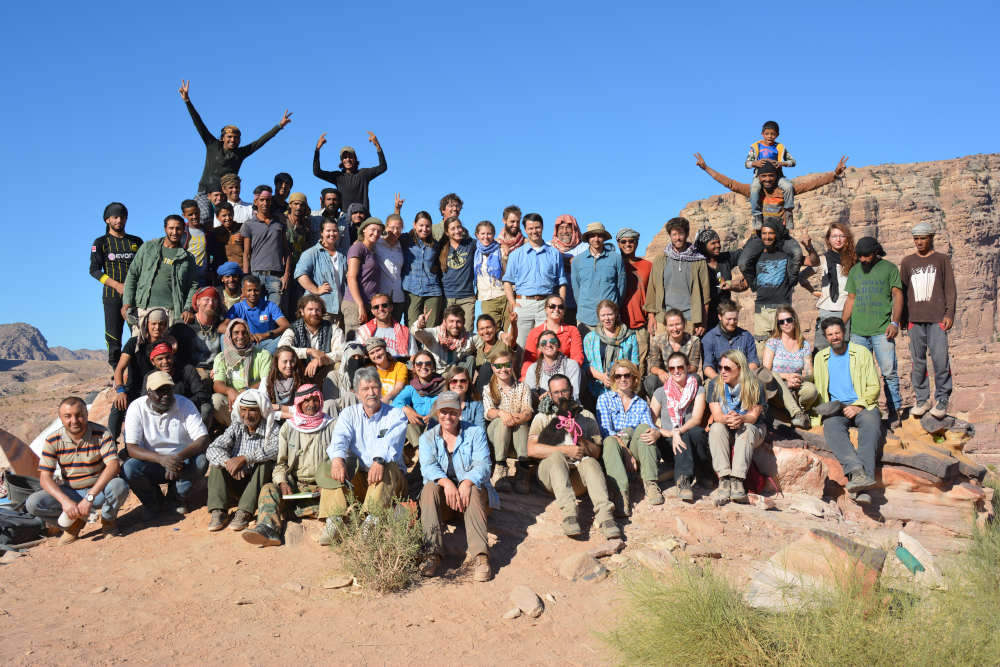
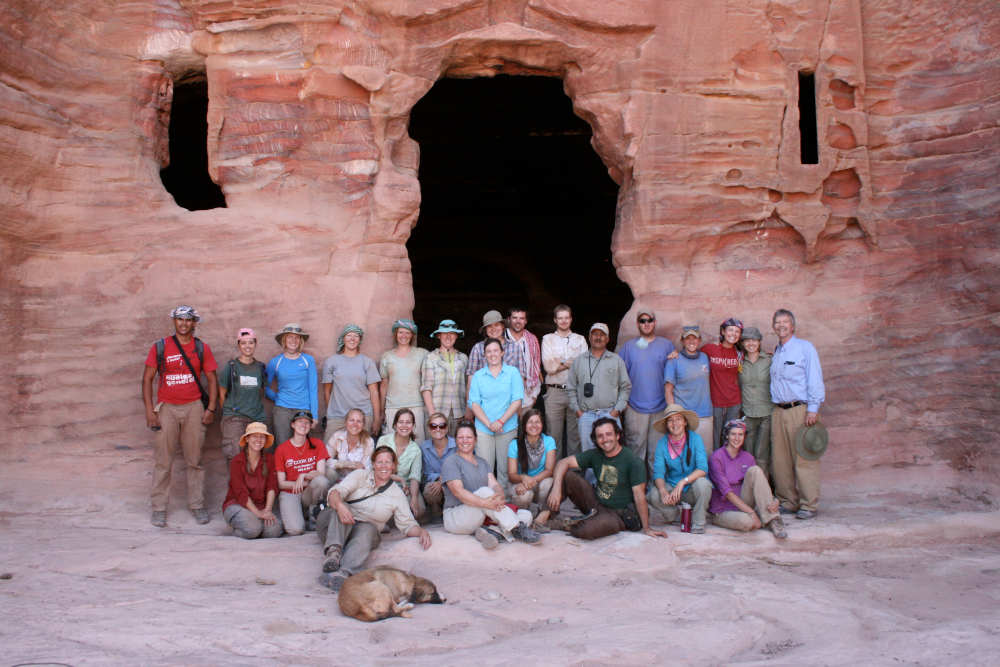
2017 Tel Mevorahk excavation team

S. Thomas Parker Remembrances

IN MEMORIAM:
S. THOMAS PARKER‎ (1950 – 2021)

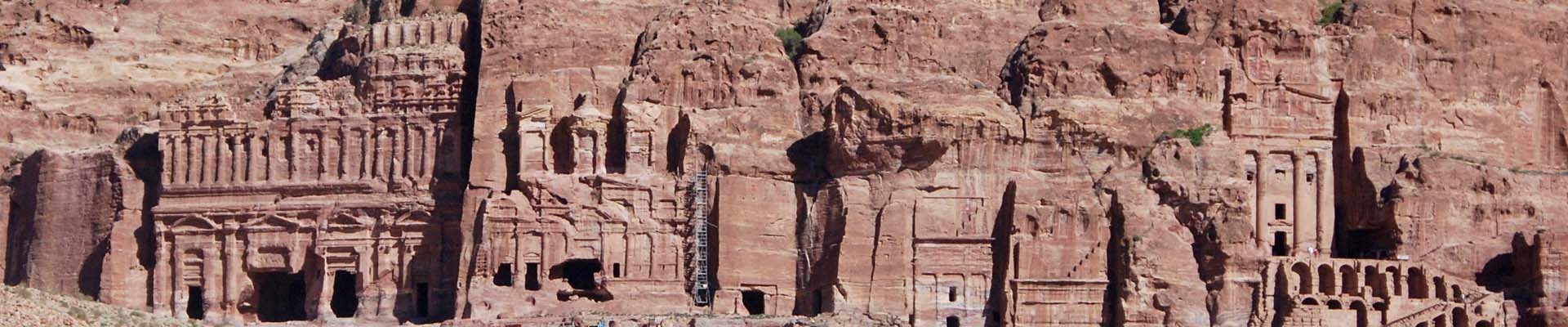
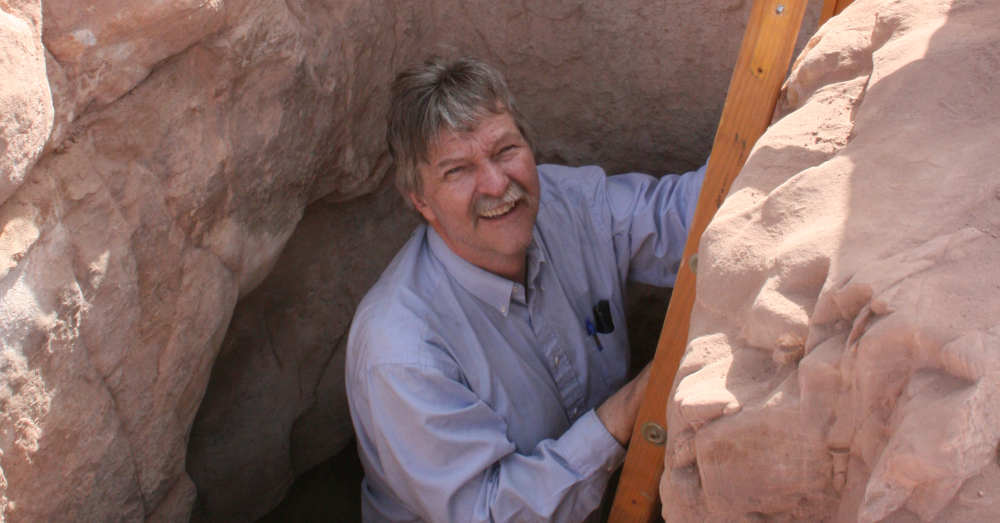
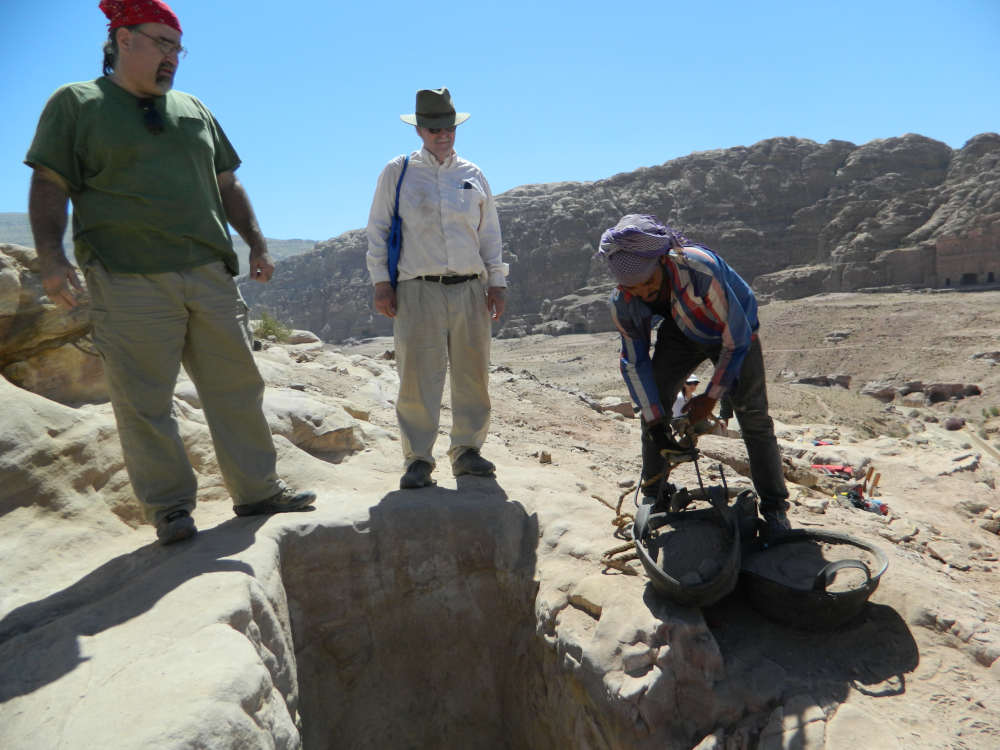
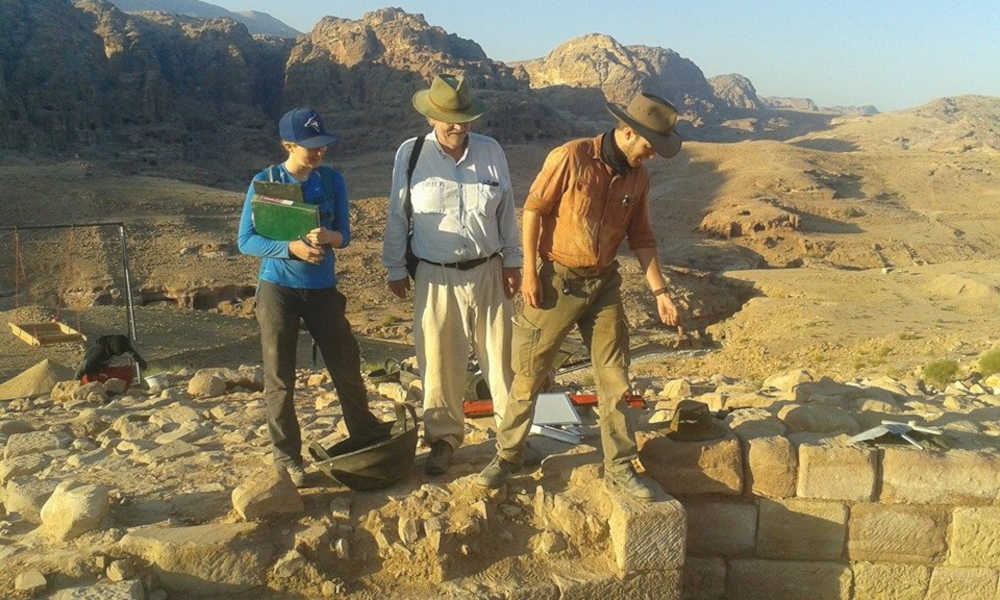
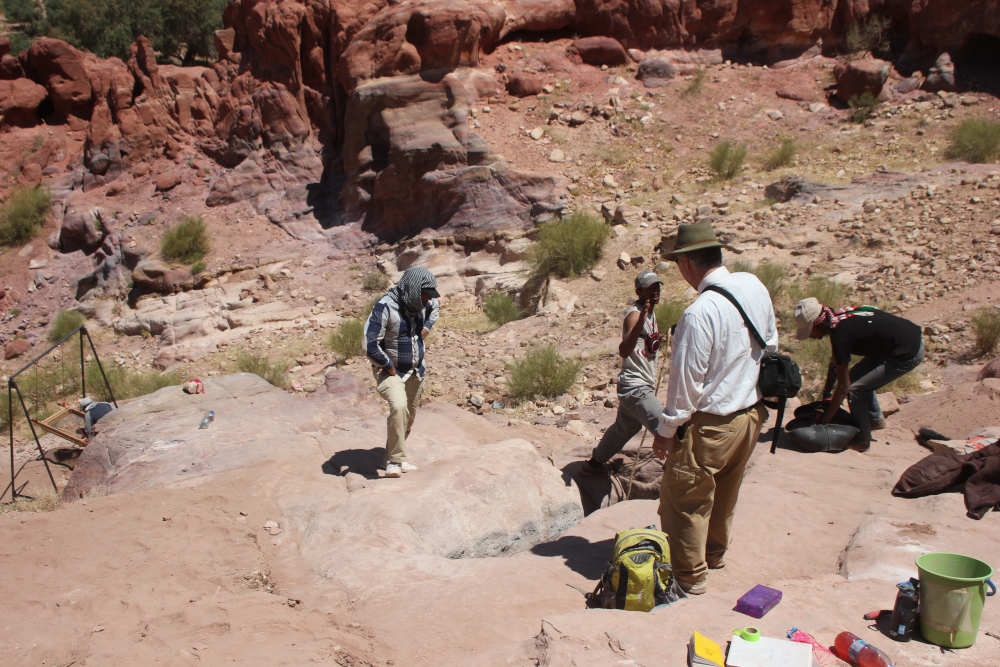
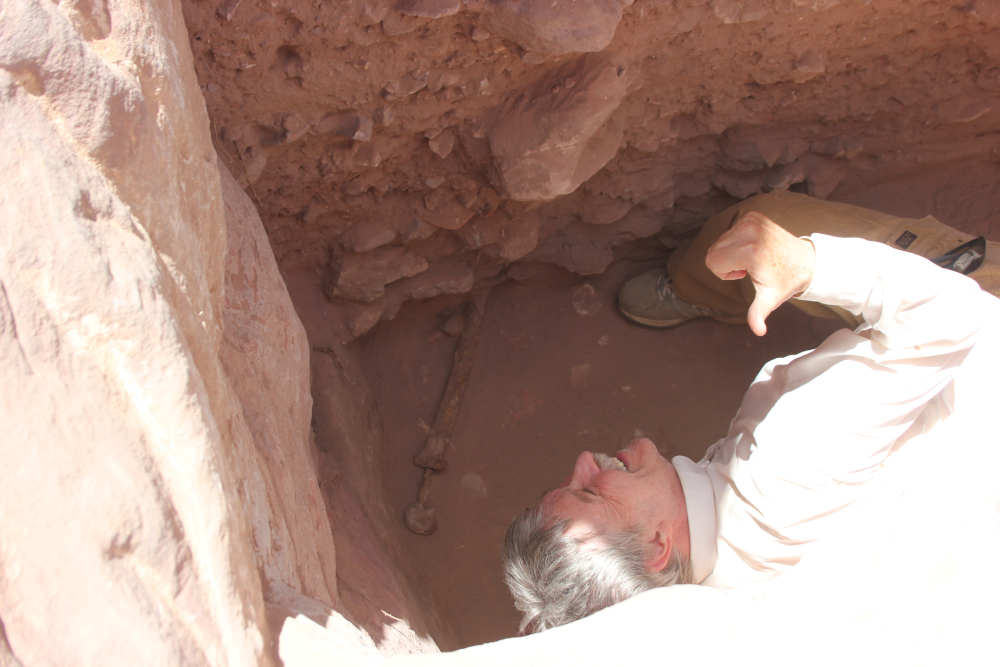
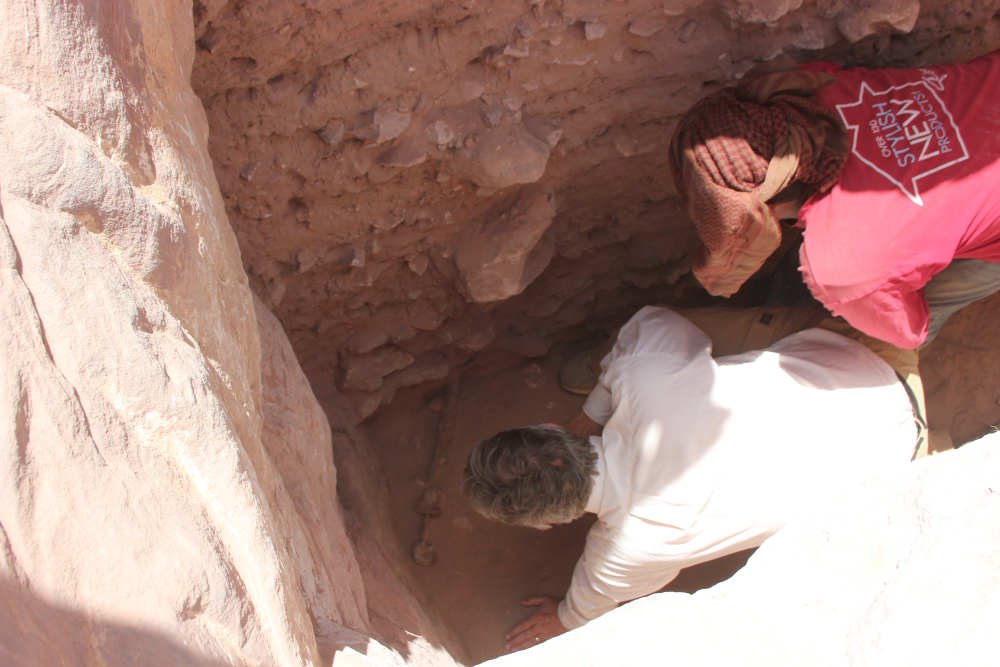
Tom emerging from a Petra North Ridge tomb during the 2012 season. (Photograph by Jennifer Ramsay)

ASOR mourns the passing of long-time member, S. Thomas Parker (1950-2021), who passed away at Duke Hospital in Durham, NC after a brief illness on September 12, at age 71. We share our condolences with Tom’s wife and daughter (Mary Mattocks and Grace Parker), and his siblings.

While we will miss Tom dearly, we remember and celebrate his life and many accomplishments. We have included two remembrances below: a detailed and complete remembrance by Megan Perry, and an additional remembrance by Jeffrey Blakely with additional comments from others.

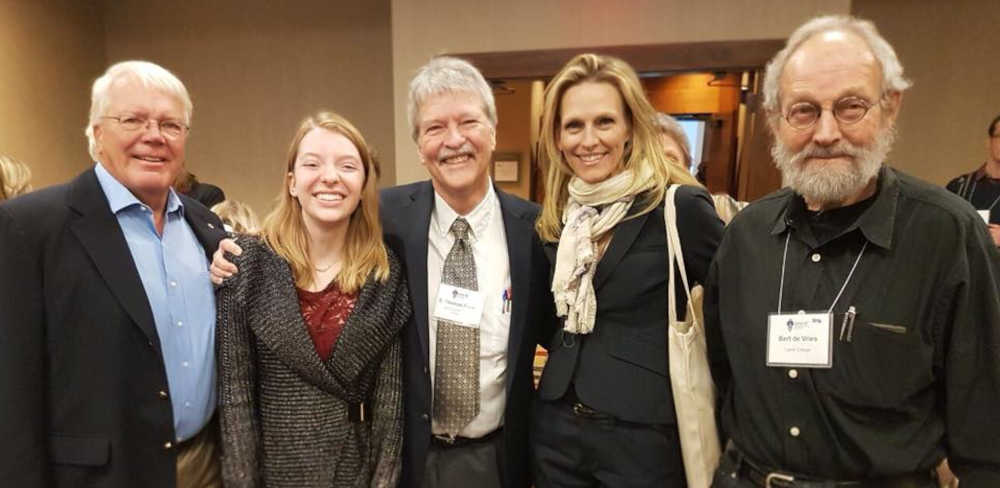
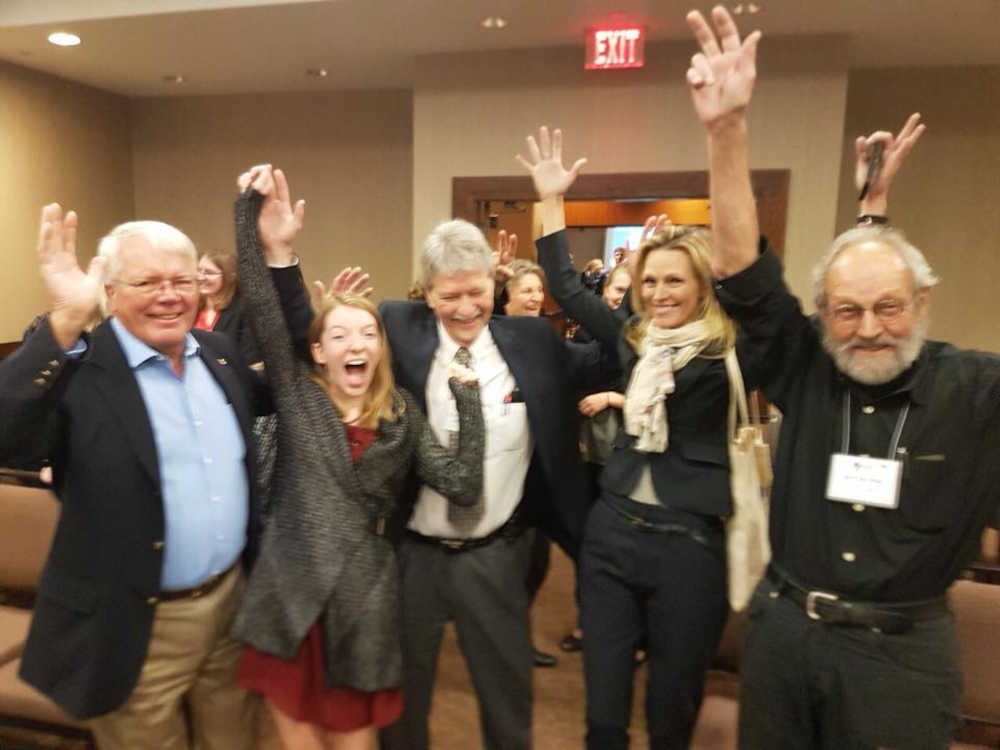
John Oleson, Grace Parker, Tom, Jenna Morton, and Bert deVries after Tom’s Festscrhift session at the 2017 ASOR meeting. (Photograph by Megan Perry)

In Memoriam: S. Thomas Parker (1950 – 2021)

Megan Perry, Professor of Biological Anthropology, East Carolina University

Thomas (Tom) Parker, well-known archaeologist of Roman Jordan and longtime ASOR supporter, passed away suddenly on September 12, 2021. Tom spent most of his childhood in the Chicago area and graduated with his bachelor’s degree in history and religion from Trinity University in 1972. He went on to doctoral studies in history at the University of California, Los Angeles, completing his dissertation in 1979 on his survey of Roman and Byzantine fortifications along the limes Arabicus in Jordan. He joined the History faculty at North Carolina State University in 1980, where he remained throughout his academic career. Tom had almost 50 years of archaeological experience in Jordan, Israel, and Cyprus, having excavated at Tell el-Hesi, Ashkelon, Idalion, Tell Hesban, and the Petra Household Excavations before directing his own field projects. The Tell el-Hesi excavation was a seminal moment for Tom, who not only met many future fellow archaeologists but also began intensively studying ceramic typology that would serve as a major focus for the rest of his career.

Tom directed or co-directed three multi-season excavation projects in Jordan: the Limes Arabicus Project, which expanded his PhD survey to include excavation the legionary fortress of Leijjun, the Roman Aqaba Project, recovering evidence of Nabataean, Roman, and Byzantine Aila, and the Petra North Ridge Project, which I co-directed with Tom. He served as the ceramics specialist on all of his projects, but always with the goal of mentoring students or younger scholars in the field and in the laboratory. His kindness and patience fostered many budding scholars, and he always, always “knew what was best” for them. While many of his students eventually developed careers outside of history and archaeology, their experiences and his unwavering support and pride in their accomplishments profoundly shaped their lives. In turn, many of these former students contributed to a Festscrhift in his honor, published in 2017.

I first met Tom in 1993, when he visited Tell Nimrin to, among other things, meet me as that year’s Groot fellowship recipient. Tom helped established this ACOR fellowship in honor of his dear friend and Leijjun staff member, Jennifer Groot, who sadly died in 1987 at only 36 years of age. Creating this fellowship, which serves to support first-time excavators in Jordan, exemplifies not only Tom’s generosity but also his role as a mentor to young archaeologists. In the weeks since his death, many archaeologists in the region have commented on his support of beginning and even seasoned scholars. Suzanne Richard, director of the Khirbet Iskander project, recalls, “…as a field supervisor at el-Lejjun, I was so impressed with Tom’s expertise in the field, good leadership skills, calm dealings with staff and students, yet he was always vibrant, jolly, and personable.” Tim Harrison, former ASOR director “will always remember the interest he took in what I was doing … His interest and attention, coming from a senior colleague, was a real encouragement…” Monique Roddy, co-director of the Balu’a Regional Archaeological Project, remarks that “Tom was a wonderful mentoring archaeologist, even for those of us who were never his students!”

Tom faithfully supported ACOR and ASOR throughout his career. He served on ACOR’s board since 1987 and had been Second Vice President of the board from 2002 until his death. He also was an ASOR Trustee from 1989-1992 and served on ASOR’s Committee on Archaeological Policy (1986-1987) and on the Editorial Board of BASOR (1995-1998). Tom was someone always “a great person to have on an ASOR Committee,” according to Tom Levy. I first attended the ASOR Annual Meeting in 1995, and I don’t recall a year since then without Tom’s presence at the conference. Deb Foran, director of the Khirbet al-Mukhayyat Project, commented that this is where he will most be missed, for he “always sat in the front row, listened attentively, and asked insightful questions, no matter how senior or junior the speaker was.” This was often preceded by “his characteristic head turn and raise of the hand” once the Q&A period started, followed by “the gentle laughter because everyone knew he was going to have [a question] ready,” recalls his former student Tiffany Key.

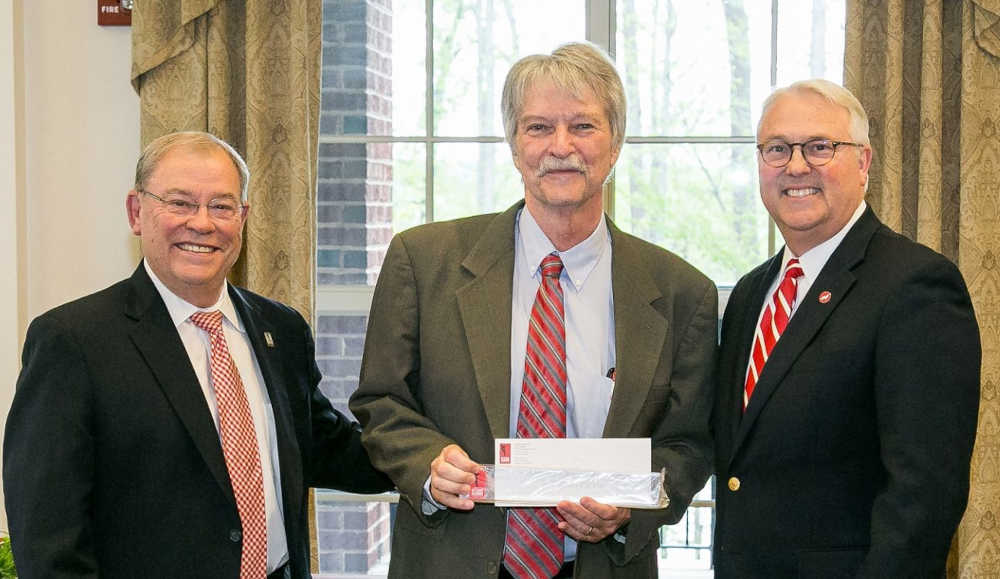
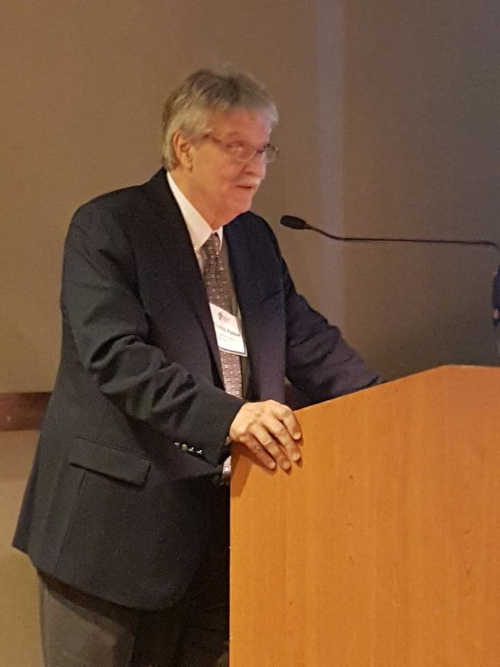
Tom receiving the NC State’s Alumni Association Outstanding Faculty Research Award in 2017. (Photograph by NC State)

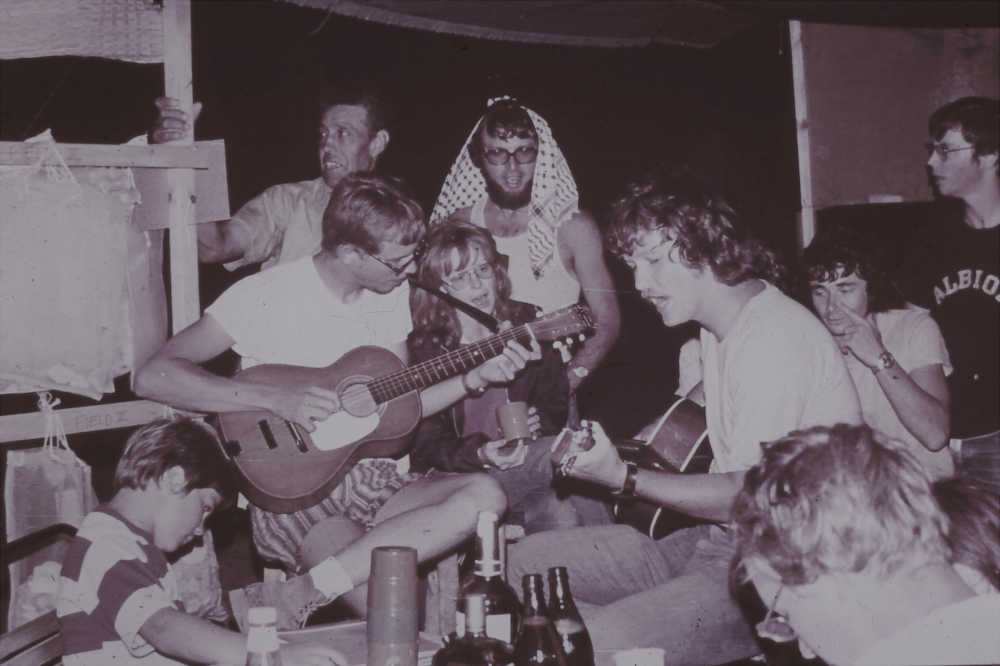
Tom will be remembered for his warmth, his conviviality, his support, his mentorship, his friendship, his scholarship, his collaborations, his laughter, and of course, his singing and guitar playing. You know wherever he is, he’s encouraging those around him to join in: “On a dark desert highway, cool wind in my hair…”

Tom is survived by his wife, Mary Mattocks, and their beloved daughter Grace Parker.

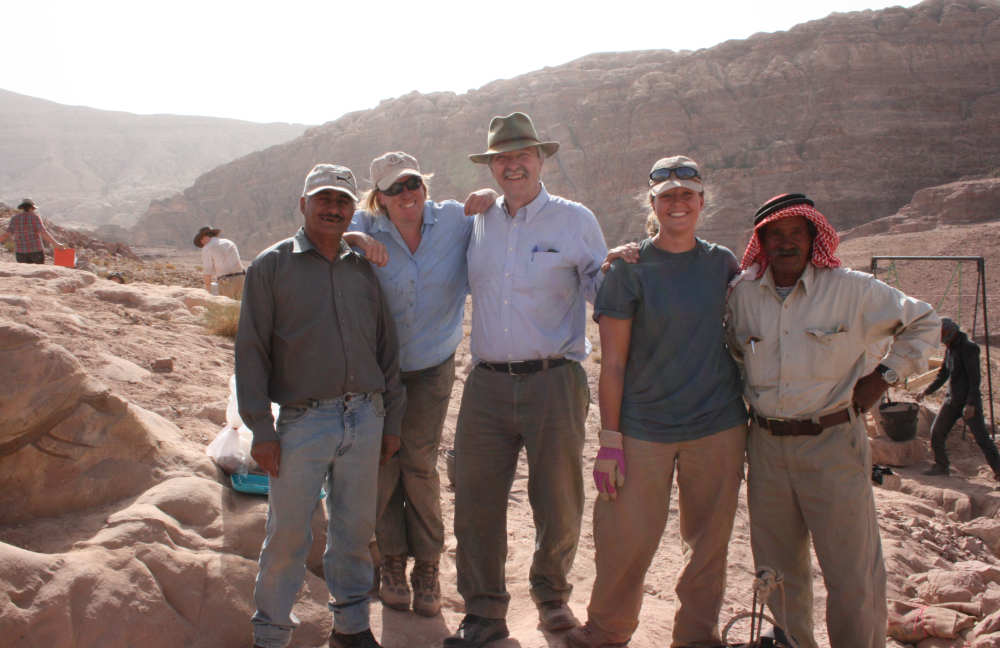
Tom entertaining his fellow Hesi crew. (Photograph by Jeff Blakely)

In Memoriam: S. Thomas Parker (1950 – 2021)

Jeffrey A. Blakely, University of Wisconsin-Madison

Tom and I were friends for just over 50 years, not close friends but good friends who shared a formative experience. In our field, half a century is simply a rounding error, but to friends it is much of our individual lifespans. The day we truly met is as clear to me as yesterday since it was the start of a life altering experience.

Tom and I each decided to participate in the archaeological field school at Tell el-Hesi in the summer of 1971. Soon after the end of the spring semester in early June 1971 we each made our way to the charter flight terminal at Kennedy Airport and boarded a Capital Airways flight for Le Bourget Airport in Paris. A bus tour of Paris and a night in a hotel saw us at Orly the next morning for a flight to Tel Aviv. It was dark when we arrived, boarding busses to our hotels in Jerusalem. After three days of orientation and extensive walking tours of the Holy City we got up and boarded the chartered busses for Hesi. We almost made it, but the drivers refused to cross a wadi so we had to shlep all of our luggage about a half a mile to Hesi’s new tent village. After finding our tents and throwing our luggage in we had to line up for work details since the camp was still a “work in progress.” Sue, the camp manager (and Larry Stager’s wife), “randomly” assigned jobs. Somehow if you were a large or muscular male you were put into one group, twelve guys. I happened to be standing next to Tom and we were paired as a work team. The new camp had not yet dug its outhouses. So we were taken down to six 1.5 x 1.5 meter probes outlined in string and told to keep straight sides and to go down 2.00 meters with picks and hoes. Yella, yella in case they were needed! So at precisely the same time Tom and I began our archaeological experience, digging a modern s****er. We had a number of hours in the hot sun to get to know each other, he from Trinity and me from Oberlin, he just having finished his Junior year and me my Freshman year. He was in history and looking at a potential career in archaeology. I was looking for a once in a lifetime experience. When we reached 2.00m one of the staff came over and noted that our balks were rather overcut … but don’t dare undercut them lest someone sitting on the throne experience a sad and memorable plunge. Once they were straight Larry Toombs hopped in and checked our balks. Below 50 cm of debris/wash we had gone through nothing but loess … no EB city here. Tom and I were friends from that point.

At Camp Hesi the chore details were daily experiences. Soon the botanist had me sorting things and others were pulled off for other recurring duties, but a core four remained unassigned, “Pope, Parker, Woodruff, and Zipris.” Somehow “randomly” Camp Manager Sue always assigned them to the crappiest jobs every day. It became a running joke around camp. In later years when Tom told the story he tended to exaggerate a bit, to wit: “the urinal is filthy, oh, we have no brushes so lick it clean”, or “the outhouses are mounding in the middle, so jump in and push the pile to the sides as you distribute the lime”, or, “I can’t think of a task so dig a big hole and then refill it.” Tom certainly got the short end here, but it was not quite as extreme as his story. Good story, though!

In 1971 Tom was assigned to a square in Field III, while I was in Field I. We both learned a lot and at the end of the season we headed back to college. By 1973 Tom was in Grad school in History and Archaeology at UCLA and I was a Junior at Oberlin. He had successfully applied to be an Area Supervisor while I had wanted to come back and dig again, but I received a field promotion so I, too, became an Area Supervisor. Tom remained in Field III digging the Iron Age fortification system and I remained in Field I digging Persian-Period pits and floors, both in 1973 and 1975. We learned how to dig and how to supervise. It served us well. Tom was also the co-writer and lead performer of the classic Hesi song “Big Mama Sift Some More” and the “permanent” host of the end of the dig parties. By 1977 he was doing his own research in Jordan. But, forever, he was a Hesi-ite at heart. He always came to the Hesi sessions at ASOR and he always would find time to sit and talk with me. His advice was always thoughtful and valued. He was a true friend of mine and of the project.

In 1996 my family and I were to spend a year in Jerusalem, and I came over early to set up school and other things for our son. In advance of this I contacted Tom. We had been friends for 25 years and in the summer of 1996 I was not doing my own research. So, I asked, can I pay my own way and come and simply dig and once again experience what drew me to the field? Tom was the only person I would ever want to work with in such a way … afterall, we were the only Hesi-ites running projects. Tom said, sure, but wouldn’t I rather supervise? No, no responsibilities, let me relive the joys of fieldwork again. Okay.

In late May 1996 after a day in the hot sun crossing the border from Elat to Aqaba I arrived at the project headquarters and I found the proper floor. I saw Tom down the hall and he motioned to me to come and talk in his room as soon as I dropped my bags in my room. I joined him and he had a grim face and he told me he had a big problem. One of his supervisors cancelled at the last minute and even though we had agreed I was to be a digger, could I supervise instead? Damn, I said sure I can do an Area, on a dig you do what is needed. But then he said, “No, you misunderstand” … it was one of the Field Supervisors and I would be overseeing six Areas; remember you just said you do what is needed. Somehow I think I fell into a well orchestrated plan, and a few years later when I actually asked if that was the case, all I got was a typical Tom Parker smile and a helpless shrug. I will always see that smile and shrug when I think of Tom.

Jeff Blakely

Comments in Remembrance of Tom Parker

“I will always remember the interest he took in what I was doing, even if it involved cultural periods much earlier than his own research focus… His interest and attention, coming from a senior colleague, was a real encouragement, and modelled a wonderful collegiality that continued over many years.” – Tim Harrison


“Even in 1980, as a field supervisor at el-Lejjun, I was so impressed with Tom’s expertise in the field, good leaderships skills, calm dealings with staff and students, yet he was always vibrant, jolly, and personable.  He became a leader in the field but was still the same wonderful Tom.” – Suzanne Richard


“From the first time we met and worked together (1976 at Tall Hisban), I could see in him a rising star in the field. From my point of view, his star has set much too soon. We will miss him.” – Doug Clark


“The study of the archaeology of Jordan and the Roman Near East will not be the same without Tom Parker, nor will ACOR. Those of us in the field have lost such a warm, gregarious, vivacious, and endlessly supportive colleague.” – Elise Friedland


“Tom was the first ‘real’ archeologist that I met in Jordan (35 years ago) – he was so unpretentious, humble, full of humor – in one word: a ‘Kumpel’! – and yet: a world class scholar.” – Friedbert Ninow


“Thomas Parker was to me Sir Thomas Parker, a world-class scholar, an enthusiastic and charismatic field archaeologist, a great teacher and mentor, and a loyal and most enjoyable companion, fellow camper and friend… His scholarly achievements as an archaeologist of the Roman Frontier in the Southern Levant will be re-visited over and over again by future generations for decades to come.” – Øystein LaBianca


“Working in Jordan will never be the same without them both [Tom and Bert deVries, who passed away in March of this year]. We will miss their presence at every ASOR Conference and at every group meal at ACOR. They were both such amazing mentors and willing to help scholars of all ages and backgrounds. God grant comfort to Tom’s family and may his legacy live on in every young scholar and colleague that we each can assist and encourage just like Tom did.” – Cynthia Finlayson


“From my first interaction with Tom in the late 1980’s I was thankful of his presence, his humanity and his love of archaeology.  Really, this is a major loss.” – Ian Kuijt


“Tom was the friendliest, most supportive colleague, and a great mentor. We will all miss him.” – Jonathan Ferguson


“Tom and I cross over more than 4 decades as active members of the Jordanian archaeological community, our mutual interest in Roman Frontier Studies, and our excavations at Petra.  A great personal loss for me and for everyone. The epitome of an ambassador for our profession.” – David Graf


“I’ll never forget when we gave him his start in Jordanian archaeology as a field supervisor at Hisban in 1974…. For the last fifty years he’s been at the forefront of Jordanian archaeology and has touched the lives for good of all of us.” – Larry Geraty


“This is indeed a tremendous loss for us all. My deepest sympathies to his family. I will miss him greatly.” – Lisa Maher


“Tom was the biggest advocate of junior archaeologists and always had a smile on his face. He will be missed.” – Leigh-Ann Bedal


“A tremendous loss to his family, his friends, his students, and to archaeology in Jordan. It’s difficult to imagine Jordan without the presence and contributions of Tom Parker.” – Gary Rollefson


“He was such a nice person and a good scholar… It is difficult to think on works and not having him somwehere in the back as advisor and friendly colleague.” – Robert Wenning


“Tom, a gentleman and collaborator in support of ACOR’s vision, supported the institution by serving on many of the board’s committees, and always calmly responded to its challenges. Tom also nurtured camaraderie with everyone he met. Always thoughtful and encouraging. Tom threw great parties. Tom’s scholarship was impeccable.” – Martha Joukowsky via her daughter Nina Köprülü


“The flood of recollections and condolences reflect the place Tom held in the ASOR/ACOR community.  STP was one of a kind, and we’ve suffered a great loss at many levels.” – Jerry & Pam Mattingly


“Everyone who knew Tom will miss him. He was a great scholar and a friend of many Jordanians. May his soul Rest In Peace.” – Moawiyah Ibrahim


“…he was a friend and colleague going back to 1975 when we first went to Jordan, and one of my daughters was a member on his digs…a strong supporter of ACOR both in his financial support and the time and effort he put into the fellowship program. We will miss him significantly and condolences to his family.” – Randy Old


“Tom was such a kind, funny, and supportive figure, and I have long admired his dedication to good and careful scholarship, his encouragement to younger scholars, and his commitment to Jordan.  I’m grateful that I had the chance to get to know him.” – Björn Anderson


“Tom was a unique individual, a good friend to just about everyone he met, and he leaves a big gap in all sorts of places, most of all in our hearts.” – John Oleson


“It is a big loss to ACOR and to the field in Jordan. I also feel lucky to have got to know him over the 4+ years I have been on the ACOR board and I am grateful for that.” – David Nichols


“Tom was not only a wonderful mentor and colleague but also a true friend, working in Jordan and attending ASOR meetings will not be the same. I count myself lucky to have had the opportunity to have learned from him and worked with him in the field. He will be truly missed by everyone who knew him and my heart goes out to his family.” – Jennifer Ramsay


“In our years at ACOR, Tom was very helpful to us in many ways. His work on the fellowship committee always led to ACOR having interesting and committed scholars. Tom was also a good colleague, ever generous with his expertise. We will miss him.” – Pierre and Patricia Bikai


“Tom Parker was a special person, and not just an amazing scholar, teacher, and leader. I will always be grateful for the ways that he supported me in my work and encouraged me a person. Neither ACOR nor ASOR would be the strong organizations that they are today without him..” – Andy Vaughn

Image Gallery

An ACOR Fellowship – the “S. Thomas Parker ACOR Memorial Fellowship” – is being established in Tom’s memory. The link below will direct you to his page. This fellowship will support students participating on archaeological projects and doing research in Jordan, continuing the tradition of mentorship so important to Tom.

https://acorjordan.org/contributions-in-honor-of-s-thomas-parker/

Fellowship Report: Sara Soltani

FIVE THINGS YOU BRING HOME FROM AN ARCHAEOLOGICAL EXCAVATION

Sara Soltani, 2017, P.E. MacAllister Heritage Fellowship Recipient

Archaeology, known as one of the world’s dirtiest jobs, can also be one of the most rewarding. From participating in the discoveries that redefine history, to the wonderful experiences that excavations bring, it can truly be an experience that will stay with you for a lifetime. After the excavation ends though, what do you bring home other than photos, souvenirs, and memories? For those who are considering participating in an archaeological excavation, or those who are curious about what you gain from an excavation during the three to six-week period, let me share what I’ve learned.


From left to right; Noelle Purcell, Rebecca Larson, and Sara Soltani pose for a group photo after wet sieving. (All photos courtesy of Eric Cline)

When you arrive at your accommodations, you are placed in a room that you share with around one to three other people. Excavations begin at 5 a.m. sharp and continue until you head back for the day at around 1 p.m. for lunch. Upon arriving at the site, you are placed into a locus, or a specific area of excavation, with other participants. Before long, you may become very close with these participants, until they are no longer just fellow participants, but also friends. You all will work through the heat, sweat, and dirt during long and hot days towards a common goal, which creates a real and close friendship.


    1. Friendship

From left to right; Analee Nelson and Sara Soltani section a test trench.

Whether or not you study Archaeology, Anthropology, or History, new friendships and connections gained from an archaeological excavation are something you can maintain after the excavation season is complete. For all anthropology-related majors, excavations are a great place to meet new colleagues who will benefit you personally, as well as professionally. Besides the determination and commitment of the staff and participants at the site, nothing would get done without teamwork. Teamwork is the most important factor in making sure that any excavation season is a success. Because of this teamwork, in my experience, relationships formed at an excavation are often some of the strongest and last the longest. Something about a mutual understanding of hard work towards a common goal among all the excavation members compels us to rely on one another and work as a team for the duration of the dig, and that creates a lasting bond.

  1. Multitasking skills

It isn’t possible to be productive in an excavation without learning to multitask. You might think, ‘why would I possibly need to multitask?’ While digging that trench, have you thought about where your dig partners are while you excavate with a 10-lb pickaxe? They might not hear it coming. Are you looking for ceramics, bone, flint, shell, and metal while scooping up the dirt? Sometimes juggling the day-to-day tasks of a field archaeologist can be underappreciated until you experience them for yourself. After the season, you are able to return home with new skills that can be applied to both your career and your personal life. I’ve learned that one of the most beneficial results of this is the ability to manage deadlines while maintaining an active social life.

    1. Fitness

Sara Soltani is collecting the soil for disposal while looking for artifacts.

The hours are long, and the work is intense, but excavations really are as rewarding as they sound. Who wouldn’t love to find artifacts in the ground that haven’t been seen or touched by another human being for thousands of years? Who wouldn’t love to touch a piece of history with their bare hands and see it through its discovery, cleaning, and cataloguing, all while building muscle? Eight-hour excavation days might sound difficult, but you get to work out doing something you love, and reap the benefits. This is obtained by a combination of healthy meals, digging, and a stable support network—you’re all in this together!

    1. Coordination

Sectioning. Something every archaeologist knows all too well. How straight can you make your dirt wall? Are you a coordinated person? If you are, your OCD will thank you for it. Properly hacking at a dirt wall takes some practice, but you can always admire your work in the professional excavation photos. Where are your tools? Making a mental map of the location of each tool and loci will prevent injury and make for a speedier excavation day. Guaranteed, your navigation experience will improve as you learn to understand the layout of not only the site, but also of the ancient buildings you’re excavating. Each of these new skills might even improve your categorization of your possessions at home, and help in navigating yourself around new places, in addition to the obvious benefits to your hand-eye coordination.

    1. Personal growth

Sara Soltani is picking for bone, flint, shell, and metal.

Excavations teach you a great deal about personal responsibility. This is not just in dealing with the objects, but also in dealing with yourself and those around you. Character building is one of the best qualities an excavation can offer. During the excavation season, no matter how long you stay, you obtain a sense of community, gain leadership skills, and come away with a greater knowledge of both the site and of yourself. So, before you turn down the idea of an excavation, know that no matter what your age or professional experience, every archaeological excavation teaches you something different. Every archaeological excavation is a chance to gain professional and personal experiences that stay with you for a lifetime.

Sara Soltani is a senior studying archaeology at The George Washington University. She excavated at Tel Kabri, located in the western Galilee region of northern Israel, with The George Washington University for three weeks. During that time, she was in charge of managing the wet sieving, bone picking, and cataloguing collected samples, in addition to digging.

Nominations Sought for ASOR Trustees

[vc_row fullwidth=”true” attached=”true” css=”.vc_custom_1496247803139{padding-top: 0px !important;padding-right: 0px !important;padding-bottom: 0px !important;padding-left: 0px !important;}”][vc_column][mk_image src=”http://www.asor.org/wp-content/uploads/2018/04/sepphoris-view-banner-for-post.jpg” image_width=”1920″ image_height=”400″ hover=”false” margin_bottom=”0″][/vc_column][/vc_row][vc_row fullwidth=”true” css=”.vc_custom_1496682730308{padding-top: 10px !important;padding-right: 0px !important;padding-bottom: 0px !important;padding-left: 0px !important;}”][vc_column width=”1/12″ css=”.vc_custom_1496683820796{margin-right: 10px !important;}” offset=”vc_hidden-md vc_hidden-sm vc_hidden-xs”][vc_column_text]

 SHARE

[/vc_column_text][mk_image src=”http://www.asortest.org/wp-content/uploads/2017/01/social-fb-icon4.jpg” image_width=”42″ image_height=”42″ hover=”false” custom_url=”https://www.facebook.com/ASOResearch/” margin_bottom=”0″][mk_image src=”http://www.asortest.org/wp-content/uploads/2017/01/social-tw-icon4.jpg” image_width=”42″ image_height=”42″ hover=”false” custom_url=”https://twitter.com/ASOResearch?ref_src=twsrc%5Egoogle%7Ctwcamp%5Eserp%7Ctwgr%5Eauthor” margin_bottom=”0″][mk_image src=”http://www.asortest.org/wp-content/uploads/2017/01/social-in-icon4.jpg” image_width=”42″ image_height=”42″ hover=”false” custom_url=”https://www.linkedin.com/company/american-schools-of-oriental-research” margin_bottom=”0″][mk_image src=”http://www.asortest.org/wp-content/uploads/2017/01/social-ml-icon_7.jpg” image_width=”42″ image_height=”42″ hover=”false” custom_url=”mailto:asor@bu.edu” margin_bottom=”0″][mk_image src=”http://www.asortest.org/wp-content/uploads/2017/01/blog-icon3.jpg” image_width=”42″ image_height=”42″ hover=”false” custom_url=”http://asorblog.org/” margin_bottom=”0″][/vc_column][vc_column border_color=”rgba(255,255,255,0.01)” width=”1/6″ css=”.vc_custom_1496683923840{margin-right: 20px !important;border-left-width: 2px !important;padding-right: 20px !important;padding-left: 20px !important;border-left-color: #99422f !important;}”][mk_divider divider_color=”rgba(255,255,255,0.01)” thickness=”1″ margin_top=”3″ margin_bottom=”3″][vc_column_text]

NEWS@ASOR E-NEWSLETTER

ANCIENT NEAR EAST TODAY E-NEWSLETTER

PAST ASOR NEWS, MONTH BY MONTH

FY18 HONOR ROLL OF DONORS

ASOR ANNUAL MEETING

[/vc_column_text][/vc_column][vc_column border_color=”rgba(170,170,170,0.01)” width=”1/2″ css=”.vc_custom_1487276122024{margin-right: 10px !important;margin-bottom: 30px !important;border-right-width: 2px !important;border-bottom-width: 2px !important;padding-top: 30px !important;padding-right: 30px !important;padding-left: 20px !important;background-color: #ffffff !important;border-right-color: rgba(227,228,228,0.75) !important;border-bottom-color: rgba(227,228,228,0.75) !important;}”][vc_column_text responsive_align=”left”]

TRUSTEE NOMINATIONS COMMITTEE SEEKS NOMINEES

[/vc_column_text][vc_column_text]ASOR’s Trustee Nominations Committee is seeking names of people who are willing to be considered for nomination to the ASOR Board of Trustees (Classes of 2020 and 2021). The committee seeks individuals who are willing to consider service as either Individual Trustees or as Institutional Representative Trustees. We anticipate one opening for an individual trustee in the Class of 2020 (2019-2020) and openings for two individual trustees and two institutional trustees for three-year terms as members of the Class of 2021 (2019-2021). Any full ASOR member may be considered for nomination as an Individual Trustee, while only institutional representatives of ASOR Member Schools may be considered for nomination as an Institutional Representative Trustee.

The ASOR Board of Trustees sets the direction for ASOR and provides oversight for our organization. We encourage you to consider serving on the board, or to share names of people who you think would be a good fit. Among other responsibilities, members of the Board agree to attend two meetings each year at their own expense, to participate thoughtfully in the governance process, and to contribute financially to ASOR. At this stage, nominations may be made simply by sending the person’s name and email address to Marta Ostovich in the ASOR office. Questions about service on the ASOR board or about the selection process may be addressed to Ann-Marie Knoblauch, chair of the nominations committee. Self-nominations are encouraged. The ASOR office will contact all nominees to describe the responsibilities in greater detail, and to make sure that the nominee is willing to have his or her name discussed by the Trustee Nominations Committee.

After the Committee selects individuals for nomination, the election will take place by electronic ballot during October. ASOR is once again conducting online voting to ensure that more of our members are able to participate in this important process. The ASOR office will work with any person who is not able to complete an electronic ballot to make sure that everyone is included.

Members of The Trustee Nominations Committee include Ann-Marie Knoblauch (chair) and Theodore Burgh. In order to receive full consideration by the committee, nominations must be submitted to info@asor.org by September 27, 2018 by October 5, 2018 (extended deadline).[/vc_column_text][/vc_column][vc_column border_color=”rgba(170,170,170,0.01)” width=”1/6″ css=”.vc_custom_1496684098866{margin-right: 5px !important;margin-bottom: 20px !important;border-right-width: 2px !important;border-bottom-width: 2px !important;padding-top: 30px !important;padding-right: 10px !important;padding-left: 10px !important;background-color: #ffffff !important;border-right-color: rgba(227,228,228,0.75) !important;border-bottom-color: rgba(227,228,228,0.75) !important;}”][vc_wp_posts title=”BROWSE THE NEWS ARCHIVE” number=”4″][/vc_column][vc_column border_color=”rgba(170,170,170,0.01)” width=”1/6″ css=”.vc_custom_1496684008271{margin-right: 10px !important;margin-bottom: 30px !important;border-right-width: 2px !important;border-bottom-width: 2px !important;padding-top: 30px !important;padding-right: 20px !important;padding-left: 20px !important;background-color: #ffffff !important;border-right-color: rgba(227,228,228,0.75) !important;border-bottom-color: rgba(227,228,228,0.75) !important;}”][vc_column_text] [/vc_column_text][/vc_column][/vc_row][vc_row][vc_column][vc_column_text]

[/vc_column_text][/vc_column][/vc_row]

Open Position for BASOR Copyeditor

[vc_row fullwidth=”true” attached=”true” css=”.vc_custom_1496247803139{padding-top: 0px !important;padding-right: 0px !important;padding-bottom: 0px !important;padding-left: 0px !important;}”][vc_column][mk_image src=”http://www.asor.org/wp-content/uploads/2018/04/GreatTheater-Ephesus-ver2-banner-for-post.jpg” image_width=”1920″ image_height=”400″ hover=”false” margin_bottom=”0″][/vc_column][/vc_row][vc_row fullwidth=”true” css=”.vc_custom_1496682730308{padding-top: 10px !important;padding-right: 0px !important;padding-bottom: 0px !important;padding-left: 0px !important;}”][vc_column width=”1/12″ css=”.vc_custom_1496683820796{margin-right: 10px !important;}” offset=”vc_hidden-md vc_hidden-sm vc_hidden-xs”][vc_column_text]

 SHARE

[/vc_column_text][mk_image src=”http://www.asortest.org/wp-content/uploads/2017/01/social-fb-icon4.jpg” image_width=”42″ image_height=”42″ hover=”false” custom_url=”https://www.facebook.com/ASOResearch/” margin_bottom=”0″][mk_image src=”http://www.asortest.org/wp-content/uploads/2017/01/social-tw-icon4.jpg” image_width=”42″ image_height=”42″ hover=”false” custom_url=”https://twitter.com/ASOResearch?ref_src=twsrc%5Egoogle%7Ctwcamp%5Eserp%7Ctwgr%5Eauthor” margin_bottom=”0″][mk_image src=”http://www.asortest.org/wp-content/uploads/2017/01/social-in-icon4.jpg” image_width=”42″ image_height=”42″ hover=”false” custom_url=”https://www.linkedin.com/company/american-schools-of-oriental-research” margin_bottom=”0″][mk_image src=”http://www.asortest.org/wp-content/uploads/2017/01/social-ml-icon_7.jpg” image_width=”42″ image_height=”42″ hover=”false” custom_url=”mailto:asor@bu.edu” margin_bottom=”0″][mk_image src=”http://www.asortest.org/wp-content/uploads/2017/01/blog-icon3.jpg” image_width=”42″ image_height=”42″ hover=”false” custom_url=”http://asorblog.org/” margin_bottom=”0″][/vc_column][vc_column border_color=”rgba(255,255,255,0.01)” width=”1/6″ css=”.vc_custom_1496683923840{margin-right: 20px !important;border-left-width: 2px !important;padding-right: 20px !important;padding-left: 20px !important;border-left-color: #99422f !important;}”][mk_divider divider_color=”rgba(255,255,255,0.01)” thickness=”1″ margin_top=”3″ margin_bottom=”3″][vc_column_text]

NEWS@ASOR E-NEWSLETTER

ANCIENT NEAR EAST TODAY E-NEWSLETTER

PAST ASOR NEWS, MONTH BY MONTH

FY18 HONOR ROLL OF DONORS

ASOR ANNUAL MEETING

[/vc_column_text][/vc_column][vc_column border_color=”rgba(170,170,170,0.01)” width=”1/2″ css=”.vc_custom_1487276122024{margin-right: 10px !important;margin-bottom: 30px !important;border-right-width: 2px !important;border-bottom-width: 2px !important;padding-top: 30px !important;padding-right: 30px !important;padding-left: 20px !important;background-color: #ffffff !important;border-right-color: rgba(227,228,228,0.75) !important;border-bottom-color: rgba(227,228,228,0.75) !important;}”][vc_column_text responsive_align=”left”]

OPEN POSITION FOR BASOR COPYEDITOR

[/vc_column_text][vc_column_text]The Publications Committee of the American Schools of Oriental Research and the Editors of BASOR (Dr. Eric Cline and Dr. Chris Rollston) announce an open position for Copyeditor of BASOR, with a start-date of 1 January 2019. 

The Bulletin of the American Schools of Oriental Research (BASOR) is a leader among peer-reviewed academic journals of the ancient Near East. For nearly a century, since 1919 when William F. Albright originally founded it as the Bulletin of the American School of Oriental Research in Jerusalem, BASOR has served as a highly respected interdisciplinary English-language forum for scholars worldwide in subject areas such as archaeology, art, anthropology, archaeometry, bioarchaeology, archaeozoology, biblical studies, history, literature, philology, geography, and epigraphy. The journal contains articles written by leading scholars and acknowledged experts in the ancient world that cover a geographical region from Israel and Canaan to ancient Anatolia, Mesopotamia, Cyprus, and Egypt and a chronological range from the Paleolithic period through Islamic times.  The journal appears bi-annually, in May and November.

Candidates interested in this (part-time, contractor) position are encouraged to contact Drs. Cline and Rollston (ehcline@gwu.edu; rollston@gwu.edu) for more information about the position and its responsibilities and to send a current resume and letter of interest to them. Compensation will be competitive and commensurate with experience. Review of applications will begin 1 October 2018.

Job Description:

Following a first round of copyediting by the associate copyeditor:

  • Format Word doc to impose BASOR paragraph styles and standardize formatting anomalies, which facilitates editing and a clean import for the typesetters
  • Undertake a close line editing of the article, checking for spelling, punctuation, grammar, style, and general readability; insert queries into the doc file (as Word Comments) as needed; all edits are made with Track Changes turned on
  • Review tables and formats as needed (the associate copyeditor checks the sums, matches the data in the tables with that in the text)
  • Review the illustrations for size, resolution, legibility, and overall clarity; size and clean up image files as needed (using Photoshop and/or Illustrator), or ask author to do so
  • Compose an email message for the author(s) with instructions for reviewing the edited MS; include a reiteration of all the queries (from the associate copyeditor and the copyeditor) and attach all the edited files, including the article, captions, tables, appendixes, etc.

Following receipt of the reviewed/approved MS from the author:

  • Review all the authorial changes and edit as needed (for spelling, punctuation, etc.)
  • Accept all changes into new doc files (in order to keep the author’s originals intact)
  • If there are additional or unanswered queries, write to the author (or to Editors, or Associate copyeditor) to get answers
  • When all issues have been resolved and changes entered into the appropriate files, gather all finalized files and post on Dropbox; send email to editors and typesetters to alert them that files are posted

When 1st proofs are first posted:

  • Undertake a quick visual review for obvious problems, before proofs are sent to the authors; if something significant is amiss, contact typesetter for a correction; otherwise, give approval to typesetter to send out Dropbox link to the authors
  • Carefully read proofs and mark up a PDF with corrections; in addition to reading the text, review the layout for infelicities and placement of illustrations and tables relative to their callout in the text
  • Collect and collate corrections from the associate copyeditor and the authors, resolving conflicting opinions; insert all corrections into a master PDF file, including suggestions to fix layout problems
  • Revise illustration files as needed
  • Post corrected files and send notice of same to editors and typesetter.

When 2nd proofs are posted:

  • Check the proofs against corrections submitted in 1st proofs
  • Gather any new corrections from authors and editors
  • Resolve all remaining questions and post 2nd proof markups on Dropbox; send email to typesetter and editors

Follow same process for 3rd proofs, as needed, until final proofs are approved.

When all articles are typeset and compiled into a single file:

  • Review proofs for running heads, pagination, and any new material (e.g., table of contents, index, other frontmatter); notify typesetter and editors as needed.
  • Throughout the process: communicate with the authors, editors, co-copyeditor, and typesetters, on questions of content, style, layout, etc.

[/vc_column_text][/vc_column][vc_column border_color=”rgba(170,170,170,0.01)” width=”1/6″ css=”.vc_custom_1496684098866{margin-right: 5px !important;margin-bottom: 20px !important;border-right-width: 2px !important;border-bottom-width: 2px !important;padding-top: 30px !important;padding-right: 10px !important;padding-left: 10px !important;background-color: #ffffff !important;border-right-color: rgba(227,228,228,0.75) !important;border-bottom-color: rgba(227,228,228,0.75) !important;}”][vc_wp_posts title=”BROWSE THE NEWS ARCHIVE” number=”4″][/vc_column][vc_column border_color=”rgba(170,170,170,0.01)” width=”1/6″ css=”.vc_custom_1496684008271{margin-right: 10px !important;margin-bottom: 30px !important;border-right-width: 2px !important;border-bottom-width: 2px !important;padding-top: 30px !important;padding-right: 20px !important;padding-left: 20px !important;background-color: #ffffff !important;border-right-color: rgba(227,228,228,0.75) !important;border-bottom-color: rgba(227,228,228,0.75) !important;}”][vc_column_text] [/vc_column_text][/vc_column][/vc_row][vc_row][vc_column][vc_column_text]

[/vc_column_text][/vc_column][/vc_row]

Report on the ASOR/EPHE-PSL European Symposium

[vc_row fullwidth=”true” attached=”true” css=”.vc_custom_1496247803139{padding-top: 0px !important;padding-right: 0px !important;padding-bottom: 0px !important;padding-left: 0px !important;}”][vc_column][mk_image src=”http://www.asor.org/wp-content/uploads/2018/04/petra-tombs-banner-for-post.jpg” image_width=”1920″ image_height=”400″ hover=”false” margin_bottom=”0″][/vc_column][/vc_row][vc_row fullwidth=”true” css=”.vc_custom_1496682730308{padding-top: 10px !important;padding-right: 0px !important;padding-bottom: 0px !important;padding-left: 0px !important;}”][vc_column width=”1/12″ css=”.vc_custom_1496683820796{margin-right: 10px !important;}” offset=”vc_hidden-md vc_hidden-sm vc_hidden-xs”][vc_column_text]

 SHARE

[/vc_column_text][mk_image src=”http://www.asortest.org/wp-content/uploads/2017/01/social-fb-icon4.jpg” image_width=”42″ image_height=”42″ hover=”false” custom_url=”https://www.facebook.com/ASOResearch/” margin_bottom=”0″][mk_image src=”http://www.asortest.org/wp-content/uploads/2017/01/social-tw-icon4.jpg” image_width=”42″ image_height=”42″ hover=”false” custom_url=”https://twitter.com/ASOResearch?ref_src=twsrc%5Egoogle%7Ctwcamp%5Eserp%7Ctwgr%5Eauthor” margin_bottom=”0″][mk_image src=”http://www.asortest.org/wp-content/uploads/2017/01/social-in-icon4.jpg” image_width=”42″ image_height=”42″ hover=”false” custom_url=”https://www.linkedin.com/company/american-schools-of-oriental-research” margin_bottom=”0″][mk_image src=”http://www.asortest.org/wp-content/uploads/2017/01/social-ml-icon_7.jpg” image_width=”42″ image_height=”42″ hover=”false” custom_url=”mailto:asor@bu.edu” margin_bottom=”0″][mk_image src=”http://www.asortest.org/wp-content/uploads/2017/01/blog-icon3.jpg” image_width=”42″ image_height=”42″ hover=”false” custom_url=”http://asorblog.org/” margin_bottom=”0″][/vc_column][vc_column border_color=”rgba(255,255,255,0.01)” width=”1/6″ css=”.vc_custom_1496683923840{margin-right: 20px !important;border-left-width: 2px !important;padding-right: 20px !important;padding-left: 20px !important;border-left-color: #99422f !important;}”][mk_divider divider_color=”rgba(255,255,255,0.01)” thickness=”1″ margin_top=”3″ margin_bottom=”3″][vc_column_text]

NEWS@ASOR E-NEWSLETTER

ANCIENT NEAR EAST TODAY E-NEWSLETTER

PAST ASOR NEWS, MONTH BY MONTH

FY18 HONOR ROLL OF DONORS

ASOR ANNUAL MEETING

[/vc_column_text][/vc_column][vc_column border_color=”rgba(170,170,170,0.01)” width=”1/2″ css=”.vc_custom_1487276122024{margin-right: 10px !important;margin-bottom: 30px !important;border-right-width: 2px !important;border-bottom-width: 2px !important;padding-top: 30px !important;padding-right: 30px !important;padding-left: 20px !important;background-color: #ffffff !important;border-right-color: rgba(227,228,228,0.75) !important;border-bottom-color: rgba(227,228,228,0.75) !important;}”][vc_column_text responsive_align=”left”]

REPORT ON THE ASOR/EPHE-PSL EUROPEAN SYMPOSIUM

Randall Younker, Chair, ASOR Committee on Membership and Outreach

[/vc_column_text][vc_column_text]

The Salle Liard, at the Sorbonne. Photo: Wikimedia Commons

The ASOR Committee on Membership and Outreach had its first overseas event at the Sorbonne in Paris Sept 4-6, 2018. The main venue was in the elegant Salle Liard, a gilded room with paintings of some of the great French philosophers for inspiration (although the wooden benches were a bit hard!).

The event was co-sponsored with the EPHE-PSL — the École Pratique des Hautes Études, of the Paris Sciences et Lettres Research University. Honorary Chairs were Susan Ackerman, President of ASOR, and Hubert Bost, President of EPHE-PSL. The event was co-organized by Vanessa Bigot Juloux (EPHE-PSL, Andrews University, ASOR) and Randall W. Younker (Andrews University, ASOR). As part of her organization efforts, Vanessa created a very nice webpage for the event, and we invite all ASOR members to visit it!

The event was divided into morning sessions on the topic of “Interaction between Violence, Order, and Conflict within the Political Sphere of Ancient Worlds,” and afternoon sessions, on “Collaborative Projects among European and International Scholars for the Study of Ancient Worlds Using Digital Approaches.” Nineteen different scholars presented papers in the “Violence” sessions, and there were fifteen different “Digital Approaches” presentations, some with multiple presenters.

ASOR president Susan Ackerman delivering opening remarks. Photo: Randall Younker

There were about 55 individuals that attended, and we had 47 hits from colleagues following us on streaming video. The participation favored younger scholars—doctoral students and post-docs. A few senior scholars also joined, including Martha Roth from Chicago, who was very supportive.

Susan gave a speech at the beginning letting folks know about ASOR, its history, etc., and attended every session! The venues were pleasant—and the extras—coffees, receptions, and the special tour hosted by one of the curators of the Near Eastern section of the Louvre—open only to our group–was wonderful. We received many compliments for holding the event and there was much appreciation for the role of ASOR. The participants were enthusiastic. Several of the young scholars joined ASOR.

Paris symposium at the Louvre. Photo: Randall Younker

Since it was our first event, there were naturally some glitches (mostly technological) and other things we saw that can be improved, but overall it was a success. We hope to conduct a survey of the participants to help us gauge the success of the event and to help the Membership and Outreach Committee consider how we can obtain the maximum benefits for ASOR from such events in the future.

In short, we plan to use this event and what we have learned from it to create even more successful events in the future. Our next symposium is tentatively planned for Palermo in April — so stay tuned!

[/vc_column_text][/vc_column][vc_column border_color=”rgba(170,170,170,0.01)” width=”1/6″ css=”.vc_custom_1496684098866{margin-right: 5px !important;margin-bottom: 20px !important;border-right-width: 2px !important;border-bottom-width: 2px !important;padding-top: 30px !important;padding-right: 10px !important;padding-left: 10px !important;background-color: #ffffff !important;border-right-color: rgba(227,228,228,0.75) !important;border-bottom-color: rgba(227,228,228,0.75) !important;}”][vc_wp_posts title=”BROWSE THE NEWS ARCHIVE” number=”4″][/vc_column][vc_column border_color=”rgba(170,170,170,0.01)” width=”1/6″ css=”.vc_custom_1496684008271{margin-right: 10px !important;margin-bottom: 30px !important;border-right-width: 2px !important;border-bottom-width: 2px !important;padding-top: 30px !important;padding-right: 20px !important;padding-left: 20px !important;background-color: #ffffff !important;border-right-color: rgba(227,228,228,0.75) !important;border-bottom-color: rgba(227,228,228,0.75) !important;}”][vc_column_text] [/vc_column_text][/vc_column][/vc_row]

Fellowship Report: Christopher W. Jones

DIGGING AS A HISTORIAN

Christopher W. Jones, 2017 Eric and Carol Meyers Excavation Fellowship Recipient

Lorem ipsum dolor sit amet, consectetur adipiscing elit. Ut elit tellus, luctus nec ullamcorper mattis, pulvinar dapibus leo.

ASOR Annual Meeting COVID-19 Information

ASOR ANNUAL MEETING COVID-19 INFORMATION

(as of September 13, 2021)

All of us at ASOR look forward to gathering safely at the Annual Meeting in Chicago. We realize that everyone is eager to reconnect, network, and share research in person again, even if the experience may look different than our pre-COVID Annual Meetings. We also realize that many of you are still navigating travel restrictions imposed by various national and institutional entities. This webpage will be amended frequently with the most up-to-date Annual Meeting COVID-19 information.

ASOR staff and officers are following the evolving pandemic guidelines as they develop at the local (Chicago) and national (USA) levels. ASOR will follow all federal, local, and hotel guidelines and recommendations to ensure our members’ safety. We are working closely with our venue partners, affiliates, and vendors to create a safe meeting environment that is also engaging and meaningful.

City of Chicago Travel Recommendations

Please check the Chicago Department of Public Health’s website often for the latest information regarding Chicago’s COVID-19 Travel Advisory. Currently, every state in the U.S. falls within the Chicago COVID-19 Travel Advisory. The webpage states that all unvaccinated individuals who are returning to Chicago from travel should be tested 1–3 days before traveling to Chicago, and they should get tested 3–5 days after arrival. In addition, they should self-quarantine for 7 days. Everyone, regardless of vaccination status, should wear a mask on public transportation and in indoor public settings.

Vaccination Required for All Attendees

Obviously, it is not practical for ASOR members to follow the City of Chicago recommendation (it is written for returnees, but logically applies to visitors as well) to quarantine for seven days at the hotel before the start of the Annual Meeting. Furthermore, ASOR aims to act in solidarity with many of our sister learned societies that are meeting this winter (e.g., American Anthropological Association [AAA], American Historical Association [AHA], Middle East Studies Association [MESA], and the Modern Language Association [MLA]) by requiring all in-person Annual Meeting attendees to be fully vaccinated with a WHO-approved vaccine before arriving at the Hilton Chicago Hotel.

Annual Meeting in-person attendees will be required to share hard copy paper or digital proof of vaccination before receiving their name badges. We will also accept a sworn affidavit as proof of vaccination. If an in-person attendee has a need for an exemption to this policy, they may request one from ASOR’s President and Executive Director. Alternatively, prospective in-person attendees may also choose to forego the in-person meeting and participate in the virtual component of ASOR’s Annual Meeting.

ASOR Safety Pledge and Practices

  • All ASOR staff and volunteers at the registration desk will be fully vaccinated.
  • All ASOR staff and volunteers at the registration desk will take a rapid COVID test before travel to Chicago and after arrival at the hotel.
  • ASOR encourages all attendees to follow these same testing protocols.
  • All staff, volunteers, and in-person and attendees pledge to meet as safely as possible by:
    • Being fully vaccinated,
    • Wearing facemasks as recommended by the hotel and City of Chicago, and
    • Following hotel, City of Chicago, and CDC COVID-19 guidelines.

Please visit this page often for updates as we get closer to the Annual Meeting. In the meantime, please contact Arlene Press, ASOR Director of Meetings and Events (meetings@asor.org), with any questions.