Even casual readers of the Hebrew Bible are familiar with the Philistines, portrayed as the Israelites’ perpetual antagonists from the time of the Judges to the postexilic period, when Zechariah prophesied an end to the “pride of the Philistines” (Zech. 9:6).
Sitting in a seminary classroom and translating the famous Mesha Inscription from Moab can create a unique sense of unease and confusion. Here is a god so similar to, well, God; to Yhwh that is, the god of the Hebrew Bible! So who was Kemosh, really?
The University of California San Diego’s futuristic Geisel Library has unveiled its first virtual-reality 3-D display system. The life-size CAVEkiosk (“cave automated virtual environment”) will also allow researchers to analyze and visualize 3-D data from at-risk archaeological sites in Egypt, Turkey, Jordan, Israel, Greece, Morocco, and Cyprus.
In 1933, shortly after striking archaeological gold excavating Tell Ḥariri (on the right bank of the Euphrates, some 50 kilometers north of the Iraqi-Syria frontier), French archaeologist André Parrot and his team realized that they had found Mari, a city previously mentioned in published cuneiform documents.
Today the cultural heritage of Libya faces significant threats and damage due to unmanaged, unregulated development and civil disorder. Since the February 2011 revolution, Libya has struggled with the challenge of building a new country.
[/vc_column_text][mk_divider thickness=”1″ margin_top=”10″][/vc_column_inner][/vc_row_inner][vc_row_inner][vc_column_inner][vc_column_text]The Ancient Near East Today features contributions from diverse academics, a forum featuring debates of current developments from the field, and links to news and resources. The ANE Today covers the entire Near East, and each issue presents discussions ranging from the state of biblical archaeology to archaeology after the Arab Spring.
Take a look at the contents of this e-book!
Early Philistine Religion in Text and Archaeology
Kemosh, YHWH’s Counterpart and “Abomination”
Cyber-Archaeology at UC San Diego – Introducing the New 3-D CAVEkiosk
One of the outstanding characteristics of Jewish religious practice during the late Second Temple period (first century BCE until 70 CE) was a marked preoccupation with the ritual purity laws found in the Torah.
While at the Cleveland Museum of Art I came across this sculpture purporting to be Shulgi, king of Ur. On loan by anonymous donor. No information as to where it was found or by who is on file at the museum. No Near East curator – position is currently vacant.
From the time of the first pharaoh, ancient Egyptian civilization saw over a thousand years of unbroken development, with dynasty after dynasty of divine kings building pyramids and overseeing the growth of a rich culture. But after this ‘classical age’ of the Old Kingdom, toward the end of the third millennium BCE.
There is a distinct human phenomenon in ancient Near Eastern history: persons who were born males, but under various social and historical circumstances their masculine identity was considered to be ambiguous. These persons can be classified as belonging to a third gender. Read More[/vc_column_text][mk_divider thickness=”1″ margin_top=”10″][/vc_column_inner][/vc_row_inner][vc_row_inner][vc_column_inner][vc_column_text]
The Ancient Near East Today features contributions from diverse academics, a forum featuring debates of current developments from the field, and links to news and resources. The ANE Today covers the entire Near East, and each issue presents discussions ranging from the state of biblical archaeology to archaeology after the Arab Spring.
Take a look at the contents of this e-book!
Jewish Purity Practices in Roman Judea: The Evidence of Archaeology
Shulgi, King of Cleveland: Ask a Near Eastern Professional
‘Invaders of Obscure Race?’ Understanding the Hyksos
Masculinities and Third Gender: Gendered Otherness in the Ancient Near East
The Board of Trustees is ASOR’s governing body, responsible for setting ASOR policy. The Board meets twice a year (in the spring and on the Sunday following the Annual Meeting).
The officers, all of whom are elected by the ASOR Board, include a Board Chair, President, Past President, Vice President, Secretary, Treasurer, and such other officers as may be elected pursuant to the Bylaws, such as a Vice Chair, Assistant Secretary, or Assistant Treasurer. In addition, the Board is comprised of six Membership-Elected Trustees, six Institutionally-Elected Trustees, twelve Board-Elected Trustees, and three Overseas Institute Trustees, as well as individuals designated by the Board as Honorary and Life Trustees.[/vc_column_text][mk_divider thickness=”1″ margin_top=”10″][vc_column_text responsive_align=”left”]
Richard L. Coffman, a native Texan, is a trial lawyer and managing partner of the Coffman Law Firm in Beaumont, Texas. His law practice focuses on class actions, mass actions, and business litigation throughout the United States. He has been named a Texas Super Lawyer.
Before attending law school, Coffman, who also is a Certified Public Accountant, worked for two international public accounting firms. He also served as an adjunct member of the accounting faculties of the University of Washington and University of Texas business schools. Coffman regularly travels on mission trips to South Sudan.
Prior to taking up his current position as ASOR Board Chair, on July 1, 2016, Coffman served as ASOR’s Assistant Treasurer in 2012 and as the ASOR Treasurer, from January 1, 2013, through June 30, 2016. He also served on the ASOR 2016-2020 Strategic Planning Task Force and the ASOR Branding Task Force. As Chair of the Board, Coffman also sits on several ASOR committees.[/vc_column_text][mk_divider thickness=”1″ margin_top=”10″][vc_column_text responsive_align=”left”]
Susan Ackerman
President (until December 31, 2019)
Susan Ackerman is the Preston H. Kelsey Professor of Religion, Professor of Women’s, Gender, and Sexuality Studies, and Professor of Jewish Studies at Dartmouth College, where she has been on the faculty since 1990. At Dartmouth, she served as the Chair of the Religion Department from 2004-2012 and is currently serving as the Chair of the Program in Women’s, Gender, and Sexuality Studies (a position she also held from 2002-2004). Her research specialties include the religion of ancient Israel, women and gender in ancient Israel, myth and ritual studies in ancient Israel, and the Hebrew Bible.
Prior to taking up her position as ASOR President, on January 1, 2014, Ackerman served as a member of the ASOR Board for seven years (2007-2013), during which time she was a member of the ASOR Capital Campaign Cabinet, the Task Force on the ASOR Strategic Plan for 2011-2015, and the Finance Committee. She has also served as President of the New England and Eastern Canada Region of the Society of Biblical Literature (2013-2014), as President of the Colloquium for Biblical Research (2008-2010), and as a member and then Secretary of the Board of Trustees of the W. F. Albright Institute for Archaeological Research (AIAR), from 2008-2013.[/vc_column_text][mk_divider thickness=”1″ margin_top=”10″][vc_column_text responsive_align=”left”]
Timothy P. Harrison
Past President (until December 31, 2019)
Tim Harrison is Professor and Chair of the Department of Near and Middle Eastern Civilizations at the University of Toronto, where he has been on the faculty since 1997. Harrison previously served as the Department’s Associate Chair and Graduate Coordinator.
Harrison’s research specialties include complex societies, Near Eastern archaeology, Bronze and Iron Age civilizations, urbanism, ethnicity, exchange networks, ceramic analysis, and archaeological method and theory. He directs the CRANE project (Computational Research on the Ancient Near East), which seeks to create an analytical framework to integrate the huge amount of complex and interrelated Near Eastern archaeological data, ranging from settlement patterns to ceramics. He is in addition the Project Director of the Tayinat Archaeological project, which was launched in 1999, and is a member of the project staff of the Tell Madaba Archaeological Project.
Harrison first joined the ASOR Board in January 2000 and served two terms as ASOR’s President from 2008-2013. During this time, he took responsibility for major initiatives within ASOR, including the creation of ASOR’s Strategic Plan for 2011-2015 and the ASOR Policy on Professional Conduct. Harrison also led the extraordinarily successful “Building a Foundation for ASOR” capital campaign, which raised $1.7 million for ASOR’s endowment and other programming initiatives. Currently, in addition to serving as Past President, he is the Chair of the Board’s Committee on the ASOR Policy on Professional Conduct and is a member of the Development Committee.
In November 2014, Harrison received ASOR’s most prestigious award, the Richard J. Scheuer Medal, for lifetime achievement and professional service.[/vc_column_text][mk_divider thickness=”1″ margin_top=”10″][vc_column_text responsive_align=”left”]
P. E. MacAllister
Chair of the Board, Emeritus
P. E. MacAllister is Chair of the Board of MacAllister Machinery in Indianapolis, Indiana. He started working with his father in the tractor business in 1945 (after he was honorably discharged from the Army Air Corps), and he assumed management of the business in 1951. He ran the business for forty years, passing it to his son Chris in 1991 and assuming the position of Chair of the Board.
A curbstone student of history and the classics, whether literature or music, MacAllister has worked extensively in the church, Near Eastern archaeology, TV programming, education, and Republican politics. He writes continuously and has published three books.
MacAllister became involved in ASOR in 1968, and he has served on the ASOR Board since 1976. He held the position of Chair of the Board from 1994–2013, when he was appointed Chair of the Board, Emeritus. MacAllister also holds an appointment as a Life Trustee of ASOR.
In 1996, he received ASOR’s most prestigious award, the Richard J. Scheuer Medal, for lifetime achievement and professional service. The P. E. MacAllister Excavation Fellowships, established in 2013 by the MacAllister family and ASOR friends, also honor his long-standing service to ASOR.[/vc_column_text][mk_divider thickness=”1″ margin_top=”10″][vc_column_text responsive_align=”left”]
Andrew G. Vaughn
Executive Director (until June 30, 2021)
Andrew G. (Andy) Vaughn became ASOR’s Interim Executive Director on January 1, 2007, and he was appointed Executive Director on July 1, 2007. Prior to this appointment, Vaughn taught at Gustavus Adolphus College in St. Peter, MN. There, from 1997–2007, he was Assistant Professor and later Associate Professor of Hebrew Bible. He also served as Chair of Department of Religion. His teaching and research interests include cultural heritage, history, archaeology, Semitic languages, and Israelite religion. He is a past recipient of the Mitchell Dahood Prize for Biblical Scholarship, and he was a Fulbright Fellow at Tel Aviv University from 1993–94.
Prior to taking up his position as Executive Director of ASOR, Vaughn served on ASOR’s Publications Committee from 2001–2006, and he was elected as Chair of the Publications Committee in 2005. As Chair, he served on the ASOR Board and Executive Committee from 2005–2006, and he was on the ASOR Management Committee from 2006–2007. He was editor of the joint ASOR/SBL Archaeology and Biblical Studies Book Series from 2001–2007. He has also served as Vice President of the Upper Midwest Region of the Society of Biblical Literature (2006-2007) and on the SBL Development Committee (2004–2007).[/vc_column_text][mk_divider thickness=”1″ margin_top=”10″][vc_column_text responsive_align=”left”]
Sharon Herbert
Vice President (until December 31, 2019)
Sharon Herbert is the Charles K. Williams II Distinguished University Professor of Classical Archaeology and former chair of the Department of Classical Studies and Director of the Interdepartmental Program in Classical Art and Archaeology at the University of Michigan, where she has enjoyed a remarkable career as a field archaeologist, teacher, and academic administrator since she joined the Michigan faculty in 1973. She is also the former Curator of Greek and Hellenistic Collections and Director Emerita (1997-2013) of the University of Michigan’s Kelsey Museum.
Herbert’s research specialties include Hellenistic Egypt and the Near East and ancient ceramics. She is best known for her contributions to the archaeology of Israel, as director of the Tel Anafa excavations from 1978 to 1981 and as co-director of the Tel Kedesh excavations from 1997 to 2012. She has also conducted archaeological fieldwork in Greece, Italy, and Egypt.
In addition to serving as ASOR Vice President, a position that she has held since January 1, 2013, Herbert served as the President of the W. F. Albright Institute for Archaeological Research (AIAR) from 2013-2018. In November 2017, Herbert received ASOR’s W. F. Albright Service Award, in recognition of her work on behalf of the Albright.[/vc_column_text][mk_divider thickness=”1″ margin_top=”10″][vc_column_text responsive_align=”left”]
Ann-Marie Knoblauch
Secretary (until December 31, 2021)
Ann-Marie Knoblauch is Associate Professor of Art History and Associate Director of the School of Visual Arts at Virginia Tech. Her research interests bridge east and west, especially Cyprus and Greece during the archaic and classical periods. She is especially concerned with articulating the voices of underrepresented groups in the ancient Mediterranean world — non-Athenian and non-male — through the material culture left behind. This approach to the ancient world manifests itself in two main research endeavors, investigations into the visual iconography of Athenian women and active fieldwork on the island of Cyprus. Knoblauch has been involved in the excavations of Idalion, Cyprus, since 1998, and on Cyprus, she has also excavated at Yeronisos Island. She has also excavated in Israel and Greece.
Knoblauch has chaired several ASOR sessions on Cyprus at the ASOR Annual Meeting, and she also served as guest co-editor for a special double issue of Near Eastern Archaeology (NEA 71/1-2) whose focus was “Ancient Cyprus: American Research.” In addition, she served as a member of the Near Eastern Archaeology editorial board from 2008 through 2016.
Knoblauch joined the ASOR Board in January 2013. While on the Board, she has been a member of the Executive Committee, the Finance Committee, the Officers Nominations Committee, and the Task Force for Implementing the ASOR 2011-2015 Strategic Plan, and she served as the chair of the Trustee Nominations Committee. She has also been a member of the Board of Trustees of the Cyprus American Archaeological Research Institute (CAARI) since 2002.[/vc_column_text][mk_divider thickness=”1″ margin_top=”10″][vc_column_text responsive_align=”left”]
Heather McKee
Treasurer (until December 31, 2020)
Heather McKee has held multiple management positions in the field of healthcare policy. Most recently, she served as the Executive Director of The Sublette Center, in Pinedale, WY, a nonprofit senior health and housing organization, and while in Wyoming, she was a member of the Governor’s Advisory Council on Health Finance Reform. Prior to that, she worked as a Project Manager for the Department of Health Care Policy at Harvard Medical School, a Program Manager and Instructor in Medical Ethics, at The Medical College of Wisconsin, and a Grant Writer and Grants Administrator for The Milwaukee Indian Health Board, in Milwaukee, WI. She has also served as Director of The Bonner Scholars Program and The Center for Service-Learning at Mars Hill College, in Mars Hill, NC, and as a Staff Accountant at Arthur Andersen & Company, in Charlotte, NC.
Currently, McKee is involved in several volunteer activities. She serves on the Board of Directors, and is the Co-Chair of the Finance Committee, of the Davidson Housing Coalition, and she is a Founding Member of The North Mecklenburg Homelessness Task Force. She also serves as a mentor in the “Leadership Davidson” program at Davidson College, her undergraduate alma mater, and she serves the Davidson College Presbyterian Church as a deacon and in numerous other capacities.
McKee has been ASOR Treasurer since January 1, 2018.[/vc_column_text][mk_divider thickness=”1″ margin_top=”10″][vc_column_text responsive_align=”left”]
Lisa Ackerman is the Interim Chief Executive Officer of the World Monuments Fund, an organization founded in 1965 that has assisted in the conservation and development of long-term stewardship strategies at more than 600 sites in 100 countries. She has held her position at WMF since 2007 and has developed multiple international collaborative projects in conservation. In addition to general supervision over approximately 60 projects in 40 countries, she is the senior project manager for activities in Cambodia, Iraq, Libya, Thailand, and Tunisia. Previously she served as Executive Vice President and Chief Operating Officer of the World Monuments Fund and as Executive Vice President of the Samuel H. Kress Foundation.
Ackerman serves on the boards of Historic House Trust of New York City and New York Preservation Archive Project. She is also a Visiting Assistant Professor in the Graduate Center for Planning at the Pratt Institute in New York City. She previously served on the boards of St. Ann Center for Restoration and the Arts, Partners for Sacred Places, and the Neighborhood Preservation Center. In 2007, she received the Landmarks Lion award from the New York City Historic District Council. In 2008, Ackerman was named the first recipient of the US/ICOMOS Ann Webster Smith Award for International Heritage Achievement.
Ackerman joined the ASOR Board in January 2018.[/vc_column_text][mk_divider thickness=”1″ margin_top=”10″][vc_column_text responsive_align=”left”]
Sheila T. Bishop
Board-elected Trustee
Sheila Bishop is the President of the Foundation for Biblical Archaeology, which was established “to promote the science of Biblical Archaeology as a discipline by providing funding and support for new and continuing excavations, publication, research, and education.” The Foundation has helped support the Mount Zion Survey, the excavations at Sepphoris, the Roman Aqaba project, the Cana of Galilee project, the reconstruction of a first-century Nazareth farm site, the Tzuba excavation, and the Jezreel expedition. The Foundation for Biblical Archaeology also funds Student Service Scholarships, which provide undergraduates and graduates at ASOR-member colleges, seminaries, and universities with funding to pay for transportation and lodging incurred while attending the ASOR Annual Meeting. In return, students serve as volunteers at the Registration Desk and in service of the Annual Meeting Program Committee and Session Chairs.
Bishop has served on the ASOR Board since January 2011. In November 2016, Bishop received the ASOR Membership Service Award.[/vc_column_text][mk_divider thickness=”1″ margin_top=”10″][vc_column_text responsive_align=”left”]
Vivian Bull
Board-elected Trustee
Vivian Bull served as the President of Drew University from July 1, 2012, through July 21, 2014. Before 1992, Bull taught for more than thirty years as a member of Drew’s economics department and served for eight years as the university’s Associate Dean of the College of Liberal Arts. She also directed the university’s Semester on the European Community in Brussels four times and served on a total of twenty-one Drew-led archaeological expeditions in the Middle East. She served as 18th president of Linfield College, McMinnville, Oregon, from 1992 to June 2005.
Bull’s academic specialty is in international economics with a specific focus on economic problems in the West Bank and Gaza. She has served on the executive committee of the Northwest Association of Schools and Colleges (a regional accrediting organization) and on the board of directors of the National Association of Independent Colleges and Universities. She previously served on the board of Fred Meyer Inc. and the Fred Meyer Foundation and the American National/Chemical Bank in NJ. She helped organize the College of Management and Administration of Africa University in Zimbabwe and is a former Trustee of the university, where she continues to serve as a consultant. She is also currently working with the Board of Higher Education and Ministry of the United Methodist Church, where she chairs the investment committee.
Bull served as Chair of the Board of Trustees of the W. F. Albright Institute for Archaeological Research (AIAR) for many years and now she serves as an Honorary Trustee of the Albright. She joined the ASOR Board in January 2014 and currently serves as a member of the Board’s Development, Finance, and Officers Nominations Committees.
In November 2016, Bull received the Charles U. Harris Service Award, which is given in recognition of long term and/or special service as an ASOR officer or Trustee.[/vc_column_text][mk_divider thickness=”1″ margin_top=”10″][vc_column_text responsive_align=”left”]
Hanan Charaf
Membership-elected Trustee
Hanan Charaf is a faculty member in the Department of Art and Archaeology at the Lebanese University and an associate member of the Research Unit 7041 at the University of Paris 1, Panthéon-Sorbonne. Her research interests include the ceramics of the Late Bronze and Iron Age in northern Levant, intra- and supra-regional pottery exchange in the Levant, the cultural characteristics of the end of the Late Bronze Age and the beginning of the Early Iron Age in the Northern Levant, the study of trade patterns of Cypriot pottery to the Levant, and raising cultural heritage awareness among local populations. She serves as senior field archaeologist at the excavations of Tell Arqa (ancient Irqata) and Gbeil/Byblos in Lebanon.
Charaf has been a member of ASOR since 2000. She has been the series editor of ASOR’s Archaeological Reports Series (ARS) since 2015, and in 2010, she co-edited Near Eastern Archaeology (NEA 73/2-3), dedicated to the archaeology of Lebanon. Charaf is also a member of the ASOR Honors and Awards Committee, the ASOR Publications Committee, and the Officers Nomination Committee of the ASOR Board.
Charaf joined the ASOR Board in January 2014.[/vc_column_text][mk_divider thickness=”1″ margin_top=”10″][vc_column_text responsive_align=”left”]
Debra Foran
Institutionally-elected Trustee
Debra Foran is Assistant Professor in the Department of Archaeology and Classical Studies at Wilfrid Laurier University. Her research focuses on pilgrimage and trade during the Late Byzantine period (5th to 8th centuries CE) in Jordan.
From 2006 and 2012, Foran directed the Tell Madaba Archaeological Project. Currently, she is the Director of the Town of Nebo Archaeological Project, which is investigating the role of landscape in the religious and economic development of the site of Khirbat al-Mukhayyat (Jordan). This project is part of a larger regional research effort designed to investigate the development of centralized institutions and state-ordered societies in central Jordan. Foran has also participated in archaeological field projects in Syria and Tunisia.
Foran has chaired several ASOR sessions on the archaeology of Jordan and the Byzantine and Early Islamic Near East. She served as Vice-President and Treasurer of ASOR-Canada (CASOR) from 2004 to 2007, at which time she was elected President, a position she still holds.
Foran joined the ASOR Board in January 2017.[/vc_column_text][mk_divider thickness=”1″ margin_top=”10″][vc_column_text responsive_align=”left”]
Michael Hasel
Institutionally-elected Trustee
Michael G. Hasel is Director of the Institute of Archaeology and Lynn H. Wood Archaeological Museum at Southern Adventist University, where he has also served as Professor of Near Eastern Studies and Archaeology since 1998.
Hasel has participated and served in administrative capacities on ten different excavations in the Middle East, including Gezer, Ashkelon, Dor, Miqne-Ekron, Masada, and Hazor, in Israel; Idalion, Cyprus; and Jalul in Jordan. He has directed excavations at Khirbet Qeiyafa and currently is co-director of the Fourth Expedition to Lachish. As curator of the Lynn H. Wood Archaeological Museum, Hasel was responsible for planning and displaying art and objects from the ancient Near East in a state-of-the-art exhibit entitled “Vessels in Time: A Journey Into the Biblical World.”
Hasel, an ASOR member since 1989, has chaired several ASOR sessions and served on the Agenda Committee. He held the Samuel H. Kress Fellowship at the W. F. Albright Institute for Archaeological Research (AIAR) in 1995-96 and a Fulbright at the Cyprus American Archaeological Research Institute (CAARI) in 2005. He is also a fellow of the Institute for Biblical Research.
Hasel joined the ASOR Board in January 2014.[/vc_column_text][mk_divider thickness=”1″ margin_top=”10″][vc_column_text responsive_align=”left”]
Elizabeth Macaulay-Lewis
Board-elected Trustee
Elizabeth (Lizzie) Macaulay-Lewis is an archaeologist and architectural historian who currently serves as an Assistant Professor in the Liberal Studies Programs at the Graduate Center, City University of New York. There, she also serves as the Acting Executive Officer for the M.A. in Liberal Studies and directs the M.A. in Liberal Studies concentration in the Archaeology of the Classical, Late Antique, and Islamic Worlds. Her research focuses on the material culture of the Roman, Late Antique, and Islamic worlds, with particular emphasis on Roman gardens and architecture, the reception of ancient material culture in the United States, and Islamic Architecture.
Macaulay-Lewis also serves as Deputy Director of Manar al-Athar, an open-access digital humanities resource for the study of the Middle East, and currently she is the Chair of Smarthistory’s Governing Board and the Contributing Editor for Smarthistory’s “Art of the Islamic World.”
Macaulay-Lewis is a member of the Board of the American Friends of Herculaneum and a former Trustee of the Archaeological Institute of America. She joined the ASOR Board in January 2017.[/vc_column_text][mk_divider thickness=”1″ margin_top=”10″][vc_column_text responsive_align=”left”]
Heather Dana Davis Parker
Membership-elected Trustee
Heather Dana Davis Parker has worked, most recently, as a lecturer for the Center for Leadership Education at Johns Hopkins University. Her research on early script traditions contributes directly to the study of the origins of Levantine regional states and kingdoms. Parker also is interested in the use of digital technologies in the research, presentation, and preservation of ancient inscriptions and artifacts and has participated in conferences highlighting the use of modern technology in cultural heritage preservation.
Parker has received grants from the American Center of Oriental Research (ACOR), the W. F. Albright Institute for Archaeological Research (AIAR), and the Council of American Overseas Research Centers (CAORC) for her work on the paleography of Northwest Semitic scripts. She has conducted research in museums throughout Europe and the Middle East, including the Louvre, the Vorderasiatisches Museum, the Jordan and Israel Museums, and the National (Archaeological) Museums of Cyprus, Sardinia, Athens, and Malta.
Parker has served ASOR on both the ASOR 2016-2020 Strategic Planning Task Force and the ASOR Branding Task Force, and as the Chair of the Early Career Scholars Committee. In addition, she co-chairs the session on Ancient Inscriptions at the ASOR Annual Meeting, and she serves on the editorial board for the Bulletin of ASOR (BASOR). She is also President of the Colloquium for Biblical and Near Eastern Studies.
Parker joined the ASOR Board in January 2017.[/vc_column_text][mk_divider thickness=”1″ margin_top=”10″][vc_column_text responsive_align=”left”]
Theodore (Teddy) Burgh is Associate Professor in the Department of Philosophy and Religion at the University of North Carolina Wilmington. His research specialties include the archaeology of ancient Israel and the Near East, the Hebrew Bible, archaeomusicology (the study of ancient music culture), the reconstruction of Syro-Palestinian and Near Eastern music culture and cataloging musical artifacts, utilization analysis of Syro-Palestinian sacred and secular space, and ethnomusicology. Burgh is himself an accomplished musician (he plays flute, clarinet, and saxophone), and in addition to his university career, he enjoys composing and performing. He is a member of the FROG Project and Lee Venters and Vermillion Sands (Wilmington, NC).
Burgh has been an ASOR member since 1996, presenting numerous papers at the ASOR Annual Meeting as well as chairing sessions. He has been a member of the Membership and Outreach Committee since the beginnings of his involvement with ASOR, and he has especially championed that committee’s Friends of ASOR initiative.
Burgh joined the ASOR Board in January 2015. Currently, he serves as a member of the Board’s Trustee Nominations Committee.[/vc_column_text][mk_divider thickness=”1″ margin_top=”10″][vc_column_text responsive_align=”left”]
Peggy Duly
Board-elected Trustee
Peggy Duly, a native Californian, is retired from her position as medical technologist and research associate in the Clinical Chemistry Lab at the University of California, San Diego. Previously, she worked at the University of Colorado Medical Center. As far back as her undergraduate days, however, Duly identified her avocation as anthropology with an emphasis on archaeology. She has fostered her anthropological interests through trips to Canada, Mexico, Peru, Ecuador, Columbia, Panama, England, Scotland, Northern Ireland, Eire, France, Spain, Norway, Sweden, Denmark, Russia, Germany, Austria, Hungary, the Czech Republic, Italy, Greece, Australia, New Zealand, Cyprus, Egypt, Jordan, and Israel.
Duly joined the ASOR Board in January 2015.[/vc_column_text][mk_divider thickness=”1″ margin_top=”10″][vc_column_text responsive_align=”left”]
Joseph Greene
Institutionally-elected Trustee
Joseph (Joe) Greene is the Deputy Director and Curator of the Harvard Semitic Museum, where he has worked since 1994. His research interests focus on archaeological survey and landscape archaeology of the Mediterranean/Middle East region, cultural resource management in the Mediterranean/Middle East region, and museums and the history of museums in Mediterranean and Middle Eastern countries.
From 1976 to 1980, Greene excavated at Carthage, Tunisia, with the ASOR Punic Project. From 1980 to 1983, he directed the Carthage Survey, an archaeological reconnaissance of the hinterland of ancient Carthage. In 1986, he was a National Endowment for the Humanities Fellow at the American Center of Oriental Research (ACOR) in Amman, Jordan, and in 1987-88, he directed the ACOR/USAID Cultural Resource Management Project. In 2001, Greene served as a consultant to the Petra National Trust. Between 1977 and 1986, he worked on archaeological excavations and surveys in Cyprus at Idalion, Kourion, and Palaipaphos, and in 1986-87, he was a Senior Fulbright Fellow at the Cyprus American Archaeological Research Institute (CAARI) in Nicosia.
Within ASOR, Greene served as the editor of the ASOR Archaeological Reports Series from 2003–2008 and then of the ASOR Annual from 2009–2014. He currently serves as the Clerk/Newsletter Chair of the Cyprus American Archaeological Research Institute (CAARI) Board, and since 2002, he has been the editor of CAARI News.
Greene joined the ASOR Board in January 2015. Currently, he serves as a member of the Board’s Committee on the ASOR Policy on Professional Conduct and the Officers Nominations Committee.
In November 2015, Greene received the ASOR Membership Service Award.[/vc_column_text][mk_divider thickness=”1″ margin_top=”10″][vc_column_text responsive_align=”left”]
Susan Laden
Board-elected Trustee
Susan (Sue) Laden is the publisher of the Biblical Archaeology Society, which was founded in 1974. Laden joined the Biblical Archaeology Society almost immediately thereafter – in 1975. This non-profit, non-denominational Society’s goal is making available, in understandable language, the latest insights of professional archaeologists as they relate to the Bible. The Biblical Archaeology Society is known primarily for its magazine, Biblical Archaeology Review. The magazine’s core audience includes individuals who are fascinated by the Bible or by ancient history but who have almost no background in archaeology. The Biblical Archaeology Society also sponsors travel/study programs. Recently, Laden has been instrumental in launching the Biblical Archaeology Society’s web-based newsletter “Bible History Daily.”
Laden serves on ASOR’s Membership and Outreach Committee, where she has been especially involved in helping develop the Friends of ASOR outreach program.
Laden joined the ASOR Board in January 2015.[/vc_column_text][mk_divider thickness=”1″ margin_top=”10″][vc_column_text responsive_align=”left”]
W. Mark Lanier
Board-elected Trustee
Mark Lanier is a trial lawyer and founder of the Lanier Law Firm, which has offices in Houston, New York, and Los Angeles. He has won many awards for his work as an attorney, including, most recently, being recognized as “Houston’s Lawyer of the Year” in 2017 for Personal Injury Litigation – Plaintiffs, as “Trial Lawyer of the Year” by The National Trial Lawyers and The Trial Lawyer magazine (2016), and as “Houston’s Lawyer of the Year” for Mass Tort Litigation/Class Actions (2016). In 2015, he was awarded the American Association of Justice’s Lifetime Achievement Award, and in 2012, he was awarded the Clarence Darrow award, which honors the famed attorney Clarence Darrow and is given to attorneys who have demonstrated conviction in their work and exceptional courage in the face of adversity.
Lanier is also enthusiastically involved in government and community activities outside the practice of law. He is the founder of the Lanier Theological Library, one of the nation’s largest private theological collections. He himself has published two books focused on integrating Christian faith into daily life: Christianity on Trial (2014) and Psalms For Living (2016).
Lanier joined the ASOR Board in January 2012. He has been a strong supporter of ASOR’s outreach efforts, and the Lanier Theological Library provides major funding to help publish ASOR’s e-newsletter that is dedicated to outreach, The ANE Today. Lanier also serves as a Trustee of the W. F. Albright Institute for Archaeological Research (AIAR).[/vc_column_text][mk_divider thickness=”1″ margin_top=”10″][vc_column_text responsive_align=”left”]
Carol Meyers
Institutionally-elected Trustee
Carol Meyers is Professor Emerita of Religious Studies at Duke University’s Trinity College of Arts and Sciences. Her research interests include the archaeology of ancient Israel, archaeology and religion in ancient Israel, the Hebrew Bible, women and gender in ancient Israel, and anthropological and social-science approaches to the Hebrew Bible.
In 1971, Meyers began excavating at Meiron, and from 1978 to 2009, she served as Associate Director of the Meiron Excavation Project, which included excavations of the nearby synagogues of Gush Ḥalav and Nabatrein. She has also served, since 1984, as the Co-Director of the Joint Sepphoris Project and, since 1992, as the Co-Director of the Sepphoris Regional Project.
Within ASOR, Meyers served on the Publications Committee from 1977–1992 and on the Committee on Archaeological Research and Policy for nine terms (twenty-seven years!) at various points between 1976 and 2010. She has also served on the Media Committee, the Officers Nominations Committee, the Advisory Committee of the ASOR Archiving Initiative, and on various ASOR Strategic Planning Committees: the Task Force on the ASOR Strategic Plan for 2011-2015, the Academic Master Planning Committee of 2004–2006, and the Strategic Initiatives Retreat of 2001. In addition, she was an associate editor of the Bulletin of ASOR (BASOR) from 1997–2005.
Meyers first joined the ASOR Board in 1976, serving as a Trustee from 1976-1978 and again from 2005 onward. Since 1994, she has also served as a Trustee of the W. F. Albright Institute for Archaeological Research (AIAR). Currently, she serves as a member of the Board’s Committee on the ASOR Policy on Professional Conduct and on the Officers Nominations Committee.
In November 2014, Meyers was awarded ASOR’s P. E. MacAllister Field Archaeology Award, and in November 2017, she received the Charles U. Harris Service Award, which is given in recognition of long term and/or special service as an ASOR officer or Trustee. The Eric and Carol Meyers Excavation Fellowships, established in 2014, also honor her long-standing service to ASOR.[/vc_column_text][mk_divider thickness=”1″ margin_top=”10″][vc_column_text responsive_align=”left”]
Joe D. Seger
Board-elected Trustee
Joe D. Seger is Professor Emeritus in the Department of Anthropology and Middle Eastern Cultures and Director Emeritus of the Cobb Institute of Archaeology at Mississippi State University, whose faculty he joined in 1982. His research interests include Near Eastern archaeology and field methods, Old Testament history and literature, ancient Semitic languages, and ancient Near Eastern religions and cultures. He is an expert in ceramic analysis and excavation techniques.
Seger’s career as a field archaeologist began with the Joint Expedition to Tell Balatah, biblical Shechem, in 1962. He returned for the 1964 season and became Field Director in 1969. Since 1975 he has been the Project Director of the Lahav Research Project excavations at Tell Halif in Israel.
Seger first joined the ASOR Board in 1986 and has served on the Board ever since. From 1996-2002, he served as the ASOR President. Seger also served as the President of the W.F. Albright Institute of Archaeological Research (AIAR) from 1988-1994 and now he serves as an Honorary Trustee of the Albright. He also currently serves the ASOR Board as a member of the Officers Nominations Committee and the Development Committee.
In 2006, Seger received ASOR’s most prestigious award, the Richard J. Scheuer Medal, for lifetime achievement and professional service. The recently established Joe D. Seger Excavation Fund also honors his long-standing service to ASOR.[/vc_column_text][mk_divider thickness=”1″ margin_top=”10″][vc_column_text responsive_align=”left”]
Eric Welch
Membership-elected Trustee
Eric Welch teaches at the University of Kentucky, where he is a founding lecturer in the Lewis Honors College. His areas of expertise include the Hebrew Bible, History, and Archaeology. Welch has been with the Tell es-Safi/Gath Excavation Project since 2006, where he directs the excavation of a 9th century BCE olive-oil production facility. His work at Tell es-Safi has been supported by ASOR’s Heritage Excavation Grant, the Sean William Dever Fellowship, and it was presented at the ASOR Annual Meeting with the assistance of the Foundation for Biblical Archaeology Scholarship.
Welch has been an active member of ASOR since 2008 in both scholarship and service. He is a member of the ASOR Early Career Scholars committee and currently serves as Co-Chair of the committee. He also serves on the ASOR Ad Hoc Committee studying the future location of the Annual Meeting, and he is the Chair of the ASOR program unit, “Archaeology of the Near East: Bronze and Iron Ages.”
Welch joined the ASOR Board in January 2019.[/vc_column_text][mk_divider thickness=”1″ margin_top=”10″][vc_column_text responsive_align=”left”]
Emily Miller Bonney is a professor of Liberal Studies at California State University Fullerton, where she currently serves as Interim Dean of the Pollak University Library. Her research focuses on Bronze Age Crete and specifically on the application of extended mind and material agency theories to the relationship between the archaeological record and social/political/economic change. She also examines the ways in which the specific disciplinary frameworks affect the conclusions scholars reach. Her recent work re-examines the mortuary evidence for social organization transitions in the Early Bronze Age on Crete, particularly the circular stone tombs, and for cross-crafting in pottery and other media.
Bonney began attending ASOR meetings in 1999, after fifteen years in the world of law school and legal practice. Since 2016, she has served as the session chair of “Career Options for ASOR Members: The Academy and Beyond.” She also currently serves as a member of the Board’s Finance Committee.
Bonney joined the ASOR Board in January 2019.[/vc_column_text][mk_divider thickness=”1″ margin_top=”10″][vc_column_text responsive_align=”left”]
Lynn Swartz Dodd
Institutionally-Elected Trustee
Lynn Swartz Dodd is Associate Professor of the Practice of Religion at the University of Southern California Dornsife College of Letters, Arts and Sciences. There, she has served as the Director of the Interdisciplinary Archaeology Undergraduate Major and the Director of Undergraduate Studies in Religion. She was also designated a USC Dornsife Distinguished Faculty Fellow.
Dodd’s research centers on archaeology and politics and ancient innovation and social change, particularly the ways that beliefs about the world figure in social change. As Curator of USC’s Archaeology Research Center, she is also engaged in technical material studies, excavation publication projects, and research involving the use of lasers and new imaging techniques in archaeological research and conservation. She is a staff member of the Amuq Valley Research Project Survey (Turkey), the Kenan Tepe Excavations (Tigris River, Turkey), and the Tell al-Judaidah Publication Project (Turkey), as well as the Native American Sacred Landscapes Project (California). Dodd is in addition the co-organizer of the Israeli Palestinian Archaeology Working Group.
Dodd has served ASOR in many capacities: for example, as a member of the Publications Committee and of the Committee on Archaeological Research and Policy (and as Chair of that committee’s Fellowships Subcommittee). She was the Chair of the Ad Hoc Ethics Working Group that authored the Policy on Professional Conduct adopted by the ASOR Board in April 2015. She served as ASOR Secretary from 2013-2018 and currently serves as a member of the Board’s Finance Committee.
In November 2015, she received the ASOR Membership Service Award, and in November 2018, she received the Charles U. Harris Service Award, which is given in recognition of long term and/or special service as an ASOR officer or Trustee. [/vc_column_text][mk_divider thickness=”1″ margin_top=”10″][vc_column_text responsive_align=”left”]
Jane DeRose Evans
Membership-Elected Trustee
Jane DeRose Evans is Professor of Art History at Temple University. She specializes in the archaeology of the Roman provinces and especially in ancient numismatics. She is a Fellow of the American Numismatic Society and a member of the Royal Numismatic Society. After excavating for many years in Javols, France, she is now project numismatist for the Harvard/Cornell Excavations in Sardis and the George Washington University excavations at Bir Madhkur (Jordan). She has also worked in Israel, Italy, England, and Philadelphia.
Evans has been a member of ASOR for many years, and from 2010-2015, she served on the Ad Hoc Ethics Working Group that authored the Policy on Professional Conduct adopted by the ASOR Board in April 2015. She currently serves on the Cultural Heritage Committee and has testified on behalf of the Memoranda of Understanding that allow intercepting illegally obtained antiquities from Cyprus and Egypt at the US border.
Evans served on the ASOR Board from 2011-2013 and then rejoined the Board again in January 2016. She is currently serving as the Chair of the Trustee Nominations Committee.[/vc_column_text][mk_divider thickness=”1″ margin_top=”10″][vc_column_text responsive_align=”left”]
Peyton Randolph Helm
Board-Elected Trustee
Peyton Randolph (Randy) Helm has, most recently, completed a term as the interim chancellor of UMass Dartmouth, a position he held since March 15, 2016. Previously, Helm served as the eleventh president of Muhlenberg College, from July 1, 2003, through June 30, 2015. Prior to joining the Muhlenberg community, Helm served as Vice-President for College Relations and Professor of Classical Studies at Colby College in Waterville, Maine.
Helm began his career in academic administration at the University of Pennsylvania, where he was named coordinator of College House Programs in 1981. He then served as Associate Director of Development and then Director of Development for Penn’s School of Arts and Sciences. From 1981-1988 he was also an adjunct Assistant Professor of Ancient History and Urban Studies at Penn. In 1988, Helm was named Vice-President for Development and Alumni Relations at Colby College, where he was promoted to Vice-President for College Relations in 2001.
Helm earned his B.A. in Archaeology from Yale University and his Ph.D. in ancient history, specializing in ancient Greek and Near Eastern history and literature, from the University of Pennsylvania. He joined the ASOR Board in January 2016.[/vc_column_text][mk_divider thickness=”1″ margin_top=”10″][vc_column_text responsive_align=”left”]
Eric M. Meyers
Board-Elected Trustee
Eric Meyers is the Bernice and Morton Lerner Emeritus Professor in Judaic Studies and Archaeology in the Department of Religious Studies of Trinity College of Arts and Sciences, Duke University. He served as Director of the Graduate Program in Religion at Duke from 1979-1985 and as Associate Director in 2000-2001. He became Director again in academic year 2001-2002, a position he held until 2007.
Meyers’s research interests include the Bible, Jewish history, and archaeology. Meyers has directed digs in Israel for forty years, including the Meiron Excavation Project, whose work included excavations of the nearby synagogues of Gush Ḥalav and Nabatrein, and the Sepphoris Regional Project.
Within ASOR, Meyers held the position of First Vice-President for Publications from 1982-1990, and from 1982-1992 he served as the editor of Biblical Archaeologist (BA). He served as well the associate editor of the Bulletin of ASOR (BASOR) from 1976-1993. Most notably, Meyers served as ASOR’s President from January 1, 1990, through July 1, 1996, and then again from May 2006 through December 2008.
In 2009, Meyers became Project Director of a major two-and-a-half year grant for archiving the history of American archaeology in the Middle East through ASOR. In addition, from 1975-1976, he served as Director of the W. F. Albright Institute of Archaeological Research (AIAR) in Jerusalem. Today, he is an Honorary Trustee of the Albright. He also currently serves as a member of the ASOR Board’s Development Committee.
In 1997, Meyers received ASOR’s G. Ernest Wright Publication Award, which is given to the editor/author of the most substantial volume(s) dealing with archaeological material, excavation reports, and material culture from the ancient Near East and eastern Mediterranean. A decade later, in November 2007, he received ASOR’s most prestigious award, the Richard J. Scheuer Medal, for lifetime achievement and professional service. The Eric and Carol Meyers Excavation Fellowships, established in 2014, also honor his long-standing service to ASOR.[/vc_column_text][mk_divider thickness=”1″ margin_top=”10″][vc_column_text responsive_align=”left”]
Ann V. Sahlman
Board-Elected Trustee
Ann V. Sahlman was chairman and founder of Sahlman-Williams Public Relations & Marketing. She specializes in senior executive counseling, strategic planning, public relations consulting, communications policy, issues management, public relations program development and implementation, management, and donation/fund-raising program development.
Sahlman’s career began at the Hillsborough County Aviation Authority (Tampa International Airport). She served as senior public information officer for Tampa General Hospital, assistant to the president of TECO Energy responsible for community relations, education and corporate contributions, and as the first staff director for the Tampa Bay Performing Arts Center. She has served on more than 17 boards and counsels such as Greater Tampa Chamber of Commerce, Florida Chamber of Commerce, United Cerebral Palsy Foundation, University of Tampa Board of Fellows, and Tampa Bay Performing Arts Center Leadership Gifts Campaign. Additionally, Sahlman was appointed by Tampa mayor, Pam Iorio, to a four-year term on the Public Art Committee for the City of Tampa.
Sahlman has won several awards, including Who’s Who in Leading American Executives, Who’s Who in Public Relations in the U.S. and Canada, Finalist in the J.C. Penney Golden Rule Award For Community Service, and the Florida Hospital Association Public Relations Award. She now serves as Strategic Communications Counsel for the David A. Straz Performing Arts Center, one of the largest centers and conservatories in the United States.
Sahlman joined the ASOR Board in April 2019.[/vc_column_text][mk_divider thickness=”1″ margin_top=”10″][vc_column_text responsive_align=”left”]
Carolyn Midkiff Strange
Board-Elected Trustee
Carolyn Midkiff Strange is the granddaughter of T. O. and Lilly Midkiff, West Texas pioneer ranchers who settled and bought property in Texas at about the turn of the twentieth century. Tyson, their oldest son, and Naomi, his wife (Carolyn Strange’s father and mother), also bought property. They worked hard, doing whatever work was necessary in order to pay off their land while living through the Great Depression.
Carolyn Strange met her life partner, James F. Strange, when they were students at Rice University, and for 57 years, until Jim’s death in 2018, Carolyn and Jim were steadfast partners in Jim’s archaeological work. Carolyn Strange served as Registrar for several seasons at Khirbet Shema‘ and Meiron and subsequently had other roles in Jim Strange’s excavations at Sepphoris. The Stranges also raised four children and instilled in them their love for archaeology. Today their son James Riley Strange, their daughter Katherine Burke, and their son-in-law Aaron Burke are all professional archaeologists.
Carolyn Strange has been an ASOR member for more than 50 years. In 2014, Jim and Carolyn Strange jointly established ASOR’s Strange and Midkiff Familes Excavation Fellowships, designated to support the participation of ASOR members as volunteers or staff on excavation projects.[/vc_column_text][mk_divider thickness=”1″ margin_top=”10″][vc_column_text responsive_align=”left”]
J. Edward Wright
Institutionally-Elected Trustee
J. Edward (Ed) Wright is Professor of Hebrew Bible and Early Judaism and Director of The Arizona Center for Judaic Studies at the University of Arizona. Wright’s area of expertise is early Jewish history and religion with particular interest in early Jewish apocryphal texts — texts that shed light on the non-traditional aspects of early Jewish thought and culture, allowing for a more accurate depiction of the rich diversity of early Judaism.
Wright is also a member of the Board of Advisors of the Museum of Biblical Archaeology, a new national public museum that will be devoted to the history, culture, and people of the land of the Bible. In addition, he serves as a co-editor of “The Bible and Interpretation” website, and he is a past President of the Society of Biblical Literature, Pacific Coast Region.
Within ASOR, Wright was the guest editor of a special issue of Near Eastern Archaeology — “The House that Albright Built” (NEA 65/1). He has served as an ASOR Trustee since 2006, and he also served two terms as President of the W. F. Albright Institute for Archaeological Research (AIAR), from 2006-2012. He remains an Honorary Trustee of the Albright. Currently, Wright serves as the Chair of the ASOR Board’s Development Committee.
In November 2012, Wright received ASOR’s W. F. Albright Service Award, which honors an individual who has shown special support or made outstanding service contributions to one of the overseas centers, ACOR, AIAR, CAARI, or to one of the overseas committees – the Baghdad Committee and the Damascus Committee.[/vc_column_text][mk_divider thickness=”1″ margin_top=”10″][vc_column_text responsive_align=”left”]
W. F. Albright Institute for Archaeological Research (AIAR)
J. P. Dessel is the Steinfeld Associate Professor of Ancient Near Eastern Archaeology and History at the University of Tennessee. His research focuses on the rise of social complexity, urban-rural dynamics in the Bronze and Iron Ages, and ethnicity in the ancient world. He has participated in excavations in Israel, Turkey, Egypt and North America. He has directed the excavation of two village sites, Tell el-Wawiyat and Tell ‘Ein Zippori, in the Lower Galilee of Israel. Currently, he is the co-field director at Tell Tayinat in Turkey.
Dessel is also currently serving as the Vice-President of the W. F. Albright Institute for Archaeological Research (AIAR). Previously, he served as Treasurer of the Albright Board, and before that Secretary. He has been a member of the Albright Board since 2000. Within ASOR, Dessel served on the editorial board of Biblical Archaeologist (BA) from 1994-1997 and continued in this position from 1997-2000 under the journal’s new name, Near Eastern Archaeology (NEA). He became the Albright representative to the ASOR Board in 2015.
In November 2012, Dessel received ASOR’s W. F. Albright Service Award, which honors an individual who has shown special support or made outstanding service contributions to one of the overseas centers, ACOR, AIAR, CAARI, or to one of the overseas committees – the Baghdad Committee and the Damascus Committee.[/vc_column_text][mk_divider thickness=”1″ margin_top=”10″][vc_column_text responsive_align=”left”]
Øystein LaBianca
American Center of Oriental Research (ACOR)
Øystein (Sten) LaBianca is Associate Director, Institute of Archaeology, and
Professor of Anthropology and Graduate Programs Coordinator in the Department of Behavioral Sciences at Andrews University, where he has taught since 1980. LaBianca also served as chair of the Department of Behavioral Sciences from 1982 until 1990.
LaBianca’s areas of research and teaching include cultural anthropology, anthropological archaeology, development anthropology, and research methods. He is co-director of the Madaba Plains Project in Jordan and senior director of the Jordan Field School at Tall Hisban, also in Jordan. His research in Jordan has received research grants from Andrews’ Office of Scholarly Research, the National Geographic Society, the National Endowment for the Humanities, the U.S. Department of State’s Ambassador’s Fund for Cultural Heritage Preservation, and the Research Council of Norway.
In addition to serving as a member of the Board of Trustees of the American Center for Oriental Research (ACOR), LaBianca has represented Middle East anthropology and archaeology on the steering committee of the Middle East Section of the American Anthropological Association. Within ASOR, he served as the Chair of the Committee on Archaeological Research and Policy from 2009-2014. He became the ACOR representative to the ASOR Board in 2001.
In November 2014, LaBianca received the ASOR Membership Service Award.[/vc_column_text][mk_divider thickness=”1″ margin_top=”10″][vc_column_text responsive_align=”left”]
F. Bryan Wilkins
Cyprus American Archaeological Research Institute (CAARI)
Bryan Wilkins grew up in Middle East (India, Iran, and Cyprus), while his father pursued a Foreign Service career. He developed a lifelong interest in archaeology and anthropology and participated in numerous underwater explorations off the northern coast of Cyprus. Later, he studied with John Witthoft and J. B. Pritchard at the University Museum at the University of Pennsylvania. He pursues ongoing studies of ancient Greece, Rome, and the Mediterranean, focusing in particular on early trade development patterns. Wilkins has also spent a thirty-year career as a newspaper reporter especially concerned with macroeconomics and international economics. In addition, Wilkins operates a farm business based in Kentucky.
Wilkins became President of the Cyprus American Archaeological Research Institute (CAARI) and a member of the ASOR Board on July 1, 2015. Previously, he served as CAARI Treasurer for many years.[/vc_column_text][mk_divider thickness=”1″ margin_top=”10″][vc_column_text responsive_align=”left”]
LIFE TRUSTEE
[/vc_column_text][vc_column_text responsive_align=”left”]P. E. MacAllister[/vc_column_text][mk_divider thickness=”1″ margin_top=”10″][vc_column_text responsive_align=”left”]
HONORARY TRUSTEES
[/vc_column_text][vc_column_text responsive_align=”left”]Lawrence T. Geraty
Steinmetz Scholarships for Active/Reserve Military or Veterans
Established in 2019 through annual gifts from Charles Steinmetz, these scholarships support the participation of U.S. military personnel or veterans in archaeological excavations. Steinmetz scholarships are not being offered in 2027.
David Brown (Army National Guard) working at Tel Dan, Israel.
Eligibility
Applicants must be U.S. active or reserve military or veterans. The successful applicants will be expected to join ASOR before funds are dispersed, but applicants do not need to be members to apply. Applicants are encouraged to use the Uniform Fieldwork Scholarships Application to apply for all of the named and unnamed Fieldwork Participation Scholarships. Some of the named grants are designated for particular excavations (e.g., Hazor or Tell el-Hesi), for particular groups (e.g., veterans), and for particular countries (e.g., Israel or Jordan). Please check the appropriate boxes on the Uniform Application so that you can be considered for as many different scholarships sources as possible. In order to be eligible, applicants are required to participate in an ASOR-affiliated excavation (see list).
Preference will be given to individuals that have not received support through the ASOR scholarship program or other funding sources for the summer of 2026. Additional preference will also be given to applicants who would not usually receive funding (for airfare, lodging or a stipend) from the excavation. Preference is also given to applicants who have not received ASOR funding for excavations in the past three years.
In order to be eligible, applicants are required to participate in an ASOR-affiliated excavation (see list). Applications must include the contact information for the director of the excavation project.
Upon completion of the field season, a report of 250-350 words and three appropriate photos (500 dpi resolution or higher) on site must be submitted to the ASOR office by September 1, 2027. Reports and photos should be sent via email with “ASOR Steinmetz Scholaship report” in the subject line. More information will be available after the recipients have been notified.
Scholarship recipients will be required to sign a waiver indicating that ASOR is not responsible for any injuries they might sustain during their time at the excavation in which they participate. They will also be required to sign a release of rights to ASOR for the inclusion of their report and photographs in one of ASOR’s publications. This award may only be used for allowable direct expenses. Indirect and/or overhead expenses are not permitted.
Disclaimer: If archaeological excavations are significantly disrupted or canceled in 2027, ASOR may, at its sole discretion, decide not to offer fieldwork scholarships. Fieldwork scholarships cannot be deferred; applicants may reapply either for fieldwork funding in 2028 or for non-fieldwork summer stipends if ASOR offers such stipends in 2027.
The Board of Trustees is ASOR’s governing body, responsible for setting ASOR policy. The Board meets twice a year (in the spring and on the Sunday following the Annual Meeting).
The officers, all of whom are elected by the ASOR Board, include a Board Chair, President, Past President, Vice President, Secretary, Treasurer, and such other officers as may be elected pursuant to the Bylaws, such as a Vice Chair, Assistant Secretary, or Assistant Treasurer. In addition, the Board is comprised of six Membership-Elected Trustees, six Institutionally-Elected Trustees, twelve Board-Elected Trustees, and three Overseas Institute Trustees, as well as individuals designated by the Board as Honorary and Life Trustees.[/vc_column_text][mk_divider thickness=”1″ margin_top=”10″][vc_column_text responsive_align=”left”]
Richard L. Coffman, a native Texan, is a trial lawyer and managing partner of the Coffman Law Firm in Beaumont, Texas. His law practice focuses on class actions, mass actions, and business litigation throughout the United States. He has been named a Texas Super Lawyer.
Before attending law school, Coffman, who also is a Certified Public Accountant, worked for two international public accounting firms. He also served as an adjunct member of the accounting faculties of the University of Washington and University of Texas business schools. Coffman regularly travels on mission trips to South Sudan.
Prior to taking up his current position as ASOR Board Chair, on July 1, 2016, Coffman served as ASOR’s Assistant Treasurer in 2012 and as the ASOR Treasurer, from January 1, 2013, through June 30, 2016. He also served on the ASOR 2016-2020 Strategic Planning Task Force and the ASOR Branding Task Force. As Chair of the Board, Coffman also sits on several ASOR committees.[/vc_column_text][mk_divider thickness=”1″ margin_top=”10″][vc_column_text responsive_align=”left”]
Susan Ackerman
President (until December 31, 2019)
Susan Ackerman is the Preston H. Kelsey Professor of Religion, Professor of Women’s, Gender, and Sexuality Studies, and Professor of Jewish Studies at Dartmouth College, where she has been on the faculty since 1990. At Dartmouth, she served as the Chair of the Religion Department from 2004-2012 and is currently serving as the Chair of the Program in Women’s, Gender, and Sexuality Studies (a position she also held from 2002-2004). Her research specialties include the religion of ancient Israel, women and gender in ancient Israel, myth and ritual studies in ancient Israel, and the Hebrew Bible.
Prior to taking up her position as ASOR President, on January 1, 2014, Ackerman served as a member of the ASOR Board for seven years (2007-2013), during which time she was a member of the ASOR Capital Campaign Cabinet, the Task Force on the ASOR Strategic Plan for 2011-2015, and the Finance Committee. She has also served as President of the New England and Eastern Canada Region of the Society of Biblical Literature (2013-2014), as President of the Colloquium for Biblical Research (2008-2010), and as a member and then Secretary of the Board of Trustees of the W. F. Albright Institute for Archaeological Research (AIAR), from 2008-2013.[/vc_column_text][mk_divider thickness=”1″ margin_top=”10″][vc_column_text responsive_align=”left”]
P. E. MacAllister
Chair of the Board, Emeritus
P. E. MacAllister is Chair of the Board of MacAllister Machinery in Indianapolis, Indiana. He started working with his father in the tractor business in 1945 (after he was honorably discharged from the Army Air Corps), and he assumed management of the business in 1951. He ran the business for forty years, passing it to his son Chris in 1991 and assuming the position of Chair of the Board.
A curbstone student of history and the classics, whether literature or music, MacAllister has worked extensively in the church, Near Eastern archaeology, TV programming, education, and Republican politics. He writes continuously and has published three books.
MacAllister became involved in ASOR in 1968, and he has served on the ASOR Board since 1976. He held the position of Chair of the Board from 1994–2013, when he was appointed Chair of the Board, Emeritus. MacAllister also holds an appointment as a Life Trustee of ASOR.
In 1996, he received ASOR’s most prestigious award, the Richard J. Scheuer Medal, for lifetime achievement and professional service. The P. E. MacAllister Excavation Fellowships, established in 2013 by the MacAllister family and ASOR friends, also honor his long-standing service to ASOR.[/vc_column_text][mk_divider thickness=”1″ margin_top=”10″][vc_column_text responsive_align=”left”]
Andrew G. Vaughn
Executive Director (until June 30, 2021)
Andrew G. (Andy) Vaughn became ASOR’s Interim Executive Director on January 1, 2007, and he was appointed Executive Director on July 1, 2007. Prior to this appointment, Vaughn taught at Gustavus Adolphus College in St. Peter, MN. There, from 1997–2007, he was Assistant Professor and later Associate Professor of Hebrew Bible. He also served as Chair of Department of Religion. His teaching and research interests include cultural heritage, history, archaeology, Semitic languages, and Israelite religion. He is a past recipient of the Mitchell Dahood Prize for Biblical Scholarship, and he was a Fulbright Fellow at Tel Aviv University from 1993–94.
Prior to taking up his position as Executive Director of ASOR, Vaughn served on ASOR’s Publications Committee from 2001–2006, and he was elected as Chair of the Publications Committee in 2005. As Chair, he served on the ASOR Board and Executive Committee from 2005–2006, and he was on the ASOR Management Committee from 2006–2007. He was editor of the joint ASOR/SBL Archaeology and Biblical Studies Book Series from 2001–2007. He has also served as Vice President of the Upper Midwest Region of the Society of Biblical Literature (2006-2007) and on the SBL Development Committee (2004–2007).[/vc_column_text][mk_divider thickness=”1″ margin_top=”10″][vc_column_text responsive_align=”left”]
Sharon Herbert
Vice President (until December 31, 2019)
Sharon Herbert is the Charles K. Williams II Distinguished University Professor of Classical Archaeology and former chair of the Department of Classical Studies and Director of the Interdepartmental Program in Classical Art and Archaeology at the University of Michigan, where she has enjoyed a remarkable career as a field archaeologist, teacher, and academic administrator since she joined the Michigan faculty in 1973. She is also the former Curator of Greek and Hellenistic Collections and former Director (1997-2013) of the University of Michigan’ s Kelsey Museum.
Herbert’s research specialties include Hellenistic Egypt and the Near East and ancient ceramics. She is best known for her contributions to the archaeology of Israel, as director of the Tel Anafa excavations from 1978 to 1981 and as co-director of the Tel Kedesh excavations from 1997 to 2012. She has also conducted archaeological fieldwork in Greece, Italy, and Egypt.
In addition to serving as ASOR Vice President, a position that she has held since January 1, 2013, Herbert serves as the President of the W. F. Albright Institute for Archaeological Research (AIAR). In November 2017, Herbert received ASOR’s W. F. Albright Service Award, in recognition of her work on behalf of the Albright.[/vc_column_text][mk_divider thickness=”1″ margin_top=”10″][vc_column_text responsive_align=”left”]
Tim Harrison
Past President (until December 31, 2019)
Tim Harrison is Professor and Chair of the Department of Near and Middle Eastern Civilizations at the University of Toronto, where he has been on the faculty since 1997. Harrison previously served as the Department’s Associate Chair and Graduate Coordinator.
Harrison’s research specialties include complex societies, Near Eastern archaeology, Bronze and Iron Age civilizations, urbanism, ethnicity, exchange networks, ceramic analysis, and archaeological method and theory. He directs the CRANE project (Computational Research on the Ancient Near East), which seeks to create an analytical framework to integrate the huge amount of complex and interrelated Near Eastern archaeological data, ranging from settlement patterns to ceramics. He is in addition the Project Director of the Tayinat Archaeological project, which was launched in 1999, and is a member of the project staff of the Tell Madaba Archaeological Project.
Harrison first joined the ASOR Board in January 2000 and served two terms as ASOR’s President from 2008-2013. During this time, he took responsibility for major initiatives within ASOR, including the creation of ASOR’s Strategic Plan for 2011-2015 and the ASOR Policy on Professional Conduct. Harrison also led the extraordinarily successful “Building a Foundation for ASOR” capital campaign, which raised $1.7 million for ASOR’s endowment and other programming initiatives. Currently, in addition to serving as Past President, he is the Chair of the Board’s Committee on the ASOR Policy on Professional Conduct and is a member of the Development Committee.
In November 2014, Harrison received ASOR’s most prestigious award, the Richard J. Scheuer Medal, for lifetime achievement and professional service.[/vc_column_text][mk_divider thickness=”1″ margin_top=”10″][vc_column_text responsive_align=”left”]
Lynn Swartz Dodd
Secretary (until December 31, 2018)
Lynn Swartz Dodd is Associate Professor of the Practice of Religion at the University of Southern California Dornsife College of Letters, Arts and Sciences. There, she has served as the Director of the Interdisciplinary Archaeology Undergraduate Major and the Director of Undergraduate Studies in Religion. She was also designated a USC Dornsife Distinguished Faculty Fellow.
Dodd’s research centers on archaeology and politics and ancient innovation and social change, particularly the ways that beliefs about the world figure in social change. As Curator of USC’s Archaeology Research Center, she is also engaged in technical material studies, excavation publication projects, and research involving the use of lasers and new imaging techniques in archaeological research and conservation. She is a staff member of the Amuq Valley Research Project Survey (Turkey), the Kenan Tepe Excavations (Tigris River, Turkey), and the Tell al-Judaidah Publication Project (Turkey), as well as the Native American Sacred Landscapes Project (California). Dodd is in addition the co-organizer of the Israeli Palestinian Archaeology Working Group.
Dodd has served ASOR in many capacities: for example, as a member of the Publications Committee and of the Committee on Archaeological Research and Policy (and as Chair of that committee’s Fellowships Subcommittee). She was the Chair of the Ad Hoc Ethics Working Group that authored the Policy on Professional Conduct adopted by the ASOR Board in April 2015. She has been ASOR Secretary since January 1, 2013.
In November 2015, she received the ASOR Membership Service Award. [/vc_column_text][mk_divider thickness=”1″ margin_top=”10″][vc_column_text responsive_align=”left”]
Heather McKee
Treasurer (until December 31, 2020)
Heather McKee has held multiple management positions in the field of healthcare policy. Most recently, she served as the Executive Director of The Sublette Center, in Pinedale, WY, a nonprofit senior health and housing organization, and while in Wyoming, she was a member of the Governor’s Advisory Council on Health Finance Reform. Prior to that, she worked as a Project Manager for the Department of Health Care Policy at Harvard Medical School, a Program Manager and Instructor in Medical Ethics, at The Medical College of Wisconsin, and a Grant Writer and Grants Administrator for The Milwaukee Indian Health Board, in Milwaukee, WI. She has also served as Director of The Bonner Scholars Program and The Center for Service-Learning at Mars Hill College, in Mars Hill, NC, and as a Staff Accountant at Arthur Andersen & Company, in Charlotte, NC.
Currently, McKee is involved in several volunteer activities. She serves on the Board of Directors, and is the Co-Chair of the Finance Committee, of the Davidson Housing Coalition, and she is a Founding Member of The North Mecklenburg Homelessness Task Force. She also serves as a mentor in the “Leadership Davidson” program at Davidson College, her undergraduate alma mater, and she serves the Davidson College Presbyterian Church as a deacon and in numerous other capacities.
McKee has been ASOR Treasurer since January 1, 2018.[/vc_column_text][mk_divider thickness=”1″ margin_top=”10″][vc_column_text responsive_align=”left”]
Jane DeRose Evans is Professor of Art History at Temple University. She specializes in the archaeology of the Roman provinces and especially in ancient numismatics. She is a Fellow of the American Numismatic Society and a member of the Royal Numismatic Society. After excavating for many years in Javols, France, she is now project numismatist for the Harvard/Cornell Excavations in Sardis and the George Washington University excavations at Bir Madhkur (Jordan). She has also worked in Israel, Italy, England, and Philadelphia.
Evans has been a member of ASOR for many years, and from 2010-2015, she served on the Ad Hoc Ethics Working Group that authored the Policy on Professional Conduct adopted by the ASOR Board in April 2015. She currently serves on the Cultural Heritage Committee and has testified on behalf of the Memoranda of Understanding that allow intercepting illegally obtained antiquities from Cyprus and Egypt at the US border.
Evans served on the ASOR Board from 2011-2013 and then rejoined the Board again in January 2016. She is currently serving as a member of the Trustee Nominations Committee.[/vc_column_text][mk_divider thickness=”1″ margin_top=”10″][vc_column_text responsive_align=”left”]
Ann-Marie Knoblauch
Membership-Elected Trustee
Ann-Marie Knoblauch is Associate Professor of Art History and Associate Director of the School of Visual Arts at Virginia Tech. Her research interests bridge east and west, especially Cyprus and Greece during the archaic and classical periods. She is especially concerned with articulating the voices of underrepresented groups in the ancient Mediterranean world — non-Athenian and non-male — through the material culture left behind. This approach to the ancient world manifests itself in two main research endeavors, investigations into the visual iconography of Athenian women and active fieldwork on the island of Cyprus. Knoblauch has been involved in the excavations of Idalion, Cyprus, since 1998, and on Cyprus, she has also excavated at Yeronisos Island. She has also excavated in Israel and Greece.
Knoblauch has chaired several ASOR sessions on Cyprus at the ASOR Annual Meeting, and she also served as guest co-editor for a special double issue of Near Eastern Archaeology (NEA 71/1-2) whose focus was “Ancient Cyprus: American Research.” In addition, she served as a member of the Near Eastern Archaeology editorial board from 2008 through 2016.
Knoblauch joined the ASOR Board in January 2013. While on the Board, she has been a member of the Executive Committee, the Finance Committee, the Officers Nominations Committee, and the Task Force for Implementing the ASOR 2011-2015 Strategic Plan. She is the current chair of the Trustee Nominations Committee. She has also been a member of the Board of Trustees of the Cyprus American Archaeological Research Institute (CAARI) since 2002.[/vc_column_text][mk_divider thickness=”1″ margin_top=”10″][vc_column_text responsive_align=”left”]
Jeffrey Blakely
Institutionally-Elected Trustee
Jeffrey (Jeff) Blakely is Adjunct Professor of Biblical Archaeology in the Department of Classical and Ancient Near Eastern Studies at the University of Wisconsin-Madison. His research interests include the archaeology of the ancient Near East, biblical archaeology, the history of archaeology in the Near East, stratigraphy, ceramics, and, preeminently, the archaeology of the Hesi region, between Gaza and Hebron, over the past ten millennia. Indeed, Blakely began his career in archaeology at the end of his freshman year at Oberlin College in 1971 when joined that summer’s excavation at Tell el-Hesi, and he currently co-directs the Hesi Regional Project in association with former ASOR Trustee James W. Hardin of Mississippi State University. Blakely has also excavated at Caesarea Maritima, Wadi al-Jubah in Yemen, in North America, and for a season at Aqaba, Jordan.
Blakely served on the ASOR Board as interim Vice President for Publications in 2008. Shortly thereafter, he became Vice-President for Publications and Chair of the Publications Committee, positions he held until 2010. In 2008 (volume 71/1-2) and in 2012 (volume 75/1), Blakely served as the editor of Near Eastern Archaeology (NEA). Blakely also served, from 2008-2010, as a member of the Finance Committee of the ASOR Board. He rejoined the Board, and the Board’s Finance Committee, in January 2016.
In November 2008, Blakely received the ASOR Membership Service Award. [/vc_column_text][mk_divider thickness=”1″ margin_top=”10″][vc_column_text responsive_align=”left”]
J. Edward Wright
Institutionally-Elected Trustee
J. Edward (Ed) Wright is Professor of Hebrew Bible and Early Judaism and Director of The Arizona Center for Judaic Studies at the University of Arizona. Wright’s area of expertise is early Jewish history and religion with particular interest in early Jewish apocryphal texts — texts that shed light on the non-traditional aspects of early Jewish thought and culture, allowing for a more accurate depiction of the rich diversity of early Judaism.
Wright is also a member of the Board of Advisors of the Museum of Biblical Archaeology, a new national public museum that will be devoted to the history, culture, and people of the land of the Bible. In addition, he serves as a co-editor of “The Bible and Interpretation” website, and he is a past President of the Society of Biblical Literature, Pacific Coast Region.
Within ASOR, Wright was the guest editor of a special issue of Near Eastern Archaeology — “The House that Albright Built” (NEA 65/1). He has served as an ASOR Trustee since 2006, and he also served two terms as President of the W. F. Albright Institute for Archaeological Research (AIAR), from 2006-2012. He remains an Honorary Trustee of the Albright. Currently, Wright serves as the Chair of the ASOR Board’s Development Committee.
In November 2012, Wright received ASOR’s W. F. Albright Service Award, which honors an individual who has shown special support or made outstanding service contributions to one of the overseas centers, ACOR, AIAR, CAARI, or to one of the overseas committees – the Baghdad Committee and the Damascus Committee.[/vc_column_text][mk_divider thickness=”1″ margin_top=”10″][vc_column_text responsive_align=”left”]
Peyton Randolph Helm
Board-Elected Trustee
Peyton Randolph (Randy) Helm has, most recently, completed a term as the interim chancellor of UMass Dartmouth, a position he held since March 15, 2016. Previously, Helm served as the eleventh president of Muhlenberg College, from July 1, 2003, through June 30, 2015. Prior to joining the Muhlenberg community, Helm served as Vice-President for College Relations and Professor of Classical Studies at Colby College in Waterville, Maine.
Helm began his career in academic administration at the University of Pennsylvania, where he was named coordinator of College House Programs in 1981. He then served as Associate Director of Development and then Director of Development for Penn’s School of Arts and Sciences. From 1981-1988 he was also an adjunct Assistant Professor of Ancient History and Urban Studies at Penn. In 1988, Helm was named Vice-President for Development and Alumni Relations at Colby College, where he was promoted to Vice-President for College Relations in 2001.
Helm earned his B.A. in Archaeology from Yale University and his Ph.D. in ancient history, specializing in ancient Greek and Near Eastern history and literature, from the University of Pennsylvania. He joined the ASOR Board in January 2016.[/vc_column_text][mk_divider thickness=”1″ margin_top=”10″][vc_column_text responsive_align=”left”]
Eric M. Meyers
Board-Elected Trustee
Eric Meyers is the Bernice and Morton Lerner Emeritus Professor in Judaic Studies and Archaeology in the Department of Religious Studies of Trinity College of Arts and Sciences, Duke University. He served as Director of the Graduate Program in Religion at Duke from 1979-1985 and as Associate Director in 2000-2001. He became Director again in academic year 2001-2002, a position he held until 2007.
Meyers’s research interests include the Bible, Jewish history, and archaeology. Meyers has directed digs in Israel for forty years, including the Meiron Excavation Project, whose work included excavations of the nearby synagogues of Gush Ḥalav and Nabatrein, and the Sepphoris Regional Project.
Within ASOR, Meyers held the position of First Vice-President for Publications from 1982-1990, and from 1982-1992 he served as the editor of Biblical Archaeologist (BA). He served as well the associate editor of the Bulletin of ASOR (BASOR) from 1976-1993. Most notably, Meyers served as ASOR’s President from January 1, 1990, through July 1, 1996, and then again from May 2006 through December 2008.
In 2009, Meyers became Project Director of a major two-and-a-half year grant for archiving the history of American archaeology in the Middle East through ASOR. In addition, from 1975-1976, he served as Director of the W. F. Albright Institute of Archaeological Research (AIAR) in Jerusalem. Today, he is an Honorary Trustee of the Albright. He also currently serves as a member of the ASOR Board’s Development Committee.
In 1997, Meyers received ASOR’s G. Ernest Wright Publication Award, which is given to the editor/author of the most substantial volume(s) dealing with archaeological material, excavation reports, and material culture from the ancient Near East and eastern Mediterranean. A decade later, in November 2007, he received ASOR’s most prestigious award, the Richard J. Scheuer Medal, for lifetime achievement and professional service. The Eric and Carol Meyers Excavation Fellowships, established in 2014, also honor his long-standing service to ASOR.[/vc_column_text][mk_divider thickness=”1″ margin_top=”10″][vc_column_text responsive_align=”left”]
B. W. Ruffner
Board-Elected Trustee
B. W. Ruffner has been a practicing physician since receiving his medical degree from The Duke University School of Medicine in 1964. From 1970–1976, he was Chief, Division of Oncology, at The University of Virginia Medical School. From 1976 to the present, he has been an Attending Physician at Erlanger and Memorial in Chattanooga, Tennessee. He has also served on the faculty at UVA (1970–1976) and The University of Tennessee, Chattanooga Unit (1976 – present). He has held a number of leadership positions within the University of Tennessee Medical School including Assistant Dean (1997–2004) and Interim Dean (2006–2007). He has been Chairman, UT Physicians from 1997–present, and is Past President of the Tennessee Medical Association (2010–2011).
Ruffner has also been very involved in civic organizations. He has been Secretary of the Rotary Club of Chattanooga, President of the Chattanooga Symphony and Opera Association, and President and Treasurer of the Chattanooga Area Clinical Pastoral Care Association. Ruffner has in addition been active as a volunteer on many ASOR affiliated excavations: Sepphoris, Banias, Kursi, Tayinat, and Shikhin.
Ruffner first joined the ASOR Board in 2001, and he served as ASOR Treasurer from 2003–2006. In July 2013, he assumed the position of Chair of the ASOR Board and served with distinction through 2016. Currently, he serves on the Board’s Finance Committee, and he also serves as a member of ASOR’s Membership and Outreach Committee.
In November 2007, Ruffner received the Charles U. Harris Service Award, which is given in recognition of long term and/or special service as an ASOR officer or Trustee.[/vc_column_text][mk_divider thickness=”1″ margin_top=”10″][vc_column_text responsive_align=”left”]
Carolyn Midkiff Strange
Board-Elected Trustee
Carolyn Midkiff Strange is the granddaughter of T. O. and Lilly Midkiff, West Texas pioneer ranchers who settled and bought property in Texas at about the turn of the twentieth century. Tyson, their oldest son, and Naomi, his wife (Carolyn Strange’s father and mother), also bought property. They worked hard, doing whatever work was necessary in order to pay off their land while living through the Great Depression.
Carolyn Strange met her life partner, James F. Strange, when they were students at Rice University, and for 57 years, until Jim’s death in 2018, Carolyn and Jim were steadfast partners in Jim’s archaeological work. Carolyn Strange served as Registrar for several seasons at Khirbet Shema‘ and Meiron and subsequently had other roles in Jim Strange’s excavations at Sepphoris. The Stranges also raised four children and instilled in them their love for archaeology. Today their son James Riley Strange, their daughter Katherine Burke, and their son-in-law Aaron Burke are all professional archaeologists.
Carolyn Strange has been an ASOR member for more than 50 years. In 2014, Jim and Carolyn Strange jointly established ASOR’s Strange and Midkiff Familes Excavation Fellowships, designated to support the participation of ASOR members as volunteers or staff on excavation projects.[/vc_column_text][mk_divider thickness=”1″ margin_top=”10″][vc_column_text responsive_align=”left”]
Hanan Charaf is a faculty member in the Department of Art and Archaeology at the Lebanese University and an associate member of the Research Unit 7041 at the University of Paris 1, Panthéon-Sorbonne. Her research interests include the ceramics of the Late Bronze and Iron Age in northern Levant, intra- and supra-regional pottery exchange in the Levant, the cultural characteristics of the end of the Late Bronze Age and the beginning of the Early Iron Age in the Northern Levant, the study of trade patterns of Cypriot pottery to the Levant, and raising cultural heritage awareness among local populations. She serves as senior field archaeologist at the excavations of Tell Arqa (ancient Irqata) and Gbeil/Byblos in Lebanon.
Charaf has been a member of ASOR since 2000. She has been the series editor of ASOR’s Archaeological Reports Series (ARS) since 2015, and in 2010, she co-edited Near Eastern Archaeology (NEA 73/2-3), dedicated to the archaeology of Lebanon. Charaf is also a member of the ASOR Honors and Awards Committee, the ASOR Publications Committee, and the Officers Nomination Committee of the ASOR Board.
Charaf joined the ASOR Board in January 2014.[/vc_column_text][mk_divider thickness=”1″ margin_top=”10″][vc_column_text responsive_align=”left”]
Heather Dana Davis Parker
Membership-elected Trustee
Heather Dana Davis Parker has worked, most recently, as a lecturer for the Center for Leadership Education at Johns Hopkins University. Her research on early script traditions contributes directly to the study of the origins of Levantine regional states and kingdoms. Parker also is interested in the use of digital technologies in the research, presentation, and preservation of ancient inscriptions and artifacts and has participated in conferences highlighting the use of modern technology in cultural heritage preservation.
Parker has received grants from the American Center of Oriental Research (ACOR), the W. F. Albright Institute for Archaeological Research (AIAR), and the Council of American Overseas Research Centers (CAORC) for her work on the paleography of Northwest Semitic scripts. She has conducted research in museums throughout Europe and the Middle East, including the Louvre, the Vorderasiatisches Museum, the Jordan and Israel Museums, and the National (Archaeological) Museums of Cyprus, Sardinia, Athens, and Malta.
Parker has served ASOR on both the ASOR 2016-2020 Strategic Planning Task Force and the ASOR Branding Task Force, and she currently is Chair of the Early Career Scholars Committee. In addition, she co-chairs the session on Ancient Inscriptions at the ASOR Annual Meeting, and she serves on the editorial board for the Bulletin of ASOR (BASOR). She is also President of the Colloquium for Biblical and Near Eastern Studies.
Parker joined the ASOR Board in January 2017.[/vc_column_text][mk_divider thickness=”1″ margin_top=”10″][vc_column_text responsive_align=”left”]
Debra Foran
Institutionally-elected Trustee
Debra Foran is Assistant Professor in the Department of Archaeology and Classical Studies at Wilfrid Laurier University. Her research focuses on pilgrimage and trade during the Late Byzantine period (5th to 8th centuries CE) in Jordan.
From 2006 and 2012, Foran directed the Tell Madaba Archaeological Project. Currently, she is the Director of the Town of Nebo Archaeological Project, which is investigating the role of landscape in the religious and economic development of the site of Khirbat al-Mukhayyat (Jordan). This project is part of a larger regional research effort designed to investigate the development of centralized institutions and state-ordered societies in central Jordan. Foran has also participated in archaeological field projects in Syria and Tunisia.
Foran has chaired several ASOR sessions on the archaeology of Jordan and the Byzantine and Early Islamic Near East. She served as Vice-President and Treasurer of ASOR-Canada (CASOR) from 2004 to 2007, at which time she was elected President, a position she still holds.
Foran joined the ASOR Board in January 2017.[/vc_column_text][mk_divider thickness=”1″ margin_top=”10″][vc_column_text responsive_align=”left”]
Michael Hasel
Institutionally-elected Trustee
Michael G. Hasel is Director of the Institute of Archaeology and Lynn H. Wood Archaeological Museum at Southern Adventist University, where he has also served as Professor of Near Eastern Studies and Archaeology since 1998.
Hasel has participated and served in administrative capacities on ten different excavations in the Middle East, including Gezer, Ashkelon, Dor, Miqne-Ekron, Masada, and Hazor, in Israel; Idalion, Cyprus; and Jalul in Jordan. He has directed excavations at Khirbet Qeiyafa and currently is co-director of the Fourth Expedition to Lachish. As curator of the Lynn H. Wood Archaeological Museum, Hasel was responsible for planning and displaying art and objects from the ancient Near East in a state-of-the-art exhibit entitled “Vessels in Time: A Journey Into the Biblical World.”
Hasel, an ASOR member since 1989, has chaired several ASOR sessions and served on the Agenda Committee. He held the Samuel H. Kress Fellowship at the W. F. Albright Institute for Archaeological Research (AIAR) in 1995-96 and a Fulbright at the Cyprus American Archaeological Research Institute (CAARI) in 2005. He is also a fellow of the Institute for Biblical Research.
Hasel joined the ASOR Board in January 2014.[/vc_column_text][mk_divider thickness=”1″ margin_top=”10″][vc_column_text responsive_align=”left”]
Lisa Ackerman
Board-elected Trustee
Lisa Ackerman is the Interim Chief Executive Officer of the World Monuments Fund, an organization founded in 1965 that has assisted in the conservation and development of long-term stewardship strategies at more than 600 sites in 100 countries. She has held her position at WMF since 2007 and has developed multiple international collaborative projects in conservation. In addition to general supervision over approximately 60 projects in 40 countries, she is the senior project manager for activities in Cambodia, Iraq, Libya, Thailand, and Tunisia. Previously she served as Executive Vice President and Chief Operating Officer of the World Monuments Fund and as Executive Vice President of the Samuel H. Kress Foundation.
Ackerman serves on the boards of Historic House Trust of New York City and New York Preservation Archive Project. She is also a Visiting Assistant Professor in the Graduate Center for Planning at the Pratt Institute in New York City. She previously served on the boards of St. Ann Center for Restoration and the Arts, Partners for Sacred Places, and the Neighborhood Preservation Center. In 2007, she received the Landmarks Lion award from the New York City Historic District Council. In 2008, Ackerman was named the first recipient of the US/ICOMOS Ann Webster Smith Award for International Heritage Achievement.
Ackerman joined the ASOR Board in January 2018.[/vc_column_text][mk_divider thickness=”1″ margin_top=”10″][vc_column_text responsive_align=”left”]
Sheila Bishop
Board-elected Trustee
Sheila Bishop is the President of the Foundation for Biblical Archaeology, which was established “to promote the science of Biblical Archaeology as a discipline by providing funding and support for new and continuing excavations, publication, research, and education.” The Foundation has helped support the Mount Zion Survey, the excavations at Sepphoris, the Roman Aqaba project, the Cana of Galilee project, the reconstruction of a first-century Nazareth farm site, the Tzuba excavation, and the Jezreel expedition. The Foundation for Biblical Archaeology also funds Student Service Scholarships, which provide undergraduates and graduates at ASOR-member colleges, seminaries, and universities with funding to pay for transportation and lodging incurred while attending the ASOR Annual Meeting. In return, students serve as volunteers at the Registration Desk and in service of the Annual Meeting Program Committee and Session Chairs.
Bishop has served on the ASOR Board since January 2011. In November 2016, Bishop received the ASOR Membership Service Award.[/vc_column_text][mk_divider thickness=”1″ margin_top=”10″][vc_column_text responsive_align=”left”]
Vivian Bull
Board-elected Trustee
Vivian Bull served as the President of Drew University from July 1, 2012, through July 21, 2014. Before 1992, Bull taught for more than thirty years as a member of Drew’s economics department and served for eight years as the university’s Associate Dean of the College of Liberal Arts. She also directed the university’s Semester on the European Community in Brussels four times and served on a total of twenty-one Drew-led archaeological expeditions in the Middle East. She served as 18th president of Linfield College, McMinnville, Oregon, from 1992 to June 2005.
Bull’s academic specialty is in international economics with a specific focus on economic problems in the West Bank and Gaza. She has served on the executive committee of the Northwest Association of Schools and Colleges (a regional accrediting organization) and on the board of directors of the National Association of Independent Colleges and Universities. She previously served on the board of Fred Meyer Inc. and the Fred Meyer Foundation and the American National/Chemical Bank in NJ. She helped organize the College of Management and Administration of Africa University in Zimbabwe and is a former Trustee of the university, where she continues to serve as a consultant. She is also currently working with the Board of Higher Education and Ministry of the United Methodist Church, where she chairs the investment committee.
Bull served as Chair of the Board of Trustees of the W. F. Albright Institute for Archaeological Research (AIAR) for many years and now she serves as an Honorary Trustee of the Albright. She joined the ASOR Board in January 2014 and currently serves as a member of the Board’s Development, Finance, and Officers Nominations Committees.
In November 2016, Bull received the Charles U. Harris Service Award, which is given in recognition of long term and/or special service as an ASOR officer or Trustee.[/vc_column_text][mk_divider thickness=”1″ margin_top=”10″][vc_column_text responsive_align=”left”]
Elizabeth Macaulay-Lewis
Board-elected Trustee
Elizabeth (Lizzie) Macaulay-Lewis is an archaeologist and architectural historian who currently serves as an Assistant Professor in the Liberal Studies Programs at the Graduate Center, City University of New York. There, she also serves as Deputy Executive Officer for the M.A. in Liberal Studies and directs the M.A. in Liberal Studies concentration in the Archaeology of the Classical, Late Antique, and Islamic Worlds. Her research focuses on the material culture of the Roman, Late Antique, and Islamic worlds, with particular emphasis on Roman gardens and architecture, the reception of ancient material culture in the United States, and Islamic Architecture.
Macaulay-Lewis also serves as Deputy Director of Manar al-Athar, an open-access digital humanities resource for the study of the Middle East, and currently she is the Chair of Smarthistory’s Governing Board and the Contributing Editor for Smarthistory’s “Art of the Islamic World.”
Macaulay-Lewis is a member of the Board of the American Friends of Herculaneum and a former Trustee of the Archaeological Institute of America. She joined the ASOR Board in January 2017.[/vc_column_text][mk_divider thickness=”1″ margin_top=”10″][vc_column_text responsive_align=”left”]
Theodore (Teddy) Burgh is Associate Professor in the Department of Philosophy and Religion at the University of North Carolina Wilmington. His research specialties include the archaeology of ancient Israel and the Near East, the Hebrew Bible, archaeomusicology (the study of ancient music culture), the reconstruction of Syro-Palestinian and Near Eastern music culture and cataloging musical artifacts, utilization analysis of Syro-Palestinian sacred and secular space, and ethnomusicology. Burgh is himself an accomplished musician (he plays flute, clarinet, and saxophone), and in addition to his university career, he enjoys composing and performing. He is a member of the FROG Project and Lee Venters and Vermillion Sands (Wilmington, NC).
Burgh has been an ASOR member since 1996, presenting numerous papers at the ASOR Annual Meeting as well as chairing sessions. He has been a member of the Membership and Outreach Committee since the beginnings of his involvement with ASOR, and he has especially championed that committee’s Friends of ASOR initiative.
Burgh joined the ASOR Board in January 2015. Currently, he serves as a member of the Board’s Trustee Nominations Committee.[/vc_column_text][mk_divider thickness=”1″ margin_top=”10″][vc_column_text responsive_align=”left”]
Thomas Schneider
Membership-elected Trustee
Thomas Schneider is Professor of Egyptology and Near Eastern Studies in the Department of Classical, Near Eastern and Religious Studies at the University of British Columbia. He also serves at UBC as Special Advisor to the Dean and Vice-Provost, Graduate and Postdoctoral Studies, and he is in addition an advisor to the President of Quest University. Before joining the faculty at UBC, Schneider held positions at the University of Wales, Swansea (now Swansea University), the University of Heidelberg, the University of Basel, and the University of Vienna. While at Basel, he participated in the MISR Project (Mission Siptah-Ramses X in the Valley of the Kings). His research interests include Egyptian history and chronology, cultural relations within the ancient Near East, Egyptian phonology, and Afroasiatic and Near Eastern languages.
Schneider founded and served as editor-in-chief of the Journal of Egyptian History from 2008–2014; he also served as editor-in-chief and Egyptological sub-editor for the monograph series Culture and History of the Ancient Near East from 2006–2013 and as a member of the editorial board of the UCLA Encyclopedia of Egyptology from 2009–2011. He has served ASOR as the Editor of Near Eastern Archaeology since 2012.
Schneider joined the ASOR Board in January 2018.[/vc_column_text][mk_divider thickness=”1″ margin_top=”10″][vc_column_text responsive_align=”left”]
Joseph Greene
Institutionally-elected Trustee
Joseph (Joe) Greene is the Deputy Director and Curator of the Harvard Semitic Museum, where he has worked since 1994. His research interests focus on archaeological survey and landscape archaeology of the Mediterranean/Middle East region, cultural resource management in the Mediterranean/Middle East region, and museums and the history of museums in Mediterranean and Middle Eastern countries.
From 1976 to 1980, Greene excavated at Carthage, Tunisia, with the ASOR Punic Project. From 1980 to 1983, he directed the Carthage Survey, an archaeological reconnaissance of the hinterland of ancient Carthage. In 1986, he was a National Endowment for the Humanities Fellow at the American Center of Oriental Research (ACOR) in Amman, Jordan, and in 1987-88, he directed the ACOR/USAID Cultural Resource Management Project. In 2001, Greene served as a consultant to the Petra National Trust. Between 1977 and 1986, he worked on archaeological excavations and surveys in Cyprus at Idalion, Kourion, and Palaipaphos, and in 1986-87, he was a Senior Fulbright Fellow at the Cyprus American Archaeological Research Institute (CAARI) in Nicosia.
Within ASOR, Greene served as the editor of the ASOR Archaeological Reports Series from 2003–2008 and then of the ASOR Annual from 2009–2014. He currently serves as the Clerk/Newsletter Chair of the Cyprus American Archaeological Research Institute (CAARI) Board, and since 2002, he has been the editor of CAARI News.
Greene joined the ASOR Board in January 2015. Currently, he serves as a member of the Board’s Committee on the ASOR Policy on Professional Conduct.
In November 2015, Greene received the ASOR Membership Service Award.[/vc_column_text][mk_divider thickness=”1″ margin_top=”10″][vc_column_text responsive_align=”left”]
Carol Meyers
Institutionally-elected Trustee
Carol Meyers is Professor Emerita of Religious Studies at Duke University’s Trinity College of Arts and Sciences. Her research interests include the archaeology of ancient Israel, archaeology and religion in ancient Israel, the Hebrew Bible, women and gender in ancient Israel, and anthropological and social-science approaches to the Hebrew Bible.
In 1971, Meyers began excavating at Meiron, and from 1978 to 2009, she served as Associate Director of the Meiron Excavation Project, which included excavations of the nearby synagogues of Gush Ḥalav and Nabatrein. She has also served, since 1984, as the Co-Director of the Joint Sepphoris Project and, since 1992, as the Co-Director of the Sepphoris Regional Project.
Within ASOR, Meyers served on the Publications Committee from 1977–1992 and on the Committee on Archaeological Research and Policy for nine terms (twenty-seven years!) at various points between 1976 and 2010. She has also served on the Media Committee, the Officers Nominations Committee, the Advisory Committee of the ASOR Archiving Initiative, and on various ASOR Strategic Planning Committees: the Task Force on the ASOR Strategic Plan for 2011-2015, the Academic Master Planning Committee of 2004–2006, and the Strategic Initiatives Retreat of 2001. In addition, she was an associate editor of the Bulletin of ASOR (BASOR) from 1997–2005.
Meyers first joined the ASOR Board in 1976, serving as a Trustee from 1976-1978 and again from 2005 onward. Since 1994, she has also served as a Trustee of the W. F. Albright Institute for Archaeological Research (AIAR). Currently, she serves as a member of the Board’s Committee on the ASOR Policy on Professional Conduct and on the Officers Nominations Committee.
In November 2014, Meyers was awarded ASOR’s P. E. MacAllister Field Archaeology Award. The Eric and Carol Meyers Excavation Fellowships, established in 2014, also honor her long-standing service to ASOR.[/vc_column_text][mk_divider thickness=”1″ margin_top=”10″][vc_column_text responsive_align=”left”]
Peggy Duly
Board-elected Trustee
Peggy Duly, a native Californian, is retired from her position as medical technologist and research associate in the Clinical Chemistry Lab at the University of California, San Diego. Previously, she worked at the University of Colorado Medical Center. As far back as her undergraduate days, however, Duly identified her avocation as anthropology with an emphasis on archaeology. She has fostered her anthropological interests through trips to Canada, Mexico, Peru, Ecuador, Columbia, Panama, England, Scotland, Northern Ireland, Eire, France, Spain, Norway, Sweden, Denmark, Russia, Germany, Austria, Hungary, the Czech Republic, Italy, Greece, Australia, New Zealand, Cyprus, Egypt, Jordan, and Israel.
Duly joined the ASOR Board in January 2015.[/vc_column_text][mk_divider thickness=”1″ margin_top=”10″][vc_column_text responsive_align=”left”]
Susan Laden
Board-elected Trustee
Susan (Sue) Laden is the publisher of the Biblical Archaeology Society, which was founded in 1974. Laden joined the Biblical Archaeology Society almost immediately thereafter – in 1975. This non-profit, non-denominational Society’s goal is making available, in understandable language, the latest insights of professional archaeologists as they relate to the Bible. The Biblical Archaeology Society is known primarily for its magazine, Biblical Archaeology Review. The magazine’s core audience includes individuals who are fascinated by the Bible or by ancient history but who have almost no background in archaeology. The Biblical Archaeology Society also sponsors travel/study programs. Recently, Laden has been instrumental in launching the Biblical Archaeology Society’s web-based newsletter “Bible History Daily.”
Laden serves on ASOR’s Membership and Outreach Committee, where she has been especially involved in helping develop the Friends of ASOR outreach program.
Laden joined the ASOR Board in January 2015.[/vc_column_text][mk_divider thickness=”1″ margin_top=”10″][vc_column_text responsive_align=”left”]
W. Mark Lanier
Board-elected Trustee
Mark Lanier is a trial lawyer and founder of the Lanier Law Firm, which has offices in Houston, New York, and Los Angeles. He has won many awards for his work as an attorney, including, most recently, being recognized as “Houston’s Lawyer of the Year” in 2017 for Personal Injury Litigation – Plaintiffs, as “Trial Lawyer of the Year” by The National Trial Lawyers and The Trial Lawyer magazine (2016), and as “Houston’s Lawyer of the Year” for Mass Tort Litigation/Class Actions (2016). In 2015, he was awarded the American Association of Justice’s Lifetime Achievement Award, and in 2012, he was awarded the Clarence Darrow award, which honors the famed attorney Clarence Darrow and is given to attorneys who have demonstrated conviction in their work and exceptional courage in the face of adversity.
Lanier is also enthusiastically involved in government and community activities outside the practice of law. He is the founder of the Lanier Theological Library, one of the nation’s largest private theological collections. He himself has published two books focused on integrating Christian faith into daily life: Christianity on Trial (2014) and Psalms For Living (2016).
Lanier joined the ASOR Board in January 2012. He has been a strong supporter of ASOR’s outreach efforts, and the Lanier Theological Library provides major funding to help publish ASOR’s e-newsletter that is dedicated to outreach, The ANE Today. Lanier also serves as a Trustee of the W. F. Albright Institute for Archaeological Research (AIAR).[/vc_column_text][mk_divider thickness=”1″ margin_top=”10″][vc_column_text responsive_align=”left”]
Joe D. Seger
Board-elected Trustee
Joe D. Seger is Professor Emeritus in the Department of Anthropology and Middle Eastern Cultures and Director Emeritus of the Cobb Institute of Archaeology at Mississippi State University, whose faculty he joined in 1982. His research interests include Near Eastern archaeology and field methods, Old Testament history and literature, ancient Semitic languages, and ancient Near Eastern religions and cultures. He is an expert in ceramic analysis and excavation techniques.
Seger’s career as a field archaeologist began with the Joint Expedition to Tell Balatah, biblical Shechem, in 1962. He returned for the 1964 season and became Field Director in 1969. Since 1975 he has been the Project Director of the Lahav Research Project excavations at Tell Halif in Israel.
Seger first joined the ASOR Board in 1986 and has served on the Board ever since. From 1996-2002, he served as the ASOR President. Seger also served as the President of the W.F. Albright Institute of Archaeological Research (AIAR) from 1988-1994 and now he serves as an Honorary Trustee of the Albright. He also currently serves the ASOR Board as the Chair of the Officers Nominations Committee and as a member of the Development Committee.
In 2006, Seger received ASOR’s most prestigious award, the Richard J. Scheuer Medal, for lifetime achievement and professional service. The recently established Joe D. Seger Excavation Fund also honors his long-standing service to ASOR.[/vc_column_text][mk_divider thickness=”1″ margin_top=”10″][vc_column_text responsive_align=”left”]
W. F. Albright Institute for Archaeological Research (AIAR)
J. P. Dessel is the Steinfeld Associate Professor of Ancient Near Eastern Archaeology and History at the University of Tennessee. His research focuses on the rise of social complexity, urban-rural dynamics in the Bronze and Iron Ages, and ethnicity in the ancient world. He has participated in excavations in Israel, Turkey, Egypt and North America. He has directed the excavation of two village sites, Tell el-Wawiyat and Tell ‘Ein Zippori, in the Lower Galilee of Israel. Currently, he is the co-field director at Tell Tayinat in Turkey.
Dessel is also currently serving as the Vice-President of the W. F. Albright Institute for Archaeological Research (AIAR). Previously, he served as Treasurer of the Albright Board, and before that Secretary. He has been a member of the Albright Board since 2000. Within ASOR, Dessel served on the editorial board of Biblical Archaeologist (BA) from 1994-1997 and continued in this position from 1997-2000 under the journal’s new name, Near Eastern Archaeology (NEA). He became the Albright representative to the ASOR Board in 2015.
In November 2012, Dessel received ASOR’s W. F. Albright Service Award, which honors an individual who has shown special support or made outstanding service contributions to one of the overseas centers, ACOR, AIAR, CAARI, or to one of the overseas committees – the Baghdad Committee and the Damascus Committee.[/vc_column_text][mk_divider thickness=”1″ margin_top=”10″][vc_column_text responsive_align=”left”]
Øystein LaBianca
American Center of Oriental Research (ACOR)
Øystein (Sten) LaBianca is Associate Director, Institute of Archaeology, and
Professor of Anthropology and Graduate Programs Coordinator in the Department of Behavioral Sciences at Andrews University, where he has taught since 1980. LaBianca also served as chair of the Department of Behavioral Sciences from 1982 until 1990.
LaBianca’s areas of research and teaching include cultural anthropology, anthropological archaeology, development anthropology, and research methods. He is co-director of the Madaba Plains Project in Jordan and senior director of the Jordan Field School at Tall Hisban, also in Jordan. His research in Jordan has received research grants from Andrews’ Office of Scholarly Research, the National Geographic Society, the National Endowment for the Humanities, the U.S. Department of State’s Ambassador’s Fund for Cultural Heritage Preservation, and the Research Council of Norway.
In addition to serving as a member of the Board of Trustees of the American Center for Oriental Research (ACOR), LaBianca has represented Middle East anthropology and archaeology on the steering committee of the Middle East Section of the American Anthropological Association. Within ASOR, he served as the Chair of the Committee on Archaeological Research and Policy from 2009-2014. He became the ACOR representative to the ASOR Board in 2001.
In November 2014, LaBianca received the ASOR Membership Service Award.[/vc_column_text][mk_divider thickness=”1″ margin_top=”10″][vc_column_text responsive_align=”left”]
F. Bryan Wilkins
Cyprus American Archaeological Research Institute (CAARI)
Bryan Wilkins grew up in Middle East (India, Iran, and Cyprus), while his father pursued a Foreign Service career. He developed a lifelong interest in archaeology and anthropology and participated in numerous underwater explorations off the northern coast of Cyprus. Later, he studied with John Witthoft and J. B. Pritchard at the University Museum at the University of Pennsylvania. He pursues ongoing studies of ancient Greece, Rome, and the Mediterranean, focusing in particular on early trade development patterns. Wilkins has also spent a thirty-year career as a newspaper reporter especially concerned with macroeconomics and international economics. In addition, Wilkins operates a farm business based in Kentucky.
Wilkins became President of the Cyprus American Archaeological Research Institute (CAARI) and a member of the ASOR Board on July 1, 2015. Previously, he served as CAARI Treasurer for many years.[/vc_column_text][mk_divider thickness=”1″ margin_top=”10″][vc_column_text responsive_align=”left”]
HONORARY TRUSTEES
[/vc_column_text][vc_column_text responsive_align=”left”]Lawrence T. Geraty
Pp. 228–237: “Reuse and Recycling in the Temple of Millions of Years of Thutmosis III (Luxor, Egypt): Archaeological Evidence of a Pottery Workshop,” by Juan Jesús Padilla Fernández, Linda Chapon, and Francisco Contreras Cortés
Archaeological excavations carried out during seasons 2013 and 2014 in the Temple of Millions of Years of Thutmosis III shed light on a set of material elements linked to the production process of ceramics. Among these elements are a kiln and possible decanting sink structures. Long after the sacred precinct had been abandoned, changes seem to have occurred in the ideological and ritual conceptions of the Theban Mountain situated on the west bank of Luxor. These changes led to the reutilization in more recent times of still-visible mud-brick structures, but with different functions and uses.
Click here to access the above article on The University of Chicago Press Journals (ASOR membership with online access and/or subscription to UCP Current Content required).
Pp. 239–243: “New Fragments of “Nectanebo the Falcon” from the Temple of Behbeit el-Hagar,” by Mahmoud A. Emam and Ehab Abd el-Zaher
Two new fragments (no. 456 and Hor.Behbeit.4) presenting the lower part of two unfinished Horus statues in the form of a falcon embracing the king between his claws were discovered recently during irrigation works in the western side of the temple of Behbeit el-Hagar in 2009. The authors present a full description of the two newly discovered fragments and propose their dating to the reign of King Nectanebo II (360–342 B.C.E.) by comparing them with two other statue bases of the falcon Horus dated to the same king that are apparently from Behbeit el-Hagar. The strong relations between King Nectanebo II and the god Horus in Behbeit are in evidence.
The author describes the recent, renewed vandalizing of the site of Khirbet el-Lauz in the West Bank. In doing so, he stresses the role of the general public in protecting the archaeological resources located in Area C, as well as the importance of raising awareness among the school students to engage them in safeguarding the archaeological sites, and offers some recommendations for reducing the looting of antiquities in the Palestinian Territories.
Click here to access the above article on The University of Chicago Press Journals (ASOR membership with online access and/or subscription to UCP Current Content required).
Pp. 244–249: “Khirbet el-Lauz Revisited: Lessons from the Renewed Destruction of a Vulnerable Heritage Site,” by Salah Hussein Al-Houdalieh
Click here to access the above article on The University of Chicago Press Journals (ASOR membership with online access and/or subscription to UCP Current Content required).
Pp. 250–258: “Archaeological Excavations at Khirbet Beit Bassa, Palestine,” by Ibrahim Mohammad Abu Aemar
Khirbet Beit Bassa is located about three kilometers southeast of Bethlehem city on a hilltop that in every direction overlooks other archaeological sites.The results of surveys and archaeological excavations conducted at the site indicate that it was inhabited during the Roman, Byzantine, and early Islamic periods, and for a time in the Ottoman period. The architectural remains that have been discovered during various archaeological activities at the site include a subterranean rock-cut tomb, ground graves, a wine press, residential structures, cisterns, and a khan. Over recent decades, many parts of the site have been exposed to destruction and vandalism resulting mainly from the looting of antiquities by local groups, by urban development such as the construction of new roads and houses, and through agricultural activities in which tractors were used for plowing. This study focuses on presenting the results of archaeological excavations that the author conducted at the site, mainly in 2009 and 2010.
Click here to access the above article on The University of Chicago Press Journals (ASOR membership with online access and/or subscription to UCP Current Content required).
Pp. 259–268: “Between Destruction and Diplomacy in Canaan: The Austrian-Israeli Expedition to Tel Lachish,” by Katharina Streit, Lyndelle Webster, Vanessa Becker, Ann-Kathrin Jeske, Hadas Misgav, and Felix Höflmayer
The transition from the Middle to the Late Bronze Age in the southern Levant is marked by violent destructions of most major cities. The prevalent historical narrative connects these events with the expulsion of the Hyksos, the reunification of Egypt, and the end of the Second Intermediate period. However, current radiocarbon evidence indicates that the destruction of the Middle Bronze Age cities began around 1600 B.C.E., about half a century before the defeat of the Hyksos under King Ahmose. Aiming to test this chronological question, which could again open up the discussion regarding the underlying cause for the Middle Bronze Age destruction layers, excavations have been renewed at Tel Lachish. In the course of the first two seasons by the Austrian-Israeli Expedition, substantial remains from the Middle and Late Bronze Age have been uncovered. This report highlights the potential of further excavations at Lachish and summarizes the preliminary results of the project and its excavation strategies.
Click here to access the above article on The University of Chicago Press Journals (ASOR membership with online access and/or subscription to UCP Current Content required).
Pp. 269–275: “A Second Cult Room at the Lachish Gate?,” by Elad Liraz
Recently, a cult room was excavated in the southern side of the Level III gate structure of Tel Lachish. Within it, a desecrated double four-horned altar was found together with a stone privy, which led the excavators to suggest that this cult room was canceled during the religious reforms of King Hezekiah. The author proposes that a second, twin cult room existed in a parallel location on the northern side of the gate structure, containing similar elements, and that this room underwent the same process of desecration, probably during King Hezekiah’s reforms.
Click here to access the above article on The University of Chicago Press Journals (ASOR membership with online access and/or subscription to UCP Current Content required).
Pp. 276–299: “Pigs in Space (and Time): Pork Consumption and Identity Negotiations in the Late Bronze and Iron Ages of Ancient Israel,” by Avraham Faust
Pork consumption and avoidance became a major issue in the study of ancient Israel in the 1980s. Initial works associated massive consumption of pork with the Philistines and its avoidance with the Israelites, and despite the doubts cast by some later studies, the topic is still closely associated with the study of Iron Age ethnic identities. The extensive data that has accumulated over the years, however, show that the distribution of pork-consuming communities in space and time is not random and, when examined in tandem with the wider social background of this era, can reveal a great deal about Iron Age group interactions and boundary maintenance. It appears that the arrival of the Philistines was a watershed as far as pork consumption was concerned, and in subsequent centuries pork consumption and avoidance correlate closely with the changing strategies of boundary maintenance used by the different groups residing in the region.
Click here to access the above article on The University of Chicago Press Journals (ASOR membership with online access and/or subscription to UCP Current Content required).
[/vc_column_text][mk_divider][vc_column_text]To view the entire issue on The University of Chicago Press Journals, click here.[/vc_column_text][/vc_column][vc_column border_color=”rgba(170,170,170,0.01)” width=”1/6″ css=”.vc_custom_1496684098866{margin-right: 5px !important;margin-bottom: 20px !important;border-right-width: 2px !important;border-bottom-width: 2px !important;padding-top: 30px !important;padding-right: 10px !important;padding-left: 10px !important;background-color: #ffffff !important;border-right-color: rgba(227,228,228,0.75) !important;border-bottom-color: rgba(227,228,228,0.75) !important;}”][vc_wp_posts title=”BROWSE THE NEWS ARCHIVE” number=”4″][/vc_column][vc_column border_color=”rgba(170,170,170,0.01)” width=”1/6″ css=”.vc_custom_1496684008271{margin-right: 10px !important;margin-bottom: 30px !important;border-right-width: 2px !important;border-bottom-width: 2px !important;padding-top: 30px !important;padding-right: 20px !important;padding-left: 20px !important;background-color: #ffffff !important;border-right-color: rgba(227,228,228,0.75) !important;border-bottom-color: rgba(227,228,228,0.75) !important;}”][vc_column_text]Tweets by ASOResearch [/vc_column_text][/vc_column][/vc_row]
“Making a bible” in early America involved both paper and ink and a universe of cultural practices and assumptions by which early Americans related to each other and to the Bible’s history, origins, and content.
Figurines appear in the Iron Age Levant but very few are made of the material called faience. Fewer still can be plausibly interpreted as representing an actual king.
By Robert Mullins, Naama Yahalom-Mack, and Nava Panitz-Cohen
The northernmost major site in Israel has been excavated for six seasons, bringing to light remains from the Bronze and Iron Ages. The project directors present a summary of some of the most important results.
Superheroes fight the battles the rest of us never could, but that idea is surprisingly ancient. So it’s not surprising that the original superhero, Gilgamesh, has teamed up with Captain America, providing adventure and a new way to teach about mythology.
Across the centuries, cats have accompanied people all over the world along trade routes. There are currently more than 1.2 billion feral and pet cats across all continents except Antarctica. But where do they come from?
November 18–21 at the Hilton Chicago (720 South Michigan Avenue, Chicago, IL) and online.
As ASOR brings together scholars and professionals in archaeology, history, and cultural heritage for the 2026 annual meeting.
Over 100 sessions and workshops include in-person presentations in Chicago and virtual presentations online on Zoom.
The academic program features ASOR Standing Sessions, Member-Organized Sessions and Workshops, and Posters.
The Chicago meeting also includes exhibits, special events, business meetings, roundtable discussions, and many highlights for attendees to enjoy in the local area.
Important Dates & Deadlines
October 1, 2026
Deadline to make changes to your program listing (affiliation, necessary content changes, etc.).
Scholarships available: Thanks to donations from ASOR’s generous members, current ASOR members with a need may request a 25%, 50%, or full scholarship for annual meeting registration. E-mail programs@asor.org with requests and a brief explanation before purchasing registration. We will strive to meet all requests from members, with a preference towards those who have not received a scholarship in the past two years. We will do our best to meet requests from non-members and past scholarship recipients.
Professional Conduct at the Annual Meeting
ASOR is a professional organization where people from all areas of the world come together to learn, share information and discuss research and academic issues in an atmosphere of mutual respect and collegiality. Recognizing the diversity of ASOR membership, an active exchange of ideas both within and outside formal sessions is encouraged as participants interact and network with colleagues. Attendees, participants, speakers, volunteers, exhibitors and vendors must be committed to being respectful and avoid any actions that are harmful, disrespectful and unprofessional.
ASOR invites paper and poster proposals for the 2019 Annual Meeting to be held November 20-23 at The Westin San Diego. Individual paper abstracts can be submitted beginning January 15, 2019. All abstracts must be submitted via ASOR’s Online Abstract Management Systempowered by Oxford Abstracts. The deadline to submit paper abstracts for the 2019 ASOR Annual Meeting is February 15, 2019.
Your research may also be best presented in poster format. Poster abstract submission will open January 15, 2019, and will close on August 1, 2019. Poster abstracts must be submitted through the ASOR’s Online Abstract Management System as well. More details can be found on the Projects on Parade Poster Session page. The deadline for submission of abstracts for posters is August 1, 2019.
General Instructions for Individual Submissions
Session chairs will accept papers for approved sessions and workshops strictly on the basis of the quality of the abstract and its conformity to the following guidelines regarding content and format. To be considered by session chairs, abstracts also must be submitted by the deadline and proposers must be current members of ASOR and preregistered for the meeting. Standards for acceptance will be the same for all abstracts submitted.
Abstracts should be submitted via ASOR’s Online Abstract Management System. The abstract will be forwarded to the correct Session Chair based on the session(s) noted on the form. For further information or questions specifically related to sessions, we strongly suggest that you email the session chair in advance of the submission deadline.
The ASOR Office will issue paper proposal decision notifications by May 15. Questions regarding the online submission process or the status of a submission should be emailed to Arlene Press, ASOR’s Director of Meetings and Events.
Content of Abstracts
The content of the abstract should focus on the significance of the material or on proposed solutions to specific problems rather than on a descriptive narrative.
The SIGNIFICANCE of the author’s work should be stated explicitly.
CONCLUSIONS, as well as the evidence for them, should be presented clearly.
The TITLE should be precise and give sufficient information to allow for bibliographic indexing.
Bibliographic references should be kept to a minimum and count towards the 250 word limit. PREVIOUS SCHOLARSHIP on the subject may be cited, if particularly relevant as a point of departure for clarifying the advances made in the author’s own work. See below for bibliographic format.
It is understood that excavators and others engaged in research in the field during the summer cannot provide conclusions by the February 15 deadline. Preliminary submission for reports on excavations and surveys, however, is required; submissions should be detailed and specific and should include information on the precise objective of the project and its research design.
Format of Abstracts
Abstracts should not exceed 250 words.
In the case of multiple authors, please make sure to indicate the author who will be presenting the paper when submitting the abstract. Each member may submit only ONE paper for which he/she is the reader.
Abstract submissions MUST list ALL co-authors in the fields provided by the online abstract management system at the time of submission and by the February 15 deadline.
All abstracts should follow the directives of The Chicago Manual of Style (16th edition; Chicago: University of Chicago, 2010).
If bibliographic references are included, these must follow the BASOR style, updated 30 January 2015, reference 33.
Publication of Abstracts in Program Book
All abstracts for papers accepted for presentation at the meetings will be published in the Annual Meeting Program and Abstract Book, which will not only be given to conference registrants but will also receive an ISBN number and be available for purchase following the meeting.
By submitting an abstract, presenters authorize ASOR to publish that abstract in the Program and Abstract Book.
Presenters should make certain that abstracts are formatted and worded properly upon submission; opportunities for editing abstracts after April 30 may not be feasible.
Abstracts may be reviewed and lightly copy edited for grammar and consistency of style.
Pp. 1–25: “A Possible Location in Northwest Sinai for the Sea and Land Battles between the Sea Peoples and Ramesses III,” by James K. Hoffmeier
The naval invasion of Egypt during the reign of Ramesses III by the Sea Peoples, coupled with the land invasion, represent critical events in ancient Egyptian history. This study explores a location for the maritime conflict, based on recent archaeological and palaeo-environmental investigations of the northwestern Sinai. Where the land battle occurred is hotly debated in light of new, putative evidence that the Philistines originated from northern Syria. Based on a careful reading of the Medinet Habu Sea Peoples’ reliefs, their accompanying texts, and the emerging picture of Egypt’s eastern frontier defense network in Ramesside times, it is posited that the ground attack also occurred in the northwestern Sinai, not far from the location of the naval encounter.
Click here to access the above article on The University of Chicago Press Journals (ASOR membership with online access and/or subscription to The University of Chicago Press Journals Current Content required).
Pp. 27–60: “A Middle Timnian Nomadic Encampment on the Faynan-Beersheba Road: Excavations and Survey at Nahal Tsafit (Late 5th/Early 4th Millennia B.C.E.),” by Kyle Knabb, StevenA. Rosen, Sorin Hermon, Jacob Vardi, Liora Kolska Horwitz, and Yuval Goren
The naval invasion of Egypt during the reign of Ramesses III by the Sea Peoples, coupled with the land invasion, represent critical events in ancient Egyptian history. This study explores a location for the maritime conflict, based on recent archaeological and palaeo-environmental investigations of the northwestern Sinai. Where the land battle occurred is hotly debated in light of new, putative evidence that the Philistines originated from northern Syria. Based on a careful reading of the Medinet Habu Sea Peoples’ reliefs, their accompanying texts, and the emerging picture of Egypt’s eastern frontier defense network in Ramesside times, it is posited that the ground attack also occurred in the northwestern Sinai, not far from the location of the naval encounter.Simple dog burials, dating primarily to the second half of the 1st millennium B.C.E. (Persian–Hellenistic periods [ca. 6th–1st centuries B.C.E.]), have been excavated at more than a dozen Levantine sites, ranging from a handful of burials to more than 1,000 at Ashkelon. This study systematizes previously discussed canine interments, distinguishing intentional whole burials from other phenomena (e.g., dogs found in refuse pits), and suggests a new interpretation in light of human mortuary practice in the Iron Age II–III-period (ca. 10th–4th centuries B.C.E.) Levant. The buried dogs seem to be individuals from unmanaged populations living within human settlements and not pets or working dogs. Frequent references to dogs in literary and epigraphic Northwest Semitic evidence (including Hebrew, Phoenician, and Punic personal names) indicate a complex, familiar relationship between dogs and humans in the Iron Age Levant, which included positive associations such as loyalty and obedience. At some point in the mid-1st millennium B.C.E., mortuary rites began to be performed by humans for their feral canine “neighbors” in a manner resembling contemporaneous low-energy–expenditure human burials. This behavioral change may represent a shift in the conception of social boundaries in the Achaemenid–Hellenistic-period Levant.
Click here to access the above article on The University of Chicago Press Journals (ASOR membership with online access and/or subscription to The University of Chicago Press Journals Current Content required).
Pp. 61–131: “The Huqoq Excavation Project: 2014–2017 Interim Report,” by Jodi Magness, Shua Kisilevitz, Matthew Grey, Dennis Mizzi, Daniel Schindler, Martin Wells, Karen Britt, Raʿanan Boustan, Shana O’Connell, Emily Hubbard, Jessie George, Jennifer Ramsay, Elisabetta Boaretto, and Michael Chazan
Excavations at Huqoq in Israel’s eastern Lower Galilee are bringing to light a Late Roman synagogue, a medieval public building, and the remains of ancient and modern (pre-1948) villages. In this interim report, we describe the major discoveries of the 2014–2017 seasons, including the extraordinary figural mosaics decorating the synagogue floor. Our discoveries provide evidence of a Galilean Jewish community that flourished through the 5th and 6th centuries C.E.—a picture contrasting with recent claims of a decline in Jewish settlement under Byzantine Christian rule. The possibility that the medieval public building might also be a synagogue has important implications for understanding Galilean Jewish settlement in the Middle Ages, about which almost nothing is known. The excavations also shed light on the last phase of the settlement’s long history: the development of the modern village of Yakuk in the 19th through 20th centuries.
Click here to access the above article on The University of Chicago Press Journals (ASOR membership with online access and/or subscription to The University of Chicago Press Journals Current Content required).
Pp. 133–204: “Eastern Sigillata at Sardis: Evidence for a Local Industry,” by Susan I. Rotroff, Malgorzata Daszkiewicz, Gerwulf Schneider, and Ross Owen
Eastern Sigillata B was an important ceramic ware of the Early Roman East, characterized by a shiny red gloss, micaceous clay body, and, in its first phase, epigraphic stamps on the vessel floor. Production was established in the Great Meander Valley in western Asia Minor as an offshoot of the Italian sigillata industry and flourished primarily in the 1st and 2nd centuries c.e. Vessels excavated at Sardis, some 75 km to the northeast, share the micaceous clay and red gloss of Eastern Sigillata B and are visually almost identical to products of the main production center, but some bear name stamps unique to the site, suggesting that a local production center existed at Sardis. It is now possible to test this proposal through wavelength dispersive X-ray fluorescence analysis and, on this basis, to identify a group of local products. This article describes that process, sketches a portrait of local production, and explores the mechanism and timing of its establishment at Sardis.
Click here to access the above article on The University of Chicago Press Journals (ASOR membership with online access and/or subscription to The University of Chicago Press Journals Current Content required).
Pp. 205–229: “Archers, Antiochos VII Sidetes, and the ‘BE’ Arrowheads,” by Matasha Mazis and Nicholas L. Wright
Bronze arrowheads featuring barbs, a tang, and a nodule at the base of the head were widespread throughout the Mediterranean region from the 6th century b.c.e. to the end of the Hellenistic period. This article investigates a variant of the main type bearing a stamped device in the form The general arrowhead form is often called “Cretan,” and previous studies have specifically associated the stamped type with Cretan archers in the service of the Ptolemaic queen, Berenike II. By looking at the distribution and physical attributes (including through X-ray fluorescence analysis) of the stamped arrowheads, this article provides fresh insight into the social organization of bow-armed fighting units in the Levant during the late Hellenistic period. In doing so, the authors challenge some long-held assumptions and interpretations about the arrowhead type. Relying on a mix of literary, iconographic, and archaeological evidence, the article demonstrates that the stamped arrowhead type should be associated with a body of archers involved in the campaigns of the Seleukid king Antiochos VII Sidetes (138-129 b.c.e.).
Click here to access the above article on The University of Chicago Press Journals (ASOR membership with online access and/or subscription to The University of Chicago Press Journals Current Content required).
Pp. 231–246: “The Harvard Semitic Museum Palmyrene Collection,” by Eleonora Cussini, Maura K. Heyn, Jeremy M. Hutton, Nathaniel E. Greene, and Catherine E. Bonesho
Three Palmyrene funerary busts are part of the collections of the Harvard Semitic Museum. This article discusses the epitaphs, the portraits, and their stylistic features, summarizes the funerary busts’ documented history of possession, and offers a palaeographic analysis of the inscriptions.
Click here to access the above article on The University of Chicago Press Journals (ASOR membership with online access and/or subscription to The University of Chicago Press Journals Current Content required).
Book Reviews
Pp. 247–248: “Cities and the Shaping of Memory in the Ancient Near East by Ömür Harmanşah,” by Nicola Laneri
Click here to access the above article on The University of Chicago Press Journals.
Pp. 248–249: “A History of Biblical Israel: The Fate of the Tribes and Kingdoms from Merenptah to Bar Kochba by Ernst Axel Knauf and Philippe Guillaume,” by Baruch Halpern
Click here to access the above article on The University of Chicago Press Journals.
Pp. 249–250: “Leadership, Social Memory and Judean Discourse in the Fifth–Second Centuries BCE edited by Diana V. Edelman and Ehud Ben Zvi,” by Christine Mitchell
Click here to access the above article on The University of Chicago Press Journals.
Pp. 250–252: “Tell Qudadi: An Iron Age IIB Fortress on the Central Mediterranean Coast of Israel (with References to Earlier and Later Periods); Final Report on The Hebrew University of Jerusalem Excavations Directed by E. L. Sukenik and S. Yeivin, with the Participation of N. Avigad by Alexander Fantalkin and Oren Tal,” by George A. Pierce
Click here to access the above article on The University of Chicago Press Journals.
[/vc_column_text][mk_divider][vc_column_text]To view the entire issue, including book reviews, on University Chicago Press, click here.[/vc_column_text][/vc_column][vc_column border_color=”rgba(170,170,170,0.01)” width=”1/6″ css=”.vc_custom_1496684098866{margin-right: 5px !important;margin-bottom: 20px !important;border-right-width: 2px !important;border-bottom-width: 2px !important;padding-top: 30px !important;padding-right: 10px !important;padding-left: 10px !important;background-color: #ffffff !important;border-right-color: rgba(227,228,228,0.75) !important;border-bottom-color: rgba(227,228,228,0.75) !important;}”][vc_wp_posts title=”BROWSE THE NEWS ARCHIVE” number=”4″][/vc_column][vc_column border_color=”rgba(170,170,170,0.01)” width=”1/6″ css=”.vc_custom_1496684008271{margin-right: 10px !important;margin-bottom: 30px !important;border-right-width: 2px !important;border-bottom-width: 2px !important;padding-top: 30px !important;padding-right: 20px !important;padding-left: 20px !important;background-color: #ffffff !important;border-right-color: rgba(227,228,228,0.75) !important;border-bottom-color: rgba(227,228,228,0.75) !important;}”][vc_column_text]Tweets by ASOResearch [/vc_column_text][/vc_column][/vc_row]

 Early Philistine Religion in Text and Archaeology


 The Ancient Near East Today features contributions from diverse academics, a forum featuring debates of current developments from the field, and links to news and resources. The ANE Today covers the entire Near East, and each issue presents discussions ranging from the state of biblical archaeology to archaeology after the Arab Spring.


 Richard L. Coffman


 P. E. MacAllister


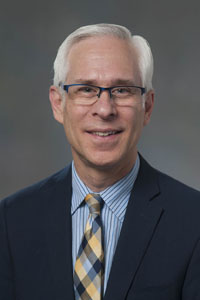


 Peyton Randolph Helm

 Carolyn Midkiff Strange