Table of Contents for NEA 84.2 (2021)

Table of Contents for Near Eastern Archaeology 84.2 (June 2021)


You can receive NEA (and other ASOR publications) through an ASOR Membership. Please e-mail the Membership office if you have any questions.

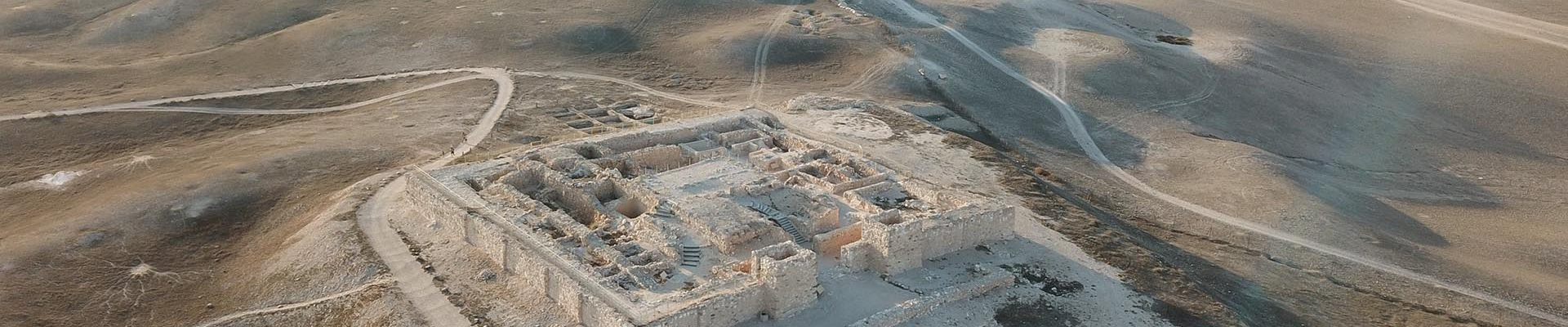
Pp. 100–109: “Yotvata in the Southern Negev and Its Association with Copper Mining and Trade in the Early Iron Age,” by Lily Singer-Avitz

Yotvata is the modern name of a small oasis located on the western edge of the southern Arabah Valley in the southern Negev. In Arabic it was called ‘Ein Ghadian, probably after the Saxaul bush (Haloxylon persicum) (ghada in Arabic), commonly found in the surrounding sands. The Arabah Valley stretches from the southern edge of the Dead Sea to the Gulf of Eilat (Aqaba). The valley has an extremely hot and dry climate. Absolute temperatures in the summer reach 45° C and the mean annual rainfall is 30 mm (Bruins 2006: 29–32). The oasis is situated on the main road to Eilat, about 40 km (25 mi.) north of the city, at an elevation of 125 m above sea level.


ASOR Members with online access: navigate to the token link email sent to you (search for “token link” in inbox) before attempting to read this article. Once you have activated your member token, click here to access the above article on The University of Chicago Press Journals’ website.

Pp. 110–119: “Everything But The Oink: On the Discovery of an Articulated Pig in Iron Age Jerusalem and Its Meaning to Judahite Consumption Practices,” by Lidar Sapir-Hen, Joe Uziel, and Ortal Chalaf

Pork consumption and avoidance during the Iron Age in the southern Levant is extensively discussed in the context of the identity of the populations of ancient Israel. It is often examined by calculating pig frequencies in faunal assemblages (Hesse 1990;Hesse and Wapnish 1997, 1998; Faust and Lev-Tov 2011; Maeir, Hitchcock, and Horwitz 2013; Meiri et al. 2013; Sapir-Hen et al. 2013; Faust and Lev-Tov 2014; Sapir-Hen, Meiri, and Finkelstein 2015; Maeir and Hitchcock 2017; Sapir-Hen 2019a). Recent studies that reviewed data on pig frequencies in correlation to the subphases of the Iron Age have shown that while frequencies of pork consumption fluctuated in the Northern Kingdom, it remained constantly low in Judah throughout the Iron Age (Sapir-Hen et al. 2013; Sapir-Hen 2019a). In Jerusalem, the capital of Judah, low frequencies or absence of pigs (0–2 percent of livestock) were found in all excavated sites (see further below). Thus, the discovery of an articulated pig in an Iron Age IIB (eighth century BCE) building during recent excavations along the eastern slopes of the City of David is intriguing.


ASOR Members with online access: navigate to the token link email sent to you (search for “token link” in inbox) before attempting to read this article. Once you have activated your member token, click here to access the above article on The University of Chicago Press Journals’ website.

Pp. 120–129: “A Bone Projectile Point and Its Possibly Associated Workshop from the Iron Age IIA of Tell eṣ-Ṣafi/Gath,” by Liora Kolska Horwitz, Maria Eniukhina, Ron Kehati, Iris Groman-Yaroslavski, and Aren M. Maeir

Although not as old as artifacts made of stone, the manufacture and use of bone tools is of great antiquity, with the earliest known bone artifacts from Lower Paleolithic sites in Africa: Olduvai Gorge (Tanzania) dating to 2.1–1.1 Ma and the sites of Swartkrans, Sterkfontein, Drimolen (South Africa), dated to around 1.8/1.7 Ma to 1.4/1.0 Ma (Bradfield and Choyke 2016). From this point on in time, alongside stone and metal artifacts, universally, people continued to manufacture and use bone tools. This practice continued even into recent times, as attested by innumerable ethnographic examples of bone artifacts and ornaments (e.g., Stordeur 1980; Ayalon and Sorek 1999; Walshe 2008; Legrand-Pineau et al. 2010; Stone 2011; Bradfield 2012). Often, lithic and metal tools were used for bone working, illustrating the continued value of bone even in historic periods.


ASOR Members with online access: navigate to the token link email sent to you search for “token link” in inbox) before attempting to read this article. Once you have activated your member token, click here to access the above article on The University of Chicago Press Journals’ website.

Pp. 130–139: “Divine Cults in the Sacred Precinct of Girsu,” by Sébastien Rey

Sumer in present-day southern Iraq is the heartland of the first cities and birthplace of writing (fig. 1). It is where, between 3500 and 2000 BCE, its inhabitants, the Sumerians, instituted the first codes of law, advanced metallurgy to craft new tools and weapons; enhanced wheel technology and invented the potter’s wheel. The Sumerians organized long-distance trade over land and sea; they carved monumental sculptures and wrote poems, epic myths, and musical hymns (Jacobsen 1987; Bottéro and Kramer 1989). They created irrigation canal networks and built bridges, temples, and stepped towers “reaching the heavens,” their time-honored ziggurats (George 1993). It is the sum of these innovations that characterizes Sumer as one of the first civilizations of the ancient world.


ASOR Members with online access: navigate to the token link email sent to you (search for “token link” in inbox) before attempting to read this article. Once you have activated your member token, click here to access the above article on The University of Chicago Press Journals’ website.

Pp. 140–147: “The Spiritual Life of Teleilat Ghassul and Building 78,” by Ben Greet

Teleilat Ghassul is a 20 ha Chalcolithic site, likely dating to between 4500–4250 BCE (Gilead 2011: 14), that consists of many interconnected domestic buildings interspersed with rooms containing elaborate frescoes. The discovery of infant burials, ritual objects, and frescoes points toward an elaborate spiritual life of the community that inhabited the site. The aim of this paper is to explore an aspect of that spiritual life in detail through a reexamination of the frescoes of Building 78 on Tell 3. Building 78 provides an excellent opportunity for this type of study, as its context links it with Drabsch’s (2015a: 52) model of lineage houses and their centrality to the spiritual life of Ghassul. Through a reinterpretation of the bird fresco and spook masks focused on their connection to the ecology of the region, I hope to demonstrate that these frescoes were thematically linked through concepts of spiritual liminality and annual cycles. This thematic link can then be used to posit the types of rituals that may have been performed by the Ghassulian community within Building 78.


ASOR Members with online access: navigate to the token link email sent to you (search for “token link” in inbox) before attempting to read this article. Once you have activated your member token, click here to access the above article on The University of Chicago Press Journals’ website.

Pp. 148–158: “Literacy in Judah and Israel: Algorithmic and Forensic Examination of the Arad and Samaria Ostraca,” by Shira Faigenbaum-Golovin, Arie Shaus, Barak Sober, Yana Gerber, Eli Turkel, Eli Piasetzky, and Israel Finkelstein

A highly discussed issue in the fields of Hebrew epigraphy and biblical research is the level of literacy in the Iron Age kingdoms of Israel and Judah (Rollston 2010; Davies and Römer 2013; Schmidt 2015). Treating this topic using biblical texts, for example, the references to scribes at the time of a given monarch, may lead to circular argumentation: The reality behind a given account may reflect the time of the authors, who could have lived centuries later and retrojected their own situation back onto earlier history. A preferable methodology is to consider the material evidence—the corpora of Iron Age Hebrew ostraca from archaeological excavations. The idea is to use algorithmic and forensic methods to distinguish between handwritings and thus the number of authors in a given corpus.


ASOR Members with online access: navigate to the token link email sent to you (search for “token link” in inbox)  before attempting to read this article. Once you have activated your member token, click here to access the above article on The University of Chicago Press Journals’ website.

Pp. 159–165: “Communal Architecture at Boncuklu Tarla, Mardin Province, Turkey,” by Ergül Kodaş

Villages of the Preceramic Neolithic in the Near East are marked by a new style of construction, created to play a new, essential function. Indeed, it is in this period that, outside of residential habitations, communal buildings make their first appearance in the heart of Near Eastern villages. It is without doubt one of the first clear, historical attestations of social differentiation/organization in architecture. Truly, reflections on such constructions lead one to attribute to them adjectives aimed at encapsulating their supposed functions, such as “collective,” “communal,” “monumental,” “public,” “cultic,” “storage structures,” or even “megalithic” (Aurenche and Kozlowski 2000; Stordeur 2014; Watkins 2006; Goring-Morris and Belfer-Cohen 2014; Hauptmann 2012). The terminology here reflects considerably varying interpretations, often complementary and essentially derived from the architectural data, as the buildings reveal ground plans and internal structures that are quite distinct.


ASOR Members with online access: navigate to the token link email sent to you (search for “token link” in inbox)  before attempting to read this article. Once you have activated your member token, click here to access the above article on The University of Chicago Press Journals’ website.

Annual Meeting Update: Paper Proposal Decisions Issued

ANNUAL MEETING UPDATE: PAPER PROPOSAL DECISIONS ISSUED

Paper proposal decision notifications were issued on Saturday, May 15 for the 2021 ASOR Annual Meeting. Notifications were auto generated from ASOR’s online abstract management system powered by Oxford Abstracts and sent to the e-mail address associated with the abstract submission. Please check your spam folder for an e-mail from “ASOR 2021” if you submitted an abstract and have not yet received a decision notification. Co-authors should check with the person who submitted the abstract to find out if their paper was accepted.

Please contact Arlene Press, ASOR’s Director of Meetings and Events, if you submitted an abstract and have not received a decision notification, or if you have any questions about the 2021 ASOR Annual Meeting.

Savings Alert: There is still time to save on Annual Meeting Registration. ASOR has extended the Early Bird rates until July 23. Don’t wait until the last minute – we want to know that you plan to join us in Chicago and/or online for this year’s meeting. Registrants get access to both the in-person and virtual components, as well as access to ASOR’s Online Library through June 2022.

Harris Grant Report: Wadi el-Hudi

2020 HARRIS GRANT REPORT: THE WADI EL-HUDI EXPEDITION

ASOR’s Harris Grant helped to fund the creation and implementation of a spatially organized, archaeological database for the Wadi el-Hudi (WEH) Expedition to Egypt.  In doing so, ASOR is helping to foster original research, streamline archaeological recording and accuracy, assist international collaboration for publications, encourage scholarship, facilitate virtual visitation of the archaeological sites, and promote educational opportunities for undergraduates.

Bryan Kraemer and Ahmed Mohamed at Wadi el-Hudi.

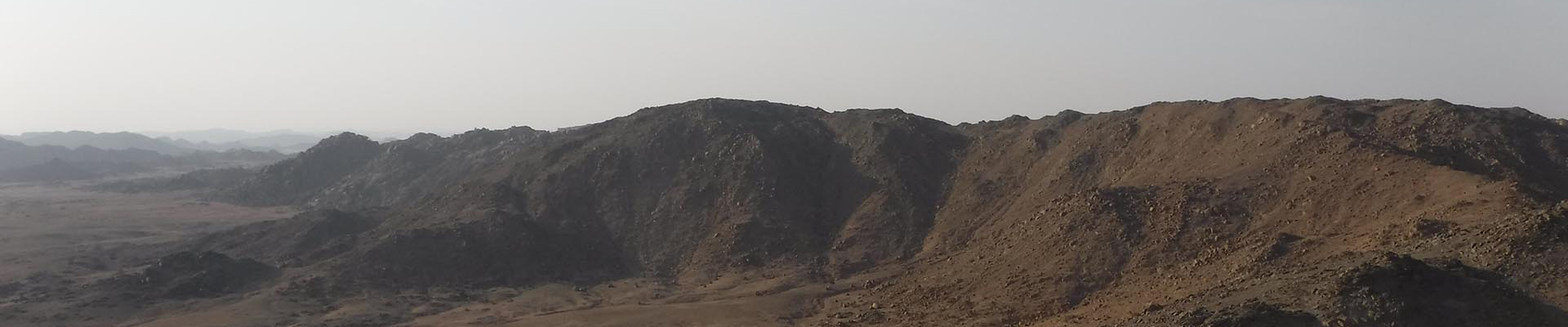
Wadi el-Hudi was the ancient world’s primary source of amethyst used in jewelry and traded throughout the ancient Mediterranean World.  The WEH Expedition is studying industrial mining practices, living conditions of miners, and administrative organization and supply of expeditions. To do this, they are mapping, exploring, and recording this unique place for the future.

The creation and implementation of the WEH database is a quintessential next step for the teams’ research, publication, and public outreach for multiple reasons.  It helps them integrate all archaeological data from finds to photos with their mapping data to spatially analyze patterns and practices across the sites.  The Wadi el-Hudi team is turning the data into a 3D virtual experience so that anyone can visit the site from home.  This database will populate the 3D models with interactive content so that viewers can look at objects or photos in the original contexts that they were found, just like the original archaeologist.

The database will also streamline archaeological work in and out of the field with increasing accuracy.  Specialists and archaeologists will be able to input data directly into the database while in the field and immediately check for missing or inaccurate information.  Similarly, the online component of the database will allow international team members to collaborate on the data in real time to speed up time to publication and the depth of analysis available.  Eventually, all of this data will be archived online for future scholars to access and use in new ways.

This creation of this database also provided educational opportunities for three students at California State University, San Bernardino.  With the help of ASOR, Cindy Moreno, Erika Kelley, and Fernando Sanchez were hired as the database team.  They inputted, checked, and beta-tested its usage.  This career building experience is a stepping stone in their professional lives.  As future archaeologist Erika Kelley says, “Working on the Wadi el-Hudi Expedition’s database has been an incredibly educational experience. … I have now learned more about the archaeological process, what archeologists actually do when observing and excavating a site, and the different tools they use.”  Cindy Moreno also benefited from this experience saying, “I lucked out to have been able to work with Dr. Kate Liszka and her team. … I saw a new side to what it is to be an archeologist, and I felt inspired by their mission to bring Wadi el-Hudi to life through a virtual means. …I can confidently say that this job experience has given me courage to strive for my dreams and strive to make a difference in the world.”

ASOR’s support of archaeological projects is making a difference in the world in enumerable ways.

-Kate Liszka, California State University, San Bernardino

Erika Kelley.
Cindy Moreno.
Fernando Sanchez.

ANE TODAY VOL IX n05 (2021)

[vc_row fullwidth=”true” css=”.vc_custom_1486761987223{padding-top: 0px !important;padding-right: 0px !important;padding-bottom: 0px !important;padding-left: 0px !important;}”][vc_column][vc_single_image image=”33901″ img_size=”full”][/vc_column][/vc_row][vc_row fullwidth=”true” css=”.vc_custom_1487275830783{padding-top: 10px !important;padding-right: 0px !important;padding-bottom: 0px !important;padding-left: 0px !important;}”][vc_column width=”1/12″ css=”.vc_custom_1493002455400{margin-right: 10px !important;}” offset=”vc_hidden-md vc_hidden-sm vc_hidden-xs”][vc_column_text]

 SHARE

[/vc_column_text][mk_image src=”http://www.asortest.org/wp-content/uploads/2017/01/social-fb-icon4.jpg” image_width=”42″ image_height=”42″ hover=”false” custom_url=”https://www.facebook.com/ASOResearch/” margin_bottom=”0″][mk_image src=”http://www.asortest.org/wp-content/uploads/2017/01/social-tw-icon4.jpg” image_width=”42″ image_height=”42″ hover=”false” custom_url=”https://twitter.com/ASOResearch?ref_src=twsrc%5Egoogle%7Ctwcamp%5Eserp%7Ctwgr%5Eauthor” margin_bottom=”0″][mk_image src=”http://www.asortest.org/wp-content/uploads/2017/01/social-in-icon4.jpg” image_width=”42″ image_height=”42″ hover=”false” custom_url=”https://www.linkedin.com/company/american-schools-of-oriental-research” margin_bottom=”0″][mk_image src=”http://www.asortest.org/wp-content/uploads/2017/01/social-ml-icon_7.jpg” image_width=”42″ image_height=”42″ hover=”false” custom_url=”mailto:info@asor.org” margin_bottom=”0″][mk_image src=”http://www.asortest.org/wp-content/uploads/2017/01/blog-icon3.jpg” image_width=”42″ image_height=”42″ hover=”false” custom_url=”http://asor.org/blog” margin_bottom=”0″][/vc_column][vc_column border_color=”rgba(255,255,255,0.01)” width=”1/6″ css=”.vc_custom_1493004112151{margin-right: 20px !important;border-left-width: 2px !important;padding-right: 20px !important;padding-left: 20px !important;border-left-color: #99422f !important;}”][mk_divider divider_color=”rgba(255,255,255,0.01)” thickness=”1″ margin_top=”3″ margin_bottom=”3″][vc_widget_sidebar sidebar_id=”sidebar-16″ el_class=”.widget { overflow: hidden; margin-bottom: 0; }”][vc_row_inner][vc_column_inner css=”.vc_custom_1632942122126{padding-top: 10px !important;padding-right: 10px !important;padding-bottom: 5px !important;padding-left: 10px !important;background-image: url(https://www.asor.org/wp-content/uploads/2021/09/ASOR_Patterns_CMYK_Blue_Thin.jpg?id=77162) !important;}”][vc_column_text]

Not a Friend of ASOR yet? Sign up here to receive ANE Today in your inbox weekly!

[/vc_column_text][/vc_column_inner][/vc_row_inner][/vc_column][vc_column border_color=”rgba(170,170,170,0.01)” width=”8/12″ css=”.vc_custom_1487276122024{margin-right: 10px !important;margin-bottom: 30px !important;border-right-width: 2px !important;border-bottom-width: 2px !important;padding-top: 30px !important;padding-right: 30px !important;padding-left: 20px !important;background-color: #ffffff !important;border-right-color: rgba(227,228,228,0.75) !important;border-bottom-color: rgba(227,228,228,0.75) !important;}”][vc_row_inner][vc_column_inner width=”1/3″ css=”.vc_custom_1515087305797{padding-right: 20px !important;}”][mk_image src=”http://www.asor.org/wp-content/uploads/2017/12/foa-reduced-100.png” image_width=”190″ image_height=”100″ crop=”false” hover=”false”][/vc_column_inner][vc_column_inner width=”2/3″][vc_column_text responsive_align=”left”]

May 2021

Vol. 9, No. 5

[/vc_column_text][/vc_column_inner][/vc_row_inner][vc_row_inner][vc_column_inner][mk_divider thickness=”1″ margin_top=”10″][vc_column_text]

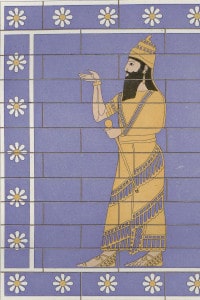
The Geography of the Neo-Assyrian Empire

By Ariel M. Bagg

The Neo-Assyrian Empire of the first millennium BCE comprised a great part of the Middle East. Approximately 3500 Neo-Assyrian geographical names are known. Can these places be localized? Read More[/vc_column_text][mk_divider thickness=”1″ margin_top=”10″][vc_column_text]

Monotheism or Monopoly? Akhenaten and His Religious-Political Reform

By Jiří Janák

Few ancient personalities excite as much interest as Akhenaten. Was he an enlightened religious leader and an idealistic politician, or was he mentally ill and physically frail? Read More[/vc_column_text][mk_divider thickness=”1″ margin_top=”10″][vc_column_text]

Mesopotamian Sculpture in Color

By Astrid Nunn

Like other ancient sculpture, Mesopotamian statues were painted. Small traces can now be analyzed with scientific techniques and help explain Mesopotamian concepts such as “positive” and “negative.” Read More[/vc_column_text][mk_divider thickness=”1″ margin_top=”10″][vc_column_text]

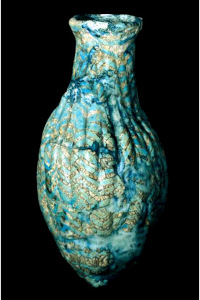
Glass: Lapis Lazuli from the Kiln

By Andrew Shortland

Today glass is all around us. But when glass was first made in the Late Bronze Age around 1500 BCE it was very different. How was this magical “stone from the kiln” made and what did it mean to its makers? Read More[/vc_column_text][mk_divider thickness=”1″ margin_top=”10″][/vc_column_inner][/vc_row_inner][/vc_column][/vc_row]

ASOR Member Receives NEH Summer Stipend

ASOR MEMBER RECEIVES NEH GRANT

Rita Lucarelli receives a National Endowment for Humanities Summer Stipend

Congratulations to ASOR member Rita Lucarelli on being awarded a National Endowment for Humanities summer stipend for research leading to the publication of her book Agents of Punishment and Protection. Assessing the Demonic in First Millennium BCE Egypt. NEH’s summer stipends are designed to support scholars in preparation of a book, article, translation, archaeological report, or digital publication.

Lucarelli is Associate Professor of Egyptology in the Near Eastern Studies department, Faculty Curator of Egyptology at the Phoebe A. Hearst Museum of Anthropology, and Fellow of Digital Humanities at the University of California, Berkeley . She holds a MA in Classical Languages and Egyptology from the University of Naples “L’Orientale,” Italy and a PhD from Leiden University. Her dissertation, The Book of the Dead of Gatseshen: Ancient Egyptian Funerary Religion in the 10th Century BC, was published in 2006. Lucarelli’s current research centers around creating 3D models of ancient Egyptian coffins and examining the magical spells decorating these coffins as case-studies for investigating the materiality of the text in relation to ancient Egyptian funerary literature. She is one of the coordinators of Demonthings: The Ancient Egyptian Demonology Project and a frequent participant in ASOR’s Annual Meeting.


Detail from pedestal of inner coffin of Meretites, Nelson Atkins Museum, Kansas City MO, Inv. No.2007.12.2.A-B. (Photo by Kea Johnston.)

Agents of Punishment and Protection. Assessing the Demonic in First Millennium BCE Egypt

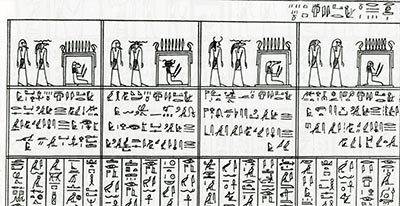
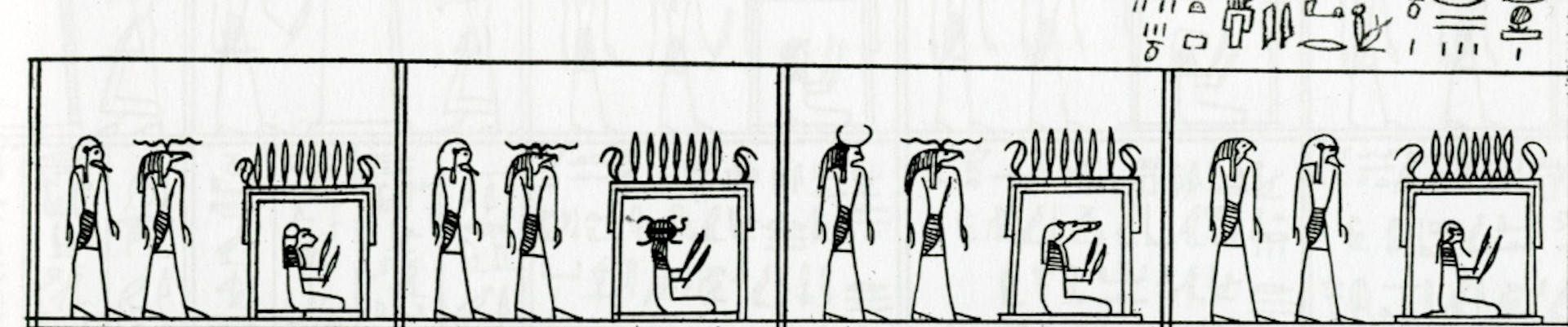
Demonology is an integral, though often neglected aspect of the ancient Egyptian religion. Defining “demons” poses issues of ontological classification, especially when dealing with an ancient civilization whose sources of study are not always descriptive neither comprehensive. In the ancient Egyptian magical texts and representations, a variegated series of liminal beings act as agents of punishment but also of protection towards the living and the dead. A contextualized and in-depth study of each of the available sources, which will be carried out in the proposed book-project, is necessary to understand the role that those agents played in the ancient Egyptian religious beliefs and how people would communicate with demons through magical practices and the help of professional ritualists. By assessing the existence of an ancient Egyptian demonology, the author will also attempt a comparative study with other discourses on demons in the ancient world.

From Lepsius, K.R, Das Todtenbuch der Ägypter (nach dem hieroglyphischen Papyrus in Turin. (http://archiv.ub.uni-heidelberg.de/propylaeumdok/467/)

This year the National Endowment for the Humanities provided $24 million in grants to support 225 humanities projects nationwide. The National Humanities Alliance released the following statement from its Executive Director Stephen Kidd on this April NEH announcement:

“The National Endowment for the Humanities will support Dialogues on the Experience of War programs for veterans in Alaska, Colorado, Georgia, Maryland, Massachusetts, Michigan, New York, and Virginia. With grants for research, preservation, and curricular innovation, the NEH will continue its crucial support of the humanities in higher education. And in addition to supporting exhibitions and podcasts, grants for public programs will support a nationwide reading and discussion program on women’s suffrage.”

“We are immensely proud of the NEH’s impact across the U.S. and will continue advocating for increased federal support for future grants in 2021 and beyond.”


ASOR encourages all of our members to consider applying for NEH grants and fellowships. Applications for NEH’s 2022 summer stipends will be available May 5th. The deadline for submission is September 22, 2021. Read more about applying here.

Interested in promoting your research? Read the National Humanities Alliance’s tip sheet for working with your institution’s communications officer.

Making May Matter—Webinarathon to Endow Diversity at ASOR

FRIENDS OF ASOR PRESENT—MAKING MAY MATTER WEBINARATHON

 
  • 3-day event included 16 hours of lectures and panels
  • 24 internationally renowned scholars
  • Donate to access recordings (suggested contribution = $100 or more)
  • All contributions will be doubly matched

Friends of ASOR is pleased to announce a three-day event  (May 21-23) that featured 11 webinar sessions with more than 20 internationally renowned speakers, moderators, and discussants presenting on a wide range of topics covering the lands where ASOR members work. The full program is below. The event was recorded. All donors to Diversity Initiatives before June 30th will receive links to the recordings of the sessions for each day.

Program Schedule

FRIDAY, MAY 21, 2021

(Click here for a PDF copy of the schedule)

2:00pm – 3:00pm

Eric H. Cline

The George Washington University

7 Years After 1177—What Has Changed Since I Published My Book

Read the Description

In the seven years since 1177 BC: The Year Civilization Collapsed was first published in 2014, much more data have become available. These include additional texts from Ugarit; DNA analyses of burials found in Ashkelon; and new studies of lake sediments, stalagmites in caves, and coring from lakes and lagoons, in regions stretching from Italy and Greece to Turkey, Syria, Lebanon, Israel, and Iran. All of it points ever more conclusively to a megadrought that impacted much of the Aegean and Eastern Mediterranean, beginning ca. 1200 BC and lasting between 150 and 300 years, which drove the Collapse.

3:00pm – 3:30pm

Break

3:30pm – 4:30pm

Carol Meyers

Duke University

My Life as An Archaeologist—How My Mind Has Changed, and How It Has Stayed the Same

Read the Description

In this conversation with renowned archaeologist Prof. Carol Meyers of Duke University, we will hear how her views, especially about excavation strategy, have changed and how they have stayed the same over the many decades of her career. This will also be an opportunity for webinar attendees to hear Carol describe how she became involved in archaeology and how she was able to do field work as a mother of young children. She will be happy to answer questions about her life as an archaeologist and professor. She will be joined by Susan Ackerman as moderator and Erin Darby as a discussant.

4:30pm – 5:00pm

Break


5:00pm – 6:00pm

Christopher Rollston, Katherine Jones, and Thomas Kline

The George Washington University

Pious Textual Forgeries: From Shapira to the Museum of the Bible

Read the Description

The pillaging of archaeological sites has been a perennial problem for a very long time, with one result being the presence of various artifacts, including inscriptions, on the antiquities market. In addition, the market has also been flooded at times with forged artifacts, including inscriptions. Venality and hubris are often the name of the game. This forum focuses on laws regarding the sale of antiquities, as well as proven methodologies for ferreting out modern forgeries, thus, helping to ensure that our constructs of ancient languages, society, and religion are built on real data, not modern fabrications.

SATURDAY, MAY 22, 2021

11:00am – 12:00pm

Felix Höflmayer

Austrian Academy of Sciences

Identities in the Age of Internationalism: Tel Lachish in the Late Bronze Age

Read the Description

Tel Lachish is one of the major sites of the southern Levant during the Late Bronze Age (c. 1600-1200 BCE). Finds from several different archaeological expeditions testify to the importance of the site during the ‘International Age’ of the mid-late second millennium BCE. Egyptian, Cypriot, and Aegean imports show how Lachish was embedded in international trade routes and the presence of early alphabetic, Egyptian Hieratic, and cuneiform writing paint a dazzling picture of a vibrant international city during that time. This talk will highlight recent finds and how they help us understand Tel Lachish during the Late Bronze Age.


12:00pm – 12:30pm

Break


12:30pm – 1:30pm

Stuart Swiny

University at Albany, State University of New York

My Life as An Archaeologist—How My Mind Has Changed, and How It Has Stayed the Same

Read the Description

A candid discussion with well-known archaeologist Stuart Swiny focusing on his accomplishments and periodic tribulations throughout a career started by a visit to the Lascaux Cave at age 4.  Stuart will share his advice on how to engage a broader public and succeed in a competitive, but deeply rewarding and varied profession, yet one that offers few openings. His vocation led him from France to Turkey, to Iran then Afghanistan, Cyprus and ultimately the USA, weathering coups and wars along the way. He looks forward to answering your questions about his life as an archaeologist in the field and in the classroom. He will be joined by Ann-Marie Knoblauch as moderator and Michael Toumazou as a discussant.


1:30pm – 2:00pm

Break


2:00pm – 3:00pm

Megan A. Perry

East Carolina University

Life and Death on Petra’s North Ridge

Read the Description

The mysterious Nabataeans, builders of the magnificent city of Petra, have long fascinated scholars and the public. Our understanding of Petra’s urban life recently has been transformed with the excavation of tombs within the ancient city. The human skeletal remains from these tombs have illuminated the origins of the city’s residents, their disease profiles, and what foods they relied on in this desert environment. This lecture demonstrates how Petra’s dead can inform what life was like in this ancient city.


3:00pm – 3:30pm

Break


3:30pm -4:30pm

Debora Heard

University of Chicago

Black in Ancient History: Disciplinary Divides and a Call for Change

Read the Description

A moderated Q&A conversation with scholar Debora Heard reflecting on the experiences that led her to Nubian studies. This discussion will examine disciplinary divides through the life and legacy of William Leo Hansberry, the founding of the William Leo Hansberry Society, and collaborative efforts between ASOR, Archaeology in the Community, and Hansberry Society members to promote disciplinary changes through youth education. Sydney Pickens will serve as moderator for this discussion.

SUNDAY, MAY 23, 2021

1:00pm – 2:00pm

Kara Cooney

UCLA

When Women Ruled the World—An Egyptian View

Read the Description

A woman’s power in the ancient world (and perhaps even today) was always compromised from the outset, and this lecture will address the root causes of this social inequality through the lens of ancient Egypt. Given this social reality in the ancient world, how then did women negotiate their limited leadership roles? Were they able to rule “behind the throne” so to speak? How are we to find a woman’s power when it was so habitually cloaked by a man’s dominance? This lecture will address those questions and ask how much of this ancient reality still touches us today.


2:00pm – 2:30pm

Break


2:30pm – 3:30pm

Ahmad Emrage and William Raynolds

University of Benghazi and ASOR

Translating Outreach into Action: Cultivating Heritage Volunteerism in Libya

Read the Description

Over the past several years, ASOR has worked closely with the Libyan Department of Antiquities and the Boy Scouts and Girl Guides of Libya to host a series of “Pop-Up” activities at sites around the country including Sabratha, Ghadames, Benghazi and Cyrene. These have been opportunities to directly engage volunteers in critical site cleaning and stabilization activities at a time when the national and local governments do not have operating budgets to support this work. This culture of volunteerism is not new in Libya. In fact, the Libyan Scouting movement is now nearly 70 years old. Yet this kind of collaboration working to protect cultural heritage sites represents a new direction, harnessing considerable energy from Libyan volunteers of all ages.


3:30pm – 4:00pm

Break


4:00pm – 5:00pm

Larry Geraty

La Sierra University

My Life as An Archaeologist—How My Mind Has Changed, and How It Has Stayed the Same

Read the Description

A candid discussion with renowned scholar, Lawrence Geraty, about his struggles and triumphs over his years as an archaeologist. Larry will share his best tips for entering and succeeding in this field while answering your questions about his daily life as an archaeologist. He will be joined by Theodore Burgh as moderator and Timothy Harrison as a discussant.


5:00pm – 5:30pm

Break


5:30pm – 6:30pm

Jennie Ebeling

University of Evansville

Jezebel and Naboth’s Vineyard—What Recent Excavations at Jezreel Reveal About the Bloody Biblical Story

Read the Description

In addition to offering new information about the technology and scale of wine production in the Iron Age (ca. 1200-586 BCE), the discovery of a well-preserved winery complex at Jezreel in Israel’s Galilee also provides context for the dramatic story of Naboth’s vineyard in 1 Kings 21. This lecture presents the results of the Jezreel Expedition’s recent excavations and how they inform on some of the events that brought down the House of Ahab, including the death of ancient Israel’s infamous Queen Jezebel.

Preliminary List of  Discussants and Moderators
(see biographies below)

  • Susan Ackerman, Dartmouth College
  • Theodore Burgh, University of North Carolina—Wilmington
  • Erin Darby, University of Tennessee—Knoxville
  • Tiffany Earley-Spadoni, University of Central Florida
  • Timothy Harrison, University of Toronto
  • Ann-Marie Knoblauch, Virginia Tech University
  • Sydney A. Pickens, Archaeology in the Community
  • Tine Rassalle, University of North Carolina at Chapel Hill
  • Cynthia Shafer-Elliott, William Jessup University
  • Michael K. Toumazou, Davidson College

All proceeds from this event will be applied to the 2-for-1 matching challenge gift campaign to endow diversity initiatives at ASOR that ends on June 30th. You can make a donation today to take part in this unique event and help ASOR earn the $150,000 challenge gift. We have raised $35,000 of the $75,000 goal thus far, and so we have earned $70,000 in matching dollars. We need to raise $40,000 more before June 30th to earn the remaining $80,000 in matching dollars.

The suggested donation level for the webinarathon is $100 or more. Everyone who makes a contribution of any amount to Diversity Initiatives in May will receive access the recordings of the webinar event, “Making May Matter.” If you are unable to make a contribution at this time, but would still like view the recordings, please e-mail ASOR for a complimentary registration.


Sponsors were acknowledged during the event. Sponsorships are available at the following levels:

  • DEI Sponsor: $250 (includes 5 gift registrations to share)
  • DEI Patron: $500 (includes 10 gift registrations to share)
  • DEI Benefactor: $1,000 (includes 25 gift registrations to share)
  • DEI Champion: $2,500 (includes unlimited gifts registrations to share)
  • DEI Ambassador: $5,000 (includes unlimited gift registrations to share)

Each donor will receive a confirmation e-mail with the links to view the recordings on Dropbox. If you do not receive this e-mail, then we did not receive your donation online.  If you prefer to donate over the phone, please call 703-789-9230. Please e-mail membership@asor.org with any questions or issues with donating.

Speakers / Presenters

Eric H. Cline is Professor of Classics and Anthropology, Director of the Capitol Archaeological Institute, and former Chair of the Department of Classical and Near Eastern Languages and Civilizations at The George Washington University, in Washington DC. With degrees from Dartmouth, Yale, and the University of Pennsylvania, he is an active field archaeologist with more than 30 seasons of excavation and survey experience, including ten seasons at the site of Megiddo (biblical Armageddon) in Israel and eight seasons at Tel Kabri, also in Israel, where he is currently Co-Director. His 2014 book 1177 BC: The Year Civilization Collapsed was considered for a Pulitzer Prize. He is the author or editor of 20 books, which have been translated into sixteen languages, as well as nearly 100 articles, and several recorded lecture courses.


Kathlyn (Kara) Cooney is a professor of Egyptian Art and Architecture and Chair of the Department of Near Eastern Languages and Cultures at UCLA. Cooney’s research in coffin reuse, primarily focusing on the 21st Dynasty, is ongoing. Her book Recycling for Death will appear in the coming year with American University Press in Cairo. This research investigates the socioeconomic and political turmoil that has plagued the period, ultimately affecting funerary and burial practices in ancient Egypt. Her latest book, When Women Ruled the World: Six Queens of Egypt, was published in 2018 by National Geographic. Her next book, The Good Kings: Absolute Power in Ancient Egypt and the Modern World appears with National Geographic in 2021.


Jennie Ebeling is associate professor of archaeology at the University of Evansville and co-director (with Norma Franklin) of the Jezreel Expedition in Israel. A former Fulbright fellow, she has been awarded fellowships from the NEH, the Lady Davis Trust, and the W.F. Albright Institute of Archaeological Research in Jerusalem for research in Israel and Jordan. Ebeling served as an ASOR Trustee for nine years and Vice President (Membership) for three and received the Charles U. Harris Service Award in 2013. She currently edits ASOR’s Archaeological Report Series. Ebeling is the co-editor of four volumes and the author of Women’s Lives in Biblical Times (T&T Clark, Int’l, 2010).


Ahmad Emrage is ASOR’s representative for heritage activities in Libya (East), Dr. Emrage manages ASOR’s cultural heritage grants and activities in the eastern area of Libya. He also serves as a senior advisor for ASOR’s work throughout Libya and North Africa. Emrage holds the B.A. and M.A. degrees in Archaeology from University of Benghazi, and the Ph.D. degree from the School of Archaeology and Ancient History, University of Leicester. During the 2019–20 academic year, Emrage held a Fulbright Fellowship to teach courses on Libyan cultural heritage at Oberlin College (Ohio, USA).


Lawrence (Larry) T. Geraty, President Emeritus, Director of the Foundation Board and Associate Director of the Center for Near Eastern Studies at La Sierra University, has been engaged with Near Eastern archaeology and with ASOR and its affiliate schools for more than five decades. In this time, he has taken on leadership roles as ASOR President from 2002 to 2006 and by serving on the ASOR Board through 2016 and acting as an Honorary Trustee since then. Larry has also served as ACOR trustee (1976-2002), Secretary-Treasurer (1983) and vice-president (1993). The creation of the newly endowed ASOR Lawrence T. Geraty Community Archaeology Endowment will heighten awareness of cultural heritage by engaging and facilitating partnerships with local communities in heritage protection and community archaeology.


Felix Höflmayer studied Egyptology and Classical Archaeology at the University of Vienna and received his PhD in 2010. From 2009 to 2013, he was a researcher at the Orient Department of the German Archaeological Institute, in Amman (Hashemite Kingdom of Jordan) and Berlin. From 2013 to 2015, he was the Post-Doctoral Fellow at the Oriental Institute of the University of Chicago. In 2015, he returned to the Austrian Academy of Sciences in Vienna. Felix teaches at the Institute of Old Testament Studies and Biblical Archaeology, the Institute of Oriental Studies, and the Institute of Egyptology at the University of Vienna. Since 2017, he co-directs the Austrian excavations at Tel Lachish (Israel) together with Katharina Streit.


Katherine Jones is a statistician and data scientist, and is currently pursuing graduate studies in mathematics at The George Washington University. In her professional work, Kate focuses on quantitative economic analysis; she works on teams which study antitrust and competition effects, often using Big Data.


Thomas Kline is a partner at the law firm Cultural Heritage Partners in Washington, D.C. He is responsible for a number of groundbreaking cases, including setting precedent in the law governing recovery of antiquities and Nazi-looted art. Tom advises clients on a wide variety of art and cultural property matters, including ownership, theft, authenticity, breach of contract, and insurance. Since 1989 he has specialized in cultural heritage-related litigation, arbitration, alternative dispute resolution, and advice and counseling, representing governments, museums, churches, foundations, and families. Tom is an Adjunct Professorial Lecturer at The George Washington University, Museum Studies Program.


Carol Meyers received the A.B. with honors from Wellesley College and the M.A. and Ph.D. in Near Eastern and Judaic Studies from Brandeis University. She is currently the Mary Grace Wilson Professor Emerita of Religious Studies at Duke University. Meyers is the author of more than 450 articles, reports, reference-book entries, and reviews; and she has authored, co-authored, or edited twenty-two books. Her 2013 book, Rediscovering Eve: Ancient Israelite Women in Context, is a landmark study of women in ancient Israelite society. Meyers has worked on numerous digs since she was an undergraduate, and she has been a staff member and then co-director of several archaeological projects in Israel. She has been a frequent consultant for media productions relating to archaeology and the Bible, including A&E’s Mysteries of the Bible series, DreamWorks’s “Prince of Egypt,” NOVA’s “The Bible’s Buried Secrets,” and several National Geographic documentaries.


Megan A. Perry is Professor of Anthropology with East Carolina University. She holds degrees from the University of New Mexico (Ph.D.), Case Western Reserve University (M.A.), and Boston University (B.A.). Her primary research interests involve investigating human skeletal remains to assess ancient disease, diet, and mobility patterns, in addition to mortuary practices of ancient populations in 1st to 6th century A.D. Jordan. Professor Perry has been working on archaeological projects in Jordan for over 25 years, and she is on the Board of the American Center of Overseas Research (ACOR) in Amman, Jordan.


Debora Heard is a Ph.D. Candidate in Anthropology at the University of Chicago specializing in Nubian archaeology and Egyptian history and language. Her current research compares the inscriptions and iconography of Kushite temples dedicated to the gods Amun and Apedemak. For more than a decade, she has given public lectures on various aspects of ancient Nubian society, particularly the role of royal women in Kushite society. A member of several archaeological and ancient studies organizations, she is the organizer and a founding member of the newly-launched William Leo Hansberry Society, which is committed to providing African-descended people pathways to careers in ancient Nile Valley and Northeast African Studies.


William Raynolds is Co-director of the Garden Collection at the Egyptian Museum in Cairo (Egypt), a consultant for the World Monuments Fund (Haiti), the J. M. Kaplan Fund, the American Archaeological Mission in Libya, and Co-Director of ASOR Cultural Heritage Initiatives. Following his time at Yarmouk University (Jordan), where he was a Fulbright Fellow affiliated with the Department of Archaeology, Mr. Raynolds completed his MSc. in Historic Preservation from Columbia University, New York (2009).


Christopher Rollston (MA, Ph.D. Johns Hopkins University) is Professor of Northwest Semitic Languages and Literatures at George Washington University (Washington, D.C.), where he is Chair of the Department of Classical and Near Eastern Languages and Civilizations. His research focuses heavily on writing and literacy in the world of the Bible, ancient scribal education, ancient Israelite religion, modern forged inscriptions. He has lectured and published widely in the field. For six years, he co-edited (with Eric H. Cline) BASOR. Rollston’s volume entitled Forging History in the Ancient World of the Bible & the Modern World of Biblical Studies is forthcoming with Eerdmans.


Stuart Swiny: Born in Scotland, and educated in France and England, Professor Swiny completed his doctoral degree at the London University, Institute of Archaeology. He has conducted archaeological and anthropological research in Iran, Afghanistan, Cyprus, and has also excavated in France, Turkey (underwater), and Egypt. Swiny served as longtime Director of the Cyprus American Archaeological Research Institute (CAARI). In 1996, he was appointed professor in Classics and Anthropology at the University at Albany, and later served as director of the Institute of Cyrpriot Studies. Swiny, archaeologist whose work on Cyprus now spans six decades, is currently the Curator of the Sawin Museum in Dover, MA.

Discussants, Hosts, & Session Moderators

Susan Ackerman is the Preston H. Kelsey Professor of Religion, Professor of Women’s, Gender, and Sexuality Studies, and the former Chair of both the Department of Religion and the Program in Women’s, Gender, and Sexuality Studies at Dartmouth College. She also earned her A.B. degree at Dartmouth, and earned a Masters of Theological Studies at Harvard Divinity School and a Ph.D. in Near Eastern Languages and Civilizations from the Harvard Graduate School of Arts and Sciences. Her research specialties include the religion of ancient Israel, women and gender in ancient Israel, myth and ritual studies in ancient Israel. She recently completed a draft of a new book, on women and the religion of ancient Israel, and is currently at work on another book on Israelite women’s life-cycle rituals.


Theodore (Teddy) Burgh is Professor and Chair of the Department of Philosophy and Religion at the University of North Carolina Wilmington. His research specialties include the archaeology of ancient Israel and the Near East, the Hebrew Bible, archaeomusicology (the study of ancient music culture), the reconstruction of Syro-Palestinian and Near Eastern music culture and cataloging musical artifacts, utilization analysis of Syro-Palestinian sacred and secular space, and ethnomusicology. Burgh is himself an accomplished musician (he plays flute, clarinet, and saxophone), and in addition to his university career, he enjoys composing and performing. He is a member of the FROG Project and Lee Venters and Vermillion Sands (Wilmington, NC). Burgh has been on the ASOR Board of Trustees since 2015, and he is currently Chair of ASOR’s Membership and Outreach Committee.


Erin Darby is an associate professor of Religious Studies at the University of Tennessee. She is an expert in the Hebrew Bible, archaeology, and ancient Near Eastern history and literature. At the University of Tennessee, she is one of the founding members of the Partnership for the Academic Study of Early Judaism, the Knoxville ArabFest cultural festival, the UT Archaeology Day outreach event, and the Tennessee Initiative for Middle East Studies. Darby is also the co-director of the ASOR-affiliated ‘Ayn Gharandal Archaeological Project in southern Jordan, where she is excavating a Nabataean-Islamic period site and leading the UT Dig Jordan study abroad program.


Tiffany Earley-Spadoni is an Assistant Professor of History at the University of Central Florida. She directs the ASOR-affiliated Vayots Dzor Fortress Landscapes Project in Armenia, and is the Chair of ASOR’s Early Career Scholars Committee. She is a field archaeologist and historian of the ancient Near East. She has authored numerous articles in esteemed scholarly publications such as the Journal of Archaeological Science and Advances in Archaeological Practice. Her monograph project, Landscapes of Warfare: Urartu in Ancient Near Eastern Context is under advance contract with the University Press of Colorado. She received her PhD from the Johns Hopkins University.


Timothy Harrison is Professor of Near Eastern Archaeology in the Department of Near and Middle Eastern Civilizations at the University of Toronto. Dr. Harrison earned the Ph.D. in Near Eastern Archaeology from the University of Chicago. He has directed excavations at the Bronze and Iron Age site of Tell Madaba, Jordan, and currently is directing the Tayinat Archaeological Project on the Plain of Antioch in southeastern Turkey. In 2012, he launched the CRANE Project (Computational Research on the Ancient Near East), an international consortium of projects conducting research in the Orontes Watershed (www.crane.utoronto.ca). He served as President of ASOR from 2008–2013.


Ann-Marie Knoblauch is Associate Professor of Art History and Associate Director of the School of Visual Arts at Virginia Tech. Her research interests bridge east and west, especially Cyprus and Greece during the archaic and classical periods. She is especially concerned with articulating the voices of underrepresented groups in the ancient Mediterranean world — non-Athenian and non-male — through the material culture left behind. This approach to the ancient world manifests itself in two main research endeavors, investigations into the visual iconography of Athenian women and active fieldwork on the island of Cyprus. Knoblauch has been involved in the excavations of Idalion, Cyprus, since 1998, and on Cyprus, she has also excavated at Yeronisos Island. She has also excavated in Israel and Greece.


Sydney A. Pickens is a dancer, archaeologist, and educator who is passionate about making archaeology accessible and exciting through embodied learning. She is an Archaeology Educator for Archaeology in the Community, and specializes in K-12 archaeology educational programming.


Tine Rassalle is a PhD candidate in the Religious Studies department at the University of North Carolina at Chapel Hill. She has an MA in Archaeology of the ancient Near East from Gent University (Belgium) and another BA in Hebrew and Aramaic Languages and Cultures from Leiden University (the Netherlands). Her main research focuses on the material culture of ancient Judaism and early Christianity in Palestine. She is currently finishing up her dissertation project: a digital database of coin deposits found in ancient synagogues from Late Antique Palestine. Tine is the field supervisor of the Horvat Kur excavations in the Galilee, an executive staff member of SASA (Save Ancient Studies Alliance), and a member of the ASOR Early Career Scholars Committee. 


Cynthia Shafer-Elliott (Ph.D., The University of Sheffield) is Associate Dean of the School of Theology and Leadership and Associate Professor of Hebrew Bible & Archaeology at William Jessup University. Dr. Shafer-Elliott specializes in the cultural and social contexts of ancient Israel and Judah, particularly within domestic contexts. Her publications include: Food in Ancient Judah: Domestic Cooking in the Time of the Hebrew Bible (2013) and editor of The 5 Minute Archaeologist in the Southern Levant (2016), along with numerous chapters, encyclopedia articles, articles, essays, and papers presented on food, households, and gender. She is currently co-editing the T & T Clark Handbook of Food in the Hebrew Bible and Ancient Israel. An experienced field archaeologist, she is part of the archaeological excavations at Tel Halif and Tel Abel Beth Maacah.


Michael K. Toumazou is a native of Famagusta, Cyprus. He attended Franklin & Marshall College (BA, Physics & Classics, 1977), Loyola University of Chicago (MA, Classics, 1980) and Bryn Mawr College (MA, & Ph.D., Classical & Near Eastern Archaeology, 1983, 1987).  He has taught at Davidson College (Davidson, NC) since 1987 where he served as Chair of the Department of Classics (1995-2001), directed Davidson’s Classics Study Abroad Program (2003, 2007, 2012) and received Davidson’s most prestigious teaching award in 2003. In 1990 he founded, and since then directed, the Athienou Archaeological Project in Athienou, Cyprus, in conjunction with an archaeological field school, supported by multiple NSF-REU-Site Awards (1995-2015). As an NEH Senior Scholar at CAARI (spring 1995) he investigated looting practices on Cyprus. Toumazou has translated into English two books on Cypriot topics, has lectured widely and published many reports and articles on his field work on the island.

ASOR is grateful for you support. Each donor will receive an automated tax receipt and a separate confirmation e-mail with links to view the recordings of the sessions on Dropbox. If you do not receive these e-mails, please check you Spam folder and then contact ASOR. If did not receive the e-mails, that probably means that we did not receive you online donation. If you prefer to donate over the phone, please call +1-703-789-9230. Please e-mail membership@asor.org with any questions or issues with donating, or to request a complimentary regsitration.

Table of Contents for BASOR 385 (May 2021)

Table of Contents for Bulletin of ASOR 385 (May 2021)

You can receive BASOR (and other ASOR publications) through an ASOR Membership. Please e-mail the Membership office if you have any questions.

Pp. 1–32: “Late Prehistory of the Lower Galilee: Multi-Faceted Investigations of Wadi el-Ashert,” by Yorke M. Rowan, Morag M. Kersel, Austin Chad Hill,  and Thomas M. Urban

In the southern Levant, fundamental changes in economic organization, mortuary practices, and settlement patterns took place during the 5th to early 4th millennium b.c.e., or the Chalcolithic period (ca. 4500–3700/3600 b.c.e.). Our best evidence derives from sites in the Negev, and to a lesser degree, the Jordan Valley and Golan Heights, and the mortuary sites along the coast. The goal of the Galilee Prehistory Project is to examine this period based on information from a different environmental region, by undertaking survey and excavation in the Galilee, a region with virtually no radiocarbon dates or plans derived from Chalcolithic sites. The multi-faceted investigation of the Wadi el-Ashert included unpiloted aerial vehicle fly-overs during different seasons, geophysical and pedestrian survey, and methodical sub-surface test sampling. The comprehensive approach to this prehistoric landscape resulted in a more nuanced understanding of the site.

ASOR Members with online access: navigate to the token link email sent to you before attempting to read this article. Once you have activated your member token, click here to access the above article on The University of Chicago Press Journals’ website.
Pp. 33–51: “Middle Bronze Age Zincirli: The Date of “Hilani I” and the End of Middle Bronze II,” by Virginia R. Herrmann and David Schloen

Zincirli Höyük in southern Turkey is best known as the Iron Age city of Samʾal, but recent excavations by the Chicago-Tübingen Expedition have discovered important remains of the Middle Bronze Age II, destroyed in a conflagration. This article presents two major interim results for Zincirli’s settlement history that also have implications for the architectural history and chronology of the Northern Levant. In addition to a wealth of material that gives new insight into local administration and production and interregional connections between Syria and Anatolia, the excavations have revealed that the monumental building Hilani I, though long assumed to be the earliest palace of the Iron Age, dates instead to the Middle Bronze Age. Contemporary parallels suggest that it was a broadroom temple rather than a bīt ḫilāni palace. Furthermore, radiocarbon analysis and ceramic evidence date the destruction to the mid- to late 17th century b.c.e. and thus suggest that the agent of the destruction was Ḫattušili I in his campaign against Zalwar (Zalpa), nearby Tilmen Höyük. Future research on the Middle Bronze Age at Zincirli promises to illuminate its connection to a little-known Syro-Anatolian exchange network, probably centered on Aleppo, which the rising Hittite kingdom may have hoped to disrupt or co-opt.

ASOR Members with online access: navigate to the token link email sent to you before attempting to read this article. Once you have activated your member token, click here to access the above article on The University of Chicago Press Journals’ website.
Pp. 53–86: “Middle Bronze Age Zincirli: An Interim Report on Architecture, Small Finds, and Ceramics from a Monumental Complex of the 17th Century b.c.e.,” by Kathryn R. Morgan and Sebastiano Soldi

Recent excavations at the site of Zincirli Höyük in southeastern Turkey have revealed significant remains of the Middle Bronze Age II period, with evidence for local food (and probably wine) production and storage, textile production, and administrative activities. Certain cylinder seal and vessel types further indicate that the site was well-integrated into a contemporary exchange network linking the Euphrates, North Syria, and central Anatolia. The newly discovered complex includes the massive Hilani I, heretofore attributed to the Iron Age but now believed to be a Middle Bronze Age temple rather than a bīt ḫilāni palace. This preliminary report presents architecture, ceramics, and small finds associated with this complex, DD, which comprises, in addition to Hilani I, two well-provisioned buildings (DD/I and DD/II), a street, and exterior work spaces, and was destroyed in a conflagration in the mid-17th century b.c.e. Ongoing research by the Chicago-Tübingen Expedition seeks to illuminate the function of Complex DD and Hilani I, as well as the regional significance of the site, including its political relationship to nearby Tilmen Höyük/Zalwar, destroyed in the campaigns of Ḫattušili I, and its role in the trade of luxury commodities such as wine and textiles.

ASOR Members with online access: navigate to the token link email sent to you before attempting to read this article. Once you have activated your member token, click here to access the above article on The University of Chicago Press Journals’ website.

Pp. 87–97: “An Anatolian-Style Lead Figurine from the Assyrian Colony Period Found in the Middle Bronze Age Palace of Tel Kabri,” by Assaf Yasur-Landau, Eric H. Cline, Sturt W. Manning, and Gilberto Artioli

Excavations during the summer of 2017 in the earlier phases of the courtyard of the palace at Tel Kabri turned up pieces of figurines as well as horn cores within a context of Phase 4 or 5 (late 19th to early 18th centuries b.c.e.). One figurine, portraying two deities, belongs to a type of Anatolian lead figurine known from the Assyrian Colony period. Initial results from Lead Isotope Analysis (LIA) suggest that an Anatolian provenance is indeed a plausible option. This is the first find of its type to be found in the southern Levant.


ASOR Members with online access: navigate to the token link email sent to you before attempting to read this article. Once you have activated your member token, click here to access the above article on The University of Chicago Press Journals’ website.
Pp. 99–117: “Phoenician Cedar Oil from Amphoriskoi at Tel Kedesh: Implications Concerning Its Production, Use, and Export during the Hellenistic Age,” by Andrew J. Koh, Andrea M. Berlin, and Sharon C. Herbert

Archaeologists and historians have routinely attributed “branded” goods to particular regions and cultural groups, often without rigorous analysis. Phoenician cedar oil is perhaps one of the best-known examples from antiquity. Hellenistic Tel Kedesh in the Upper Galilee region of the Levant is particularly relevant for these discussions by virtue of its strategic role as a border settlement in Phoenicia during one of the most dynamic periods in ancient history. As a concise contribution to these discussions, we present here an interdisciplinary analysis of amphoriskoi found with ca. 2,000 impressed sealings from the archive complex of the Persian-Hellenistic Administrative Building. While the building was constructed under the Achaemenids and occupied in both the Ptolemaic and Seleucid eras, the archive was in use only under the Seleucids in the first half of the of the 2nd century b.c.e. Blending organic residue analysis with archaeological and textual data has allowed us to identify with certainty one of the value-added goods most closely attached to ancient Phoenicia, true cedar oil from Cedrus libani. This discovery not only empirically verifies this well-known association for the first time, but also provides a rich context in which to test our assumptions about culturally-branded goods, the role they played in participant societies, and the mechanisms and systems in place that facilitated their production, use, and export.

ASOR Members with online access: navigate to the token link email sent to you before attempting to read this article. Once you have activated your member token, click here to access the above article on The University of Chicago Press Journals’ website.
Pp. 119–130: “A Middle Bronze II Cylinder Seal of North Syrian Style from Tel Shimron (Jezreel Valley),” by Elisa Roßberger

The first excavation season at Tel Shimron brought to light a well-preserved hematite cylinder seal of outstanding artistic quality dating to the Middle Bronze IIA–B. The depicted creatures belong to the Egyptian and Syro-Levantine art spheres, but their rendering and the integration of additional pictorial elements conforms more to the latter. Stylistically, the seal relates to the Northern Levantine coastal region, and in particular to a group characterized by its deep and fluid linear carvings and plastic modeling of animal bodies in motion. Together with an example from Tell el-ʿAjjul, its discovery in the Jezreel Plain marks the southern-most secured findspot for a seal of this style, and offers a welcome opportunity for a renewed discussion on processes of artistic interaction and hybridization in the Middle Bronze Age Levant.

ASOR Members with online access: navigate to the token link email sent to you before attempting to read this article. Once you have activated your member token, click here to access the above article on The University of Chicago Press Journals’ website.

Pp. 131–152: “The Space Syntax of Canaanite Cultic Spaces: A Unique Category of Spatial Configuration within the Bronze Age Southern Levant,” by Matthew Susnow

The existence of temples within urban, rural, and extramural settings in the Middle and Late Bronze Age southern Levant is well documented. However, defining what qualifies these spaces as “cultic” is significantly less clear. Accordingly, in this paper I utilize access analysis to define sacred space as a unique category of spatial configuration within the region, one that contrasts with other types of public and domestic spaces. As such, the trajectory and evolution of Canaanite temples and cultic architecture diverge in a number of ways from other types of spaces. I demonstrate this visually by supplying justified gamma maps for cultic and non-cultic architecture, underscoring the contrasting nature between the access to, movement through, and control of Canaanite temples and that of their domestic and palatial counterparts. The implications of this are remarkable. What emerges from this study is that Canaanite temples were unique not only in terms of the role they played within their surrounding landscapes and region, but also in how they were differentiated from temples and temple institutions of the surrounding ancient Near East, with relation to the rise of urbanization, social complexity, and elite control of religious institutions.

ASOR Members with online access: navigate to the token link email sent to you before attempting to read this article. Once you have activated your member token, click here to access the above article on The University of Chicago Press Journals’ website.
Pp. 153–170: “Was a “Gate Shrine” Built at the Level III Inner City Gate of Lachish? A Response to Ganor and Kreimerman,” by David Ussishkin

The city gate of Level III at biblical Lachish dates to the Iron Age IIB period and was destroyed in the Assyrian conquest in 701 b.c.e. In 2015–2016, Saar Ganor and Igor Kreimerman excavated the southern wing of the inner gate. In a recent issue of this journal, Ganor and Kreimerman (2019) suggested that the innermost, southern chamber of the gatehouse was a “gate shrine,” that the “gate shrine” was desecrated during the reform of Hezekiah, that it was turned into a symbolic toilet, and then sealed. The present paper has four aims. First, it presents an integral picture of the inner gatehouse based on all the excavations which took place there. Second, it argues that there was no gate shrine in the gatehouse. Third, it argues that the assumed gate shrine was not desecrated during the time of Hezekiah’s reform. Fourth, it shows that the innermost, southern chamber contained an installation of secular nature that parallels that in the innermost northern side of the gatehouse.

ASOR Members with online access: navigate to the token link email sent to you before attempting to read this article. Once you have activated your member token, click here to access the above article on The University of Chicago Press Journals’ website.

Pp. 171–200: “The Sidon’s/Ṣaydā Northern Hinterland during the Early Byzantine–Early Islamic Transition,” by Mariusz Gwiazda, Joanna Piątkowska-Małecka, Urszula Wicenciak, Piotr Makowski, and Tomasz Barański

The paper focuses on the archaeological evidence for settlement, cultural, and economic change in the Sidon’s (Ṣaydā) northern hinterland in the period of transition from early Byzantine to early Islamic times (7th–8th century c.e.). The changes were reconstructed based on the outcome of archaeological research at the sites of Porphyreon (modern Jiyeh) and Chhîm in the Sidon’s/Ṣaydā economic hinterland. The evidence confirms a continuity, although in reduced form, of occupation after the Arab conquest and a complete abandonment in the second half of the 7th or the beginning of the 8th century. The situation here bears similarity to other parts of Phoenicia, struck at the time with a settlement crisis that resulted in both a reduction of the population and a decline in the importance of cities, among others. These events were not sudden; they resulted from a process lasting several decades and impacting mainly the coastal area.

ASOR Members with online access: navigate to the token link email sent to you before attempting to read this article. Once you have activated your member token, click here to access the above article on The University of Chicago Press Journals’ website.

Pp. 201–218: “Ancient Pot-Bellows: A Review Forty Years On,” by Christopher John Davey

After a brief introduction to pot-bellows, their corpus is reviewed, identifying objects and evidence that have emerged since the first paper about them was published by the author (Davey ). The propositions made in that paper are assessed and most are found to have stood the test of time. If anything, the new evidence has added complexity to this field of study, especially where the origin of the technology is concerned.

ASOR Members with online access: navigate to the token link email sent to you before attempting to read this article. Once you have activated your member token, click here to access the above article on The University of Chicago Press Journals’ website.
Pp. 219–243: “Intermediate Bronze Age Crescent-Headed Figures in the Negev Highlands,” by Lior Schwimer and Yuval Yekutieli

This paper presents the discovery of a unique and widespread type of petroglyphs in the Western Negev Highlands, depicting human figures with crescent-shaped headgear, knee-high garments, and crescent pommel daggers. It proposes a methodology for dating this style and its historical context by: (1) analysis of presence or absence of specific animal species in the engraved scenes; (2) examination of the occurrence of particular attributes that appear in the scenes within dated contexts across the ancient Near East; and (3) study of the fit between the incised panels’ locations and the distribution of dated archaeological sites in the region and the routes connecting them. Based on this composite analysis, it is proposed that these petroglyphs are associated with groups participating in the copper trade that operated in the Sinai-Negev-Edom region during the Intermediate Bronze Age (ca. 2500–2000 b.c.e.).

ASOR Members with online access: navigate to the token link email sent to you before attempting to read this article. Once you have activated your member token, click here to access the above article on The University of Chicago Press Journals’ website.
Shepard Urgent Action Grants Anniversary

SHEPARD URGENT ACTION GRANTS ANNIVERSARY

The support of the Outer Arch of the Tabira Gate before the Stabilization Project began. (Photo: Akam Omer Ahmed, A UIS CACHE)

Established in 2020 with annual contributions from a generous donor, the Shepard Urgent Action Grants program was created to support emergency and rapid response activities on archaeological sites in the greater Mediterranean region. This April marks the first year of the Shepard Grant Program. In the inaugural year, Shepard Grants provided a total of $15,000 to projects with urgent need. Read more about the first two projects that received Shepard Grants below.

Tobin Hartnell (American University of Iraq, Sulaimani) “The Tabira Gate Stabilization Project at Ashur”. The Tabira Gate serves as one of the iconic features of the ancient site of Ashur, which was founded in the mid-third millennium BCE. Destroyed by ISIL in 2015, the Gate was in danger of collapse and in urgent need of stabilization. The 2020 Shepard Grant enabled construction of mud-bricks to stabilize the structure before the rainy season. The Grant also provided funds for the necessary protective health equipment to support the team during the COVID-19 pandemic and funding for a series of interviews with the local community on heritage. Read the full report here.

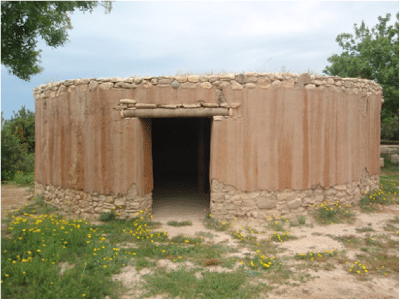
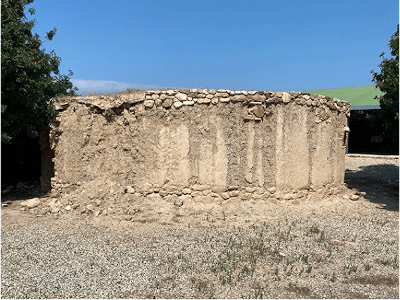
Lindy Crewe (Cyprus American Archaeological Research Institute) “Stabilisation and refurbishment of a Chalcolithic roundhouse visitor centre at the archaeological site of Kissonerga-Mosphilia, Paphos District, Cyprus”. In 2010, a reconstruction of the famous “Pithos House” was created as part of the visitor centre at Kissonerga-Mosphilia in order to integrate archaeology into an accessible narrative and encourage alternative tourism in the area. A 3D rendering of the roundhouse can be found here. Since then, heavy rains have severely damaged the roundhouse reconstruction and repairs are necessary to make the structure ready for visitors to the site. Work on the roundhouse is ongoing and a full report on the project will be available this summer.

The Kissonerga-Mosphilia roundhouse replica in 2011. (Photo: L. Crewe)
The extent of erosion caused by heavy rains on the exterior walls of the Pithos House replica. (Photo: L. Crewe, June 2020)

Click here for more information on applying for a Shepard Urgent Action Grant. 

ASOR plans to award an additional $15,000 in Shepard Urgent Action Grants in 2021. Award amounts may range from $2,500 to $10,000, with most awards ranging from $2,500 to $5,000. Applicants who request more than $5,000 will not be considered for smaller grants if their proposal is not successful; at present the program strongly encourages applications under $5,000 so that more urgent projects can be support. The application deadline is rolling, and review of applications is ongoing. Because these grants are intended for emergency (or truly urgent) activities, ASOR will strive to provide a response within four to six weeks from submission of the application. Funds are normally available within 5-10 business days after all paperwork has been completed by successful applicants, and transfer of funds is contingent on complying with U.S. and international regulations and laws. Questions about Shepard Urgent Action Grants should be directed to Marta Ostovich.

Ad Hoc Commitee For ASOR Language and Guidelines for Contested Territories

[vc_row fullwidth=”true” css=”.vc_custom_1490224714943{padding-top: 0px !important;padding-right: 0px !important;padding-bottom: 0px !important;padding-left: 0px !important;}”][vc_column][vc_single_image image=”92968″ img_size=”full” alignment=”center”][/vc_column][/vc_row][vc_row][vc_column][vc_column_text][/vc_column_text][/vc_column][/vc_row][vc_row fullwidth=”true” css=”.vc_custom_1490225468623{padding-top: 0px !important;padding-right: 0px !important;padding-bottom: 0px !important;padding-left: 0px !important;}”][vc_column width=”1/12″ css=”.vc_custom_1490225195470{margin-right: 10px !important;}” offset=”vc_hidden-sm vc_hidden-xs”][vc_column_text]

  SHARE

[/vc_column_text][mk_image src=”http://www.asortest.org/wp-content/uploads/2017/01/social-fb-icon4.jpg” image_width=”42″ image_height=”42″ hover=”false” custom_url=”https://www.facebook.com/ASOResearch/” margin_bottom=”0″][mk_image src=”http://www.asortest.org/wp-content/uploads/2017/01/social-tw-icon4.jpg” image_width=”42″ image_height=”42″ hover=”false” custom_url=”https://twitter.com/ASOResearch?ref_src=twsrc%5Egoogle%7Ctwcamp%5Eserp%7Ctwgr%5Eauthor” margin_bottom=”0″][mk_image src=”http://www.asortest.org/wp-content/uploads/2017/01/social-in-icon4.jpg” image_width=”42″ image_height=”42″ hover=”false” custom_url=”https://www.linkedin.com/company/american-schools-of-oriental-research” margin_bottom=”0″][mk_image src=”http://www.asortest.org/wp-content/uploads/2017/01/social-ml-icon_7.jpg” image_width=”42″ image_height=”42″ hover=”false” custom_url=”mailto:asor@bu.edu” margin_bottom=”0″][mk_image src=”http://www.asortest.org/wp-content/uploads/2017/01/blog-icon3.jpg” image_width=”42″ image_height=”42″ hover=”false” custom_url=”http://asorblog.org/” margin_bottom=”0″][/vc_column][vc_column border_color=”rgba(255,255,255,0.01)” width=”1/6″ css=”.vc_custom_1490365673198{margin-right: 20px !important;border-left-width: 2px !important;padding-right: 20px !important;padding-left: 20px !important;border-left-color: #99422f !important;}” el_class=”sticky-sidenav”][mk_divider divider_color=”rgba(255,255,255,0.01)” thickness=”1″ margin_top=”3″ margin_bottom=”3″][vc_widget_sidebar sidebar_id=”ca-sidebar-37292″ el_class=”.widget { overflow: hidden; margin-bottom: 0; }”][/vc_column][vc_column border_color=”rgba(170,170,170,0.01)” width=”1/2″ css=”.vc_custom_1490225606852{margin-right: 10px !important;margin-bottom: 30px !important;border-right-width: 2px !important;border-bottom-width: 2px !important;padding-top: 30px !important;padding-right: 30px !important;padding-left: 20px !important;background-color: #ffffff !important;border-right-color: rgba(227,228,228,0.75) !important;border-bottom-color: rgba(227,228,228,0.75) !important;}”][vc_column_text responsive_align=”left”]

2023 AD HOC COMMITTEE  FOR ASOR LANGUAGE AND GUIDELINES FOR WORK IN CONTESTED TERRITORIES

Charge for the Ad Hoc Committee on Language and Guidelines for Work in Contested Territories

Members of ASOR conduct fieldwork and research in volatile areas of the world, where political and ethnic boundaries are fluid and contested. The “facts” on the ground and in the minds of the peoples involved change regularly in these regions. ASOR’s top concerns in these matters are to support the work of its members and facilitate their activities in all the countries where they work. At the same time, we must be careful not to promulgate misleading or unsubstantiated claims to the territories involved. Beyond this, ASOR’s overarching mission, as stated in its Policy on Professional Conduct, includes maintaining the highest ethical standards of scholarship and public discourse wherever we work.

Difficulties arise with some regularity for ASOR’s Program Committee and Committee on Publications over how to handle the presentation of work in contested territories, and they are asking for guidance. Other committees –Honors and Awards, CAP, CH, DEI, and the Committee on the ASOR Policy on Professional Conduct –also wrestle with these issues. The charge to this Ad Hoc Committee is to examine the language we use to deal with such work (section E 7 in ASOR’s Policy on Professional Conduct, first published in 2014 and amended in 2019) and to determine if there is a clearer way to serve the needs of ASOR’s members in these situations, while at the same time maintaining our commitment to the highest ethical standards of scholarship.

Members

  • Geoff Emberling, Chair
  • Andrea Berlin
  • Petra Creamer
  • Scott Moore
  • Yorke Rowan

[/vc_column_text][vc_empty_space height=”100px”][/vc_column][vc_column border_color=”rgba(170,170,170,0.01)” width=”1/6″ css=”.vc_custom_1490571214409{margin-right: 10px !important;margin-bottom: 30px !important;border-right-width: 2px !important;border-bottom-width: 2px !important;padding-top: 30px !important;padding-right: 20px !important;padding-left: 20px !important;background-color: #ffffff !important;border-right-color: rgba(227,228,228,0.75) !important;border-bottom-color: rgba(227,228,228,0.75) !important;}”][vc_wp_posts title=”BROWSE THE NEWS ARCHIVE” number=”4″][/vc_column][vc_column border_color=”rgba(170,170,170,0.01)” width=”1/6″ css=”.vc_custom_1490225688999{margin-right: 10px !important;margin-bottom: 30px !important;border-right-width: 2px !important;border-bottom-width: 2px !important;padding-top: 30px !important;padding-right: 30px !important;padding-left: 20px !important;background-color: #ffffff !important;border-right-color: rgba(227,228,228,0.75) !important;border-bottom-color: rgba(227,228,228,0.75) !important;}”][vc_column_text] [/vc_column_text][/vc_column][/vc_row][vc_row][vc_column][vc_column_text]

[/vc_column_text][/vc_column][/vc_row]

Gifts Matched 2-for-1: Diversity Campaign Update May 4

Building a Foundation for a More Diverse ASOR

Update—May 4, 2021

ASOR is excited to announce a 2-for-1 challenge gift of $150,000 that will serve as the cornerstone of a targeted campaign (scheduled completion, June 2021) to raise $250,000 to promote diversity, equity, and inclusion in all of our endeavors.

ASOR needs to raise $75,000 to earn the $150,000 challenge gift. As of May 4, 2021, we have raised $35,100. We encourage you to give and join us on May 21-23 for our “Making May Matter—Webinarathon to Endow Diversity at ASOR” event. Each donation to Diversity Initiatives will include a registration to the three days of lectures and discussions on a wide range of topics.

This campaign will fund short-term and long-term initiatives that will advance the strategic planning started in 2020 by ASOR’s newly formed Diversity, Equity, and Inclusion Task Force. The purpose of this initiative is to permanently increase participation in ASOR by students and scholars who are African American/Black and Indigenous People of Color (BIPOC).

This ambitious, expedited campaign is made possible by a 2:1 leadership pledge of $150,000 by Trustee Carolyn Midkiff Strange. We can reach our goal by raising $75,000. Every dollar contributed (up to $75,000) will be matched with two dollars. A contribution of $100, will be matched with $200; a gift of $5,000, will be matched with $10,000; and so forth.

In the short-term, ASOR will use $50,000 to increase participation in ASOR by BIPOC students at the secondary, undergraduate, and graduate levels. $25,000 is in hand through a combination of prior gifts and current distributions. Part of these short-term funds will underwrite Summer Stipends and Annual Meeting travel grants for BIPOC students. The rest of the short-term funds will buoy an already-launched partnership with Archaeology in the Community. AITC is a successful non-profit centered in Washington D.C. that fosters student and community involvement in archaeology, with an emphasis on under-served groups. Together with AITC, and building on their experience, we are developing educational resources to promote engagement in archaeology by secondary level students.

ASOR will use the remaining $200,000 from this campaign to establish a permanent endowment that will generate $10,000 per year to support research scholarships, internships, and travel fellowships dedicated to BIPOC students. These fellowships will be a foundation for future efforts and will be a tangible sign of ASOR’s commitment to long-term change.

Extending social equity and equal opportunity throughout all sectors of our world is one of the foremost challenges facing us today. You can join ASOR in making this change happen. Please consider a gift of any amount to help us earn this extraordinary $150,000 challenge gift.

OTHER WAYS TO DONATE

Donate By PhoneDonate By MailMake A Pledge
(Donate Later)
Call ASOR:
(703) 789-9229
ASOR
209 Commerce Street
Alexandria, VA 22314
E-mail ASOR