2023 Nominees for ASOR Board Elections

2023 NOMINEES FOR ASOR BOARD ELECTIONS

The ASOR Trustee Nominations Committee has selected seven highly qualified members to stand for election for four open positions on the Board of Trustees. The Board sets the direction for ASOR and provides oversight for our organization. Among other responsibilities, members of the Board agree to attend two meetings each year, to participate thoughtfully in the governance process, and to contribute financially to ASOR.

There are five candidates running for two openings as Member-elected Trustees for 3-year terms (Theodore Burgh, Patricia Fall, Emily Hammer, Melissa Bailey Kutner, and Kiersten Neumann). There are two candidates for two openings as Institutionally-elected Trustees for 3-year terms (Eric Cline and Jason Ur).  All ASOR members are eligible to vote in the Member-elected Trustee Election, while only Institutional Representatives of the 60 ASOR-member schools may vote in the Institutionally-elected Trustee Election.

ASOR will conduct the elections by online ballot, and all members and Institutional Representatives will receive the appropriate ballot(s) via email on or around October 10, 2023. We will send out two reminders, and all ballots must be completed by 12:00 PM Eastern Time on Monday, November 13. If you have difficulties completing the online ballot (once they are distributed), please contact Marta Ostovich at programs@asor.org.

Nominees for Membership-elected Trustees
(two to be elected)
Theodore Burgh
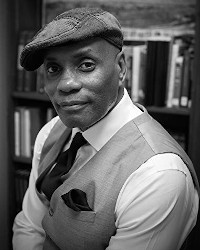
Theodore Burgh

Theodore Burgh is Professor and Chair of the Department of Philosophy and Religion at the University of North Carolina Wilmington. He holds his degrees from the University of Arizona (M.A./Ph.D.), Howard University (M.A.), and Hampton University (B.A.). His research interests are the archaeology of ancient Israel and the Near East, the Hebrew Bible, archaeomusicology (the study of ancient music culture), the reconstruction of Syro-Palestinian and Near Eastern music culture and cataloging musical artifacts, utilization analysis of Syro-Palestinian sacred and secular space, and ethnomusicology.

Mission Statement: I have been an active ASOR member since 1996 and a part of the membership committee for nearly 20 years. I now serve as Chair of this incredible group. As a trustee, I will continue to bring commitment and experience. Building on existing success, ASOR can expand its services to the Academy generally and to members specifically. For example, as a result of the pandemic, we have demonstrated that we can work and thrive virtually. We should continue these efforts to develop virtual archaeology as a sustained part of our organization. Moreover, we should continue implementing technology (e.g, live streaming, recorded Zoom lectures and papers). The popularity and inclusiveness of Zoom lectures displays the desire and need for this approach in the 21st century. These kinds of venues share the fabulous work of our field with new people and those who previously had little to no access to these invaluable sources. Lastly, I would like to see continued energy with the membership and outreach committee. Efforts with the Friends of ASOR will be essential to maintaining the organization’s future membership and developing inclusivity.
Patricia Fall
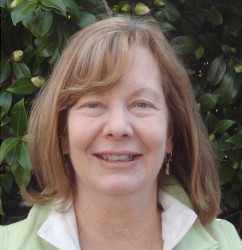
Patricia Fall

Patricia Fall is a Professor in the Department of Geography & Earth Sciences at the University of North Carolina Charlotte (UNCC). Prior to her appointment at UNCC, she held positions as Professor of Geography at Arizona State University and Charles La Trobe Professor of Geography at La Trobe University in Melbourne, Australia. Pat is an archaeologist and paleoecologist whose research explores human impacts on ancient environments, the influences of climate change on early agrarian societies, and modeling of human-environmental interactions. She has conducted NSF-funded research in the Mediterranean Basin, South Pacific and Caribbean. Pat has directed ASOR-affiliated excavations at Bronze Age Tell el-Hayyat, Tell Abu en-Ni‘aj, and Zahrat adh-Dhra‘ 1, Jordan and Politiko-Troullia, Cyprus. These projects elucidate social and past environmental dynamics underlying the rise of Bronze Age urbanism and document ecological impacts triggered by initial human colonization of islands. She currently directs a collaborative study of climate change and the agricultural responses it engendered around 4500-3500 years ago, stretching from the Levant to Cyprus, Sicily, and Sardinia. Pat has published 4 books and over 90 articles detailing the results of her research.

Mission Statement: I am committed to providing enhanced opportunities for students and scholars to engage in wide-ranging field, lab, and literary research regarding the ancient world. My participation in ASOR has been an important aspect of my entire research career in the greater Mediterranean. I have served on the Committee on Archaeological Research and Policy (CAP) for the last six years, on the Shepard Urgent Action Grant Committee for four years, on CAP’s Fellowship Committee for five years, and contributed to the development of CAP’s Policy on Professional Conduct. For the last two years, I have chaired the Fellowship Committee, which has overseen the application and award process for ASOR’s Student Fieldwork Scholarships (about 250 applicants in the past two years) and Project Research Grants (about 50 applications in the past two years). These programs have expanded in numbers and diversity of applicants, numbers and funding for scholarships and grants, range of research topics, and geographic breadth. I currently chair the ACOR NEH Fellowship Committee, and have served previously on six NSF grant proposal review panels. As a member of the ASOR Board, I look forward to further expansion of ASOR’s support for increasingly diverse student and professional contributions to the exploration of our human heritage.
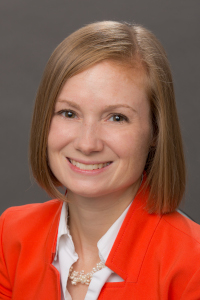
Emily Hammer

Emily Hammer is Assistant Professor of Archaeology and Digital Humanities at the University of Pennsylvania. She is an anthropological archaeologist interested in the development of urbanism and the history of mobile pastoralism in greater Mesopotamia, including the highland peripheries of the north and the alluvial plains of the south. She has surveyed and excavated in Iraq, Azerbaijan, Turkey, and the United Arab Emirates. Professionally she is known for her technical expertise in spatial analysis and both quantitative and visual analysis of remote sensing imagery, especially newly-declassified sources of archival imagery (including imagery from U-2 spy planes and Hexagon spy satellites). As a participant in the global collaborative project “LandCover6K,” she works with other historians and archaeologists to reconstruct land use over the last 6000 years across southwest Asia for inclusion in models of long-term climate and anthropogenic land cover change. Emily holds a PhD in Anthropology from Harvard University (2012) and a BA both in Mathematics and Classical & Near Eastern Archaeology from Bryn Mawr College (2006).

Mission Statement: ASOR has been central to my professional life from the beginning of graduate school continuing until today. I value the knowledge that I gain and the networks that I build at each annual meeting. In recent years I have contributed to the life of the organization through service on several standing committees, the Committee on Archaeological Research and Policy (CAP, two terms, including a term on the Fellowships Committee) and the Cultural Heritage Committee. I have further had the opportunity to participate in shaping ASOR’s evolving current directions through service on the Ad Hoc Committee on ASOR’s Name and the Ad Hoc Committee for ASOR’s Code of Conduct for Fieldwork Projects. Additionally, I co-chaired the “Landscapes of Settlement in the Ancient Near East” annual meeting session each year from 2015-2022.

ASOR has grown tremendously in the 17 years that I have been a member, and I have been excited to witness it expand to include both a more diverse group of members and scholarship concerned with a broader geographic area. To sustain and capitalize on this growth, ASOR must continue to adapt to meet the sometimes-disparate needs of members pursuing various goals at different career stages, especially as members face ever-changing classroom and research funding environments. As a primarily North American-based organization, we must do more to encourage and support truly equal collaborative partnerships with our local colleagues abroad. We must continue to confront the colonialist legacies of our disciplines, recruit diverse students to our fields, and find creative ways to communicate our research to a broader audience.
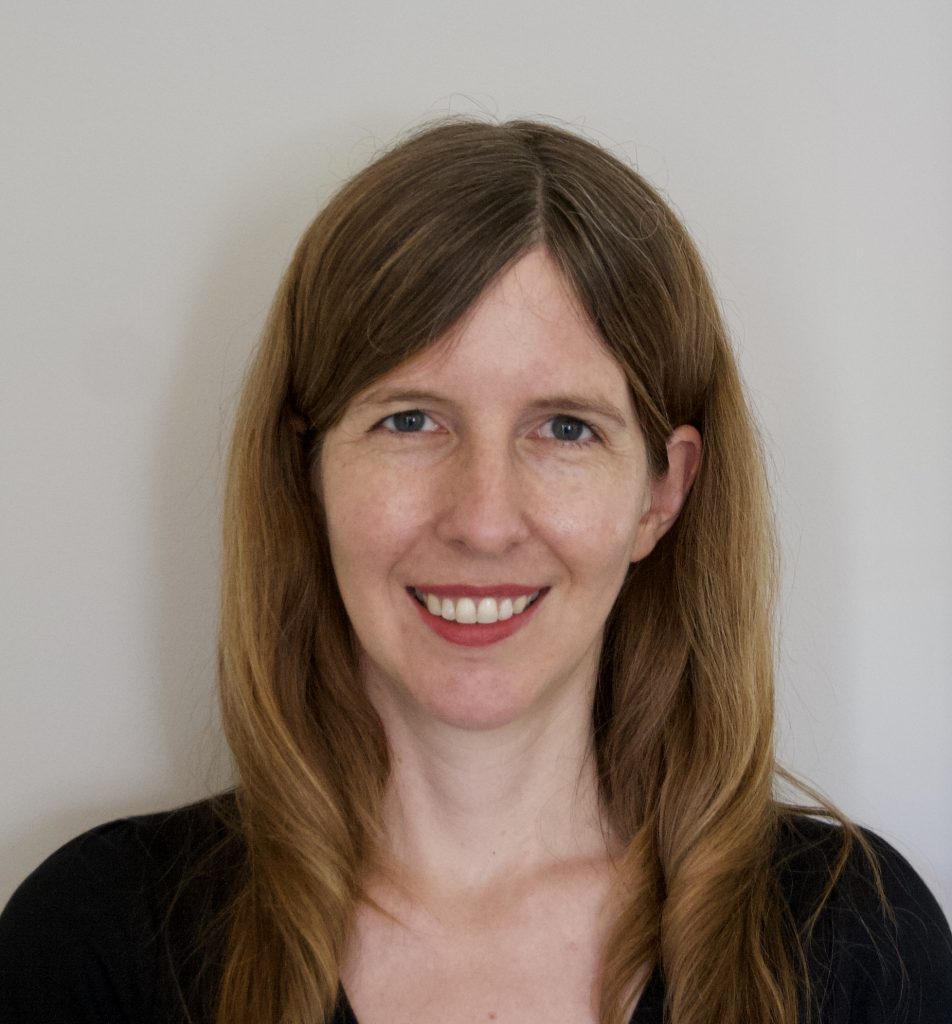
Melissa Bailey Kutner

Melissa Bailey Kutner is Assistant Professor in the department of Ancient Studies at the University of Maryland, Baltimore County. Her research focuses on the late Byzantine economy of Jordan and on the Roman economy more broadly, including issues of standardization and cognitive approaches to value. She has excavated at a variety of sites in Jordan since 2008, and since 2017 has acted as a co-director of the Dhiban Excavation and Development Project. This project investigates long-term occupation at the site of Dhiban in west-central Jordan: how such occupation has waxed and waned in relation to broader regional and political developments and how inhabitants of the site reused and repurposed architecture and features of the landscape. Dr. Kutner focuses especially on the late Byzantine prosperity of the site and its early Islamic transition. She also served as chair of the Archaeology of the Byzantine Near East session at ASOR for six years and has served on the ASOR Board of Trustees for three years.

Mission Statement: Throughout my career as an archaeologist, ASOR has played a central role in supporting my own and my colleagues’ research. In my time on the Board of Trustees so far, I have been excited to see ASOR increase accessibility with its hybrid meeting format, work to address its carbon footprint, and tackle a range of other issues related to access and sustainability. I look forward to seeing ASOR continue to grow in ways that increase its diversity, vibrancy, and relevance. I am interested in spreading awareness of dangers to heritage in ways that also forefront the needs of local communities, and that see archaeological heritage as inextricably linked to human needs and not in opposition to them. I also hope to promote best practices in field schools, including ongoing reflection on teaching methods, curricula, and inclusive policies, and to encourage more diversity among field school participants. Finally, as a new-ish parent of young children, issues of accessibility for parents and caregivers at conferences and in the field is also a growing concern of mine.
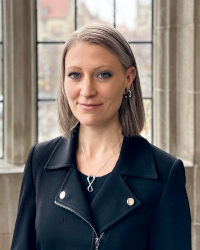
Kiersten Neumann
Kiersten Neumann

Kiersten Neumann specializes in the art and archaeology of West Asia, with a focus on Assyrian and Achaemenid material culture. She is Curator of the Institute for the Study of Ancient Cultures Museum (ISAC Museum [formerly Oriental Institute Museum]), Research Associate at ISAC, and Lecturer in the Department of Art History at the University of Chicago. In addition to co-editing The Routledge Handbook of the Senses in the Ancient Near East (2022), she has published numerous articles on sensory experience, ritualized practice, and visual culture, as well as on museum practice, collecting histories, and provenance research. At the ISAC Museum, she has curated such exhibitions as “Joseph Lindon Smith: The Persepolis Paintings” (2022), “Making Sense of Marbles: Roman Sculpture at the OI” (2022–2023), and “Artifacts Also Die” (2023), in addition to the museum’s permanent galleries as part of a complete renovation (2019). She has conducted fieldwork in Turkey (Tell Tayinat) and Greece (Athenian Agora), and collaborates on international museum, art, and cultural heritage projects and exhibitions. Originally from Vancouver, Canada, she received her B.A. and M.A. from the University of British Columbia and her Ph.D. from the University of California, Berkeley, during which time she also worked at the Badè Museum of Biblical Archaeology in Berkeley, ultimately as Associate Curator and Interim Director.

Mission Statement: ASOR has a unique way of inspiring me to continually increase my service to the organization—thanks to not only the rigorous scholarship and interdisciplinarity but also the widespread collegiality. As a long-time participant in annual meetings as a presenter and session chair (since 2008) and member of both the Program Committee (since 2019; Co-chair since 2022)—which I currently represent on the Chairs Coordinating Council—and the Ad Hoc Committee on ASOR’s Name (2020), I’ve witnessed the heartening growth of ASOR’s membership and the thoughtful governance of the members of the Board of Trustees that has made this possible. I would bring to the Board experience from work in both academic and museum spheres; service on grant-awarding, advisory, and acquisitions committees; participation in local and international cultural heritage and community engagement initiatives; mentoring and advising students; and efforts in development, finance, marketing, and public relations.

As a Board Member, I would advocate for, first, increased recognition of museums and associated cultural institutions (and the professionals who bring these spaces to life)—and related public education and outreach—as an integral branch of ASOR and finding ways of expressing this in its programs, projects, and support initiatives. Second would be expanding accessibility, diversity, equity, and ethical standards across the organization. The steps ASOR has made in this respect are strong: the impassioned work of such committees as Early Career Scholars; Diversity, Equity, and Inclusion; Initiative on the Status of Women; and Contested Territories, for example, has and continues to help ASOR evolve in pivotal ways, yet we can do more—for example, we could expand mentoring opportunities for students, increase support for underrepresented groups, and update with more regularity current procedures and guidelines. Third, I would love to bring to the Board my experience working with cultural heritage and diaspora communities and artists, finding ways to expand our partnership and collaboration opportunities with people intimately connected with the regions, histories, and cultures that are at the core of ASOR’s efforts.

Nominees for Institutionally-elected Trustees
(two to be elected):
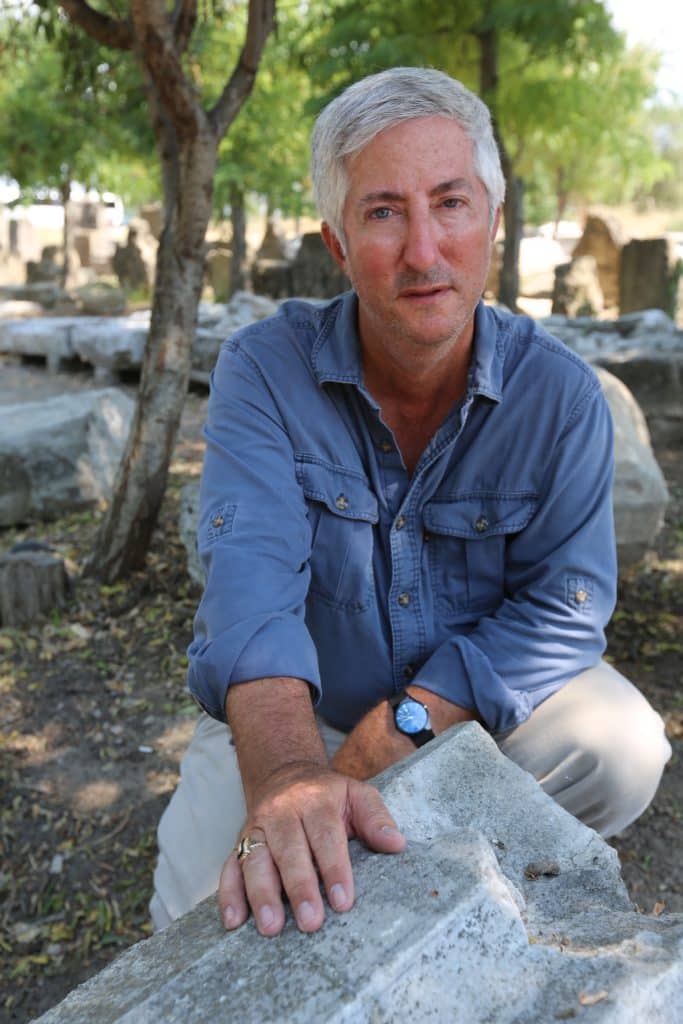
Eric H. Cline

Eric H. Cline is Professor of Classics and Anthropology, the former Chair of the Department of Classical and Near Eastern Languages and Civilizations, and the current Director of the Capitol Archaeological Institute at George Washington University, in Washington DC. A National Geographic Explorer, NEH Public Scholar, Getty Scholar, and Fulbright Scholar with degrees from Dartmouth, Yale, and the University of Pennsylvania, he is an active field archaeologist with more than 30 seasons of excavation and survey experience in Israel, Egypt, Jordan, Cyprus, Greece, Crete, and the United States, including ten seasons at Megiddo (1994-2014), where he served as co-director before retiring from the project in 2014, and another ten seasons at Tel Kabri, where he currently serves as Co-Director with Assaf Yasur-Landau. He is the author or editor of twenty books and nearly one hundred articles; translations of his books have appeared in nineteen different languages. He has also received the ASOR Service Award (twice), the G. Ernest Wright Publication Award, the Nancy Lapp “Best Popular Book on Archaeology” Award (twice), and was the Keynote Speaker in 2019.

Mission Statement: If memory serves, I have been a member of ASOR for almost 40 years. I first joined as a graduate student in 1984 and have attended the annual meeting almost every year since. I have gone from being the youngest in the room to being one of the oldest and have served in a variety of capacities over the years, including as co-editor of BASOR; an elected member of the Board of Trustees; and a member (and sometimes Chair or VP) of COP, CAP, CAMP, the Program Committee, the Nominations Committee, the Development Committee, and the Executive Committee, among others. As a result, over the years I have had a ring-side seat and have watched ASOR grow ever larger since its long-ago split with AAR and SBL, stretching to cover new areas, both geographically and chronologically, and becoming a fully functioning powerful entity in its own right. I am proud of what has been accomplished, through thick and thin, trials and tribulations, over the years, and look forward to once again helping to serve ASOR’s best interests as a member of the Board of Trustees and to assisting the next generations of scholars achieve continued success in the coming years.
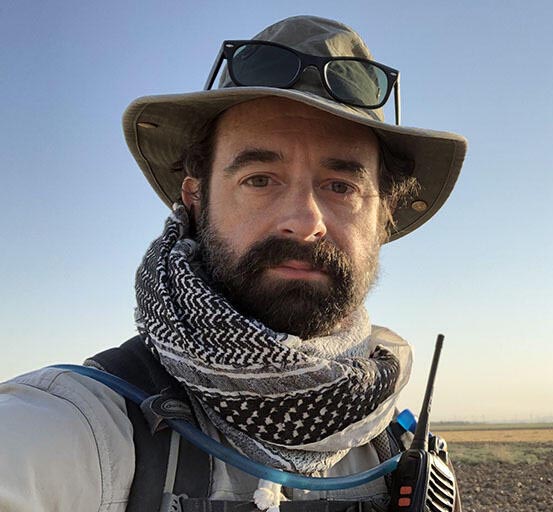
Jason Ur

Jason Ur is Stephen Phillips Professor of Archaeology and Ethnology in the Department of Anthropology at Harvard University. He specializes in early urbanism, landscape archaeology, and remote sensing, particularly the use of declassified US intelligence imagery. He was trained in Anthropology at the University of Pennsylvania (BA 1994) and in Near Eastern Languages and Civilizations at the University of Chicago (PhD 2004). He has directed field surveys in Syria, Iraq, Turkey, and Iran. He is the author of Urbanism and Cultural Landscapes in Northeastern Syria: The Tell Hamoukar Survey, 1999-2001 (2010). Since 2012, he has directed the CAP-affiliated Erbil Plain Archaeological Survey, an archaeological survey in the Kurdistan Region of northern Iraq. He is also preparing a history of Mesopotamian cities.

Ur joined ASOR as a student member in the late 1990s.  He held the ASOR Mesopotamian Fellowship in 2000-2001 and served on the Committee on Mesopotamian Civilization from 2009-2013. He was the plenary speaker at the 2014 ASOR annual meeting. He organized and chaired the Settlement and Society in the Ancient Near East session from 2008-2010. The Archaeology of the Kurdistan Region of Iraq session, which he founded and chaired from 2017-2019, has now been accepted as a Standing Session.

Mission Statement: As a member of ASOR’s Board of Trustees, I will promote its mission to create and disseminate knowledge of the history and culture of the societies of the Near East, past and present. I intend to champion a geographically-inclusive ASOR that involves broader areas of West Asia beyond ASOR’s traditional areas of strength, and a comparative anthropological perspective to complement its culture-historical emphases. I’m particularly interested to amplify new voices in ASOR: those of our research partners in the Middle East, and those of the next generation of scholars in our graduate and undergraduate classrooms. Finally, I hope to advocate for digital methods of research and outreach, with the goal of making ASOR members’ scholarship more accessible to our colleagues, to the public, and to future generations.
New Early Career Scholars Resources

NEW RESOURCES FOR EARLY CAREER SCHOLARS

ASOR is pleased to offer a growing library of online video resources aimed at our early career members. These videos will cover a range of topics such as the job market, teaching, publishing, and tutorials on using digital resources. Videos are created by early career scholars who are experts in their field and have direct experience with the topics they’re discussing.

Many students will earn their PhDs from an R1 university, but jobs at those institutions are rare and highly competitive. Did you know that many Ancient Near Eastern scholars have been successful at securing tenure-track jobs at non-R1 universities and colleges? Dr. Julia Troche created the video “Navigating the “In Between”: Identifying a Career Trajectory in Academia for the Early Career Scholar” to demystify the different types of institutions that offer teaching and research positions, and crucially, how to read their job ads and frame yourself to be a competitive candidate for those positions. In “Applying for a Community College Position”, Prof. Stacy Davidson gives meaningful advice and honest information about the pros and cons of working at Community Colleges, and the types of opportunities available at such institutions.

Finally, in the first round of videos in the digital library, we also have a practical tutorial on using ArcGIS StoryMaps by Dr. Matthew Howland. This tutorial is useful for those thinking about publishing their fieldwork data digitally or it can be used as a fantastic teaching resource to train both students and instructors on the step-by-step process of creating a StoryMaps presentation.

We hope you enjoy these resources! Our library of resources is ever growing, so keep an eye out for future videos in this series, and we warmly welcome your suggestions for useful topics as we grow this library of resources.

Check out the videos below or find them in our Early Career Scholars playlist on our YouTube channel.

Professor Julia Troche

Dr. Julia Troche is and Egyptologist and Associate Professor of History at Missouri State University, in Springfield, MO. She is committed to advocating for students, early career scholars, and contingent faculty, and fostering inclusive spaces for learning about the ancient world. In 2022 she was awarded her university’s highest teaching award followed by the Missouri Governor’s Award for Education Excellence. Julia’s areas of instruction and research include social history, religion, archaeology, and reception studies of antiquity. She co-founded both the American Research Center in Egypt, Missouri Chapter (where she serves as a second term vice president) and the annual Missouri Egyptological Symposium. She also sits on the Board of Governors for the American Research Center in Egypt. Her first book, “Death, Power and Apotheosis in Ancient Egypt: The Old and Middle Kingdoms,” was published with Cornell University Press in 2021. Julia received her PhD from Brown University’s Department of in Egyptology & Assyriology in 2015, and her BA in History from UCLA in 2008.

Professor Stacy Davidson

Professor Stacy Davidson has designed and taught over 30 credit and non-credit courses on ancient Egypt, North Africa, the ancient Mediterranean, ancient Southwest Asia, and ancient languages. She is the founder and Team Lead of the Egyptology State of the Field project (egyptologystats.org) and is a Mellon/ACLS Community College Faculty Fellow for her project We Are For Egypt. Professor Davidson has been awarded a Lieberman Teaching Excellence Award and College Scholar award from her college as well as a national NISOD Excellence Award. You can find out more about her at scribespalette.com.

Professor Matthew Howland

Matthew D. Howland is an Assistant Professor in the Department of Anthropology and Director of the Geospatial Archaeology Laboratory at Wichita State University. Prof. Howland holds a Ph.D. in Anthropology from the University of California San Diego. His research focuses on the application of 3D and spatial techniques, including remote sensing, to understand the development of social complexity through fieldwork in the Eastern Mediterranean, Georgia, and Kansas. Prof. Howland’s research also involves the use of digital datasets for interactive, community-engaged storytelling on web-based platforms such as ArcGIS StoryMaps and Sketchfab.

Harris Grant Report: Khirbat al-Mukhayyat, Jordan

Excavations at Khirbet al Mukhayyat in Jordan

2023 Harris Grant Report: Khirbat al-Mukhayyat, Jordan

A generous grant from ASOR—the Charles Harris Project Grant—helped support the 2023 excavation season of the Khirbat al-Mukhayyat Archaeological Project (KMAP), directed by Debra Foran. Mukhayyat (or the ancient town of Nebo) is located approximately 9 km northwest of the city of Madaba in Jordan.

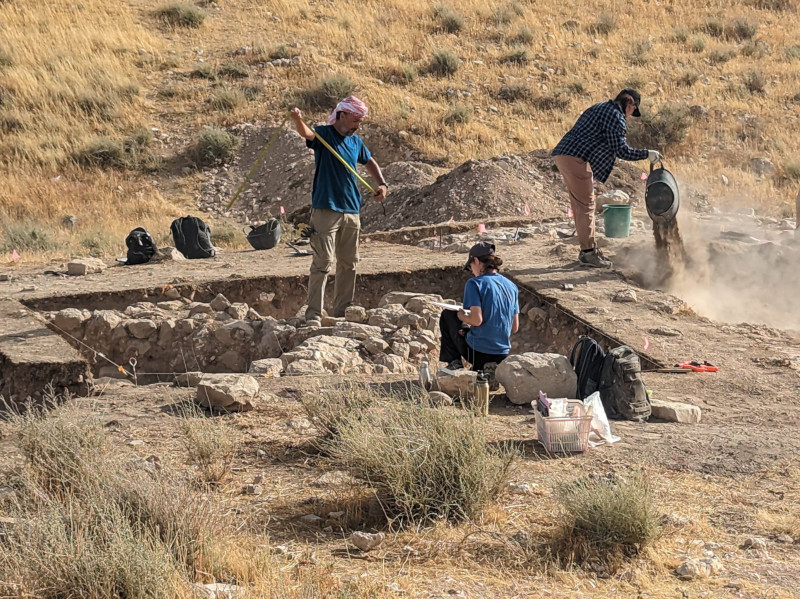
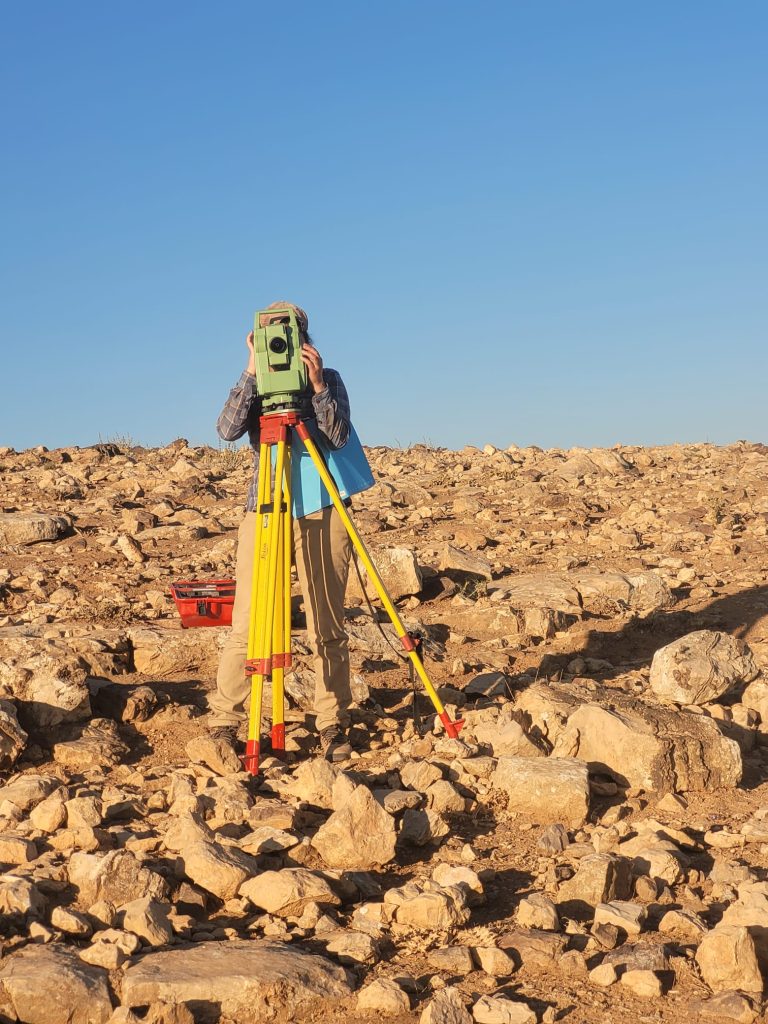
Recording Hellenistic period walls in Field A

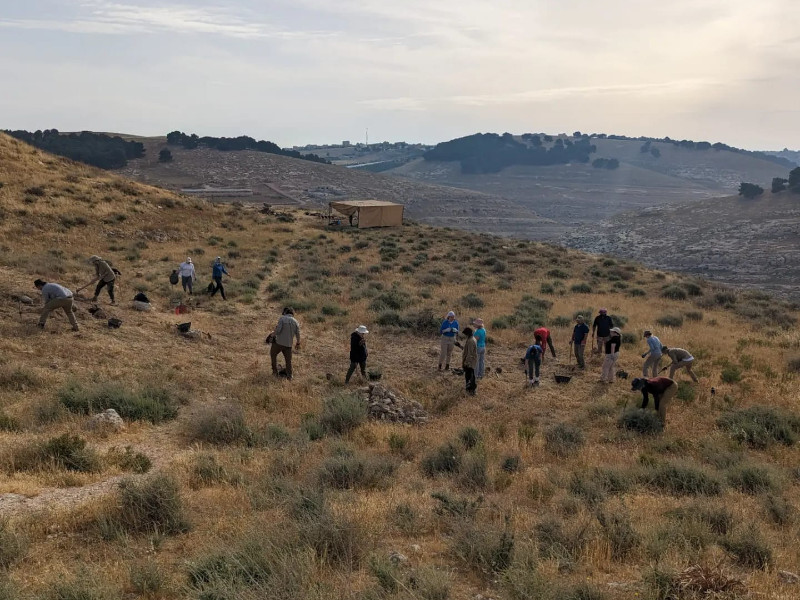
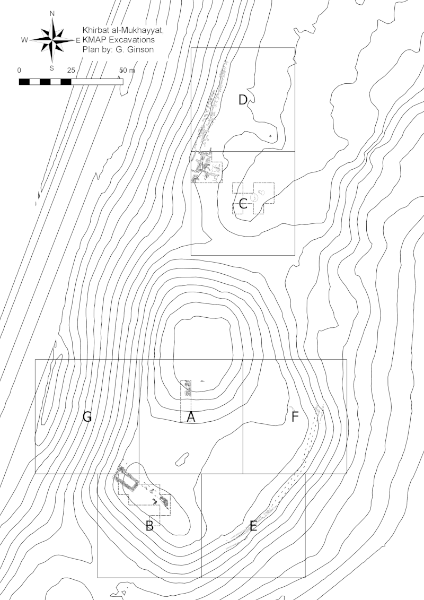
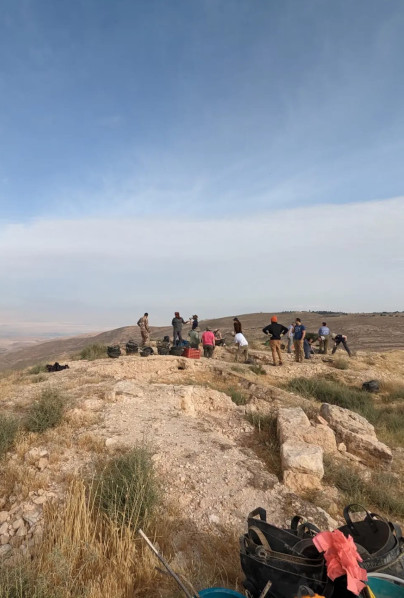
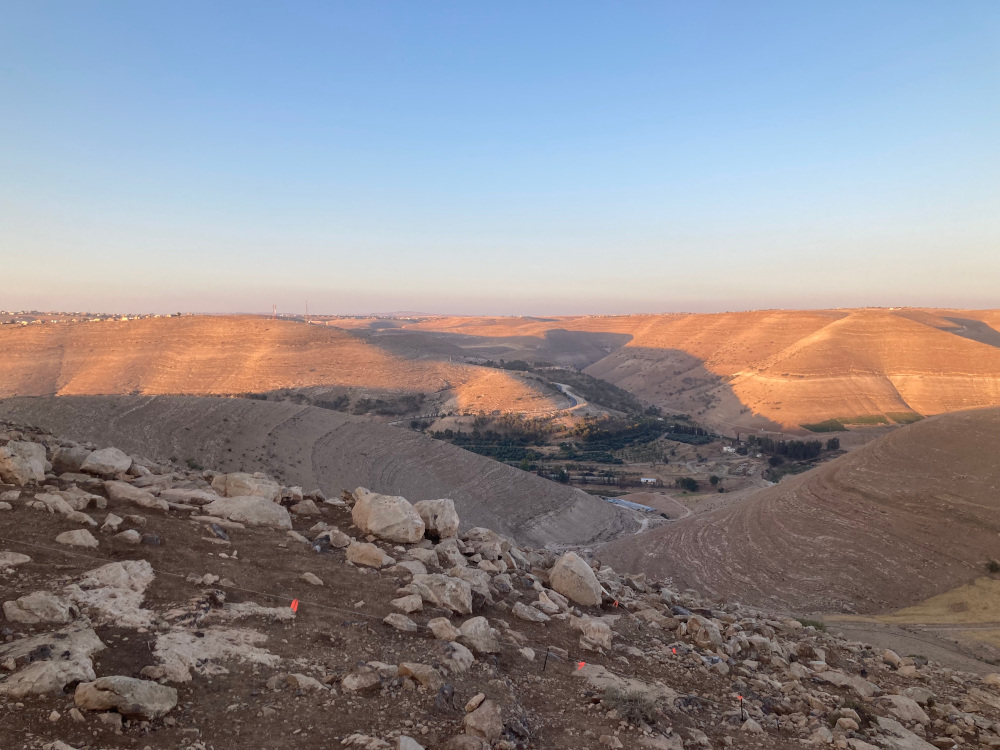
Excavations at Mukhayyat this season focussed on the southern end of the site (Fields A and B), specifically on a plateau inside the major Iron Age fortification wall identified in previous seasons. Our goals for this season were to clarify several remaining questions related to the Hellenistic and Iron Age fortification system and to identify clear, stratified contexts that would reveal the nature and sequence of occupation in this area. In particular, excavations sought to clarify the length of the occupation during the early first millennium BCE and to ground-truth hypotheses derived from the analysis of survey material from the early 2000s. The excavations succeeded in the identification of architecture and contexts from the Iron Age and in the unexpected discovery of architecture and installations from the Hellenistic period. These results have created a strong foundation for continued excavation in this area.

Field school students clearing the ground for excavation
Fields of Excavation at Khirbat al-Mukhayyat
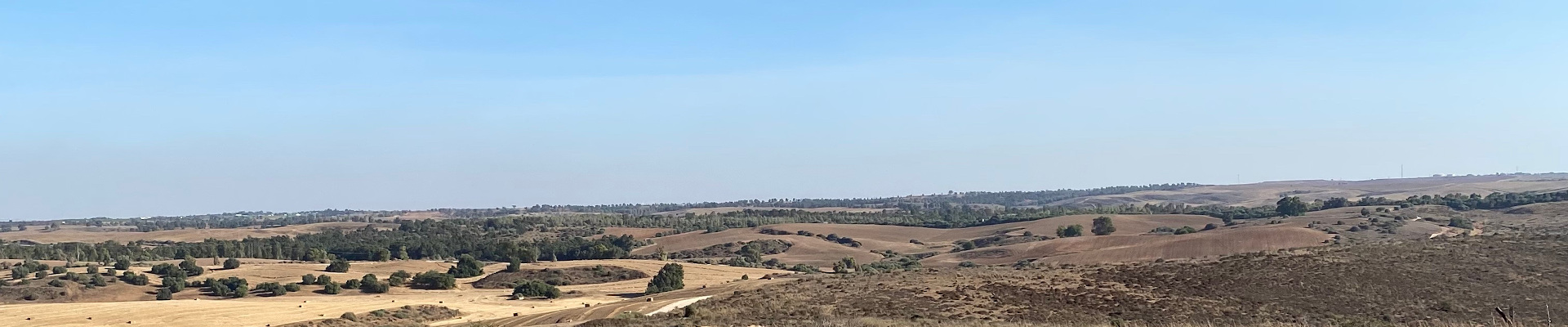
Excavations in Fields A and B, looking west toward the Jordan Valley.

Concomitant with these goals, the survey component of KMAP succeeded in mapping and conducting limited surface collections at two nearby sites: Khirbat al-Fayha and ‘Ayun adh-Dhib. This survey sought to document the Iron Age and Early Bronze Age remains found there and to better understand the region surrounding Mukhayyat during these periods. Similarly, the grant from ASOR helped to support specialist research on subsets of the larger project. In previous seasons, salvage excavations conducted at the behest of the Department of Antiquities recovered human remains from several mortuary contexts under threat and, in 2023, an inventory and preliminary analysis were completed. Lastly, as a part of the development of a Community Based Archaeology Program, a portion of the excavation team recorded past and ongoing illicit collecting episodes (“looting”), considering the motivations for such activity in order to better understand how sites might be protected in the future.

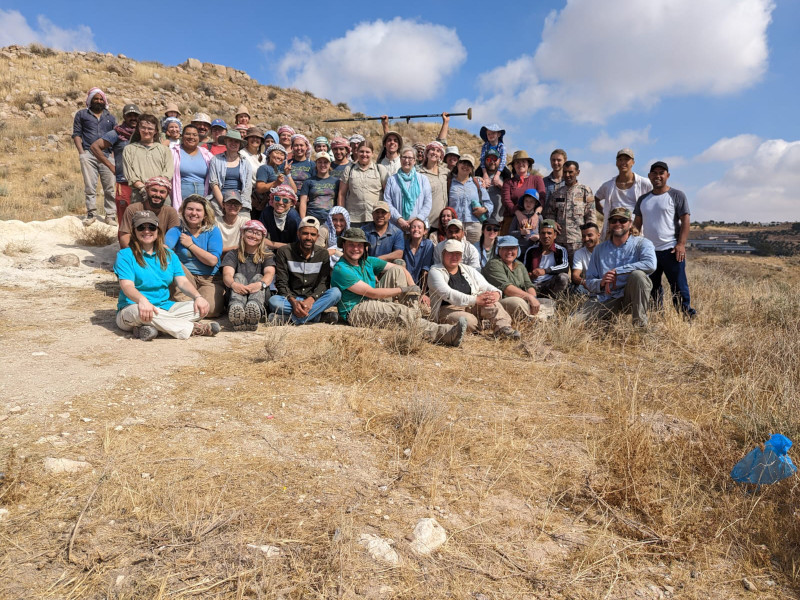
The KMAP team at the end of the season

The KMAP team is grateful for the support of ASOR and looks forward to building on this research in future seasons.

Andrew Danielson, Field Director of the Khirbat al-Mukhayyat Archaeological
Project (University of British Columbia)

Debra Foran, Director of the Khirbat al-Mukhayyat Archaeological Project
(Wilfrid Laurier University)

With the collaboration of:

Mashour Fshaikat (Department of Antiquities of Jordan, Madaba Directorate), Gregory Braun (University of Toronto), Rose Campbell (University of California, Los Angeles), Grant Ginson (Trent University), Věra Doležálková (Central Bohemian Archaeological Heritage Institute), Jennifer Botica (North Island College), Heidi Fessler (Loyola Marymount University)


Learn more about the Khirbat al-Mukhayyat Archaeological Project on their website or their Instagram!

ARS 30: Tel Kedesh I

NEW ARCHAEOLOGICAL REPORTS PUBLICATION

University of Michigan and University of Minnesota Excavations at Tel Kedesh I: The Hellenistic Archive and its Sealings

by Sharon C. Herbert

This is the first volume in a projected series of final reports on the 1997-2012 University of Michigan/University of Minnesota excavations at Tel Kedesh, located in the Upper Galilee of modern Israel and the hinterland of ancient Tyre. It presents the 2nd century BCE Hellenistic archive and the 2000+ sealings found there. The Kedesh archive complex was situated within a large, multipurposed administrative building, first constructed under Persian rule in the late 6th century BCE and then modified under Ptolemaic and Seleucid rule in the 3rd and 2nd centuries BCE. The sealings in the archive date to the final Seleucid phase of occupation in the first half of the 2nd century BCE. The first part of the volume situates the Kedesh archive within the context of excavated Hellenistic archives from Carthage in the west to Selucia-on-the-Tigris in the east and reflects on the varieties of archives, clienteles, and sealing practices so far known from the Hellenistic world. The second part presents an annotated illustrated catalog of the images and iconography of the 1,733 readable impressions found on the sealings. The subject matter of the 1,293 seal rings that produced the impressions was for the most part Greek.

With contributions by Donald T. Ariel, Andrea M. Berlin, Paul Lesperance, and Anastasia Shapiro.

ASOR Archaeological Reports, Volume 30, September 2023, 584 pages, 285 b/w figures, 106 b/w plates, 978-0-89757-118-0, $99.95.

Special Offer for ASOR Members

ASOR members (with a mailing address in the USA) can purchase a copy of ARS 30 at the discounted price of $40.00 (ca. 65% discount off the list price + $6.00 US media mail shipping) through November 30, 2023, while supplies last. Purchases are restricted to one volume per member. We are unable to offer this discount to members without a US mailing address due to international shipping costs, but you can purchase and ship a copy through the ISD link below. Please contact programs@asor.org with any questions. Click here to purchase your discounted copy in the online store in ASOR’s Portal.

Available from ISD — Distributor of Scholarly Books
www.isdistribution.com

Fieldwork Report: Megan Nishida

Kites in Context and Khirbat Iskandar 2023: Two Projects, Both Alike in Dignity

Megan Nishida, 2023 Strange-Midkiff Fieldwork Scholarship Recipient

This year, thanks to the Strange-Midkiff Fieldwork Scholarship awarded by ASOR, I was able to participate in two projects in Jordan, Kites in Context and Khirbat Iskandar. This was my first field season in Jordan, so I was thankful to be able to experience two unique projects, in different landscapes and contexts, each with important contributions to the story of the human experience in Jordan.

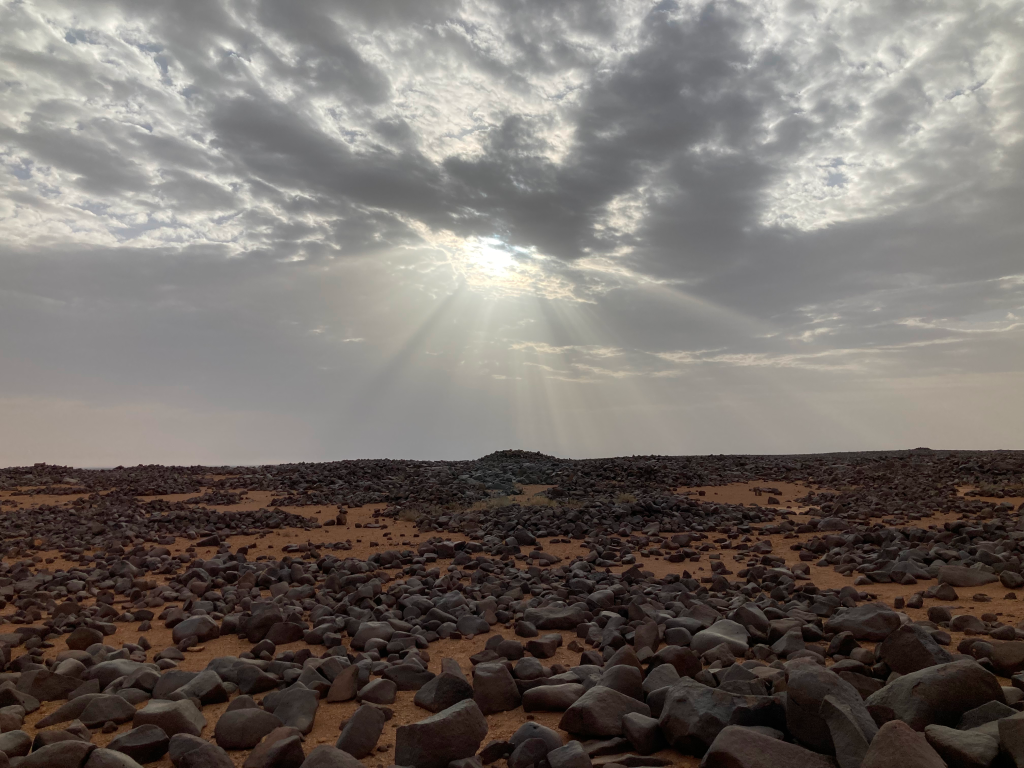
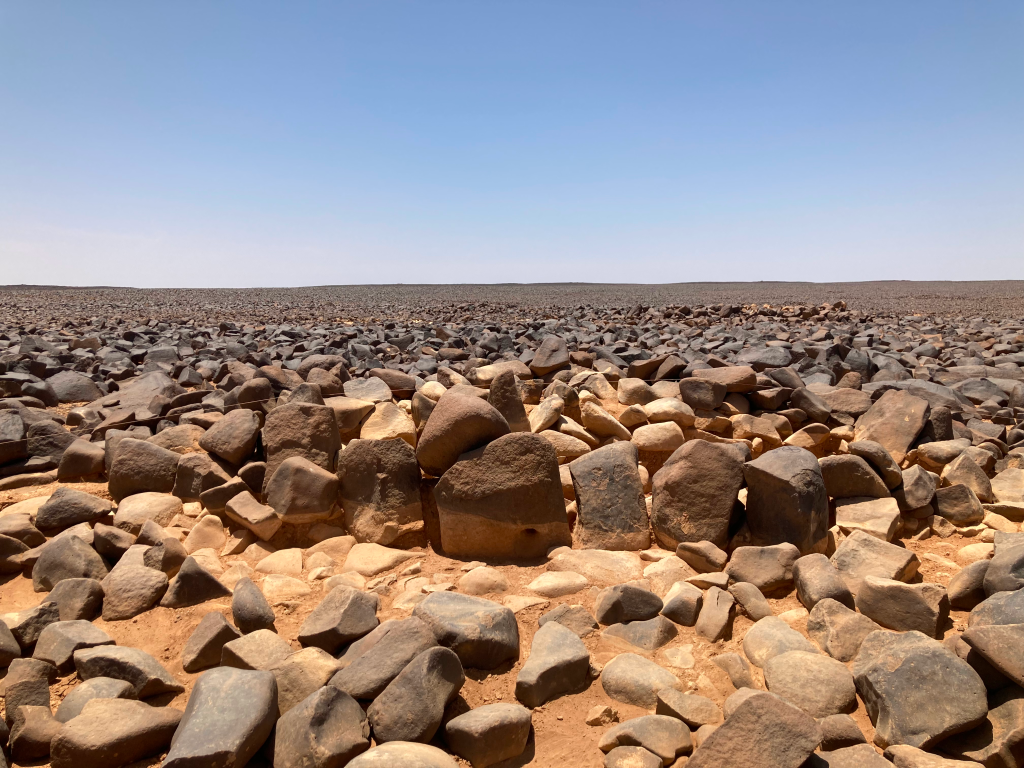
Photo 1: The intensity of the sun shining down onto the archaeological landscape in the black desert meant the group took a break at lunch time to escape the worst of the heat. Photo by Megan Nishida.

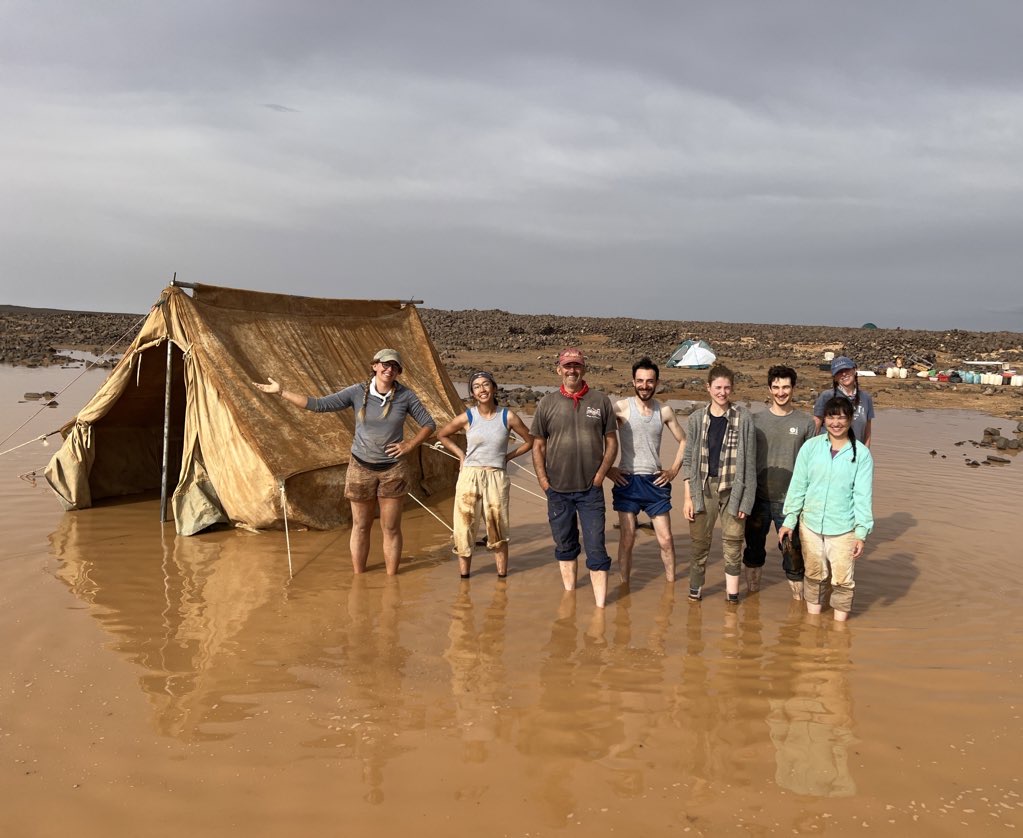
Kites in Contexts saw our team of nine drive five hours into the eastern desert – the badia – to investigate Neolithic hunting traps known as kites and the structures and landscapes associated with them. Before I left for Kites in Context, I had believed I would experience four weeks of beating sun, fierce winds, ancient landscapes, and relaxed camaraderie (Photo 1). Within the first two weeks, our camaraderie was fierce, cemented not because of the heat, but because of the unexpected rainstorm and subsequent flood that laid waste to our camp and our route out of the desert (Photo 2). Our camp’s location at the bottom of a catchment basin meant the two days of rain all eventually flowed into the wadi, or river, near where we made camp.

Although tumultuous, the weather did not dampen our spirits and our work continued after a couple days of drying out. All told, the team excavated two cells of a kite and two structures in the vicinity of the kite. It took a while to train my eye to understand the story written in the layers of stratigraphy we pulled back (Photo 3). Generations of communities inhabiting this landscape have continuously altered the landscape, each moving basalt stones to suit their needs for shelter or to control animals, in the process obfuscating the remnants of the more ancient past. It was a valuable experience in an archaeological context and landscape completely new to me. I am thankful to have had this absolutely unforgettable experience and to have forged such close bonds with the team.

Photo 2: The flood that followed after over two inches of rain fell in the desert meant we had to quickly, but successfully, evacuate the kitchen tent before our food stores were ruined. Photo by Dr. Chad Hill, Kites in Context.
Photo 3: The vagaries of time and preservation mean that the only thing left of the Neolithic communities who originally created these structures are the large stones they moved into place. Photo by Megan Nishida.

After Kites in Context concluded, I joined another team working at Khirbat Iskandar. Khirbat Iskandar is an Early Bronze Age III/IV tell site, notable for the continuity of urban identity into the EB IV, at a time when other communities were abandoning their urban centers. Unlike previous field seasons focused on the tell site, the goal of this season was to better understand the use of the landscape around the site, including around the large hill, Umm el-Idham, to the north of the site (Photo 4).

Photo 4: The first megalithic feature was excavated on the west side of Umm el-Idham and although we had to wake up early to beat the heat, we were treated to a beautiful sunrise everyday when we got to site.

Over the course of this work, I helped conduct excavations at three megalithic features and record archaeological features identified through a pedestrian survey of Umm el-Idham (Photo 5). When not out in the field, the team worked to keep on top of the thousands of artifacts we identified and collected. As someone with a background in primarily North American archaeology, I was daunted at first by wholly different archaeological world I found myself in. However, I was lucky to be amongst a supportive team of experienced project directors, field supervisors, and fellow excavators, who were more than happy to share their hard-earned wisdom and insights into the archaeology of the Early Bronze Age. I am extremely thankful for the crash course in pottery – I gained valuable experience in identifying pottery typology and chronology and in drawing objects and pottery profiles.

Both projects were unique and rewarding experiences. I am thankful for the opportunity to have worked in Jordan and been able to get to know the country, its people, and its archaeology. I know what I learned on these projects will be extremely beneficial as I build a regional and chronological framework for my dissertation research on the EBA site of Bab adh-Dhra’. A most sincere thank you to Carolyn Midkiff Strange, ASOR, Drs. Yorke Rowan, Chad Hill, Suzanne Richard, Jesse Long, and Marta d’Andrea for allowing me to have an unforgettable summer participating on the Kites in Context and Khirbat Iskandar projects.

Photo 5: One of the new techniques I was able to learn this field season was how to operate a dumpy level and total station. Photo by Natalia Handziuk.

Megan Nishida is currently a second year PhD student at the University of Notre Dame. Her PhD research focuses on the mortuary practices at the Early Bronze Age site of the Bab adh-Dhra’.

Want to help more students and early career archaeologists get into the field? Donate to the cause today by selecting “Student Support” as your gift purpose!

In Memoriam: Younis Ali al Kawash

Fteah Olive Press Facilities

IN MEMORIAM: YOUNIS ALI AL KAWASH (1977-2023)

With deep regret, we share the news that Younis al Kawash, a long-time contributor to ASOR’s projects in Libya, was killed along with his family during the recent flooding of storm Daniel. Born and raised in the city of Derna, situated on the eastern coast between Benghazi and Tobruk, Younis studied archaeology at the local university and became the director of the local office of the Libyan Department of Antiquities, where he served from 2005-2015.

During this period, he participated in site documentation training workshops run by the American Archaeological Mission to Libya at the UNESCO World Heritage site of Cyrene and eventually helped lead similar courses in Leptis Magna and the Jebel Nafusa. As ASOR expanded its Cultural Heritage Initiatives to Libya in 2017, Younis and his colleagues in the Derna office assisted in the documentation and reporting on damage to local cultural heritage sites.

According to Salah Sadullah, Museums Director for Eastern Libya, when Derna was seized by ISIS forces in 2014, armed extremist soldiers searched the local Department of Antiquities office. Younis was asked if he had any antiquities, and he deflected the question, saying that there had been some basic ethnographic collections and Islamic tomb stones once stored at the office, but that they had already been sent to the storerooms of Cyrene for safekeeping. In fact, Younis had secretly removed the entire collection of Roman antiquities from the office, which doubled as a local museum, and hidden them in hole he dug in the floor of his brother’s home goods store located on the ground floor of the apartment building shared by the Kawash family. After the city was liberated from ISIS, the entire collection was recovered intact.

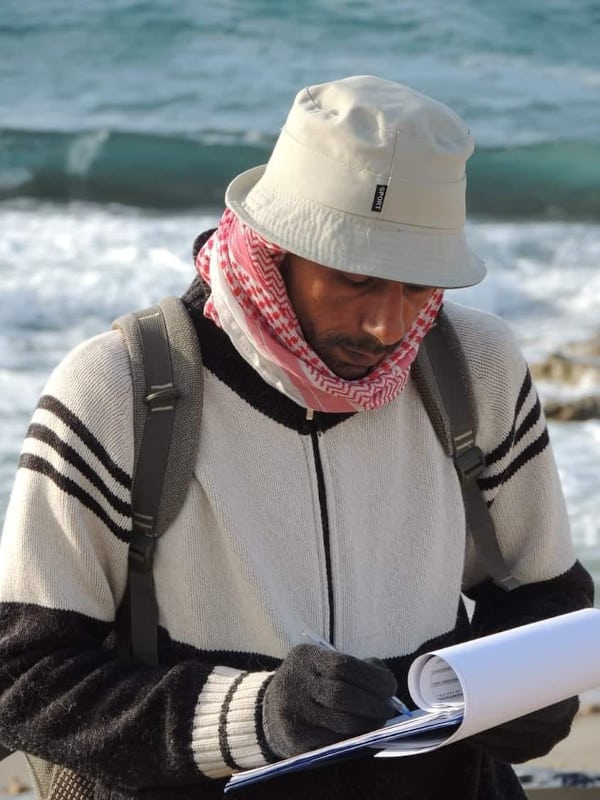
Younis, pictured here on during a survey of the coast near Leptis Magna, contributed to many field surveys in both eastern and western Libya.

“In the eyes of the entire archaeological community in Libya, Younis is considered a hero for his actions during this difficult period,” reflected Dr. Ahmad Emrage, ASOR’s representative in eastern Libya. While his actions are emblematic of a broader community of dedicated civil servants who work to protect Libyan cultural heritage every day, he and his family went above and beyond to protect the rich history of Derna at a time of mortal threat.

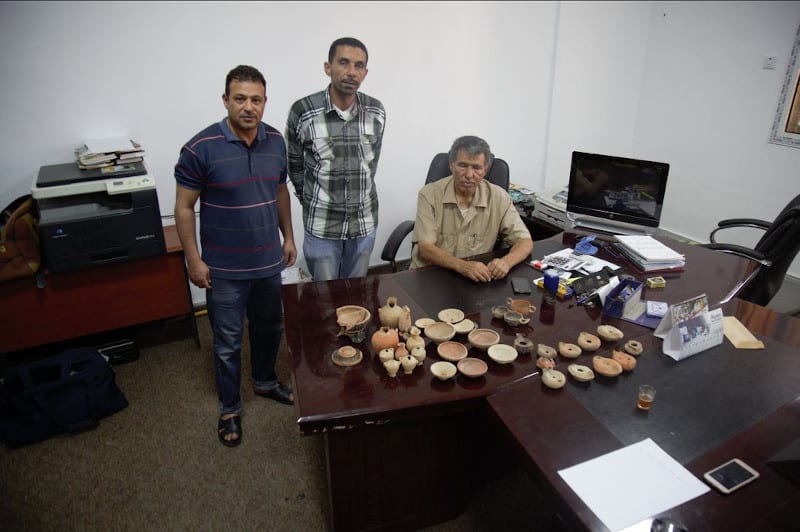
Younis and Salah Sadullah with a portion of the archaeological collection hidden in the home of the Al Kawash family while the city was occupied by ISIS and returned safely to the Department of Antiquities in 2018. (DoA Shahat)

In recognition of his exceptional service, Younis was promoted in 2018 to the position of the Director of the Office of Archaeological Protection for the entire eastern region of Libya. In this capacity, he helped with many public outreach activities, and facilitated the safe return of approximately 1,800 objects to the Department of Antiquities from ordinary citizens. Salah Sadullah fondly remembers working alongside Younis during this period: “He was energetic, he loved his work, and he was always what we would call a gentleman. He participated in many training workshops and he was always seeking new tools to make our work easier. He would even spend his own money to get something like a drone, and then Younis would become a go-to guy for drone documentation.”

Younis was also a welcome addition to any field team. Dr. Emrage shared his recollection of fieldwork with Younis: “He was always a pleasure to work with on a survey because he was such a friendly guy. In 2021, he contributed to the survey that ASOR sponsored in the area surrounding the UNESCO World Heritage site of Cyrene with the support of the Ambassadors Fund for Cultural Preservation. He was also very dedicated to his family. While most of the team stayed in a rented house, Younis would drive home to Derna every night and then wake up early the next morning to drive back to our survey area. He would always be the first one on site, and the first one to greet us in the morning.”

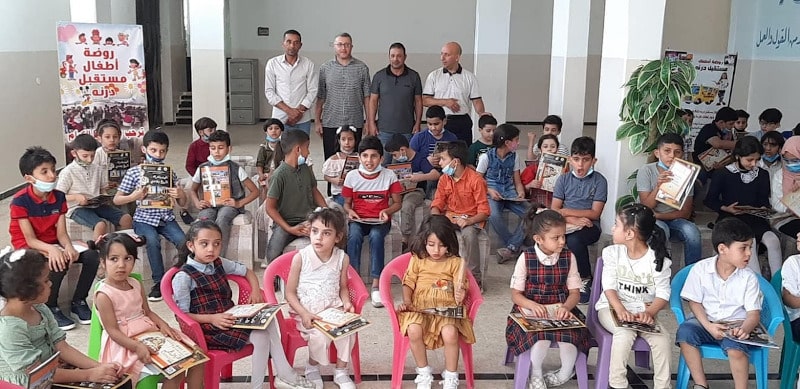
Younis (far left), seen here during ASOR's AFCP project in 2021, also made regular contributions to heritage outreach efforts in eastern Libya.

According to Dr. Ahmed Hossein, former Chairman of the Department of Antiquities of the Provisional Government of Abdullah al-Thinni. “Younis was one of the most talented and dedicated members of our staff. What can I say? May God have mercy on him and his family.”

On the night of September 10, he was on the rooftop of his apartment building live streaming images from Wadi Derna, where the floods already threatened to wash out a nearby bridge. The rains had subsided and members of the neighborhood on both sides of the wadi had come outside to witness the torrent flowing through the riverbed. Sometime in the following hours, two dams upstream of Derna failed and a monstrous wave washed through the city, killing Younis, his family and thousands of others.

ASOR shares its profound condolences with the remaining members of the Al Kawash family, and all our friends and colleagues in Libya who have suffered from this disaster. We will continue the heritage protection work that Younis held so dear, but we recognize that this work will only be more difficult without him.

2023 FOA Seminar in Raleigh-Durham

[vc_row fullwidth=”true” attached=”true” css=”.vc_custom_1496247803139{padding-top: 0px !important;padding-right: 0px !important;padding-bottom: 0px !important;padding-left: 0px !important;}”][vc_column][vc_single_image image=”90494″ img_size=”1900×400″ alignment=”center”][/vc_column][/vc_row][vc_row fullwidth=”true” css=”.vc_custom_1496682730308{padding-top: 10px !important;padding-right: 0px !important;padding-bottom: 0px !important;padding-left: 0px !important;}”][vc_column width=”1/12″ css=”.vc_custom_1496683820796{margin-right: 10px !important;}” offset=”vc_hidden-md vc_hidden-sm vc_hidden-xs”][vc_column_text]

 SHARE

[/vc_column_text][mk_image src=”http://www.asortest.org/wp-content/uploads/2017/01/social-fb-icon4.jpg” image_width=”42″ image_height=”42″ hover=”false” custom_url=”https://www.facebook.com/ASOResearch/” margin_bottom=”0″][mk_image src=”http://www.asortest.org/wp-content/uploads/2017/01/social-tw-icon4.jpg” image_width=”42″ image_height=”42″ hover=”false” custom_url=”https://twitter.com/ASOResearch?ref_src=twsrc%5Egoogle%7Ctwcamp%5Eserp%7Ctwgr%5Eauthor” margin_bottom=”0″][mk_image src=”http://www.asortest.org/wp-content/uploads/2017/01/social-in-icon4.jpg” image_width=”42″ image_height=”42″ hover=”false” custom_url=”https://www.linkedin.com/company/american-schools-of-oriental-research” margin_bottom=”0″][mk_image src=”http://www.asortest.org/wp-content/uploads/2017/01/social-ml-icon_7.jpg” image_width=”42″ image_height=”42″ hover=”false” custom_url=”mailto:info@asor.org” margin_bottom=”0″][mk_image src=”http://www.asortest.org/wp-content/uploads/2017/01/blog-icon3.jpg” image_width=”42″ image_height=”42″ hover=”false” custom_url=”http://asor.org/blog” margin_bottom=”0″][/vc_column][vc_column border_color=”rgba(255,255,255,0.01)” width=”1/6″ css=”.vc_custom_1496683923840{margin-right: 20px !important;border-left-width: 2px !important;padding-right: 20px !important;padding-left: 20px !important;border-left-color: #99422f !important;}”][mk_divider divider_color=”rgba(255,255,255,0.01)” thickness=”1″ margin_top=”3″ margin_bottom=”3″][vc_widget_sidebar sidebar_id=”ca-sidebar-39801″][/vc_column][vc_column border_color=”rgba(170,170,170,0.01)” width=”1/2″ css=”.vc_custom_1487276122024{margin-right: 10px !important;margin-bottom: 30px !important;border-right-width: 2px !important;border-bottom-width: 2px !important;padding-top: 30px !important;padding-right: 30px !important;padding-left: 20px !important;background-color: #ffffff !important;border-right-color: rgba(227,228,228,0.75) !important;border-bottom-color: rgba(227,228,228,0.75) !important;}”][vc_wp_text]

2023 FRIENDS OF ASOR SEMINAR

October 20-22, Raleigh-Durham, NC

Register today for “Archaeology in the Mediterranean and Ancient Near East: Recent Discoveries and Retrospectives” a Friends of ASOR Weekend Seminar in Raleigh-Durham, NC at the Sheraton Imperial Hotel Raleigh-Durham Airport at Research Triangle Park.

Join us in Raleigh this October for a weekend full of interactive lectures, or register for a One-Day pass! Registration for the entire weekend includes admission to an intimate dinner discussion on Friday evening, presentations all-day Saturday, a special dinner and plenary panel discussion on ASOR’s Cultural Heritage Initiates, and presentations on Sunday morning. There will be ample opportunities to engage informally with speakers and panelists. Registration for the entire weekend includes access to a discount on hotel room rates (cut-off date is September 29), dinner on 10/20, lunch on 10/21, and dinner on 10/21.

This FOA Seminar will include presentations from Eric Meyers, Carol Meyers, Jennie Ebeling, Kate Grossman, Tate Paulette, and Jack Sasson. Sharon Herbert and Andrew Vaughn will participate as panelists.[/vc_wp_text][vc_single_image image=”89693″ img_size=”300×400″ alignment=”center” onclick=”custom_link” img_link_target=”_blank” css=”.vc_custom_1692208204439{padding-right: 10px !important;}” link=”https://members.asor.org/integratedEvents/home/2023-FRIENDS-OF-ASOR-SEMINAR”][mk_padding_divider][vc_wp_text]

Pricing

(Full weekend seminar with all events included is $185, individual events priced below)[/vc_wp_text][mk_table]

Friday Oct. 20 Saturday Oct. 21 Sunday Oct. 22
Dinner and a private conversation with the seminar’s academic speakers: $75 One-day Registration (includes 4 presentations, lunch, and dinner): $80 One-day Registration: $35
Saturday night dinner: $75
*Free for the first 30 local registrants
Full Weekend Registration ($185) All of the above included All of the above included All of the above included

[/mk_table][mk_padding_divider][vc_wp_text]

Presentation Schedule


[/vc_wp_text][vc_row_inner][vc_column_inner][vc_column_text]

FRIDAY, OCTOBER 20

[/vc_column_text][/vc_column_inner][vc_column_inner][/vc_column_inner][/vc_row_inner][vc_row_inner][vc_column_inner width=”1/6″][vc_column_text]Dinner

[/vc_column_text][/vc_column_inner][vc_column_inner width=”5/6″][vc_column_text]Private conversation with the seminar’s academic speakers
[/vc_column_text][/vc_column_inner][/vc_row_inner][vc_row_inner][vc_column_inner][vc_column_text]

SATURDAY, OCTOBER 21

[/vc_column_text][/vc_column_inner][/vc_row_inner][vc_row_inner][vc_column_inner width=”1/6″][vc_column_text]Morning[/vc_column_text][/vc_column_inner][vc_column_inner width=”5/6″][vc_column_text]Naboth’s Vineyard in Context: Excavating an Iron Age Winery at Jezreel
Jennie Ebeling

The beverage described most frequently in the Hebrew Bible/Old Testament, wine played a major role in the diet, economy, religion, and culture of ancient Israel. A well-preserved winery complex excavated at Jezreel in Israel’s Galilee offers insights into the technology of wine production during the Iron Age (ca. 1200-586 BCE) and provides context for the dramatic story of Naboth’s vineyard in 1 Kings 21.

Food, Gender, and Power in Israelite Households
Carol Meyers

Nothing is more fundamental to human existence than food, and in traditional societies like ancient Israel, growing crops and raising animals and then transforming them into edible form occupied a significant part of the daily life of most people. The latter step–the production of edible products, that is, food­­–was largely the task of women in biblical antiquity. This presentation will look at some of the archaeological materials that women used in making food. Then it will go a step further and look at the social, religious, and other aspects of women’s food-production tasks. In so doing, it will reveal otherwise unnoticed aspects, such as personal and social power, of women’s lives in Israelite households.

[/vc_column_text][/vc_column_inner][/vc_row_inner][vc_row_inner][vc_column_inner][vc_column_text]Lunch[/vc_column_text][/vc_column_inner][/vc_row_inner][vc_row_inner][vc_column_inner width=”1/6″][vc_column_text]Afternoon[/vc_column_text][/vc_column_inner][vc_column_inner width=”5/6″][vc_column_text]Tales the Animals Tell: Zooarchaeology and the Multispecies Communities of the Ancient Near East
Kate Grossman

The cities, towns, and countryside of the Near East were populated not just by humans, but also by the animals that lived, worked, and died alongside them. While we tend to think of animals primarily as a source of food and labor, new approaches to the study of human-animal interactions are foregrounding the ways that animals influenced human action and contributed to social life in the ancient world. Drawing on 15+ years of studying animal bones from archaeological sites in Syria, Iraq, Jordan, Egypt, and Cyprus, I will show how the zooarchaeological record provides surprising new insights into the multispecies communities of the ancient Near East.

Beer and Brewing in Ancient Mesopotamia
Tate Paulette

In ancient Mesopotamia, beer was produced on a massive scale and was consumed on a daily basis by people across the socio-economic spectrum. Beer was a gift from the gods, a marker of civilization, a dietary staple, a social lubricant, a ritual necessity, and a reason for celebration. It was consumed at feasts, festivals, and ritual ceremonies, but also at home, on the job, and in neighborhood taverns. It was produced by brewers working for the powerful palace and temple institutions and also by local tavern keepers and homebrewers. This lecture explores the archaeological, artistic, and written evidence for beer and brewing in Mesopotamia, as well as recent efforts to recreate Mesopotamian beer.

[/vc_column_text][/vc_column_inner][/vc_row_inner][vc_row_inner][vc_column_inner width=”1/6″][vc_column_text]Dinner
Plenary Panel
[/vc_column_text][/vc_column_inner][vc_column_inner width=”5/6″][vc_column_text]Cultural Heritage in the Age of Conflict: ASOR in North Africa
Andrew Vaughn, Sharon Herbert, Carol Meyers, Eric Meyers, Jack Sasson[/vc_column_text][/vc_column_inner][/vc_row_inner][vc_row_inner][vc_column_inner][vc_column_text]

SUNDAY, OCTOBER 22

[/vc_column_text][/vc_column_inner][/vc_row_inner][vc_row_inner][vc_column_inner width=”1/6″][vc_column_text]Morning[/vc_column_text][/vc_column_inner][vc_column_inner width=”5/6″][vc_column_text]Of Tombstones and Atlantis: Searching for a Lost Past in Tunis and Djerba
Jack Sasson

In Tunis and Djerba, Jack M. Sasson, a retired (UNC and Vanderbilt) Assyriologist and Biblical scholar, had glimpses of remnant communities that parallel those of his native Syria and Lebanon, alas now as submerged as Atlantis. In this informal talk, he will reflect on his personal experience of that world as evoked by his visit: Arab in culture, Jewish in religion, and French in outlook. Sasson will also report on a striking difference among those communities in their biographic use of tombstones.

Jesus in Galilee: An Archaeological Perspective
Eric Meyers

Recent archaeological discoveries in Galilee have shown beyond any shadow of a doubt that the region was overwhelmingly Jewish in the time of Jesus. There are only a handful of sites that may be identified as gentile or non-Jewish. In addition, the identification of many early synagogues from this period has allowed us to better understand that the multiple references in Josephus and the New Testament are to actually purpose-built structures, chief among them being Magdala. Together with the many stones vessels and ritual baths found, we may today conclude that most of these Jewish sites, which date to the early Roman period, indicate that Jews were practicing purity laws based on the Torah. Also, with little to no Greek attested in the epigraphic finds from this time, therefore, a much more nuanced and accurate picture of Jewish Galilee may be drawn in the most recent quest for the historical Jesus.

[/vc_column_text][/vc_column_inner][/vc_row_inner][mk_padding_divider][vc_row_inner][vc_column_inner][vc_single_image image=”91975″ img_size=”full” alignment=”center” onclick=”custom_link” img_link_target=”_blank” css=”.vc_custom_1695302848266{padding-right: 10px !important;}” link=”https://members.asor.org/integratedEvents/home/2023-FRIENDS-OF-ASOR-SEMINAR”][/vc_column_inner][/vc_row_inner][mk_padding_divider][vc_wp_text]Questions about registration? Please contact membership@asor.org or call 703-789-9230.[/vc_wp_text][mk_padding_divider][/vc_column][vc_column border_color=”rgba(170,170,170,0.01)” width=”1/6″ css=”.vc_custom_1496684098866{margin-right: 5px !important;margin-bottom: 20px !important;border-right-width: 2px !important;border-bottom-width: 2px !important;padding-top: 30px !important;padding-right: 10px !important;padding-left: 10px !important;background-color: #ffffff !important;border-right-color: rgba(227,228,228,0.75) !important;border-bottom-color: rgba(227,228,228,0.75) !important;}”][vc_wp_posts title=”BROWSE THE NEWS ARCHIVE” number=”4″][/vc_column][vc_column border_color=”rgba(170,170,170,0.01)” width=”1/6″ css=”.vc_custom_1496684008271{margin-right: 10px !important;margin-bottom: 30px !important;border-right-width: 2px !important;border-bottom-width: 2px !important;padding-top: 30px !important;padding-right: 20px !important;padding-left: 20px !important;background-color: #ffffff !important;border-right-color: rgba(227,228,228,0.75) !important;border-bottom-color: rgba(227,228,228,0.75) !important;}”][vc_column_text] [/vc_column_text][/vc_column][/vc_row]

ASOR Seeks JCS Editor

ASOR SEEKS JOURNAL OF CUNEIFORM STUDIES EDITOR

The Journal of Cuneiform Studies (JCS), a publication of the American Society of Overseas Research (ASOR) and published in partnership with the University of Chicago Press, is seeking a new Editor (or Co-Editors). We anticipate an appointment for an initial six-year period (consisting of two three-year terms) with the possibility of renewal for one additional three-year term. During this period, the Editor(s) will be responsible for one journal issue per annum. Beginning in January 2024, current editor Piotr Michalowski will work closely with the new Editor(s) to facilitate the transition, with the new Editor(s) assuming full responsibility by July 2024.

JCS is a peer-reviewed, illustrated publication including technical articles covering the entire ancient Middle East and eastern Mediterranean world from the beginning to the end of cuneiform culture. The principal subject areas of the journal include the texts, histories, cultures, and archaeology of the cuneiform cultures of the ancient Middle East and Mediterranean. JCS is published on paper and online through a publishing partnership with the University of Chicago Press.

The duties of the position include the following: maintenance of an editorial office for the journal (remote location is expected); solicitation and acquisition of manuscripts; implementation of a peer-review process; collaboration with the ASOR managing editor and staff; actively promoting the journal; and editing and proofreading each annual issue. One of the most important responsibilities of the Editor(s) is the chairing of an editorial board which is actively engaged in the production of the journal. Duties also include timely publication of journal issues, providing annual reports to the Chair of the ASOR Publications Committee, serving on the Committee on Mesopotamian Civilization (the Baghdad Committee), and attending the ASOR Annual Meetings including the meeting of the ASOR Committee on Publication, held on location. The new Editor(s) will be required to gain familiarity with the Editorial Manager software program which is currently used in the publication of the journal (training provided by University of Chicago Press).

The Editor(s) of JCS will have editorial control over the journal within the parameters of the editorial mission established for JCS by ASOR and the Baghdad Committee. The Editor(s) must have expertise in at least one of the languages used to write cuneiform (preferably Akkadian, Sumerian, or Hittite); they would be expected to collaborate with specialists in the languages with which they are less familiar. The Editor(s) should be able to engage with authors writing in English, German, French, but also be prepared to deal with authors with imperfect command of these languages. Ideally, the Editor(s) should have knowledge of the production and distribution processes common to print and electronic journals.

The search committee requests proposals from applicants outlining a vision for the journal within the changing realities of academic publishing. Applications from a single editor, co-editors, or an editorial team will be considered and accepted until the position is filled. All applications received by November 3 are guaranteed to receive full consideration, but applications will be accepted until the position is filled. The candidate’s application package should consist of the aforementioned vision statement and a current CV. These materials should be submitted via e-mail to Marta Ostovich in the ASOR Office. Any inquiries may be directed to Kevin McGeough, Chair of the ASOR Publications Committee, or Jay Crisostomo, Chair of the Baghdad Committee.

Fieldwork Report: Thomas Barrett

Uncovering Untold “Vignettes” of History at Huqoq

Thomas Barrett, 2023 Katherine Barton Platt Fellowship Recipient

With special thanks to the Katherine Barton Platt Fellowship, I had the privilege of participating in the 2023 excavation season of the Huqoq Excavation Project, an archaeological excavation of a Late Roman period Jewish synagogue in the lower Galilee. This project was led by Jodi Magness of the University of North Carolina at Chapel Hill and marked their final excavation season at Huqoq.

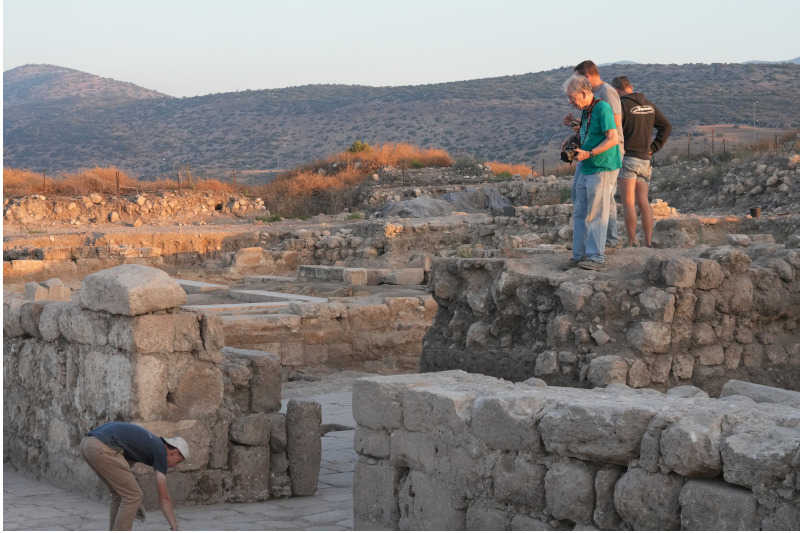
The author adjusting the metric stick and sign for Jim Haberman, project photographer before a photoshoot of an area. Photo courtesy of David Adel.


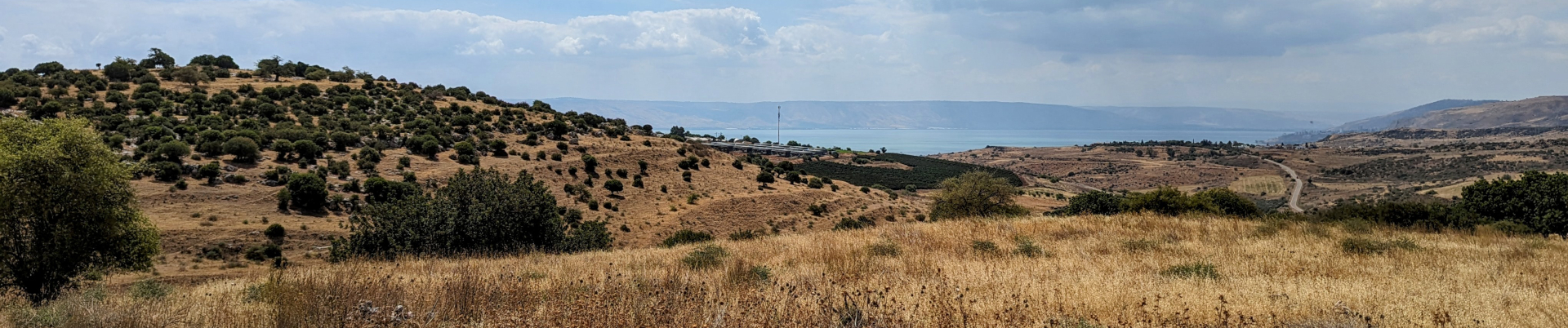
A view of the Sea of Galilee from the excavation site. Photo courtesy of the author.

This project was a singular experience because it allowed us to participate in a traditional archaeological field school while tailoring this phenomenal experience to our particular interests. I was able to approach the project from a unique angle—I am a Geography student at Brigham Young University with a minor in History. My primary area of interest lies in the religious history of Judaism and early Christianity. Thus, this opportunity presented itself as the perfect way for me to intimately study religious experience up close and in the Holy Land, not just in a book or in a class. It likewise allowed me to, at least for a moment, fulfill my childhood dream of one day being an archaeologist.

While my experience differed from the “archaeology” I was exposed to in popular media as a child, I came away from my experience at Huqoq having been taught numerous valuable lessons. Above all,our excavations at Huqoq led me to have a shift in my understanding of the importance of archaeology.

Prior to participating in the dig, I had a preconceived notion that archaeology was simply the method used to produce information required for scholars and archaeologists to draw conclusions about the past. In a way, it was the best way for them to preserve a small snapshot of the past, if you will. While that has an element of truth to it, I also began to understand that archaeology additionally provided the opportunity for us as scholars to capture a fresh perspective of the historical world. History is multi-faceted, and not a one-dimensional “snapshot,” after all. It is for this reason that archaeology is such an appropriate means to better understand the past, as it allows us to uncover additional “vignettes” of the past and explore another aspect of the historical narrative that deserves to be shared.

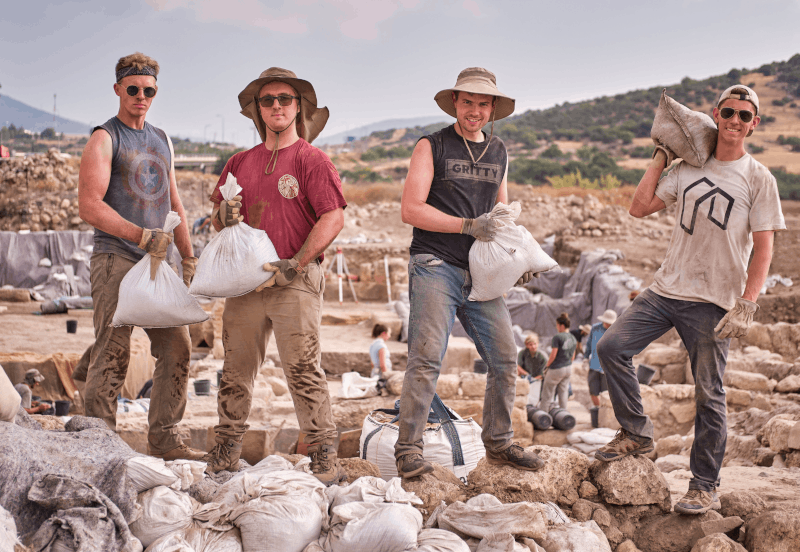
The author moving sandbags with other BYU students during the final week of excavation. Photo courtesy of Andrej Zeman.

This certainly was the case at Huqoq. Our efforts there centered on uncovering a Late Roman period Jewish synagogue similar to other Galilean-type synagogues, but one that stands out as drastically different and unique compared to other similar synagogues in the area. Not only is its adjacent courtyard unique due to its large size, but the actual synagogue floor is covered in exceptional mosaics depicting various biblical scenes. I was assigned to work in the “3000 East” area, where we were given the task of uncovering a large portion of the adjacent courtyard to determine its true dimensions. Over the course of the dig, all of us were surprised to come across finds that reshaped our initial conceptions of the courtyard, making our site at Huqoq even more exceptional than other synagogues constructed in the same period. While all these finds and details initially raised additional questions, over time we all began to realize how crucial they were and how they painted a new picture of Jewish worship in this particular synagogue. Indeed, our efforts over the course of the dig provided sufficient data to expose a new perspective on Jewish worship spaces and capture that previously untold “vignette” of history.

In short, it was the exceptional privilege for me to participate in the Huqoq Excavation Project for their final year, not only because it supplemented my academic studies and offered me a close-up view of the Holy Land, but also because it augmented my understanding of the significance of archaeology. For this reason, I am profoundly grateful for those individuals whose assistance made my participation in the Huqoq Excavation Project possible, as well as all the directors, team leaders, and fellow members who made it such an unforgettable and phenomenal experience.

Thomas Barrett is a Senior at Brigham Young University in Provo, Utah. He is currently studying Geography with an emphasis in Geospatial Science & Technology and is minoring in History, with an emphasis in Religious History.

Read more about the Huqoq Excavation Project here. 

Want to help more students and early career archaeologists get into the field? Donate to the cause today by selecting “Student Support” as your gift purpose!

Fieldwork Report: Hélène Maloigne

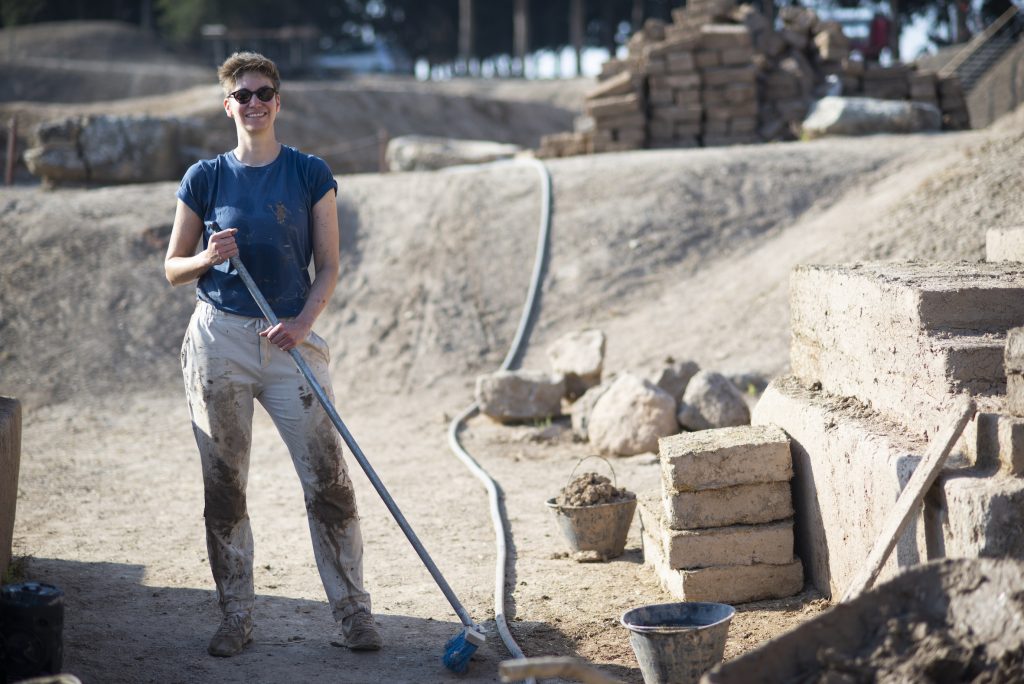
There is Mud EVERYWHERE!

Hélène Maloigne, 2023 Strange/Midkiff Families Fellowship Recipient

I have been working as object registrar and collections manager at Tell Atchana, Alalakh Excavations in Turkey since 2014. During excavation seasons my work usually consists of recording objects and samples on our database, organising our storage facility and making sure all objects are where they are supposed to be. When specialists come to visit, for example bioarchaeologists, zooarchaeologists, palaeobotanists, or our bead or lithics specialists, I help them find their objects or samples and advise them on recording methods according to our system. I also teach our international group of students object handling and recording skills. For the last ten years I have therefore spent most of my time during season at our research centre where we store our finds and where our offices are, and not in the field. This year I decided to venture out into the great unknown and spend one day a week in the field. Reader, let me tell you: It was muddy!

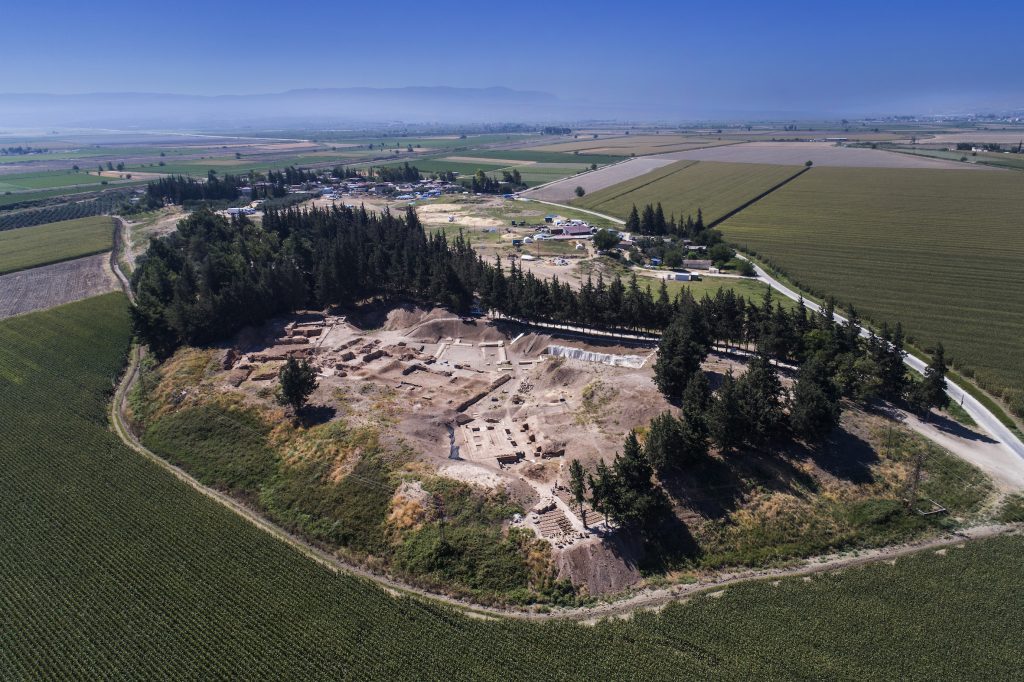
Figure 1: Tell Atchana, ancient Alalakh viewed from the northwest. In the foreground is the Level VII City Gate, where mudbricks are being dried in the sun. The palace and temple area excavated in the 1930s and 1940s is surrounded by trees, beyond which lie further excavation areas, and modern-day farms and villages.

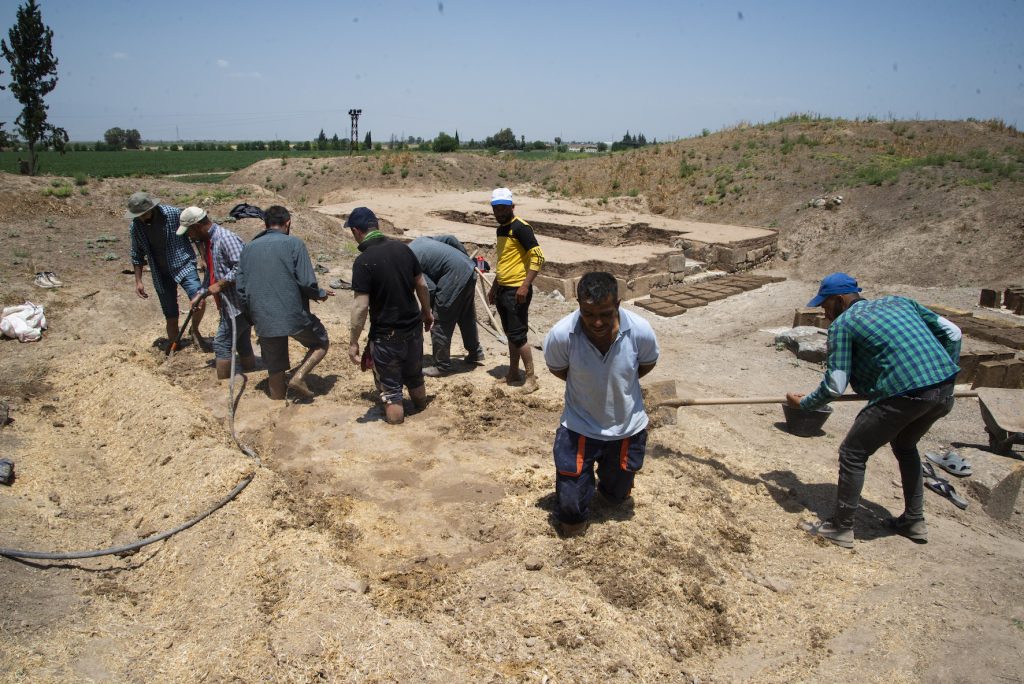
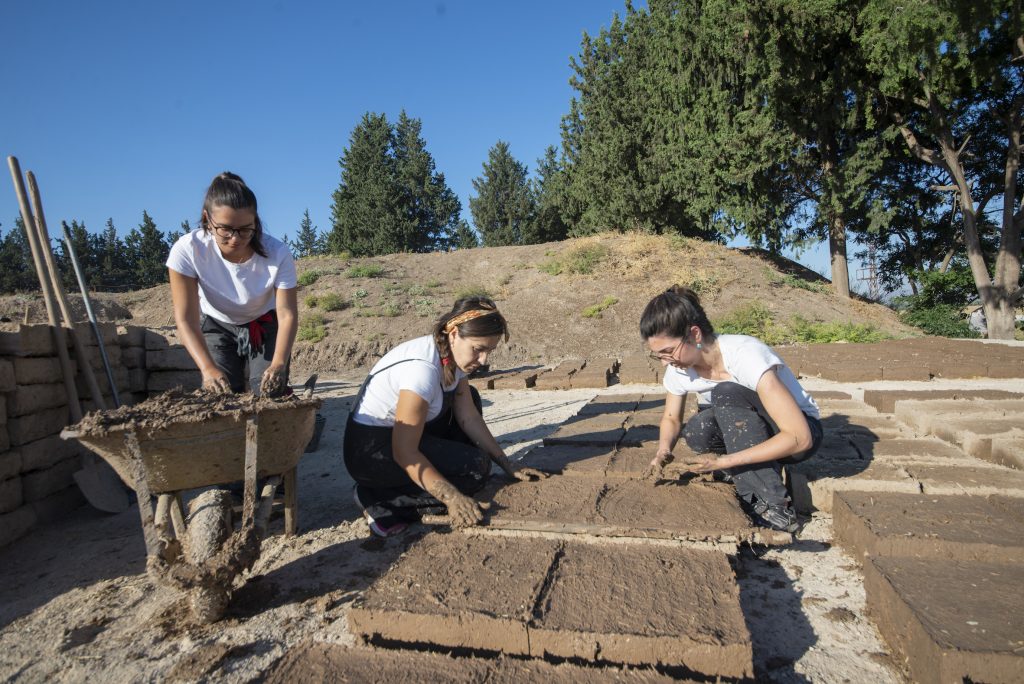
Over the last four years our team has produced nearly 4,000 mudbricks using a traditional recipe mixing straw, soil and water. As you can see (figure 2), this mixing is done by hand or rather by foot. The mixture is left to mature over night and the following day we make the bricks using custom-made metal frames that reproduce the shape and size of the bricks used in ancient Alalakh (figure 3).

Figure 2: The team preparing the mixture of soil, water, and straw.
Figure 3: Team members Defne Bilgili, Gamze Alkan, and Zeynep Türker make mudbricks in metal frames.

They are turned regularly to expose all sides to as much sunlight as possible for about a week. While the constant bending over and pushing the wheelbarrows and water buckets during mudbrick production was bad enough for the back, I had not been prepared for what followed.

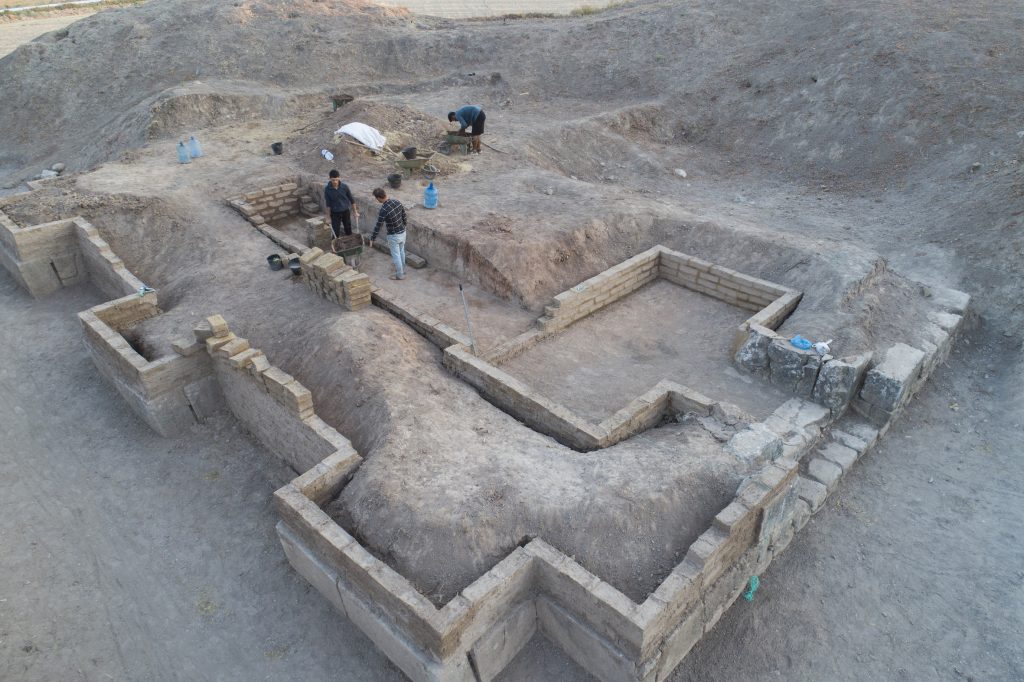
Each of these bricks weigh 30 kg. We use them to reinforce existing walls or surround fragile walls with an additional layer. Layers are joined by mortar, which is sometimes enforced with gravel or additional straw. We then seal the walls by additional mud plastering (figure 4).

Figure 4: The tripartite city gate during preservation. Level VII (Middle Bronze Age).

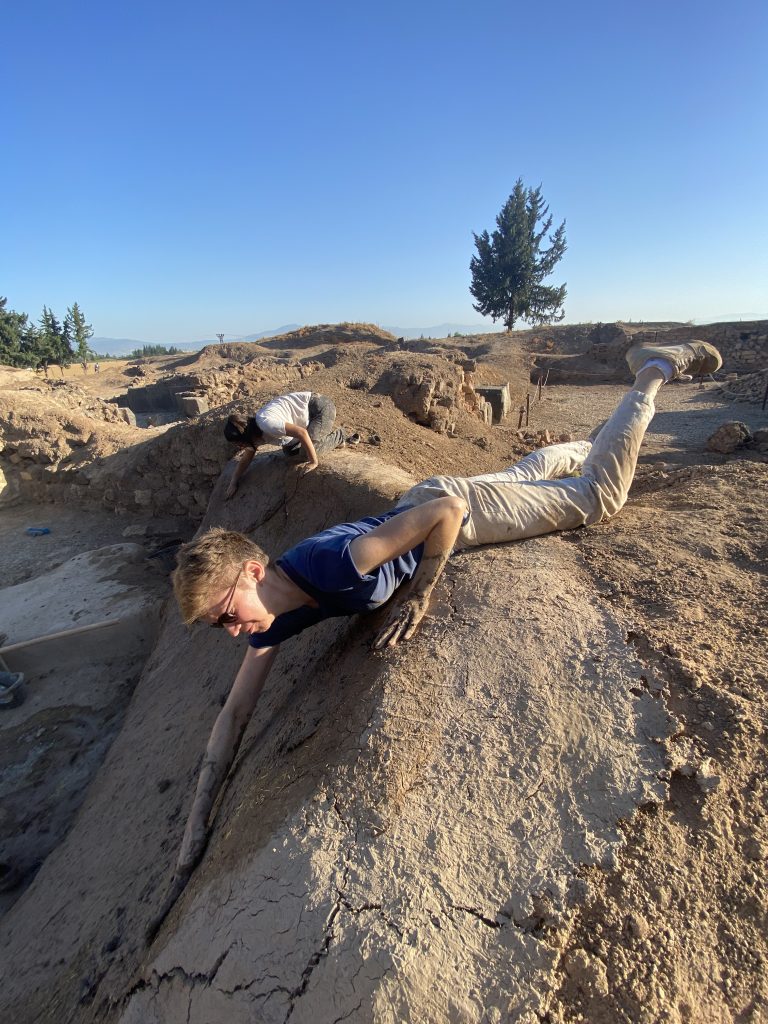
That meant: carry a brick (or in my case asking someone to help me carry it), placing it correctly, adding gravel or straw as temper (which of course also had to be brought in buckets or wheelbarrows), covering the row of bricks with mortar, repeat. From 5:30 in the morning until 1 pm crouching, sitting, getting up, carrying buckets, lifting bricks, pushing wheelbarrows, bending over, being upside down, getting into mud fights, wiping mud off your face, cursing the heat and the mud, and wishing it was lunch time so that you can go to your room and stretch out on your bed…and yet, enjoying every minute of this backbreaking work because you get to do it with your friends.

The author plastering a wall in the Level IV palace (Late Bronze Age).

One of my favourite things about archaeology is being part of a community forged through hard work, friendship, collegiality and mutual support. There is almost no better feeling than being covered in mud from head to toe, exhausted, hot, thirsty and hungry and yet somehow finding the energy for a race to the car for the best seat for the ride home while laughing all the way. Being part of this kind of family – a chosen family some might say – is a real privilege and one I look forward to every year.

Figure 6: The author at Tell Atchana after a looooooong day of laying mudbricks.

Hélène Maloigne is a lecturer in History at the School of Humanities & Social Sciences, University of Greenwich. They research the history of archaeology in the Middle East in the 19th/20th century and are Associate Editor for the Bulletin of the History of Archaeology and object registrar at Tell Atchana/Alalakh Excavations (Turkey).

All images © Tell Atchana, Alalakh Excavations Project. Murat Akar, 2023
www.alalakh.org
Instagram:@TellAtchana
https://helenemaloigne.wordpress.com/
Twitter: @HMaloigne

Want to help more students and early career archaeologists get into the field? Donate to the cause today by selecting “Student Support” as your gift purpose!