ASOR Board of Trustees Nominees (2017)

[vc_row fullwidth=”true” attached=”true” css=”.vc_custom_1496247803139{padding-top: 0px !important;padding-right: 0px !important;padding-bottom: 0px !important;padding-left: 0px !important;}”][vc_column][mk_image src=”http://www.asor.org/wp-content/uploads/2017/04/100CrusderSeaCastleSaide-Sidon-–-1920×600-–-REVISED-1.jpg” image_width=”1920″ image_height=”600″ crop=”false” hover=”false” margin_bottom=”0″][/vc_column][/vc_row][vc_row fullwidth=”true” css=”.vc_custom_1496682730308{padding-top: 10px !important;padding-right: 0px !important;padding-bottom: 0px !important;padding-left: 0px !important;}”][vc_column width=”1/12″ css=”.vc_custom_1496683820796{margin-right: 10px !important;}” offset=”vc_hidden-md vc_hidden-sm vc_hidden-xs”][vc_column_text]

 SHARE

[/vc_column_text][mk_image src=”http://www.asortest.org/wp-content/uploads/2017/01/social-fb-icon4.jpg” image_width=”42″ image_height=”42″ hover=”false” custom_url=”https://www.facebook.com/ASOResearch/” margin_bottom=”0″][mk_image src=”http://www.asortest.org/wp-content/uploads/2017/01/social-tw-icon4.jpg” image_width=”42″ image_height=”42″ hover=”false” custom_url=”https://twitter.com/ASOResearch?ref_src=twsrc%5Egoogle%7Ctwcamp%5Eserp%7Ctwgr%5Eauthor” margin_bottom=”0″][mk_image src=”http://www.asortest.org/wp-content/uploads/2017/01/social-in-icon4.jpg” image_width=”42″ image_height=”42″ hover=”false” custom_url=”https://www.linkedin.com/company/american-schools-of-oriental-research” margin_bottom=”0″][mk_image src=”http://www.asortest.org/wp-content/uploads/2017/01/social-ml-icon_7.jpg” image_width=”42″ image_height=”42″ hover=”false” custom_url=”mailto:asor@bu.edu” margin_bottom=”0″][mk_image src=”http://www.asortest.org/wp-content/uploads/2017/01/blog-icon3.jpg” image_width=”42″ image_height=”42″ hover=”false” custom_url=”http://asorblog.org/” margin_bottom=”0″][/vc_column][vc_column border_color=”rgba(255,255,255,0.01)” width=”1/6″ css=”.vc_custom_1496683923840{margin-right: 20px !important;border-left-width: 2px !important;padding-right: 20px !important;padding-left: 20px !important;border-left-color: #99422f !important;}”][mk_divider divider_color=”rgba(255,255,255,0.01)” thickness=”1″ margin_top=”3″ margin_bottom=”3″][vc_column_text]

ASOR BLOG

NEWS@ASOR E-NEWSLETTER

ANCIENT NEAR EAST TODAY E-NEWSLETTER

PAST ASOR NEWS, MONTH BY MONTH

FY17 HONOR ROLL OF DONORS

ASOR ANNUAL MEETING

[/vc_column_text][/vc_column][vc_column border_color=”rgba(170,170,170,0.01)” width=”1/2″ css=”.vc_custom_1487276122024{margin-right: 10px !important;margin-bottom: 30px !important;border-right-width: 2px !important;border-bottom-width: 2px !important;padding-top: 30px !important;padding-right: 30px !important;padding-left: 20px !important;background-color: #ffffff !important;border-right-color: rgba(227,228,228,0.75) !important;border-bottom-color: rgba(227,228,228,0.75) !important;}”][vc_column_text responsive_align=”left”]

ASOR BOARD OF TRUSTEES NOMINEES

[/vc_column_text][vc_column_text]ASOR is pleased to announce that the Trustee Nominations Committee has selected highly qualified members to stand for election for four open positions on the ASOR Board of Trustees (two openings for Individual Representatives and two openings for Institutional Representatives). The ASOR Board sets the direction for ASOR and provides oversight for our organization. Among other responsibilities, members of the Board agree to attend two meetings each year at their own expense, to participate thoughtfully in the governance process, and to contribute financially to ASOR.

As described below, there are candidates for both the Individual and Instituational categories. All ASOR members are eligible to vote in the Individual Election while only Institutional Representatives of the 75 ASOR-member schools may vote in the Institutional Election. ASOR will once again conduct the elections by online ballot, and all members and Institutional Representatives will receive the appropriate ballot(s) on or about October 20, 2017. We will send out several reminders, and all ballots must be completed by 4:00PM Eastern Time on November 9. If you would like to receive a paper ballot or if you have difficulties completing the online ballot (once they are distributed), please contact Inda Omerefendic at 857-277-0417 or asorpubs@bu.edu.[/vc_column_text][vc_column_text responsive_align=”left”]

Individual Representatives Nominees

[/vc_column_text][vc_row_inner][vc_column_inner width=”1/4″ css=”.vc_custom_1503684310141{padding-right: 10px !important;}”][mk_image src=”http://www.asor.org/wp-content/uploads/2017/10/burgh.jpg” image_width=”200″ image_height=”250″ hover=”false”][/vc_column_inner][vc_column_inner width=”3/4″][vc_column_text]
Theodore Burgh

Theodore Burgh is a Professor at the University of North Carolina at Wilmington, in the Department of Philosophy and Religion. He holds his degrees from the University of Arizona (M.A./Ph.D.), Howard University (M.A.), and Hampton University (B.A.).  His research interests are the archaeology of ancient Israel and the Near East, the Hebrew Bible, archaeomusicology (the study of ancient music culture), the reconstruction of Syro-Palestinian and Near Eastern music culture and cataloging musical artifacts, utilization analysis of Syro-Palestinian sacred and secular space, and ethnomusicology.

Mission Statement:

I am truly grateful for the opportunity to continue to serve on the ASOR Board. It is an honor to be a part of ASOR’s distinguished history. It would be a privilege to continue to serve an organization that has provided so much for me.

I have been an active ASOR member since 1996, presenting numerous papers and chairing sessions. I have been a part of the membership committee for nearly fifteen years. On short notice, I also substituted for the 2012-13 Vice-President and chaired the 2012 ASOR Members Meeting.

As a trustee, I will continue to bring commitment and experience. Building on existing success, these are a few areas where I think ASOR could expand its services to the Academy generally and to members specifically. I would like to continue efforts to incorporate technology in ASOR’s development. ASOR is working to strengthen global connections and bringing excavations and archaeological conversations together in exciting new ways. ASOR understands that it is very difficult for some scholars and students in various parts of the world to attend ASOR conferences. However, thus, we have initiated discussions regarding implementing technology that could possibly live streaming or provide recorded lectures and papers delivered from these scholars and students. ASOR will also continue to explore how to possibly share specific lectures and symposiums in the same manner and incorporate Q&A whenever possible. To have top archaeological scholars sharing short clips within articles and reports that can be accessed any time would be invaluable sources.

Lastly, I would like to see continued energy with the membership and outreach committees.  Efforts with such endeavors as Friends of ASOR will be essential to maintaining the organization’s future membership and developing inclusivity.[/vc_column_text][/vc_column_inner][/vc_row_inner][vc_row_inner][vc_column_inner width=”1/4″ css=”.vc_custom_1503684320408{padding-right: 15px !important;}”][mk_image src=”http://www.asor.org/wp-content/uploads/2017/10/Headshot-2.jpg” image_width=”200″ image_height=”250″ hover=”false”][/vc_column_inner][vc_column_inner width=”3/4″][vc_column_text]

Thomas Schneider

Thomas Schneider is Professor of Egyptology and Near Eastern Studies at the University of British Columbia, Vancouver. Since 2012, he has also served ASOR as Editor of Near Eastern Archaeology and ex officio member on the Committee on Publications. He holds a Master’s degree, a doctorate, and a habilitation in Egyptology from the University of Basel. He was a Visiting Professor at the University of Vienna in 1999 and at the University of Heidelberg in 2003-4. From 2001 to 2005, he was a Junior Research Professor of the Swiss National Science Foundation at the University of Basel, and from 2005 to 2007, holder of the Chair in Egyptology at the University of Wales, Swansea. He was a visiting scholar at NYU in 2006, at Berkeley in 2012, and a guest lecturer at the Institute of Archaeology of the Chinese Academy of Social Sciences in 2016. He has widely published on Egyptian interconnections with the Levant and the Near East (including Egypt and the Bible), Egyptian history and  chronology and the history of Egyptology in Nazi Germany. He is founding editor of the Journal of Egyptian History, was the editor-in-chief of “Culture and History of the Ancient Near East” for Brill (2006-2013), and area editor history for the UCLA Encyclopedia of Egyptology. 

Mission Statement:

For the past six years, I have had the privilege to experience ASOR from the specific perspective of editor of Near Eastern Archaeology. This perspective has, first and foremost, been an outstanding opportunity: An opportunity to be a creative part of the ASOR community; an opportunity to motivate scholars from across the world to write for NEA, and to disseminate knowledge on the Near East; an opportunity to work with a passionate editorial board and the ASOR leadership. Since my editorship has also coincided with the aggravation of the political and heritage crisis in the Middle East, being NEA editor has also meant to have my finger on the pulse of the time. In the preface I wrote for the June 2015 issue, I discussed Laurent Olivier’s comments about the role archaeology plays as a science not of the past but of the present: The way in which remains have escaped destruction is a direct reflection of how the present came about; the present is the repository of the past’s surviving materiality. The heritage crisis in the Middle East, flagged up in the September 2015 issue of NEA, shows how indispensable it is for ASOR to assume, in the present situation, a political role as an interpreter and guardian of the past’s material memory. In my prospective role as Trustee, I would see it as important to strengthen ASOR and to underscore its eminent political role in preserving that memory. I would also want to support ASOR in its advocacy – with many sister organizations – of the need to educate global society and advance research in history and the humanities.[/vc_column_text][/vc_column_inner][/vc_row_inner][vc_column_text responsive_align=”left”]

Institutional Representative Nominees

(All institutional representatives will be asked to vote for two of the following two nominees)[/vc_column_text][vc_row_inner][vc_column_inner width=”1/4″ css=”.vc_custom_1503684320408{padding-right: 15px !important;}”][mk_image src=”http://www.asor.org/wp-content/uploads/2017/10/greene-1.jpg” image_width=”200″ image_height=”250″ hover=”false”][/vc_column_inner][vc_column_inner width=”3/4″][vc_column_text]

Joe Greene

Joe Greene, Deputy Director and Curator of the Semitic Museum of Harvard University, received his Ph.D. in archaeology in 1986 at the Oriental Institute of the University of Chicago. He completed eight seasons of fieldwork in Carthage (Tunisia), directing the Carthage Survey from 1980 to 1983. He has been a National Endowment for the Humanities Fellow in Jordan, a Fulbright Fellow in Cyprus, and has directed excavations and surveys in both countries. In 1987–88 he directed the USAID Cultural Resource Management Project in Jordan and in 2001–2001 served as a consultant to the Petra National Trust, a Jordanian NGO devoted to the preservation of the archaeological site of Petra. He has been editor of the American Schools of Oriental Research (ASOR) Archaeological Reports Series (2003–2008), of the ASOR Annual (2009–2014), and now serves as an editor for Manar al-Athar Publications based at Oxford Univeristy and as a board member for the Friends of Manar al-Athar. His research interests focus on archaeological survey and landscape archaeology of the Mediterranean/Middle East region with emphasis on the first millennium B.C./A.D., on cultural resource management in the Mediterranean/Middle East region, and on museums and the history of museums in Mediterranean and Middle Eastern countries. Since the 1980s, he has led tours in the Eastern and Western Mediterranean, most recently to Lebanon, Syria and Jordan in 2011, to Turkey and Greece in 2013 and to Central Asia and Iran in 2016. In 2014–2015 he was a member of a Harvard-based consulting museum group working in Saudi Arabia, Kuwait, Qatar and the United Arab Emirates.

Mission Statement
:

In my 30-plus years as a member of ASOR, I have enjoyed manifold benefits of that membership. I have attended ASOR’s annual meetings, participated in its affiliated field projects, received its fellowships, served on its committees, edited its publications, and lived and worked at its overseas institutes. In 2015-2017, I served as an ASOR Trustee as the institutional representative for Harvard University. As a returning Trustee, I would, as before, play a role in assuring that these benefits continue to be available to rising generations of students of the ancient Near East.

To that end I believe that ASOR should strengthen its core functions–its publications and its annual meetings–as well as provide ongoing support for research through its fellowships and through the overseas institutes that it created and helped to build in Jerusalem, Amman, and Nicosia. ASOR, through its Committee on Publications, should continue to develop a robust presence in electronic scholarly publication. Through the Committee on Annual Meeting and Program, it should expand the scope and attendance of the annual meeting while helping to expand membership and ensure that this enterprise is self-supporting. ASOR must also find way to make its Committee on Archaeological Policy (CAP) relevant to the contemporary archaeological research environment, both at home and abroad. ASOR must also develop the financial means to support the initiatives of COP, CAMP, and CAP. It should also pursue new initiatives such as a formulation of a policy of professional conduct consistent with ASOR’s Mission and Strategic Plan, the ongoing, Survey on Field Safety, the Initiative on Women in ASOR and the Cultural Heritage Initiative.[/vc_column_text][/vc_column_inner][/vc_row_inner][vc_row_inner][vc_column_inner width=”1/4″ css=”.vc_custom_1503684320408{padding-right: 15px !important;}”][mk_image src=”http://www.asor.org/wp-content/uploads/2017/10/C_Meyers.jpg” image_width=”200″ image_height=”250″ hover=”false”][/vc_column_inner][vc_column_inner width=”3/4″][vc_column_text]

Carol Meyers

Carol Meyers was born in Wilkes-Barre, Pennsylvania. She went to Kingston High School, Kingston, Pennsylvania; made her B.A. with honors at Wellesley College in Wellesley, Massachusetts and her M.A. and Ph.D. at Brandeis University in Waltham, Massachusetts.

Meyers started to teach at Duke University in 1977. She writes and teaches in the areas of biblical studies, archaeology, and the study of women in the biblical world. She has been described as “one of today’s leading historians and field archeologists”. Her 1988 book, Discovering Eve: Ancient Israelite Women in Context, was the “first comprehensive effort to present a female-centred view of the Bible using historical rather than literary criticism”. Meyers has also written commentaries on Exodus, Haggai, and Zechariah.

Meyers served as president of the Society of Biblical Literature in 2013. She also served as part of the revision team for the 2010 New American Bible.

She is married to fellow biblical scholar and Duke professor Eric M. Meyers.


Mission statement:

As a member of ASOR for many decades, I have seen this organization respond over and over again to many challenges–including economic, political, and technological ones–and come out stronger. I was privileged to be a member of the strategic planning committee that helped reorganize and refocus our energies. The hard work and dedication of its officers, board members, and members has made ASOR stronger than ever. My hopes for the future are that our organization will continue to meet challenges and carry its mission forth in these turbulent times. Our Syria initiative is a good sign that we are in fact doing that[/vc_column_text][/vc_column_inner][/vc_row_inner][/vc_column][vc_column border_color=”rgba(170,170,170,0.01)” width=”1/6″ css=”.vc_custom_1496684098866{margin-right: 5px !important;margin-bottom: 20px !important;border-right-width: 2px !important;border-bottom-width: 2px !important;padding-top: 30px !important;padding-right: 10px !important;padding-left: 10px !important;background-color: #ffffff !important;border-right-color: rgba(227,228,228,0.75) !important;border-bottom-color: rgba(227,228,228,0.75) !important;}”][vc_wp_posts title=”BROWSE THE NEWS ARCHIVE” number=”4″][/vc_column][vc_column border_color=”rgba(170,170,170,0.01)” width=”1/6″ css=”.vc_custom_1496684008271{margin-right: 10px !important;margin-bottom: 30px !important;border-right-width: 2px !important;border-bottom-width: 2px !important;padding-top: 30px !important;padding-right: 20px !important;padding-left: 20px !important;background-color: #ffffff !important;border-right-color: rgba(227,228,228,0.75) !important;border-bottom-color: rgba(227,228,228,0.75) !important;}”][vc_column_text] [/vc_column_text][/vc_column][/vc_row]
ASOR Urges Continued U.S. Engagement in UNESCO

[vc_row fullwidth=”true” attached=”true” css=”.vc_custom_1496247803139{padding-top: 0px !important;padding-right: 0px !important;padding-bottom: 0px !important;padding-left: 0px !important;}”][vc_column][mk_image src=”http://www.asor.org/wp-content/uploads/2017/04/100CrusderSeaCastleSaide-Sidon-–-1920×600-–-REVISED-1.jpg” image_width=”1920″ image_height=”600″ crop=”false” hover=”false” margin_bottom=”0″][/vc_column][/vc_row][vc_row fullwidth=”true” css=”.vc_custom_1496682730308{padding-top: 10px !important;padding-right: 0px !important;padding-bottom: 0px !important;padding-left: 0px !important;}”][vc_column width=”1/12″ css=”.vc_custom_1496683820796{margin-right: 10px !important;}” offset=”vc_hidden-md vc_hidden-sm vc_hidden-xs”][vc_column_text]

 SHARE

[/vc_column_text][mk_image src=”http://www.asortest.org/wp-content/uploads/2017/01/social-fb-icon4.jpg” image_width=”42″ image_height=”42″ hover=”false” custom_url=”https://www.facebook.com/ASOResearch/” margin_bottom=”0″][mk_image src=”http://www.asortest.org/wp-content/uploads/2017/01/social-tw-icon4.jpg” image_width=”42″ image_height=”42″ hover=”false” custom_url=”https://twitter.com/ASOResearch?ref_src=twsrc%5Egoogle%7Ctwcamp%5Eserp%7Ctwgr%5Eauthor” margin_bottom=”0″][mk_image src=”http://www.asortest.org/wp-content/uploads/2017/01/social-in-icon4.jpg” image_width=”42″ image_height=”42″ hover=”false” custom_url=”https://www.linkedin.com/company/american-schools-of-oriental-research” margin_bottom=”0″][mk_image src=”http://www.asortest.org/wp-content/uploads/2017/01/social-ml-icon_7.jpg” image_width=”42″ image_height=”42″ hover=”false” custom_url=”mailto:asor@bu.edu” margin_bottom=”0″][mk_image src=”http://www.asortest.org/wp-content/uploads/2017/01/blog-icon3.jpg” image_width=”42″ image_height=”42″ hover=”false” custom_url=”http://asorblog.org/” margin_bottom=”0″][/vc_column][vc_column border_color=”rgba(255,255,255,0.01)” width=”1/6″ css=”.vc_custom_1496683923840{margin-right: 20px !important;border-left-width: 2px !important;padding-right: 20px !important;padding-left: 20px !important;border-left-color: #99422f !important;}”][mk_divider divider_color=”rgba(255,255,255,0.01)” thickness=”1″ margin_top=”3″ margin_bottom=”3″][vc_column_text]

ASOR BLOG

NEWS@ASOR E-NEWSLETTER

ANCIENT NEAR EAST TODAY E-NEWSLETTER

PAST ASOR NEWS, MONTH BY MONTH

FY17 HONOR ROLL OF DONORS

ASOR ANNUAL MEETING

[/vc_column_text][/vc_column][vc_column border_color=”rgba(170,170,170,0.01)” width=”1/2″ css=”.vc_custom_1487276122024{margin-right: 10px !important;margin-bottom: 30px !important;border-right-width: 2px !important;border-bottom-width: 2px !important;padding-top: 30px !important;padding-right: 30px !important;padding-left: 20px !important;background-color: #ffffff !important;border-right-color: rgba(227,228,228,0.75) !important;border-bottom-color: rgba(227,228,228,0.75) !important;}”][vc_column_text responsive_align=”left”]

ASOR AND OTHER LEARNED SOCIETIES ISSUE A STATEMENT REGARDING THE UNITED STATES’ INTENTION TO WITHDRAW FROM UNESCO

[/vc_column_text][vc_column_text]Statement from the Archaeological Institute of America (AIA), American Alliance of Museums (AAM), American Anthropological Association (AAA), American Schools of Oriental Research (ASOR), Association of Art Museum Directors (AAMD), Society for Classical Studies (SCS), U.S. Committee of the Blue Shield (USCBS), and the U.S. National Committee of ICOMOS (US/ICOMOS) regarding the United States of America’s Intention to Withdraw from UNESCO.

On October 12, 2017, the United States announced its decision to withdraw from the United Nations Educational, Scientific, and Cultural Organization (UNESCO) in 2018. A founding member of the Organization in 1945, the United States has benefited from UNESCO’s guiding precepts and principles in its efforts to preserve humanity’s shared heritage.

The United States was the first State to ratify UNESCO’s 1972 World Heritage Convention. The 23 U.S. World Heritage sites reflect the universal values of our natural and cultural heritage. These sites include Philadelphia’s Independence Hall, where the Declaration of Independence and the Constitution were signed, the Statue of Liberty, which stands at the entrance to New York Harbor as an international symbol of freedom, and sites that reflect our country’s multicultural past from the dwellings and ceremonial buildings of the Pueblo Indians, to the defensive architecture of San Juan, to Jefferson’s plantation at Monticello. The United States’ unique contribution was recognition that natural wonders from Glacier Bay to the volcanoes of Mauna Loa and Kilauea and from the redwood forests to the Smoky Mountains serve as a bridge among generations and peoples in America and around the world.

Provisions of the 1970 UNESCO Convention on the Means of Prohibiting and Preventing the Illicit Import, Export and Transfer of Ownership of Cultural Property and the 1954 Hague Convention on the Protection of Cultural Property in the Event of Armed Conflict serve to protect archaeological sites, historic structures, and repositories of cultural material from looting and destruction both during armed conflict and transfer through the international market. The 1970 Convention also facilitates loans of cultural objects from museums around the world in order to inform American audiences about the heritage of those outside our borders. Throughout the world, UNESCO supports the protection of culture in the face of terrorist attacks, armed conflict, and natural disasters, recognizing its symbolic power to link communities and strengthen their resilience in the face of war and hardship.

The United States has long strived to protect heritage around the world. Through participation in UNESCO the United States has signaled the importance of international cooperation in education, science, cultural awareness and communication, all of which serve to strengthen ties among nations and societies. These messages stand at the heart of American democracy and underlie the activities of our organizations. Despite its regrettable decision, we call upon the United States to continue to work with UNESCO and the broader international community to promote appreciation of the outstanding value of our shared cultural heritage.

The Archaeological Institute of America promotes archaeological inquiry and public understanding of the material record of the human past to foster an appreciation of diverse cultures and our shared humanity. Founded in the AIA has nearly 220,000 Members and more than 100 local societies in the United States, Canada, and overseas. 

The American Alliance of Museums has been bringing museums together since 1906, helping to develop standards and best practices, gathering and sharing knowledge, and providing advocacy on issues of concern to the entire museum community. Representing more than 35,000 individual museum professionals and volunteers, institutions, and corporate partners serving the museum field, the Alliance stands for the broad scope of the museum community.

Founded in 1902, the American Anthropological Association, with 10,000 members, is dedicated to advancing human understanding and applying this understanding to the world’s most pressing problems. 

The American Schools of Oriental Research, founded in 1900, is an international organization of archaeologists, historians, linguists, and cultural heritage professionals who initiate, encourage, and support research into, and public understanding of, the cultures and history of the Near East and wider Mediterranean.

The Association of Art Museum Directors advances the profession by cultivating leadership capabilities of directors, advocating for the field, and fostering excellence in art museums. An agile, issues-driven organization, AAMD has three desired outcomes: engagement, leadership, and shared learning. Further information about AAMD’s professional practice guidelines and position papers is available at www.aamd.org.

The Society for Classical Studies, founded in 1869 as the American Philological Association, is the largest scholarly society in the field of Classics in North America. Its mission is to advance knowledge, understanding, and appreciation of the Greek and Roman world and its enduring legacy.

The U.S. Committee of the Blue Shield is dedicated to preventing destruction and theft of cultural property during armed conflict and natural disasters worldwide. The name, Blue Shield, comes from the 1954 Hague Convention for the Protection of Cultural Property in the Event of Armed Conflict, which specifies a blue shield as the symbol for marking protected cultural property. USCBS is an affiliated national committee of Blue Shield (International).

The U.S. National Committee of ICOMOS is part of the worldwide ICOMOS network of people, institutions, government agencies and private entities who support the conservation of the World’s heritage. Since 1965 US/ICOMOS has worked to deliver the best of international historic preservation and heritage conservation work to the U.S. domestic preservation dialogue, while sharing and interpreting for the world the unique American historic preservation system. [/vc_column_text][/vc_column][vc_column border_color=”rgba(170,170,170,0.01)” width=”1/6″ css=”.vc_custom_1496684098866{margin-right: 5px !important;margin-bottom: 20px !important;border-right-width: 2px !important;border-bottom-width: 2px !important;padding-top: 30px !important;padding-right: 10px !important;padding-left: 10px !important;background-color: #ffffff !important;border-right-color: rgba(227,228,228,0.75) !important;border-bottom-color: rgba(227,228,228,0.75) !important;}”][vc_wp_posts title=”BROWSE THE NEWS ARCHIVE” number=”4″][/vc_column][vc_column border_color=”rgba(170,170,170,0.01)” width=”1/6″ css=”.vc_custom_1496684008271{margin-right: 10px !important;margin-bottom: 30px !important;border-right-width: 2px !important;border-bottom-width: 2px !important;padding-top: 30px !important;padding-right: 20px !important;padding-left: 20px !important;background-color: #ffffff !important;border-right-color: rgba(227,228,228,0.75) !important;border-bottom-color: rgba(227,228,228,0.75) !important;}”][vc_column_text] [/vc_column_text][/vc_column][/vc_row]
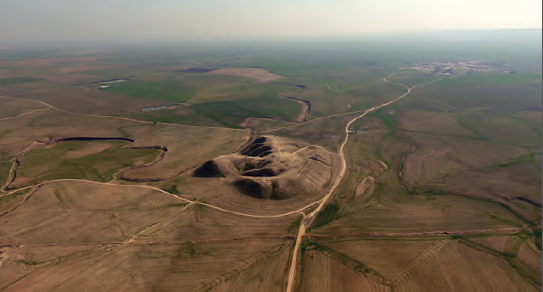
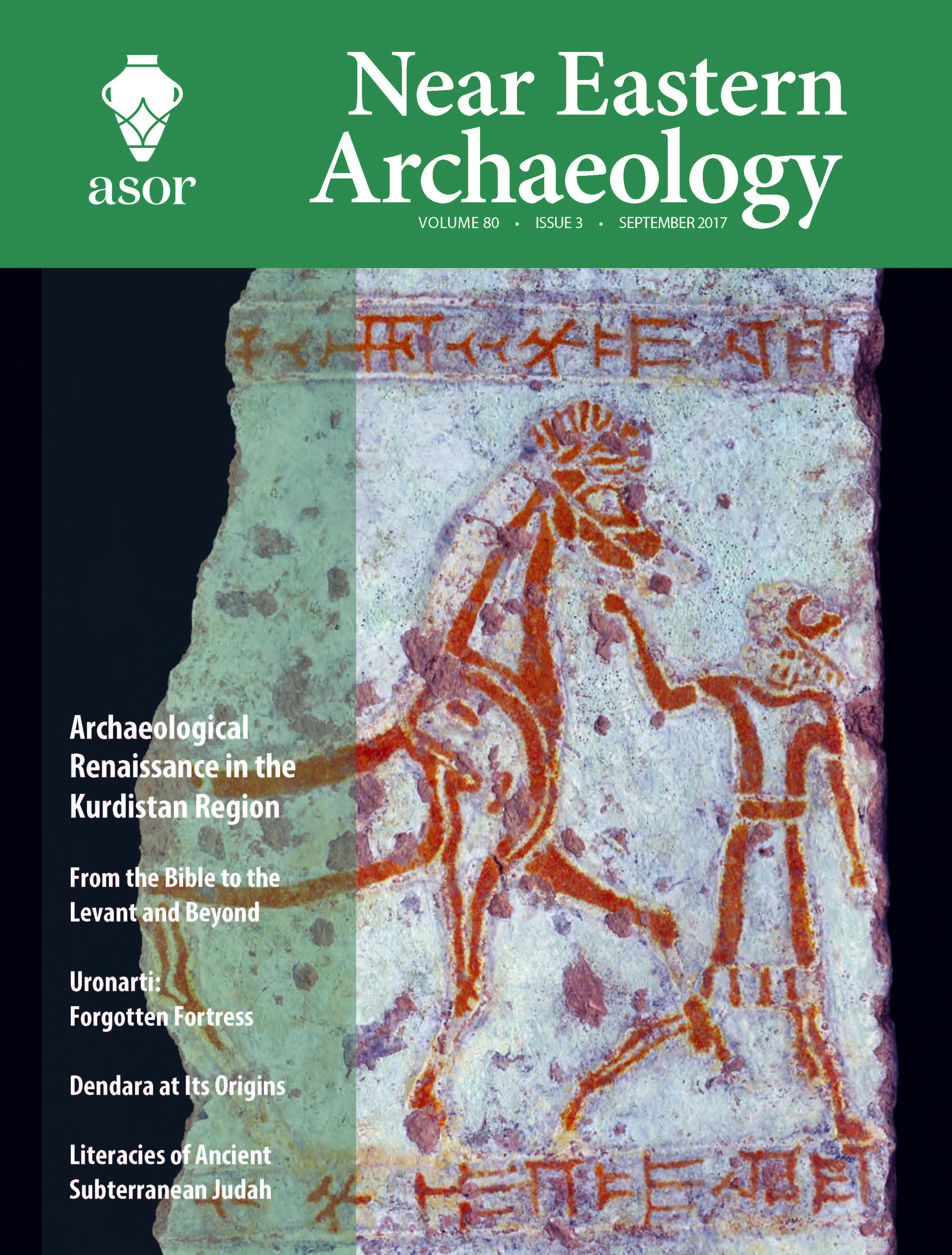
Table of Contents for NEA 80.3 (September 2017)

[vc_row fullwidth=”true” attached=”true” css=”.vc_custom_1496247803139{padding-top: 0px !important;padding-right: 0px !important;padding-bottom: 0px !important;padding-left: 0px !important;}”][vc_column][mk_image src=”http://www.asor.org/wp-content/uploads/2017/07/nea-banner-80-2.jpg” image_width=”1920″ image_height=”400″ hover=”false” margin_bottom=”0″][/vc_column][/vc_row][vc_row fullwidth=”true” css=”.vc_custom_1496682730308{padding-top: 10px !important;padding-right: 0px !important;padding-bottom: 0px !important;padding-left: 0px !important;}”][vc_column width=”1/12″ css=”.vc_custom_1496683820796{margin-right: 10px !important;}” offset=”vc_hidden-md vc_hidden-sm vc_hidden-xs”][vc_column_text]

 SHARE

[/vc_column_text][mk_image src=”http://www.asortest.org/wp-content/uploads/2017/01/social-fb-icon4.jpg” image_width=”42″ image_height=”42″ hover=”false” custom_url=”https://www.facebook.com/ASOResearch/” margin_bottom=”0″][mk_image src=”http://www.asortest.org/wp-content/uploads/2017/01/social-tw-icon4.jpg” image_width=”42″ image_height=”42″ hover=”false” custom_url=”https://twitter.com/ASOResearch?ref_src=twsrc%5Egoogle%7Ctwcamp%5Eserp%7Ctwgr%5Eauthor” margin_bottom=”0″][mk_image src=”http://www.asortest.org/wp-content/uploads/2017/01/social-in-icon4.jpg” image_width=”42″ image_height=”42″ hover=”false” custom_url=”https://www.linkedin.com/company/american-schools-of-oriental-research” margin_bottom=”0″][mk_image src=”http://www.asortest.org/wp-content/uploads/2017/01/social-ml-icon_7.jpg” image_width=”42″ image_height=”42″ hover=”false” custom_url=”mailto:asor@bu.edu” margin_bottom=”0″][mk_image src=”http://www.asortest.org/wp-content/uploads/2017/01/blog-icon3.jpg” image_width=”42″ image_height=”42″ hover=”false” custom_url=”http://asorblog.org/” margin_bottom=”0″][/vc_column][vc_column border_color=”rgba(255,255,255,0.01)” width=”1/6″ css=”.vc_custom_1496683923840{margin-right: 20px !important;border-left-width: 2px !important;padding-right: 20px !important;padding-left: 20px !important;border-left-color: #99422f !important;}”][mk_divider divider_color=”rgba(255,255,255,0.01)” thickness=”1″ margin_top=”3″ margin_bottom=”3″][vc_column_text]

ASOR BLOG

NEWS@ASOR

ANCIENT NEAR EAST TODAY

PAST ASOR NEWS, MONTH BY MONTH

FY16 HONOR ROLL OF DONORS

ASOR ANNUAL MEETING

[/vc_column_text][/vc_column][vc_column border_color=”rgba(170,170,170,0.01)” width=”1/2″ css=”.vc_custom_1487276122024{margin-right: 10px !important;margin-bottom: 30px !important;border-right-width: 2px !important;border-bottom-width: 2px !important;padding-top: 30px !important;padding-right: 30px !important;padding-left: 20px !important;background-color: #ffffff !important;border-right-color: rgba(227,228,228,0.75) !important;border-bottom-color: rgba(227,228,228,0.75) !important;}”][vc_column_text responsive_align=”left”]

Table of Contents for Near Eastern Archaeology 80.3 (September 2017)

Subscription Options
You can receive NEA (and other ASOR publications) through an ASOR Membership or through an Individual Subscription. Single issues (subject to availability) are available for purchase, with ASOR members receiving a discount. Please email us if you have any questions.

Pp. 148-153: “From the Bible to the Levant and Beyond,” by William G. Dever

Professor Dever reflects on eighty years of Near Eastern Archaeology within the changing disciplinary landscape of biblical and Near Eastern archaeology.

Click here to access the above article on JSTOR (ASOR membership with online access and/or subscription to JSTOR Current Content required).

Pp. 154-165: “Forgotten Fortress: Returning to Uronarti,” by Laurel Bestock

The kings of the ancient Egyptian Middle Kingdom (ca. 2055–1650 B.C.E.) conquered and subsequently administered a large territory in Lower Nubia, south of the First Cataract. Monumental fortresses that were built along the banks of the Nile were excavated in the early twentieth century, but largely destroyed by the floodwaters from the damming of the Nile in the 1960s. Recent discovery that two of these fortresses have survived has led to new archaeological work, including survey and excavation at the site of Uronarti. Preliminary work there shows the complexity of lifestyle and cultural interaction at this ancient colonial outpost.

Click here to access the above article on JSTOR (ASOR membership with online access and/or subscription to JSTOR Current Content required).

Pp. 166-175: “Dendara at Its Origins: New Evidence for a Pre- and Early Dynastic Settlement Site in Upper Egypt,” by Gregory Marouard

The archaeology of Pre- and Early Dynastic Egypt has been one of the most active area in Egyptology in the past few decades, but despite the intensification of the fieldwork research in the Nile Delta or Middle Egypt, our knowledge of early Egyptian settlements in Upper Egypt is still limited to several prominent sites, some under excavation since the late nineteenth century. The work undertaken by a team from The Oriental Institute—on the concession of the French Archaeological Institute (IFAO)—in the intramural area of the Hathor and Isis sanctuaries at Dendara has uncovered the earliest archaeological levels discovered to date, with several strata from the Naqada IIC–D and Early Dynastic periods. These discoveries push back the date of a first permanent community at this site by more than five hundred years and add an important point on the map of the predynastic occupation of Upper Egypt, all the more significant since the site became one of the main provincial centers, the capital of the 6th Nome of Upper Egypt, in the following centuries.

Click here to access the above article on JSTOR (ASOR membership with online access and/or subscription to JSTOR Current Content required).

Pp. 176-187: “The Archaeological Renaissance in the Kurdistan Region of Iraq,” by Jason Ur

After an absence of over two decades, foreign archaeology has returned in earnest to one of the “cradles of civilization” in the Kurdistan Region of Iraq. Two wars, international sanctions, and internal unrest had together brought archaeological research nearly to a standstill; only a few under-funded Iraqi teams and a handful of intrepid Europeans attempted fieldwork following the first Gulf War of 1991. Following a decline in political violence that began in 2008, archaeologists have returned to the Republic of Iraq. The resumption of fieldwork in the southern “heartland of cities” has been significant but slow, and hampered by internal politics. In the autonomous Kurdistan Region, however, foreign research has expanded rapidly and continuously, in partnership with local archaeologists and institutes. This essay reviews these new developments, discusses how the new discoveries are challenging long-held ideas and filling blank spaces on the archaeological map, and suggests some new directions for the future of Mesopotamian studies.

Click here to access the above article on JSTOR (ASOR membership with online access and/or subscription to JSTOR Current Content required).

Pp. 188-195: “Reading and Writing in the Dark at Khirbet el-Qom: The Literacies of Ancient Subterranean Judah,” by Alice Mandell and Jeremy Smoak

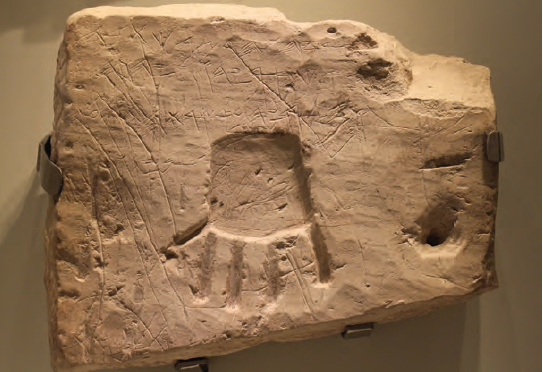
How did ancient Israelites and Judeans interact with inscriptions located in subterranean contexts such as tombs, tunnels, and caves? What roles did writing hold in the darkness of such places? The present article argues that a multimodal approach to literacy needs to be applied to the study of such inscriptions in order to understand how they communicated to audiences underground in the dark. We challenge traditional approaches to the study of tomb inscriptions in ancient Judah, most of which have studied them for what they reveal about historical grammar and the development of orthography. We argue that a better understanding of how audiences interacted with such inscriptions proceeds from a consideration of the visual grammars of tomb aesthetics, architecture, and the funerary objects in these spaces. This context is what enabled ancient audiences to decode the meaning of inscriptions in tomb complexes.

Click here to access the above article on JSTOR (ASOR membership with online access and/or subscription to JSTOR Current Content required).

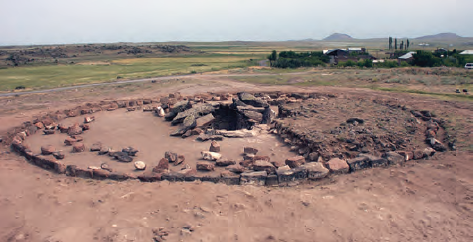
Pp. 196-201: “Cimmerian and Scythian Funerary Rituals in the South Caucasus,” by Garegin S. Tumanyan

The author presents the results of his investigation of sepulchers in the southern Caucasus that carry Cimmerian-Scythian features in the hopes of shedding light on the question of whether there was a Cimmerian-Scythian presence in the southern Caucasus in the late eighth to sixth centuries B.C.E. To identify eligible burial complexes, the author developed criteria based on a number of specific features: these included the presence of intrusive burials within the sepulchers, the presence of an anthropomorphic stone sculpture over the tomb or in the burial chamber, the skeleton’s position lying stretched on its back, the presence of human sacrifices, the practice of burying horsemen with their horse, and more. Specific burial goods, such as horse bits with stirrup-shaped ends, bronze mirrors, whetstones with holes for rings, javelins, acinac-type blades, and Scythian arrowheads, were also identified as indicating the presence of Cimmerian-Scythian burials. Based on a thorough exploration of available sources on sepulchers and burial complexes in the South Caucasus, the author identified 145 sepulchers and 63 burial grounds meeting his criteria and concluded that Cimmerian and Scythian cultures were present in the southern Caucasus of the seventh and sixth centuries B.C.E.

Click here to access the above article on JSTOR (ASOR membership with online access and/or subscription to JSTOR Current Content required).

Pp. 202-203: “‘There Is Nothing so Whole as a Broken Heart’: Reflections on ‘The Practice of Repairing Vessels in Ancient Egypt’ (NEA 79.4 [2016]) by Julia Hsieh,” by Aren M. Maeir

The author offers an additional perspective on the mending of ancient pottery, suggesting that breakage and repair are part of the normal life cycle of an object and that mending can in some cases lead to an enhancement of the original object and to a valuing of the repaired vessel.

Click here to access the above article on JSTOR (ASOR membership with online access and/or subscription to JSTOR Current Content required).

[/vc_column_text][/vc_column][vc_column border_color=”rgba(170,170,170,0.01)” width=”1/6″ css=”.vc_custom_1496684098866{margin-right: 5px !important;margin-bottom: 20px !important;border-right-width: 2px !important;border-bottom-width: 2px !important;padding-top: 30px !important;padding-right: 10px !important;padding-left: 10px !important;background-color: #ffffff !important;border-right-color: rgba(227,228,228,0.75) !important;border-bottom-color: rgba(227,228,228,0.75) !important;}”][vc_wp_posts title=”BROWSE THE NEWS ARCHIVE” number=”4″][/vc_column][vc_column border_color=”rgba(170,170,170,0.01)” width=”1/6″ css=”.vc_custom_1496684008271{margin-right: 10px !important;margin-bottom: 30px !important;border-right-width: 2px !important;border-bottom-width: 2px !important;padding-top: 30px !important;padding-right: 20px !important;padding-left: 20px !important;background-color: #ffffff !important;border-right-color: rgba(227,228,228,0.75) !important;border-bottom-color: rgba(227,228,228,0.75) !important;}”][vc_column_text] [/vc_column_text][/vc_column][/vc_row]
BASOR 378 Ahead of Print

[vc_row fullwidth=”true” attached=”true” css=”.vc_custom_1496247803139{padding-top: 0px !important;padding-right: 0px !important;padding-bottom: 0px !important;padding-left: 0px !important;}”][vc_column][mk_image src=”http://www.asor.org/wp-content/uploads/2017/04/100CrusderSeaCastleSaide-Sidon-–-1920×600-–-REVISED-1.jpg” image_width=”1920″ image_height=”400″ hover=”false” margin_bottom=”0″][/vc_column][/vc_row][vc_row fullwidth=”true” css=”.vc_custom_1496682730308{padding-top: 10px !important;padding-right: 0px !important;padding-bottom: 0px !important;padding-left: 0px !important;}”][vc_column width=”1/12″ css=”.vc_custom_1496683820796{margin-right: 10px !important;}” offset=”vc_hidden-md vc_hidden-sm vc_hidden-xs”][vc_column_text]

 SHARE

[/vc_column_text][mk_image src=”http://www.asortest.org/wp-content/uploads/2017/01/social-fb-icon4.jpg” image_width=”42″ image_height=”42″ hover=”false” custom_url=”https://www.facebook.com/ASOResearch/” margin_bottom=”0″][mk_image src=”http://www.asortest.org/wp-content/uploads/2017/01/social-tw-icon4.jpg” image_width=”42″ image_height=”42″ hover=”false” custom_url=”https://twitter.com/ASOResearch?ref_src=twsrc%5Egoogle%7Ctwcamp%5Eserp%7Ctwgr%5Eauthor” margin_bottom=”0″][mk_image src=”http://www.asortest.org/wp-content/uploads/2017/01/social-in-icon4.jpg” image_width=”42″ image_height=”42″ hover=”false” custom_url=”https://www.linkedin.com/company/american-schools-of-oriental-research” margin_bottom=”0″][mk_image src=”http://www.asortest.org/wp-content/uploads/2017/01/social-ml-icon_7.jpg” image_width=”42″ image_height=”42″ hover=”false” custom_url=”mailto:asor@bu.edu” margin_bottom=”0″][mk_image src=”http://www.asortest.org/wp-content/uploads/2017/01/blog-icon3.jpg” image_width=”42″ image_height=”42″ hover=”false” custom_url=”http://asorblog.org/” margin_bottom=”0″][/vc_column][vc_column border_color=”rgba(255,255,255,0.01)” width=”1/6″ css=”.vc_custom_1496683923840{margin-right: 20px !important;border-left-width: 2px !important;padding-right: 20px !important;padding-left: 20px !important;border-left-color: #99422f !important;}”][mk_divider divider_color=”rgba(255,255,255,0.01)” thickness=”1″ margin_top=”3″ margin_bottom=”3″][vc_column_text]

ASOR BLOG

NEWS@ASOR

ANCIENT NEAR EAST TODAY

PAST ASOR NEWS, MONTH BY MONTH

FY17 HONOR ROLL OF DONORS

ASOR ANNUAL MEETING

[/vc_column_text][/vc_column][vc_column border_color=”rgba(170,170,170,0.01)” width=”1/2″ css=”.vc_custom_1487276122024{margin-right: 10px !important;margin-bottom: 30px !important;border-right-width: 2px !important;border-bottom-width: 2px !important;padding-top: 30px !important;padding-right: 30px !important;padding-left: 20px !important;background-color: #ffffff !important;border-right-color: rgba(227,228,228,0.75) !important;border-bottom-color: rgba(227,228,228,0.75) !important;}”][vc_column_text responsive_align=”left”]

BASOR 378 AHEAD OF PRINT ARTICLES AVAILABLE

[/vc_column_text][vc_column_text]The first batch of Ahead of Print articles from BASOR 378 are available online now. Click here to be taken to the page on JSTOR to view any of the following articles:

You must have online access through your ASOR membership or institution to view the articles online. If you would like to upgrade your membership for an additional $25 to receive print and online access to our journals or have any questions, please contact asormemb@bu.edu.[/vc_column_text][/vc_column][vc_column border_color=”rgba(170,170,170,0.01)” width=”1/6″ css=”.vc_custom_1496684098866{margin-right: 5px !important;margin-bottom: 20px !important;border-right-width: 2px !important;border-bottom-width: 2px !important;padding-top: 30px !important;padding-right: 10px !important;padding-left: 10px !important;background-color: #ffffff !important;border-right-color: rgba(227,228,228,0.75) !important;border-bottom-color: rgba(227,228,228,0.75) !important;}”][vc_wp_posts title=”BROWSE THE NEWS ARCHIVE” number=”4″][/vc_column][vc_column border_color=”rgba(170,170,170,0.01)” width=”1/6″ css=”.vc_custom_1496684008271{margin-right: 10px !important;margin-bottom: 30px !important;border-right-width: 2px !important;border-bottom-width: 2px !important;padding-top: 30px !important;padding-right: 20px !important;padding-left: 20px !important;background-color: #ffffff !important;border-right-color: rgba(227,228,228,0.75) !important;border-bottom-color: rgba(227,228,228,0.75) !important;}”][vc_column_text] [/vc_column_text][/vc_column][/vc_row]
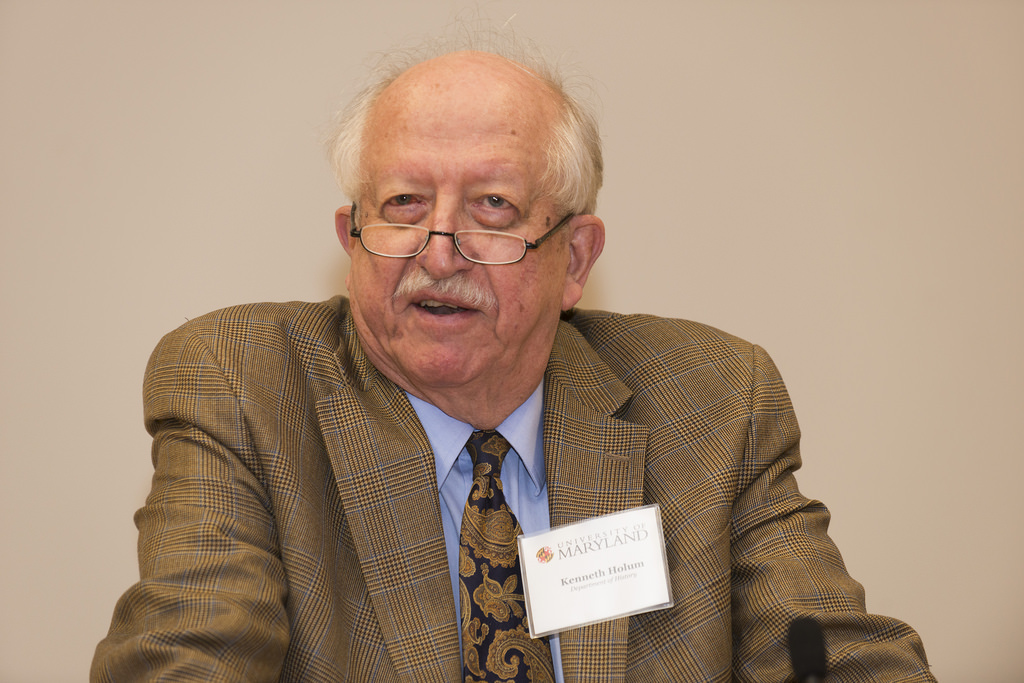
In Memory of Dr. Ken Holum

[vc_row fullwidth=”true” attached=”true” css=”.vc_custom_1496247803139{padding-top: 0px !important;padding-right: 0px !important;padding-bottom: 0px !important;padding-left: 0px !important;}”][vc_column][mk_image src=”http://www.asor.org/wp-content/uploads/2017/04/100CrusderSeaCastleSaide-Sidon-–-1920×600-–-REVISED-1.jpg” image_width=”1920″ image_height=”400″ hover=”false” margin_bottom=”0″][/vc_column][/vc_row][vc_row fullwidth=”true” css=”.vc_custom_1496682730308{padding-top: 10px !important;padding-right: 0px !important;padding-bottom: 0px !important;padding-left: 0px !important;}”][vc_column width=”1/12″ css=”.vc_custom_1496683820796{margin-right: 10px !important;}” offset=”vc_hidden-md vc_hidden-sm vc_hidden-xs”][vc_column_text]

 SHARE

[/vc_column_text][mk_image src=”http://www.asortest.org/wp-content/uploads/2017/01/social-fb-icon4.jpg” image_width=”42″ image_height=”42″ hover=”false” custom_url=”https://www.facebook.com/ASOResearch/” margin_bottom=”0″][mk_image src=”http://www.asortest.org/wp-content/uploads/2017/01/social-tw-icon4.jpg” image_width=”42″ image_height=”42″ hover=”false” custom_url=”https://twitter.com/ASOResearch?ref_src=twsrc%5Egoogle%7Ctwcamp%5Eserp%7Ctwgr%5Eauthor” margin_bottom=”0″][mk_image src=”http://www.asortest.org/wp-content/uploads/2017/01/social-in-icon4.jpg” image_width=”42″ image_height=”42″ hover=”false” custom_url=”https://www.linkedin.com/company/american-schools-of-oriental-research” margin_bottom=”0″][mk_image src=”http://www.asortest.org/wp-content/uploads/2017/01/social-ml-icon_7.jpg” image_width=”42″ image_height=”42″ hover=”false” custom_url=”mailto:asor@bu.edu” margin_bottom=”0″][mk_image src=”http://www.asortest.org/wp-content/uploads/2017/01/blog-icon3.jpg” image_width=”42″ image_height=”42″ hover=”false” custom_url=”http://asorblog.org/” margin_bottom=”0″][/vc_column][vc_column border_color=”rgba(255,255,255,0.01)” width=”1/6″ css=”.vc_custom_1496683923840{margin-right: 20px !important;border-left-width: 2px !important;padding-right: 20px !important;padding-left: 20px !important;border-left-color: #99422f !important;}”][mk_divider divider_color=”rgba(255,255,255,0.01)” thickness=”1″ margin_top=”3″ margin_bottom=”3″][vc_column_text]

ASOR BLOG

NEWS@ASOR

ANCIENT NEAR EAST TODAY

PAST ASOR NEWS, MONTH BY MONTH

FY17 HONOR ROLL OF DONORS

ASOR ANNUAL MEETING

[/vc_column_text][/vc_column][vc_column border_color=”rgba(170,170,170,0.01)” width=”1/2″ css=”.vc_custom_1487276122024{margin-right: 10px !important;margin-bottom: 30px !important;border-right-width: 2px !important;border-bottom-width: 2px !important;padding-top: 30px !important;padding-right: 30px !important;padding-left: 20px !important;background-color: #ffffff !important;border-right-color: rgba(227,228,228,0.75) !important;border-bottom-color: rgba(227,228,228,0.75) !important;}”][vc_column_text responsive_align=”left”]

IN MEMORY OF DR. KEN HOLUM

[/vc_column_text][vc_column_text]Colleagues at the University of Maryland write:

“We are very sad to report that Professor Emeritus Kenneth (“Ken”) Holum passed away on the morning of September 20th after a battle with pancreatic cancer.

For more than forty years, Ken was a professor of late antique history in our department. He was also an active member and past chairman of the University’s Senate. Holum was a child of the prairie, having been born and raised in South Dakota, where he graduated from Augustana College in Sioux Falls in 1961. Following graduation, Ken served in the Navy for six years in Germany, before entering graduate school at the University of Chicago. There he wrote a dissertation on Byzantine empresses, receiving the Ph.D. in 1973. That work became the book, Theodosian Empresses (1982). Even before completing his Ph.D., Holum had begun to teach at the University of Maryland in 1970, where he promoted through the ranks to become professor. Upon retirement in 2014, he was awarded emeritus status.

While at Maryland, Holum developed a second scholarly specialty in historical archaeology and for many years, he was director of the University of Maryland’s excavations at Caesarea in Israel, once the capital of Roman Palestine. Holum was also widely respected as a published scholar in his field, having written several books and many articles. He will be sorely missed by the scores of students who enjoyed the opportunity to dig with him over the years.

Beloved by his colleagues and many beyond the university, Ken was a gentle soul who always evidenced great civility. He was also a model departmental citizen, willing to serve on committees or in any capacity that was needed to move the History Department ahead in its mission. Ken leaves behind his Lebensgefährtin, his wife, Marsha Rozenblit, professor of modern Jewish history in the department; his children, Kate and Mark; many members of his immediate family; and hundreds of other friends and colleagues who will miss him immensely.

Funeral services were held Monday, September 25 at 10:30 am at Hines-Rinaldi Funeral Home, 11800 New Hampshire Avenue, Silver Spring, Maryland, with burial at the Fabrangen Section of Garden of Remembrance Memorial Park, 14321 Comus Road, Clarksburg, Maryland. Charitable contributions can be made in Ken’s memory to the Southern Poverty Law Center, Planned Parenthood, Save the Bay, or ‘J Street.'”

Kenneth Holum won the ASOR P.E. MacAllister Field Archaeology Award in 2006.[/vc_column_text][/vc_column][vc_column border_color=”rgba(170,170,170,0.01)” width=”1/6″ css=”.vc_custom_1496684098866{margin-right: 5px !important;margin-bottom: 20px !important;border-right-width: 2px !important;border-bottom-width: 2px !important;padding-top: 30px !important;padding-right: 10px !important;padding-left: 10px !important;background-color: #ffffff !important;border-right-color: rgba(227,228,228,0.75) !important;border-bottom-color: rgba(227,228,228,0.75) !important;}”][vc_wp_posts title=”BROWSE THE NEWS ARCHIVE” number=”4″][/vc_column][vc_column border_color=”rgba(170,170,170,0.01)” width=”1/6″ css=”.vc_custom_1496684008271{margin-right: 10px !important;margin-bottom: 30px !important;border-right-width: 2px !important;border-bottom-width: 2px !important;padding-top: 30px !important;padding-right: 20px !important;padding-left: 20px !important;background-color: #ffffff !important;border-right-color: rgba(227,228,228,0.75) !important;border-bottom-color: rgba(227,228,228,0.75) !important;}”][vc_column_text] [/vc_column_text][/vc_column][/vc_row]
ASOR Book Sale

[vc_row fullwidth=”true” attached=”true” css=”.vc_custom_1496247803139{padding-top: 0px !important;padding-right: 0px !important;padding-bottom: 0px !important;padding-left: 0px !important;}”][vc_column][mk_image src=”http://www.asor.org/wp-content/uploads/2017/04/100CrusderSeaCastleSaide-Sidon-–-1920×600-–-REVISED-1.jpg” image_width=”1920″ image_height=”400″ hover=”false” margin_bottom=”0″][/vc_column][/vc_row][vc_row fullwidth=”true” css=”.vc_custom_1496682730308{padding-top: 10px !important;padding-right: 0px !important;padding-bottom: 0px !important;padding-left: 0px !important;}”][vc_column width=”1/12″ css=”.vc_custom_1496683820796{margin-right: 10px !important;}” offset=”vc_hidden-md vc_hidden-sm vc_hidden-xs”][vc_column_text]

 SHARE

[/vc_column_text][mk_image src=”http://www.asortest.org/wp-content/uploads/2017/01/social-fb-icon4.jpg” image_width=”42″ image_height=”42″ hover=”false” custom_url=”https://www.facebook.com/ASOResearch/” margin_bottom=”0″][mk_image src=”http://www.asortest.org/wp-content/uploads/2017/01/social-tw-icon4.jpg” image_width=”42″ image_height=”42″ hover=”false” custom_url=”https://twitter.com/ASOResearch?ref_src=twsrc%5Egoogle%7Ctwcamp%5Eserp%7Ctwgr%5Eauthor” margin_bottom=”0″][mk_image src=”http://www.asortest.org/wp-content/uploads/2017/01/social-in-icon4.jpg” image_width=”42″ image_height=”42″ hover=”false” custom_url=”https://www.linkedin.com/company/american-schools-of-oriental-research” margin_bottom=”0″][mk_image src=”http://www.asortest.org/wp-content/uploads/2017/01/social-ml-icon_7.jpg” image_width=”42″ image_height=”42″ hover=”false” custom_url=”mailto:asor@bu.edu” margin_bottom=”0″][mk_image src=”http://www.asortest.org/wp-content/uploads/2017/01/blog-icon3.jpg” image_width=”42″ image_height=”42″ hover=”false” custom_url=”http://asorblog.org/” margin_bottom=”0″][/vc_column][vc_column border_color=”rgba(255,255,255,0.01)” width=”1/6″ css=”.vc_custom_1496683923840{margin-right: 20px !important;border-left-width: 2px !important;padding-right: 20px !important;padding-left: 20px !important;border-left-color: #99422f !important;}”][mk_divider divider_color=”rgba(255,255,255,0.01)” thickness=”1″ margin_top=”3″ margin_bottom=”3″][vc_column_text]

ASOR BLOG

NEWS@ASOR

ANCIENT NEAR EAST TODAY

PAST ASOR NEWS, MONTH BY MONTH

FY17 HONOR ROLL OF DONORS

ASOR ANNUAL MEETING

[/vc_column_text][/vc_column][vc_column border_color=”rgba(170,170,170,0.01)” width=”1/2″ css=”.vc_custom_1487276122024{margin-right: 10px !important;margin-bottom: 30px !important;border-right-width: 2px !important;border-bottom-width: 2px !important;padding-top: 30px !important;padding-right: 30px !important;padding-left: 20px !important;background-color: #ffffff !important;border-right-color: rgba(227,228,228,0.75) !important;border-bottom-color: rgba(227,228,228,0.75) !important;}”][vc_column_text responsive_align=”left”]

ASOR MEMBER BOOK SALE

SAVE UP TO 97%!
[/vc_column_text][vc_column_text]ASOR is extending discounts of between 77-97% on ASOR books to our members until September 30th. This sale is intended as an exclusive member benefit, and we ask that you pledge not to give the books to institutions or non-members.

You can order books (see the list below) by e-mailing ASOR with your desired titles, and the ASOR staff will provide an invoice that includes shipping. Alternatively, you can download an order form and e-mail a scanned copy of your order (please call us to pay by credit card). Books are subject to availability. Shipping will be based on the number of books and shipping address (see below).

All book sale revenues go towards improving and growing ASOR publications. We appreciate your support!

If you need assistance, please e-mail the publications staff or call (857) 277-0417. If you would like to join ASOR as a member to have access to this exclusive benefit, click here for more information.[/vc_column_text][vc_column_text]

Download Order Form

[/vc_column_text][vc_column_text]

*Shipping Information:

  • USA Addresses: $10 for the first book and $5 for each additional book
  • Canada Addresses: $15 for the first book and $7.50 for each additional book
  • Rest of World Addresses: $20 for the first book and $10 for each additional book
[/vc_column_text][vc_row_inner][vc_column_inner width=”1/3″ css=”.vc_custom_1504061165315{padding-right: 20px !important;}”][mk_image src=”http://www.asor.org/wp-content/uploads/2017/03/AASOR71-cover.png” crop=”false” hover=”false”][/vc_column_inner][vc_column_inner width=”2/3″][vc_column_text]

AASOR 71

Kataret es-Samra, Jordan – $14.99!

For just $14.99 (plus shipping), you can own Kataret es-Samra, Jordan, by Albert Leonard, Jr.. Priced at $74.95, this member-exclusive special offers more than an 80% discount!

Learn more about this publication…[/vc_column_text][/vc_column_inner][/vc_row_inner][mk_divider thickness=”1″ margin_top=”10″ margin_bottom=”10″][vc_row_inner][vc_column_inner width=”1/3″ css=”.vc_custom_1504061165315{padding-right: 20px !important;}”][mk_image src=”http://www.asor.org/wp-content/uploads/2017/03/AASOR70-cover-1.png” crop=”false” hover=”false”][/vc_column_inner][vc_column_inner width=”2/3″][vc_column_text]

AASOR 70

The Archaeology of the Ostraca House at Israelite Samaria – $19.99!

For just $19.99 (plus shipping), you can own The Archaeology of the Ostraca House at Israelite Samaria, by Ron E. Tappy. Priced at $89.95, this member-exclusive special offers more than a 77% discount!

Learn more about this publication…[/vc_column_text][/vc_column_inner][/vc_row_inner][mk_divider thickness=”1″ margin_top=”10″ margin_bottom=”10″][vc_row_inner][vc_column_inner width=”1/3″ css=”.vc_custom_1504061165315{padding-right: 20px !important;}”][mk_image src=”http://www.asor.org/wp-content/uploads/2017/08/AASOR69.png” crop=”false” hover=”false”][/vc_column_inner][vc_column_inner width=”2/3″][vc_column_text]

AASOR 69

The Archaeology of Agro-Pastoralist Economies in Jordan – $14.99!

For just $14.99 (plus shipping), you can own The Archaeology of Agro-Pastoralist Economies in Jordan, with contributions by Robin M. Brown, Alan Farahani, Hannah Huynh, Natalie Mueller, Benjamin W. Porter, Jennifer Ramsay, Kevin Rielly, and Bruce Routledge. Priced at $84.95, this member-exclusive special offers more than an 82% discount!

Learn more about this publication…[/vc_column_text][/vc_column_inner][/vc_row_inner][mk_divider thickness=”1″ margin_top=”10″ margin_bottom=”10″][vc_row_inner][vc_column_inner width=”1/3″ css=”.vc_custom_1504061165315{padding-right: 20px !important;}”][mk_image src=”http://www.asor.org/wp-content/uploads/2017/08/AASOR68.png” crop=”false” hover=”false”][/vc_column_inner][vc_column_inner width=”2/3″][vc_column_text]

AASOR 68

The Nabataean Temple at Khirbet et-Tannur, Jordan, Volume 2 – $4.99!

For just $4.99 (plus shipping), you can own The Nabataean Temple at Khirbet et-Tannur, Jordan, Volume 2, by Judith S. McKenzie, Joseph A. Greene, Andres T. Reyes, Catherine S. Alexander, Deirdre G. Barrett, Brian Gilmour, John F. Healey, Margaret O’Hea, Nadine Schibille, Stephan G. Schmid, Wilma Wetterstrom, and Sara Whitcher Kansa, with contributions by Kate da Costa, Patrick Degryse, Kathy Eremin, Sheila Gibson, Owen Gingerich, and Elias Khamis. Priced at $89.95, this member-exclusive special offers more than a 94% discount!

Learn more about this publication…[/vc_column_text][/vc_column_inner][/vc_row_inner][mk_divider thickness=”1″ margin_top=”10″ margin_bottom=”10″][vc_row_inner][vc_column_inner width=”1/3″ css=”.vc_custom_1504061165315{padding-right: 20px !important;}”][mk_image src=”http://www.asor.org/wp-content/uploads/2017/08/AASOR67.png” crop=”false” hover=”false”][/vc_column_inner][vc_column_inner width=”2/3″][vc_column_text]

AASOR 67

The Nabataean Temple at Khirbet et-Tannur, Jordan, Volume 1 – $4.99!

For just $4.99 (plus shipping), you can own The Nabataean Temple at Khirbet et-Tannur, Jordan, Volume 1, by Judith S. McKenzie, Joseph A. Greene, Andres T. Reyes, Catherine S. Alexander, Deirdre G. Barrett, Brian Gilmour, John F. Healey, Margaret O’Hea, Nadine Schibille, Stephan G. Schmid, Wilma Wetterstrom, and Sara Whitcher Kansa, with contributions by Kate da Costa, Patrick Degryse, Kathy Eremin, Sheila Gibson, Owen Gingerich, and Elias Khamis. Priced at $89.95, this member-exclusive special offers more than a 94% discount!

Learn more about this publication…[/vc_column_text][/vc_column_inner][/vc_row_inner][mk_divider thickness=”1″ margin_top=”10″ margin_bottom=”10″][vc_row_inner][vc_column_inner width=”1/3″ css=”.vc_custom_1504061165315{padding-right: 20px !important;}”][mk_image src=”http://www.asor.org/wp-content/uploads/2017/08/AASOR66.png” crop=”false” hover=”false”][/vc_column_inner][vc_column_inner width=”2/3″][vc_column_text]

AASOR 66

The Photographs of the American Palestine Exploration Society – $7.99!

For just $7.99 (plus shipping), you can own The Photographs of the American Palestine Exploration Society, by Rachel Hallote, Felicity Cobbing, and Jeffrey B. Spurr. Priced at $89.95, this member-exclusive deal offers a 91% discount!

Learn more about this publication…[/vc_column_text][/vc_column_inner][/vc_row_inner][mk_divider thickness=”1″ margin_top=”10″ margin_bottom=”10″][vc_row_inner][vc_column_inner width=”1/3″ css=”.vc_custom_1504061165315{padding-right: 20px !important;}”][mk_image src=”http://www.asor.org/wp-content/uploads/2017/08/AASOR65.png” crop=”false” hover=”false”][/vc_column_inner][vc_column_inner width=”2/3″][vc_column_text]

AASOR 65

Crossroads and Boundaries – $7.99!

For just $7.99 (plus shipping), you can own Crossroads and Boundaries: The Archaeology of Past and Present in the Malloura Valley, Cyprus, by edited by Michael K. Toumazou, P. Nick Kardulias and Derek B. Counts. Priced at $89.95, this member-exclusive deal offers a 91% discount!

Learn more about this publication…[/vc_column_text][/vc_column_inner][/vc_row_inner][mk_divider thickness=”1″ margin_top=”10″ margin_bottom=”10″][vc_row_inner][vc_column_inner width=”1/3″ css=”.vc_custom_1504061165315{padding-right: 20px !important;}”][mk_image src=”http://www.asor.org/wp-content/uploads/2017/08/AASOR64.png” crop=”false” hover=”false”][/vc_column_inner][vc_column_inner width=”2/3″][vc_column_text]

AASOR 64

Reflections of Empire – $4.50!

For just $4.50 (plus shipping), you can own Reflections of Empire: Archaeological and Ethnographic Perspectives on the Pottery of the Ottoman Levant, edited by Bethany Walker. Priced at $89.95, this member-exclusive deal offers a 95% discount!

Learn more about this publication…[/vc_column_text][/vc_column_inner][/vc_row_inner][mk_divider thickness=”1″ margin_top=”10″ margin_bottom=”10″][vc_row_inner][vc_column_inner width=”1/3″ css=”.vc_custom_1504061165315{padding-right: 20px !important;}”][mk_image src=”http://www.asor.org/wp-content/uploads/2017/08/AASOR63.png” crop=”false” hover=”false”][/vc_column_inner][vc_column_inner width=”2/3″][vc_column_text]

AASOR 63

Views from Phlamoudhi, Cyprus – $4.99!

For just $4.99 (plus shipping), you can own Views from Phlamoudhi, Cyprus, edited by Joanna S. Smith. Priced at $74.95, this member-exclusive deal offers a 93% discount!

Learn more about this publication…[/vc_column_text][/vc_column_inner][/vc_row_inner][mk_divider thickness=”1″ margin_top=”10″ margin_bottom=”10″][vc_row_inner][vc_column_inner width=”1/3″ css=”.vc_custom_1504061165315{padding-right: 20px !important;}”][mk_image src=”http://www.asor.org/wp-content/uploads/2017/09/AASOR62_cover.png” crop=”false” hover=”false”][/vc_column_inner][vc_column_inner width=”2/3″][vc_column_text]

AASOR 62

The Middle Bronze Age IIA Cemetery at Gesher – $7.99!

For just $7.99 (plus shipping), you can own The Middle Bronze Age IIA Cemetery at Gesher, edited by Yosef Garfinkel and Susan Cohen. Priced at $74.95, this member-exclusive deal offers a 89% discount!

Learn more about this publication…[/vc_column_text][/vc_column_inner][/vc_row_inner][mk_divider thickness=”1″ margin_top=”10″ margin_bottom=”10″][vc_row_inner][vc_column_inner width=”1/3″ css=”.vc_custom_1504061165315{padding-right: 20px !important;}”][mk_image src=”http://www.asor.org/wp-content/uploads/2017/03/ARS25-cover.png” crop=”false” hover=”false”][/vc_column_inner][vc_column_inner width=”2/3″][vc_column_text]

ARS 25

The Mithraeum at Caesarea Maritima – $14.99!

For just $14.99 (plus shipping), you can own The Mithraeum at Caesarea Maritima, by Robert Jehu Bull, Andrew H. Bobeck, Jane DeRose Evans, Robert S. Fritzius and Alexandra L. Ratzlaff. Priced at $74.95, this member-exclusive special offers an 80% discount!

Learn more about this publication…[/vc_column_text][/vc_column_inner][/vc_row_inner][mk_divider thickness=”1″ margin_top=”10″ margin_bottom=”10″][vc_row_inner][vc_column_inner width=”1/3″ css=”.vc_custom_1504061165315{padding-right: 20px !important;}”][mk_image src=”http://www.asor.org/wp-content/uploads/2017/08/ARS24.png” crop=”false” hover=”false”][/vc_column_inner][vc_column_inner width=”2/3″][vc_column_text]

ARS 24

The Shammakh to Ayl Archaeological Survey, Southern Jordan (2010-2012) – $14.99!

For just $14.99 (plus shipping), you can own The Shammakh to Ayl Archaeological Survey, Southern Jordan (2010-2012), by Burton MacDonald, Geoffrey A. Clark, Larry G. Herr, D. Scott Quaintance, Hani Hayajneh and Jürg Eggler. Priced at $94.95, this member-exclusive special offers an 84% discount!

Learn more about this publication…[/vc_column_text][/vc_column_inner][/vc_row_inner][mk_divider thickness=”1″ margin_top=”10″ margin_bottom=”10″][vc_row_inner][vc_column_inner width=”1/3″ css=”.vc_custom_1504061165315{padding-right: 20px !important;}”][mk_image src=”http://www.asor.org/wp-content/uploads/2017/08/ARS23.png” crop=”false” hover=”false”][/vc_column_inner][vc_column_inner width=”2/3″][vc_column_text]

ARS 23

Shechem V – $4.99!

For just $4.99 (plus shipping), you can own Shechem V: The Late Bronze Age Pottery from Field XIII at Shechem / Tell Balâtah, by Catherine A. Duff, series edited by Edward F. Campbell, Jr.. Priced at $89.95, this member-exclusive special offers over a 94% discount!

Learn more about this publication…[/vc_column_text][/vc_column_inner][/vc_row_inner][mk_divider thickness=”1″ margin_top=”10″ margin_bottom=”10″][vc_row_inner][vc_column_inner width=”1/3″ css=”.vc_custom_1504061165315{padding-right: 20px !important;}”][mk_image src=”http://www.asor.org/wp-content/uploads/2017/08/ARS22.png” crop=”false” hover=”false”][/vc_column_inner][vc_column_inner width=”2/3″][vc_column_text]

ARS 22

Tell er-Rumeith – $4.99!

For just $4.99 (plus shipping), you can own Tell er-Rumeith: The Excavations of Paul W. Lapp, 1962 and 1967, by Tristan J. Barako and Nancy L. Lapp. Priced at $79.95, this member-exclusive special offers a 93% discount!

Learn more about this publication…[/vc_column_text][/vc_column_inner][/vc_row_inner][mk_divider thickness=”1″ margin_top=”10″ margin_bottom=”10″][vc_row_inner][vc_column_inner width=”1/3″ css=”.vc_custom_1504061165315{padding-right: 20px !important;}”][mk_image src=”http://www.asor.org/wp-content/uploads/2017/08/ARS21.png” crop=”false” hover=”false”][/vc_column_inner][vc_column_inner width=”2/3″][vc_column_text]

ARS 21

Pyla-Koutsopetria I – $4.99!

For just $4.99 (plus shipping), you can own Pyla-Koutsopetria I: Archaeological Survey of an Ancient Coastal Town, by William Caraher, R. Scott Moore and David K. Pettegrew. Priced at $79.95, this member-exclusive special offers a 93% discount!

Learn more about this publication…[/vc_column_text][/vc_column_inner][/vc_row_inner][mk_divider thickness=”1″ margin_top=”10″ margin_bottom=”10″][vc_row_inner][vc_column_inner width=”1/3″ css=”.vc_custom_1504061165315{padding-right: 20px !important;}”][mk_image src=”http://www.asor.org/wp-content/uploads/2017/08/ARS20.png” crop=”false” hover=”false”][/vc_column_inner][vc_column_inner width=”2/3″][vc_column_text]

ARS 20

Cyprus and the Balance of Empires – $4.99!

For just $4.99 (plus shipping), you can own Cyprus and the Balance of Empires: Art and Archaeology from Justinian I to the Coeur de Lion, edited by Charles Anthony Stewart, Thomas W. Davis and Annemarie Weyl Carr. Priced at $74.95, this member-exclusive special offers a 93% discount!

Learn more about this publication…[/vc_column_text][/vc_column_inner][/vc_row_inner][mk_divider thickness=”1″ margin_top=”10″ margin_bottom=”10″][vc_row_inner][vc_column_inner width=”1/3″ css=”.vc_custom_1504061165315{padding-right: 20px !important;}”][mk_image src=”http://www.asor.org/wp-content/uploads/2017/08/ARS19.png” crop=”false” hover=”false”][/vc_column_inner][vc_column_inner width=”2/3″][vc_column_text]

ARS 19

The Roman Aqaba Project Final Report, Volume 1 – $4.99!

For just $4.99 (plus shipping), you can own The Roman Aqaba Project Final Report, Volume 1: The Regional Environment and the Regional Survey, by S. Thomas Parker and Andrew M. Smith II. Priced at $89.95, this member-exclusive special offers a 94% discount!

Learn more about this publication…[/vc_column_text][/vc_column_inner][/vc_row_inner][mk_divider thickness=”1″ margin_top=”10″ margin_bottom=”10″][vc_row_inner][vc_column_inner width=”1/3″ css=”.vc_custom_1504061165315{padding-right: 20px !important;}”][mk_image src=”http://www.asor.org/wp-content/uploads/2017/08/ARS18.png” crop=”false” hover=”false”][/vc_column_inner][vc_column_inner width=”2/3″][vc_column_text]

ARS 18

Humayma Excavation Project, 2 – $4.99!

For just $4.99 (plus shipping), you can own Humayma Excavation Project, 2: Nabatean Campground and Necropolis, Byzantine Churches, and Early Islamic Domestic Structures, by John Peter Oleson and Robert Schick. Priced at $89.95, this member-exclusive special offers a 94% discount!

Learn more about this publication…[/vc_column_text][/vc_column_inner][/vc_row_inner][mk_divider thickness=”1″ margin_top=”10″ margin_bottom=”10″][vc_row_inner][vc_column_inner width=”1/3″ css=”.vc_custom_1504061165315{padding-right: 20px !important;}”][mk_image src=”http://www.asor.org/wp-content/uploads/2017/08/ARS17C.jpg” crop=”false” hover=”false”][/vc_column_inner][vc_column_inner width=”2/3″][vc_column_text]

ARS 17

The Roman Marble Sculptures from the Sanctuary of Pan at Caesarea Philippi/Panias (Israel) – $3.99!

For just $3.99 (plus shipping), you can own The Roman Marble Sculptures from the Sanctuary of Pan at Caesarea Philippi/Panias (Israel), by Elise A. Friedland. Priced at $89.95, this member-exclusive special offers over a 95% discount!

Learn more about this publication…[/vc_column_text][/vc_column_inner][/vc_row_inner][mk_divider thickness=”1″ margin_top=”10″ margin_bottom=”10″][vc_row_inner][vc_column_inner width=”1/3″ css=”.vc_custom_1504061165315{padding-right: 20px !important;}”][mk_image src=”http://www.asor.org/wp-content/uploads/2017/08/ARS16.jpg” crop=”false” hover=”false”][/vc_column_inner][vc_column_inner width=”2/3″][vc_column_text]

ARS 16

The Ayl to Ras an-Naqab Archaeological Survey, Southern Jordan 2005-2007 – $4.99!

For just $4.99 (plus shipping), you can own The Ayl to Ras an-Naqab Archaeological Survey, Southern Jordan 2005-2007 (two volumes), by Burton MacDonald, Larry G. Herr, D. Scott Quaintance, Geoffrey A. Clark, and Michael C. A. Macdonald. Priced at $149.95, this member-exclusive special offers a 96% discount!

Learn more about this publication…[/vc_column_text][/vc_column_inner][/vc_row_inner][mk_divider thickness=”1″ margin_top=”10″ margin_bottom=”10″][vc_row_inner][vc_column_inner width=”1/3″ css=”.vc_custom_1504061165315{padding-right: 20px !important;}”][mk_image src=”http://www.asor.org/wp-content/uploads/2017/08/ARS15.jpg” crop=”false” hover=”false”][/vc_column_inner][vc_column_inner width=”2/3″][vc_column_text]

ARS 15

Humayma Excavation Project, I – $4.99!

For just $4.99 (plus shipping), you can own Humayma Excavation Project, I: Resources, History and the Water-Supply System, by John Peter Oleson, with technical reports by G. Brown, M. Finnegan, J. D. Mitchell and C. T. Shay. Priced at $89.95, this member-exclusive special offers a 94% discount!

Learn more about this publication…[/vc_column_text][/vc_column_inner][/vc_row_inner][mk_divider thickness=”1″ margin_top=”10″ margin_bottom=”10″][vc_row_inner][vc_column_inner width=”1/3″ css=”.vc_custom_1504061165315{padding-right: 20px !important;}”][mk_image src=”http://www.asor.org/wp-content/uploads/2017/08/ARS14.jpg” crop=”false” hover=”false”][/vc_column_inner][vc_column_inner width=”2/3″][vc_column_text]

ARS 14

Khirbat Iskandar – $4.99!

For just $4.99 (plus shipping), you can own Khirbat Iskandar: Final Report on the Early Bronze IV Area C ‘Gateway’ and Cemeteries, edited by Suzanne Richard, Jesse C. Long Jr, Paul S. Holdorf, and Glen Peterman. Priced at $89.95, this member-exclusive special offers over a 94% discount!

Learn more about this publication…[/vc_column_text][/vc_column_inner][/vc_row_inner][mk_divider thickness=”1″ margin_top=”10″ margin_bottom=”10″][vc_row_inner][vc_column_inner width=”1/3″ css=”.vc_custom_1504061165315{padding-right: 20px !important;}”][mk_image src=”http://www.asor.org/wp-content/uploads/2017/08/ARS13.jpg” crop=”false” hover=”false”][/vc_column_inner][vc_column_inner width=”2/3″][vc_column_text]

ARS 13

Field O: Synagogue Site Excavations – $3.99!

For just $3.99 (plus shipping), you can own Field O: Synagogue Site Excavations, by Marylinda Govaars, Marie Spiro, and L. Michael White. Priced at $84.95, this member-exclusive special offers a 95% discount!

Learn more about this publication…[/vc_column_text][/vc_column_inner][/vc_row_inner][mk_divider thickness=”1″ margin_top=”10″ margin_bottom=”10″][vc_row_inner][vc_column_inner width=”1/3″ css=”.vc_custom_1504061165315{padding-right: 20px !important;}”][mk_image src=”http://www.asor.org/wp-content/uploads/2017/08/ARS11.jpg” crop=”false” hover=”false”][/vc_column_inner][vc_column_inner width=”2/3″][vc_column_text]

ARS 11

Shechem IV – $3.99!

For just $3.99 (plus shipping), you can own Shechem IV: The Persian-Hellenistic Pottery of Shechem/Tell Balât’ah, by Nancy L. Lapp. Priced at $74.95, this member-exclusive special offers over a 95% discount!

Learn more about this publication…[/vc_column_text][/vc_column_inner][/vc_row_inner][mk_divider thickness=”1″ margin_top=”10″ margin_bottom=”10″][vc_row_inner][vc_column_inner width=”1/3″ css=”.vc_custom_1504061165315{padding-right: 20px !important;}”][mk_image src=”http://www.asor.org/wp-content/uploads/2017/08/ARS10.jpg” crop=”false” hover=”false”][/vc_column_inner][vc_column_inner width=”2/3″][vc_column_text]

ARS 10

Tel Tanninim – $3.99!

For just $3.99 (plus shipping), you can own Tel Tanninim: Excavations at Krokodeilon Polis, 1996-1999, by Robert R. Stieglitz. Priced at $84.95, this member-exclusive special offers over a 95% discount!

Learn more about this publication…[/vc_column_text][/vc_column_inner][/vc_row_inner][mk_divider thickness=”1″ margin_top=”10″ margin_bottom=”10″][vc_row_inner][vc_column_inner width=”1/3″ css=”.vc_custom_1504061165315{padding-right: 20px !important;}”][mk_image src=”http://www.asor.org/wp-content/uploads/2017/09/ARS8-cover.jpeg” crop=”false” hover=”false”][/vc_column_inner][vc_column_inner width=”2/3″][vc_column_text]

ARS 8

Sotira Kaminoudhia – $3.99!

For just $3.99 (plus shipping), you can own Sotira Kaminoudhia, edited by Stuart Swiny, George Rapp and Ellen Herscher. Priced at $99.95, this member-exclusive special offers more than a 96% discount!

Learn more about this publication…[/vc_column_text][/vc_column_inner][/vc_row_inner][mk_divider thickness=”1″ margin_top=”10″ margin_bottom=”10″][vc_row_inner][vc_column_inner width=”1/3″ css=”.vc_custom_1504061165315{padding-right: 20px !important;}”][mk_image src=”http://www.asor.org/wp-content/uploads/2017/09/ARS7_cover.png” crop=”false” hover=”false”][/vc_column_inner][vc_column_inner width=”2/3″][vc_column_text]

ARS 7

Engendering Aphrodite – $3.99!

For just $3.99 (plus shipping), you can own Engendering Aphrodite, edited by Diane Bolger and Nancy Serwint. Priced at $99.95, this member-exclusive special offers more than a 96% discount!

Learn more about this publication…[/vc_column_text][/vc_column_inner][/vc_row_inner][mk_divider thickness=”1″ margin_top=”10″ margin_bottom=”10″][vc_row_inner][vc_column_inner width=”1/3″ css=”.vc_custom_1504061165315{padding-right: 20px !important;}”][mk_image src=”http://www.asor.org/wp-content/uploads/2017/09/ARS6-cover.jpg” crop=”false” hover=”false”][/vc_column_inner][vc_column_inner width=”2/3″][vc_column_text]

ARS 6

Shechem III – $3.99!

For just $3.99 (plus shipping), you can own Shechem III, by Edward F. Campbell. Priced at $174.95, this member-exclusive special offers more than a 97% discount!

Learn more about this publication…[/vc_column_text][/vc_column_inner][/vc_row_inner][/vc_column][vc_column border_color=”rgba(170,170,170,0.01)” width=”1/6″ css=”.vc_custom_1496684098866{margin-right: 5px !important;margin-bottom: 20px !important;border-right-width: 2px !important;border-bottom-width: 2px !important;padding-top: 30px !important;padding-right: 10px !important;padding-left: 10px !important;background-color: #ffffff !important;border-right-color: rgba(227,228,228,0.75) !important;border-bottom-color: rgba(227,228,228,0.75) !important;}”][vc_wp_posts title=”BROWSE THE NEWS ARCHIVE” number=”4″][/vc_column][vc_column border_color=”rgba(170,170,170,0.01)” width=”1/6″ css=”.vc_custom_1496684008271{margin-right: 10px !important;margin-bottom: 30px !important;border-right-width: 2px !important;border-bottom-width: 2px !important;padding-top: 30px !important;padding-right: 20px !important;padding-left: 20px !important;background-color: #ffffff !important;border-right-color: rgba(227,228,228,0.75) !important;border-bottom-color: rgba(227,228,228,0.75) !important;}”][vc_column_text] [/vc_column_text][/vc_column][/vc_row]
Nominations Sought for ASOR Trustees

[vc_row fullwidth=”true” attached=”true” css=”.vc_custom_1496247803139{padding-top: 0px !important;padding-right: 0px !important;padding-bottom: 0px !important;padding-left: 0px !important;}”][vc_column][mk_image src=”http://www.asor.org/wp-content/uploads/2017/04/100CrusderSeaCastleSaide-Sidon-–-1920×600-–-REVISED-1.jpg” image_width=”1920″ image_height=”400″ hover=”false” margin_bottom=”0″][/vc_column][/vc_row][vc_row fullwidth=”true” css=”.vc_custom_1496682730308{padding-top: 10px !important;padding-right: 0px !important;padding-bottom: 0px !important;padding-left: 0px !important;}”][vc_column width=”1/12″ css=”.vc_custom_1496683820796{margin-right: 10px !important;}” offset=”vc_hidden-md vc_hidden-sm vc_hidden-xs”][vc_column_text]

 SHARE

[/vc_column_text][mk_image src=”http://www.asortest.org/wp-content/uploads/2017/01/social-fb-icon4.jpg” image_width=”42″ image_height=”42″ hover=”false” custom_url=”https://www.facebook.com/ASOResearch/” margin_bottom=”0″][mk_image src=”http://www.asortest.org/wp-content/uploads/2017/01/social-tw-icon4.jpg” image_width=”42″ image_height=”42″ hover=”false” custom_url=”https://twitter.com/ASOResearch?ref_src=twsrc%5Egoogle%7Ctwcamp%5Eserp%7Ctwgr%5Eauthor” margin_bottom=”0″][mk_image src=”http://www.asortest.org/wp-content/uploads/2017/01/social-in-icon4.jpg” image_width=”42″ image_height=”42″ hover=”false” custom_url=”https://www.linkedin.com/company/american-schools-of-oriental-research” margin_bottom=”0″][mk_image src=”http://www.asortest.org/wp-content/uploads/2017/01/social-ml-icon_7.jpg” image_width=”42″ image_height=”42″ hover=”false” custom_url=”mailto:asor@bu.edu” margin_bottom=”0″][mk_image src=”http://www.asortest.org/wp-content/uploads/2017/01/blog-icon3.jpg” image_width=”42″ image_height=”42″ hover=”false” custom_url=”http://asorblog.org/” margin_bottom=”0″][/vc_column][vc_column border_color=”rgba(255,255,255,0.01)” width=”1/6″ css=”.vc_custom_1496683923840{margin-right: 20px !important;border-left-width: 2px !important;padding-right: 20px !important;padding-left: 20px !important;border-left-color: #99422f !important;}”][mk_divider divider_color=”rgba(255,255,255,0.01)” thickness=”1″ margin_top=”3″ margin_bottom=”3″][vc_column_text]

ASOR BLOG

NEWS@ASOR

ANCIENT NEAR EAST TODAY

PAST ASOR NEWS, MONTH BY MONTH

FY17 HONOR ROLL OF DONORS

ASOR ANNUAL MEETING

[/vc_column_text][/vc_column][vc_column border_color=”rgba(170,170,170,0.01)” width=”1/2″ css=”.vc_custom_1487276122024{margin-right: 10px !important;margin-bottom: 30px !important;border-right-width: 2px !important;border-bottom-width: 2px !important;padding-top: 30px !important;padding-right: 30px !important;padding-left: 20px !important;background-color: #ffffff !important;border-right-color: rgba(227,228,228,0.75) !important;border-bottom-color: rgba(227,228,228,0.75) !important;}”][vc_column_text responsive_align=”left”]

TRUSTEES NOMINATIONS COMMITTEE SEEKS NOMINEES

[/vc_column_text][vc_column_text]ASOR’s Trustees Nominations Committee is seeking names of people who are willing to be considered for nomination to the ASOR Board of Trustees (Class of 2020). The committee seeks individuals who are willing to consider service as either Individual Trustees or as Institutional Representative Trustees. We anticipate two openings for three-year terms (2018-2020) in each category. Any full ASOR member may be considered for nomination as an Individual Trustee, while only institutional representatives of ASOR Member Schools may be considered for nomination as an Institutional Representative Trustee.

The ASOR Board of Trustees sets the direction for ASOR and provides oversight for our organization. We encourage you to consider serving on the board, or to share names of people who you think would be a good fit. Among other responsibilities, members of the Board agree to attend two meetings each year at their own expense, to participate thoughtfully in the governance process, and to contribute financially to ASOR. At this stage, nominations may by made simply by sending the person’s name and email address to Britta Abeln in the ASOR office. Questions about service on the ASOR board or about the selection process may be addressed to Ann-Marie Knoblauch, chair of the nominations committee. Self-nominations are encouraged. The ASOR office will contact all nominees to describe the responsibilities in greater detail, and to make sure that the nominee is willing to have his or her name discussed by the Trustees Nominations Committee.

After the Committee selects individuals for nomination, the election will take place by electronic ballot during late September and October. ASOR is once again conducting online voting to ensure that more of our members are able to participate in this important process. The ASOR office will work with any person who is not able to complete an electronic ballot to make sure that everyone is included.

Members of The Trustees Nominations Committee include Ann-Marie Knoblauch (chair) and Jane DeRose Evans. In order to receive full consideration by the committee, nominations must be submitted to info@asor.org by September 27, 2017.[/vc_column_text][/vc_column][vc_column border_color=”rgba(170,170,170,0.01)” width=”1/6″ css=”.vc_custom_1496684098866{margin-right: 5px !important;margin-bottom: 20px !important;border-right-width: 2px !important;border-bottom-width: 2px !important;padding-top: 30px !important;padding-right: 10px !important;padding-left: 10px !important;background-color: #ffffff !important;border-right-color: rgba(227,228,228,0.75) !important;border-bottom-color: rgba(227,228,228,0.75) !important;}”][vc_wp_posts title=”BROWSE THE NEWS ARCHIVE” number=”4″][/vc_column][vc_column border_color=”rgba(170,170,170,0.01)” width=”1/6″ css=”.vc_custom_1496684008271{margin-right: 10px !important;margin-bottom: 30px !important;border-right-width: 2px !important;border-bottom-width: 2px !important;padding-top: 30px !important;padding-right: 20px !important;padding-left: 20px !important;background-color: #ffffff !important;border-right-color: rgba(227,228,228,0.75) !important;border-bottom-color: rgba(227,228,228,0.75) !important;}”][vc_column_text] [/vc_column_text][/vc_column][/vc_row]

Annual Meeting Registration Rate Increase

[vc_row fullwidth=”true” attached=”true” css=”.vc_custom_1496247803139{padding-top: 0px !important;padding-right: 0px !important;padding-bottom: 0px !important;padding-left: 0px !important;}”][vc_column][mk_image src=”http://www.asor.org/wp-content/uploads/2017/04/100CrusderSeaCastleSaide-Sidon-–-1920×600-–-REVISED-1.jpg” image_width=”1920″ image_height=”400″ hover=”false” margin_bottom=”0″][/vc_column][/vc_row][vc_row fullwidth=”true” css=”.vc_custom_1496682730308{padding-top: 10px !important;padding-right: 0px !important;padding-bottom: 0px !important;padding-left: 0px !important;}”][vc_column width=”1/12″ css=”.vc_custom_1496683820796{margin-right: 10px !important;}” offset=”vc_hidden-md vc_hidden-sm vc_hidden-xs”][vc_column_text]

 SHARE

[/vc_column_text][mk_image src=”http://www.asortest.org/wp-content/uploads/2017/01/social-fb-icon4.jpg” image_width=”42″ image_height=”42″ hover=”false” custom_url=”https://www.facebook.com/ASOResearch/” margin_bottom=”0″][mk_image src=”http://www.asortest.org/wp-content/uploads/2017/01/social-tw-icon4.jpg” image_width=”42″ image_height=”42″ hover=”false” custom_url=”https://twitter.com/ASOResearch?ref_src=twsrc%5Egoogle%7Ctwcamp%5Eserp%7Ctwgr%5Eauthor” margin_bottom=”0″][mk_image src=”http://www.asortest.org/wp-content/uploads/2017/01/social-in-icon4.jpg” image_width=”42″ image_height=”42″ hover=”false” custom_url=”https://www.linkedin.com/company/american-schools-of-oriental-research” margin_bottom=”0″][mk_image src=”http://www.asortest.org/wp-content/uploads/2017/01/social-ml-icon_7.jpg” image_width=”42″ image_height=”42″ hover=”false” custom_url=”mailto:asor@bu.edu” margin_bottom=”0″][mk_image src=”http://www.asortest.org/wp-content/uploads/2017/01/blog-icon3.jpg” image_width=”42″ image_height=”42″ hover=”false” custom_url=”http://asorblog.org/” margin_bottom=”0″][/vc_column][vc_column border_color=”rgba(255,255,255,0.01)” width=”1/6″ css=”.vc_custom_1496683923840{margin-right: 20px !important;border-left-width: 2px !important;padding-right: 20px !important;padding-left: 20px !important;border-left-color: #99422f !important;}”][mk_divider divider_color=”rgba(255,255,255,0.01)” thickness=”1″ margin_top=”3″ margin_bottom=”3″][vc_column_text]

ASOR BLOG

NEWS@ASOR

ANCIENT NEAR EAST TODAY

PAST ASOR NEWS, MONTH BY MONTH

FY17 HONOR ROLL OF DONORS

ASOR ANNUAL MEETING

[/vc_column_text][/vc_column][vc_column border_color=”rgba(170,170,170,0.01)” width=”1/2″ css=”.vc_custom_1487276122024{margin-right: 10px !important;margin-bottom: 30px !important;border-right-width: 2px !important;border-bottom-width: 2px !important;padding-top: 30px !important;padding-right: 30px !important;padding-left: 20px !important;background-color: #ffffff !important;border-right-color: rgba(227,228,228,0.75) !important;border-bottom-color: rgba(227,228,228,0.75) !important;}”][vc_column_text responsive_align=”left”]

ANNUAL MEETING REGISTRATION RATE INCREASE

[/vc_column_text][vc_column_text]


The 2017 ASOR Annual Meeting will be here before we know it. Don’t miss your chance to register at the Super Saver rate before it expires on September 11th.   If you are not an ASOR member or if you need to renew, make sure to do that first so that you will be able to register at the member rates.[/vc_column_text][vc_column_text][/vc_column_text][mk_button style=”three-dimension” corner_style=”rounded” size=”xxlarge” bg_color=”#2f2f80″ txt_color=”#dddddd” url=”https://netforum.avectra.com/eweb/DynamicPage.aspx?WebCode=LoginRequired&Site=ASOR” align=”center”]Register Today![/mk_button][/vc_column][vc_column border_color=”rgba(170,170,170,0.01)” width=”1/6″ css=”.vc_custom_1496684098866{margin-right: 5px !important;margin-bottom: 20px !important;border-right-width: 2px !important;border-bottom-width: 2px !important;padding-top: 30px !important;padding-right: 10px !important;padding-left: 10px !important;background-color: #ffffff !important;border-right-color: rgba(227,228,228,0.75) !important;border-bottom-color: rgba(227,228,228,0.75) !important;}”][vc_wp_posts title=”BROWSE THE NEWS ARCHIVE” number=”4″][/vc_column][vc_column border_color=”rgba(170,170,170,0.01)” width=”1/6″ css=”.vc_custom_1496684008271{margin-right: 10px !important;margin-bottom: 30px !important;border-right-width: 2px !important;border-bottom-width: 2px !important;padding-top: 30px !important;padding-right: 20px !important;padding-left: 20px !important;background-color: #ffffff !important;border-right-color: rgba(227,228,228,0.75) !important;border-bottom-color: rgba(227,228,228,0.75) !important;}”][vc_column_text] [/vc_column_text][/vc_column][/vc_row]
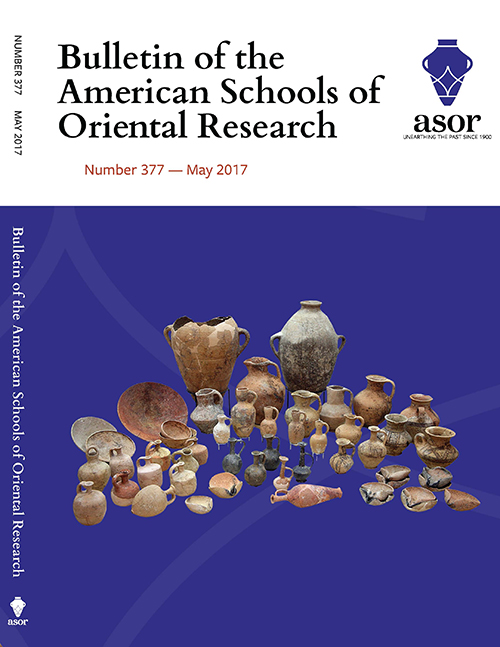
Want to See Your Photos on the ASOR Website?

[vc_row fullwidth=”true” attached=”true” css=”.vc_custom_1496247803139{padding-top: 0px !important;padding-right: 0px !important;padding-bottom: 0px !important;padding-left: 0px !important;}”][vc_column][mk_image src=”http://www.asor.org/wp-content/uploads/2017/04/100CrusderSeaCastleSaide-Sidon-–-1920×600-–-REVISED-1.jpg” image_width=”1920″ image_height=”400″ hover=”false” margin_bottom=”0″][/vc_column][/vc_row][vc_row fullwidth=”true” css=”.vc_custom_1496682730308{padding-top: 10px !important;padding-right: 0px !important;padding-bottom: 0px !important;padding-left: 0px !important;}”][vc_column width=”1/12″ css=”.vc_custom_1496683820796{margin-right: 10px !important;}” offset=”vc_hidden-md vc_hidden-sm vc_hidden-xs”][vc_column_text]

 SHARE

[/vc_column_text][mk_image src=”http://www.asortest.org/wp-content/uploads/2017/01/social-fb-icon4.jpg” image_width=”42″ image_height=”42″ hover=”false” custom_url=”https://www.facebook.com/ASOResearch/” margin_bottom=”0″][mk_image src=”http://www.asortest.org/wp-content/uploads/2017/01/social-tw-icon4.jpg” image_width=”42″ image_height=”42″ hover=”false” custom_url=”https://twitter.com/ASOResearch?ref_src=twsrc%5Egoogle%7Ctwcamp%5Eserp%7Ctwgr%5Eauthor” margin_bottom=”0″][mk_image src=”http://www.asortest.org/wp-content/uploads/2017/01/social-in-icon4.jpg” image_width=”42″ image_height=”42″ hover=”false” custom_url=”https://www.linkedin.com/company/american-schools-of-oriental-research” margin_bottom=”0″][mk_image src=”http://www.asortest.org/wp-content/uploads/2017/01/social-ml-icon_7.jpg” image_width=”42″ image_height=”42″ hover=”false” custom_url=”mailto:asor@bu.edu” margin_bottom=”0″][mk_image src=”http://www.asortest.org/wp-content/uploads/2017/01/blog-icon3.jpg” image_width=”42″ image_height=”42″ hover=”false” custom_url=”http://asorblog.org/” margin_bottom=”0″][/vc_column][vc_column border_color=”rgba(255,255,255,0.01)” width=”1/6″ css=”.vc_custom_1496683923840{margin-right: 20px !important;border-left-width: 2px !important;padding-right: 20px !important;padding-left: 20px !important;border-left-color: #99422f !important;}”][mk_divider divider_color=”rgba(255,255,255,0.01)” thickness=”1″ margin_top=”3″ margin_bottom=”3″][vc_column_text]

ASOR BLOG

NEWS@ASOR

ANCIENT NEAR EAST TODAY

PAST ASOR NEWS, MONTH BY MONTH

FY16 HONOR ROLL OF DONORS

ASOR ANNUAL MEETING

[/vc_column_text][/vc_column][vc_column border_color=”rgba(170,170,170,0.01)” width=”1/2″ css=”.vc_custom_1487276122024{margin-right: 10px !important;margin-bottom: 30px !important;border-right-width: 2px !important;border-bottom-width: 2px !important;padding-top: 30px !important;padding-right: 30px !important;padding-left: 20px !important;background-color: #ffffff !important;border-right-color: rgba(227,228,228,0.75) !important;border-bottom-color: rgba(227,228,228,0.75) !important;}”][vc_column_text responsive_align=”left”]

ASOR WEBSITE PHOTO CONTEST

Submit your images, and they may be featured throughout the ASOR website!
[/vc_column_text][vc_images_carousel images=”30799,30732,30190,30745,30795″ img_size=”590×150″ autoplay=”yes” wrap=”yes”][vc_column_text]You may have noticed that photos are a central feature of the new, beautiful ASOR website. ASOR wants to show off your best landscapes, panoramas, artifact portraits, and high quality candids. We will choose the best images from different countries where ASOR members work to feature in the homepage slideshow that will change monthly. Other images may be chosen for banner images on other webpages throughout the website.

Email your entries, along with an entry form to info@asor.org.

Entries should be high resolution (at least 300 dpi). As described in the submission form, photos should be named in such a way as to describe basic information, the location, and date. Submitters are also encouraged (but not required) to include a brief description of each photo in a Word file that should be sent together with the submission form. By submitting photo(s) and signing the submission form, you guarantee that you are the copyright holder and have the ability to transfer rights to ASOR. You are granting ASOR the non-exclusive right use the photo in any way it sees fit on the ASOR website, in ASOR social media, and/or in ASOR promotional materials. You also grant ASOR the permission and right to use the image(s) on a resource page for members and friends with the understanding that ASOR will not charge for the images.

Please note that ASOR will not accept images of artifacts from the antiquities market or images that might promote the trade of antiquities in any way. Submissions must comply with ASOR’s Policy on Professional Conduct.[/vc_column_text][mk_divider][mk_button corner_style=”rounded” size=”xlarge” bg_color=”#2f2f80″ txt_color=”#dddddd” url=”http://www.asor.org/wp-content/uploads/2017/07/Photo-Submission-Rules.pdf” align=”center” animation=”scale-up”]Download Entry Form[/mk_button][mk_divider][vc_column_text][/vc_column_text][/vc_column][vc_column border_color=”rgba(170,170,170,0.01)” width=”1/6″ css=”.vc_custom_1496684098866{margin-right: 5px !important;margin-bottom: 20px !important;border-right-width: 2px !important;border-bottom-width: 2px !important;padding-top: 30px !important;padding-right: 10px !important;padding-left: 10px !important;background-color: #ffffff !important;border-right-color: rgba(227,228,228,0.75) !important;border-bottom-color: rgba(227,228,228,0.75) !important;}”][vc_wp_posts title=”BROWSE THE NEWS ARCHIVE” number=”4″][/vc_column][vc_column border_color=”rgba(170,170,170,0.01)” width=”1/6″ css=”.vc_custom_1496684008271{margin-right: 10px !important;margin-bottom: 30px !important;border-right-width: 2px !important;border-bottom-width: 2px !important;padding-top: 30px !important;padding-right: 20px !important;padding-left: 20px !important;background-color: #ffffff !important;border-right-color: rgba(227,228,228,0.75) !important;border-bottom-color: rgba(227,228,228,0.75) !important;}”][vc_column_text] [/vc_column_text][/vc_column][/vc_row]
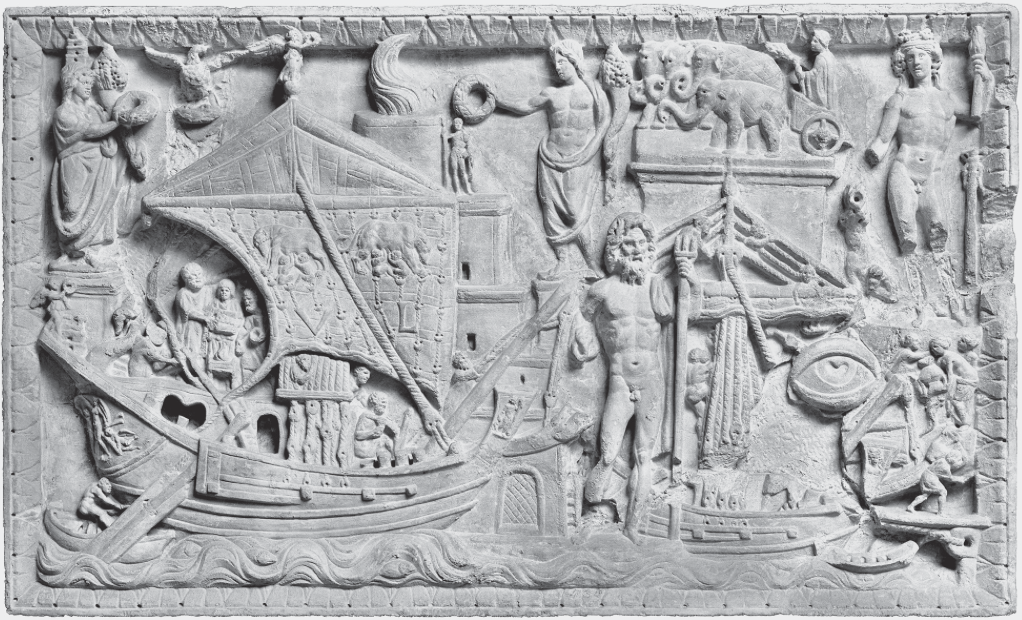
Table of Contents for BASOR 377 (May 2017)

[vc_row fullwidth=”true” attached=”true” css=”.vc_custom_1496247803139{padding-top: 0px !important;padding-right: 0px !important;padding-bottom: 0px !important;padding-left: 0px !important;}”][vc_column][mk_image src=”http://www.asor.org/wp-content/uploads/2017/07/pottery02-1920×600.jpg” image_width=”1920″ image_height=”400″ hover=”false” margin_bottom=”0″][/vc_column][/vc_row][vc_row fullwidth=”true” css=”.vc_custom_1496682730308{padding-top: 10px !important;padding-right: 0px !important;padding-bottom: 0px !important;padding-left: 0px !important;}”][vc_column width=”1/12″ css=”.vc_custom_1496683820796{margin-right: 10px !important;}” offset=”vc_hidden-md vc_hidden-sm vc_hidden-xs”][vc_column_text]

 SHARE

[/vc_column_text][mk_image src=”http://www.asortest.org/wp-content/uploads/2017/01/social-fb-icon4.jpg” image_width=”42″ image_height=”42″ hover=”false” custom_url=”https://www.facebook.com/ASOResearch/” margin_bottom=”0″][mk_image src=”http://www.asortest.org/wp-content/uploads/2017/01/social-tw-icon4.jpg” image_width=”42″ image_height=”42″ hover=”false” custom_url=”https://twitter.com/ASOResearch?ref_src=twsrc%5Egoogle%7Ctwcamp%5Eserp%7Ctwgr%5Eauthor” margin_bottom=”0″][mk_image src=”http://www.asortest.org/wp-content/uploads/2017/01/social-in-icon4.jpg” image_width=”42″ image_height=”42″ hover=”false” custom_url=”https://www.linkedin.com/company/american-schools-of-oriental-research” margin_bottom=”0″][mk_image src=”http://www.asortest.org/wp-content/uploads/2017/01/social-ml-icon_7.jpg” image_width=”42″ image_height=”42″ hover=”false” custom_url=”mailto:asor@bu.edu” margin_bottom=”0″][mk_image src=”http://www.asortest.org/wp-content/uploads/2017/01/blog-icon3.jpg” image_width=”42″ image_height=”42″ hover=”false” custom_url=”http://asorblog.org/” margin_bottom=”0″][/vc_column][vc_column border_color=”rgba(255,255,255,0.01)” width=”1/6″ css=”.vc_custom_1496683923840{margin-right: 20px !important;border-left-width: 2px !important;padding-right: 20px !important;padding-left: 20px !important;border-left-color: #99422f !important;}”][mk_divider divider_color=”rgba(255,255,255,0.01)” thickness=”1″ margin_top=”3″ margin_bottom=”3″][vc_column_text]

ASOR BLOG

NEWS@ASOR

ANCIENT NEAR EAST TODAY

PAST ASOR NEWS, MONTH BY MONTH

FY16 HONOR ROLL OF DONORS

ASOR ANNUAL MEETING

[/vc_column_text][/vc_column][vc_column border_color=”rgba(170,170,170,0.01)” width=”1/2″ css=”.vc_custom_1487276122024{margin-right: 10px !important;margin-bottom: 30px !important;border-right-width: 2px !important;border-bottom-width: 2px !important;padding-top: 30px !important;padding-right: 30px !important;padding-left: 20px !important;background-color: #ffffff !important;border-right-color: rgba(227,228,228,0.75) !important;border-bottom-color: rgba(227,228,228,0.75) !important;}”][vc_column_text responsive_align=”left”]

TABLE OF CONTENTS FOR BASOR 377 (MAY 2017)

Subscription Options
You can receive BASOR (and other ASOR publications) through an ASOR Membership or through an Individual Subscription. Single issues (subject to availability) are available for purchase, with ASOR members receiving a discount. Please email us if you have any questions.

Pp. 1-20: “Ethnofabrics: Petrographic Analysis as a Tool for Illuminating Cultural Interactions and Trade Relations between Judah and Philistia during the Iron Age II,” by Anat Cohen-Weinberger, Nahshon Szanton and Joe Uziel

Recent excavations along the lower eastern slopes of Jerusalem yielded a number of sherds attributed to Late Philistine Decorated Ware. As this family of vessels is generally thought to derive from Philistia, petrographic analysis was conducted on the sherds, as well as on other vessels assumed to be locally made, which served as a control group. Late Philistine Decorated Ware sherds were found to belong to three distinct petrographic groups, two of which seem to originate in Philistia (i.e., the southern coastal plain and Judaean Shephelah), while a third group was found to be local to Jerusalem. The results also indicate that some vessels considered local to the area of Jerusalem were actually produced farther west. This article discusses the results of the petrographic analysis and the implications they have on understanding Judaeo-Philistine relations.

Click here to access the above article on JSTOR (ASOR membership with online access and/or subscription to JSTOR Current Content required).

Pp. 21-38: “From Stadium to Harbor: Reinterpreting the Curved Ashlar Structure in Roman Tiberias,” by Rick Bonnie

A salvage excavation in the modern city of Tiberias in 2002 exposed the remnants of a wide, curved ashlar structure. Based on its curved shape, its construction date, and its location, various scholars have identified this structure as the foundation wall of the Roman stadium mentioned by Josephus in relation to the First Jewish Revolt (66–67 C.E.). However, neither Josephus nor the later rabbinic sources imply the presence of a stone-built monumental stadium at the location of this site, nor does all of the exposed evidence related to the structure fit with the stadium theory. Therefore, a different interpretation for this structure is proposed. Based on the presence of a mooring stone projecting outward from the structure’s waterside and the complex’s strong similarities in structural characteristics and in elevation to the nearby late Hellenistic to Roman harbor of Magdala, it is argued that the remains should be identified as those of a quay, a stone platform built along the lakeshore to accommodate the loading and unloading of boats. If this interpretation is correct, it suggests the existence of a harbor structure in the northeast area of Roman Tiberias.

Click here to access the above article on JSTOR (ASOR membership with online access and/or subscription to JSTOR Current Content required).

Pp. 39-47: “The Qubur al-Walaydah Bowl: New Images and Old Readings,” by Nathaniel E. Greene

Discovered in the late 1970s and first published in the Bulletin of the American Schools of Oriental Research by Frank Moore Cross in 1980, the Qubur al-Walaydah Bowl has become the object of more recent inspection by the current excavation team at the site. In 2010, Angelika Berlejung proposed new readings for parts of the inscription. This article seeks to analyze Berlejung’s proposed readings against Cross’s readings from his editio princeps. Furthermore, the present study utilizes reflectance transformation imaging in order to draw its conclusions. Ultimately, Berlejung’s proposed readings are not supported by reflectance transformation imaging.

Click here to access the above article on JSTOR (ASOR membership with online access and/or subscription to JSTOR Current Content required).

Pp. 49-67: “Local Production of a Small Rectangular Limestone Incense Altar at Tell Halif, Israel: Iconographic Considerations,” by Seung Ho Bang and Oded Borowski

This article studies local production of an incense altar found at Tell Halif in 2007 through examining its iconography. The carvings depict hunting scenes consisting of a human and various animals. These animals are positively identified as zebu, wild boar, Saluki-type hounds, and Nubian ibexes. The distribution of these five animals indicates that the southern Levant might be the source of primary influence for incense altar production, while southern Arabia is also a visible influential factor. Established trade between the southern Levant and southern Arabia, as early as the 12th–11th centuries B.C.E., might support the idea of cultural ties between the two regions. The taxonomical identifications strongly support the hypothesis that the object was locally produced. And this hypothesis is also in accord with the petrographic provenance analyses of the raw material used for the Tell Halif incense altar.

Click here to access the above article on JSTOR (ASOR membership with online access and/or subscription to JSTOR Current Content required).

Pp. 71-84: “Six Palmyrene Portraits Destroyed in Manbij, Syria: A Salvage Reading,” by Jeremy M. Hutton

Operatives of the Islamic State reportedly destroyed six Palmyrene funerary busts and statue fragments in Manbij, Syria, on July 2, 2015. This article considers the ethical implications of publishing photographs of antiquities that have been destroyed, arguing that in such dramatic cases as destruction, it is justified to publish readings. Photographs of these antiquities are then analyzed, their physical and iconographic characteristics described, and readings for three of the inscriptions suggested. Finally, the loss of data caused by the items’ destruction is measured against the loss of data occasioned by looting.

Click here to access the above article on JSTOR (ASOR membership with online access and/or subscription to JSTOR Current Content required).

Pp. 85-106: “Two (?) Lion Reliefs from Iron Age Moab: Further Evidence for an Architectural and Intellectual Koiné in the Levant?,” by Martin Weber

The collection of the Karak Archaeological Museum contains two carved basalt slabs, both of which show the rear parts and hindquarters of a leonine figure. Although the two slabs differ vastly in their state of preservation, a comparison of their physical properties and iconographic features suggests that the two reliefs originally formed a matching pair and were part of a single architectural feature. Comparing the slabs to the well-known corpus of northern Levantine monumental sculpture, it is argued that the reliefs constitute the remains of two gateway figures, most plausibly dated to the Iron Age. The Karak slabs thus provide the first likely evidence for the use of architectural stone sculpture by Moabite elites, a practice most commonly associated with the Iron Age kingdoms of the northern Levant. Lion sculptures were often employed as gateways figures in public buildings, especially in the northern Levant and northern Mesopotamia, attesting to the close relationship between these images and the royal ideology they helped to project. Through their existence, the Karak slabs not only provide further evidence for cross-cultural artistic interaction in the Iron Age Levant but also suggest that ancient Karak played an important role in these exchanges.

Click here to access the above article on JSTOR (ASOR membership with online access and/or subscription to JSTOR Current Content required).

Pp. 107-133: “An Aramaic-Inscribed Lamaštu Amulet from Zincirli,” by Jessie DeGrado and Matthew Richey

In the final volume of excavation reports from the Felix von Luschan expedition to Zincirli, Turkey, the editor, Walter Andrae, provided a brief iconographic description and an imperfect photograph of an Aramaic-inscribed Lamaštu amulet from the site. The Old Aramaic inscription was, however, largely invisible in the photograph, and the epigraph went untranscribed and untranslated in this and all subsequent mentions. The present article represents a full edition and discussion of the amulet and its inscription on the basis of our examination of the object at the Vorderasiatisches Museum, Berlin. This artifact represents the only known instance of a local Aramaic script’s use on an amulet dominated by Mesopotamian iconographic motifs, notably including Lamaštu. It is an important witness to cultural contact and combination in an Aramaic/Neo-Hittite city-state of the 9th-8th centuries B.C.E. Due to the general paucity of Old Aramaic inscriptions, the epigraph also represents a significant addition to the broader extant corpus and contributes important data for understanding Old Aramaic palaeography, orthography, and onomastics.

Click here to access the above article on JSTOR (ASOR membership with online access and/or subscription to JSTOR Current Content required).

Pp. 135-159: “The Philistine Cemetery of Ashkelon,” by Daniel M. Master and Adam J. Aja

From 2013 to 2016, the Leon Levy Expedition to Ashkelon excavated an Iron Age IIA cemetery immediately adjacent to the ancient city. This research uncovered over 200 individuals buried in simple pits, built tombs, and cremation jars. The discovery represents a fundamental contribution to the history of the Philistines, as it demonstrates, for the first time, a typical burial practice for Philistine adults in the Iron Age. As such, it becomes a type-site against which other southern Levantine discoveries can be compared and provides new information about Iron Age death and burial in the eastern Mediterranean.

Click here to access the above article on JSTOR (ASOR membership with online access and/or subscription to JSTOR Current Content required).

Pp. 161-218: “Tombs and Offering Pits at the Late Bronze Age Metropolis of Hala Sultan Tekke, Cyprus,” Peter M. Fischer and Teresa Bürge

Hala Sultan Tekke is a large Bronze Age city close to the famous homonymous mosque near the international airport of Larnaca on the south coast of Cyprus. Previous research demonstrated that the city flourished mainly in the later part of the Late Bronze Age—viz., during the 13th and 12th centuries B.C.E.—but recent excavations confirmed that the city was occupied from as early as the Middle Cypriot III-Late Cypriot IA period around 1600 B.C.E. The current project, which started in 2010, exposed three new city quarters (CQ1–3) in the northern part of the city close to the ancient harbor—that is, today’s Larnaca Salt Lake. Geophysical surveys by georadar and magnetometer, which were carried out in Area A, a plateau approximately 600 m east of CQ1 and opposite the mosque, indicated more than 80 roughly circular anomalies. Among the seven anomalies excavated in 2016 are Tomb X and Offering Pit V, which are the main subjects of this article. Concentrated in these features were objects of high artistic value from a vast area of the eastern Mediterranean, including the Aegean, the Levant, Egypt, and possibly Anatolia. Both features antedate the occupation of the previously excavated city quarters.

Click here to access the above article on JSTOR (ASOR membership with online access and/or subscription to JSTOR Current Content required).

Pp. 219-248: “Embodiments of Death: The Funerary Sequence and Commemoration in the Bronze Age Levant,” by Melissa S. Cradic

This article presents an archaeological model for Levantine funerary rituals performed in the context of commingling inhumations. Using the case study of a masonry-constructed chamber tomb from Middle Bronze Age Tel Megiddo (Israel), the funerary sequence is reconstructed in three main phases: (1) pre-interment; (2) interment; and (3) post-interment. The sequential performance of funerary rituals in this shared burial space resulted in a high degree of skeletal fragmentation as previously interred corpses were moved aside to accommodate subsequent inhumations. However, rather than merely representing a functional aspect of burial, the repositioning of deceased bodies constituted a ritually meaningful practice that involved continuous physical interactions between the living and the dead. Drawing on theories of embodiment and methods of burial taphonomy, this article argues that mourners’ close encounters with deceased bodies played a major role in transforming the status of the dead after burial. Ritualized fragmentation and intermingling of human skeletal remains were integral components of becoming an ancestor.

Click here to access the above article on JSTOR (ASOR membership with online access and/or subscription to JSTOR Current Content required).

[/vc_column_text][mk_divider][vc_column_text]To view the entire article on JSTOR, click here.[/vc_column_text][/vc_column][vc_column border_color=”rgba(170,170,170,0.01)” width=”1/6″ css=”.vc_custom_1496684098866{margin-right: 5px !important;margin-bottom: 20px !important;border-right-width: 2px !important;border-bottom-width: 2px !important;padding-top: 30px !important;padding-right: 10px !important;padding-left: 10px !important;background-color: #ffffff !important;border-right-color: rgba(227,228,228,0.75) !important;border-bottom-color: rgba(227,228,228,0.75) !important;}”][vc_wp_posts title=”BROWSE THE NEWS ARCHIVE” number=”4″][/vc_column][vc_column border_color=”rgba(170,170,170,0.01)” width=”1/6″ css=”.vc_custom_1496684008271{margin-right: 10px !important;margin-bottom: 30px !important;border-right-width: 2px !important;border-bottom-width: 2px !important;padding-top: 30px !important;padding-right: 20px !important;padding-left: 20px !important;background-color: #ffffff !important;border-right-color: rgba(227,228,228,0.75) !important;border-bottom-color: rgba(227,228,228,0.75) !important;}”][vc_column_text] [/vc_column_text][/vc_column][/vc_row]