ASOR Receives $100,000 Grant for Cyrene Conservation Initiative in Libya
Media Release
ASOR Receives $100,000 Grant for Cyrene Conservation Initiative in Libya
Project to Preserve and Educate at Flood-Damaged World Heritage Site
WASHINGTON, DC — The American Society of Overseas Research (ASOR) is pleased to announce it has been awarded a $100,000 grant from the American Institute for Roman Culture in support of the Cyrene Conservation Initiative—a conservation and heritage education project at the UNESCO World Heritage Site of Cyrene in eastern Libya.
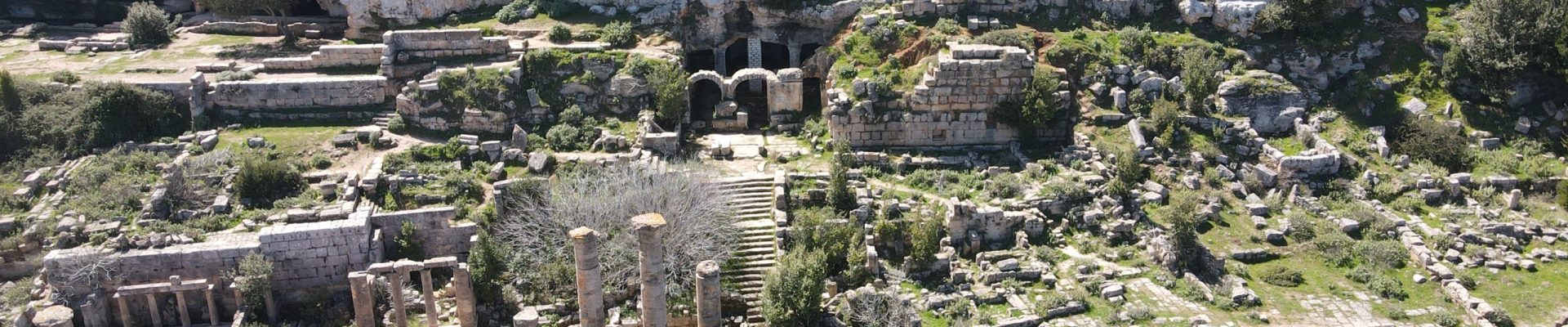
Developed in close collaboration with the Libyan Department of Antiquities, the Cyrene Conservation Initiative is a response to the devastating impacts of Storm Daniel, which caused catastrophic flooding in September 2023. The project will focus on key areas of the ancient city that were particularly affected by the flood, including Valley Street and the Sanctuary of Apollo terrace, one of the most iconic districts in the city.
“Working together to save and appreciate shared cultural heritage is a crucial element in uniting people today,” said ASOR President Sharon Herbert. “ASOR is proud to be part of this project with archaeologists from the Libyan Department of Antiquities and the American Institute for Roman Culture and Ancient Rome Live.”
Project objectives include:
- Documenting and protecting heritage damaged by the flooding;
- Restoring safe access to monuments on the Sanctuary of Apollo terrace;
- Enhancing on-site interpretation through new educational materials for Libyan and international visitors.
“ASOR has been privileged to work closely with Libyan partners and the U.S. State Department to invest more than $1,000,000 in heritage and education projects over the past decade,” said ASOR Executive Director Dr. Andrew G. Vaughn. “The heritage of Libya is rich and varied, exhibiting important international connections for millennia. ASOR is now honored to begin a partnership with American Institute for Roman Culture and Ancient Rome Live to ensure that the important Roman heritage in Cyrene is conserved and protected from future flood damage.”
Executive Director of American Institute for Roman Culture and Ancient Rome Live, Darius Arya, says, “we are so pleased that for our inaugural grant distribution we are able to partner with such a leader in the field of conservation and participate in the important preservation of such a historically relevant site as Cyrene!”
From its beginning as the earliest Greek colonization in North Africa, Cyrene became a major center of Greek and Roman culture and a dramatic example of urban life on the edge of a mountainous plateau. The Cyrene Conservation Initiative and Ancient Rome Live will help ensure that this unique expression of Libyan heritage endures for future generations. For more information about the Ancient Rome Live online learning platform, please visit https://ancientromelive.org/.
For more information about ASOR’s cultural heritage efforts, please visit www.asor.org/chi.
About ASOR
The American Society of Overseas Research (ASOR) is a nonprofit 501(c)(3) organization whose mission is to initiate, encourage, and support research into, and public understanding of, the history and cultures of the Near East and wider Mediterranean world, from the earliest times. ASOR fosters original research, archaeological excavations, and explorations; encourages scholarship in the Near East’s basic languages, cultural histories, and traditions; builds support for Near Eastern studies; and advocates high academic standards. ASOR is apolitical and has no religious affiliation.
About the American Institute for Roman Culture
The American Institute for Roman Culture is a U.S.-based nonprofit dedicated to the promotion, preservation, and study of ancient Roman history and culture through innovative educational programming and heritage protection projects.
###
Media Contact:
Rachel Bernstein
Email: rachel.bernstein@asor.org
Phone: 703-789-9234
The American Society of Overseas Research
The James F. Strange Center
209 Commerce Street
Alexandria, VA 22314
E-mail: info@asor.org
Telephone: 703-789-9229