UNEARTHING THE PAST SINCE 1900
  • BECOME A MEMBER
  • RENEW
  • GIVE NOW
  • SEARCH
  • ONLINE PORTAL
  • American Society of Overseas Research (ASOR)American Society of Overseas Research (ASOR)
  • ABOUT
    • WELCOME FROM ASOR OFFICERS
    • HISTORY OF ASOR
    • MISSION, BYLAWS, & STRATEGIC PLAN
    • Board of Trustees
    • COMMITTEES
    • POLICIES
    • FINANCIAL DOCUMENTS
    • MEDIA RELEASES
    • CONTACT US
  • CULTURAL
    HERITAGE
    • ABOUT CULTURAL HERITAGE INITIATIVES
    • UPDATES
    • PAST GRANTS
    • TUTORIALS
    • Who We Are
  • ANNUAL
    MEETING
    • REGISTRATION
    • HOTEL RESERVATIONS
    • ANNUAL MEETING SCHEDULES
    • SPONSOR & EXHIBIT
    • ASOR Online Library
    • HONORS & AWARDS
    • ANNUAL MEETING SCHOLARSHIPS
    • PAST & FUTURE ANNUAL MEETINGS
  • MEMBERSHIP
    & RESOURCES
    • INDIVIDUAL MEMBERSHIPS
    • INSTITUTIONAL MEMBERSHIPS
    • NEWS@ASOR
    • PAST ASOR NEWS, MONTH BY MONTH
    • AFFILIATED PROJECTS
    • AFFILIATED RESEARCH CENTERS
    • ARCHIVES
    • ONLINE RESOURCES
      • PHOTO COLLECTION
    • EARLY CAREER MEMBER RESOURCES
  • FELLOWSHIPS
    & GRANTS
    • SCHOLARSHIPS FOR FIELDWORK PARTICIPATION
    • GRANTS FOR ARCHAEOLOGICAL PROJECTS
    • RESEARCH FELLOWSHIPS FOR MEMBERS
    • MEMBERSHIP & ANNUAL MEETING SCHOLARSHIPS
    • ASOR-AFFILIATED RESEARCH CENTERS FELLOWSHIPS
    • OTHER FELLOWSHIP PROGRAMS
  • PUBLICATIONS
    • BOOK SERIES & MONOGRAPHS
    • BULLETIN OF ASOR
    • JOURNAL OF CUNEIFORM STUDIES
    • MAARAV
    • NEAR EASTERN ARCHAEOLOGY
    • THE ANCIENT NEAR EAST TODAY
    • News@ASOR
    • LEVANTINE CERAMICS PROJECT
  • FRIENDS
    OF ASOR
    • Webinars
    • TOURS
    • THE ANCIENT NEAR EAST TODAY
    • ASOR ONLINE LIBRARY
  • Donate
    • FY25 HONOR ROLL OF DONORS
    • LIFETIME HONOR ROLL OF DONORS
    • ASOR LEGACY CIRCLE
    • WAYS TO DONATE
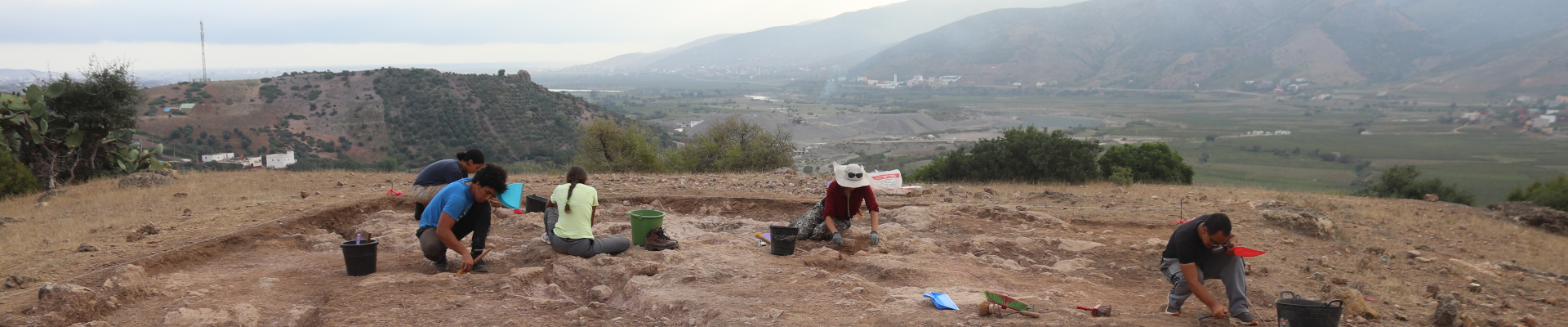
Kach Kouch 1920x400

 SHARE


NEWS@ASOR E-NEWSLETTER

ANCIENT NEAR EAST TODAY E-NEWSLETTER

PAST ASOR NEWS, MONTH BY MONTH

ASOR LEGACY CIRCLE MEMBERS

LIFETIME HONOR ROLL OF DONORS

FY25 HONOR ROLL OF DONORS

ASOR ANNUAL MEETING

ASOR-Affiliated Morocco Project Publishes Evidence About Bronze Age North Africa

Media Release
February 20, 2025

ASOR-affiliated archaeology project finds new evidence of earliest farming in NW Africa


ALEXANDRIA, Va. – A new study in the journal Antiquity presents the first evidence of a Bronze Age-era farming settlement in the northwest Maghreb following an ASOR-affiliated excavation in Kach Kouch, Morocco.

The study, titled “Rethinking late prehistoric Mediterranean Africa: architecture, farming and materiality at Kach Kouch, Morocco,” was published on February 17 in the journal Antiquity by Cambridge University Press. Authors Hamza Benattia, Youssef Bokbot, Jorge Onrubia-Pintado and the rest of the Kach Kouch Archaeological Project team, primarily comprising students from the National Institute of Archaeology and Heritage of Morocco (INSAP), have been conducting excavations and surveys at Kach Kouch, Morocco since 2021 to further the understanding of this hitherto little-known period. They revealed in the Antiquity study the remains of a settlement occupied from 1300 to 600 BCE that was a farming economy before the arrival of the Phoenician conquest.

The team’s research demonstrated that settled occupation in this region stems from social and economic dynamics within local North African communities since at least 2200 BCE, rather than being a result of later interactions with Phoenician communities. Despite the settlement of Phoenician communities along the northern Moroccan coast from the eighth century BCE onwards, local cultural traditions persisted in the inner valleys of the western Rif, Morocco, until the sixth to fifth centuries BCE.

The Kach Kouch settlement practiced animal husbandry and crop cultivation, with crops being processed and stored on site, based on the published findings. Farming, herding, building, and material culture continued from the eighth to seventh centuries BCE to further emphasize the “primary role played by local communities in shaping the social, cultural and economic dynamics of the emergent Moroccan Bronze Age and subsequent Early Mauretanian period” at Kach Kouch, according to the study.

Thanks to the support of an ASOR Stevan B. Dana Grant, the Kach Kouch team continued the research in northwestern Morocco’s Rif mountains in 2023 and early 2024. Extensive survey and targeted excavation along the valleys of Oued Laou and Stehat identified five previously undocumented sites. The newly discovered sites attest to a more stable settled occupation in the region than previously thought, spanning from the Late Prehistory to the Early Mauretanian Period (from c. 2200-400BC), a novel signature for non-Nilotic North Africa.

The publication’s findings stimulate interest in the overlooked region and encourage new narratives in the scholarly discourse on North African archaeology.


About ASOR

The American Society of Overseas Research (ASOR) is a nonprofit 501(c)(3) organization whose mission is to initiate, encourage, and support research into, and public understanding of, the history and cultures of the Near East and wider Mediterranean world, from the earliest times. ASOR fosters original research, archaeological excavations, and explorations; encourages scholarship in the Near East’s basic languages, cultural histories, and traditions; builds support for Near Eastern studies; and advocates high academic standards. ASOR is apolitical and has no religious affiliation.

###

The American Society of Overseas Research
The James F. Strange Center
209 Commerce Street
Alexandria, VA 22314
E-mail: info@asor.org
Telephone: 703-789-9229

BROWSE THE NEWS ARCHIVE

  • 2026 Fieldwork Opportunities
  • FOA Webinar: Sarah Wenner
  • Harris Grant Report: Alalakh/Tell Atchana
  • Table of Contents for Near Eastern Archaeology 88.4 (2025)

Latest Posts from @ASORResearch

asor_research

Initiating and supporting research of the history and cultures of the Near East and wider Mediterranean world.


The Honors and Awards Committee seeks nominations
The Honors and Awards Committee seeks nominations for at least 3 candidates. Committee members will serve a three-year term with the possibility of two consecutive terms. Nominees must fill out the online form by January 30. Learn more by clicking the link in our bio: https://www.asor.org/news/2025/12/honors-awards-members-call


This past summer, a group from Johns Hopkins Unive
This past summer, a group from Johns Hopkins University traveled to Türkiye to help excavate a Late Bronze Age archive of cuneiform tablets at Alalakh/Tell Atchana. This team, funded by an ASOR Harris Grant, was uniquely qualified for the task, as they were trained in both archaeology and in reading Akkadian cuneiform. Read their grant report by clicking the link in our bio: https://www.asor.org/news/2025/12/harris-grant-report-alalakh
#Archaeology #Fieldwork #Cuneiform #Turkiye


Reminder: the deadline to propose new member-organ
Reminder: the deadline to propose new member-organized sessions and workshops for the 2026 Annual Meeting in Chicago is Thursday, January 15. Find more info and fill out a brief proposal here: https://buff.ly/Kqui65X


Don't miss the upcoming FOA webinar on Wednesday,
Don't miss the upcoming FOA webinar on Wednesday, January 21 at 7:00pm ET: "Experiencing Khirbet et-Tannur: The Story of a Nabatean Temple from the Second through 21st Century," presented by Dr. Sarah Wenner. In the 2nd century CE, after Rome annexed the Nabataean Kingdom and transformed it into the Roman province of Arabia, the Nabataean temple at Khirbet et-Tannur was constructed in Central Jordan. This lecture travels the site’s two millennia history and explores how Khirbet et-Tannur’s excavations, the collection at the Cincinnati Art Museum, and 21st century innovations have changed our understanding of the Nabataeans. Read more and register by clicking the link in our bio: https://www.asor.org/news/2026/01/webinar-wenner


Our #ObjectoftheWeek: An Egyptian “New Year’s Bott
Our #ObjectoftheWeek: An Egyptian “New Year’s Bottle”, a type of lentoid-shaped flask that was filled with perfumed oil or water from the Nile, gifted in connection to the New Year. ca. 664-525 BCE. MMA 30.8.214. Photo credit: Metropolitan Museum of Art.
#Archaeology #Egypt #NewYear


The archaeological record and the cuneiform litera
The archaeological record and the cuneiform literature provide us with compelling information to assess how children lived 3000 years ago. This should open our eyes to current realities, which are not so different. Read the newest ANE Today article, "Children in the Ancient (and Present-day) Near East", by clicking the link in our bio: https://anetoday.org/children-near-east/


In town for the #AIASCS2026 Annual Meeting? 🏺

Mak
In town for the #AIASCS2026 Annual Meeting? 🏺

Make sure to stop by the ASOR table in the Exhibit Hall to learn more about our programs and publications, and reconnect with colleagues and friends from across the field.

ASOR Exhibit Hall Hours:
• Wed, Jan 7 | 3:00–6:00 PM
• Thu–Fri, Jan 8–9 | 9:30 AM–5:30 PM
• Sat, Jan 10 | 8:00 AM–12:00 PM

We can’t wait to see you—come say hello! 

#ASOR #AIAAnnualMeeting #MeetUsThere


The 2026 ASOR Annual Meeting will begin on Wednesd
The 2026 ASOR Annual Meeting will begin on Wednesday, November 18, at 7:00pm CST with the plenary address by Dr. Kim Benzel: Lapis, Clay, Copper, Water: Presenting Ancient West Asian Art at The Met. Dr. Benzel is Curator in Charge of The Metropolitan Museum of Art. She holds a Ph.D. in Art History and Archaeology from Columbia University and has participated in archaeological excavations in Syria. Currently, Kim and her colleagues are working on a full rethink and renovation of The Met’s permanent galleries of Ancient West Asian Art, scheduled to reopen in June 2027. Read more about the 2026 Plenary Address here: https://www.asor.org/am/2026/plenary-address-2026


Make sure to tune in TOMORROW at 7:00 pm ET for th
Make sure to tune in TOMORROW at 7:00 pm ET for the next FOA webinar presented by Amanda Hope Haley: "Beyond Edutainment: Reclaiming Archaeology in a Clickbait World". If you haven't already signed up, click the link (https://buff.ly/cDQEBdk) in our bio to register for free.


ASOR plans to award two Mesopotamian Fellowships f
ASOR plans to award two Mesopotamian Fellowships for 2026-2027; one for $9,000 and one for $4,000. These fellowships are primarily intended to support fieldwork/research on ancient Mesopotamian culture carried out in the Middle East, but other projects such as travel to work on museum collections or archives related to ancient Mesopotamia will also be considered. The deadline for applications is January 26, 2026. More info can be found here: https://www.asor.org/fellowships/mesopotamian-fellowship/


Yishu Deng, a 2025 Eric and Carol Meyers Fieldwork
Yishu Deng, a 2025 Eric and Carol Meyers Fieldwork Participation Scholarship Recipient,
excavated at Kani Shaie in the Kurdistan Region of Iraq. Yishu was able to participate in ongoing archaeological research in the Near East and further her interest in ancient metal production. Read her fieldwork report here: https://www.asor.org/news/2025/12/fieldwork-report-deng


Happy New Year from ASOR! We wish you all the best
Happy New Year from ASOR! We wish you all the best for 2026!


Before we turn the page to 2026, swipe through and
Before we turn the page to 2026, swipe through and take a look at ASOR's 2025 Year in Review! Thank you for being part of ASOR's historic 125th year — we couldn't have accomplished it without your support!
#ASOR2025 #ASORwrapped


The newest issue of Near East Archaeology includes
The newest issue of Near East Archaeology includes articles like: Burial Practices of the Bronze Age: An Archaeological Study of the Deh Dumen Cemetery in Southern Zagros, Iran; Time Capsules: Evidence for Foundation and Abandonment Practices at Middle Bronze Age Erimi, Cyprus; Āb Bād Rock-cut Tomb: Tracking Post-Achaemenid Burial Customs in Qir-o Karzin, Southern Pars, Iran; First Observations on the Excavations in the Terrace Area of Uluköy Cave, Mardin/Türkiye; and more. Check out the Table of Contents here: https://www.asor.org/news/2025/12/nea88.4-toc/


ASOR invites members to propose new member-organiz
ASOR invites members to propose new member-organized sessions and workshops for the 2026 Annual Meeting. The meeting will be held in Chicago and online, November 18-21. The brief proposal form asks for a description of the session/workshop, as well as a list of 4 to 5 potential speakers and topics. The deadline to propose sessions and workshops is January 15. More info can be found by clicking the link (https://www.asor.org/am/2026/call-for-sessions-2026) in our bio.


Our #ObjectoftheWeek: Alabastron from the tomb of
Our #ObjectoftheWeek: Alabastron from the tomb of Nubian king Aspelta in Nuri, Sudan, ca. 593-568 BCE. MFA 20.1070. Photo credit: Harvard University—Boston Museum of Fine Arts Expedition.
#Nubia #Alabastron


Register for the next FOA webinar on January 7, 20
Register for the next FOA webinar on January 7, 2026, at 7:00 pm ET, presented by Amanda Hope Haley: "Beyond Edutainment: Reclaiming Archaeology in a Clickbait World". This webinar will be free and open to the public. Register here: https://www.asor.org/news/2025/12/webinar-haley


Heritage protection is a fundamental part of the w
Heritage protection is a fundamental part of the work of ASOR’s Cultural Heritage Initiatives. To help fight the illicit antiquities trade in Lebanon and Syria, ASOR hosted an Antiquities Trafficking Documentation workshop in Beirut, Lebanon on December 8-12, 2025, with the generous support of the U.S. Embassy in Beirut @USEmbassyBeirut. 

The workshop brought together representatives of the American, Lebanese, and Syrian governments to discuss current conditions and challenges in Lebanon and Syria, local priorities, and ways for all participants to work together to achieve them. Read more by clicking the link (https://buff.ly/lB5EEHO) in our bio.

Photo credits: U.S. Embassy Beirut and ASOR


Check out the November issue of BASOR 394, featuri
Check out the November issue of BASOR 394, featuring articles such as: Boulos el-ʿAraj: A Palestinian Quaker Archaeologist of the British Mandate Era (1926–1936); Unveiling the Obscure: Exploring the Function and Meaning of Levantine Shrine Models through an Ethnoarchaeological Lens; Paleoenvironment and Fruit Tree Horticulture at Early Bronze Age Tel Bet Yerah: Evidence from Charcoal Remains; and more. Read the Table of Contents by clicking the link (https://www.asor.org/news/2025/12/basor394-toc/) in our bio.


ASOR is pleased to share information from Overseas
ASOR is pleased to share information from Overseas Institute @caari_cyprus. The CAARI-HFF fellowship offers one grant of £2000 to a graduate student of any nationality, with a preference given to scholars from Egypt, Cyprus, Lebanon, and Syria. The purpose of the time at CAARI must be to conduct research on a project relevant to the maritime archaeology or maritime heritage of Cyprus. Applications are due 12 January 2026. Read more by clicking the link (https://honorfrostfoundation.org/2025/11/24/caari-hff-graduate-fellowship/) in our bio.


Instagram

Stay updated with the latest insights, photos, and news by following us on Instagram!

Follow Us on Instagram

American Society of Overseas Research
The James F. Strange Center
209 Commerce Street
Alexandria, VA 22314

E-mail: info@asor.org

© 2025 ASOR
All rights reserved.
Images licensed under a Creative Commons Attribution-NonCommercial-ShareAlike 4.0 International License

Contact Us
Membership
Give
Friends of ASOR
ASOR Cultural Heritage Initiatives
Terms of Use
News

Please follow & like us :)
Facebook
YouTube
LinkedIn