All of us at ASOR look forward to gathering safely at the Annual Meeting in Chicago. We realize that everyone is eager to reconnect, network, and share research in person again, even if the experience may look different than our pre-COVID Annual Meetings. We also realize that many of you are still navigating travel restrictions imposed by various national and institutional entities. This webpage will be amended frequently with the most up-to-date Annual Meeting COVID-19 information.
ASOR staff and officers are following the evolving pandemic guidelines as they develop at the local (Chicago) and national (USA) levels. ASOR will follow all federal, local, and hotel guidelines and recommendations to ensure our members’ safety. We are working closely with our venue partners, affiliates, and vendors to create a safe meeting environment that is also engaging and meaningful.
City of Chicago Travel Recommendations
Please check the Chicago Department of Public Health’s website often for the latest information regarding Chicago’s COVID-19 Travel Advisory. Currently, every state in the U.S. falls within the Chicago COVID-19 Travel Advisory. The webpage states that all unvaccinated individuals who are returning to Chicago from travel should be tested 1–3 days before traveling to Chicago, and they should get tested 3–5 days after arrival. In addition, they should self-quarantine for 7 days. Everyone, regardless of vaccination status, should wear a mask on public transportation and in indoor public settings.
Vaccination Required for All Attendees
Obviously, it is not practical for ASOR members to follow the City of Chicago recommendation (it is written for returnees, but logically applies to visitors as well) to quarantine for seven days at the hotel before the start of the Annual Meeting. Furthermore, ASOR aims to act in solidarity with many of our sister learned societies that are meeting this winter (e.g., American Anthropological Association [AAA], American Historical Association [AHA], Middle East Studies Association [MESA], and the Modern Language Association [MLA]) by requiring all in-person Annual Meeting attendees to be fully vaccinated with a WHO-approved vaccine before arriving at the Hilton Chicago Hotel.
Annual Meeting in-person attendees will be required to share hard copy paper or digital proof of vaccination before receiving their name badges. We will also accept a sworn affidavit as proof of vaccination. If an in-person attendee has a need for an exemption to this policy, they may request one from ASOR’s President and Executive Director. Alternatively, prospective in-person attendees may also choose to forego the in-person meeting and participate in the virtual component of ASOR’s Annual Meeting.
ASOR Safety Pledge and Practices
All ASOR staff and volunteers at the registration desk will be fully vaccinated.
All ASOR staff and volunteers at the registration desk will take a rapid COVID test before travel to Chicago and after arrival at the hotel.
ASOR encourages all attendees to follow these same testing protocols.
All staff, volunteers, and in-person and attendees pledge to meet as safely as possible by:
Being fully vaccinated,
Wearing facemasks as recommended by the hotel and City of Chicago, and
Following hotel, City of Chicago, and CDC COVID-19 guidelines.
Please visit this page often for updates as we get closer to the Annual Meeting. In the meantime, please contact Arlene Press, ASOR Director of Meetings and Events (meetings@asor.org), with any questions.
Conspiracy to commit tax evasion? Smuggling goods on back roads to avoid customs agents? One family put their plans in writing, only on cuneiform tablets.
By Oliver Dietrich, Jens Notroff, and Laura Dietrich
The number of masks from the Early Neolithic period is increasing but their use remains a mystery. At the site of Göbekli Tepe, however, masks hint at long vanished rituals.
CALL FOR NOMINATIONS FOR EDITOR OF THE ANNUAL OF THE AMERICAN SCHOOLS OF ORIENTAL RESEARCH
[/vc_column_text][vc_column_text responsive_align=”left”]The Publications Committee of the American Schools of Oriental Research announces a call for nominations for the Editor of the ASOR Annual (AASOR) for a term to begin 1 January 2019. ASOR book series editors serve a three-year term eligible to be renewed twice.
The first volume of the AASOR appeared in 1920, making it ASOR’s signature publication. AASOR is a medium for the publication of lengthy preliminary or interim archaeological reports or monograph-length studies relating to archaeology in the Near East. The Editor, working in cooperation with the other ASOR editors, with the Publications Committee, and ASOR’s book publishing partner ISD, holds full editorial control AASOR.
Self-nominations are preferred and should include the following items: 1) a one-paragraph academic biography; 2) a brief statement describing why the candidate is interested in the position; and 3) contact information (including e-mail and phone). If a candidate is being nominated by another person, we seek the candidate’s name, a short academic history, a brief statement describing why the candidate would be appropriate for the position, contact information, and, most importantly, a statement from the candidate that she or he agrees to their name being placed into nomination.
Candidates are encouraged to contact the current editor, Kevin McGeough (mcgekm@uleth.ca), for more information about the position and its responsibilities. Nominations for each position should be directed to the Chair of the Publications Committee, Charles Jones (cellwoodjones@gmail.com), with a copy to the Director of Membership and Publications, Inda Omerefendic (publications@asor.org).
Review of applications will begin 15 September 2018 with a recommendation of a candidate to the ASOR Executive Committee of the Board of Trustees and the full ASOR Board before the Annual Meeting in Denver in November 2018.[/vc_column_text][/vc_column][vc_column border_color=”rgba(170,170,170,0.01)” width=”1/6″ css=”.vc_custom_1496684098866{margin-right: 5px !important;margin-bottom: 20px !important;border-right-width: 2px !important;border-bottom-width: 2px !important;padding-top: 30px !important;padding-right: 10px !important;padding-left: 10px !important;background-color: #ffffff !important;border-right-color: rgba(227,228,228,0.75) !important;border-bottom-color: rgba(227,228,228,0.75) !important;}”][vc_wp_posts title=”BROWSE THE NEWS ARCHIVE” number=”4″][/vc_column][vc_column border_color=”rgba(170,170,170,0.01)” width=”1/6″ css=”.vc_custom_1496684008271{margin-right: 10px !important;margin-bottom: 30px !important;border-right-width: 2px !important;border-bottom-width: 2px !important;padding-top: 30px !important;padding-right: 20px !important;padding-left: 20px !important;background-color: #ffffff !important;border-right-color: rgba(227,228,228,0.75) !important;border-bottom-color: rgba(227,228,228,0.75) !important;}”][vc_column_text]Tweets by ASOResearch [/vc_column_text][/vc_column][/vc_row]
CALL FOR NOMINATIONS FOR EDITOR OF NEAR EASTERN ARCHAEOLOGY
[/vc_column_text][vc_column_text responsive_align=”left”]The Publications Committee of the American Schools of Oriental Research announces a call for nominations for the Editor of Near Eastern Archaeology for a term to begin 1 January 2019. ASOR Journal Editors serve a three-year term (eligible to be renewed twice).
Near Eastern Archaeology brings to life the ancient world from Mesopotamia to the wider Mediterranean with vibrant images and authoritative analyses. NEA ( ISSN 1094-2076) is published four times each year (quarterly): March, June, September, and December.
The Editor of Near Eastern Archaeology receives a stipend. The Editor, working with an Editorial Board, the Publications Committee, and ASOR’s publishing partner, The University of Chicago Press, holds full editorial control of Near Eastern Archaeology.
Self-nominations are preferred and should include the following items: 1) a one-paragraph academic biography; 2) a brief statement describing why the candidate is interested in the position; and 3) contact information (including e-mail and phone). If a candidate is being nominated by another person, we seek the candidate’s name, a short academic history, a brief statement describing why the candidate would be appropriate for the position, contact information, and, most importantly, a statement from the candidate that she or he agrees to their name being placed into nomination.
Candidates are also encouraged to contact the current editor, Thomas Schneider (thomas.schneider@ubc.ca), for more information about the positon and its responsibilities. Nominations for each position should be directed to the Chair of the Publications Committee (Charles Jones (cellwoodjones@gmail.com), with a copy to the Director of Membership and Publications, Inda Omerefendic (publications@asor.org).
Review of applications will begin 15 September 2018 with a recommendation of a candidate for appointment to the ASOR Executive Committee of the Board of Trustees and the full ASOR Board before the Annual Meeting in Denver in November 2018.[/vc_column_text][/vc_column][vc_column border_color=”rgba(170,170,170,0.01)” width=”1/6″ css=”.vc_custom_1496684098866{margin-right: 5px !important;margin-bottom: 20px !important;border-right-width: 2px !important;border-bottom-width: 2px !important;padding-top: 30px !important;padding-right: 10px !important;padding-left: 10px !important;background-color: #ffffff !important;border-right-color: rgba(227,228,228,0.75) !important;border-bottom-color: rgba(227,228,228,0.75) !important;}”][vc_wp_posts title=”BROWSE THE NEWS ARCHIVE” number=”4″][/vc_column][vc_column border_color=”rgba(170,170,170,0.01)” width=”1/6″ css=”.vc_custom_1496684008271{margin-right: 10px !important;margin-bottom: 30px !important;border-right-width: 2px !important;border-bottom-width: 2px !important;padding-top: 30px !important;padding-right: 20px !important;padding-left: 20px !important;background-color: #ffffff !important;border-right-color: rgba(227,228,228,0.75) !important;border-bottom-color: rgba(227,228,228,0.75) !important;}”][vc_column_text]Tweets by ASOResearch [/vc_column_text][/vc_column][/vc_row]
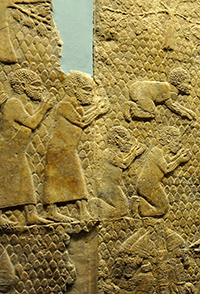
Sennacherib’s reliefs from his palace at Nineveh famously show the destruction of the Judean city of Lachish. But why do the written accounts of the conquest differ from the relief?
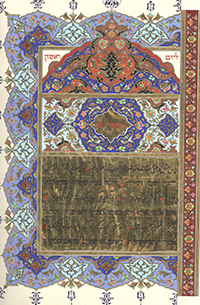
The Library of Congress includes over 167,000,000 items. Among them are a unique collection of Hebrew, Yiddish, Judeo-Arabic and Judeo-Persian manuscripts, some dating back many centuries.
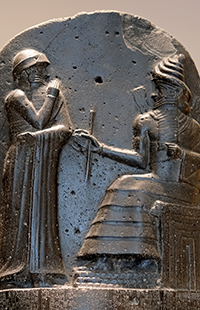
Mesopotamian kings and states made a big show of being powerful, competent, and responsible. But a closer reading of key texts shows this was just talk. How can this be explained?
One of the most shocking aspects of early societies in Egypt and Mesopotamia is evidence for human sacrifice. But for Egypt at least, there might be another explanation.
The year 1868-1869 CE was an important one for the study of the Sinai Peninsula. That year two British Royal Engineers, Captains Charles W. Wilson and Henry S. Palmer, several non-commissioned officers, in addition to an Arabic linguist and orientalist, an Egyptologist, photographer, natural historian, and others, conducted the first Ordnance Survey for Sinai Peninsula. Although pilgrims, travelers and scholars had visited the vicinity of Mount Sinai since the 4th century CE, this was the first-ever scientific party to undertake the cartographic mapping of Biblical Sinai. But the job of mapping the Sinai is still unfinished.
The British survey followed in the footsteps of Europe’s cartographic bias towards Southern Sinai – the presumed location of Biblical Mount Sinai –that had existed since at least 16th century CE. But it also marked an important transition, from what might be called individuality to institutionalization in mapping and mapmaking of the peninsula. Prior to the Ordnance Survey, all the maps for the Sinai were non-survey sketch maps, whether based on armchair cartography, ground observations, or both. One such sketch map in particular laid the foundation for the Ordnance Survey, namely, the 1868 CE “The Peninsula of Mount Sinai: A Sketch from the Observations on Ground” map by Frederick Holland, who later joined the British Royal Engineers.
The map of “The Peninsula of Mount Sinai: A Sketch from the Observations on Ground” by Frederick Holland in 1868 CE.
International geopolitics was the driver of 19th and 20th century mapping. A standoff between the British, who effectively controlled Egypt from 1882 onward, and the Ottoman Empire, ended with the Taba border crisis in 1906 and created the eastern border of the Sinai. The events of World War I led to a transformation in mapping and mapmaking bias from the historic south to the geo-political north, which remained a battlefield throughout the century. Two aspects of mapping in that era are outstanding. One is the contribution of Leonard Woolley and T.E. Lawrence (Lawrence of Arabia), who did a survey of the northeastern Sinai and Negev on behalf of British Military Intelligence just prior to the war under the guise of searching for the Biblical ‘Wilderness of Zin.’ The other is the growing role of aerial photography in creating and checking topographic maps.
Authorities from different countries, including Egypt, Israel, the former Soviet Union and United States, as well as scholars, assumed Sinai’s survey is a finished project. This was partially true when it came to place names, which were mostly compiled from the Anglo-Egyptian 1:100,000 Sinai Peninsula topographic map-series produced in mid 1930s-1940s. That map-series remained the definitive source for Sinai’s Gazetteer until 1980s and beyond. Compiling new maps from aerial photography and satellite imagery and older British maps reinforced that perception. The new maps showed more detailed topographic features (contours), while the level of details of the cartographic features (data) did not necessarily improve, with exception of specific areas of high military or economic interest, such as minerals, oil and gas.
Sheet III of “Sinai Peninsula” map (1:250,000) by the War Office in 1915 CE (reduced from a survey carried out in 1908-1914 CE).
But is this perception true? Is the mapping of the Sinai essentially complete?
To challenge this the Sinai Peninsula Research (SPR) was founded in 2000 as a private field survey to study the mapping and mapmaking patterns and cartographic knowledge of the peninsula. The results were dramatic. The SPR discovered significant loss of cartographic knowledge on the historic and contemporary maps – information, especially place names, were being removed and lost to scholars. In its field work the SPR survey also reintroduced 19th century practices as the only means to recover the loss of cartographic data, place names plus points of interest. For example, none of the recent large or small scale maps by different survey authorities assigned more than 100 place names in the High Mountains of Sinai Peninsula, while the SPR maps assigned 475 place names.
Sheet V of Tur Sina Map ‘TSM’ by Sinai Peninsula Research (2000-2017), published in 2011 CE.
There has been a 150-years gap in mapping and mapmaking in Sinai Peninsula. This has had a considerable impact on understanding tribal territories, development projects, administrative boundaries and governance, and archaeological surveys. Paradoxically, the institutional resources invested by different survey authorities over this period did not lead to a significant improvement in cartographic data in the second half of 20th century; instead, it led to the deterioration in several areas. These losses have unique impacts across the peninsula and beyond.
For cultural geographers like Doreen Massey, place is “the meeting up of histories in space.” It is through place names that Bedouins claim their tribal territories and identify their boundaries. These might reflect traditional mutually recognized ownership of orchards, water wells, conduits, cisterns and reservoirs by an individual or a family, or shared tribal utilisztion of water resources, pasture, temporary campsites or quarries. The young semi-urbanized 21st century Bedouin do not traverse the land extensively like their ancestors to learn about place names and tribal claims to local resources through a long-standing oral tradition. Moreover, those places are not assigned on maps as names or points of interest. That loss has resulted questions about place names which were lost or altered, and will cause counter tribal claims and local disputes in the future.
Cartographers do not transliterate or transcribe place names on maps in their tribal dialect of origin. Cartography standardizes how place names are written on maps as an institutional practice governed by international organizations (such as the United Nations Group of Experts on Geographical Names) and national survey authorities. Sinai has eight Bedouin dialect groups; institutional mapping and mapmaking neglected the importance of transcribing place names in their dialect of origin, or to assign Bedouin land use and resources utilization to identify tribal territories. To do so would have required different Bedouin guides originated from each surveyed tribal territory.
The map of “Tribal Status” ─ an attempt to map the tribal territories in Sinai Peninsula by Abdou Mubasher and Islam Tawfiq in 1978 CE.
For development planners, place is “where resources exist in landscapes,” and place names and/or points of interest are how development organizations realize the distribution pattern of resources. But only strategic resources are assigned on the large or small-scale maps of the Sinai Peninsula. In addition, only land tenure inside urban boundaries are registered and/or assigned on maps, with some exceptions in remote valleys and mountains. The limited availability of inland cartographic data and the concentration of projects on the coasts of the peninsula helped cause the depopulation of inland Bedouin localities and multilevel development deficiencies.
Place names and points of interest have direct impact on both Bedouins and planners in the peninsula and on the functionality of administrative boundaries. Essentially, a map is the tool to communicate places between parties. A map in this sense informs the realities on ground through cartographic data. The division of Sinai’s administrative map into polygon-shaped municipalities complies with neither local patterns of place names and points of interest, nor with physical geography, or even with local development policy.
The “Sub-regions Strategy” maps of Sinai Development Study by USAID in 1979-85 CE.
Sinai’s maps need to be brought back into a working relationship with reality.
For archaeologists, the data provided by cultural geographers and Bedouins serves to locate ancient sites on the landscape and to contextualize ethnoarchaeology, while for planners these data are necessary for site management. Overlooking place names or their meanings contributes to the misinterpretation of local histories or overlooking entire sites. For example, the SPR survey re-discovered the only ‘Qanat’ water system in the Sinai, providing a key link for understanding the diffusion of tunnel-well irrigation systems between the Near East and North Africa.
The site name Deir Fukarra clearly refers to an existing fuqara (called foggara in North Africa). And despite the fact that the name was given to the neighboring excavated site, previous archaeological or cartographic surveys did not mention an existing tunnel-wells system in the vicinity with exception to several conduits. Indirectly, the foggara was identified by place name on survey maps before being investigated and assigned on the SPR maps.
The underground tunnel-wells of the Sinai’s Foggara in Farsh Abu A’lwan, photograph by Sinai Peninsula Research (SPR) in September 2013 CE.
Ground truthing a place name revealed an entirely new aspect of cultural history.
Filling the 150-year gap in mapping and mapmaking in Sinai Peninsula and the Middle East by the SPR survey reveals how the peninsula’s maps and history were not well-defined by cartographic data, and did not fully reflecting the local realities on ground. Ultimately, is time for “A New Sinai Map.”
Ahmed Shams teaches International Cultural Heritage Management at Durham University. He is the founder of Sinai Peninsula Research (SPR).
ASOR HAS LARGEST NUMBER OF DONORS EVER—457 IN FISCAL YEAR 2018
[/vc_column_text][mk_divider][vc_column_text responsive_align=”left”]Our members (i.e., you) are truly amazing. Not only did ASOR have its highest number of members ever during Fiscal Year 2018 (July 1, 2017 – June 30, 2018), and not only did we have record attendance at this year’s Annual Meeting, we had more individual donors in FY2018 than in any previous year: 457 discrete contributors!
Indeed, thanks to the generosity of these 457 members, ASOR far exceeded the goal we had set for ourselves in July 2017 of 425 discrete donors. When we set that goal, we aimed to surpass our previous record of 417 donors in a year. We admittedly hoped to reach 450, but we were not sure that we could do it. But you, our members, came through![/vc_column_text][mk_divider][vc_line_chart style=”modern” x_values=”FY2010; FY2011; FY2012; FY2013; FY2014; FY2015; FY2016; FY2017; FY2018″ values=”%5B%7B%22title%22%3A%22Number%20of%20Donors%22%2C%22y_values%22%3A%22188%3B%20235%3B%20282%3B%20353%3B%20417%3B%20400%3B%20405%3B%20402%3B%20457%22%2C%22color%22%3A%22blue%22%7D%2C%7B%22title%22%3A%22Gifts%20and%20Private%20Grants%20(in%20%24000’s)%22%2C%22y_values%22%3A%22140%3B%20157%3B%20241%3B%20350%3B%20404%3B%20295%3B%20288%3B%20357%3B%20483%22%2C%22color%22%3A%22turquoise%22%7D%5D” title=”Donor Participation Since 2010″][mk_divider][vc_column_text responsive_align=”left”]In the end, we were helped in our efforts by two challenge gifts. An anonymous trustee pledged $5,000 towards the Annual Fund if we received gifts from 50 donors who had made contributions in past years but had not given in FY2018. We reached that goal in about 10 days.
Next, more anonymous trustees pledged a little more $11,000 for the Annual Fund from if we could reach the mark of 425 discrete donors. We had just three weeks to reach our goal, but the response — 457 total donors — was overwhelming. The gifts made in the final two months ranged from $10 to $10,000. As is so often the case with ASOR, it was a true team effort for the good of our organization and our shared mission.
Why does high donor participation matter?
This large number of donors (almost 25% of our membership) is something that distinguishes ASOR from almost all other learned societies. And it matters, as the high level of donor participation from our membership engages the attention of foundations and major donors outside ASOR and helps us attract gifts and support from them.
Your donations also enable ASOR to carry out our mission. Subscriptions and memberships only account for about a quarter of our annual budget, so we rely on grants and donations from our members and friends. Even modest gifts add up to create significant support for ASOR, Truly, every donor is important, and every gift is meaningful.
If you are one of the 457 people who made a gift to ASOR in Fiscal Year 2018, thank you so much for your support. Indeed, because of the loss of our rent-free office space at Boston University and the cost of relocating to our new home in Alexandria, VA, your support has never been more crucial.
If you would like to get a head start on joining the list of donors to ASOR for Fiscal Year 2019 (ends June 30, 2019), please click on the “Donate Now” button below!
Click here to view the list of 2018 Honorific and Memorial Gifts[/vc_column_text][vc_column_text]
Benefactor ($20,000 and up)
[/vc_column_text][vc_row_inner][vc_column_inner width=”1/2″][vc_column_text]Arnold and Porter, LLC (in kind)
P. E. MacAllister
James F.* and Carolyn Midkiff Strange[/vc_column_text][/vc_column_inner][vc_column_inner width=”1/2″][vc_column_text]The Whiting Foundation
World Monuments Fund
Jeanine Young-Mason[/vc_column_text][/vc_column_inner][/vc_row_inner][vc_column_text]
Patron ($10,000 – $19,999)
[/vc_column_text][vc_row_inner][vc_column_inner width=”1/2″][vc_column_text]Anonymous
Foundation for Jewish Heritage
Norma Kershaw[/vc_column_text][/vc_column_inner][vc_column_inner width=”1/2″][vc_column_text]Linda Noe Laine
W. Mark Lanier Theological Library
Eric and Carol Meyers[/vc_column_text][/vc_column_inner][/vc_row_inner][vc_column_text]
Friend ($5,000 – $9,999)
[/vc_column_text][vc_row_inner][vc_column_inner width=”1/2″][vc_column_text]Susan Ackerman
Sonya and Richard Coffman
Oystein LaBianca
Susan Laden
Elzabeth Macaulay-Lewis
Christopher Morris[/vc_column_text][/vc_column_inner][vc_column_inner width=”1/2″][vc_column_text]Richard F. Natarian
City University of New York
Joe D. Seger
Wayne Russell Shepard
Andy and Amy Vaughn
Joseph Weinstein[/vc_column_text][/vc_column_inner][/vc_row_inner][vc_column_text]
Sponsor ($1,000 – $4,999)
[/vc_column_text][vc_row_inner][vc_column_inner width=”1/2″][vc_column_text]Lisa Marilyn Ackerman
Anonymous
Sheila T. Bishop
Jeffrey Blakely and Brauna Hartzell
James Bucko
Wallace S. Cameron
Douglas Clark
Sheldon and Debbie Fox
Jürgen Friede
Lawrence Geraty
Denise L. Gold
Timothy Harrison
Michael G. Hasel
Peyton Randolph Helm[/vc_column_text][/vc_column_inner][vc_column_inner width=”1/2″][vc_column_text]Jayne L. Hollander
Carol Landes
Alex MacAllister
Vincent Mauer
Barbara Porter
Heather Remek
David J. Rosenstein
Thomas Schneider
Olin J. Storvick
University of Delaware
Carolyn Waldron
J. Edward and Keeley Wright
K. Lawson Younger[/vc_column_text][/vc_column_inner][/vc_row_inner][vc_column_text]
Sustainer ($500 – $999)
[/vc_column_text][vc_row_inner][vc_column_inner width=”1/2″][vc_column_text]Gary Arbino
The Boston Foundation
Theodore Burgh
Hanan Charaf
Janice E. Courtney
Carl W. Ernst
Jane DeRose Evans
Joseph A. Greene
David Hendin
Andi Kapplin
Ruth E. Kent
Ann-Marie Knoblauch
Dale W. Manor
Byron R. McCane[/vc_column_text][/vc_column_inner][vc_column_inner width=”1/2″][vc_column_text]Heather McKee
Beth Alpert Nakhai
Larry and Sherry Pearl
Thomas R. Pickering
Suzanne Richard
Fred Rogers
Daniel Schowalter
Marian Scheuer Sofaer and Abraham Sofaer
Jeanne Marie Teutonico
Jane Cahill West
James and Sandra Young[/vc_column_text][/vc_column_inner][/vc_row_inner][vc_column_text]
Supporter ($250 – $499)
[/vc_column_text][vc_row_inner][vc_column_inner width=”1/2″][vc_column_text]Elie M. Abemayor
Susan Alcock
William S. Andreas
Lamar Barden
Wilfred F. Bunge
Frances Cahill
Kay Granberry Clements
Joseph E. Coleson
Lynn Swartz Dodd
Melanie C. Dreher
James Fisher
Paul Fitzpatrick
Seymour Gitin
Barry M. Gittlen
Constance and Dennis Groh[/vc_column_text][/vc_column_inner][vc_column_inner width=”1/2″][vc_column_text]Carroll C. Kobs
Bjorn F. and Beverly Lindren
Thomas R. W. Longstaff
Charles E. Mason III
Faith Mason
Larry Mitchel
Kazumi Oguchi
Jack and Ann Sahlman
Harriet Seiler
Hershel Shanks
Paul Shulder
Stuart Swiny
Jane C. Waldbaum
Richard E. Whitaker
Frederick Winter[/vc_column_text][/vc_column_inner][/vc_row_inner][vc_column_text]
Contributor ($100 – $249)
[/vc_column_text][vc_row_inner][vc_column_inner width=”1/2″][vc_column_text]Matthew J. Adams
Henry M. Addkison
Betty S. Anderson
Jeffrey Anderson
Vernon F. Appleby
Robert Babayan
Randall C. Bailey
Stephanie C. Baldwin
Leigh-Ann Bedal
Dianne H. Benton
Scott Berger
Andrea Berlin
Mildred Bilt
Elizabeth Bloch-Smith
Anselm Blumer
Emily Miller Bonney
Oded Borowski
Karen A. Borstad
Joyceen Boyle
Vivian Bull
Cynthia Ruth Burdge
Annemarie Weyl Carr
Elizabeth F. Carter
Miriam Chernoff
Paul Chovanec
Malcolm Clark
Eric Cline
Margaret E. Cohen
R. Dennis Cole
Christopher Craig
Pearce Paul Creasman
Stevan Dana
Michael Danti
Matthew DeForrest
Gregorio del Olmo Lete
Ruth Denault
Elif Denel
Kenneth Diable
Manfried L. G. Dietrich
Claude Doumet Serhal
Carl S. Ehrlich
David J. Eidson
Geoff Emberling
Raymond Ewing
Brian Facemire
Kathleen M. Fisher
Paul Fischer
Catherine Foster
Norma J. Franklin
Deirdre Fulton
Victor Gao
Jody Garfinkle
Steven J. Garfinkle
Kristine Garroway
Howard and Ann Garton
Robert Gauld
Paul J. Gaylo
Irene Gendzier-Kfoury
Kathryn Gleason
Richard C. Godfrey
Marylinda Govaars
Jeff Gray
Carl Guzzo
Robert Haak
Shahla Haeri
Rachel Hallote
James W. Hardin
W. Benson Harer
Joseph P. Healey
Jennifer Helbley
Sharon Herbert
Peter Herdrich
William C. Hickman
Merilyn P. Hodgson
Eric Dale Hovee
Thomas Hoyt
Stephen Huffman
Herbert B. Huffmon
Tim and Leigh Hunt
David Ilan
Brian Janeway
Terry Jenoure and Michael O’Bannon
Alexander Joffe
Celeste Johnson
Charles Ellwood Jones[/vc_column_text][/vc_column_inner][vc_column_inner width=”1/2″][vc_column_text]Chandler Joyner
James F. Joyner
Marshall Kaiser
Dylan Karges
Trudy Kawami
KDI Capital Partners
Stephen Kimpel
Charles Knapp
Edward Koskie
David Laird
Nancy Lapp
Jacob Lassner
Albert Leonard, Jr.
Jennifer Lile
Susan Lintz Williams
Meir Lubetski
Charles B. Marlin III
Daniel Mason
Gerald L. Mattingly/Karak Resources Project
Daniel Mattson
Kyle P. McCarter
Sheila E. McGinn
Charles Metcalf
Piotr Michalowski
Charles Midkiff
William R. Millar
Garold Mills
Sandy Mermelstein
Eugene and Janet Merrill
Kathleen Mitchell
Victoria E. Morris
Jeffrey Muir
Robert Mullins
Bart Nadeau
Nawal Nasrallah
Naomi Norman
David Norris
Charlotte A. O’Barr
Renee O’Brien
Robert Oden
Paige and Dorothy Patterson
Steven C. Phelps
Barbara C. Pilcher
Robert M. Polzin
Thomas J. Ray
Simon Reiffen
Barbara Rentenbach
John Rinks
Mary I. Robinson-Mohr
Bruce Romanic
Jonathan Rosenbaum
B. W. Ruffner
Jeremy B. Rutter
Wolfhart Schubach
Ryland and Carol Scott
Rosanna Warren Scully
Lee R. Seeman
David and Ruth Seigle
Nancy Serwint
Shades Crest Baptist Church
Audrey Shaffer
H. Katharine Sheeler
Maria-Louise Sidoroff
Donald Simon
Kathryn Simonsen
Donald Smith
Gary Smith
John R. Spencer
Winthrop W. Spinney
Scott Starbuck
Herbert A. Stetzenmeyer
Richard A. Stogner
Dwight Tawney
Edward Thomas
Christopher A. Tuttle
University of South Florida
Matthew Luke Vincent
Stephen Von Wyrick
James L. Walker
Linda Wall
Robert R. Wilson
Randall Younker
Richard L. Zettler
Frank R. Zindler[/vc_column_text][/vc_column_inner][/vc_row_inner][vc_column_text]
Donor (up to $100)
[/vc_column_text][vc_row_inner][vc_column_inner width=”1/2″][vc_column_text]Randy Lee Akers
Patrick Allmand
Catherine Alvarez
Rook Andalus
Bjorn Anderson
Steven Anderson
Jakob Andersson
Nathanael J. Andrade
Richard Anningson
Rami Arav
Susan Arter
Darren Ashby
Pedro Azara
Brenda Baker
Bruce Basile
Mark Begemann
Sheri and Stan Beikman
Mike BenAvi
Claartje R. Bertaut
Robert Bewley
Neal Bierling
Michael Borries
Roger Even Bove
Alan E. Bower
Larry D. Bruce
Phillip Caddell
Mary Callaway
Bill Caraher
Christopher A. Carr
Mervyn Carson
Juan Chairez
Mark Alan Chancey
Zuzana Chovanec
Jobadiah Christiansen
Megan Cifarelli
Joseph Cigliano
Betty Coffman
Carson Coffman
Stephen Cook
William Cook
Lorelei Corcoran
Sarah Kielt Costello
Jacob Damm
Marta D’Andrea
John D. Darst
Izaak J. de Hulster
Catherine Deans-Barrett
Elizabeth DeLozier
Aaron Demsky
Robert Deutsch
Helen Dixon
Leslie Dobbs-Allsopp
Rudolph Dornemann
Sally S. Dunham
Tiffany Earley
Alexander Eger
Michael Eisenberg
Jay Harold Ellens*
Erika Espinosa
Aaron Faust
Michael Feiler
Amanda Filmyer
Kevin D. Fisher
Harold L. Flemings
Paul V. M. Flesher
Jacquin Francoise
Elise Friedland
Pamela Gaber
Amy Gansell
William Garrison
Andy Garza
Angela Goodwin
Manuel Gold
Mitka Golub
Martin Gordon
Claire Gottlieb
Jonathan Greer
Ellen Grooms
Jennie Grossi
Arnold J. Guttierrez
Stephanie Haas
Jo Ann Hackett
Mark Hall
Lowell K. Handy
Edward Hanlon
Danny E. and Blanche Hardin
Rick Hauser
Kerry Hennigan
Chad Henson
Ellen Herscher
Richard Hess[/vc_column_text][/vc_column_inner][vc_column_inner width=”1/2″][vc_column_text]Karyn Hilliard
Susan Tower Hollis
Ellen Porter Honnet
Howard Hopkins
Colin Hotard
Jeffrey Hudon
Susan Hussein
Massimo Imperiali
Benedict Janecko
Stephen Jervey
Robert and Madeline Johnston
JonLee Joseph
Lillian B. Joyce
Debra Kalodner
Donald Kane
Michael Kolarcik
Aaron Koller
Robert Kraft
Jacques Lagarce
Randall Lee
Thomas Lee
Ehud Lenz
JoAnn Denny Long
David Maltsberger
Suzanne Malush
Jill Marshall
Jillian Mather
Robert Matteo
Stanley Maxwell
Laura Mazow
Carol McCammon
Albert L. McClure
Glenn McDavid
Sheila McKeogh
Anne McKinney Dehnisch
Martin McNamara
Dottie Middleton
Andrew Moelis
Lauren Monroe
Ashley Motes
James Muhly
David L. Nelson
Network for Good
Kiersten Neumann
Melissa Newman
John P. Oleson
Sam Oppenheim
Heather Dana Davis Parker
David Payne
Don Polaski
Taube Ponce
Arlene L. Peeke
Arlene Press
Kenneth Ragland
Jennifer Ramsay
William Raynolds
M. Barbara Reeves
Patricia A. Reid Ponte
Carolyn Draper Rivers
Chris Rollston
Mitchell Rothman
Richard Sarason
Kennett D. Schath
Dorothea H. Scher
William Schniedewind
Annabel Shanklin Perlik
Lynne Shaw
Mary Short
Felicia Silcox
Alan Simmons
Michael Simone
H. D. Uriel Smith
Bruno Soltic
Amalia Som de Cerff
Stefano Spagni
Ricardo St. Hilaire
Martin Stupich
Theodore N. Swanson
Aldo Tamburrino
Ron Tappy
Glen Taylor
Armando Vargas, Jr.
Eva von Dassow
Efraim Wallach
Emil A. Wcela
Eric Welch
Janet Whiteaker
Charles Wilson
Irene J. Winter
Ziony Zevit
Jane Zimmerman[/vc_column_text][/vc_column_inner][/vc_row_inner][vc_column_text]*Deceased[/vc_column_text][/vc_column][vc_column border_color=”rgba(170,170,170,0.01)” width=”1/6″ css=”.vc_custom_1496377378685{margin-right: 10px !important;margin-bottom: 30px !important;border-right-width: 2px !important;border-bottom-width: 2px !important;padding-top: 30px !important;padding-right: 20px !important;padding-left: 20px !important;background-color: #ffffff !important;border-right-color: rgba(227,228,228,0.75) !important;border-bottom-color: rgba(227,228,228,0.75) !important;}”][vc_wp_posts title=”BROWSE THE NEWS ARCHIVE” number=”4″][/vc_column][vc_column border_color=”rgba(170,170,170,0.01)” width=”1/6″ css=”.vc_custom_1496375380556{margin-right: 10px !important;margin-bottom: 30px !important;border-right-width: 2px !important;border-bottom-width: 2px !important;padding-top: 30px !important;padding-right: 20px !important;padding-left: 20px !important;background-color: #ffffff !important;border-right-color: rgba(227,228,228,0.75) !important;border-bottom-color: rgba(227,228,228,0.75) !important;}”][vc_column_text]Tweets by ASOResearch [/vc_column_text][/vc_column][/vc_row]
This article studies Sumerian terms for minors (dumu, di4-di4-la(2) and lu2 tur-ra) in texts of various genres to define their precise meaning and relationship to kinship and age-grade terminologies. The author argues that dumu is essentially a kinship term “son/daughter, one’s own child, offspring,” which lacks any age connotations. In contrast, di4-di4-la(2) designates children as an age grade. As in other languages, words for children as kinship and children as minors often exchange their semantic domains. Lu2 tur-ra, lit. “minor” is another age-grade term. In contrast, it has a pronounced social connotation and denotes those under patriarchal or professional authority, including children, youths, and young unmarried, or even recently married, individuals, as well as junior professionals.
Click here to access the above article on JSTOR (ASOR membership with online access and/or subscription to JSTOR Current Content required).
Pp. 27-36: “The Stele of Sarab-e Sey Khan: A Recent Discovery of a Second-Millennium Stele on the Iranian–Mesopotamian Borderland in the Western Zagros Mountains,” by Aref Biglari, Sajjad Alibaigi and Masoud Beyranvand
Recent surveys on the eastern hillsides of Bamou Mountain near the current frontiers of Iran and Iraq have led to the discovery of an ancient broken stele in the area of the Sarab-e Sey (Seyed) Khan spring. The stele was made from a large slab of limestone that was broken and of which only two fragments have been recovered so far. The remaining pieces of the stele had a full-size image of a person in a long robe holding a crook in his right hand, undoubtedly a representation of the god Amurru; his left foot rests on the back of a sitting goat while grasping the goat’s horns with his left hand. Another, smaller figure stands to the right of the main figure, near his left shoulder, with in front of him carved a star which could be the symbol of Ishtar. The highly damaged nature of the stele and the absence of an inscription does not allow any precise dating, but it may be proposed that the stele of Sey Khan dates to the Old Babylonian period.
Click here to access the above article on JSTOR (ASOR membership with online access and/or subscription to JSTOR Current Content required).
Pp. 37-51: “The Divine Appointment of the First Antediluvian King: Newly Recovered Content from the Ur Version of the Sumerian Flood Story,” by Jeremiah Peterson
A newly reconstructed manuscript of the Sumerian Flood Story from Old Babylonian Ur furnishes us with further content of the composition, most notably the divine appointment of the first king, Alulim of Eridu. It appears that this text contained an etiology for the pervasive royal image of the king as shepherd of the people.
Click here to access the above article on JSTOR (ASOR membership with online access and/or subscription to JSTOR Current Content required).
Pp. 53-86: “Beginnings of Old Babylonian Babylon: Sumu-abum and Sumu-la-El,” by Rients de Boer
This article studies the lives of two men pivotal in the history of (Old Babylonian) Babylon: Sumu-abum and Sumu-la-El. Sumu-abum was an Amorite tribal and military leader who led groups of Amorite warriors between ca. 1890 and 1860 BCE. He managed to conquer large swaths of northern Babylonian and the Lower Diyala region. In the wake of these conquests, numerous small Amorite kingdoms were set up by his subordinates. The most important one was Sumu-la-El (1880–1845 BCE), who founded the First Dynasty of Babylon. After Sumu-abum’s death, Sumu-la-El subjugated several other petty kings in Babylon’s vicinity and built a string of fortresses around his territory. Through his actions he formed the core of the Babylonian kingdom.
Click here to access the above article on JSTOR (ASOR membership with online access and/or subscription to JSTOR Current Content required).
Pp. 87-114: “On Some Metrological Issues Affecting Yield Estimates in Second-Millennium BCE Upper Mesopotamia,” by Hervé Reculeau
Comparative and quantitative analyses of second millennium BCE agriculture in Upper Mesopotamia are often hindered by the use of absolute values for metrological units of surface and capacity that are based on third millennium southern Mesopotamian documentations. The evidence suggests to the contrary that different metrological systems were used through space and time, and that both their relative and absolute values varied to a great extent, even in cases when similar cuneiform signs and/or unit names were used. This essay analyses the surface and capacity units of Old Babylonian Mari and Assyria in the Old and Middle Assyrian periods, and explores paths to establish their absolute value in modern units by focusing on their internal coherence.
Click here to access the above article on JSTOR (ASOR membership with online access and/or subscription to JSTOR Current Content required).
Pp. 115-166: “Fraud, Forgery, and Fiction: Is There Still Hope for Agum-Kakrime?,” by Susanne Paulus
In this paper, I discuss the authenticity of one of the most controversial Kassite inscriptions known only from post-Kassite copies, the Agum-kakrime Inscription. I revisit the most common arguments brought up against the inscription’s authenticity and then discuss it in the context of other Kassite inscriptions known from later copies. I additionally address the proposed financial motivations for possible forgers as well as potential anachronisms and the Sitz im Leben of the copies discovered in the library of Assurbanipal.
Click here to access the above article on JSTOR (ASOR membership with online access and/or subscription to JSTOR Current Content required).
Pp. 167-188: “Assyrian Antiquities Lost in Translation,” by Julian Edgeworth Reade
Europeans who excavated the great Assyrian cities in the mid-nineteenth century discovered colossal alabaster figures, hundreds of wall panels, and innumerable smaller items that they wished to send home. The journey was perilous and much was lost, most notably sculptures from Khorsabad and elsewhere that were on a French convoy attacked near the Tigris-Euphrates confluence in 1855. There has been much uncertainty over what perished on this and other occasions. This paper integrates the relevant sources, identifies antiquities lost during transport from Khorsabad, the Northwest Palace at Nimrud, the Southwest and North Palaces at Nineveh, and other sites, and compares the loss of original photographs, squeezes and paper archives after arrival in Europe.
Click here to access the above article on JSTOR (ASOR membership with online access and/or subscription to JSTOR Current Content required).
Pp. 189-227: “Two Temple Rituals from Babylon,” by Rocío Da Riva and Gianluca Galetti
BM 40790 (81–04–28, 335) and BM 40854 (81–04–28, 401) + BM 41208 (81–04–28, 756) bear ritual instructions to be carried out in the Esagil. The main activities described deal with Nabû and Nanāya in their cellas: Ezida and Euršaba, respectively. These two tablets clearly belong together, and—together with other tablets now lost—may have originally constituted a series of rituals for the whole year that were connected, in a way or another, to the New Year Festival of Nisan. A striking aspect of BM 40790 and BM 40854+ is the presence of female deities and of female and sexually ambiguous cult attendants. The two texts show a new perspective on temple rituals, in which female agency appears stronger than previously assumed.
Click here to access the above article on JSTOR (ASOR membership with online access and/or subscription to JSTOR Current Content required).
[/vc_column_text][mk_divider][vc_column_text]To view the entire issue on JSTOR, click here.[/vc_column_text][/vc_column][vc_column border_color=”rgba(170,170,170,0.01)” width=”1/6″ css=”.vc_custom_1496684098866{margin-right: 5px !important;margin-bottom: 20px !important;border-right-width: 2px !important;border-bottom-width: 2px !important;padding-top: 30px !important;padding-right: 10px !important;padding-left: 10px !important;background-color: #ffffff !important;border-right-color: rgba(227,228,228,0.75) !important;border-bottom-color: rgba(227,228,228,0.75) !important;}”][vc_wp_posts title=”BROWSE THE NEWS ARCHIVE” number=”4″][/vc_column][vc_column border_color=”rgba(170,170,170,0.01)” width=”1/6″ css=”.vc_custom_1496684008271{margin-right: 10px !important;margin-bottom: 30px !important;border-right-width: 2px !important;border-bottom-width: 2px !important;padding-top: 30px !important;padding-right: 20px !important;padding-left: 20px !important;background-color: #ffffff !important;border-right-color: rgba(227,228,228,0.75) !important;border-bottom-color: rgba(227,228,228,0.75) !important;}”][vc_column_text]Tweets by ASOResearch [/vc_column_text][/vc_column][/vc_row]






 relationship to kinship and age-grade terminologies. The author argues that dumu is essentially a kinship term “son/daughter, one’s own child, offspring,” which lacks any age connotations. In contrast, di4-di4-la(2) designates children as an age grade. As in other languages, words for children as kinship and children as minors often exchange their semantic domains. Lu2 tur-ra, lit. “minor” is another age-grade term. In contrast, it has a pronounced social connotation and denotes those under patriarchal or professional authority, including children, youths, and young unmarried, or even recently married, individuals, as well as junior professionals.
 Recent surveys on the eastern hillsides of Bamou Mountain near the current frontiers of Iran and Iraq have led to the discovery of an ancient broken stele in the area of the Sarab-e Sey (Seyed) Khan spring. The stele was made from a large slab of limestone that was broken and of which only two fragments have been recovered so far. The remaining pieces of the stele had a full-size image of a person in a long robe holding a crook in his right hand, undoubtedly a representation of the god Amurru; his left foot rests on the back of a sitting goat while grasping the goat’s horns with his left hand. Another, smaller figure stands to the right of the main figure, near his left shoulder, with in front of him carved a star which could be the symbol of Ishtar. The highly damaged nature of the stele and the absence of an inscription does not allow any precise dating, but it may be proposed that the stele of Sey Khan dates to the Old Babylonian period.
 Amorite tribal and military leader who led groups of Amorite warriors between ca. 1890 and 1860 BCE. He managed to conquer large swaths of northern Babylonian and the Lower Diyala region. In the wake of these conquests, numerous small Amorite kingdoms were set up by his subordinates. The most important one was Sumu-la-El (1880–1845 BCE), who founded the First Dynasty of Babylon. After Sumu-abum’s death, Sumu-la-El subjugated several other petty kings in Babylon’s vicinity and built a string of fortresses around his territory. Through his actions he formed the core of the Babylonian kingdom.
 kakrime Inscription. I revisit the most common arguments brought up against the inscription’s authenticity and then discuss it in the context of other Kassite inscriptions known from later copies. I additionally address the proposed financial motivations for possible forgers as well as potential anachronisms and the Sitz im Leben of the copies discovered in the library of Assurbanipal.
 Europeans who excavated the great Assyrian cities in the mid-nineteenth century discovered colossal alabaster figures, hundreds of wall panels, and innumerable smaller items that they wished to send home. The journey was perilous and much was lost, most notably sculptures from Khorsabad and elsewhere that were on a French convoy attacked near the Tigris-Euphrates confluence in 1855. There has been much uncertainty over what perished on this and other occasions. This paper integrates the relevant sources, identifies antiquities lost during transport from Khorsabad, the Northwest Palace at Nimrud, the Southwest and North Palaces at Nineveh, and other sites, and compares the loss of original photographs, squeezes and paper archives after arrival in Europe.
 Esagil. The main activities described deal with Nabû and Nanāya in their cellas: Ezida and Euršaba, respectively. These two tablets clearly belong together, and—together with other tablets now lost—may have originally constituted a series of rituals for the whole year that were connected, in a way or another, to the New Year Festival of Nisan. A striking aspect of BM 40790 and BM 40854+ is the presence of female deities and of female and sexually ambiguous cult attendants. The two texts show a new perspective on temple rituals, in which female agency appears stronger than previously assumed.