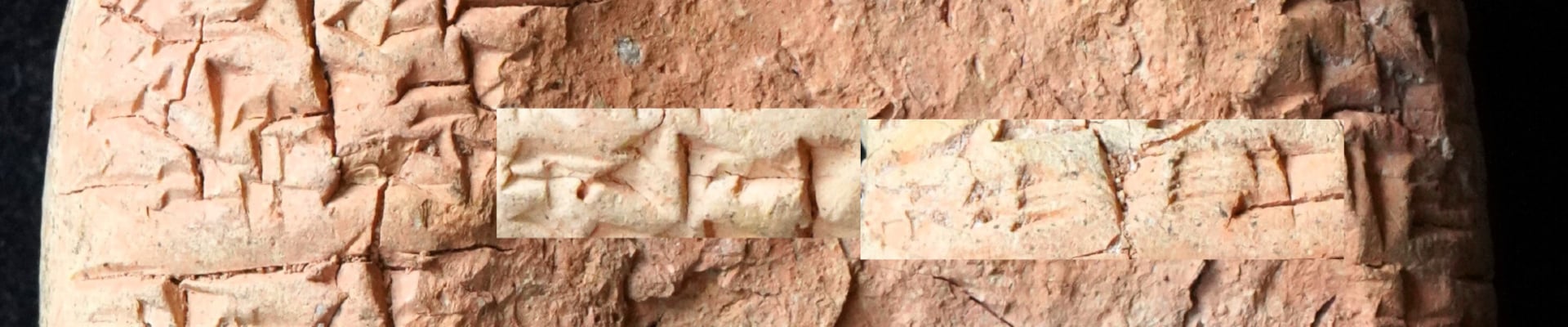
Table of Contents for JCS 77 (2025)

Table of Contents for Journal of Cuneiform Studies 77 (2025)

You can receive JCS (and other ASOR publications) through an ASOR Membership.
Please e-mail the Membership office if you have any questions.

This contribution provides an edition of a small new join to paragraph §10′ of the Zalpa Text (CTH 3.1), one of the most intriguing texts of early Hittite historiography. The join is notable for containing the name Ḫuzziya. The ongoing discussion on the dating of the Zalpa Text is critically reviewed, and it is argued that the Ḫuzziya mentioned in the join is Ḫuzziya I, probable founder of the Hittite kingdom. While not ending the dating debate once and for all, the join represents another step forward toward situating this puzzling text in the arc of early Hittite historiography.

ASOR Members with online access: log into ASOR’s Online Portal here. Once logged in, click the JOURNALS tab in the top navigation bar. From here you may select which journal you would like to read. If you have online access, you will see your selected journal’s current issue Table of Contents. Click on the “Current Issue” button and you will then be redirected to the University of Chicago Press’s (UCP) platform to immediately start reading any issue of your choice. Tutorials for how to log in to the Online Portal as well as how to navigate to the Portal Journals page can be found here.

This article publishes nine new texts relating to ritual and cult in Old Babylonian Sippar. On internal grounds, they likely stem from Sippar-Amnānum (Tell ed-Dēr). Seven of these explicitly attest the banquets of particular deities, including Gula, Adad, Sîn, Šamaš, and Ea. Evidence for the influence of Annunītum and her cultic household is given in the texts. One text attests a night-vigil and provides evidence for a ritual most likely connected to (Ištar) Annunītum.

ASOR Members with online access: log into ASOR’s Online Portal here. Once logged in, click the JOURNALS tab in the top navigation bar. From here you may select which journal you would like to read. If you have online access, you will see your selected journal’s current issue Table of Contents. Click on the “Current Issue” button and you will then be redirected to the University of Chicago Press’s (UCP) platform to immediately start reading any issue of your choice. Tutorials for how to log in to the Online Portal as well as how to navigate to the Portal Journals page can be found here.

This contribution provides a new edition of TCL 15, 8 (AO 5374) and interprets the text as a mortuary ceremony for an (early) Old Babylonian royal figure, who is helped in his transition from this world to the next by netherworld gods and kings of the past, and eventually ends up in the skies as a star. The new edition is an occasion to discuss the relationships among Old Babylonian Emesal liturgies and relationships between Old Babylonian and later texts. The list of past kings includes the names of Ur III monarchs as well as kings of the Isin Dynasty. Such use of the past is further illustrated by an administrative text found at Ur (U.30628) that inventories precious objects in memory of kings of both dynasties (appendix 1).

ASOR Members with online access: log into ASOR’s Online Portal here. Once logged in, click the JOURNALS tab in the top navigation bar. From here you may select which journal you would like to read. If you have online access, you will see your selected journal’s current issue Table of Contents. Click on the “Current Issue” button and you will then be redirected to the University of Chicago Press’s (UCP) platform to immediately start reading any issue of your choice. Tutorials for how to log in to the Online Portal as well as how to navigate to the Portal Journals page can be found here.

Cuneiform incantations present modern researchers with a conundrum. On the one hand, they appear to be texts spoken over an individual to heal and protect from harm, but on the other, they are written on clay tablets, a medium more associated with educated scribal literature. Inscribed amulets, however, provide examples of written incantations that clearly had a place in magical praxis. This article presents editions of four zi … pa₃ incantations from amulets—two of which are entirely new to scholarship—and uses these four texts as a test case for comparison with zi … pa₃ incantations from clay tablets. This comparison reveals that there are significant similarities between the amulet incantations and those from single incantation tablets and larger compendia, suggesting that there may be less of a divide between the Sumerian incantation tradition and actual magical praxis than is sometimes thought. At the same time, the variation among the amulet texts themselves and between the amulet texts and other early zi … pa₃ incantations indicates that the amulets are not copies or excerpts from precisely worded scripts but appear to be creative adaptations of basic forms and textual structures.

ASOR Members with online access: log into ASOR’s Online Portal here. Once logged in, click the JOURNALS tab in the top navigation bar. From here you may select which journal you would like to read. If you have online access, you will see your selected journal’s current issue Table of Contents. Click on the “Current Issue” button and you will then be redirected to the University of Chicago Press’s (UCP) platform to immediately start reading any issue of your choice. Tutorials for how to log in to the Online Portal as well as how to navigate to the Portal Journals page can be found here.

Located in the storage of the archaeological collections of the Finnish Heritage Agency lies a well-preserved clay cylinder inscribed with cuneiform script. The text on it describes the building activities of the Neo-Babylonian king Nebuchadnezzar II (604–562 BCE), and in particular recounts his renovation of the temple of the god Lugal-Marada in Marad. As one of around fifty known recensions of this inscription, the Helsinki Cylinder reveals limited new historical information. Instead, much more pressing is the question of how the cylinder arrived in Finland and how it ended up seemingly forgotten in the storage of the Finnish Heritage Agency. In this article, we trace the cylinder’s journey to Finland, discuss how we, as scholars, should deal with unprovenanced objects such as this one, and provide an edition of the text it contains.

ASOR Members with online access: log into ASOR’s Online Portal here. Once logged in, click the JOURNALS tab in the top navigation bar. From here you may select which journal you would like to read. If you have online access, you will see your selected journal’s current issue Table of Contents. Click on the “Current Issue” button and you will then be redirected to the University of Chicago Press’s (UCP) platform to immediately start reading any issue of your choice. Tutorials for how to log in to the Online Portal as well as how to navigate to the Portal Journals page can be found here.

This article aims to enhance the understanding of the Hittite god Pirwa by analyzing descriptions of his statues in two oracle texts (KBo 44.209(+) and Çorum 6-1-96) and a cult inventory (KUB 38.4). In contrast to previous interpretations, I propose that the term 𒀹dupau-x[ in KUB 38.4 obv. 4 is a noun denoting a striking weapon rather than a Luwian genitive adjective linked to el-tù-ḫu “whip.” Accordingly, Pirwa is depicted as a horseman holding a striking weapon in his right hand and a whip in his left. The study also investigates the term ašuša-, suggesting it may refer to either the god’s earrings or components of the horse tack or rider’s gear. Furthermore, the mention of a mountain in Çorum 6-1-96 obv. 5′ is interpreted not as a specific mountain name but as a mountain-shaped feature of the divine statue. The article additionally delves into the hapax legomenon karzana- in Çorum 6-1-96 obv. 6′, linking it to the noun karza(n)-, which is associated with weaving activities in festival texts. Both terms are traced to the Indo-European root *(s)ker– meaning “to cut/scratch,” proposing that while karza(n)– likely signifies a weaving stick or shuttle, karzana– might denote a stick-shaped device used as a type of insignia or a weapon.

ASOR Members with online access: log into ASOR’s Online Portal here. Once logged in, click the JOURNALS tab in the top navigation bar. From here you may select which journal you would like to read. If you have online access, you will see your selected journal’s current issue Table of Contents. Click on the “Current Issue” button and you will then be redirected to the University of Chicago Press’s (UCP) platform to immediately start reading any issue of your choice. Tutorials for how to log in to the Online Portal as well as how to navigate to the Portal Journals page can be found here.

Old Babylonian precursors of terrestrial omens generally cover topics similar to those found in the first millennium series Šumma ālu ina mēlê šakin without having identical omens. The present article will focus on a group of omens that are handed down in a hitherto unknown continuity over nearly 1500 years. They are first attested in the Old Babylonian omen compendium MS 3104 and are integrated almost verbatim as the thirty-third nisḫu in the divinatory corpus of Late Babylonian Uruk. Four excerpt tablets from Nineveh and a Neo-Babylonian manuscript have been discovered by the authors to record a choice of the very same omens. The article discusses the place of these omens in the Šumma ālu series and gives a full edition of the “thirty-third nisḫu” omens as well as copies of the newly identified manuscripts.

ASOR Members with online access: log into ASOR’s Online Portal here. Once logged in, click the JOURNALS tab in the top navigation bar. From here you may select which journal you would like to read. If you have online access, you will see your selected journal’s current issue Table of Contents. Click on the “Current Issue” button and you will then be redirected to the University of Chicago Press’s (UCP) platform to immediately start reading any issue of your choice. Tutorials for how to log in to the Online Portal as well as how to navigate to the Portal Journals page can be found here.

Ancient Near Eastern scribes used several nonphonetic signs and marks to improve the readability of their texts. One of these resources was the so-called Glossenkeil. This article presents the first study of the use of the sign, here called “wedge-mark” to avoid terminological bias in the analysis of its function, in documents from ancient Nuzi. Based on the analysis of a wide repertoire of sources, the article concludes that the sign only had a paragraphemic function and was used optionally. To understand how Nuzi scribes used the sign, other topics related to it are also discussed, such as indentation. Finally, the evidence from Nuzi is considered in the light of general ancient Near Eastern scribal practice.

ASOR Members with online access: log into ASOR’s Online Portal here. Once logged in, click the JOURNALS tab in the top navigation bar. From here you may select which journal you would like to read. If you have online access, you will see your selected journal’s current issue Table of Contents. Click on the “Current Issue” button and you will then be redirected to the University of Chicago Press’s (UCP) platform to immediately start reading any issue of your choice. Tutorials for how to log in to the Online Portal as well as how to navigate to the Portal Journals page can be found here.

In this article, we present an updated edition of a Sargonic document first published by Bertrand Lafont in 2020. We offer several new readings and perspectives but admit that our understanding of the text is still incomplete. The preserved portion of the text records a land claim against Adab by Šubur-Nagarpae, the ensi of Umma usually known as Šubur, and settled by Naramsin in favor of Adab. The process involved witnesses from neighboring (yeta’ātim) towns and Adab, but also cities from much further east, Tallani, Ibrat, and Pašime. The last preserved section of the text describes the “piling up of the boundary markers” (in sapāki pulukke) in the presence of both ensis. Lugal-ša, ensi of Adab, is attested here for the first time.

ASOR Members with online access: log into ASOR’s Online Portal here. Once logged in, click the JOURNALS tab in the top navigation bar. From here you may select which journal you would like to read. If you have online access, you will see your selected journal’s current issue Table of Contents. Click on the “Current Issue” button and you will then be redirected to the University of Chicago Press’s (UCP) platform to immediately start reading any issue of your choice. Tutorials for how to log in to the Online Portal as well as how to navigate to the Portal Journals page can be found here.

This article presents a new edition and commentary of the Hittite letter HKM 48, from the ancient town of Tapikka (Maşat Höyük), dating approximately to the early fourteenth century BCE. In this letter, two subordinates of the Hittite king, Mariya and Ḫapiri, write to their lord with news on a task they were assigned: the capture of birds and, perhaps, other animals. The second part of the article discusses various aspects of interest within the letter’s content. In particular, a novel understanding of the primary concerns of the text and of the logic within the epistolary exchange is proposed, primarily centered on a new identification of the animals mentioned in a passage difficult to interpret.

ASOR Members with online access: log into ASOR’s Online Portal here. Once logged in, click the JOURNALS tab in the top navigation bar. From here you may select which journal you would like to read. If you have online access, you will see your selected journal’s current issue Table of Contents. Click on the “Current Issue” button and you will then be redirected to the University of Chicago Press’s (UCP) platform to immediately start reading any issue of your choice. Tutorials for how to log in to the Online Portal as well as how to navigate to the Portal Journals page can be found here.


ASOR 2025: A Call to Action

[vc_row fullwidth=”true” css=”.vc_custom_1486761987223{padding-top: 0px !important;padding-right: 0px !important;padding-bottom: 0px !important;padding-left: 0px !important;}”][vc_column][vc_single_image image=”93374″ img_size=”1920×400″ alignment=”center”][/vc_column][/vc_row][vc_row][vc_column][mk_divider divider_color=”rgba(242,243,243,0.01)” thickness=”10″ margin_top=”10″ margin_bottom=”10″][/vc_column][/vc_row][vc_row fullwidth=”true” css=”.vc_custom_1487275830783{padding-top: 10px !important;padding-right: 0px !important;padding-bottom: 0px !important;padding-left: 0px !important;}”][vc_column width=”1/12″ css=”.vc_custom_1496375427665{margin-right: 10px !important;}” offset=”vc_hidden-md vc_hidden-sm vc_hidden-xs”][vc_column_text]

 SHARE

[/vc_column_text][mk_image src=”http://www.asortest.org/wp-content/uploads/2017/01/social-fb-icon4.jpg” image_width=”42″ image_height=”42″ hover=”false” custom_url=”https://www.facebook.com/ASOResearch/” margin_bottom=”0″][mk_image src=”http://www.asortest.org/wp-content/uploads/2017/01/social-tw-icon4.jpg” image_width=”42″ image_height=”42″ hover=”false” custom_url=”https://twitter.com/ASOResearch?ref_src=twsrc%5Egoogle%7Ctwcamp%5Eserp%7Ctwgr%5Eauthor” margin_bottom=”0″][mk_image src=”http://www.asortest.org/wp-content/uploads/2017/01/social-in-icon4.jpg” image_width=”42″ image_height=”42″ hover=”false” custom_url=”https://www.linkedin.com/company/american-schools-of-oriental-research” margin_bottom=”0″][mk_image src=”http://www.asortest.org/wp-content/uploads/2017/01/social-ml-icon_7.jpg” image_width=”42″ image_height=”42″ hover=”false” custom_url=”mailto:info@asor.org” margin_bottom=”0″][mk_image src=”http://www.asortest.org/wp-content/uploads/2017/01/blog-icon3.jpg” image_width=”42″ image_height=”42″ hover=”false” custom_url=”http://asor.org/blog” margin_bottom=”0″][/vc_column][vc_column border_color=”rgba(255,255,255,0.01)” width=”1/6″ css=”.vc_custom_1496375273755{margin-right: 20px !important;border-left-width: 2px !important;padding-right: 20px !important;padding-left: 20px !important;border-left-color: #99422f !important;}”][mk_divider divider_color=”rgba(255,255,255,0.01)” thickness=”1″ margin_top=”3″ margin_bottom=”3″][vc_widget_sidebar sidebar_id=”ca-sidebar-63649″][/vc_column][vc_column border_color=”rgba(170,170,170,0.01)” width=”1/2″ css=”.vc_custom_1487276122024{margin-right: 10px !important;margin-bottom: 30px !important;border-right-width: 2px !important;border-bottom-width: 2px !important;padding-top: 30px !important;padding-right: 30px !important;padding-left: 20px !important;background-color: #ffffff !important;border-right-color: rgba(227,228,228,0.75) !important;border-bottom-color: rgba(227,228,228,0.75) !important;}”][vc_column_text responsive_align=”left”]

ASOR 2025—STRENGTHENING OUR FOUNDATION | EXPANDING HORIZONS—A CALL TO ACTION

[/vc_column_text][mk_divider thickness=”1″][vc_column_text]In 2025, ASOR will be hitting its 125-year mark. Yes, fellow ASOR members and friends, our quasquicentennial is nearly upon us, and we have cause to celebrate!

A first cause for celebration is that ASOR members continue to be engines of research, education, publication, and engagement about the history and cultures of the Near East and the wider Mediterranean world.

In light of recent events and conflicts, this work has never been more needed. So, amid celebration, we confront challenges. Worldwide threats to cultural heritage are a great concern, because we know that targeting people’s cultural heritage is a first step toward violence and extremism. Also, such losses cannot be undone. The humanities bring this into focus, yet dollars to fund these departments and this research are being siphoned off elsewhere. Some professional organizations focused on past human experience are shrinking. Not so for ASOR!

There is a second cause for celebration. Our membership is expanding. ASOR is in solid financial shape. You have created a foundation for positive change and action.

To continue this momentum, ASOR has embarked on a grand challenge, a $5 million dollar—$5,000,000—fundraising initiative. Our third cause for celebration is that generous members already have pledged or given $4.9 million dollars, with more coming.

This is a call to action, asking you to help shape the future through the discovery, documenting, and protecting of cultural heritage in innovative ways. I ask you to think how you can join in this effort to equip ASOR to meet the challenges of this moment.

Your gift of support to ASOR makes a real difference. With your participation, ASOR can:

  1. Increase membership support: You can strengthen and widen ASOR’s geographic impact throughout the Middle East and North Africa with scholarships, research fellowships, and excavation project grants, many of which will benefit citizens from countries that lack resources.
  2. Widen and expand ASOR’s publications: You can ensure that ASOR continues to disseminate knowledge and educate the public in an economic climate where support for scholarship is shrinking.
  3. Make ASOR more accessible to everyone: You can address financial need for access in North America, North Africa, the Middle East, and around the world. With you, ASOR can set an example with diversity, equity, and inclusion initiatives that span language and cultural divides.
  4. Grow Cultural Heritage Initiatives: You can support cultural heritage stabilization, documentation, and mitigation efforts. You can guarantee that ASOR continues to be seen as a world leader in protecting heritage and ensure the continuation of education and stewardship programs that combat violent extremism and misuse of heritage.
  5. Develop Greater Online Access: You can fund innovations in the rapidly growing field of online and virtual resources to make research accessible to everyone with a computer, tablet, or phone.
  6. Expand the Friends of ASOR Programs: You can help underwrite education and outreach programs that will broaden ASOR’s membership and bring non-academic supporters with an interest in the ancient world to our organization.
  7. Strengthen the Foundation of ASOR’s Operations: You can safeguard ASOR’s work to 2050 and beyond through the Annual Fund, or with endowment gifts to sustain operational staffing and capital needs at the James F. Strange Center.

These are but a few ideas. Studies of the human past have never faced greater obstacles, but ASOR has the financial stability and talent to find innovative solutions. Each of us is a critical part of this effort. If you and I do not respond to this call to action to shape the future of our profession and document and protect cultural heritage in innovative ways, who will? You can be part of this historic moment, creating change and making a legacy. Organizations thrive because of people like you. Please join in celebrating our 125th year with “ASOR 2025— Strengthening Our Foundation | Expanding Horizons—A Call to Action.”[/vc_column_text][mk_divider thickness=”1″][vc_row_inner][vc_column_inner][vc_column_text]

ASOR 2025 pledge form button

Completed pledge forms can be emailed to programs@asor.org or printed and mailed to the ASOR office: 209 Commerce St. Alexandria, VA 22314.

[/vc_column_text][/vc_column_inner][/vc_row_inner][/vc_column][vc_column border_color=”rgba(170,170,170,0.01)” width=”1/6″ css=”.vc_custom_1496377378685{margin-right: 10px !important;margin-bottom: 30px !important;border-right-width: 2px !important;border-bottom-width: 2px !important;padding-top: 30px !important;padding-right: 20px !important;padding-left: 20px !important;background-color: #ffffff !important;border-right-color: rgba(227,228,228,0.75) !important;border-bottom-color: rgba(227,228,228,0.75) !important;}”][vc_wp_posts title=”BROWSE THE NEWS ARCHIVE” number=”4″][/vc_column][vc_column border_color=”rgba(170,170,170,0.01)” width=”1/6″ css=”.vc_custom_1496375380556{margin-right: 10px !important;margin-bottom: 30px !important;border-right-width: 2px !important;border-bottom-width: 2px !important;padding-top: 30px !important;padding-right: 20px !important;padding-left: 20px !important;background-color: #ffffff !important;border-right-color: rgba(227,228,228,0.75) !important;border-bottom-color: rgba(227,228,228,0.75) !important;}”][vc_widget_sidebar sidebar_id=”ca-sidebar-99363″][/vc_column][/vc_row]

DC Day of Archaeology 2025

DC Day of Archaeology 2025

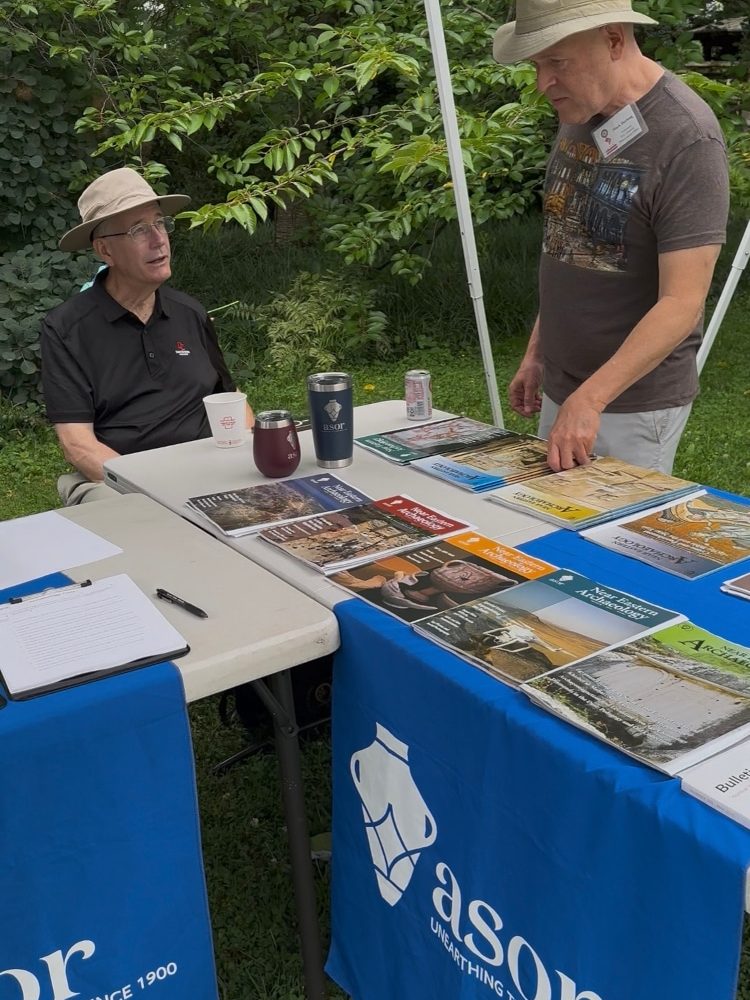
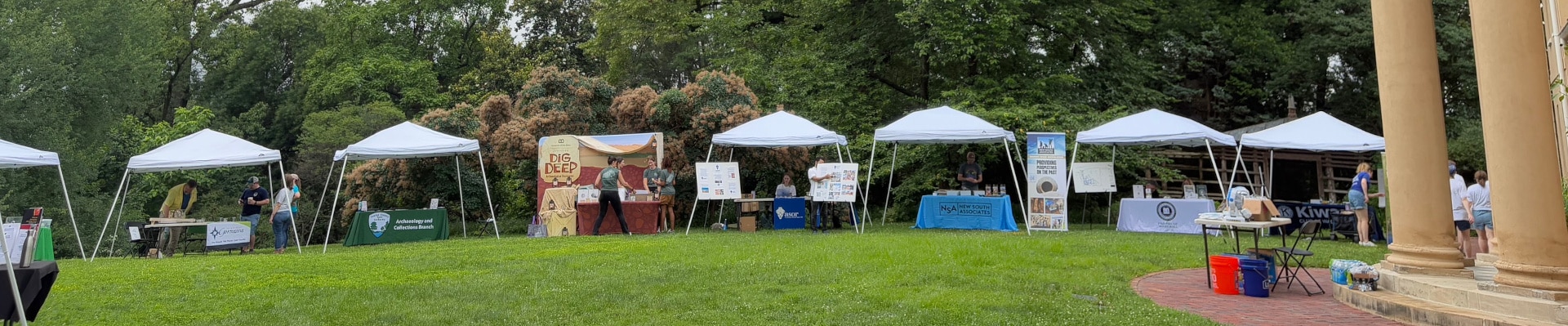
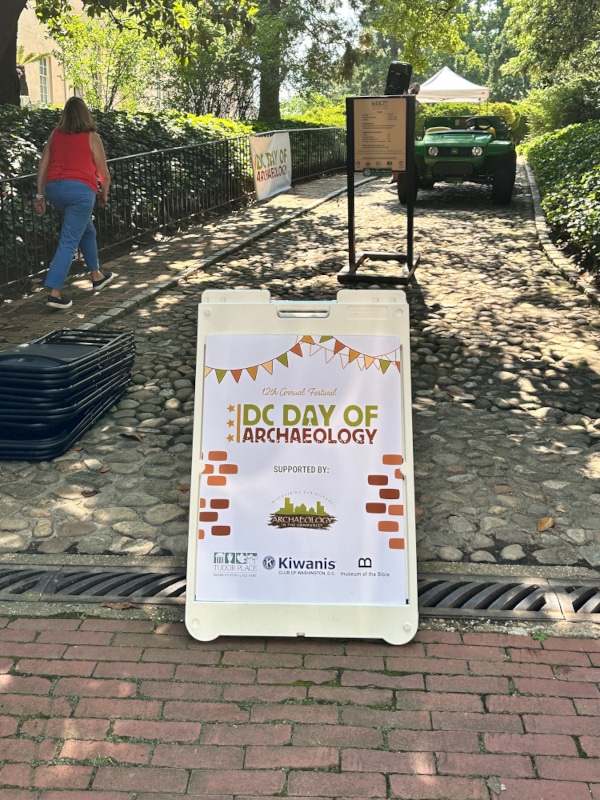
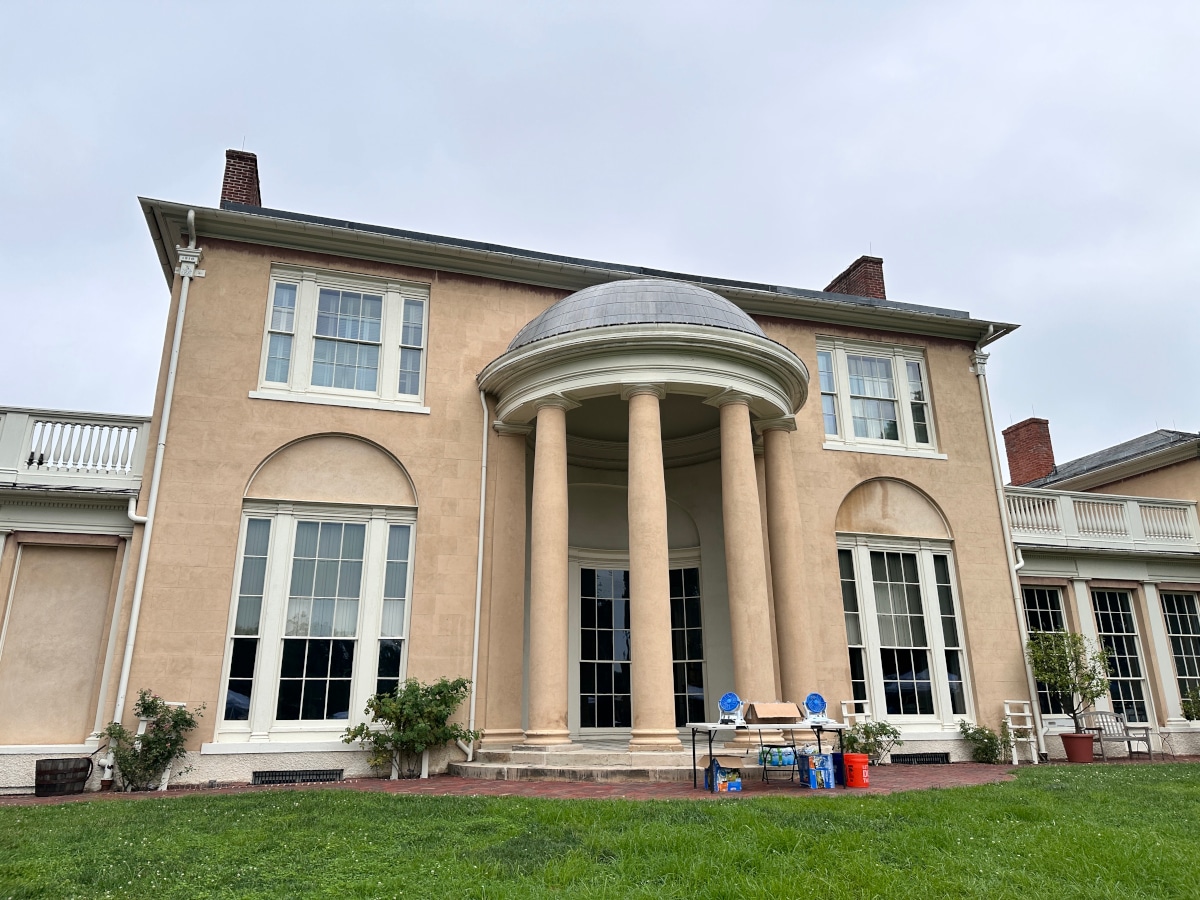
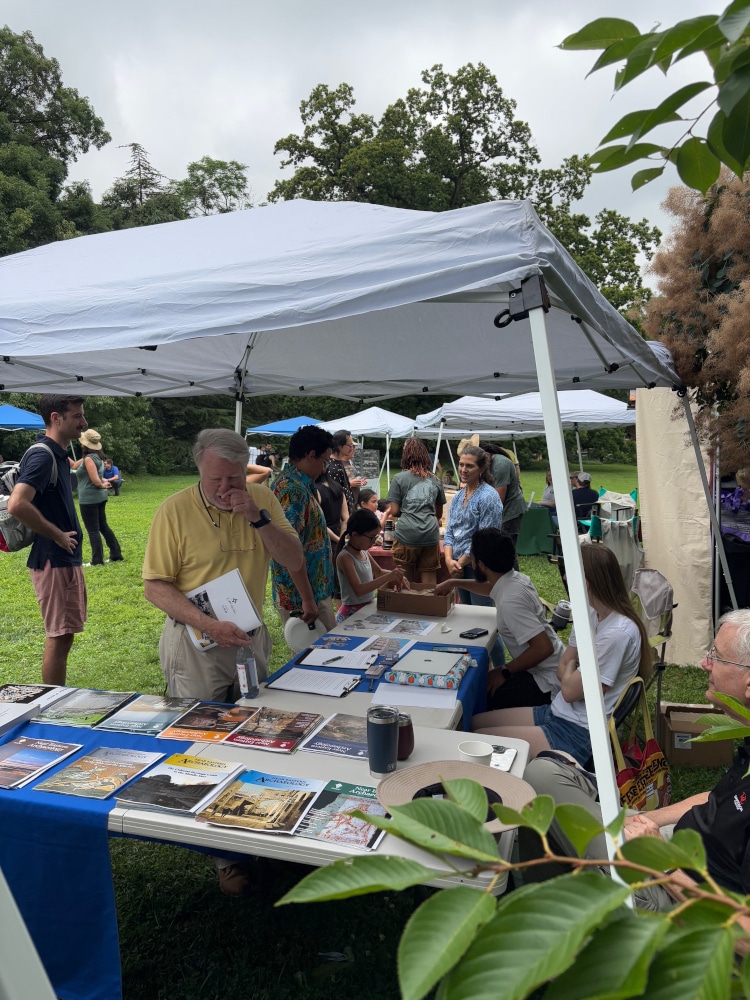
This past Saturday, June 28, ASOR was pleased to participate in the annual DC Day of Archaeology Festival organized by Archaeology in the Community (AITC). With 15 organizations and over 300 participants, the event gathered archaeological organizations around the DMV at the historic Tudor Place in Washington, D.C. for a day of community outreach and sharing of archaeological knowledge. Participants were able to visit the tables of local organizations to learn about a wide variety of archaeological topics and resources.

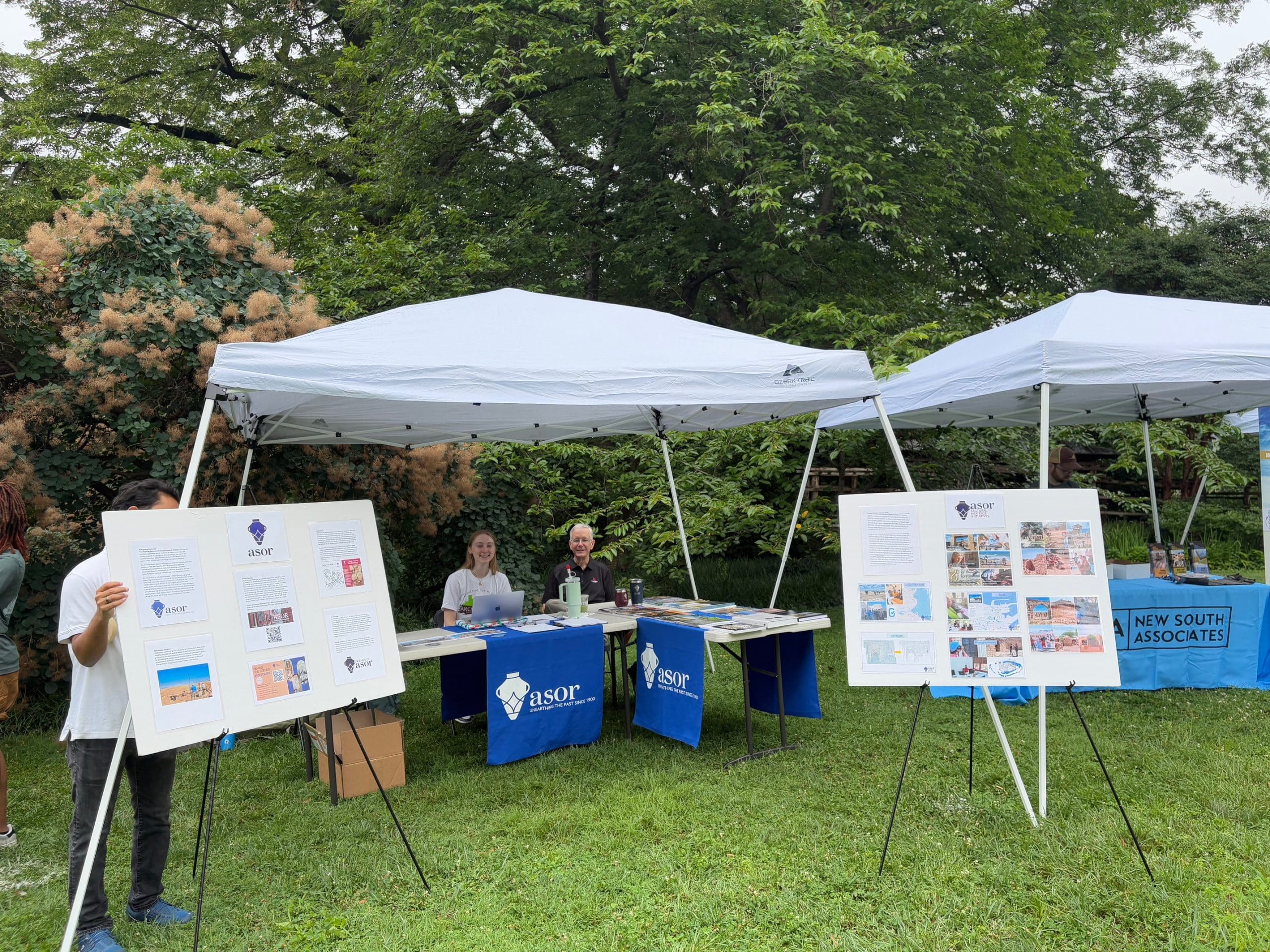
ASOR staff at the ASOR table
Entrance to the event
The south facade of Tudor Place

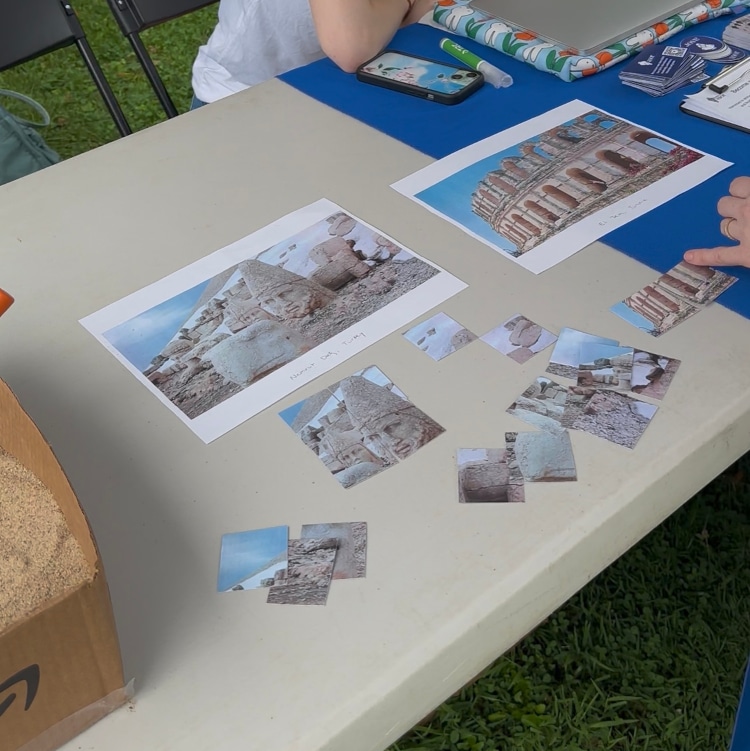
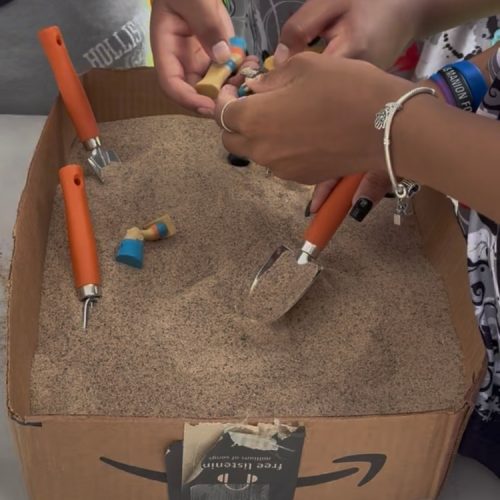
The ASOR table included several activities for a variety of ages and knowledge levels, as well as informative posters about our organization and Cultural Heritage Initiatives. For children, we provided a sandbox for digging up ancient Egyptian “artifacts,” and two puzzles of images from the Amphitheatre of El Jem in Tunisia and the statue heads at the hierothesion in Nemrut Dag, Turkiye. We also had copies ofNear Eastern Archaeology to give out, as well as ASOR swag.

Puzzles of El Jem and Nemrut Dag
Young archaeologists excavating for artifacts
Attendees browsing the ASOR table
ASOR staff speaking with a volunteer

ASOR is proud to once again support a successful DC Day of Archaeology! As part of our mission to make archaeology accessible and engaging for all, we were excited to connect with members of the public, share the latest discoveries, and highlight the importance of preserving cultural heritage. Events like these are vital for sparking curiosity, encouraging dialogue, and inspiring future generations of archaeologists.

Thank you to everyone who stopped by—we loved hearing your questions and sharing in your enthusiasm.
See you next year!

KOBOTOOLBOX | ASOR CHI TUTORIALS (ENGLISH)

[vc_row fullwidth=”true” css=”.vc_custom_1490224714943{padding-top: 0px !important;padding-right: 0px !important;padding-bottom: 0px !important;padding-left: 0px !important;}”][vc_column][vc_single_image image=”70618″ img_size=”1920×600″ alignment=”center”][/vc_column][/vc_row][vc_row][vc_column][vc_column_text][/vc_column_text][/vc_column][/vc_row][vc_row fullwidth=”true” css=”.vc_custom_1490225468623{padding-top: 0px !important;padding-right: 0px !important;padding-bottom: 0px !important;padding-left: 0px !important;}”][vc_column width=”1/12″ css=”.vc_custom_1490225195470{margin-right: 10px !important;}” offset=”vc_hidden-sm vc_hidden-xs”][vc_column_text]

  SHARE

[/vc_column_text][mk_image src=”http://www.asortest.org/wp-content/uploads/2017/01/social-fb-icon4.jpg” image_width=”42″ image_height=”42″ hover=”false” custom_url=”https://www.facebook.com/ASOResearch/” margin_bottom=”0″][mk_image src=”http://www.asortest.org/wp-content/uploads/2017/01/social-tw-icon4.jpg” image_width=”42″ image_height=”42″ hover=”false” custom_url=”https://twitter.com/ASOResearch?ref_src=twsrc%5Egoogle%7Ctwcamp%5Eserp%7Ctwgr%5Eauthor” margin_bottom=”0″][mk_image src=”http://www.asortest.org/wp-content/uploads/2017/01/social-in-icon4.jpg” image_width=”42″ image_height=”42″ hover=”false” custom_url=”https://www.linkedin.com/company/american-schools-of-oriental-research” margin_bottom=”0″][mk_image src=”http://www.asortest.org/wp-content/uploads/2017/01/social-ml-icon_7.jpg” image_width=”42″ image_height=”42″ hover=”false” custom_url=”mailto:info@asor.org” margin_bottom=”0″][mk_image src=”http://www.asortest.org/wp-content/uploads/2017/01/blog-icon3.jpg” image_width=”42″ image_height=”42″ hover=”false” custom_url=”http://asor.org/blog” margin_bottom=”0″][/vc_column][vc_column border_color=”rgba(255,255,255,0.01)” width=”1/6″ css=”.vc_custom_1490365673198{margin-right: 20px !important;border-left-width: 2px !important;padding-right: 20px !important;padding-left: 20px !important;border-left-color: #99422f !important;}” el_class=”sticky-sidenav”][mk_divider divider_color=”rgba(255,255,255,0.01)” thickness=”1″ margin_top=”3″ margin_bottom=”3″][vc_widget_sidebar sidebar_id=”ca-sidebar-50561″][/vc_column][vc_column border_color=”rgba(170,170,170,0.01)” width=”8/12″ css=”.vc_custom_1490225606852{margin-right: 10px !important;margin-bottom: 30px !important;border-right-width: 2px !important;border-bottom-width: 2px !important;padding-top: 30px !important;padding-right: 30px !important;padding-left: 20px !important;background-color: #ffffff !important;border-right-color: rgba(227,228,228,0.75) !important;border-bottom-color: rgba(227,228,228,0.75) !important;}”][vc_row_inner][vc_column_inner css=”.vc_custom_1589904992427{margin-right: 10px !important;}”][vc_single_image image=”81636″ img_size=”250×134″ alignment=”center”][mk_padding_divider size=”20″][vc_wp_text]

ASOR TUTORIALS

FOR CULTURAL HERITAGE SURVEY

[/vc_wp_text][/vc_column_inner][/vc_row_inner][mk_divider thickness=”1″ margin_top=”10″][vc_wp_text]

KoboToolbox | QGIS | LibreCAD | Photogrammetry

[/vc_wp_text][mk_padding_divider size=”20″][vc_wp_text]ASOR and its partners have developed a series of tutorials and training modules aimed to help cultural heritage specialists perform surveys and condition assessments through open source tools and software, including QGIS, KoboToolbox, LibreCAD, and RealityCapture.

These modules provide step-by-step tutorials on how to download, install, and effectively use applications and software during data collection, analysis, and output.[/vc_wp_text][vc_row_inner][vc_column_inner width=”1/2″][vc_wp_text]

Voir cette page en français

[/vc_wp_text][/vc_column_inner][vc_column_inner width=”1/2″][vc_wp_text]

مشاهدة الصفحة باللغة العربية

[/vc_wp_text][/vc_column_inner][/vc_row_inner][mk_divider thickness=”1″ margin_top=”10″][mk_padding_divider size=”20″][vc_wp_text]

SITE DOCUMENTATION

[/vc_wp_text][mk_divider divider_width=”one_third” thickness=”1″ margin_top=”10″][vc_single_image image=”81632″ img_size=”150×150″ alignment=”center”][mk_padding_divider size=”20″][vc_wp_text]

KoboToolbox & KoboCollect

KoBoToolbox is a free and open source software package for location and descriptive data collection. Information can be collected at heritage sites through tablets and phones using the KoBoCollect app or through the web browser interface, even when those devices are offline. Location and descriptive data recorded in the field can then be synched up with GIS software once an internet connection has been reestablished. KoboToolbox website: https://www.kobotoolbox.org/[/vc_wp_text][mk_padding_divider size=”20″][mk_divider thickness=”1″ margin_top=”10″][mk_padding_divider size=”20″][vc_wp_text]

ASOR’S ONLINE PORTAL

* IMPORTANT * Users accessing a tutorial will need to create a user account in ASOR’s Online Portal. This is a free account. You are not required to purchase a membership to access the lessons.

Watch this video to learn how to set up your account for free in the portal.

Additional information about the ASOR Portal can be found here.[/vc_wp_text][mk_padding_divider size=”20″][mk_divider divider_width=”one_third” thickness=”1″ margin_top=”10″][mk_padding_divider size=”20″][vc_row_inner][vc_column_inner width=”1/4″][mk_padding_divider size=”20″][vc_wp_text]

01.01

[/vc_wp_text][/vc_column_inner][vc_column_inner width=”3/4″][vc_wp_text]

Creating a User Account

Learn how to create a new user account in KoboToolbox.

[/vc_wp_text][mk_button style=”outline” corner_style=”rounded” outline_skin=”#99422f” outline_hover_skin=”#ffffff” url=”https://chi-kobo.events.asor.org/portals/0101CreatingAUserAccount” target=”_blank”]Lesson Here[/mk_button][/vc_column_inner][/vc_row_inner][mk_divider divider_width=”one_half” thickness=”1″ margin_top=”10″][vc_row_inner][vc_column_inner width=”1/4″][mk_padding_divider size=”20″][vc_wp_text]

01.02

[/vc_wp_text][/vc_column_inner][vc_column_inner width=”3/4″][vc_wp_text]

Creating a New Survey Form

Create your first survey form (project) in KoboToolbox. This lesson also provides an introduction to the Kobo website and some of the global settings when getting started.[/vc_wp_text][mk_button style=”outline” corner_style=”rounded” outline_skin=”#99422f” outline_hover_skin=”#ffffff” url=”https://chi-kobo.events.asor.org/portals/0102CreatingANewSurveyProject” target=”_blank”]Lesson Here[/mk_button][/vc_column_inner][/vc_row_inner][mk_divider divider_width=”one_half” thickness=”1″ margin_top=”10″][vc_row_inner][vc_column_inner width=”1/4″][mk_padding_divider size=”20″][vc_wp_text]

01.03

[/vc_wp_text][/vc_column_inner][vc_column_inner width=”3/4″][vc_wp_text]

Survey Form | Question Types (Database Fields)

Understand how question types work when using the form-builder in Kobo.[/vc_wp_text][mk_button style=”outline” corner_style=”rounded” outline_skin=”#99422f” outline_hover_skin=”#ffffff” url=”https://chi-kobo.events.asor.org/portals/0103SurveyFormQuestionTypesDatabaseFields” target=”_blank”]Lesson Here[/mk_button][/vc_column_inner][/vc_row_inner][mk_divider divider_width=”one_half” thickness=”1″ margin_top=”10″][vc_row_inner][vc_column_inner width=”1/4″][mk_padding_divider size=”20″][vc_wp_text]

01.04

[/vc_wp_text][/vc_column_inner][vc_column_inner width=”3/4″][vc_wp_text]

Survey Form | Advanced Features

This lesson is built for advanced Kobo users. Learn how to create hierarchies among your form questions (database fields) and how to share projects with other Kobo users.[/vc_wp_text][mk_button style=”outline” corner_style=”rounded” outline_skin=”#99422f” outline_hover_skin=”#ffffff” url=”https://chi-kobo.events.asor.org/portals/0104SurveyFormAdvancedFeatures” target=”_blank”]Lesson Here[/mk_button][/vc_column_inner][/vc_row_inner][mk_divider divider_width=”one_half” thickness=”1″ margin_top=”10″][vc_row_inner][vc_column_inner width=”1/4″][mk_padding_divider size=”20″][vc_wp_text]

01.05

[/vc_wp_text][/vc_column_inner][vc_column_inner width=”3/4″][vc_wp_text]

Deploying a Survey Form (Project)

Why is deploying your project important? Learn how to deploy your project and why you should deploy anytime you make edits to your project form.[/vc_wp_text][mk_button style=”outline” corner_style=”rounded” outline_skin=”#99422f” outline_hover_skin=”#ffffff” url=”https://chi-kobo.events.asor.org/portals/0105DeployingASurveyFormProject” target=”_blank”]Lesson Here[/mk_button][/vc_column_inner][/vc_row_inner][mk_divider divider_width=”one_half” thickness=”1″ margin_top=”10″][vc_row_inner][vc_column_inner width=”1/4″][mk_padding_divider size=”20″][vc_wp_text]

01.06

[/vc_wp_text][/vc_column_inner][vc_column_inner width=”3/4″][vc_wp_text]

Collecting Data with an Internet Connection

This lesson outlines how to collect data through the Kobo website once you have finalized your project form. The steps in this tutorial work when you have an internet connection. This methodology works for all devices.[/vc_wp_text][mk_button style=”outline” corner_style=”rounded” outline_skin=”#99422f” outline_hover_skin=”#ffffff” url=”https://chi-kobo.events.asor.org/portals/0106CollectingDataWithAnInternetConnection” target=”_blank”]Lesson Here[/mk_button][/vc_column_inner][/vc_row_inner][mk_divider divider_width=”one_half” thickness=”1″ margin_top=”10″][vc_row_inner][vc_column_inner width=”1/4″][mk_padding_divider size=”20″][vc_wp_text]

01.07

[/vc_wp_text][/vc_column_inner][vc_column_inner width=”3/4″][vc_wp_text]

Editing Data Collected in Kobo

Users may edit data after they have collected it in Kobo. This lesson provides guidance on making changes to collected data.[/vc_wp_text][mk_button style=”outline” corner_style=”rounded” outline_skin=”#99422f” outline_hover_skin=”#ffffff” url=”https://chi-kobo.events.asor.org/portals/0107EditingDataCollectedInKobo” target=”_blank”]Lesson Here[/mk_button][/vc_column_inner][/vc_row_inner][mk_divider divider_width=”one_half” thickness=”1″ margin_top=”10″][vc_row_inner][vc_column_inner width=”1/4″][mk_padding_divider size=”20″][vc_wp_text]

01.08

[/vc_wp_text][/vc_column_inner][vc_column_inner width=”3/4″][vc_wp_text]

Downloading the KoboCollect App (Android Devices Only)

Kobo users are able to collect data even without an internet connection through the KoboCollect app. Users may download this app on any Android device. Unfortunately, this methodology will not work for iPhone or iPad users.[/vc_wp_text][mk_button style=”outline” corner_style=”rounded” outline_skin=”#99422f” outline_hover_skin=”#ffffff” url=”https://chi-kobo.events.asor.org/portals/0108DownloadingTheKobocollectAppAndroidDevicesOnly” target=”_blank”]Lesson Here[/mk_button][/vc_column_inner][/vc_row_inner][mk_divider thickness=”1″ margin_top=”10″][vc_row_inner][vc_column_inner width=”1/4″][mk_padding_divider size=”20″][vc_wp_text]

01.09

[/vc_wp_text][/vc_column_inner][vc_column_inner width=”3/4″][vc_wp_text]

Collecting Data in KoboCollect (without an internet connection)

Learn how to collect data using the KoboCollect app without an internet connection. This lesson also provides steps for sending data that is stored locally on KoboCollect to your main project on the Kobo website.[/vc_wp_text][mk_button style=”outline” corner_style=”rounded” outline_skin=”#99422f” outline_hover_skin=”#ffffff” url=”https://chi-kobo.events.asor.org/portals/0109CollectingDataInKobocollectWithoutAnInternetConnection” target=”_blank”]Lesson Here[/mk_button][/vc_column_inner][/vc_row_inner][mk_divider divider_width=”one_half” thickness=”1″ margin_top=”10″][vc_row_inner][vc_column_inner width=”1/4″][mk_padding_divider size=”20″][vc_wp_text]

01.10

[/vc_wp_text][/vc_column_inner][vc_column_inner width=”3/4″][vc_wp_text]

Exporting Data from a Kobo Project

Finished collecting data? This tutorial will show you how to export descriptive data and media files to your local computer, database, and even into a GIS for mapmaking.[/vc_wp_text][mk_button style=”outline” corner_style=”rounded” outline_skin=”#99422f” outline_hover_skin=”#ffffff” url=”https://chi-kobo.events.asor.org/portals/0110ExportingDataFromAKoboProject” target=”_blank”]Lesson Here[/mk_button][/vc_column_inner][/vc_row_inner][mk_padding_divider size=”20″][vc_wp_text]

Back to the Top

[/vc_wp_text][/vc_column][/vc_row][vc_row][vc_column][vc_column_text]

[/vc_column_text][/vc_column][/vc_row]

FY25 HONORIFIC & MEMORIAL GIFTS

HONORIFIC & MEMORIAL GIFTS

MADE DURING FISCAL YEAR 2025 (7/1/24–6/30/25)
In honor of Canan Abayhan
  • Atara Aharonovitz
In honor of Prof. Susan Ackerman
  • Jonathan Rosenbaum
In honor of Regan Baker
  • Benita Blessing
In memory of Kay Clements
  • Donald C. Polaski
In honor of Eric H. Cline
  • Seth Fleishman
In honor of Norma Franklin
  • Ann K. Stehney
In memory of Rev. Dr. George M. Landes
  • Carol M. Landes
In memory of Herbert Warren Mason
  • Jeanine Young Mason
In honor of Dr. Laura B. Mazow
  • Maxine and Don Goldberg
In honor of Prof. Carol Meyers
  • Jonathan Rosenbaum
In honor of Prof. Eric Meyers
  • Jonathan Rosenbaum
In honor of Jessica Nitschke
  • Philip Nager
In honor of Arlene Press
  • Jonathan Rosenbaum
In memory of Mark H. Pruitt
  • Lynn Swartz Dodd
  • J. Crayton Pruitt Foundation
In memory of Gary J. Richmond
  • Vernon Appleby
In memory of Rev. Dr. Kathryn Lee (Bloemers) Roberts
  • Gregory L. Glover
In honor of Prof. Joe D. Seger. Please also see below for gifts to the Joe D. Seger Endowment.
  • Jonathan Rosenbaum
In memory of Harva L. Sheeler
  • H. Katherine Sheeler
In memory of Carolyn Midkiff Strange. Please also see below for gifts to the Strange–Midkiff Endowment.
  • Susan Ackerman
  • Randy L. Akers
  • Richard L. Coffman
  • Lynn Swartz Dodd
  • Sheldon Fox
  • Mary M. Frassinelli
  • Ann-Marie Knoblauch
  • Ann V. Sahlman
  • James R. Strange
In honor of Andrew G. Vaughn
  • Stephen Cook
  • Jonathan Rosenbaum
  • Jack M. Sasson
In memory of Catherine and Silas Vaughn. Please also see below for gifts to the Silas & Catherine Vaughn Endowment.
  • Andy Vaughn
In honor of Frederick A. Winter
  • Megan Cantwell (on behalf of MQC Consulting, LLC)

Gifts to Named Endowment Funds*

Lawrence T. Geraty Endowment
  • Lawrence T. Geraty
  • Oystein and Asta LaBianca
  • Stanley Maxwell
  • Joseph Rivers
  • Elmar and Darilee Sakala
Herbert Warren Mason Endowment
  • Jeanine Young Mason
Eric and Carol Meyers Fellowship Endowment
  • Eric and Carol Meyers
Shirlee Meyers/G.E. Wright Fellowship Endowment
  • Eric and Carol Meyers
Joe D. Seger Endowment
  • Joe D. Seger
Shepard Urgent Action Grants Endowment
  • Wayne R. Shepard
Mary Elizabeth Strange Endowment
  • Richard L. Coffman
  • Sheldon Fox
  • Mary M. Frassinelli
  • Ann V. Sahlman
Strange/Midkiff Families Endowment
  • Susan Ackerman
  • Stetson Pevear
Silas & Catherine Vaughn Endowment
  • Timothy P. Harrison
  • Andy Vaughn
  • Orly Vaughn


* Please note that this list only contains gifts to these named funds made during Fiscal Year 2025.

Table of Contents for Near Eastern Archaeology 88.2 (2025)

Table of Contents for Near Eastern Archaeology 88.2 (June 2025)

nea-88.2-cover
You can receive NEA(and other ASOR publications) through an ASOR Membership.
Please e-mail the Membership office if you have any questions.
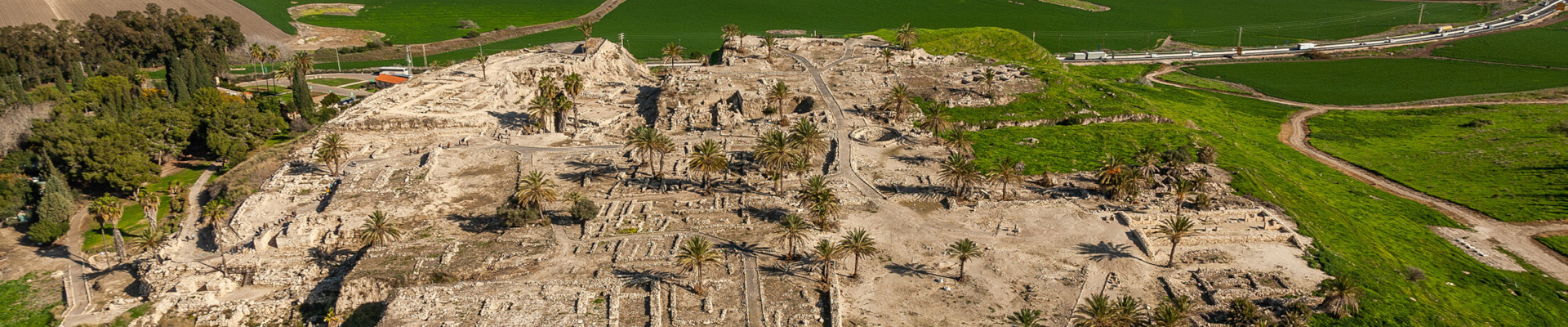
Pp. 88–95: “Megiddo, the Mother of All Tells: An Introduction” by Israel Finkelstein and Matthew J. Adams

In this introduction the authors describe the goals of the Tel Aviv University Expedition team on the outset of the project thirty years ago and ask whether they have been fulfilled. Special emphasis is given to the unique Megiddo Strato-Ceramic-Radiocarbon chain of actions. The stratigraphy of Megiddo is also summarized.

ASOR Members with online access: log into ASOR’s Online Portal here. Once logged in, click the JOURNALS tab in the top navigation bar. Tutorials for how to log in to the Online Portal as well as how to navigate to the Portal Journals page can be found here.

Pp. 96-101: “A Brief History of Excavations at Megiddo” by Eric H. Cline

This article provides a brief history of the four archaeological expeditions to Megiddo, including the excavation areas and methodology of each, as well as some of their major finds. The survey begins with Gottlieb Schumacher (1903–1905), continues with the University of Chicago (1925–1939), followed by Yigael Yadin/Hebrew University of Jerusalem (1960 and early 1970s), and ends with a brief overview of the Tel Aviv University Consortium (1994–present).

ASOR Members with online access: log into ASOR’s Online Portal here. Once logged in, click the JOURNALS tab in the top navigation bar. Tutorials for how to log in to the Online Portal as well as how to navigate to the Portal Journals page can be found here.
Pp. 102-111: “Vegetation and Climate of Megiddo and Its Surroundings during the Bronze and Iron Ages” by Dafna Langgut

This survey article seeks to reconstruct the environmental and climatic conditions at Tel Megiddo during the Bronze and Iron Ages. It aims to illuminate both the natural and man-made landscape of the site, with a focus on how plants were utilized by its inhabitants. In the absence of continuous, high-resolution paleoclimate records from Megiddo or its immediate surroundings, climate records from other nearby locations within the Mediterranean vegetation zone are used to provide a detailed reconstruction of the climate and environment. Archaeobotanical remains collected over the years from excavations at Tel Megiddo are analyzed to understand the use of plants for construction, wooden crafts, and fuel. Additionally, horticultural practices, dietary habits, and the use of plants for medicinal and ritual purposes are revealed.

ASOR Members with online access: log into ASOR’s Online Portal here. Once logged in, click the JOURNALS tab in the top navigation bar. Tutorials for how to log in to the Online Portal as well as how to navigate to the Portal Journals page can be found here.
Pp. 112-119: “Animal Economy at Megiddo: From the Middle Bronze III to the Iron I” by Lidar Sapir-Hen

This paper explores trends in animal economy in two neighborhoods in Megiddo, between the MB III, when the palace was established in the northwest of the tell, and the Late Iron Age I, when the city was destroyed. Results show that throughout this time span, Area K inhabitants were engaged with production activities, like herding and ploughing, while Area H inhabitants, located near the palace, were provided with animals and their products. At the same time, the two neighborhoods shared the source of livestock animals, implying an internal food production system. The use of animals and their products to establish social disparity demonstrates the urban nature of the site in the discussed periods and emphasizes the central role that livestock animals play in the life of the population.

PLEASE NOTE: This article contains images of human skeletal remains.

ASOR Members with online access: log into ASOR’s Online Portal here. Once logged in, click the JOURNALS tab in the top navigation bar. Tutorials for how to log in to the Online Portal as well as how to navigate to the Portal Journals page can be found here.
Pp. 120-125: “Megiddo Microgeoarchaeology in the Field and in the Lab” by Ruth Shahack-Gross

Micro-geoarchaeological research at Tel Megiddo targets questions about construction materials, occupation deposits in domestic and public sectors of the city, destruction, abandonment, and postdepositional processes. Since 2006, employing primarily the methods of micromorphology, infrared spectroscopy, phytolith, dung spherulite, and wood ash analysis, significant insights have been gained. This article presents three case studies that show the strength of micro-geoarchaeology for obtaining a general understanding of the history and archaeology of Megiddo’s inhabitants: (1) characterization of domestic trash deposits, (2) characterization of construction materials and the implications for understanding the natural resources that were used by the site’s inhabitants, and (3) understanding the mechanism and processes that took place during Megiddo’s most famous destruction by fire.

ASOR Members with online access: log into ASOR’s Online Portal here. Once logged in, click the JOURNALS tab in the top navigation bar. Tutorials for how to log in to the Online Portal as well as how to navigate to the Portal Journals page can be found here.
Pp. 126-137: “Megiddo in the Third Millennium BCE: Rise and Fall of Urban Life” by Matthew J. Adams

Megiddo has provided some of the most iconic architecture for the Early Bronze Age Levant, including the well-known Stratum XIX broad-room temple complex and the large round altar of Stratum XVII–XVI, both excavated by the Oriental Institute team in the 1930s. The Tel Aviv University Megiddo Expedition was able to add the Great Temple of the EB I, the largest and most monumental structure of its period in all of the Levant, even rivaling contemporary structures in Egypt and Mesopotamia. This article traces the developments at Megiddo from the end of the fourth millennium to the end of the third, from a temple-centered to a palace-centered society and back again.

ASOR Members with online access: log into ASOR’s Online Portal here. Once logged in, click the JOURNALS tab in the top navigation bar. Tutorials for how to log in to the Online Portal as well as how to navigate to the Portal Journals page can be found here.
Pp. 138-152: “Megiddo in the Middle Bronze Age: Chronology, Urbanization, and Population” by Matthew J. Adams, Mario A. S. Martin, Zachary Dunseth, Assaf Yasur-Landau, and Israel Finkelstein

This article deals with Middle Bronze Megiddo, emphasizing its importance for understanding this period at the site, and in the entire southern Levant in general. We focus on new evidence for exceptional accumulation of layers for the earliest Middle Bronze layer, radiocarbon dated to the early twentieth century BCE, and for the first fortification system also dated to the twentieth century BCE. We also deal with the complex history of the fortifications, including gates, and the phenomenon of intramural burials, some of them of monumental nature.

PLEASE NOTE: This article contains images of human skeletal remains.

ASOR Members with online access: log into ASOR’s Online Portal here. Once logged in, click the JOURNALS tab in the top navigation bar. Tutorials for how to log in to the Online Portal as well as how to navigate to the Portal Journals page can be found here.
Pp. 154-165: “The Rule of an Empire: Megiddo in the Late Bronze Age” by Mario A. S. Martin and Israel Finkelstein

During the Egyptian empire in the Late Bronze Age Megiddo was the hub of a city-state linked to all areas of the eastern Mediterranean, and its fate was determined by the macro-political events of the time. Early in the period, especially in the aftermath of the Battle of Megiddo in 1457 BCE, the city was in decline. A long spell of revival and prosperity ensued in the fourteenth (Amarna Age) and thirteenth centuries. The twelfth century brought a period of crisis, which caused the downfall of the Late Bronze city in several steps; various quarters were hit at different times and intensity. The final blow is marked by the fiery destruction of the palace district in the early eleventh century, more than a generation after the demise of the Egyptian empire.

ASOR Members with online access: log into ASOR’s Online Portal here. Once logged in, click the JOURNALS tab in the top navigation bar. Tutorials for how to log in to the Online Portal as well as how to navigate to the Portal Journals page can be found here.
McKinley Tech Turns Cemeteries into a Living Classroom

McKinley Tech High School Turns Cemeteries into a Living Classroom

Description provided by the Black Georgetown Foundation
View the Instagram post here

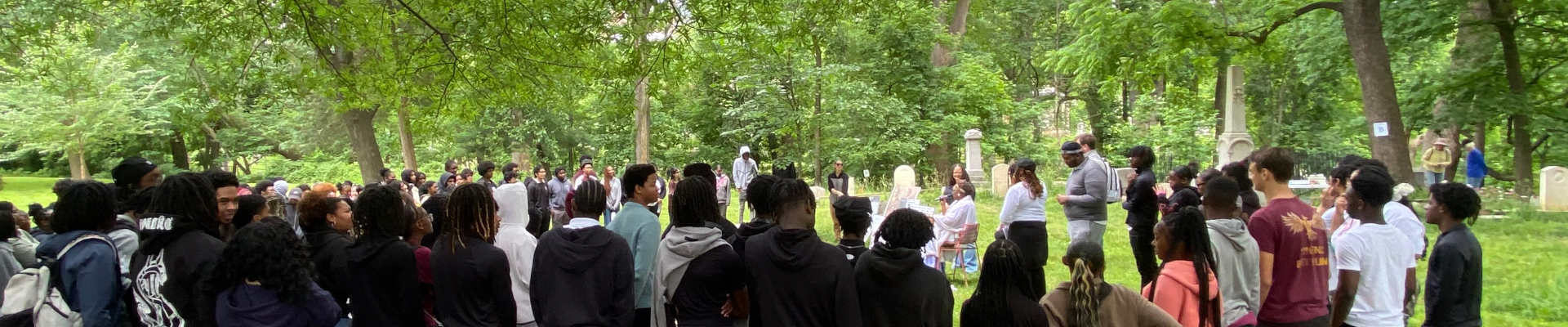
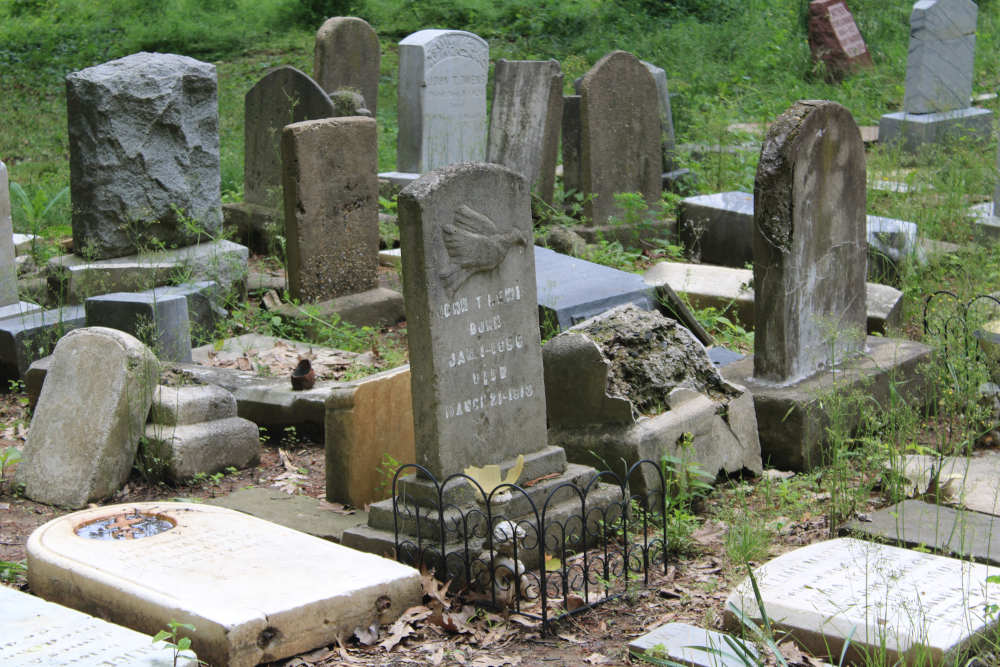
On May 23, over 100 11th graders from McKinley Tech High School (Washington, D.C.) transformed the Mt. Zion – Female Union Band Society Cemeteries into a living classroom—thanks to a teacher-led effort four months in the making. This program, initiated by Alysha Butler and Gabriel Morden-Snipper, featured ten interactive learning stations.

The day began with a moving libation ceremony and a powerful reminder of the land’s history, anchored by Dumbarton House’s 1841 painting featuring Julia Duckett’s wedding—once enslaved, now remembered and buried in the cemeteries. Vernon Ricks, a 1957 McKinley alum and Black Georgetown Foundation board member, shared personal memories of segregation and resilience. He was a member of the first integrated graduating class.

Students rotated through 10 powerful stations

  • Soil testing
  • Invasive species identification and removal (including 7-ft Japanese knotweed!)
  • Photogrammetry
  • Gravestone math & data analysis
  • Narrative writing and commemorative rock painting
  • History tours and descendant storytelling
  • Reflections recorded by the students themselves

At lunch, Vernon Ricks—McKinley Tech Class of 1957, its first integrated class—shared his powerful memories of growing up in segregated Washington.

Special thanks to Meg and Paul from Tour de Force, who not only funded the experience but spent the entire day with us in the field. And to the dedicated volunteers and partners who helped bring the learning to life:

  • Alysha Butler & Gabriel Morden-Snipper – McKinley Tech Faculty Leaders
  • Amy Durbin – Tudor Place
  • Matt Millage – Georgetown BID
  • Jared Koller – ASOR / Archaeologist & Educator
  • Erika Berg – Black Georgetown Volunteer
  • Dumbarton House & Dumbarton Oaks

This wasn’t just a day of service—it was a model for place-based education, community preservation, and student-powered historical inquiry. DC students led with purpose, and history answered back.

More than a field trip, it’s a model of what’s possible when teachers lead the way.

Don’t Miss It! —ASOR’s 125th Anniversary Celebration

Don’t Miss It! —ASOR’s 125th Anniversary Celebration

Boston | November 22, 2025, at 6:45 p.m.

ASOR has turned 125—yes, that’s 125 years old!

And you’re invited to join the celebration by participating in a special dinner event on Saturday night at this year’s Annual Meeting in Boston!

We’ll be kicking off the festive occasion at 6:45 p.m. on Saturday, November 22, 2025, at the Hilton Boston Park Plaza. Join us for an evening of exceptional dining, entertainment, and ASOR-themed activities, featuring speakers who have been integral to ASOR’s mission, as well as an after-dinner dance party, with music provided by DJ Ace E (our very own Asa Eger)! Your presence will help make this milestone truly meaningful.

The evening will also feature live music from the Boston Arabic Music Ensemble. In the early 1980s, a few amateur musicians and friends from the Boston community gathered to play some popular folkloric and other classical songs from the Arabic musical heritage. More recently, the group has evolved into its current members from the Boston community and performs classical and folkloric Arabic musical repertoire. The Boston Arabic Music Ensemble was under the artistic direction of the late maestro Bassam Saba (from 2010 to 2018). Since 2018, it has been led by the award-winning violinists, composers, and educators Bengisu Gökçe, Layth Sidiq, and Akram Haddad.

ASOR’s cost of the dinner is $100. To ensure that everyone can attend, we are offering discount codes for reduced ticket prices of $25 and $50.  Sponsorship tickets are also available, and any ticket purchase above $100 may be tax-deductible. Your contribution will make the evening accessible for everyone. We ask all members to choose the ticket price that they can afford, recognizing that the cost charged by the hotel (without drinks) is $100.

Register Now

Use code SAVE50 for a reduced ticket price of $50, or use code SAVE75 for a reduced ticket price of $25. When purchasing your ticket, please specify your dinner entree choice: beef, chicken, fish, or vegetarian. Tickets must be purchased byNovember 12, and seats are going fast!

Dress code: Cocktail attire/festive, black-tie optional.

WAYS TO DONATE TO ASOR

WAYS TO DONATE TO ASOR


Because membership and subscription revenue account for only 20% of our budget, please consider supporting ASOR through one of the following types of donations…
 
Donate via PayPal

Click on the link or scan the QR code with your phone, and you can make a gift in the PayPal app. Please include a short note with your gift designation.

Donate through the Member Portal

Make a gift online now, and you can designate how you would like us to apply your contribution.

Donate by check

Please mail a check to ASOR, 209 Commerce Street, Alexandria, VA 22314. Please include a short note with your gift designation and/or write a brief note in the “memo” line of your check.

Donate by giving stock

Contact ASOR Executive Director Andy Vaughn (703-789-9229) with any questions and to let him know that you have made a transfer. Click here for stock donation form.

Donate by giving property or other assets

In some cases (but not all), ASOR may be able to accept real property, tangible personal property, or restricted stock. Please contact ASOR Executive Director Andy Vaughn for more information. All non-routine gifts must be approved in advance by the Finance Committee.

Donate by making legacy gift

As you consider your long term financial and estate plans, we hope that you will consider ASOR. Please let ASOR know if you have made a planned gift, and we will add your name to ASOR’s Legacy Circle. Contact ASOR Executive Director Andy Vaughn for more information.

Donate by participating in an airline program

You may contribute by listing ASOR’s account number in Delta’s SkyBonus program for employees and Board members. This is in addition to any miles that you receive an individual, and it will not reduce your miles or credits. Please do not use this SkyBonus number if you are not an ASOR employee or Board Member.

 
Click here for the Fiscal Year 2026 Honor Roll of Donors
Click here for the Lifetime Honor Roll of Donors
Click here for the members of ASOR’s Legacy Circle


OTHER WAYS TO DONATE

Donate By PhoneDonate By MailMake A Pledge
(Donate Later)
Call ASOR:
(703) 789-9229
ASOR
209 Commerce Street
Alexandria, VA 22314
E-mail ASOR

ASOR CHI – Who We Are

 WHO WE ARE

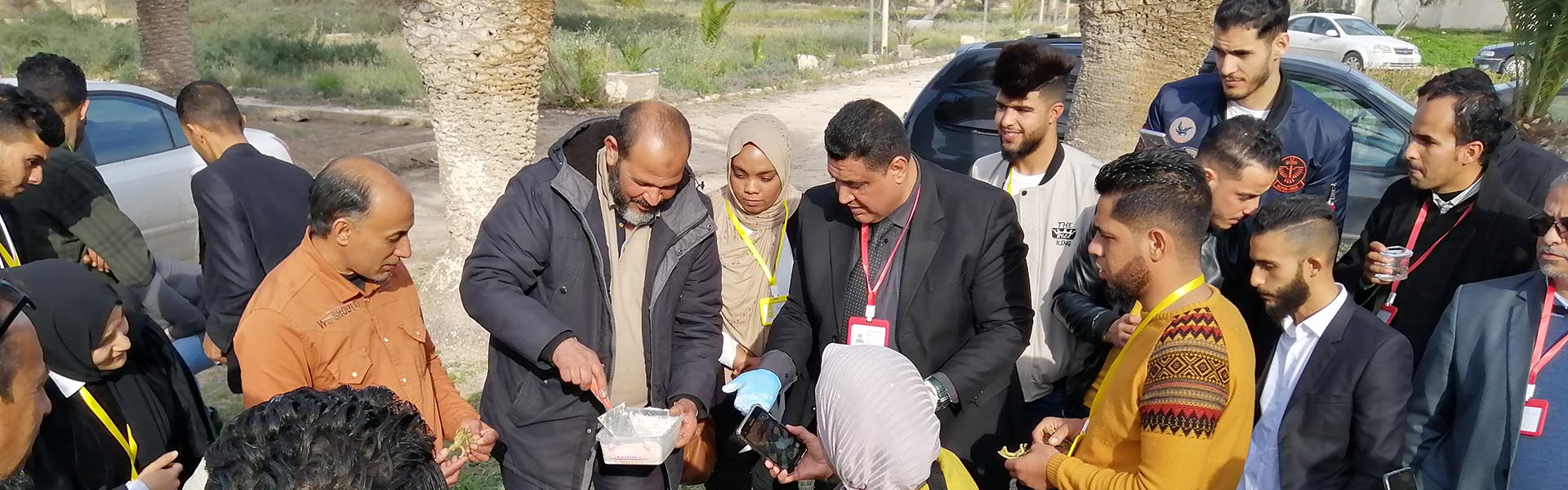
ASOR’s Cultural Heritage Initiatives is an international, collaborative effort to respond to the destruction of cultural heritage in North Africa and the Middle East. To date, our work has focused on Libya, Syria, Lebanon, Iraq, the Maghreb, and the Sahel. Most recently, ASOR has focused on education and stewardship programs that foster understanding between people across ethnic, religious, and geographic boundaries. The following list includes our co-directors, project managers and consultants, and volunteer advisors. ASOR CHI has been successful because we have so many volunteers from many different countries, and we are grateful for their service. We are actively seeking more volunteers. Please contact us if you are willing to help.

Principal Investigators

Andrew G. Vaughn

ASOR Executive Director and ASOR CHI Co-Director
ASOR

executive-director@asor.org, 703-789-9229

ASOR Executive Director and Co-Director of ASOR CHI, Dr. Vaughn has served as ASOR’s Executive Director since 2007. Prior to 2007, he was Associate Professor and department chair at Gustavus Adolphus College. He received the Ph.D. degree (magna cum laude) from Princeton Theological Seminary in 1996 in the area of Hebrew Bible.

Will Raynolds

Co-Director of ASOR Cultural Heritage Initiatives
ASOR

willraynolds@asor.org

In addition to his work with ASOR, Raynolds is Co-director of the Garden Collection at the Egyptian Museum in Cairo (Egypt), and consultant for the World Monuments Fund (Haiti), the J. M. Kaplan Fund, and the American Archaeological Mission in Libya. Following his time at Yarmouk University (Jordan), where he was a Fulbright Fellow affiliated with the Department of Archaeology, Mr. Raynolds completed his MSc. in Historic Preservation from Columbia University, New York (2009).

Managers and Coordinators

Darren P. Ashby

Cultural Heritage Programs Manager
ASOR

dashby@asor.org

Dr. Darren P. Ashby has served as ASOR’s Cultural Heritage Programs Manager since March 2024. He previously worked at ASOR from 2017 to 2019 where he reported on threats and damage to cultural heritage and led a project to document the current condition of Jewish cultural heritage in Iraq and Syria. Darren received his Ph.D. from the University of Pennsylvania’s Department of Near Eastern Languages and Civilizations in 2017 with a specialization in the archaeology, art, and history of Ancient Mesopotamia. Prior to his current position, he was Program Manager of the University of Pennsylvania’s Iraq Heritage Stabilization Program (IHSP) where he worked from 2019 to 2024.

Hanan Charaf

Director for North African Cultural Heritage Projects
ASOR

hanan.charaf@asor.org

In addition to her work with ASOR CHI, Dr. Hanan Charaf is associate professor of art and archaeology at the Lebanese University. She has been a member of ASOR since 2000 and previously served as the series editor of the ASOR Archaeological Reports Series. She received her Ph.D. degree from University of Paris I Panthéon-Sorbonne, her M.A. from the University of Lumière Lyon II, and her B.A. from the Lebanese University. She has been involved in numerous excavations in Lebanon, Syria, Egypt, France, Turkey, and Tunisia, and directed three projects in Lebanon. She has overseen cultural heritage preservation, awareness, and outreach projects in Lebanon, Tunisia, Morocco, Mali, Niger, and Burkina Faso.


Ahmad Emrage

Professor, University of Benghazi, and ASOR Libya Programs Manager
ASOR

ahmademrage@asor.org

As ASOR’s representative for heritage activities in Libya, Dr. Emrage manages ASOR’s cultural heritage grants and activities in the eastern area of Libya. He also serves as a senior advisor for ASOR’s work throughout Libya and North Africa. Emrage holds the B.A. and M.A. degrees in Archaeology from University of Benghazi, and the Ph.D. degree from the School of Archaeology and Ancient History, University of Leicester. During the 2019–20 academic year, Emrage held a Fulbright Fellowship to teach courses on Libyan cultural heritage at Oberlin College (Ohio, USA).

Jared Koller

Manager for Data Management and Web Development
ASOR

jaredkoller@asor.org

As Website and Database Developer for ASOR Cultural Heritage Initiatives, Mr. Koller has conducted research in Bir Madkhur, Jordan, and throughout SE Asia, where he utilizes new media tools to conduct experimental investigations in landscape and environmental change over time. Mr. Koller holds an MA in History and New Media from George Mason University (2010) and a BA in Anthropology-Archaeology from the University of New Mexico (2005).

Research Associates

Katie Paul

Director, Achilles Research Group
Co-Director and Co-Founder, The ATHAR Project

kpaul@atharproject.org

Regional Contractors and Volunteers

  • Aboutou Konate, Heritage Contractor for Mali