UNEARTHING THE PAST SINCE 1900

Call for Trustee Nominations

CALL FOR TRUSTEE NOMINATIONS 2022

The Trustee Nominations Committee announces an open call for (self) nominations for the ASOR Board of Trustees (Class of 2025). There are three primary responsibilities of the members of the Board of Trustees:

  • Governance: Being aware of issues brought forward to the Board, attending two meetings per year (at your own expense), and bringing issues of concern to the Board.
  • Fundraising and financial management: Leading in development by thinking of new opportunities, leading in giving, and providing oversight on the audited financial statements. We ask that individual trustees aspire to contribute $500 or more annually.
  • Strategic planning and policy development: Leading especially in measures that accord with ASOR’s mission.

We anticipate two openings for Membership-Elected Trustees. Any full ASOR member may be considered for nomination as an Membership-Elected Trustee. If there is someone that you would like the committee to consider—including yourself—please send the person’s name and email address to Marta Ostovich in the ASOR office. Please check with the nominee as to whether they are interested in serving on the ASOR Board of Trustees before sending in their name. If you have any questions about the responsibilities and satisfactions of being a board member, please email Jane DeRose Evans (Chair of the Nominations Committee).

The ASOR office, or a representative from the Nominations Committee, will contact all nominees to describe the responsibilities in greater detail, and to make sure that the nominee is willing to have his or her name discussed by the Trustee Nominations Committee. Please note that nominees will need to submit a brief biography and a mission (or vision) statement for what they would like to accomplish as a trustee to be considered by the Nominations Committee. A sample of these statements can be found in last year’s “Meet Your Board Nominees” webpage. Brief biographies and mission statements should be ca. 200 words each and submitted via e-mail to Marta Ostovich by noon EDT on September 19, 2022.

After the Committee selects individuals for nomination, the election will take place by electronic ballot during October. ASOR is once again conducting online voting to ensure that more of our members are able to participate in this important process. The ASOR office will work with any person who is not able to complete an electronic ballot to ensure that everyone is included.

In order to receive full consideration by the committee, nominations (including supporting documents) should be submitted to programs@asor.org by noon EDT on September 19, 2022.
ASOR CHI Tutorials

UPDATE: Tutorials for Cultural Heritage Survey

Over the past months, ASOR Cultural Heritage Initiatives (CHI) and its partners have developed a series of tutorials and training modules aimed to help cultural heritage specialists perform surveys and condition assessments through open source tools and software, including QGIS, KoboToolbox, LibreCAD, and MetaShape. These tutorials are now available on the ASOR website in English, French, and Arabic. Work on these resources has been made possible by a grant from an anonymous donor. While the goal of this project is to assist heritage professionals in documenting and mapping sites, these tutorials are also an excellent resource for anyone in the ASOR community who is looking to learn new skills and take advantage of open source software. ASOR remains committed to providing open-access online resources such as these for the benefit of the entire ASOR community.
The ASOR CHI Tutorials cover:

  • Site Documentation
    • KoBoToolbox and KoBoCollect Application: open source software package for location and descriptive data collection in the field can then be synched up with GIS software
  • Mapping Activities
    • QGIS: free and open source Geographic Information System (GIS)
    • LibreCAD: free open source computer-aided design (CAD) application for 2D design
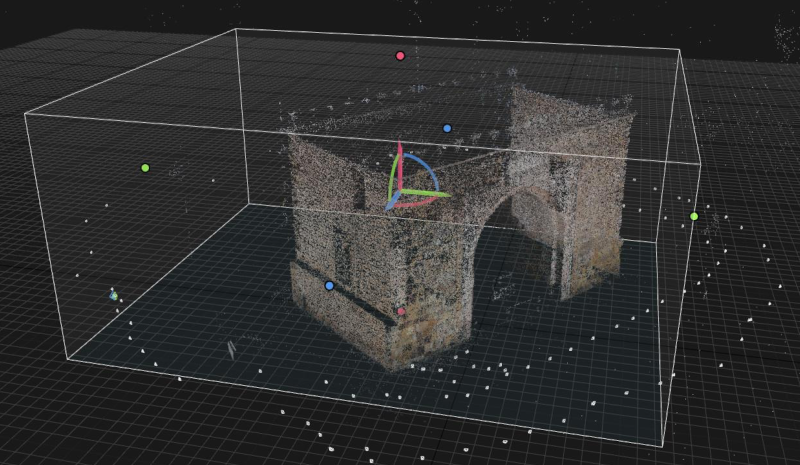
    • Photogrammetry using Agisoft Metashape: software that performs photogrammetric processing of digital images and generates 3D spatial data
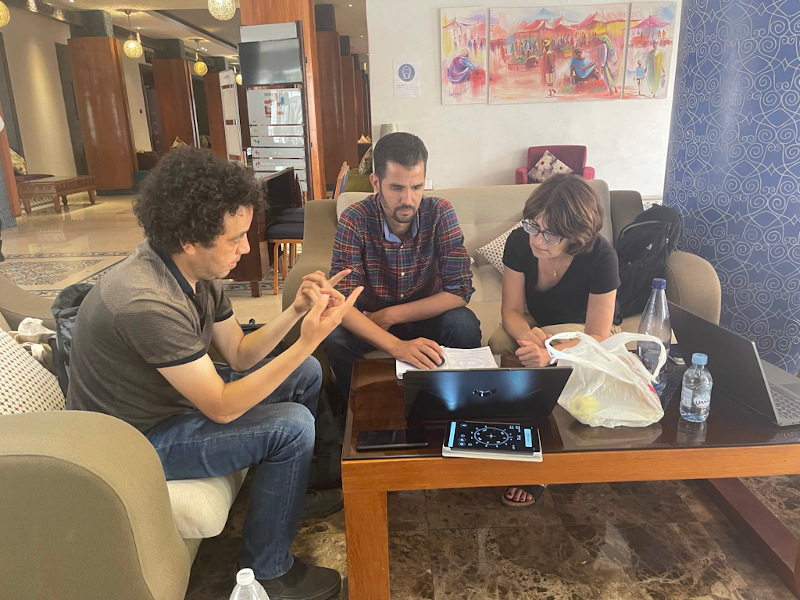
ASOR Director for North African Cultural Heritage Projects Dr. Hanan Charaf conducting KoboToolbox training with members of the High Atlas Foundation (HAF) in Morocco.
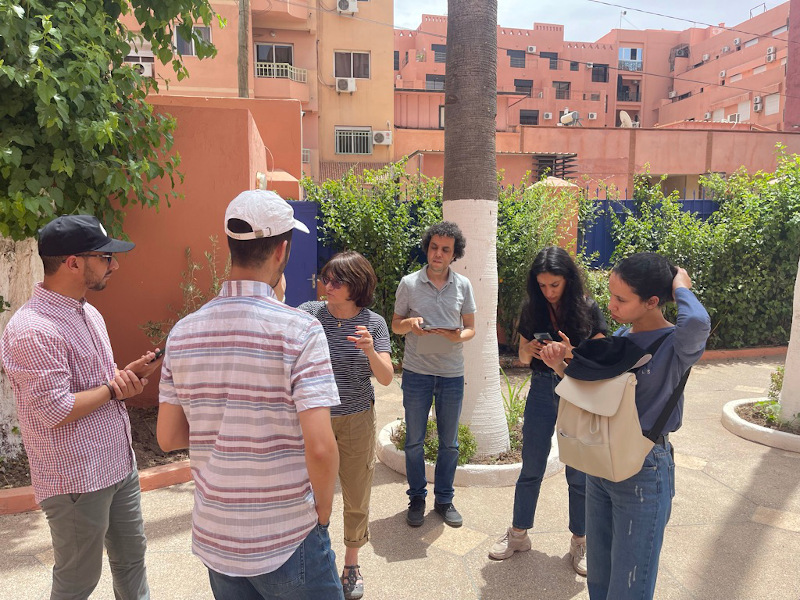
Dr. Charaf leading on-site training with the HAF team at a synagogue in Marrakesh, Morocco.

Check out the full list of CHI Tutorials here. 

Stay tuned for tutorial videos for KoBoToolbox, QGIS, LibreCAD, and Photogrammetry on ASORTV in the upcoming weeks. 

A detailed list of the tutorials available is below.

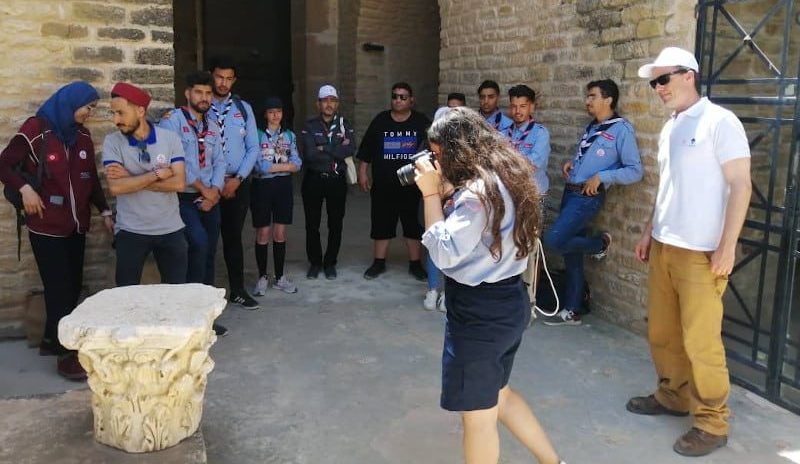
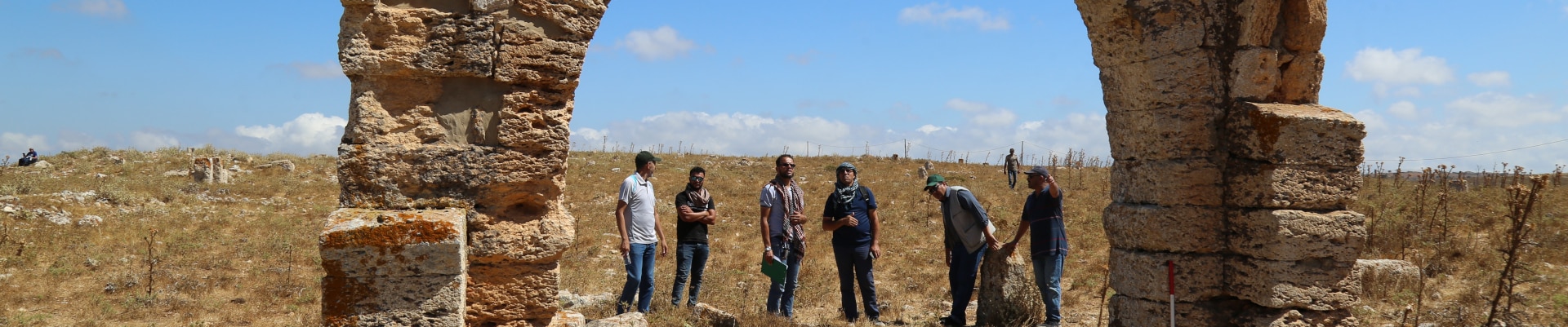
Tunisian scouts practicing photogrammetry image collection at the site of Oudna, Tunisia.
Creating a photogrammetry model

Study of Collections Fellowship Report: Joseph A. Greene

2022 Study of Collections Fellowship Report: Kelsey Museum Archives

Joseph A. Greene, Harvard Museum of the Ancient Near East

An ASOR Study of Collections Fellowship funded my travel to the University of Michigan to complete work in archives related the 1925 Michigan excavations in the Carthage Sanctuary of Tanit (tophet). The excavator, Professor Francis Kelsey, died before completing a final report, but he left behind an extensive archives, held both at the Kelsey Museum and at the Bentley Historical Library.

The 1925 expedition directed by Kelsey was the forerunner to the 1975–1979 ASOR Punic Project, directed by the late Professor L.E. Stager (1943–2017). Dr. Brien Garnand and I have now taken responsibility for publication of the Punic Project, and we are using the opportunity to include Kelsey’s unpublished results with those of the ASOR Punic Project.

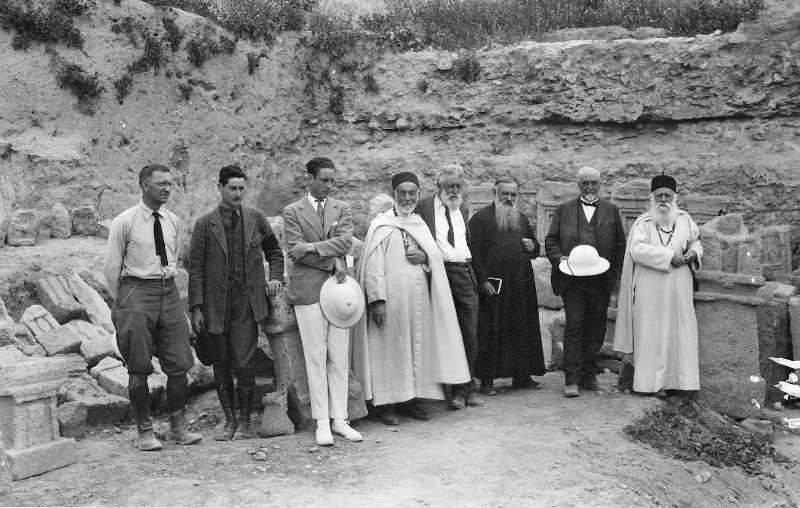
Francis Kelsey with his very smartly dressed Carthage excavation team. Kelsey is on the far right in dark three-piece suit holding white pith helmet. (University of Michigan, Kelsey Museum Archives)
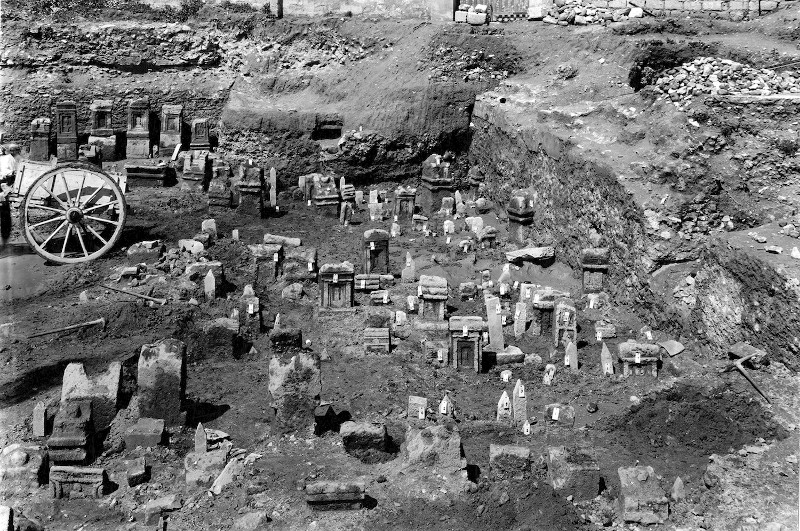
Carthage Tophet under excavation in 1925 with stelae and cippi exposed in situ, view northwest. The flat, vertical wall on righthand side is an intrusive 4th c. A.D. Roman vault (see also plan, Fig. 3). (University of Michigan, Kelsey Museum Archives)

Dr. Garnand completed much work in the Michigan archive before 2022. For example, Kelsey’s 1925 site plan had already been integrated into the ASOR 1979 site plan. Field notes and excavation diaries from 1925 have been scanned and edited, along with plans, sections, drawings, field photos and other documentation. The drawings and photographs have been edited and annotated so their format corresponds to that of the ASOR Punic Project records. All of the annotated 1925 field photos and plans will be included in the digital publication, while a selection will appear in the printed version of the final report.

Certain other tasks planned for 2022 have also already been completed. Photography of 78 paper squeezes of Tophet stele excavated by Kelsey was undertaken by the University of Michigan Imaging Services. Likewise prints of the 1925 expedition photographs (the negatives are lost) have also been digitized. Thus, we now have a detailed inventory of squeezes and photographs.

With help of Kelsey Museum Registrar Michelle Fontenot, I was able to identify and organize a residue of ASOR Punic Project large-format plans unaccountably co-mingled in the archives with those from Kelsey’s 1925 expedition and the 1975–1979 Carthage-Dermech Michigan excavations. The physical plans remain at Michigan, but digital copies will be deposited in the ASOR Punic Project archives at the Harvard Museum of the Ancient Near East (HMANE). Also digitized were 15 large-format plans and drawings from the 1925 and 1975–1979 Carthage Tophet and Harbor excavations. This was completed with assistance from Kelsey Museum Collections Manager Sebastian Encina and undergraduate intern, Isabella Blanton, who accompanied me to the Clark Library where we scanned the material using a large-format scanner under the guidance of map librarian Karl Longstreth.

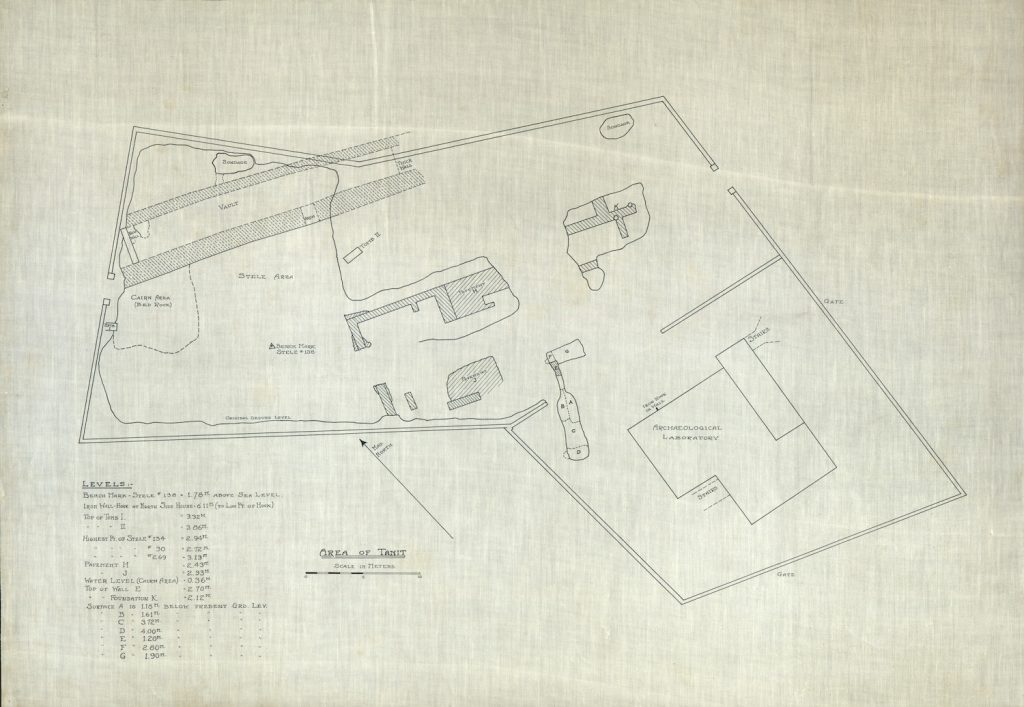
Plan of 1925 Carthage Tophet excavation area. The “Vault” in upper lefthand side is an intrusive 4th c. A.D. Roman feature (also visible in the photo, Fig. 2). (University of Michigan, Kelsey Museum Archives)

Another unanticipated but helpful discovery was the archive of 1978 exhibit “Carthage Then and Now,” originated at the Kelsey Museum, which then traveled to the Oriental Institute Museum at the University of Chicago and to the Semitic Museum at Harvard (now HMANE).

Finally, in the Bentley Library I completed the review of the relevant Francis Kelsey papers held there. Garnand had begun review 165 boxes of Kelsey papers on a previous visit, and it was necessary only for me to verify the box numbers which contained the relevant documents previously scanned.

Stipend Report: Kacey Garcia

Khirbet al-Balu’a 2021 Study Season: Pottery and Figurines

Kacey Garcia, 2021 Shirlee Meyers-G. Ernest Wright Summer Stipend Recipient

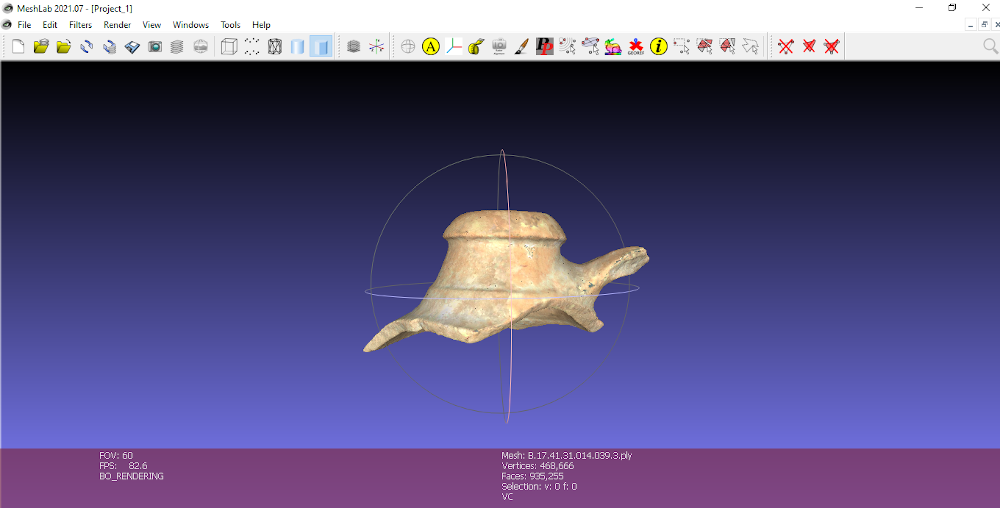
I would like to thank the Shirlee Meyers-G. Ernest Wright Scholarship donors and ASOR for providing me with an amazing opportunity to participate in the 2021 study season at La Sierra University. I assisted in processing loaned, diagnostic ceramic samples for publication of 2012-2019 excavation seasons at Khirbet al-Balu’a. I organized and sorted these samples according to occupational phases utilizing the data collected from the loci. Relying on my skills with Next Engine’s software ScanStudio and Meshlab, I was able to create plates for all of these diagnostic samples to prepare them for the Khirbet al-Balu’a publication. The next step will be creating a ceramic seriation for Central Jordan by applying C14 data.

Meshlab of an aligned diagnostic sample from 2017.

Scanning set up at La Sierra University.

I was also able to conduct research on the figurines found in the main occupational strata at Khirbet al Balu’a as part of a class on household archaeology. I discussed the figurines’ purposes while providing contextual evidence from Iron Age Khirbet al-Balu’a. I read articles in household archaeology methodology and theory and applied what I’ve learned to the archaeological dataset from Khirbet al-Balu’a. A total of 19 figurines were found at Khirbet al-Balu’a during the 2012 to 2019 excavations. While both anthropomorphic and zoomorphic figurines were found, the majority were zoomorphic (13 figurines). This assumes that the demonstrated figures are animals since many are difficult to interpret due to their poor condition.

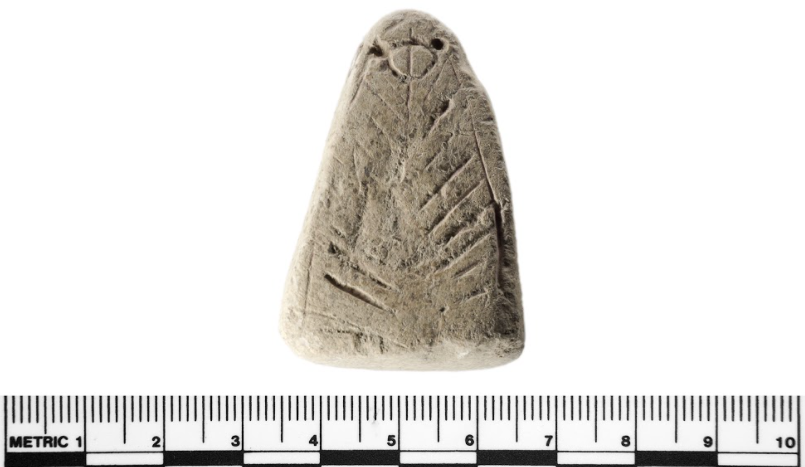
When analyzing figurines there are 3 main categories: zoomorphic, anthropomorphic and theriomorphic. Zoomorphic figurines resemble an animal, anthropomorphic figurines resemble humans, and theriomorphic figurines are thought to have depicted gods in animal form. In the ancient near east, theriomorphic figurine can be either an animal with humanistic traits that identify with gods or as part animal and human. Phase 2 at Balu’a did not have any female depictions, despite female figurines being the most common anthropomorphic archetype. Female figurines are often correlated to fertility, and were possibly used to enhance the chances of bearing children or giving birth safely. Most of Balu’a figurines are zoomorphic, and the ones from the Iron Age II house are identified as bovine, birds, and horses. Two of the figurines were ceramic and another two were made of plaster and clay. For example, B190010 was a plaster, conical-shaped zoomorphic figurine with incised eyes, beak, feathers and wings. There is a line design originating from the center of the figure. It is thought to be a bird of some sort owl or a hawk. This figurine was a part of the Phase 2 post-collapse rubble layer located in room A4. While learning about these figurines I couldn’t help but feel connected to the occupants of the Iron Age II house. I wondered what I would leave behind in my home long after I am gone for others to find. Figurines are initially interpreted as cultic objects. This is my favorite theory because it shows that ancient peoples needed something to believe in when life got too unpredictable and difficult. There is an unspoken beauty and a sense of humanity to the concept of hope thriving through these figurines during what may have been a desperate time.

Zoomorphic figurine of a bird from Balu'a Iron II house. Artifact #B190010 (Used with permission of Balu'a Regional Archaeological Project, BRAP)

Kacey Garcia is a senior undergraduate at La Sierra University majoring in archaeology. She first encountered archaeology while studying classics in Italy and has since fallen in love with it. Kacey knew right away this was what she wanted to do for the rest of her life. For the past two years, Kacey has been working as a student research assistant at the Center for Near Eastern Archaeology on projects pertaining to Khirbet al-Balu’a and Tell al-Umayri.
Balu’a Regional Archaeological Project (BRAP)

Center for Near Eastern Archaeology, La Sierra University

During the summer of 2021, ASOR supported 27 undergraduate and graduate students through the Summer Stipend Program. These students undertook non-fieldwork archaeological research projects led by ASOR-affiliated project directors. They also took part in monthly cohort group meetings hosted via zoom. Read a summary of these cohort meetings here.

Stay tuned for more updates from the 2021 Summer Stipend recipients!

New ASOR-Affiliated Projects

NEW ASOR-AFFILIATED PROJECTS: MAY 2022

ASOR-affiliated projects adhere to ASOR policies, most notably the Non-Discrimination Policy, Policy on Professional Conduct, and Code of Conduct for the ASOR Annual Meeting and Other ASOR Sponsored Events. These policies affirm ASOR’s commitment to high standards for research integrity, academic mentoring and ethical professional behavior. Project Principal Investigators may apply for ASOR affiliation for their projects through the Committee for Archaeological Research and Policy (CAP).  Principal Investigators of ASOR-affiliated projects are eligible to apply for ASOR Project Grants and Shepard Urgent Action Grants. Students working on ASOR-affiliated projects are eligible to apply for Scholarships for Fieldwork Participation.

Currently, 98 projects are affiliated with ASOR. This includes 71 field projects and 27 publication projects. Nine field projects (seven new projects and two project renewals) have received ASOR affiliation so far in 2022. Read more about these new ASOR-affiliated projects below!

New ASOR-Affiliated Projects

Birsama Exploration Project, Israel (Alexandra Ratzlaff and Tali Erickson-Gini)

Birsama (Be’er Shema) is situated in the northwest quadrant of the northern Negev, approximately 21 km southeast of Gaza and 25 km northwest of Be’er Sheva. Interest in the site focuses on the presence of a Late Roman fort and associated structures, including the Byzantine church of St. Stephen, a Roman road, pottery kilns and a potential vicus (civilian camp adjacent to the fort). The site appears in the Notitia Dignitatum, distinguished as ‘Birsama’, a provincial military base for the garrison of the Equites Thamudeni Illyriciani. The aim of this project is two-fold 1.) Exploration of the fort and its environs to elucidate new information on this important military and administrative site in relation to the larger late Roman army network in the Negev, 2.) test new digital imaging and modeling methodologies and equipment at the site. The initial 2022 summer season will be an intensive terrestrial and aerial survey of the site to provide key information on the topography and extent of the site. A minimum of five successive excavation field seasons will be carried out beginning in the summer of 2023, followed but a study season for publication preparation. Technological testing of new equipment and methodologies in digital imaging will also form a core component to the recording and exploration of the site. The Brandeis Techne Group, a research team based out of the Autodesk Boston Technology Center, plans to test applications such as multi-drone imaging and use of the Boston Dynamics “Spot the Robot Dog” at the site for terrestrial survey imaging.

Gird-I Matrab Archaeological Project (gMAP), Iraq (Rocco Palermo)


Gird-I Matrab: picture of the main mound

The Gird-I Matrab Archaeological Project (gMAP) investigates the daily life of a small rural settlement in Northern Iraq, its economy, and the impact of climate transformation on the site and its inhabitants from the age of Assyrians to the heirs of Alexander the Great. Gird-I Matrab (“the dusty mound” in Kurdish) is located in the plain of Erbil, in North Iraq. It was already known by Iraqi archaeologists in the 1970s, but only systematically surveyed by the Erbil Plain Archaeological Survey team in 2012 and 2020. The site consists of a group of five low mounds orbiting around a central – slightly higher – one. Geophysical survey carried out in October 2020 have revealed a large and architecturally complex building, whose spatial extent and architectural features indicate a potential administrative function, most likely dated to the last centuries of the 1st millennium BC.


Visit of local representetives with Project Director Dr. Rocco Palermo

While the buried remains have not been physically uncovered yet, the presence of such an articulated building on a relatively small site in North Mesopotamia, might directly provide new dimensions to our understanding of the rural communities of the region in the Hellenistic and following periods.

gMAP plans to investigate the site through and integrated, multi-scalar approach that combines traditional techniques with the use of state-of-the-art technology and scientific analyses.

Hippos Excavations Project, Israel (Michael Eisenberg and Arleta Kowalewska)

Hippos Excavations Project is one of the main continuously running Classical archaeology research expeditions in Israel. Since the year 2000 our international team has excavated the site of Hippos (Sussita) and its environs. Hippos is located upon Mt. Sussita just east of the Sea of Galilee, overlooking the lake and Eastern Galilee.
Hippos’ remains present a continuous sequence from its foundation as Antiochia Hippos in the Hellenistic period (2nd cent. BCE) until the devastating earthquake at 749 CE at the end of the Umayyad rule. As the regional polis and one of the Decapolis it reached its peak during the Roman period. At least seven churches were built in the city during the Byzantine period when it was the see of a bishop.

The Kites in Context Project, Jordan (Chad Hill and Yorke Rowan)


Chad Hill and Yorke Rowan.

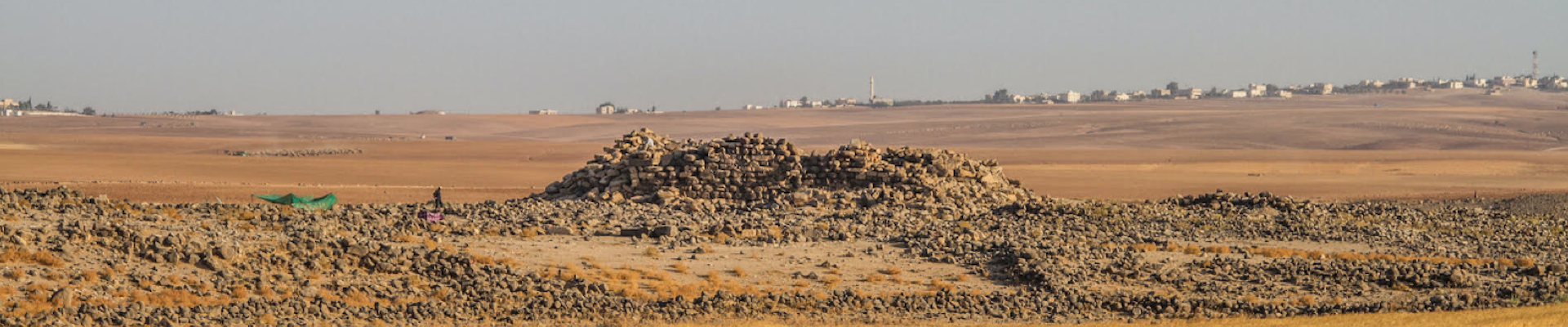
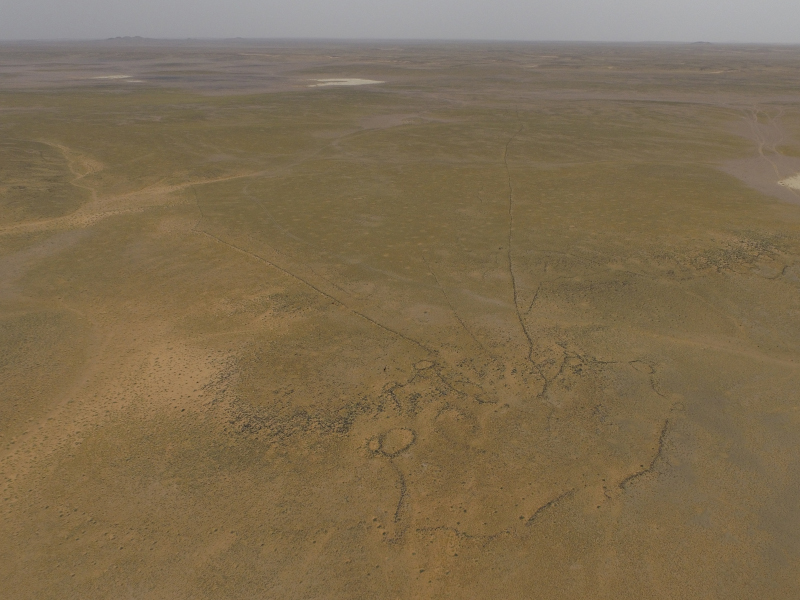
This project investigates the social and economic role of ancient animal hunting traps known as “desert kites” during a time of dramatic changing land use, human migrations, and shifting economies. Located in a hyper-arid, basaltic desert, these structures were built as mass-kill traps for ungulates in the later prehistory of the region.


Aerial view of a kite taken by a drone. Photo credit: Chad Hill.

Each chain includes dozens to hundreds of individual traps, spanning tens of kilometers, linked by intricate wall networks that functioned to create one enormous system. These represent a remarkable ancient infrastructural investment in labor, significant social organization, and the ability to generate subsistence surpluses in a marginal environment. This new study of desert kites, in context, focuses on the economy of this desert infrastructure and the social organization of largescale prey-manipulation strategies, to offer new insight into subsistence adaptations in marginal environments. The results from this research have the potential to transform knowledge of human responses and adaptations to arid environments in prehistory.

Menorca Archaeological Project, Torre d’en Galmés, Spain (Alexander Smith, Amalia Pérez-Juez, and Paul Goldberg)


MAP team.

The Menorca Archaeological Project (MAP) is an interdisciplinary group of Spanish and American collaborators that currently focuses on the diachronic investigation of the site of Torre d’en Galmés on the Balearic Island of Menorca. Torre d’en Galmés is one of the largest prehistoric sites on the Balearic Islands, having received international attention from archaeologists for decades. The site’s importance is due both its size and temporal scope. Within the remains of Torre d’en Galmés, one can see on display the early indigenous inhabitants of the island, the impressive remains of the Talayotic culture from the island’s Iron Age, and evidence of Carthaginian and Roman interactions well into the first centuries C.E.


Torre d’en Galmes, aerial view of SpU 9. Photo credit: Alexander Smith.

Long after the site was abandoned during the third or fourth centuries C.E., Torre d’en Galmés was settled once more by Islamic communities that made the island their home during the medieval period. In 1287 C.E., the Islamic settlers were forced to leave the island by King Alfonso III of Aragon, and the rapid depopulation saw the abandonment of sites across the island. Torre d’en Galmés never again saw significant occupation. What remains then is an incredible window into medieval Islamic life in this rural part of Menorca, with dozens of structures preserved, exhibiting the daily life of this group. MAP is dedicated to the archaeological study of the complex history of Torre d’en Galmés, in particular the Islamic medieval remains that have been largely overlooked on the site.

MiSAK, Missione Storico-Archeologica Italiana nel Kurdistan, Sarqala, Iraq (Luca Colliva, Serenella Mancini, Fabrizio Sinisi, Domenico Andreucci, Veronica Castignani, Mehrnaz Partow, and Paolo Severi)


https://misak.it/en/home-english/

MiSAK, the Italian Historical-Archaeological Mission in Kurdistan, was established in 2021 due to the common interest of ISMEO – the International Association for Mediterranean and Eastern Studies, and the International Institute of Kurdish Culture in Rome to contribute directly and effectively to the study, preservation, and enhancement of the Kurdish historical, archaeological and cultural heritage. MiSAK signed in December 2021 a three-year renewable agreement with the KRG General Directorate of Antiquities for the implementation of an archaeological project concerning the historical-archaeological study, protection and enhancement of the Sarqala site, which includes both the Parthian necropolis and the Qalla Kon tell, a multi-phase site probably part of the settlement connected to the nearby necropolis.

Seeking Sultan Abad-e Chamchamal: Archaeological Excavation at the Site of Tepe Hala Bag, Iran (Mohammad Eghbal Chehri)

According to historical texts, Sultanabad Chamchamal (Solṭānābād) is the most important settlement of the Ilkhanid period in the Bisotun region, which is mentioned in various contemporary historical books with the Ilkhanids due to its great importance. Historical texts show that Sultanabad Chamchamal was built at the foot of Bisotun Mountain and in the western part of Chamchamal plain. The construction of Sultanabad Chamchamal was on the side of the main Khorasan-Baghdad road and in the same area of Bisotun. In fact, despite the efforts of various researchers, the problem of locating and determining the exact location of Sultanabad Chamchamal has not been solved and can be considered as one of the problems in archaeology of the region, and this issue clearly justifies the need for excavation. Based on preliminary studies and archaeological survey, the location of Sultanabad Chamchamal can be considered the same as Halah Bag Tepe. The certainty of this issue, the ability to adapt Tepe Hala Bag with Sultanabad Chamchamal can be understood only by archeological excavation.

ASOR-Affiliated Project Renewals

Jezreel Valley Regional Project, Legio, Israel (Mark Letteney, Matthew J. Adams, Yotam Tepper, and Susan Cohen)

Legio is the site of the sprawling base of the Roman VIth Ferrata Legion. Established during the reign of the Emperor Hadrian (117–138 A.D.), the base controlled imperial roads, with direct access to the Galilee and inland valleys of northern Palestine—important centers of the local, occasionally uproarious, Jewish population. Excavations so far have demonstrated clear ties to major political and cultural events in the formative years of Rabbinic Judaism and Christianity and have provided an incredible new window into the Roman military occupation of the eastern provinces.
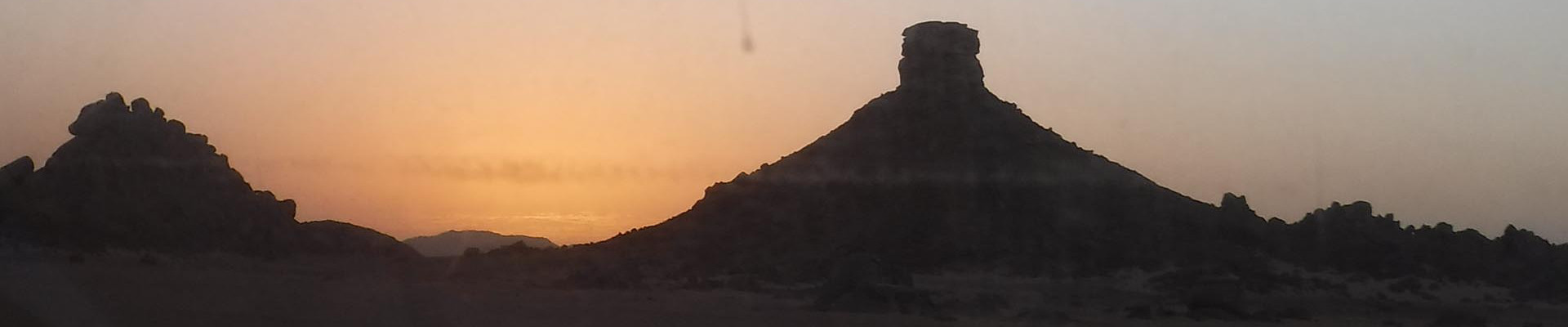
Tayinat Archaeological Project, Turkey (Tim Harrison and Elif Denel)


Tell Tayinat from above: Photo by Murat Akar, courtesy of the Tayinat Archaeological Project.

The Tayinat Archaeological Project (TAP) is investigating the archaeological history of the Bronze and Iron Age site of Tell Tayinat, which served as the capital of a succession of small territorial states centered in the Amuq Plain in the North Orontes Valley, Turkey. During the Iron Age, Tayinat was called Kunulua, royal city of the Neo-Hittite Kingdom of Palistin/Patina/Unqi, and Kinalia during the Neo-Assyrian imperial period.

Stipend Report: Annissa Malvoisin

Generating Jebel Barkal: Metadata Organization from the Field Diaries of Dr. George A. Reisner at Jebel Barkal

Annissa Malvoisin, Archival Researcher for the Jebel Barkal Archaeological Project, 2021 Strange/Midkiff Families Summer Stipend Recipient

Jebel Barkal.

The Jebel Barkal Archaeological Project directed by Dr. Geoff Emberling investigates the royal Egyptian–Nubian site of Jebel Barkal – a central religious locality that emphasized the omnipresence of Amun, linking Egyptian and Nubian ideological thought in one dedicated area. The site was occupied first by Egypt in the New Kingdom and was established as the “cultic duplicate” of Luxor in Nubia (Kendall, 2010). It had since been ruled by various Egyptian and Napatan kings, who also contributed to the Temple of Amun and administrative buildings up until the Meroitic period. Prior to Dr. Emberling, and Dr. Timothy Kendall, Dr. George A. Reisner excavated the site and did not publish his findings in an official site report. Recordings of his work from between 1916 and 1920, sponsored by theMuseum of Fine Arts, Boston where he served as Curator of Egyptian Art, as well as Harvard University, have since been transcribed (unpublished) by Dr. Emberling and Nami Kaneko. Dows Dunham, who became Curator Egyptian Art at the Museum of Fine Arts, Boston after Reisner, has also published a series of 5 volumes covering the excavation of royal Kushite cemeteries upon which they worked together. Much of the information on the objects discovered at these sites, including photography, contextual findspot, and provenance, are accessible on the richly comprehensive Museum of Fine Arts, Boston website.

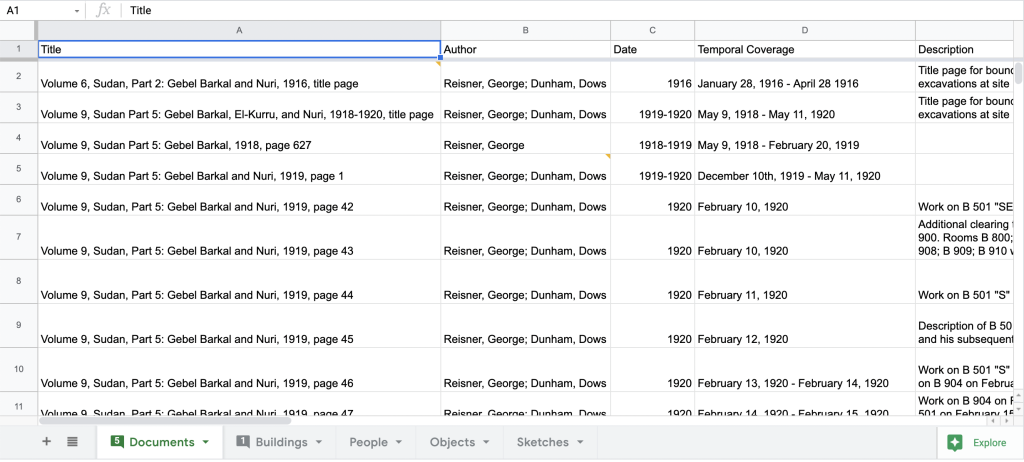
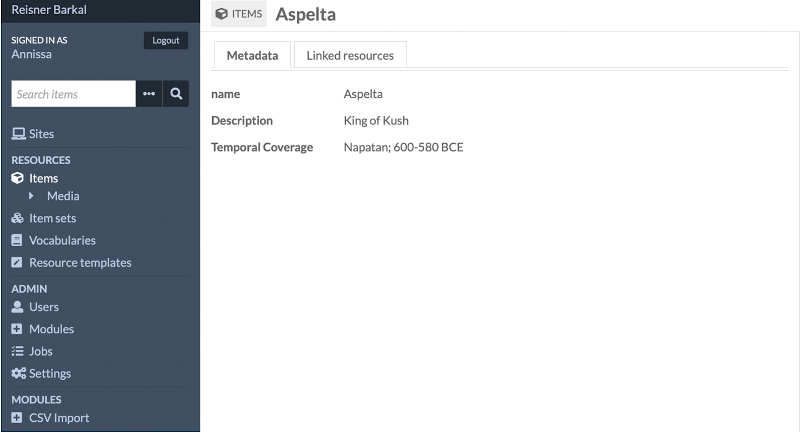
The section of the project that I oversaw as an archival researcher involved reading through the transcription from his archaeological excavations at Jebel Barkal and Nuri between 1919 and 1920. The purpose of this research was to locate, organize, and import the information recorded in the field diaries into an online metadatabase titled Omeka. Omeka organizes the metadata into a searchable website which aids scholars and researchers to easily search interrelated individuals, terms, materials, and buildings that relate to the site of Jebel Barkal which have not been previously organized or transcribed.

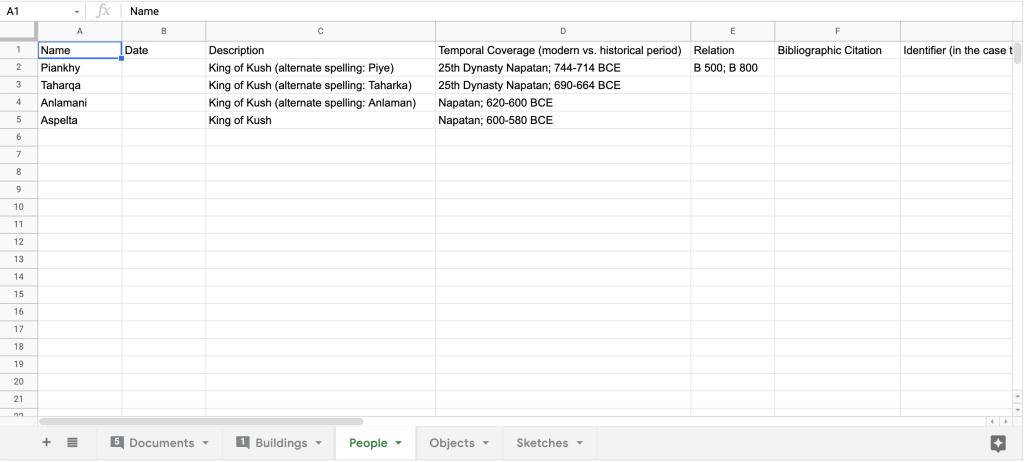
Prepping for import into Omeka required working with directly with Reisner’s field diaries, the transcription and a detailed spreadsheet with specialized fields according to specific data.
The metadata is relational, by which the spreadsheet helped to organize different sets of information in a way that efficiently connected it all together.
The backend of Omeka required the organization of the metadata from the spreadsheet into readable pages that will appear on the site.

The process of learning Omeka was a fantastic experience which challenged and heightened my knowledge of online data processing on a parallel level, in addition to building expertise in curating the site for both the specialized and general public. Led by the Information Technology team at the University of Michigan, Joe Bauer and Matthew Carruthers, once the data from the transcription is organized by the desirable entry format was decided, it was imported and organized according to Omeka translation. The process is ongoing. This was a seamless experience which contributed to what will become a valuable resource for current and future archaeology at the site.


Annissa is a PhD candidate at the University of Toronto and the Bard Graduate Center/Brooklyn Museum Postdoctoral Fellow in the Arts of Africa. Her doctoral thesis investigates the ceramic production and trade industry during Meroitic Nubia and its potential far-reaching networks linking the Nile Valley to Iron Age West African cultures.

During the summer of 2021, ASOR supported 27 undergraduate and graduate students through the Summer Stipend Program. These students undertook non-fieldwork archaeological research projects led by ASOR-affiliated project directors. They also took part in monthly cohort group meetings hosted via zoom. Read a summary of these cohort meetings here.

Stay tuned for more updates from the 2021 Summer Stipend recipients!

Stipend Report: Hanna Erftenbeck

Summer Research at the Carnegie Museum of Natural History

Hanna Erftenbeck, 2021 Strange/Midkiff Families Summer Stipend Recipient

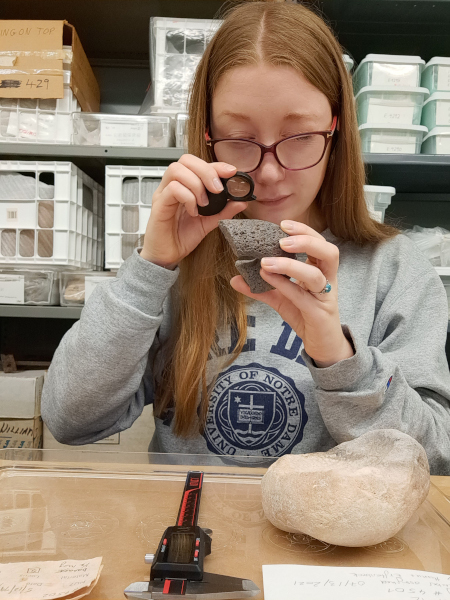
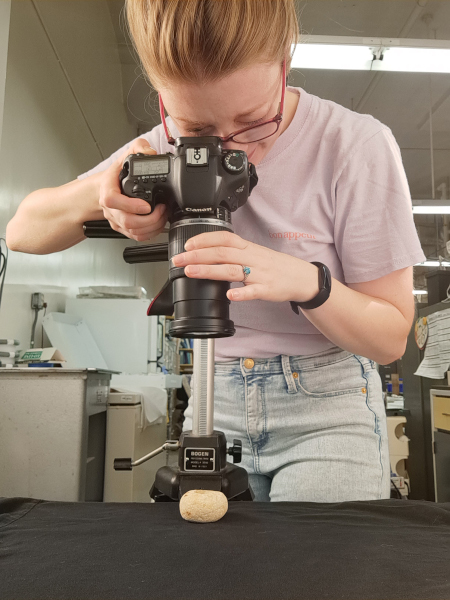
The term fieldwork is mostly associated with working on excavations, but this summer I spent three weeks conducting my fieldwork at the Carnegie Museum of Natural History in Pittsburgh, PA. There I worked with the groundstone tool assemblage from the Early Bronze Age (EBA) site of Numayra, located in modern day Jordan, which is one of the early proto-urban settlements in the region. Numayra was excavated as part of the Expedition to the Dead Sea Plain Project (EDSP) in the 1970s and 1980s. The goal of EDSP is to investigate how people lived and died during the EBA to study the emergence of the regions earliest small-scale urban society. As part of my dissertation project, I am investigating how the people at Numayra prepared their food in their day to day lives, and how their food practices connected them to their new urban community. This summer I was able to catalogue, describe, draw, and photograph the stone objects in the Numayra collection.

Measuring and describing groundstone objects before drawing them.
Taking detailed pictures of the groundstone objects.

Inspecting the groundstone objects under a microscope for possible use-wear.

While I did not get my hands dirty – at least not as dirty as I usually do when I excavate – I was able to learn so much about EBA daily life by working with the Numayra collection, almost fifty years after these objects were excavated. Legacy collections are often underutilized in our efforts to understand the past, but they are a treasure trove of information, and working with them is part of an ethical and sustainable archaeological practice. I would like to thank ASOR and the generous donors who supported the summer stipend program for making this research possible, and the project directors Meredith Chesson and Morag Kersel for their support and providing me with access to the material. I am deeply grateful to Deborah Harding, Amy Covell-Murthy, and Gretchen Anderson at the Carnegie Museum for Natural History for welcoming me this summer and providing me with the support and access I needed to successfully conduct my research.

Hanna is a PhD candidate at the Department of Anthropology at the University of Notre Dame. In her dissertation research she investigates the role of food related practices in the creation and transmission of early urban communities during the Early Bronze Age in the southern Levant. Hanna holds a BA and MA degree in Near Eastern Archaeology from Freie Universität Berlin and a MA degree in Anthropology from the University of Notre Dame. Since 2012 she have participated in archaeological projects in Germany, Greece, Turkey, Jordan, Israel, and the United States.

During the summer of 2021, ASOR supported 27 undergraduate and graduate students through the Summer Stipend Program. These students undertook non-fieldwork archaeological research projects led by ASOR-affiliated project directors. They also took part in monthly cohort group meetings hosted via zoom. Read a summary of these cohort meetings here.

Stay tuned for more updates from the 2021 Summer Stipend recipients!

March Madness Challenge 2022: We Did It!

MARCH MADNESS CHALLENGE 2022:  WE FILLED THE POTS!

ASOR’s 2022 March Madness Challenge was a success and we “filled the pots” for The Levantine Ceramics Project (LCP)! We met our goal of $10,000 for the ongoing maintenance and hosting of the LCP— an ASOR open-access publication. This incredible resource has been an ASOR publication since 2016. The LCP is an open, interactive website focused on ceramics produced in the Levant from the Neolithic era through the Ottoman period. Thanks to the generosity of three ASOR donors, we received a $5,000 challenge gift that has been fully earned by raising another $5,000 for a total of $10,570 in March to keep the LCP running!


Thank you to each and every one of the donors, members, and Friends of ASOR who helped “fill the pots” for the LCP!

The LCP’s mission

The LCP, an ASOR open-access publication and research project, is a sustainable research tool designed to pull the study of archaeological ceramics into the 21st century.

Why ceramics? Because they comprise the most abundant category of remains found throughout the Near East, and because every excavator must contend with identifying and publishing them, yet the mode by which that is done has not changed in a substantive way since William Flinders Petrie began working in 1880. Constant excavation since then has created unthinkable quantities of data, all disseminated via print (and now digitized versions of print) publications. Print is excellent for many things – but it is remarkably ill-suited for fast exchange of information, collaborative study, and especially the rapid recording of new or changing ideas. Archaeology is a field that is always in a mode of discovery; we need tools that can keep up, that allow us to bring new material into dialogue with that long known, are easy to use, foster sharing, and enable us to readily learn from one other. The LCP is such a tool.

The LCP inspires new questions, and gives us the tools to answer them: Hard borders, civil wars, intractable terrain – these are facts on the ground across the landscapes of the Levant. Swaths of territory that are invisible or inaccessible today were zones of habitation and connection in the past. Archaeological survey and fieldwork fill in the blanks, allow us to see what was, imagine different realities. This is why we pursue such work; this is one of the best rationales for its value now and in the future. The LCP helps deliver on that lofty promise. Four examples of regions, activities, lives able to be seen, mapped, and linked to a wider world via pottery on the LCP:

  • the eastern desert of Egypt: >200 vessels from 25+ already on the LCP with another 1000+ from 200 sites, thanks to integration with the EU/CNRS Desert Networks Project (scheduled for submission this summer).
  • the Hauran of southern Syria: >1000 vessels from 50+ sites, dating from 1200 BCE-200 CE, from the Lajāʾ survey (2003–2009), the Qarrāṣa excavations (2008–2011), plus published and unpublished data from the French Archaeological Mission to Southern Syria, thanks to Jérôme Rohmer’s 2020 Hauran VI. D’Aram à Rome. La Syrie du Sud de l’âge due Fer à l’annexion romaine (XIIe siècle av. J.-C. – Ier siècle apr. J.C.).
  • Rough Cilicia, Turkey: ~200 vessels from 40+ sites, from Nicholas Rauh’s Rough Cilicia Archaeological Survey Project (1996-2011).
  • the maritime networks linking northern and southern Cyprus with the northern Levant: 400+ vessels dating from the Middle Bronze – Iron Ages, from Cyprus and sites in Cilicia and coastal Syria, including 250+ vessels from Tell Tweini in northern Syria, excavated by the University of Leuven from 1999-2007.


The LCP advances ASOR Strategic Plan and Goals by providing easy and open access to new information: The LCP provides quick access to new finds and current ideas, and helps American researchers connect with foreign scholars. Most LCP contributors are based in Europe, Turkey, Cyprus, Lebanon, Jordan, Israel, and Egypt, and are affiliated with foreign research universities or institutes. Not all users are are members of ASOR, yet their enthusiastic embrace of the LCP helps ASOR members stay abreast of work they would otherwise have a hard time accessing or even knowing about in the first place. Keeping the LCP free and open access is critical; if there was a members-only access policy, we would lose the input of most of these foreign contributors. The LCP provides assistance for ASOR-affiliated excavators: LCP interns work with ASOR-affiliated excavators to prepare and submit their pottery to the site. Using the LCP, interns also regularly make connections with material from other sites that excavators had not known about. This has the double benefit of deepening knowledge from excavated material as well as disseminating new information to scholars and students around the world.

The LCP brings disparate, hard-to-find data together, able to be mapped, studied, arranged and re-arranged for connections, ideas, insights. It is worth emphasizing that much of this material crosses borders and links regions that are currently impassible. All appear on the LCP thanks to ASOR’s neutrality as an American-based organization. In this way, ASOR helps frame a vision of the Levant that rises above the current political fray, and enables a new generation to ask and answer new questions, to understand the past – and perhaps therefore also the future – in different ways.

 Read More About The Levantine Ceramics Project (LCP)

Stipend Report: Alexis Greene

Tell al-Judaidah Publication Project 

Alexis Greene, 2021 Summer Stipend Recipient

In May, I was awarded a grant to allow me to join the Tell al-Judaidah Publication Project which is directed by Lynn Dodd at the University of Southern California. Tell al-Judaidah is notable among excavated sites in the agricultural region around Antioch /Antakya. It’s a tall site that has a water source at the foot of the mound, and there are traces of occupation from the 7th millennium BCE into the 1st millennium CE. Our project is focused on the levels of the site dating from about 2000 BCE and later. We have roughly 3000 years to analyze and document.

Working on this project has allowed me to expand my knowledge of archaeology, stratigraphy, ceramics, and artifacts, and database use. When I started working on this project, I did not have any experience in archaeology, but I had a high degree of interest in the ancient world from which biblical traditions emerged. My involvement in this project allowed me to gain skills and to explore new possibilities for my future.

Our team includes the project director, Lynn Dodd, a faculty member at USC, and post-doctoral scholar Michael Johnson. Mike has extensive field experience working at Tell Atchana/Alalakh, a site with Bronze Age palaces (and much more), and that site is an easy day’s walk from Tell al-Judaidah. Another team member, Onur Hasan Kirman, is a doctoral student of Assoc. Prof. Dr. Murat Akar of the Mustafa Kemal University, Hatay, Turkey. He brings expertise in the material culture of the region and is contributing to the analysis of the Bronze Age pottery. Also, I am working in collaboration with undergraduate students at USC, including Lauren Malkoun. All last year, Lauren worked to find solid comparisons for some of the finds that are located in the collection of the Oriental Institute Museum at the University of Chicago. Now, I have joined her in this effort and I continue to learn the ins and outs of this database system that organizes all the details from Tell al-Judaidah that were brought to light by the 1930s era excavation team from Chicago’s Syro-Hittite Expedition.

The records, drawings, photographs and other material from that field project are now physically stored and cared for at the University of Chicago Oriental Institute Museum. All data about the excavation and its finds are coordinated in OCHRE, a relational, hierarchical database system that is accessible by team members around the world. Via the Internet, I have access to the records of that storied expedition’s work at Tell al-Judaidah, including its black and white photos, field notebooks, pottery drawings, and more.

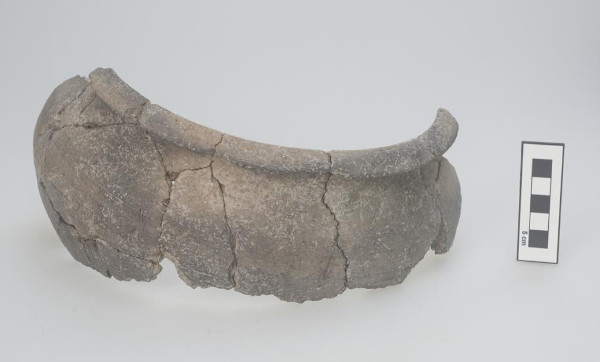
Through reading and discussions with team members, I have learned about key concepts in archaeology. The treasures of the past relate less to gold and more to the clues that a wide range of left-behind materials preserve as we try to piece together the human story (Renfrew & Bahn, 2018). I’ve learned the basics of typology, which refers to the study, analysis, or classification of categories of things, and this can apply to symbols, people, religions, or any category of material culture (Horowitz, 2015). An example of a typological category is simple ware (or plain ware), which is one of several terms used for the Bronze Age plain wheel-made pottery that was produced and consumed in the coastal regions of the Cilician and Amuq Plains and in parts of north-west inland Syria (Pucci, 2019). Another pottery category that I encounter has a distinctive temper and form, as shown in this image of a cook pot with its folded external rim.

Folded external rim. Photo credit: Michael Johnson and Onur Hasan Kirman.

My work on this project has allowed me to become more familiar with the region of Tell al-Judaidah, which includes its relations to neighboring sites and resources (rivers, springs, trade routes, agriculture, and bridges), and broader regimes of political control. For instance, in the late Bronze Age (latter half of the second millennium BCE) the changes that occurred from the 16th to 13th centuries at Alalakh likely would have had an impact on Tell al-Judaidah which was strategically located along trade routes leading to and from the inland cities. During part of this time, the Egyptians and the Hittites vied for control and influence over the smallish kingdoms that were located across the region now known as Syria, Lebanon, Israel, and Gaza, with names that evoke places such as Tyre and Jerusalem, and others names such as Mukish that refer to the area around Tell al-Judaidah.

After my Summer, 2021 ASOR fellowship ended, I decided to accept the invitation to continue working on this project. Lynn Dodd was able to find a way to extend my participation, and I was hired for a part-time research position through USC. My fellow researcher at USC (Lauren) and I are working systematically through each stratigraphic level, identifying available information, finding comparative examples for Judaidah artifacts, noting missing information, and recording errors. We will create a draft report that summarizes our preliminary research and submit this for inclusion in a cited, online publication that continues to grow. I am very grateful to ASOR for supporting me in my first steps on this path of learning about the past and contributing to the creation of new information and understanding.

About Alexis: she moved from her home state of Alabama to San Diego in 2019 after working as a teacher for seven years in private schools in the United States and international schools in Ghana, Macau, and Saudi Arabia. Alexis received a Bachelor of Science in Education from the University of South Alabama in 2010 and a Master of Science in Education from Spring Hill College in 2012. In May 2021, Alexis received a Master of Arts in International Higher Education from Boston College. Alexis’ research interests center around the internationalization of higher education in American society and economics of human capital theory. Through her experiences as an expatriate, Alexis developed a passion for helping international students navigate the waters of higher education. Alexis is a member of the Junior League of San Diego and Women on Course San Diego. 

References

Horowitz, M. T. (2015). The Evolution of Plain Ware Ceramics at the Regional Capital of Alalakh in the 2nd Millennium BC. In Plain Pottery Traditions of the Eastern Mediterranean and Near East 1st Edition (pp. 1–30). Routledge.

Pucci, M. (2019). Excavations in the Plain of Antioch III: Stratigraphy, Pottery, and Small Finds from Chatal Höyük in the Amuq Plain. OIP 143. Oriental Institute Press.

Renfrew, C., & Bahn, P. G. (2018). Archaeology essentials: theories, methods, practice. Thames & Hudson Ltd.

During the summer of 2021, ASOR supported 27 undergraduate and graduate students through the Summer Stipend Program. These students undertook non-fieldwork archaeological research projects led by ASOR-affiliated project directors. They also took part in monthly cohort group meetings hosted via zoom. Read a summary of these cohort meetings here.

Stay tuned for more updates from the 2021 Summer Stipend recipients!

March Madness Challenge: 3/23 Update

MARCH MADNESS CHALLENGE 2022: FILL THE POTS

Update: March 23, 2022

ASOR’s Annual March Madness Challenge continues! This year we are “filling” a different need: supporting the ongoing cost and maintenance of The Levantine Ceramics Project. This incredible resource has been an ASOR publication since 2016. The LCP is an open, interactive website focused on ceramics produced in the Levant from the Neolithic era through the Ottoman period. Thanks to the generosity of three ASOR donors, we have received $5,000 in challenge gifts that can be fully earned by raising $5,000 in matching gifts for a total of $10,000 to keep the LCP running. All gifts will support the ongoing maintenance and hosting of the Levantine Ceramics Project (LCP)— an ASOR open-access publication.

As of March 16, we have received $3,245 in matching gifts, which translates into a total of $6,365 for the LCP. A huge thank you to everyone who has helped fill the pot for the LCP thus far! If you have not made a gift, please consider a gift to help us raise the remaining $1,755 needed to earn all the challenge dollars.

The LCP’s mission

The LCP, an ASOR open-access publication and research project, is a sustainable research tool designed to pull the study of archaeological ceramics into the 21st century.

Why ceramics? Because they comprise the most abundant category of remains found throughout the Near East, and because every excavator must contend with identifying and publishing them, yet the mode by which that is done has not changed in a substantive way since William Flinders Petrie began working in 1880. Constant excavation since then has created unthinkable quantities of data, all disseminated via print (and now digitized versions of print) publications. Print is excellent for many things – but it is remarkably ill-suited for fast exchange of information, collaborative study, and especially the rapid recording of new or changing ideas. Archaeology is a field that is always in a mode of discovery; we need tools that can keep up, that allow us to bring new material into dialogue with that long known, are easy to use, foster sharing, and enable us to readily learn from one other. The LCP is such a tool.

The LCP inspires new questions, and gives us the tools to answer them: Hard borders, civil wars, intractable terrain – these are facts on the ground across the landscapes of the Levant. Swaths of territory that are invisible or inaccessible today were zones of habitation and connection in the past. Archaeological survey and fieldwork fill in the blanks, allow us to see what was, imagine different realities. This is why we pursue such work; this is one of the best rationales for its value now and in the future. The LCP helps deliver on that lofty promise. Four examples of regions, activities, lives able to be seen, mapped, and linked to a wider world via pottery on the LCP:

  • the eastern desert of Egypt: >200 vessels from 25+ already on the LCP with another 1000+ from 200 sites, thanks to integration with the EU/CNRS Desert Networks Project (scheduled for submission this summer).
  • the Hauran of southern Syria: >1000 vessels from 50+ sites, dating from 1200 BCE-200 CE, from the Lajāʾ survey (2003–2009), the Qarrāṣa excavations (2008–2011), plus published and unpublished data from the French Archaeological Mission to Southern Syria, thanks to Jérôme Rohmer’s 2020 Hauran VI. D’Aram à Rome. La Syrie du Sud de l’âge due Fer à l’annexion romaine (XIIe siècle av. J.-C. – Ier siècle apr. J.C.).
  • Rough Cilicia, Turkey: ~200 vessels from 40+ sites, from Nicholas Rauh’s Rough Cilicia Archaeological Survey Project (1996-2011).
  • the maritime networks linking northern and southern Cyprus with the northern Levant: 400+ vessels dating from the Middle Bronze – Iron Ages, from Cyprus and sites in Cilicia and coastal Syria, including 250+ vessels from Tell Tweini in northern Syria, excavated by the University of Leuven from 1999-2007.


The LCP advances ASOR Strategic Plan and Goals by providing easy and open access to new information: The LCP provides quick access to new finds and current ideas, and helps American researchers connect with foreign scholars. Most LCP contributors are based in Europe, Turkey, Cyprus, Lebanon, Jordan, Israel, and Egypt, and are affiliated with foreign research universities or institutes. Not all users are are members of ASOR, yet their enthusiastic embrace of the LCP helps ASOR members stay abreast of work they would otherwise have a hard time accessing or even knowing about in the first place. Keeping the LCP free and open access is critical; if there was a members-only access policy, we would lose the input of most of these foreign contributors. The LCP provides assistance for ASOR-affiliated excavators: LCP interns work with ASOR-affiliated excavators to prepare and submit their pottery to the site. Using the LCP, interns also regularly make connections with material from other sites that excavators had not known about. This has the double benefit of deepening knowledge from excavated material as well as disseminating new information to scholars and students around the world.

The LCP brings disparate, hard-to-find data together, able to be mapped, studied, arranged and re-arranged for connections, ideas, insights. It is worth emphasizing that much of this material crosses borders and links regions that are currently impassible. All appear on the LCP thanks to ASOR’s neutrality as an American-based organization. In this way, ASOR helps frame a vision of the Levant that rises above the current political fray, and enables a new generation to ask and answer new questions, to understand the past – and perhaps therefore also the future – in different ways.

 Read More About The Levantine Ceramics Project (LCP)