Rediscovering Tsaghkasar: Surveying a Kura-Araxes Highland Settlement in Armenia
Jamie Fraser, 2026 Stevan B. Dana Grant Recipient
With support from an ASOR Stevan B. Dana Project Grant, an international team of archaeologists spent three weeks in August and September 2026 investigating one of Armenia’s remarkable prehistoric highland settlements. The Tsaghkasar Archaeological Project (TsAP) set out to answer a deceptively simple question: just how large was this Kura-Araxes settlement, and what can its remains tell us about life in the Armenian highlands more than 5,000 years ago? By the end of this season, our discoveries had transformed our understanding of the site.
The project brings together researchers from the W. F. Albright Institute of Archaeological Research in Jerusalem, the Institute of Archaeology and Ethnography of the National Academy of Sciences of Armenia, and the Near Eastern Archaeology Foundation in Australia. Our team combined Armenian expertise in the archaeology of the South Caucasus with international specialists in archaeological survey, material culture, and environmental archaeology,
The Tsaghkasar Archaeological Project survey team 2026
Tsaghkasar occupies a spectacular position on the southwestern slopes of Mount Aragats, Armenia’s highest mountain. At approximately 2,080 meters above sea level, the site overlooks an immense landscape of rolling grasslands, volcanic outcrops, and deeply incised valleys. On clear mornings, the distant summit of Mount Ararat rises above the horizon.
Surveying in the early morning light, Mt Ararat in the background
This dramatic setting raises important archaeological questions. How did prehistoric communities establish and sustain substantial settlements at such elevations? And what combination of agriculture, animal husbandry, and access to natural resources made highland life possible?
The summit of Mount Tsaghkasar above the site, looking west toward Türkiye
Tsaghkasar first attracted archaeological attention in 1985, when a survey identified Kura-Araxes pottery and architectural remains exposed by Soviet-era pipeline construction. Between 2005 and 2008, Pavel Avetisyan, of the Institute of Archaeology and Ethnography of the National Academy of Sciences of Armenia, directed Armenian-German excavations in four trenches, uncovering substantial stone-built structures, pottery, and storage pits containing evidence of prehistoric cereal cultivation. Although these excavations are unpublished, they established Tsaghkasar as an important Kura-Araxes settlement. Our 2026 project builds directly on this pioneering work, extending archaeological investigation beyond the excavated areas to examine the scale and organization of the wider settlement.
Our first challenge was to establish precisely what survived on the ground. Using high-resolution drone photography, we produced detailed imagery of the landscape, revealing subtle variations in the terrain and possible traces of ancient architecture. Surveyor Guy Hazell then established a georeferenced grid using precision satellite-positioning equipment. The landscape was divided into 50 × 50-meter squares, providing a systematic framework for recording archaeological features and collecting surface artifacts.
Surveyor Guy Hazell (R) stakes out the survey grid with archaeozoologist Shyma Versmeerch (L)
Trimble base station
The team walked each square in closely spaced transects, generally 10 meters apart, searching for pottery, chipped stone, and architectural remains. This painstaking fieldwalking also allowed us to ground-truth the drone imagery: features that appeared as faint lines or shadows in aerial photographs could be examined directly, identified, measured, and recorded.
Transect walking a 50 x 50 m square below a basalt boulder
Some of the most exciting moments came when apparently isolated stones resolved into coherent wall lines and architectural arrangements. Each newly recorded feature helped us reconstruct the organization of a settlement that had lain exposed, yet largely unrecognized, across the mountainside for millennia.
Archaeologist Abi Cryerhall records a wall-line below Mt Tsaghkasar
The artifacts confirmed that the landscape preserved substantial evidence of Kura-Araxes I occupation, broadly dating to the late fourth/early third millennium BCE. The ceramic assemblage includes fragments of the distinctive handmade pottery polished to a deep, glossy black, often with a contrasting red or buff interior, and decorated with raised geometric shapes, while the chipped-stone assemblage is overwhelmingly dominated by obsidian, the volcanic glass prized throughout prehistoric Armenia for its exceptionally sharp cutting edges.
An obsidian blade (photo by the XX)
Portion of a Kura-Araxes I vessel from the 2006-2008 excavations
The most striking result, however, was the scale of the archaeological remains. In just three weeks, we mapped an 11-hectare settlement core, characterized by extensive surface architecture and concentrations of artifacts. Beyond this core, we recorded substantial peripheral stone enclosures, provisionally interpreted as animal corrals, within a wider archaeological and activity zone extending across approximately 40 hectares.
These results establish Tsaghkasar as a significant Kura-Araxes highland settlement. Its size is especially noteworthy at an elevation exceeding 2,000 meters, challenging any simple assumption that upland communities were necessarily small, marginal, or exclusively pastoral. Whether all parts of the settlement were occupied simultaneously remains an important question for future excavation. For our team, the excitement lies not simply in the dimensions of the site, but in the possibility of understanding how its inhabitants organized their settlement, cultivated crops, managed livestock, and negotiated the opportunities and challenges of the highland environment.
The team at dinner in the dighouse orchard
We hope to develop this successful pilot survey into a multi-year program of excavation and interdisciplinary research, testing our interpretations of the architecture and enclosures, refining the settlement’s chronology, and recovering new evidence for the lives of its inhabitants.
We gratefully acknowledge the generous financial support of the American Society of Overseas Research through its Stevan B. Dana Project Grant, the Curtiss T. and Mary G. Brennan Foundation, the Institute of Archaeology and Ethnography of the National Academy of Sciences of Armenia, and the W. F. Albright Institute of Archaeological Research.
Want to help more students and early career archaeologists get into the field? Donate to the cause today by selecting “Fieldwork Scholarships” as your gift purpose!
From Research to Reality: My Journey to the Balu’a Regional Archaeological Project
Zainab O. Hweij, 2026 Strange/Midkiff Families Fieldwork Scholarship
For months, I wasn’t sure this excavation season would happen.
Like many archaeologists working in the Middle East, our plans were overshadowed by the uncertainty created by the regional political situation. Every week seemed to bring new questions about whether the field season would be postponed or canceled. Yet throughout this period, Dr. Monique Roddy (co-director of the project ) remained remarkably optimistic, encouraging the team and continuing to prepare for the season. Her confidence gave me hope that I would soon have the opportunity I had been working toward for months.
When I finally arrived at the Mujeb Hotel and met the team members, all of that uncertainty disappeared. The excitement of beginning another excavation season quickly replaced months of anticipation. Looking back now, that first evening feels like the beginning of one of the most rewarding archaeological experiences of my career.
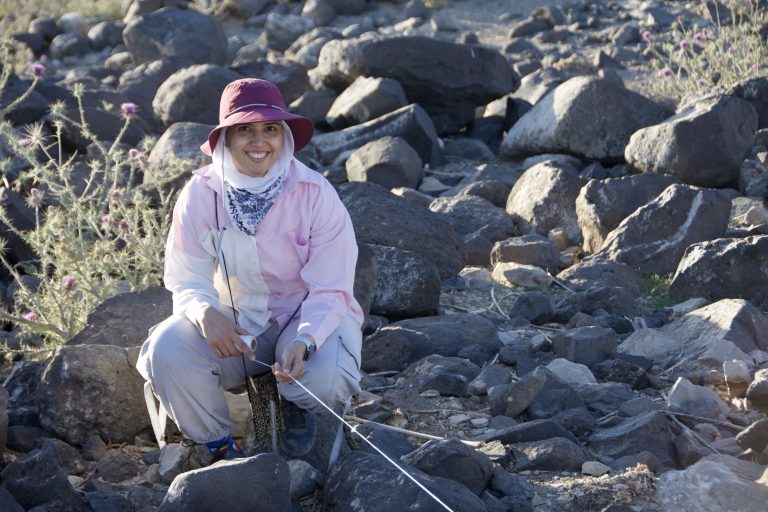
My name is Zainab O. Hweij, and I am a Jordanian archaeologist with master’s degree from the University of Jordan. My research focuses on the visual culture and religious iconography of the Iron Age southern Levant, and I hope to pursue doctoral research on Iron Age stamp seals and visual communication. Because of these interests, participating in an excavation at Khirbat al-Balu’a was a perfect opportunity to gain firsthand experience with Iron Age archaeology.
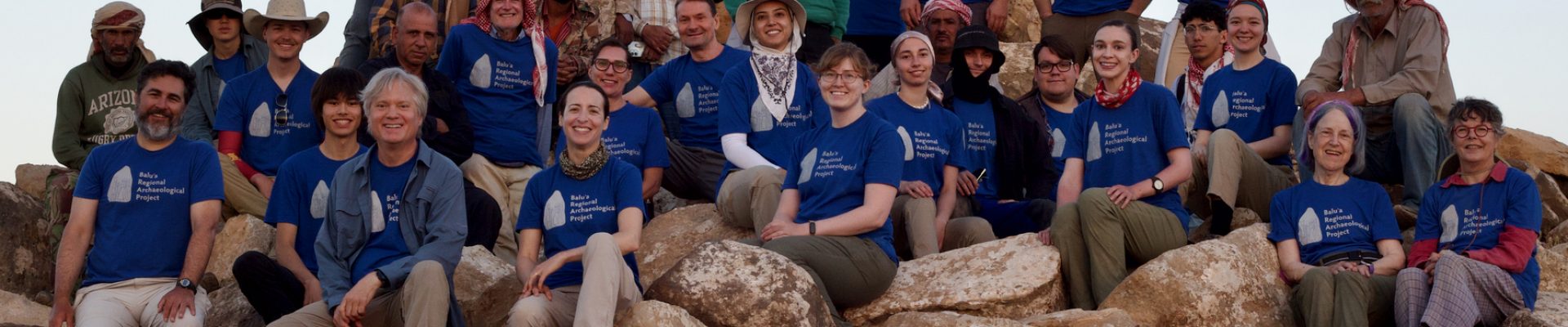
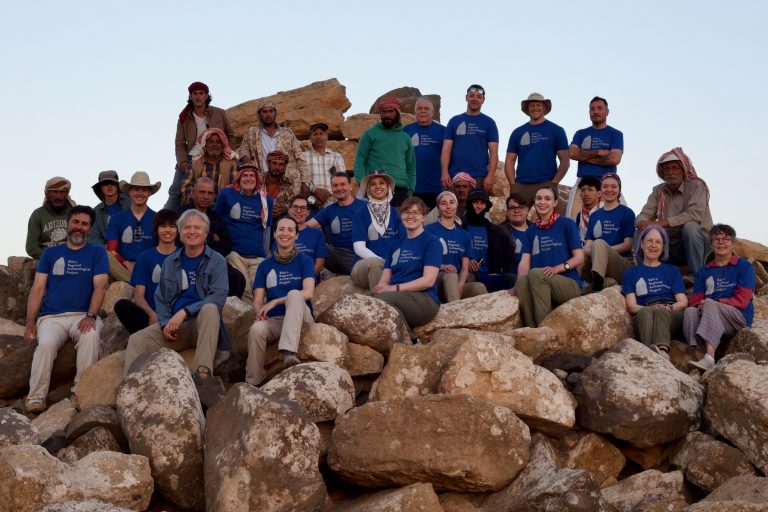
The Balu’a Regional Archaeological Project (BRAP) investigates Khirbat al-Balu’a, one of Jordan’s significant archaeological sites in the ancient kingdom of Moab. Directed by Drs. Kent Bramlett, Monique Roddy, and Friedbert Ninow, the project brings together specialists and students from around the world to investigate the site’s long occupational history, in the Iron Age and later periods. Working within such an international and multidisciplinary team provided an inspiring environment in which to learn.
Interestingly, I first discovered BRAP while researching a completely different site. During my master’s research and while preparing ideas for my future PhD, I spent considerable time reading about Tall al-‘Umayri and the Madaba Plains Project. As I explored publications and project websites, I came across BRAP and became fascinated by the work being conducted at Khirbat al-Balu’a.
I applied to join the project, but there was one significant obstacle: funding. As an early-career archaeologist, the costs associated with international fieldwork were beyond what I could afford on my own. Receiving a 2026 Strange/Midkiff Families Fieldwork Scholarship transformed what seemed like an impossible opportunity into reality. The scholarship removed the financial barrier that would otherwise have prevented me from participating, and for that I am deeply grateful.
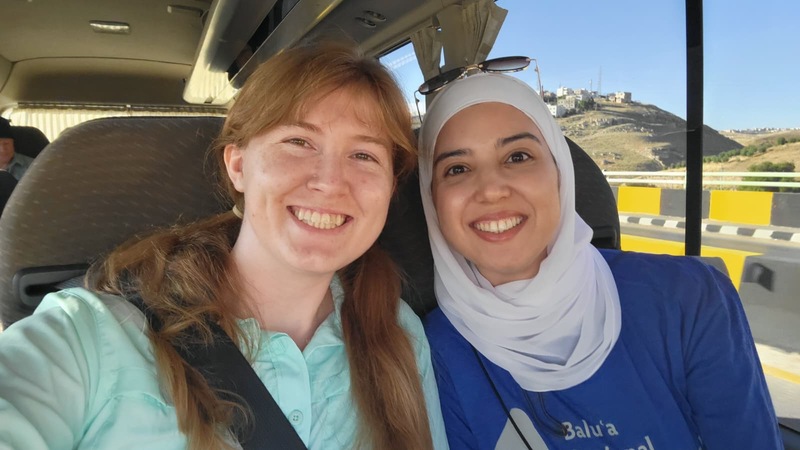
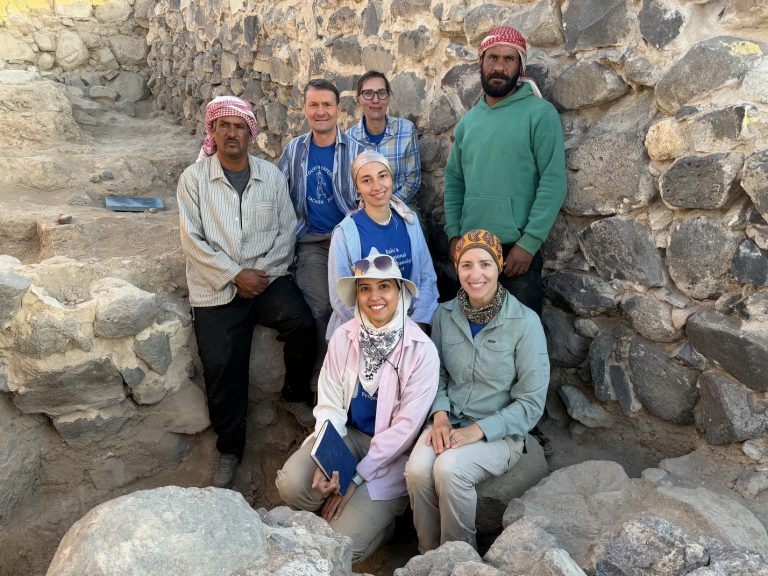
The excavation began with new friendships. At the Mujeb Hotel, I met archaeologists from different countries, each bringing their own experiences and perspectives. My roommate, Sarah Watson, immediately made me feel welcome, and before long our conversations continued from breakfast to the end of each excavation day. These friendships became one of the highlights of the season.
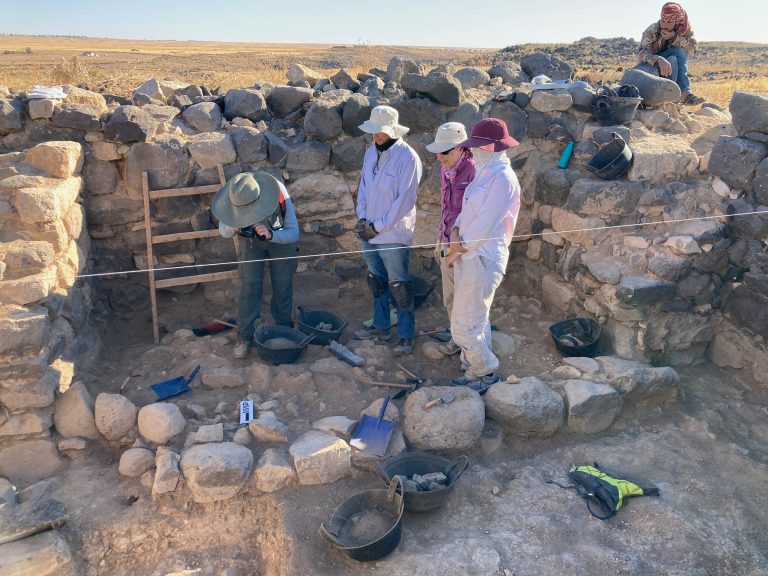
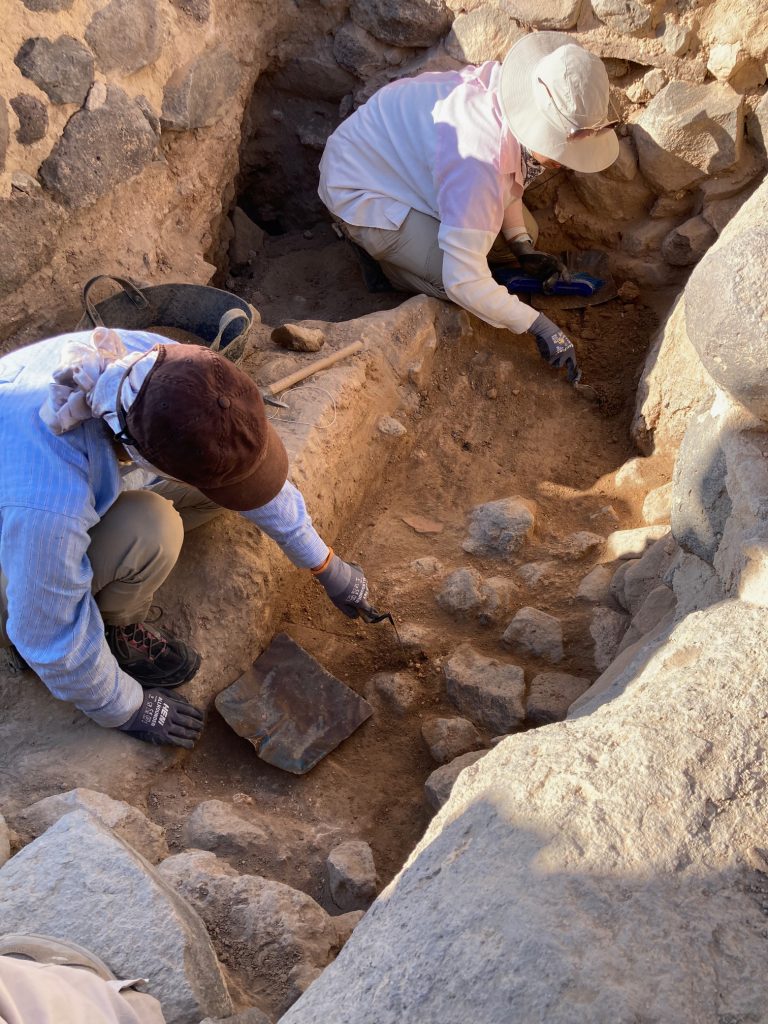
For much of the excavation, I worked as a square supervisor in the Khan area alongside Omar and Mary, while Amar and Salam worked with us in the field every day. Supervising a square required balancing excavation with careful documentation, recording contexts, directing excavation strategies, and constantly discussing interpretations with colleagues. Archaeology is often imagined as the discovery of spectacular artifacts, but I learned once again that it is really about patience, observation, and teamwork. Every layer removed, every stone recorded, and every pottery sherd documented contributed another piece to the history of the site.
Because my academic research focuses on the Iron Age, I hoped to gain direct experience excavating Iron Age architecture. I spoke with Dr. Ian Jones about my research interests, and he immediately supported the idea. Thanks to his encouragement and the generosity of the project directors, I was given the opportunity to spend a week excavating in the Iron Age domestic area alongside the German team that joined the project later in the season.
That week was especially meaningful. Instead of studying Iron Age material only through publications and museum collections, I was able to excavate architectural remains and contexts firsthand.
Beyond the archaeology itself, BRAP reminded me that fieldwork is built on community. Every day involved cooperation, shared problem-solving, and learning from people with different backgrounds and areas of expertise. Whether discussing pottery after excavation, comparing interpretations in the field, or simply sharing stories over dinner, I left the project with new knowledge, lasting friendships, and renewed motivation for my future career.
The Strange/Midkiff Families Fieldwork Scholarship made all of this possible. It did more than provide financial support, it opened the door to an experience that strengthened my archaeological skills, connected me with an incredible international team, and brought me one step closer to my goal of becoming a specialist in Iron Age archaeology. I will always be grateful for the opportunity to be part of the 2026 Balu’a Regional Archaeological Project, and I look forward to carrying the lessons I learned there into my future research.
Zainab O. Hweij has a Master’s in Archaeology from the University of Jordan, with research interests in the visual culture and religious iconography of the Iron Age southern Levant.
Want to help more students and early career archaeologists get into the field? Donate to the cause today by selecting “Fieldwork Scholarships” as your gift purpose!