MFM 2020—Celebrating Our 120th Anniversary

[vc_row fullwidth=”true” attached=”true” css=”.vc_custom_1496247803139{padding-top: 0px !important;padding-right: 0px !important;padding-bottom: 0px !important;padding-left: 0px !important;}”][vc_column][vc_single_image image=”58038″ img_size=”full” alignment=”center”][/vc_column][/vc_row][vc_row fullwidth=”true” css=”.vc_custom_1496682730308{padding-top: 10px !important;padding-right: 0px !important;padding-bottom: 0px !important;padding-left: 0px !important;}”][vc_column width=”1/12″ css=”.vc_custom_1496683820796{margin-right: 10px !important;}” offset=”vc_hidden-md vc_hidden-sm vc_hidden-xs”][vc_column_text]

 SHARE

[/vc_column_text][mk_image src=”http://www.asortest.org/wp-content/uploads/2017/01/social-fb-icon4.jpg” image_width=”42″ image_height=”42″ hover=”false” custom_url=”https://www.facebook.com/ASOResearch/” margin_bottom=”0″][mk_image src=”http://www.asortest.org/wp-content/uploads/2017/01/social-tw-icon4.jpg” image_width=”42″ image_height=”42″ hover=”false” custom_url=”https://twitter.com/ASOResearch?ref_src=twsrc%5Egoogle%7Ctwcamp%5Eserp%7Ctwgr%5Eauthor” margin_bottom=”0″][mk_image src=”http://www.asortest.org/wp-content/uploads/2017/01/social-in-icon4.jpg” image_width=”42″ image_height=”42″ hover=”false” custom_url=”https://www.linkedin.com/company/american-schools-of-oriental-research” margin_bottom=”0″][mk_image src=”http://www.asortest.org/wp-content/uploads/2017/01/social-ml-icon_7.jpg” image_width=”42″ image_height=”42″ hover=”false” custom_url=”mailto:info@asor.org” margin_bottom=”0″][mk_image src=”http://www.asortest.org/wp-content/uploads/2017/01/blog-icon3.jpg” image_width=”42″ image_height=”42″ hover=”false” custom_url=”http://www.asor.org/blog” margin_bottom=”0″][/vc_column][vc_column border_color=”rgba(255,255,255,0.01)” width=”1/6″ css=”.vc_custom_1496683923840{margin-right: 20px !important;border-left-width: 2px !important;padding-right: 20px !important;padding-left: 20px !important;border-left-color: #99422f !important;}”][mk_divider divider_color=”rgba(255,255,255,0.01)” thickness=”1″ margin_top=”3″ margin_bottom=”3″][vc_column_text]

NEWS@ASOR E-NEWSLETTER

ANCIENT NEAR EAST TODAY E-NEWSLETTER

PAST ASOR NEWS, MONTH BY MONTH

FY19 HONOR ROLL OF DONORS

ASOR ANNUAL MEETING

[/vc_column_text][/vc_column][vc_column border_color=”rgba(170,170,170,0.01)” width=”1/2″ css=”.vc_custom_1487276122024{margin-right: 10px !important;margin-bottom: 30px !important;border-right-width: 2px !important;border-bottom-width: 2px !important;padding-top: 30px !important;padding-right: 30px !important;padding-left: 20px !important;background-color: #ffffff !important;border-right-color: rgba(227,228,228,0.75) !important;border-bottom-color: rgba(227,228,228,0.75) !important;}”][vc_column_text responsive_align=”left”]**Due to the COVID-19 pandemic, March Fellowship Madness has been suspended for the foreseeable future. Thank you to all the donors who have contributed thus far. We invite you to click here to read the letter from ASOR’s President about responses to this developing situation.**

MARCH FELLOWSHIP MADNESS: SETTING OUR SIGHTS ON ASOR’S 120TH YEAR!

[/vc_column_text][mk_divider][vc_column_text]Since 2007, with the generous support of our members and donors, ASOR has awarded over 800 fellowships, grants, dig scholarships, and travel awards. These fellowships and grants total just over $850,000, and they have enabled students and scholars across the Near East and the Mediterranean to uncover the past and to broaden our knowledge of the ancient world. The list of fellowships we provide continues to grow. This year—ASOR’s 120th anniversary—our goal is provide $120,000 in dig scholarships, excavation grants, fellowships, and travel support. This $120,000 includes all of our programs: dig scholarships, excavation grants, fellowships for member research, and Annual Meeting travel awards and scholarships.

Last year we awarded $86,000—an amazing total in itself—so this $120,000 goal is ambitious. Yet, there is no better way to celebrate our anniversary than awarding a record amount in funds that will further our mission.

The good news is that we are almost there, and you can help us exceed the total during March Fellowship Madness 2020—ASOR’s 120th year.

Right now (March 3), thanks to the amazing and growing support from endowed funds and gifts already designated for student support in 2019–20, ASOR can fund 27 dig scholarships this summer (2020). With our March Fellowship Madness drive, we aspire to raise $6,000 more to send an additional three people into the field. Our goal is to raise at least an additional $4,000 from ASOR members, and $2,000 from our Friends of ASOR. With your partnership, we will award a record-breaking 30 dig scholarships in 2020.

In addition, every donation will help us exceed our already ambitious goal of awarding $120,000 in excavation grants, dig scholarship, travel support, and research fellowships in 2020![/vc_column_text][mk_skill_meter title=”Only $6,000 needed to reach our goal of 3 more Dig Scholarships” percent=”10″ title_color=”#000000″ progress_bar_color=”#dd3333″ track_bar_color=”#000000″][mk_divider][vc_column_text]If you donate to March Fellowship Madness, you support archaeology in a very direct way. Every gift is meaningful and matters. Small gifts of $10 or more not only add up, but they attract larger gifts. ASOR does not charge administrative or overhead fees for gifts made during March Fellowship Madness, so 100% of your contribution will support students and early career scholars.

Select “Student Support” for March Fellowship Madness.

Thank you to all our generous members and donors!

[/vc_column_text][mk_divider][mk_table]

OTHER WAYS TO DONATE

Donate By Phone Donate By Mail Make A Pledge
(Donate Later)
Call ASOR:
703-789-9229
ASOR
209 Commerce St.
Alexandria, VA 22314
E-mail ASOR
[/mk_table][vc_column_text]

Hear what past fellowship recipients have to say about their experiences in the field:


“As a student of early Jewish and Christian literature, one of the lasting effects of my experience this summer will be a vastly improved mental image of the world behind the text, both in terms of the physical landscape and geographical features of Israel, as well as the elements of material culture that shaped daily life in the ancient Mediterranean world. If one wants to gain a better understanding of the setting in which these writings were produced, there is no substitute for the kind of firsthand experience that comes with participating in an excavation.

While excavation is hard work, it is exceedingly rewarding; from the beautiful sunrise over the Sea of Galilee and Mount Arbel and exciting discoveries throughout the day, to joking around with the other volunteers, there was never a dull moment digging at Khirbet el-‘Eika. My first archaeological excavation was an unforgettable experience, and I am enormously grateful to ASOR and its donors for making it possible.”

-Austin Richards, 2018 Platt Excavation Fellowship Recipient

“The opportunity to work on the Kerkenes Project was an unmatched experience. The relationship between the international team will remain one of my fondest memories. The feeling of support and camaraderie, the opportunity to use such incredibly cool technologies and techniques, the environment of learning and sharing, makes me excited to return to the field next season, and hopefully the season after that.”

– Jessica R. Robkin, 2019 Member-Supported Excavation Fellowship Recipient

“As a student studying both archaeology and social anthropology, I am most interested in the intersections and interactions of living and past societies in places like archaeological sites or museums. For my undergraduate honors thesis, I am researching the evolution of community-based research practices in the field of archaeology. Hisban is serving as a case study for me because, since 1996, the project has had an explicit community focus. People from the town had always been involved in the project as hired workers or foremen, and there had also been a substantial number of other Jordanian students, professors, administrators, and even royalty who have been involved in the project over time. But starting with the second phase of the project, there have been a series of community-based initiatives to increase interest in and involvement at the site as well as provide other economic and educational opportunities. The project has sponsored English classes, vocational trainings, school trips, field schools and helped to create the Hisban Cultural Association, a locally-run, non-profit organization.”

– Brittany Ellis, 2018 P. E. MacAllister Excavation Fellowship Recipient

“I think the most surprising part of this trip was the emotional impact the actual excavation had on me. There was something so powerful about holding a piece of art made four thousand years ago. Equally surprising was the fact that the art wasn’t even the most interesting finds for me, but rather the ground stone tools. Sometimes I would sit and think about what it would be like to live in that time and place.”

-Cara Hoey, 2019 Member-Supported Excavation Fellowship Recipient

“The experience and knowledge I gained through this academic adventure was invaluable. The opportunities to work in the field and in the lab on ongoing projects and my own research allowed me to learn more about archaeological techniques and research project processes. Not only did I grow as an intellectual, but as an individual as well. After being immersed in an unfamiliar place with a completely different way of life and culture, I learned a lot that wouldn’t have been possible without the generosity of ASOR and the P.E. MacAllister Fellowship.”

-Gabrielle Mace, 2019 P. E. MacAllister Excavation Fellowship Recipient

“Working at Huqoq has been integral to my growth as a student and archaeologist, and I am grateful to ASOR and the Strange and Midkiff families for their generous support of my time on the project this year. Thanks to this funding, I was afforded the opportunity to learn more than I thought possible about archaeological methodology and research, help to uncover stunning materials from the past, and work with an incredible and diverse team of staff and students. Additionally, my work at Huqoq has solidified my intent to continue in the field of archaeology, helping towards my pursuit of graduate studies which will start in the fall. I cannot thank ASOR enough for supporting my travels this summer, and I hope that I can, in some capacity, return the favor one day!”

-Emma Kerr, 2017 Strange and Midkiff Families Excavation Fellowship Recipient

“[Archaeology] provides an interesting reflection on the details of average life: how will the future humanity see us? Will someone from the future find one of my possessions and wonder what I was like, what I thought and did during the day?”

-Madeline Okkonen, 2019 Eric and Carol Meyers Excavation Fellowship Recipient

“Joining a dig felt like being welcomed into a family. I can’t express enough how lucky I feel to have received this fellowship, and can’t wait to use my newfound knowledge in my teaching and research.”

-Lisa Cleath, 2019 Dever Fellowship Recipient

“This summer working on the Hebrew University staff at Tel Lachish was a truly insightful experience. I have deepened my understanding of what an incredible amount of social organization and labor goes into the building of a city, building a nation. It has left me feeling assured that I have chosen a career path that I truly enjoy, one that has real impact on the world around me. As a prospective graduate student there are few feelings that alleviate the anxiety of taking the next step in my education the way that feeling does. To those that are kind enough to fund fellowships such as the one I was awarded, I cannot thank you enough as I would not have had a chance like this otherwise and there are many others that are in the same situation.”

– Vincent Cason, 2017 Platt Excavation Fellowship Recipient

“The highlight of this season, however, was our end-of-campaign tour and picnic on the last Friday evening of excavation. Many of the men and women from the two local towns, Altunhisar and Yeşilyurt, who work with us (some since 2010 when the project started) came out with their families and friends to hear a site tour in Turkish, offer their own perspectives on their work, and to partake in a delicious feast of lentil soup, lamb, rice and sweets on the lower terrace. It was wonderful to meet everyone’s extended families and to see the site come alive in a different way (and at a much more comfortable temperature). It was a fitting end to a great season that opened up a lot of new possibilities for the site as both a place for the team’s own research but also as site of public education and interest.”

– Nancy Highcock, 2018 Platt Excavation Fellowship Recipient

“Along with the critical research skill set I learned over the summer, I am most appreciative of being a first-hand witness to the journey of an artifact being recovered from the site to the post-field analyses, and finishing with the official write-up of the important archaeological discoveries made during the summer.”

-Kara Larson, 2019 Harva L. Sheeler Excavation Fellowship Recipient

[/vc_column_text][mk_divider][vc_column_text]

Help send more students into the field. Click here and select “Student Support” for March Fellowship Madness.
[/vc_column_text][/vc_column][vc_column border_color=”rgba(170,170,170,0.01)” width=”1/6″ css=”.vc_custom_1496684098866{margin-right: 5px !important;margin-bottom: 20px !important;border-right-width: 2px !important;border-bottom-width: 2px !important;padding-top: 30px !important;padding-right: 10px !important;padding-left: 10px !important;background-color: #ffffff !important;border-right-color: rgba(227,228,228,0.75) !important;border-bottom-color: rgba(227,228,228,0.75) !important;}”][vc_wp_posts title=”BROWSE THE NEWS ARCHIVE” number=”4″][/vc_column][vc_column border_color=”rgba(170,170,170,0.01)” width=”1/6″ css=”.vc_custom_1496684008271{margin-right: 10px !important;margin-bottom: 30px !important;border-right-width: 2px !important;border-bottom-width: 2px !important;padding-top: 30px !important;padding-right: 20px !important;padding-left: 20px !important;background-color: #ffffff !important;border-right-color: rgba(227,228,228,0.75) !important;border-bottom-color: rgba(227,228,228,0.75) !important;}”][vc_column_text] [/vc_column_text][/vc_column][/vc_row][vc_row][vc_column][vc_column_text] [/vc_column_text][/vc_column][/vc_row]

Survey on ASOR’s Name Announcement

[vc_row fullwidth=”true” attached=”true” css=”.vc_custom_1496247803139{padding-top: 0px !important;padding-right: 0px !important;padding-bottom: 0px !important;padding-left: 0px !important;}”][vc_column][vc_single_image image=”38644″ img_size=”full” alignment=”center”][/vc_column][/vc_row][vc_row fullwidth=”true” css=”.vc_custom_1496682730308{padding-top: 10px !important;padding-right: 0px !important;padding-bottom: 0px !important;padding-left: 0px !important;}”][vc_column width=”1/12″ css=”.vc_custom_1496683820796{margin-right: 10px !important;}” offset=”vc_hidden-md vc_hidden-sm vc_hidden-xs”][vc_column_text]

 SHARE

[/vc_column_text][mk_image src=”http://www.asortest.org/wp-content/uploads/2017/01/social-fb-icon4.jpg” image_width=”42″ image_height=”42″ hover=”false” custom_url=”https://www.facebook.com/ASOResearch/” margin_bottom=”0″][mk_image src=”http://www.asortest.org/wp-content/uploads/2017/01/social-tw-icon4.jpg” image_width=”42″ image_height=”42″ hover=”false” custom_url=”https://twitter.com/ASOResearch?ref_src=twsrc%5Egoogle%7Ctwcamp%5Eserp%7Ctwgr%5Eauthor” margin_bottom=”0″][mk_image src=”http://www.asortest.org/wp-content/uploads/2017/01/social-in-icon4.jpg” image_width=”42″ image_height=”42″ hover=”false” custom_url=”https://www.linkedin.com/company/american-schools-of-oriental-research” margin_bottom=”0″][mk_image src=”http://www.asortest.org/wp-content/uploads/2017/01/social-ml-icon_7.jpg” image_width=”42″ image_height=”42″ hover=”false” custom_url=”mailto:info@asor.org” margin_bottom=”0″][mk_image src=”http://www.asortest.org/wp-content/uploads/2017/01/blog-icon3.jpg” image_width=”42″ image_height=”42″ hover=”false” custom_url=”http://asor.org/blog” margin_bottom=”0″][/vc_column][vc_column border_color=”rgba(255,255,255,0.01)” width=”1/6″ css=”.vc_custom_1496683923840{margin-right: 20px !important;border-left-width: 2px !important;padding-right: 20px !important;padding-left: 20px !important;border-left-color: #99422f !important;}”][mk_divider divider_color=”rgba(255,255,255,0.01)” thickness=”1″ margin_top=”3″ margin_bottom=”3″][vc_column_text]

NEWS@ASOR E-NEWSLETTER

ANCIENT NEAR EAST TODAY E-NEWSLETTER

PAST ASOR NEWS, MONTH BY MONTH

FY19 HONOR ROLL OF DONORS

ASOR ANNUAL MEETING

[/vc_column_text][/vc_column][vc_column border_color=”rgba(170,170,170,0.01)” width=”1/2″ css=”.vc_custom_1487276122024{margin-right: 10px !important;margin-bottom: 30px !important;border-right-width: 2px !important;border-bottom-width: 2px !important;padding-top: 30px !important;padding-right: 30px !important;padding-left: 20px !important;background-color: #ffffff !important;border-right-color: rgba(227,228,228,0.75) !important;border-bottom-color: rgba(227,228,228,0.75) !important;}”][vc_column_text responsive_align=”left”]

SURVEY ON ASOR’S NAME

[/vc_column_text][vc_column_text]For almost 30 years ASOR’s members have debated the accuracy, usefulness, and appropriateness of its now 120-year-old name: The American Schools of Oriental Research. For many, the use of “Oriental” (which in 1900 referred Asia generally) is problematic for a variety of reasons. The “Schools” are now independent entities. And ASOR is increasingly international in its membership. On the other hand, the ASOR acronym has wide name recognition that is associated with the organization’s laudable work, and the organization is based in America. Late last year, ASOR’s leadership appointed an ad hoc committee to evaluate the range of issues involved in ASOR’s name, to seek input from ASOR’s membership, and to make a recommendation to ASOR’s Board of Trustees. The Committee is chaired by ASOR Trustee Peyton Helm (President Emeritus of Muhlenberg College), and includes Lisa Ackerman (Executive Director, Columbus Citizens Foundation), Emily Bonney (ASOR Trustee and Dean of the Pollak Library at Cal State Fullerton), Eric Cline (editor of BASOR and Professor at George Washington University), Emily Hammer (Assistant Professor of Near Eastern Languages and Civilizations at the University of Pennsylvania), Kiersten Neuman (Curator at the Oriental Institute Museum, University of Chicago), and Eric Welch (Senior Lecturer at University of Kentucky).

The Committee has reviewed earlier discussions of this topic and essays developed for previous forums. It is now seeking input from ASOR members.

The next News at ASOR,  which you should receive on March 17th, will provide members with a link to a short survey on the question of ASOR’s name. A follow-up e-mail on March 18th will also provide access to the survey. The Committee is looking for a quick turnaround (10 days) in order to provide preliminary results for the ASOR Board of Trustees’ April meeting. We also anticipate an open forum at the annual meeting in Boston next November, to share results and seek further feedback from members. We hope to make a final recommendation to the ASOR Board in April, 2021.

We thank you in advance for taking your time to let us know your thoughts about our Annual Meeting; we will let you know the results.[/vc_column_text][/vc_column][vc_column border_color=”rgba(170,170,170,0.01)” width=”1/6″ css=”.vc_custom_1496684098866{margin-right: 5px !important;margin-bottom: 20px !important;border-right-width: 2px !important;border-bottom-width: 2px !important;padding-top: 30px !important;padding-right: 10px !important;padding-left: 10px !important;background-color: #ffffff !important;border-right-color: rgba(227,228,228,0.75) !important;border-bottom-color: rgba(227,228,228,0.75) !important;}”][vc_wp_posts title=”BROWSE THE NEWS ARCHIVE” number=”4″][/vc_column][vc_column border_color=”rgba(170,170,170,0.01)” width=”1/6″ css=”.vc_custom_1496684008271{margin-right: 10px !important;margin-bottom: 30px !important;border-right-width: 2px !important;border-bottom-width: 2px !important;padding-top: 30px !important;padding-right: 20px !important;padding-left: 20px !important;background-color: #ffffff !important;border-right-color: rgba(227,228,228,0.75) !important;border-bottom-color: rgba(227,228,228,0.75) !important;}”][vc_column_text] [/vc_column_text][/vc_column][/vc_row]

Fellowship Report: Kara Larson

2019 HARVA L. SHEELER FELLOWSHIP FIELD REPORT: KARA LARSON

Beyond Broken Bones and Dusty Teeth: Faunal Samples from the Khirbet Summeily Excavations

First, I would like to formally thank the Harva L. Sheeler Excavation Fellowship donors again for allowing me to excavate, research, and study in Israel. Tell el-Hesi, and the surrounding Greater Hesi region, are staples in the history of archaeological investigation in the Near East and having the opportunity to be a part of that legacy was incredibly rewarding. My master’s thesis would not have been feasible without this monumental award.

This fellowship gave me the excellent opportunity to become a staff member on the Khirbet Summeily excavation team for the 2019 survey field season, working under co-directors Dr. Jimmy Hardin (Mississippi State University) and Dr. Jeff Blakely (University of Wisconsin-Madison). While I have previously served in the role of a staff member, I found this position extremely rewarding because my thesis research is on the faunal material from this site. Khirbet Summeily was identified as a prime excavation site for answering important regional Iron Age questions when the Hesi Regional Survey Project visited the region between 2008 and 2010, as part of a large-scale pedestrian survey of the surrounding area. The co-directors identified the Khirbet Summeily site as an Iron Age domestic settlement based on the collected sherds from its surface. Our excavations have revealed a singular structure dating to the Iron Age IIA, along with four Iron age occupation phases, with the earliest occupation potentially dating to the late Iron Age I. The current goal of the excavation project is to understand the nature of the large building structure and how Khirbet Summeily interacted with rising political structures during the Iron Age.

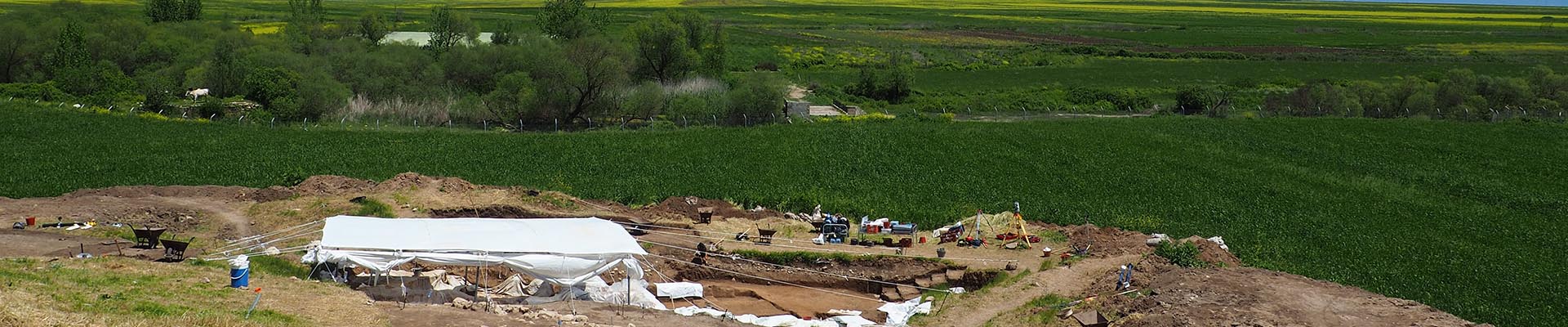
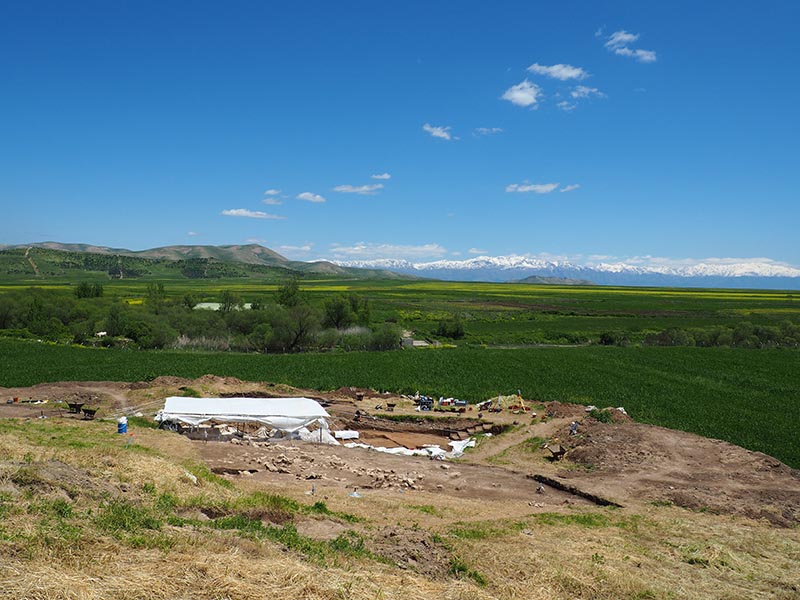
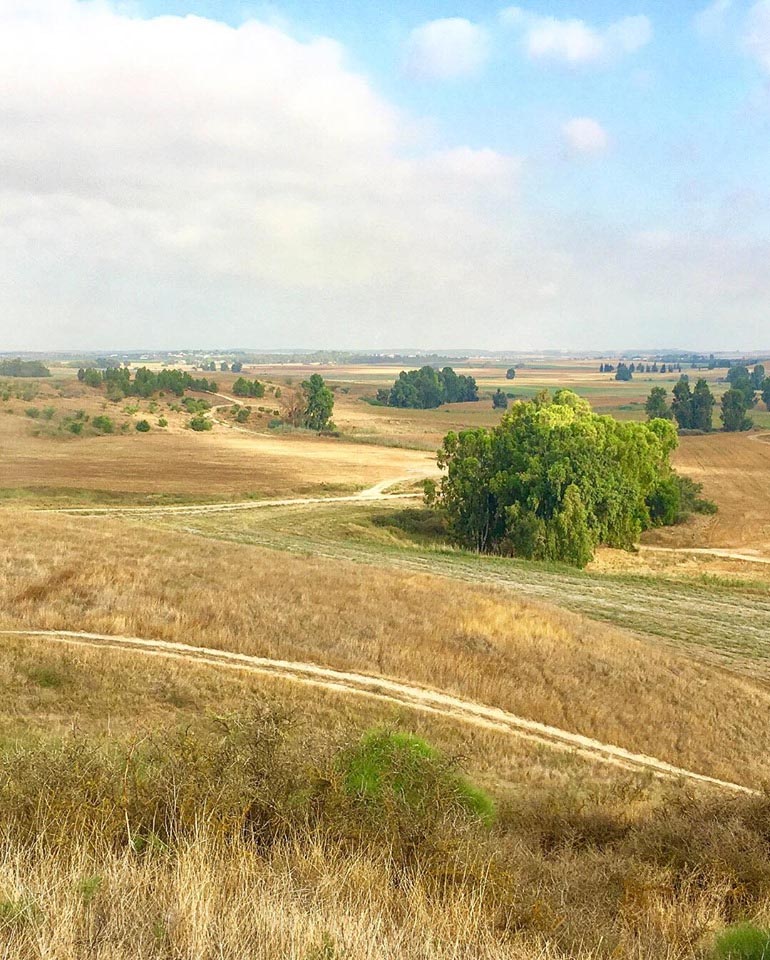
View from atop Tell el-Hesi.

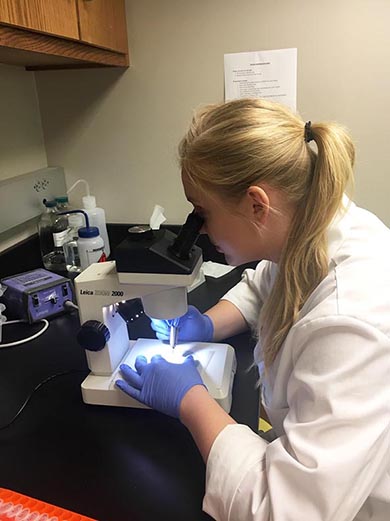
My master thesis focuses on the collection, analysis, and interpretation of the isotopic data from the Khirbet Summeily faunal remains concerning site functionality and intraregional connectivity across the Iron Age. During the summer of 2019, I traveled to Israel to participate in the Khirbet Summeily excavation project and conduct research on the Iron Age faunal remains. As part of the excavation staff, I was able to sort through a plethora of faunal remains and select teeth from identifiable Iron Age contexts that were suitable for isotopic analyses. I learned from our dig directors how to properly take artifact photos, apply for an export license from the Israel Antiquities Authority, and how to conduct fundamental analyses on the faunal remains in preparation for travel back to the Cobb Institute of Archaeology.


Outside the Albright Institute of Archaeological Research in Jerusalem.

After the Khirbet Summeily excavation season was complete, I had the opportunity to stay at the Albright Institute of Archaeological Research to expand my breadth of knowledge and research the collected finds from the Hesi Regional Survey Project. Applying the skill set I learned during my time with the Khirbet Summeily staff; I identified, analyzed, recorded, and stored the remaining survey artifacts for transportation back to the Cobb Institute of Archaeology. My personal favorite finds included a group of polished and cut astragali, a Roman bracelet, and a lithic blade/tool. It was also a fantastic experience to conduct research out in the courtyard of the Albright and chat with other scholars about various ongoing research across Israel. During my downtime, I had the opportunity to explore the streets of the Old City, partake in an evening light show, and visit several museums.


Selected finds from the Hesi Regional Survey Project.

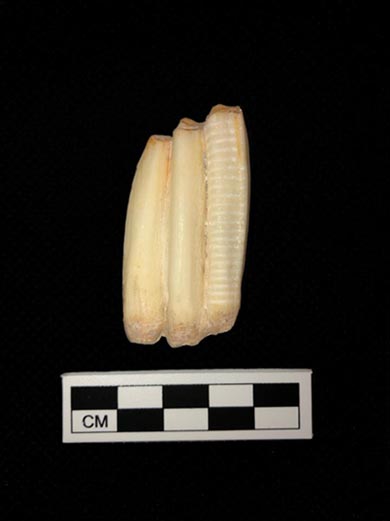
Following my research-intensive time in Israel, I returned to the United States to sample and process the faunal molars recovered from the excavation and faunal boxes. While I had all the proper documentation and licenses for exporting faunal remains from Israel, I still received some puzzled facial expressions when airport security would inspect my carry-on and pull out a bag of animal teeth. Nonetheless, I safely made it back to the Cobb Institute to begin the post-field analyses required for my thesis. Currently, the Khirbet Summeily molar samples have been subjected to isotopic analyses, and I am presently interpreting the results for the completion of my thesis. Along with the critical research skill set I learned over the summer, I am most appreciative of being a first-hand witness to the journey of an artifact being recovered from the site to the post-field analyses, and finishing with the official write-up of the important archaeological discoveries made during the summer.

Sampling faunal molars for isotopic analyses back in the lab.
Sampled faunal molar from Khirbet Summeily.

Kara Larson is an M.A. student at Mississippi State University and the lead research assistant for the Near Eastern Archaeology Laboratory at the Cobb Institute of Archaeology. She is a staff member for the Khirbet Summeily Excavation Project and the Hesi Regional Survey project and specializes in zooarchaeology and isotopic analyses. Her research focus is on the use of multiproxy isotopic analyses geared towards answering questions of socioeconomic and political complexity.

Want to help more students and early career archaeologists get into the field? Donate to the cause today by selecting “Excavation Scholarships” as your gift purpose!

2021 Annual Meeting – Chicago

[vc_row fullwidth=”true” attached=”true” css=”.vc_custom_1512671582587{padding-top: 0px !important;padding-right: 0px !important;padding-bottom: 0px !important;padding-left: 0px !important;}”][vc_column][vc_single_image image=”57798″ img_size=”full” alignment=”center”][/vc_column][/vc_row][vc_row fullwidth=”true” css=”.vc_custom_1496682730308{padding-top: 10px !important;padding-right: 0px !important;padding-bottom: 0px !important;padding-left: 0px !important;}”][vc_column width=”1/12″ css=”.vc_custom_1496683820796{margin-right: 10px !important;}” offset=”vc_hidden-md vc_hidden-sm vc_hidden-xs”][vc_column_text]

 SHARE

[/vc_column_text][mk_image src=”http://www.asortest.org/wp-content/uploads/2017/01/social-fb-icon4.jpg” image_width=”42″ image_height=”42″ hover=”false” custom_url=”https://www.facebook.com/ASOResearch/” margin_bottom=”0″][mk_image src=”http://www.asortest.org/wp-content/uploads/2017/01/social-tw-icon4.jpg” image_width=”42″ image_height=”42″ hover=”false” custom_url=”https://twitter.com/ASOResearch?ref_src=twsrc%5Egoogle%7Ctwcamp%5Eserp%7Ctwgr%5Eauthor” margin_bottom=”0″][mk_image src=”http://www.asortest.org/wp-content/uploads/2017/01/social-in-icon4.jpg” image_width=”42″ image_height=”42″ hover=”false” custom_url=”https://www.linkedin.com/company/american-schools-of-oriental-research” margin_bottom=”0″][mk_image src=”http://www.asortest.org/wp-content/uploads/2017/01/social-ml-icon_7.jpg” image_width=”42″ image_height=”42″ hover=”false” custom_url=”mailto:info@asor.org” margin_bottom=”0″][mk_image src=”http://www.asortest.org/wp-content/uploads/2017/01/blog-icon3.jpg” image_width=”42″ image_height=”42″ hover=”false” custom_url=”http://asor.org/blog” margin_bottom=”0″][/vc_column][vc_column border_color=”rgba(255,255,255,0.01)” width=”1/6″ css=”.vc_custom_1496683923840{margin-right: 20px !important;border-left-width: 2px !important;padding-right: 20px !important;padding-left: 20px !important;border-left-color: #99422f !important;}”][mk_divider divider_color=”rgba(255,255,255,0.01)” thickness=”1″ margin_top=”3″ margin_bottom=”3″][vc_column_text]

NEWS@ASOR E-NEWSLETTER

ANCIENT NEAR EAST TODAY E-NEWSLETTER

PAST ASOR NEWS, MONTH BY MONTH

FY19 HONOR ROLL OF DONORS

ASOR ANNUAL MEETING

[/vc_column_text][/vc_column][vc_column border_color=”rgba(170,170,170,0.01)” width=”1/2″ css=”.vc_custom_1487276122024{margin-right: 10px !important;margin-bottom: 30px !important;border-right-width: 2px !important;border-bottom-width: 2px !important;padding-top: 30px !important;padding-right: 30px !important;padding-left: 20px !important;background-color: #ffffff !important;border-right-color: rgba(227,228,228,0.75) !important;border-bottom-color: rgba(227,228,228,0.75) !important;}”][vc_column_text responsive_align=”left”]

2021 ANNUAL MEETING – CHICAGO

[/vc_column_text][mk_divider][vc_column_text]

The 2021 ASOR Annual Meeting will be held November 17–20 at the Hilton Chicago in downtown Chicago, IL. Featuring two international airports and direct flights from cities throughout Europe and the United States, Chicago is a central and convenient location as we strive for a carbon neutral meeting and for members who want to go on to the SBL/AAR meetings in San Antonio or travel for the Thanksgiving holiday.

With its midwestern soul and international charm, Chicago has something for everyone! In the heart of downtown and at the doorstep of the Hilton Chicago is the Chicago Cultural Mile with its rich history connecting Chicagoans and visitors alike with world class museums, art centers, educational institutions, and retailers. Head north to the Art Institute of Chicago and beyond to the Magnificent Mile, where you can veer off to the Museum of Contemporary Art, view the city skyline from 1000 feet up at the John Hancock Building’s 360 Chicago observation deck, shop to your hearts content, or hop on a boat at the Chicago River for the renowned architecture tour. Just across the street from the Hilton is Grant Park and Lake Michigan—a little bit of nature and tranquility in the Loop. Take a stroll along the lake toward Chicago’s picturesque Museum Campus where you’ll find the Field Museum of Natural History, Shedd Aquarium, and Adler Planetarium.

Chicago’s Field Museum of Natural History. Photo by Arlene Press.

Of course, one cannot speak of Chicago without mention of the abundance of renowned culinary adventures (and I’m not just talking about deep-dish pizza), craft breweries (with incredible taprooms and tastings), music (blues and jazz lovers unite), theatre (from the opera to musicals, and of course comedy—this is the home of Second City), and sports (one of only ten U.S. cities to have teams from the five major American professional team sports).

Just south of downtown in picturesque Hyde Park is a destination that ought to be at the top of the cultural to-do list for all ASOR attendees—the Oriental Institute, both a pioneering interdisciplinary research center and a world-renowned museum located on the University of Chicago campus. Since its founding in 1919, the OI has conducted field-defining research across the Middle East, including excavations and field projects, linguistic research deciphering ancient languages, creating comprehensive dictionaries, reconstructing the histories, literatures and religions of long-lost civilizations, and preserving the region’s imperiled cultural heritage. And their work continues today in Egypt, Israel, Jordan, Iraq, Turkey, and Afghanistan. Much of this research is on display at the OI Museum, home to the largest collection of ancient Middle East artifacts in the United States with more than 350,000 artifacts mainly excavated by OI archaeologists and some 5,000 on display to the public. Following a multi-million-dollar gallery renovation that was completed for the Centennial in 2019, the OI Museum is displaying more than 500 additional artifacts to the public for the first time including a new space devoted to the Islamic period and a monumental relief from Persepolis, which had been on loan for 80 years to the Boston Museum of Fine Arts. Learn more at oi100.uchicago.edu.

Assyrian reliefs from Khorsabad on display at the Oriental Institute Museum. Courtesy of the Oriental Institute, photo by Michael Tropea.

While at the OI, architecture aficionados should also visit Frank Lloyd Wright’s Robie House just across the street. Hyde Park is also home to the DuSable Museum of African American History, Smart Museum of Art, Renaissance Society, Reva and David Logan Center for the Arts, and the Museum of Science and Industry, housed in the former Palace of Fine Arts—the only surviving building from the 1893 World’s Fair.

We look forward to sharing all that defines the Windy City with you in November 2021!


Kiersten Neumann
Oriental Institute
ASOR Program Committee Member[/vc_column_text][/vc_column][vc_column border_color=”rgba(170,170,170,0.01)” width=”1/6″ css=”.vc_custom_1496684098866{margin-right: 5px !important;margin-bottom: 20px !important;border-right-width: 2px !important;border-bottom-width: 2px !important;padding-top: 30px !important;padding-right: 10px !important;padding-left: 10px !important;background-color: #ffffff !important;border-right-color: rgba(227,228,228,0.75) !important;border-bottom-color: rgba(227,228,228,0.75) !important;}”][vc_wp_posts title=”BROWSE THE NEWS ARCHIVE” number=”4″][/vc_column][vc_column border_color=”rgba(170,170,170,0.01)” width=”1/6″ css=”.vc_custom_1496684008271{margin-right: 10px !important;margin-bottom: 30px !important;border-right-width: 2px !important;border-bottom-width: 2px !important;padding-top: 30px !important;padding-right: 20px !important;padding-left: 20px !important;background-color: #ffffff !important;border-right-color: rgba(227,228,228,0.75) !important;border-bottom-color: rgba(227,228,228,0.75) !important;}”][vc_column_text] [/vc_column_text][/vc_column][/vc_row]

Pottery Volumes for ASOR Institutional Members

[vc_row fullwidth=”true” attached=”true” css=”.vc_custom_1496247803139{padding-top: 0px !important;padding-right: 0px !important;padding-bottom: 0px !important;padding-left: 0px !important;}”][vc_column][vc_single_image image=”36022″ img_size=”full” alignment=”center”][/vc_column][/vc_row][vc_row fullwidth=”true” css=”.vc_custom_1496682730308{padding-top: 10px !important;padding-right: 0px !important;padding-bottom: 0px !important;padding-left: 0px !important;}”][vc_column width=”1/12″ css=”.vc_custom_1496683820796{margin-right: 10px !important;}” offset=”vc_hidden-md vc_hidden-sm vc_hidden-xs”][vc_column_text]

 SHARE

[/vc_column_text][mk_image src=”http://www.asortest.org/wp-content/uploads/2017/01/social-fb-icon4.jpg” image_width=”42″ image_height=”42″ hover=”false” custom_url=”https://www.facebook.com/ASOResearch/” margin_bottom=”0″][mk_image src=”http://www.asortest.org/wp-content/uploads/2017/01/social-tw-icon4.jpg” image_width=”42″ image_height=”42″ hover=”false” custom_url=”https://twitter.com/ASOResearch?ref_src=twsrc%5Egoogle%7Ctwcamp%5Eserp%7Ctwgr%5Eauthor” margin_bottom=”0″][mk_image src=”http://www.asortest.org/wp-content/uploads/2017/01/social-in-icon4.jpg” image_width=”42″ image_height=”42″ hover=”false” custom_url=”https://www.linkedin.com/company/american-schools-of-oriental-research” margin_bottom=”0″][mk_image src=”http://www.asortest.org/wp-content/uploads/2017/01/social-ml-icon_7.jpg” image_width=”42″ image_height=”42″ hover=”false” custom_url=”mailto:info@asor.org” margin_bottom=”0″][mk_image src=”http://www.asortest.org/wp-content/uploads/2017/01/blog-icon3.jpg” image_width=”42″ image_height=”42″ hover=”false” custom_url=”http://asor.org/blog” margin_bottom=”0″][/vc_column][vc_column border_color=”rgba(255,255,255,0.01)” width=”1/6″ css=”.vc_custom_1496683923840{margin-right: 20px !important;border-left-width: 2px !important;padding-right: 20px !important;padding-left: 20px !important;border-left-color: #99422f !important;}”][mk_divider divider_color=”rgba(255,255,255,0.01)” thickness=”1″ margin_top=”3″ margin_bottom=”3″][vc_column_text]

NEWS@ASOR E-NEWSLETTER

ANCIENT NEAR EAST TODAY E-NEWSLETTER

PAST ASOR NEWS, MONTH BY MONTH

FY19 HONOR ROLL OF DONORS

ASOR ANNUAL MEETING

[/vc_column_text][/vc_column][vc_column border_color=”rgba(170,170,170,0.01)” width=”1/2″ css=”.vc_custom_1487276122024{margin-right: 10px !important;margin-bottom: 30px !important;border-right-width: 2px !important;border-bottom-width: 2px !important;padding-top: 30px !important;padding-right: 30px !important;padding-left: 20px !important;background-color: #ffffff !important;border-right-color: rgba(227,228,228,0.75) !important;border-bottom-color: rgba(227,228,228,0.75) !important;}”][vc_column_text responsive_align=”left”]

SPECIAL OFFER ON POTTERY VOLUME SET FOR ASOR INSTITUTIONAL MEMBERS

[/vc_column_text][vc_column_text]This limited-time offer is no longer available.

ASOR is pleased to announce the sale of the first three volumes of The Ancient Pottery of Israel and Its Neighbors (edited by Seymour Gitin) at a special discounted price for institutions affiliated with ASOR! There is a discount for any institution with an ASOR member, and there is an even steeper discount for ASOR member institutions.

These three volumes offer a comprehensive corpus of ceramic forms and their typological development organized according to period, geographical region, and/or cultural tradition. The focus of each chapter is on the most characteristic pottery types and decorative motifs selected from a broad range of sites. Unique in scope, this publication presents a wide range of ceramic types accompanied by specially prepared pottery plates and color photos illustrating over five thousand forms. A classic reference work, it serves as an essential resource for archaeologists and other scholars and students of ancient Near Eastern studies. The two volumes covering the Iron Age through the Hellenistic period were published in 2015 and the third volume, dealing with the Middle and Late Bronze Ages, in 2019. A fourth volume covering the Neolithic and Chalcolithic periods and the Early Bronze Age is in preparation.

THE ANCIENT POTTERY OF ISRAEL AND ITS NEIGHBORS ISBN 978-965-221-102-6 (Set)

Volumes 1–2, from the Iron Age through the Hellenistic Period

808 pp., 328 plates with 3,393 images; 34 color photos illustrating 277 vessels; hard cover, 27.6×21 cm. ISBN 978–965–221–103–3 (Vol. 1); ISBN 978–965–221–104–0 (Vol. 2), (List price: $240)

Volume 3, from the Middle Bronze Age through the Late Bronze Age

473 pp., 173 plates with 1,669 images; 26 color photos illustrating 248 vessels; hard cover, 27.6×21 cm. ISBN 978–965–221–123–1 (Vol. 3), (List price: $120)


Discounted price for ASOR Institutional Members: $198 instead of the list price $360

Discounted price for Institutions (US or Canada) with an ASOR member: $275

Discounted price for Institutions (Europe) with an ASOR member: $300

All prices include shipping.

Get a set for your institution by purchasing one in our online system (login and click on “Buy Merchandise”), or by using this order form.

Please call the ASOR office at (703) 789-9229 or email programs@asor.org if you have any questions!

 [/vc_column_text][/vc_column][vc_column border_color=”rgba(170,170,170,0.01)” width=”1/6″ css=”.vc_custom_1496684098866{margin-right: 5px !important;margin-bottom: 20px !important;border-right-width: 2px !important;border-bottom-width: 2px !important;padding-top: 30px !important;padding-right: 10px !important;padding-left: 10px !important;background-color: #ffffff !important;border-right-color: rgba(227,228,228,0.75) !important;border-bottom-color: rgba(227,228,228,0.75) !important;}”][vc_wp_posts title=”BROWSE THE NEWS ARCHIVE” number=”4″][/vc_column][vc_column border_color=”rgba(170,170,170,0.01)” width=”1/6″ css=”.vc_custom_1496684008271{margin-right: 10px !important;margin-bottom: 30px !important;border-right-width: 2px !important;border-bottom-width: 2px !important;padding-top: 30px !important;padding-right: 20px !important;padding-left: 20px !important;background-color: #ffffff !important;border-right-color: rgba(227,228,228,0.75) !important;border-bottom-color: rgba(227,228,228,0.75) !important;}”][vc_column_text] [/vc_column_text][/vc_column][/vc_row]

ASOR Awardee Spotlight: Gary Arbino

[vc_row fullwidth=”true” attached=”true” css=”.vc_custom_1496247803139{padding-top: 0px !important;padding-right: 0px !important;padding-bottom: 0px !important;padding-left: 0px !important;}”][vc_column][vc_single_image image=”57733″ img_size=”full” alignment=”center”][/vc_column][/vc_row][vc_row fullwidth=”true” css=”.vc_custom_1496682730308{padding-top: 10px !important;padding-right: 0px !important;padding-bottom: 0px !important;padding-left: 0px !important;}”][vc_column width=”1/12″ css=”.vc_custom_1496683820796{margin-right: 10px !important;}” offset=”vc_hidden-md vc_hidden-sm vc_hidden-xs”][vc_column_text]

 SHARE

[/vc_column_text][mk_image src=”http://www.asortest.org/wp-content/uploads/2017/01/social-fb-icon4.jpg” image_width=”42″ image_height=”42″ hover=”false” custom_url=”https://www.facebook.com/ASOResearch/” margin_bottom=”0″][mk_image src=”http://www.asortest.org/wp-content/uploads/2017/01/social-tw-icon4.jpg” image_width=”42″ image_height=”42″ hover=”false” custom_url=”https://twitter.com/ASOResearch?ref_src=twsrc%5Egoogle%7Ctwcamp%5Eserp%7Ctwgr%5Eauthor” margin_bottom=”0″][mk_image src=”http://www.asortest.org/wp-content/uploads/2017/01/social-in-icon4.jpg” image_width=”42″ image_height=”42″ hover=”false” custom_url=”https://www.linkedin.com/company/american-schools-of-oriental-research” margin_bottom=”0″][mk_image src=”http://www.asortest.org/wp-content/uploads/2017/01/social-ml-icon_7.jpg” image_width=”42″ image_height=”42″ hover=”false” custom_url=”mailto:info@asor.org” margin_bottom=”0″][mk_image src=”http://www.asortest.org/wp-content/uploads/2017/01/blog-icon3.jpg” image_width=”42″ image_height=”42″ hover=”false” custom_url=”http://asor.org/blog” margin_bottom=”0″][/vc_column][vc_column border_color=”rgba(255,255,255,0.01)” width=”1/6″ css=”.vc_custom_1496683923840{margin-right: 20px !important;border-left-width: 2px !important;padding-right: 20px !important;padding-left: 20px !important;border-left-color: #99422f !important;}”][mk_divider divider_color=”rgba(255,255,255,0.01)” thickness=”1″ margin_top=”3″ margin_bottom=”3″][vc_column_text]

NEWS@ASOR E-NEWSLETTER

ANCIENT NEAR EAST TODAY E-NEWSLETTER

PAST ASOR NEWS, MONTH BY MONTH

FY19 HONOR ROLL OF DONORS

ASOR ANNUAL MEETING

[/vc_column_text][/vc_column][vc_column border_color=”rgba(170,170,170,0.01)” width=”1/2″ css=”.vc_custom_1487276122024{margin-right: 10px !important;margin-bottom: 30px !important;border-right-width: 2px !important;border-bottom-width: 2px !important;padding-top: 30px !important;padding-right: 30px !important;padding-left: 20px !important;background-color: #ffffff !important;border-right-color: rgba(227,228,228,0.75) !important;border-bottom-color: rgba(227,228,228,0.75) !important;}”][vc_column_text responsive_align=”left”]

AWARDEE SPOTLIGHT: GARY ARBINO

[/vc_column_text][mk_divider][vc_column_text]

Gary Arbino leads discussion on the Future of the Annual Meeting in Denver 2018.

At the 2019 ASOR Annual Meeting in San Diego, Gary Arbino was awarded the ASOR Membership Service Award. This award recognizes individuals who have made special contributions on behalf of the ASOR membership, through committee, editorial, or office services.

“Gary Arbino, Professor of Archaeology and Old Testament Interpretation, Gateway Seminary, has been a long-time member of ASOR, and has served in several significant roles that have benefited ASOR and its membership. In addition to his work on the membership committee (2003-2017), as an ASOR Trustee (2005-2014), and as Chair of the Officers Nominations Committee (2009-2014), Gary served on the Strategic Planning and Rebranding Task Force that brought about ASOR’s most recent strategic plan. Notably, Gary most recently undertook the herculean task of chairing the Ad Hoc Committee on the Future of the Annual Meeting from 2016-2019. The question this committee was asked to address—the date and place of the ASOR Annual Meeting, and the continued viability of meeting at roughly the same time and place as SBL—is one of the most challenging that has faced ASOR in the past several years. Gary’s leadership in executing this task was exceptional! His detailed report with recommendations about the best way forward enabled the Board to come easily and relatively quickly to a decision, magically transforming contentiousness into consensus. In recognition of Gary’s hard work, he is awarded the ASOR Membership Service Award.”

Arbino at work in the field.

Upon receipt of this honor at the 2019 Members Meeting, Arbino did not speak, but had he taken the opportunity he would have extended the accolade to those long-suffering members of the Committee, who put in countless hours of insightful, creative, analytic, detailed, and competent work on the two-plus-year project. Kent Bramlett, Bill Caraher, Sidnie Crawford, Erin Darby, Karen Rubinson, Eric Welch, and Lawson Younger all merit a share in the praise, since they so graciously participated in the struggle. He also would have noted the indispensable and ever-quality assistance of the ASOR Staff and Officers.  Arbino’s omission in no way should diminish the contributions of each and all of them; this Service Award is truly theirs as well.

Arbino with the Tel Miqne-Ekron excavation reunion group at the 2019 Annual Meeting in San Diego.

Learn more about ASOR Awards

Nominate someone for an award. The deadline for service award nominations is September 11, 2020. The deadline for book award nominations September 18, 2020.[/vc_column_text][/vc_column][vc_column border_color=”rgba(170,170,170,0.01)” width=”1/6″ css=”.vc_custom_1496684098866{margin-right: 5px !important;margin-bottom: 20px !important;border-right-width: 2px !important;border-bottom-width: 2px !important;padding-top: 30px !important;padding-right: 10px !important;padding-left: 10px !important;background-color: #ffffff !important;border-right-color: rgba(227,228,228,0.75) !important;border-bottom-color: rgba(227,228,228,0.75) !important;}”][vc_wp_posts title=”BROWSE THE NEWS ARCHIVE” number=”4″][/vc_column][vc_column border_color=”rgba(170,170,170,0.01)” width=”1/6″ css=”.vc_custom_1496684008271{margin-right: 10px !important;margin-bottom: 30px !important;border-right-width: 2px !important;border-bottom-width: 2px !important;padding-top: 30px !important;padding-right: 20px !important;padding-left: 20px !important;background-color: #ffffff !important;border-right-color: rgba(227,228,228,0.75) !important;border-bottom-color: rgba(227,228,228,0.75) !important;}”][vc_column_text] [/vc_column_text][/vc_column][/vc_row][vc_row][vc_column][vc_column_text]

[/vc_column_text][/vc_column][/vc_row][vc_row][vc_column][vc_column_text]

[/vc_column_text][/vc_column][/vc_row]

Fellowship Report: Amber Leenders

2019 PLATT FELLOWSHIP FIELD REPORT: AMBER LEENDERS

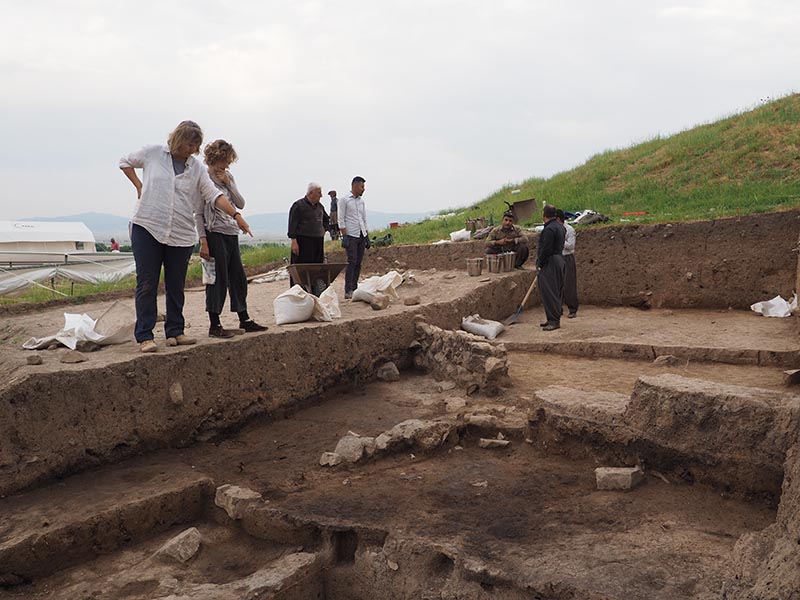
With the support of the Platt Excavation Fellowship, I was able to travel to the Kurdistan Region of Iraq in May of 2019 and join Dr. Lisa Cooper’s team from the University of British Columbia to excavate the fascinating, multi-period site of Bestansur. Our team also included Dr. Kate Kelley, Dr. Lynn Welton, and Dr. Jill Weber.

The town of Bestansur is located in the Kurdistan province of Sulaymaniyah, a mountainous area of northeastern Iraq. The landscape is stunningly beautiful, with the lush green fields of the Shahrizor plain, the rocky slopes of the Zagros mountain range, and tributary rivers such as the Sirwan, which eventually feed into the Diyala and Tigris Rivers to the south. Although I have been on digs before, this was my first trip to the Middle East, and I felt slightly out of my element and unsure of what to expect. When we arrived on site for the first early morning of work, however, and I saw the snow-capped peaks of the Zagros mountains rising out of the clouds, I knew that I would quickly grow to love Kurdistan and its history.

We were fortunate to join a team of British archaeologists from the University of Reading, who have been excavating the site since 2012 due to their interest in its unique evidence of Neolithic occupation. It is a remarkable site, with over ten thousand years of history that include well-preserved monumental Neolithic architecture, as well as an exceptional number of human remains. It provides the earliest evidence of settled village life in this region and in fact, some of the earliest in the world! The site continually reveals valuable details about the diet, lifestyle, trade, and ritual practices of the people who occupied the settlement. It was great to observe the Reading team carry out their excavations, and to learn from them about the meticulous excavation, sampling, and recording necessary to understand Neolithic habitation and culture.

So, where does the UBC team come into this? About seven thousand years later…

All phases of a site must be excavated with equal care, so on a large site such as this it is helpful to have multiple teams working on different phases to smooth the process. Dr. Lisa Cooper’s research has mainly focused on the Neo-Assyrian occupation at Bestansur, which is some of the most significant material that superimposes the Neolithic remains on the tell. The power of the Neo-Assyrian empire grew during the 10th-7th centuries BCE, and we are interested in the ways that this might have impacted the lives of people in the Kurdistan region—an important thoroughfare in northern Mesopotamia. Bestansur’s Trench 14, just south-east of the tell, revealed significant Neo-Assyrian stone architecture and in-situ pottery in the previous 2013 and 2017 seasons, and the 2019 season had many more surprises in store. New evidence of post-Neolithic burned stone and pisé buildings on the main mound meant that this year UBC’s teams decided to divide and conquer, excavating in both Trenches 10 North and 10 West.

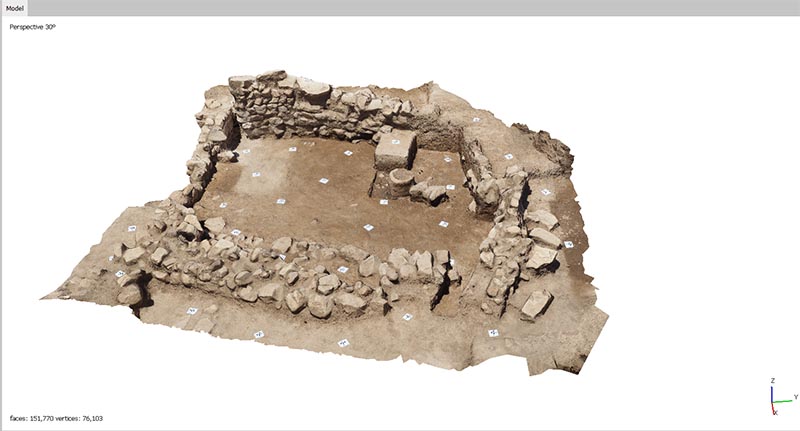
I excavated mainly in 10 West, but my main role on the UBC team was to map the site using our total station, and to document the trenches using photographs and photogrammetry models. Photogrammetry has become an essential part of archaeological recording; the process uses specialized software to transform a collection of photos of an object or space into a 3D model, which can then be studied further, and put in its geographical context. It’s an incredibly helpful tool for archaeology, which is a process that paradoxically destroys the things which it is studying! After archaeologists excavate an artifact or context, or dissemble architecture, photogrammetry makes it possible to study the site as it previously stood. Models the one below are especially helpful for examining things like the Sasanian/early Islamic period structures in Trench 10 West, which had to be fully excavated and removed in order to properly chronicle the history of occupation in the trench as a whole.

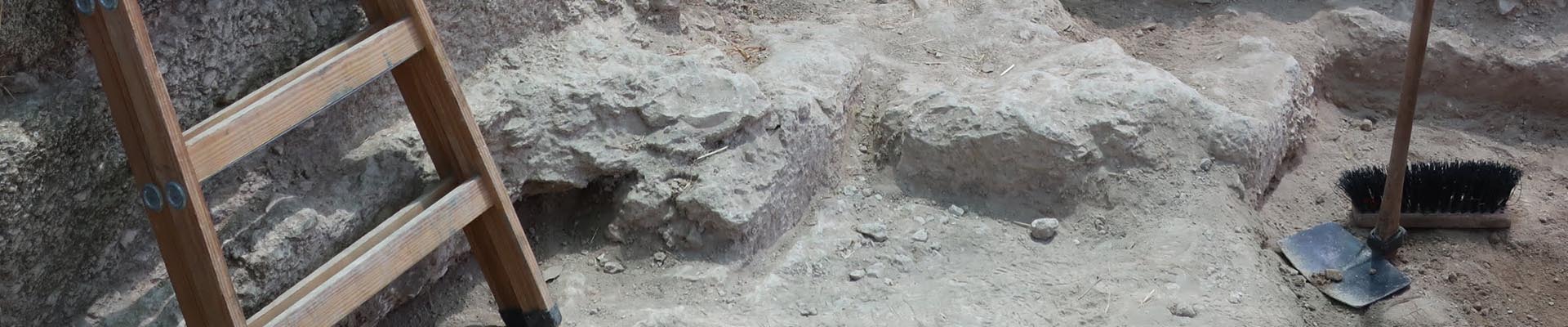
There were many phases of occupation on the tell. Work in Trench 10 North revealed a complex series of layers of a possible Neo-Assyrian burned building, along with features like tannour ovens and deposits of shells. In Trench 10 West, although scattered remains like tannours and hearths of the Ottoman period were encountered, features from the Sasanian/ early Islamic period were especially prevalent, these comprising curvilinear stone structures, pebbled surfaces and associated outdoor spaces. Exciting finds from this season, including intact ceramic vessels, a wide variety of animal bones, and various metal tools, can lead to more accurate knowledge about the region and the lifeways of its occupants during these often-understudied later periods.

The 2019 season expanded on the work of previous seasons, and opened up new discussions and debates about the significance of the site— during the Neo-Assyrian period, was it a valuable example of a rural agricultural community? Or could it have been an administrative center of the expanding empire? Did pastoral communities pass through or settle there in the Sasanian and Ottoman periods? Future research and excavations will clarify these and many more questions.

The incredibly warm welcome that we received from our host families and the rest of the local community was a highlight of our month; the people of Bestansur are generous, helpful, good-humoured, and fiercely competitive at soccer to boot (Team Archaeology put up a good fight, but suffered some serious losses against the local team). Many of the locals have years of experience working at this and other sites in the area, and the work of the UBC and Reading teams would not have been possible without their excellent work excavating, processing samples, washing pottery, cooking for our teams, and providing transportation and logistical support.

The experience of excavating and living in Iraqi Kurdistan was unforgettable, and has sparked my interest in this region, its people, and their culture. I am sincerely grateful to ASOR and the donors of the Platt Excavation Fellowship for this opportunity! Thank you to everyone on the team who worked so hard this season, and put the “Best” in Bestansur.

For more information about Bestansur, and the rest of the Central Zagros Archaeological Project, please visit https://www.czap.org/research/bestansur.


Amber Leenders is currently finishing her MA in Classical and Near Eastern Archaeology at the University of British Columbia. Her thesis focuses on using archival data to re-interpret the archaeology of the temples at the site of Dura-Europos, located in modern day Syria. After graduation, she hopes to continue to teach, research, and excavate in the field she loves.

Want to help more students and early career archaeologists get into the field? Donate to the cause today by selecting “Excavation Scholarships” as your gift purpose!

Fellowship Report: Jewel Trail

2019 STRANGE-MIDKIFF FELLOWSHIP FIELD REPORT: JEWEL TRAIL

I spent the first four weeks of my summer in the Galilean heat (which is considerably more bearable than the heat in the southeastern United States). Our dig site was on a hillside outside of Nazareth, Israel. Kefar Shikhin, also known as Asochis, is just outside Sepphoris. I immediately felt comfortable in the familiar scientific setting of diligent data collection taught at the Shikhin Excavation Project’s field school. Despite archaeology being one of the newest social sciences, recently developed methods mirror the accuracy and completeness of research methods in established natural science research.

The Shikhin Excavation Project utilizes stratigraphic excavation, which distinguishes itself from other methods by recognizing that each element of the site contains valuable data. Dr. James F. Strange used to say, “the dirt is evidence.” Stratigraphic excavation focuses on the unique characteristics of each strata and the data that can be obtained from individual loci. Just as a slight change in color, smell, viscosity, particle size, or any other empirical change is recorded in a chemistry research lab, analogous changes on an archaeological excavation are recorded in a square’s field book. Examples of these analogous changes are the all-important three Cs (color, compaction, and contents); elevations; daily and weekly top plans; and daily photographs and conclusions. Careful recording of all details reflects the gravity and responsibility that archaeologists take on when excavating a site.

From the beginning of the dig until publication, the individual steps of the entire excavation process correspond to the steps of the scientific method:

Step 1- Make an Observation: Archaeologists must make initial observations about where or what they want to excavate. When archaeologists are deciding where to dig, they look for solid clues that indicate a site is a strong candidate for excavation. In the case of Shikhin, Dr. James Riley Strange took into account the proximity to Sepphoris, textual evidence, and the physical remains in the topsoil when deciding to open an excavation at Shikhin.

Step 2- Formulate a Question: After looking at the available evidence, researchers decide what questions can be asked of an excavation site, and what insights could be gained from excavating there. Questions are developed from analyzing all relevant sources. Sources are often textual, but material evidence will also effect the specific questions asked.

Step 3- Develop a Hypothesis: Once the archaeologists have decided what questions they want to answer, they build a probable hypothesis based on their observations, textual evidence, and other cultural evidence. The hypothesis is designed to address all of the questions the archaeologists will ask of the site.

Jewel and her square-mate get a lesson on balk drawing from field director Dr. James Riley Strange during fruit break.

Step 4- Design the Experiment: Deciding how to lay out the excavation’s grid (or lack of a grid) is very similar to a natural scientist designing an experiment. In this step, the approach and operating procedures are brainstormed, perfected, and enacted. In archaeology, this includes: determining the location of fields, evaluating the relationship of the remains to the cardinal directions (e.g. structure walls need to cross perpendicular to baulks), using the traditional “square” or finding the most beneficial geometric shape, and optimizing the size of the “squares” (or other geometric shape of choice), among other considerations. The excavations at Shikhin utilized a north-south grid of 5 x 5m squares.

Step 5- Test the Hypothesis: This is arguably the most exciting part of the entire process. At this point you get out into the field and dig! While written records are a great resource for testing a historical hypothesis, the physical remains that a group of people leave behind are invaluable. For example, Shikhin is a Jewish village and likely had its own synagogue. Josephus, however, reports Christian activity taking place alongside the Jewish practices. If the archaeologists at Shikhin would like to explore this facet of life at this site, the only way to search for answers is to find the physical evidence.

Step 6- Make Modifications: Without fail, a dig will encounter obstacles along the way that require a change in the plan of action. These obstacles can result in abandoning a square that is not producing adequate data, changing a hypothesis mid-season, realizing that some element of the designed excavation method is not working, or deciding to open another field. Thus, modifications may be necessary mid-season or between seasons and must be based on and take into account all preliminary conclusions. The evidence that is uncovered is necessary to make the appropriate changes to the excavation method and hypothesis. In the field, balk drawings are an excellent way to evaluate what modifications need to be made to the original excavation plan. Balk drawings are crucial for analyzing the stratification of a square and relating loci to one another, and they combine a lot of information into one visual resource.

Teeth found in I.22.

Step 7- Tell Others: After the dig season is over, the final step of the archaeological scientific method begins. Before scholars can write the paper and have it published, the original hypothesis must be compared to the modified hypotheses and all data carefully considered. Preliminary conclusions are tested and forged into final conclusions during this step, specifically relying on resources built up over the course of the season. Meticulously kept field books with pictures of weekly excavation updates, daily notes, and descriptions of artifacts found are all key resources in analyzing every bit of data that is collected across an excavation’s history. What is found in the seventh season must be related to the findings of the third season, along with everything in between. Once all of this has been woven into the narrative of the site, a final paper can be written to share the archaeologist’s findings with the larger community.

Jewel Trail is a senior University Fellow at Samford University (AL) from Murfreesboro, TN. She is a Chemistry and Classics double major and has previously worked with Dr. Brian Gregory of the Chemistry and Biochemistry Department on “Compositional analyses of potsherds from an ancient Jewish pottery industrial site by inductively-coupled plasma optical emission spectrometry,” which is focused on pottery from Shikhin. This was her first time participating in an excavation.

More information about the Shikhin Excavation Project and its field school can be found at: https://shikhinexcavationproject.com/

Want to help more students and early career archaeologists get into the field? Donate to the cause today by selecting “Excavation Scholarships” as your gift purpose!

Fellowship Report: Joanna Smith

2019 STUDY OF COLLECTIONS FELLOWSHIP REPORT: JOANNA SMITH

Weighty Matters

In May and June of 2019 I studied objects connected with Iron Age Cypriot textile production. Research for this project began during study seasons on Cyprus in Polis Chrysochous (ancient Marion and Arsinoe) where I have been a long-time member of the Princeton University excavation team. Each year since 2014 while doing inventories of the finds I have documented textile tools from across the excavations. These tools come from workshop and household contexts ranging in date from the Cypro-Geometric to the early Hellenistic period. Primarily they were made and used by people who lived in the ancient city of Marion. Some tools attest to continuity in craft production in the city even after its destruction by King Ptolemy I, Soter, in 312 BCE. The ASOR Collections Fellowship gave me the opportunity to continue study of the tools in Polis and to study assemblages of textile tools from three other contemporary Cypriot settlements, Kition, Kouklia, and Kourion, in order to have more of an island-wide view of Cypriot Iron Age textiles. Locating and rediscovering objects held in the storerooms of the museums of Cyprus was just as eye-opening as unearthing objects during field excavation.


Top, Joanna S. Smith working with metal tools in the Local Museum of Marion and Arsinoe (Polis Chrysochous). Below, a series of iron sword fragments from Area E.F2 (trench r09, 1986).

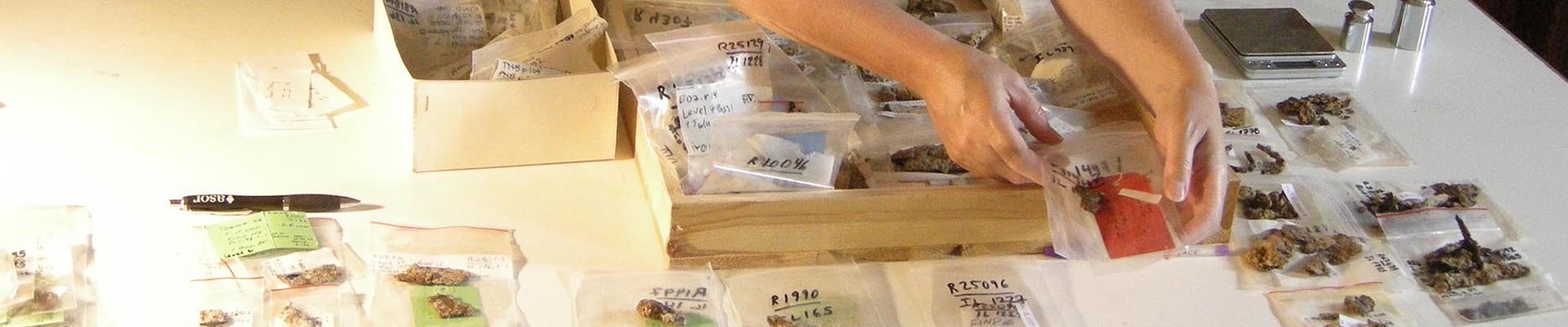
Among the tools I studied are whorls for spinning, weights that held down warp fibers on looms, and dyestuffs such as crushed murex for the color purple. Yet textile tools can take unexpected forms. An object may seem unconnected when taken in isolation, but when seen in view of its archeological context it can reveal whole new meaning. A case in point comes from Polis. To understand the textile-working contexts there better in 2018 I began to look back through all the other associated finds and found several fragmentary iron sword blades. In 2019 I reexamined all the metal finds and confirmed that the find contexts of all the swords are the same as the contexts with the largest concentrations of whorls, loom weights, and dyestuffs.

Some fragments have the distinctive squared tip of a weaving sword (see Laura Mazow 2017 in Archaeological Textiles Review). Weaving swords were used to pack or beat in weft fibers woven through the warp threads strung on the loom. Some blade fragments have a triangular tip, more like a combat sword. Possibly weavers were reusing and refashioning weapons. These are the first weaving swords yet identified in any Mediterranean workshop context.

Fiber arts rarely survive in the archaeological record in climates subject to extremes of hot and cold, and damp and dry weather. To figure out what kinds of fibers and fabrics were made, it is important to know the weights of the tools used and key measurements such as spindle whorl diameter and loom weight thickness. Whorl weight, diameter, and shape determine the weight and tightness of the spun thread. The weight and width of a loom weight indicate the density and weight of the warp thread count in a fabric. Even these simple measurements, however, can raise questions. For example, some loom weights tend to rotate when hung on the loom becoming ever more rounded on the edges over time. This is especially the case with pyramidal weights, such as this example from Kition-Kathari.


At left, measuring one possibility for the width of a truncated pyramidal loom weight from Kition-Kathari (Kit-II/3898). At right, a cylindrical loom weight from Kouklia-Evreti (TE F 39).

Thus, one must explore the range of possibilities through multiple measurements. This observation helped to explain the enduring popularity of another weight shape, the flat disc or short cylinder. Weights of this shape vary widely in size and quality of crafting. Some weigh nearly 500 grams, while others are less than 40 grams, as with this example from Kouklia-Evreti. Yet short cylindrical weights would have hung on the loom in a predictable way, with their flat sides next to one another. Cloth woven with these weights ranges from light-weight and gauzy to heavy and dense, perhaps sail cloth.


At left, a broken cylindrical loom weight marked with three impressed dots and a seal-ring impression from the Kourion acropolis (Penn excavations no. Mi 387). At right, detail of the seal-ring impression: standing Aphrodite, at right, and a standing Eros with large wing, at left.

Few spindle whorls come from these settlement sites. Some spinning tools were placed in tombs and may have been linked closely with their owners, while weaving tools rarely accompanied people to the grave. Close observation and handling of many loom weights caused me to wonder what their makers/owners/users thought about them. The cylindrical weights cited above are especially telling. Over the course of the first millennium BCE these weights were made in an increasingly sturdy fashion, changing from expedient and lumpy unfired clay objects, to low-fired and smoothed terracotta, to hard-fired ceramics with more sharply defined edges. Labeling of these weights with seal rings and other marks is only a feature of the more permanent, fired weights. Initially people placed stamps on the curved surfaces that could be seen while weaving, suggesting a practical as well as perhaps a personal connection. People marked the high-fired late Classical and Hellenistic period weights, however, on the flat surfaces, as on this fragmentary example found by the University of Pennsylvania team on the Kourion acropolis.

These marks were hidden when weights were in use on the loom, which suggests that such marks were more personal than practical. The stamped seal-ring designs are not always easily legible; raking light, however, clearly reveals this ring’s design of Aphrodite and Eros, a fitting and exciting find during a season of study on the island of Cyprus.


Joanna S. Smith the co-Director of the Princeton Cyprus Expedition and a Consulting Scholar in the Mediterranean Section at the Penn Museum. She currently works as the Consulting Curator of Ancient Art at The John and Mable Ringling Museum of Art in Sarasota, Florida, and the copy-editor of the Kyrenia Ship Project.

ASOR is accepting applications for 2020 Study of Collections Fellowships! The deadline for applications is January 15, 2020 and information on applying can be found here.

2019 Annual Meeting Recap

[vc_row fullwidth=”true” attached=”true” css=”.vc_custom_1512671582587{padding-top: 0px !important;padding-right: 0px !important;padding-bottom: 0px !important;padding-left: 0px !important;}”][vc_column][vc_single_image image=”42403″ img_size=”full” alignment=”center”][/vc_column][/vc_row][vc_row fullwidth=”true” css=”.vc_custom_1496682730308{padding-top: 10px !important;padding-right: 0px !important;padding-bottom: 0px !important;padding-left: 0px !important;}”][vc_column width=”1/12″ css=”.vc_custom_1496683820796{margin-right: 10px !important;}” offset=”vc_hidden-md vc_hidden-sm vc_hidden-xs”][vc_column_text]

 SHARE

[/vc_column_text][mk_image src=”http://www.asortest.org/wp-content/uploads/2017/01/social-fb-icon4.jpg” image_width=”42″ image_height=”42″ hover=”false” custom_url=”https://www.facebook.com/ASOResearch/” margin_bottom=”0″][mk_image src=”http://www.asortest.org/wp-content/uploads/2017/01/social-tw-icon4.jpg” image_width=”42″ image_height=”42″ hover=”false” custom_url=”https://twitter.com/ASOResearch?ref_src=twsrc%5Egoogle%7Ctwcamp%5Eserp%7Ctwgr%5Eauthor” margin_bottom=”0″][mk_image src=”http://www.asortest.org/wp-content/uploads/2017/01/social-in-icon4.jpg” image_width=”42″ image_height=”42″ hover=”false” custom_url=”https://www.linkedin.com/company/american-schools-of-oriental-research” margin_bottom=”0″][mk_image src=”http://www.asortest.org/wp-content/uploads/2017/01/social-ml-icon_7.jpg” image_width=”42″ image_height=”42″ hover=”false” custom_url=”mailto:info@asor.org” margin_bottom=”0″][mk_image src=”http://www.asortest.org/wp-content/uploads/2017/01/blog-icon3.jpg” image_width=”42″ image_height=”42″ hover=”false” custom_url=”http://asor.org/blog” margin_bottom=”0″][/vc_column][vc_column border_color=”rgba(255,255,255,0.01)” width=”1/6″ css=”.vc_custom_1496683923840{margin-right: 20px !important;border-left-width: 2px !important;padding-right: 20px !important;padding-left: 20px !important;border-left-color: #99422f !important;}”][mk_divider divider_color=”rgba(255,255,255,0.01)” thickness=”1″ margin_top=”3″ margin_bottom=”3″][vc_column_text]

NEWS@ASOR E-NEWSLETTER

ANCIENT NEAR EAST TODAY E-NEWSLETTER

PAST ASOR NEWS, MONTH BY MONTH

FY19 HONOR ROLL OF DONORS

ASOR ANNUAL MEETING

[/vc_column_text][/vc_column][vc_column border_color=”rgba(170,170,170,0.01)” width=”1/2″ css=”.vc_custom_1487276122024{margin-right: 10px !important;margin-bottom: 30px !important;border-right-width: 2px !important;border-bottom-width: 2px !important;padding-top: 30px !important;padding-right: 30px !important;padding-left: 20px !important;background-color: #ffffff !important;border-right-color: rgba(227,228,228,0.75) !important;border-bottom-color: rgba(227,228,228,0.75) !important;}”][vc_column_text responsive_align=”left”]

2019 ANNUAL MEETING RECAP

[/vc_column_text][mk_divider][vc_column_text]Nearly 950 people attended ASOR’s 2019 Annual Meeting in San Diego, California last month at The Westin San Diego. ASOR’s Executive Director, Andrew Vaughn, has said it was one of the best, if not the best, meetings so far. The academic program was especially strong, with 103 sessions and more than 500 papers and posters. Eric H. Cline gave the Plenary Address, “Dirt, Digging, Dreams, and Drama: Why Presenting Proper Archaeology to the Public is Crucial for the Future of our Field,” which can be viewed here on ASORtv.

Other highlights of the 2019 Annual Meeting included a luncheon in honor of past ASOR President Lawrence T. Geraty and the establishment of the Geraty Community Archaeology Endowment, the Initiative on the Status of Women in ASOR’s Mentoring Lunch organized by Beth Alpert Nakhai, and a reception on the last night of the meeting hosted by UCLA’s Department of Near Eastern Languages and Cultures.

A list of those who received honors and awards at the meeting in San Diego can be found here. President Susan Ackerman received the Richard J. Scheuer Medal for her excellent service to the organization. She offered her heartfelt gratitude to the ASOR family during her acceptance speech at the Members’ Meeting on November 22. As we bid farewell to the long-standing President, join us in thanking her for shepherding us to the next chapter of ASOR’s history. We could not have done it without her.

If you attended the Annual Meeting and have not completed the Annual Meeting Evaluation, please take a few minutes to provide us with important feedback that will help make the 2020 Annual Meeting an even greater success!

We wish you all a joyful holiday season and look forward to seeing you next year at ASOR’s 2020 Annual Meeting, November 18-21, at The Westin Boston Waterfront!

Take a moment to enjoy these photos of friends, colleagues, academic sessions, and social events at the Annual Meeting in San Diego. Thank you for being a part of this wonderful event and for ensuring that ASOR is a place that anyone and everyone can feel at home.[/vc_column_text][mk_divider][vc_single_image image=”55588″ img_size=”full” add_caption=”yes” alignment=”center” onclick=”link_image”][mk_divider][vc_single_image image=”55497″ img_size=”full” add_caption=”yes” alignment=”center” onclick=”link_image”][mk_divider][vc_single_image image=”55494″ img_size=”full” add_caption=”yes” alignment=”center” onclick=”link_image”][mk_divider][vc_single_image image=”55587″ img_size=”full” add_caption=”yes” alignment=”center” onclick=”link_image”][mk_divider][vc_single_image image=”55602″ img_size=”full” add_caption=”yes” alignment=”center” onclick=”link_image”][mk_divider][vc_single_image image=”55586″ img_size=”full” add_caption=”yes” alignment=”center” onclick=”link_image”][mk_divider][vc_single_image image=”55584″ img_size=”full” add_caption=”yes” alignment=”center” onclick=”link_image”][mk_divider][vc_single_image image=”55581″ img_size=”full” add_caption=”yes” alignment=”center” onclick=”link_image”][mk_divider][vc_single_image image=”55594″ img_size=”full” add_caption=”yes” alignment=”center” onclick=”link_image”][mk_divider][vc_single_image image=”55593″ img_size=”full” add_caption=”yes” alignment=”center” onclick=”link_image”][mk_divider][vc_single_image image=”55592″ img_size=”full” add_caption=”yes” alignment=”center” onclick=”link_image”][mk_divider][vc_single_image image=”55583″ img_size=”full” add_caption=”yes” alignment=”center” onclick=”link_image”][mk_divider][vc_single_image image=”55582″ img_size=”full” add_caption=”yes” alignment=”center” onclick=”link_image”][mk_divider][vc_single_image image=”55589″ img_size=”full” add_caption=”yes” alignment=”center” onclick=”link_image”][mk_divider][vc_single_image image=”55590″ img_size=”full” add_caption=”yes” alignment=”center” onclick=”link_image”][mk_divider][vc_single_image image=”55591″ img_size=”full” add_caption=”yes” alignment=”center” onclick=”link_image”][mk_divider][vc_single_image image=”55600″ img_size=”full” add_caption=”yes” alignment=”center” onclick=”link_image”][mk_divider][vc_single_image image=”55601″ img_size=”full” add_caption=”yes” alignment=”center” onclick=”link_image”][mk_divider][vc_single_image image=”55639″ img_size=”full” add_caption=”yes” alignment=”center” onclick=”link_image”][mk_divider][vc_single_image image=”55595″ img_size=”full” add_caption=”yes” alignment=”center” onclick=”link_image”][mk_divider][vc_single_image image=”55598″ img_size=”full” add_caption=”yes” alignment=”center” onclick=”link_image”][mk_divider][vc_single_image image=”55599″ img_size=”full” add_caption=”yes” alignment=”center” onclick=”link_image”][mk_divider][vc_single_image image=”55597″ img_size=”full” add_caption=”yes” alignment=”center” onclick=”link_image”][mk_divider][vc_single_image image=”55596″ img_size=”full” add_caption=”yes” alignment=”center” onclick=”link_image”][mk_divider][vc_single_image image=”55585″ img_size=”full” add_caption=”yes” alignment=”center” onclick=”link_image”][mk_divider][vc_single_image image=”55495″ img_size=”full” add_caption=”yes” alignment=”center” onclick=”link_image”][mk_divider][vc_single_image image=”55496″ img_size=”full” add_caption=”yes” alignment=”center” onclick=”link_image”][mk_divider][vc_single_image image=”55498″ img_size=”full” add_caption=”yes” alignment=”center” onclick=”link_image”][/vc_column][vc_column border_color=”rgba(170,170,170,0.01)” width=”1/6″ css=”.vc_custom_1496684098866{margin-right: 5px !important;margin-bottom: 20px !important;border-right-width: 2px !important;border-bottom-width: 2px !important;padding-top: 30px !important;padding-right: 10px !important;padding-left: 10px !important;background-color: #ffffff !important;border-right-color: rgba(227,228,228,0.75) !important;border-bottom-color: rgba(227,228,228,0.75) !important;}”][vc_wp_posts title=”BROWSE THE NEWS ARCHIVE” number=”4″][/vc_column][vc_column border_color=”rgba(170,170,170,0.01)” width=”1/6″ css=”.vc_custom_1496684008271{margin-right: 10px !important;margin-bottom: 30px !important;border-right-width: 2px !important;border-bottom-width: 2px !important;padding-top: 30px !important;padding-right: 20px !important;padding-left: 20px !important;background-color: #ffffff !important;border-right-color: rgba(227,228,228,0.75) !important;border-bottom-color: rgba(227,228,228,0.75) !important;}”][vc_column_text] [/vc_column_text][/vc_column][/vc_row]