Gifts Matched 2-for-1: Diversity Campaign Update June 15

[vc_row fullwidth=”true” attached=”true” css=”.vc_custom_1496247803139{padding-top: 0px !important;padding-right: 0px !important;padding-bottom: 0px !important;padding-left: 0px !important;}”][vc_column][vc_single_image image=”66463″ img_size=”full” alignment=”center”][/vc_column][/vc_row][vc_row fullwidth=”true” css=”.vc_custom_1496682730308{padding-top: 10px !important;padding-right: 0px !important;padding-bottom: 0px !important;padding-left: 0px !important;}”][vc_column width=”1/12″ css=”.vc_custom_1496683820796{margin-right: 10px !important;}” offset=”vc_hidden-md vc_hidden-sm vc_hidden-xs”][vc_column_text]

 SHARE

[/vc_column_text][mk_image src=”http://www.asortest.org/wp-content/uploads/2017/01/social-fb-icon4.jpg” image_width=”42″ image_height=”42″ hover=”false” custom_url=”https://www.facebook.com/ASOResearch/” margin_bottom=”0″][mk_image src=”http://www.asortest.org/wp-content/uploads/2017/01/social-tw-icon4.jpg” image_width=”42″ image_height=”42″ hover=”false” custom_url=”https://twitter.com/ASOResearch?ref_src=twsrc%5Egoogle%7Ctwcamp%5Eserp%7Ctwgr%5Eauthor” margin_bottom=”0″][mk_image src=”http://www.asortest.org/wp-content/uploads/2017/01/social-in-icon4.jpg” image_width=”42″ image_height=”42″ hover=”false” custom_url=”https://www.linkedin.com/company/american-schools-of-oriental-research” margin_bottom=”0″][mk_image src=”http://www.asortest.org/wp-content/uploads/2017/01/social-ml-icon_7.jpg” image_width=”42″ image_height=”42″ hover=”false” custom_url=”mailto:info@asor.org” margin_bottom=”0″][mk_image src=”http://www.asortest.org/wp-content/uploads/2017/01/blog-icon3.jpg” image_width=”42″ image_height=”42″ hover=”false” custom_url=”http://asor.org/blog” margin_bottom=”0″][/vc_column][vc_column border_color=”rgba(255,255,255,0.01)” width=”1/6″ css=”.vc_custom_1496683923840{margin-right: 20px !important;border-left-width: 2px !important;padding-right: 20px !important;padding-left: 20px !important;border-left-color: #99422f !important;}”][mk_divider divider_color=”rgba(255,255,255,0.01)” thickness=”1″ margin_top=”3″ margin_bottom=”3″][vc_widget_sidebar sidebar_id=”ca-sidebar-39801″][/vc_column][vc_column border_color=”rgba(170,170,170,0.01)” width=”1/2″ css=”.vc_custom_1487276122024{margin-right: 10px !important;margin-bottom: 30px !important;border-right-width: 2px !important;border-bottom-width: 2px !important;padding-top: 30px !important;padding-right: 30px !important;padding-left: 20px !important;background-color: #ffffff !important;border-right-color: rgba(227,228,228,0.75) !important;border-bottom-color: rgba(227,228,228,0.75) !important;}”][vc_column_text responsive_align=”left”]

2-For-1 Match for Gifts to Endow Diversity at ASOR

Update—June 17, 2021 ($7,895 needed to earn remaining $15,790 of matching gift)[/vc_column_text][mk_divider][vc_column_text]

A Time for Change
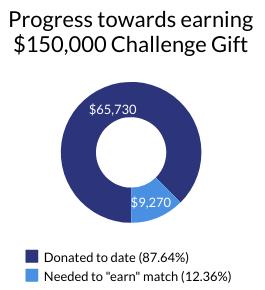
There are tipping points in history when systemic cultural and economic inequities must be faced head-on with courage and commitment. We at ASOR believe that our society is facing such a tipping point now with regards to diversity, equity, and inclusion. Rarely do we see such a convergence of understanding and a desire for change. In this moment, ASOR is fortunate that one of our trustees has taken the initiative to provide a 2-for-1 challenge gift that will enable our organization to create sustainable change.

An Exciting Initiative

ASOR has long aspired to be an instrument of change, and it is a recognized leader for setting professional, ethical, academic, and cultural standards. Nothing illustrates this better than this exciting and generous 2-for-1 challenge gift of $150,000. This is the cornerstone of a targeted campaign to raise $250,000 to promote diversity, equity, and inclusion.

The purpose of this initiative is to permanently increase participation in ASOR by students and scholars who are African American/Black and Indigenous Persons of Color (BIPOC). By acting effectively now, ASOR can be a leader in setting standards and procedures to promote greater diversity, equity, and inclusion.

How the Matching Challenge Works

This ambitious, expedited campaign, made possible by a 2:1 leadership pledge of $150,000 by Trustee Carolyn Midkiff Strange, has a June 30 deadline. From now until the end of June, every dollar contributed to this campaign (up to a total of $75,000) is being matched with two dollars. A contribution of $100 will be matched with $200, a gift of $5,000 will be matched with $10,000, and so on.

Immediate Actions

In the short term (2021), ASOR will use $50,000 to increase participation in ASOR by BIPOC students at the secondary, undergraduate, and graduate levels. ASOR will also underwrite Summer Stipends, Annual Meeting travel grants, and mentoring programs for BIPOC students and scholars.

The rest of the short-term funds (for 2021) will buoy an already-launched partnership with Archaeology in the Community (AITC). AITC is a successful non-profit centered in Washington, D.C. that fosters student and community involvement in archaeology, with an emphasis on under-served groups. Together with AITC — and building on their experience — we are developing educational resources to promote engagement in archaeology by secondary-level students.

A Permanent Endowment

ASOR will use the remaining $200,000 from this campaign to establish a permanent endowment that will generate $10,000 per year to support research scholarships, internships, and travel fellowships dedicated to BIPOC students and scholars. These fellowships will be a foundation for future efforts and will be a tangible sign of ASOR’s commitment to long-term change.

Join Us

Extending social equity and equal opportunity throughout all sectors of our world is one of the foremost challenges facing us today. You can join ASOR in making this change happen. Please consider a gift of any amount to help us earn this extraordinary $150,000 challenge gift.



[/vc_column_text][mk_padding_divider size=”20″][vc_wp_text]

OTHER WAYS TO DONATE

Donate By Phone Donate By Mail Make A Pledge
(Donate Later)
Call ASOR:
(703) 789-9229
ASOR
209 Commerce Street
Alexandria, VA 22314
E-mail ASOR
[/vc_wp_text][mk_padding_divider size=”20″][/vc_column][vc_column border_color=”rgba(170,170,170,0.01)” width=”1/6″ css=”.vc_custom_1496684098866{margin-right: 5px !important;margin-bottom: 20px !important;border-right-width: 2px !important;border-bottom-width: 2px !important;padding-top: 30px !important;padding-right: 10px !important;padding-left: 10px !important;background-color: #ffffff !important;border-right-color: rgba(227,228,228,0.75) !important;border-bottom-color: rgba(227,228,228,0.75) !important;}”][vc_wp_posts title=”BROWSE THE NEWS ARCHIVE” number=”4″][/vc_column][vc_column border_color=”rgba(170,170,170,0.01)” width=”1/6″ css=”.vc_custom_1496684008271{margin-right: 10px !important;margin-bottom: 30px !important;border-right-width: 2px !important;border-bottom-width: 2px !important;padding-top: 30px !important;padding-right: 20px !important;padding-left: 20px !important;background-color: #ffffff !important;border-right-color: rgba(227,228,228,0.75) !important;border-bottom-color: rgba(227,228,228,0.75) !important;}”][vc_column_text] [/vc_column_text][/vc_column][/vc_row]

AM21 Student Travel Scholarships

2021 ANNUAL MEETING SCHOLARSHIPS FOR STUDENT TRAVEL

In recognition of the fact that the ASOR Annual Meeting is one of the most important places for students to make connections and grow in the field, ASOR is pleased to offer the following types of support for travel to the 2021 Annual Meeting in Chicago:


TFBA recipients staffing the registration desk at the 2017 Annual Meeting.

  • Student Travel Grants: Up to ten (10) grants of $250 each are made available to students enrolled at an institution that is an institutional member of ASOR (see list of Institutional Members).
  • The Foundation for Biblical Archaeology Scholarships: Through a generous gift of The Foundation for Biblical Archaeology (TFBA), ASOR will offer up to six (6) scholarships of $700 each for students to attend the Annual Meeting who can in exchange volunteer to help support the meeting. As TFBA recipients will be interacting with many attendees during their volunteer hours, ASOR asks that all those who receive TFBA awards provide proof of vaccination. All ASOR staff working at the meeting will be vaccinated.

Applications for both types of scholarships are due on August 20, 2021 at noon ET, and successful applicants will be notified around September 3, 2021. Questions about applying can be directed to Marta Ostovich.

Click here for a list of previous Annual Meeting Scholarship recipients.

Summer Stipends: Mentoring ASOR’s Next Generation

SUMMER STIPENDS: MENTORING ASOR’S NEXT GENERATION

ASOR’s Summer Stipend Program is underway for summer 2021! May is usually when many ASOR members and students travel to undertake fieldwork. With travel still uncertain this year, ASOR launched its inaugural Summer Stipend Program. Through this initiative, Summer Stipend recipients have the opportunity to work with directors of ASOR-affiliated archaeological projects on non-fieldwork components of archaeological research.

Fueling this effort is ASOR’s commitment to expanding the diversity of our membership and supporting the next generation of scholars. ASOR seeks to increase the diversity of grant applicants by encouraging applications from BIPOC scholars and students, increasing visibility and engagement with Historically Black Colleges and Universities and community colleges, and providing financial support. This year, ASOR awarded 27 summer stipends, 6 of which went to BIPOC students.

Mentorship is a key component of the Summer Stipend Program. Over the course of the summer, stipend recipients will be taking part in monthly cohort meetings designed to assist with professional development. To continue support beyond the summer, we are also starting a mentorship program that pairs Summer Stipend students with ASOR members. The goal here is to encourage the next generation of ASOR scholars by connecting them with a supportive network that offers sound professional advice, and encourages participation on ASOR-affiliated excavation projects and in the Annual Meeting.
Interested in mentoring a student? Take a moment to fill out our Mentor Profile here. Our goal is to pair mentors and mentees by the end of the summer.

ASOR’s mentorship initiatives do not start or stop here! Numerous ASOR groups are involved with mentoring the next generation of ASOR scholars and members. The ASOR Initiative on the Status of Women has been hosting mentoring roundtable lunches at the Annual Meeting for many years. The Diversity, Equity, and Inclusion Task Force and the Early Career Scholars Committee are both also involved in efforts to support students and encourage their involvement in ASOR.

With so many avenues for ASOR members to get involved with mentoring, we hope you will find the right fit for you!

Summer at the Strange Center

SUMMER AT THE JAMES F. STRANGE CENTER

New desk awaiting the return of ASOR staff.

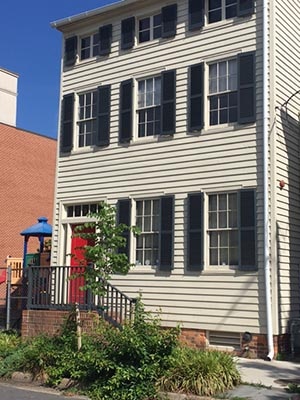
Summer has arrived at the Strange Center! Staff are still working remotely, with one staff member coming into the office to check mail a couple of times per week. One of the last moves we made before closing down in March 2020 was purchase a beautiful Queen Anne desk that will eventually find it’s home in one of our staff offices.

Orchid blooming in the Strange Center.

The first floor houses Andy’s and Meagan’s office spaces, and also contains the kitchen and work space for processing mail, printing, and scanning. The second floor has the ACOR/CAARI office, Marta and Felice’s offices, and the conference room. The third floor of the Strange Center is still empty and we hope to see the space being used by new colleagues and research associates in the upcoming years. We look forward to hosting our ASOR family at the Strange Center as travel and social interaction become easier.

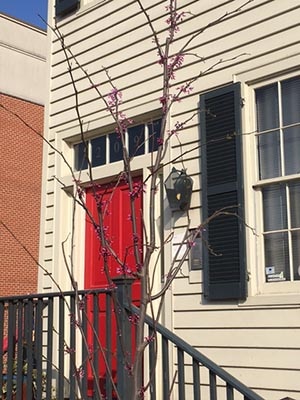
Last fall saw the arrival of our Eastern Redbud tree in front of the building, made possible by William Andreas and planted in honor of China Shelton (ACOR, CAARI). The tree is now well-established and even bloomed a little this spring. We look forward to many more years of showy pink-purple blossoms in the spring and some much-needed shade during hot Alexandria summers.

Redbud tree in June.
The first blooms of the redbud tree in March.

King St. construction.

Construction of a multi-purpose building on King St. behind the Strange Center started this spring. The four-story building will have a mix of condos, retail, and restaurant space. The building will incorporate a historical building on the corner of King St. and Payne St. that previously housed a restaurant, as well as a parking lot next to it. So far, the construction seems to be going smoothly and there were even some archaeologists surveying and test-pitting the lot this spring.

Our neighborhood in Old Town Alexandria is primed for summer with arrival of a new neighbor across the street, Goodies Frozen Custard and Treats. Goodies occupies a previously unused old ice house (ca. 1931) on Commerce St., a perfect setting for frozen treats. They just opened Memorial Day weekend.


Ice House across from the Strange Center.

ASOR Summer Hours

As in previous years, ASOR staff have the option of taking a half day on Fridays during June, July, and August, with the understanding they will work the extra hours earlier in the week. This means that after 12:30 PM ET on Fridays, ASOR staff may not be around to answer emails and office phones. ASOR staff are grateful for the chance to have a somewhat longer weekend during the summer months. Normal hours will resume in the first week of September and we look forward to the day when we are all back in the Strange Center.

We wish our ASOR family a joyful summer!

Gifts Matched 2-for-1: Diversity Campaign Update June 2

2-For-1 Match for Gifts to Endow Diversity at ASOR

Update—June 4, 2021 ($24,600 needed to earn remaining $49,200 of matching gift)

A Time for Change

There are tipping points in history when systemic cultural and economic inequities must be faced head-on with courage and commitment. We at ASOR believe that our society is facing such a tipping point now with regards to diversity, equity, and inclusion. Rarely do we see such a convergence of understanding and a desire for change. In this moment, ASOR is fortunate that one of our trustees has taken the initiative to provide a 2-for-1 challenge gift that will enable our organization to create sustainable change.

An Exciting Initiative

ASOR has long aspired to be an instrument of change, and it is a recognized leader for setting professional, ethical, academic, and cultural standards. Nothing illustrates this better than this exciting and generous 2-for-1 challenge gift of $150,000. This is the cornerstone of a targeted campaign to raise $250,000 to promote diversity, equity, and inclusion.

The purpose of this initiative is to permanently increase participation in ASOR by students and scholars who are African American/Black and Indigenous Persons of Color (BIPOC). By acting effectively now, ASOR can be a leader in setting standards and procedures to promote greater diversity, equity, and inclusion.

How the Matching Challenge Works

This ambitious, expedited campaign, made possible by a 2:1 leadership pledge of $150,000 by Trustee Carolyn Midkiff Strange, has a June 30 deadline. From now until the end of June, every dollar contributed to this campaign (up to a total of $75,000) is being matched with two dollars. A contribution of $100 will be matched with $200, a gift of $5,000 will be matched with $10,000, and so on.

Immediate Actions

In the short term (2021), ASOR will use $50,000 to increase participation in ASOR by BIPOC students at the secondary, undergraduate, and graduate levels. ASOR will also underwrite Summer Stipends, Annual Meeting travel grants, and mentoring programs for BIPOC students and scholars.

The rest of the short-term funds (for 2021) will buoy an already-launched partnership with Archaeology in the Community (AITC). AITC is a successful non-profit centered in Washington, D.C. that fosters student and community involvement in archaeology, with an emphasis on under-served groups. Together with AITC — and building on their experience — we are developing educational resources to promote engagement in archaeology by secondary-level students.

A Permanent Endowment

ASOR will use the remaining $200,000 from this campaign to establish a permanent endowment that will generate $10,000 per year to support research scholarships, internships, and travel fellowships dedicated to BIPOC students and scholars. These fellowships will be a foundation for future efforts and will be a tangible sign of ASOR’s commitment to long-term change.

Join Us

Extending social equity and equal opportunity throughout all sectors of our world is one of the foremost challenges facing us today. You can join ASOR in making this change happen. Please consider a gift of any amount to help us earn this extraordinary $150,000 challenge gift.

OTHER WAYS TO DONATE

Donate By PhoneDonate By MailMake A Pledge
(Donate Later)
Call ASOR:
(703) 789-9229
ASOR
209 Commerce Street
Alexandria, VA 22314
E-mail ASOR

Gifts Matched 2-for-1: Diversity Campaign Update June 8

2-For-1 Match for Gifts to Endow Diversity at ASOR

Update—June 13, 2021 ($11,890 needed to earn remaining $23,780 of matching gift)

A Time for Change

There are tipping points in history when systemic cultural and economic inequities must be faced head-on with courage and commitment. We at ASOR believe that our society is facing such a tipping point now with regards to diversity, equity, and inclusion. Rarely do we see such a convergence of understanding and a desire for change. In this moment, ASOR is fortunate that one of our trustees has taken the initiative to provide a 2-for-1 challenge gift that will enable our organization to create sustainable change.

An Exciting Initiative

ASOR has long aspired to be an instrument of change, and it is a recognized leader for setting professional, ethical, academic, and cultural standards. Nothing illustrates this better than this exciting and generous 2-for-1 challenge gift of $150,000. This is the cornerstone of a targeted campaign to raise $250,000 to promote diversity, equity, and inclusion.

The purpose of this initiative is to permanently increase participation in ASOR by students and scholars who are African American/Black and Indigenous Persons of Color (BIPOC). By acting effectively now, ASOR can be a leader in setting standards and procedures to promote greater diversity, equity, and inclusion.

How the Matching Challenge Works

This ambitious, expedited campaign, made possible by a 2:1 leadership pledge of $150,000 by Trustee Carolyn Midkiff Strange, has a June 30 deadline. From now until the end of June, every dollar contributed to this campaign (up to a total of $75,000) is being matched with two dollars. A contribution of $100 will be matched with $200, a gift of $5,000 will be matched with $10,000, and so on.

Immediate Actions

In the short term (2021), ASOR will use $50,000 to increase participation in ASOR by BIPOC students at the secondary, undergraduate, and graduate levels. ASOR will also underwrite Summer Stipends, Annual Meeting travel grants, and mentoring programs for BIPOC students and scholars.

The rest of the short-term funds (for 2021) will buoy an already-launched partnership with Archaeology in the Community (AITC). AITC is a successful non-profit centered in Washington, D.C. that fosters student and community involvement in archaeology, with an emphasis on under-served groups. Together with AITC — and building on their experience — we are developing educational resources to promote engagement in archaeology by secondary-level students.

A Permanent Endowment

ASOR will use the remaining $200,000 from this campaign to establish a permanent endowment that will generate $10,000 per year to support research scholarships, internships, and travel fellowships dedicated to BIPOC students and scholars. These fellowships will be a foundation for future efforts and will be a tangible sign of ASOR’s commitment to long-term change.

Join Us

Extending social equity and equal opportunity throughout all sectors of our world is one of the foremost challenges facing us today. You can join ASOR in making this change happen. Please consider a gift of any amount to help us earn this extraordinary $150,000 challenge gift.

OTHER WAYS TO DONATE

Donate By PhoneDonate By MailMake A Pledge
(Donate Later)
Call ASOR:
(703) 789-9229
ASOR
209 Commerce Street
Alexandria, VA 22314
E-mail ASOR
 

Table of Contents for NEA 84.2 (2021)

Table of Contents for Near Eastern Archaeology 84.2 (June 2021)


You can receive NEA (and other ASOR publications) through an ASOR Membership. Please e-mail the Membership office if you have any questions.

Pp. 100–109: “Yotvata in the Southern Negev and Its Association with Copper Mining and Trade in the Early Iron Age,” by Lily Singer-Avitz

Yotvata is the modern name of a small oasis located on the western edge of the southern Arabah Valley in the southern Negev. In Arabic it was called ‘Ein Ghadian, probably after the Saxaul bush (Haloxylon persicum) (ghada in Arabic), commonly found in the surrounding sands. The Arabah Valley stretches from the southern edge of the Dead Sea to the Gulf of Eilat (Aqaba). The valley has an extremely hot and dry climate. Absolute temperatures in the summer reach 45° C and the mean annual rainfall is 30 mm (Bruins 2006: 29–32). The oasis is situated on the main road to Eilat, about 40 km (25 mi.) north of the city, at an elevation of 125 m above sea level.


ASOR Members with online access: navigate to the token link email sent to you (search for “token link” in inbox) before attempting to read this article. Once you have activated your member token, click here to access the above article on The University of Chicago Press Journals’ website.

Pp. 110–119: “Everything But The Oink: On the Discovery of an Articulated Pig in Iron Age Jerusalem and Its Meaning to Judahite Consumption Practices,” by Lidar Sapir-Hen, Joe Uziel, and Ortal Chalaf

Pork consumption and avoidance during the Iron Age in the southern Levant is extensively discussed in the context of the identity of the populations of ancient Israel. It is often examined by calculating pig frequencies in faunal assemblages (Hesse 1990;Hesse and Wapnish 1997, 1998; Faust and Lev-Tov 2011; Maeir, Hitchcock, and Horwitz 2013; Meiri et al. 2013; Sapir-Hen et al. 2013; Faust and Lev-Tov 2014; Sapir-Hen, Meiri, and Finkelstein 2015; Maeir and Hitchcock 2017; Sapir-Hen 2019a). Recent studies that reviewed data on pig frequencies in correlation to the subphases of the Iron Age have shown that while frequencies of pork consumption fluctuated in the Northern Kingdom, it remained constantly low in Judah throughout the Iron Age (Sapir-Hen et al. 2013; Sapir-Hen 2019a). In Jerusalem, the capital of Judah, low frequencies or absence of pigs (0–2 percent of livestock) were found in all excavated sites (see further below). Thus, the discovery of an articulated pig in an Iron Age IIB (eighth century BCE) building during recent excavations along the eastern slopes of the City of David is intriguing.


ASOR Members with online access: navigate to the token link email sent to you (search for “token link” in inbox) before attempting to read this article. Once you have activated your member token, click here to access the above article on The University of Chicago Press Journals’ website.

Pp. 120–129: “A Bone Projectile Point and Its Possibly Associated Workshop from the Iron Age IIA of Tell eṣ-Ṣafi/Gath,” by Liora Kolska Horwitz, Maria Eniukhina, Ron Kehati, Iris Groman-Yaroslavski, and Aren M. Maeir

Although not as old as artifacts made of stone, the manufacture and use of bone tools is of great antiquity, with the earliest known bone artifacts from Lower Paleolithic sites in Africa: Olduvai Gorge (Tanzania) dating to 2.1–1.1 Ma and the sites of Swartkrans, Sterkfontein, Drimolen (South Africa), dated to around 1.8/1.7 Ma to 1.4/1.0 Ma (Bradfield and Choyke 2016). From this point on in time, alongside stone and metal artifacts, universally, people continued to manufacture and use bone tools. This practice continued even into recent times, as attested by innumerable ethnographic examples of bone artifacts and ornaments (e.g., Stordeur 1980; Ayalon and Sorek 1999; Walshe 2008; Legrand-Pineau et al. 2010; Stone 2011; Bradfield 2012). Often, lithic and metal tools were used for bone working, illustrating the continued value of bone even in historic periods.


ASOR Members with online access: navigate to the token link email sent to you search for “token link” in inbox) before attempting to read this article. Once you have activated your member token, click here to access the above article on The University of Chicago Press Journals’ website.

Pp. 130–139: “Divine Cults in the Sacred Precinct of Girsu,” by Sébastien Rey

Sumer in present-day southern Iraq is the heartland of the first cities and birthplace of writing (fig. 1). It is where, between 3500 and 2000 BCE, its inhabitants, the Sumerians, instituted the first codes of law, advanced metallurgy to craft new tools and weapons; enhanced wheel technology and invented the potter’s wheel. The Sumerians organized long-distance trade over land and sea; they carved monumental sculptures and wrote poems, epic myths, and musical hymns (Jacobsen 1987; Bottéro and Kramer 1989). They created irrigation canal networks and built bridges, temples, and stepped towers “reaching the heavens,” their time-honored ziggurats (George 1993). It is the sum of these innovations that characterizes Sumer as one of the first civilizations of the ancient world.


ASOR Members with online access: navigate to the token link email sent to you (search for “token link” in inbox) before attempting to read this article. Once you have activated your member token, click here to access the above article on The University of Chicago Press Journals’ website.

Pp. 140–147: “The Spiritual Life of Teleilat Ghassul and Building 78,” by Ben Greet

Teleilat Ghassul is a 20 ha Chalcolithic site, likely dating to between 4500–4250 BCE (Gilead 2011: 14), that consists of many interconnected domestic buildings interspersed with rooms containing elaborate frescoes. The discovery of infant burials, ritual objects, and frescoes points toward an elaborate spiritual life of the community that inhabited the site. The aim of this paper is to explore an aspect of that spiritual life in detail through a reexamination of the frescoes of Building 78 on Tell 3. Building 78 provides an excellent opportunity for this type of study, as its context links it with Drabsch’s (2015a: 52) model of lineage houses and their centrality to the spiritual life of Ghassul. Through a reinterpretation of the bird fresco and spook masks focused on their connection to the ecology of the region, I hope to demonstrate that these frescoes were thematically linked through concepts of spiritual liminality and annual cycles. This thematic link can then be used to posit the types of rituals that may have been performed by the Ghassulian community within Building 78.


ASOR Members with online access: navigate to the token link email sent to you (search for “token link” in inbox) before attempting to read this article. Once you have activated your member token, click here to access the above article on The University of Chicago Press Journals’ website.

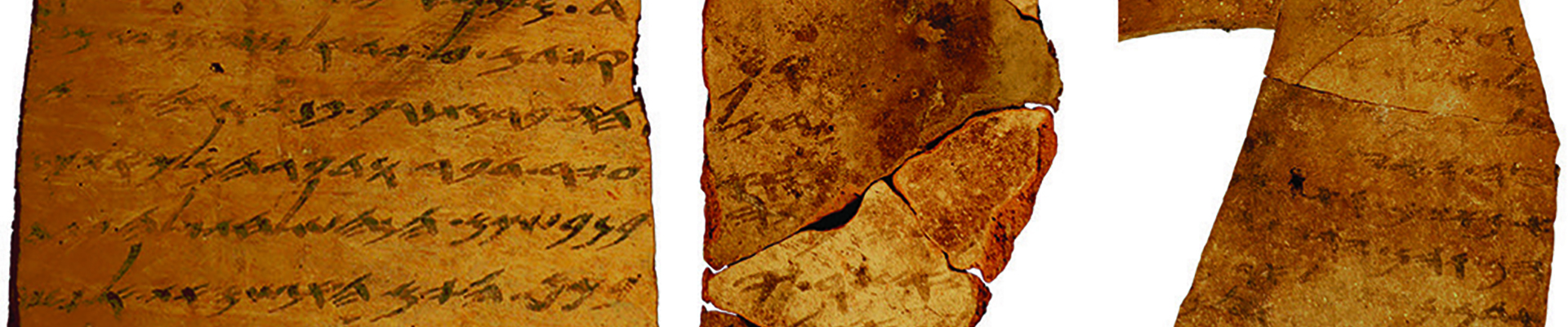
Pp. 148–158: “Literacy in Judah and Israel: Algorithmic and Forensic Examination of the Arad and Samaria Ostraca,” by Shira Faigenbaum-Golovin, Arie Shaus, Barak Sober, Yana Gerber, Eli Turkel, Eli Piasetzky, and Israel Finkelstein

A highly discussed issue in the fields of Hebrew epigraphy and biblical research is the level of literacy in the Iron Age kingdoms of Israel and Judah (Rollston 2010; Davies and Römer 2013; Schmidt 2015). Treating this topic using biblical texts, for example, the references to scribes at the time of a given monarch, may lead to circular argumentation: The reality behind a given account may reflect the time of the authors, who could have lived centuries later and retrojected their own situation back onto earlier history. A preferable methodology is to consider the material evidence—the corpora of Iron Age Hebrew ostraca from archaeological excavations. The idea is to use algorithmic and forensic methods to distinguish between handwritings and thus the number of authors in a given corpus.


ASOR Members with online access: navigate to the token link email sent to you (search for “token link” in inbox)  before attempting to read this article. Once you have activated your member token, click here to access the above article on The University of Chicago Press Journals’ website.

Pp. 159–165: “Communal Architecture at Boncuklu Tarla, Mardin Province, Turkey,” by Ergül Kodaş

Villages of the Preceramic Neolithic in the Near East are marked by a new style of construction, created to play a new, essential function. Indeed, it is in this period that, outside of residential habitations, communal buildings make their first appearance in the heart of Near Eastern villages. It is without doubt one of the first clear, historical attestations of social differentiation/organization in architecture. Truly, reflections on such constructions lead one to attribute to them adjectives aimed at encapsulating their supposed functions, such as “collective,” “communal,” “monumental,” “public,” “cultic,” “storage structures,” or even “megalithic” (Aurenche and Kozlowski 2000; Stordeur 2014; Watkins 2006; Goring-Morris and Belfer-Cohen 2014; Hauptmann 2012). The terminology here reflects considerably varying interpretations, often complementary and essentially derived from the architectural data, as the buildings reveal ground plans and internal structures that are quite distinct.


ASOR Members with online access: navigate to the token link email sent to you (search for “token link” in inbox)  before attempting to read this article. Once you have activated your member token, click here to access the above article on The University of Chicago Press Journals’ website.

Annual Meeting Update: Paper Proposal Decisions Issued

ANNUAL MEETING UPDATE: PAPER PROPOSAL DECISIONS ISSUED

Paper proposal decision notifications were issued on Saturday, May 15 for the 2021 ASOR Annual Meeting. Notifications were auto generated from ASOR’s online abstract management system powered by Oxford Abstracts and sent to the e-mail address associated with the abstract submission. Please check your spam folder for an e-mail from “ASOR 2021” if you submitted an abstract and have not yet received a decision notification. Co-authors should check with the person who submitted the abstract to find out if their paper was accepted.

Please contact Arlene Press, ASOR’s Director of Meetings and Events, if you submitted an abstract and have not received a decision notification, or if you have any questions about the 2021 ASOR Annual Meeting.

Savings Alert: There is still time to save on Annual Meeting Registration. ASOR has extended the Early Bird rates until July 23. Don’t wait until the last minute – we want to know that you plan to join us in Chicago and/or online for this year’s meeting. Registrants get access to both the in-person and virtual components, as well as access to ASOR’s Online Library through June 2022.

Harris Grant Report: Wadi el-Hudi

2020 HARRIS GRANT REPORT: THE WADI EL-HUDI EXPEDITION

ASOR’s Harris Grant helped to fund the creation and implementation of a spatially organized, archaeological database for the Wadi el-Hudi (WEH) Expedition to Egypt.  In doing so, ASOR is helping to foster original research, streamline archaeological recording and accuracy, assist international collaboration for publications, encourage scholarship, facilitate virtual visitation of the archaeological sites, and promote educational opportunities for undergraduates.

Bryan Kraemer and Ahmed Mohamed at Wadi el-Hudi.

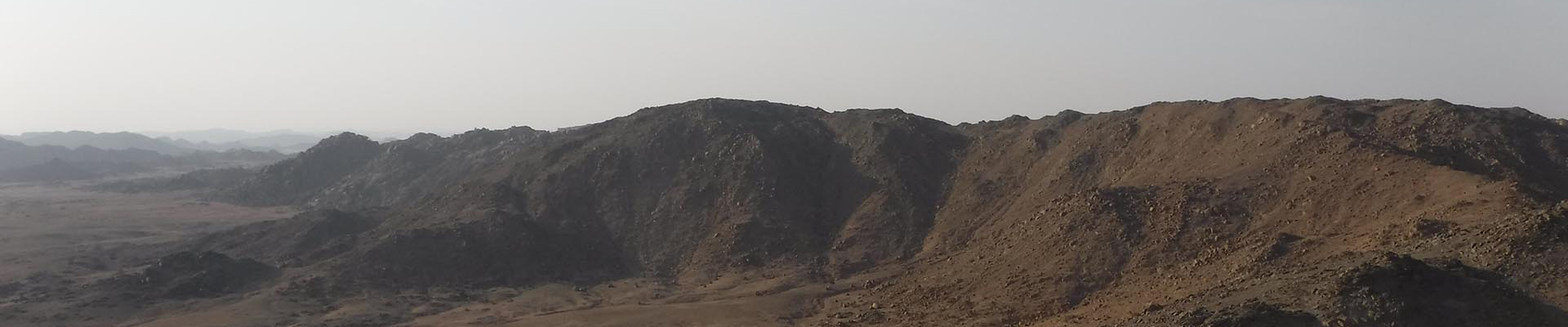
Wadi el-Hudi was the ancient world’s primary source of amethyst used in jewelry and traded throughout the ancient Mediterranean World.  The WEH Expedition is studying industrial mining practices, living conditions of miners, and administrative organization and supply of expeditions. To do this, they are mapping, exploring, and recording this unique place for the future.

The creation and implementation of the WEH database is a quintessential next step for the teams’ research, publication, and public outreach for multiple reasons.  It helps them integrate all archaeological data from finds to photos with their mapping data to spatially analyze patterns and practices across the sites.  The Wadi el-Hudi team is turning the data into a 3D virtual experience so that anyone can visit the site from home.  This database will populate the 3D models with interactive content so that viewers can look at objects or photos in the original contexts that they were found, just like the original archaeologist.

The database will also streamline archaeological work in and out of the field with increasing accuracy.  Specialists and archaeologists will be able to input data directly into the database while in the field and immediately check for missing or inaccurate information.  Similarly, the online component of the database will allow international team members to collaborate on the data in real time to speed up time to publication and the depth of analysis available.  Eventually, all of this data will be archived online for future scholars to access and use in new ways.

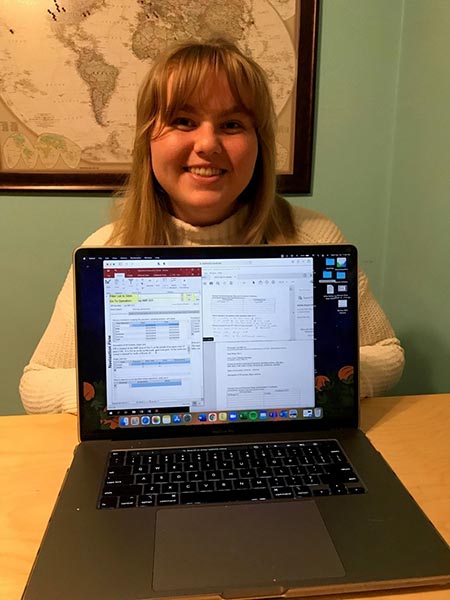
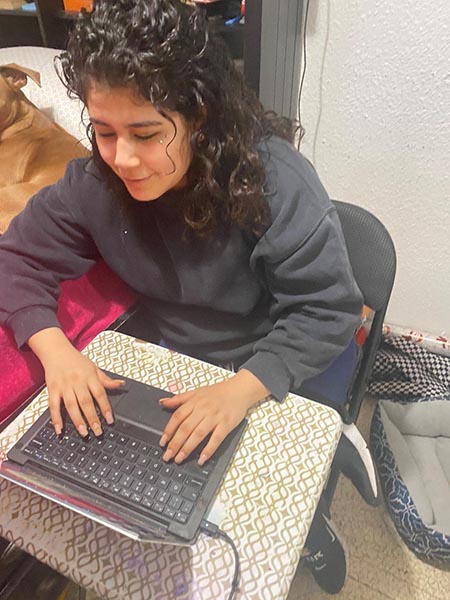
This creation of this database also provided educational opportunities for three students at California State University, San Bernardino.  With the help of ASOR, Cindy Moreno, Erika Kelley, and Fernando Sanchez were hired as the database team.  They inputted, checked, and beta-tested its usage.  This career building experience is a stepping stone in their professional lives.  As future archaeologist Erika Kelley says, “Working on the Wadi el-Hudi Expedition’s database has been an incredibly educational experience. … I have now learned more about the archaeological process, what archeologists actually do when observing and excavating a site, and the different tools they use.”  Cindy Moreno also benefited from this experience saying, “I lucked out to have been able to work with Dr. Kate Liszka and her team. … I saw a new side to what it is to be an archeologist, and I felt inspired by their mission to bring Wadi el-Hudi to life through a virtual means. …I can confidently say that this job experience has given me courage to strive for my dreams and strive to make a difference in the world.”

ASOR’s support of archaeological projects is making a difference in the world in enumerable ways.

-Kate Liszka, California State University, San Bernardino

Erika Kelley.
Cindy Moreno.
Fernando Sanchez.

ASOR Member Receives NEH Summer Stipend

ASOR MEMBER RECEIVES NEH GRANT

Rita Lucarelli receives a National Endowment for Humanities Summer Stipend

Congratulations to ASOR member Rita Lucarelli on being awarded a National Endowment for Humanities summer stipend for research leading to the publication of her book Agents of Punishment and Protection. Assessing the Demonic in First Millennium BCE Egypt. NEH’s summer stipends are designed to support scholars in preparation of a book, article, translation, archaeological report, or digital publication.

Lucarelli is Associate Professor of Egyptology in the Near Eastern Studies department, Faculty Curator of Egyptology at the Phoebe A. Hearst Museum of Anthropology, and Fellow of Digital Humanities at the University of California, Berkeley . She holds a MA in Classical Languages and Egyptology from the University of Naples “L’Orientale,” Italy and a PhD from Leiden University. Her dissertation, The Book of the Dead of Gatseshen: Ancient Egyptian Funerary Religion in the 10th Century BC, was published in 2006. Lucarelli’s current research centers around creating 3D models of ancient Egyptian coffins and examining the magical spells decorating these coffins as case-studies for investigating the materiality of the text in relation to ancient Egyptian funerary literature. She is one of the coordinators of Demonthings: The Ancient Egyptian Demonology Project and a frequent participant in ASOR’s Annual Meeting.


Detail from pedestal of inner coffin of Meretites, Nelson Atkins Museum, Kansas City MO, Inv. No.2007.12.2.A-B. (Photo by Kea Johnston.)

Agents of Punishment and Protection. Assessing the Demonic in First Millennium BCE Egypt

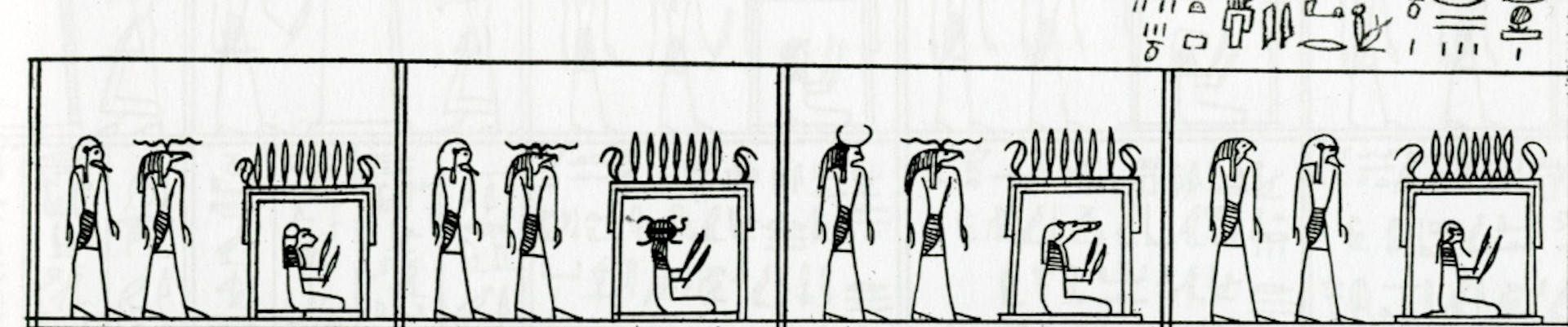
Demonology is an integral, though often neglected aspect of the ancient Egyptian religion. Defining “demons” poses issues of ontological classification, especially when dealing with an ancient civilization whose sources of study are not always descriptive neither comprehensive. In the ancient Egyptian magical texts and representations, a variegated series of liminal beings act as agents of punishment but also of protection towards the living and the dead. A contextualized and in-depth study of each of the available sources, which will be carried out in the proposed book-project, is necessary to understand the role that those agents played in the ancient Egyptian religious beliefs and how people would communicate with demons through magical practices and the help of professional ritualists. By assessing the existence of an ancient Egyptian demonology, the author will also attempt a comparative study with other discourses on demons in the ancient world.

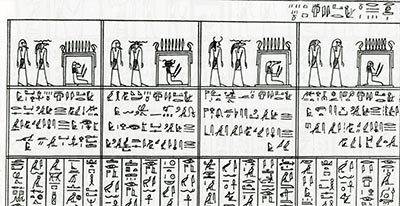
From Lepsius, K.R, Das Todtenbuch der Ägypter (nach dem hieroglyphischen Papyrus in Turin. (http://archiv.ub.uni-heidelberg.de/propylaeumdok/467/)

This year the National Endowment for the Humanities provided $24 million in grants to support 225 humanities projects nationwide. The National Humanities Alliance released the following statement from its Executive Director Stephen Kidd on this April NEH announcement:

“The National Endowment for the Humanities will support Dialogues on the Experience of War programs for veterans in Alaska, Colorado, Georgia, Maryland, Massachusetts, Michigan, New York, and Virginia. With grants for research, preservation, and curricular innovation, the NEH will continue its crucial support of the humanities in higher education. And in addition to supporting exhibitions and podcasts, grants for public programs will support a nationwide reading and discussion program on women’s suffrage.”

“We are immensely proud of the NEH’s impact across the U.S. and will continue advocating for increased federal support for future grants in 2021 and beyond.”


ASOR encourages all of our members to consider applying for NEH grants and fellowships. Applications for NEH’s 2022 summer stipends will be available May 5th. The deadline for submission is September 22, 2021. Read more about applying here.

Interested in promoting your research? Read the National Humanities Alliance’s tip sheet for working with your institution’s communications officer.