Open Position for BASOR Copyeditor

[vc_row fullwidth=”true” attached=”true” css=”.vc_custom_1496247803139{padding-top: 0px !important;padding-right: 0px !important;padding-bottom: 0px !important;padding-left: 0px !important;}”][vc_column][mk_image src=”http://www.asor.org/wp-content/uploads/2018/04/GreatTheater-Ephesus-ver2-banner-for-post.jpg” image_width=”1920″ image_height=”400″ hover=”false” margin_bottom=”0″][/vc_column][/vc_row][vc_row fullwidth=”true” css=”.vc_custom_1496682730308{padding-top: 10px !important;padding-right: 0px !important;padding-bottom: 0px !important;padding-left: 0px !important;}”][vc_column width=”1/12″ css=”.vc_custom_1496683820796{margin-right: 10px !important;}” offset=”vc_hidden-md vc_hidden-sm vc_hidden-xs”][vc_column_text]

 SHARE

[/vc_column_text][mk_image src=”http://www.asortest.org/wp-content/uploads/2017/01/social-fb-icon4.jpg” image_width=”42″ image_height=”42″ hover=”false” custom_url=”https://www.facebook.com/ASOResearch/” margin_bottom=”0″][mk_image src=”http://www.asortest.org/wp-content/uploads/2017/01/social-tw-icon4.jpg” image_width=”42″ image_height=”42″ hover=”false” custom_url=”https://twitter.com/ASOResearch?ref_src=twsrc%5Egoogle%7Ctwcamp%5Eserp%7Ctwgr%5Eauthor” margin_bottom=”0″][mk_image src=”http://www.asortest.org/wp-content/uploads/2017/01/social-in-icon4.jpg” image_width=”42″ image_height=”42″ hover=”false” custom_url=”https://www.linkedin.com/company/american-schools-of-oriental-research” margin_bottom=”0″][mk_image src=”http://www.asortest.org/wp-content/uploads/2017/01/social-ml-icon_7.jpg” image_width=”42″ image_height=”42″ hover=”false” custom_url=”mailto:asor@bu.edu” margin_bottom=”0″][mk_image src=”http://www.asortest.org/wp-content/uploads/2017/01/blog-icon3.jpg” image_width=”42″ image_height=”42″ hover=”false” custom_url=”http://asorblog.org/” margin_bottom=”0″][/vc_column][vc_column border_color=”rgba(255,255,255,0.01)” width=”1/6″ css=”.vc_custom_1496683923840{margin-right: 20px !important;border-left-width: 2px !important;padding-right: 20px !important;padding-left: 20px !important;border-left-color: #99422f !important;}”][mk_divider divider_color=”rgba(255,255,255,0.01)” thickness=”1″ margin_top=”3″ margin_bottom=”3″][vc_column_text]

NEWS@ASOR E-NEWSLETTER

ANCIENT NEAR EAST TODAY E-NEWSLETTER

PAST ASOR NEWS, MONTH BY MONTH

FY18 HONOR ROLL OF DONORS

ASOR ANNUAL MEETING

[/vc_column_text][/vc_column][vc_column border_color=”rgba(170,170,170,0.01)” width=”1/2″ css=”.vc_custom_1487276122024{margin-right: 10px !important;margin-bottom: 30px !important;border-right-width: 2px !important;border-bottom-width: 2px !important;padding-top: 30px !important;padding-right: 30px !important;padding-left: 20px !important;background-color: #ffffff !important;border-right-color: rgba(227,228,228,0.75) !important;border-bottom-color: rgba(227,228,228,0.75) !important;}”][vc_column_text responsive_align=”left”]

OPEN POSITION FOR BASOR COPYEDITOR

[/vc_column_text][vc_column_text]The Publications Committee of the American Schools of Oriental Research and the Editors of BASOR (Dr. Eric Cline and Dr. Chris Rollston) announce an open position for Copyeditor of BASOR, with a start-date of 1 January 2019. 

The Bulletin of the American Schools of Oriental Research (BASOR) is a leader among peer-reviewed academic journals of the ancient Near East. For nearly a century, since 1919 when William F. Albright originally founded it as the Bulletin of the American School of Oriental Research in Jerusalem, BASOR has served as a highly respected interdisciplinary English-language forum for scholars worldwide in subject areas such as archaeology, art, anthropology, archaeometry, bioarchaeology, archaeozoology, biblical studies, history, literature, philology, geography, and epigraphy. The journal contains articles written by leading scholars and acknowledged experts in the ancient world that cover a geographical region from Israel and Canaan to ancient Anatolia, Mesopotamia, Cyprus, and Egypt and a chronological range from the Paleolithic period through Islamic times.  The journal appears bi-annually, in May and November.

Candidates interested in this (part-time, contractor) position are encouraged to contact Drs. Cline and Rollston (ehcline@gwu.edu; rollston@gwu.edu) for more information about the position and its responsibilities and to send a current resume and letter of interest to them. Compensation will be competitive and commensurate with experience. Review of applications will begin 1 October 2018.

Job Description:

Following a first round of copyediting by the associate copyeditor:

  • Format Word doc to impose BASOR paragraph styles and standardize formatting anomalies, which facilitates editing and a clean import for the typesetters
  • Undertake a close line editing of the article, checking for spelling, punctuation, grammar, style, and general readability; insert queries into the doc file (as Word Comments) as needed; all edits are made with Track Changes turned on
  • Review tables and formats as needed (the associate copyeditor checks the sums, matches the data in the tables with that in the text)
  • Review the illustrations for size, resolution, legibility, and overall clarity; size and clean up image files as needed (using Photoshop and/or Illustrator), or ask author to do so
  • Compose an email message for the author(s) with instructions for reviewing the edited MS; include a reiteration of all the queries (from the associate copyeditor and the copyeditor) and attach all the edited files, including the article, captions, tables, appendixes, etc.

Following receipt of the reviewed/approved MS from the author:

  • Review all the authorial changes and edit as needed (for spelling, punctuation, etc.)
  • Accept all changes into new doc files (in order to keep the author’s originals intact)
  • If there are additional or unanswered queries, write to the author (or to Editors, or Associate copyeditor) to get answers
  • When all issues have been resolved and changes entered into the appropriate files, gather all finalized files and post on Dropbox; send email to editors and typesetters to alert them that files are posted

When 1st proofs are first posted:

  • Undertake a quick visual review for obvious problems, before proofs are sent to the authors; if something significant is amiss, contact typesetter for a correction; otherwise, give approval to typesetter to send out Dropbox link to the authors
  • Carefully read proofs and mark up a PDF with corrections; in addition to reading the text, review the layout for infelicities and placement of illustrations and tables relative to their callout in the text
  • Collect and collate corrections from the associate copyeditor and the authors, resolving conflicting opinions; insert all corrections into a master PDF file, including suggestions to fix layout problems
  • Revise illustration files as needed
  • Post corrected files and send notice of same to editors and typesetter.

When 2nd proofs are posted:

  • Check the proofs against corrections submitted in 1st proofs
  • Gather any new corrections from authors and editors
  • Resolve all remaining questions and post 2nd proof markups on Dropbox; send email to typesetter and editors

Follow same process for 3rd proofs, as needed, until final proofs are approved.

When all articles are typeset and compiled into a single file:

  • Review proofs for running heads, pagination, and any new material (e.g., table of contents, index, other frontmatter); notify typesetter and editors as needed.
  • Throughout the process: communicate with the authors, editors, co-copyeditor, and typesetters, on questions of content, style, layout, etc.
[/vc_column_text][/vc_column][vc_column border_color=”rgba(170,170,170,0.01)” width=”1/6″ css=”.vc_custom_1496684098866{margin-right: 5px !important;margin-bottom: 20px !important;border-right-width: 2px !important;border-bottom-width: 2px !important;padding-top: 30px !important;padding-right: 10px !important;padding-left: 10px !important;background-color: #ffffff !important;border-right-color: rgba(227,228,228,0.75) !important;border-bottom-color: rgba(227,228,228,0.75) !important;}”][vc_wp_posts title=”BROWSE THE NEWS ARCHIVE” number=”4″][/vc_column][vc_column border_color=”rgba(170,170,170,0.01)” width=”1/6″ css=”.vc_custom_1496684008271{margin-right: 10px !important;margin-bottom: 30px !important;border-right-width: 2px !important;border-bottom-width: 2px !important;padding-top: 30px !important;padding-right: 20px !important;padding-left: 20px !important;background-color: #ffffff !important;border-right-color: rgba(227,228,228,0.75) !important;border-bottom-color: rgba(227,228,228,0.75) !important;}”][vc_column_text] [/vc_column_text][/vc_column][/vc_row][vc_row][vc_column][vc_column_text] [/vc_column_text][/vc_column][/vc_row]

Report on the ASOR/EPHE-PSL European Symposium

[vc_row fullwidth=”true” attached=”true” css=”.vc_custom_1496247803139{padding-top: 0px !important;padding-right: 0px !important;padding-bottom: 0px !important;padding-left: 0px !important;}”][vc_column][mk_image src=”http://www.asor.org/wp-content/uploads/2018/04/petra-tombs-banner-for-post.jpg” image_width=”1920″ image_height=”400″ hover=”false” margin_bottom=”0″][/vc_column][/vc_row][vc_row fullwidth=”true” css=”.vc_custom_1496682730308{padding-top: 10px !important;padding-right: 0px !important;padding-bottom: 0px !important;padding-left: 0px !important;}”][vc_column width=”1/12″ css=”.vc_custom_1496683820796{margin-right: 10px !important;}” offset=”vc_hidden-md vc_hidden-sm vc_hidden-xs”][vc_column_text]

 SHARE

[/vc_column_text][mk_image src=”http://www.asortest.org/wp-content/uploads/2017/01/social-fb-icon4.jpg” image_width=”42″ image_height=”42″ hover=”false” custom_url=”https://www.facebook.com/ASOResearch/” margin_bottom=”0″][mk_image src=”http://www.asortest.org/wp-content/uploads/2017/01/social-tw-icon4.jpg” image_width=”42″ image_height=”42″ hover=”false” custom_url=”https://twitter.com/ASOResearch?ref_src=twsrc%5Egoogle%7Ctwcamp%5Eserp%7Ctwgr%5Eauthor” margin_bottom=”0″][mk_image src=”http://www.asortest.org/wp-content/uploads/2017/01/social-in-icon4.jpg” image_width=”42″ image_height=”42″ hover=”false” custom_url=”https://www.linkedin.com/company/american-schools-of-oriental-research” margin_bottom=”0″][mk_image src=”http://www.asortest.org/wp-content/uploads/2017/01/social-ml-icon_7.jpg” image_width=”42″ image_height=”42″ hover=”false” custom_url=”mailto:asor@bu.edu” margin_bottom=”0″][mk_image src=”http://www.asortest.org/wp-content/uploads/2017/01/blog-icon3.jpg” image_width=”42″ image_height=”42″ hover=”false” custom_url=”http://asorblog.org/” margin_bottom=”0″][/vc_column][vc_column border_color=”rgba(255,255,255,0.01)” width=”1/6″ css=”.vc_custom_1496683923840{margin-right: 20px !important;border-left-width: 2px !important;padding-right: 20px !important;padding-left: 20px !important;border-left-color: #99422f !important;}”][mk_divider divider_color=”rgba(255,255,255,0.01)” thickness=”1″ margin_top=”3″ margin_bottom=”3″][vc_column_text]

NEWS@ASOR E-NEWSLETTER

ANCIENT NEAR EAST TODAY E-NEWSLETTER

PAST ASOR NEWS, MONTH BY MONTH

FY18 HONOR ROLL OF DONORS

ASOR ANNUAL MEETING

[/vc_column_text][/vc_column][vc_column border_color=”rgba(170,170,170,0.01)” width=”1/2″ css=”.vc_custom_1487276122024{margin-right: 10px !important;margin-bottom: 30px !important;border-right-width: 2px !important;border-bottom-width: 2px !important;padding-top: 30px !important;padding-right: 30px !important;padding-left: 20px !important;background-color: #ffffff !important;border-right-color: rgba(227,228,228,0.75) !important;border-bottom-color: rgba(227,228,228,0.75) !important;}”][vc_column_text responsive_align=”left”]

REPORT ON THE ASOR/EPHE-PSL EUROPEAN SYMPOSIUM

Randall Younker, Chair, ASOR Committee on Membership and Outreach

[/vc_column_text][vc_column_text]

The Salle Liard, at the Sorbonne. Photo: Wikimedia Commons

The ASOR Committee on Membership and Outreach had its first overseas event at the Sorbonne in Paris Sept 4-6, 2018. The main venue was in the elegant Salle Liard, a gilded room with paintings of some of the great French philosophers for inspiration (although the wooden benches were a bit hard!).

The event was co-sponsored with the EPHE-PSL — the École Pratique des Hautes Études, of the Paris Sciences et Lettres Research University. Honorary Chairs were Susan Ackerman, President of ASOR, and Hubert Bost, President of EPHE-PSL. The event was co-organized by Vanessa Bigot Juloux (EPHE-PSL, Andrews University, ASOR) and Randall W. Younker (Andrews University, ASOR). As part of her organization efforts, Vanessa created a very nice webpage for the event, and we invite all ASOR members to visit it!

The event was divided into morning sessions on the topic of “Interaction between Violence, Order, and Conflict within the Political Sphere of Ancient Worlds,” and afternoon sessions, on “Collaborative Projects among European and International Scholars for the Study of Ancient Worlds Using Digital Approaches.” Nineteen different scholars presented papers in the “Violence” sessions, and there were fifteen different “Digital Approaches” presentations, some with multiple presenters.

ASOR president Susan Ackerman delivering opening remarks. Photo: Randall Younker

There were about 55 individuals that attended, and we had 47 hits from colleagues following us on streaming video. The participation favored younger scholars—doctoral students and post-docs. A few senior scholars also joined, including Martha Roth from Chicago, who was very supportive.

Susan gave a speech at the beginning letting folks know about ASOR, its history, etc., and attended every session! The venues were pleasant—and the extras—coffees, receptions, and the special tour hosted by one of the curators of the Near Eastern section of the Louvre—open only to our group–was wonderful. We received many compliments for holding the event and there was much appreciation for the role of ASOR. The participants were enthusiastic. Several of the young scholars joined ASOR.

Paris symposium at the Louvre. Photo: Randall Younker

Since it was our first event, there were naturally some glitches (mostly technological) and other things we saw that can be improved, but overall it was a success. We hope to conduct a survey of the participants to help us gauge the success of the event and to help the Membership and Outreach Committee consider how we can obtain the maximum benefits for ASOR from such events in the future.

In short, we plan to use this event and what we have learned from it to create even more successful events in the future. Our next symposium is tentatively planned for Palermo in April — so stay tuned!

[/vc_column_text][/vc_column][vc_column border_color=”rgba(170,170,170,0.01)” width=”1/6″ css=”.vc_custom_1496684098866{margin-right: 5px !important;margin-bottom: 20px !important;border-right-width: 2px !important;border-bottom-width: 2px !important;padding-top: 30px !important;padding-right: 10px !important;padding-left: 10px !important;background-color: #ffffff !important;border-right-color: rgba(227,228,228,0.75) !important;border-bottom-color: rgba(227,228,228,0.75) !important;}”][vc_wp_posts title=”BROWSE THE NEWS ARCHIVE” number=”4″][/vc_column][vc_column border_color=”rgba(170,170,170,0.01)” width=”1/6″ css=”.vc_custom_1496684008271{margin-right: 10px !important;margin-bottom: 30px !important;border-right-width: 2px !important;border-bottom-width: 2px !important;padding-top: 30px !important;padding-right: 20px !important;padding-left: 20px !important;background-color: #ffffff !important;border-right-color: rgba(227,228,228,0.75) !important;border-bottom-color: rgba(227,228,228,0.75) !important;}”][vc_column_text] [/vc_column_text][/vc_column][/vc_row]

Fellowship Report: Christopher W. Jones

DIGGING AS A HISTORIAN

Christopher W. Jones, 2017 Eric and Carol Meyers Excavation Fellowship Recipient

Lorem ipsum dolor sit amet, consectetur adipiscing elit. Ut elit tellus, luctus nec ullamcorper mattis, pulvinar dapibus leo.

Gertrude Bell’s Mesopotamian Archaeological Photographs

[vc_row fullwidth=”true” attached=”true” css=”.vc_custom_1496247803139{padding-top: 0px !important;padding-right: 0px !important;padding-bottom: 0px !important;padding-left: 0px !important;}”][vc_column][mk_image src=”http://www.asor.org/wp-content/uploads/2018/05/Screen-Shot-2018-05-18-at-9.32.09-AM-2.png” image_width=”1920″ image_height=”600″ crop=”false” hover=”false” margin_bottom=”0″][/vc_column][/vc_row][vc_row fullwidth=”true” css=”.vc_custom_1496682730308{padding-top: 10px !important;padding-right: 0px !important;padding-bottom: 0px !important;padding-left: 0px !important;}”][vc_column width=”1/12″ css=”.vc_custom_1496683820796{margin-right: 10px !important;}” offset=”vc_hidden-md vc_hidden-sm vc_hidden-xs”][vc_column_text]

 SHARE

[/vc_column_text][mk_image src=”http://www.asortest.org/wp-content/uploads/2017/01/social-fb-icon4.jpg” image_width=”42″ image_height=”42″ hover=”false” custom_url=”https://www.facebook.com/ASOResearch/” margin_bottom=”0″][mk_image src=”http://www.asortest.org/wp-content/uploads/2017/01/social-tw-icon4.jpg” image_width=”42″ image_height=”42″ hover=”false” custom_url=”https://twitter.com/ASOResearch?ref_src=twsrc%5Egoogle%7Ctwcamp%5Eserp%7Ctwgr%5Eauthor” margin_bottom=”0″][mk_image src=”http://www.asortest.org/wp-content/uploads/2017/01/social-in-icon4.jpg” image_width=”42″ image_height=”42″ hover=”false” custom_url=”https://www.linkedin.com/company/american-schools-of-oriental-research” margin_bottom=”0″][mk_image src=”http://www.asortest.org/wp-content/uploads/2017/01/social-ml-icon_7.jpg” image_width=”42″ image_height=”42″ hover=”false” custom_url=”mailto:asor@bu.edu” margin_bottom=”0″][mk_image src=”http://www.asortest.org/wp-content/uploads/2017/01/blog-icon3.jpg” image_width=”42″ image_height=”42″ hover=”false” custom_url=”http://asorblog.org/” margin_bottom=”0″][/vc_column][vc_column border_color=”rgba(255,255,255,0.01)” width=”1/6″ css=”.vc_custom_1496683923840{margin-right: 20px !important;border-left-width: 2px !important;padding-right: 20px !important;padding-left: 20px !important;border-left-color: #99422f !important;}”][mk_divider divider_color=”rgba(255,255,255,0.01)” thickness=”1″ margin_top=”3″ margin_bottom=”3″][vc_column_text]

NEWS@ASOR E-NEWSLETTER

ANCIENT NEAR EAST TODAY

PAST ASOR NEWS, MONTH BY MONTH

FY18 HONOR ROLL OF DONORS

ASOR ANNUAL MEETING

[/vc_column_text][/vc_column][vc_column border_color=”rgba(170,170,170,0.01)” width=”1/2″ css=”.vc_custom_1487276122024{margin-right: 10px !important;margin-bottom: 30px !important;border-right-width: 2px !important;border-bottom-width: 2px !important;padding-top: 30px !important;padding-right: 30px !important;padding-left: 20px !important;background-color: #ffffff !important;border-right-color: rgba(227,228,228,0.75) !important;border-bottom-color: rgba(227,228,228,0.75) !important;}”][vc_column_text responsive_align=”left”]

Gertrude Bell’s Mesopotamian Archaeological Photographs

[/vc_column_text][vc_column_text]
Available until September 21, 2018[/vc_column_text][mk_divider][vc_column_text]Near Eastern Archaeology, June 2018, “Gertrude Bell’s Mesopotamian Archaeological Photographs” by Lisa Cooper (University of British Columbia)

Photographs taken by Gertrude Bell during her 1909 and 1911 archaeological trips to Mesopotamia provide not only a valuable record of sites, monuments, and landscapes that have suffered near or complete destruction over the past one hundred years, they also provide insight into the mindset, aims, and agendas Bell held when she produced these images. Her photographs taken at two sites in particular, Assur and Ukhaidir, highlight some of her attitudes and motivations at the time. On the one hand, in the case of Assur, the photos reflect her admiration for her European archaeological colleagues’ skill at excavation and concede their claim to the ancient city’s glorious past. On the other hand, the photographs highlight her efforts to showcase her own archaeological knowledge. Many also reflect a sympathetic stance towards the people of modern Mesopotamia, acknowledging their vital presence and often regarding them as the inheritors of the country’s rich ancient legacy.

[/vc_column_text][mk_divider][vc_column_text][/vc_column_text][/vc_column][vc_column border_color=”rgba(170,170,170,0.01)” width=”1/6″ css=”.vc_custom_1496684098866{margin-right: 5px !important;margin-bottom: 20px !important;border-right-width: 2px !important;border-bottom-width: 2px !important;padding-top: 30px !important;padding-right: 10px !important;padding-left: 10px !important;background-color: #ffffff !important;border-right-color: rgba(227,228,228,0.75) !important;border-bottom-color: rgba(227,228,228,0.75) !important;}”][vc_wp_posts title=”BROWSE THE NEWS ARCHIVE” number=”4″][/vc_column][vc_column border_color=”rgba(170,170,170,0.01)” width=”1/6″ css=”.vc_custom_1496684008271{margin-right: 10px !important;margin-bottom: 30px !important;border-right-width: 2px !important;border-bottom-width: 2px !important;padding-top: 30px !important;padding-right: 20px !important;padding-left: 20px !important;background-color: #ffffff !important;border-right-color: rgba(227,228,228,0.75) !important;border-bottom-color: rgba(227,228,228,0.75) !important;}”][vc_column_text] [/vc_column_text][/vc_column][/vc_row]

The Site of Pella in Jordan: A Case Study for Developing Interpretive Strategies in an Archaeological Heritage Attraction

[vc_row fullwidth=”true” attached=”true” css=”.vc_custom_1496247803139{padding-top: 0px !important;padding-right: 0px !important;padding-bottom: 0px !important;padding-left: 0px !important;}”][vc_column][mk_image src=”http://www.asor.org/wp-content/uploads/2018/05/Screen-Shot-2018-05-18-at-9.32.09-AM-2.png” image_width=”1920″ image_height=”600″ crop=”false” hover=”false” margin_bottom=”0″][/vc_column][/vc_row][vc_row fullwidth=”true” css=”.vc_custom_1496682730308{padding-top: 10px !important;padding-right: 0px !important;padding-bottom: 0px !important;padding-left: 0px !important;}”][vc_column width=”1/12″ css=”.vc_custom_1496683820796{margin-right: 10px !important;}” offset=”vc_hidden-md vc_hidden-sm vc_hidden-xs”][vc_column_text]

 SHARE

[/vc_column_text][mk_image src=”http://www.asortest.org/wp-content/uploads/2017/01/social-fb-icon4.jpg” image_width=”42″ image_height=”42″ hover=”false” custom_url=”https://www.facebook.com/ASOResearch/” margin_bottom=”0″][mk_image src=”http://www.asortest.org/wp-content/uploads/2017/01/social-tw-icon4.jpg” image_width=”42″ image_height=”42″ hover=”false” custom_url=”https://twitter.com/ASOResearch?ref_src=twsrc%5Egoogle%7Ctwcamp%5Eserp%7Ctwgr%5Eauthor” margin_bottom=”0″][mk_image src=”http://www.asortest.org/wp-content/uploads/2017/01/social-in-icon4.jpg” image_width=”42″ image_height=”42″ hover=”false” custom_url=”https://www.linkedin.com/company/american-schools-of-oriental-research” margin_bottom=”0″][mk_image src=”http://www.asortest.org/wp-content/uploads/2017/01/social-ml-icon_7.jpg” image_width=”42″ image_height=”42″ hover=”false” custom_url=”mailto:asor@bu.edu” margin_bottom=”0″][mk_image src=”http://www.asortest.org/wp-content/uploads/2017/01/blog-icon3.jpg” image_width=”42″ image_height=”42″ hover=”false” custom_url=”http://asorblog.org/” margin_bottom=”0″][/vc_column][vc_column border_color=”rgba(255,255,255,0.01)” width=”1/6″ css=”.vc_custom_1496683923840{margin-right: 20px !important;border-left-width: 2px !important;padding-right: 20px !important;padding-left: 20px !important;border-left-color: #99422f !important;}”][mk_divider divider_color=”rgba(255,255,255,0.01)” thickness=”1″ margin_top=”3″ margin_bottom=”3″][vc_column_text]

NEWS@ASOR E-NEWSLETTER

ANCIENT NEAR EAST TODAY

PAST ASOR NEWS, MONTH BY MONTH

FY18 HONOR ROLL OF DONORS

ASOR ANNUAL MEETING

[/vc_column_text][/vc_column][vc_column border_color=”rgba(170,170,170,0.01)” width=”1/2″ css=”.vc_custom_1487276122024{margin-right: 10px !important;margin-bottom: 30px !important;border-right-width: 2px !important;border-bottom-width: 2px !important;padding-top: 30px !important;padding-right: 30px !important;padding-left: 20px !important;background-color: #ffffff !important;border-right-color: rgba(227,228,228,0.75) !important;border-bottom-color: rgba(227,228,228,0.75) !important;}”][vc_column_text responsive_align=”left”]

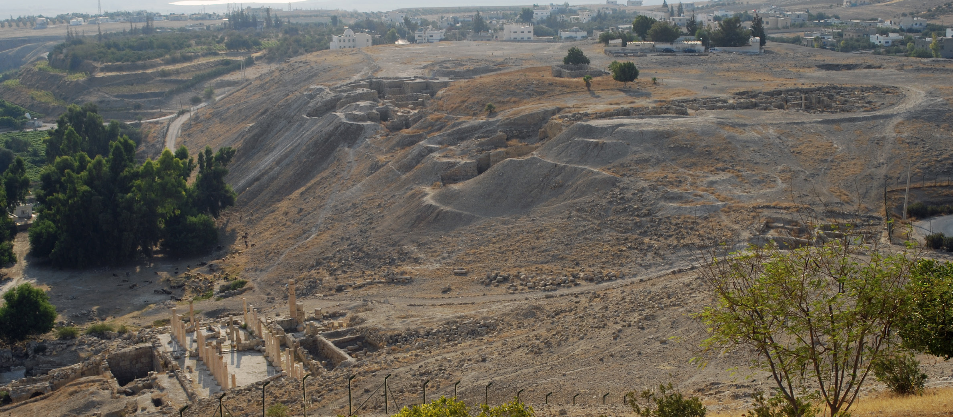
The Site of Pella in Jordan: A Case Study for Developing Interpretive Strategies in an Archaeological Heritage Attraction

[/vc_column_text][vc_column_text]
Available until September 14, 2018[/vc_column_text][mk_divider][vc_column_text]Near Eastern Archaeology, June 2018, “The Site of Pella in Jordan: A Case Study for Developing Interpretive Strategies in an Archaeological Heritage Attraction” by Abdelkader Ababneh (Yarmouk University)

The interpretation of archaeological sites and landscapes for the benefit of the wider public has been of interest to heritage managers, archaeologists, and public groups ever since sites have been open for visitation. However, those responsible for interpreting archaeological sites for presentation to the public often fail to take advantage of a site’s interpretive potential. Interpretation of archaeological sites is a relatively recent activity in Jordan, as is their valuing and heritage management. This study explores issues relating to site interpretation and the potential benefits of improved interpretive strategies. Based on an analysis of the literature and on an exploratory study at the site of Tabqat Fahl (ancient Pella) the author offers concrete recommendations for revealing the potential of the site and improving the interpretive media choices that can be used to communicate the site’s themes to visitors. The aim is to preserve the site into the future and to revitalize it by improving the standard of information about the natural and cultural heritage value found there. Realizing the full potential of the site of Pella is a task that will require the cooperation of a wide range of disciplines and institutions, including historical, architectural, and archaeological.

[/vc_column_text][mk_divider][vc_column_text][/vc_column_text][/vc_column][vc_column border_color=”rgba(170,170,170,0.01)” width=”1/6″ css=”.vc_custom_1496684098866{margin-right: 5px !important;margin-bottom: 20px !important;border-right-width: 2px !important;border-bottom-width: 2px !important;padding-top: 30px !important;padding-right: 10px !important;padding-left: 10px !important;background-color: #ffffff !important;border-right-color: rgba(227,228,228,0.75) !important;border-bottom-color: rgba(227,228,228,0.75) !important;}”][vc_wp_posts title=”BROWSE THE NEWS ARCHIVE” number=”4″][/vc_column][vc_column border_color=”rgba(170,170,170,0.01)” width=”1/6″ css=”.vc_custom_1496684008271{margin-right: 10px !important;margin-bottom: 30px !important;border-right-width: 2px !important;border-bottom-width: 2px !important;padding-top: 30px !important;padding-right: 20px !important;padding-left: 20px !important;background-color: #ffffff !important;border-right-color: rgba(227,228,228,0.75) !important;border-bottom-color: rgba(227,228,228,0.75) !important;}”][vc_column_text] [/vc_column_text][/vc_column][/vc_row]

Marta Ostovich is ASOR’s New Manager of Programs

[vc_row fullwidth=”true” attached=”true” css=”.vc_custom_1496247803139{padding-top: 0px !important;padding-right: 0px !important;padding-bottom: 0px !important;padding-left: 0px !important;}”][vc_column][mk_image src=”http://www.asor.org/wp-content/uploads/2018/04/petra-tombs-banner-for-post.jpg” image_width=”1920″ image_height=”400″ hover=”false” margin_bottom=”0″][/vc_column][/vc_row][vc_row fullwidth=”true” css=”.vc_custom_1496682730308{padding-top: 10px !important;padding-right: 0px !important;padding-bottom: 0px !important;padding-left: 0px !important;}”][vc_column width=”1/12″ css=”.vc_custom_1496683820796{margin-right: 10px !important;}” offset=”vc_hidden-md vc_hidden-sm vc_hidden-xs”][vc_column_text]

 SHARE

[/vc_column_text][mk_image src=”http://www.asortest.org/wp-content/uploads/2017/01/social-fb-icon4.jpg” image_width=”42″ image_height=”42″ hover=”false” custom_url=”https://www.facebook.com/ASOResearch/” margin_bottom=”0″][mk_image src=”http://www.asortest.org/wp-content/uploads/2017/01/social-tw-icon4.jpg” image_width=”42″ image_height=”42″ hover=”false” custom_url=”https://twitter.com/ASOResearch?ref_src=twsrc%5Egoogle%7Ctwcamp%5Eserp%7Ctwgr%5Eauthor” margin_bottom=”0″][mk_image src=”http://www.asortest.org/wp-content/uploads/2017/01/social-in-icon4.jpg” image_width=”42″ image_height=”42″ hover=”false” custom_url=”https://www.linkedin.com/company/american-schools-of-oriental-research” margin_bottom=”0″][mk_image src=”http://www.asortest.org/wp-content/uploads/2017/01/social-ml-icon_7.jpg” image_width=”42″ image_height=”42″ hover=”false” custom_url=”mailto:asor@bu.edu” margin_bottom=”0″][mk_image src=”http://www.asortest.org/wp-content/uploads/2017/01/blog-icon3.jpg” image_width=”42″ image_height=”42″ hover=”false” custom_url=”http://asorblog.org/” margin_bottom=”0″][/vc_column][vc_column border_color=”rgba(255,255,255,0.01)” width=”1/6″ css=”.vc_custom_1496683923840{margin-right: 20px !important;border-left-width: 2px !important;padding-right: 20px !important;padding-left: 20px !important;border-left-color: #99422f !important;}”][mk_divider divider_color=”rgba(255,255,255,0.01)” thickness=”1″ margin_top=”3″ margin_bottom=”3″][vc_column_text]

NEWS@ASOR E-NEWSLETTER

ANCIENT NEAR EAST TODAY E-NEWSLETTER

PAST ASOR NEWS, MONTH BY MONTH

FY18 HONOR ROLL OF DONORS

ASOR ANNUAL MEETING

[/vc_column_text][/vc_column][vc_column border_color=”rgba(170,170,170,0.01)” width=”1/2″ css=”.vc_custom_1487276122024{margin-right: 10px !important;margin-bottom: 30px !important;border-right-width: 2px !important;border-bottom-width: 2px !important;padding-top: 30px !important;padding-right: 30px !important;padding-left: 20px !important;background-color: #ffffff !important;border-right-color: rgba(227,228,228,0.75) !important;border-bottom-color: rgba(227,228,228,0.75) !important;}”][vc_column_text responsive_align=”left”]

MARTA OSTOVICH IS ASOR’S NEW MANAGER OF PROGRAMS

[/vc_column_text][vc_column_text]Marta Ostovich began working at ASOR in March 2018, as an Office Assistant. Starting July 1, she assumed a new role as Manager of Programs. Marta will be relocating to Alexandria later in September, and she will work with ASOR Executive Director Andy Vaughn with the transition from Boston to ASOR’s new home and with hiring and training of new staff members. Her duties as Manager of Programs include assisting with fellowships, donor relations, membership fulfillment, planning and support for the Annual Meeting, and website maintenance.

A native Minnesotan, Marta has spent the last 18 years in Boston. She completed her B.A. in the University Professors’ Program at Boston University with a concentration on Archaeology and Ethics. Her undergraduate thesis addressed the interplay of archaeology, politics, and collective memory and was entitled, “Masada: Excavation of a Myth.”

Marta spent 12 years as a staff member on the Spanish island of Menorca as part of Boston University’s archaeological field school at Torre d’en Galmes. In addition to lecturing and assisting with the field school curriculum, she was responsible for supervising both excavation and laboratory work at the site, which was occupied from the Iron Age through Medieval periods. One of the most noteworthy finds was an in-tact kitchen from the Medieval Muslim (13th century) occupation of the site-the first of its kind on the island. Marta assisted with designing an exhibition of the finds from this kitchen for the local museum.  She has also been part of archaeological excavations in Italy and Greece and traveled to Montenegro and Vietnam for cultural heritage work. She continues to be interested in the relationship between cultural tourism and archaeological sites.

Marta is familiar with the academic and administrative sides of archaeological research. While at Boston University, she worked at the Center for Archaeological Studies as an administrator and archives assistant and at the Journal of Field Archaeology as an editorial assistant. In addition to her archaeological background, Marta brings years of experience in the hospitality industry, where she has done everything from mixing drinks behind the bar to financial management of restaurants, to her new position.[/vc_column_text][/vc_column][vc_column border_color=”rgba(170,170,170,0.01)” width=”1/6″ css=”.vc_custom_1496684098866{margin-right: 5px !important;margin-bottom: 20px !important;border-right-width: 2px !important;border-bottom-width: 2px !important;padding-top: 30px !important;padding-right: 10px !important;padding-left: 10px !important;background-color: #ffffff !important;border-right-color: rgba(227,228,228,0.75) !important;border-bottom-color: rgba(227,228,228,0.75) !important;}”][vc_wp_posts title=”BROWSE THE NEWS ARCHIVE” number=”4″][/vc_column][vc_column border_color=”rgba(170,170,170,0.01)” width=”1/6″ css=”.vc_custom_1496684008271{margin-right: 10px !important;margin-bottom: 30px !important;border-right-width: 2px !important;border-bottom-width: 2px !important;padding-top: 30px !important;padding-right: 20px !important;padding-left: 20px !important;background-color: #ffffff !important;border-right-color: rgba(227,228,228,0.75) !important;border-bottom-color: rgba(227,228,228,0.75) !important;}”][vc_column_text] [/vc_column_text][/vc_column][/vc_row]

Submit Your Photos for the ASOR Website

[vc_row fullwidth=”true” attached=”true” css=”.vc_custom_1496247803139{padding-top: 0px !important;padding-right: 0px !important;padding-bottom: 0px !important;padding-left: 0px !important;}”][vc_column][mk_image src=”http://www.asor.org/wp-content/uploads/2018/04/2147ExcavatedRemainsUpperCityHattusha-banner-for-post.jpg” image_width=”1920″ image_height=”400″ hover=”false” margin_bottom=”0″][/vc_column][/vc_row][vc_row fullwidth=”true” css=”.vc_custom_1496682730308{padding-top: 10px !important;padding-right: 0px !important;padding-bottom: 0px !important;padding-left: 0px !important;}”][vc_column width=”1/12″ css=”.vc_custom_1496683820796{margin-right: 10px !important;}” offset=”vc_hidden-md vc_hidden-sm vc_hidden-xs”][vc_column_text]

 SHARE

[/vc_column_text][mk_image src=”http://www.asortest.org/wp-content/uploads/2017/01/social-fb-icon4.jpg” image_width=”42″ image_height=”42″ hover=”false” custom_url=”https://www.facebook.com/ASOResearch/” margin_bottom=”0″][mk_image src=”http://www.asortest.org/wp-content/uploads/2017/01/social-tw-icon4.jpg” image_width=”42″ image_height=”42″ hover=”false” custom_url=”https://twitter.com/ASOResearch?ref_src=twsrc%5Egoogle%7Ctwcamp%5Eserp%7Ctwgr%5Eauthor” margin_bottom=”0″][mk_image src=”http://www.asortest.org/wp-content/uploads/2017/01/social-in-icon4.jpg” image_width=”42″ image_height=”42″ hover=”false” custom_url=”https://www.linkedin.com/company/american-schools-of-oriental-research” margin_bottom=”0″][mk_image src=”http://www.asortest.org/wp-content/uploads/2017/01/social-ml-icon_7.jpg” image_width=”42″ image_height=”42″ hover=”false” custom_url=”mailto:asor@bu.edu” margin_bottom=”0″][mk_image src=”http://www.asortest.org/wp-content/uploads/2017/01/blog-icon3.jpg” image_width=”42″ image_height=”42″ hover=”false” custom_url=”http://asorblog.org/” margin_bottom=”0″][/vc_column][vc_column border_color=”rgba(255,255,255,0.01)” width=”1/6″ css=”.vc_custom_1496683923840{margin-right: 20px !important;border-left-width: 2px !important;padding-right: 20px !important;padding-left: 20px !important;border-left-color: #99422f !important;}”][mk_divider divider_color=”rgba(255,255,255,0.01)” thickness=”1″ margin_top=”3″ margin_bottom=”3″][vc_column_text]

NEWS@ASOR E-NEWSLETTER

ANCIENT NEAR EAST TODAY E-NEWSLETTER

PAST ASOR NEWS, MONTH BY MONTH

FY18 HONOR ROLL OF DONORS

ASOR ANNUAL MEETING

[/vc_column_text][/vc_column][vc_column border_color=”rgba(170,170,170,0.01)” width=”1/2″ css=”.vc_custom_1487276122024{margin-right: 10px !important;margin-bottom: 30px !important;border-right-width: 2px !important;border-bottom-width: 2px !important;padding-top: 30px !important;padding-right: 30px !important;padding-left: 20px !important;background-color: #ffffff !important;border-right-color: rgba(227,228,228,0.75) !important;border-bottom-color: rgba(227,228,228,0.75) !important;}”][vc_column_text responsive_align=”left”]

SUBMIT YOUR PHOTOS FOR THE ASOR WEBSITE

Submit your images, and they may be featured throughout the ASOR website!

[/vc_column_text][vc_column_text]You may have noticed that photos are a central feature of the ASOR website. ASOR wants to feature your best landscapes, panoramas, artifact portraits, and high quality candids. We will choose the images that best suit the site from different countries where ASOR members work to feature in the homepage slideshow that will change monthly. Other images may be chosen for banner images on other webpages throughout the website.

Email your entries, along with an entry form to info@asor.org.

Entries should be high resolution (at least 300 dpi). As described in the submission form, photos should be named in such a way as to describe basic information, the location, and date. Submitters are also encouraged (but not required) to include a brief description of each photo in a Word file that should be sent together with the submission form. By submitting photo(s) and signing the submission form, you guarantee that you are the copyright holder and have the ability to transfer rights to ASOR. You are granting ASOR the non-exclusive right use the photo in any way it sees fit on the ASOR website, in ASOR social media, and/or in ASOR promotional materials. You also grant ASOR the permission and right to use the image(s) on a resource page for members and friends with the understanding that ASOR will not charge for the images.

Please note that ASOR will not accept images of artifacts from the antiquities market or images that might promote the trade of antiquities in any way. Submissions must comply with ASOR’s Policy on Professional Conduct.[/vc_column_text][mk_divider][mk_button size=”xlarge” bg_color=”#2f2f80″ txt_color=”#dddddd” url=”http://www.asor.org/wp-content/uploads/2017/07/Photo-Submission-Rules.pdf” align=”center”]Download Entry Form[/mk_button][/vc_column][vc_column border_color=”rgba(170,170,170,0.01)” width=”1/6″ css=”.vc_custom_1496684098866{margin-right: 5px !important;margin-bottom: 20px !important;border-right-width: 2px !important;border-bottom-width: 2px !important;padding-top: 30px !important;padding-right: 10px !important;padding-left: 10px !important;background-color: #ffffff !important;border-right-color: rgba(227,228,228,0.75) !important;border-bottom-color: rgba(227,228,228,0.75) !important;}”][vc_wp_posts title=”BROWSE THE NEWS ARCHIVE” number=”4″][/vc_column][vc_column border_color=”rgba(170,170,170,0.01)” width=”1/6″ css=”.vc_custom_1496684008271{margin-right: 10px !important;margin-bottom: 30px !important;border-right-width: 2px !important;border-bottom-width: 2px !important;padding-top: 30px !important;padding-right: 20px !important;padding-left: 20px !important;background-color: #ffffff !important;border-right-color: rgba(227,228,228,0.75) !important;border-bottom-color: rgba(227,228,228,0.75) !important;}”][vc_column_text] [/vc_column_text][/vc_column][/vc_row]

Fellowship Report: Emma Kerr

[vc_row fullwidth=”true” attached=”true” css=”.vc_custom_1496247803139{padding-top: 0px !important;padding-right: 0px !important;padding-bottom: 0px !important;padding-left: 0px !important;}”][vc_column][mk_image src=”http://www.asor.org/wp-content/uploads/2018/03/excavation-banner.png” image_width=”1920″ image_height=”400″ hover=”false” margin_bottom=”0″][/vc_column][/vc_row][vc_row fullwidth=”true” css=”.vc_custom_1496682730308{padding-top: 10px !important;padding-right: 0px !important;padding-bottom: 0px !important;padding-left: 0px !important;}”][vc_column width=”1/12″ css=”.vc_custom_1496683820796{margin-right: 10px !important;}” offset=”vc_hidden-md vc_hidden-sm vc_hidden-xs”][vc_column_text]

 SHARE

[/vc_column_text][mk_image src=”http://www.asortest.org/wp-content/uploads/2017/01/social-fb-icon4.jpg” image_width=”42″ image_height=”42″ hover=”false” custom_url=”https://www.facebook.com/ASOResearch/” margin_bottom=”0″][mk_image src=”http://www.asortest.org/wp-content/uploads/2017/01/social-tw-icon4.jpg” image_width=”42″ image_height=”42″ hover=”false” custom_url=”https://twitter.com/ASOResearch?ref_src=twsrc%5Egoogle%7Ctwcamp%5Eserp%7Ctwgr%5Eauthor” margin_bottom=”0″][mk_image src=”http://www.asortest.org/wp-content/uploads/2017/01/social-in-icon4.jpg” image_width=”42″ image_height=”42″ hover=”false” custom_url=”https://www.linkedin.com/company/american-schools-of-oriental-research” margin_bottom=”0″][mk_image src=”http://www.asortest.org/wp-content/uploads/2017/01/social-ml-icon_7.jpg” image_width=”42″ image_height=”42″ hover=”false” custom_url=”mailto:asor@bu.edu” margin_bottom=”0″][mk_image src=”http://www.asortest.org/wp-content/uploads/2017/01/blog-icon3.jpg” image_width=”42″ image_height=”42″ hover=”false” custom_url=”http://asorblog.org/” margin_bottom=”0″][/vc_column][vc_column border_color=”rgba(255,255,255,0.01)” width=”1/6″ css=”.vc_custom_1496683923840{margin-right: 20px !important;border-left-width: 2px !important;padding-right: 20px !important;padding-left: 20px !important;border-left-color: #99422f !important;}”][mk_divider divider_color=”rgba(255,255,255,0.01)” thickness=”1″ margin_top=”3″ margin_bottom=”3″][vc_column_text]

NEWS@ASOR E-NEWSLETTER

ANCIENT NEAR EAST TODAY E-NEWSLETTER

PAST ASOR NEWS, MONTH BY MONTH

FY18 HONOR ROLL OF DONORS

ASOR ANNUAL MEETING

[/vc_column_text][/vc_column][vc_column border_color=”rgba(170,170,170,0.01)” width=”1/2″ css=”.vc_custom_1487276122024{margin-right: 10px !important;margin-bottom: 30px !important;border-right-width: 2px !important;border-bottom-width: 2px !important;padding-top: 30px !important;padding-right: 30px !important;padding-left: 20px !important;background-color: #ffffff !important;border-right-color: rgba(227,228,228,0.75) !important;border-bottom-color: rgba(227,228,228,0.75) !important;}”][vc_column_text responsive_align=”left”]

FROM JONAH AND THE WHALE TO THE SUN GOD HELIOS: EXCAVATING AT HUQOQ 2017

Emma Kerr, Strange and Midkiff Families Excavation Fellowship Recipient[/vc_column_text][vc_column_text]

Photo courtesy of Jim Haberman

“Everyone stop what you’re doing and come look at some mosaics!” The most exciting words (other than the daily call for breakfast) to hear from our dig director,UNC’s Dr. Jodi Magness, as we knew that we were about to witness something incredible. This was my third year working as part of the Huqoq Excavation Project in the Galilee region of northern Israel. My personal research is focused on earlier periods in the region, such as social and geographic networks in the Bronze and Iron ages, so one might wonder why I have chosen to spend my summers at a site whose research questions are centered on a 5th century C.E. settlement. When I was initially looking for an excavation to join for the field credit portion of my degree, I knew that I wanted to primarily work in Israel, and my university was involved in the Huqoq consortium. So, I set aside my date preferences and decided to branch out and join the team. This is one of the best choices that I’ve made, as I proceeded to learn a huge amount about archaeological methods and practice, meet and learn from a variety of amazing volunteers, staff and specialists, and be involved in fantastic discoveries. I am incredibly appreciative to ASOR and the Strange and Midkiff families for supporting my third season on the project.

Since 2012, Jodi Magness’ team at Huqoq has continuously exposed exceptionally diverse mosaics. There has been a fascinating combination of panels depicting both Biblical scenes (such as Samson carrying the gates of Gaza and Noah’s Ark) as well as Greco-Roman elements (such as cupids and winged personifications of the seasons). This year was no exception, as we uncovered everything from a panel depicting the Biblical story of Jonah being swallowed by a whale (or rather, multiple fish) to Greco-Roman sun god Helios surrounded by personifications of the months and signs of the zodiac.

Part of the zodiac panel (Capricorn) from the Huqoq synagogue mosaic (photo courtesy of Jim Haberman)

Working on the site has given me a newfound appreciation for classical archaeology, but has also pushed me to learn about many different periods, from modern to ancient. It is easy to overlook the importance of more recent layers of material culture when seeking answers to questions about the early periods, but I have loved the aspect of Huqoq that involves researching not only the Late Roman-Byzantine mosaics, but also finds like glass bottles and metal locks from the modern level of occupation (the Arab village of Yakuk, which was abandoned in the 1940s and later destroyed). It is crucial to thoroughly document and research the archaeological record in its entirety, and although one hundred years ago may not seem thrilling compared to thousands, there is so much to glean from the materials left behind in every level of occupation on the site.

Photo courtesy of Jim Haberman

Another unique aspect of the Huqoq team and project is the emphasis on collective learning and travel as a group. We have gone on several remarkable field trips over the past few years, from visiting local synagogues and exploring the Roman city of Jerash in Jordan, to swimming in the Mediterranean and riding camels in the desert near the Nabataean city of Mamshit. Unforgettable experiences with amazing people who have come to be some of my closest friends and colleagues.

Working at Huqoq has been integral to my growth as a student and archaeologist, and I am unendingly grateful to ASOR and the Strange and Midkiff families for their generous support of my time on the project this year. Thanks to this funding, I was afforded the opportunity to learn more than I thought possible about archaeological methodology and research, help to uncover stunning materials from the past, and work with an

Taking a break in the shade during a field trip down south to the Nabataean city of Mamshit.

incredible and diverse team of staff and students. Additionally, my work at Huqoq has solidified my intent to continue in the field of archaeology, helping towards my pursuit of graduate studies which will start in the fall. I cannot thank ASOR enough for supporting my travels this summer, and I hope that I can, in some capacity, return the favor one day!


Emma Kerr is a recent graduate of the University of Toronto, having received a specialist degree in archaeology as well as minors in Near and Middle Eastern civilizations and GIS. She has been involved with the Huqoq Excavation Project for the past three seasons, and will be pursuing graduate studies in Near Eastern archaeology starting in the fall.

https://www.facebook.com/huqoq

http://huqoqexcavationproject.org/[/vc_column_text][/vc_column][vc_column border_color=”rgba(170,170,170,0.01)” width=”1/6″ css=”.vc_custom_1496684098866{margin-right: 5px !important;margin-bottom: 20px !important;border-right-width: 2px !important;border-bottom-width: 2px !important;padding-top: 30px !important;padding-right: 10px !important;padding-left: 10px !important;background-color: #ffffff !important;border-right-color: rgba(227,228,228,0.75) !important;border-bottom-color: rgba(227,228,228,0.75) !important;}”][vc_wp_posts title=”BROWSE THE NEWS ARCHIVE” number=”4″][/vc_column][vc_column border_color=”rgba(170,170,170,0.01)” width=”1/6″ css=”.vc_custom_1496684008271{margin-right: 10px !important;margin-bottom: 30px !important;border-right-width: 2px !important;border-bottom-width: 2px !important;padding-top: 30px !important;padding-right: 20px !important;padding-left: 20px !important;background-color: #ffffff !important;border-right-color: rgba(227,228,228,0.75) !important;border-bottom-color: rgba(227,228,228,0.75) !important;}”][vc_column_text] [/vc_column_text][/vc_column][/vc_row]

“The Archaeological Picture Went Blank”: Historical Archaeology and GIS analysis of the Landscape of the Palestinian Village of Tell eṣ-Ṣâfi

[vc_row fullwidth=”true” attached=”true” css=”.vc_custom_1496247803139{padding-top: 0px !important;padding-right: 0px !important;padding-bottom: 0px !important;padding-left: 0px !important;}”][vc_column][mk_image src=”http://www.asor.org/wp-content/uploads/2018/05/Screen-Shot-2018-05-18-at-9.32.09-AM-2.png” image_width=”1920″ image_height=”600″ crop=”false” hover=”false” margin_bottom=”0″][/vc_column][/vc_row][vc_row fullwidth=”true” css=”.vc_custom_1496682730308{padding-top: 10px !important;padding-right: 0px !important;padding-bottom: 0px !important;padding-left: 0px !important;}”][vc_column width=”1/12″ css=”.vc_custom_1496683820796{margin-right: 10px !important;}” offset=”vc_hidden-md vc_hidden-sm vc_hidden-xs”][vc_column_text]

 SHARE

[/vc_column_text][mk_image src=”http://www.asortest.org/wp-content/uploads/2017/01/social-fb-icon4.jpg” image_width=”42″ image_height=”42″ hover=”false” custom_url=”https://www.facebook.com/ASOResearch/” margin_bottom=”0″][mk_image src=”http://www.asortest.org/wp-content/uploads/2017/01/social-tw-icon4.jpg” image_width=”42″ image_height=”42″ hover=”false” custom_url=”https://twitter.com/ASOResearch?ref_src=twsrc%5Egoogle%7Ctwcamp%5Eserp%7Ctwgr%5Eauthor” margin_bottom=”0″][mk_image src=”http://www.asortest.org/wp-content/uploads/2017/01/social-in-icon4.jpg” image_width=”42″ image_height=”42″ hover=”false” custom_url=”https://www.linkedin.com/company/american-schools-of-oriental-research” margin_bottom=”0″][mk_image src=”http://www.asortest.org/wp-content/uploads/2017/01/social-ml-icon_7.jpg” image_width=”42″ image_height=”42″ hover=”false” custom_url=”mailto:asor@bu.edu” margin_bottom=”0″][mk_image src=”http://www.asortest.org/wp-content/uploads/2017/01/blog-icon3.jpg” image_width=”42″ image_height=”42″ hover=”false” custom_url=”http://asorblog.org/” margin_bottom=”0″][/vc_column][vc_column border_color=”rgba(255,255,255,0.01)” width=”1/6″ css=”.vc_custom_1496683923840{margin-right: 20px !important;border-left-width: 2px !important;padding-right: 20px !important;padding-left: 20px !important;border-left-color: #99422f !important;}”][mk_divider divider_color=”rgba(255,255,255,0.01)” thickness=”1″ margin_top=”3″ margin_bottom=”3″][vc_column_text]

NEWS@ASOR E-NEWSLETTER

ANCIENT NEAR EAST TODAY

PAST ASOR NEWS, MONTH BY MONTH

FY18 HONOR ROLL OF DONORS

ASOR ANNUAL MEETING

[/vc_column_text][/vc_column][vc_column border_color=”rgba(170,170,170,0.01)” width=”1/2″ css=”.vc_custom_1487276122024{margin-right: 10px !important;margin-bottom: 30px !important;border-right-width: 2px !important;border-bottom-width: 2px !important;padding-top: 30px !important;padding-right: 30px !important;padding-left: 20px !important;background-color: #ffffff !important;border-right-color: rgba(227,228,228,0.75) !important;border-bottom-color: rgba(227,228,228,0.75) !important;}”][vc_column_text responsive_align=”left”]

“The Archaeological Picture Went Blank”: Historical Archaeology and GIS analysis of the Landscape of the Palestinian Village of Tell eṣ-Ṣâfi

[/vc_column_text][vc_column_text]
Available until September 7, 2018[/vc_column_text][mk_divider][vc_column_text]Near Eastern Archaeology, March 2018, “‘The Archaeological Picture Went Blank’: Historical Archaeology and GIS analysis of the Landscape of the Palestinian Village of Tell eṣ-Ṣâfi” by Liora Kolska Horwitz (Hebrew University of Jerusalem), Rona Winter-Livneh (Tell eṣ-Ṣâfi/Gath Archaeological Project) and Aren M. Maeir (Bar-Ilan University)

Referring to the dearth of historical archaeological research in Israel, in Between Past and Present: Archaeology, Ideology, and Nationalism in the Modern Middle East, author Neil Silberman states: “Just as the story was beginning to get interesting—when the modern cultures of the region were in the process of formation—the archaeological picture went blank” (1989:233). Since Silberman published his book, the status of historical-archaeological research—notably of the Islamic and Ottoman periods in Israel—has certainly improved. To a large extent, the same cannot be said of archaeological research—either on objects, sites, or historic landscapes—relating to the British Mandate and the early years of the State of Israel.

[/vc_column_text][mk_divider][vc_column_text][/vc_column_text][/vc_column][vc_column border_color=”rgba(170,170,170,0.01)” width=”1/6″ css=”.vc_custom_1496684098866{margin-right: 5px !important;margin-bottom: 20px !important;border-right-width: 2px !important;border-bottom-width: 2px !important;padding-top: 30px !important;padding-right: 10px !important;padding-left: 10px !important;background-color: #ffffff !important;border-right-color: rgba(227,228,228,0.75) !important;border-bottom-color: rgba(227,228,228,0.75) !important;}”][vc_wp_posts title=”BROWSE THE NEWS ARCHIVE” number=”4″][/vc_column][vc_column border_color=”rgba(170,170,170,0.01)” width=”1/6″ css=”.vc_custom_1496684008271{margin-right: 10px !important;margin-bottom: 30px !important;border-right-width: 2px !important;border-bottom-width: 2px !important;padding-top: 30px !important;padding-right: 20px !important;padding-left: 20px !important;background-color: #ffffff !important;border-right-color: rgba(227,228,228,0.75) !important;border-bottom-color: rgba(227,228,228,0.75) !important;}”][vc_column_text] [/vc_column_text][/vc_column][/vc_row]

ASOR/EPHE European Symposium – Update

[vc_row fullwidth=”true” attached=”true” css=”.vc_custom_1496247803139{padding-top: 0px !important;padding-right: 0px !important;padding-bottom: 0px !important;padding-left: 0px !important;}”][vc_column][mk_image src=”http://www.asor.org/wp-content/uploads/2017/12/banner-view-from-gezer2.jpg” image_width=”1920″ image_height=”400″ hover=”false” margin_bottom=”0″][/vc_column][/vc_row][vc_row fullwidth=”true” css=”.vc_custom_1496682730308{padding-top: 10px !important;padding-right: 0px !important;padding-bottom: 0px !important;padding-left: 0px !important;}”][vc_column width=”1/12″ css=”.vc_custom_1496683820796{margin-right: 10px !important;}” offset=”vc_hidden-md vc_hidden-sm vc_hidden-xs”][vc_column_text]

 SHARE

[/vc_column_text][mk_image src=”http://www.asortest.org/wp-content/uploads/2017/01/social-fb-icon4.jpg” image_width=”42″ image_height=”42″ hover=”false” custom_url=”https://www.facebook.com/ASOResearch/” margin_bottom=”0″][mk_image src=”http://www.asortest.org/wp-content/uploads/2017/01/social-tw-icon4.jpg” image_width=”42″ image_height=”42″ hover=”false” custom_url=”https://twitter.com/ASOResearch?ref_src=twsrc%5Egoogle%7Ctwcamp%5Eserp%7Ctwgr%5Eauthor” margin_bottom=”0″][mk_image src=”http://www.asortest.org/wp-content/uploads/2017/01/social-in-icon4.jpg” image_width=”42″ image_height=”42″ hover=”false” custom_url=”https://www.linkedin.com/company/american-schools-of-oriental-research” margin_bottom=”0″][mk_image src=”http://www.asortest.org/wp-content/uploads/2017/01/social-ml-icon_7.jpg” image_width=”42″ image_height=”42″ hover=”false” custom_url=”mailto:asor@bu.edu” margin_bottom=”0″][mk_image src=”http://www.asortest.org/wp-content/uploads/2017/01/blog-icon3.jpg” image_width=”42″ image_height=”42″ hover=”false” custom_url=”http://asorblog.org/” margin_bottom=”0″][/vc_column][vc_column border_color=”rgba(255,255,255,0.01)” width=”1/6″ css=”.vc_custom_1496683923840{margin-right: 20px !important;border-left-width: 2px !important;padding-right: 20px !important;padding-left: 20px !important;border-left-color: #99422f !important;}”][mk_divider divider_color=”rgba(255,255,255,0.01)” thickness=”1″ margin_top=”3″ margin_bottom=”3″][vc_column_text]

ASOR BLOG

NEWS@ASOR E-NEWSLETTER

ANCIENT NEAR EAST TODAY E-NEWSLETTER

PAST ASOR NEWS, MONTH BY MONTH

FY17 HONOR ROLL OF DONORS

ASOR ANNUAL MEETING

[/vc_column_text][/vc_column][vc_column border_color=”rgba(170,170,170,0.01)” width=”1/2″ css=”.vc_custom_1487276122024{margin-right: 10px !important;margin-bottom: 30px !important;border-right-width: 2px !important;border-bottom-width: 2px !important;padding-top: 30px !important;padding-right: 30px !important;padding-left: 20px !important;background-color: #ffffff !important;border-right-color: rgba(227,228,228,0.75) !important;border-bottom-color: rgba(227,228,228,0.75) !important;}”][vc_column_text responsive_align=”left”]

ASOR/EPHE EUROPEAN SYMPOSIUM: FIRST OVERSEAS SYMPOSIUM TO BE HELD IN PARIS, FRANCE IN SEPTEMBER – UPDATED 8/21/18

[/vc_column_text][vc_column_text]The ASOR Membership and Outreach Committee is pleased to announce its first overseas outreach initiative at the Sorbonne, in partnership with Ecole Pratique des Hautes Etudes – Paris Sciences et Lettres (EPHE-PSL), in Paris, September 4-6, 2018.  The event will be a scholarly symposium with honorary chairs Susan Ackerman, President of ASOR, and Hubert Bost, President of EPHE-PSL. Over 45 scholars from Europe (including Russia), Brazil, Israel, and Turkey will make presentations on the themes of Violence in the Ancient Near East and on Digital Humanities (DH), including a forum-round table in order to set up an action plan regarding the growing inequalities between training in DH, among other discussed topics. Presentations will be video recorded and live broadcast. The symposium participants will also enjoy a guided-tour of the Louvre and a social cocktail in the Luxembourg Garden among other special activities. ASOR members who happen to be in Paris during that time are welcome to join the symposium to hear the presentations. We hope this event will be a first step in expanding European membership and involvement in ASOR. Randy Younker, chair Membership and Outreach Committee, Vanessa Juloux chair, Membership and Outreach Committee Sub-committee for Europe.

For weblinks on the Paris Symposium, see the following:

For section on violence: http://ancient-worlds-symposium.eu/docs/abstracts-violence

For Digital Humanities: http://ancient-worlds-symposium.eu/docs/abstracts-digital-humanities

To see the program: http://ancient-worlds-symposium.eu/docs/program

And detailed schedule: http://ancient-worlds-symposium.eu/docs/schedule

[/vc_column_text][/vc_column][vc_column border_color=”rgba(170,170,170,0.01)” width=”1/6″ css=”.vc_custom_1496684098866{margin-right: 5px !important;margin-bottom: 20px !important;border-right-width: 2px !important;border-bottom-width: 2px !important;padding-top: 30px !important;padding-right: 10px !important;padding-left: 10px !important;background-color: #ffffff !important;border-right-color: rgba(227,228,228,0.75) !important;border-bottom-color: rgba(227,228,228,0.75) !important;}”][vc_wp_posts title=”BROWSE THE NEWS ARCHIVE” number=”4″][/vc_column][vc_column border_color=”rgba(170,170,170,0.01)” width=”1/6″ css=”.vc_custom_1496684008271{margin-right: 10px !important;margin-bottom: 30px !important;border-right-width: 2px !important;border-bottom-width: 2px !important;padding-top: 30px !important;padding-right: 20px !important;padding-left: 20px !important;background-color: #ffffff !important;border-right-color: rgba(227,228,228,0.75) !important;border-bottom-color: rgba(227,228,228,0.75) !important;}”][vc_column_text] [/vc_column_text][/vc_column][/vc_row][vc_row][vc_column][vc_column_text]

[/vc_column_text][/vc_column][/vc_row]