ASOR Annual Development Fund Appeal Letter

Annual Development Fund Appeal Letter

September 29, 2022

Dear Fellow ASOR Member,

We write with positive news, an update, and a request to continue supporting ASOR.

First, the positive news. As ASOR moves towards 2023, we see membership levels at a near all-time high (about 2,200), we continue to disseminate research through our journals, books, and Annual Meeting, and we will award a record number of scholarships and grants in 2022. We surpassed our goal of awarding $222,000 to celebrate ASOR’s 122 years, and now we are on pace to award $250,000.

Second, an update on valuable new and continuing member benefits:

  • Online resources: We have created online manuals and videos for site mapping and photographic documentation available in English, French, and Arabic for use outside of North America.
  • Photos and map collections: We added ca. 750 images of sites and artifacts and ca. 50 maps from the MENA regions so that members can use them for teaching and research
  • A new journal: Beginning in 2023, ASOR will provide free online access to the highly respected journal of Northwest Semitic studies, Maarav, for all student and regular ASOR members.
  • Annual Meeting: Hosting both virtual (October) and in-person meetings (November in Boston).
  • Scholarships: Over the past two years, we provided more than $55,000 for 309 membership and 386 meeting scholarships (full and partial).
  • Friends of ASOR Webinars: To date we have held 37 FOA webinars—all supporting scholarships.
  • Staff: We increased our staffing during the pandemic rather than cutting back or furloughing.
  • Cultural Heritage: We increased our support for protecting heritage in the Middle East and North Africa. We will implement more than $1,000,000 of federal programming in 2022–23.
  • Diversity: Added ~50 members from North Africa, awarded 6 BIPOC fieldwork scholarships, and produced three videos (with Archaeology in the Community) featuring BIPOC scholars.

Finally, two requests…

  • If a financial gap makes it challenging for you to continue your ASOR membership, please let us know (confidentially) that a membership scholarship could help (e-mail membership@asor.org).
  • If you can make a gift, please act now. We can only continue the long list of accomplishments above with your participation. You may give online here, or you print the donation form at the bottom of this letter and mail it back to 209 Commerce Street, Alexandria, VA 22314.

Warm regards,

Andrew G. Vaughn, Executive Director             Lynn Swartz Dodd, Chair, ASOR Development

Cultural Heritage Committee Call for Members

Cultural Heritage Committee – Open Positions for Class of 2025

The Cultural Heritage Committee is placing a call for consideration for membership on the Committee for the class of 2025. You can read about the Committee’s charge and purpose here.

In 2022, the Committee has actively worked to energize ASOR’s membership to respond to the renewal of the Memorandum of Understanding (MoU) for the preservation of cultural heritage of Libya; hosted an FOA webinar “A World at War: Protecting Cultural Heritage in Times of Conflict” and will sponsor a workshop at the virtual Annual Meeting.

We are especially seeking members from outside of North America and in areas that can add to the committee’s vision and work. Please send a brief statement of interest and a brief CV by November 1 to Jane DeRose Evans (jevans@temple.edu), whom you should also contact if you have any questions.

Table of Contents for NEA 85.3 (2022)

[vc_row fullwidth=”true” attached=”true” css=”.vc_custom_1496247803139{padding-top: 0px !important;padding-right: 0px !important;padding-bottom: 0px !important;padding-left: 0px !important;}”][vc_column][vc_single_image image=”83699″ img_size=”full” alignment=”center”][/vc_column][/vc_row][vc_row fullwidth=”true” css=”.vc_custom_1496682730308{padding-top: 10px !important;padding-right: 0px !important;padding-bottom: 0px !important;padding-left: 0px !important;}”][vc_column width=”1/12″ css=”.vc_custom_1496683820796{margin-right: 10px !important;}” offset=”vc_hidden-md vc_hidden-sm vc_hidden-xs”][vc_column_text]

 SHARE

[/vc_column_text][mk_image src=”http://www.asortest.org/wp-content/uploads/2017/01/social-fb-icon4.jpg” image_width=”42″ image_height=”42″ hover=”false” custom_url=”https://www.facebook.com/ASOResearch/” margin_bottom=”0″][mk_image src=”http://www.asortest.org/wp-content/uploads/2017/01/social-tw-icon4.jpg” image_width=”42″ image_height=”42″ hover=”false” custom_url=”https://twitter.com/ASOResearch?ref_src=twsrc%5Egoogle%7Ctwcamp%5Eserp%7Ctwgr%5Eauthor” margin_bottom=”0″][mk_image src=”http://www.asortest.org/wp-content/uploads/2017/01/social-in-icon4.jpg” image_width=”42″ image_height=”42″ hover=”false” custom_url=”https://www.linkedin.com/company/american-schools-of-oriental-research” margin_bottom=”0″][mk_image src=”http://www.asortest.org/wp-content/uploads/2017/01/social-ml-icon_7.jpg” image_width=”42″ image_height=”42″ hover=”false” custom_url=”mailto:asor@bu.edu” margin_bottom=”0″][mk_image src=”http://www.asortest.org/wp-content/uploads/2017/01/blog-icon3.jpg” image_width=”42″ image_height=”42″ hover=”false” custom_url=”http://asorblog.org/” margin_bottom=”0″][/vc_column][vc_column border_color=”rgba(255,255,255,0.01)” width=”1/6″ css=”.vc_custom_1496683923840{margin-right: 20px !important;border-left-width: 2px !important;padding-right: 20px !important;padding-left: 20px !important;border-left-color: #99422f !important;}”][mk_divider divider_color=”rgba(255,255,255,0.01)” thickness=”1″ margin_top=”3″ margin_bottom=”3″][vc_widget_sidebar sidebar_id=”ca-sidebar-39801″][/vc_column][vc_column border_color=”rgba(170,170,170,0.01)” width=”1/2″ css=”.vc_custom_1487276122024{margin-right: 10px !important;margin-bottom: 30px !important;border-right-width: 2px !important;border-bottom-width: 2px !important;padding-top: 30px !important;padding-right: 30px !important;padding-left: 20px !important;background-color: #ffffff !important;border-right-color: rgba(227,228,228,0.75) !important;border-bottom-color: rgba(227,228,228,0.75) !important;}”][vc_row_inner][vc_column_inner css=”.vc_custom_1570040186774{padding-right: 10px !important;}”][vc_column_text]

Table of Contents for Near Eastern Archaeology 85.3 (September 2022)

[/vc_column_text][/vc_column_inner][/vc_row_inner][mk_divider thickness=”1″ margin_top=”10″ margin_bottom=”30″][vc_row_inner][vc_column_inner width=”1/2″ css=”.vc_custom_1651246129117{padding-right: 10px !important;padding-bottom: 15px !important;}”][vc_single_image image=”83687″ img_size=”medium” alignment=”center” onclick=”custom_link” img_link_target=”_blank” link=”https://www.journals.uchicago.edu/toc/nea/2022/85/3″][/vc_column_inner][vc_column_inner width=”1/2″][vc_wp_text]

You can receive NEA (and other ASOR publications) through an ASOR Membership.
Please e-mail the Membership office if you have any questions.

[/vc_wp_text][/vc_column_inner][/vc_row_inner][mk_divider thickness=”1″ margin_top=”30″ margin_bottom=”30″][vc_row_inner][vc_column_inner css=”.vc_custom_1570041002103{padding-right: 10px !important;}”][vc_single_image image=”83669″ img_size=”full” alignment=”center” onclick=”custom_link” img_link_target=”_blank” link=”https://www.journals.uchicago.edu/doi/10.1086/720752″][mk_padding_divider size=”10″][vc_column_text]

Pp. 180–191: “Archaeological Survey Report on Paleolithic Sites of Harsin County in the Central Zagros, Iran,” by Mohammad Eghbal Chehri

The valleys and margins of the intermountain plains between Harsin and Bisotun are some of the most important regions in the Central Zagros, where numerous sites from different prehistoric periods have been discovered. Archaeological evidence from the region indicates that scattered human groups were present in the foothills and intermountain areas during the late Pleistocene period. Most archaeological studies in the region have focused on Mount Bisotun. Therefore, an intensive and thorough study is required in order to find new Paleolithic sites in the intermountain valleys leading to the city of Harsin. Archaeological surveys in the region have led to the identification of twenty-one new sites from the Middle Paleolithic to the Epipaleolithic period. In this article, the results of the archaeological survey of the middle Paleolithic to Epipaleolithic sites in the region are discussed.

ASOR Members with online access: navigate to the token link email sent to you (search for “token link” in inbox) before attempting to read this article. Once you have activated your member token, click here to access the above article on The University of Chicago Press Journals’ website.[/vc_column_text][/vc_column_inner][/vc_row_inner][mk_divider thickness=”1″ margin_top=”10″ margin_bottom=”30″][vc_row_inner][vc_column_inner css=”.vc_custom_1570041002103{padding-right: 10px !important;}”][vc_single_image image=”83686″ img_size=”full” alignment=”center” onclick=”custom_link” img_link_target=”_blank” link=”https://www.journals.uchicago.edu/doi/10.1086/720751″][mk_padding_divider size=”10″][vc_column_text]

Pp. 192–199: “Radiometric Dating of Wadi Zarqa Ma’in 1, a Limestone Sinkhole Natural Faunal Trap near the Dead Sea, Using Data from Test Pitting and a Portable Coring System,” by ames Pokines, Jeremy A. Beller, Amer S. A. al-Souliman, Osama Samawi, Christopher J. H. Ames, Carlos E. Cordova, and April Nowell Fink

Wadi Zarqa Ma’in 1 (WZM-1) is a natural faunal trap sinkhole ten kilometers southwest of the city of Madaba in Jordan, near the Dead Sea. The limestone karst feature measures over thirty meters in maximum depth and is a significant regional source of faunal, microbotanical, and sedimentological data recording climate change and paleoecology. A new method of sampling was tested during summer 2019 involving the use of a backpacksized Shaw Portable Core Drill that allowed a narrow-bore sampling through the mixed fine sediment and boulder matrix. The maximum depth reached below surface through a combination of test pitting and coring was 8.8 m. Multiple locations could be sampled for radiocarbon analysis, and the deepest (7.85 m) sample yielded a calibrated date of 3644–3382 BCE.

ASOR Members with online access: navigate to the token link email sent to you search for “token link” in inbox) before attempting to read this article. Once you have activated your member token, click here to access the above article on The University of Chicago Press Journals’ website.[/vc_column_text][/vc_column_inner][/vc_row_inner][mk_divider thickness=”1″ margin_top=”10″ margin_bottom=”30″][vc_row_inner][vc_column_inner css=”.vc_custom_1570041002103{padding-right: 10px !important;}”][vc_single_image image=”83678″ img_size=”full” alignment=”center” onclick=”custom_link” img_link_target=”_blank” link=”https://www.journals.uchicago.edu/doi/10.1086/720749″][mk_padding_divider size=”10″][vc_column_text]Pp. 200–210: “Rediscovering the Royal Steward Inscription: A Photographic Study,” by Matthew Suriano and Chris McKinny

The Royal Steward Inscription is one of the more famous artifacts in biblical archaeology, but its original context and setting is less-known due to the circumstances following Charles Clermont-Ganneau’s discovery in 1870. The acquisition and removal of the inscriptions from Silwan resulted in the fragmentation of the once prominent monolithic sepulcher of an important official. Today, the inscriptions are in the British Museum separated from the tomb they once adorned. The tomb in Jerusalem is surrounded by the modern residences of Silwan. The visible nature of the inscribed monument is lost. Recently identified nineteenth-century photographs of the Royal Steward Inscription in situ, however, shed light on the inscription’s context and offer a rare window into the viewshed of the tomb. The photographs provide the impetus for a history of research that reveals many ironies surrounding the Tomb of the Royal Steward and the inscriptions it once bore.

ASOR Members with online access: navigate to the token link email sent to you (search for “token link” in inbox) before attempting to read this article. Once you have activated your member token, click here to access the above article on The University of Chicago Press Journals’ website.[/vc_column_text][/vc_column_inner][/vc_row_inner][mk_divider thickness=”1″ margin_top=”10″ margin_bottom=”30″][vc_row_inner][vc_column_inner css=”.vc_custom_1570041002103{padding-right: 10px !important;}”][vc_single_image image=”83680″ img_size=”full” alignment=”center” onclick=”custom_link” img_link_target=”_blank” link=”https://www.journals.uchicago.edu/doi/10.1086/720750″][mk_padding_divider size=”10″][vc_column_text]

Pp. 211–219: “A Previously Unpublished Ceramic Assemblage of the Babylonian–Persian Periods from Tell en-Naṣbeh,” by Jeffrey Zorn

Archival work among the Tell en-Naṣbeh materials housed in the Badè Museum in Berkeley, California, turned up evidence of a previously unpublished assemblage of in situ storage jars that was excavated in April, 1932. These jars seem to belong to the Babylonian–Persian periods. While the assemblage was obviously known to the excavators, for some unknown reason the jars were not published or discussed as such in the original 1947 site report. This paper discusses how the archival material was discovered, issues involving the interpretation of these old excavation materials, the unusual context of the jars, parallels for the jars and how they add to our knowledge of the site and its history following the Babylonian destruction of Jerusalem.

ASOR Members with online access: navigate to the token link email sent to you (search for “token link” in inbox) before attempting to read this article. Once you have activated your member token, click here to access the above article on The University of Chicago Press Journals’ website.[/vc_column_text][/vc_column_inner][/vc_row_inner][mk_divider thickness=”1″ margin_top=”10″ margin_bottom=”30″][vc_row_inner][vc_column_inner css=”.vc_custom_1570041002103{padding-right: 10px !important;}”][vc_single_image image=”83682″ img_size=”full” alignment=”center” onclick=”custom_link” img_link_target=”_blank” link=”https://www.journals.uchicago.edu/doi/10.1086/721013″][mk_padding_divider size=”10″][vc_column_text]

Pp. 220–227: “The Nabatean Flood Control System of Wadi Hremiyyeh, Petra: Restoring and Learning from the Past,” by Catreena Hamarneh, Nizar Abu-Jaber, Safa’ Joude, Abdullah Al-Rawabdeh, Qasem Abdelal, and Khaldoon Al Qudah

A project to restore the function of an ancient Nabatean flood control system that had previously protected the Plaza of the Treasury (Al-Khazna), Petra, is described herein. The project involves a large, multidisciplinary team, numerous stakeholders, and a difficult setting. It involves training, outreach, documentation, archaeological investigation, hydrological modeling, architectural conservation and rehabilitation. Previous studies had indicated that such flood control systems operate by controlling water flow from the headwaters in order to prevent sudden surges of water. Since Petra often suffers from the effects of flash floods, the Petra Development and Tourism Regional Authority (PDTRA) asked the researchers to explore the possibility of controlling modern-day floods using these systems. This culminated in the partial rebuilding of the flood control system and important lessons on their limitations and how they work.

ASOR Members with online access: navigate to the token link email sent to you (search for “token link” in inbox) before attempting to read this article. Once you have activated your member token, click here to access the above article on The University of Chicago Press Journals’ website.[/vc_column_text][/vc_column_inner][/vc_row_inner][mk_divider thickness=”1″ margin_top=”10″ margin_bottom=”30″][vc_row_inner][vc_column_inner css=”.vc_custom_1570041002103{padding-right: 10px !important;}”][vc_single_image image=”83684″ img_size=”full” alignment=”center” onclick=”custom_link” img_link_target=”_blank” link=”https://www.journals.uchicago.edu/doi/10.1086/720748″][mk_padding_divider size=”10″][vc_column_text]

Pp. 228–237: “A Bioarchaeological Investigation of Fraternal Stillborn Twins from Tell el-Hesi,” by Jaime Ullinger, Lesley Gregoricka, Rebecca Bernardos, David Reich, Amel Langston, Paige Ferreri, and Brittney Ingram

A double nonadult burial excavated at the Ottoman period (1600–1800 CE) cemetery at Tell el-Hesi was hypothesized to belong to a set of stillborn twins. This study incorporated the use of multiple bioarchaeological techniques in order to assess both the age and survival of the perinates. Cranial and long-bone measurements were undertaken to determine age at death, while stable carbon and nitrogen isotopes were considered alongside microCT assessments of bacterial bioerosion in the cortices of long bones to identify whether these infants were born alive and had breastfed. Ancient DNA analysis can now identify twins with greater certainty and was also employed to confirm the sex and biological relationship between these two individuals. Using these various lines of evidence, we test two hypotheses, ultimately finding support for both: (1) the two perinates buried together from Tell el-Hesi were fraternal female twins; and (2) these perinates were likely stillborn.

ASOR Members with online access: navigate to the token link email sent to you (search for “token link” in inbox) before attempting to read this article. Once you have activated your member token, click here to access the above article on The University of Chicago Press Journals’ website.[/vc_column_text][/vc_column_inner][/vc_row_inner][mk_divider thickness=”1″ margin_top=”10″ margin_bottom=”30″][vc_row_inner][vc_column_inner css=”.vc_custom_1570041002103{padding-right: 10px !important;}”][vc_column_text]

ASOR Members with online access: navigate to the token link email sent to you before attempting to read this issue. Once you have activated your member token, click here to access the the entire issue, including book reviews, on The University of Chicago Press Journals’ website.

[/vc_column_text][/vc_column_inner][/vc_row_inner][/vc_column][vc_column border_color=”rgba(170,170,170,0.01)” width=”1/6″ css=”.vc_custom_1496684098866{margin-right: 5px !important;margin-bottom: 20px !important;border-right-width: 2px !important;border-bottom-width: 2px !important;padding-top: 30px !important;padding-right: 10px !important;padding-left: 10px !important;background-color: #ffffff !important;border-right-color: rgba(227,228,228,0.75) !important;border-bottom-color: rgba(227,228,228,0.75) !important;}”][vc_wp_posts title=”BROWSE THE NEWS ARCHIVE” number=”4″][/vc_column][vc_column border_color=”rgba(170,170,170,0.01)” width=”1/6″ css=”.vc_custom_1496684008271{margin-right: 10px !important;margin-bottom: 30px !important;border-right-width: 2px !important;border-bottom-width: 2px !important;padding-top: 30px !important;padding-right: 20px !important;padding-left: 20px !important;background-color: #ffffff !important;border-right-color: rgba(227,228,228,0.75) !important;border-bottom-color: rgba(227,228,228,0.75) !important;}”][vc_column_text] [/vc_column_text][/vc_column][/vc_row]

Covid Protocol – 2022 Annual Meeting

Covid Protocol Update for 2022 Annual Meeting

September 7, 2022

Dear fellow ASOR members,

We write with an update on COVID protocols for our upcoming Annual Meeting in Boston. The well-being of our members during the ongoing pandemic remains our utmost concern, but we also recognize that the health situation and guidance from health authorities has changed. Thus, for the reasons outlined below, we currently do not plan to have a vaccination requirement. We do plan to require masking in conference venues (except when presenting, responding, or actively eating or drinking).

First some background… As you know, last year we required proof of vaccination for attendance and enforced a strict mask requirement in public spaces except where eating and drinking were taking place. These policies complied with recommendations from federal health agencies and city of Chicago requirements. They were also in line with requirements for air travel and entry into the United States. Today, both the city of Boston’s proof of vaccination policy and indoor masking mandates have been lifted. The proof of vaccination requirement for entry into the US has also been lifted. The loosening of vaccination requirements follows the recognition that vaccinations do not prevent the spread of the current dominant COVID variants the same way they did in November 2021 (during last year’s meeting). While masking helps with transmission, masking requirements vary across venues and jurisdictions.

Considering all this, ASOR has decided to drop the proof of vaccination requirement, while strongly advising and encouraging vaccination. All ASOR staff will be vaccinated. We also note that this decision is in line with some (but not all) other societies and organizations.

At the same time, we have decided to maintain a masking policy out of respect for and in consideration of those in the ASOR family who are immunocompromised, who have other health concerns, or who live with those with these concerns. ASOR acknowledges that this masking policy is stricter than CDC or local regulations, and we have received assurances from the Boston Park Plaza that they will comply with this policy in our meeting spaces and venues. We cannot control masking for our attendees or others outside the meeting and exhibit venues.

All of us at ASOR look forward to seeing you in November.

Respectfully,


Sharon Herbert and Andy Vaughn

Farsi Translation Sponsored by AIIrS

Farsi Translation Sponsored by AIIrS

Thanks to generous sponsorship from the American Institute of Iranian Studies (AIIrS), ASOR will offer Farsi translation as part of the virtual component of the 2022 Annual Meeting for the Archaeology of Iran session on Sunday, October 23 at 10:00am ET.  View the planned program for Archaeology of Iran (Virtual) here.

In addition to Farsi translation, the sponsorship will help support the meeting participation fees of Iranian paper and poster presenters.

ASOR is continuously working on ways to increase participation by making the Annual Meeting more inclusive and accessible to those who would not otherwise be able to attend. By limiting financial and language barriers, we hope that a greater number of scholars in Iran will be able to participate.

We invite members to recommend Iranian colleagues who would be interested in attending the virtual session. Please send your recommendations to Arlene Press at meetings@asor.org and include the scholar’s full name, professional affiliation, and their email address.

Fieldwork Report: Bruno Barros

Bringing Azekah’s Walls into the Light

Bruno Barros, 2022 G.E. Wright/Shirlee Meyers Fellowship Recipient


Sunrise in Area N1.

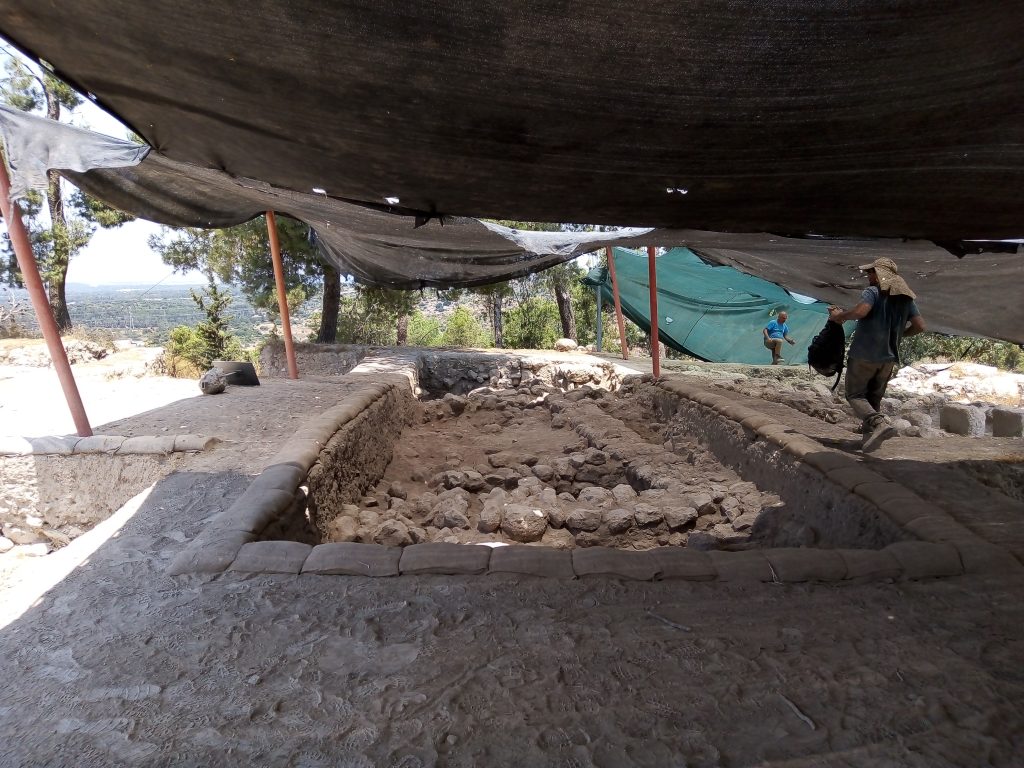
Yalla, Yalla! That was the call to jump on the bus around 4:50 in the morning. Half awake and half asleep, we prepared ourselves for another day of excavating at Tel Azekah in Israel. The days that any volunteer or staff member spends on a dig are far from ordinary as there is always something to keep you occupied! After arriving at the site while it was still a bit dark, we would carry the tools all the way up to our area and get started on the day’s activities. Among all the areas of the site, I was selected to work in area N1, an extensive area where you can find Middle/Late Bronze walls and floors in some squares and Iron Age/Persian structures in others. In previous seasons, an olive oil press dating to Iron Age IIC was found in area N1. This olive oil press is the best preserved in Israel from this period. After 701 B.C.E. and Sennacherib’s invasion of the Shephelah region of ancient Judah—which comprises the Judean mountains and the coastal plain—more local installations for the production of olive oil are found. There are around three different periods of olive oil production in the Shephelah affected by the Assyrian Empire. In the period before the 701 invasion, production was private, and the olive oil went to the city of Lachish, which was the center for collecting olive oil and paying taxes. After 701, the production center was moved to Ekron, and after the Assyrians left, Judah returned to the Shephelah and redeveloped the Judean olive oil production centers. Our task in area N1 was to open a new square adjacent to the Iron Age IIC olive oil press so we could search for the continuation of the Iron Age walls and possibly also a new press.

The new square, opened this field season, after three weeks of work.

Dr. Lipschits supervising the volunteers.

Joining an archaeological dig is more than just “doing science”; it is also therapy. It is therapy because you do not have any option other than being patient about what will come out of your square, especially when you open a new one. During the first few days the big pickaxes dominated the scene without much result. Our group was a bit disappointed at first, but the rewards started to come during the second week. Big pickaxes began to be replaced by smaller ones, and the volunteers began excavating around the rocks in order to find possible contexts. Were those rocks part of the wall or part of its collapse? It took three weeks to expose most of the walls along with a few rooms that belonged respectively to the Iron Age IIC and Persian periods, not to mention a strange structure. We are still not sure of this structure’s exact function, but according to the directors it is most likely a silo from the Persian Period, though its construction and shape are unusual. The upcoming seasons hopefully will bring more answers for this particular square in N1

My primary goal this summer was to join the Lautenschläger Azekah Expedition and look for answers for my Ph.D. research in the Neo-Assyrian expansion in the Southern Levant. I am grateful for many of the questions answered during the season and for being part of the 2022 team. I would like to express my gratitude to ASOR and the scholarship’s donors. They made this exciting experience possible and have significantly contributed to my research. I also thank the Azekah administration and Prof. Oded Lipschits for having hosted me and clarifying many of my questions.

Bruno Barros is a Ph.D. candidate in the department of Assyriology and Hebrew Studies at Eötvös Loránd University, Budapest. His research interests include Neo-Assyrian Art History and Levantine Archaeology particularly in the Iron Age.

Want to help more students and early career archaeologists get into the field? Donate to the cause today by selecting “Student Support” as your gift purpose!

FOA Webinar: Jack Green on October 13

FRIENDS OF ASOR WEBINARS

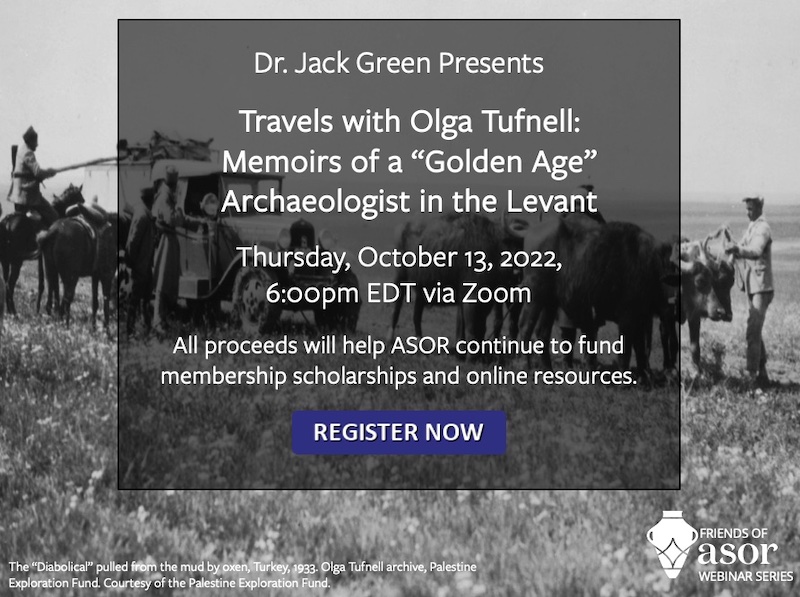
Travels with Olga Tufnell: Memoirs of a “Golden Age” Archaeologist in the Levant

Friends of ASOR present the next webinar in our monthly series on October 13, 2022, at 6:00 pm EDT, featuring Dr. Jack Green and moderated by Dr. Melissa Cradic. This presentation shares insights on the recently published volume (with co-author and co-editor Ros Henry): Olga Tufnell’s ‘Perfect Journey’: Letters and photographs of an archaeologist in the Levant and Mediterranean (UCL Press, 2021).

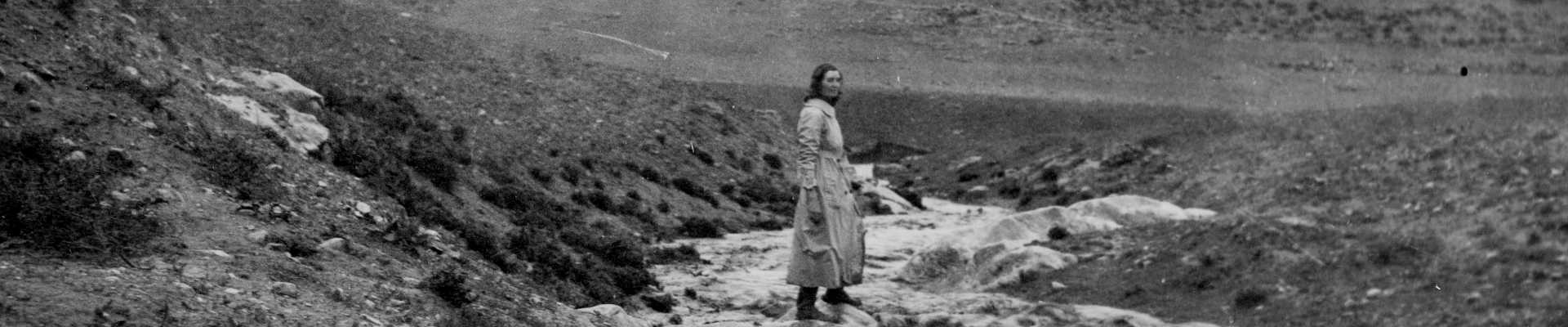
Olga Tufnell (1905–85) was a British archaeologist working in Egypt, Cyprus, and Palestine in the 1920s and 1930s, a so-called “golden age of archaeological discovery.” Based largely on letters and photographs from the Olga Tufnell archive at the Palestine Exploration Fund, this book sheds light on personal experiences of travel and excavation daily life at this extraordinary time.

The letters offer insights into social and professional networks and history of archaeological research, particularly for Palestine under the British Mandate, including the excavations at Tell el Far’ah (South), Tell el-‘Ajjul, and Tell ed-Duweir (ancient Lachish). They provide information about foreign archaeologists, relationships with local workers and community members, and the colonial frameworks they operated within.

Join Dr. Green as he explores aspects of Olga Tufnell’s extensive travel and the emergence of tourism in this period across the East Mediterranean and Levant. The webinar will conclude with a live Q&A session moderated by Dr. Melissa Cradic (Badé Museum, Pacific School of Religion).

Dr. Jack Green, also known as Dr. John D.M. Green, is the Jeffrey Horrell ‘75 and Rodney Rose Director and Chief Curator of the Miami University Art Museum within the College of Creative Arts (Oxford, Ohio). His interests include museum and cultural heritage studies, and the intersection of art and archaeology, and histories of archaeology and museums. Jack’s research focuses on ancient Jordan including the Tell es-Sa‘idiyeh Cemetery Publication Project (British Museum), following his Ph.D thesis (UCL, 2006) on the Late Bronze and Early Iron Age period at this site.

He served as Associate Director of the American Center of Research (ACOR), Amman, Jordan (2017-2021), and is co-editor of ACOR’s Temple of the Winged Lions Publication Project (Petra, Jordan). Jack was Deputy Director of Collections, Research, and Exhibitions at the Corning Museum of Glass, Corning, NY (2016-2017), Chief Curator of the Oriental Institute Museum, University of Chicago (2011-2015), and Curator of Ancient Near East at the Ashmolean Museum, University of Oxford (2007-2011). Jack co-authored and co-edited Olga Tufnell’s ‘Perfect Journey’ with Ros Henry, which was published by UCL Press in 2021.

This webinar will be recorded and all paid registrants will be sent a link to view the recording.

ASOR Sustaining Members: $0 | ASOR Members: $6 | Public: $12
Season Pass: ASOR Sustaining Members: $0 | ASOR Members: $75 | Public: $150
Buy one here!

To receive your ASOR member discount, log into the online store. If you are new to ASOR, please click on the “New Visitor Registration” link to register your e-mail address and choose a password for our online store. Once logged in, navigate to “Meeting and Event Registration” to register for the webinar and pay the fee. Each paid registrant will receive a confirmation e-mail when you pay for the webinar. If you do not receive this e-mail, then you are not registered. Please e-mail membership@asor.org with any questions or issues with registering.

You will be e-mailed the Zoom Webinar link in the week prior to the lecture on October 13, 2022. If you do not receive the link by the close of business on the Tuesday before the webinar, please e-mail membership@asor.org immediately. This webinar will be recorded and all paid registrants will be sent a link to view the recording.

All proceeds from this webinar are used to fund scholarships for members as well as increasing ASOR’s online resources, which are free to the public.

READY FOR A WEBINAR SEASON PASS?

Buy a season pass for all the webinars* of the 2022-2023 FOA Webinar Season! 1) You will automatically receive the Zoom link for each webinar so no need to register each time. 2) You will also receive the recording of each webinar automatically after the event.

If you have missed webinars earlier in the season and still want to buy the pass, you will receive the links to the recordings of the webinars you missed in your automatic confirmation email after you buy the pass.

*Special symposiums may be excluded from the season pass price.

No more registering for a year if you buy your pass today!

Pricing:

Members: $75.00
Non-Members: $150.00
ASOR Sustaining Members: $0 (automatic registration for each webinar)
Not a member yet? Click here to join as a member and receive the 50% off a season pass!


Log into our online store to purchase the season pass for 2022-2023. If you are new to ASOR and do not have a record in our store yet, click here to register. After you login, navigate to the left to “Meeting and Event Registration.” Please e-mail membership@asor.org if you have any questions or issues.

WHY SPONSOR A WEBINAR?

Several levels of support from $50-$1,000 are available. Proceeds go towards membership scholarships and towards increasing ASOR’s virtual resources. Each sponsorship is tax-deductible and you can give your friends free registrations to a webinar!

Bronze Level ($50): up to 2 guest registrations
Silver Level ($100): up to 5 guest registrations
Gold Level ($500): up to 20 guest registrations
Platinum Level ($1,000): up to 50 guest registrations

After you sign up for a sponsorship online or over the phone, email the names and email addresses of your guests to Felice Herman at membership@asor.org, who will send your guests a confirmation and the Zoom link before the webinar.

WANT TO SAVE $6.00 ON THE NEXT WEBINAR?

Join ASOR as a member! Click here for more details about discounts for events and other benefits of membership. Memberships start at $40 for the year as an Associate Member.

Not ready to join yet? Become a Friend of ASOR for FREE!

Click here for more details about our online resources.

PAST WEBINARS

You can now purchase the link to the recording of any webinar. You can also purchase the bundle packages of all webinars from the 2020-2022 seasons. Please e-mail membership@asor.org for purchase details.

To see a printable pdf of the webinar titles from the 2020-2021 season, please click here. To see a printable pdf of the webinar titles from the 2021-2022 season, please click here.

Pricing:

Members: $6.00 per recording
Non-Members: $12.00 per recording
Bundle of 2020-2021 Webinars: $75.00
Bundle of 2021-2022 Webinars: $75.00
Bundle of 2020-2022 Webinars: $125.00

2021-2022 Season

A World at War: Protecting Cultural Heritage in Times of Conflict
Patty Gerstenblith (DePaul University), Lisa Ackerman (Columbus Citizens Foundation), Andrew Cohen (Government Professional and Cultural Heritage Expert) | May 12, 2022

Preserving Cultural Heritage in Hisban and Umm al-Jimal, Jordan
Øystein LaBianca (Andrews University), Elizabeth Osinga (Umm al-Jimal Archaeological Project), Darrell Rohl (Calvin University) | April 24, 2022

Back to the Field: Recent Discoveries & Summer Plans 2022
Lorenzo d’Alfonso (ISAW), Kathryn Grossman (NC State University), James R. Strange (Samford University) | April 3, 2022

Uncovering What is Nubian Beneath the Veneer of Egyptianness: Excavating the Archives
Debora Heard (University of Chicago) | March 20, 2022

Where Are They Now?: A Preview of 2022 ASOR-Affiliated Fieldwork Projects
Michael Given (University of Glasgow), Xenia-Paula Kyriakou (Florida Gulf Coast University), Stephen Batiuk (University of Toronto), Monique Roddy (Walla Walla University), Kent Bramlett (La Sierra University), Friedbert Ninow (La Sierra University), and Michael Hoff (University of Nebraska-Lincoln) | March 8, 2022

Excavations at Tel Gezer: A Personal Story
Sam Wolff (Tel Gezer Laboratory) | February 20, 2022

Tel Rehov: A Major Bronze and Iron Age City in the Jordan Valley
Amihai Mazar (Hebrew University of Jerusalem), Nava Panitz-Cohen ( Hebrew University of Jerusalem), Nota Kourou (Athens University), Naama Yahalom-Mack (Hebrew University of Jerusalem), Robert Mullins (Azusa Pacific University) | February 10, 2022

The Not-So-Innocents Abroad: The Beginnings of American Biblical Archaeology
Rachel Hallote (Samford University) | January 20, 2022

Synagogues as Jesus Knew Them
James R. Strange (Samford University) | December 2, 2021

Under Jerusalem: The Buried History of the World’s Most Contested City
Andrew Lawler | November 4, 2021

Jesus and Jerusalem on TV: How Do Bible Documentaries Get Made?
Robert Cargill (University of Iowa) | October 17, 2021

Digging the Divine?: Judahite Pillar Figurines and the Archaeology of Israelite Religion
Erin Darby (University of Tennessee) | October 7, 2021

David, Solomon, and Rehoboam’s Kingdom—The Archaeological Evidence
Yosef Garfinkel (Hebrew University of Jerusalem) | September 19, 2021

From Standing Stones to Sacred Emptiness: Textual and Visual Portrayals of Israel’s God
Theodore Lewis (Johns Hopkins University) | August 29, 2021

2020-2021 Season

Making May Matter: Webinarathon to Endow Diversity
Multiple Speakers | May 21-23, 2021

Archaeogaming: Why Video Games Deserve Their Own Archaeology
Tine Rassalle (University of North Carolina at Chapel Hill), Shannon Martino (Morton College), Matthew Winter (University of Arizona), Michael Zimmerman (Rhode Island) | April 18, 2021

How the Bible Became a Book
William Schniedewind (UCLA) | March 21, 2021

The Mysteries of Mithras in Caesarea: Exploring the Cult’s Rites and Remains
Jane DeRose Evans (Temple University), Alexandra Ratzlaff (Brandeis University) | March 11, 2021

Archaeology and the Hidden Religious Culture of Israelite Women
Carol Meyers (Duke University) | February 21, 2021

Meet the Directors—Fundraiser to Support ASOR’s Affiliated Overseas Research Centers
Matthew J. Adams (AIAR), Pearce Paul Creasman (ACOR), Lindy Crewe (CAARI) | February 11, 2021

Early Synagogues, Jesus, and Galilee—A Jewish Perspective
Eric Meyers (Duke University) | December 13, 2020

Home Sweet Home: Ancient Israelite Households in Context
Cynthia Shafer-Elliott (William Jessup University) | October 18, 2020

Priestesses in the Days of Solomon and Ahab
Susan Ackerman (Dartmouth College) | September 13, 2020

Digging Deeper: How Archaeology Works
Eric H. Cline (The George Washington University) | August 9, 2020

Fieldwork Report: Rosemary Hanson

The Colors of the Badia

Rosemary Hanson, 2022 Platt Fieldwork Scholarship Recipient

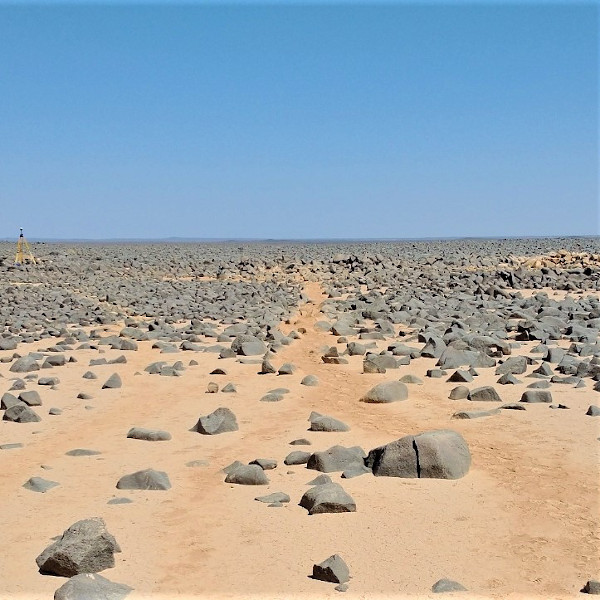
From the sky, the kites of the Jordanian Steppe are easy to spot. The low walls of piled basalt stone stand out against the tan landscape in vivid, dark lines that continue off into the distance. The theory goes that these are the remains of ancient animal traps, guiding prey along the straight lines of the two arms and into the danger of an enclosed area.

As we walked up to site each morning, I couldn’t help feeling a little bit like one of these ancient ruminants. Like unlucky gazelles, the members of the ‘Kites in Context’ project followed these arms across the basalt fields toward the excavation site. When I had been shown the landscape from above, I had assumed that this route would make for an easy journey – we were following a wall, after all. Yet to my surprise, the unmistakable lines of black on beige that I had seen in the aerial photographs were, on the ground, far less distinct. From ground level, the wall was an uneven gray line in a gray sea of stone. Looking up at the hill, it was only barely possible to pick up the darker shades of a low wall running along it – and even then, only once I was pointed in the right direction – but the closer we got, the more it seemed to vanish into the landscape around it. How on earth was I supposed to follow this every day?

Dusty trails across the basalt.
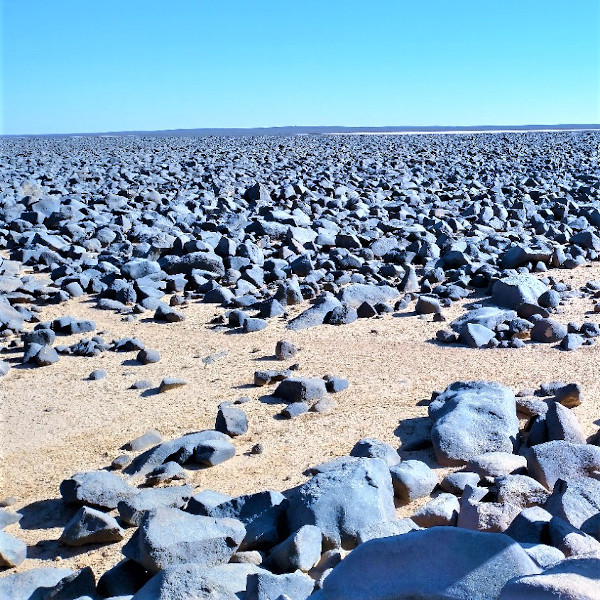
As your eyes adjust, gray stones suddenly look blue.

Truth be told, I never did get the hang of following walls, but in the end, I did not need to. As we walked the same paths every day, our shoes disturbed the fawn-colored dirt and tracked it across the pewter-colored stones, leaving a little ribbon of sepia across the landscape. Before long, these ephemeral lines of powdery dust criss-crossed the camp, the hills, and the kite enclosure where we were working. Paths between excavation sections, paths over walls to the sieve, paths off into the desert to the bathroom, straight, efficient paths to the tea tent for our afternoon break. Everywhere we went, we trailed dust behind us and this is how I came to know my way around, following the slippery footpaths like an ant follows a scent trail. Had it rained, I would have been totally lost.


Down in the section getting dustier and dustier. Photo credit Quinn Comprosky.

Indeed, it seemed like everything we touched was turning that same dusty-brown hue. When we arrived, everything was colorful. The truck pulled up full of reds and blues and yellows and greens. But in the onslaught of sun and sand and sweat, everything took on a decidedly desert patina. Our clothes were beige, our tents were beige, our notebooks, gear, and pens were beige. No matter how often we washed, our hair and skin were beige. When we sneezed, it was beige. In photos, we all look like the survivors of an explosion in a powder foundation factory.

But the more monochrome we became, the more I started to notice new shades in the world around me. My early sketches of the desert are all the same: blue streak, gray streak, tan streak. Above is a wide, expansive blue sky, below is the dusty tan of the local soil, and dividing the two is a line of basalt gray. It’s the same in the high-quality photographs taken by Chad:  the world is black and tan and blue as far as the eye can see. But as my eyes adjusted to this new tritone palette, I began to see new colors in the landscape – shades that I had never imagined could be there. Against the warm tones of the everpresent dirt, the harsh tones of the basalt took on cooler notes.  As we stamped across ancient lava fields, shimmering and shifting in the heat, the oppressive grays began to bloom into a spectrum of muddy blues and dusty purples. In the section, the buried stones seemed to emerge like dusty shards of hazy blue sky. Hot and filthy and tired, I saw the desert differently than when I had arrived, cool and clean and full of energy.

A landscape of blue on grey on tan. Photo credit Jennifer Feng.

For all the horrible heat and the terrible dirt and the wind that blows away anything not nailed down, I like being out in the desert. I like the way that this harsh place makes me see things differently – to see color where I had once seen sepia and trails where I had once seen empty plains of stone. It lets me see with the objective eye of a tape measure and a camera lens, but also with the fallible human eye of someone too hot, too tired, and too frustrated to spot the wall they’re standing on. Of course, it also helps me see the benefit of cold water and air conditioning, but that’s a useful lesson, too, I think.

Rosemary Hanson is a freelance archeological illustrator working out of Sweden. In her normal life, she does not like being hot, dirty, or outside, which is why it is so odd that she absolutely loves working in the Jordanian Desert. There’s just no helping some people.

Want to help more students and early career archaeologists get into the field? Donate to the cause today by selecting “Student Support” as your gift purpose!

Call for Trustee Nominations

CALL FOR TRUSTEE NOMINATIONS 2022

The Trustee Nominations Committee announces an open call for (self) nominations for the ASOR Board of Trustees (Class of 2025). There are three primary responsibilities of the members of the Board of Trustees:
  • Governance: Being aware of issues brought forward to the Board, attending two meetings per year (at your own expense), and bringing issues of concern to the Board.
  • Fundraising and financial management: Leading in development by thinking of new opportunities, leading in giving, and providing oversight on the audited financial statements. We ask that individual trustees aspire to contribute $500 or more annually.
  • Strategic planning and policy development: Leading especially in measures that accord with ASOR’s mission.

We anticipate two openings for Membership-Elected Trustees. Any full ASOR member may be considered for nomination as an Membership-Elected Trustee. If there is someone that you would like the committee to consider—including yourself—please send the person’s name and email address to Marta Ostovich in the ASOR office. Please check with the nominee as to whether they are interested in serving on the ASOR Board of Trustees before sending in their name. If you have any questions about the responsibilities and satisfactions of being a board member, please email Jane DeRose Evans (Chair of the Nominations Committee).

The ASOR office, or a representative from the Nominations Committee, will contact all nominees to describe the responsibilities in greater detail, and to make sure that the nominee is willing to have his or her name discussed by the Trustee Nominations Committee. Please note that nominees will need to submit a brief biography and a mission (or vision) statement for what they would like to accomplish as a trustee to be considered by the Nominations Committee. A sample of these statements can be found in last year’s “Meet Your Board Nominees” webpage. Brief biographies and mission statements should be ca. 200 words each and submitted via e-mail to Marta Ostovich by noon EDT on September 19, 2022.

After the Committee selects individuals for nomination, the election will take place by electronic ballot during October. ASOR is once again conducting online voting to ensure that more of our members are able to participate in this important process. The ASOR office will work with any person who is not able to complete an electronic ballot to ensure that everyone is included.

In order to receive full consideration by the committee, nominations (including supporting documents) should be submitted to programs@asor.org by noon EDT on September 19, 2022.

FOA Webinar: Kevin McGeough on October 27

FRIENDS OF ASOR WEBINARS

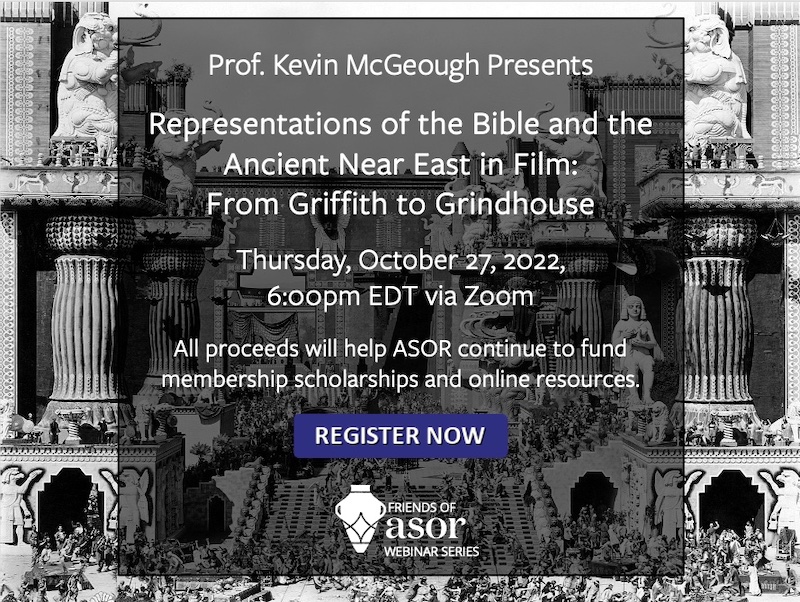
Representations of the Bible and the Ancient Near East in Film: From Griffith to Grindhouse


Registrants receive a 25% discount code to buy this book! A free copy will also be given away during the live webinar.

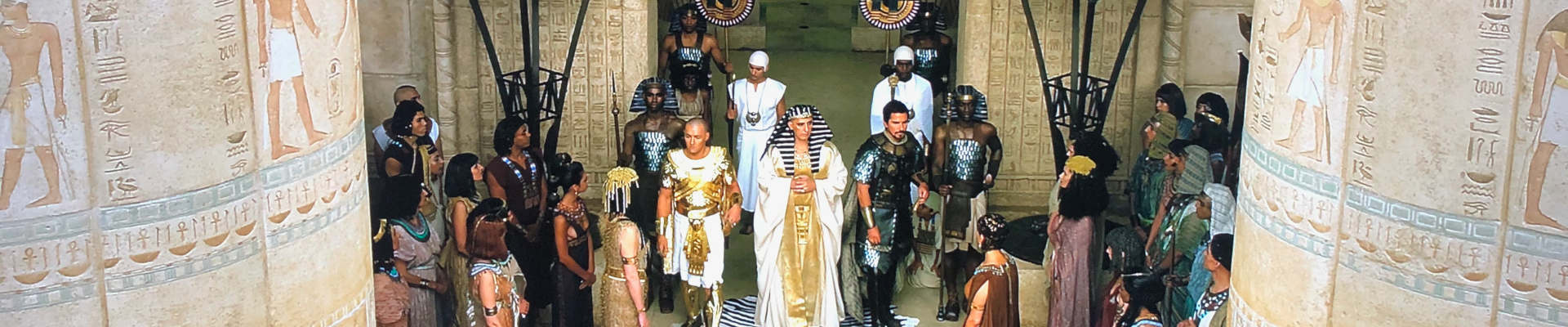
Friends of ASOR present the next webinar in our monthly series on October 27, 2022, at 6:00 pm EDT, featuring Prof. Kevin McGeough and moderated by ANE Today Editor, Dr. Alex Joffe. The Bible and the Ancient Near East have been a subject of movies from the earliest days of film to the present. Stories of Cleopatra, Samson, Moses, and Jesus were compelling for audiences and the challenges of recreating the ancient world in a realistic fashion left viewers awestruck. Films about the ancient world have often been on the cutting edge of cinematic technology because of this, from D.W. Griffith’s recreation of ancient Babylon, to the “cinemascope” of The Robe, to the CGI of Ridley Scott’s Gladiator. However, films like these have also often been flash points for discussions of contemporary moral life. One of the main themes that Dr. McGeough will explore is how these films offer “typological arguments” in which the values of the viewer’s era are justified by witnessing characters with recognizable modern beliefs in ancient situations pitted against villains who hold the opposite values, which are associated with contemporary “others”. After the 1950s, these films showcased veterans dealing with the trauma of their violent encounters, who could be soothed by a faithful wife and by settling down with a family. American Protestantism and democracy are shown, especially through biblical epics of the 1950s and 1960s, as the natural culmination of history. Dr. McGeough argues that viewing the 21st-century Middle East through these lenses has an impact on actual US foreign policy, and these media treatments influence us in unexpected (and often unseeable) ways. Arguments from these films offer apparent scientific accuracy for popular audiences because film can be so realistic. Ironically then, even archaeologically informed film-making can undermine what makes archaeological research in real life so valuable.

These films wax and wane in popularity, so join Prof. McGeough as he explains why this has been the case and discusses how different genres of film impact how the ancient world is treated in the modern era. The webinar will conclude with a live Q&A session moderated by ANE Today Editor, Dr. Alex Joffe.

Dr. Kevin McGeough is Professor of Archaeology in the Department of Geography & Environment at the University of Lethbridge where he holds a Board of Governor’s Research Chair in Archaeological Theory and Reception. The University of Lethbridge is likely the only university in the world in which biblical Hebrew is taught in a geography department. He has excavated in Israel, Egypt, Turkey, Jordan, and Canada and is a co-director of The University of Lethbridge-Royal Alberta Museum Excavations at Head-Smashed-In Buffalo Jump, in southern Alberta.

Kevin has been involved with ASOR publications since his days as an undergraduate, when he compiled an index for five years of Biblical Archaeologist. He has been the editor of ASOR’s Archaeological Report Series and the Annual of ASOR, and is now chair of ASOR’s Committee on Publications. He is currently co-editor of the Alberta Archaeological Review, and is the author of Exchange Relationships at Ugarit, Ugaritic Economic Tablets, and a three-volume work, The Ancient Near East in the Nineteenth Century. His most recent book is Representations of Antiquity in Film: From Griffith to Grindhouse.

This webinar will be recorded and all paid registrants will be sent a link to view the recording.

ASOR Sustaining Members: $0 | ASOR Members: $6 | Public: $12
Season Pass: ASOR Sustaining Members: $0 | ASOR Members: $75 | Public: $150
Buy one here!

To receive your ASOR member discount, log into the online store. If you are new to ASOR, please click on the “New Visitor Registration” link to register your e-mail address and choose a password for our online store. Once logged in, navigate to “Meeting and Event Registration” to register for the webinar and pay the fee. Each paid registrant will receive a confirmation e-mail when you pay for the webinar. If you do not receive this e-mail, then you are not registered. Please e-mail membership@asor.org with any questions or issues with registering.

You will be e-mailed the Zoom Webinar link in the week prior to the lecture on October 27, 2022. If you do not receive the link by the close of business on the Tuesday before the webinar, please e-mail membership@asor.org immediately. This webinar will be recorded and all paid registrants will be sent a link to view the recording.

All proceeds from this webinar are used to fund scholarships for members as well as increasing ASOR’s online resources, which are free to the public.


READY FOR A WEBINAR SEASON PASS?

Buy a season pass for all the webinars* of the 2022-2023 FOA Webinar Season! 1) You will automatically receive the Zoom link for each webinar so no need to register each time. 2) You will also receive the recording of each webinar automatically after the event.

If you have missed webinars earlier in the season and still want to buy the pass, you will receive the links to the recordings of the webinars you missed in your automatic confirmation email after you buy the pass.

*Special symposiums may be excluded from the season pass price.

No more registering for a year if you buy your pass today!

Pricing:

Members: $75.00
Non-Members: $150.00
ASOR Sustaining Members: $0 (automatic registration for each webinar)
Not a member yet? Click here to join as a member and receive the 50% off a season pass!


Log into our online store to purchase the season pass for 2022-2023. If you are new to ASOR and do not have a record in our store yet, click here to register. After you login, navigate to the left to “Meeting and Event Registration.” Please e-mail membership@asor.org if you have any questions or issues.

WHY SPONSOR A WEBINAR?

Several levels of support from $50-$1,000 are available. Proceeds go towards membership scholarships and towards increasing ASOR’s virtual resources. Each sponsorship is tax-deductible and you can give your friends free registrations to a webinar!

Bronze Level ($50): up to 2 guest registrations
Silver Level ($100): up to 5 guest registrations
Gold Level ($500): up to 20 guest registrations
Platinum Level ($1,000): up to 50 guest registrations

After you sign up for a sponsorship online or over the phone, email the names and email addresses of your guests to Felice Herman at membership@asor.org, who will send your guests a confirmation and the Zoom link before the webinar.

WANT TO SAVE $6.00 ON THE NEXT WEBINAR?

Join ASOR as a member! Click here for more details about discounts for events and other benefits of membership. Memberships start at $40 for the year as an Associate Member.

Not ready to join yet? Become a Friend of ASOR for FREE!

Click here for more details about our online resources.


PAST WEBINARS

You can now purchase the link to the recording of any webinar. You can also purchase the bundle packages of all webinars from the 2020-2022 seasons. Please e-mail membership@asor.org for purchase details.

To see a printable pdf of the webinar titles from the 2020-2021 season, please click here. To see a printable pdf of the webinar titles from the 2021-2022 season, please click here.

Pricing:

Members: $6.00 per recording
Non-Members: $12.00 per recording
Bundle of 2020-2021 Webinars: $75.00
Bundle of 2021-2022 Webinars: $75.00
Bundle of 2020-2022 Webinars: $125.00

2021-2022 Season

A World at War: Protecting Cultural Heritage in Times of Conflict
Patty Gerstenblith (DePaul University), Lisa Ackerman (Columbus Citizens Foundation), Andrew Cohen (Government Professional and Cultural Heritage Expert) | May 12, 2022

Preserving Cultural Heritage in Hisban and Umm al-Jimal, Jordan
Øystein LaBianca (Andrews University), Elizabeth Osinga (Umm al-Jimal Archaeological Project), Darrell Rohl (Calvin University) | April 24, 2022

Back to the Field: Recent Discoveries & Summer Plans 2022
Lorenzo d’Alfonso (ISAW), Kathryn Grossman (NC State University), James R. Strange (Samford University) | April 3, 2022

Uncovering What is Nubian Beneath the Veneer of Egyptianness: Excavating the Archives
Debora Heard (University of Chicago) | March 20, 2022

Where Are They Now?: A Preview of 2022 ASOR-Affiliated Fieldwork Projects
Michael Given (University of Glasgow), Xenia-Paula Kyriakou (Florida Gulf Coast University), Stephen Batiuk (University of Toronto), Monique Roddy (Walla Walla University), Kent Bramlett (La Sierra University), Friedbert Ninow (La Sierra University), and Michael Hoff (University of Nebraska-Lincoln) | March 8, 2022

Excavations at Tel Gezer: A Personal Story
Sam Wolff (Tel Gezer Laboratory) | February 20, 2022

Tel Rehov: A Major Bronze and Iron Age City in the Jordan Valley
Amihai Mazar (Hebrew University of Jerusalem), Nava Panitz-Cohen ( Hebrew University of Jerusalem), Nota Kourou (Athens University), Naama Yahalom-Mack (Hebrew University of Jerusalem), Robert Mullins (Azusa Pacific University) | February 10, 2022

The Not-So-Innocents Abroad: The Beginnings of American Biblical Archaeology
Rachel Hallote (Samford University) | January 20, 2022

Synagogues as Jesus Knew Them
James R. Strange (Samford University) | December 2, 2021

Under Jerusalem: The Buried History of the World’s Most Contested City
Andrew Lawler | November 4, 2021

Jesus and Jerusalem on TV: How Do Bible Documentaries Get Made?
Robert Cargill (University of Iowa) | October 17, 2021

Digging the Divine?: Judahite Pillar Figurines and the Archaeology of Israelite Religion
Erin Darby (University of Tennessee) | October 7, 2021

David, Solomon, and Rehoboam’s Kingdom—The Archaeological Evidence
Yosef Garfinkel (Hebrew University of Jerusalem) | September 19, 2021

From Standing Stones to Sacred Emptiness: Textual and Visual Portrayals of Israel’s God
Theodore Lewis (Johns Hopkins University) | August 29, 2021

2020-2021 Season

Making May Matter: Webinarathon to Endow Diversity
Multiple Speakers | May 21-23, 2021

Archaeogaming: Why Video Games Deserve Their Own Archaeology
Tine Rassalle (University of North Carolina at Chapel Hill), Shannon Martino (Morton College), Matthew Winter (University of Arizona), Michael Zimmerman (Rhode Island) | April 18, 2021

How the Bible Became a Book
William Schniedewind (UCLA) | March 21, 2021

The Mysteries of Mithras in Caesarea: Exploring the Cult’s Rites and Remains
Jane DeRose Evans (Temple University), Alexandra Ratzlaff (Brandeis University) | March 11, 2021

Archaeology and the Hidden Religious Culture of Israelite Women
Carol Meyers (Duke University) | February 21, 2021

Meet the Directors—Fundraiser to Support ASOR’s Affiliated Overseas Research Centers
Matthew J. Adams (AIAR), Pearce Paul Creasman (ACOR), Lindy Crewe (CAARI) | February 11, 2021

Early Synagogues, Jesus, and Galilee—A Jewish Perspective
Eric Meyers (Duke University) | December 13, 2020

Home Sweet Home: Ancient Israelite Households in Context
Cynthia Shafer-Elliott (William Jessup University) | October 18, 2020

Priestesses in the Days of Solomon and Ahab
Susan Ackerman (Dartmouth College) | September 13, 2020

Digging Deeper: How Archaeology Works
Eric H. Cline (The George Washington University) | August 9, 2020