[/vc_column_text][vc_column_text]ASOR is pleased to announce that Dr. B. W. Ruffner began a three-year term as Chairman of the Board on July 1, 2013. The ASOR Board unanimously and enthusiastically elected Ruffner to the position at its November 2012 meeting in Chicago. Ruffner follows P. E. MacAllister who served as Board Chair for 19 years and became Chairman Emeritus on July 1.
Dr. Ruffner has been a practicing physician since receiving his medical degree from The Duke University School of Medicine in 1964. From 1970–1976, he was Chief, Division of Oncology, at The University of Virginia Medical School . From 1976 to the present, he has been an Attending Physician at Erlanger and Memorial in Chattanooga, TN. He has also served on the faculty at UVA (1970–1976) and The University of Tennessee, Chattanooga Unit (1976 – present). He has held a number of leadership positions with the University of Tennessee Medical School including Assistant Dean (1997–2004) and Interim Dean (2006–2007). He has been Chairman, UT Physicians from 1997–present, and is Past President of the Tennessee Medical Association (2010–2011).
Ruffner also been very involved in civic organizations. He has been Secretary of the Rotary Club of Chattanooga, President of the Chattanooga Symphony and Opera Association, and President and Treasurer of the Chattanooga Area Clinical Pastoral Care Association. In addition, he has of course been very involved in ASOR. He has served as a trustee for more than 13 years, and he was Treasurer from 2003–2006. He has been active as a volunteer on many ASOR affiliated excavations: Sepphoris with Eric and Carol Meyers; Banias with John Wilson; Kursi with Vassilios Tzafleris; Tayinat with Tim Harrison; and Shikim with James Riley Strange.
In addition to his successful medical career and fulfilling community activities, B.W. is married to Rhoda M. Ruffner and has three children: Katherine, Andrew, and Elizabeth Strange.[/vc_column_text][/vc_column][vc_column border_color=”rgba(170,170,170,0.01)” width=”1/6″ css=”.vc_custom_1496684098866{margin-right: 5px !important;margin-bottom: 20px !important;border-right-width: 2px !important;border-bottom-width: 2px !important;padding-top: 30px !important;padding-right: 10px !important;padding-left: 10px !important;background-color: #ffffff !important;border-right-color: rgba(227,228,228,0.75) !important;border-bottom-color: rgba(227,228,228,0.75) !important;}”][vc_wp_posts title=”BROWSE THE NEWS ARCHIVE” number=”4″][/vc_column][vc_column border_color=”rgba(170,170,170,0.01)” width=”1/6″ css=”.vc_custom_1496684008271{margin-right: 10px !important;margin-bottom: 30px !important;border-right-width: 2px !important;border-bottom-width: 2px !important;padding-top: 30px !important;padding-right: 20px !important;padding-left: 20px !important;background-color: #ffffff !important;border-right-color: rgba(227,228,228,0.75) !important;border-bottom-color: rgba(227,228,228,0.75) !important;}”][vc_column_text]Tweets by ASOResearch [/vc_column_text][/vc_column][/vc_row]
ASOR Met and Exceeded the Challenge with 351 Donors!
[/vc_column_text][vc_column_text]ASOR is pleased to announce that the Kershaw Family Trust has made a challenge gift of $5,000 to support News@ASOR during the 2014 Fiscal Year. In order to receive the gift, ASOR needed to meet a goal of 350 separate donors for Fiscal Year 2013 (July 1, 2012 – June 30, 2013). The Kershaw Trust has generously supported the operations of News@ASOR from January to June 2013, and we are grateful for their continued support of this e-newsletter for members.
We have exceeded our goal of 350 for Fiscal Year 2013! Not only that, but we have a new record for donor participation, exceeding last year’s record of 282 donors! As of June 30, we have 351 donors!
As Development Chair Rob Oden’s essay “Why All Gifts Matter,” makes clear, all gifts are important and meaningful. In this particular case, small gifts have multiplied to help ASOR qualify for $5,000 that will support our member e-newsletter.
You may make a gift by clicking on this link. You may also contribute by sending a check to ASOR at 656 Beacon Street, 5th Floor, Boston, MA 02215. Please e-mail ASOR if you have any questions or call us at 617-353-6570.[/vc_column_text][/vc_column][vc_column border_color=”rgba(170,170,170,0.01)” width=”1/6″ css=”.vc_custom_1496684098866{margin-right: 5px !important;margin-bottom: 20px !important;border-right-width: 2px !important;border-bottom-width: 2px !important;padding-top: 30px !important;padding-right: 10px !important;padding-left: 10px !important;background-color: #ffffff !important;border-right-color: rgba(227,228,228,0.75) !important;border-bottom-color: rgba(227,228,228,0.75) !important;}”][vc_wp_posts title=”BROWSE THE NEWS ARCHIVE” number=”4″][/vc_column][vc_column border_color=”rgba(170,170,170,0.01)” width=”1/6″ css=”.vc_custom_1496684008271{margin-right: 10px !important;margin-bottom: 30px !important;border-right-width: 2px !important;border-bottom-width: 2px !important;padding-top: 30px !important;padding-right: 20px !important;padding-left: 20px !important;background-color: #ffffff !important;border-right-color: rgba(227,228,228,0.75) !important;border-bottom-color: rgba(227,228,228,0.75) !important;}”][vc_column_text]Tweets by ASOResearch [/vc_column_text][/vc_column][/vc_row]
ASOR SEEKS DIGITAL MEDIA AND CUSTOMER SERVICE SPECIALIST
[/vc_column_text][vc_column_text]The American Schools of Oriental Research (ASOR) invites applications for a “Digital Media and Customer Service Specialist.” The job will be a full-time, in-office, hourly position.
The successful candidate will have a bachelor’s degree (or equivalent experience) and should have experience using WordPress, Facebook, and Twitter as outreach and engagement tools. Applicants should also have experience and demonstrated competency with Adobe Photoshop, Acrobat, InDesign, and Microsoft Excel. Excellent communications skills (both oral and written) and the ability to respond to service issues via e-mail and telephone are essential. Experience with the following is strongly preferred: using HTML in website design; creating analytics reports; and using CRM database software.
Review of applications will begin June 11, 2013 and continue until the position is filled. The start date is negotiable. Interested persons should apply by sending an e-mail with the following items to Kevin Cooney (ASOR’s Director of Publication and Membership Services; publications@asor.org): a letter of interest that addresses the job responsibilities listed below; a resume; and a list of three references.
Primary Responsibilities:
Responsible for executing the organization’s digital media strategy and providing excellent customer service to members, subscribers, and donors.
Maintain the organization’s Facebook page, Twitter account, and blog under the auspices of the Friends of ASOR program.
Communicate with potential contributors to solicit scholarly content for the blog.
Works with staff to create promotional material for recruitment and retention efforts.
Act as part of a team responding to customer inquiries and service issues while stewarding members, subscribers, and donors.
Serve as point person for all Friends of ASOR initiatives.
Digital Media Tasks Include the Following:
Solicit, organize, edit, schedule, and post pieces to organization’s blog using WordPress.
Coordinate with editors of organization’s e-magazine and e-newsletter to schedule, edit, and post pieces to organization’s blog and Facebook page.
Gather, schedule, and post current news items related to archaeology daily to Facebook.
Moderate and respond to comments on the organization’s Facebook page, Twitter, and blog.
Cultivate relationships with other like-minded organizations for cross promotions on Facebook and blog.
Create detailed monthly and quarterly analytics reports for organization’s blog, Facebook page, and website.
Create, monitor, and report on campaigns using Google AdWords, and Facebook to promote blog posts, publications, fundraising efforts, and special events.
Research and cultivate potential advertisers for organization’s blog, and monitor ongoing Google AdSense campaign.
Work with ASOR staff on production process for webinars.
Promotional Material Tasks Include the Following:
Design and create print and electronic advertising material (web ads, print brochures and flyers) for organization’s social media.
Design and create print and electronic advertising material (web ads, print brochures and flyers) for organization’s print publications and events (three journals, three book series, annual meeting, and other smaller meetings).
Design and create print and electronic advertising material (web ads, print brochures and flyers) for recruitment and retention of members, subscribers, donors, and Friends of ASOR.
Customer Service Tasks Include the Following:
Process credit card and check payments from members, subscribers and donors.
Maintain accurate member, subscriber, and donor information in database.
Participate in direct mail and email appeals.
Fulfill subscriber and member publication claims.
Steward new members through email and direct mail.
Provide excellent customer service to members and subscribers via email and phone.
Train and oversee (under direction of Director of Publications) undergraduate volunteers and work-study students.
Applicants should send resume and cover letter to publications@asor.org.[/vc_column_text][/vc_column][vc_column border_color=”rgba(170,170,170,0.01)” width=”1/6″ css=”.vc_custom_1496684098866{margin-right: 5px !important;margin-bottom: 20px !important;border-right-width: 2px !important;border-bottom-width: 2px !important;padding-top: 30px !important;padding-right: 10px !important;padding-left: 10px !important;background-color: #ffffff !important;border-right-color: rgba(227,228,228,0.75) !important;border-bottom-color: rgba(227,228,228,0.75) !important;}”][vc_wp_posts title=”BROWSE THE NEWS ARCHIVE” number=”4″][/vc_column][vc_column border_color=”rgba(170,170,170,0.01)” width=”1/6″ css=”.vc_custom_1496684008271{margin-right: 10px !important;margin-bottom: 30px !important;border-right-width: 2px !important;border-bottom-width: 2px !important;padding-top: 30px !important;padding-right: 20px !important;padding-left: 20px !important;background-color: #ffffff !important;border-right-color: rgba(227,228,228,0.75) !important;border-bottom-color: rgba(227,228,228,0.75) !important;}”][vc_column_text]Tweets by ASOResearch [/vc_column_text][/vc_column][/vc_row]
REPORT FROM CAARI (CYPRUS AMERICAN ARCHAEOLOGICAL RESEARCH INSTITUTE)
By Dr. Andrew McCarthy, CAARI Director
[/vc_column_text][vc_column_text]In the spring of 2013, CAARI is returning to what can be called a “new normal”. A frenzy of developments took place over the past few months, including hiring a new member of staff, renovating the library, improving the residence facility, upgrading the laboratories and holding a major international conference.
Since November 2012, there have been some distractions at the Nicosia institute, but our core functionality has continued throughout. For several months, the library was closed for renovations as part of a larger Library Expansion Project. During this time, we converted the lobby of CAARI into a library reading room. It was not ideal, but the entire Cyprus collection of books, nearly all of the journals and the usual number of desks were still available. Our current Fulbright Fellows, Dr. Young Kim from Calvin College studying the ‘heretic-hunter’ St. Epiphanius, and Ms. Catherine Kearns, PhD student at Cornell University studying Iron Age environmental and landscape archaeology, have been fixtures at CAARI throughout all of these changes. Their patience with the building works and occasional disruptions has been admirable.
Since there were building works taking place anyway, we took advantage of the cheap prices and the presence of contractors to revitalize the upstairs residence too. Every upstairs room has had a new lick of paint, the wooden floors have been refinished, the toilets and showers replaced, the kitchen refurbished and a new balcony roof is on the way. I am confident residents will appreciate the freshness of the living space, which will make living and working at CAARI a thoroughly productive and enjoyable experience.
Since February 2013, we have a newly renovated library with state-of-the-art IT and electronic infrastructure, new climate control and lighting, expanded library space and a new librarian’s office, which will be followed by a second phase of construction that will see to the building of a two-story subterranean extension.
This winter’s completion of ‘Phase 1’ of the Library Expansion Project coincided with CAARI hosting the “J.R.B. Stewart: an Archaeological Legacy” conference. This event posthumously celebrated the life and work of James Stewart on the 100th anniversary of his birth. Stewart, an Australian, was a seminal figure in Near Eastern archaeology, perhaps most importantly for defining the Bronze Age ceramics of Cyprus and ancient Cypriot connections to Anatolia, his work on numismatics, and his work in Australia as a Museum Curator and for conducting excavations in Cyprus and the mainland of southeast Asia. Importantly, after James Stewart’s untimely death in 1952, his widow Eve (a trained archaeologist) worked tirelessly to publish his lingering works and was instrumental in helping CAARI to gain its footing in the institute’s early years. It is because of her that the CAARI residence bears J.R. Stewart’s name.
The conference had a lovely spirit, with attendees and presenters giving an honest account of historiography, biography and the archaeological legacy of Stewart. The conference was opened by Dr. Robert Merrillees, former CAARI Director, retired Australian diplomat, and one of Stewart’s own former students. Dr. Merrillees keynote lecture also inaugurated the renovated library and was followed by a display of historical and ethnographic items that were bequeathed to CAARI by Eve Stewart. Several fine receptions were generously sponsored by Dr. Merrillees, CAARI Trustee Maria Kyriacou and His Excellency, Australian High Commissioner Mr. Trevor Peacock and his wife Pattie. The conference itself received support from Beta Analytic, ISD Distributor of Scholarly Books and several local businesses. Presenters came from far and wide, including the Australia, Cyprus, Israel, New Zealand, the United Kingdom, the United States and Sweden, and the audience filled the new library to capacity. The presentations were of the highest quality and the co-Organizers, CAARI Trustee Prof. Bernard Knapp, Dr. Jenny Webb from La Trobe University and I, intend to publish the proceedings as the next volume in the CAARI monograph series.
Also debuting at this conference was the newly appointed Librarian, Ms. Katerina Mavromichalou. Taking up the position in February, Katerina was in charge of putting the library back together in time for the conference. An archaeology graduate from the University of Cyprus and the University of Southampton in the UK, her energy and knowledge of archaeology and libraries has already been a great asset to CAARI. Users of the library will be welcomed by Katerina as the new face of the library after Ms. Evi Karyda’s depature last year to pursue her PhD.
Now CAARI is in the process of developing the laboratories to bring them up to modern standards, including the purchase of petrographic thin-section equipment, forming a thin-section reference collection, the refurbishment of the ecological and bone lab space and the establishment of a GIS microlab. These new labs at CAARI will also be accompanied by an investment in the library collection to make the reference materials match the laboratory capabilities.
As we approach the summer, CAARI is ready to deal with the researchers using the library, laboratory and infrastructure and staying at our residence. With the recent renovations and plans for future developments, we are poised to continue to serve as a hub for research in the eastern Mediterranean well into the future. To keep our CAARI friends abreast of the program and other updates, CAARI has now joined Facebook. I encourage you to follow us as we move forward.[/vc_column_text][/vc_column][vc_column border_color=”rgba(170,170,170,0.01)” width=”1/6″ css=”.vc_custom_1496684098866{margin-right: 5px !important;margin-bottom: 20px !important;border-right-width: 2px !important;border-bottom-width: 2px !important;padding-top: 30px !important;padding-right: 10px !important;padding-left: 10px !important;background-color: #ffffff !important;border-right-color: rgba(227,228,228,0.75) !important;border-bottom-color: rgba(227,228,228,0.75) !important;}”][vc_wp_posts title=”BROWSE THE NEWS ARCHIVE” number=”4″][/vc_column][vc_column border_color=”rgba(170,170,170,0.01)” width=”1/6″ css=”.vc_custom_1496684008271{margin-right: 10px !important;margin-bottom: 30px !important;border-right-width: 2px !important;border-bottom-width: 2px !important;padding-top: 30px !important;padding-right: 20px !important;padding-left: 20px !important;background-color: #ffffff !important;border-right-color: rgba(227,228,228,0.75) !important;border-bottom-color: rgba(227,228,228,0.75) !important;}”][vc_column_text]Tweets by ASOResearch [/vc_column_text][/vc_column][/vc_row]
[/vc_column_text][vc_column_text]All twenty one reports from last year’s (2011–2012) W. F. Albright Institute of Archaeological Research fellows are now hosted on the ASOR Blog. Fellows write about the research they undertook while resident at the Albright in Jerusalem. Their reports cover topics from the analysis of biblical literature, to writing up archaeological field work, to museum studies of artifacts. Their periods of interest range from the Neolithic through Islamic times and deal with everything from tools types to literature.
21. ‘Study of Early Pottery Workshops in the Eastern Mediterranean and the Near East Around 6,000 cal. BC’ by Ingmar Franz[/vc_column_text][/vc_column][vc_column border_color=”rgba(170,170,170,0.01)” width=”1/6″ css=”.vc_custom_1496684098866{margin-right: 5px !important;margin-bottom: 20px !important;border-right-width: 2px !important;border-bottom-width: 2px !important;padding-top: 30px !important;padding-right: 10px !important;padding-left: 10px !important;background-color: #ffffff !important;border-right-color: rgba(227,228,228,0.75) !important;border-bottom-color: rgba(227,228,228,0.75) !important;}”][vc_wp_posts title=”BROWSE THE NEWS ARCHIVE” number=”4″][/vc_column][vc_column border_color=”rgba(170,170,170,0.01)” width=”1/6″ css=”.vc_custom_1496684008271{margin-right: 10px !important;margin-bottom: 30px !important;border-right-width: 2px !important;border-bottom-width: 2px !important;padding-top: 30px !important;padding-right: 20px !important;padding-left: 20px !important;background-color: #ffffff !important;border-right-color: rgba(227,228,228,0.75) !important;border-bottom-color: rgba(227,228,228,0.75) !important;}”][vc_column_text]Tweets by ASOResearch [/vc_column_text][/vc_column][/vc_row]
THE NON-PROFESSIONAL ARCHAEOLOGICAL PHOTOGRAPHS PROJECT
By Bart Wagemakers, University of Applied Sciences Utrecht, the Netherlands
[/vc_column_text][vc_column_text]Recently, the Non-Professional Archaeological Photographs Project (NPAPH) has been initiated by ASOR member Bart Wagemakers. This project aims to stimulate archaeological institutions to trace former students and volunteers who joined an excavation prior to the 1980s, to collect and digitize their photographic documentation, and, finally, to make it accessible to the public via digital archives. Furthermore, the project hopes to create international collaboration between archaeological institutions in order to connect these digital archives.
Context
The decisions surrounding the assemblage of records during the excavation, and the publication afterwards, are usually made by the professional staff involved. It is obvious that the decisions made by the staff are of great consequence for a site, because an area undergoing excavation is irreversibly disturbed. As the discipline of archaeology has developed significantly during the last six decades, it is inevitable that the views on how to record the progress and finds of an excavation have changed as well. All the developments that have influenced archaeological recording suggest that there may be a gap between what archaeologists recorded in the past and what we nowadays expect them to have documented.
The former ‘non-professionals’ – participants of excavations who were not part of the trained staff, but who supported the dig as part of their continual education or out of interest, e.g. students and volunteers – may be the ones who are able to fill in the possible gap in the official documentation published by the academic staff, including in the area of archaeological photography. Students and volunteers who are willing to participate in an archaeological expedition show an interest in all divergent aspects of the site. From my own experiences, I know that students and volunteers often record many features of a site that lie beyond the focus of the professional staff.
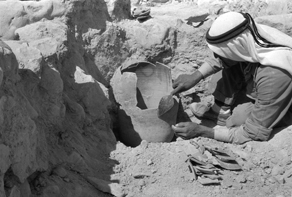
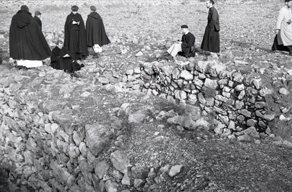
This has been demonstrated by a recently discovered photo collection of a former student of the École Biblique in Jerusalem, Leo Boer. Together with his lecturers and fellow-students, Boer visited numerous archaeological sites in the Levant throughout the 1950s. While visiting the sites, he took many photographs, hundreds in total, and wrote a complete account of his travels, consisting of 140 pages. Boer has taken pictures of artefacts and structures at sites which the official staff seemed not have documented at that time. For example, Boer photographed a pillar that interested him at Khirbet Qumran in 1954 (published in PEQ 143.2.) The Qumran excavation staff did not take a close-up photograph of the pillar, but Boer’s photo provides us more information about how this room was used in the past. Since photographs from the Boer collection have proven to be significant for the archaeological study of the region, it was decided to make all the photographs accessible to the public by founding the digital Leo Boer Archive hosted by the ASOR Archives. (See samples from the collection here, or view the entire collection online – click the green arrows to load an image.) It is instances like these that have proven that there is a need for a resource like the NPAPH Project.
The Principles of the Project
The NPAPH Project is based on three principles:
1) Archaeological institutions have an interest in finding non-professional photographs of their excavations. By finding ‘new’ photographic material, the existing documentation of the excavation will be extended and enhanced and will provide an image of aspects of an excavation which are not included in the published documentation. In addition, as has been demonstrated by the Leo Boer Archive, this genre of photographs may provide the institutions with additional scientific data which may be useful for the archaeological research relating to the specific site(s). Furthermore, by comparing the non-professional photographs with the official documentation made by the former staff, it is possible to get a notion of the practiced documentation policy at that site. Pictures of particular features or phases of the excavation taken by non-professionals and which are not present in the official documentation, reveal the decisions taken by the staff at the time of what to record and what to leave out. In this way, comparing the two categories of recording offers institutions insight into the development of this area of the archaeological discipline.
2) Archaeological institutions have an interest in digitizing newly-discovered non-professional photographs and making them accessible to both scholars and the general public. It has become practice for institutions to collaborate on a specific archaeological campaign and share the newly-discovered photographic material via digital databases. The release of new digital documentation will provide publicity for the excavation and the related institution(s) and may also be a stimulus for fundraising. Another argument for an institution to create an accessible digital archive containing non-professional photographs is the ability to cross-link the photos with other items on the institution’s website, or in its library. We know that virtual visitors, after consulting a digital archive, often make use of other services and information offered on the website. Visitors may even be encouraged or inspired to share their own archaeological photographs to be published online by the project.
3) Archaeological institutions benefit by joining the NPAPH Project. Participation in the NPAPH Project is valuable to institions, even if they manage their own digital archives, host them on their institutional server, and place them on their websites. The NPAPH Project is one central portal (www.npaph.com) for all digital non-professional archaeological photographs archives. Due to the presence of multiple parties involved in joint expeditions, interested persons looking for documentation on a campaign can be confused as to where to find records. Thanks to the central portal, this quest will be simplified: the visitor will be redirected unnoticeably from the central portal to the database in question at the institution’s website by means of a simple link. There are also practical advantages for an institution to participate in the NPAPH Project. The NPAPH website not only provides information about the project, but is also the place where visitors can ask questions about the project, the digital archives or the participating institutions. This is why only one contact person is required for answering the questions and – if necessary – to pass on requests to the institutions concerned. The central website also functions as a means to inform visitors about related news provided by the institutions and as a place for their queries. Finally, accommodating the several non-professional photographs archives into one administration also means that promoting the NPAPH-project will draw attention to and endorse all the participating archives, the related excavations and institutions.
Join the NPAPH Project!
The project will compile a one-stop portal for non-professional photography of archaeological sites. The portal will be useful for archaeological institutions to trace non-professional photographs of their excavations, to digitize and place them in an accessible digital archive for both scholars and the general public, and to foster institutional collaboration – all of which will benefit the archaeologist and archaeology enthusiast. After all, ‘digging’ into the archaeological past in this way will not only be beneficial to present archaeological research, but it will also be an inspiring assignment for our students and volunteers of today, to assist in the process of tracing, collecting and digitizing photographs.
If you would like to participate in this project, or, also of importance, are willing to make a donation in order to support the project, please contact Bart Wagemakers.[/vc_column_text][/vc_column][vc_column border_color=”rgba(170,170,170,0.01)” width=”1/6″ css=”.vc_custom_1496684098866{margin-right: 5px !important;margin-bottom: 20px !important;border-right-width: 2px !important;border-bottom-width: 2px !important;padding-top: 30px !important;padding-right: 10px !important;padding-left: 10px !important;background-color: #ffffff !important;border-right-color: rgba(227,228,228,0.75) !important;border-bottom-color: rgba(227,228,228,0.75) !important;}”][vc_wp_posts title=”BROWSE THE NEWS ARCHIVE” number=”4″][/vc_column][vc_column border_color=”rgba(170,170,170,0.01)” width=”1/6″ css=”.vc_custom_1496684008271{margin-right: 10px !important;margin-bottom: 30px !important;border-right-width: 2px !important;border-bottom-width: 2px !important;padding-top: 30px !important;padding-right: 20px !important;padding-left: 20px !important;background-color: #ffffff !important;border-right-color: rgba(227,228,228,0.75) !important;border-bottom-color: rgba(227,228,228,0.75) !important;}”][vc_column_text]Tweets by ASOResearch [/vc_column_text][/vc_column][/vc_row]
[/vc_column_text][vc_column_text]The Chairs Nominations Committee of the American Schools of Oriental Research announces a general call for nominations and applications for individuals to serve as chair(s) of one of ASOR’s most important academic committees—The Annual Meeting Program Committee. The term of office is three years beginning January 1, 2014.
Please see the Guidelines for the Program Committee for a general description of the Program Committee and the responsibilities of the chair(s).
Inquiries, nominations, and applications should be addressed to Sharon Herbert, ASOR Vice President and Chair of the Chairs Nominations Committee. The other members of the committee are Jennie Ebeling and Chuck Jones. Nominations should include the candidate’s name, the position for which the candidate is nominated, a one-paragraph academic biography (including membership and activities in ASOR), a brief statement as to why the candidate would be appropriate for the position, and the candidate’s contact information. Self-nominations are encouraged and should include the same information as well as a brief vision statement describing why the candidate is interested in the position. Review of applications will begin on August 15, 2013 and continue until the position is filled.[/vc_column_text][/vc_column][vc_column border_color=”rgba(170,170,170,0.01)” width=”1/6″ css=”.vc_custom_1496684098866{margin-right: 5px !important;margin-bottom: 20px !important;border-right-width: 2px !important;border-bottom-width: 2px !important;padding-top: 30px !important;padding-right: 10px !important;padding-left: 10px !important;background-color: #ffffff !important;border-right-color: rgba(227,228,228,0.75) !important;border-bottom-color: rgba(227,228,228,0.75) !important;}”][vc_wp_posts title=”BROWSE THE NEWS ARCHIVE” number=”4″][/vc_column][vc_column border_color=”rgba(170,170,170,0.01)” width=”1/6″ css=”.vc_custom_1496684008271{margin-right: 10px !important;margin-bottom: 30px !important;border-right-width: 2px !important;border-bottom-width: 2px !important;padding-top: 30px !important;padding-right: 20px !important;padding-left: 20px !important;background-color: #ffffff !important;border-right-color: rgba(227,228,228,0.75) !important;border-bottom-color: rgba(227,228,228,0.75) !important;}”][vc_column_text]Tweets by ASOResearch [/vc_column_text][/vc_column][/vc_row]
[/vc_column_text][vc_column_text]The American Schools of Oriental Research (ASOR) invites applications for a Manager of Programs and Events. Founded in 1900 and currently located at Boston University, ASOR is a not-for-profit 501(c)3 organization that supports and encourages the study of the cultures and history of the Near East, from the earliest times to the present. ASOR is apolitical and has no religious affiliation. This opening will be a full-time managerial position with a salary commensurate with the successful candidate’s experience. The review of applications will begin on July 12, 2013, and continue until the position is filled.
Description and responsibilities: The primary responsibility of the position will be overseeing, planning, and managing the program of ASOR’s Annual Meeting. The successful candidate will also be expected to work with ASOR staff to develop and promote other programs and events sponsored by ASOR, including outreach events, a lecture series, and travel programs.
ASOR’s Annual Meeting is the organization’s focal event of the year, and the majority of this position will be devoted to ensuring that this event runs well and grows. The Annual Meeting currently attracts about 950 attendees. The program includes a plenary session, outreach events, board and committee meetings, and the presentation of approximately 420 academic papers in roughly 85-90 sessions. The successful candidate will be the primary staff member supporting the Annual Meeting Program Committee, a group of academic volunteers who are responsible for the intellectual content of the meeting and who are led by a Chair or Co-Chairs (with whom the successful candidate would primarily communicate). The Manager of Programs and Events will oversee all aspects of the Annual Meeting, including program management and planning, coordination with hotels, development of online resources, oversight of online paper submissions, and development of the Annual Meeting program book. The Manager of Programs and Events also will supervise student workers and work with the ASOR staff to integrate the Annual Meeting into ASOR’s membership and outreach initiatives.
Requirements and qualifications: A bachelor’s degree is required, and a master’s degree or equivalent experience in fields related to ASOR’s Annual Meeting (e.g., archaeology, biblical studies, Near Eastern studies, religion, anthropology, etc.) is desired. The successful candidate must have excellent communication, interpersonal and writing skills, as well as strong attention to detail. Ability to provide first rate, unfailing customer service is critical for this position. The applicant is expected to be proficient with the entire Microsoft Office Suite, including spreadsheets, databases, word-processing, and basic html. The successful candidate will also be responsible for working with the vendor of the online abstract submission and management system to which ASOR subscribes to ensure appropriate customization. While experience in the hospitality industry is not a requirement, it is a plus. At the very least, the candidate must be comfortable working in a hotel setting and willing to learn how to contract for, organize and manage meetings in such environments.
Application Process: Applications should be addressed to Dr. Andrew Vaughn (ASOR Executive Director) and sent by e-mail to Ms. Britta Abeln, Assistant to the Director, (info@asor.org). A complete application should include a CV, a letter of interest addressing the position description and requirements, a short writing sample, and names and contact information for three to five references.[/vc_column_text][/vc_column][vc_column border_color=”rgba(170,170,170,0.01)” width=”1/6″ css=”.vc_custom_1496684098866{margin-right: 5px !important;margin-bottom: 20px !important;border-right-width: 2px !important;border-bottom-width: 2px !important;padding-top: 30px !important;padding-right: 10px !important;padding-left: 10px !important;background-color: #ffffff !important;border-right-color: rgba(227,228,228,0.75) !important;border-bottom-color: rgba(227,228,228,0.75) !important;}”][vc_wp_posts title=”BROWSE THE NEWS ARCHIVE” number=”4″][/vc_column][vc_column border_color=”rgba(170,170,170,0.01)” width=”1/6″ css=”.vc_custom_1496684008271{margin-right: 10px !important;margin-bottom: 30px !important;border-right-width: 2px !important;border-bottom-width: 2px !important;padding-top: 30px !important;padding-right: 20px !important;padding-left: 20px !important;background-color: #ffffff !important;border-right-color: rgba(227,228,228,0.75) !important;border-bottom-color: rgba(227,228,228,0.75) !important;}”][vc_column_text]Tweets by ASOResearch [/vc_column_text][/vc_column][/vc_row]
A SEMINAR ON THE HISTORY AND MATERIAL CULTURE OF OTTOMAN PALESTINE AT THE KENYON INSTITUTE, JERUSALEM
By Micaela Sinibaldi, Cardiff University, UK
[/vc_column_text][vc_column_text]On the 9th and 10th of February 2013 I had the great pleasure of organizing a seminar entitled: The History and Material Culture of Ottoman Palestine at the Kenyon Institute in Jerusalem. The seminar consisted of a day of papers and a roundtable discussion at the Kenyon and a day of tours of the Old City led by some of the seminar scholars.
As an archaeologist who works on the Islamic period, I know from my fieldwork and research, which has been especially focused on Petra (Jordan), that it is particularly the later periods which are still largely unexplored by archaeology, particularly the Ottoman period. During my recent work for Brown University, for example, as a co-director of excavations at Islamic Bayda (Petra region), a village whose occupation spans the whole Islamic period, it appeared from my preliminary research that the latest and most extensive phase is Ottoman; however, almost no material is currently available in the region for providing the excavation results with some archaeological parallels. One of the reasons for a very recent interest in the archaeology of the Ottoman period is that, partly because of the wealth of both documentary and monumental architectural sources available, the study of material culture has naturally focused on buildings such as the impressive ones preserved in Jerusalem in the al-Haram al-Sharif and in other areas of the Old City of Jerusalem, rather than on rural sites or on the use of archaeology to help solve chronological questions. The study of monumental architecture has often been supported by documentary sources allowing the reconstruction of its history in detail. I therefore started developing an interest in organizing a meeting of specialists of the Ottoman period to discuss how their work makes use of the different kinds of sources and to hear their perspectives on future research in this field, which still holds much potential for many years to come.
During my stay at the Kenyon Institute as a fellow in 2012, I approached the director, Dr. Mandy Turner, suggesting that the Kenyon host a seminar on this topic. She approved enthusiastically. The Kenyon has an important tradition of supporting research on the archaeology and architecture of Jerusalem of the Islamic period, and eminent scholars have used it as a base for their fieldwork in the region. The Kenyon itself is located in a beautiful Ottoman-period building, an ideal setting for the seminar.
I was fortunate to be able to spend two days with distinguished scholars expert of the history, architecture and archaeology of the Ottoman period of Jerusalem and Palestine, to discuss with them these important topics, and learn to about their recent research. Dr. Yusuf Natsheh, the Director of the Department of Tourism and Archaeology at al-Haram al-Sharif in Jerusalem, presented a paper on Architectural Stylistic Trends of Ottoman Jerusalem, the subject of his well-known research contributing to the volume Ottoman Jerusalem: The Living City: 1517-1917 (edited by S. Auld and R. Hillenbrand, 2000). Mohammad Ghosheh, an independent scholar and currently Fellow at the Albright Institute in Jerusalem, talked about The Haram al-Sharif under the Ottomans, presenting to the audience illustrations from his recently published monograph (Qubbat al-Sakhrah al-Musharrifah, 2012, whose English language edition, The Dome of the Rock, will be published in 2013). Khader Salameh, until January 2013 the Director of al-Aqsa Mosque Library and of the Islamic Museum in al-Haram al-Sharif, offered his recent research results on The Restorations of Sultan Mahmoud II in Jerusalem, object of his forthcoming publication. Dr. Robert Schick, an independent scholar well known for his wide experience of Jerusalem where he has lived and researched for many years, gave for the first time in Jerusalem the lecture Everyday Life in the Masjid al-Aqsa Compound in the Ottoman Period, which focused on the analysis of a selection of documentary sources showing some practical aspects of running the compound. Two more speakers also presented their research for the first time at this seminar: Dr. Mahmoud Hawari, research associate at the University of Oxford whose best known work is the book Ayyubid Jerusalem (1187-1250), illustrated his research in progress for his forthcoming monograph on the Citadel of Jerusalem: The Citadel (Qal’a) of Jerusalem in the Ottoman Period: An Overview, and Susynne McElrone, an advanced Ph.D student at New York University, presented the subject of her thesis research with the paper Hebron in the Long Nineteenth Century: the Historiography and the History.
The roundtable discussion focused on the use of sources for the study of the Ottoman period and stimulated important research topics, such as the need for more collaboration between historians, art historians, and archaeologists; the desire for future research to focus more on rural architecture rather than be limited to the better known monumental architecture and on the peripheral areas to integrate with research on urban centres; and the issue of access to archival sources and how to solve them.
The seminar day was a success with over fifty participants, and the roundtable and panel discussions saw the active participation of the audience, which included scholars from different institutions and individuals from the Jerusalem community. Moreover, much appreciated and important for our discussion was the presence of scholars and participants from the seminar Recent Advances in Islamic Archaeology, organized under the auspices of the Albright Institute the previous day. On the seminar day, we had an excellent Maghloube lunch in the Kenyon garden, kindly offered by Dr. Mandy Turner.
On Sunday, for the tours in the Old City, we were lucky to have a great sunny day. The speakers (along with Mandy and me) had the privilege to meet Yusuf Natsheh, who gave us a full tour of al-Haram al-Sharif, including the Dome of the Rock, al-Aqsa Mosque, the Centre for the Restoration of Islamic Manuscripts, and the underground areas of the compound. We then proceeded to meet Mahmoud Hawari and the other participants at the Citadel for a detailed tour of the area, illustrating the several phases of the Citadel, as reconstructed by his work on historical and archaeological sources. After a lunch in the Old City with all the participants, our day ended at sunset after a fantastic two-hour tour led by Robert Schick on the Mamluk and Ottoman buildings of the Old City.
It was a great pleasure to receive emails from the audience commenting on how much they enjoyed the whole event and to know that the speakers found this a very welcome opportunity for research discussion and further collaborations with each other.
I am grateful to Dr. Mandy Turner, Director of the Kenyon Institute, for hosting, supporting, and funding the event and for all her precious suggestions; the speakers for making the event such a success by accepting my invitation, by generously discussing with me aspects of the organization and by being so flexible with all my requests; and finally, the audience for their welcome presence and active participation in the discussions, which really made the event a collaborative effort.[/vc_column_text][/vc_column][vc_column border_color=”rgba(170,170,170,0.01)” width=”1/6″ css=”.vc_custom_1496684098866{margin-right: 5px !important;margin-bottom: 20px !important;border-right-width: 2px !important;border-bottom-width: 2px !important;padding-top: 30px !important;padding-right: 10px !important;padding-left: 10px !important;background-color: #ffffff !important;border-right-color: rgba(227,228,228,0.75) !important;border-bottom-color: rgba(227,228,228,0.75) !important;}”][vc_wp_posts title=”BROWSE THE NEWS ARCHIVE” number=”4″][/vc_column][vc_column border_color=”rgba(170,170,170,0.01)” width=”1/6″ css=”.vc_custom_1496684008271{margin-right: 10px !important;margin-bottom: 30px !important;border-right-width: 2px !important;border-bottom-width: 2px !important;padding-top: 30px !important;padding-right: 20px !important;padding-left: 20px !important;background-color: #ffffff !important;border-right-color: rgba(227,228,228,0.75) !important;border-bottom-color: rgba(227,228,228,0.75) !important;}”][vc_column_text]Tweets by ASOResearch [/vc_column_text][/vc_column][/vc_row]
By Jennie Ebeling, Vice President (Membership), ASOR
[/vc_column_text][vc_column_text]This November 20-23, ASOR will hold its Annual Meeting in Baltimore, MD, close to my hometown. The Program Committee expects great attendance at this meeting, hopefully topping last year’s record-setting Annual Meeting held in Chicago with 90 academic sessions and over 920 registered attendees. The ASOR Annual Meeting is the yearly coming-together of ASOR’s vibrant academic community, and it attracts scholars and enthusiasts in archaeology, linguistics, geography, epigraphy, anthropology, and other fields related to the study of the ancient Near East. But why do individuals, including students, scholars, and laypersons, choose to attend the ASOR Annual Meeting?
For me, the ASOR Annual Meeting offered the first opportunity to hear archaeologists working in the Near East present the results of their excavation seasons while I was an undergraduate student. As a graduate student at the University of Arizona, I was given the opportunity to take part in Annual Meetings through the generous support of the Lindstrom Foundation and the Dorot Foundation. During those years, the Annual Meeting was the place to meet friends I’d made the previous summer in the field, keep current with my colleagues’ research, and learn about opportunities for the next summer and beyond. Although now I attend more business meetings than academic sessions, the ASOR Annual Meeting remains the single best forum for learning about current research in my areas of interest and the premiere networking event for Near Eastern archaeologists. It is one of two annual opportunities (the other is summer fieldwork) to spend time with people who “speak my language” and share interests that seem so foreign to those living in my small corner of Indiana.
Why do others attend the ASOR Annual Meeting? On behalf of ASOR’s Membership Committee, I wrote to some recent attendees to find out.
LeeAnn Barnes Gordon
Sherman Fairchild Fellow in Objects Conservation
Museum of Fine Arts, Boston
The ASOR meeting is one of my favorite professional conferences because there are thought-provoking presentations and an inviting atmosphere that encourages dialogue. As an archaeological conservator, I’ve found the meeting to provide high-quality programming that is relevant to my work, including sessions that are region-specific as well as topic-based, such as Cultural Heritage Management and Technology in Archaeology. I also co-chair a member-organized session with Suzanne Davis called Conservation and Site Preservation in the Near East that appeals to archaeologists and conservators alike. I would love to see the ASOR annual meeting become a regular place for conservators who work in the Near East and on Near Eastern materials come together to discuss present-day issues with archaeologists and other specialists. By attending this meeting, networking, and participating in sessions I hope to stay connected with colleagues and keep up with current research, as well as to raise the profile of conservation within the archaeological community.
Ram Kossowsky
Pittsburgh, PA
My interest in archaeology and history goes back a few decades. For the past twenty five years, I have traveled north and south, east and west; most of these tours were three to four weeks events led by a practicing archaeologist. As a native Israeli who is versed in Jewish history and culture, I sought archaeological information related to the ancient Near East. This included a number of extensive tours of the British Museum, Israel Museum and the Cairo Museum. Six years ago I participated in a comprehensive archaeological tour of Israel. That did it. I came home and bought all the books that I could handle that were published after 2000 – by Finkelstein, Dever, Mazar, Faust and others. The archaeology of the Near East is one of the most active scientific endeavors. I soon realized that waiting for books is counterproductive. As a retired scientist, I was familiar with the power of research-in-progress. Since I became the President of the Biblical Archaeology Society of Pittsburgh, the venue of the ASOR meeting is an essential source of information and of potential speakers for our annual lecture series.
Steve Ortiz
Associate Professor of Archaeology and Biblical Backgrounds
Southwestern Baptist Theological Seminary
I have been coming to the ASOR Annual Meeting for over twenty five years, first as a graduate student and now as a professor. As a student, the ASOR meeting was a great place to hear and meet the top scholars in the field as well as network with other students. It continues to serve that purpose. Now, as a co-director of a field project, it provides an outlet to report on our results from the field and get feedback from other scholars. It also helps as all of our staff members are ASOR members and we are able to have meetings to plan our research design and get updates on research face-to-face. As a professor, the ASOR Annual Meeting helps me to facilitate these same benefits for my students as I help them network with senior scholars and they get to meet other students who will be their future colleagues.
Hamed Salem
Associate Professor of Archaeology
Birzeit University
The ASOR Annual Meeting is the second largest conference, after ICAANE, that gathers scholars together working in the Near East. Every year, ASOR participants present reports of recent field work results, including new theories and methods. Although some sessions maintain a focus on traditional archaeology and biblical narratives, the increasing number of young, emerging scholars is noticeable each year and new ideas and technologies are always presented. For researchers living in isolation and buried behind teaching and other responsibilities, like myself, attending the ASOR meeting is an opportunity to refresh and be open to new discussions. It also allows me to share my own work and develop connections and relationships with colleagues from America and around the world.
Inbal Samet
Graduate Student University of Haifa
I attended my first ASOR Annual Meeting nearly four years ago, fresh out of grad school. It was a first chance to present my MA thesis before such a wide, diverse audience, and to make the acquaintance of scholars that had until then been a last name and an initial on my reference lists. I have since participated in two more meetings to present intermediate conclusions from my ongoing Ph.D. research. With a dissertation examining the palatial economy of western Galilee Kabri, many of the sites relevant to my comparative study are located on the Lebanese coast. Regrettably, while Israel- and Lebanon-based archaeologists excavate sites that once shared a cultural horizon, today’s political barriers do not facilitate the desired interaction and discussion between them, let alone mutual work. The ASOR Annual Meeting is an academic venue where reciprocation is made possible.
Beyond this, the Annual Meeting is a unique opportunity for the entire cross-Atlantic Kabri expedition team to meet and discuss leisurely the upcoming season and to catch up. In our discipline, where academic and personal lives have no choice but to brush, and friendships are forged through summers of joint hard labor, these off-site reunions are of special importance.
Monique D. Vincent
Graduate Student
University of Chicago (Photo credit: Friedbert Ninow)
I started attending ASOR’s Annual Meetings my second year in graduate school, interested in hearing firsthand the excavations results that eventually become the kind of evidence upon which complex theories of social life in the ancient world are built. I eagerly opened my ASOR program book after registering and sat down with a highlighter to note each talk of even remote relevance to my own studies of the past year. That first Annual Meeting was a blur of talks, in each of which I took copious notes, excited to follow up with some of the speakers later. I’ve returned to the Annual Meeting each year, anticipating the visit to new cities and continuing to absorb and engage with excavation reports and the progress of various research studies. I enjoy meeting so many other people involved in archaeology and Near Eastern studies and reconnecting with excavation teammates. ASOR’s meetings, for me, are a great way to stay linked with the people and research that are important to stimulating my own research, and provide a place where I can begin to contribute to the larger conversations in the field.[/vc_column_text][/vc_column][vc_column border_color=”rgba(170,170,170,0.01)” width=”1/6″ css=”.vc_custom_1496684098866{margin-right: 5px !important;margin-bottom: 20px !important;border-right-width: 2px !important;border-bottom-width: 2px !important;padding-top: 30px !important;padding-right: 10px !important;padding-left: 10px !important;background-color: #ffffff !important;border-right-color: rgba(227,228,228,0.75) !important;border-bottom-color: rgba(227,228,228,0.75) !important;}”][vc_wp_posts title=”BROWSE THE NEWS ARCHIVE” number=”4″][/vc_column][vc_column border_color=”rgba(170,170,170,0.01)” width=”1/6″ css=”.vc_custom_1496684008271{margin-right: 10px !important;margin-bottom: 30px !important;border-right-width: 2px !important;border-bottom-width: 2px !important;padding-top: 30px !important;padding-right: 20px !important;padding-left: 20px !important;background-color: #ffffff !important;border-right-color: rgba(227,228,228,0.75) !important;border-bottom-color: rgba(227,228,228,0.75) !important;}”][vc_column_text]Tweets by ASOResearch [/vc_column_text][/vc_column][/vc_row]

 ASOR is pleased to announce that Dr. B. W. Ruffner began a three-year term as Chairman of the Board on July 1, 2013. The ASOR Board unanimously and enthusiastically elected Ruffner to the position at its November 2012 meeting in Chicago. Ruffner follows P. E. MacAllister who served as Board Chair for 19 years and became Chairman Emeritus on July 1.
 In the spring of 2013,
 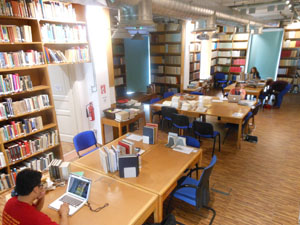 but our core functionality has continued throughout. For several months, the library was closed for renovations as part of a larger Library Expansion Project. During this time, we converted the lobby of CAARI into a library reading room. It was not ideal, but the entire Cyprus collection of books, nearly all of the journals and the usual number of desks were still available. Our current Fulbright Fellows, Dr. Young Kim from Calvin College studying the ‘heretic-hunter’ St. Epiphanius, and Ms. Catherine Kearns, PhD student at Cornell University studying Iron Age environmental and landscape archaeology, have been fixtures at CAARI throughout all of these changes. Their patience with the building works and occasional disruptions has been admirable.
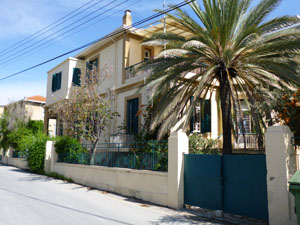 and the presence of contractors to revitalize the upstairs residence too. Every upstairs room has had a new lick of paint, the wooden floors have been refinished, the toilets and showers replaced, the kitchen refurbished and a new balcony roof is on the way. I am confident residents will appreciate the freshness of the living space, which will make living and working at CAARI a thoroughly productive and enjoyable experience.
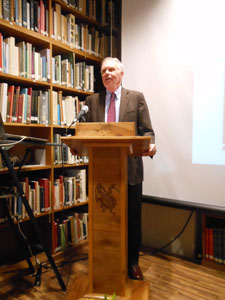 The conference had a lovely spirit, with attendees and presenters giving an honest account of historiography, biography and the archaeological legacy of Stewart. The conference was opened by Dr. Robert Merrillees, former CAARI Director, retired Australian diplomat, and one of Stewart’s own former students. Dr. Merrillees keynote lecture also inaugurated the renovated library and was followed by a display of historical and ethnographic items that were bequeathed to CAARI by Eve Stewart. Several fine receptions were generously sponsored by Dr. Merrillees, CAARI Trustee Maria Kyriacou and His Excellency, Australian High Commissioner Mr. Trevor Peacock and his wife Pattie. The conference itself received support from Beta Analytic, ISD Distributor of Scholarly Books and several local businesses. Presenters came from far and wide, including the Australia, Cyprus, Israel, New Zealand, the United Kingdom, the United States and Sweden, and the audience filled the new library to capacity. The presentations were of the highest quality and the co-Organizers, CAARI Trustee Prof. Bernard Knapp, Dr. Jenny Webb from La Trobe University and I, intend to publish the proceedings as the next volume in the CAARI monograph series.
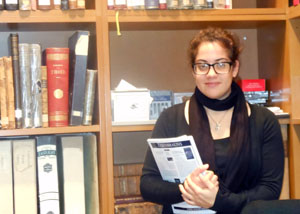 Mavromichalou. Taking up the position in February, Katerina was in charge of putting the library back together in time for the conference. An archaeology graduate from the University of Cyprus and the University of Southampton in the UK, her energy and knowledge of archaeology and libraries has already been a great asset to CAARI. Users of the library will be welcomed by Katerina as the new face of the library after Ms. Evi Karyda’s depature last year to pursue her PhD.
 2.
2. 

 Recently, the
  1) Archaeological institutions have an interest in finding non-professional photographs of their excavations. By finding ‘new’ photographic material, the existing documentation of the excavation will be extended and enhanced and will provide an image of aspects of an excavation which are not included in the published documentation. In addition, as has been demonstrated by the Leo Boer Archive, this genre of photographs may provide the institutions with additional scientific data which may be useful for the archaeological research relating to the specific site(s). Furthermore, by comparing the non-professional photographs with the official documentation made by the former staff, it is possible to get a notion of the practiced documentation policy at that site. Pictures of particular features or phases of the excavation taken by non-professionals and which are not present in the official documentation, reveal the decisions taken by the staff at the time of what to record and what to leave out. In this way, comparing the two categories of recording offers institutions insight into the development of this area of the archaeological discipline.
 3) Archaeological institutions benefit by joining the NPAPH Project. Participation in the NPAPH Project is valuable to institions, even if they manage their own digital archives, host them on their institutional server, and place them on their websites. The NPAPH Project is one central portal (
 During my stay at the Kenyon Institute as a fellow in 2012, I approached the director, Dr. Mandy Turner, suggesting that the Kenyon host a seminar on this topic. She approved enthusiastically. The Kenyon has an important tradition of supporting research on the archaeology and architecture of Jerusalem of the Islamic period, and eminent scholars have used it as a base for their fieldwork in the region. The Kenyon itself is located in a beautiful Ottoman-period building, an ideal setting for the seminar.
 On Sunday, for the tours in the Old City, we were lucky to have a great sunny day. The speakers (along with Mandy and me) had the privilege to meet Yusuf Natsheh, who gave us a full tour of al-Haram al-Sharif, including the Dome of the Rock, al-Aqsa Mosque, the Centre for the Restoration of Islamic Manuscripts, and the underground areas of the compound. We then proceeded to meet Mahmoud Hawari and the other participants at the Citadel for a detailed tour of the area, illustrating the several phases of the Citadel, as reconstructed by his work on historical and archaeological sources. After a lunch in the Old City with all the participants, our day ended at sunset after a fantastic two-hour tour led by Robert Schick on the Mamluk and Ottoman buildings of the Old City.


