
SHARE
[/vc_column_text][mk_image src=”http://www.asortest.org/wp-content/uploads/2017/01/social-fb-icon4.jpg” image_width=”42″ image_height=”42″ hover=”false” custom_url=”https://www.facebook.com/ASOResearch/” margin_bottom=”0″][mk_image src=”http://www.asortest.org/wp-content/uploads/2017/01/social-tw-icon4.jpg” image_width=”42″ image_height=”42″ hover=”false” custom_url=”https://twitter.com/ASOResearch?ref_src=twsrc%5Egoogle%7Ctwcamp%5Eserp%7Ctwgr%5Eauthor” margin_bottom=”0″][mk_image src=”http://www.asortest.org/wp-content/uploads/2017/01/social-in-icon4.jpg” image_width=”42″ image_height=”42″ hover=”false” custom_url=”https://www.linkedin.com/company/american-schools-of-oriental-research” margin_bottom=”0″][mk_image src=”http://www.asortest.org/wp-content/uploads/2017/01/social-ml-icon_7.jpg” image_width=”42″ image_height=”42″ hover=”false” custom_url=”mailto:asor@bu.edu” margin_bottom=”0″][mk_image src=”http://www.asortest.org/wp-content/uploads/2017/01/blog-icon3.jpg” image_width=”42″ image_height=”42″ hover=”false” custom_url=”http://asorblog.org/” margin_bottom=”0″][/vc_column][vc_column border_color=”rgba(255,255,255,0.01)” width=”1/6″ css=”.vc_custom_1496683923840{margin-right: 20px !important;border-left-width: 2px !important;padding-right: 20px !important;padding-left: 20px !important;border-left-color: #99422f !important;}”][mk_divider divider_color=”rgba(255,255,255,0.01)” thickness=”1″ margin_top=”3″ margin_bottom=”3″][vc_column_text] [/vc_column_text][/vc_column][vc_column border_color=”rgba(170,170,170,0.01)” width=”1/2″ css=”.vc_custom_1487276122024{margin-right: 10px !important;margin-bottom: 30px !important;border-right-width: 2px !important;border-bottom-width: 2px !important;padding-top: 30px !important;padding-right: 30px !important;padding-left: 20px !important;background-color: #ffffff !important;border-right-color: rgba(227,228,228,0.75) !important;border-bottom-color: rgba(227,228,228,0.75) !important;}”][vc_column_text responsive_align=”left”]HENRY DETWEILER IN SARDIS: A LOOK INSIDE THE A. HENRY DETWEILER PAPERS
by Alyson Bowers, Archives Intern
[/vc_column_text][vc_column_text]Within the archive here at ASOR, there are many untapped collections full of stories that waiting to be uncovered by a researcher. The A. Henry Detweiler Papers is such a collection. The A. Henry Detweiler Papers contain the personal papers of former ASOR President Detweiler, whose tenure lasted from 1955 to 1966 – a fascinating time in our organizations history. After receiving his Bachelor of Architecture from the University of Pennsylavania in 1930, he participated in excavations and collaborations with archeology teams from Yale and Michigan State. Later, he taught architecture at Cornell University and served as the dean of the Architecture School there in 1956. His involvement with ASOR began in 1949 when he was acting director of the School in Jerusalem, continued with his presidency of the organization from 1955 to 1966, and lasted until his resignation, when he was appointed a Life Trustee, 1967-1970. Though Dr. Detweiler’s later career was filled with the administrative duties required by his position as president of ASOR, his love of archeology and excavating still thrived as he remained active at several different excavations. Particularly interesting is the excavation to Sardis that he led from 1958-1961 with the help of George A. Hanfmann. From this expedition, the archive offers interesting stories and helps us gain a better understanding of Sardis and President Detweiler himself.
While the A. Henry Detweiler Papers comprises 6 boxes, the documents pertaining to Sardis span 19 folders and contain correspondence, financials, reports, press-related materials, and excavation sketches.
This excavation received much attention from the press over the three years that Detweiler was in charge. Detweiler kept around 100 newspaper clippings about the noteworthy accomplishments of the excavation, with headlines reading: “Site of Ancient City Discovered in Turkey” from Newport Daily News, September 3, 1958, and “Inscription in Language of Croesus Dug from Ruins of Ancient Sardis”, Post and Times Herald, July 23, 1958, to “Archaeologists Find Inscription to Lucius Verus” from Burlington Free Press, July 30, 1958.
Dr. Detweiler also kept news reports from Harvard University News Office itself, as they documented some of the excavation’s greatest findings through the years. Some of the most noteworthy early discoveries are the findings of inscriptions in the Lydian tongue, inscriptions in honor of Roman Emperor Lucius Verus, and the discovery of the exact location of Sardis. There are also later discoveries – like in August 1960, the discovery of the fortifications built by successors of Alexander the Great on the citadel of Sardis. In addition, the news reports from October 1960 chronicle the “remains of buildings destroyed by ‘sons of Hercules’ around 1200 BC and other destroyed about 600 years later by the King of Persia.” A year later, in October 1961, the Harvard Univeristy News Office released its Sardis findings, saying, “A marble avenue where ancient shoppers thronged, A Roman bath with colorful mosacis, and the first glimpse of the fabled golden riches of the capitol of Croesus are among important discoveries made by a Harvard-Cornell expedition in its fourth summer at Sardis, Turkey.”
 The Sardis excavation cemented its popularity with the media as Dr. Detweiler corresponded with people from the Motion Picture Service, WGBH, Life, and National Geographic, among others, to negotitate article and film deals about the findings at Sardis. (see Telegram from Motion Picture Services at above right) Unfortunately it seems that a Sardis movie never did surface, but the magazine articles probably did appear in the end.
Further information about the excavations can be gleaned from the interior reports kept by those on the Sardis excavation team. And while there are not many photographs in the A. Henry Detweiler Papers pertaining to the Sardis expedition, there are interesting report sketches, (see left) which comes from the “Report on the Pactolus Excavations” by Mario A. Del Chiaro in August 1959:
All of these different documents combine to help give us, as researchers, a fuller understanding of what Sardis meant to Dr. Detweiler. The significant amount of administrative material contained in the collection is evidence of Detweiler’s sizeable responsibilities pertaining to the excavation. The amount of reports kept indicates the level of care taken by the excavation team in detailing their findings and documenting the excavation’s progress. Finally the sheer number of neatly collected and organized newspaper clippings and press-related documents document how much the excavation meant to Dr. Detweiler, and how much it meant to the world.
Questions about A. Henry Detweiler or the ASOR Archive? E-mail the archivist.[/vc_column_text][/vc_column][vc_column border_color=”rgba(170,170,170,0.01)” width=”1/6″ css=”.vc_custom_1496684098866{margin-right: 5px !important;margin-bottom: 20px !important;border-right-width: 2px !important;border-bottom-width: 2px !important;padding-top: 30px !important;padding-right: 10px !important;padding-left: 10px !important;background-color: #ffffff !important;border-right-color: rgba(227,228,228,0.75) !important;border-bottom-color: rgba(227,228,228,0.75) !important;}”][vc_wp_posts title=”BROWSE THE NEWS ARCHIVE” number=”4″][/vc_column][vc_column border_color=”rgba(170,170,170,0.01)” width=”1/6″ css=”.vc_custom_1496684008271{margin-right: 10px !important;margin-bottom: 30px !important;border-right-width: 2px !important;border-bottom-width: 2px !important;padding-top: 30px !important;padding-right: 20px !important;padding-left: 20px !important;background-color: #ffffff !important;border-right-color: rgba(227,228,228,0.75) !important;border-bottom-color: rgba(227,228,228,0.75) !important;}”][vc_column_text]Tweets by ASOResearch [/vc_column_text][/vc_column][/vc_row]
 ASOR has grown and changed a lot in the six plus years since I was elected treasurer. One way in which we have changed is setting clear expectations for our new trustees. As a result, many of our newest trustees are providing generous financial support for ASOR that has allowed us to make investments to begin implementing our long-term strategic plan.
 I actually see a lot of parallels in my business of investing in publicly traded stocks. Stocks aren’t just pieces of paper, they are businesses. A lot of my work involves research on the computer, reading annual reports and regulatory filings and getting access to numbers, numbers and more numbers. But a key part of forming a judgment on whether a business is a good business or one to avoid requires me to get out of the office, visit the company and its sites. As an example, we own stock in Bed Bath & Beyond. I imagine most of our ASOR members have shopped at Bed Bath. Well, as part of my work, I visit Bed Bath stores, talk to their store managers, experiment with ordering on their website and compare their prices to Amazon. And now, with the arrival of my first grandbaby, I am doing the same amount of due diligence on their other store concept, BuyBuy Baby.
 In a fundraising campaign with an ambitious six- or seven-figure number, do small gifts matter? Why should we all stretch to give what we can even if a stretch gift for some of us is $25, $50, or $100? Do $25 or $50 gifts to ASOR’s Annual Fund matter?
 Twenty minutes into my carefully rehearsed presentation, the donor politely lifted his hand—a gesture that I sensed meant he wished me to cease speaking. I stopped talking. “All that you have said,” the potential donor began, “is to the point and none of this is without merit. We do need to ensure that a first-rate liberal arts education is accessible to all talented students, whatever their families’ income level, and we do need properly to honor our faculty. But thoughts such as these are not going to move me to make a leadership gift. What I want to know and what might well motivate me is an answer to this question: ‘What percentage of our graduates give to the Annual Fund every year? There is no more accurate or reliable way to gauge the value our graduates place upon their education than their willingness to contribute each year—and I don’t care how large their annual gifts are.’”
 ASOR is pleased to announce Dr. Lynn Swartz Dodd of the University of Southern California (USC) as our new Secretary. The ASOR Board of Trustees voted unanimously at its fall meeting on November 18, 2012 to elect Dodd to a three-year term (2013-2015) as ASOR Secretary and member of the Executive Committee. Dodd succeeds Prof. James F. Strange of the University of South Florida who served as Secretary for three terms and more than ten years. Prof. Strange continues his service to ASOR as a member of the board of trustees (Class of 2015).
 It’s almost time for March Fellowship Madness again, when we try to raise as many fellowship dollars as possible in thirty days. February 20th is the deadline for students and junior scholars to
  We once again plan to reach out to our fellow members through e-mail,
  Diverse! Engaging! Comprehensive! Exciting! Fantastic! Attendees have been overwhelmingly positive about ASOR’s 2012 Annual Meeting. A record 925 registrants came together from November 14-17 in Chicago at the Marriott Magnificent Mile Downtown, and once again, we enjoyed the largest program to date, with 463 papers in 90 sessions, 18 posters, 44 business meetings and special events, and 22 exhibitors. With newly-redesigned Program Books to guide them, attendees zoomed from session to session, paper to paper, and meeting to meeting! And, nestled in the heart of downtown Chicago, conference goers also enjoyed world-famous cultural attractions, restaurants, and shopping.
 ASOR’s members continue to diversify our program by chairing a wide range of Member-Organized Sessions and Workshop Sessions focused on specific themes, archaeological techniques, or sites. This year’s new sessions included City of Gold: Archaeological
 Maintaining this diverse and exciting program depends on ASOR’s members! We encourage you all to continue to develop Member-Organized Sessions and Workshops, to contribute to our ASOR-Sponsored Sessions by submitting papers on your current work, and to contact the Program Committee with any input and ideas you may have for improving the Academic Program of the Annual Meeting. The deadline for abstract submission is February 15, 2013 (or as late as March 1, 2013 with a $25 fee).
 We hope you will join us to present your new research at our 2013 Annual Meeting to be held from November 20-23, in Baltimore at the Sheraton Baltimore City Center Hotel![/vc_column_text][/vc_column][vc_column border_color=”rgba(170,170,170,0.01)” width=”1/6″ css=”.vc_custom_1496684098866{margin-right: 5px !important;margin-bottom: 20px !important;border-right-width: 2px !important;border-bottom-width: 2px !important;padding-top: 30px !important;padding-right: 10px !important;padding-left: 10px !important;background-color: #ffffff !important;border-right-color: rgba(227,228,228,0.75) !important;border-bottom-color: rgba(227,228,228,0.75) !important;}”][vc_wp_posts title=”BROWSE THE NEWS ARCHIVE” number=”4″][/vc_column][vc_column border_color=”rgba(170,170,170,0.01)” width=”1/6″ css=”.vc_custom_1496684008271{margin-right: 10px !important;margin-bottom: 30px !important;border-right-width: 2px !important;border-bottom-width: 2px !important;padding-top: 30px !important;padding-right: 20px !important;padding-left: 20px !important;background-color: #ffffff !important;border-right-color: rgba(227,228,228,0.75) !important;border-bottom-color: rgba(227,228,228,0.75) !important;}”][vc_column_text]
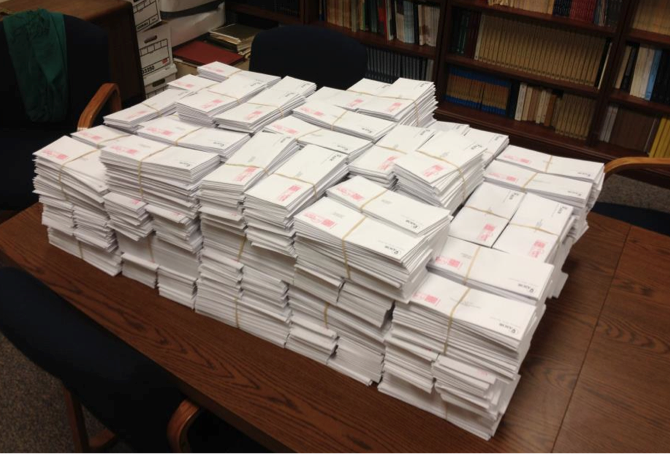 The fall/winter season in Boston has been busy and productive. ASOR’s steady membership growth during 2012 continued, and a new record for total members was set in September. ASOR’s blog content increased in conjunction with two theme months that were wildly successful. September’s “Qumran Month,” and October’s “Cultural Heritage Month” themes drove the largest increase in online traffic since the Jesus Tomb controversy in March. Original posts for each theme—written by members and other scholars—were well received, and produced some lively discussion. The increased blog traffic, combined with almost 4,200 likes of our Facebook page, made the fall a great success for ASOR’s ongoing social media initiative. Intent on building on the momentum created by ASOR’s social media success and record membership numbers, a membership appeal to over 5,000 individuals was executed in early November. (See image at right.) The initial response to the appeal has been promising, and thanks to the hard work of everyone in Boston, ASOR set another record in December with 1,581 ASOR members!
 The fall and winter have also seen changes that have improved customer service and increased the amount of information available to ASOR’s new and existing members. The 2013 membership enrollment form was redesigned to ease renewal and explain member benefits more clearly. Look for the new form in your renewal notices.
 [/vc_column_text][/vc_column][vc_column border_color=”rgba(170,170,170,0.01)” width=”1/6″ css=”.vc_custom_1496684098866{margin-right: 5px !important;margin-bottom: 20px !important;border-right-width: 2px !important;border-bottom-width: 2px !important;padding-top: 30px !important;padding-right: 10px !important;padding-left: 10px !important;background-color: #ffffff !important;border-right-color: rgba(227,228,228,0.75) !important;border-bottom-color: rgba(227,228,228,0.75) !important;}”][vc_wp_posts title=”BROWSE THE NEWS ARCHIVE” number=”4″][/vc_column][vc_column border_color=”rgba(170,170,170,0.01)” width=”1/6″ css=”.vc_custom_1496684008271{margin-right: 10px !important;margin-bottom: 30px !important;border-right-width: 2px !important;border-bottom-width: 2px !important;padding-top: 30px !important;padding-right: 20px !important;padding-left: 20px !important;background-color: #ffffff !important;border-right-color: rgba(227,228,228,0.75) !important;border-bottom-color: rgba(227,228,228,0.75) !important;}”][vc_column_text]