UNEARTHING THE PAST SINCE 1900
  • BECOME A MEMBER
  • RENEW
  • GIVE NOW
  • SEARCH
  • ONLINE PORTAL
  • American Society of Overseas Research (ASOR)American Society of Overseas Research (ASOR)
  • ABOUT
    • WELCOME FROM ASOR OFFICERS
    • HISTORY OF ASOR
    • MISSION, BYLAWS, & STRATEGIC PLAN
    • Board of Trustees
    • COMMITTEES
    • POLICIES
    • FINANCIAL DOCUMENTS
    • MEDIA RELEASES
    • CONTACT US
  • CULTURAL
    HERITAGE
    • ABOUT CULTURAL HERITAGE INITIATIVES
    • UPDATES
    • PAST GRANTS
    • TUTORIALS
    • Who We Are
  • ANNUAL
    MEETING
    • REGISTRATION
    • HOTEL RESERVATIONS
    • ANNUAL MEETING SCHEDULES
    • SPONSOR & EXHIBIT
    • ASOR Online Library
    • HONORS & AWARDS
    • ANNUAL MEETING SCHOLARSHIPS
    • PAST & FUTURE ANNUAL MEETINGS
  • MEMBERSHIP
    & RESOURCES
    • INDIVIDUAL MEMBERSHIPS
    • INSTITUTIONAL MEMBERSHIPS
    • NEWS@ASOR
    • PAST ASOR NEWS, MONTH BY MONTH
    • AFFILIATED PROJECTS
    • AFFILIATED RESEARCH CENTERS
    • ARCHIVES
    • ONLINE RESOURCES
      • PHOTO COLLECTION
    • EARLY CAREER MEMBER RESOURCES
  • FELLOWSHIPS
    & GRANTS
    • SCHOLARSHIPS FOR FIELDWORK PARTICIPATION
    • GRANTS FOR ARCHAEOLOGICAL PROJECTS
    • RESEARCH FELLOWSHIPS FOR MEMBERS
    • MEMBERSHIP & ANNUAL MEETING SCHOLARSHIPS
    • ASOR-AFFILIATED RESEARCH CENTERS FELLOWSHIPS
    • OTHER FELLOWSHIP PROGRAMS
  • PUBLICATIONS
    • BOOK SERIES & MONOGRAPHS
    • BULLETIN OF ASOR
    • JOURNAL OF CUNEIFORM STUDIES
    • MAARAV
    • NEAR EASTERN ARCHAEOLOGY
    • THE ANCIENT NEAR EAST TODAY
    • News@ASOR
    • LEVANTINE CERAMICS PROJECT
  • FRIENDS
    OF ASOR
    • Webinars
    • TOURS
    • THE ANCIENT NEAR EAST TODAY
    • ASOR ONLINE LIBRARY
  • Donate
    • FY25 HONOR ROLL OF DONORS
    • LIFETIME HONOR ROLL OF DONORS
    • ASOR LEGACY CIRCLE
    • WAYS TO DONATE
Wong-Motya-Banner

 SHARE


NEWS@ASOR E-NEWSLETTER

ANCIENT NEAR EAST TODAY E-NEWSLETTER

PAST ASOR NEWS, MONTH BY MONTH

ASOR LEGACY CIRCLE MEMBERS

LIFETIME HONOR ROLL OF DONORS

FY25 HONOR ROLL OF DONORS

ASOR ANNUAL MEETING

Mapping Motya in a Day: Urbanism, Identity, and Geophysical Survey

Helen Wong, 2025 Katherine Barton Platt Fellowship Recipient

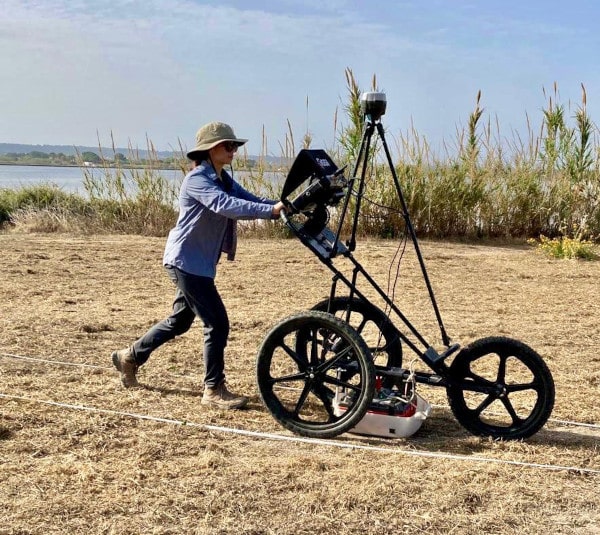
This summer, I joined the excavation team at Motya, a small island off the coast of eastern Sicily near Marsala, as a digital archaeology specialist. I was responsible for helping to carry out the ongoing geophysical survey which aims to map the entire layout of the ancient city. Motya was a Phoenician/Punic foundation dating to the 8th century BCE with close ties to Carthage and constant contact with indigenous Italic cultures, creating diverse ethnic and cultural conditions. It is one of the rare examples of a Punic city which was largely not built over in later periods. The aim of the geophysical survey, which has almost mapped the entirety of the city over the last ten years, is to approach the question of cultural diversity and experience at Motya through examining its urban layout and architectural forms, which are distinct from that of native Italic cities on the island. In this report, I will describe what an average day of work at Motya looked like for me.

Helen Wong conducting ground-penetrating radar (GPR) survey at Motya, Sicily.

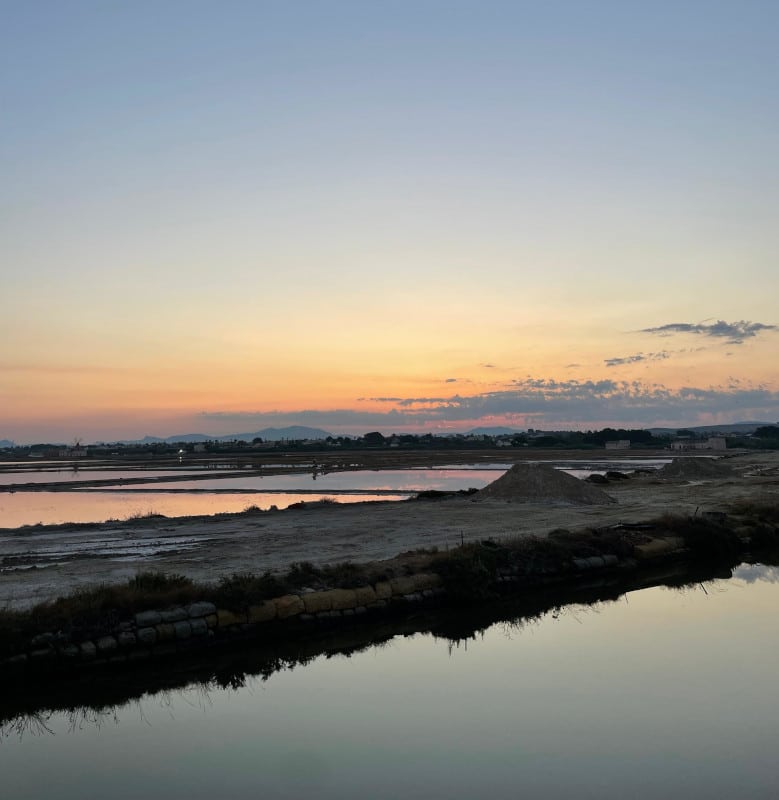
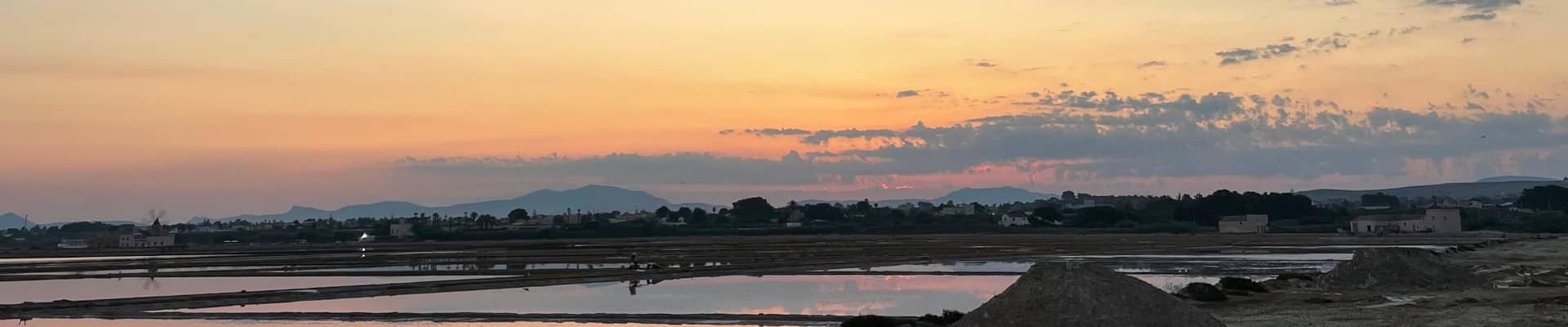
At 5:30am, I would drag myself out of bed. Ideally, we left for the island by 6am–sometimes it was a little later, but that could be made up for by a bit of careful speeding on the road, which was very scenic. The ride down to the dock where we would take a ferry to the island closely followed the coast, so even though we were only half-awake at best, we could still take in the gorgeous scenes of still water reflecting the dawn light. We would drive past the fishermen in their boats, the gulls and little birds diving into the water, and the famous salt flats of Marsala, each one delineated with careful lines of stones. Many of these salt flats are very old, even ancient. Marsala’s high-quality salt is famous, as is the sulphur scent which comes off the flats in the mornings and evenings. I came to associate it with waking up and looking forward to the start of the day.
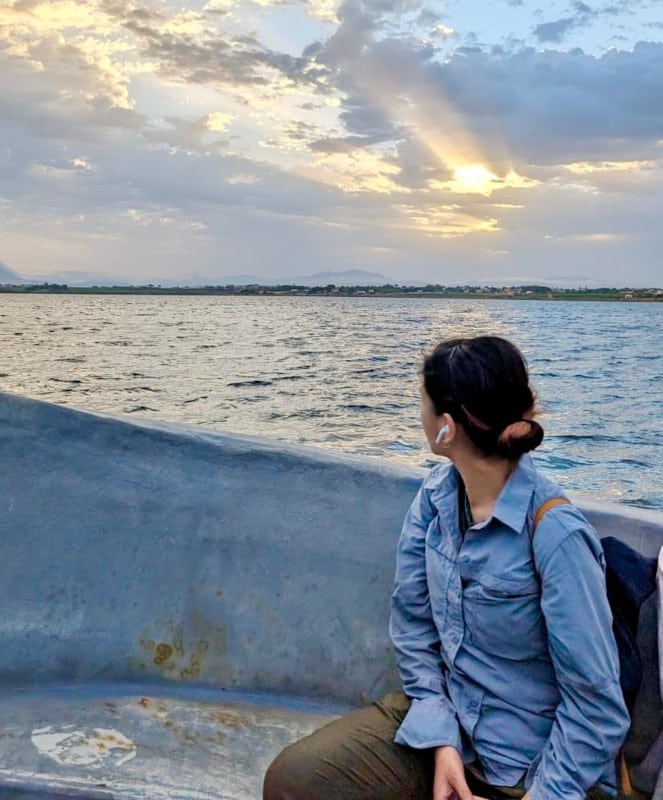
Taking the ferry to the island.

The ferry to the island took about twenty minutes. The passing scenery on the water was very beautiful, and I often found it almost meditative. Once we arrived on the island, the day truly began. We trekked up from the dock to the dig house and before starting anything else, made sure to brew dark, strong coffee. Then we would each go off and sort out our own responsibilities. For me, that meant getting out the magnetometer. We used a Bartington Grad601, a compact instrument with two sensor rods, one on each end of a rigid carrying bar. The instrument is held in front of the user and has a harness which is usually hooked onto a backpack. It is relatively light and easy to carry. The hardest part of its usage is actually very straightforward: in order for the data to be taken correctly, the user has to step in a specific beat, like band marching. When you use the Bartington enough times, it begins to have an effect on your everyday walking. At the end of the day, I would often find that I was walking in the same regulated beat even when I was no longer carrying the instrument.

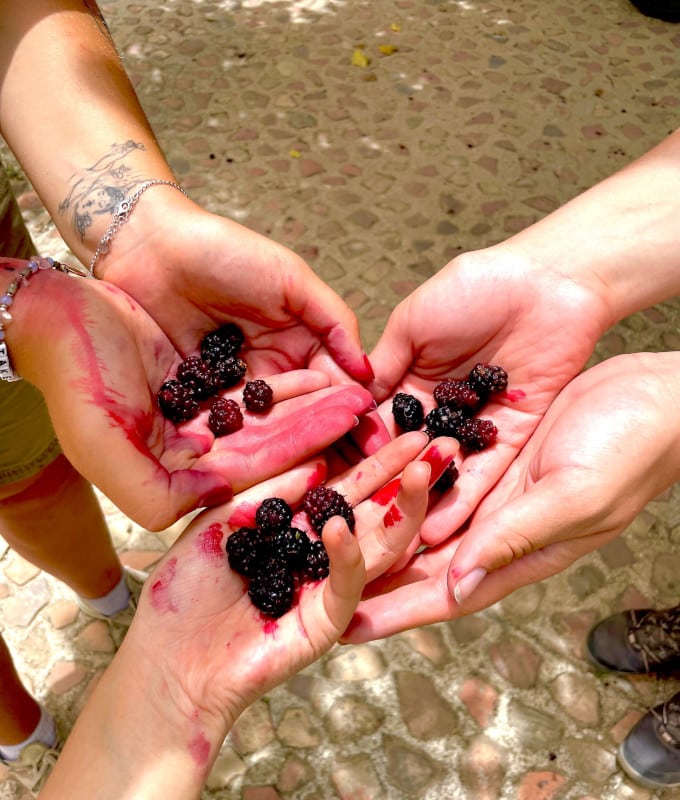
Picking mulberries from the tree outside the dig house.

The survey area I was focusing on this season was an olive grove to the northeast of the island. I walked the magnetometer between the rows of trees and occasionally ran straight into low-hanging branches. I walked into one hard enough once that it knocked me on my back. Such are the hazards of keeping your head down to make sure you’re stepping in time.

The salt flats.
The salt flats.

The data, once processed, made the many times I banged myself into a tree or two worth it. The magnetometry revealed major roads in line with those in other parts of the city, as well as some walls which suggest building foundations. Larger scholarly understanding of Punic urban architecture is actually fairly limited, so this kind of data makes a significant contribution to the subject. At the end of the day, I and my teammates would pack everything up: the ropes used to delineate where I would walk, the magnetometer going back in its case, my water bottle and sunscreen dropped unceremoniously in my bag. We would take the ferry back at 6pm, be back at our accommodations by 7pm, and then have a hearty, much looked-forward-to dinner. And then we’d do it all again tomorrow.

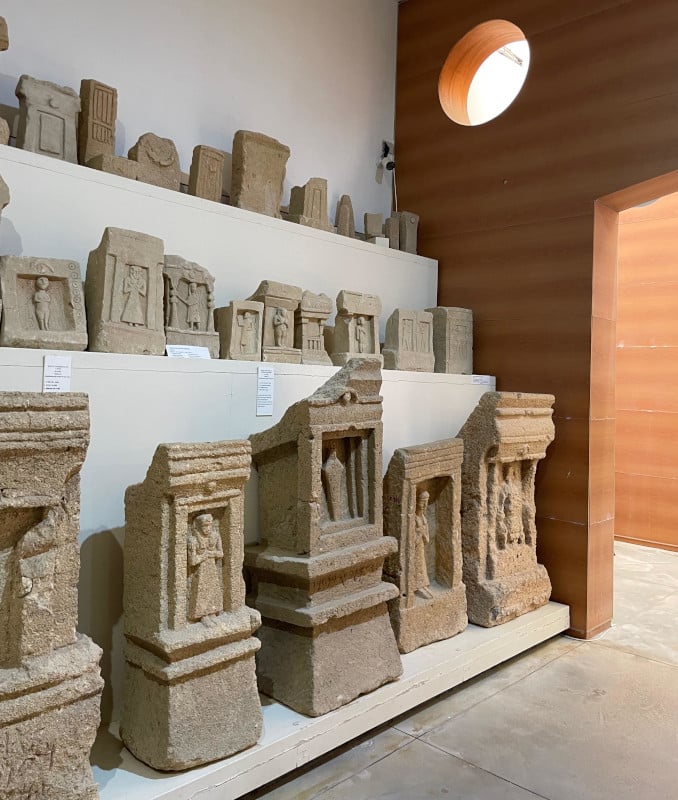
Tombstones from Motya's necropolis.

Helen Wong is a PhD candidate in the Art and Archaeology of the Mediterranean World (AAMW) program at the University of Pennsylvania. Her dissertation focuses on funerary rituals and mortuary landscapes in Hellenistic Phoenicia. She is currently the Bothmer Fellow in Greek and Roman Art at the Metropolitan Museum of Art.

Want to help more students and early career archaeologists get into the field? Donate to the cause today by selecting “Fieldwork Scholarships” as your gift purpose!

Recent Posts

  • FOA Webinar: Benyamin Storchan
  • 2025 Geraty Grant Report: Tall Hisban
  • Fieldwork Report: Helen Wong
  • 2026 Fieldwork Opportunities
  • FOA Webinar: Sarah Wenner

Latest Posts from @ASORResearch

asor_research

Initiating and supporting research of the history and cultures of the Near East and wider Mediterranean world.


Be sure to watch the next FOA webinar TOMORROW at
Be sure to watch the next FOA webinar TOMORROW at 7:00pm ET presented by Dr. Sarah Wenner: "Experiencing Khirbet et-Tannur: The Story of a Nabatean Temple from the Second through 21st Century." Register for free if you haven't already: https://buff.ly/CtzwPOm


ASOR is putting together a map of where our member
ASOR is putting together a map of where our members have worked in the world. You're invited to submit your own excavations, survey, laboratory, or museum and conservation projects to the map with stories and photos. Click the link in our bio to complete a brief survey to add yourself to the map: https://buff.ly/LYYJVlZ


The Honors and Awards Committee seeks nominations
The Honors and Awards Committee seeks nominations for at least 3 candidates. Committee members will serve a three-year term with the possibility of two consecutive terms. Nominees must fill out the online form by January 30. Learn more by clicking the link in our bio: https://www.asor.org/news/2025/12/honors-awards-members-call


This past summer, a group from Johns Hopkins Unive
This past summer, a group from Johns Hopkins University traveled to Türkiye to help excavate a Late Bronze Age archive of cuneiform tablets at Alalakh/Tell Atchana. This team, funded by an ASOR Harris Grant, was uniquely qualified for the task, as they were trained in both archaeology and in reading Akkadian cuneiform. Read their grant report by clicking the link in our bio: https://www.asor.org/news/2025/12/harris-grant-report-alalakh
#Archaeology #Fieldwork #Cuneiform #Turkiye


Reminder: the deadline to propose new member-organ
Reminder: the deadline to propose new member-organized sessions and workshops for the 2026 Annual Meeting in Chicago is Thursday, January 15. Find more info and fill out a brief proposal here: https://buff.ly/Kqui65X


Don't miss the upcoming FOA webinar on Wednesday,
Don't miss the upcoming FOA webinar on Wednesday, January 21 at 7:00pm ET: "Experiencing Khirbet et-Tannur: The Story of a Nabatean Temple from the Second through 21st Century," presented by Dr. Sarah Wenner. In the 2nd century CE, after Rome annexed the Nabataean Kingdom and transformed it into the Roman province of Arabia, the Nabataean temple at Khirbet et-Tannur was constructed in Central Jordan. This lecture travels the site’s two millennia history and explores how Khirbet et-Tannur’s excavations, the collection at the Cincinnati Art Museum, and 21st century innovations have changed our understanding of the Nabataeans. Read more and register by clicking the link in our bio: https://www.asor.org/news/2026/01/webinar-wenner


Our #ObjectoftheWeek: An Egyptian “New Year’s Bott
Our #ObjectoftheWeek: An Egyptian “New Year’s Bottle”, a type of lentoid-shaped flask that was filled with perfumed oil or water from the Nile, gifted in connection to the New Year. ca. 664-525 BCE. MMA 30.8.214. Photo credit: Metropolitan Museum of Art.
#Archaeology #Egypt #NewYear


The archaeological record and the cuneiform litera
The archaeological record and the cuneiform literature provide us with compelling information to assess how children lived 3000 years ago. This should open our eyes to current realities, which are not so different. Read the newest ANE Today article, "Children in the Ancient (and Present-day) Near East", by clicking the link in our bio: https://anetoday.org/children-near-east/


In town for the #AIASCS2026 Annual Meeting? 🏺

Mak
In town for the #AIASCS2026 Annual Meeting? 🏺

Make sure to stop by the ASOR table in the Exhibit Hall to learn more about our programs and publications, and reconnect with colleagues and friends from across the field.

ASOR Exhibit Hall Hours:
• Wed, Jan 7 | 3:00–6:00 PM
• Thu–Fri, Jan 8–9 | 9:30 AM–5:30 PM
• Sat, Jan 10 | 8:00 AM–12:00 PM

We can’t wait to see you—come say hello! 

#ASOR #AIAAnnualMeeting #MeetUsThere


The 2026 ASOR Annual Meeting will begin on Wednesd
The 2026 ASOR Annual Meeting will begin on Wednesday, November 18, at 7:00pm CST with the plenary address by Dr. Kim Benzel: Lapis, Clay, Copper, Water: Presenting Ancient West Asian Art at The Met. Dr. Benzel is Curator in Charge of The Metropolitan Museum of Art. She holds a Ph.D. in Art History and Archaeology from Columbia University and has participated in archaeological excavations in Syria. Currently, Kim and her colleagues are working on a full rethink and renovation of The Met’s permanent galleries of Ancient West Asian Art, scheduled to reopen in June 2027. Read more about the 2026 Plenary Address here: https://www.asor.org/am/2026/plenary-address-2026


Make sure to tune in TOMORROW at 7:00 pm ET for th
Make sure to tune in TOMORROW at 7:00 pm ET for the next FOA webinar presented by Amanda Hope Haley: "Beyond Edutainment: Reclaiming Archaeology in a Clickbait World". If you haven't already signed up, click the link (https://buff.ly/cDQEBdk) in our bio to register for free.


ASOR plans to award two Mesopotamian Fellowships f
ASOR plans to award two Mesopotamian Fellowships for 2026-2027; one for $9,000 and one for $4,000. These fellowships are primarily intended to support fieldwork/research on ancient Mesopotamian culture carried out in the Middle East, but other projects such as travel to work on museum collections or archives related to ancient Mesopotamia will also be considered. The deadline for applications is January 26, 2026. More info can be found here: https://www.asor.org/fellowships/mesopotamian-fellowship/


Yishu Deng, a 2025 Eric and Carol Meyers Fieldwork
Yishu Deng, a 2025 Eric and Carol Meyers Fieldwork Participation Scholarship Recipient,
excavated at Kani Shaie in the Kurdistan Region of Iraq. Yishu was able to participate in ongoing archaeological research in the Near East and further her interest in ancient metal production. Read her fieldwork report here: https://www.asor.org/news/2025/12/fieldwork-report-deng


Happy New Year from ASOR! We wish you all the best
Happy New Year from ASOR! We wish you all the best for 2026!


Before we turn the page to 2026, swipe through and
Before we turn the page to 2026, swipe through and take a look at ASOR's 2025 Year in Review! Thank you for being part of ASOR's historic 125th year — we couldn't have accomplished it without your support!
#ASOR2025 #ASORwrapped


The newest issue of Near East Archaeology includes
The newest issue of Near East Archaeology includes articles like: Burial Practices of the Bronze Age: An Archaeological Study of the Deh Dumen Cemetery in Southern Zagros, Iran; Time Capsules: Evidence for Foundation and Abandonment Practices at Middle Bronze Age Erimi, Cyprus; Āb Bād Rock-cut Tomb: Tracking Post-Achaemenid Burial Customs in Qir-o Karzin, Southern Pars, Iran; First Observations on the Excavations in the Terrace Area of Uluköy Cave, Mardin/Türkiye; and more. Check out the Table of Contents here: https://www.asor.org/news/2025/12/nea88.4-toc/


ASOR invites members to propose new member-organiz
ASOR invites members to propose new member-organized sessions and workshops for the 2026 Annual Meeting. The meeting will be held in Chicago and online, November 18-21. The brief proposal form asks for a description of the session/workshop, as well as a list of 4 to 5 potential speakers and topics. The deadline to propose sessions and workshops is January 15. More info can be found by clicking the link (https://www.asor.org/am/2026/call-for-sessions-2026) in our bio.


Our #ObjectoftheWeek: Alabastron from the tomb of
Our #ObjectoftheWeek: Alabastron from the tomb of Nubian king Aspelta in Nuri, Sudan, ca. 593-568 BCE. MFA 20.1070. Photo credit: Harvard University—Boston Museum of Fine Arts Expedition.
#Nubia #Alabastron


Register for the next FOA webinar on January 7, 20
Register for the next FOA webinar on January 7, 2026, at 7:00 pm ET, presented by Amanda Hope Haley: "Beyond Edutainment: Reclaiming Archaeology in a Clickbait World". This webinar will be free and open to the public. Register here: https://www.asor.org/news/2025/12/webinar-haley


Heritage protection is a fundamental part of the w
Heritage protection is a fundamental part of the work of ASOR’s Cultural Heritage Initiatives. To help fight the illicit antiquities trade in Lebanon and Syria, ASOR hosted an Antiquities Trafficking Documentation workshop in Beirut, Lebanon on December 8-12, 2025, with the generous support of the U.S. Embassy in Beirut @USEmbassyBeirut. 

The workshop brought together representatives of the American, Lebanese, and Syrian governments to discuss current conditions and challenges in Lebanon and Syria, local priorities, and ways for all participants to work together to achieve them. Read more by clicking the link (https://buff.ly/lB5EEHO) in our bio.

Photo credits: U.S. Embassy Beirut and ASOR


Instagram

Stay updated with the latest insights, photos, and news by following us on Instagram!

Follow Us on Instagram

American Society of Overseas Research
The James F. Strange Center
209 Commerce Street
Alexandria, VA 22314

E-mail: info@asor.org

© 2025 ASOR
All rights reserved.
Images licensed under a Creative Commons Attribution-NonCommercial-ShareAlike 4.0 International License

Contact Us
Membership
Give
Friends of ASOR
ASOR Cultural Heritage Initiatives
Terms of Use
News

Please follow & like us :)
Facebook
YouTube
LinkedIn