UNEARTHING THE PAST SINCE 1900

Ongoing Updates: We’re currently making improvements to our website to enhance your experience. Some features may be temporarily unavailable or behave unexpectedly. Thank you for your patience and understanding.

[vc_row fullwidth=”true” attached=”true” css=”.vc_custom_1496247803139{padding-top: 0px !important;padding-right: 0px !important;padding-bottom: 0px !important;padding-left: 0px !important;}”][vc_column][vc_single_image image=”91665″ img_size=”full” alignment=”center”][/vc_column][/vc_row][vc_row fullwidth=”true” css=”.vc_custom_1496682730308{padding-top: 10px !important;padding-right: 0px !important;padding-bottom: 0px !important;padding-left: 0px !important;}”][vc_column width=”1/12″ css=”.vc_custom_1496683820796{margin-right: 10px !important;}” offset=”vc_hidden-md vc_hidden-sm vc_hidden-xs”][vc_column_text]

 SHARE

[/vc_column_text][mk_image src=”http://www.asortest.org/wp-content/uploads/2017/01/social-fb-icon4.jpg” image_width=”42″ image_height=”42″ hover=”false” custom_url=”https://www.facebook.com/ASOResearch/” margin_bottom=”0″][mk_image src=”http://www.asortest.org/wp-content/uploads/2017/01/social-tw-icon4.jpg” image_width=”42″ image_height=”42″ hover=”false” custom_url=”https://twitter.com/ASOResearch?ref_src=twsrc%5Egoogle%7Ctwcamp%5Eserp%7Ctwgr%5Eauthor” margin_bottom=”0″][mk_image src=”http://www.asortest.org/wp-content/uploads/2017/01/social-in-icon4.jpg” image_width=”42″ image_height=”42″ hover=”false” custom_url=”https://www.linkedin.com/company/american-schools-of-oriental-research” margin_bottom=”0″][mk_image src=”http://www.asortest.org/wp-content/uploads/2017/01/social-ml-icon_7.jpg” image_width=”42″ image_height=”42″ hover=”false” custom_url=”mailto:info@asor.org” margin_bottom=”0″][mk_image src=”http://www.asortest.org/wp-content/uploads/2017/01/blog-icon3.jpg” image_width=”42″ image_height=”42″ hover=”false” custom_url=”https://asor.org/blog” margin_bottom=”0″][/vc_column][vc_column border_color=”rgba(255,255,255,0.01)” width=”1/6″ css=”.vc_custom_1496683923840{margin-right: 20px !important;border-left-width: 2px !important;padding-right: 20px !important;padding-left: 20px !important;border-left-color: #99422f !important;}”][mk_divider divider_color=”rgba(255,255,255,0.01)” thickness=”1″ margin_top=”3″ margin_bottom=”3″][vc_widget_sidebar sidebar_id=”ca-sidebar-39801″][/vc_column][vc_column border_color=”rgba(170,170,170,0.01)” width=”1/2″ css=”.vc_custom_1487276122024{margin-right: 10px !important;margin-bottom: 30px !important;border-right-width: 2px !important;border-bottom-width: 2px !important;padding-top: 30px !important;padding-right: 30px !important;padding-left: 20px !important;background-color: #ffffff !important;border-right-color: rgba(227,228,228,0.75) !important;border-bottom-color: rgba(227,228,228,0.75) !important;}”][vc_column_text responsive_align=”left”]

Uncovering Untold “Vignettes” of History at Huqoq

Thomas Barrett, 2023 Katherine Barton Platt Fellowship Recipient
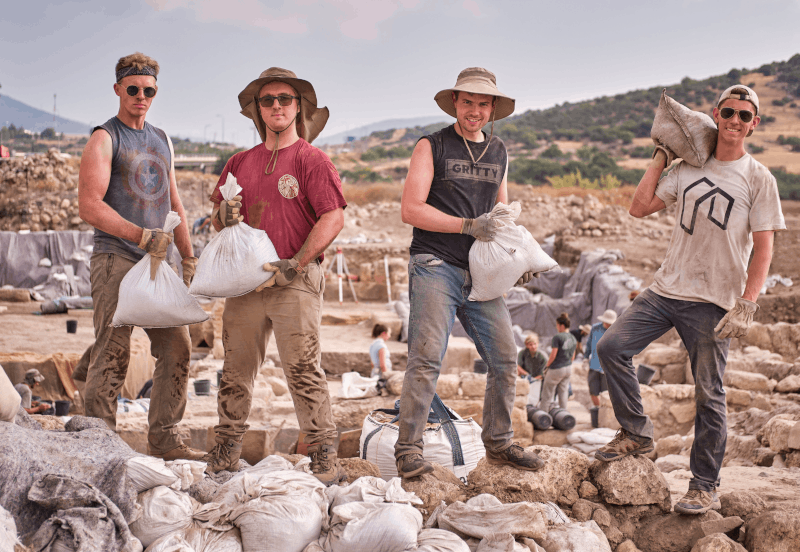
[/vc_column_text][mk_divider][vc_wp_text]With special thanks to the Katherine Barton Platt Fellowship, I had the privilege of participating in the 2023 excavation season of the Huqoq Excavation Project, an archaeological excavation of a Late Roman period Jewish synagogue in the lower Galilee. This project was led by Jodi Magness of the University of North Carolina at Chapel Hill and marked their final excavation season at Huqoq.
[/vc_wp_text][vc_row_inner][vc_column_inner][vc_single_image image=”91658″ img_size=”full” add_caption=”yes” alignment=”center” onclick=”img_link_large” img_link_target=”_blank” css=”.vc_custom_1694635368278{padding-right: 10px !important;}”][/vc_column_inner][/vc_row_inner][mk_padding_divider][vc_wp_text]
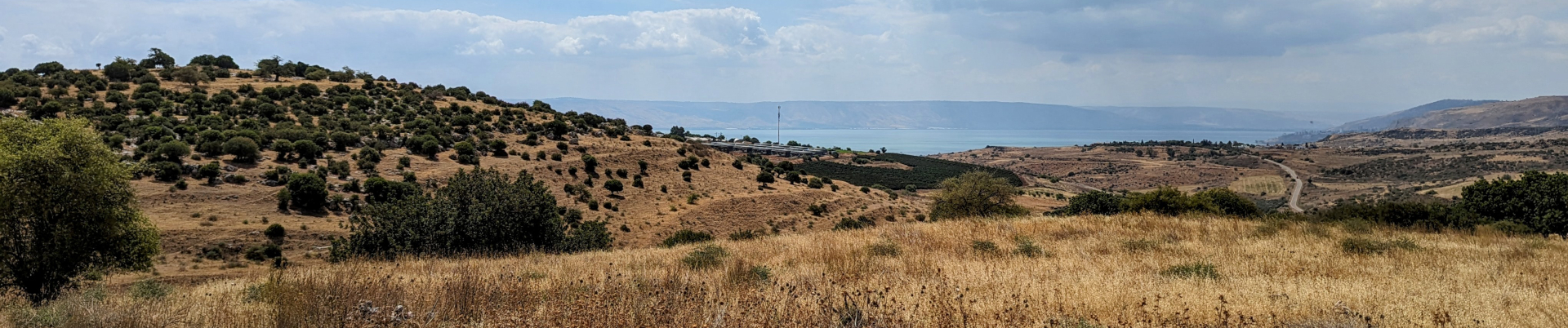
A view of the Sea of Galilee from the excavation site. Photo courtesy of the author.

This project was a singular experience because it allowed us to participate in a traditional archaeological field school while tailoring this phenomenal experience to our particular interests. I was able to approach the project from a unique angle—I am a Geography student at Brigham Young University with a minor in History. My primary area of interest lies in the religious history of Judaism and early Christianity. Thus, this opportunity presented itself as the perfect way for me to intimately study religious experience up close and in the Holy Land, not just in a book or in a class. It likewise allowed me to, at least for a moment, fulfill my childhood dream of one day being an archaeologist.

While my experience differed from the “archaeology” I was exposed to in popular media as a child, I came away from my experience at Huqoq having been taught numerous valuable lessons. Above all,our excavations at Huqoq led me to have a shift in my understanding of the importance of archaeology.

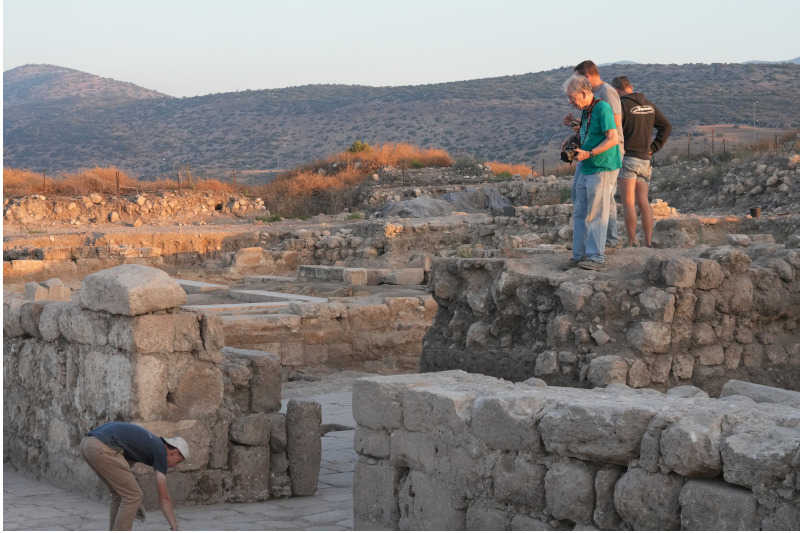
Prior to participating in the dig, I had a preconceived notion that archaeology was simply the method used to produce information required for scholars and archaeologists to draw conclusions about the past. In a way, it was the best way for them to preserve a small snapshot of the past, if you will. While that has an element of truth to it, I also began to understand that archaeology additionally provided the opportunity for us as scholars to capture a fresh perspective of the historical world. History is multi-faceted, and not a one-dimensional “snapshot,” after all. It is for this reason that archaeology is such an appropriate means to better understand the past, as it allows us to uncover additional “vignettes” of the past and explore another aspect of the historical narrative that deserves to be shared.[/vc_wp_text][vc_single_image image=”91659″ img_size=”full” add_caption=”yes” alignment=”center” onclick=”img_link_large” img_link_target=”_blank” css=”.vc_custom_1694635397343{padding-right: 10px !important;}”][mk_padding_divider][vc_wp_text]This certainly was the case at Huqoq. Our efforts there centered on uncovering a Late Roman period Jewish synagogue similar to other Galilean-type synagogues, but one that stands out as drastically different and unique compared to other similar synagogues in the area. Not only is its adjacent courtyard unique due to its large size, but the actual synagogue floor is covered in exceptional mosaics depicting various biblical scenes. I was assigned to work in the “3000 East” area, where we were given the task of uncovering a large portion of the adjacent courtyard to determine its true dimensions. Over the course of the dig, all of us were surprised to come across finds that reshaped our initial conceptions of the courtyard, making our site at Huqoq even more exceptional than other synagogues constructed in the same period. While all these finds and details initially raised additional questions, over time we all began to realize how crucial they were and how they painted a new picture of Jewish worship in this particular synagogue. Indeed, our efforts over the course of the dig provided sufficient data to expose a new perspective on Jewish worship spaces and capture that previously untold “vignette” of history.

In short, it was the exceptional privilege for me to participate in the Huqoq Excavation Project for their final year, not only because it supplemented my academic studies and offered me a close-up view of the Holy Land, but also because it augmented my understanding of the significance of archaeology. For this reason, I am profoundly grateful for those individuals whose assistance made my participation in the Huqoq Excavation Project possible, as well as all the directors, team leaders, and fellow members who made it such an unforgettable and phenomenal experience.
[/vc_wp_text][vc_wp_text]

Thomas Barrett is a Senior at Brigham Young University in Provo, Utah. He is currently studying Geography with an emphasis in Geospatial Science & Technology and is minoring in History, with an emphasis in Religious History.

Read more about the Huqoq Excavation Project here. 

[/vc_wp_text][mk_divider][vc_wp_text]Want to help more students and early career archaeologists get into the field? Donate to the cause today by selecting “Student Support” as your gift purpose!

[/vc_wp_text][mk_padding_divider][/vc_column][vc_column border_color=”rgba(170,170,170,0.01)” width=”1/6″ css=”.vc_custom_1496684098866{margin-right: 5px !important;margin-bottom: 20px !important;border-right-width: 2px !important;border-bottom-width: 2px !important;padding-top: 30px !important;padding-right: 10px !important;padding-left: 10px !important;background-color: #ffffff !important;border-right-color: rgba(227,228,228,0.75) !important;border-bottom-color: rgba(227,228,228,0.75) !important;}”][vc_wp_posts title=”BROWSE THE NEWS ARCHIVE” number=”4″][/vc_column][vc_column border_color=”rgba(170,170,170,0.01)” width=”1/6″ css=”.vc_custom_1496684008271{margin-right: 10px !important;margin-bottom: 30px !important;border-right-width: 2px !important;border-bottom-width: 2px !important;padding-top: 30px !important;padding-right: 20px !important;padding-left: 20px !important;background-color: #ffffff !important;border-right-color: rgba(227,228,228,0.75) !important;border-bottom-color: rgba(227,228,228,0.75) !important;}”][vc_column_text] [/vc_column_text][/vc_column][/vc_row]

Leave a Reply