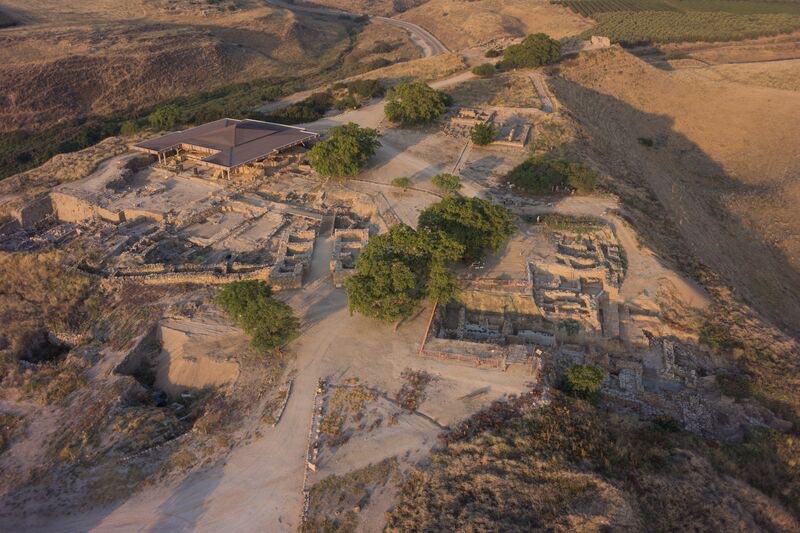
Hazor, the largest biblical-era site in Israel, covered in the second millennium BCE an area of some 200 acres. The Canaanite city consisted of both an Upper and a Lower city, and its population is estimated to have been about 10,000-15,000 people. Its strategic location, controlling one of the major routes between Egypt and Syria and Mesopotamia, contributed to it being the largest city in the entire region.
 Hazor is mentioned in various written documents throughout the second millennium BCE, including the Egyptian Execration Texts, Cuneiform records from the Mari Archive, Annals of the Pharaohs of the New Kingdom and the Amarna Archive from the time of Akhenaten.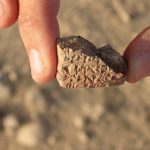
The destruction of Canaanite Hazor, referred to it as the ‘head of all those kingdoms’ (Joshua 11:10), is described as part of the Israelite conquest of Canaan. The Israelite rebuilding and fortification of the city is attributed to King Solomon (1Kings 9:15), following which the city developed as a major administrative center of the northern kingdom of Israel in the 9th and the 8th centuries BCE. The Israelite city was eventually destroyed by the Assyrian king Tiglath-Pileser III (2 Kings 15:29), never to regain its former status and wealth. Hazor was excavated in the 1950s and 60s by a team from the Hebrew University, led by Prof. Yigael Yadin. Excavations at Hazor were renewed in 1990 (named the Selz Foundation Hazor Excavations in Memory of Yigael Yadin) by Prof. Amnon Ben-Tor and continue to the present day. Extensive architectural remains were uncovered at Hazor during the last 30 seasons of excavations. These include Israelite fortifications, administrative and domestic buildings, and impressive Canaanite palatial structures and temples. A wealth of small finds, including several cuneiform tablets, statues and figurines, jewellery and weapons were also found.
Eligibility
Successful applicants for the Dana Scholarships must join ASOR or be enrolled as students at an ASOR-member school (see list of Institutional Members) for funds to be distributed. Membership is not required at the time of application for the Dana Scholarships only. Applicants from underrepresented groups may request a membership waiver in order to apply. Applicants are encouraged to use the Uniform Fieldwork Scholarships Application to apply for all of the named and unnamed Fieldwork Participation Scholarships. Some of the named grants are designated for particular excavations (e.g., Hazor or Tell el-Hesi), for particular groups (e.g., BIPOC and veterans), and for particular countries (e.g., Israel or Jordan). Please check the appropriate boxes on the Uniform Application so that you can be considered for as many different scholarships sources as possible. In order to be eligible, applicants are required to participate in an ASOR-affiliated excavation (see list).
Upon completion of the field season, a report of 250-350 words and three appropriate photos (500 dpi resolution or higher) on site must be submitted to the ASOR office by September 1, 2026. This report will also be shared with the Hazor staff for inclusion on the project website. Scholarship recipients also agree to send several thank you letters to the primary donor (Stevan B. Dana). Reports and photos should be sent via email, with “Dana scholarship report” in the subject line. More information will be available after the recipients have been notified.
Scholarship recipients will be required to sign a waiver indicating that ASOR is not responsible for any injuries they might sustain during their time at the excavation in which they participate. They will also be required to sign a release of rights to ASOR for the inclusion of their report and photographs in one of ASOR’s publications. This award may only be used for allowable direct expenses. Indirect and/or overhead expenses are not permitted.
Disclaimer: If archaeological excavations are significantly disrupted or canceled in 2026, ASOR may, at its sole discretion, decide not to offer fieldwork scholarships. Fieldwork scholarships cannot be deferred; applicants may reapply either for fieldwork funding in 2027 or for non-fieldwork summer stipends if ASOR offers such stipends in 2026.