UNEARTHING THE PAST SINCE 1900
Joshua Feland, 2025 Eric and Carol Meyers Fieldwork Scholarship Recipient
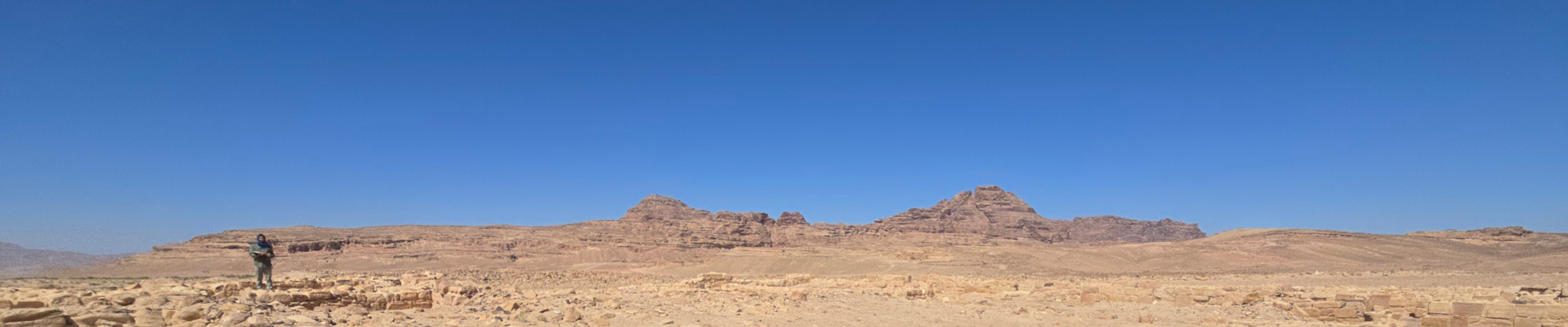
In southern Jordan lies Humayma, an extensive archaeological site with a complicated history. The ancient village was home to the Nabateans, Romans, Byzantines, and Arab peoples, all of whom left their mark permanently in the village in the form of large and small structures. Humayma, or ancient Hawara, was initially a Nabatean settlement roughly equidistant between Aqaba and Petra in southern Jordan. The site is notable for its water collection infrastructure, Roman fort, Byzantine churches, and Islamic Qasr, to name but a few of the structural types on the site. Spread throughout the site are the everyday signs of life in the past: pottery sherds, ceramic building materials (CBM), faunal remains, and evidence of burials—all of which is being mapped and documented.
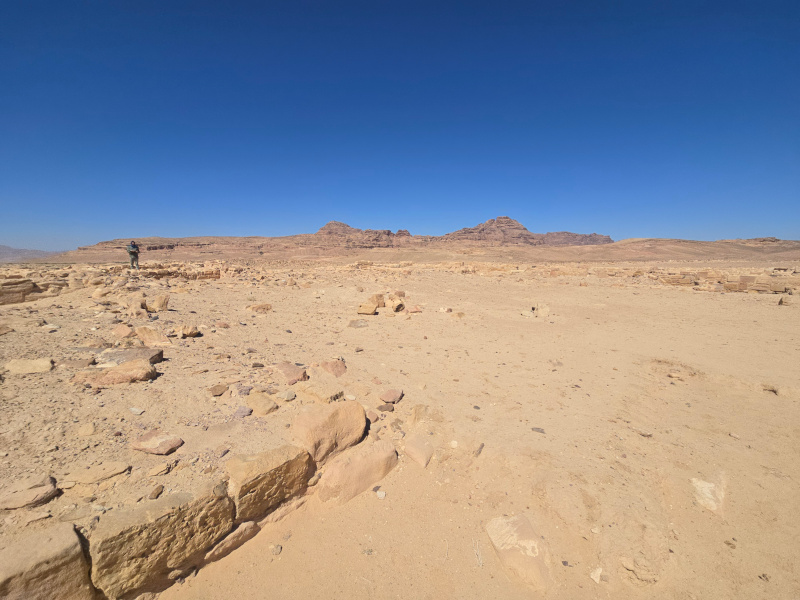
In May 2025, I was presented with the opportunity to act as a supervisor on the University of Alberta’s Humayma Field School project. The field school aims to instill archaeological field technique and values in the next generation of archaeology students. For this season I was tasked with teaching photogrammetry techniques using the standing structures at Humayma and excavated materials from previous seasons.
Fifteen university students coming from Canada and the United States travelled to Jordan to conduct their first fieldwork in the Middle East. The overall goal of the field school in its inaugural season was to establish the state of the structures on the site, create a detailed site map, pinpoint key areas for further excavation and conservation, and instruct the students in archaeological field techniques, including photogrammetry and 3D modelling.
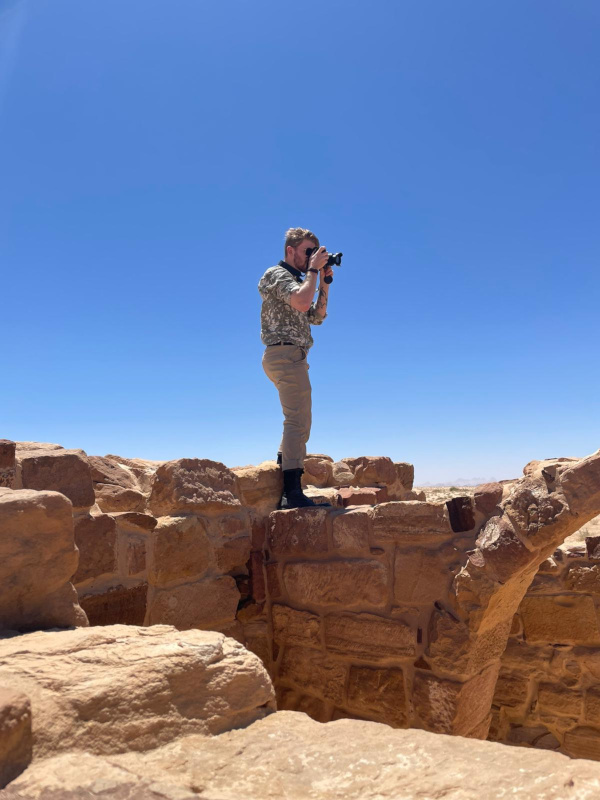
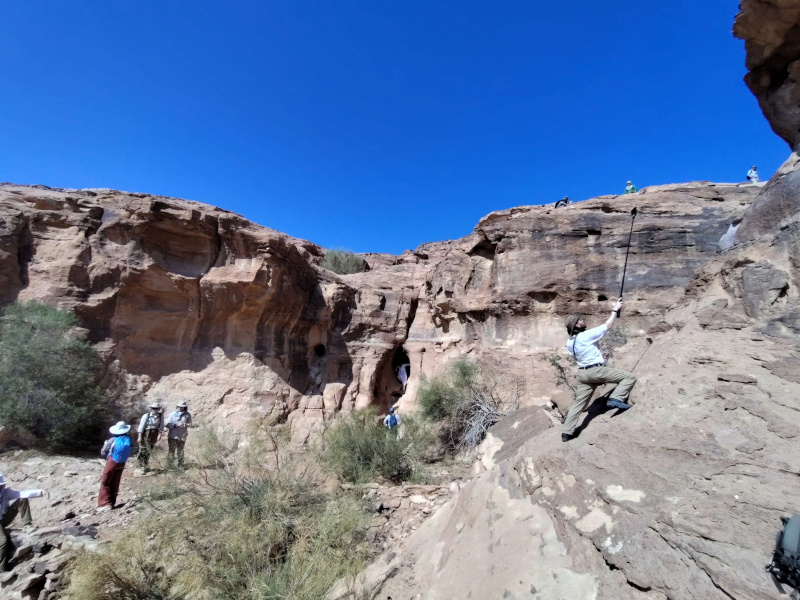
The photogrammetry for the site was conducted primarily by the students using both a traditional DSLR camera and the students’ own smartphones. Both pieces of capture technology produced excellent results, considering this was the students’ first time using them in the field. The process involved the students walking steadily around some of the notable standing structures on the site, taking photos as they went with as much overlap as possible. This allows for the processing applications to “match” structures, creating an in-depth 3D model that can be georeferenced and measured. The technology is instrumental to modern archaeology, allowing for the creation of high-quality and often fully explorable 3D models of sites, structures, features, artifacts, etc. This can provide easy access to on-the-ground site data that may be a world away. Properly georeferenced, one can measure entire structures from one’s own office or laboratory.
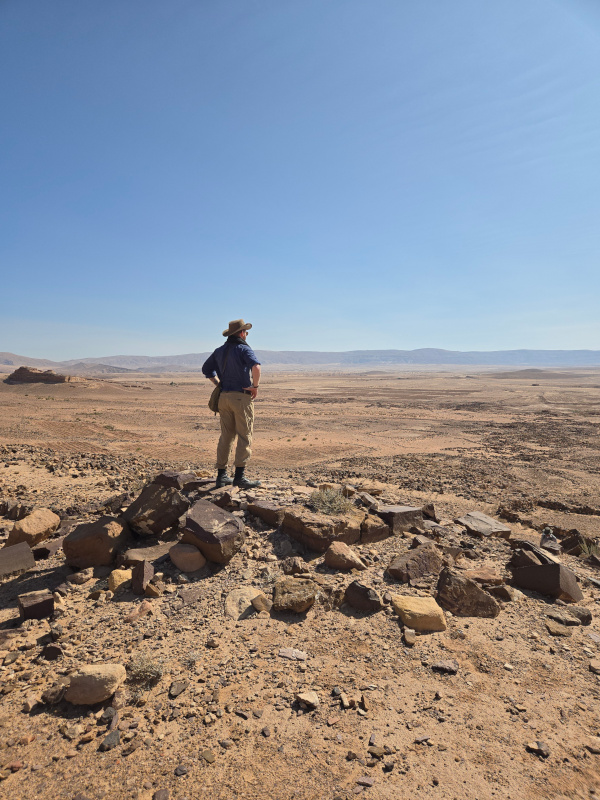
Alongside my role on the project, my personal goals were to increase my skills in photogrammetry, begin to delve into the use of digital modelling technology, and work on my instructional skills. I have only recently begun my journey in digital archaeology, but I am increasingly interested in the use of digital tools to enhance archaeological excavation and data collection. My use of digital modelling technology has been interesting. The feeling of creating an explorable model is wonderful but the process requires an incredible amount of patience. Teaching students in the archaeological field technique was a wonderful and amazing learning opportunity.
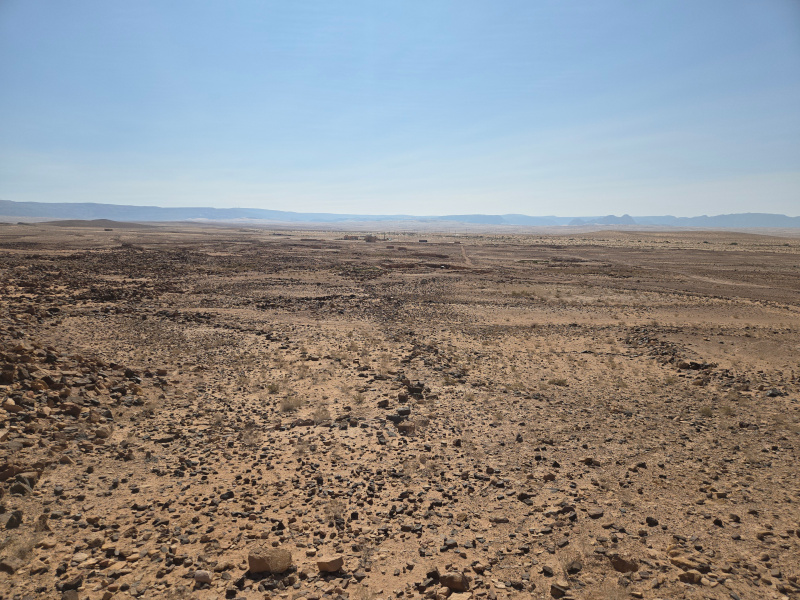
The inaugural season of the University of Alberta Humayma Field school consisted entirely of survey work; as such, small finds were limited to rare instances of surface collections. Throughout Humayma, due to environmental exposures, looting, and other means, artifacts are observable on the surface all throughout the site. Some of my notable finds were a bronze coin of indeterminate age and a piece of marble.
My fieldwork participation in Jordan continues to be instrumental to the development of my career as an archaeologist and educator, and I could not be more thankful for the opportunities and connections this experience has provided.
Joshua Feland is a master’s student at the University of Alberta in Alberta, Canada. He is interested in Desert and Harbour archaeology, particularly where the two intersect. He has a specialization in Roman provincial archaeology. He has conducted fieldwork in Italy, Jordan, and the boreal forest zones of British Columbia and Alberta.
Want to help more students and early career archaeologists get into the field? Donate to the cause today by selecting “Fieldwork Scholarships” as your gift purpose!