UNEARTHING THE PAST SINCE 1900
  • BECOME A MEMBER
  • RENEW
  • GIVE NOW
  • SEARCH
  • ONLINE PORTAL
  • American Society of Overseas Research (ASOR)American Society of Overseas Research (ASOR)
  • ABOUT
    • WELCOME FROM ASOR OFFICERS
    • HISTORY OF ASOR
    • MISSION, BYLAWS, & STRATEGIC PLAN
    • Board of Trustees
    • COMMITTEES
    • POLICIES
    • FINANCIAL DOCUMENTS
    • MEDIA RELEASES
    • CONTACT US
  • CULTURAL
    HERITAGE
    • ABOUT CULTURAL HERITAGE INITIATIVES
    • UPDATES
    • PAST GRANTS
    • TUTORIALS
    • Who We Are
  • ANNUAL
    MEETING
    • REGISTRATION
    • HOTEL RESERVATIONS
    • ANNUAL MEETING SCHEDULES
    • SPONSOR & EXHIBIT
    • ASOR Online Library
    • HONORS & AWARDS
    • ANNUAL MEETING SCHOLARSHIPS
    • PAST & FUTURE ANNUAL MEETINGS
  • MEMBERSHIP
    & RESOURCES
    • INDIVIDUAL MEMBERSHIPS
    • INSTITUTIONAL MEMBERSHIPS
    • NEWS@ASOR
    • PAST ASOR NEWS, MONTH BY MONTH
    • AFFILIATED PROJECTS
    • AFFILIATED RESEARCH CENTERS
    • ARCHIVES
    • ONLINE RESOURCES
      • PHOTO COLLECTION
    • EARLY CAREER MEMBER RESOURCES
  • FELLOWSHIPS
    & GRANTS
    • SCHOLARSHIPS FOR FIELDWORK PARTICIPATION
    • GRANTS FOR ARCHAEOLOGICAL PROJECTS
    • RESEARCH FELLOWSHIPS FOR MEMBERS
    • MEMBERSHIP & ANNUAL MEETING SCHOLARSHIPS
    • ASOR-AFFILIATED RESEARCH CENTERS FELLOWSHIPS
    • OTHER FELLOWSHIP PROGRAMS
  • PUBLICATIONS
    • BOOK SERIES & MONOGRAPHS
    • BULLETIN OF ASOR
    • JOURNAL OF CUNEIFORM STUDIES
    • MAARAV
    • NEAR EASTERN ARCHAEOLOGY
    • THE ANCIENT NEAR EAST TODAY
    • News@ASOR
    • LEVANTINE CERAMICS PROJECT
  • FRIENDS
    OF ASOR
    • Webinars
    • TOURS
    • THE ANCIENT NEAR EAST TODAY
    • ASOR ONLINE LIBRARY
  • Donate
    • FY25 HONOR ROLL OF DONORS
    • LIFETIME HONOR ROLL OF DONORS
    • ASOR LEGACY CIRCLE
    • WAYS TO DONATE
Hill Report - Banner

 SHARE


NEWS@ASOR E-NEWSLETTER

ANCIENT NEAR EAST TODAY E-NEWSLETTER

PAST ASOR NEWS, MONTH BY MONTH

ASOR LEGACY CIRCLE MEMBERS

LIFETIME HONOR ROLL OF DONORS

FY25 HONOR ROLL OF DONORS

ASOR ANNUAL MEETING

Summer Days in Bazyan – My Involvement in the Kani Shaie Archaeological Project

Brady Hill, 2024 G. Ernest Wright Fieldwork Scholarship Recipient 

As a budding archaeologist researching ancient Mesopotamia, saying my opportunity to excavate in Iraqi Kurdistan was a ‘big deal’ is an understatement. Indeed, after being accepted for a Masters in Archaeology at Cambridge, I contacted my to-be supervisor Dr. Steve Renette to enquire about the university’s archaeology department and my potential dissertation topic. After discussing the discovery of Parthian period (2nd century BC – 2nd/3rd century AD) remains during his summer of 2023 excavations at Kani Shaie, Dr. Renette offered me the chance to work on this material during the project’s 2024 field work season. This was an offer I could not refuse given my strong interests in Parthian period Mesopotamia, so I quickly began applying for grants to enable my participation in the Kani Shaie Archaeological Project.

Fortunately, ASOR generously awarded me the G. Ernest Wright Fieldwork Scholarship, securing my opportunity to go to Iraqi Kurdistan. Their assistance supported my living expenses on the dig, allowing me to work at the site for the entirety of the 5-week season running from late August to late September.

After 4 months of eagerly waiting for the fieldwork season to begin, my daily fantasies of visiting and working in Iraqi Kurdistan were finally brought to fruition once we exited Erbil International Airport and were greeted by the blistering heat of the region’s morning sun. It felt as if my countless hours of studying and researching had led up to this moment, and as we began strolling to the project driver’s car and I heard the Kurdish people speaking their beautiful language, it hit me that I was finally in this fascinating land.

Given Kani Shaie is located in Sulaymaniyah Province in the eastern half of Iraqi Kurdistan, we had a 3-hour drive from Erbil to the village of Bazyan where our accommodation was located. Once we arrived, we had to prepare the house for the next 5 weeks and the rest of the project team joining us over the coming days. After completing our preliminary tasks, it was time to begin excavating.

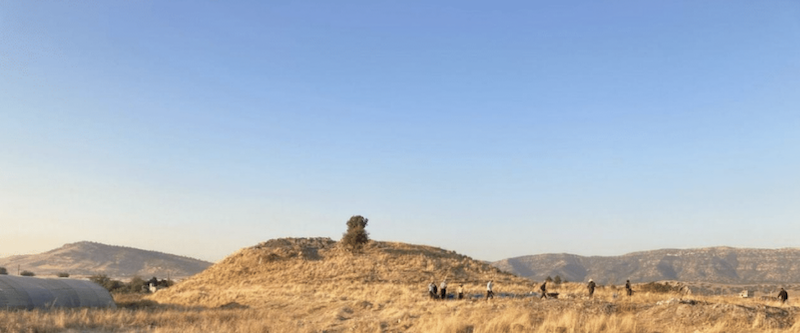
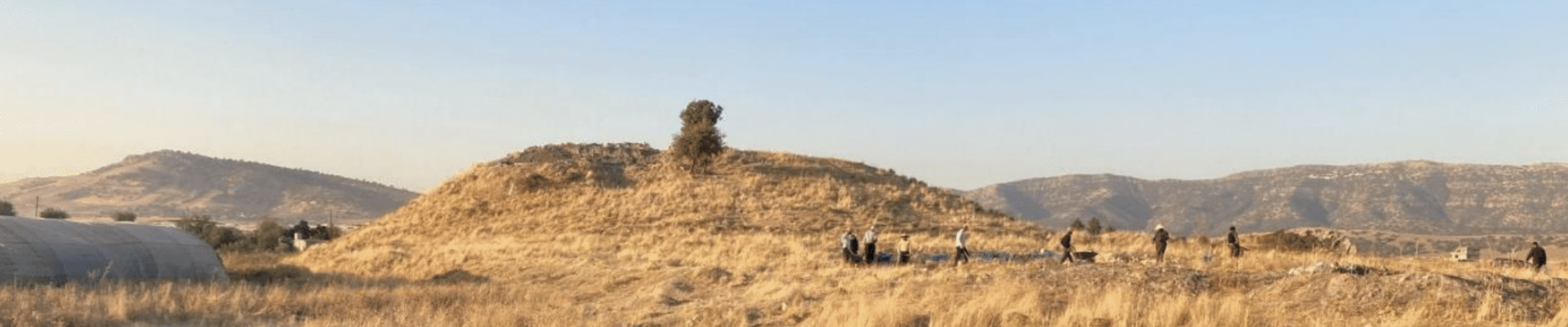
Looking south towards Kani Shaie. The Lower Town trench can be seen in the foreground in front of the main settlement mound.

Now, despite its small size, Kani Shaie is no ordinary one or two period site but possesses a settlement history ranging from the 6th millennium BC to the Ottoman period. Therefore, the project team worked in two excavation trenches this season, one on the main settlement mound which focused upon the site’s Chalcolithic and Early Bronze Age (4th and 3rd millennium BC) occupations, and one in the ‘Lower Town’ focused on Kani Shaie’s later occupations (the Hellenistic, Parthian, and Islamic periods). With my aforementioned interests, I worked in the Lower Town and was given the task of processing and recording the plethora of ceramic finds from the trench.

Our schedule was intense but manageable, digging from 5 am to half past noon 6 days a week, and doing post – excavation processing for the rest of the day. This consisted of pottery washing, drawing and photography, recording the daily small finds (glass bracelets and sherds, grinding stones, miscellaneous metal pieces, etc.), making sure the contexts sheets were up to date, and a whole plethora of other tasks carried out by the project’s team members. I was very fortunate to learn many new skills related to pottery recording and analysis thanks to the patience of Dr. Renette and our ceramics specialist Dr. Mike Lewis (University of Coimbra). This included my introduction to drawing pottery profiles by hand, a necessary task for archaeological publications. Though quite difficult for me at first, this work was eventually highly rewarding once I gained sufficiency in the skill, transforming me into a proper ‘pot nerd’ by the end of the season.

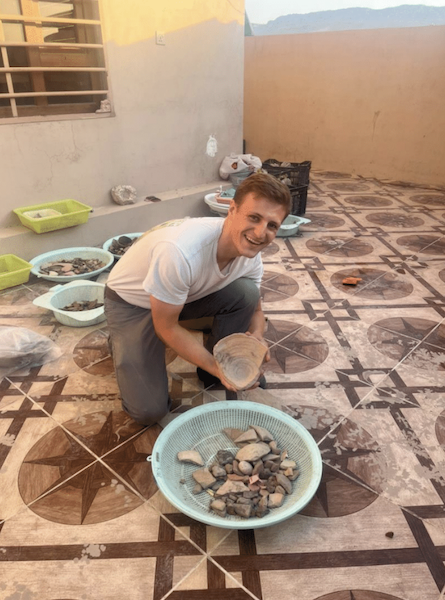
Posing with one of the washed pottery baskets. After being cleaned by the Kurdish students on the project team, it was my daily task to sort through these baskets of pottery, counting each sherd and keeping those that were diagnostic.

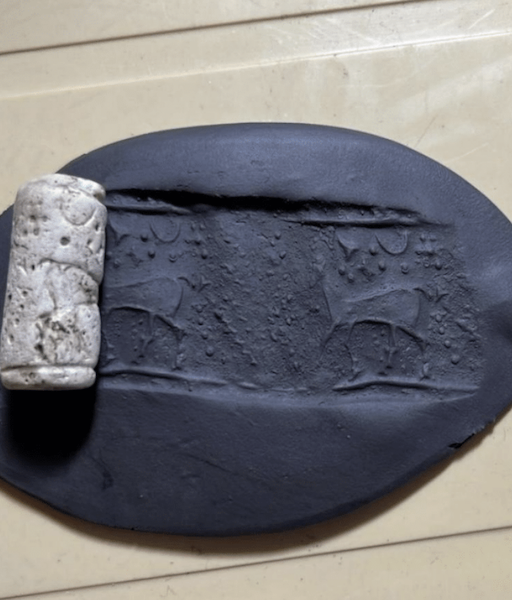
Nevertheless, some interest ing small finds emerged from these levels, including a Neo-Assyrian period (10th – 7th centuries BC) cylinder seal! Though its location within a Parthian and Islamic period context further attests to these occupation layers’ highly disturbed nature, the seal’s presence at Kani Shaie suggests a Neo-Assyrian period occupation remains to be discovered. Despite this amazing find, these initial weeks of our excavation were still rather disappointing due to the poor preservation of our trench’s archaeology, leading us to push onwards with the hope of finding more preserved Parthian period remains.

The Neo-Assyrian period cylinder seal found during our excavations in the Lower Town. It was spotted by Hawre, one of our dedicated Kurdish workmen helping us in the trench.

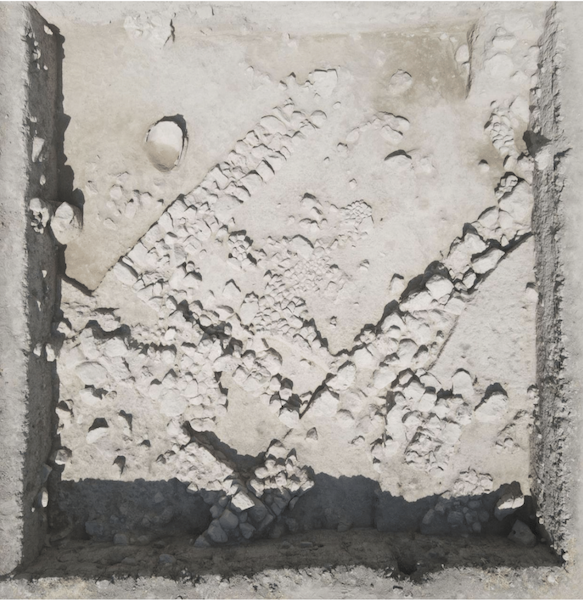
Eventually, we found something to write home about. Indeed, two linear parallel stone walls running southeast to northwest within the trench began to poke out of the ground as we dug downwards. With curiosity and great excitement, we meticulously exposed the walls, eventually revealing a substantial rectangular stone building. We had found a well-preserved pre-Islamic period level! However, there was something different about the pottery styles and shapes from the building’s associated layers, and after studying the finds in the afternoon it became apparent that this was likely not Parthian, but a Hellenistic period construction.

For those readers who are unaware, the Hellenistic period precedes the Parthian period and is characterized by the conquests of Alexander the Great between 333 BC and his death in 323 BC, and the subsequent establishment of the Seleucid Empire in Mesopotamia by one of the deceased king’s companions, Seleucus I Nicator. Along with the Parthian era, I have a great interest in Hellenistic period Mesopotamia and the Seleucid Empire, so you can imagine my excitement once we realized the building’s (rough) dating!

As typical with all field seasons, we had only a few days to excavate the structure before wrapping up the project for the year. Consequently, we were unable to fully excavate the building, but its discovery indicates a substantial Hellenistic period occupation remains to be uncovered in the coming seasons at Kani Shaie.

Drone photo of the Lower Town’s Hellenistic period stone building. Taken towards the end of the excavation season.

Outside of the excavation, we took team trips to archaeological sites and scenic areas of Sulaymaniyah Province during our days off, which for the most part was always a Friday. These included the Achaemenid rock cut tombs of Qizqapan and the beautiful Lake Dokan, the Paleolithic caves of Hazar Merd, and the Parthian period mountain fortress of Rabana-Merquly. Our visits served as an excellent way for the project team to relax and appreciate the lands in which we worked, finishing the afternoon with a wonderful Kurdish lunch consisting of a kebab, warm bread, and the fermented yogurt drink ‘dogh’. I particularly enjoyed the opportunities we had to immerse ourselves in Kurdish culture and their hospitality, learning new words through conversation and exploring their ways of living.

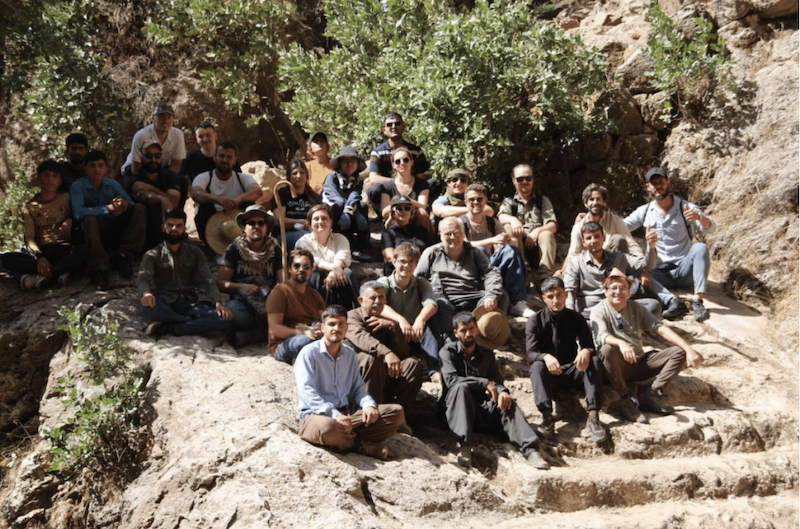
Group photo of the project team visiting the University of Heidelberg’s excavations at Rabana-Merquly. Led by Dr. Micheal Brown, the excavations focus upon the large-scale military fortifications at the site and its religious sanctuary.

Beyond this being a fantastic field work and learning experience for myself, the plethora of Hellenistic and Parthian period pottery recovered from Kani Shaie this year has provided me with a dissertation topic for my ongoing studies at Cambridge. These periods are historically under-researched within Mesopotamian studies, in particular their ceramic forms and styles. Therefore, with all of this material and the discovery of the stone building, the 2024 season presents an excellent case study for Hellenistic and Parthian period archaeology in Iraqi Kurdistan. My original intention when applying for the Ernest G. Wright fieldwork scholarship was to use the material found at Kani Shaie for my dissertation research, however archaeology is always full of surprises and therefore nothing is guaranteed once the trowel hits the dirt. So, I am beyond elated to research a dataset that I myself was involved in uncovering.

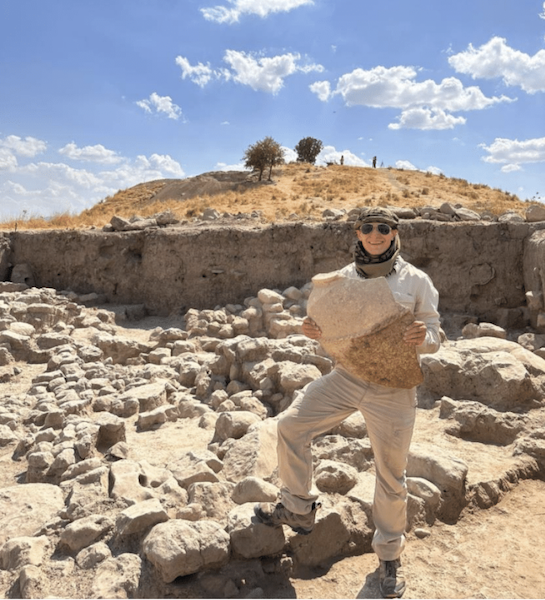
Posing with the largest pottery sherd I have yet to encounter on the last day of excavations. It came from a sunk storage jar in the northwest corner of the trench.

In conclusion, I would like to thank Dr. Steve Renette and the Kani Shaie Archaeological Project’s co-director André Tomé (University of Coimbra) for their generosity and leadership over the course of the 2024 excavation season, as well as Dr. Mike Lewis for his insights and encouragement as I stumbled through pottery recording, and Dr. Glynnis Maynard for her excellent supervision of the Lower Town trench. I would also like to thank the Slemani Antiquities and Heritage Directorate and the devoted service of our Kurdish supervisor Zana Abdullkarim Qadir. Lastly, I must emphasize again that it is with ASOR’s generosity that I was able to participate in this excavation without worrying about financial barriers, and it is through them that I and many other emerging archaeologists have been empowered to take those precious fieldwork opportunities offered to them.

Brady Hill is currently studying for a master’s degree in archaeology at the University of Cambridge. Born and raised in Dallas, Texas, his research interests have taken him ‘across the pond’ to study the archaeology of ancient Mesopotamia during both his undergraduate degree at Durham University and now in Cambridge. Alongside the region’s ancient past, he possesses a strong interest in modern Middle Eastern cultures, studying Arabic and Sorani Kurdish in his free time alongside his archaeology coursework.

Learn more about the Kani Shaie Archaeological Project through their instagram: @kani_shaie_arch_project 

Want to help more students and early career archaeologists get into the field? Donate to the cause today by selecting “Fieldwork Scholarships” as your gift purpose!

Recent Posts

  • March Fellowship Madness 2026: Bracket of Impact
  • Fieldwork Report: Talia Neelis
  • FOA Webinar: Neville McFerrin
  • March 2026 Book Sale
  • FOA Webinar: Müge Durusu-Tanrıöver

Latest Posts from @ASORResearch

asor_research

Initiating and supporting research of the history and cultures of the Near East and wider Mediterranean world.


March is here — and so is ASOR’s March Fellowship
March is here — and so is ASOR’s March Fellowship Madness! 

Our goal is to raise $6,000 by March 31 which would fund scholarships for three more students. 100% of your gift will go directly toward funding student fieldwork participation. Every gift moves us forward, and every donor becomes part of a winning team by supporting emerging scholars. 

Please support archaeology’s next generation by making a gift online and selecting “Fieldwork Scholarships” as the designation for your gift!


Don't forget to tune in TOMORROW at 7:00 pm ET for
Don't forget to tune in TOMORROW at 7:00 pm ET for the next FOA webinar presented by Dr. Müge Durusu-Tanrıöver: "Anatolian Futures: Archaeologies of Anatolia within the Larger Mediterranean". If you haven't already signed up, click the link (https://buff.ly/NHDHKof) in our bio to register.


Our #ObjectoftheWeek: A shallow faience bowl from
Our #ObjectoftheWeek: A shallow faience bowl from New Kingdom Egypt—decorated with a double-sistrum with Hathor heads and blue lotus flowers—dated to ca. 1539-1292 BCE. Credit: Museo Egizio, Turin, Cat. 3368. CC0 1.0.
#Archaeology #Egypt #Hathor


The Amman Citadel with its prominent ruins is the
The Amman Citadel with its prominent ruins is the most striking landmark in the city centre. Since 2024, the Amman Archaeological Project has been investigating the site’s formative period to better understand its history. Read the newest ANE Today by clicking the link (https://anetoday.org/royal-capital-ammon/) in our bio.
#Jordan #Amman

📸 : ©Amman Archaeological Project (Münster University, DAI, Felix Wolter)


ASOR is pleased to be holding a book sale for publ
ASOR is pleased to be holding a book sale for publications 2+ years old this March. All proceeds from book sales will go to supporting membership scholarships! ASOR members (with a mailing address in the USA) can purchase copies of available books for only $10 through March 31, 2026. Click the link (https://www.asor.org/news/2026/03/spring-book-sale) in our bio to take a look at the list of available titles.


In 2025, Hanna Erftenbeck and Natalia Handziuk rec
In 2025, Hanna Erftenbeck and Natalia Handziuk received a Joe D. Seger Project Grant for research at Tall al-Handaquq South in Jordan. A systematic survey documented Early Bronze Age remains, including a dolmen, and areas impacted by looting—helping to clarify the site’s extent, occupational intensity, and preservation challenges. Read their grant report by clicking the link (https://www.asor.org/news/2026/02/seger-grant-report-al-handaquq) in our bio.
#Jordan #BronzeAge


Join us for the next FOA webinar on Wednesday, Mar
Join us for the next FOA webinar on Wednesday, March 11th at 7:00pm ET: "Anatolian Futures: Archaeologies of Anatolia within the Larger Mediterranean," presented by Dr. Müge Durusu-Tanrıöver. Posing the questions of how we can define Anatolia and what its archaeologies can look like in the later twenty-first century CE, Dr. Durusu-Tanrıöver makes the case for a connected Anatolian archaeology that can both claim its multiple constituents and contribute to the larger debates in Mediterranean archaeology. Click the link (https://www.asor.org/news/2026/02/webinar-durusu-tanriover) in our bio to register.
#Anatolia


Our #ObjectoftheWeek: A cuneiform tablet recording
Our #ObjectoftheWeek: A cuneiform tablet recording a land transfer document from ancient Girsu, Iraq dated to ED IIIB period (ca. 2500-2340 BCE). CBS10000. Credit: Penn Museum.
#Archaeology #Iraq #Mesopotamia #Cuneiform


Anna Taibi, a 2025 Strange/Midkiff Families Fellow
Anna Taibi, a 2025 Strange/Midkiff Families Fellowship recipient, joined the ReLand Archaeological Project in Iraq this past fall. A MA student at the University of Palermo, Anna helped document looting threats on newly emerged archaeological sites and supervised excavations at a Late Chalcolithic village in the Mosul Dam Reservoir. Read her fieldwork report by clicking the link (https://www.asor.org/news/2026/02/fieldwork-report-taibi) in our bio.
#Iraq #Mosul


There's still room on the tour — register by March
There's still room on the tour — register by March 1!
Join the Friends of ASOR Philadelphia Tour from April 16–17, 2026 for exclusive, behind-the-scenes access at the @pennmuseum, @barnesfoundation, and @visitpham, featuring expert-led tours by Penn Museum Director Chris Woods, Richard Zettler, Michael Danti, Phil Jones, Steve Tinney, Marie-Claude Boileau, Katy Blanchard, Kaelin Jewell, among others, with special lectures, and insights into archaeology, art, and artifact analysis. Time is running out, reserve your place now: https://www.asor.org/news/2026/01/tour-philadelphia-2026
#FOATours #Philadelphia


ASOR is pleased to announce an award from the Gerd
ASOR is pleased to announce an award from the Gerda Henkel Stiftung supporting critical site security and infrastructure improvements at the Sudan National Museum in Khartoum. Working in coordination with the Sudanese National Corporation for Antiquities and Museums (NCAM), ASOR will expand safe access to the property, with a focus on rebuilding the damaged enclosure wall and making priority repairs to the electrical, water, and sewage systems. Read more about the project by clicking the link (https://www.asor.org/news/2026/02/sudan-national-museum) in our bio.
#Sudan


We’re thrilled to share an exciting update about t
We’re thrilled to share an exciting update about the Friends of ASOR Cyprus tour—it just got even better. In addition to Andy Vaughn and Rachel Bernstein, the tour will now feature three additional tour leaders: ASOR President Prof. Jane DeRose Evans, along with Professors Eric and Carol Meyers (who will join the group from June 18–24). These three world-renowned archaeologists will bring extraordinary depth and expertise to an already exceptional experience. Reserve your spot here: https://www.asor.org/news/2025/08/tour-cyprus-2026
#FOATours #Cyprus


Make sure to get your applications in for our fiel
Make sure to get your applications in for our fieldwork scholarships and project grants by Monday, February 23! Grants and scholarships are eligible for work only on ASOR-affiliated projects. To find out more, click the link (https://buff.ly/gD3Uiou) in our bio.


Can we use digital tools to test whether fragments
Can we use digital tools to test whether fragments and museum objects might be related? Can we recover parts of their histories that were previously inaccessible? Read the newest ANE Today, republished from The Conversation, by clicking the link (https://anetoday.org/connecting-objects-3d-scanning/) in our bio.


Sponsored by ASOR, the William Leo Hansberry Socie
Sponsored by ASOR, the William Leo Hansberry Society is hosting a Zoom event on African heritage, "[RE]PRESENT: Museums & Access", on Saturday, February 21 at 12:30PM ET. Register by clicking the link (https://asor-org.zoom.us/webinar/register/WN_oxzsiN13ScOCJ0PMAXw2qA#/registration) in our bio.


To those observing, ASOR wishes you a Ramadan Muba
To those observing, ASOR wishes you a Ramadan Mubarak!


Make sure to tune in TOMORROW at 7:00 pm ET for th
Make sure to tune in TOMORROW at 7:00 pm ET for the next FOA webinar presented by Carl Walsh: "'An elegance of spirit adorns all its works.': Auguste Rodin and the Art of Ancient Egypt". If you haven't already signed up, click the link (https://buff.ly/gD3Uiou) in our bio to register.


ASOR invites members to submit paper abstracts and
ASOR invites members to submit paper abstracts and workshop presentation proposals for the 2026 Annual Meeting taking place November 18-21 in Chicago and online. Abstracts of 250 words or less may be submitted between now and March 15. Read more in the Call for Papers: https://www.asor.org/am/2026/call-for-papers-2026


Hannah Borotsik, a 2025 P. E. MacAllister Fellowsh
Hannah Borotsik, a 2025 P. E. MacAllister Fellowship recipient, returned to the Athenian Agora excavations in Greece for her third season last summer. A PhD student at the University of Western Ontario, Hannah served as apotheke supervisor managing the processing of finds and training volunteers. Read her report, "Just a Girl and Her Whiteboard," here: https://www.asor.org/news/2026/02/fieldwork-report-borotsik
#Archaeology #Greece #Athens


ASOR is accepting applications for two 2026 Study
ASOR is accepting applications for two 2026 Study of Collections Fellowships of $2,000 each. These fellowships are intended to support the study of collections including museum and archival collections, repositories, or collections of national authorities. Applications are due February 23, 2026. Learn more by clicking the link (https://www.asor.org/fellowships/study-of-collections-fellowships/) in our bio.


Instagram

Stay updated with the latest insights, photos, and news by following us on Instagram!

Follow Us on Instagram

American Society of Overseas Research
The James F. Strange Center
209 Commerce Street
Alexandria, VA 22314

E-mail: info@asor.org

© 2025 ASOR
All rights reserved.
Images licensed under a Creative Commons Attribution-NonCommercial-ShareAlike 4.0 International License

Contact Us
Membership
Give
Friends of ASOR
ASOR Cultural Heritage Initiatives
Terms of Use
News

Please follow & like us :)
Facebook
YouTube
LinkedIn