SHARE
[/vc_column_text][mk_image src=”http://www.asortest.org/wp-content/uploads/2017/01/social-fb-icon4.jpg” image_width=”42″ image_height=”42″ hover=”false” custom_url=”https://www.facebook.com/ASOResearch/” margin_bottom=”0″][mk_image src=”http://www.asortest.org/wp-content/uploads/2017/01/social-tw-icon4.jpg” image_width=”42″ image_height=”42″ hover=”false” custom_url=”https://twitter.com/ASOResearch?ref_src=twsrc%5Egoogle%7Ctwcamp%5Eserp%7Ctwgr%5Eauthor” margin_bottom=”0″][mk_image src=”http://www.asortest.org/wp-content/uploads/2017/01/social-in-icon4.jpg” image_width=”42″ image_height=”42″ hover=”false” custom_url=”https://www.linkedin.com/company/american-schools-of-oriental-research” margin_bottom=”0″][mk_image src=”http://www.asortest.org/wp-content/uploads/2017/01/social-ml-icon_7.jpg” image_width=”42″ image_height=”42″ hover=”false” custom_url=”mailto:info@asor.org” margin_bottom=”0″][mk_image src=”http://www.asortest.org/wp-content/uploads/2017/01/blog-icon3.jpg” image_width=”42″ image_height=”42″ hover=”false” custom_url=”http://asor.org/blog” margin_bottom=”0″][/vc_column][vc_column border_color=”rgba(255,255,255,0.01)” width=”1/6″ css=”.vc_custom_1493004112151{margin-right: 20px !important;border-left-width: 2px !important;padding-right: 20px !important;padding-left: 20px !important;border-left-color: #99422f !important;}”][mk_divider divider_color=”rgba(255,255,255,0.01)” thickness=”1″ margin_top=”3″ margin_bottom=”3″][vc_widget_sidebar sidebar_id=”sidebar-16″ el_class=”.widget { overflow: hidden; margin-bottom: 0; }”][vc_row_inner][vc_column_inner css=”.vc_custom_1632943315452{padding-top: 10px !important;padding-right: 10px !important;padding-bottom: 5px !important;padding-left: 10px !important;background-image: url(https://www.asor.org/wp-content/uploads/2021/09/ASOR_Patterns_CMYK_Blue_Thin.jpg?id=77162) !important;}”][vc_column_text]Not a Friend of ASOR yet? Sign up here to receive ANE Today in your inbox weekly!
[/vc_column_text][/vc_column_inner][/vc_row_inner][/vc_column][vc_column border_color=”rgba(170,170,170,0.01)” width=”8/12″ css=”.vc_custom_1487276122024{margin-right: 10px !important;margin-bottom: 30px !important;border-right-width: 2px !important;border-bottom-width: 2px !important;padding-top: 30px !important;padding-right: 30px !important;padding-left: 20px !important;background-color: #ffffff !important;border-right-color: rgba(227,228,228,0.75) !important;border-bottom-color: rgba(227,228,228,0.75) !important;}”][vc_row_inner][vc_column_inner width=”1/3″ css=”.vc_custom_1515087305797{padding-right: 20px !important;}”][mk_image src=”http://www.asor.org/wp-content/uploads/2017/12/foa-reduced-100.png” image_width=”190″ image_height=”100″ crop=”false” hover=”false”][/vc_column_inner][vc_column_inner width=”2/3″][vc_column_text responsive_align=”left”]December 2020
Vol. 8, No. 12
[/vc_column_text][/vc_column_inner][/vc_row_inner][vc_row_inner][vc_column_inner][mk_divider thickness=”1″ margin_top=”10″][vc_column_text] OrientDams: The Impact of Dams on Cultural Heritage in the Middle East and North Africa

By Nicolò Marchetti and Federico Zaina
Dams and reservoirs have transformed the lives and landscapes of the Middle East and North Africa. A new project is examining the tremendous impact on archaeology and heritage. Read More[/vc_column_text][mk_divider thickness=”1″ margin_top=”10″][vc_column_text]
 The Apostle Peter, Anchor of the Church

By Roald Dijkstra
All traditions need anchors in the past. To anchor the church in Rome the fourth century Pope Damasus wrote Roman style poetry and venerated martyrs, above all the Apostle Peter. Read More[/vc_column_text][mk_divider thickness=”1″ margin_top=”10″][vc_column_text]
Photographing Iraq

By Osama Shukir Muhammed Amin
Mesopotamia is a difficult place to make a mark. But for one Iraqi neurologist, a passion for archaeological photography has opened Mesopotamia to the world. Read More[/vc_column_text][mk_divider thickness=”1″ margin_top=”10″][vc_column_text]
Nefertiti on Her Chariot – The Female Use of Chariots in Ancient Egypt
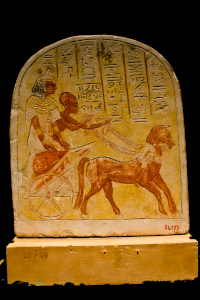
By Heidi Köpp-Junk
Chariots appear in Egypt in the early second millennium as modes of transportation and weapons of war. For a brief time, women were also drivers. Read More[/vc_column_text][mk_divider thickness=”1″ margin_top=”10″][vc_column_text]
The Cushites: Race and Representation in the Hebrew Bible

By Kevin Burrell
The Cushites are mentioned 54 times in the Hebrew Bible. The texts are conscious of skin color but what mattered was the relationship with God. Read More[/vc_column_text][mk_divider thickness=”1″ margin_top=”10″][/vc_column_inner][/vc_row_inner][/vc_column][/vc_row]