UNEARTHING THE PAST SINCE 1900
  • BECOME A MEMBER
  • RENEW
  • GIVE NOW
  • SEARCH
  • ONLINE PORTAL
  • American Society of Overseas Research (ASOR)American Society of Overseas Research (ASOR)
  • ABOUT
    • WELCOME FROM ASOR OFFICERS
    • HISTORY OF ASOR
    • MISSION, BYLAWS, & STRATEGIC PLAN
    • Board of Trustees
    • COMMITTEES
    • POLICIES
    • FINANCIAL DOCUMENTS
    • MEDIA RELEASES
    • CONTACT US
  • CULTURAL
    HERITAGE
    • ABOUT CULTURAL HERITAGE INITIATIVES
    • UPDATES
    • PAST GRANTS
    • TUTORIALS
    • Who We Are
  • ANNUAL
    MEETING
    • REGISTRATION
    • HOTEL RESERVATIONS
    • ANNUAL MEETING SCHEDULES
    • SPONSOR & EXHIBIT
    • ASOR Online Library
    • HONORS & AWARDS
    • ANNUAL MEETING SCHOLARSHIPS
    • PAST & FUTURE ANNUAL MEETINGS
  • MEMBERSHIP
    & RESOURCES
    • INDIVIDUAL MEMBERSHIPS
    • INSTITUTIONAL MEMBERSHIPS
    • NEWS@ASOR
    • PAST ASOR NEWS, MONTH BY MONTH
    • AFFILIATED PROJECTS
    • AFFILIATED RESEARCH CENTERS
    • ARCHIVES
    • ONLINE RESOURCES
      • PHOTO COLLECTION
    • EARLY CAREER MEMBER RESOURCES
  • FELLOWSHIPS
    & GRANTS
    • SCHOLARSHIPS FOR FIELDWORK PARTICIPATION
    • GRANTS FOR ARCHAEOLOGICAL PROJECTS
    • RESEARCH FELLOWSHIPS FOR MEMBERS
    • MEMBERSHIP & ANNUAL MEETING SCHOLARSHIPS
    • ASOR-AFFILIATED RESEARCH CENTERS FELLOWSHIPS
    • OTHER FELLOWSHIP PROGRAMS
  • PUBLICATIONS
    • BOOK SERIES & MONOGRAPHS
    • BULLETIN OF ASOR
    • JOURNAL OF CUNEIFORM STUDIES
    • MAARAV
    • NEAR EASTERN ARCHAEOLOGY
    • THE ANCIENT NEAR EAST TODAY
    • News@ASOR
    • LEVANTINE CERAMICS PROJECT
  • FRIENDS
    OF ASOR
    • Webinars
    • TOURS
    • THE ANCIENT NEAR EAST TODAY
    • ASOR ONLINE LIBRARY
  • Donate
    • FY25 HONOR ROLL OF DONORS
    • LIFETIME HONOR ROLL OF DONORS
    • ASOR LEGACY CIRCLE
    • WAYS TO DONATE
BASOR-395-banner

 SHARE


NEWS@ASOR E-NEWSLETTER

ANCIENT NEAR EAST TODAY E-NEWSLETTER

PAST ASOR NEWS, MONTH BY MONTH

ASOR LEGACY CIRCLE MEMBERS

LIFETIME HONOR ROLL OF DONORS

FY25 HONOR ROLL OF DONORS

ASOR ANNUAL MEETING

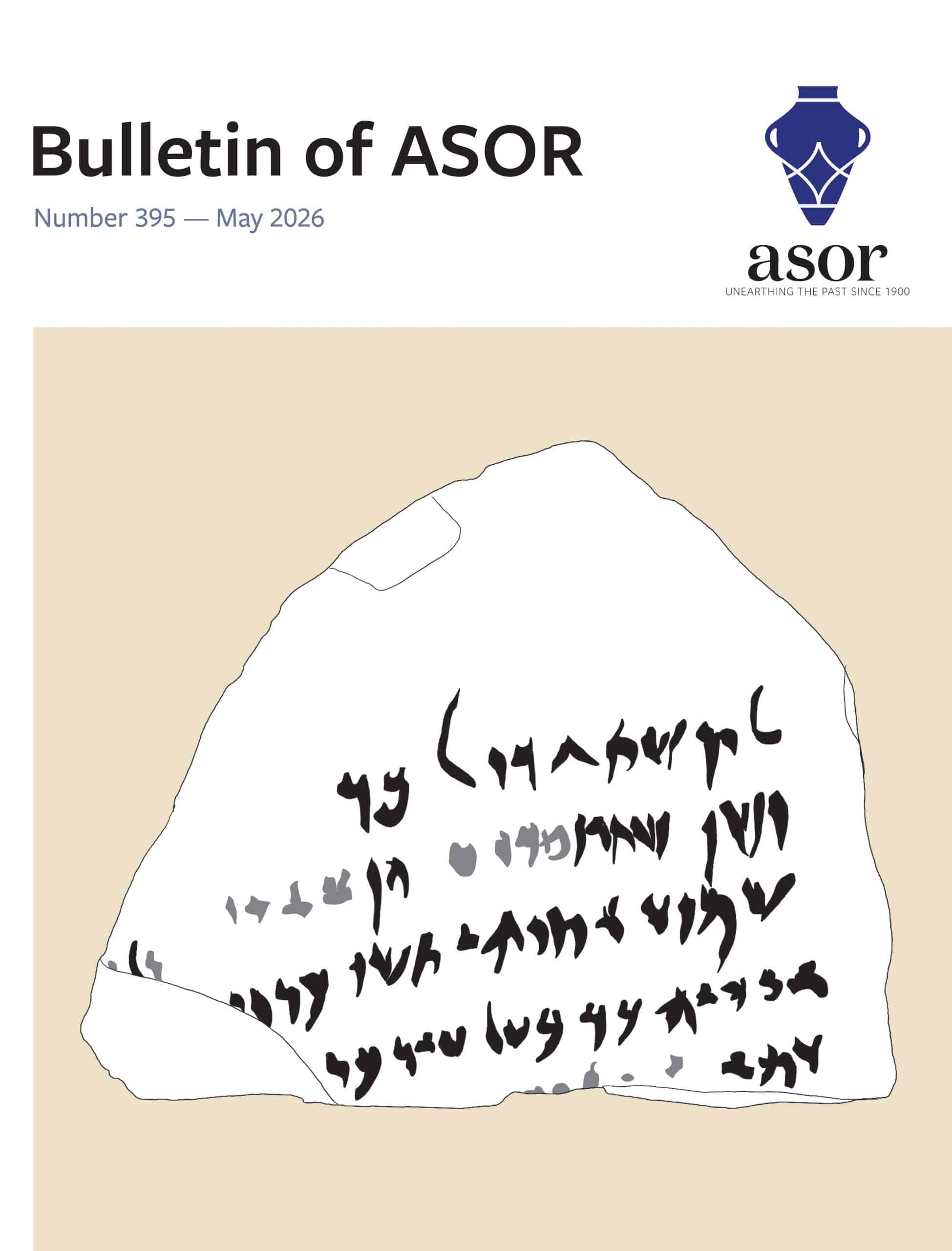
Table of Contents for Bulletin of ASOR 395 (May 2026)

You can receive BASOR (and other ASOR publications) through an ASOR Membership.
Please e-mail the Membership office if you have any questions.
BASOR-395-article-1

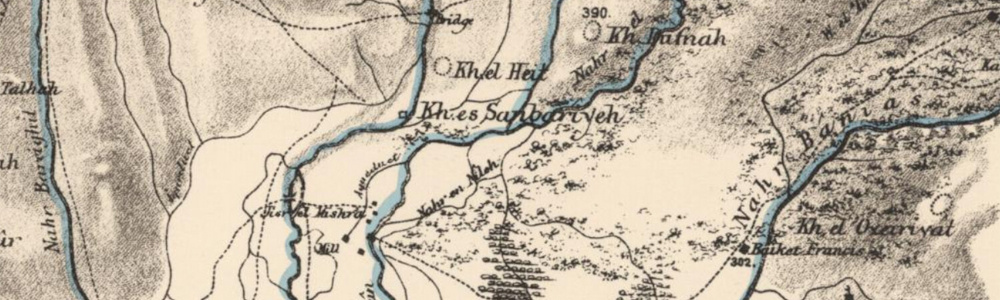
Pp. 1-15: “Preservation through Transformation: Identifying Late Roman Hula Valley Sites in Panias’s Diocletianic Boundary Stones,” by Roy Marom

This paper identifies Late Roman sites in the Hula Valley mentioned in Diocletianic boundary stones. Employing a threefold methodological framework—toponymic preservation, archaeological evidence, and spatial analysis—it challenges longstanding assumptions that ancient toponyms in the region were entirely lost. Instead, it demonstrates that the majority of place names engraved on the boundary stones have survived, albeit through significant linguistic and morphological transformations over time: Tirthas (Khirbet Turrīthā), Golgol (Juneijil /al-Zūq al-Fawqānī), Mamsia (Marsīna), Beth-Achon (Tell al-Baṭṭīkha), Dēra (al-Dawwāra), Osea (al-ʿĀbsiya), Beth-Anath (Tell ʿAnt), and Migēramē (al-Muqārināt). These identifications are supported by historical-linguistic reconstruction, data from Ottoman and British Mandate cadastral surveys, and targeted archaeological evidence. The study highlights the complex processes of linguistic transformation—such as phonetic shifts, semantic reinterpretation, and folk etymology—that have shaped the survival of these toponyms in the northern Hula Valley. By integrating diverse sources of evidence, the paper not only revises the geographic understanding of Panias’s countryside but also proposes a replicable framework for reassessing ancient settlement continuity and cultural interaction across the broader Levantine frontier.

ASOR Members with online access: log into ASOR’s Online Portal here. Once logged in, click the JOURNALS tab in the top navigation bar. Tutorials for how to log in to the Online Portal as well as how to navigate to the Portal Journals page can be found here.
BASOR-395-article-2

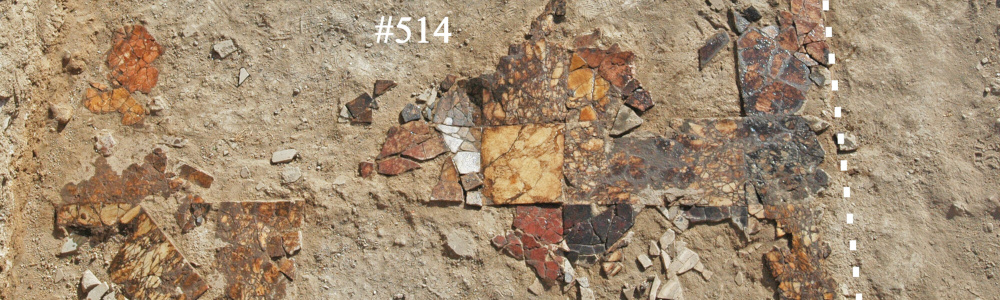
Pp. 17-45: “The Life and Afterlife of the Palace of Herod Antipas in Tiberias,” by Shulamit Miller and Frankie Snyder

The city of Tiberias, on the western shore of the Sea of Galilee, was founded in 19/20 c.e. by King Herod Antipas as his new capital in Galilee. Remains identified as the palace of Antipas, characterized by their construction technique and decorations, were uncovered in Yizhar Hirschfeld’s excavations. This article proposes a new study of the remains, suggesting a reevaluation of the architecture, décor, and chronology that are used to substantiate the identification with the palace of Antipas. It discusses the architecture vis-à-vis palaces of Herod the Great and shows that, while there is continuity in style, there is a visible increase in investment in the Tiberias palace, at least in terms of its marble ornamentation. This article further argues that the stratigraphy defined by Hirschfeld did not differentiate between two distinct architectural phases: the first is a palatial complex, while the second attests to the repurposing of the palace into simple dwellings, probably in the 2nd century c.e. Ultimately this study provides a new understanding of the city’s early evolution as well as insights into developments of palatial architecture in the Roman southern Levant on the background of expanding Mediterranean connectivity in the early decades of the Roman Empire.

ASOR Members with online access: log into ASOR’s Online Portal here. Once logged in, click the JOURNALS tab in the top navigation bar. Tutorials for how to log in to the Online Portal as well as how to navigate to the Portal Journals page can be found here.
BASOR-395-article-3

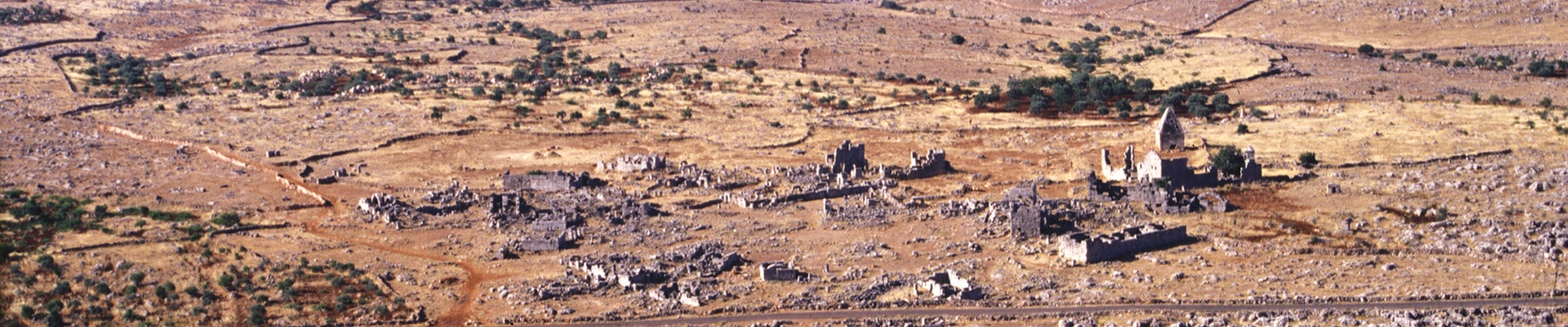
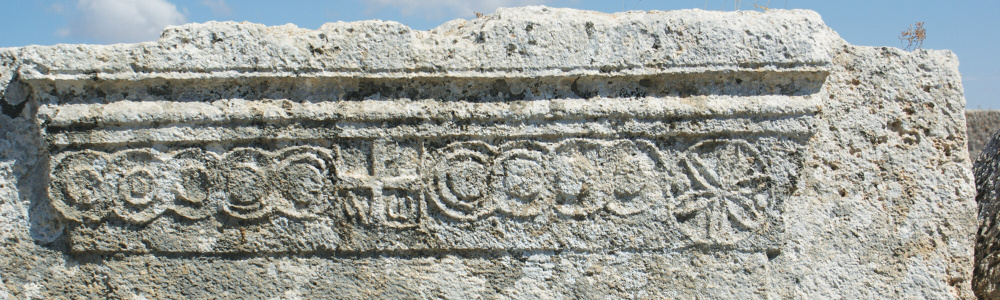
Pp. 47-63: “Baʾude, a World Heritage Site in Northern Syria from the Early Byzantine Era: A Study of the Residential Buildings and Their State of Preservation,” by Afaf Laila and Maamoun Abdulkarim

Baʾude village is part of a network of archaeological villages in northern Syria that are home to numerous well-preserved historical sites from the Roman and Byzantine periods. In 2011, these villages were inscribed on the World Heritage List due to their outstanding cultural significance. Baʾude exemplifies rural life through its architecture and interaction with the natural environment, with houses being the predominant feature of its built heritage. Many of the houses are in good condition due to the use of massive stones in their construction. Several internal facades on the ground floors, overlooking the courtyards, are relatively intact and adorned with diverse decorative styles. These unspoiled architectural elements provide valuable insight into the layout, orientation, size, and design of the houses, while the surrounding environmental factors further enhance the unique character of Baʾude.

ASOR Members with online access: log into ASOR’s Online Portal here. Once logged in, click the JOURNALS tab in the top navigation bar. Tutorials for how to log in to the Online Portal as well as how to navigate to the Portal Journals page can be found here.
BASOR-395-article-4

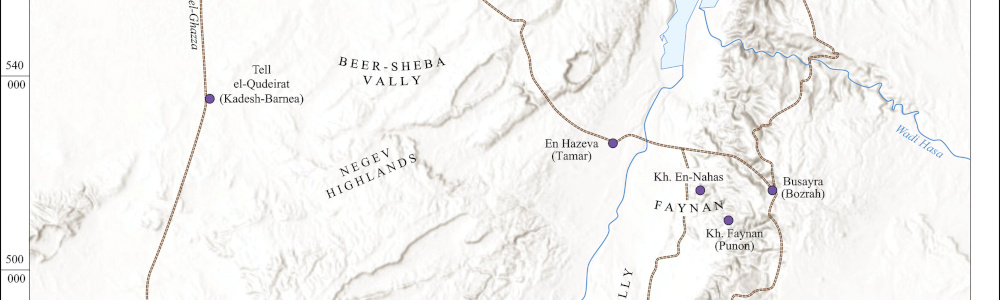
Pp. 65-103: “ʿEn Ḥaẓeva in the Arabah Valley: A “Faynanite” Signature in Late Iron Age I–Early Iron Age IIA Ceramic Assemblages,” by Doron Ben-Ami, Anat Cohen-Weinberger, and Tali Erickson-Gini

This paper presents the results of typological and petrographic analyses of the ceramic assemblages from ʿEn Ḥaẓeva Strata VIII and VII. The typological analysis concludes that the strata date to the late Iron Age I and early Iron Age IIA, respectively. The petrographic analysis reveals that a substantial percentage of the ceramic assemblage originated in the copper districts of the Arabah Valley. Considered together the analyses indicate that during these two Iron Age phases ʿEn Ḥaẓeva was an integral part of the Faynan district and testify to its essential role in the Arabah Valley’s copper trade network.

ASOR Members with online access: log into ASOR’s Online Portal here. Once logged in, click the JOURNALS tab in the top navigation bar. Tutorials for how to log in to the Online Portal as well as how to navigate to the Portal Journals page can be found here.
BASOR-395-article-5

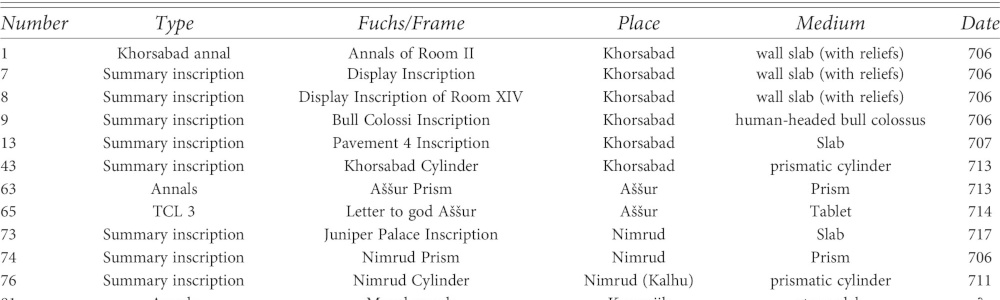
Pp. 105-122: “Sargon II’s Defeat of Egypt: Rhetoric or Historical Facts?,” by Peter Dubovský

The Khorsabad Annals portray Sargon II as an illustrious monarch who, from the outset of his reign, exerted unwavering control over the entire ancient Near East. However, the inscriptions dated to earlier years of Sargon II’s reign do not mention the conquest of Gaza, Samaria, and the defeat of the Egyptian troops attributed to his first regnal years in the Khorsabad Annals. Furthermore, an analysis of the chronology of Sargon II’s campaigns reveals the existence of at least two chronological frameworks prior to 713 b.c. This article addresses the chronological problems of Sargon II’s early reign while focusing on the Egyptian and Assyrian control of the southern Levant. It is argued that the events of the first two years did not take place as described in the Khorsabad Annals, since the annals do not reflect the historical reality of the first years of Sargon II’s reign but rather the status quo of the last years of his reign. To support this conclusion, the article presents literary techniques employed by the scribes of Khorsabad, who composed a new account of Sargon II’s reign.

ASOR Members with online access: log into ASOR’s Online Portal here. Once logged in, click the JOURNALS tab in the top navigation bar. Tutorials for how to log in to the Online Portal as well as how to navigate to the Portal Journals page can be found here.
BASOR-395-article-6

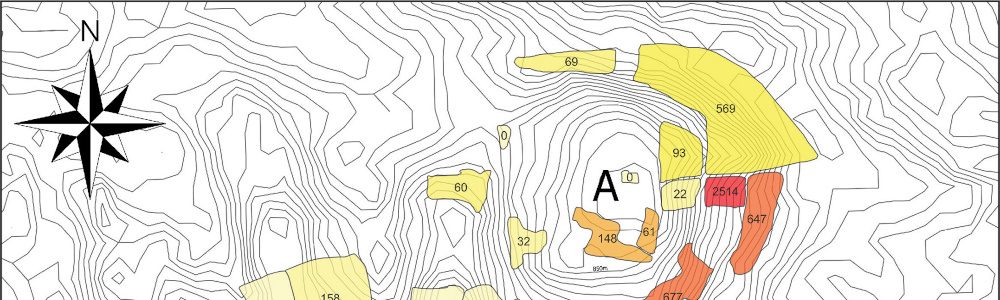
Pp. 123-158: “Mesha’s Moab: Settlement Patterns and Site Interactions on the Madaba Plateau,” by Andrew J. Danielson, Debra Foran, Stanley Klassen, Heidi Fessler, Grant Ginson, Gregory Braun, Věra Doležálková, and Roselyn A. Campbell

Since the discovery of the Mesha Inscription, the kingdom of Moab has drawn widespread scholarly attention, with numerous surveys and excavations conducted over the past half century. Despite this research, significant questions remain regarding the origins of the kingdom, its structure, and the many settlements and sociopolitical groups that were integrated within the vision of Moab outlined by Mesha. This article presents the preliminary results from a series of archaeological surveys and excavations at several sites on the Madaba Plateau (Khirbat al-Mukhayyat, Khirbat al-Fayha, Khirbat Libb, Tall Maʿin, Khirbat Nitl, and Khirbat ad-Deleilat ash-Sharqiyah). Some of these sites were major settlements in the region during the Iron Age II period, though they have yet to enter scholarly discourse. The introduction of these preliminary summaries presents a significant step in better understanding the region of the Madaba Plateau during the Iron Age II, particularly in relation to site interrelations and hierarchy in the context of the formation of the kingdom of Moab. Preliminary Iron Age data from these sites reveal a system of numerous settlements, fortified sites, and accompanying towers/forts linked via access routes and integrated within an intentional network of intervisibility that bolstered inter-site relations and increased strategic visibility.

ASOR Members with online access: log into ASOR’s Online Portal here. Once logged in, click the JOURNALS tab in the top navigation bar. Tutorials for how to log in to the Online Portal as well as how to navigate to the Portal Journals page can be found here.
BASOR-395-article-7

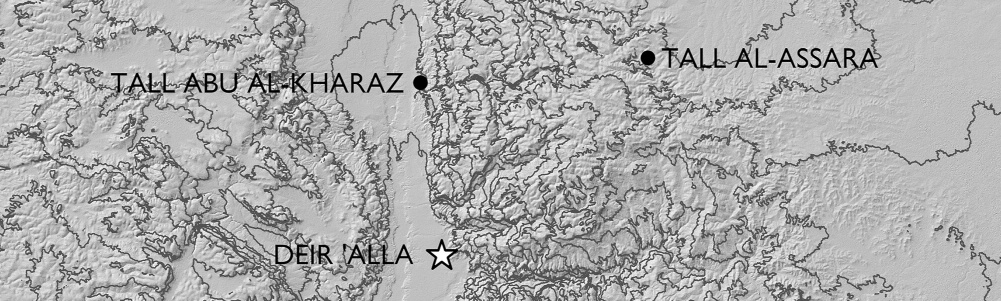
Pp. 159-178: “Connecting and Disconnecting Zones of Interaction in Northern Jordan: Tall al-Assara and Regional Connectivity in the Iron Age IIB–IIC,” by Paula Gheorghiade, Marta Lorenzon, Samuel Reinikainen, Stefan L. Smith, Maher Tarboush, Päivi Miettunen, Paula Kouki, and Antti Lahelma

This study explores landscape mobility among settlements in northwestern Jordan during the Iron Age IIB–IIC periods. Specifically, it considers how interaction changed from the IIB to IIC period in this upland region between the newly discovered site of Tall al-Assara, neighboring settlements, and sites identified during the Tall Yaʾmoun Regional Archaeological Survey (TYRAS) project. The aim is to evaluate how landscape considerations, proximity, and potential for interaction might have shaped cultural affiliations in a region that was, for a period, part of the Neo-Assyrian hinterland. A baseline for mobility across this diverse topography is first established, utilizing a spatial point dataset to model local and regional interactions from Tall al-Assara and four other settlements during the Iron Age IIB and IIC period. Second, the modeling is contextualized with published ceramic and settlement data to assess its robustness. This research contributes to the ongoing scholarly discourse on the interplay between frontier regions as buffer zones for expanding ancient Near Eastern empires, while also highlighting large-scale shifts in occupation during this transformative period.

ASOR Members with online access: log into ASOR’s Online Portal here. Once logged in, click the JOURNALS tab in the top navigation bar. Tutorials for how to log in to the Online Portal as well as how to navigate to the Portal Journals page can be found here.

BASOR-395-article-8

Pp. 179-194: “Land Tenure and Fiscal Practices in the Aramaic Corpus of Idumea: Bow-Fields and Horse Estates,” by Mitchka Louise Marie Jeanne Shahryari

The Idumean corpus of Aramaic ostraca sheds light on the structured administrative and fiscal system in the region. This publication raised the possibility of the presence of the terms qaštu (“bow-fields”) and, albeit conjecturally, “horse-estates,” which would offer the first concrete evidence of these land-management practices within the fiscal framework of the Idumean region. These findings resonate with other key terms already mentioned by scholars, such as iškaru and references to tax collectors, which underscore the Persian institutional system of taxation, labor organization, workforce allocation, and resource management. The fiscal vocabulary and classifications of landholding revealed in these texts display parallels with Babylonian, Persepolitan, and Egyptian models, while simultaneously reflecting local adaptations. The ostraca thus demonstrate that Idumea was an integrated part of a hybrid imperial structure that linked local agricultural communities to the broader Persian administration.

ASOR Members with online access: log into ASOR’s Online Portal here. Once logged in, click the JOURNALS tab in the top navigation bar. Tutorials for how to log in to the Online Portal as well as how to navigate to the Portal Journals page can be found here.
BASOR-395-article-9

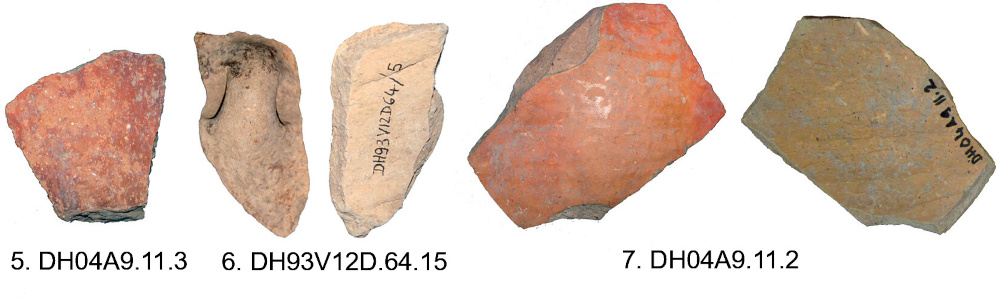
Pp. 195-242: “Dharih (Wadi al-Hasa, Jordan) in the Early Bronze Age: The Evidence from the French-Jordanian Excavations,” by Marta D’Andrea

Dharih, in the modern Tafilah region of southern Jordan, is best known as a signature site for the Nabatean and Roman periods, but the French-Jordanian team that carried out archaeological research there from the 1980s until the 2000s also uncovered evidence of human occupation through the 4th and 3rd millennia b.c.e., in the Early Bronze Age. In Transjordan, this time relates to the development and crisis of early urbanism and to the consequent regional reorganization in the non-urban period. This paper presents the Early Bronze Age evidence uncovered at Dharih, provides a chronological assessment of the finds, and analyzes the 4th and 3rd millennium b.c.e. occupation at the site within a regional context. It discusses how these previously unpublished records for the Early Bronze I–IV (ca. 3800/3700–1950/1920 b.c.e.) may help place the site and its surrounding area into regional patterns of material culture and current narratives for those periods.

ASOR Members with online access: log into ASOR’s Online Portal here. Once logged in, click the JOURNALS tab in the top navigation bar. Tutorials for how to log in to the Online Portal as well as how to navigate to the Portal Journals page can be found here.

BROWSE THE NEWS ARCHIVE

  • Table of Contents for BASOR 395 (May 2026)
  • FOA Webinar: Danielle Candelora
  • 2025 Dana Grant Report: Rediscovering Ancient Clay Landscapes
  • Fieldwork Report: Joshua Feland

Latest Posts from @ASORResearch

asor_research

Initiating and supporting research of the history and cultures of the Near East and wider Mediterranean world.


The Cultural Heritage Watch platform not only docu
The Cultural Heritage Watch platform not only documents the damage to Iran’s heritage in wartime but preserves the social memories and meanings of these places. Read the newest ANE Today by Kiersten Neumann by clicking the link (https://anetoday.org/cultural-heritage-watch-iran/) in our bio.
#Iran #CulturalHeritage


Join us for the LAST Friends of ASOR webinar of th
Join us for the LAST Friends of ASOR webinar of the season on Wednesday, May 6th at 7:00pm ET: “'I am the border': Borders and Immigration in Ancient Egypt” presented by Dr. Danielle Candelora. Issues of borders, citizenship, and immigration are at the forefront of media headlines around the globe, and are examined across fields as diverse as Political Science and Sociology to Comparative Literature and the Visual Arts. Exploring these multiple approaches allows for new insights into the entangled concepts of borders, immigration, and identity in ancient Egypt. 
Register at the link in our bio: https://www.asor.org/news/2026/04/webinar-candelora
#AncientEgypt


Make sure to tune in TOMORROW at 12:30 pm ET for t
Make sure to tune in TOMORROW at 12:30 pm ET for the next FOA webinar presented by Yana Tchekhanovets: "New Excavations at Nessana, Negev: Late Antique Pilgrimage Hub on the Desert Fringe." If you haven't already signed up, click here to register for free: https://www.asor.org/news/2026/04/webinar-tchekhanovets


Last chance to nominate! Know a standout recent bo
Last chance to nominate! Know a standout recent book 📖 on the ancient Near East or Eastern Mediterranean? Make sure it gets the recognition it deserves by submitting it for an ASOR Book Award. Nominations close May 1. Press the link in our bio to learn more: https://buff.ly/jt6dx1G
📸 Winner of the 2025 Lapp Award


ASOR invites Roundtable Proposals from members who
ASOR invites Roundtable Proposals from members who plan to attend the 2026 Annual Meeting in Chicago, November 18-21. Roundtables are an ideal format for informal discussion or focused conversations on topics of general interest to meeting attendees. Roundtable proposals of 250 words or fewer will be reviewed through October 31 (or until space fills). Learn more and submit your roundtable proposal at the link in our bio: https://www.asor.org/am/2026/round-tables-2026


Our spring book sale is ending soon! These books,
Our spring book sale is ending soon! These books, plus several other titles, are available for the low price of $10.00 each. All proceeds go towards membership scholarships, helping expand access to ASOR’s programs and resources. Check out the sale on our website before it's over: https://buff.ly/Vn3LEZy


Joshua Feland, a master’s student at the Universit
Joshua Feland, a master’s student at the University of Alberta, received an Eric and Carol Meyers Fieldwork Scholarship in 2025 to excavate in Humayma, Jordan. As a supervisor on the project, Joshua was tasked with teaching photogrammetry techniques to students using the structures at Humayma and previously excavated material. Read his fieldwork report at the link in our bio: https://www.asor.org/news/2026/04/fieldwork-report-feland
#Jordan #Humayma #Archaeology


ASOR's Early Career Scholars hosted Dr. Danielle M
ASOR's Early Career Scholars hosted Dr. Danielle Macdonald (The University of Tulsa) for their Spring 2026 Brown Bag lecture, "Scientific Publishing in Archaeology: Ask an Editor." Dr. Macdonald provides insights into the publication process, including understanding peer review, manuscript preparation best practices, responding to reviewer comments, and current trends in scientific archaeological publishing, such as open access models. Watch the lecture on YouTube at the link in our bio: https://www.youtube.com/watch?v=JDQxb_I0A3Y


Join us for the next Friends of ASOR webinar on We
Join us for the next Friends of ASOR webinar on Wednesday, April 29th at 12:30pm ET: “New Excavations at Nessana, Negev: Late Antique Pilgrimage Hub on the Desert Fringe” presented by Yana Tchekhanovets. The ancient settlement of Nessana, located in the southwestern Negev, on the modern Israeli–Egyptian border, is a key site for the study of early Christian pilgrimage. This lecture will present the preliminary results of the first four seasons of renewed excavations at the site. Read more and register at the link in our bio: https://www.asor.org/news/2026/04/webinar-tchekhanovets


Our #ObjectoftheWeek is a terracotta model of a bo
Our #ObjectoftheWeek is a terracotta model of a boat with multiple persons and birds, decorated with geometric patterns. From Cyprus, Middle Bronze Age, ca. 2000-1600 BCE. Louvre AM972. Credit: Musée du Louvre, Dist. GrandPalaisRmn / Raphaél Chipault
#Archaeology #Cyprus #BronzeAge


Ancient Nessana is not associated with any biblica
Ancient Nessana is not associated with any biblical events or major relics. However, during the Byzantine period, it emerged as a prominent Christian center for pilgrims traveling to Sinai. Read more in the latest ANE Today at the link in our bio: https://anetoday.org/ancient-nessana-pilgrimage/
📸 ©Nessana Expedition
#Byzantine #Christianity #Negev


Don't forget to tune in TONIGHT at 7:00 pm ET for
Don't forget to tune in TONIGHT at 7:00 pm ET for the next FOA webinar presented by Dr. Kevin Fisher: "Kalavasos and Maroni Revisited: New Explorations of Late Bronze Age Urban Landscapes in Southcentral Cyprus." If you haven't already signed up, click the link in our bio to register for free: https://buff.ly/Me2Ax1K


Atakan Atabas, a PhD student at the University of
Atakan Atabas, a PhD student at the University of Central Florida, received a Shirlee Meyers/G. Ernest Wright Fellowship to excavate at Kerkenes, Türkiye in 2025. During the 2025 season, Atakan contributed to survey and geophysical work, including electrical resistivity mapping, while also engaging with local communities and exploring how interdisciplinary approaches can be applied. Read more at the link in our bio: https://www.asor.org/news/2026/03/fieldwork-report-atabas
#Turkiye


April 15 is the last day to register for the 2026
April 15 is the last day to register for the 2026 Annual Meeting and take advantage of Early Bird savings. If you are planning to join us in Chicago, November 18–21, don’t miss your chance to save $50 by registering today. A full and exciting program is taking shape, featuring engaging sessions and workshops, new research, and plenty of opportunities to connect with friends and colleagues. We look forward to welcoming you this November at the Hilton Chicago. Register now at the link in our bio: https://www.asor.org/am/2026/annual-meeting-registration-2026


Since launching in January, ASOR’s Sudan National
Since launching in January, ASOR’s Sudan National Museum Access Project has made steady progress in strengthening site security and restoring key infrastructure at the Sudan National Museum in Khartoum. Over the last three months, the work has focused on two main priorities: repairing a damaged enclosure wall and clearing the property’s sewage drainage system. Read the project update here: https://www.asor.org/chi/updates/2026/04/sudan-museum-project-update
#Sudan


Do you know of a recently published great book 📚️
Do you know of a recently published great book 📚️ on the ancient Near East and Eastern Mediterranean? Nominate it for a Book Award today! ASOR is proud to give three awards annually: the Frank Moore Cross Award, the Nancy Lapp Popular Book Award, and the G. Ernest Wright Award. Nominations are due by May 1: https://www.asor.org/about-asor/honors-awards/
📸 winner of the 2025 Cross Award


Join us for the next Friends of ASOR webinar on We
Join us for the next Friends of ASOR webinar on Wednesday, April 15th at 7:00pm ET: “Kalavasos and Maroni Revisited: New Explorations of Late Bronze Age Urban Landscapes in Southcentral Cyprus,” presented by Dr. Kevin Fisher. Compared with some of its better-known neighbors in the ancient eastern Mediterranean and Near East, Cyprus sees the relatively late emergence of urbanism. Its first cities appear in the Late Bronze Age (c. 1700-1100 BCE), along with other changes to the built environment. This talk presents the results of recent work by the Kalavasos and Maroni Built Environments (KAMBE) Project, a collaborative and interdisciplinary investigation of the relationship between urban landscapes and social change in south-central Cyprus during the Late Bronze Age. Register at the link in our bio: https://www.asor.org/news/2026/03/webinar-fisher
#Cyprus #BronzeAge


The cuneiform sources of ancient Mesopotamian hist
The cuneiform sources of ancient Mesopotamian history are abundant. They are nevertheless incomplete, having been filtered by ancient processes of preservation and destruction, shaped by chance discoveries and scientific practices. Read the newest ANE Today by clicking the link in our bio: https://anetoday.org/cuneiform-written-artifacts/
#Mesopotamia #Cuneiform
📸: © Cécile Michel


Happy Passover! Our #ObjectoftheWeek is a hexagona
Happy Passover! Our #ObjectoftheWeek is a hexagonal glass pilgrim's jar from ca. 578-636 CE, with Jewish symbols such as the menorah on it. Such jars were often made for pilgrims visiting holy sites or for use in burial rituals. Credit: Metropolitan Museum of Art. 1972.118.180
#Archaeology #Byzantine #Passover


The newest issue of Near East Archaeology includes
The newest issue of Near East Archaeology includes articles like: Evolution, Resilience, and Collapse of Prehistoric Settlements in the Bavanat River Basin, Southern Iran; Script over Sealings: Proto-Elamite Bureaucratic Innovation at Tepe Sofalin, Iran; Intramural Nonadult Burials at Tell Muhammad (in Baghdad) during the Old Babylonian Period (1894–1595 BCE): A Preliminary Assessment of Legacy Data; Khirbet el-‘Eika: A Hellenistic Estate in the Lower Galilee; An Example of the Architectural Integrity of Historical Bridges: The Agora Bridge from the Period of Justinian I in Dara (Anastasiopolis); and more. Check out the Table of Contents here: https://www.asor.org/news/2026/03/nea89.1-toc/


Instagram

Stay updated with the latest insights, photos, and news by following us on Instagram!

Follow Us on Instagram

American Society of Overseas Research
The James F. Strange Center
209 Commerce Street
Alexandria, VA 22314

E-mail: info@asor.org

© 2025 ASOR
All rights reserved.
Images licensed under a Creative Commons Attribution-NonCommercial-ShareAlike 4.0 International License

Contact Us
Membership
Give
Friends of ASOR
ASOR Cultural Heritage Initiatives
Terms of Use
News

Please follow & like us :)
Facebook
YouTube
LinkedIn