UNEARTHING THE PAST SINCE 1900
  • BECOME A MEMBER
  • RENEW
  • GIVE NOW
  • SEARCH
  • ONLINE PORTAL
  • American Society of Overseas Research (ASOR)American Society of Overseas Research (ASOR)
  • ABOUT
    • WELCOME FROM ASOR OFFICERS
    • HISTORY OF ASOR
    • MISSION, BYLAWS, & STRATEGIC PLAN
    • Board of Trustees
    • COMMITTEES
    • POLICIES
    • FINANCIAL DOCUMENTS
    • MEDIA RELEASES
    • CONTACT US
  • CULTURAL
    HERITAGE
    • ABOUT CULTURAL HERITAGE INITIATIVES
    • UPDATES
    • PAST GRANTS
    • TUTORIALS
    • Who We Are
  • ANNUAL
    MEETING
    • REGISTRATION
    • HOTEL RESERVATIONS
    • ANNUAL MEETING SCHEDULES
    • SPONSOR & EXHIBIT
    • ASOR Online Library
    • HONORS & AWARDS
    • ANNUAL MEETING SCHOLARSHIPS
    • PAST & FUTURE ANNUAL MEETINGS
  • MEMBERSHIP
    & RESOURCES
    • INDIVIDUAL MEMBERSHIPS
    • INSTITUTIONAL MEMBERSHIPS
    • NEWS@ASOR
    • PAST ASOR NEWS, MONTH BY MONTH
    • AFFILIATED PROJECTS
    • AFFILIATED RESEARCH CENTERS
    • ARCHIVES
    • ONLINE RESOURCES
      • PHOTO COLLECTION
    • EARLY CAREER MEMBER RESOURCES
  • FELLOWSHIPS
    & GRANTS
    • SCHOLARSHIPS FOR FIELDWORK PARTICIPATION
    • GRANTS FOR ARCHAEOLOGICAL PROJECTS
    • RESEARCH FELLOWSHIPS FOR MEMBERS
    • MEMBERSHIP & ANNUAL MEETING SCHOLARSHIPS
    • ASOR-AFFILIATED RESEARCH CENTERS FELLOWSHIPS
    • OTHER FELLOWSHIP PROGRAMS
  • PUBLICATIONS
    • BOOK SERIES & MONOGRAPHS
    • BULLETIN OF ASOR
    • JOURNAL OF CUNEIFORM STUDIES
    • MAARAV
    • NEAR EASTERN ARCHAEOLOGY
    • THE ANCIENT NEAR EAST TODAY
    • News@ASOR
    • LEVANTINE CERAMICS PROJECT
  • FRIENDS
    OF ASOR
    • Webinars
    • TOURS
    • THE ANCIENT NEAR EAST TODAY
    • ASOR ONLINE LIBRARY
  • Donate
    • FY25 HONOR ROLL OF DONORS
    • LIFETIME HONOR ROLL OF DONORS
    • ASOR LEGACY CIRCLE
    • WAYS TO DONATE

 SHARE


NEWS@ASOR E-NEWSLETTER

ANCIENT NEAR EAST TODAY E-NEWSLETTER

PAST ASOR NEWS, MONTH BY MONTH

ASOR LEGACY CIRCLE MEMBERS

LIFETIME HONOR ROLL OF DONORS

FY25 HONOR ROLL OF DONORS

ASOR ANNUAL MEETING

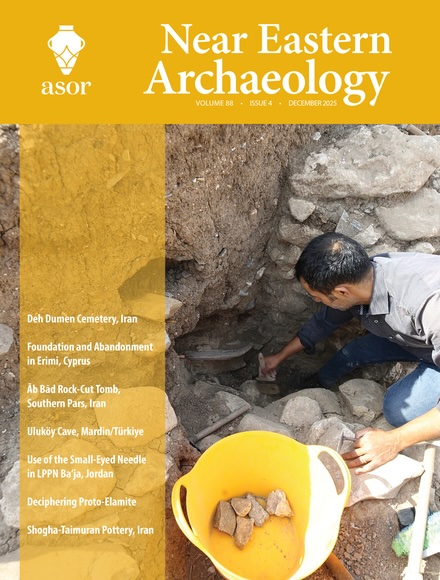
Table of Contents for Near Eastern Archaeology 88.4 (December 2025)

You can receive NEA (and other ASOR publications) through an ASOR Membership.
Please e-mail the Membership office if you have any questions.
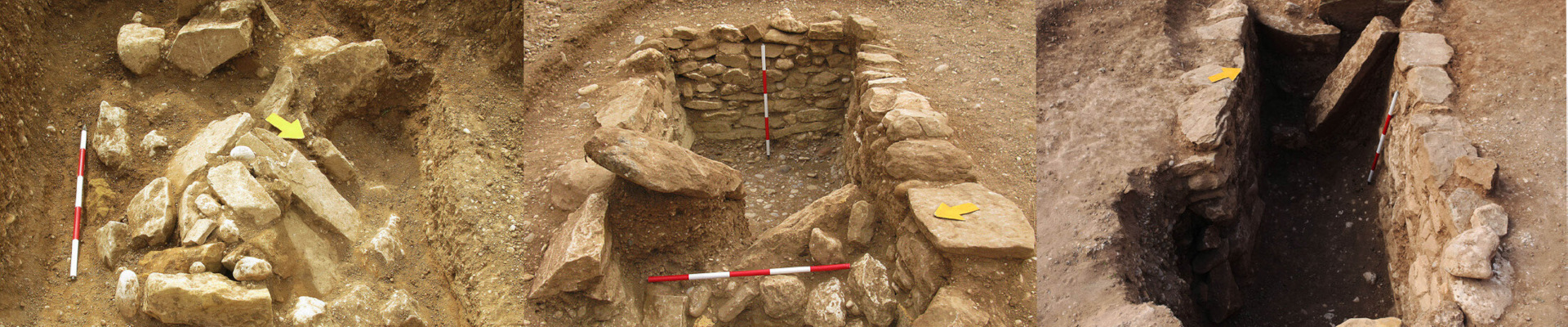
Pp. 260–271: “Burial Practices of the Bronze Age: An Archaeological Study of the Deh Dumen Cemetery in Southern Zagros, Iran” by Reza Naseri and Morteza Khanipour

Recent rescue excavations at the Deh Dumen cemetery near the Khersan III Dam in the southern Zagros identified 20 graves. This study, based on the first excavation season, sheds light on burial practices and cultural connections of local people in the Bronze Age. Likely within Elamite territory, the cemetery includes stone and jar graves for different social groups. The excavations yielded nearly 145 artifacts, including pottery, metal, and stones. The presence of imported items, such as lapis lazuli from Central Asia and metal artifacts from the Indus Valley, indicates extensive trade relations and cultural contacts with southeastern and northeastern Iran. These findings suggest that the Zagros region had access to a trade route connecting East and West and maintained strong connections with other Elamite communities during the Bronze Age. PLEASE NOTE: This article contains images of human skeletal remains.

ASOR Members with online access: log into ASOR’s Online Portal here. Once logged in, click the JOURNALS tab in the top navigation bar. Tutorials for how to log in to the Online Portal as well as how to navigate to the Portal Journals page can be found here.
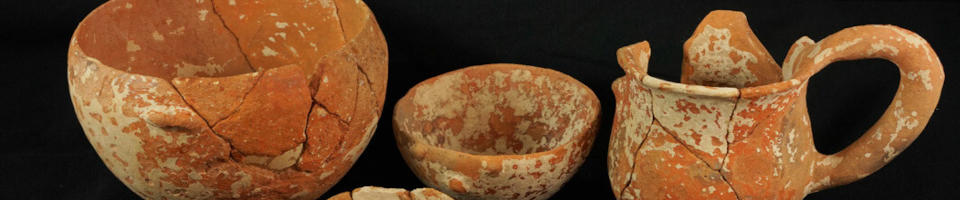
Pp. 272-281: “Time Capsules: Evidence for Foundation and Abandonment Practices at Middle Bronze Age Erimi, Cyprus” by Luca Bombardieri and Marialucia Amadio

This article focuses on the analysis of settlement building and abandonment activities and their impact on the formation of community ideologies and ideas. Specifically, the evidence of social practices will be discussed for Prehistoric Cyprus, taking the example of the Middle Bronze Age community at Erimi in South coastal Cyprus. Through the discussion of specific evidence recovered from the workshop complex and domestic areas at this site, we aim to explore the possible connection of construction and abandonment activities with ritualized practices performed by the community to ensure and sustain long-term social cohesion and construct social memory and communal identity.

ASOR Members with online access: log into ASOR’s Online Portal here. Once logged in, click the JOURNALS tab in the top navigation bar. Tutorials for how to log in to the Online Portal as well as how to navigate to the Portal Journals page can be found here.
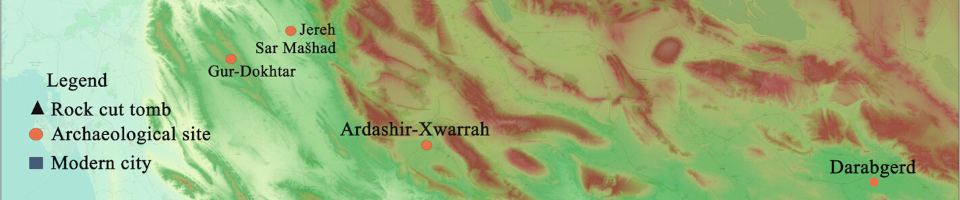
Pp. 282-291: “Āb Bād Rock-cut Tomb: Tracking Post-Achaemenid Burial Customs in Qir-o Karzin, Southern Pars, Iran” by Parsa Ghasemi, Leila Ghasemi, Alireza Mehrabi, and Aziz Rezaei

This article examines a newly discovered rock-cut tomb in Āb Bād village, Qir-o Karzin county, Iran. The tomb features a simple design with a single chamber and a burial cavity, or cist. Its facade is constructed with three overlapping rectangular registers in a stepped arrangement, devoid of decoration or relief. This reflects architectural continuity from Achaemenid rock tombs (550–330 BCE). Based on current survey evidence, it is highly probable that the construction of this tomb dates to the post-Achaemenid period (330 BCE–224 CE) and likely belonged to a high-ranking local ruler or noble of Pars under the Parthian Empire.

ASOR Members with online access: log into ASOR’s Online Portal here. Once logged in, click the JOURNALS tab in the top navigation bar. Tutorials for how to log in to the Online Portal as well as how to navigate to the Portal Journals page can be found here.
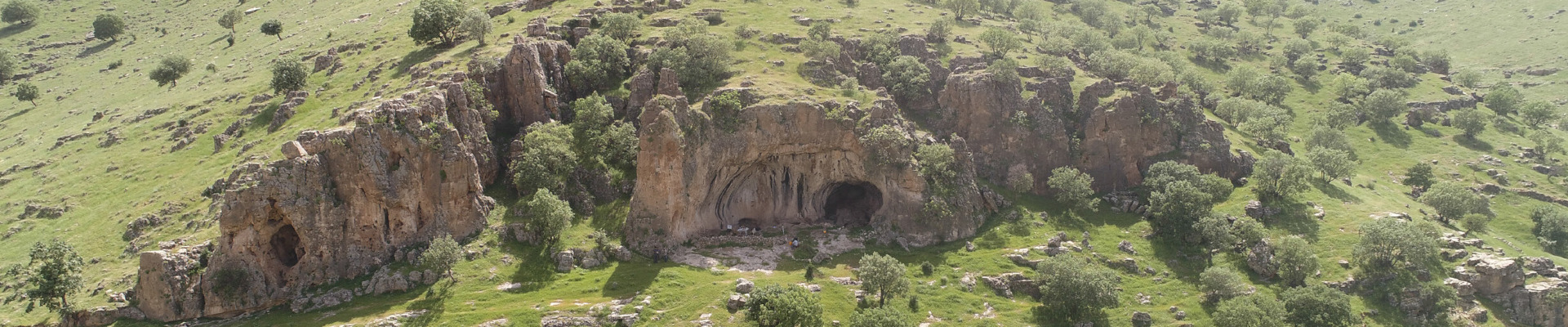
Pp. 292-303: “First Observations on the Excavations in the Terrace Area of Uluköy Cave, Mardin/Türkiye” by Ergül Kodaş, Eşref Erbil, Charlotte Labedan Kodaş, and Mehmet Şan

The emergence of sedentary societies in southeastern Anatolia has been the focus of numerous studies in recent years, particularly those concentrating on Early Neolithic mound settlements located along the riverbanks of the Euphrates Basin and the Tigris Valley. However, research on the Late Epipaleolithic communities in this region remains limited. Currently, our knowledge of the early phase of the transition to sedentary lifestyle in southeastern Anatolia is based on information gathered from only five archaeological sites, most of which are situated along the Tigris: Körtik Tepe, Çemka Höyük, Boncuklu Tarla, Biris Mezarlığı, and Söğüt Tarlası. Recently, the excavation of Ulukoy Cave in 2023 and 2024, located in the Mardin Range, led to the discovery of Epipaleolithic architectural features and lithic tools in its terrace. This article presents our initial observations from this archaeological site.

ASOR Members with online access: log into ASOR’s Online Portal here. Once logged in, click the JOURNALS tab in the top navigation bar. Tutorials for how to log in to the Online Portal as well as how to navigate to the Portal Journals page can be found here.
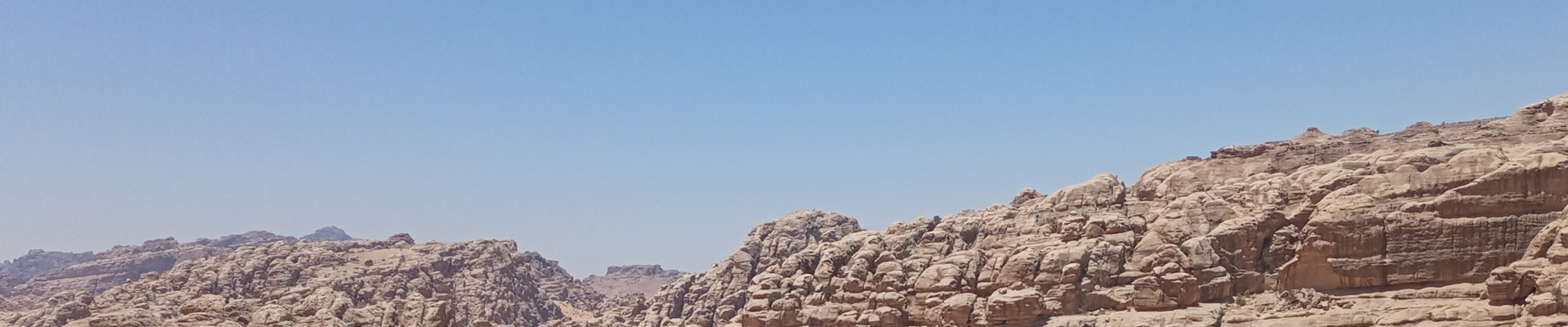
Pp. 304-312: “Potential Use of the Small-Eyed Needle from Late Pre-Pottery Neolithic Baʿja in Jordan” by Bellal Abuhelaleh, Hans G. K. Gebel, Carmela Vaccaro, and Ursula Thun Hohenstein

The Pre-Pottery Neolithic sites in Jordan represent important stages in the evolution of human social structures in the Middle East. These sites reveal a remarkably complex social differentiation, as well as cultural and technological advances that paved the way for stratified socioeconomic structures in the Transjordanian Highlands. One important Late Pre-Pottery Neolithic site is Baʿja (ca. 7200–6800 BCE). Dr. Hans K. Gebel and his team from the Free University of Berlin first excavated Baʿja in 1984. Excavations resumed in 1997 and continue today. This article examines a particular bone tool: a very thin, cylindrical eyed needle, recovered in the lowermost layer of Baʿja stratigraphy. The object is notable for its dimensional smallness. In order to gather more information about its possible production technique and use, the researchers conducted a scientific experiment to produce a replica similar to the original Baʿja eyed needle.

ASOR Members with online access: log into ASOR’s Online Portal here. Once logged in, click the JOURNALS tab in the top navigation bar. Tutorials for how to log in to the Online Portal as well as how to navigate to the Portal Journals page can be found here.
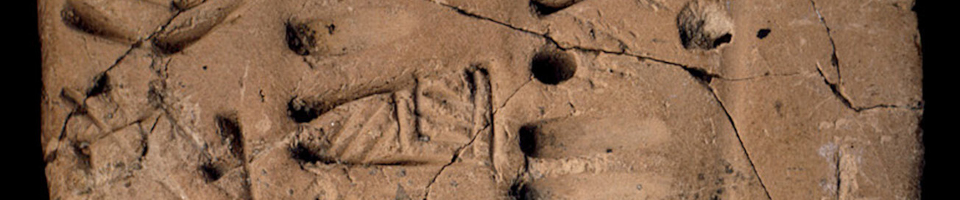
Pp. 314-323: “Recent Progress in Deciphering Proto-Elamite” by M. Willis Monroe, Kathryn Kelley, Logan Born, and Anoop Sarkar

Within about a century of the earliest inventions of writing in southern Iraq and Egypt at the end of the fourth millennium BCE, a third writing system was invented in southwestern Iran. This writing is called proto-Elamite, and it has remained undeciphered, even though a large number of tablets (now over 1,700) have been available for study since the early twentieth century. The name proto-Elamite is a conventional label, not meant to imply a known language, that was coined by V. Scheil. Proto- Elamite is a distinct corpus from the much later Linear Elamite writing system. With increasing digital documentation of this corpus, new avenues of research have opened, and over the past five years an interdisciplinary team of researchers has been making insights by combining traditional knowledge of the corpus with techniques developed in computational linguistics.

ASOR Members with online access: log into ASOR’s Online Portal here. Once logged in, click the JOURNALS tab in the top navigation bar. Tutorials for how to log in to the Online Portal as well as how to navigate to the Portal Journals page can be found here.
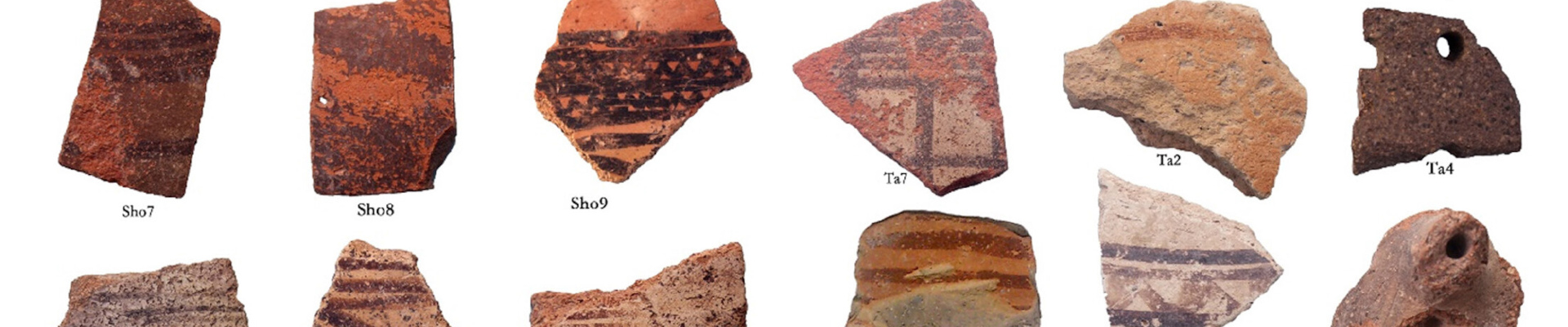
Pp. 324-337: “Insights into Shogha-Taimuran Pottery: Exploring Making Centers and Cultural Significance” by Habib Emadi and Ali Aarab

The Shogha-Taimuran period refers to the second half of the second millennium BCE in the Kur River Basin of southwestern Iran, characterized by two visually distinct yet contemporaneous pottery types. To elucidate the causes of these distinctions, Neutron Activation Analysis (NAA) and X-ray Fluorescence (XRF) were conducted on the samples. Previous researchers posited Tol-e Darwazeh as the production center for Shogha-Taimuran pottery. However, this study reveals that Tol-e Taimuran also served as a production center, indicating different origins for some Taimuran pottery types and reflecting two distinct pottery traditions in the mid-second millennium BCE (Middle Elam). Analyses of Taimuran pottery, alongside other site findings, indicate connections with other areas, positioning Tol-e Taimuran as a potential main center for Shogha-Taimuran culture following the abandonment of Tol-e Malyan.

ASOR Members with online access: log into ASOR’s Online Portal here. Once logged in, click the JOURNALS tab in the top navigation bar. Tutorials for how to log in to the Online Portal as well as how to navigate to the Portal Journals page can be found here.

BROWSE THE NEWS ARCHIVE

  • March Fellowship Madness 2026: Bracket of Impact
  • Fieldwork Report: Talia Neelis
  • FOA Webinar: Neville McFerrin
  • March 2026 Book Sale

Latest Posts from @ASORResearch

asor_research

Initiating and supporting research of the history and cultures of the Near East and wider Mediterranean world.


Don't forget to tune in TOMORROW at 7:00 pm ET for
Don't forget to tune in TOMORROW at 7:00 pm ET for the next FOA webinar presented by Dr. Müge Durusu-Tanrıöver: "Anatolian Futures: Archaeologies of Anatolia within the Larger Mediterranean". If you haven't already signed up, click the link (https://buff.ly/NHDHKof) in our bio to register.


Our #ObjectoftheWeek: A shallow faience bowl from
Our #ObjectoftheWeek: A shallow faience bowl from New Kingdom Egypt—decorated with a double-sistrum with Hathor heads and blue lotus flowers—dated to ca. 1539-1292 BCE. Credit: Museo Egizio, Turin, Cat. 3368. CC0 1.0.
#Archaeology #Egypt #Hathor


The Amman Citadel with its prominent ruins is the
The Amman Citadel with its prominent ruins is the most striking landmark in the city centre. Since 2024, the Amman Archaeological Project has been investigating the site’s formative period to better understand its history. Read the newest ANE Today by clicking the link (https://anetoday.org/royal-capital-ammon/) in our bio.
#Jordan #Amman

📸 : ©Amman Archaeological Project (Münster University, DAI, Felix Wolter)


ASOR is pleased to be holding a book sale for publ
ASOR is pleased to be holding a book sale for publications 2+ years old this March. All proceeds from book sales will go to supporting membership scholarships! ASOR members (with a mailing address in the USA) can purchase copies of available books for only $10 through March 31, 2026. Click the link (https://www.asor.org/news/2026/03/spring-book-sale) in our bio to take a look at the list of available titles.


In 2025, Hanna Erftenbeck and Natalia Handziuk rec
In 2025, Hanna Erftenbeck and Natalia Handziuk received a Joe D. Seger Project Grant for research at Tall al-Handaquq South in Jordan. A systematic survey documented Early Bronze Age remains, including a dolmen, and areas impacted by looting—helping to clarify the site’s extent, occupational intensity, and preservation challenges. Read their grant report by clicking the link (https://www.asor.org/news/2026/02/seger-grant-report-al-handaquq) in our bio.
#Jordan #BronzeAge


Join us for the next FOA webinar on Wednesday, Mar
Join us for the next FOA webinar on Wednesday, March 11th at 7:00pm ET: "Anatolian Futures: Archaeologies of Anatolia within the Larger Mediterranean," presented by Dr. Müge Durusu-Tanrıöver. Posing the questions of how we can define Anatolia and what its archaeologies can look like in the later twenty-first century CE, Dr. Durusu-Tanrıöver makes the case for a connected Anatolian archaeology that can both claim its multiple constituents and contribute to the larger debates in Mediterranean archaeology. Click the link (https://www.asor.org/news/2026/02/webinar-durusu-tanriover) in our bio to register.
#Anatolia


Our #ObjectoftheWeek: A cuneiform tablet recording
Our #ObjectoftheWeek: A cuneiform tablet recording a land transfer document from ancient Girsu, Iraq dated to ED IIIB period (ca. 2500-2340 BCE). CBS10000. Credit: Penn Museum.
#Archaeology #Iraq #Mesopotamia #Cuneiform


Anna Taibi, a 2025 Strange/Midkiff Families Fellow
Anna Taibi, a 2025 Strange/Midkiff Families Fellowship recipient, joined the ReLand Archaeological Project in Iraq this past fall. A MA student at the University of Palermo, Anna helped document looting threats on newly emerged archaeological sites and supervised excavations at a Late Chalcolithic village in the Mosul Dam Reservoir. Read her fieldwork report by clicking the link (https://www.asor.org/news/2026/02/fieldwork-report-taibi) in our bio.
#Iraq #Mosul


There's still room on the tour — register by March
There's still room on the tour — register by March 1!
Join the Friends of ASOR Philadelphia Tour from April 16–17, 2026 for exclusive, behind-the-scenes access at the @pennmuseum, @barnesfoundation, and @visitpham, featuring expert-led tours by Penn Museum Director Chris Woods, Richard Zettler, Michael Danti, Phil Jones, Steve Tinney, Marie-Claude Boileau, Katy Blanchard, Kaelin Jewell, among others, with special lectures, and insights into archaeology, art, and artifact analysis. Time is running out, reserve your place now: https://www.asor.org/news/2026/01/tour-philadelphia-2026
#FOATours #Philadelphia


ASOR is pleased to announce an award from the Gerd
ASOR is pleased to announce an award from the Gerda Henkel Stiftung supporting critical site security and infrastructure improvements at the Sudan National Museum in Khartoum. Working in coordination with the Sudanese National Corporation for Antiquities and Museums (NCAM), ASOR will expand safe access to the property, with a focus on rebuilding the damaged enclosure wall and making priority repairs to the electrical, water, and sewage systems. Read more about the project by clicking the link (https://www.asor.org/news/2026/02/sudan-national-museum) in our bio.
#Sudan


We’re thrilled to share an exciting update about t
We’re thrilled to share an exciting update about the Friends of ASOR Cyprus tour—it just got even better. In addition to Andy Vaughn and Rachel Bernstein, the tour will now feature three additional tour leaders: ASOR President Prof. Jane DeRose Evans, along with Professors Eric and Carol Meyers (who will join the group from June 18–24). These three world-renowned archaeologists will bring extraordinary depth and expertise to an already exceptional experience. Reserve your spot here: https://www.asor.org/news/2025/08/tour-cyprus-2026
#FOATours #Cyprus


Make sure to get your applications in for our fiel
Make sure to get your applications in for our fieldwork scholarships and project grants by Monday, February 23! Grants and scholarships are eligible for work only on ASOR-affiliated projects. To find out more, click the link (https://buff.ly/gD3Uiou) in our bio.


Can we use digital tools to test whether fragments
Can we use digital tools to test whether fragments and museum objects might be related? Can we recover parts of their histories that were previously inaccessible? Read the newest ANE Today, republished from The Conversation, by clicking the link (https://anetoday.org/connecting-objects-3d-scanning/) in our bio.


Sponsored by ASOR, the William Leo Hansberry Socie
Sponsored by ASOR, the William Leo Hansberry Society is hosting a Zoom event on African heritage, "[RE]PRESENT: Museums & Access", on Saturday, February 21 at 12:30PM ET. Register by clicking the link (https://asor-org.zoom.us/webinar/register/WN_oxzsiN13ScOCJ0PMAXw2qA#/registration) in our bio.


To those observing, ASOR wishes you a Ramadan Muba
To those observing, ASOR wishes you a Ramadan Mubarak!


Make sure to tune in TOMORROW at 7:00 pm ET for th
Make sure to tune in TOMORROW at 7:00 pm ET for the next FOA webinar presented by Carl Walsh: "'An elegance of spirit adorns all its works.': Auguste Rodin and the Art of Ancient Egypt". If you haven't already signed up, click the link (https://buff.ly/gD3Uiou) in our bio to register.


ASOR invites members to submit paper abstracts and
ASOR invites members to submit paper abstracts and workshop presentation proposals for the 2026 Annual Meeting taking place November 18-21 in Chicago and online. Abstracts of 250 words or less may be submitted between now and March 15. Read more in the Call for Papers: https://www.asor.org/am/2026/call-for-papers-2026


Hannah Borotsik, a 2025 P. E. MacAllister Fellowsh
Hannah Borotsik, a 2025 P. E. MacAllister Fellowship recipient, returned to the Athenian Agora excavations in Greece for her third season last summer. A PhD student at the University of Western Ontario, Hannah served as apotheke supervisor managing the processing of finds and training volunteers. Read her report, "Just a Girl and Her Whiteboard," here: https://www.asor.org/news/2026/02/fieldwork-report-borotsik
#Archaeology #Greece #Athens


ASOR is accepting applications for two 2026 Study
ASOR is accepting applications for two 2026 Study of Collections Fellowships of $2,000 each. These fellowships are intended to support the study of collections including museum and archival collections, repositories, or collections of national authorities. Applications are due February 23, 2026. Learn more by clicking the link (https://www.asor.org/fellowships/study-of-collections-fellowships/) in our bio.


The Early Career Scholars (ECS) Committee is looki
The Early Career Scholars (ECS) Committee is looking for new members. We especially seek those interested in supporting ASOR’s Early Career (undergraduate to pre-tenure) community through creative, informal mentoring opportunities. Learn more by clicking the link (https://www.asor.org/news/2026/01/early-career-scholars-call) in our bio.


Instagram

Stay updated with the latest insights, photos, and news by following us on Instagram!

Follow Us on Instagram

American Society of Overseas Research
The James F. Strange Center
209 Commerce Street
Alexandria, VA 22314

E-mail: info@asor.org

© 2025 ASOR
All rights reserved.
Images licensed under a Creative Commons Attribution-NonCommercial-ShareAlike 4.0 International License

Contact Us
Membership
Give
Friends of ASOR
ASOR Cultural Heritage Initiatives
Terms of Use
News

Please follow & like us :)
Facebook
YouTube
LinkedIn