UNEARTHING THE PAST SINCE 1900
  • BECOME A MEMBER
  • RENEW
  • GIVE NOW
  • SEARCH
  • ONLINE PORTAL
  • American Society of Overseas Research (ASOR)American Society of Overseas Research (ASOR)
  • ABOUT
    • WELCOME FROM ASOR OFFICERS
    • HISTORY OF ASOR
    • MISSION, BYLAWS, & STRATEGIC PLAN
    • Board of Trustees
    • COMMITTEES
    • POLICIES
    • FINANCIAL DOCUMENTS
    • MEDIA RELEASES
    • CONTACT US
  • CULTURAL
    HERITAGE
    • ABOUT CULTURAL HERITAGE INITIATIVES
    • UPDATES
    • PAST GRANTS
    • TUTORIALS
    • Who We Are
  • ANNUAL
    MEETING
    • REGISTRATION
    • HOTEL RESERVATIONS
    • ANNUAL MEETING SCHEDULES
    • SPONSOR & EXHIBIT
    • ASOR Online Library
    • HONORS & AWARDS
    • ANNUAL MEETING SCHOLARSHIPS
    • PAST & FUTURE ANNUAL MEETINGS
  • MEMBERSHIP
    & RESOURCES
    • INDIVIDUAL MEMBERSHIPS
    • INSTITUTIONAL MEMBERSHIPS
    • NEWS@ASOR
    • PAST ASOR NEWS, MONTH BY MONTH
    • AFFILIATED PROJECTS
    • AFFILIATED RESEARCH CENTERS
    • ARCHIVES
    • ONLINE RESOURCES
      • PHOTO COLLECTION
    • EARLY CAREER MEMBER RESOURCES
  • FELLOWSHIPS
    & GRANTS
    • SCHOLARSHIPS FOR FIELDWORK PARTICIPATION
    • GRANTS FOR ARCHAEOLOGICAL PROJECTS
    • RESEARCH FELLOWSHIPS FOR MEMBERS
    • MEMBERSHIP & ANNUAL MEETING SCHOLARSHIPS
    • ASOR-AFFILIATED RESEARCH CENTERS FELLOWSHIPS
    • OTHER FELLOWSHIP PROGRAMS
  • PUBLICATIONS
    • BOOK SERIES & MONOGRAPHS
    • BULLETIN OF ASOR
    • JOURNAL OF CUNEIFORM STUDIES
    • MAARAV
    • NEAR EASTERN ARCHAEOLOGY
    • THE ANCIENT NEAR EAST TODAY
    • News@ASOR
    • LEVANTINE CERAMICS PROJECT
  • FRIENDS
    OF ASOR
    • Webinars
    • TOURS
    • THE ANCIENT NEAR EAST TODAY
    • ASOR ONLINE LIBRARY
  • Donate
    • FY25 HONOR ROLL OF DONORS
    • LIFETIME HONOR ROLL OF DONORS
    • ASOR LEGACY CIRCLE
    • WAYS TO DONATE

 SHARE


NEWS@ASOR E-NEWSLETTER

ANCIENT NEAR EAST TODAY E-NEWSLETTER

PAST ASOR NEWS, MONTH BY MONTH

ASOR LEGACY CIRCLE MEMBERS

LIFETIME HONOR ROLL OF DONORS

FY25 HONOR ROLL OF DONORS

ASOR ANNUAL MEETING

2025 Harris Grant Report: CraftLand Project, Kurdistan Region of Iraq

Dr. Claire Padovani, CNRS Archéorient

The launch of the Crafting Landscape Project (CraftLand) in May 2025 in the Chamchamal region was made possible through the generous support of ASOR’s Charles Harris Project Grant. This pilot mission enabled the finalization and validation of a survey contract with the General Directorate of Antiquities in Erbil and the Directorate of Antiquities in Slimani, as well as the establishment of a partnership with Ashur Brick, a Kurdish company producing clay bricks in the region. In addition, we were able to test several methodological components of the project and to initiate the work in our three fields of investigation.

The objective of CraftLand is to investigate the strategies of natural resources exploitation and organisation of pottery manufacture–in relation to other economic productions–in a clay-rich environment in the Chamchamal region. This geological context, known as the Injana formation, extends over approximately 380 km² (figure 1). It is composed of sandstone, siltstone, and high quality claystone, a favourable combination for ceramic production. In Iraq, outcrops of this formation are also found near Kirkuk and the Mosul lake. The study spans from the beginnings of ceramic production to the present day, with particular emphasis on periods of major economic transformations, such as urbanisation and state formation.
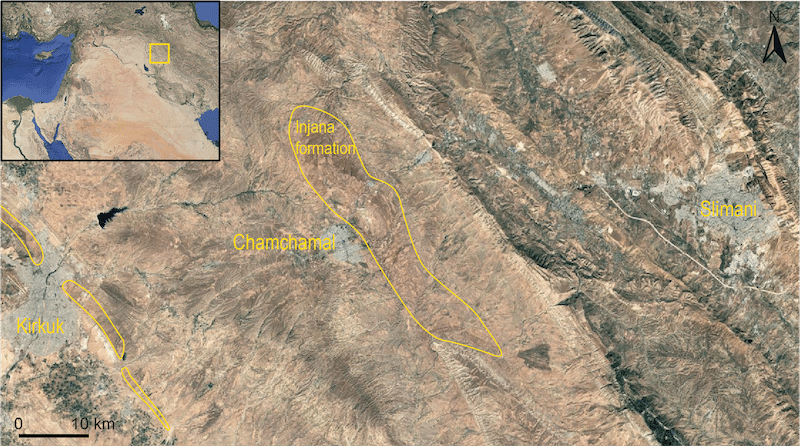
Figure 1: Map of the region with actual cities and Injana formation © C. Padovani

A distinctive feature of the Chamchamal’s Injana formation is its location within a zone close to cultivable lands, mineral and organic resources, formerly adjacent to woodlands, and easily connected to the Bazian Pass, a strategic route through the Qara Dagh piedmonts of the Zagros mountains. The establishment of large-scale ceramic workshops comprising dozens of kilns in the region–such as Logardan in the Early and Middle Bronze Age and Girdi Qala during the Chalcolithic and the Islamic period–suggests that the high quality of these clay resources was already recognised. Today, the Chamchamal region hosts four major brick factories supplying construction materials across Iraq, alongside traditional potters, as well as numerous farmers and pastoralists (figure 2). However, it is unlikely that raw material quality alone accounts for the recurrent and sustainable development of large-scale production in this area.
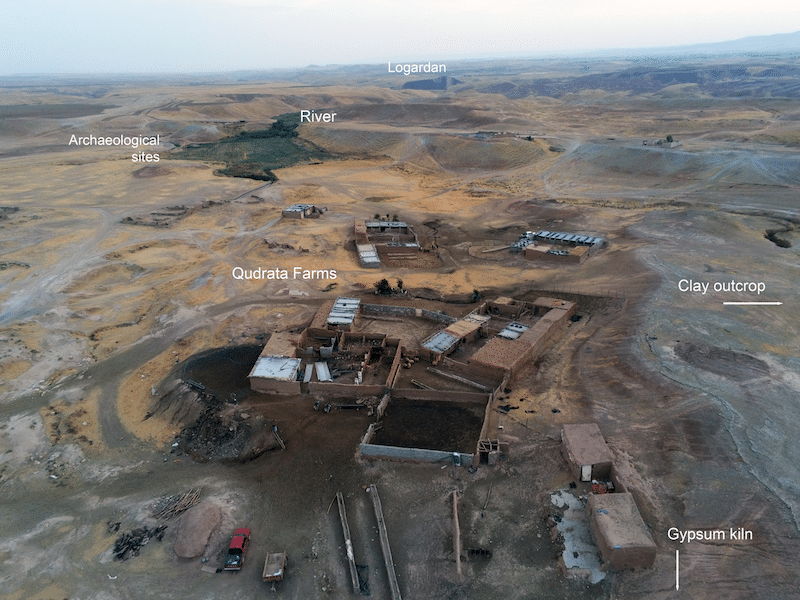
Figure 2: Aerial view of Qudrata, east of Chamchamal. This hamlet, consisting of several farms with unfired brick walls and stone foundations, is also a site where gypsum is processed into plaster and where traditional potters collect clay. Logardan and newly surveyed archaeological sites are visible in the background © J. Lisein

Pottery was one of the most widely used materials in ancient societies. Its production required raw materials, fuel, workforce, and access routes. CraftLand examines pottery production in its landscape and seeks to reconstruct spatial relationships between production facilities and the natural environment (raw material sources; water; topography), as well as the social and economic contexts (settlement pattern; roads; agricultural, pastoral, and other artisanal activities). Reconstructing these networks provides a valuable framework for understanding the evolution of the production organisation on a regional scale and assessing its impact on the landscape depending on the period.

To address its research questions, CraftLand employs an integrated, interdisciplinary approach organised into three complementary fields of research, with all data consolidated within a single Geographic Information System (GIS). This pilot season has already seen significant progress in the three research areas:

a) Archaeological survey

A GIS with a standardized recording protocol was implemented in collaboration with Jonathan Lisein (Gembloux Agro-Bio Tech Liege University). Thirty sites were identified through satellite imagery and have begun to be surveyed by pedestrian prospection.

The initial priority was to test a hypothesis regarding the location of large-scale ceramic workshops in order to assess the potential for predicting their spatial distribution. Based on the conditions documented at Logardan, we hypothesized that the establishment of major pottery workshops was contingent upon specific criteria: proximity of less than 5 kilometres to a large settlement occupied at the same period, direct access to a river, and the availability of nearby clay sources. Using the GIS, Tepe Swez, a site meeting these conditions was identified and subsequently surveyed. The site is situated 3.3 kilometers from Chamchamal (ancient Azuhinum), with a river flowing at its base, and in proximity to a clay source (Gurgay Chawsur) that is used by present-day potters. On the gentler southern slope, numerous greenish fragments of large ceramic vessels were documented, together with circular alignments of burned stones organised in terraces interpreted as kiln bottoms (figure 3). Based on the pottery typology, the possible pottery production area most likely functioned during the Middle Bronze Age.
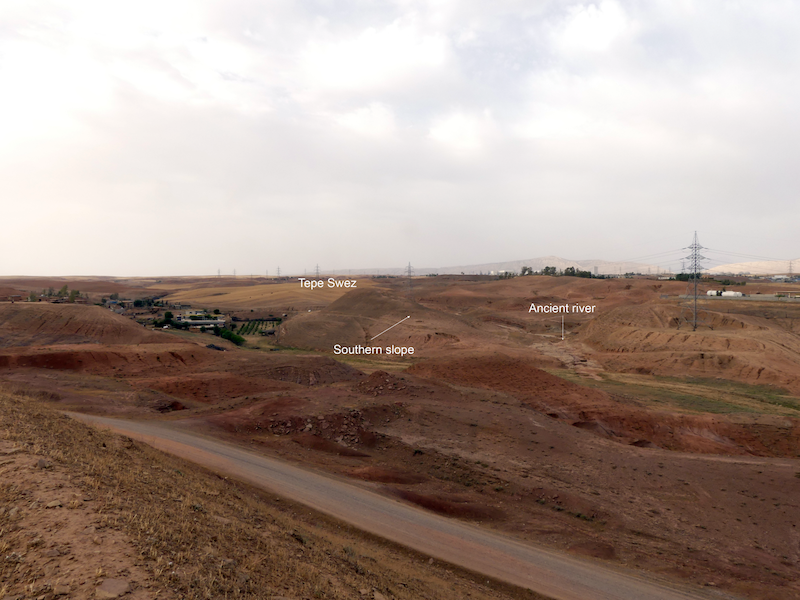
Figure 3: Tepe Swez © C. Padovani

b) Landscape analyses

The project’s landscape analyses integrate geomorphology, geology, and vegetation reconstruction to identify natural raw material sources (clay, stone, and bitumen), as well as anthropogenic features (such as basins, clay pits, roads, and field terraces).

Part of this work began with the investigation of ancient clay extraction sites in the region. During the ethnographic survey (see below), we identified clay outcrops that are currently exploited by traditional potters. These extraction sites are located in close proximity to archaeological sites with important pottery production facilities (Gurgay Chawsur close to Tepe Swez and Qudrata close to Logardan). Samples were collected from these sources. A geological survey was conducted between Qudrata and Logardan in collaboration with Zirak T. Yaseen, geologist at Salahaddin University, in order to to assess whether the clay composition varies or is homogeneous within the Injana formation (figure 4).
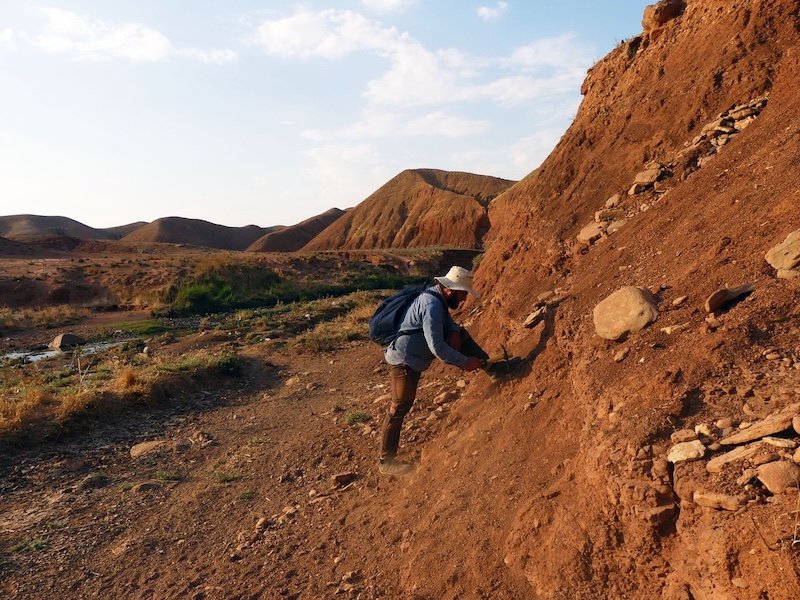
Figure 4: Zirak sampling clay outcrop © C. Padovani

The survey documented the accessibility between sites and included sampling of multiple clay outcrops along the way. XRF analyses, conducted by Zirak T. Yaseen at the Salahaddin University in Erbil, provided preliminary results indicating that clay outcrops within the Injana Formation present various geochemical signatures. This suggests the potential to discriminate clay sources (figure 5). In collaboration with the French Archaeological Mission in the Qara Dagh directed by Johnny S. Baldi, ongoing analyses are comparing the composition of a selection of sherds from different stratigraphic levels of Logardan workshop with sampled clays. Ultimately, the possible extraction sites identified through geomorphological analyses by Luca Forti (University of Milan) will be systematically surveyed and sampled to characterize their geochemical composition. The overarching goal is to provide an open-access map of ancient clay extraction sites, including their geochemical profile, to support clay provenance studies in the region.
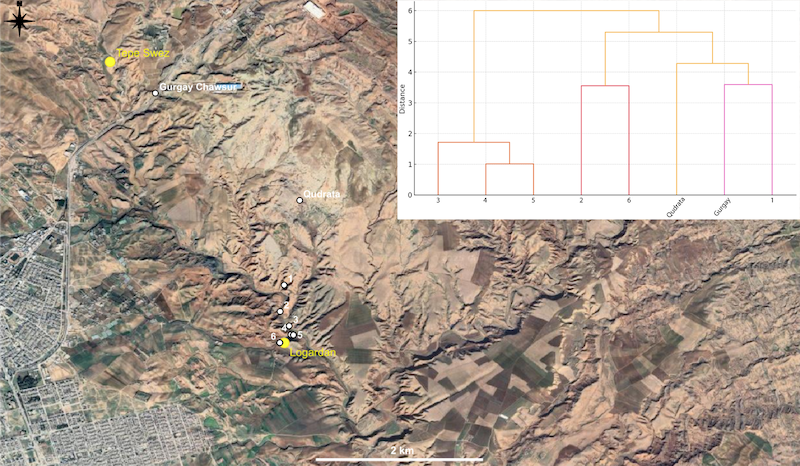
Figure 5: Map showing clay outcrops sampled in the Injana Formation. XRF analysis results were statistically processed using hierarchical cluster analysis (HCA) to classify samples based on compositional similarity © C. Padovani

c) Survey of potters and clay crafts

Documentation of the actual clay production system (traditional and industrial) started with interviews using structured questionnaires and observations of practice. The survey seeks to assess the vitality of traditional pottery in relation to local industry, and to investigate sensory-based clay selection and the mechanisms of clay craft knowledge transmission.

Clay products are currently in demand (tannurs, water jars, and even living-rooms faced with unfired bricks) as people want to ‘live as in ancient times’ and maintain cultural traditions. However, local clay products remain relatively expensive–with a tannur costing around 20 dollars–and most pottery sold in local shops is imported from Iran by truck. Despite the renewed interest in ceramics, traditional potters are at risk of disappearing, as many are old and no longer pass on their craft.

The survey enabled the identification of a network of traditional clay artisans. Interviews were conducted in collaboration with Rawa Karim (Directorate of Antiquities of Slimani) and Brwa Raza (Charmo University). Preliminary results suggest that pottery and brick making may have been transmitted vertically, from one generation to the next within the same family, whereas tannur making may be more commonly transmitted horizontally, between neighbours (figure 6).
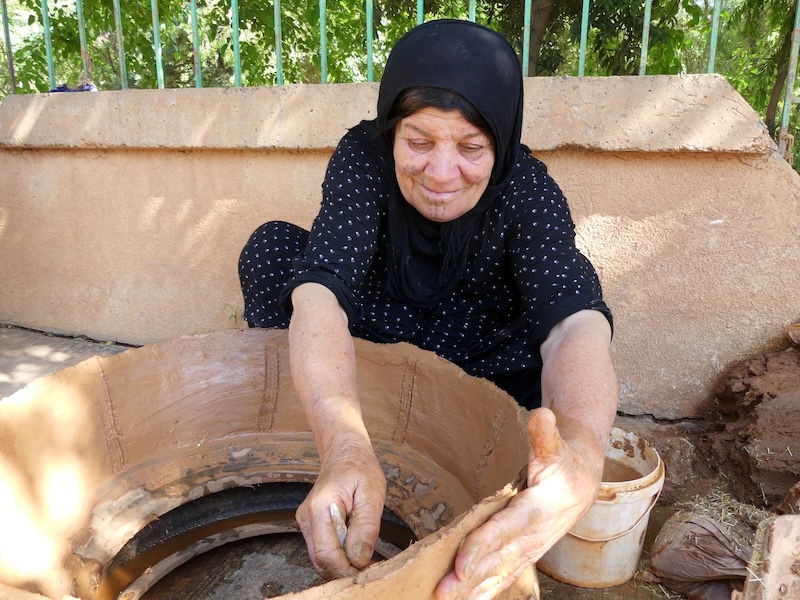
Figure 6: Shirina manufacturing a tannur © C. Padovani

The decline of traditional pottery production is not only related to economic changes but might also be linked to the region’s recent history of political violence, notably the Anfal campaigns of the late 1980s that killed and displaced thousands of people. Although a potter’s clay source may change–often based on the reputation of the source–potters remain closely tied to their place of birth and initial apprenticeship. Beyond family ties, this connection is probably based on access to other essential ingredients for the clay matrix, such as straw used as a temper, as well as to spaces suitable for firing. Consequently, it is not uncommon for potters to return to their birthplaces to collect straw from family fields, or to stop producing pottery when these fields or firing areas are no longer accessible in their new village. This practice illustrates the deep interconnection between clay production and other economic activities, such as agriculture, as well as the critical role of spatial organisation in sustaining craft traditions. Therefore, the violent disruption of these socio-spatial networks during the Anfal probably contributed to the decline of traditional craft practices.

The results obtained in each research area are highly promising for the regional development of the project. This pilot mission strengthened ties with local communities and enterprises and initiated the survey of archaeological sites. The preliminary results also pointed to possible ways of reconstructing and interpreting production networks through spatial analysis and the recurrence of patterns, as well as through the socio-economic logics observed among present-day potter communities. The backbone of the project is to consider the social ecology of pottery production in its spatial dimension in order to understand long-term transformations in regional organisation. Subsequently, the production patterns documented in the Chamchamal region will provide points of comparison with those of other regions, helping to determine the processes and impacts of social transformations (like urbanisation and state emergence) in contrasting environments. In addition, by emphasizing the long-standing tradition of clay crafts and their influence on the landscape and the regional identity, CraftLand will leverage heritage to foster community empowerment and reinforce connections to the environment.

BROWSE THE NEWS ARCHIVE

  • ASOR Receives Award from Gerda Henkel Stiftung for Access Project at the Sudan National Museum
  • Seger Grant Report: Tall al-Handaquq South
  • Fieldwork Report: Anna Taibi
  • Fieldwork Report: Hannah Borotsik

Latest Posts from @ASORResearch

asor_research

Initiating and supporting research of the history and cultures of the Near East and wider Mediterranean world.


We’re thrilled to share an exciting update about t
We’re thrilled to share an exciting update about the Friends of ASOR Cyprus tour—it just got even better. In addition to Andy Vaughn and Rachel Bernstein, the tour will now feature three additional tour leaders: ASOR President Prof. Jane DeRose Evans, along with Professors Eric and Carol Meyers (who will join the group from June 18–24). These three world-renowned archaeologists will bring extraordinary depth and expertise to an already exceptional experience. Reserve your spot here: https://www.asor.org/news/2025/08/tour-cyprus-2026


Make sure to get your applications in for our fiel
Make sure to get your applications in for our fieldwork scholarships and project grants by Monday, February 23! Grants and scholarships are eligible for work only on ASOR-affiliated projects. To find out more, click the link (https://buff.ly/gD3Uiou) in our bio.


Can we use digital tools to test whether fragments
Can we use digital tools to test whether fragments and museum objects might be related? Can we recover parts of their histories that were previously inaccessible? Read the newest ANE Today, republished from The Conversation, by clicking the link (https://anetoday.org/connecting-objects-3d-scanning/) in our bio.


Sponsored by ASOR, the William Leo Hansberry Socie
Sponsored by ASOR, the William Leo Hansberry Society is hosting a Zoom event on African heritage, "[RE]PRESENT: Museums & Access", on Saturday, February 21 at 12:30PM ET. Register by clicking the link (https://asor-org.zoom.us/webinar/register/WN_oxzsiN13ScOCJ0PMAXw2qA#/registration) in our bio.


To those observing, ASOR wishes you a Ramadan Muba
To those observing, ASOR wishes you a Ramadan Mubarak!


Make sure to tune in TOMORROW at 7:00 pm ET for th
Make sure to tune in TOMORROW at 7:00 pm ET for the next FOA webinar presented by Carl Walsh: "'An elegance of spirit adorns all its works.': Auguste Rodin and the Art of Ancient Egypt". If you haven't already signed up, click the link (https://buff.ly/gD3Uiou) in our bio to register.


ASOR invites members to submit paper abstracts and
ASOR invites members to submit paper abstracts and workshop presentation proposals for the 2026 Annual Meeting taking place November 18-21 in Chicago and online. Abstracts of 250 words or less may be submitted between now and March 15. Read more in the Call for Papers: https://www.asor.org/am/2026/call-for-papers-2026


Hannah Borotsik, a 2025 P. E. MacAllister Fellowsh
Hannah Borotsik, a 2025 P. E. MacAllister Fellowship recipient, returned to the Athenian Agora excavations in Greece for her third season last summer. A PhD student at the University of Western Ontario, Hannah served as apotheke supervisor managing the processing of finds and training volunteers. Read her report, "Just a Girl and Her Whiteboard," here: https://www.asor.org/news/2026/02/fieldwork-report-borotsik
#Archaeology #Greece #Athens


ASOR is accepting applications for two 2026 Study
ASOR is accepting applications for two 2026 Study of Collections Fellowships of $2,000 each. These fellowships are intended to support the study of collections including museum and archival collections, repositories, or collections of national authorities. Applications are due February 23, 2026. Learn more by clicking the link (https://www.asor.org/fellowships/study-of-collections-fellowships/) in our bio.


The Early Career Scholars (ECS) Committee is looki
The Early Career Scholars (ECS) Committee is looking for new members. We especially seek those interested in supporting ASOR’s Early Career (undergraduate to pre-tenure) community through creative, informal mentoring opportunities. Learn more by clicking the link (https://www.asor.org/news/2026/01/early-career-scholars-call) in our bio.


Join us for the next FOA webinar on Wednesday, Feb
Join us for the next FOA webinar on Wednesday, February 18th at 7:00pm ET: "'An elegance of spirit adorns all its works.': Auguste Rodin and the Art of Ancient Egypt," presented by Dr. Carl Walsh. Most people would not conceive of any connection between the works of the master French sculptor Auguste Rodin (1840–1917) and the art of ancient Egypt. In this talk, Dr. Walsh will discuss how Rodin became interested in ancient Egyptian art in his waning years and the profound—if subtle—impact it had on the sculptor’s practice through the objects in the current exhibition Rodin’s Egypt, now on display at the Institute for the Study of the Ancient World at New York University. Click the link (https://www.asor.org/news/2026/01/webinar-walsh ) in our bio to read more and register.


If you are in the greater Washington D.C. area, yo
If you are in the greater Washington D.C. area, you are welcome to join this special lecture by Dr. Ahmad Emrage at George Washington University on Tuesday, February 10 from 5:30–6:30 PM. Dr. Emrage, a member of the Libyan Department of Antiquities and an ASOR member, will be discussing the cultural heritage of Libya.


ASOR is supporting archaeological fieldwork for ou
ASOR is supporting archaeological fieldwork for our members in 2026 by offering Project Grants (for directors) and Scholarships for Fieldwork Participation (for students and volunteers). Both grants and scholarships are for work on ASOR-affiliated projects. The application deadline for both is Monday, February 23. Learn more by clicking the link (https://www.asor.org/fellowships/) in our bio.


Our #ObjectoftheWeek: A series of grave goods from
Our #ObjectoftheWeek: A series of grave goods from a cemetery in Kedurma, Sudan, dated to the Meroitic period. ca. 3rd cent. BCE–4th cent. CE. Photo credit: Mohamed Bashir, CC by-SA 4.0.
#Archaeology #Nubia #Kush #Sudan


Narrative accounts of genocidal violence appear mu
Narrative accounts of genocidal violence appear multiple times in the Hebrew Bible. Why are they there and what do they have to do with modern genocides? Read the newest ANE Today by T. M. Lemos by clicking the link (https://anetoday.org/genocide-hebrew-bible/) in our bio.


ASOR is pleased to announce that recordings from t
ASOR is pleased to announce that recordings from the 2025 Annual Meeting in Boston are now available to view on the 2025 ASOR Online Schedule and ASOR’s Online Library. This initiative not only helps preserve the wealth of knowledge shared but also ensures that those who couldn’t attend the event in person still have access to session and workshop presentations (nearly 500 in total). Learn how to access the recordings by clicking the link (https://www.asor.org/news/2026/02/am25-recordings) in our bio.


Don't forget to tune in TOMORROW at 12:30 pm ET fo
Don't forget to tune in TOMORROW at 12:30 pm ET for the next FOA webinar presented by Benyamin Storchan: "Unearthing an Imperially Glorious Byzantine Church near Bet Shemesh: From Fieldwork to Virtual Reality". If you haven't already signed up, click here to register for free: https://www.asor.org/news/2026/01/webinar-storchan


Registration is now open for the Friends of ASOR t
Registration is now open for the Friends of ASOR two-day Philadelphia Tour on April 16–17! Join us for exclusive, behind-the-scenes access at the Penn Museum, the Barnes Foundation, and the Philadelphia Art Museum, featuring expert-led tours, special lectures, and insights into archaeology, art, and conservation. Learn more and register here: https://www.asor.org/news/2026/01/tour-philadelphia-2026


The Levantine Ceramics Project (LCP) is partnering
The Levantine Ceramics Project (LCP) is partnering with @pennmuseum for a "Data Day" as part of their Museum Workshop Program. Join them for a day of ancient pottery and data entry (and free food)! Register your interest by January 30th: https://docs.google.com/forms/d/e/1FAIpQLSdws1Ml2Ku-X7Yg-vBUoy6AZv54zRqvvLgdrIJaPsL5H688Ow/viewform


At Tall Hisban in Jordan, the Lawrence T. Geraty C
At Tall Hisban in Jordan, the Lawrence T. Geraty Community Archaeology Endowment has supported educational opportunities, heritage events, and community engagement. In 2025, the Geraty Endowment helped make possible the Hisban Heritage Festival, student-led community history projects, and the Madaba Region Heritage Internship. Read more in this grant report: https://www.asor.org/news/2026/01/geraty-grant-report
#Jordan #Madaba #Heritage


Instagram

Stay updated with the latest insights, photos, and news by following us on Instagram!

Follow Us on Instagram

American Society of Overseas Research
The James F. Strange Center
209 Commerce Street
Alexandria, VA 22314

E-mail: info@asor.org

© 2025 ASOR
All rights reserved.
Images licensed under a Creative Commons Attribution-NonCommercial-ShareAlike 4.0 International License

Contact Us
Membership
Give
Friends of ASOR
ASOR Cultural Heritage Initiatives
Terms of Use
News

Please follow & like us :)
Facebook
YouTube
LinkedIn