UNEARTHING THE PAST SINCE 1900
  • BECOME A MEMBER
  • RENEW
  • GIVE NOW
  • SEARCH
  • ONLINE PORTAL
  • American Society of Overseas Research (ASOR)American Society of Overseas Research (ASOR)
  • ABOUT
    • WELCOME FROM ASOR OFFICERS
    • HISTORY OF ASOR
    • MISSION, BYLAWS, & STRATEGIC PLAN
    • Board of Trustees
    • COMMITTEES
    • POLICIES
    • FINANCIAL DOCUMENTS
    • MEDIA RELEASES
    • CONTACT US
  • CULTURAL
    HERITAGE
    • ABOUT CULTURAL HERITAGE INITIATIVES
    • UPDATES
    • PAST GRANTS
    • TUTORIALS
    • Who We Are
  • ANNUAL
    MEETING
    • REGISTRATION
    • HOTEL RESERVATIONS
    • ANNUAL MEETING SCHEDULES
    • SPONSOR & EXHIBIT
    • ASOR Online Library
    • HONORS & AWARDS
    • ANNUAL MEETING SCHOLARSHIPS
    • PAST & FUTURE ANNUAL MEETINGS
  • MEMBERSHIP
    & RESOURCES
    • INDIVIDUAL MEMBERSHIPS
    • INSTITUTIONAL MEMBERSHIPS
    • NEWS@ASOR
    • PAST ASOR NEWS, MONTH BY MONTH
    • AFFILIATED PROJECTS
    • AFFILIATED RESEARCH CENTERS
    • ARCHIVES
    • ONLINE RESOURCES
      • PHOTO COLLECTION
    • EARLY CAREER MEMBER RESOURCES
  • FELLOWSHIPS
    & GRANTS
    • SCHOLARSHIPS FOR FIELDWORK PARTICIPATION
    • GRANTS FOR ARCHAEOLOGICAL PROJECTS
    • RESEARCH FELLOWSHIPS FOR MEMBERS
    • MEMBERSHIP & ANNUAL MEETING SCHOLARSHIPS
    • ASOR-AFFILIATED RESEARCH CENTERS FELLOWSHIPS
    • OTHER FELLOWSHIP PROGRAMS
  • PUBLICATIONS
    • BOOK SERIES & MONOGRAPHS
    • BULLETIN OF ASOR
    • JOURNAL OF CUNEIFORM STUDIES
    • MAARAV
    • NEAR EASTERN ARCHAEOLOGY
    • THE ANCIENT NEAR EAST TODAY
    • News@ASOR
    • LEVANTINE CERAMICS PROJECT
  • FRIENDS
    OF ASOR
    • Webinars
    • TOURS
    • THE ANCIENT NEAR EAST TODAY
    • ASOR ONLINE LIBRARY
  • Donate
    • FY25 HONOR ROLL OF DONORS
    • LIFETIME HONOR ROLL OF DONORS
    • ASOR LEGACY CIRCLE
    • WAYS TO DONATE
Photo of Tel Burna, Israel

 SHARE


NEWS@ASOR E-NEWSLETTER

ANCIENT NEAR EAST TODAY E-NEWSLETTER

PAST ASOR NEWS, MONTH BY MONTH

ASOR LEGACY CIRCLE MEMBERS

LIFETIME HONOR ROLL OF DONORS

FY25 HONOR ROLL OF DONORS

ASOR ANNUAL MEETING

Memorized Movement

Gabbi Graber, 2024 Stevan B. Dana Fieldwork Scholarship Recipient

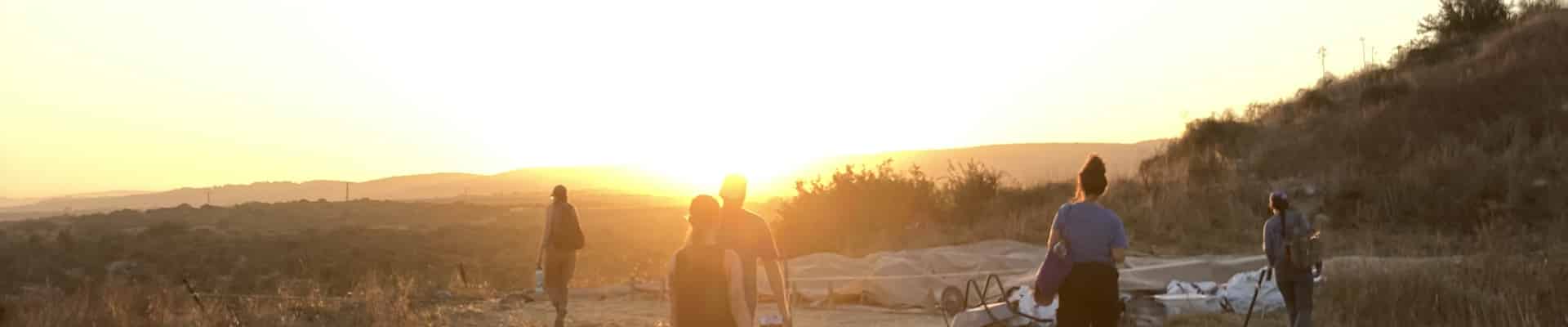
My alarm goes off at 4:50 a.m. and in a blur of confusion it takes a moment to remember that I am not in my bed in Alabama but instead am in a kibbutz in Israel. It’s day four and I have learned and practiced the exact time I need to make sure my bag is packed, coffee is made, and my water bottles are filled. In this flurry of well-practiced movement, everyone silently packs into the same car we’ve ridden in all week to arrive at Tel Burna before 6:00. The Shephelah hills roll around us as we listen to a dramatic Disney soundtrack calling forth nostalgia and lyrics long since memorized. We make the final ascent up to the site as the sun rises behind Tel Burna.
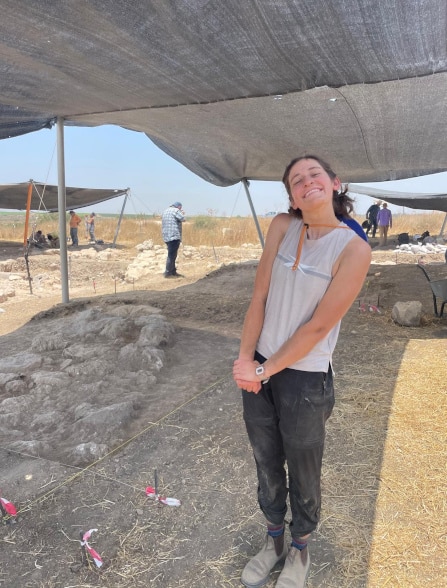
Photo of Tel Burna, Israel

It feels almost instinctual that the first order of business, before the sun even begins to beat down, is to lift and place shade cloths over the open squares. People begin to scatter to their respective spaces as the area supervisor, makes the necessary adjustments for the day and communicates with the square supervisors. Seamless rotations of who is picking and who is cleaning allow for needed water breaks as the level of ground slowly lowers. As we dig, our eyes become better at spotting the indicative sherds from the body sherds. A sharp jar goes up my elbow as I hit the stone that will be the first evidence of a wall cutting straight through our square. A loud voice breaks us from the focus, and everyone grabs their preferred breakfast items knowing what will sit well with still four more hours of digging. As I work with a patishe, I listen to the conversation of the Dig Director, area supervisor, and my square supervisor about the pattern of the walls and where we will need to open a new square. I check my watch and with not much time left to dig in the day I swiftly switch to sweeping the square starting in a corner to move cohesively with the others in my unit. What I thought was bedrock on day one I now know to be the packed dirt we will remove tomorrow. Many hands make the end of the day move faster as we organize tools, lower shade cloths, and pack up the cars. The drive back to the kibbutz involves more singing of childhood songs, laughing at inside jokes, and wistful longings of a post-dig ice cream.
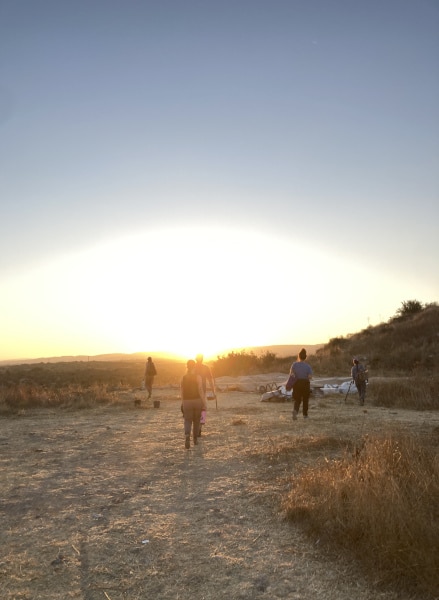
Photo of Tel Burna, Israel

We each grab a brush and bucket of pottery, and I am always drawn to a bucket that was from the square I dug. Pottery washing clumps us back together as we recall different sherds and the squares they came from. Every ear is bent towards the main table where the experts sit examining and reading pottery as the square supervisors talk through their square. They casually lift a sherd and quickly place it in its period. This leaves volunteers and students alike astounded at the practiced eye of a well-seasoned archaeologist able to date a sherd by touch and sight alone.
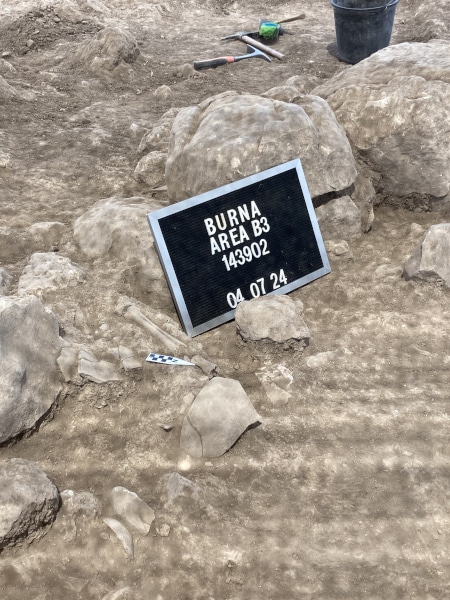
Photo of Tel Burna, Israel

Dirt washed down the drain and feeling slightly more human, we again hop in the cars and hike up a new tell with new site lines that help explain the importance of the geographical placement of Tel Burna within its valley system. The day has been long and full, and dinner can switch quickly between laughter and silent, tired camaraderie. Dirt mustaches, sweat stains, repeat outfits, and tired conversations bond a group that is half repeat diggers and brand-new strangers.
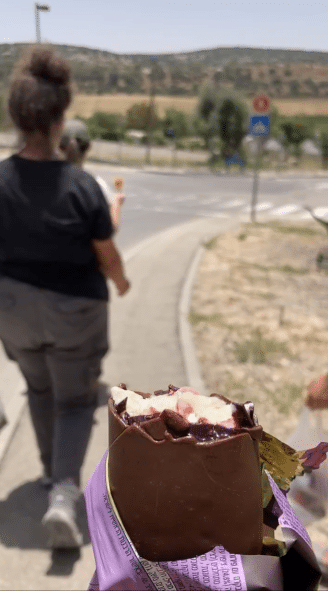
Photo of Tel Burna, Israel

To think that I knew none of this a mere four days ago is astounding. There is still much to learn and as I heard well-experienced archaeologists in the field say “we’ve never seen this before” or I think about potentially being a square supervisor in the future. A mere four days ago I did not know what a tag was, and now I have the license number memorized. And while the pick does not feel comfortable in my hand it feels more natural that it did on Monday. I knew as soon as my first day in the field was over that I wanted to spend more days, months, summers, and years becoming seasoned and trained in this profession, for each day on site becomes a day of new discoveries in the art of what becomes practiced and perfected memorized movement.
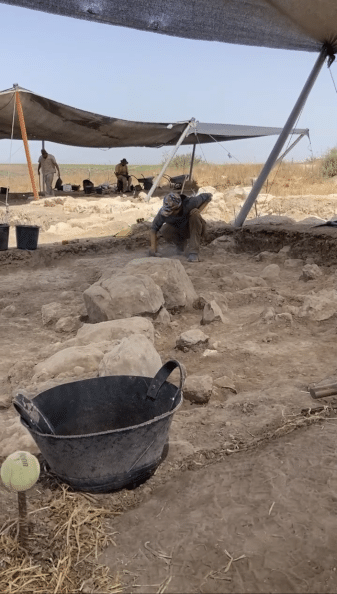
Photo of Tel Burna, Israel

Gabbi Graber is a recent M.A. graduate from Jerusalem University College studying Biblical History and Geography and will begin her Ph.D. in Ancient Near Eastern Archaeology at Lipscomb University this fall.

Want to help more students and early career archaeologists get into the field? Donate to the cause today by selecting “Fieldwork Scholarships” as your gift purpose!

BROWSE THE NEWS ARCHIVE

  • Table of Contents for Near Eastern Archaeology 89.1 (2026)
  • ECS Spring Brown Bag: Dr. Danielle Macdonald
  • March Fellowship Madness 2026: Bracket of Impact
  • Fieldwork Report: Talia Neelis

Latest Posts from @ASORResearch

asor_research

Initiating and supporting research of the history and cultures of the Near East and wider Mediterranean world.


A reminder to check out ASOR's spring book sale be
A reminder to check out ASOR's spring book sale before it ends! ASOR members (with a US mailing address) can purchase ASOR books 2+ years old at the discounted price of $10.00. Check our website for the list of titles still available.


ASOR Board Member Rick St. Hilaire was recently pu
ASOR Board Member Rick St. Hilaire was recently published in The Hill for his opinion piece on protecting Iran's cultural heritage. You can find the article link in our bio.
#Archaeology #CulturalHeritage #Iran #Preservation

Image: Investiture scene, rock relief of Sasanian king Bahram Ist at Bishapur (said Bishapur V). Iran, province of Fars. Credit: Pentocelo/Wikimedia Commons.


Reminder: the final deadline to submit paper abstr
Reminder: the final deadline to submit paper abstracts and workshop presentation proposals for the 2026 Annual Meeting is April 1! ASOR academic membership and Annual Meeting registration are required to access the submission form in the ASOR Abstract Center. Read the Call for Papers on how to submit by clicking the link in our bio: https://www.asor.org/am/2026/call-for-papers-2026


Make sure to tune in TONIGHT at 7:00 pm ET for the
Make sure to tune in TONIGHT at 7:00 pm ET for the next FOA webinar presented by Neville McFerrin: "'Lions, Rams, and Kings: Interpreting Animals at Persepolis". If you haven't already signed up, click the link in our bio to register for free: https://www.asor.org/news/2026/03/webinar-mcferrin


As March Madness hits the Sweet 16, ASOR's March F
As March Madness hits the Sweet 16, ASOR's March Fellowship Madness has reached our first goal! With over $2,000 raised so far—thus one more student receiving a fieldwork scholarship—our artifacts have advanced to the next round. Help us get to $4,000 so we can send another student on a dig this summer, and follow along to see which artifact will be crowned a winner! 
#MarchMadness #Archaeology #Scholarships


Join ASOR’s Early Career Scholars on April 3 from
Join ASOR’s Early Career Scholars on April 3 from 12:00-1:00pm ET via Zoom for a virtual Brown Bag talk on scientific publishing in archaeology, led by Dr. Danielle Macdonald, co-Editor of the Journal of Archaeological Science: Reports. This session will provide insights into the publication process including understanding peer review, manuscript preparation best practices, responding to reviewer comments, and current trends in scientific archaeological publishing such as open access models. Register for the free lecture by clicking the link (https://www.asor.org/news/2026/03/ecs-macdonald) in our bio.


Eid Mubarak to those celebrating! Our #Objectofthe
Eid Mubarak to those celebrating! Our #ObjectoftheWeek is a ceramic bowl likely from Samarqand, Uzbekistan—with "blessings, prosperity, well-being, happiness" inscribed in Arabic—dated to late 10th-11th century CE. Credit: Metropolitan Museum of Art. 40.170.15
#Archaeology #Uzbekistan #Calligraphy


Why do so many of the ancient world’s most famous
Why do so many of the ancient world’s most famous kings share the same unlikely origin story? The answer may lie in a mythical template first forged in Mesopotamia. Read the newest ANE Today, The Myth of the Servant: A New Tale of Kingship from the Ancient Near East, by clicking the link (https://anetoday.org/myth-servant-kingship/) in our bio.


Join us for the next FOA webinar on Wednesday, Mar
Join us for the next FOA webinar on Wednesday, March 25th at 7:00pm ET: "Lions, Rams, and Kings: Interpreting Animals at Persepolis," presented by Dr. Neville McFerrin. Shortly after 515 BCE, the Achaemenid king Darius I began construction on a new imperial center: Persepolis. Across the site, a vision of an inclusive empire, one that celebrates diversity as strength, emerges. This talk argues that in reliefs across the site, the designers of Persepolis turn to depictions of animal encounters as a way to demonstrate to visitors the potentials of their imperial system. Click the link (https://www.asor.org/news/2026/03/webinar-mcferrin) in our bio to read more and register!
#Persia #Achaemenid #Persepolis


As part of March Fellowship Madness, we invite you
As part of March Fellowship Madness, we invite you to step into our Bracket of Impact, where every gift advances the next generation of archaeologists. Our goal is to raise $6,000 by March 31 which would fund scholarships for three more students. 

As donations come in, we’ll update our Bracket of Impact so you can track our progress and see which of your favorite artifacts below advances to the next round. Who do you have winning?
#MarchMadness


There is still time to submit paper abstracts and
There is still time to submit paper abstracts and workshop presentation proposals for the 2026 Annual Meeting! Abstracts of 250 words may be submitted according to the Call for Papers until April 1 (final deadline) with a $25 late fee. ASOR academic membership and Annual Meeting registration are required to access the submission form in the ASOR Abstract Center. #ASOR26


Talia Neelis, a P.E. MacAllister Fieldwork Scholar
Talia Neelis, a P.E. MacAllister Fieldwork Scholarship Recipient, excavated at Kalavasos-Ayios Dhimitrios in Cyprus in 2025. A PhD student at UCLA, Talia returned to the Late Bronze Age site as a trench supervisor. Read her fieldwork report here: https://www.asor.org/news/2026/03/fieldwork-report-neelis
#Cyprus #BronzeAge


ASOR is offering Tigris Travel Grants covering the
ASOR is offering Tigris Travel Grants covering the cost of travel and accommodation for the 2026 Annual Meeting in Chicago. Scholars must be citizens of Iraq, traveling from Iraq to the Annual Meeting, and have an accepted paper on the Annual Meeting Academic Program. Preference is given to scholars who have not participated in an in-person Annual Meeting before. Learn more here by clicking the link (https://www.asor.org/fellowships/annual-meeting-scholarships/student-travel-grants/) in our bio.


March is here — and so is ASOR’s March Fellowship
March is here — and so is ASOR’s March Fellowship Madness! 

Our goal is to raise $6,000 by March 31 which would fund scholarships for three more students. 100% of your gift will go directly toward funding student fieldwork participation. Every gift moves us forward, and every donor becomes part of a winning team by supporting emerging scholars. 

Please support archaeology’s next generation by making a gift online and selecting “Fieldwork Scholarships” as the designation for your gift!


Don't forget to tune in TOMORROW at 7:00 pm ET for
Don't forget to tune in TOMORROW at 7:00 pm ET for the next FOA webinar presented by Dr. Müge Durusu-Tanrıöver: "Anatolian Futures: Archaeologies of Anatolia within the Larger Mediterranean". If you haven't already signed up, click the link (https://buff.ly/NHDHKof) in our bio to register.


Our #ObjectoftheWeek: A shallow faience bowl from
Our #ObjectoftheWeek: A shallow faience bowl from New Kingdom Egypt—decorated with a double-sistrum with Hathor heads and blue lotus flowers—dated to ca. 1539-1292 BCE. Credit: Museo Egizio, Turin, Cat. 3368. CC0 1.0.
#Archaeology #Egypt #Hathor


The Amman Citadel with its prominent ruins is the
The Amman Citadel with its prominent ruins is the most striking landmark in the city centre. Since 2024, the Amman Archaeological Project has been investigating the site’s formative period to better understand its history. Read the newest ANE Today by clicking the link (https://anetoday.org/royal-capital-ammon/) in our bio.
#Jordan #Amman

📸 : ©Amman Archaeological Project (Münster University, DAI, Felix Wolter)


ASOR is pleased to be holding a book sale for publ
ASOR is pleased to be holding a book sale for publications 2+ years old this March. All proceeds from book sales will go to supporting membership scholarships! ASOR members (with a mailing address in the USA) can purchase copies of available books for only $10 through March 31, 2026. Click the link (https://www.asor.org/news/2026/03/spring-book-sale) in our bio to take a look at the list of available titles.


In 2025, Hanna Erftenbeck and Natalia Handziuk rec
In 2025, Hanna Erftenbeck and Natalia Handziuk received a Joe D. Seger Project Grant for research at Tall al-Handaquq South in Jordan. A systematic survey documented Early Bronze Age remains, including a dolmen, and areas impacted by looting—helping to clarify the site’s extent, occupational intensity, and preservation challenges. Read their grant report by clicking the link (https://www.asor.org/news/2026/02/seger-grant-report-al-handaquq) in our bio.
#Jordan #BronzeAge


Join us for the next FOA webinar on Wednesday, Mar
Join us for the next FOA webinar on Wednesday, March 11th at 7:00pm ET: "Anatolian Futures: Archaeologies of Anatolia within the Larger Mediterranean," presented by Dr. Müge Durusu-Tanrıöver. Posing the questions of how we can define Anatolia and what its archaeologies can look like in the later twenty-first century CE, Dr. Durusu-Tanrıöver makes the case for a connected Anatolian archaeology that can both claim its multiple constituents and contribute to the larger debates in Mediterranean archaeology. Click the link (https://www.asor.org/news/2026/02/webinar-durusu-tanriover) in our bio to register.
#Anatolia


Instagram

Stay updated with the latest insights, photos, and news by following us on Instagram!

Follow Us on Instagram

American Society of Overseas Research
The James F. Strange Center
209 Commerce Street
Alexandria, VA 22314

E-mail: info@asor.org

© 2025 ASOR
All rights reserved.
Images licensed under a Creative Commons Attribution-NonCommercial-ShareAlike 4.0 International License

Contact Us
Membership
Give
Friends of ASOR
ASOR Cultural Heritage Initiatives
Terms of Use
News

Please follow & like us :)
Facebook
YouTube
LinkedIn