
SHARE
[/vc_column_text][mk_image src=”http://www.asortest.org/wp-content/uploads/2017/01/social-fb-icon4.jpg” image_width=”42″ image_height=”42″ hover=”false” custom_url=”https://www.facebook.com/ASOResearch/” margin_bottom=”0″][mk_image src=”http://www.asortest.org/wp-content/uploads/2017/01/social-tw-icon4.jpg” image_width=”42″ image_height=”42″ hover=”false” custom_url=”https://twitter.com/ASOResearch?ref_src=twsrc%5Egoogle%7Ctwcamp%5Eserp%7Ctwgr%5Eauthor” margin_bottom=”0″][mk_image src=”http://www.asortest.org/wp-content/uploads/2017/01/social-in-icon4.jpg” image_width=”42″ image_height=”42″ hover=”false” custom_url=”https://www.linkedin.com/company/american-schools-of-oriental-research” margin_bottom=”0″][mk_image src=”http://www.asortest.org/wp-content/uploads/2017/01/social-ml-icon_7.jpg” image_width=”42″ image_height=”42″ hover=”false” custom_url=”mailto:info@asor.org” margin_bottom=”0″][mk_image src=”http://www.asortest.org/wp-content/uploads/2017/01/blog-icon3.jpg” image_width=”42″ image_height=”42″ hover=”false” custom_url=”https://asor.org/blog” margin_bottom=”0″][/vc_column][vc_column border_color=”rgba(255,255,255,0.01)” width=”1/6″ css=”.vc_custom_1490365673198{margin-right: 20px !important;border-left-width: 2px !important;padding-right: 20px !important;padding-left: 20px !important;border-left-color: #99422f !important;}” el_class=”sticky-sidenav”][mk_divider divider_color=”rgba(255,255,255,0.01)” thickness=”1″ margin_top=”3″ margin_bottom=”3″][vc_widget_sidebar sidebar_id=”ca-sidebar-60550″ el_class=”.widget { overflow: hidden; margin-bottom: 0; }”][/vc_column][vc_column border_color=”rgba(170,170,170,0.01)” width=”8/12″ css=”.vc_custom_1490225606852{margin-right: 10px !important;margin-bottom: 30px !important;border-right-width: 2px !important;border-bottom-width: 2px !important;padding-top: 30px !important;padding-right: 30px !important;padding-left: 20px !important;background-color: #ffffff !important;border-right-color: rgba(227,228,228,0.75) !important;border-bottom-color: rgba(227,228,228,0.75) !important;}”][vc_row_inner][vc_column_inner width=”1/4″ css=”.vc_custom_1590517099925{margin-right: 20px !important;}”][vc_single_image image=”61117″ img_size=”full”][/vc_column_inner][vc_column_inner width=”3/4″][vc_wp_text]ONLINE RESOURCES
ASOR Photo Collections
[/vc_wp_text][/vc_column_inner][/vc_row_inner][mk_divider thickness=”1″ margin_top=”10″ margin_bottom=”10″][vc_row_inner][vc_column_inner width=”2/3″ css=”.vc_custom_1590550959746{padding-top: 30px !important;padding-right: 40px !important;}”][vc_single_image image=”70678″ img_size=”600 x 501″ onclick=”img_link_large” img_link_target=”_blank”][mk_padding_divider size=”10″][vc_wp_text]Photo ID: PID000591 – Download Image
[/vc_wp_text][/vc_column_inner][vc_column_inner width=”1/3″][vc_wp_text]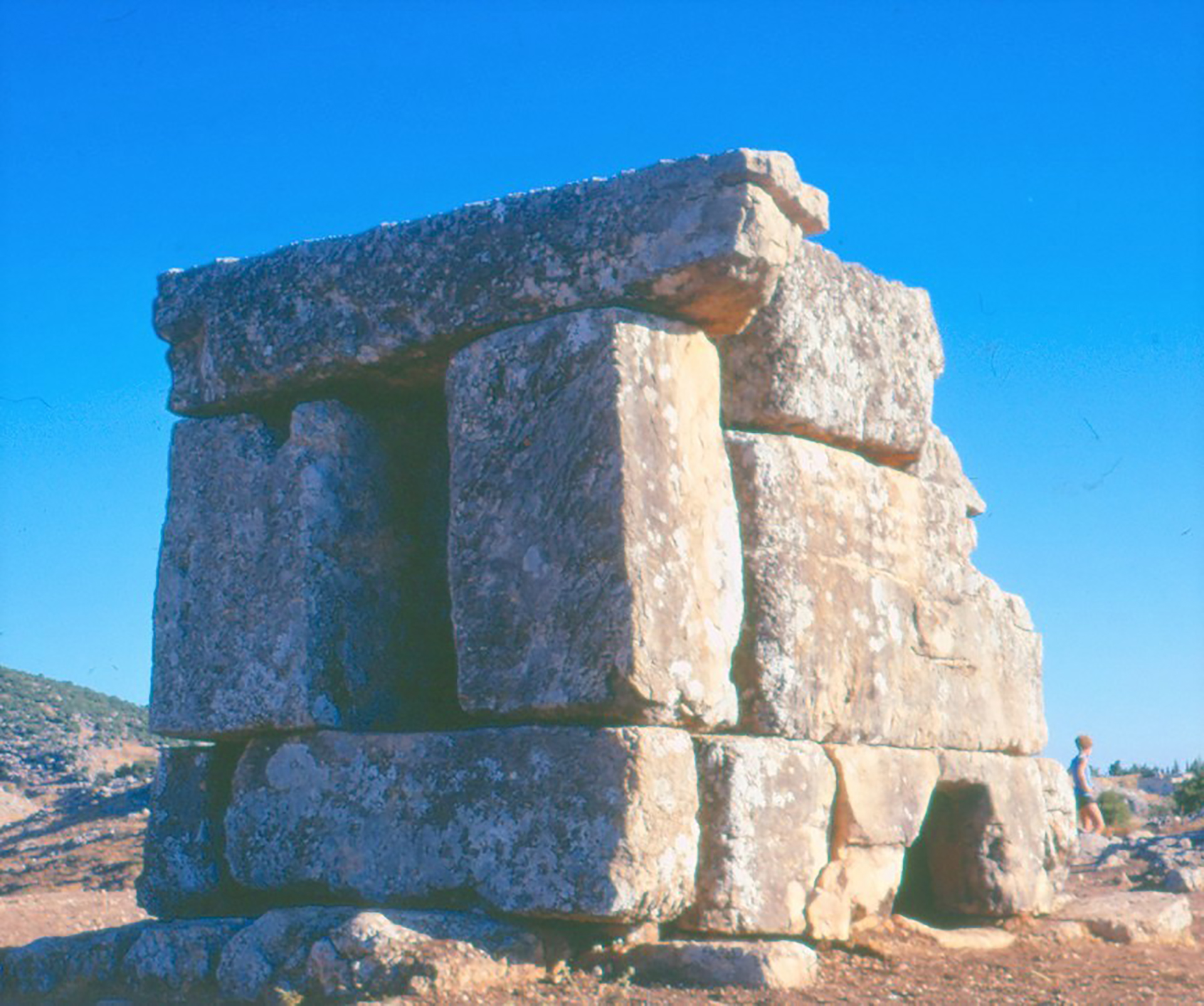
Khirbet Shema’, Israel: Tomb Monument
Country: Israel
Location: Khirbet Shema’
Area: Highest point of ancient village
Description: Tomb monument/ mausoleum—resembles Phoenician monuments in southern Lebanon
Category: Archaeological Feature
Type: Tomb
Period: Late Roman – Early Byzantine
Date: 280 – 634 CE
Current Location: Photo in Duke University archives
Credit: From Carol and Eric Meyers, photo taken by Hendrik van Dijk, 1970
This photo can be used only for teaching and lecturing. Any use by others for publication (scholarly or commercial) requires written permission from Carol or Eric Meyers.
[/vc_wp_text][/vc_column_inner][/vc_row_inner][mk_divider thickness=”1″ margin_top=”30″ margin_bottom=”30″][vc_row_inner][vc_column_inner css=”.vc_custom_1590517110399{padding-right: 20px !important;padding-bottom: 20px !important;}”][vc_widget_sidebar sidebar_id=”ca-sidebar-64142″][/vc_column_inner][/vc_row_inner][mk_divider thickness=”1″ margin_top=”30″][vc_widget_sidebar sidebar_id=”ca-sidebar-62968″][mk_padding_divider size=”20″][/vc_column][/vc_row][vc_row][vc_column][vc_column_text] [/vc_column_text][/vc_column][/vc_row]