Growing through the Dust: Skills, Challenges, and Community in the Mosul Dam Reservoir
Anna Taibi, 2025 Strange/Midkiff Families Fellowship Recipient
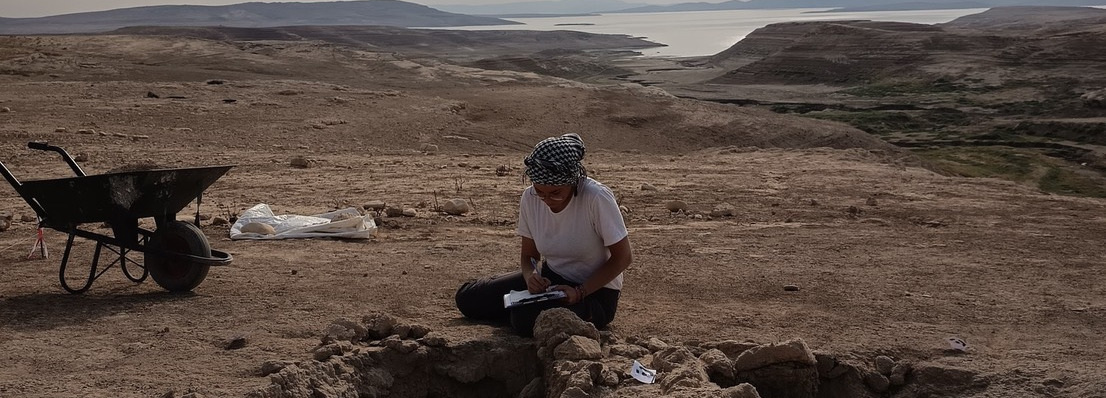
The season that just concluded has definitely been one of the most intense of my (still short) fieldwork experience! In October and November 2025, thanks to ASOR’s scholarship for fieldwork participation, I took part in ReLand’s 2025 campaign in the Mosul Dam Reservoir, KRI. The project’s goal is twofold: monitoring threatened sites located on Mosul Lake’s shore and, during cyclical phases of re-emergence, conducting emergency excavations to document settlements and their interaction with the surrounding landscape.
This year, due to an exceptional drought, hundreds of sites have emerged from the lake’s water, and, sadly, as a remote survey had already highlighted, these millennia-old features have immediately been targeted by looters. As a project member, during the first three weeks of the campaign, I helped record evidence of this kind of damage during the field survey, documenting different types of looting traces.
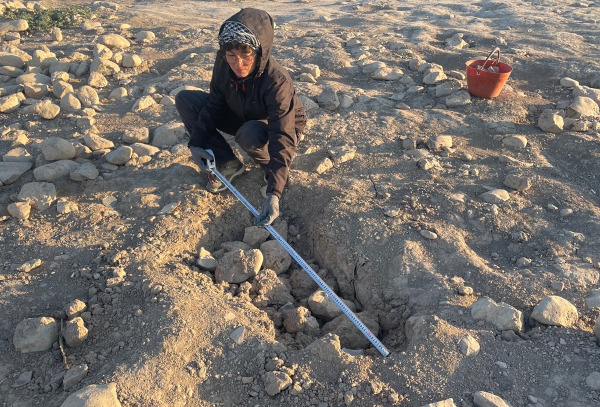
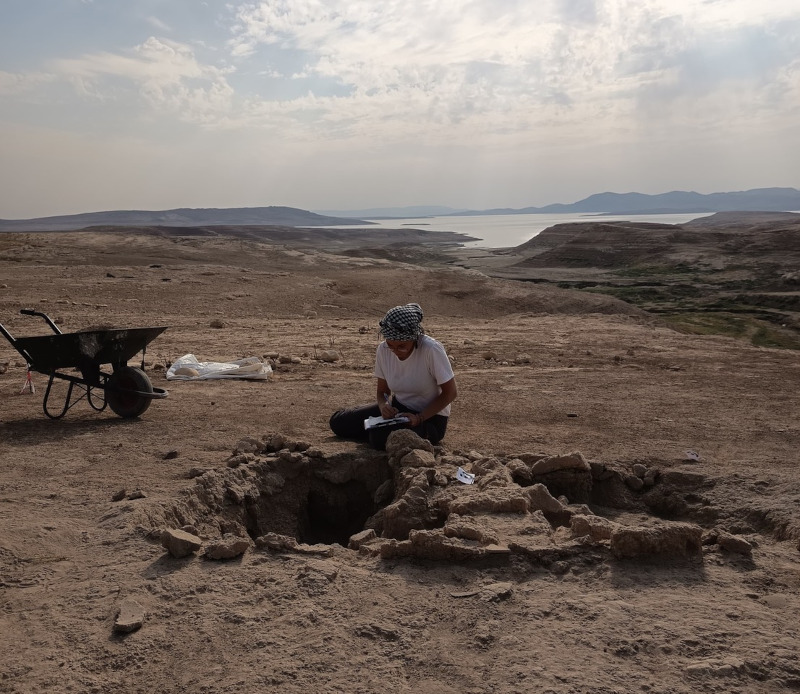
In the second part of the campaign, I worked at the site of Tell Gombass, a small Late Chalcolithic village, once located on a spur of a wadi, not far from the Tigris itself. Here, for the second year, emergency excavations were carried out. In particular, I was appointed as trench supervisor to excavate an ovoidal mud-brick (pottery?) kiln that just re-emerged. On this occasion, I had to challenge myself to lead a small team, ensuring a good quality of the documentation. But that’s not all: through the patient and expert guidance of our topographer, I managed to develop new skills in the topographical field and refine methodologies tailored to the diverse needs of the archaeological mission.
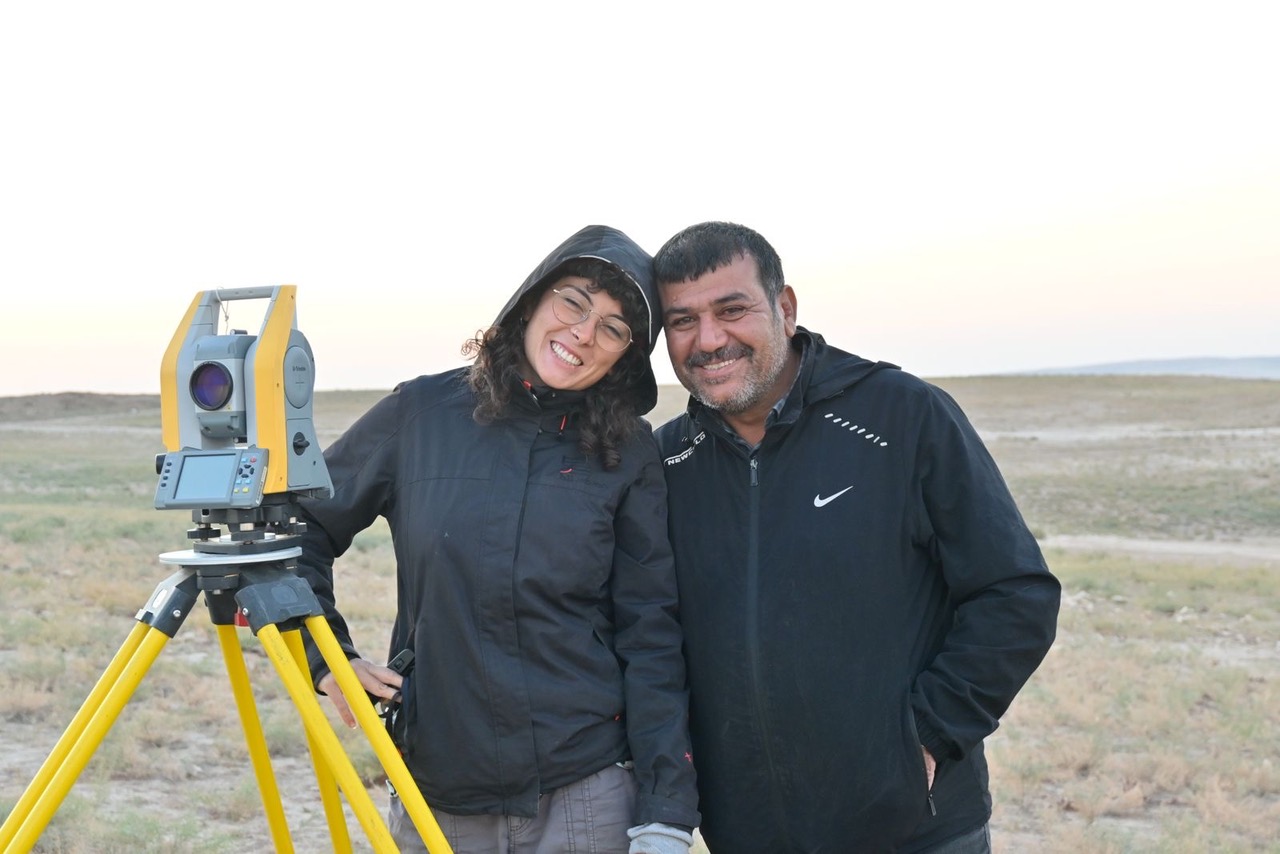
Previous skills have helped me through this international campaign: I’m getting better, but I still haven’t learnt Arabic nor Kurdish very well, so never has my Deutsches Sprachdiplom der Kultursministerkonferenz (DSD) been so helpful as to interact with Tarek, our chief worker from Syria, who spent 20 years excavating with German teams in Western Asia. His long field experience and knowledge had been one of the precious elements of the excavation campaign: although we worked in two different areas, we always kept up with each other’s work, and I’ve taken his generous advice to heart. This experience has definitely allowed me to work closely with Kurdish team members, fostering mutual learning and shared expertise while contributing to more inclusive and sustainable heritage practices.
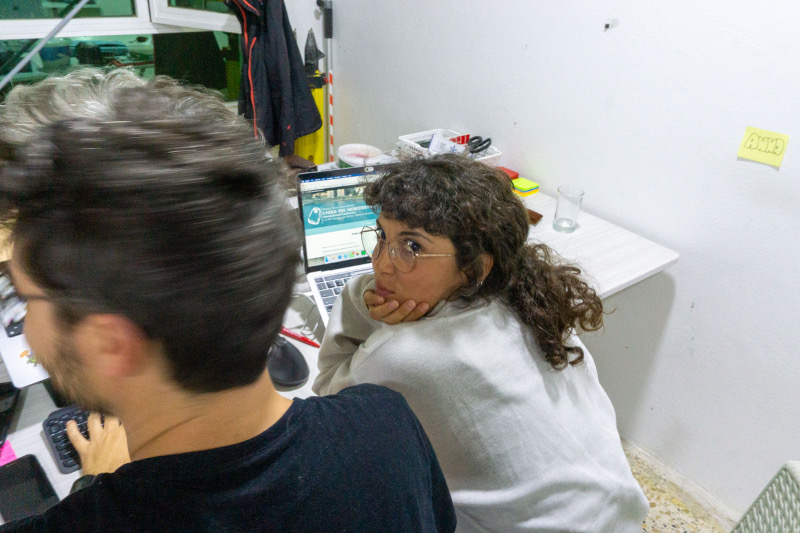
In the afternoons, I took care of the small finds documentation, getting the chance to measure, photograph, and document different types of artefacts, architectural elements, and ornaments that humans have produced in the Duhok region through millennia.
Last but not least, during my last week in KRI, I helped organise a tour of the excavation for Gombass’ elementary school pupils and students from the University of Duhok. It has been a precious moment to raise awareness among local populations about the cultural and historical significance of their landscape, and for my education as an archaeologist who wants to put ethical and post-colonial theories in practice: I believe that our work means nothing if not immediately given back to the people this heritagescape directly belongs to. This outreach experience has been particularly meaningful for me, as I have a strong interest in community organization, equitable governance, and cultural heritage preservation. After all, it is one of the main objectives of this project to preserve the memory of those communities that lived along the riverbanks, and the millennia-old settlements they inhabited, ensuring that their histories are acknowledged and valued.
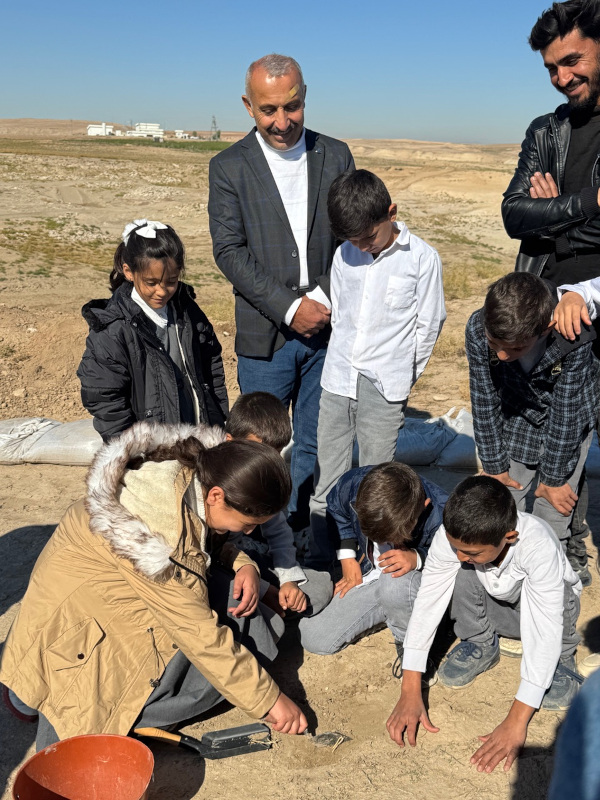
Last but not least, during my last week in KRI, I helped organise a tour of the excavation for Gombass’ elementary school pupils and students from the University of Duhok. It has been a precious moment to raise awareness among local populations about the cultural and historical significance of their landscape, and for my education as an archaeologist who wants to put ethical and post-colonial theories in practice: I believe that our work means nothing if not immediately given back to the people this heritagescape directly belongs to. This outreach experience has been particularly meaningful for me, as I have a strong interest in community organization, equitable governance, and cultural heritage preservation. After all, it is one of the main objectives of this project to preserve the memory of those communities that lived along the riverbanks, and the millennia-old settlements they inhabited, ensuring that their histories are acknowledged and valued.
I feel that participating in this long campaign of ReLand’s project has had a significant impact on my development as an archaeologist and as a future researcher. From survey skills to new and exciting responsibilities as a field supervisor, up until the possibility of developing and practicing non-colonial approaches to field archaeology, this campaign has given me far beyond the expertise luggage I expected to get back home with. I’m grateful for having built new tools and learnt methodologies, and I can’t wait for upcoming chances of professional and personal growth.
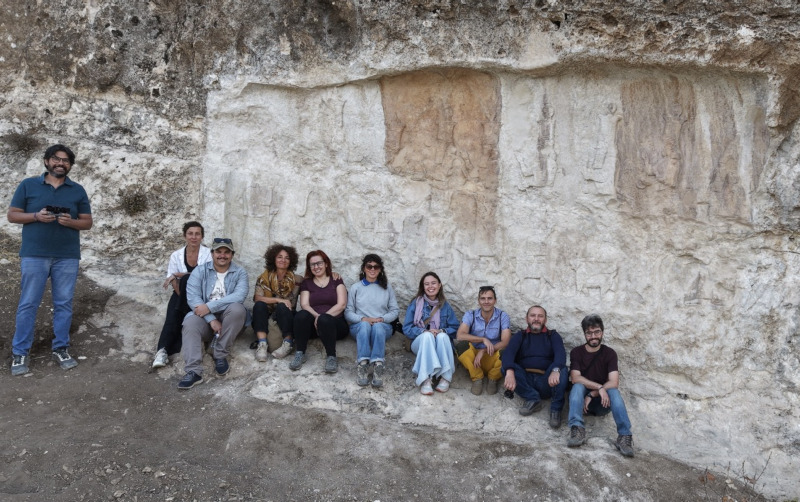
Anna Taibi is a native of Palermo, Sicily, where she is working on her Master’s degree in Mediterranean and West Asian archaeology. She completed a BA in Cultural Heritage at the University of Palermo in 2023 with a cum laude dissertation on post- and decolonial approaches in archaeology. She is now delving into her commitment to community-based fieldwork while approaching new interests, such as the archaeology of production. She has participated in surveys and excavations in the Kurdistan Region of Iraq (ReLand project) and in Sicily, where she’s serving as a trench supervisor at the Phoenician-Punic site of Motya since 2024.
Want to help more students and early career archaeologists get into the field? Donate to the cause today by selecting “Fieldwork Scholarships” as your gift purpose!
