Hannah Borotsik, 2025 P. E. MacAllister Fellowship Recipient
Athens holds a very special place in my heart, and it has become one of my favourite cities in the world. I have met some of my best friends and have had some of the coolest experiences of my life here. I was so excited to be able to return to Greece for a fourth summer and for my third summer working at the Athenian Agora excavations with the American School of Classical Studies at Athens. I started in 2023 as a volunteer, and then in 2024, I returned as an assistant supervisor assigned to work in the apotheke. This past summer, I had the privilege of moving up to the role of apotheke supervisor. I never thought I would get the chance to say that I was a supervisor at the Athenian Agora Excavations, but this was the summer when I got the opportunity of a lifetime.

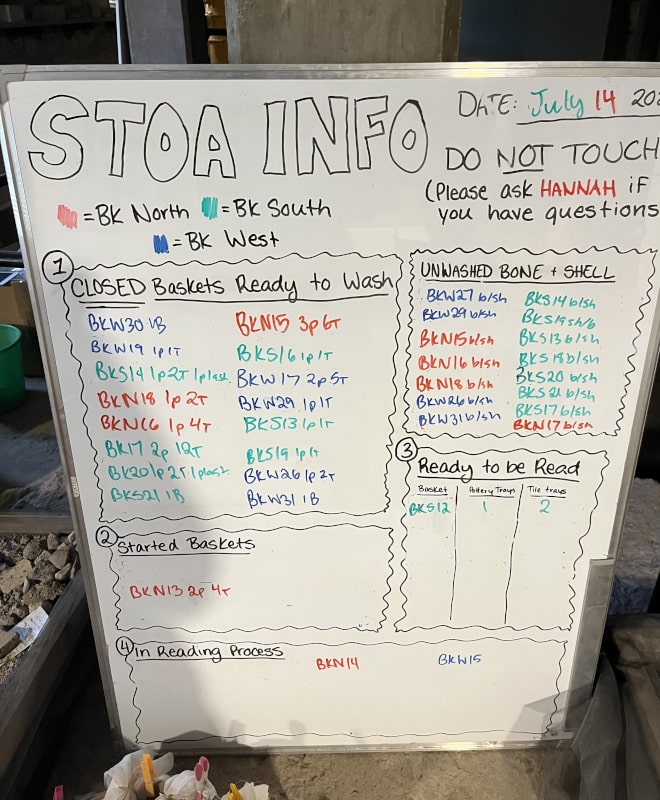
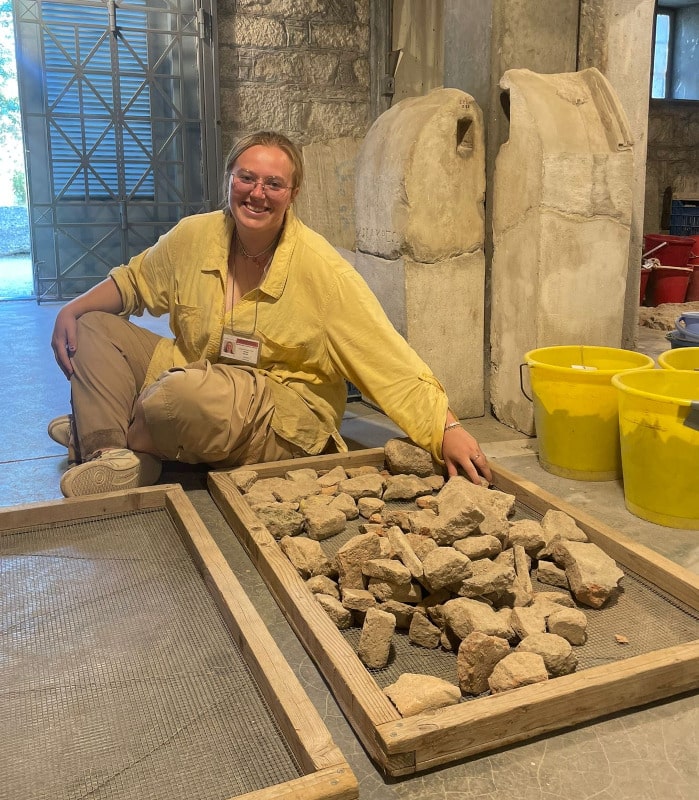
My position involved managing the material coming into the apotheke and supervising all the volunteers who were assigned to flotation and pottery/bone/shell/tile wash. At the beginning of the season, my main goal was to make the processing of material coming to the apotheke as smooth as possible for everyone involved. I established different organizational systems, including having a large whiteboard, inboxes, labels, and designated spaces for different workflows. Since I worked with many different areas and members of the project on a daily basis, I thought a brief example of a “day in the life” for me at the Athenian Agora would be the best way to share how I spent my summer:


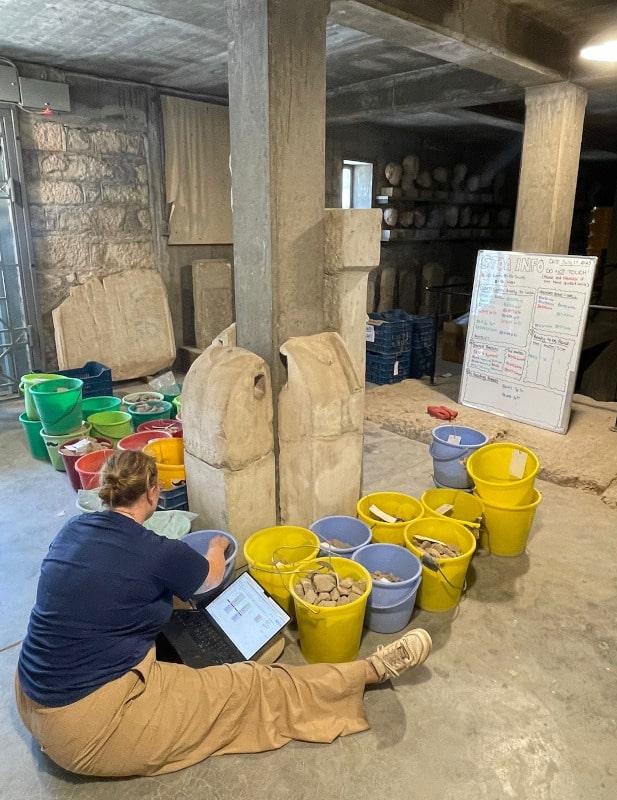
Next, I would decide on which basket, or more often than not, baskets of pottery would be washed for the day. This depended on many different factors, including the number of volunteers assigned to wash, the number of available trays, and the number of buckets of pottery and tile belonging to a basket. The largest number of buckets in one basket from this season was three full buckets of pottery and thirteen tile buckets (this one took a while to wash). At this point, the volunteers assigned to the pottery wash area would arrive from the site for the day, and after bringing everything outside, I would divide the group into flotation and pottery wash.
Besides training and helping volunteers wash material, I had many responsibilities that I took care of during our work hours. I had to make sure that the dried ceramics, including the tile, were ready for our pottery specialists to analyse and count, weigh, and photograph. In some cases, I assisted with these procedures (for example, choosing the tile samples). I bagged and weighed dried bone and shell, after which I recorded the information into our iDig system. I made sure that any material that was ready for the trench supervisors to pack or things that needed to be made a special finds were in their respective inboxes. I wrote tags for trays inside and outside. I organized the baskets that were in queue to be washed. I strategized the best way to tackle the large backlog of tile, once larger baskets began to appear. At the end of the day, I facilitated the clean-up and organization of the apotheke, which mostly consisted of me giving the volunteers directions on what order I wanted each tray to go in and where I wanted them to go in the basement (and they did a great job every day!). These are just a few of my daily responsibilities, since every day came with new opportunities to improve workflows. After work, I sometimes stayed later to finish organizing and prepare for the following day or I worked on the procedural manual for the apotheke. At the end of most days, I went home and took a nap. One of the most important aspects of my job was to be the point of communication between our three open trenches and those working in the apotheke. As a result, my job consisted of many moving parts and more often than not, learning something new every day.
I was grateful to return to the Agora for my third summer and, although I was nervous to hold a supervisor position at such a well-known dig with only a few years of experience, my fellow supervisors, field director, and director were wonderful role models and helped me to become confident in my position. I learned so much more about being a leader and finding my leadership style, and I got more in-depth training on the many procedures that take place on excavation after the material comes out of the ground. All of these lessons have made me a better archaeologist. I am so thankful for the trust that was placed in me, and I will never forget my first-ever summer as a supervisor.