UNEARTHING THE PAST SINCE 1900
  • BECOME A MEMBER
  • RENEW
  • GIVE NOW
  • SEARCH
  • ONLINE PORTAL
  • American Society of Overseas Research (ASOR)American Society of Overseas Research (ASOR)
  • ABOUT
    • WELCOME FROM ASOR OFFICERS
    • HISTORY OF ASOR
    • MISSION, BYLAWS, & STRATEGIC PLAN
    • Board of Trustees
    • COMMITTEES
    • POLICIES
    • FINANCIAL DOCUMENTS
    • MEDIA RELEASES
    • CONTACT US
  • CULTURAL
    HERITAGE
    • ABOUT CULTURAL HERITAGE INITIATIVES
    • UPDATES
    • PAST GRANTS
    • TUTORIALS
    • Who We Are
  • ANNUAL
    MEETING
    • REGISTRATION
    • HOTEL RESERVATIONS
    • ANNUAL MEETING SCHEDULES
    • SPONSOR & EXHIBIT
    • ASOR Online Library
    • HONORS & AWARDS
    • ANNUAL MEETING SCHOLARSHIPS
    • PAST & FUTURE ANNUAL MEETINGS
  • MEMBERSHIP
    & RESOURCES
    • INDIVIDUAL MEMBERSHIPS
    • INSTITUTIONAL MEMBERSHIPS
    • NEWS@ASOR
    • PAST ASOR NEWS, MONTH BY MONTH
    • AFFILIATED PROJECTS
    • AFFILIATED RESEARCH CENTERS
    • ARCHIVES
    • ONLINE RESOURCES
      • PHOTO COLLECTION
    • EARLY CAREER MEMBER RESOURCES
  • FELLOWSHIPS
    & GRANTS
    • SCHOLARSHIPS FOR FIELDWORK PARTICIPATION
    • GRANTS FOR ARCHAEOLOGICAL PROJECTS
    • RESEARCH FELLOWSHIPS FOR MEMBERS
    • MEMBERSHIP & ANNUAL MEETING SCHOLARSHIPS
    • ASOR-AFFILIATED RESEARCH CENTERS FELLOWSHIPS
    • OTHER FELLOWSHIP PROGRAMS
  • PUBLICATIONS
    • BOOK SERIES & MONOGRAPHS
    • BULLETIN OF ASOR
    • JOURNAL OF CUNEIFORM STUDIES
    • MAARAV
    • NEAR EASTERN ARCHAEOLOGY
    • THE ANCIENT NEAR EAST TODAY
    • News@ASOR
    • LEVANTINE CERAMICS PROJECT
  • FRIENDS
    OF ASOR
    • Webinars
    • TOURS
    • THE ANCIENT NEAR EAST TODAY
    • ASOR ONLINE LIBRARY
  • Donate
    • FY25 HONOR ROLL OF DONORS
    • LIFETIME HONOR ROLL OF DONORS
    • ASOR LEGACY CIRCLE
    • WAYS TO DONATE

 SHARE


NEWS@ASOR E-NEWSLETTER

ANCIENT NEAR EAST TODAY E-NEWSLETTER

PAST ASOR NEWS, MONTH BY MONTH

ASOR LEGACY CIRCLE MEMBERS

LIFETIME HONOR ROLL OF DONORS

FY25 HONOR ROLL OF DONORS

ASOR ANNUAL MEETING

Missing Ritual Objects from the Nelson Glueck Excavations of Kheleifeh in the ASOR Archives at the American Heritage Center

Erin Darby, University of Tennessee, 2025 Study of Collections Fellowship Recipient

Paul Flesher, American Heritage Center

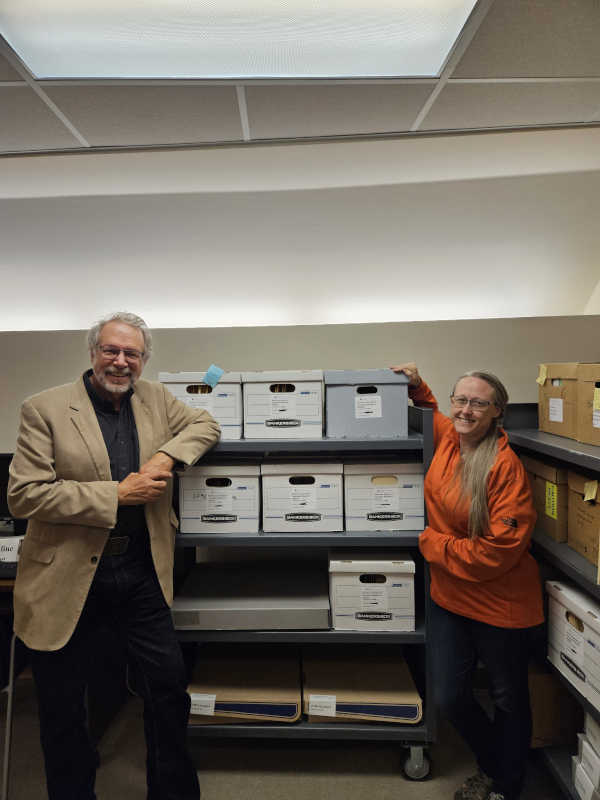
You never know where in the world Near Eastern archaeology will take you! Erin Darby’s 2025 ASOR Study of Collections Fellowship took her to Laramie, Wyoming where the American Heritage Center (AHC) houses the American Society of Overseas Research (ASOR) Archives (1900-2023) at the University of Wyoming. Since 2022, the AHC has been the caretaker of this important repository that includes not only documents associated with the history of ASOR but also several collections of records from American-led excavations from the early twentieth century. In her particular case, Erin was on the hunt for unpublished religious artifacts from the Nelson Glueck excavations at Tell el-Kheleifeh.

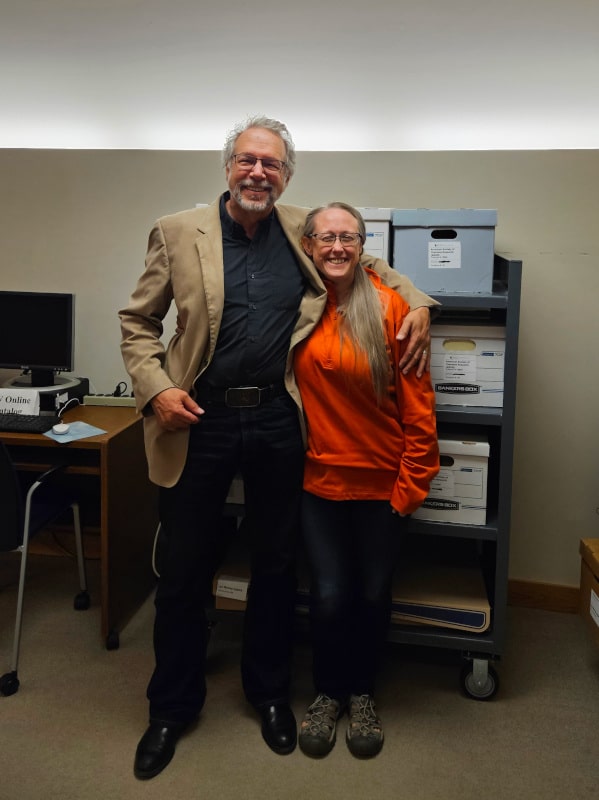
Paul and Erin with the Tell el-Kheleifeh records from the ASOR Archives in the AHC.

Kheleifeh plays a prominent role in attempts to understand the geopolitical organization of southern Israel and Jordan, particularly in the Iron IIB-C. Since its excavation in 1938-1940, scholars have been interested in whether the site was controlled by the Israelites, Judahites, Edomites, unaffiliated tribal communities, or the Neo-Assyrian and Neo-Babylonian Empires. When it comes to the study of cultic artifacts, however, Kheleifeh is most notable for its absence from the conversation.  With the support of AHC staff this past June, Erin was able to excavate a number of unpublished artifacts from the archive and create a database of cultic remains from the site. Owing to the importance of the collection, the University of Tennessee and the AHC are teaming up this coming year to digitize the site’s artifact registration lists so that scholars from anywhere in the world who are interested in the objects from Kheleifeh will be able to identify the relevant records in the AHC holdings.

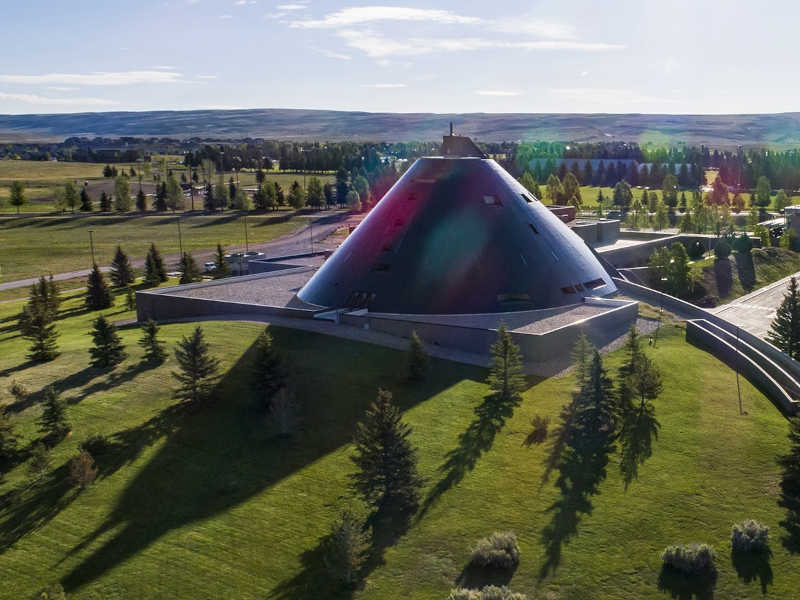
The American Heritage Center at the University of Wyoming.

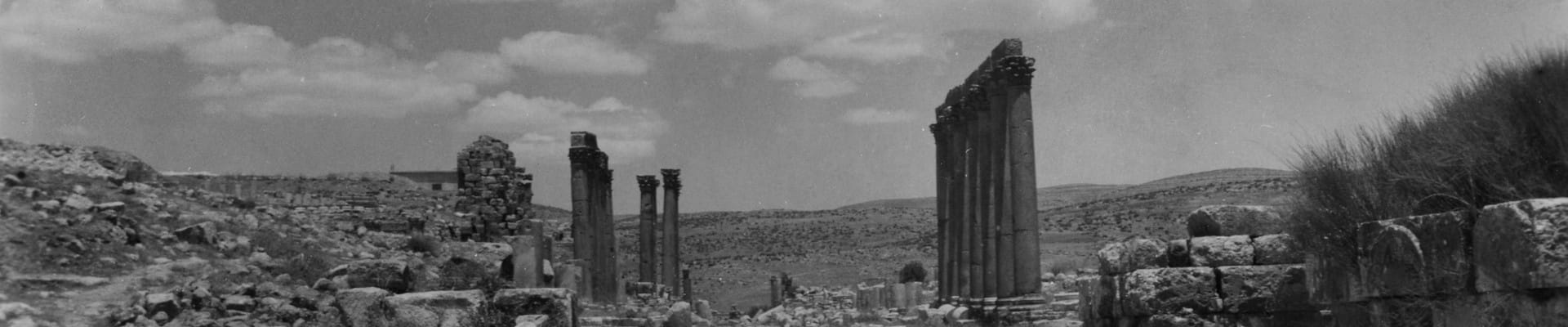
Tell el-Kheleifah is only one of several sets of excavation records in the AHC’s ASOR archives. The collection also holds materials from: Khirbet et Tannur, Dibon, Issawiya, Jerash, Nippur, Beth-Zur and Carthage, as well as small holdings of records from Jerash, Lehav and Tell Hesban, and others. (In general, note that artifacts, as opposed to records, are held by Harvard University’s Museum of the Ancient Near East.)  There are several collections of Middle East photographs, with the earliest from 1875. Other sections of the collection hold records of past ASOR presidents, including those of W.F. Albright, Nelson Glueck, G. Ernest Wright, Carl Kraeling, Paul Lapp and William Dever. And of course there are ASOR administrative materials from across the decades, including records of ASOR committees and awarded grants. Overall, the American Society of Overseas Research collection holds 180 cubic feet of materials plus 155 GB of digital copies.

The American Heritage Center is an excellent home for the ASOR collection. Even though it is one of the ten largest non-government public archives in the USA and so is large enough to have the resources to look after the collection, it is small enough to care about all its collections and to look after each patron personally. The AHC has a number of services that enable scholars to access the ASOR collection. Laramie, Wyoming, the home of the American Heritage Center, is less than a three-hour drive north of Denver, or just 30 minutes by plane. Start planning a trip by consulting the finding aid for the ASOR collection, readily available online, and then request materials ahead of time from the Reference Services Department (AHCref@uwyo.edu, 307-766-3756).

Collection materials can also be accessed remotely. The Center’s Reference Services department can easily be contacted to answer remote inquiries. (Recently, we looked up old municipal records for the Albright Institute in Jerusalem.) The AHC has a large digitization lab and can digitize collection materials at cost. Finally, the Center has the RRAD program (Remote Research and Discovery) that matches a researcher with a research assistant via Zoom and document camera for a nominal cost. This enables researchers to look through collection materials remotely and identify materials they wish to study. These can then be digitized for more careful examination. The AHC looks forward to helping archaeologists and other scholars from around the world to research its historic ASOR collection.
The URL for the ASOR collection finding aid is: https://archiveswest.orbiscascade.org/ark:80444/xv346099?q=ASOR#overview.

Read more about applying for a 2026 Study of Collections Fellowship here. 

BROWSE THE NEWS ARCHIVE

  • Fieldwork Report: Atakan Atabas
  • FOA Webinar: Kevin Fisher
  • Table of Contents for Near Eastern Archaeology 89.1 (2026)
  • ECS Spring Brown Bag: Dr. Danielle Macdonald

Latest Posts from @ASORResearch

asor_research

Initiating and supporting research of the history and cultures of the Near East and wider Mediterranean world.


The cuneiform sources of ancient Mesopotamian hist
The cuneiform sources of ancient Mesopotamian history are abundant.  They are nevertheless incomplete, having been filtered by ancient processes of preservation and destruction, shaped by chance discoveries and scientific practices. Read the newest ANE Today by clicking the link in our bio: https://anetoday.org/cuneiform-written-artefacts/
📸: © Cécile Michel


Happy Passover! Our #ObjectoftheWeek is a hexagona
Happy Passover! Our #ObjectoftheWeek is a hexagonal glass pilgrim's jar from ca. 578-636 CE, with Jewish symbols such as the menorah on it. Such jars were often made for pilgrims visiting holy sites or for use in burial rituals. Credit: Metropolitan Museum of Art. 1972.118.180
#Archaeology #Byzantine #Passover


The newest issue of Near East Archaeology includes
The newest issue of Near East Archaeology includes articles like: Evolution, Resilience, and Collapse of Prehistoric Settlements in the Bavanat River Basin, Southern Iran; Script over Sealings: Proto-Elamite Bureaucratic Innovation at Tepe Sofalin, Iran; Intramural Nonadult Burials at Tell Muhammad (in Baghdad) during the Old Babylonian Period (1894–1595 BCE): A Preliminary Assessment of Legacy Data; Khirbet el-‘Eika: A Hellenistic Estate in the Lower Galilee; An Example of the Architectural Integrity of Historical Bridges: The Agora Bridge from the Period of Justinian I in Dara (Anastasiopolis); and more. Check out the Table of Contents here: https://www.asor.org/news/2026/03/nea89.1-toc/


With over $4,000 raised, ASOR's March Fellowship M
With over $4,000 raised, ASOR's March Fellowship Madness has reached our final push. Help us get to $6,000 so 3 students can receive dig scholarships this summer—and stay tuned to see which artifact will emerge victorious! https://buff.ly/XPKQcGL
#MarchMadness


A reminder to check out ASOR's spring book sale be
A reminder to check out ASOR's spring book sale before it ends! ASOR members (with a US mailing address) can purchase ASOR books 2+ years old at the discounted price of $10.00. Check our website for the list of titles still available.


ASOR Board Member Rick St. Hilaire was recently pu
ASOR Board Member Rick St. Hilaire was recently published in The Hill for his opinion piece on protecting Iran's cultural heritage. You can find the article link in our bio.
#Archaeology #CulturalHeritage #Iran #Preservation

Image: Investiture scene, rock relief of Sasanian king Bahram Ist at Bishapur (said Bishapur V). Iran, province of Fars. Credit: Pentocelo/Wikimedia Commons.


Reminder: the final deadline to submit paper abstr
Reminder: the final deadline to submit paper abstracts and workshop presentation proposals for the 2026 Annual Meeting is April 1! ASOR academic membership and Annual Meeting registration are required to access the submission form in the ASOR Abstract Center. Read the Call for Papers on how to submit by clicking the link in our bio: https://www.asor.org/am/2026/call-for-papers-2026


Make sure to tune in TONIGHT at 7:00 pm ET for the
Make sure to tune in TONIGHT at 7:00 pm ET for the next FOA webinar presented by Neville McFerrin: "'Lions, Rams, and Kings: Interpreting Animals at Persepolis". If you haven't already signed up, click the link in our bio to register for free: https://www.asor.org/news/2026/03/webinar-mcferrin


As March Madness hits the Sweet 16, ASOR's March F
As March Madness hits the Sweet 16, ASOR's March Fellowship Madness has reached our first goal! With over $2,000 raised so far—thus one more student receiving a fieldwork scholarship—our artifacts have advanced to the next round. Help us get to $4,000 so we can send another student on a dig this summer, and follow along to see which artifact will be crowned a winner! 
#MarchMadness #Archaeology #Scholarships


Join ASOR’s Early Career Scholars on April 3 from
Join ASOR’s Early Career Scholars on April 3 from 12:00-1:00pm ET via Zoom for a virtual Brown Bag talk on scientific publishing in archaeology, led by Dr. Danielle Macdonald, co-Editor of the Journal of Archaeological Science: Reports. This session will provide insights into the publication process including understanding peer review, manuscript preparation best practices, responding to reviewer comments, and current trends in scientific archaeological publishing such as open access models. Register for the free lecture by clicking the link (https://www.asor.org/news/2026/03/ecs-macdonald) in our bio.


Eid Mubarak to those celebrating! Our #Objectofthe
Eid Mubarak to those celebrating! Our #ObjectoftheWeek is a ceramic bowl likely from Samarqand, Uzbekistan—with "blessings, prosperity, well-being, happiness" inscribed in Arabic—dated to late 10th-11th century CE. Credit: Metropolitan Museum of Art. 40.170.15
#Archaeology #Uzbekistan #Calligraphy


Why do so many of the ancient world’s most famous
Why do so many of the ancient world’s most famous kings share the same unlikely origin story? The answer may lie in a mythical template first forged in Mesopotamia. Read the newest ANE Today, The Myth of the Servant: A New Tale of Kingship from the Ancient Near East, by clicking the link (https://anetoday.org/myth-servant-kingship/) in our bio.


Join us for the next FOA webinar on Wednesday, Mar
Join us for the next FOA webinar on Wednesday, March 25th at 7:00pm ET: "Lions, Rams, and Kings: Interpreting Animals at Persepolis," presented by Dr. Neville McFerrin. Shortly after 515 BCE, the Achaemenid king Darius I began construction on a new imperial center: Persepolis. Across the site, a vision of an inclusive empire, one that celebrates diversity as strength, emerges. This talk argues that in reliefs across the site, the designers of Persepolis turn to depictions of animal encounters as a way to demonstrate to visitors the potentials of their imperial system. Click the link (https://www.asor.org/news/2026/03/webinar-mcferrin) in our bio to read more and register!
#Persia #Achaemenid #Persepolis


As part of March Fellowship Madness, we invite you
As part of March Fellowship Madness, we invite you to step into our Bracket of Impact, where every gift advances the next generation of archaeologists. Our goal is to raise $6,000 by March 31 which would fund scholarships for three more students. 

As donations come in, we’ll update our Bracket of Impact so you can track our progress and see which of your favorite artifacts below advances to the next round. Who do you have winning?
#MarchMadness


There is still time to submit paper abstracts and
There is still time to submit paper abstracts and workshop presentation proposals for the 2026 Annual Meeting! Abstracts of 250 words may be submitted according to the Call for Papers until April 1 (final deadline) with a $25 late fee. ASOR academic membership and Annual Meeting registration are required to access the submission form in the ASOR Abstract Center. #ASOR26


Talia Neelis, a P.E. MacAllister Fieldwork Scholar
Talia Neelis, a P.E. MacAllister Fieldwork Scholarship Recipient, excavated at Kalavasos-Ayios Dhimitrios in Cyprus in 2025. A PhD student at UCLA, Talia returned to the Late Bronze Age site as a trench supervisor. Read her fieldwork report here: https://www.asor.org/news/2026/03/fieldwork-report-neelis
#Cyprus #BronzeAge


ASOR is offering Tigris Travel Grants covering the
ASOR is offering Tigris Travel Grants covering the cost of travel and accommodation for the 2026 Annual Meeting in Chicago. Scholars must be citizens of Iraq, traveling from Iraq to the Annual Meeting, and have an accepted paper on the Annual Meeting Academic Program. Preference is given to scholars who have not participated in an in-person Annual Meeting before. Learn more here by clicking the link (https://www.asor.org/fellowships/annual-meeting-scholarships/student-travel-grants/) in our bio.


March is here — and so is ASOR’s March Fellowship
March is here — and so is ASOR’s March Fellowship Madness! 

Our goal is to raise $6,000 by March 31 which would fund scholarships for three more students. 100% of your gift will go directly toward funding student fieldwork participation. Every gift moves us forward, and every donor becomes part of a winning team by supporting emerging scholars. 

Please support archaeology’s next generation by making a gift online and selecting “Fieldwork Scholarships” as the designation for your gift!


Don't forget to tune in TOMORROW at 7:00 pm ET for
Don't forget to tune in TOMORROW at 7:00 pm ET for the next FOA webinar presented by Dr. Müge Durusu-Tanrıöver: "Anatolian Futures: Archaeologies of Anatolia within the Larger Mediterranean". If you haven't already signed up, click the link (https://buff.ly/NHDHKof) in our bio to register.


Our #ObjectoftheWeek: A shallow faience bowl from
Our #ObjectoftheWeek: A shallow faience bowl from New Kingdom Egypt—decorated with a double-sistrum with Hathor heads and blue lotus flowers—dated to ca. 1539-1292 BCE. Credit: Museo Egizio, Turin, Cat. 3368. CC0 1.0.
#Archaeology #Egypt #Hathor


Instagram

Stay updated with the latest insights, photos, and news by following us on Instagram!

Follow Us on Instagram

American Society of Overseas Research
The James F. Strange Center
209 Commerce Street
Alexandria, VA 22314

E-mail: info@asor.org

© 2025 ASOR
All rights reserved.
Images licensed under a Creative Commons Attribution-NonCommercial-ShareAlike 4.0 International License

Contact Us
Membership
Give
Friends of ASOR
ASOR Cultural Heritage Initiatives
Terms of Use
News

Please follow & like us :)
Facebook
YouTube
LinkedIn