UNEARTHING THE PAST SINCE 1900
  • BECOME A MEMBER
  • RENEW
  • GIVE NOW
  • SEARCH
  • ONLINE PORTAL
  • American Society of Overseas Research (ASOR)American Society of Overseas Research (ASOR)
  • ABOUT
    • WELCOME FROM ASOR OFFICERS
    • HISTORY OF ASOR
    • MISSION, BYLAWS, & STRATEGIC PLAN
    • Board of Trustees
    • COMMITTEES
    • POLICIES
    • FINANCIAL DOCUMENTS
    • MEDIA RELEASES
    • CONTACT US
  • CULTURAL
    HERITAGE
    • ABOUT CULTURAL HERITAGE INITIATIVES
    • UPDATES
    • PAST GRANTS
    • TUTORIALS
    • Who We Are
  • ANNUAL
    MEETING
    • REGISTRATION
    • HOTEL RESERVATIONS
    • ANNUAL MEETING SCHEDULES
    • SPONSOR & EXHIBIT
    • ASOR Online Library
    • HONORS & AWARDS
    • ANNUAL MEETING SCHOLARSHIPS
    • PAST & FUTURE ANNUAL MEETINGS
  • MEMBERSHIP
    & RESOURCES
    • INDIVIDUAL MEMBERSHIPS
    • INSTITUTIONAL MEMBERSHIPS
    • NEWS@ASOR
    • PAST ASOR NEWS, MONTH BY MONTH
    • AFFILIATED PROJECTS
    • AFFILIATED RESEARCH CENTERS
    • ARCHIVES
    • ONLINE RESOURCES
      • PHOTO COLLECTION
    • EARLY CAREER MEMBER RESOURCES
  • FELLOWSHIPS
    & GRANTS
    • SCHOLARSHIPS FOR FIELDWORK PARTICIPATION
    • GRANTS FOR ARCHAEOLOGICAL PROJECTS
    • RESEARCH FELLOWSHIPS FOR MEMBERS
    • MEMBERSHIP & ANNUAL MEETING SCHOLARSHIPS
    • ASOR-AFFILIATED RESEARCH CENTERS FELLOWSHIPS
    • OTHER FELLOWSHIP PROGRAMS
  • PUBLICATIONS
    • BOOK SERIES & MONOGRAPHS
    • BULLETIN OF ASOR
    • JOURNAL OF CUNEIFORM STUDIES
    • MAARAV
    • NEAR EASTERN ARCHAEOLOGY
    • THE ANCIENT NEAR EAST TODAY
    • News@ASOR
    • LEVANTINE CERAMICS PROJECT
  • FRIENDS
    OF ASOR
    • Webinars
    • TOURS
    • THE ANCIENT NEAR EAST TODAY
    • ASOR ONLINE LIBRARY
  • Donate
    • FY25 HONOR ROLL OF DONORS
    • LIFETIME HONOR ROLL OF DONORS
    • ASOR LEGACY CIRCLE
    • WAYS TO DONATE
BASOR 391 article 5 banner

 SHARE


NEWS@ASOR E-NEWSLETTER

ANCIENT NEAR EAST TODAY E-NEWSLETTER

PAST ASOR NEWS, MONTH BY MONTH

ASOR LEGACY CIRCLE MEMBERS

LIFETIME HONOR ROLL OF DONORS

FY25 HONOR ROLL OF DONORS

ASOR ANNUAL MEETING

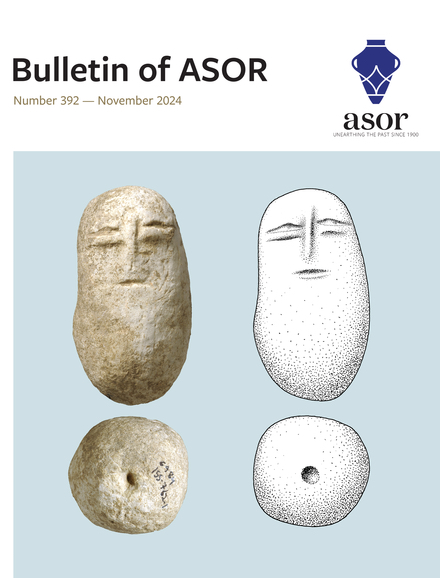
Table of Contents for Bulletin of ASOR 392 (November 2024)

You can receive BASOR (and other ASOR publications) through an ASOR Membership.
Please e-mail the Membership office if you have any questions.
BASOR-392-article-1-banner

Pp. 1-20: “Terra-cotta Roof Tiles in the Ancient Synagogues of Judaea/Palaestina,” by Mechael Osband

Terra-cotta roof tiles are some of the most common and volume-intensive finds in the excavation of ancient synagogues, but their significance has received only minor consideration. This article reviews the evidence for terra-cotta roof tiles, which were the preferred roofing used in ancient synagogues in the Late Roman and Byzantine periods. A change took place from non-tiled roofs in Early Roman synagogues to the common use of terra-cotta roof tiles in the later synagogues. It will be suggested that this shift in roofing style was not merely a functional one, but part of the broader developments in synagogue-building, from a place of gathering in the Early Roman period, with an unassuming flat roof, to a more ornate and monumental structure (both internally and externally) with a prominent high tiled roof in plain view.

ASOR Members with online access: log into ASOR’s Online Portal here. Once logged in, click the JOURNALS tab in the top navigation bar. Tutorials for how to log in to the Online Portal as well as how to navigate to the Portal Journals page can be found here.
BASOR-392-article-2-banner

Pp. 21-54: “Reconstructing Late Prehistoric Occupation in the Southern Levant: Irbid as a Case Study for Settlements and Funerary Patterns,” by Antoine Caminada, Tara Steimer-Herbet, Lamia Al-Khoury, and Marie Besse

The region of Irbid (Jordan) in the southern Levant has been known for its megalithic structures since the end of the 19th century. But despite hundreds of dolmens inventoried, it has never been the subject of an in-depth study. This article contributes to a better understanding of human occupation in the area during the 4th and 3rd millennium B.C.E., based on unpublished data collected in September 2005 by a co-directed Jordanian and French mission (University of Yarmouk and the French Institute of the Middle East–Institut français du Proche-Orient Damascus). Data acquisition analysis was realized thanks to a Geographic Information System (GIS) allowing the authors to map and study the spatial relationships between the various elements, with an emphasis on the relationship between the funerary and domestic spheres. By placing the dolmen necropoleis and settlement sites (both double-apsed and rectangular houses) of the north Jordanian Plateau within the general context of the southern Levant, the authors question the “classic” model linking nomadism and megalithism, and bring forward a more sedentary perspective.

ASOR Members with online access: log into ASOR’s Online Portal here. Once logged in, click the JOURNALS tab in the top navigation bar. Tutorials for how to log in to the Online Portal as well as how to navigate to the Portal Journals page can be found here.
BASOR-392-article-3-banner

Pp. 55-82: “The Tepe Gawra Lower Town Survey 2022,” by Khaled Abu Jayyab, Ira Schwartz, Abbas Al-Hussainy, Stephen Batiuk, Arno Glasser, and Hossam Hadi

Tepe Gawra has long been seen as an essential site for late prehistoric and early historic periods, not only in Iraq but for the entirety of northern Mesopotamia. This importance stems from its long sequence, and its implications for understanding the development of societal complexity. Despite its small size, Tepe Gawra has produced evidence of highly specialized practices that overshadowed farming. This has led to the suggestion that the site was a “center” at the top of an administered network. Some scholars have challenged this assertion and suggested that the site had a lower town, which acted as the source of agriculture goods for the site. Since the area had been closed off to archaeological work this debate has not been resolved. Through recent survey work around Tepe Gawra, the authors show that there was an extensive lower town dating to the Late Chalcolithic and Early Bronze Age stages of occupation. These findings show that Tepe Gawra was a large self-sustaining settlement exploiting its own agricultural hinterland.

ASOR Members with online access: log into ASOR’s Online Portal here. Once logged in, click the JOURNALS tab in the top navigation bar. Tutorials for how to log in to the Online Portal as well as how to navigate to the Portal Journals page can be found here.
BASOR-392-article-4-banner

Pp. 83-110: “Biography of a Neo-Assyrian Relief Fragment from Nineveh,” by Irene Bald Romano, Kelly Ann Moss, and Gina Watkinson

This article presents the biography of a Neo-Assyrian gypsum relief fragment from Ashurbanipal’s 7th century b.c.e. North Palace at Nineveh, now in the Arizona State Museum, University of Arizona. Its discovery by British explorers in late 1853 or early 1854, its journey to the United States, probably in the mid-19th century through missionaries in Ottoman Mesopotamia, its connection with the circus impresario P. T. Barnum and Tufts College, and its acquisition in 1959 by the Arizona State Museum are discussed, along with the changing uses and meaning of the object in its various contexts. The fragment depicts fat-tailed sheep being led in procession by a royal eunuch. It is related to a larger relief fragment in the British Museum that was positioned to the right of this fragment, allowing some conclusions about its probable location within the North Palace and interpretations concerning its iconography.

ASOR Members with online access: log into ASOR’s Online Portal here. Once logged in, click the JOURNALS tab in the top navigation bar. Tutorials for how to log in to the Online Portal as well as how to navigate to the Portal Journals page can be found here.
BASOR-392-article-5-banner

Pp. 111-137: “The Parthian Manor House of Sarab-e Murt in the Context of the Iranian Architectural Tradition,” by Yousef Moradi

This article presents the results of archaeological field excavations at the site of Sarab-e Murt, located on the outskirts of the town of Gilan-e Gharb in the Kermanshah province of Iran. The investigations, conducted in 2007 and 2008, brought to light an extraordinary royal residence dating back to the Late Parthian period. The aim of this article is to contextualize the architectural design and layout of the Sarab-e Murt building within the broader landscape of palatial architecture in the Iranian world, with historical roots extending as far back as the Achaemenid period. By examining the development of the plans of palatial houses, we gain valuable insights into the dynamics of change across both time and space. Furthermore, this article seeks to advance hypotheses concerning the origins of Parthian ayvan-style houses plans within the larger context of the Iranian cultural sphere.

ASOR Members with online access: log into ASOR’s Online Portal here. Once logged in, click the JOURNALS tab in the top navigation bar. Tutorials for how to log in to the Online Portal as well as how to navigate to the Portal Journals page can be found here.
BASOR-392-article-6-banner

Pp. 139-149: “The Lost Look: A Human Neolithic Figurine from Horbat Sasay (Israel),” by Ianir Milevski and Alla Nagorsky

A human figurine carved on a large limestone cobble was found in the excavations of Horbat Sasay, conducted on behalf of the Israel Antiquities Authority. It schematically portrays eyes and a mouth and, like other types of human head representations found in the region, it is suggested that it belongs to the southern Levantine Neolithic period. Together with the description of the figurine, comparisons are presented to other known figurines depicting the human face from the Levant and other nearby regions, as well as an interpretation of these human faces and their expressions in relation to the drastic changes that occurred in these regions during the so-called Neolithic revolution and the social organization of the late prehistoric communities of the Levant.

ASOR Members with online access: log into ASOR’s Online Portal here. Once logged in, click the JOURNALS tab in the top navigation bar. Tutorials for how to log in to the Online Portal as well as how to navigate to the Portal Journals page can be found here.
BASOR-392-article-7-banner

Pp. 151-177: “Defending the Vedi River Valley of Armenia: The Fortification and Refortification of a Flatland-Mountain Interface,” by Peter J. Cobb, Elvan Cobb, Hayk Azizbekyan, Artur Petrosyan, and Boris Gasparyan

The mountainous topography of the Armenian Highlands and the South Caucasus accentuates the importance of valleys as areas of habitation and as conduits among these interspersed settlement areas. The Vedi River Valley of Armenia, located along the southeastern edge of the Ararat Plateau (Plain), serves as one such important transportation route in and through these highland areas. At the center of the mouth of this valley sits the prominent Vedi Fortress, ideally situated for defense of this route and landscape. The site was first fortified during the Late Bronze Age, perhaps during the centralization of power by a local polity contained within the valley. Burned down and abandoned at the end of the Iron Age I, the fortress would then see varied reuse through several later periods given its prominent location and proximity to other local power centers. Of particular importance is its refortification during the Early Medieval (Late Antique) period, when Armenia was under Sasanian Persian suzerainty. This article presents the results of archaeological fieldwork in this valley and at the fortress, followed by a discussion of the landscape’s fortification and refortification during these two periods. The Vedi River Valley provides a case study for examining control, mobility, and the negotiation of local and remote power within the specific contained landscape of a river valley in mountainous terrain.

ASOR Members with online access: log into ASOR’s Online Portal here. Once logged in, click the JOURNALS tab in the top navigation bar. Tutorials for how to log in to the Online Portal as well as how to navigate to the Portal Journals page can be found here.

BASOR-392-article-8-banner.

Pp. 179-205: “Revisiting Late Iron Age En-Gedi: A Stratigraphic Reassessment of Stratum V at Tel Goren,” by Avraham Mashiach and Uri Davidovich

The oasis of En-Gedi, on the western shore of the Dead Sea, served during the late Iron Age as a regional hub for the Judahite activity in the Judean Desert. The main Iron Age site in En-Gedi is Tel Goren, a small mound in the oasis plain, excavated in the 1960s by Benjamin Mazar and Immanuel Dunayevsky. The exposed Iron Age remains, attributed to the lowermost occupation (Stratum V), yielded substantial material assemblages associated with a thick destruction layer dated to the early 6th century b.c.e. The excavators interpreted the site as an unfortified, short-lived agricultural estate dedicated to the production of high-valued commodities. Drawing on a critical reassessment of past excavations, coupled with new evidence gathered in small-scale excavations conducted in 2020, it is suggested that the development of late Iron Age Tel Goren was a gradual process that involved at least two major phases, as well as the construction of a fortified compound on the summit of the hill. The implications of this suggestion are further examined within the broader regional and historical context, shedding new light on the multiphase trajectory of Judah’s expansion into its eastern fringe during the late monarchic period.

ASOR Members with online access: log into ASOR’s Online Portal here. Once logged in, click the JOURNALS tab in the top navigation bar. Tutorials for how to log in to the Online Portal as well as how to navigate to the Portal Journals page can be found here.

BASOR-392-article-9-banner

Pp. 207-237: “Dine and Worship: The Roman Complex in Front of the Pan Grotto in Paneas/Caesarea Philippi,” by Adi Erlich and Ron Lavi

Paneas, situated at the foot of mount Hermon, is where the Hermon River emerges from a spring at the foot of a cliff with a natural cave. In the Hellenistic and Roman periods, the cave and nearby terrace served mainly for the cult of Pan. Herod the Great built in Paneas a temple to Augustus, and his son erected there his capital, Caesarea Philippi. A salvage excavation was recently conducted in front of the cave in the area that formerly was identified as Herod’s Augusteum. The new excavations have proven that during the Roman period, the place was unroofed and open to the cave, which was full of water. The water flowed out through a large aqueduct, water installations were constructed in the courtyard, and niches flanked on the west and east. The complex is dated to the last third of the 1st century c.e. and is attributed to Agrippa II, who built there a nymphaeum-triclinium facing a grotto in Italian style. Afterward, the courtyard was used as a cult place to Pan, and hydromantic rituals were performed in the cave. The sources for this complex will be discussed, as well as the changes that took place there through time.

ASOR Members with online access: log into ASOR’s Online Portal here. Once logged in, click the JOURNALS tab in the top navigation bar. Tutorials for how to log in to the Online Portal as well as how to navigate to the Portal Journals page can be found here.

BROWSE THE NEWS ARCHIVE

  • Fieldwork Report: Hannah Borotsik
  • AM25 Recordings Now Available on ASOR’s Online Library
  • FOA Webinar: Carl Walsh
  • Call for Early Career Scholars Committee Members

Latest Posts from @ASORResearch

asor_research

Initiating and supporting research of the history and cultures of the Near East and wider Mediterranean world.


Our #ObjectoftheWeek: A series of grave goods from
Our #ObjectoftheWeek: A series of grave goods from a cemetery in Kedurma, Sudan, dated to the Meroitic period. ca. 3rd cent. BCE–4th cent. CE. Photo credit: Mohamed Bashir, CC by-SA 4.0.
#Archaeology #Nubia #Kush


Narrative accounts of genocidal violence appear mu
Narrative accounts of genocidal violence appear multiple times in the Hebrew Bible. Why are they there and what do they have to do with modern genocides? Read the newest ANE Today by T. M. Lemos by clicking the link (https://anetoday.org/genocide-hebrew-bible/) in our bio.


ASOR is pleased to announce that recordings from t
ASOR is pleased to announce that recordings from the 2025 Annual Meeting in Boston are now available to view on the 2025 ASOR Online Schedule and ASOR’s Online Library. This initiative not only helps preserve the wealth of knowledge shared but also ensures that those who couldn’t attend the event in person still have access to session and workshop presentations (nearly 500 in total). Learn how to access the recordings by clicking the link (https://www.asor.org/news/2026/02/am25-recordings) in our bio.


Don't forget to tune in TOMORROW at 12:30 pm ET fo
Don't forget to tune in TOMORROW at 12:30 pm ET for the next FOA webinar presented by Benyamin Storchan: "Unearthing an Imperially Glorious Byzantine Church near Bet Shemesh: From Fieldwork to Virtual Reality". If you haven't already signed up, click here to register for free: https://www.asor.org/news/2026/01/webinar-storchan


Registration is now open for the Friends of ASOR t
Registration is now open for the Friends of ASOR two-day Philadelphia Tour on April 16–17! Join us for exclusive, behind-the-scenes access at the Penn Museum, the Barnes Foundation, and the Philadelphia Art Museum, featuring expert-led tours, special lectures, and insights into archaeology, art, and conservation. Learn more and register here: https://www.asor.org/news/2026/01/tour-philadelphia-2026


The Levantine Ceramics Project (LCP) is partnering
The Levantine Ceramics Project (LCP) is partnering with @pennmuseum for a "Data Day" as part of their Museum Workshop Program. Join them for a day of ancient pottery and data entry (and free food)! Register your interest by January 30th: https://docs.google.com/forms/d/e/1FAIpQLSdws1Ml2Ku-X7Yg-vBUoy6AZv54zRqvvLgdrIJaPsL5H688Ow/viewform


At Tall Hisban in Jordan, the Lawrence T. Geraty C
At Tall Hisban in Jordan, the Lawrence T. Geraty Community Archaeology Endowment has supported educational opportunities, heritage events, and community engagement. In 2025, the Geraty Endowment helped make possible the Hisban Heritage Festival, student-led community history projects, and the Madaba Region Heritage Internship. Read more in this grant report: https://www.asor.org/news/2026/01/geraty-grant-report
#Jordan #Madaba #Heritage


ASOR’s room block at the Hilton Chicago for the 20
ASOR’s room block at the Hilton Chicago for the 2026 Annual Meeting is now open. Registered Annual Meeting attendees can reserve a room at the discounted rate of $159 (plus tax) at this iconic downtown hotel overlooking Grant Park and Lake Michigan. To make your reservations, click here: https://www.asor.org/am/2026/hotel-city-2026


Join us for the next FOA webinar on Wednesday, Feb
Join us for the next FOA webinar on Wednesday, February 4th at 12:30pm ET: "Unearthing an Imperially Glorious Byzantine Church near Bet Shemesh: From Fieldwork to Virtual Reality," presented by Benyamin Storchan. In the heart of the Holy Land, just 15 miles southwest of Jerusalem, lies one of the most remarkable Byzantine churches discovered in recent decades. The archaeological excavations at the Church of the Glorious Martyr unearthed a fascinating five-century story of faith and pilgrimage, yet the greatest mystery remains unsolved: who was the Glorious Martyr venerated in the sacred crypt? Read more and register here: https://www.asor.org/news/2026/01/webinar-storchan


Call for papers: The William F. Albright Institute
Call for papers: The William F. Albright Institute of Archaeological Research announces the 25th Annual Sean W. Dever Memorial Prize. The prize awards $750 for the best conference paper in Syro-Palestinian or Biblical Archaeology.

Eligibility:
• Ph.D. candidates (as of Spring 2026)
• Paper must be in English
• Must be an unpublished/not prepared for publication conference paper

Deadline: February 15, 2026
Winner announced: March 9, 2026
Apply via the Albright Fellowships Portal: https://aiar.org/fellowships


The deadline to apply for ASOR's 2026-27 Mesopotam
The deadline to apply for ASOR's 2026-27 Mesopotamian Fellowships is Monday, January 26! These fellowships are primarily intended to support fieldwork/research on ancient Mesopotamian culture carried out in the Middle East. Apply now: https://www.asor.org/fellowships/mesopotamian-fellowship/


Our #ObjectoftheWeek: A limestone statue of an eag
Our #ObjectoftheWeek: A limestone statue of an eagle wrestling with a serpent found at Khirbet et-Tannur, an ancient Nabataean temple in southern Jordan. ca. 100-200 CE. CAM 1939.222. Photo credit: Cincinnati Art Museum.
#Archaeology #Jordan #Nabataean


Since the Neolithic, mudbrick architecture has bee
Since the Neolithic, mudbrick architecture has been one of the most widespread building traditions across the world. But a mudbrick is more than a structural unit: it is also a repository of information. Read the newest ANE Today by Marta Lorenzon by clicking the link (https://anetoday.org/mudbrick-architecture-meaning/) in our bio.
#Architecture #Mudbrick


Last summer, Helen Wong joined the University of P
Last summer, Helen Wong joined the University of Palermo Archaeological Project at Motya, an island near western Sicily. Helen, a PhD candidate at University of Pennsylvania, was the digital archaeology specialist on the project and helped with the ongoing geophysical survey mapping the ancient city. Read her report here: https://www.asor.org/news/2026/01/fieldwork-report-wong
#Archaeology #Survey #Sicily


Be sure to watch the next FOA webinar TOMORROW at
Be sure to watch the next FOA webinar TOMORROW at 7:00pm ET presented by Dr. Sarah Wenner: "Experiencing Khirbet et-Tannur: The Story of a Nabatean Temple from the Second through 21st Century." Register for free if you haven't already: https://buff.ly/CtzwPOm
#Jordan #Nabatean


ASOR is putting together a map of where our member
ASOR is putting together a map of where our members have worked in the world. You're invited to submit your own excavations, survey, laboratory, or museum and conservation projects to the map with stories and photos. Click the link in our bio to complete a brief survey to add yourself to the map: https://buff.ly/LYYJVlZ


The Honors and Awards Committee seeks nominations
The Honors and Awards Committee seeks nominations for at least 3 candidates. Committee members will serve a three-year term with the possibility of two consecutive terms. Nominees must fill out the online form by January 30. Learn more by clicking the link in our bio: https://www.asor.org/news/2025/12/honors-awards-members-call


This past summer, a group from Johns Hopkins Unive
This past summer, a group from Johns Hopkins University traveled to Türkiye to help excavate a Late Bronze Age archive of cuneiform tablets at Alalakh/Tell Atchana. This team, funded by an ASOR Harris Grant, was uniquely qualified for the task, as they were trained in both archaeology and in reading Akkadian cuneiform. Read their grant report by clicking the link in our bio: https://www.asor.org/news/2025/12/harris-grant-report-alalakh
#Archaeology #Fieldwork #Cuneiform #Turkiye


Reminder: the deadline to propose new member-organ
Reminder: the deadline to propose new member-organized sessions and workshops for the 2026 Annual Meeting in Chicago is Thursday, January 15. Find more info and fill out a brief proposal here: https://buff.ly/Kqui65X


Don't miss the upcoming FOA webinar on Wednesday,
Don't miss the upcoming FOA webinar on Wednesday, January 21 at 7:00pm ET: "Experiencing Khirbet et-Tannur: The Story of a Nabatean Temple from the Second through 21st Century," presented by Dr. Sarah Wenner. In the 2nd century CE, after Rome annexed the Nabataean Kingdom and transformed it into the Roman province of Arabia, the Nabataean temple at Khirbet et-Tannur was constructed in Central Jordan. This lecture travels the site’s two millennia history and explores how Khirbet et-Tannur’s excavations, the collection at the Cincinnati Art Museum, and 21st century innovations have changed our understanding of the Nabataeans. Read more and register by clicking the link in our bio: https://www.asor.org/news/2026/01/webinar-wenner


Instagram

Stay updated with the latest insights, photos, and news by following us on Instagram!

Follow Us on Instagram

American Society of Overseas Research
The James F. Strange Center
209 Commerce Street
Alexandria, VA 22314

E-mail: info@asor.org

© 2025 ASOR
All rights reserved.
Images licensed under a Creative Commons Attribution-NonCommercial-ShareAlike 4.0 International License

Contact Us
Membership
Give
Friends of ASOR
ASOR Cultural Heritage Initiatives
Terms of Use
News

Please follow & like us :)
Facebook
YouTube
LinkedIn