
SHARE
[/vc_column_text][mk_image src=”http://www.asortest.org/wp-content/uploads/2017/01/social-fb-icon4.jpg” image_width=”42″ image_height=”42″ hover=”false” custom_url=”https://www.facebook.com/ASOResearch/” margin_bottom=”0″][mk_image src=”http://www.asortest.org/wp-content/uploads/2017/01/social-tw-icon4.jpg” image_width=”42″ image_height=”42″ hover=”false” custom_url=”https://twitter.com/ASOResearch?ref_src=twsrc%5Egoogle%7Ctwcamp%5Eserp%7Ctwgr%5Eauthor” margin_bottom=”0″][mk_image src=”http://www.asortest.org/wp-content/uploads/2017/01/social-in-icon4.jpg” image_width=”42″ image_height=”42″ hover=”false” custom_url=”https://www.linkedin.com/company/american-schools-of-oriental-research” margin_bottom=”0″][mk_image src=”http://www.asortest.org/wp-content/uploads/2017/01/social-ml-icon_7.jpg” image_width=”42″ image_height=”42″ hover=”false” custom_url=”mailto:info@asor.org” margin_bottom=”0″][mk_image src=”http://www.asortest.org/wp-content/uploads/2017/01/blog-icon3.jpg” image_width=”42″ image_height=”42″ hover=”false” custom_url=”https://asor.org/blog” margin_bottom=”0″][/vc_column][vc_column border_color=”rgba(255,255,255,0.01)” width=”1/6″ css=”.vc_custom_1493004112151{margin-right: 20px !important;border-left-width: 2px !important;padding-right: 20px !important;padding-left: 20px !important;border-left-color: #99422f !important;}”][mk_divider divider_color=”rgba(255,255,255,0.01)” thickness=”1″ margin_top=”3″ margin_bottom=”3″][vc_widget_sidebar sidebar_id=”sidebar-16″ el_class=”.widget { overflow: hidden; margin-bottom: 0; }”][/vc_column][vc_column border_color=”rgba(170,170,170,0.01)” width=”8/12″ css=”.vc_custom_1487276122024{margin-right: 10px !important;margin-bottom: 30px !important;border-right-width: 2px !important;border-bottom-width: 2px !important;padding-top: 30px !important;padding-right: 30px !important;padding-left: 20px !important;background-color: #ffffff !important;border-right-color: rgba(227,228,228,0.75) !important;border-bottom-color: rgba(227,228,228,0.75) !important;}”][vc_row_inner][vc_column_inner width=”1/3″ css=”.vc_custom_1515089047502{padding-right: 20px !important;}”][mk_image src=”https://www.asor.org/wp-content/uploads/2017/12/foa-reduced-100.png” image_width=”190″ image_height=”100″ crop=”false” hover=”false”][/vc_column_inner][vc_column_inner width=”2/3″][vc_column_text responsive_align=”left”]September 2022
Vol. 10, No. 9
[/vc_column_text][/vc_column_inner][/vc_row_inner][vc_row_inner][vc_column_inner][vc_column_text]
Breaking the Code: Ancient Iran’s Linear Elamite Script Deciphered
By François Desset, Kambiz Tabibzadeh, Matthieu Kervran, Gian Pietro Basello, and Gianni Marchesi
There are few remaining Near Eastern writing systems left to decode. But the Linear Elamite script has eluded scholars, until now. Previously known names of kings and deities were key. Read More[/vc_column_text][mk_divider thickness=”1″ margin_top=”10″][vc_column_text]
Medieval Sugar Production in the Southern Levant: A Sweet Story
By Richard Jones
In the medieval Southern Levant sugar was an important cash crop. Texts and archaeological remains of sugar manufacturing allow for the process to be reconstructed. Read More[/vc_column_text][mk_divider thickness=”1″ margin_top=”10″][vc_column_text]
Camels in the Biblical World of the Ancient Near East
By Martin Heide and Joris Peters
One hump or two, the camel was known in Mesopotamia from the third millennium BCE onward as the “elephant of the caravan” or “elephant of the mountain.” “Camel” came later. Read More[/vc_column_text][mk_divider thickness=”1″ margin_top=”10″][vc_column_text]
The Biblical Scale of Gustave Doré
By Sarah C. Schaefer
The mid-19th century French illustrator Gustave Doré was especially well-known for his rich and dynamic Biblical scenes, which were copied widely. So why is he forgotten today? Read More[/vc_column_text][mk_divider thickness=”1″ margin_top=”10″][vc_column_text]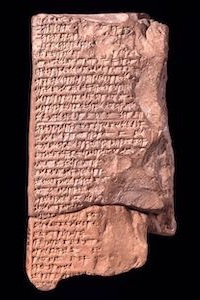
The Babylonian Akītu Festival and the Ritual Humiliation of the King
By Sam Mirelman
Many Mesopotamian festivals are known, but only one involved the high priest striking the king. What was the purpose of this temporary reversal of the king’s status? Read More[/vc_column_text][mk_divider thickness=”1″ margin_top=”10″][/vc_column_inner][/vc_row_inner][/vc_column][/vc_row]