SHARE
[/vc_column_text][mk_image src=”http://www.asortest.org/wp-content/uploads/2017/01/social-fb-icon4.jpg” image_width=”42″ image_height=”42″ hover=”false” custom_url=”https://www.facebook.com/ASOResearch/” margin_bottom=”0″][mk_image src=”http://www.asortest.org/wp-content/uploads/2017/01/social-tw-icon4.jpg” image_width=”42″ image_height=”42″ hover=”false” custom_url=”https://twitter.com/ASOResearch?ref_src=twsrc%5Egoogle%7Ctwcamp%5Eserp%7Ctwgr%5Eauthor” margin_bottom=”0″][mk_image src=”http://www.asortest.org/wp-content/uploads/2017/01/social-in-icon4.jpg” image_width=”42″ image_height=”42″ hover=”false” custom_url=”https://www.linkedin.com/company/american-schools-of-oriental-research” margin_bottom=”0″][mk_image src=”http://www.asortest.org/wp-content/uploads/2017/01/social-ml-icon_7.jpg” image_width=”42″ image_height=”42″ hover=”false” custom_url=”mailto:info@asor.org” margin_bottom=”0″][mk_image src=”http://www.asortest.org/wp-content/uploads/2017/01/blog-icon3.jpg” image_width=”42″ image_height=”42″ hover=”false” custom_url=”https://asor.org/blog” margin_bottom=”0″][/vc_column][vc_column border_color=”rgba(255,255,255,0.01)” width=”1/6″ css=”.vc_custom_1493004112151{margin-right: 20px !important;border-left-width: 2px !important;padding-right: 20px !important;padding-left: 20px !important;border-left-color: #99422f !important;}”][mk_divider divider_color=”rgba(255,255,255,0.01)” thickness=”1″ margin_top=”3″ margin_bottom=”3″][vc_widget_sidebar sidebar_id=”sidebar-16″ el_class=”.widget { overflow: hidden; margin-bottom: 0; }”][/vc_column][vc_column border_color=”rgba(170,170,170,0.01)” width=”8/12″ css=”.vc_custom_1487276122024{margin-right: 10px !important;margin-bottom: 30px !important;border-right-width: 2px !important;border-bottom-width: 2px !important;padding-top: 30px !important;padding-right: 30px !important;padding-left: 20px !important;background-color: #ffffff !important;border-right-color: rgba(227,228,228,0.75) !important;border-bottom-color: rgba(227,228,228,0.75) !important;}”][vc_row_inner][vc_column_inner width=”1/3″ css=”.vc_custom_1515087305797{padding-right: 20px !important;}”][mk_image src=”https://www.asor.org/wp-content/uploads/2017/12/foa-reduced-100.png” image_width=”190″ image_height=”100″ crop=”false” hover=”false”][/vc_column_inner][vc_column_inner width=”2/3″][vc_column_text responsive_align=”left”]August 2019
Vol. 7, No. 8
[/vc_column_text][/vc_column_inner][/vc_row_inner][vc_row_inner][vc_column_inner][mk_divider thickness=”1″ margin_top=”10″][vc_column_text] The Ancient Near East after 1919
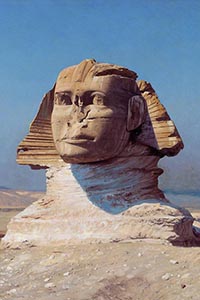 The Ancient Near East after 1919
By Alex Joffe
Prior to the signing of treaties in 1919 that ended World War I, study of the Ancient Near East, though copious, was neither especially systematic nor particularly scientific, but the advances after 1919 came with a cost. Read More[/vc_column_text][mk_divider thickness=”1″ margin_top=”10″][vc_column_text]
 Potters and Their Fingerprints
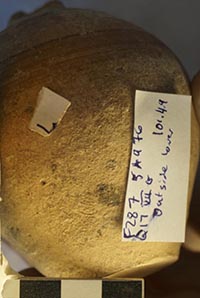
By Akiva Sanders
Pot sherds are ubiquitous on Near Eastern archaeological sites. But occasionally the fingerprints of the potters can tell us unexpected things about their lives and the economic systems they labored in. Read More[/vc_column_text][mk_divider thickness=”1″ margin_top=”10″][vc_column_text]
 Concepts and Metaphors in Sumerian
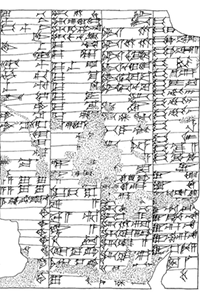
By Erika Marsal
The Sumerian language is unrelated to any other language past or present. While it can be read, making sense of things requires understanding how Sumerians used metaphors. Some are surprisingly familiar. Read More[/vc_column_text][mk_divider thickness=”1″ margin_top=”10″][vc_column_text]
Crosses and Crucifixions, Misunderstood and Misinterpreted
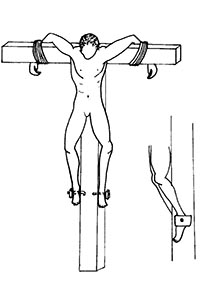
By Joe Zias
The popular image of crucifixion has been created by the symbol of the t-shaped cross, and by one reconstructed bone. That bone bears too much weight, but a long overlooked inscription gives a new view on the cross itself. Read More[/vc_column_text][mk_divider thickness=”1″ margin_top=”10″][vc_column_text]
Birth and Rebirth in Ancient Egypt
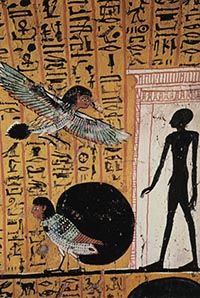
By Cathie Spieser
Birth is one of the most dangerous parts of life. But for ancient Egyptians the birth of a child had a counterpart: the rebirth after death. Both of these were necessary to maintain the balance of the universe. Read More[/vc_column_text][mk_divider thickness=”1″ margin_top=”10″][/vc_column_inner][/vc_row_inner][/vc_column][/vc_row]