
SHARE
[/vc_column_text][mk_image src=”http://www.asortest.org/wp-content/uploads/2017/01/social-fb-icon4.jpg” image_width=”42″ image_height=”42″ hover=”false” custom_url=”https://www.facebook.com/ASOResearch/” margin_bottom=”0″][mk_image src=”http://www.asortest.org/wp-content/uploads/2017/01/social-tw-icon4.jpg” image_width=”42″ image_height=”42″ hover=”false” custom_url=”https://twitter.com/ASOResearch?ref_src=twsrc%5Egoogle%7Ctwcamp%5Eserp%7Ctwgr%5Eauthor” margin_bottom=”0″][mk_image src=”http://www.asortest.org/wp-content/uploads/2017/01/social-in-icon4.jpg” image_width=”42″ image_height=”42″ hover=”false” custom_url=”https://www.linkedin.com/company/american-schools-of-oriental-research” margin_bottom=”0″][mk_image src=”http://www.asortest.org/wp-content/uploads/2017/01/social-ml-icon_7.jpg” image_width=”42″ image_height=”42″ hover=”false” custom_url=”mailto:asor@bu.edu” margin_bottom=”0″][mk_image src=”http://www.asortest.org/wp-content/uploads/2017/01/blog-icon3.jpg” image_width=”42″ image_height=”42″ hover=”false” custom_url=”http://asorblog.org/” margin_bottom=”0″][/vc_column][vc_column border_color=”rgba(255,255,255,0.01)” width=”1/6″ css=”.vc_custom_1493004112151{margin-right: 20px !important;border-left-width: 2px !important;padding-right: 20px !important;padding-left: 20px !important;border-left-color: #99422f !important;}”][mk_divider divider_color=”rgba(255,255,255,0.01)” thickness=”1″ margin_top=”3″ margin_bottom=”3″][vc_widget_sidebar sidebar_id=”sidebar-16″ el_class=”.widget { overflow: hidden; margin-bottom: 0; }”][/vc_column][vc_column border_color=”rgba(170,170,170,0.01)” width=”8/12″ css=”.vc_custom_1487276122024{margin-right: 10px !important;margin-bottom: 30px !important;border-right-width: 2px !important;border-bottom-width: 2px !important;padding-top: 30px !important;padding-right: 30px !important;padding-left: 20px !important;background-color: #ffffff !important;border-right-color: rgba(227,228,228,0.75) !important;border-bottom-color: rgba(227,228,228,0.75) !important;}”][vc_row_inner][vc_column_inner width=”1/3″ css=”.vc_custom_1515087305797{padding-right: 20px !important;}”][mk_image src=”http://www.asor.org/wp-content/uploads/2017/12/foa-reduced-100.png” image_width=”190″ image_height=”100″ crop=”false” hover=”false”][/vc_column_inner][vc_column_inner width=”2/3″][vc_column_text responsive_align=”left”]August 2018
Vol. 6, No. 8
[/vc_column_text][/vc_column_inner][/vc_row_inner][vc_row_inner][vc_column_inner][mk_divider thickness=”1″ margin_top=”10″][vc_column_text]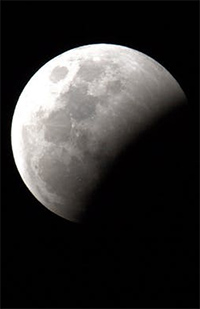
How Eclipses Were Regarded as Omens in the Ancient World
By Gonzalo Rubio
Humans have long been fascinated by celestial events. In the ancient world, eclipses were regarded as signs of things to come.
READ MORE
[/vc_column_text][mk_divider thickness=”1″ margin_top=”10″][vc_column_text]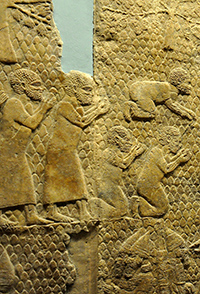
Why did Sennacherib Create Two Accounts of his Siege of Lachish?
By Bruno Alves Barros
Sennacherib’s reliefs from his palace at Nineveh famously show the destruction of the Judean city of Lachish. But why do the written accounts of the conquest differ from the relief?
READ MORE
[/vc_column_text][mk_divider thickness=”1″ margin_top=”10″][vc_column_text]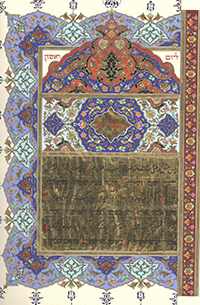
Hebrew Manuscripts at the Library of Congress
By Ann Brener
The Library of Congress includes over 167,000,000 items. Among them are a unique collection of Hebrew, Yiddish, Judeo-Arabic and Judeo-Persian manuscripts, some dating back many centuries.
READ MORE
[/vc_column_text][mk_divider thickness=”1″ margin_top=”10″][vc_column_text]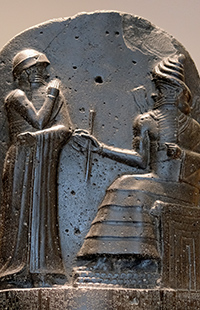
Low Power States with High Aspirations in Early Mesopotamia
By Seth Richardson
Mesopotamian kings and states made a big show of being powerful, competent, and responsible. But a closer reading of key texts shows this was just talk. How can this be explained?
READ MORE
[/vc_column_text][mk_divider thickness=”1″ margin_top=”10″][vc_column_text]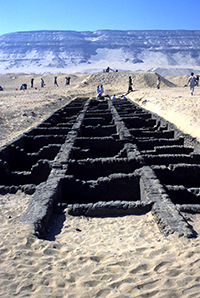
Ancient Egypt: A Tale of Human Sacrifice?
By Thomas Hikade and Jane Roy
One of the most shocking aspects of early societies in Egypt and Mesopotamia is evidence for human sacrifice. But for Egypt at least, there might be another explanation.