SHARE
[/vc_column_text][mk_image src=”http://www.asortest.org/wp-content/uploads/2017/01/social-fb-icon4.jpg” image_width=”42″ image_height=”42″ hover=”false” custom_url=”https://www.facebook.com/ASOResearch/” margin_bottom=”0″][mk_image src=”http://www.asortest.org/wp-content/uploads/2017/01/social-tw-icon4.jpg” image_width=”42″ image_height=”42″ hover=”false” custom_url=”https://twitter.com/ASOResearch?ref_src=twsrc%5Egoogle%7Ctwcamp%5Eserp%7Ctwgr%5Eauthor” margin_bottom=”0″][mk_image src=”http://www.asortest.org/wp-content/uploads/2017/01/social-in-icon4.jpg” image_width=”42″ image_height=”42″ hover=”false” custom_url=”https://www.linkedin.com/company/american-schools-of-oriental-research” margin_bottom=”0″][mk_image src=”http://www.asortest.org/wp-content/uploads/2017/01/social-ml-icon_7.jpg” image_width=”42″ image_height=”42″ hover=”false” custom_url=”mailto:asor@bu.edu” margin_bottom=”0″][mk_image src=”http://www.asortest.org/wp-content/uploads/2017/01/blog-icon3.jpg” image_width=”42″ image_height=”42″ hover=”false” custom_url=”http://asorblog.org/” margin_bottom=”0″][/vc_column][vc_column border_color=”rgba(255,255,255,0.01)” width=”1/6″ css=”.vc_custom_1493004112151{margin-right: 20px !important;border-left-width: 2px !important;padding-right: 20px !important;padding-left: 20px !important;border-left-color: #99422f !important;}”][mk_divider divider_color=”rgba(255,255,255,0.01)” thickness=”1″ margin_top=”3″ margin_bottom=”3″][vc_widget_sidebar sidebar_id=”sidebar-16″ el_class=”.widget { overflow: hidden; margin-bottom: 0; }”][/vc_column][vc_column border_color=”rgba(170,170,170,0.01)” width=”8/12″ css=”.vc_custom_1487276122024{margin-right: 10px !important;margin-bottom: 30px !important;border-right-width: 2px !important;border-bottom-width: 2px !important;padding-top: 30px !important;padding-right: 30px !important;padding-left: 20px !important;background-color: #ffffff !important;border-right-color: rgba(227,228,228,0.75) !important;border-bottom-color: rgba(227,228,228,0.75) !important;}”][vc_row_inner][vc_column_inner width=”1/3″ css=”.vc_custom_1515087305797{padding-right: 20px !important;}”][mk_image src=”https://www.asor.org/wp-content/uploads/2017/12/foa-reduced-100.png” image_width=”190″ image_height=”100″ crop=”false” hover=”false”][/vc_column_inner][vc_column_inner width=”2/3″][vc_column_text responsive_align=”left”]October 2017
Vol. 5, No. 10
[/vc_column_text][/vc_column_inner][/vc_row_inner][mk_divider thickness=”1″ margin_top=”0″][vc_row_inner][vc_column_inner][vc_column_text] Fighting Over the Bible: Jewish Interpretation, Sectarianism and Polemic from Temple to Talmud and Beyond
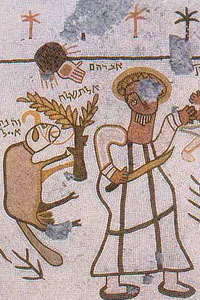
By Isaac Kalimi
The Hebrew Bible/Old Testament stands as an important sacred text for all branches of the Abrahamic faiths, although these maintain fundamentally different attitudes towards it. Nonetheless, far from unifying Jews, Christians and Muslims, the biblical texts divided them.
READ MORE
[/vc_column_text][/vc_column_inner][/vc_row_inner][mk_divider thickness=”1″ margin_top=”10″][vc_row_inner][vc_column_inner][vc_column_text]The Antikythera Device – A Working Model of the Cosmos
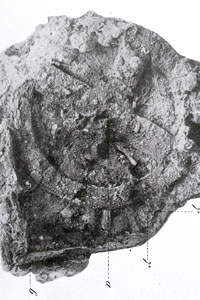
By Alexander Jones
All cultures create models of the cosmos in words and images; the ancient Greeks were the first to make a mechanical working model of the cosmos. In the spring of 1900, a group of Greek sponge divers en route to their usual diving grounds off North Africa chanced upon the site of a shipwreck dating from about 60 BCE off the small island of Antikythera.
READ MORE
[/vc_column_text][/vc_column_inner][/vc_row_inner][mk_divider thickness=”1″ margin_top=”10″][vc_row_inner][vc_column_inner][vc_column_text]Making Amulets Christian: Artefact, Scribes, and Contexts
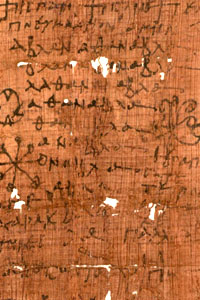
By Theodore de Bruyn
Much religious activity is customary. People do what they do because others have done it before them. But at the same time people adapt customary activities so that they continue to be meaningful. Indeed, it is the combination of the customary and the personal in religious activity that makes it powerful and relevant to people.
READ MORE
[/vc_column_text][/vc_column_inner][/vc_row_inner][mk_divider thickness=”1″ margin_top=”10″][vc_row_inner][vc_column_inner][vc_column_text]Revolutionary Biblical Discoveries and the Need for Historical Amnesia
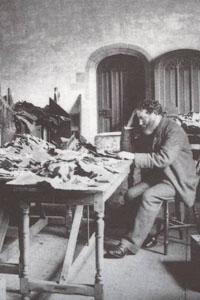
By Philip Jenkins
The Gospel of Judas, the Gospel of Mary, the Gospel of Jesus’s Wife… every few years, the media report new finds of ancient texts that supposedly throw revolutionary new light on the Biblical world, and (commonly) on Christian origins. In reality, such finds rarely tell us much that is new or unexplored, and are mainly of use to hardcore specialists.
READ MORE
[/vc_column_text][mk_divider thickness=”1″ margin_top=”10″][/vc_column_inner][/vc_row_inner][vc_row_inner][vc_column_inner][vc_column_text] The Ancient Near East Today features contributions from diverse academics, a forum featuring debates of current developments from the field, and links to news and resources. The ANE Today covers the entire Near East, and each issue presents discussions ranging from the state of biblical archaeology to archaeology after the Arab Spring.
Take a look at the contents of this e-book!
- “Making Amulets Christian: Artefact, Scribes, and Contexts”
- “Fighting Over the Bible: Jewish Interpretation, Sectarianism and Polemic from Temple to Talmud and Beyond”
- “The Antikythera Device – A Working Model of the Cosmos”
- “Revolutionary Biblical Discoveries and the Need for Historical Amnesia”