
SHARE
[/vc_column_text][mk_image src=”http://www.asortest.org/wp-content/uploads/2017/01/social-fb-icon4.jpg” image_width=”42″ image_height=”42″ hover=”false” custom_url=”https://www.facebook.com/ASOResearch/” margin_bottom=”0″][mk_image src=”http://www.asortest.org/wp-content/uploads/2017/01/social-tw-icon4.jpg” image_width=”42″ image_height=”42″ hover=”false” custom_url=”https://twitter.com/ASOResearch?ref_src=twsrc%5Egoogle%7Ctwcamp%5Eserp%7Ctwgr%5Eauthor” margin_bottom=”0″][mk_image src=”http://www.asortest.org/wp-content/uploads/2017/01/social-in-icon4.jpg” image_width=”42″ image_height=”42″ hover=”false” custom_url=”https://www.linkedin.com/company/american-schools-of-oriental-research” margin_bottom=”0″][mk_image src=”http://www.asortest.org/wp-content/uploads/2017/01/social-ml-icon_7.jpg” image_width=”42″ image_height=”42″ hover=”false” custom_url=”mailto:asor@bu.edu” margin_bottom=”0″][mk_image src=”http://www.asortest.org/wp-content/uploads/2017/01/blog-icon3.jpg” image_width=”42″ image_height=”42″ hover=”false” custom_url=”http://asorblog.org/” margin_bottom=”0″][/vc_column][vc_column border_color=”rgba(255,255,255,0.01)” width=”1/6″ css=”.vc_custom_1493004112151{margin-right: 20px !important;border-left-width: 2px !important;padding-right: 20px !important;padding-left: 20px !important;border-left-color: #99422f !important;}”][mk_divider divider_color=”rgba(255,255,255,0.01)” thickness=”1″ margin_top=”3″ margin_bottom=”3″][vc_widget_sidebar sidebar_id=”sidebar-16″ el_class=”.widget { overflow: hidden; margin-bottom: 0; }”][/vc_column][vc_column border_color=”rgba(170,170,170,0.01)” width=”8/12″ css=”.vc_custom_1487276122024{margin-right: 10px !important;margin-bottom: 30px !important;border-right-width: 2px !important;border-bottom-width: 2px !important;padding-top: 30px !important;padding-right: 30px !important;padding-left: 20px !important;background-color: #ffffff !important;border-right-color: rgba(227,228,228,0.75) !important;border-bottom-color: rgba(227,228,228,0.75) !important;}”][vc_row_inner][vc_column_inner width=”1/3″ css=”.vc_custom_1515087305797{padding-right: 20px !important;}”][mk_image src=”http://www.asor.org/wp-content/uploads/2017/12/foa-reduced-100.png” image_width=”190″ image_height=”100″ crop=”false” hover=”false”][/vc_column_inner][vc_column_inner width=”2/3″][vc_column_text responsive_align=”left”]December 2013
Vol. 1, No. 9
[/vc_column_text][/vc_column_inner][/vc_row_inner][mk_divider thickness=”1″ margin_top=”0″][vc_row_inner][vc_column_inner][vc_column_text]Welcome to The Ancient Near East Today, No. 9! In this issue, Aren Maeir continues our series on the relationship between archaeology and the Bible, while Casey Elledge and Olivia Yeo discuss the deepening problem of who wrote the Dead Sea Scrolls. We are also pleased to feature two very different presentations on Eastern Jordan: Gary Rollefson on exciting fieldwork that is changing our picture of prehistory in the harsh Black Desert, and Alison Damick and Ahmad Lash on community archaeology in the desert town of Azraq. Finally, Hans Curvers takes us to Afghanistan and the site of Mes Aynak, where plans by a Chinese company to mine billions of dollars of copper threaten a unique site on the ancient Silk Route.[/vc_column_text][mk_divider thickness=”1″ margin_top=”0″][vc_column_text]

Archaeology and the Bible – Yet Another Personal Viewpoint
By: Aren M. Maeir
Biblical Archaeology, that so-popular yet so-vilified profession, deals with the interface between the archaeological remains and the cultures in which the biblical texts were incubated, formed, edited and collected. We archaeologists therefore deal with a large corpus of finds from many periods and cultures, as it is clear that the biblical text mirrors, to various extents, facets of many cultural periods and regions…[READ MORE][/vc_column_text][mk_divider thickness=”1″ margin_top=”0″][vc_column_text]
Rethinking the “Qumran Community”: Recent Approaches
By: C.D. Elledge with Olivia Yeo
Who really wrote the Dead Sea Scrolls? Twenty years ago, the available options for understanding the identity of the Dead Sea Scrolls Community were relatively concise. Consensus associated the origins of the community with the ascetic Essenes. A few dissenting opinions highlighted its commonalities with the priestly Sadducees or associated the Scrolls with Jerusalem refugees who fled into the wilderness during the Great Jewish Revolt (66-70 CE)…[READ MORE][/vc_column_text][mk_divider thickness=”1″ margin_top=”0″][vc_column_text]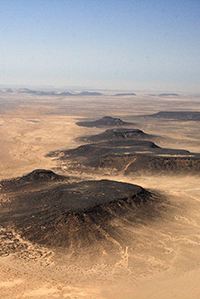
Late Prehistoric Pastoral Exploitation of Arid Lands in Jordan: New Light from the Black Desert
By: Gary O. Rollefson
Jordan’s Black Desert is a uniquely harsh and inhospitable place. It is a broad band of basalt that stretches across Jordan’s panhandle, running some 145 kilometers from Azraq to its northeastern edge on the Iraqi border, and 115 kilometers from the Syria in the north to Saudi Arabia in the south. In the summer and autumn, this region is bleak and forbidding – daytime temperatures regularly exceed 100 degrees F…[READ MORE][/vc_column_text][mk_divider thickness=”1″ margin_top=”0″][vc_column_text]
 The Past Performative: Thinking through the Azraq Community Archaeology Project

By: Alison Damick and Ahmad Lash
The Azraq Basin in eastern Jordan is a 13,000 km2 limestone basin between the arid steppes to the west and the volcanic “Black” Deserts to the east and south. With one of the largest and most reliable fresh water sources in the area, the oasis has been an important stopping point for animals and humans throughout history. The first recorded human occupation in the Azraq Basin dates to more than 300,000 years ago. The basin area hosts many documented archaeological sites, including prehistoric, Roman, Byzantine, and Islamic era material…[READ MORE][/vc_column_text][mk_divider thickness=”1″ margin_top=”0″][vc_column_text]
Saving Archaeological Heritage in Afghanistan

By: Hans Curvers
During a crisis or conflict, interventions first focus on emergency relief. Once the ‘post-conflict stage’ is reached, the focus shifts to reconstruction. As soon as peace and stability are restored, the exit strategy starts. A straightforward linear process. Where does archaeology fit in? In the Afghan reality, however, there is no such linear process. Afghanistan is neither a ‘post conflict’ nor a ‘conflict’ state: it is both at the same time…[READ MORE][/vc_column_text][mk_divider thickness=”1″ margin_top=”0″][vc_column_text] The Ancient Near East Today features contributions from diverse academics, a forum featuring debates of current developments from the field, and links to news and resources. The ANE Today covers the entire Near East, and each issue presents discussions ranging from the state of biblical archaeology to archaeology after the Arab Spring.