UNEARTHING THE PAST SINCE 1900
  • BECOME A MEMBER
  • RENEW
  • GIVE NOW
  • SEARCH
  • ONLINE PORTAL
  • American Society of Overseas Research (ASOR)American Society of Overseas Research (ASOR)
  • ABOUT
    • WELCOME FROM ASOR OFFICERS
    • HISTORY OF ASOR
    • MISSION, BYLAWS, & STRATEGIC PLAN
    • Board of Trustees
    • COMMITTEES
    • POLICIES
    • FINANCIAL DOCUMENTS
    • MEDIA RELEASES
    • CONTACT US
  • CULTURAL
    HERITAGE
    • ABOUT CULTURAL HERITAGE INITIATIVES
    • UPDATES
    • PAST GRANTS
    • TUTORIALS
    • Who We Are
  • ANNUAL
    MEETING
    • REGISTRATION
    • HOTEL RESERVATIONS
    • ANNUAL MEETING SCHEDULES
    • SPONSOR & EXHIBIT
    • ASOR Online Library
    • HONORS & AWARDS
    • ANNUAL MEETING SCHOLARSHIPS
    • PAST & FUTURE ANNUAL MEETINGS
  • MEMBERSHIP
    & RESOURCES
    • INDIVIDUAL MEMBERSHIPS
    • INSTITUTIONAL MEMBERSHIPS
    • NEWS@ASOR
    • PAST ASOR NEWS, MONTH BY MONTH
    • AFFILIATED PROJECTS
    • AFFILIATED RESEARCH CENTERS
    • ARCHIVES
    • ONLINE RESOURCES
      • PHOTO COLLECTION
    • EARLY CAREER MEMBER RESOURCES
  • FELLOWSHIPS
    & GRANTS
    • SCHOLARSHIPS FOR FIELDWORK PARTICIPATION
    • GRANTS FOR ARCHAEOLOGICAL PROJECTS
    • RESEARCH FELLOWSHIPS FOR MEMBERS
    • MEMBERSHIP & ANNUAL MEETING SCHOLARSHIPS
    • ASOR-AFFILIATED RESEARCH CENTERS FELLOWSHIPS
    • OTHER FELLOWSHIP PROGRAMS
  • PUBLICATIONS
    • BOOK SERIES & MONOGRAPHS
    • BULLETIN OF ASOR
    • JOURNAL OF CUNEIFORM STUDIES
    • MAARAV
    • NEAR EASTERN ARCHAEOLOGY
    • THE ANCIENT NEAR EAST TODAY
    • News@ASOR
    • LEVANTINE CERAMICS PROJECT
  • FRIENDS
    OF ASOR
    • Webinars
    • TOURS
    • THE ANCIENT NEAR EAST TODAY
    • ASOR ONLINE LIBRARY
  • Donate
    • FY25 HONOR ROLL OF DONORS
    • LIFETIME HONOR ROLL OF DONORS
    • ASOR LEGACY CIRCLE
    • WAYS TO DONATE
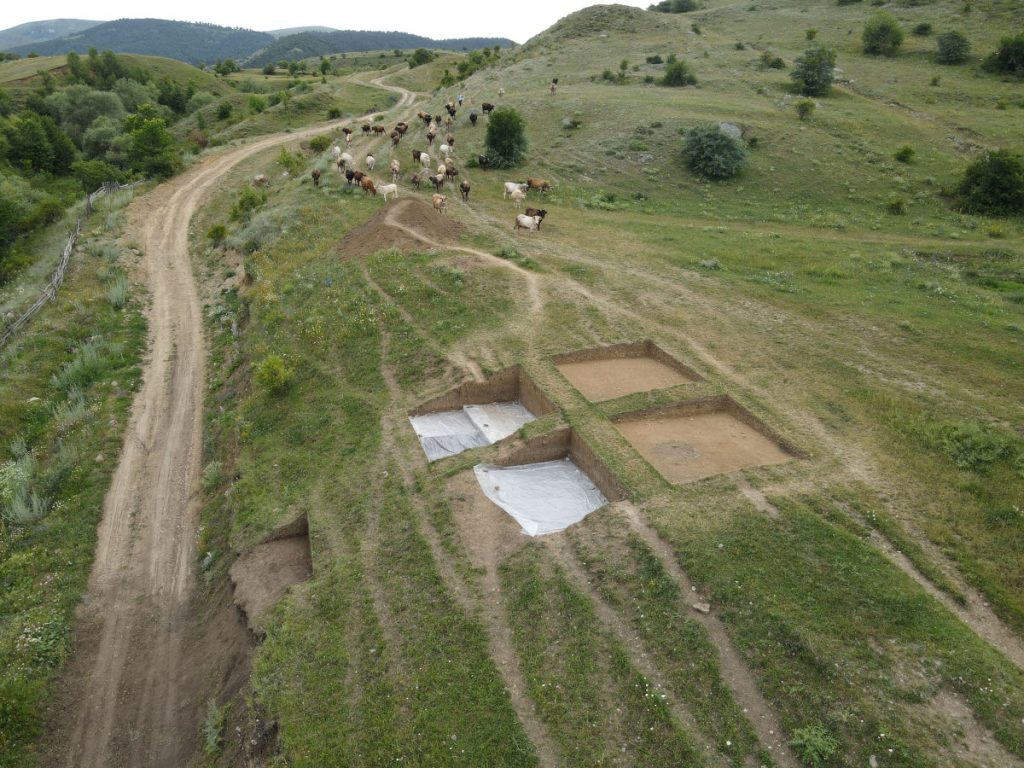
Excavation area view near Pkhero in Georgia.

 SHARE


NEWS@ASOR E-NEWSLETTER

ANCIENT NEAR EAST TODAY E-NEWSLETTER

PAST ASOR NEWS, MONTH BY MONTH

ASOR LEGACY CIRCLE MEMBERS

LIFETIME HONOR ROLL OF DONORS

FY25 HONOR ROLL OF DONORS

ASOR ANNUAL MEETING

2024 Shepard Urgent Action Grant: Rescue Excavation of a Chalcolithic Settlement in Southwest Georgia

Gia Chilingarashvili, Ivane Javakhishvili Tbilisi State University and Georgian National Museum

Thanks to a 2024 Shepard Urgent Action Grant,  our project team conducted a 20-day small-scale excavation at a recently discovered Chalcolithic site in the village of Pkhero in southwest Georgia. This site has suffered damage from both natural and human activities. Urgent excavations became necessary after a portion of the settlement was destroyed during road construction, resulting in a 1-2-meter-high section that continued to collapse periodically. Ongoing erosion, exacerbated by heavy rainfall, threatened to destroy the remaining archaeological layers. Immediate intervention was essential to prevent further loss of the settlement.

The aim of the rescue operation was to collect primary data to determine the nature of the monument by examining its stratigraphy and collecting samples. This data will enable us to develop a long-term strategy for research and conservation of the site. Additionally, the results will help us implement plans to protect the site from further damage.

Archaeological sites from the Chalcolithic period are extremely sparse in Georgia. This site holds significant scientific potential for understanding various aspects of late prehistory in the South Caucasus. The settlement’s location is noteworthy, as it is situated near the Persati Plateau, an alpine pastoral zone that serves as one of the region’s primary pastures and economic resources. Geographically, this area represents the only natural pathway connecting the still-active alpine pastures (Fig.1).

Archaeological site and access pathway to the pastures.
Fig.1 “Tradition Echoes” Archaeological site and access pathway to the pastures.

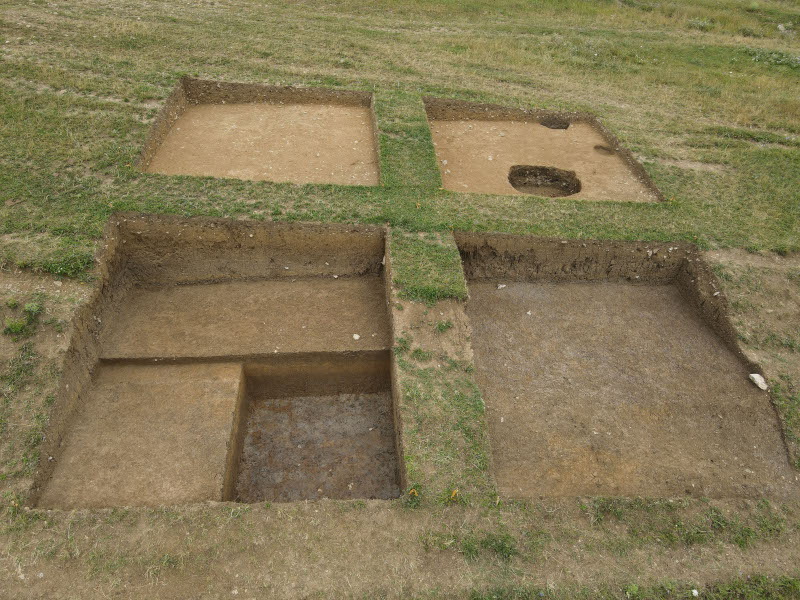
According to the plan, a 10 x 10-meter trench designated as E3 was excavated in the selected area and divided into four equal squares by 1-meter-wide bulkheads. In square E3.2, a classical pit and two early medieval pits were uncovered near the surface, containing an abundance of pottery sherds.

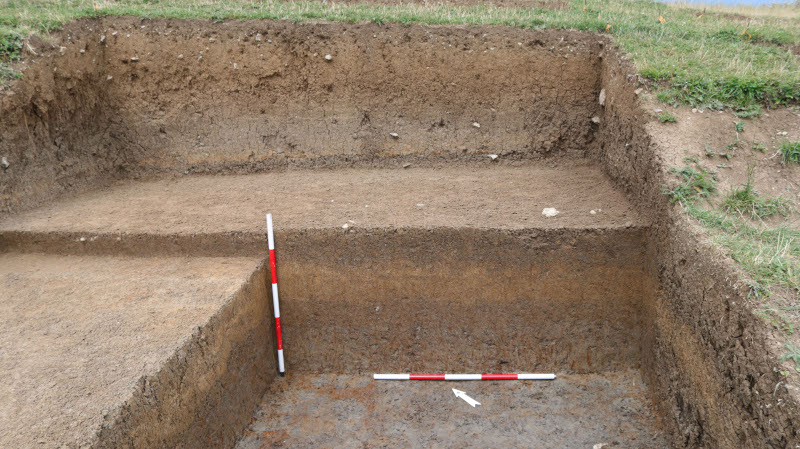
After 20 days of fieldwork, we determined that the site features clay layers measuring 3 meters in height, overlaying the Chalcolithic horizon. Evidence of subsequent activities from the Classical and Medieval periods is present within the upper levels of this clay (Fig.2). The genesis of the intense clay remains unclear; however, stratigraphy indicates that sedimentation occurred repeatedly over time. The alternating loam layers vary in color, and in some cases, they are separated by thin, brownish granular layers (Fig.3). This suggests that accumulation was not a one-time event and likely occurred after the Late Chalcolithic, rather than before the Classical era. Samples from each clay layer were collected for sedimentological and palynological analysis.

The main excavation area, Square E3.
Fig. 2 The main excavation area, Square E3.
Clay deposits in Square E3.
Fig.3 Clay deposits in Square E3.

It is important to note that the clay sediments were not sterile. Even at a depth of 2 meters, they contained abundant charcoal inclusions, along with a small quantity of obsidian fragments and ceramic sherds. This trench reached a maximum depth of 2.5 meters in square E3.3, and we were unable to access the Chalcolithic layer due to the thickness of the clay and time constraints. It can, however, be assumed that the Chalcolithic layer does exist beneath it, and that activities from later periods did not penetrate down to this layer.

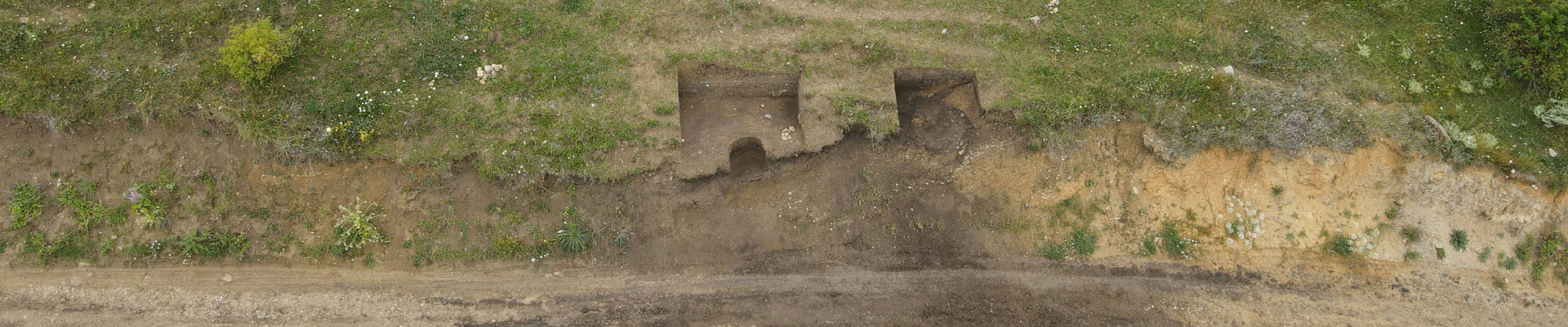
This assumption is supported by two small trenches (N1 and N2) located adjacent to the main excavation, positioned above an artificial cut associated with road construction (Fig.4). The purpose of excavating these features was to investigate the disturbed pits containing prehistoric material observed in the profile.

View of the Excavation Area.
Fig. 4 View of the Excavation Area, showing area disturbed by road construction.

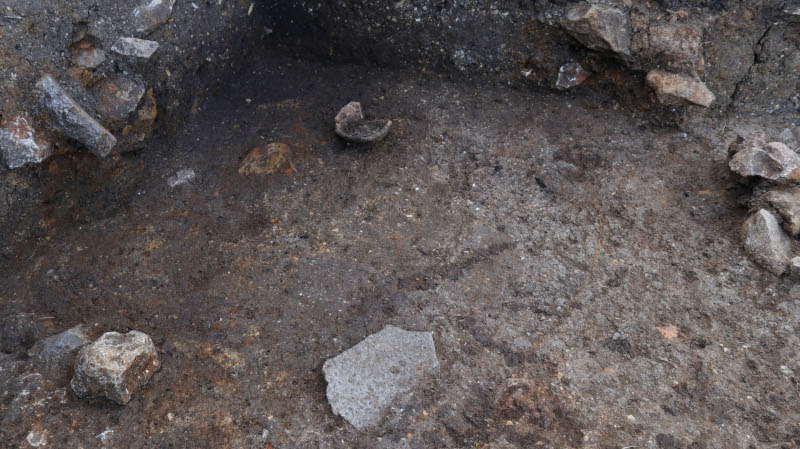
In the small trenches located approximately two meters from the main excavation, we confirmed the presence of the Chalcolithic layer. This layer contained a substantial amount of archaeological material, including a small vessel and a grinding stone, both of which were recorded in situ in Trench N1 (Fig.5). Although the context of these findings remains unclear, the associated feature extends into the unexcavated area toward Square E3. We did not widen the trench, as the primary focus was a half-destroyed pit, the excavation of which yielded a wide variety of materials. In the second trench, a Chalcolithic pit was identified, along with an intensive cultural layer that extends beneath the clay deposits toward Square E3.

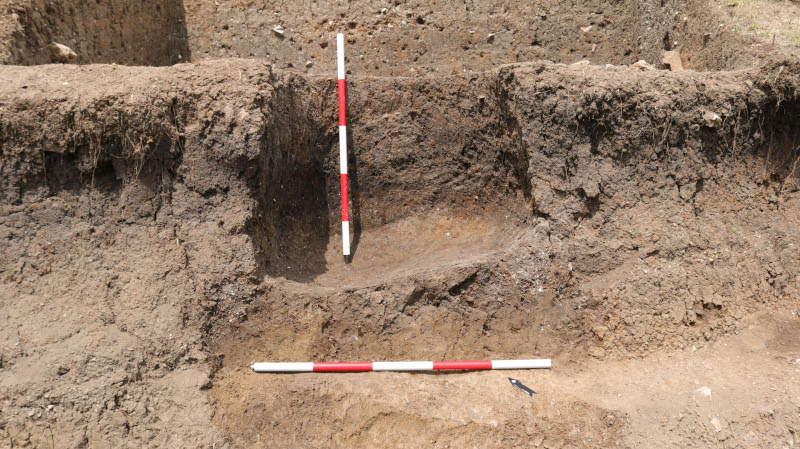
During our work in the Chalcolithic layers, we noted that all layers from this period, including those within the pits and the bottoms of the pits, slope toward the west (Fig.6) It is noteworthy that the clay layers above and the later pits do not exhibit a similar slope. This noted slope is attributed to a natural event that occurred in the late prehistoric period, which caused the settlement to incline toward the west. This event may have contributed to the abandonment of the settlement.

Chalcolithic vessel and grinding stone.
Fig. 5 Chalcolithic vessel and grinding stone.
Excavated pit in Trench N2, showing the sloped bottom of the pit.
Fig.6 Excavated pit in Trench N2, showing the sloped bottom of the pit.

In summary, our excavation has yielded valuable insights into this significant Chalcolithic site. Moving forward, the analysis of the collected materials will enhance our understanding of late prehistory in the South Caucasus.

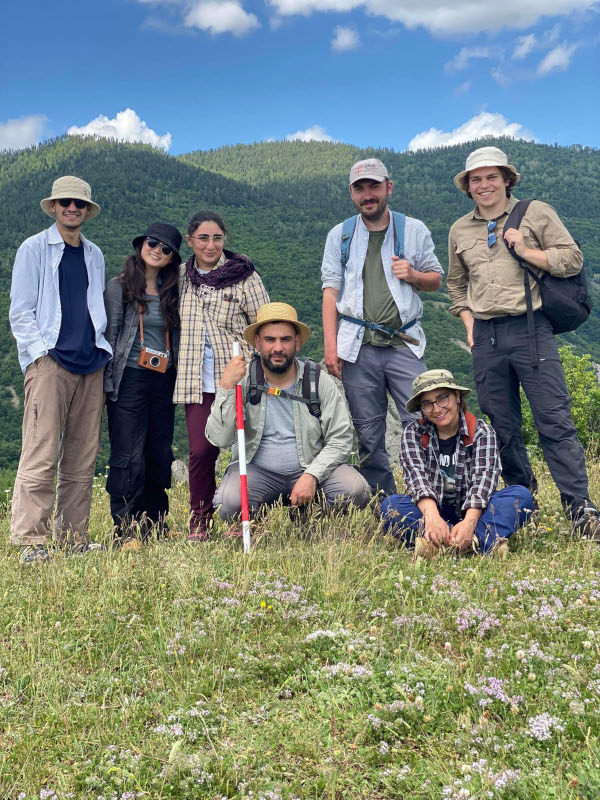
The expedition team for rescue excavations of a chalcolithic settlement in southwest Georgia.
The expedition team.

Established in 2020 with annual contributions, the Shepard Urgent Action Grants program was created to support emergency and rapid response activities on archaeological sites in the greater Mediterranean region. Shepard Grants have provided over $74,000 in support of projects with urgent need since the program began. While preference is given to projects and teams with current ASOR affiliation, applications will be considered from all projects. All 2024 grant funds have been awarded, and pending the receipt of funds, ASOR plans to resume accepting applications for Shepard Grants in 2025.
Read more about the grant program here.

BROWSE THE NEWS ARCHIVE

  • ASOR Seeks New BASOR Editor(s)
  • Friends of ASOR Philadelphia Tour 2026 Recap
  • ECS Research in Action: Dr. Leilani Lucas
  • Table of Contents for BASOR 395 (May 2026)

Latest Posts from @ASORResearch

asor_research

Initiating and supporting research of the history and cultures of the Near East and wider Mediterranean world.


From behind-the-scenes museum tours to up-close en
From behind-the-scenes museum tours to up-close encounters with artifacts and archives, Friends of ASOR spent two unforgettable days exploring Philadelphia through the lens of archaeology, art, and curation. Read about exclusive visits to the Penn Museum, Barnes Foundation, and Philadelphia Museum of Art—guided by the scholars who brought the past to life along the way: https://www.asor.org/news/2026/05/foa-in-philly


Join ASOR’s Early Career Scholars @asorearlycareer
Join ASOR’s Early Career Scholars @asorearlycareer on May 29, 2026, at 12:00pm ET via Zoom for a virtual talk from Dr. Leilani Lucas about reconstructing culinary practices in prehistoric Cyprus from charred food remains. This study contributes to a growing body of research demonstrating the potential of microstructural analysis to enhance archaeobotanical interpretations of food preparation in the past, while providing the first applications of this approach in Cyprus. 

Register at the link in our bio: https://www.asor.org/news/2026/05/ecs-lucas
#Cyprus


Through support from the U.S. Department of State,
Through support from the U.S. Department of State, ASOR partnered with Libya’s Department of Antiquities to document and repair flood damage at the archaeological sites of Cyrene, Ptolemais, and Tocra in eastern Libya. These locally led projects reflect ASOR’s commitment to supporting Libyan efforts to protect their heritage from natural disasters. Read more about these projects at the link in our bio: https://www.asor.org/chi/updates/2026/05/libya-mini-grants
#CulturalHeritage #Libya


Don't forget to tune in TONIGHT at 7:00 pm ET for
Don't forget to tune in TONIGHT at 7:00 pm ET for the last FOA webinar of the season, presented by Dr. Danielle Candelora: “'I am the border': Borders and Immigration in Ancient Egypt”. If you haven't already signed up, click the link in our bio to register for free: https://www.asor.org/news/2026/04/webinar-candelora
#AncientEgypt


Check out the May issue of BASOR 395, featuring ar
Check out the May issue of BASOR 395, featuring articles such as: Preservation through Transformation: Identifying Late Roman Hula Valley Sites in Panias’s Diocletianic Boundary Stones; The Life and Afterlife of the Palace of Herod Antipas in Tiberias; Baʾude, a World Heritage Site in Northern Syria from the Early Byzantine Era: A Study of the Residential Buildings and Their State of Preservation; and much more. Read it at the link in our bio: https://www.asor.org/news/2026/05/basor395-toc/


With the support of an ASOR Dana Grant, Silvia Ami
With the support of an ASOR Dana Grant, Silvia Amicone conducted geological fieldwork along the shore of Mosul Dam Lake in Iraq, documenting endangered clay deposits to trace ancient pottery-making traditions in the Upper Tigris region. Read about her work in her grant report at the link in our bio: https://www.asor.org/news/2026/04/dana-grant-report-mosul-dam
#Fieldwork #Iraq #Mesopotamia #Tigris


Our #ObjectoftheWeek is a terracotta kitchen mold
Our #ObjectoftheWeek is a terracotta kitchen mold of a woman, found at the Amorite royal palace complex in Mari (modern-day Syria). ca. 1782-1759 BCE. Louvre AO 18913. Credit: 2022 Musée du Louvre, Dist. GrandPalaisRmn / Raphaél Chipault
#Archaeology #Amorite #Syria


The Cultural Heritage Watch platform not only docu
The Cultural Heritage Watch platform not only documents the damage to Iran’s heritage in wartime but preserves the social memories and meanings of these places. Read the newest ANE Today by Kiersten Neumann by clicking the link (https://anetoday.org/cultural-heritage-watch-iran/) in our bio.
#Iran #CulturalHeritage


Join us for the LAST Friends of ASOR webinar of th
Join us for the LAST Friends of ASOR webinar of the season on Wednesday, May 6th at 7:00pm ET: “'I am the border': Borders and Immigration in Ancient Egypt” presented by Dr. Danielle Candelora. Issues of borders, citizenship, and immigration are at the forefront of media headlines around the globe, and are examined across fields as diverse as Political Science and Sociology to Comparative Literature and the Visual Arts. Exploring these multiple approaches allows for new insights into the entangled concepts of borders, immigration, and identity in ancient Egypt. 
Register at the link in our bio: https://www.asor.org/news/2026/04/webinar-candelora
#AncientEgypt


Make sure to tune in TOMORROW at 12:30 pm ET for t
Make sure to tune in TOMORROW at 12:30 pm ET for the next FOA webinar presented by Yana Tchekhanovets: "New Excavations at Nessana, Negev: Late Antique Pilgrimage Hub on the Desert Fringe." If you haven't already signed up, click here to register for free: https://www.asor.org/news/2026/04/webinar-tchekhanovets


Last chance to nominate! Know a standout recent bo
Last chance to nominate! Know a standout recent book 📖 on the ancient Near East or Eastern Mediterranean? Make sure it gets the recognition it deserves by submitting it for an ASOR Book Award. Nominations close May 1. Press the link in our bio to learn more: https://buff.ly/jt6dx1G
📸 Winner of the 2025 Lapp Award


ASOR invites Roundtable Proposals from members who
ASOR invites Roundtable Proposals from members who plan to attend the 2026 Annual Meeting in Chicago, November 18-21. Roundtables are an ideal format for informal discussion or focused conversations on topics of general interest to meeting attendees. Roundtable proposals of 250 words or fewer will be reviewed through October 31 (or until space fills). Learn more and submit your roundtable proposal at the link in our bio: https://www.asor.org/am/2026/round-tables-2026


Our spring book sale is ending soon! These books,
Our spring book sale is ending soon! These books, plus several other titles, are available for the low price of $10.00 each. All proceeds go towards membership scholarships, helping expand access to ASOR’s programs and resources. Check out the sale on our website before it's over: https://buff.ly/Vn3LEZy


Joshua Feland, a master’s student at the Universit
Joshua Feland, a master’s student at the University of Alberta, received an Eric and Carol Meyers Fieldwork Scholarship in 2025 to excavate in Humayma, Jordan. As a supervisor on the project, Joshua was tasked with teaching photogrammetry techniques to students using the structures at Humayma and previously excavated material. Read his fieldwork report at the link in our bio: https://www.asor.org/news/2026/04/fieldwork-report-feland
#Jordan #Humayma #Archaeology


ASOR's Early Career Scholars hosted Dr. Danielle M
ASOR's Early Career Scholars hosted Dr. Danielle Macdonald (The University of Tulsa) for their Spring 2026 Brown Bag lecture, "Scientific Publishing in Archaeology: Ask an Editor." Dr. Macdonald provides insights into the publication process, including understanding peer review, manuscript preparation best practices, responding to reviewer comments, and current trends in scientific archaeological publishing, such as open access models. Watch the lecture on YouTube at the link in our bio: https://www.youtube.com/watch?v=JDQxb_I0A3Y


Join us for the next Friends of ASOR webinar on We
Join us for the next Friends of ASOR webinar on Wednesday, April 29th at 12:30pm ET: “New Excavations at Nessana, Negev: Late Antique Pilgrimage Hub on the Desert Fringe” presented by Yana Tchekhanovets. The ancient settlement of Nessana, located in the southwestern Negev, on the modern Israeli–Egyptian border, is a key site for the study of early Christian pilgrimage. This lecture will present the preliminary results of the first four seasons of renewed excavations at the site. Read more and register at the link in our bio: https://www.asor.org/news/2026/04/webinar-tchekhanovets


Our #ObjectoftheWeek is a terracotta model of a bo
Our #ObjectoftheWeek is a terracotta model of a boat with multiple persons and birds, decorated with geometric patterns. From Cyprus, Middle Bronze Age, ca. 2000-1600 BCE. Louvre AM972. Credit: Musée du Louvre, Dist. GrandPalaisRmn / Raphaél Chipault
#Archaeology #Cyprus #BronzeAge


Ancient Nessana is not associated with any biblica
Ancient Nessana is not associated with any biblical events or major relics. However, during the Byzantine period, it emerged as a prominent Christian center for pilgrims traveling to Sinai. Read more in the latest ANE Today at the link in our bio: https://anetoday.org/ancient-nessana-pilgrimage/
📸 ©Nessana Expedition
#Byzantine #Christianity #Negev


Don't forget to tune in TONIGHT at 7:00 pm ET for
Don't forget to tune in TONIGHT at 7:00 pm ET for the next FOA webinar presented by Dr. Kevin Fisher: "Kalavasos and Maroni Revisited: New Explorations of Late Bronze Age Urban Landscapes in Southcentral Cyprus." If you haven't already signed up, click the link in our bio to register for free: https://buff.ly/Me2Ax1K


Atakan Atabas, a PhD student at the University of
Atakan Atabas, a PhD student at the University of Central Florida, received a Shirlee Meyers/G. Ernest Wright Fellowship to excavate at Kerkenes, Türkiye in 2025. During the 2025 season, Atakan contributed to survey and geophysical work, including electrical resistivity mapping, while also engaging with local communities and exploring how interdisciplinary approaches can be applied. Read more at the link in our bio: https://www.asor.org/news/2026/03/fieldwork-report-atabas
#Turkiye


Instagram

Stay updated with the latest insights, photos, and news by following us on Instagram!

Follow Us on Instagram

American Society of Overseas Research
The James F. Strange Center
209 Commerce Street
Alexandria, VA 22314

E-mail: info@asor.org

© 2025 ASOR
All rights reserved.
Images licensed under a Creative Commons Attribution-NonCommercial-ShareAlike 4.0 International License

Contact Us
Membership
Give
Friends of ASOR
ASOR Cultural Heritage Initiatives
Terms of Use
News

Please follow & like us :)
Facebook
YouTube
LinkedIn