SHARE
[/vc_column_text][mk_image src=”http://www.asortest.org/wp-content/uploads/2017/01/social-fb-icon4.jpg” image_width=”42″ image_height=”42″ hover=”false” custom_url=”https://www.facebook.com/ASOResearch/” margin_bottom=”0″][mk_image src=”http://www.asortest.org/wp-content/uploads/2017/01/social-tw-icon4.jpg” image_width=”42″ image_height=”42″ hover=”false” custom_url=”https://twitter.com/ASOResearch?ref_src=twsrc%5Egoogle%7Ctwcamp%5Eserp%7Ctwgr%5Eauthor” margin_bottom=”0″][mk_image src=”http://www.asortest.org/wp-content/uploads/2017/01/social-in-icon4.jpg” image_width=”42″ image_height=”42″ hover=”false” custom_url=”https://www.linkedin.com/company/american-schools-of-oriental-research” margin_bottom=”0″][mk_image src=”http://www.asortest.org/wp-content/uploads/2017/01/social-ml-icon_7.jpg” image_width=”42″ image_height=”42″ hover=”false” custom_url=”mailto:asor@bu.edu” margin_bottom=”0″][mk_image src=”http://www.asortest.org/wp-content/uploads/2017/01/blog-icon3.jpg” image_width=”42″ image_height=”42″ hover=”false” custom_url=”http://asorblog.org/” margin_bottom=”0″][/vc_column][vc_column border_color=”rgba(255,255,255,0.01)” width=”1/6″ css=”.vc_custom_1496683923840{margin-right: 20px !important;border-left-width: 2px !important;padding-right: 20px !important;padding-left: 20px !important;border-left-color: #99422f !important;}”][mk_divider divider_color=”rgba(255,255,255,0.01)” thickness=”1″ margin_top=”3″ margin_bottom=”3″][vc_column_text] [/vc_column_text][/vc_column][vc_column border_color=”rgba(170,170,170,0.01)” width=”1/2″ css=”.vc_custom_1487276122024{margin-right: 10px !important;margin-bottom: 30px !important;border-right-width: 2px !important;border-bottom-width: 2px !important;padding-top: 30px !important;padding-right: 30px !important;padding-left: 20px !important;background-color: #ffffff !important;border-right-color: rgba(227,228,228,0.75) !important;border-bottom-color: rgba(227,228,228,0.75) !important;}”][vc_column_text responsive_align=”left”]TABLE OF CONTENTS FOR BASOR 377 (MAY 2017)
Subscription Options
You can receive BASOR (and other ASOR publications) through an ASOR Membership or through an Individual Subscription. Single issues (subject to availability) are available for purchase, with ASOR members receiving a discount. Please email us if you have any questions.
Pp. 1-20: “Ethnofabrics: Petrographic Analysis as a Tool for Illuminating Cultural Interactions and Trade Relations between Judah and Philistia during the Iron Age II,” by Anat Cohen-Weinberger, Nahshon Szanton and Joe Uziel
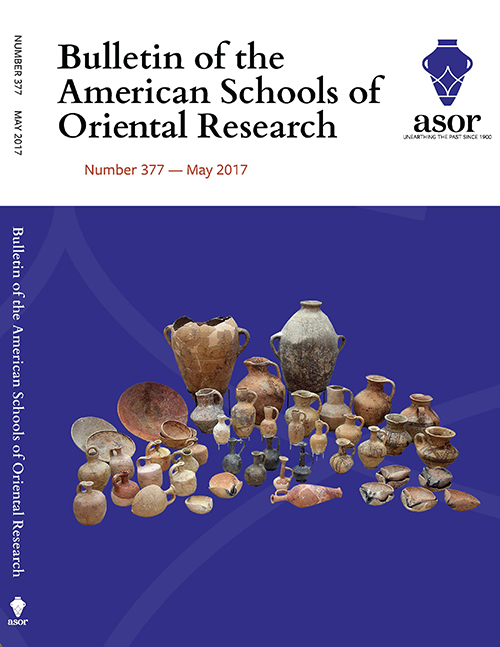 Recent excavations along the lower eastern slopes of Jerusalem yielded a number of sherds attributed to Late Philistine Decorated Ware. As this family of vessels is generally thought to derive from Philistia, petrographic analysis was conducted on the sherds, as well as on other vessels assumed to be locally made, which served as a control group. Late Philistine Decorated Ware sherds were found to belong to three distinct petrographic groups, two of which seem to originate in Philistia (i.e., the southern coastal plain and Judaean Shephelah), while a third group was found to be local to Jerusalem. The results also indicate that some vessels considered local to the area of Jerusalem were actually produced farther west. This article discusses the results of the petrographic analysis and the implications they have on understanding Judaeo-Philistine relations.
Click here to access the above article on JSTOR (ASOR membership with online access and/or subscription to JSTOR Current Content required).
Pp. 21-38: “From Stadium to Harbor: Reinterpreting the Curved Ashlar Structure in Roman Tiberias,” by Rick Bonnie
A salvage excavation in the modern city of Tiberias in 2002 exposed the remnants of a wide, curved ashlar structure. Based on its curved shape, its construction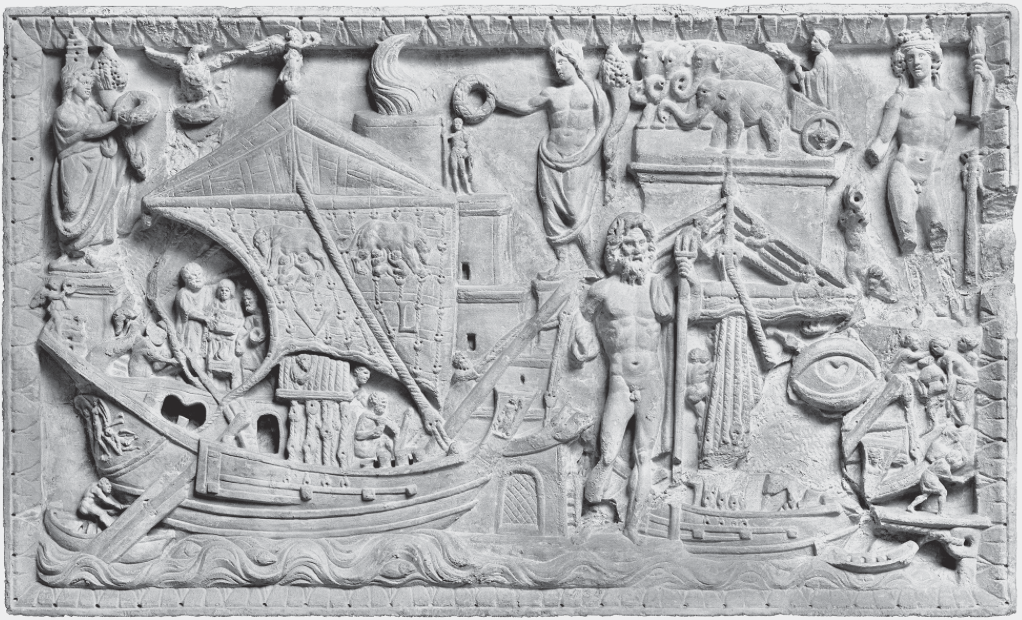 date, and its location, various scholars have identified this structure as the foundation wall of the Roman stadium mentioned by Josephus in relation to the First Jewish Revolt (66–67 C.E.). However, neither Josephus nor the later rabbinic sources imply the presence of a stone-built monumental stadium at the location of this site, nor does all of the exposed evidence related to the structure fit with the stadium theory. Therefore, a different interpretation for this structure is proposed. Based on the presence of a mooring stone projecting outward from the structure’s waterside and the complex’s strong similarities in structural characteristics and in elevation to the nearby late Hellenistic to Roman harbor of Magdala, it is argued that the remains should be identified as those of a quay, a stone platform built along the lakeshore to accommodate the loading and unloading of boats. If this interpretation is correct, it suggests the existence of a harbor structure in the northeast area of Roman Tiberias.
Click here to access the above article on JSTOR (ASOR membership with online access and/or subscription to JSTOR Current Content required).
Pp. 39-47: “The Qubur al-Walaydah Bowl: New Images and Old Readings,” by Nathaniel E. Greene
Discovered in the late 1970s and first published in the Bulletin of the American Schools of Oriental Research by Frank Moore Cross in 1980, the Qubur al-Walaydah Bowl has become the object of more recent inspection by the current excavation team at the site. In 2010, Angelika Berlejung proposed new readings for parts of the inscription. This article seeks to analyze Berlejung’s proposed readings against Cross’s readings from his editio princeps. Furthermore, the present study utilizes reflectance transformation imaging in order to draw its conclusions. Ultimately, Berlejung’s proposed readings are not supported by reflectance transformation imaging.
Click here to access the above article on JSTOR (ASOR membership with online access and/or subscription to JSTOR Current Content required).
Pp. 49-67: “Local Production of a Small Rectangular Limestone Incense Altar at Tell Halif, Israel: Iconographic Considerations,” by Seung Ho Bang and Oded Borowski
This article studies local production of an incense altar found at Tell Halif in 2007 through examining its iconography. The carvings depict hunting scenes 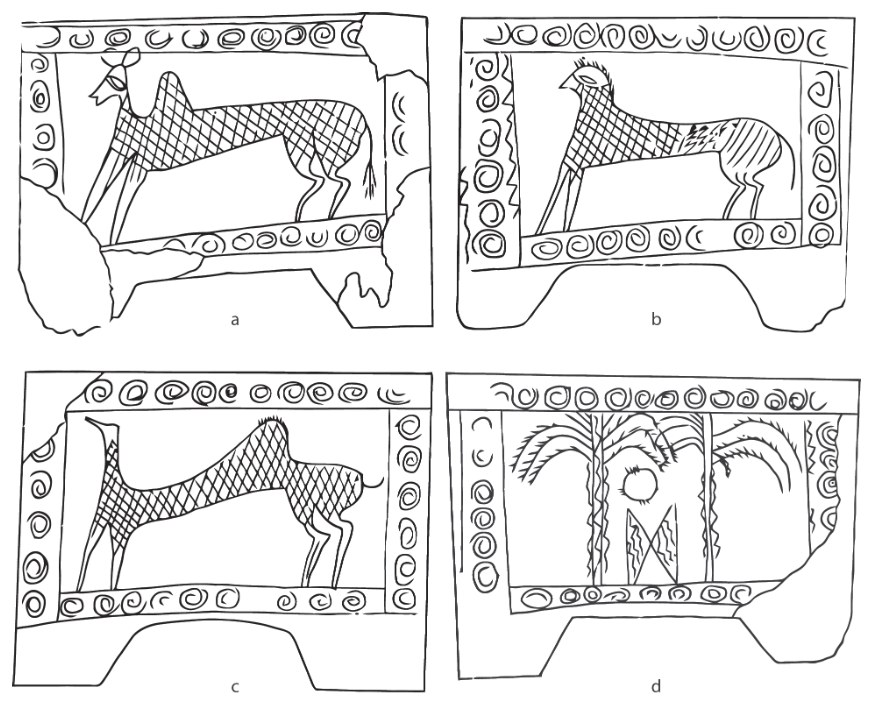 consisting of a human and various animals. These animals are positively identified as zebu, wild boar, Saluki-type hounds, and Nubian ibexes. The distribution of these five animals indicates that the southern Levant might be the source of primary influence for incense altar production, while southern Arabia is also a visible influential factor. Established trade between the southern Levant and southern Arabia, as early as the 12th–11th centuries B.C.E., might support the idea of cultural ties between the two regions. The taxonomical identifications strongly support the hypothesis that the object was locally produced. And this hypothesis is also in accord with the petrographic provenance analyses of the raw material used for the Tell Halif incense altar.
Click here to access the above article on JSTOR (ASOR membership with online access and/or subscription to JSTOR Current Content required).
Pp. 71-84: “Six Palmyrene Portraits Destroyed in Manbij, Syria: A Salvage Reading,” by Jeremy M. Hutton
Operatives of the Islamic State reportedly destroyed six Palmyrene funerary busts and statue fragments in Manbij, Syria, on July 2, 2015. This article considers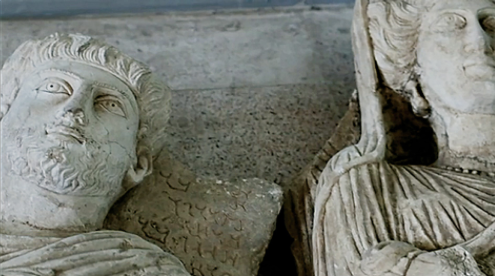 the ethical implications of publishing photographs of antiquities that have been destroyed, arguing that in such dramatic cases as destruction, it is justified to publish readings. Photographs of these antiquities are then analyzed, their physical and iconographic characteristics described, and readings for three of the inscriptions suggested. Finally, the loss of data caused by the items’ destruction is measured against the loss of data occasioned by looting.
Click here to access the above article on JSTOR (ASOR membership with online access and/or subscription to JSTOR Current Content required).
Pp. 85-106: “Two (?) Lion Reliefs from Iron Age Moab: Further Evidence for an Architectural and Intellectual Koiné in the Levant?,” by Martin Weber
The collection of the Karak Archaeological Museum contains two carved basalt slabs, both of which show the rear parts and hindquarters of a leonine figure.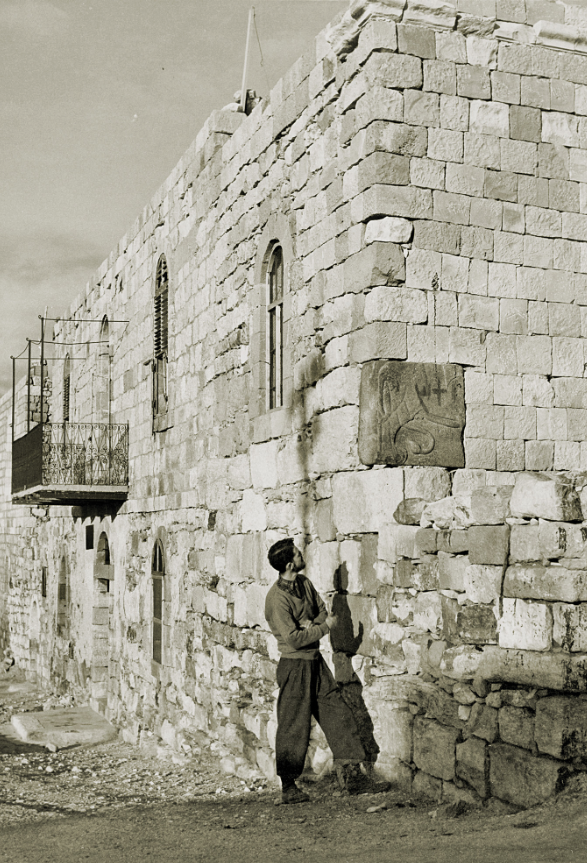 Although the two slabs differ vastly in their state of preservation, a comparison of their physical properties and iconographic features suggests that the two reliefs originally formed a matching pair and were part of a single architectural feature. Comparing the slabs to the well-known corpus of northern Levantine monumental sculpture, it is argued that the reliefs constitute the remains of two gateway figures, most plausibly dated to the Iron Age. The Karak slabs thus provide the first likely evidence for the use of architectural stone sculpture by Moabite elites, a practice most commonly associated with the Iron Age kingdoms of the northern Levant. Lion sculptures were often employed as gateways figures in public buildings, especially in the northern Levant and northern Mesopotamia, attesting to the close relationship between these images and the royal ideology they helped to project. Through their existence, the Karak slabs not only provide further evidence for cross-cultural artistic interaction in the Iron Age Levant but also suggest that ancient Karak played an important role in these exchanges.
Click here to access the above article on JSTOR (ASOR membership with online access and/or subscription to JSTOR Current Content required).
Pp. 107-133: “An Aramaic-Inscribed Lamaštu Amulet from Zincirli,” by Jessie DeGrado and Matthew Richey
In the final volume of excavation reports from the Felix von Luschan expedition to Zincirli, Turkey, the editor, Walter Andrae, provided a brief iconographic description and an imperfect photograph of an Aramaic-inscribed Lamaštu amulet from the site. The Old Aramaic inscription was, however, largely invisible in the photograph, and the epigraph went untranscribed and untranslated in this and all subsequent mentions. The present article represents a full edition and discussion of the amulet and its inscription on the basis of our examination of the object at the Vorderasiatisches Museum, Berlin. This artifact represents the only known instance of a local Aramaic script’s use on an amulet dominated by Mesopotamian iconographic motifs, notably including Lamaštu. It is an important witness to cultural contact and combination in an Aramaic/Neo-Hittite city-state of the 9th-8th centuries B.C.E. Due to the general paucity of Old Aramaic inscriptions, the epigraph also represents a significant addition to the broader extant corpus and contributes important data for understanding Old Aramaic palaeography, orthography, and onomastics.
Click here to access the above article on JSTOR (ASOR membership with online access and/or subscription to JSTOR Current Content required).
Pp. 135-159: “The Philistine Cemetery of Ashkelon,” by Daniel M. Master and Adam J. Aja
From 2013 to 2016, the Leon Levy Expedition to Ashkelon excavated an Iron Age IIA cemetery immediately adjacent to the ancient city. This research uncovered 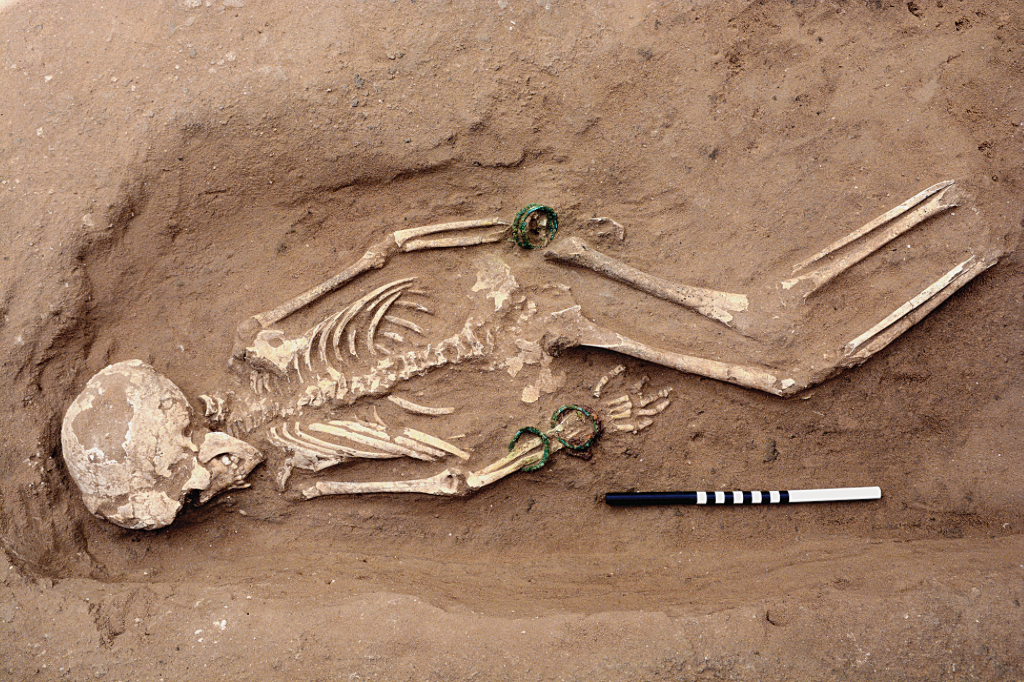 over 200 individuals buried in simple pits, built tombs, and cremation jars. The discovery represents a fundamental contribution to the history of the Philistines, as it demonstrates, for the first time, a typical burial practice for Philistine adults in the Iron Age. As such, it becomes a type-site against which other southern Levantine discoveries can be compared and provides new information about Iron Age death and burial in the eastern Mediterranean.
Click here to access the above article on JSTOR (ASOR membership with online access and/or subscription to JSTOR Current Content required).
Pp. 161-218: “Tombs and Offering Pits at the Late Bronze Age Metropolis of Hala Sultan Tekke, Cyprus,” Peter M. Fischer and Teresa Bürge
Hala Sultan Tekke is a large Bronze Age city close to the famous homonymous mosque near the international airport of Larnaca on the south coast of Cyprus. 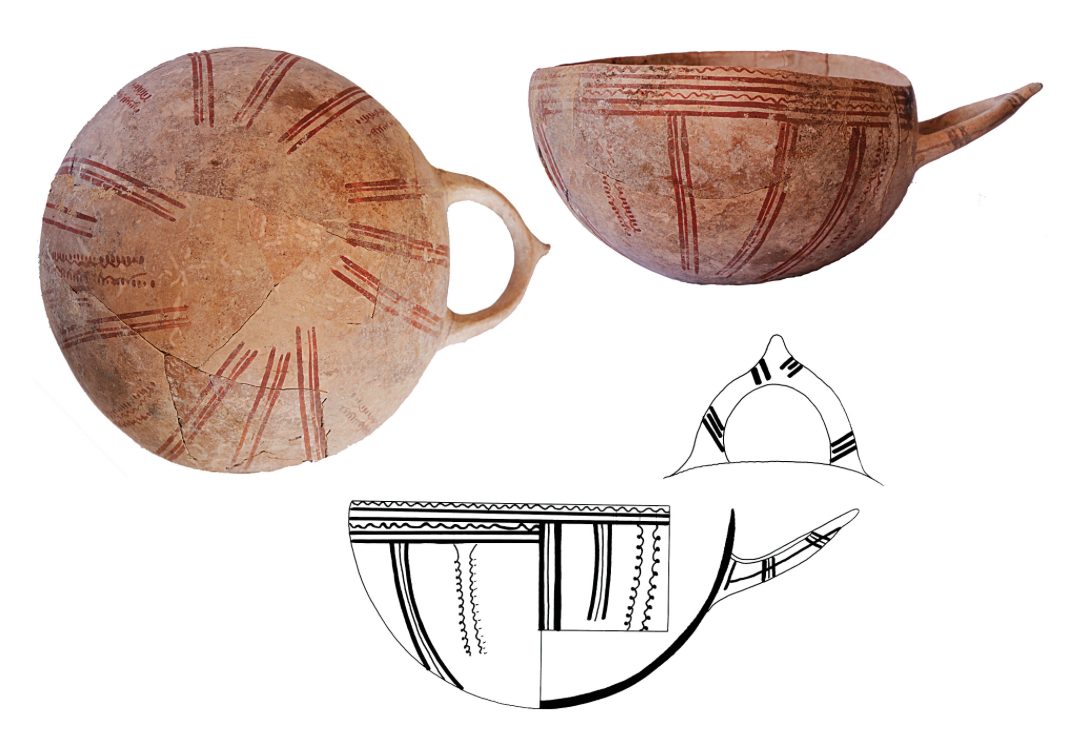 Previous research demonstrated that the city flourished mainly in the later part of the Late Bronze Age—viz., during the 13th and 12th centuries B.C.E.—but recent excavations confirmed that the city was occupied from as early as the Middle Cypriot III-Late Cypriot IA period around 1600 B.C.E. The current project, which started in 2010, exposed three new city quarters (CQ1–3) in the northern part of the city close to the ancient harbor—that is, today’s Larnaca Salt Lake. Geophysical surveys by georadar and magnetometer, which were carried out in Area A, a plateau approximately 600 m east of CQ1 and opposite the mosque, indicated more than 80 roughly circular anomalies. Among the seven anomalies excavated in 2016 are Tomb X and Offering Pit V, which are the main subjects of this article. Concentrated in these features were objects of high artistic value from a vast area of the eastern Mediterranean, including the Aegean, the Levant, Egypt, and possibly Anatolia. Both features antedate the occupation of the previously excavated city quarters.
Click here to access the above article on JSTOR (ASOR membership with online access and/or subscription to JSTOR Current Content required).
Pp. 219-248: “Embodiments of Death: The Funerary Sequence and Commemoration in the Bronze Age Levant,” by Melissa S. Cradic
This article presents an archaeological model for Levantine funerary rituals performed in the context of commingling inhumations. Using the case study of a 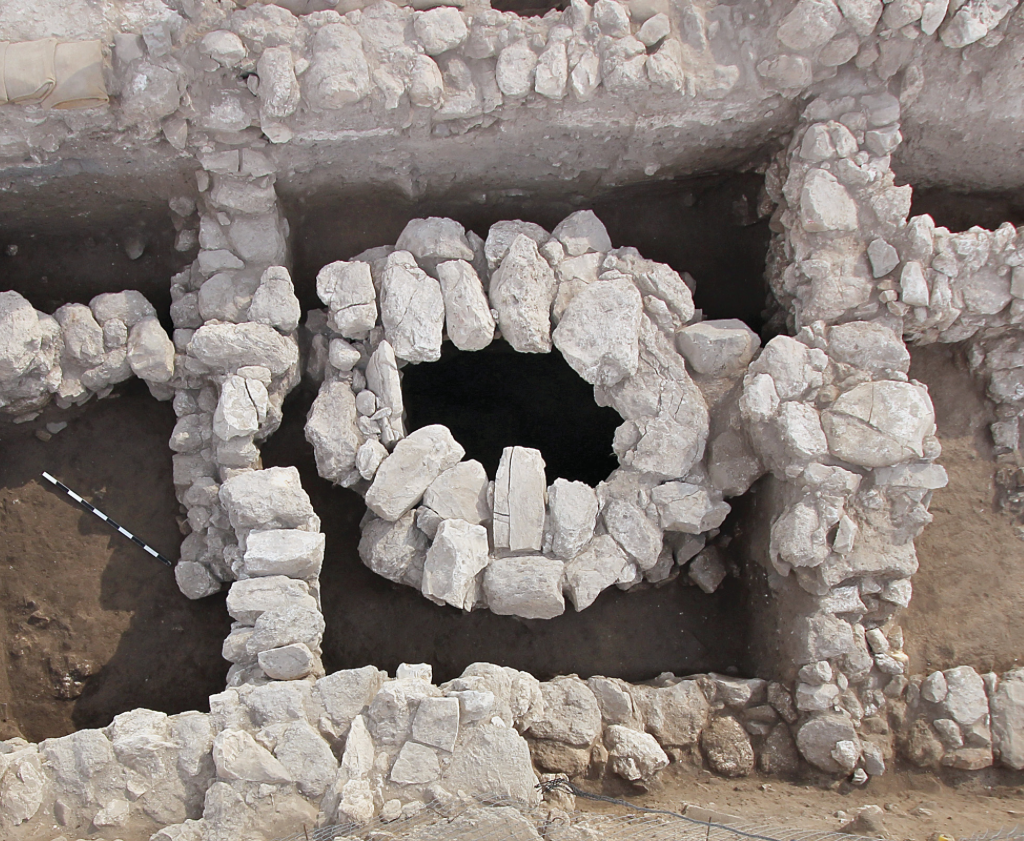 masonry-constructed chamber tomb from Middle Bronze Age Tel Megiddo (Israel), the funerary sequence is reconstructed in three main phases: (1) pre-interment; (2) interment; and (3) post-interment. The sequential performance of funerary rituals in this shared burial space resulted in a high degree of skeletal fragmentation as previously interred corpses were moved aside to accommodate subsequent inhumations. However, rather than merely representing a functional aspect of burial, the repositioning of deceased bodies constituted a ritually meaningful practice that involved continuous physical interactions between the living and the dead. Drawing on theories of embodiment and methods of burial taphonomy, this article argues that mourners’ close encounters with deceased bodies played a major role in transforming the status of the dead after burial. Ritualized fragmentation and intermingling of human skeletal remains were integral components of becoming an ancestor.
Click here to access the above article on JSTOR (ASOR membership with online access and/or subscription to JSTOR Current Content required).
[/vc_column_text][mk_divider][vc_column_text]To view the entire article on JSTOR, click here.[/vc_column_text][/vc_column][vc_column border_color=”rgba(170,170,170,0.01)” width=”1/6″ css=”.vc_custom_1496684098866{margin-right: 5px !important;margin-bottom: 20px !important;border-right-width: 2px !important;border-bottom-width: 2px !important;padding-top: 30px !important;padding-right: 10px !important;padding-left: 10px !important;background-color: #ffffff !important;border-right-color: rgba(227,228,228,0.75) !important;border-bottom-color: rgba(227,228,228,0.75) !important;}”][vc_wp_posts title=”BROWSE THE NEWS ARCHIVE” number=”4″][/vc_column][vc_column border_color=”rgba(170,170,170,0.01)” width=”1/6″ css=”.vc_custom_1496684008271{margin-right: 10px !important;margin-bottom: 30px !important;border-right-width: 2px !important;border-bottom-width: 2px !important;padding-top: 30px !important;padding-right: 20px !important;padding-left: 20px !important;background-color: #ffffff !important;border-right-color: rgba(227,228,228,0.75) !important;border-bottom-color: rgba(227,228,228,0.75) !important;}”][vc_column_text]Tweets by ASOResearch [/vc_column_text][/vc_column][/vc_row]