SHARE
[/vc_column_text][mk_image src=”http://www.asortest.org/wp-content/uploads/2017/01/social-fb-icon4.jpg” image_width=”42″ image_height=”42″ hover=”false” custom_url=”https://www.facebook.com/ASOResearch/” margin_bottom=”0″][mk_image src=”http://www.asortest.org/wp-content/uploads/2017/01/social-tw-icon4.jpg” image_width=”42″ image_height=”42″ hover=”false” custom_url=”https://twitter.com/ASOResearch?ref_src=twsrc%5Egoogle%7Ctwcamp%5Eserp%7Ctwgr%5Eauthor” margin_bottom=”0″][mk_image src=”http://www.asortest.org/wp-content/uploads/2017/01/social-in-icon4.jpg” image_width=”42″ image_height=”42″ hover=”false” custom_url=”https://www.linkedin.com/company/american-schools-of-oriental-research” margin_bottom=”0″][mk_image src=”http://www.asortest.org/wp-content/uploads/2017/01/social-ml-icon_7.jpg” image_width=”42″ image_height=”42″ hover=”false” custom_url=”mailto:asor@bu.edu” margin_bottom=”0″][mk_image src=”http://www.asortest.org/wp-content/uploads/2017/01/blog-icon3.jpg” image_width=”42″ image_height=”42″ hover=”false” custom_url=”http://asorblog.org/” margin_bottom=”0″][/vc_column][vc_column border_color=”rgba(255,255,255,0.01)” width=”1/6″ css=”.vc_custom_1493004112151{margin-right: 20px !important;border-left-width: 2px !important;padding-right: 20px !important;padding-left: 20px !important;border-left-color: #99422f !important;}”][mk_divider divider_color=”rgba(255,255,255,0.01)” thickness=”1″ margin_top=”3″ margin_bottom=”3″][vc_widget_sidebar sidebar_id=”sidebar-16″ el_class=”.widget { overflow: hidden; margin-bottom: 0; }”][/vc_column][vc_column border_color=”rgba(170,170,170,0.01)” width=”8/12″ css=”.vc_custom_1487276122024{margin-right: 10px !important;margin-bottom: 30px !important;border-right-width: 2px !important;border-bottom-width: 2px !important;padding-top: 30px !important;padding-right: 30px !important;padding-left: 20px !important;background-color: #ffffff !important;border-right-color: rgba(227,228,228,0.75) !important;border-bottom-color: rgba(227,228,228,0.75) !important;}”][vc_row_inner][vc_column_inner width=”1/3″ css=”.vc_custom_1515087305797{padding-right: 20px !important;}”][mk_image src=”https://www.asor.org/wp-content/uploads/2017/12/foa-reduced-100.png” image_width=”190″ image_height=”100″ crop=”false” hover=”false”][/vc_column_inner][vc_column_inner width=”2/3″][vc_column_text responsive_align=”left”]December 2018
Vol. 6, No. 12
[/vc_column_text][/vc_column_inner][/vc_row_inner][vc_row_inner][vc_column_inner][mk_divider thickness=”1″ margin_top=”10″][vc_column_text]The Face of the Baptized Jesus at Shivta 
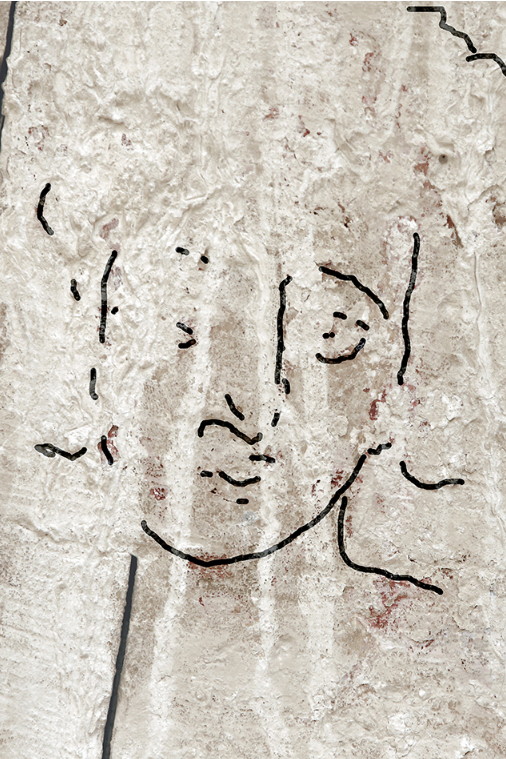
By Emma Maayan-Fanar, Ravit Linn, Yotam Tepper and Guy Bar-Oz
The face of Jesus is one of the great themes in Western art. A newly discovered image from a church in the Negev brings us closer to what Byzantine artists thought his face looked like.
READ MORE
[/vc_column_text][mk_divider thickness=”1″ margin_top=”10″][vc_column_text]Discovering Second Temple Literature: The Scriptures and Stories That Shaped Early Judaism
 Discovering Second Temple Literature: The Scriptures and Stories That Shaped Early Judaism
By Malka Simkovich
In the Second Temple period, Jews paid homage to their scriptures and practices not by keeping them immobile and stagnant, but by exploring new ways to interpret them, and by continually rethinking and expanding their ideas about good and evil, the afterlife, and Israel’s relationship with God.
READ MORE
[/vc_column_text][mk_divider thickness=”1″ margin_top=”10″][vc_column_text] Qumran in a Mediterranean Context
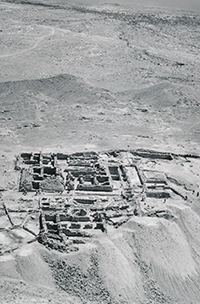
By Dennis Mizzi
For a small site, Qumran has generated big debates. But studying Qumran in the wider context of the Graeco-Roman Mediterranean changes the idyllic picture of a unique site thriving in splendid desert isolation.
READ MORE
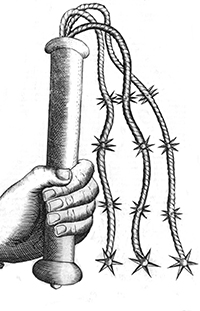
[/vc_column_text][mk_divider thickness=”1″ margin_top=”10″][vc_column_text] What Do We Know about the Scourging of Jesus?
By Andrea Nicolotti
The Gospels say Jesus suffered flagellation but the texts do not describe the scourge. Modern commentators have speculated about the scourge using Greco-Roman literary evidence and later relics, but do these really bring us closer?